Air Venturi, Seneca and Modern Pneumatic Airgun Platforms
Modern pneumatic shooting equipment now covers everything from compact target platforms to large-calibre sporting systems. One of the most recognizable models in this category is the air venturi avenger, which combines adjustable PCP technology with practical ergonomics and a versatile configuration. Shooters researching more modular designs may instead consider the air venturi avenge-x, while searches for avenger x, avenge x, avenge-x, and avenge x tactical often reflect interest in newer configurations built around adaptability.
Calibre is another major consideration. Someone researching a rifle pcp avenger 6.35 may be interested in a larger pellet option, while the less common search variation avenge xx can lead buyers toward the same general product family. Regardless of terminology, choosing the correct rifle should depend on shooting discipline, preferred calibre, physical dimensions, available filling equipment, and local regulations.
Exploring the Dragon Claw Big-Bore Family
The dragon claw air rifle represents a substantially different category from conventional small-bore pneumatic equipment. Searches for a dragon claw 50 caliber air gun generally come from users exploring large-calibre compressed-air platforms designed for specialized sporting applications.
Alternative search terminology such as dragonclaw gun, dragon claw airgun 50 cal, and dragon claw air gun can also appear when buyers are comparing models, ammunition options, accessories, and availability. Shoppers researching dragon claw 50 caliber air rifle price should pay attention not only to purchase cost but also to filling equipment, appropriate projectiles, maintenance requirements, and applicable laws.
The phrase dragon claw 50 cal is commonly associated with this powerful pneumatic category. Within the manufacturer’s lineup, the seneca dragon claw is particularly well known, while the seneca dragon claw 50 caliber designation helps distinguish its calibre from smaller pneumatic rifles. A more specialized configuration may be found through searches for the seneca dragon claw 2 tactical.
Understanding the Wider Airgun Market
The spelling air ventura occasionally appears during online product searches even though buyers are often looking for Air Venturi equipment. The broad term air gun encompasses several operating systems, including PCP, CO2, spring-piston, gas-ram, and multi-pump pneumatic designs.
Other variations such as air rifle com, aventuri, and airrifle regularly appear in search data. Regardless of spelling, shoppers should distinguish between different powerplants before comparing specifications.
Modern pcp air rifles store compressed air in an onboard reservoir. By comparison, pneumatic air rifles is a broader description that may also include multi-pump and other compressed-air systems. Unusual search wording such as airbun air may appear alongside more conventional product terminology.
An air hunting rifle should always be selected according to the lawful quarry, calibre requirements, accuracy, projectile performance, and permitted energy level in the shooter’s jurisdiction.
Seneca Airgun Platforms
The broader seneca air rifles catalogue contains several types of pneumatic equipment rather than one single operating system. Someone looking for a seneca dragonfly mk2 is researching a considerably different platform from a large-bore Dragon Claw.
A general search for seneca air rifle may produce PCP, multi-pump, and specialized sporting models. Likewise, seneca air is sometimes used as shorthand when users are trying to locate the brand or its product range.
The seneca dragonfly emphasizes a self-contained pneumatic design, making it particularly appealing to shooters who do not want to depend entirely on an external high-pressure filling source. Buyers searching seneca dragonfly mk2 for sale should verify calibre, condition, warranty, and exact generation before ordering.
The simplified term dragonfly mk2 is another common product query. Meanwhile, the seneca dragon claw ii refers users back toward the company’s big-bore category, and searches for seneca guns can cover its wider pneumatic catalogue.
Air Venturi Alpha Series
The air venturi alpha provides another option for users exploring PCP technology. Its design is aimed at shooters who want practical pneumatic performance without immediately moving into highly specialized big-bore equipment.
A more maneuverable alternative can be found in the air venturi alpha compact. Compact dimensions may be attractive for shooters who value reduced overall length, although specifications should still be compared carefully.
Search terms such as alphagun airx, alphapure, alpha airx, alpha pri, and alpha air can sometimes appear in related search results. Because these terms can refer to different products or even unrelated categories, confirming the exact manufacturer’s model name is important before purchasing accessories or replacement parts.
Someone searching air venturi alpha for sale should examine included equipment, calibre, fill requirements, product condition, warranty, and regional specification. The air venturi alpha air rifle can then be evaluated based on intended recreational or sporting use rather than advertised specifications alone.
Air Venturi MicroStrike
Compact PCP development continues with the air venturi microstrike, a platform designed around reduced dimensions and pneumatic operation. Some users may search for it as the air venturi micro strike, particularly when comparing listings across different online marketplaces.
The phrase microstrike pcp emphasizes its operating system, while microstrike air venturi combines the product and manufacturer names in reverse order. A general search for micro rifle may also lead buyers toward compact pneumatic equipment from several manufacturers.
Compactness should never be mistaken for a lack of capability. Pressure ratings, calibre, energy, ammunition compatibility, and safe handling requirements remain important regardless of overall dimensions.
High-Powered Pneumatic Rifles and Maintenance
People researching the best high powered air rifles for hunting should compare far more than muzzle velocity. Accuracy, retained projectile energy, calibre, shot consistency, rifle balance, ethical shooting distance, and local hunting legislation all influence whether a platform is appropriate.
Owners occasionally search airventure avenger disassembly instructions when maintenance becomes necessary. Because high-pressure reservoirs can contain substantial stored energy, internal servicing should follow official manufacturer documentation and appropriate depressurization procedures.
Specialized projectile systems also appear within the pneumatic market. An air bolt gun uses compressed-air technology with a projectile system different from an ordinary pellet rifle. Searches for airbolt gun, air bolt, airbolt, and airbolt rifle illustrate the variety of wording customers use when researching this category.
The phrase pax bolt may also appear among specialized projectile-related searches. Exact compatibility should always be confirmed directly against the intended launcher or rifle before accessories are purchased.
Pneumatic Shotgun Systems
Another specialized category is the air shotgun for hunting, which uses compressed air rather than conventional firearm propellant. These platforms are niche products that should be evaluated according to local hunting regulations and manufacturer-approved ammunition.
The wingshot is associated with pneumatic shotgun technology, while the alternative spacing wing shot is frequently used during online searches. Such designs demonstrate how compressed-air technology can extend beyond traditional pellet rifles.
Understanding 12-Gram CO2 Cartridges
CO2-powered airguns use a different energy source from high-pressure PCP systems. Small pistols and recreational platforms frequently depend on 12g co2 actuation cartridges for their operating gas.
A standard 12g co2 cartridge is a small disposable cylinder containing compressed carbon dioxide. Buyers may also search for a 12 gram co2 cartridge, 12gram co2 cartridge, or simply co2 12g when purchasing replacements.
The search term 12grams is sometimes entered without reference to CO2, while co2 cartridges 12g clearly identifies the intended accessory. Other variations include 12-gram co2 cartridge, co2 12 gram, and 12 g co2 cartridges.
Although these terms describe the same general cartridge format, users should check the equipment manufacturer’s specifications before installation because seals, dimensions, piercing mechanisms, and compatibility can vary.
PCP Air Rifle Technology Explained
A pcp air rifle is powered using compressed air stored inside an onboard cylinder or bottle. The misspelling air rifel can sometimes appear in customer searches but generally refers to the same broader equipment category.
People asking what is a pcp air rifle are essentially asking how pre-charged pneumatic technology differs from spring-powered or CO2-based systems. In PCP equipment, the reservoir is filled beforehand and subsequently meters compressed air during firing.
An ar15 air rifle normally describes a pneumatic platform that uses modern sporting-rifle-inspired styling or ergonomics. Its appearance does not mean that its internal operating mechanism is the same as a firearm.
Similarly, marketing descriptions such as high powered air gun and high velocity air rifle should be evaluated alongside energy, calibre, accuracy, intended role, and legal restrictions rather than being used as the sole basis for a purchase.
Large-calibre equipment may be found through the unusual combined search phrase big bore pcp air riflespcp shotgun, which overlaps two specialized pneumatic categories.
Seneca Double Shot and Wingshot Systems
The seneca double shot .50 cal double barrel shotgun is a distinctive pneumatic platform that differs considerably from conventional pellet rifles. Its double-barrel arrangement makes it one of the more unusual products within the compressed-air sporting market.
A shorter search for seneca double shot generally leads toward the same family. The designation seneca double shot .50 cal highlights its large-calibre format and helps distinguish it from smaller recreational equipment.
Another search for wingshot products may lead users toward pneumatic shotgun-style equipment capable of using manufacturer-approved projectiles or shot loads, depending on the specific model.
A double barrel air gun differs operationally from ordinary repeating pellet rifles. Likewise, the phrase shotgun air rifle is commonly used by shoppers attempting to describe hybrid pneumatic designs.
The simpler term double shot gun may produce broader results, so confirming the exact product before ordering parts or accessories remains important.
Avenger Components and Modular PCP Configurations
One component researched by existing owners is the air venturi avenger rear barrel support. Parts compatibility can depend on production generation, stock configuration, barrel arrangement, and other dimensional considerations.
The term avenge x pcp is commonly used by users specifically interested in the pre-charged pneumatic version of the modular platform. Understanding reservoir volume, regulator settings, fill pressure, stock design, and calibre availability is more useful than relying exclusively on headline velocity figures.
Air Venturi V10 and Precision Air Pistols
The air venturi v10 belongs to a different shooting category from larger pneumatic rifles. It is associated with precision pistol shooting and is therefore more relevant to shooters interested in balance, trigger feel, grip ergonomics, and controlled target performance.
Someone searching for a strong bb pistol may have different requirements because BB pistols are commonly designed for recreational shooting rather than formal precision disciplines.
A 10m air pistol is normally optimized for target competition at a standardized distance. Such equipment emphasizes repeatability and shooter control rather than maximum projectile velocity.
For beginners asking what is an air pistol, the term describes a handgun-format device powered by compressed air, CO2, spring mechanisms, or related airgun technologies.
An air metal gun usually refers informally to an air-powered pistol or replica featuring significant metal construction. A .50 cal air pistol, by contrast, belongs to a much more specialized large-calibre pneumatic category.
Searches for a 1000 fps pellet pistol frequently focus heavily on advertised velocity, although actual performance depends on pellet weight, test conditions, barrel design, and the specific platform.
The discipline of shooting air pistol can range from informal recreational practice to organized competition. A conventional air pellet pistol fires shaped pellets rather than spherical BB ammunition.
Competitive users interested in target shooting air pistol equipment should prioritize consistent sights, suitable grips, predictable triggers, and repeatable shot behavior.
The alternative question what is a air pistol means essentially the same thing as the grammatically standard wording but appears frequently in search queries. Meanwhile, a 22 air pistol refers to a platform chambered for .22-calibre airgun projectiles.
Choosing the Right Pneumatic Platform
Modern pneumatic equipment provides buyers with an exceptionally broad selection. Some platforms emphasize affordability and straightforward recreational use, while others focus on modularity, compact dimensions, precision competition, specialized projectiles, or large-calibre sporting performance.
The most suitable option should therefore be selected according to practical requirements. Buyers should consider calibre, reservoir capacity, pressure requirements, intended shooting discipline, rifle dimensions, ammunition availability, filling equipment, accessory compatibility, maintenance support, warranty coverage, and applicable legislation.
A carefully selected pneumatic platform can provide excellent consistency and a smooth shooting cycle when operated according to manufacturer specifications. More importantly, appropriate eye protection, secure storage, a reliable backstop, proper handling, and compliance with local laws should remain part of responsible ownership regardless of power level or platform style.
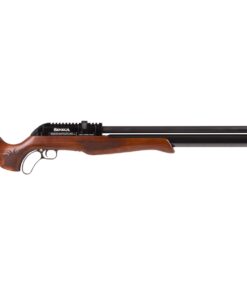
Calibers, FAC Status, Power Tuning and Accessories for the Seneca Eagle Claw Carbine
Two proven hunting calibers are offered on the Seneca Eagle Claw Carbine so that different game sizes and local regulations can be matched. Consequently, a 10-shot rotary magazine is supplied in .22 while an 8-shot magazine is supplied in .25. Moreover, both chambers are designed for skirt-first loading, and reliable feeding is therefore obtained when pellets or compatible slugs are seated correctly.
Caliber Choices and Typical Applications
Greater pellet velocity and a higher magazine capacity are provided by the .22 chamber. As a result, this option is frequently selected for pest control, rabbits, and longer-range practice when a flatter trajectory is preferred. In contrast, increased sectional density and muzzle energy are delivered by the .25 chamber. Therefore, this caliber is commonly chosen for larger small game and for situations in which extra knockdown is valued. Furthermore, both versions share the same 17-inch shrouded barrel, 380 cc cylinder, and lever-action platform, so handling remains consistent regardless of the caliber that is selected.
A wide range of quality ammunition can be used. Specifically, medium-to-heavy domed pellets and hunting slugs are generally favored because lighter projectiles can be driven well beyond optimal speed at higher power-wheel settings. Likewise, magazine compatibility should be verified before heavier slugs are loaded, because some designs sit loosely and feeding issues can occasionally be encountered.
FAC Requirements and Legal Power Considerations
In the United Kingdom a Firearm Certificate is required because advertised energy far exceeds the 12 ft-lb airgun limit. Consequently, the Seneca Eagle Claw Carbine cannot be purchased or possessed as a Section 1 air rifle without the appropriate FAC and conditions. Elsewhere, local power, caliber, and hunting restrictions must still be observed. In addition, transport, storage, and use laws vary by country and region; therefore, current regulations should always be confirmed before an order is placed or the rifle is taken afield.
Responsible ownership is expected of every shooter. Eye protection, a safe backstop, and secure storage are essential. Moreover, the rifle is intended only for adult users who understand that misuse can cause serious injury. Inclusive language is used because the platform is suitable for any licensed or legally entitled adult who values precision and ethical hunting.
Adjustable Power, Velocity and Shot Count
An external power-adjustment wheel is located on the underside of the forend, immediately ahead of the cocking lever and behind the pressure gauge. Velocity is therefore increased when the wheel is turned counter-clockwise and decreased when it is turned clockwise. As a result, a broad performance envelope is obtained: low settings produce backyard-friendly speeds near 550 fps, while higher settings produce advertised figures approaching 1070 fps in .22 and 920 fps in .25.
Muzzle energy of up to approximately 45 fpe in .22 and 64–65 fpe in .25 is generated when suitable heavy pellets or slugs are used at elevated settings. Consequently, ethical small-game performance is available when the wheel is set correctly. At the same time, shot count is reduced as power is raised. Manufacturer figures indicate roughly 28 usable shots in .22 and 20 shots in .25 from a 3000 psi / 200 bar fill when the wheel is near maximum. Conversely, additional shots are obtained when power is moderated. A Foster quick-disconnect fitting is provided so that the 380 cc cylinder can be refilled from a compressor, scuba tank, or hand pump without adapters in most cases.
Trigger pull can also be refined. A 2 mm Allen screw is accessed by lifting the lever, and release weight is therefore adjusted in small increments. A two-stage feel with a short first stage and a distinct second-stage wall is typical from the factory.
Accessories That Complete the Seneca Eagle Claw Carbine
A Weaver/Picatinny rail is already machined into the receiver, so a quality hunting scope or compact red-dot can be mounted immediately. Furthermore, extra magazines are strongly recommended because a spare loaded magazine allows the rifle to stay in action during a hunt. Likewise, a compact PCP compressor or a 3000 psi fill tank simplifies field topping-up.
Additional items that are commonly paired with this carbine include:
- Extra 10-shot (.22) or 8-shot (.25) magazines
- Medium-to-heavy hunting pellets and tested slugs
- A 3–9× or 4–16× airgun-rated scope with a suitable mount
- Foster-compatible fill whip and bleed valve
- Quality eye and hearing protection
- A padded sling or compact case for the 41.5-inch carbine
- Optional moderator adapter where local law permits further sound reduction
A one-year limited warranty is supplied by the manufacturer. Therefore, registration and adherence to the fill-pressure limit of 200 bar / 3000 psi are advised so that coverage is retained. When these accessories and legal requirements are observed, the Seneca Eagle Claw Carbine is transformed into a complete, tunable hunting and practice system that remains compact, fast-cycling, and adaptable to a wide range of small-game and pest-control tasks.
Practical Use Scenarios in the Field and Around Property
Everyday shooting tasks are handled most effectively when power, ammunition, and position are matched to the situation at hand. Consequently, a compact lever-action PCP with an adjustable power wheel and a short, shrouded barrel is employed across pest work, small-game hunts, and structured practice. Moreover, rapid follow-up capability is retained because the lever is cycled in a single, familiar motion and a rotary magazine is kept loaded. Therefore, a wide range of distances and target sizes can be addressed without a second rifle being carried.
Inclusive language is used throughout because these scenarios are intended for any responsible adult shooter who observes local law, confirms a safe backstop, and treats every shot as if it will leave the property.
Pest Control Around Barns, Gardens and Outbuildings
Quiet, repeatable shots at modest range are required when rodents, pigeons, or similar pests concentrate near buildings. Accordingly, the power wheel is turned toward a lower setting so that report is reduced and over-penetration risk is limited. In addition, a medium-weight domed pellet is selected because stable flight and adequate energy are still produced inside 30–40 yards. Meanwhile, a compact optic or a low-power variable scope is left on a moderate magnification so that a clear sight picture is obtained in dim corners and under eaves.
Approach is made from cover whenever possible. Subsequently, a stable rest is taken against a fence post, truck bed, or shooting sticks. A first shot is then released only after the backstop has been verified—earth, a solid wall, or an area free of people, livestock, and glass. If a second animal remains, the lever is worked immediately and the next chamber is indexed. As a result, a small group can be addressed before the remainder scatter.
Follow-up speed is especially useful at dusk when several pests appear together on a feeder or along a foundation. Furthermore, the carbine’s overall length of just over forty inches allows it to be carried through doorways and around equipment without constant snagging. Likewise, weight near eight pounds is low enough that the rifle can be held ready for several minutes without excessive fatigue.
After a session, remaining air pressure is checked on the underside gauge. If the cylinder is low, a Foster fitting is used to top off from a tank or compressor before the next evening’s work. Extra magazines that have already been loaded skirt-first are kept in a pouch so that time is not spent filling chambers in poor light.
Small-Game Hunting in Mixed Cover and Open Edges
Ethical harvest of rabbits, squirrels, and similar species is supported when energy, shot placement, and range are controlled. Consequently, the power wheel is raised for woodland or field edges where 40–60 yards may be required. Heavier pellets or tested slugs are then chosen so that adequate energy is retained at the target. In addition, a hunting-rated scope with a simple holdover reticle is mounted on the Weaver-style rail so that range estimation is simplified.
Still-hunting and stand hunting are both practical. When movement is made through brush, the compact barrel and Monte Carlo stock keep the rifle close to the body. Checkering on the grip and forestock helps the hands stay planted when gloves are worn or when dew is present. A rubber pad reduces felt pulse so that a second shot can be taken from the same position if a follow-up is needed.
A typical sequence is as follows. First, wind and light are assessed. Next, a shooting lane is chosen that ends in a safe earthen backstop. Thereafter, the animal is allowed to present a clear vitals angle. The first stage of the trigger is taken up, the second-stage wall is felt, and the shot is released. If the animal moves only a short distance, the lever is cycled and a second round is sent without the rifle being lowered from the shoulder for long. Rapid cycling of this kind is one of the platform’s strongest field advantages.
Shot count on a full cylinder is finite at high power. Therefore, a hunting day is planned around roughly twenty usable high-energy shots in the larger caliber or the high twenties in the smaller caliber, depending on wheel setting and projectile weight. A spare filled cylinder or a portable compressor in the vehicle extends the day when multiple stands are used. Pressure is monitored frequently so that velocity does not drop unnoticed on later shots.
Weather is managed rather than ignored. In rain, the action is kept as dry as possible and the rifle is wiped before it is cased. In cold, lubrication that remains fluid at low temperature is preferred, and extra time is allowed for a consistent hold. Wind at longer ranges is respected; if drift cannot be called with confidence, the shot is passed.
Structured Practice, Plinking and Skill Building
Marksmanship is improved when the same rifle that is carried afield is also used on paper and reactive targets. Accordingly, the power wheel is lowered for backyard or club ranges so that neighbors are less disturbed and pellet cost is reduced. Light-to-medium pellets that group well at 25–50 yards are selected. Groups are then fired from supported and unsupported positions so that real hunting holds are rehearsed.
A simple session might include:
- Ten shots from a bench to confirm zero after a fill
- Ten shots from sitting or kneeling to simulate a field rest
- A short string of rapid lever cycles on a large reactive target to groove follow-up timing
- A final slow group at a smaller aiming mark to restore precision





Reviews
There are no reviews yet.