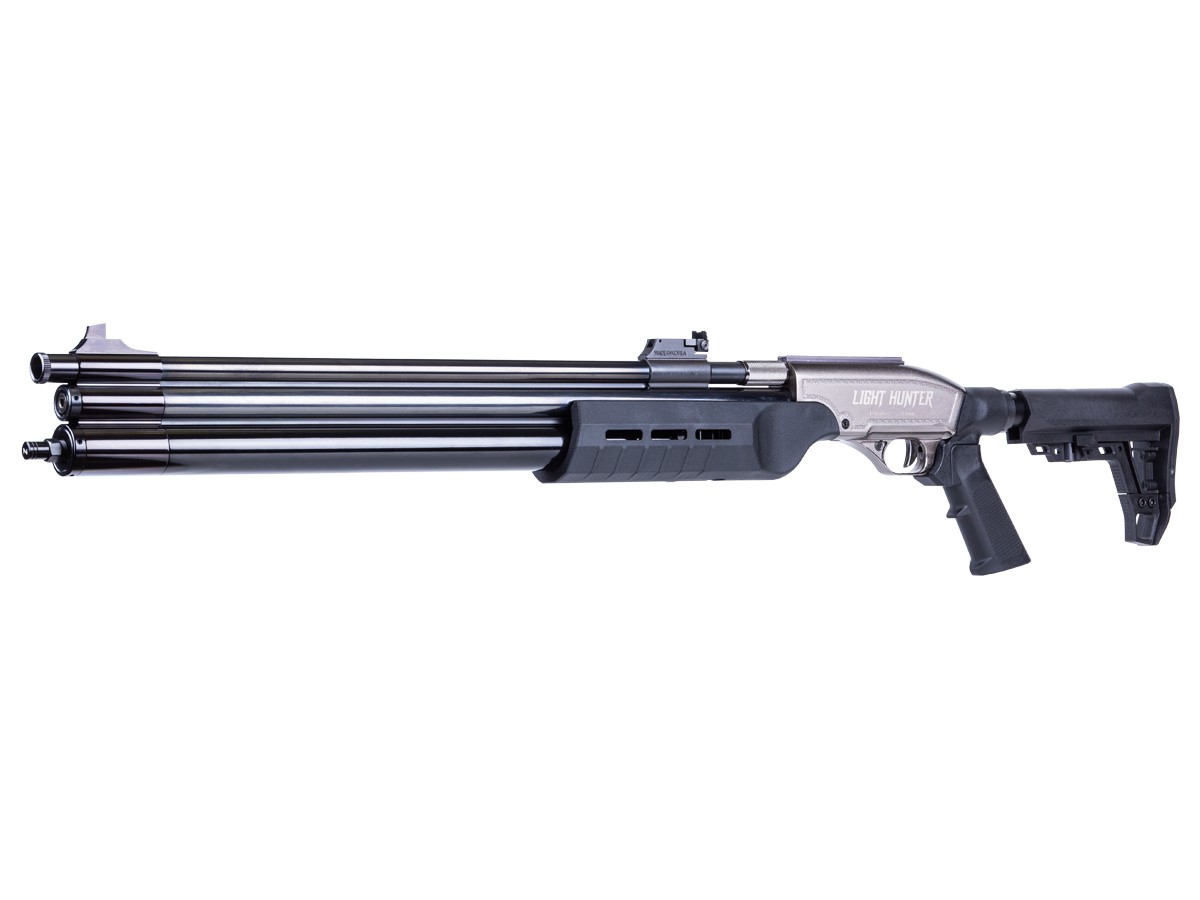
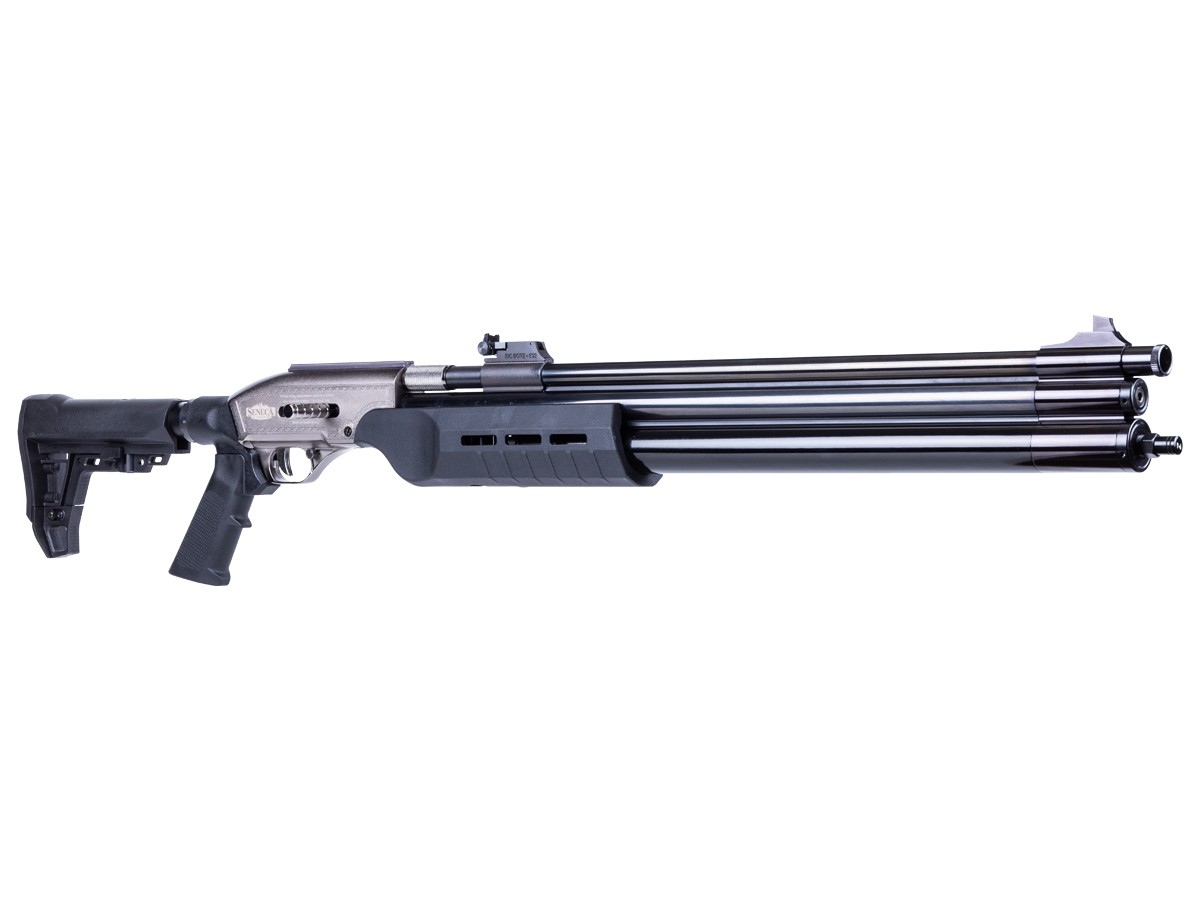
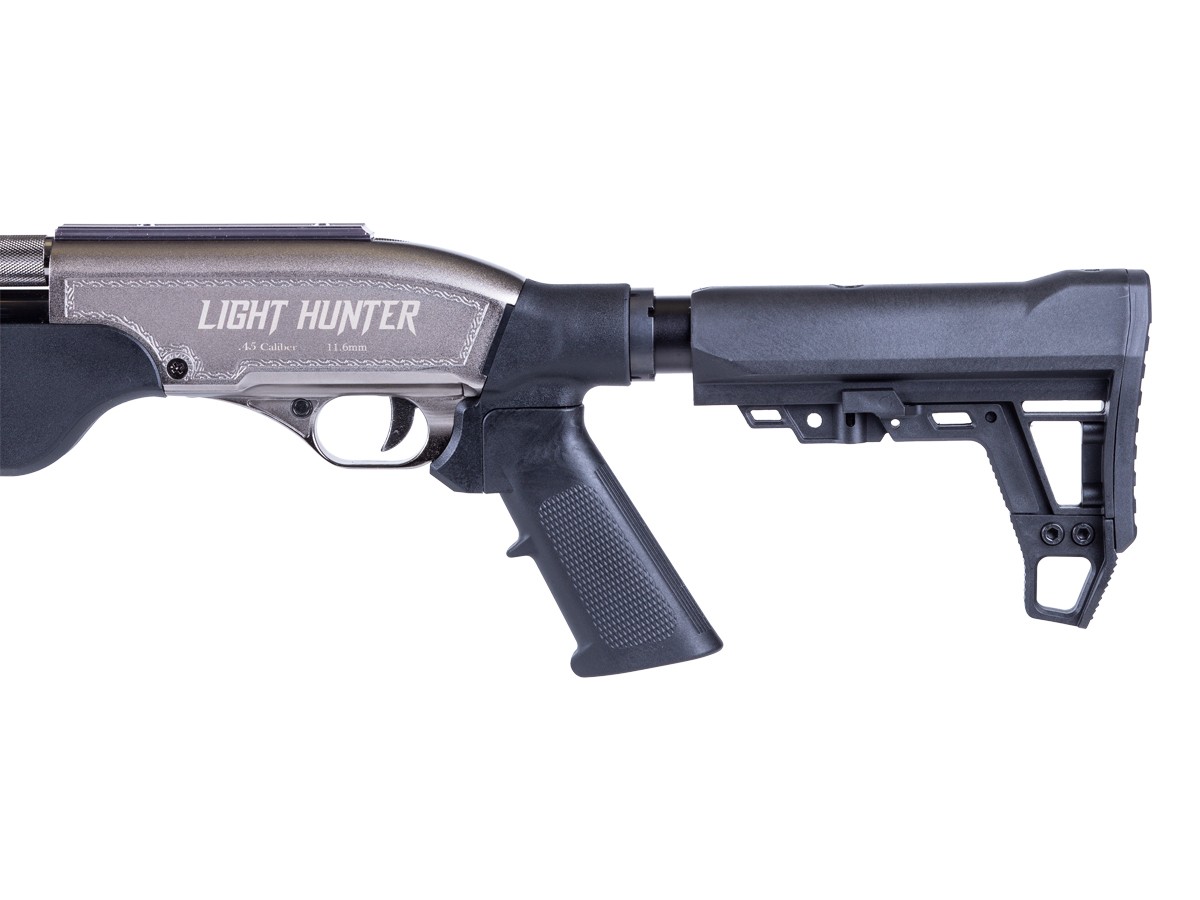
A lightweight tactical chassis is fitted to the same high-output action that made the Dragon Claw II famous. In addition, overall weight is kept near 7.6 lb so that all-day carry is made more practical. Likewise, overall length can be adjusted from 39.75 in to 43 in. As a result, shooters of different statures and clothing layers can be accommodated without compromise.
A total of 500 cc of air is stored in two under-barrel reservoirs. Meanwhile, a maximum fill pressure of 3,000 psi is supported. Subsequently, a built-in manometer is provided so that remaining pressure can be monitored at a glance. Additionally, a male Foster quick-disconnect fitting is included on the rifle. Hence, a compressor or tank can be connected quickly in camp or at the range. Notably, two power settings are selected by the bolt’s first or second stop. Thus, practice shots can be taken at reduced output while hunting shots can be reserved for full energy.
Round balls, flat-nose slugs, and Seneca Air Bolts can all be loaded through the wide single-shot breech. Consequently, up to 860 fps can be achieved with 177-grain round balls. Moreover, velocities above 800 fps can typically be held for four to five shots, while speeds above 700 fps can often be maintained for eight to nine shots. In contrast, 336-grain slugs are used when maximum energy is needed. Thereafter, advertised output of up to 340 fpe can be realized, and three to four hunting-class shots above 300 fpe are commonly reported. Similarly, Air Bolts of approximately 430 grains can be driven at or above 600 fps. Ultimately, one of the fastest air-bolt platforms available is placed in the hands of the shooter.
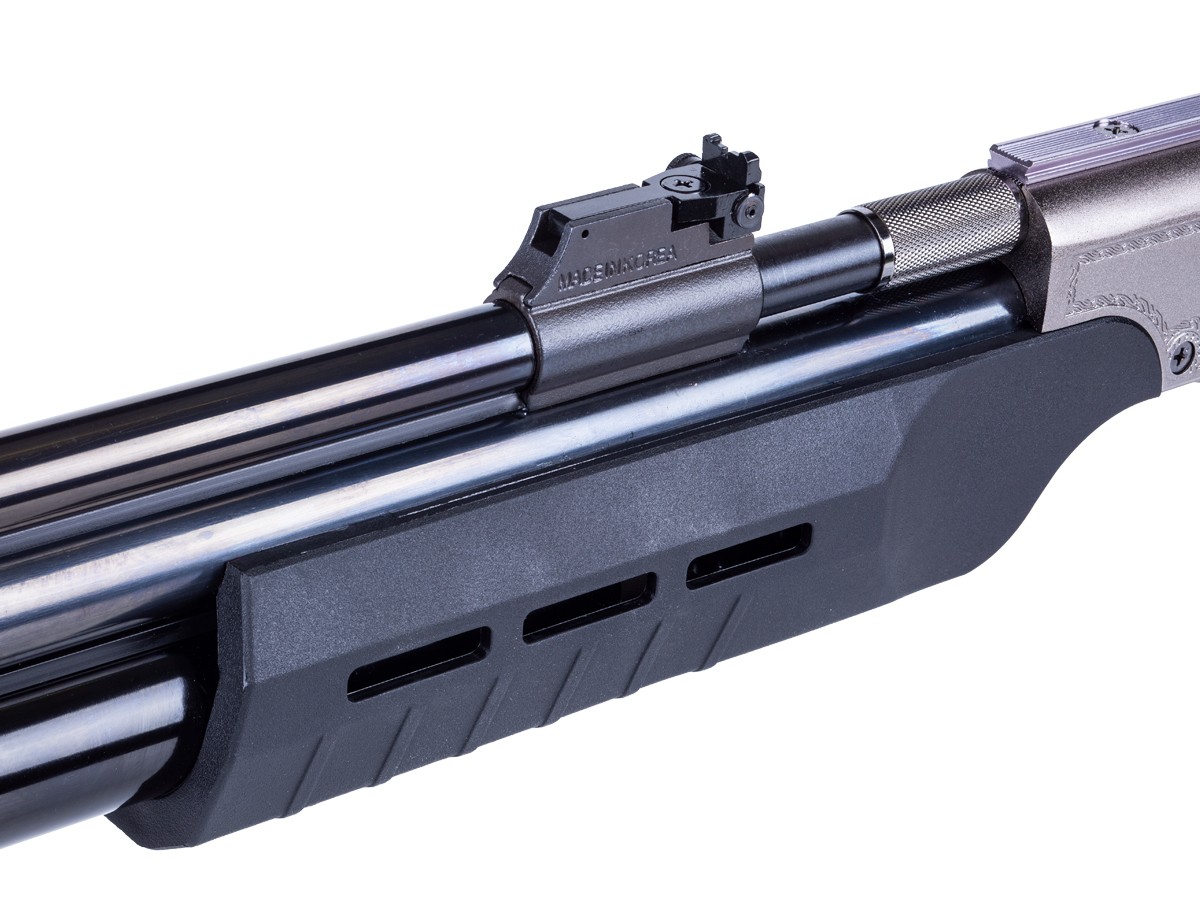
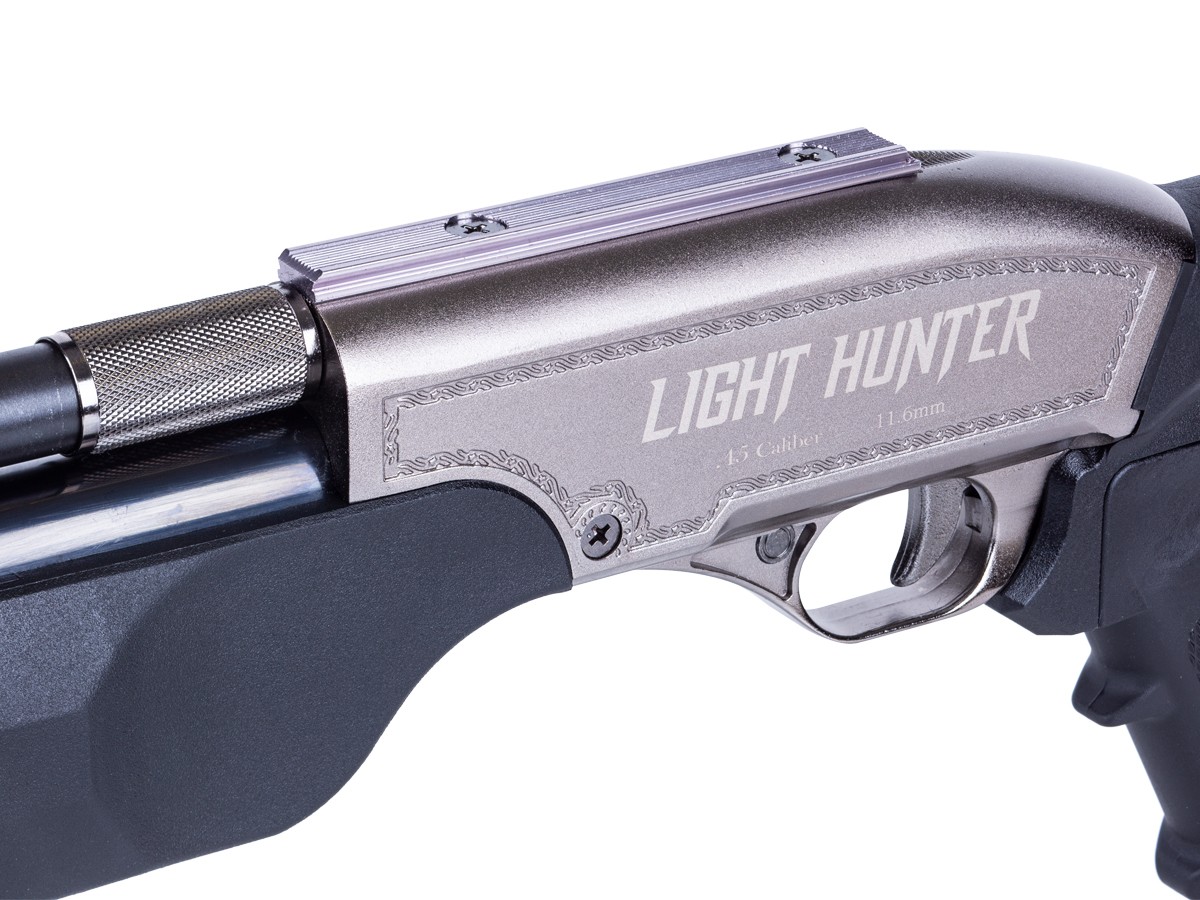
A polymer forend with M-Lok slots is fitted so that lights, bipods, or other accessories can be attached without tools. Furthermore, an A2-style AR grip is installed for a familiar, secure hold in any weather. Likewise, a six-position adjustable AR stock with rubber buttpad is provided so that length of pull can be matched to the shooter. In addition, a 21.65 in rifled barrel is employed for slug and bolt accuracy. Meanwhile, a fixed front blade and a fully adjustable, removable rear sight are supplied for iron-sight use. Subsequently, an 11 mm dovetail rail is present so that a compact optic can be mounted when longer-range work is planned.
Hunting-class energy is generated by the Seneca Dragon Claw II Tactical when appropriate ammunition and shot placement are used. Therefore, game such as feral hogs, javelina, coyotes, and, where legal and skillfully executed, similarly sized animals can be taken humanely at responsible distances. Moreover, the first few shots from a full fill typically carry the highest energy. Consequently, a disciplined two- or three-shot hunting string is recommended by many experienced users. Additionally, filling slightly below the absolute maximum (around 2,850 psi in some reports) can produce a more consistent point of impact on the first shot. Nevertheless, each rifle should be chronographed and zeroed with the exact load that will be used in the field.
Loudness is rated high. Hence, hearing protection is advised whenever the Seneca Dragon Claw II Tactical is fired. Likewise, local airgun hunting regulations, minimum energy requirements, and licensing rules must be verified before any hunt is planned. Responsible ownership and legal compliance are expected of every shooter.
Close-cover hog work can be supported when a compact optic and a weapon light are mounted on the M-Lok slots. Meanwhile, longer still-hunts can be made more comfortable because the adjustable stock and reduced weight relative to the wood-stocked version are employed. Furthermore, range sessions can be completed economically when the lower power stop is selected and round balls are used. Thereafter, the same rifle can be switched to slugs or Air Bolts for a dedicated hunting outing. In this way, one platform serves practice, pest control, and big-bore hunting without a second purchase.
A longer cocking handle is fitted so that the increased hammer spring of the higher-output action can be managed more easily. In addition, a manual safety that functions when the action is cocked is provided. The trigger is a single-stage design with a published pull of approximately 7.5 lb; actual feel may vary slightly from rifle to rifle. Therefore, dry-fire practice and live confirmation of the exact break are recommended. Moreover, the open breech makes inspection and loading straightforward for shooters of all experience levels.
Inclusive design choices are visible throughout. The ambidextrous AR grip and adjustable stock allow the Seneca Dragon Claw II Tactical to be set up for left- or right-handed use and for different body sizes. Consequently, more outdoor enthusiasts can share the same rifle or find a comfortable personal fit.
Caliber .50 is specified. Maximum advertised velocity of 860 fps and muzzle energy of 340 fpe are listed. The powerplant is unregulated PCP. Function is single-shot bolt action. Barrel length is 21.65 in. Cylinder capacity is 500 cc. Operating pressure is 3,000 psi. Suggested use is hunting. A compact scope is advised on the 11 mm rail.
A modern tactical layout is united with proven big-bore performance in the Seneca Dragon Claw II Tactical. Therefore, serious hunters who want slug energy, Air Bolt speed, and AR-style adjustability in one package are given a compelling option. Furthermore, accessories can be added as needs change. Ultimately, ethical power, practical carry weight, and ammunition flexibility are placed within reach.
Local laws must be observed, safe handling must be practiced, and shot placement must be mastered before any live hunt is undertaken. When those responsibilities are met, the Seneca Dragon Claw II Tactical stands ready to deliver the knockdown authority that big-bore airgunning is known for.
Air Venturi, Seneca and Modern Pneumatic Airgun Platforms
Modern pneumatic shooting equipment now covers everything from compact target platforms to large-calibre sporting systems. One of the most recognizable models in this category is the air venturi avenger, which combines adjustable PCP technology with practical ergonomics and a versatile configuration. Shooters researching more modular designs may instead consider the air venturi avenge-x, while searches for avenger x, avenge x, avenge-x, and avenge x tactical often reflect interest in newer configurations built around adaptability.
Calibre is another major consideration. Someone researching a rifle pcp avenger 6.35 may be interested in a larger pellet option, while the less common search variation avenge xx can lead buyers toward the same general product family. Regardless of terminology, choosing the correct rifle should depend on shooting discipline, preferred calibre, physical dimensions, available filling equipment, and local regulations.
Exploring the Dragon Claw Big-Bore Family
The dragon claw air rifle represents a substantially different category from conventional small-bore pneumatic equipment. Searches for a dragon claw 50 caliber air gun generally come from users exploring large-calibre compressed-air platforms designed for specialized sporting applications.
Alternative search terminology such as dragonclaw gun, dragon claw airgun 50 cal, and dragon claw air gun can also appear when buyers are comparing models, ammunition options, accessories, and availability. Shoppers researching dragon claw 50 caliber air rifle price should pay attention not only to purchase cost but also to filling equipment, appropriate projectiles, maintenance requirements, and applicable laws.
The phrase dragon claw 50 cal is commonly associated with this powerful pneumatic category. Within the manufacturer’s lineup, the seneca dragon claw is particularly well known, while the seneca dragon claw 50 caliber designation helps distinguish its calibre from smaller pneumatic rifles. A more specialized configuration may be found through searches for the seneca dragon claw 2 tactical.
Understanding the Wider Airgun Market
The spelling air ventura occasionally appears during online product searches even though buyers are often looking for Air Venturi equipment. The broad term air gun encompasses several operating systems, including PCP, CO2, spring-piston, gas-ram, and multi-pump pneumatic designs.
Other variations such as air rifle com, aventuri, and airrifle regularly appear in search data. Regardless of spelling, shoppers should distinguish between different powerplants before comparing specifications.
Modern pcp air rifles store compressed air in an onboard reservoir. By comparison, pneumatic air rifles is a broader description that may also include multi-pump and other compressed-air systems. Unusual search wording such as airbun air may appear alongside more conventional product terminology.
An air hunting rifle should always be selected according to the lawful quarry, calibre requirements, accuracy, projectile performance, and permitted energy level in the shooter’s jurisdiction.
Seneca Airgun Platforms
The broader seneca air rifles catalogue contains several types of pneumatic equipment rather than one single operating system. Someone looking for a seneca dragonfly mk2 is researching a considerably different platform from a large-bore Dragon Claw.
A general search for seneca air rifle may produce PCP, multi-pump, and specialized sporting models. Likewise, seneca air is sometimes used as shorthand when users are trying to locate the brand or its product range.
The seneca dragonfly emphasizes a self-contained pneumatic design, making it particularly appealing to shooters who do not want to depend entirely on an external high-pressure filling source. Buyers searching seneca dragonfly mk2 for sale should verify calibre, condition, warranty, and exact generation before ordering.
The simplified term dragonfly mk2 is another common product query. Meanwhile, the seneca dragon claw ii refers users back toward the company’s big-bore category, and searches for seneca guns can cover its wider pneumatic catalogue.
Air Venturi Alpha Series
The air venturi alpha provides another option for users exploring PCP technology. Its design is aimed at shooters who want practical pneumatic performance without immediately moving into highly specialized big-bore equipment.
A more maneuverable alternative can be found in the air venturi alpha compact. Compact dimensions may be attractive for shooters who value reduced overall length, although specifications should still be compared carefully.
Search terms such as alphagun airx, alphapure, alpha airx, alpha pri, and alpha air can sometimes appear in related search results. Because these terms can refer to different products or even unrelated categories, confirming the exact manufacturer’s model name is important before purchasing accessories or replacement parts.
Someone searching air venturi alpha for sale should examine included equipment, calibre, fill requirements, product condition, warranty, and regional specification. The air venturi alpha air rifle can then be evaluated based on intended recreational or sporting use rather than advertised specifications alone.
Air Venturi MicroStrike
Compact PCP development continues with the air venturi microstrike, a platform designed around reduced dimensions and pneumatic operation. Some users may search for it as the air venturi micro strike, particularly when comparing listings across different online marketplaces.
The phrase microstrike pcp emphasizes its operating system, while microstrike air venturi combines the product and manufacturer names in reverse order. A general search for micro rifle may also lead buyers toward compact pneumatic equipment from several manufacturers.
Compactness should never be mistaken for a lack of capability. Pressure ratings, calibre, energy, ammunition compatibility, and safe handling requirements remain important regardless of overall dimensions.
High-Powered Pneumatic Rifles and Maintenance
People researching the best high powered air rifles for hunting should compare far more than muzzle velocity. Accuracy, retained projectile energy, calibre, shot consistency, rifle balance, ethical shooting distance, and local hunting legislation all influence whether a platform is appropriate.
Owners occasionally search airventure avenger disassembly instructions when maintenance becomes necessary. Because high-pressure reservoirs can contain substantial stored energy, internal servicing should follow official manufacturer documentation and appropriate depressurization procedures.
Specialized projectile systems also appear within the pneumatic market. An air bolt gun uses compressed-air technology with a projectile system different from an ordinary pellet rifle. Searches for airbolt gun, air bolt, airbolt, and airbolt rifle illustrate the variety of wording customers use when researching this category.
The phrase pax bolt may also appear among specialized projectile-related searches. Exact compatibility should always be confirmed directly against the intended launcher or rifle before accessories are purchased.
Pneumatic Shotgun Systems
Another specialized category is the air shotgun for hunting, which uses compressed air rather than conventional firearm propellant. These platforms are niche products that should be evaluated according to local hunting regulations and manufacturer-approved ammunition.
The wingshot is associated with pneumatic shotgun technology, while the alternative spacing wing shot is frequently used during online searches. Such designs demonstrate how compressed-air technology can extend beyond traditional pellet rifles.
Understanding 12-Gram CO2 Cartridges
CO2-powered airguns use a different energy source from high-pressure PCP systems. Small pistols and recreational platforms frequently depend on 12g co2 actuation cartridges for their operating gas.
A standard 12g co2 cartridge is a small disposable cylinder containing compressed carbon dioxide. Buyers may also search for a 12 gram co2 cartridge, 12gram co2 cartridge, or simply co2 12g when purchasing replacements.
The search term 12grams is sometimes entered without reference to CO2, while co2 cartridges 12g clearly identifies the intended accessory. Other variations include 12-gram co2 cartridge, co2 12 gram, and 12 g co2 cartridges.
Although these terms describe the same general cartridge format, users should check the equipment manufacturer’s specifications before installation because seals, dimensions, piercing mechanisms, and compatibility can vary.
PCP Air Rifle Technology Explained
A pcp air rifle is powered using compressed air stored inside an onboard cylinder or bottle. The misspelling air rifel can sometimes appear in customer searches but generally refers to the same broader equipment category.
People asking what is a pcp air rifle are essentially asking how pre-charged pneumatic technology differs from spring-powered or CO2-based systems. In PCP equipment, the reservoir is filled beforehand and subsequently meters compressed air during firing.
An ar15 air rifle normally describes a pneumatic platform that uses modern sporting-rifle-inspired styling or ergonomics. Its appearance does not mean that its internal operating mechanism is the same as a firearm.
Similarly, marketing descriptions such as high powered air gun and high velocity air rifle should be evaluated alongside energy, calibre, accuracy, intended role, and legal restrictions rather than being used as the sole basis for a purchase.
Large-calibre equipment may be found through the unusual combined search phrase big bore pcp air riflespcp shotgun, which overlaps two specialized pneumatic categories.
Seneca Double Shot and Wingshot Systems
The seneca double shot .50 cal double barrel shotgun is a distinctive pneumatic platform that differs considerably from conventional pellet rifles. Its double-barrel arrangement makes it one of the more unusual products within the compressed-air sporting market.
A shorter search for seneca double shot generally leads toward the same family. The designation seneca double shot .50 cal highlights its large-calibre format and helps distinguish it from smaller recreational equipment.
Another search for wingshot products may lead users toward pneumatic shotgun-style equipment capable of using manufacturer-approved projectiles or shot loads, depending on the specific model.
A double barrel air gun differs operationally from ordinary repeating pellet rifles. Likewise, the phrase shotgun air rifle is commonly used by shoppers attempting to describe hybrid pneumatic designs.
The simpler term double shot gun may produce broader results, so confirming the exact product before ordering parts or accessories remains important.
Avenger Components and Modular PCP Configurations
One component researched by existing owners is the air venturi avenger rear barrel support. Parts compatibility can depend on production generation, stock configuration, barrel arrangement, and other dimensional considerations.
The term avenge x pcp is commonly used by users specifically interested in the pre-charged pneumatic version of the modular platform. Understanding reservoir volume, regulator settings, fill pressure, stock design, and calibre availability is more useful than relying exclusively on headline velocity figures.
Air Venturi V10 and Precision Air Pistols
The air venturi v10 belongs to a different shooting category from larger pneumatic rifles. It is associated with precision pistol shooting and is therefore more relevant to shooters interested in balance, trigger feel, grip ergonomics, and controlled target performance.
Someone searching for a strong bb pistol may have different requirements because BB pistols are commonly designed for recreational shooting rather than formal precision disciplines.
A 10m air pistol is normally optimized for target competition at a standardized distance. Such equipment emphasizes repeatability and shooter control rather than maximum projectile velocity.
For beginners asking what is an air pistol, the term describes a handgun-format device powered by compressed air, CO2, spring mechanisms, or related airgun technologies.
An air metal gun usually refers informally to an air-powered pistol or replica featuring significant metal construction. A .50 cal air pistol, by contrast, belongs to a much more specialized large-calibre pneumatic category.
Searches for a 1000 fps pellet pistol frequently focus heavily on advertised velocity, although actual performance depends on pellet weight, test conditions, barrel design, and the specific platform.
The discipline of shooting air pistol can range from informal recreational practice to organized competition. A conventional air pellet pistol fires shaped pellets rather than spherical BB ammunition.
Competitive users interested in target shooting air pistol equipment should prioritize consistent sights, suitable grips, predictable triggers, and repeatable shot behavior.
The alternative question what is a air pistol means essentially the same thing as the grammatically standard wording but appears frequently in search queries. Meanwhile, a 22 air pistol refers to a platform chambered for .22-calibre airgun projectiles.
Choosing the Right Pneumatic Platform
Modern pneumatic equipment provides buyers with an exceptionally broad selection. Some platforms emphasize affordability and straightforward recreational use, while others focus on modularity, compact dimensions, precision competition, specialized projectiles, or large-calibre sporting performance.
The most suitable option should therefore be selected according to practical requirements. Buyers should consider calibre, reservoir capacity, pressure requirements, intended shooting discipline, rifle dimensions, ammunition availability, filling equipment, accessory compatibility, maintenance support, warranty coverage, and applicable legislation.
A carefully selected pneumatic platform can provide excellent consistency and a smooth shooting cycle when operated according to manufacturer specifications. More importantly, appropriate eye protection, secure storage, a reliable backstop, proper handling, and compliance with local laws should remain part of responsible ownership regardless of power level or platform style.
Practical Use Scenarios in the Field and on the Range
Ethical results are produced only when power, ammunition, distance, and shot placement are matched to the task. Consequently, several realistic situations can be planned in advance so that the same big-bore precharged platform can be employed for practice, pest work, and legal hunting. Inclusive participation is supported when length of pull, optic height, and accessory layout are adjusted for different body sizes, clothing layers, and shooting positions. Moreover, local statutes must be confirmed before any live animal is pursued, because high muzzle energy places this class of air rifle under firearms or special-licence rules in many jurisdictions.
Still-Hunting Timber and Brush Edges
Quiet movement through mixed timber is often required when hogs, javelina, or similarly sized game are expected at modest range. Therefore, overall length can be shortened on the adjustable stock so that the rifle can be carried through tight cover without snagging. Furthermore, a compact optic can be mounted on the short dovetail so that a fast sight picture is obtained when a target appears in a lane. Meanwhile, a sling can be attached at M-Lok or stock points so that hands remain free for binoculars or for moving brush. Subsequently, the first high-energy shot from a fresh fill is reserved for the intended animal. As a result, the declining-velocity string of an unregulated reservoir is not wasted on a rushed follow-up that would have been better taken after a refill.
Hearing protection should be worn even on a still-hunt. In addition, a weapon light can be left off until legal shooting light or a confirmed target requires it. Night or last-light work is legal only where statutes allow; otherwise the light remains a safety and identification tool at camp. Ultimately, patience and a clear lane matter more than raw energy. A poorly angled shot at a moving animal should be passed, regardless of advertised foot-pounds.
Close-Cover Hog and Predator Work
Feral hogs and large predators around livestock often present at short to medium distance in thick cover. Consequently, a bipod or short vertical grip can be locked into the forend slots so that a supported position can be taken against a fence post or windmill base. Likewise, a high-output light can be mounted for positive identification after dark where such hunting is permitted. Moreover, heavy flat-nose slugs are typically selected so that energy is dumped inside the animal rather than wasted on excessive penetration with a light round ball. Thereafter, the full-power bolt stop is used. Thus, the first two or three shots from a 3,000 psi fill remain in the ethical window reported by many testers.
A second shot should be planned only if the first is clearly a miss or a non-vital hit and a safe backstop still exists. In contrast, a wounded animal that has entered dense brush should be given time and then tracked with care; blasting additional slugs into vegetation is rarely productive. Inclusive teams can rotate the rifle among licensed members once length of pull and optic focus have been set, provided each person has practiced the same load. Safe muzzle discipline is non-negotiable when several people share one high-energy gun.
Air-Bolt Hunting Where Statutes Allow
Air bolts can be launched from the same rifled barrel when arrow-style hunting is legal and when the shooter has practiced that projectile exclusively. Speeds at or above 600 fps with a heavy bolt produce a very different flight path from a 336-grain slug. Therefore, a dedicated zero and a dedicated quiver of identical bolts should be maintained. Furthermore, broadhead selection, arrow spine, and vane clearance must be confirmed so that the bolt leaves the bore cleanly. Subsequently, closer ranges than typical slug shots are often chosen because bolt drop and wind drift increase quickly.
Practice should be conducted on a target designed for high-speed arrows, not on a standard pellet trap. In addition, recovery of missed bolts should be planned; a 430-grain projectile that over-penetrates or glances can travel a long way. Ethical use still depends on shot angle and animal size. A bolt is not a substitute for poor marksmanship. Likewise, some regions classify air-bolt hunting differently from slug hunting. Hence, the regulation book—not a product brochure—decides whether this method may be used.
Range Development and Low-Power Practice
Two power stops are built into the bolt travel. Consequently, the first stop can be used for inexpensive practice with 177-grain round balls while air and component wear are conserved. Moreover, a chronograph should be placed so that actual velocity at each fill pressure is recorded. Thereafter, groups can be fired at 25, 50, and 75 yards to learn when point of impact begins to walk as reservoir pressure falls. As a result, a personal “hunting window” of two or three shots can be defined instead of relying on a generic shot-count claim.
Inclusive coaching is easier when the stock is collapsed for a smaller-statured shooter and then extended for a taller one. Trigger feel should be demonstrated dry (where safe and legal) before live fire. Additionally, hearing and eye protection are required for every person on the line because the report is rated high. A sturdy bench and a safe backstop rated for .50-caliber slugs and bolts must be used; ordinary pellet backstops are inadequate.
Fill discipline belongs in every range session. A slightly reduced fill has been reported by some testers to produce a more consistent first-shot impact than a hard 3,000 psi charge. Therefore, that procedure can be tested and adopted if groups improve. Leaks at the Foster fitting should be corrected immediately so that a hunt is not started on a soft reservoir.
Pack-In and All-Day Carry
Weight near the mid-seven-pound range, combined with a synthetic furniture set, makes a full day of walking more realistic than a heavier wood-stocked counterpart. Nevertheless, dual steel reservoirs and a 21-plus-inch barrel still add bulk. Consequently, a comfortable sling, a compact spotting scope, and a spare fill bottle or pump plan should be packed. Furthermore, extra slugs or bolts should be carried in a pouch that does not rattle. Meanwhile, weather protection for the optic and for the fill port is advisable because moisture and grit degrade seals.
Rest positions can be improvised against packs, tree trunks, or shooting sticks attached to M-Lok. Inclusive parties can share one fill source if Foster hoses and spare o-rings are carried. Communication about who takes the first shot prevents two people from firing into the same animal. After a successful harvest, the rifle can be made safe, the bolt opened, and the reservoir pressure checked before the walk out.
Night Identification and Property Protection
Where law allows the taking of hogs or predators after dark, positive identification is the first duty. A weapon-mounted light on the forend can be used to confirm species, sex restrictions, and a safe backstop. In addition, neighbors, livestock, and buildings must be considered before any shot is released. High energy does not excuse a missed backstop. Moreover, some jurisdictions ban night hunting or restrict artificial light. Therefore, the calendar and the statute book come before the switch is pressed.
A lower-power practice load has no place in a live night shot at a large animal. Full-power slugs or legal bolts should be used only after daytime zero has been confirmed with that exact ammunition. Inclusive household members who are licensed can be trained on the same light-and-stock setup so that anyone on duty handles the rifle identically.
Training New or Occasional Shooters
High recoil impulse and a heavy trigger pull can surprise someone whose only experience is a 12 ft-lb club gun. Consequently, the first session should begin at the low power stop with round balls, a solid rest, and a large target at short range. Furthermore, the manual safety—which functions when the action is cocked—should be explained and demonstrated. Subsequently, loading the wide breech, closing the bolt fully to the chosen power stop, and following through can be rehearsed until they are automatic.
Inclusive language and unhurried coaching matter. Different eye dominance, shoulder injuries, and stature are accommodated by stock length and by allowing either shoulder where the cocking handle and safety still permit safe operation. No one should be pressured into a full-power slug shot until groups at reduced power are consistent and the shooter can call the shot. Legal storage and transport rules should be taught in the same session as marksmanship.
Seasonal and Weather Adjustments
Cold weather reduces felt comfort and can change regulator-less performance slightly as temperature affects pressure. Therefore, zeros should be confirmed in conditions similar to the hunt. Gloves change trigger feel; a rehearsal with the same gloves is recommended. Rain demands extra attention to the fill port and to optic lenses. Dusty agricultural country argues for a simple cover over the M-Lok accessories when the rifle is slung.
Summer heat increases the need for hearing protection and for hydration on long sits. A dark synthetic stock can become hot in direct sun; a light sling or shade helps. Inclusive planning includes extra water and a shared understanding of heat exhaustion signs among the hunting party.
After the Shot: Follow-Up, Fill, and Maintenance
A hit should be observed through the optic if it is safe to do so. Then the rifle is made safe and the animal is approached from a direction that keeps the muzzle controlled. If a follow-up is required, remaining pressure is checked on the onboard gauge. A soft reservoir is refilled before another hunting shot is taken. Slug or bolt choice for the follow-up should match the first shot unless a different projectile has been zeroed at the same point of impact—which is uncommon.
After the day, moisture is wiped from steel, the Foster fitting is inspected, and the rifle is stored unloaded in accordance with local law. Seals are replaced at the first sign of creep. Inclusive household rules—who may access the rifle, where ammunition is locked—should be written down and followed.
Putting the Scenarios Together
One unregulated .50-caliber platform can cover practice, property protection, and legal hunting only when each role is given its own ammunition, zero, and power stop. Moreover, accessories on the forend should be limited to what will actually be used that day so that snag points and weight are not added for fashion. Consequently, a still-hunt kit might be sling, compact scope, and slugs; a night hog kit might add a light and a bipod; a range kit adds a chronograph and a large box of round balls.
Skill remains the limiting factor. Energy figures and bolt speeds do not replace angle, distance, and patience. When those elements are respected, and when licensing and seasons are observed, practical use stays both effective and responsible for every shooter who shares the field.



 Click here for California’s Proposition 65 warning.



Reviews
There are no reviews yet.