Hi-Lux ART M1200XLR 6X-24X50 Scope with Red Mil Reticle
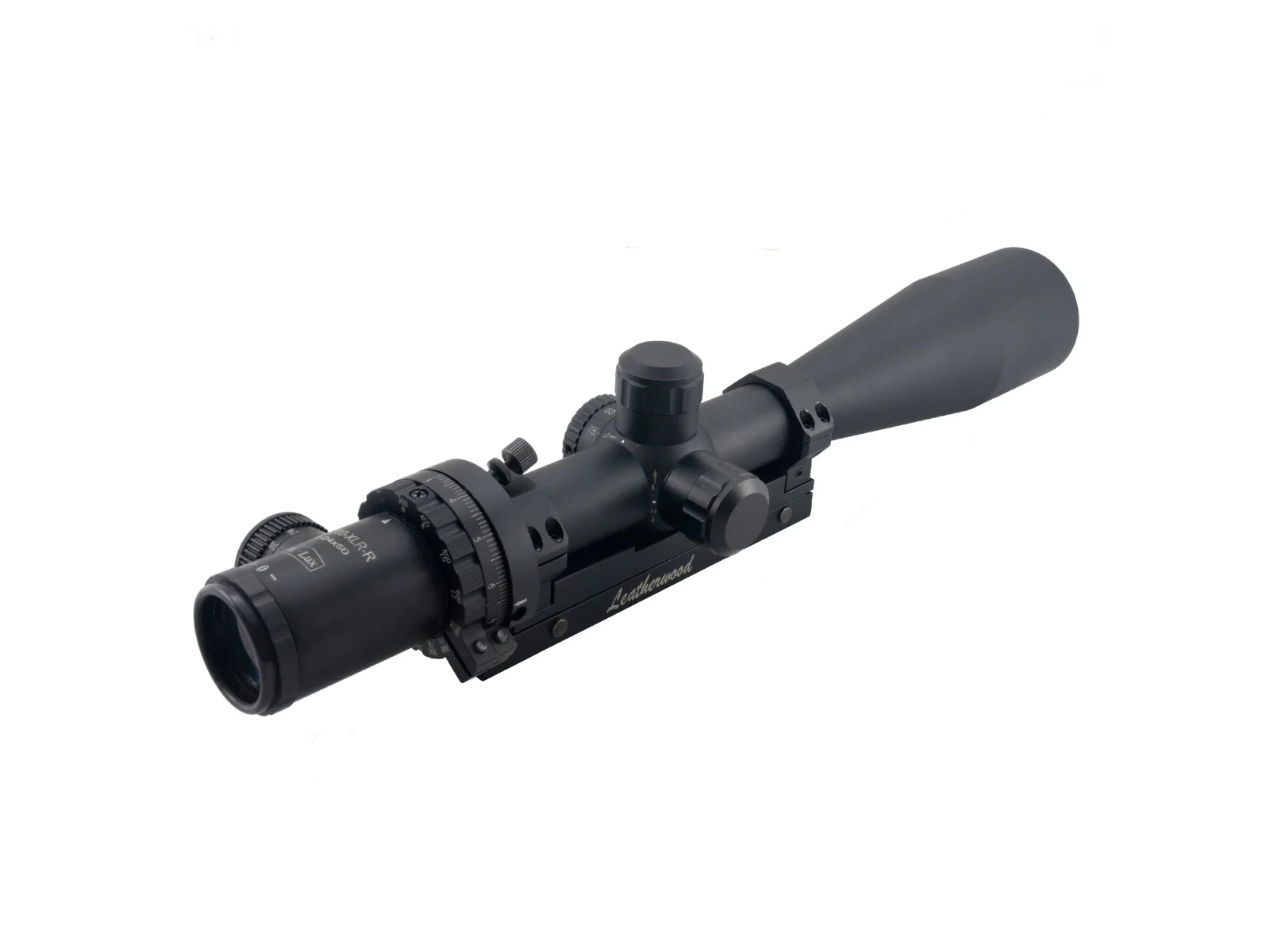
Long-range optical performance is taken to an advanced level with the Hi-Lux ART M1200XLR 6X-24X50 Scope with Red Mil Reticle. Designed around the proven Automatic Ranging Telescope concept, this precision optic has been engineered for shooters who require dependable magnification, accurate ranging capability, trajectory compensation, and exceptional target visibility across extended distances.
Rather than requiring constant manual calculations in the field, an integrated ART CAMputer ranging system is incorporated into the design. Consequently, range estimation and trajectory compensation can be simplified when the optic has been properly calibrated for the selected ammunition. Moreover, the broad 6X to 24X magnification range allows distant targets to be observed with increased detail while enough flexibility is retained for different long-range applications.
A generous 50 mm objective lens is also provided. Therefore, useful light transmission and target visibility can be maintained across demanding outdoor conditions. Meanwhile, the illuminated red ranging reticle provides additional contrast when backgrounds or lighting conditions make a conventional black reticle more difficult to distinguish.
Advanced 6-24X Magnification for Long-Range Observation
Versatility is provided through the variable 6-24X magnification system. At the lower end, a wider field of view can be maintained for locating and monitoring targets. Conversely, magnification can be increased progressively when smaller details need to be identified farther downrange.
Because magnification is continuously adjustable throughout this range, different viewing situations can be accommodated without another optic being required. Furthermore, fine target details can be examined more clearly when higher magnification is selected.
A field of view of approximately 12 feet at 100 yards at the lower magnification range and 4 feet at 100 yards toward maximum magnification is specified for the platform. As a result, a useful balance between situational awareness and precision observation is achieved.
Large 50 mm Objective Lens
A 50 mm objective lens has been incorporated into the Hi-Lux ART M1200XLR to provide a substantial optical entrance pupil. Consequently, a bright and usable sight picture can be delivered when lighting becomes less than ideal.
Additionally, image clarity is supported across the magnification range. Therefore, distant details can be examined without sacrificing the practical advantages expected from a dedicated long-range optic.
ART CAMputer Automatic Ranging System
One of the defining characteristics of the Hi-Lux ART M1200XLR 6X-24X50 Scope with Red Mil Reticle is its advanced ART CAMputer system.
A redesigned mechanical ranging and trajectory-compensation system has been integrated into the optic. Once the appropriate ballistic information has been entered and calibration has been completed, the system is designed to coordinate magnification with elevation compensation.
Instead of relying exclusively on separate range calculations, a target of known dimensions can be framed within the ranging brackets. As magnification is adjusted to correctly frame that target, corresponding trajectory compensation is mechanically applied through the ART system.
Consequently, the amount of manual adjustment needed during long-range shooting can be reduced.
The system has been designed around a wide variety of centerfire cartridges, while calibration is based on critical ballistic information such as muzzle velocity and ballistic coefficient. Long-range compensation capability is designed to extend from approximately 300 to 1,200 yards/meters depending on ammunition, cartridge capability, environmental conditions, and proper setup.
Red Illuminated Ranging Reticle
Target visibility can change significantly as lighting conditions, vegetation, terrain, and target backgrounds change. For that reason, a red illuminated ranging reticle is included.
Greater contrast can consequently be produced against darker backgrounds. At the same time, the ranging architecture of the reticle can be used alongside the ART system for target framing and distance-related compensation.
Because the optic uses a second focal plane configuration, the apparent reticle dimensions remain visually consistent as magnification is changed.
Precision MOA Adjustments
Precise zeroing and correction capability has also been incorporated into the design.
Adjustments are provided in 1/4 MOA increments, allowing relatively fine corrections to be applied during setup and zeroing. Additionally, approximately 60 MOA of elevation adjustment and 60 MOA of windage adjustment are specified.
External windage adjustment is also integrated into the mounting system. Therefore, additional mechanical adjustment capability is provided as part of the ART platform.
Once calibration and zeroing have been completed correctly, the scope can be configured around the ballistic characteristics of the chosen setup.
Highlighted Product Features
- Model: Hi-Lux ART M1200XLR
- Magnification: 6X-24X variable power
- Objective Lens: 50 mm
- Tube Diameter: 30 mm
- Focal Plane: Second Focal Plane (SFP)
- Reticle: Illuminated red ranging reticle
- Adjustment Value: 1/4 MOA per click
- Elevation Adjustment: Approximately 60 MOA
- Windage Adjustment: Approximately 60 MOA
- Minimum Eye Relief: Approximately 3 inches
- Field of View: Approximately 12 ft to 4 ft at 100 yards
- Minimum Parallax Distance: Approximately 25 yards
- Weight: Approximately 2.3 lb
- Power Source: CR2032 battery
- Illumination Runtime: Up to approximately 200 hours under specified conditions
- Ranging System: ART CAMputer trajectory-compensation system
- Integrated Mounting System: Yes
- Long-Range Compensation: Designed for extended-range centerfire applications
Built Around Long-Range Precision
While conventional scopes frequently require the shooter to calculate distance and then manually dial the corresponding elevation correction, a different approach is provided by the ART platform.
Range estimation and ballistic compensation have been designed to function together. Therefore, fewer separate steps may be required after the system has been correctly configured.
Furthermore, the 6-24X magnification, large objective lens, illuminated reticle, and mechanical ranging technology are combined within a single long-range optic.
For shooters who regularly work at varying distances, this integrated approach can be particularly valuable. Nevertheless, correct calibration remains essential because ballistic coefficient, velocity, ammunition consistency, atmospheric conditions, and actual projectile performance all influence trajectory.
Durable 30 mm Scope Construction
A 30 mm main tube is used to provide the structural foundation for the optic. Consequently, sufficient internal adjustment capacity can be incorporated while the scope remains suitable for demanding field applications.
The complete optic weighs approximately 2.3 pounds, reflecting the additional mechanical components required by the ART ranging and compensation system.
Rather than being designed as a lightweight minimalist scope, the M1200XLR has been developed as a specialized precision optic where ranging capability, optical magnification, adjustment range, and ballistic compensation are prioritized.
Flexible Performance Across Changing Distances
Conditions encountered during long-range observation rarely remain identical. Distances change, lighting changes, target size changes, and environmental conditions may shift rapidly.
Because of this, flexibility has been built into the Hi-Lux ART M1200XLR 6X-24X50 Scope with Red Mil Reticle.
At 6X magnification, targets can be acquired with a comparatively generous field of view. Subsequently, magnification can be increased when detailed observation becomes necessary. Meanwhile, the illuminated reticle can be activated whenever additional visual contrast is preferred.
Additionally, the ART system can be calibrated according to the ballistic characteristics of a compatible setup. Therefore, the scope is not limited to one specific ballistic profile.
Why Choose the Hi-Lux ART M1200XLR 6X-24X50?
Advanced long-range capability is achieved through more than magnification alone. Instead, optical clarity, ranging capability, repeatable adjustments, reticle visibility, and ballistic compensation must work together.
That combination is precisely where the M1200XLR distinguishes itself.
A powerful 6-24X zoom system is provided for extended-distance observation. Likewise, a large 50 mm objective supports a bright sight picture. Fine 1/4 MOA adjustments allow precise zeroing, while the red illuminated ranging reticle supports visibility across varied backgrounds.
Most importantly, the ART CAMputer system provides the defining advantage. Distance estimation and trajectory compensation have been mechanically linked, thereby creating an optic that offers a distinctly different approach from conventional long-range scopes.
Precision, Ranging and Optical Performance Combined
For users seeking an advanced long-range optic with an established ranging concept, the Hi-Lux ART M1200XLR 6X-24X50 Scope with Red Mil Reticle provides an impressive combination of optical power and mechanical sophistication.
Powerful variable magnification is supplied. A large objective lens is incorporated. Fine MOA adjustments are provided. Red illumination improves reticle contrast, while a second focal plane design maintains a familiar reticle presentation throughout the zoom range.
Above all, the ART CAMputer ranging and trajectory-compensation system sets this model apart.
When properly mounted, zeroed, and calibrated for the chosen ammunition, the M1200XLR can provide a highly capable optical platform for extended-range target observation and precision shooting applications.
For anyone comparing specialized long-range optics and seeking more than a conventional variable-power riflescope, the Hi-Lux ART M1200XLR 6X-24X50 Scope with Red Mil Reticle delivers a feature-rich combination of magnification, ranging technology, illuminated aiming reference, and precision adjustment capability in one purpose-built system.
Element Optics Scopes, Rangefinding Technology, Mounts, and Precision Optic Options
For shooters comparing modern precision optics, element theos has become an important search term, especially for people researching the theos scope and premium long-range configurations such as element theos 6-36, 36×56, and element theos 6 36×56. At the same time, more versatile configurations including element optics 2-10, element 2-10 scope, and element 2 10 scope appeal to users who prefer a wider balance between close-range visibility and higher magnification. Across the broader product family, element helix, element scopes, and related models give buyers several magnification, reticle, and mounting configurations to consider.

When researching an optics-focused scopes website, customers often compare element tactical products with equipment from another optic scope manufacturer. Product searches may also include element prism, titan scope, op element, and helix scope, particularly when comparing compact optics with traditional variable-power designs. Higher magnification options such as element optics 6-24×50 can suit users who prioritize a detailed sight picture and substantial adjustment range.
The premium range also includes the nexus scope, element nexus scopes, and broader nexus scopes category. Searches for nexus tactical equipment frequently lead buyers toward the nexus 4-25×50, while the element titan provides another recognizable alternative. Users comparing a 5-25 scope, 25/56, titan 5, or theos 2-10 generally look closely at optical clarity, turret construction, reticle layout, focal-plane configuration, adjustment tracking, and overall build quality. Consequently, search phrases such as element titan 5 25×56 ffp review and titan25 are commonly associated with buyers researching the Titan platform in greater detail.
Another frequently researched configuration is the element helix 6 24×50, particularly alongside the element nexus gen 2. Although these optics occupy different positions within a product range, potential buyers often compare their specifications before choosing an appropriate design. Reticle selection is equally important, which explains continued interest in rifle scope reticles, while electronic tools such as a ballistic rangefinder can complement a modern optic setup. Some search queries also contain unusual specification formats such as 12×4/2, so checking the manufacturer’s exact specifications remains important before interpreting any numerical value.
Versatile magnification searches commonly include 2-12 scope and 2×12 scope. Meanwhile, terms such as element vision, spectrum element, and even prismatic scale of the elements can appear alongside optics-related searches. A prismatic scope differs structurally from a conventional variable-power riflescope because it uses a prism-based optical system rather than the same internal lens arrangement typically associated with traditional scope designs. Searches for element 3.0 may likewise refer to product generations, technical updates, or model-specific terminology, depending on the context.
Technology-focused users may also investigate element rf and element range products. Within the variable-power category, element theos 2-10 and element theos 2 10 provide alternative search formats for the same general magnification class. Similarly, element 2-10, 10 optic, 2-10 optic, and 2-10x scope describe configurations shoppers may encounter while comparing compact and medium-range optics. Buyers interested in first-focal-plane systems may specifically search for a 2-12 scope ffp, while terms such as fffp 2 can appear as alternate or mistyped search variations.
The Helix family attracts additional attention through searches for helix hd 2 16×50 and hdlr, whereas Titan users frequently research element titan 3 18×50 and element titan 3-18×50. These mid-range magnification configurations can provide a useful compromise between field of view and target detail. The Theos family is also represented by theos 2-10×42 ffp, which combines a practical magnification range with first-focal-plane terminology commonly sought by experienced optics buyers.
Search specifications such as 10×40, .10×40, and 14×50 may describe magnification and objective-lens formats, although exact interpretation should always be checked against official product information. People asking what is a prismatic scope are generally trying to understand how prism optics differ from traditional scope architecture. As with the phrase prismatic scale of the elements, search-engine terminology can occasionally mix scientific and optical expressions, so context matters when evaluating results.
Another product-related term is element hyper 7, together with searches for hqp7-rf-2 specifications details. Users researching newer optical or rangefinding systems may encounter these model codes while comparing technical features, dimensions, mounting options, display systems, or rangefinding capability. The terms element ll and 3×18 can also appear in searches associated with optics or magnification specifications.
For users focused specifically on the 3-18 magnification class, search phrases include 3-18 scopes, 3-18, nightforce 3-18, best 3-18 scopes, and 3×18 scope. Even unusual formatting such as 3:18 may be entered when shoppers are trying to locate comparable models. Regardless of brand, important evaluation factors include image resolution, eye relief, turret repeatability, mechanical reliability, reticle visibility, and low-light performance.
Optical quality also involves controlling distortion and color fringing. Therefore, someone researching chromatic aberration scope performance may be evaluating how effectively a particular optic manages unwanted color separation around high-contrast objects. Better glass, coatings, internal design, and manufacturing tolerances can all influence perceived image quality.
Scope Mounts, Rings, Rangefinders, and Accessory Compatibility
A precision optic also depends on a reliable mounting system. Searches for element mount, dovetail scope mount, and dovetail rings usually reflect the need to match an optic to the appropriate rail or receiver interface. Correct ring diameter, mounting height, rail type, and clearance should always be verified against the optic and platform specifications before purchase.
Electronic rangefinding accessories have expanded the number of configurations available. A picatinny mounted rangefinder or picatinny range finder can be mounted on compatible rail systems, while a rifle rangefinder provides distance information separately or as part of an integrated setup. Search phrases such as weapon mounted range finder, laser range finder for rifle, and rifle range finder generally refer to compact ranging technology intended to provide distance measurements.
Integrated technology has also increased interest in scopes with rangefinders built in, a rangefinder scope for rifle, and a rangefinding rifle scope. These products can combine optical magnification with electronic distance measurement in a single system. Buyers may encounter abbreviations such as wmlrf, while searches for a weapon mounted ballistic calculator or arken wmlrf usually indicate interest in systems that combine ranging information with additional electronic calculations or data.
Mounting accessories deserve equal attention because stability and alignment influence the overall optic installation. A 34mm diving board mount can provide an accessory mounting surface above or around a compatible optic. Similarly, a 34mm scope mount with diving board combines the primary scope mounting structure with an additional accessory interface. The broader term diving board scope mount is frequently used when researching this style of configuration.
Smaller tube systems may use a 30mm diving board mount, while scope diving board searches often refer to elevated accessory rails designed to position compatible devices above an optic. Traditional mounting searches also include picatinny scope rings, 30mm scope mount picatinny, 30mm picatinny scope rings, and picatinny scope mounts. Matching the correct ring diameter and rail standard is essential because a 30mm tube, 34mm tube, dovetail rail, and Picatinny interface are not interchangeable without the appropriate hardware.
Protection is another important consideration once an optic has been mounted. tenebraex scope caps and tenebraex scope covers can help protect exposed lenses when compatible with the selected optic. A flexible allen neoprene scope cover provides another style of external protection for storage and transport. Users running dovetail systems may instead be comparing 30mm dovetail scope rings with other dovetail scope mounts.
Ultimately, choosing between Element Optics families requires more than comparing magnification numbers alone. Whether researching Theos, Helix, Titan, Nexus, Prism, RF technology, rangefinding equipment, or mounting accessories, buyers should evaluate optical clarity, reticle design, adjustment range, focal-plane configuration, tube diameter, rail compatibility, physical dimensions, protective accessories, and manufacturer specifications. Doing so makes it easier to identify an optic and mounting system that properly matches the intended application while avoiding compatibility problems caused by relying solely on product names or search terminology.
Frequently Asked Questions
What type of shooter is this scope designed for?
This optic has been designed primarily for shooters who want a combination of long-range magnification, mechanical trajectory compensation, dependable adjustment capability, and a clear illuminated aiming reference. It is particularly well suited to users who regularly shoot at changing distances and who prefer an optic that helps simplify ranging and elevation correction.
Because a broad magnification range is provided, the scope can be adapted to different shooting environments without requiring an immediate optic change. Lower magnification can be used when a wider field of view is desired, while higher magnification can be selected when smaller or more distant targets need to be observed in greater detail.
The system may therefore appeal to long-range target shooters, experienced marksmen, hunters operating within legal and ethical distance limits, and users who appreciate mechanical ballistic-assistance systems.
How does the automatic ranging system work?
The ranging system works by linking target framing, magnification, and trajectory compensation through a mechanical design.
First, a target of a known or estimated size is viewed through the reticle. Next, magnification is adjusted until the target fits correctly within the appropriate ranging reference. As that adjustment is made, the mechanical compensation system is designed to apply a corresponding elevation correction.
Because range estimation and trajectory adjustment are linked, fewer separate calculations may be required compared with a traditional scope where distance is measured independently and elevation is then dialed manually.
However, accurate setup remains important. The system must be properly zeroed and calibrated around the ballistic characteristics of the chosen ammunition before dependable results can be expected.
Does the scope need to be calibrated before use?
Yes. Proper calibration should be completed before the ranging and compensation system is relied upon.
Ballistic performance varies considerably between cartridges, projectile weights, muzzle velocities, ballistic coefficients, barrel lengths, and environmental conditions. Therefore, calibration must be matched as closely as possible to the actual ammunition and firearm being used.
Once an initial calibration has been completed, results should be verified at known distances. Fine adjustments can then be made if required.
This verification process is especially important for users who intend to shoot at extended distances. Even small differences in muzzle velocity or projectile performance can become more noticeable as range increases.
Is the reticle illuminated?
Yes. A red illuminated aiming and ranging reticle is provided.
Illumination can be particularly helpful when the target or background is dark, shaded, heavily vegetated, or otherwise difficult to distinguish against a conventional black reticle. By introducing a visible red aiming reference, contrast can be improved without changing the basic reticle layout.
Illumination should generally be adjusted only as brightly as needed. Excessive brightness can cause unnecessary glare in low-light environments, while a more moderate setting may preserve target visibility more effectively.
Is the reticle in the first or second focal plane?
The reticle is positioned in the second focal plane.
With a second focal plane configuration, the visible size of the reticle remains essentially constant while the target image changes in size as magnification is adjusted.
This arrangement allows the aiming reference to remain visually familiar throughout the zoom range. However, ranging references that depend on angular subtensions may need to be used at a specific magnification or according to the instructions provided for the optic.
Users should therefore become familiar with the reticle and ranging procedure before relying on it at extended distances.
What is the benefit of the 50 mm objective lens?
A 50 mm objective lens allows a substantial amount of light to enter the optical system.
This can help provide a bright and usable sight picture, particularly when magnification is increased or when lighting conditions become less favorable. The larger objective also supports clearer target observation at distance when compared with smaller objectives under similar circumstances.
However, objective size is only one part of optical performance. Lens coatings, glass quality, internal design, exit pupil, and magnification all influence how bright and clear an image appears.
For practical use, the 50 mm objective provides a useful balance between light-gathering capability and manageable overall size.
How much magnification is available?
The optic provides a variable magnification range from 6X to 24X.
At the lower end of the range, a broader field of view is available, making target acquisition and general observation easier. As magnification is increased, distant targets can be viewed with greater apparent size and finer detail.
The higher magnification settings are especially useful when precise target identification or detailed observation is required. Nevertheless, atmospheric distortion, heat shimmer, mirage, and available light can affect image quality at very high magnification.
For that reason, maximum magnification does not always produce the clearest image in every environment. Experienced users often adjust magnification according to conditions rather than automatically using the highest available setting.
What does 1/4 MOA adjustment mean?
A 1/4 MOA adjustment means that each click of the turret moves the point of impact by approximately one quarter of a minute of angle.
At 100 yards, one minute of angle is approximately 1.047 inches. Therefore, one 1/4 MOA click changes the point of impact by roughly 0.26 inches at that distance.
At longer ranges, the amount represented by each click increases proportionally. At 200 yards, for example, the same 1/4 MOA click represents approximately twice the movement seen at 100 yards.
Fine 1/4 MOA adjustments are valued because they allow relatively precise zero corrections and controlled elevation or windage changes.
Can the scope be used at short distances?
Although the optic is primarily designed around medium- and long-range applications, it can still be used at shorter distances when the environment and target size are appropriate.
The 6X minimum magnification is higher than the minimum power found on many general-purpose hunting scopes. Therefore, very close-range target acquisition may not feel as fast or natural as it would with a lower-powered optic.
For users whose shooting takes place primarily at close range, a lower-magnification scope may be more practical.
On the other hand, shooters who regularly work from medium distance outward may appreciate the additional magnification and specialized ranging features.
Is parallax adjustment provided?
Parallax correction is incorporated to support accurate aiming across different distances.
Parallax occurs when the target image and reticle do not appear to exist on exactly the same optical plane. If the shooter moves their eye behind the scope, the reticle can appear to shift relative to the target.
Proper parallax adjustment helps reduce this apparent movement and can improve consistency, especially at longer distances and higher magnification.
Before taking precision shots, the parallax setting should be adjusted for the target distance whenever possible.
How important is eye relief?
Eye relief is very important for comfort, consistency, and safety.
Proper eye relief allows the shooter to see a full sight picture without placing the eye too close to the ocular lens. This is especially important on firearms that generate noticeable recoil.
When the optic is mounted, the scope position should be adjusted so a complete sight picture is obtained naturally from the normal shooting position. Users should avoid moving their head excessively forward simply to see through the optic.
Correct positioning can improve shooting consistency and reduce the risk of the scope contacting the face during recoil.
Does the scope include a 30 mm tube?
Yes. A 30 mm main tube is used.
A 30 mm tube allows room for the internal optical and adjustment system while also supporting a robust overall construction. It is a common size among precision-oriented and long-range scopes.
Before installation, the mounting hardware should be checked carefully to ensure that it is designed specifically for a 30 mm tube.
Using the correct ring diameter is essential. Incorrect rings may fail to secure the scope properly and can potentially damage the tube.
Is it suitable for high-recoil firearms?
The optic is built for serious shooting applications, but suitability always depends on the firearm, mounting system, recoil level, and installation quality.
A correctly installed mounting system is essential when substantial recoil is present. Rings and bases should be properly sized, tightened according to the manufacturer’s recommendations, and checked periodically.
Zero should also be verified after initial installation and again after several shooting sessions.
Any optic used on a powerful firearm should be inspected if unusual movement, loss of zero, or impact damage is observed.
Can it be used in low-light conditions?
The combination of a large objective lens and illuminated reticle can make the scope useful in reduced-light environments.
The objective lens helps collect available light, while red illumination can improve reticle visibility against darker targets or backgrounds.
Nevertheless, the optic should not be expected to function like a night-vision or thermal imaging device. It still relies on available visible light for normal image formation.
Performance will therefore depend on environmental lighting, magnification, target contrast, and the user’s eyesight.
Does higher magnification always improve accuracy?
Not necessarily.
Higher magnification makes the target appear larger, which can help with precise aiming. However, it also makes movement, vibration, mirage, heat waves, and instability more noticeable.
At extreme magnification, the field of view becomes narrower and target acquisition may become slower.
For many situations, the most effective magnification is the lowest setting that still allows a clear and precise aiming point.
Selecting magnification according to conditions often provides better practical performance than automatically turning the scope to maximum power.
How should the scope be zeroed?
A stable shooting platform should be used whenever possible during zeroing.
The firearm should first be aligned safely at a known distance. Initial shots can then be taken to determine the difference between the point of aim and point of impact.
Windage and elevation adjustments should be made gradually. After each correction, another group should be fired to confirm the result.
Once the desired zero has been achieved, the setting should be recorded and verified again at additional distances.
When the ranging and trajectory-compensation system is being used, calibration should be completed only after the basic zero has been confirmed.
Does ammunition choice affect the ranging system?
Yes. Ammunition choice can have a significant effect.
Different projectile weights, ballistic coefficients, muzzle velocities, and bullet designs produce different trajectories. Even ammunition of the same caliber can behave differently depending on the load.
For this reason, a ballistic profile should be established using the exact ammunition intended for regular use.
Switching ammunition after calibration may alter point of impact and compensation accuracy. If a major ammunition change is made, the system should be rechecked and, when necessary, recalibrated.
Can weather affect long-range performance?
Yes. Environmental conditions become increasingly important as distance increases.
Temperature, altitude, barometric pressure, humidity, wind speed, wind direction, and air density can all influence projectile flight.
Wind is usually one of the most significant variables because it can move a projectile sideways during flight. Mechanical elevation compensation does not automatically eliminate the need to understand wind.
For extended-range shooting, users should combine reliable equipment with proper ballistic knowledge and regular practice under realistic conditions.
Is the scope suitable for beginners?
A motivated beginner can use it, although the advanced ranging and compensation system may require more setup and learning than a basic hunting scope.
New users should first become comfortable with safe firearm handling, proper mounting, eye relief, zeroing, magnification, parallax, and turret adjustments.
Once those fundamentals are understood, the ranging and trajectory-compensation functions can be introduced gradually.
The system is most valuable when the user understands both what the scope can do and which external factors still need to be considered.
What should be checked after mounting the scope?
Several things should be verified after installation.
Ring alignment should be checked, mounting screws should be properly tightened, and the reticle should appear level when the firearm is held correctly.
Adequate clearance should also be confirmed around the objective bell, turrets, and action.
Eye relief should then be tested from the normal shooting position.
Finally, zero should be confirmed at the range before the optic is relied upon for any precision shooting application.
Why is this optic different from a conventional long-range scope?
The most significant difference is the integrated mechanical ranging and trajectory-compensation concept.
Most traditional scopes require range to be established separately. The shooter then calculates or references the required elevation correction and manually adjusts the turret or uses reticle holdovers.
With this system, target framing and trajectory correction are designed to work together after calibration.
That feature creates a distinct shooting experience and may reduce the number of individual steps required during distance changes.
At the same time, the user still benefits from conventional features such as variable magnification, fine MOA adjustments, parallax control, an illuminated reticle, and a large objective lens.
For shooters who appreciate mechanical ballistic technology combined with traditional precision optics, this approach offers a particularly specialized long-range solution.



Reviews
There are no reviews yet.