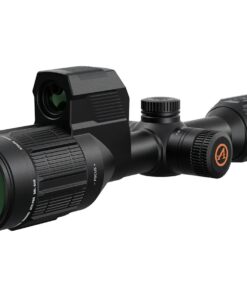
Discover Unmatched Clarity with the ATN BlazeTrek 319 Thermal Imaging Monocular
Clarity in complete darkness is delivered by the ATN BlazeTrek 319 Thermal Imaging Monocular. Heat signatures that remain invisible to the naked eye are revealed through advanced thermal technology. Designed for hunters, outdoor explorers, search-and-rescue teams, and professionals who operate in low-visibility conditions, this compact device transforms challenging environments into clear, actionable views.
The ATN BlazeTrek 319 Thermal Imaging Monocular stands out as a reliable companion for nighttime observation, game tracking, property monitoring, and situational awareness. Its combination of sensitivity, portability, and smart features makes thermal imaging accessible and practical for users of all experience levels.
Advanced Thermal Sensor Performance That Redefines Detection
Exceptional image quality is achieved through the 384 × 288 thermal sensor featuring a 12 μm pixel pitch and a 50 Hz refresh rate. Temperature differences as small as those measured by a NETD rating under 25 mK are detected with precision. As a result, fine heat signatures are rendered with reduced noise and greater detail, even in fog, smoke, light brush, or total darkness.
Detection ranges approaching 1,000 yards (approximately 990 meters) for human-sized targets are supported by the 19 mm objective lens. Smooth tracking of moving subjects is enabled by the rapid 50 Hz frame rate. Whether scanning open fields or working through denser cover, heat sources are identified quickly and reliably.
Customizable Viewing Modes for Every Scenario
Five to six color palettes are offered so that viewing preferences and environmental conditions can be matched. White Hot, Black Hot, Iron Red, Alarm, Sepia, and Green Hot options are available. High-contrast targets can be highlighted, subtle temperature gradients can be examined, or a preferred visual style can simply be selected. Brightness levels are adjustable, and diopter correction is provided so that a sharp image is obtained by different users without difficulty.
Capture, Record, and Share Every Moment
Still photos and thermal video are recorded directly to internal memory (16 GB or 32 GB depending on configuration). Moments of interest are preserved for later review, analysis, or sharing. Built-in Wi-Fi connectivity pairs the device with the ATN Blaze App on compatible smartphones. Settings are adjusted remotely, live views are streamed, and media is managed from the phone with ease. The workflow remains simple and efficient whether the user is documenting a hunt, recording training, or gathering evidence in the field.
Compact Design Built for Real-World Use
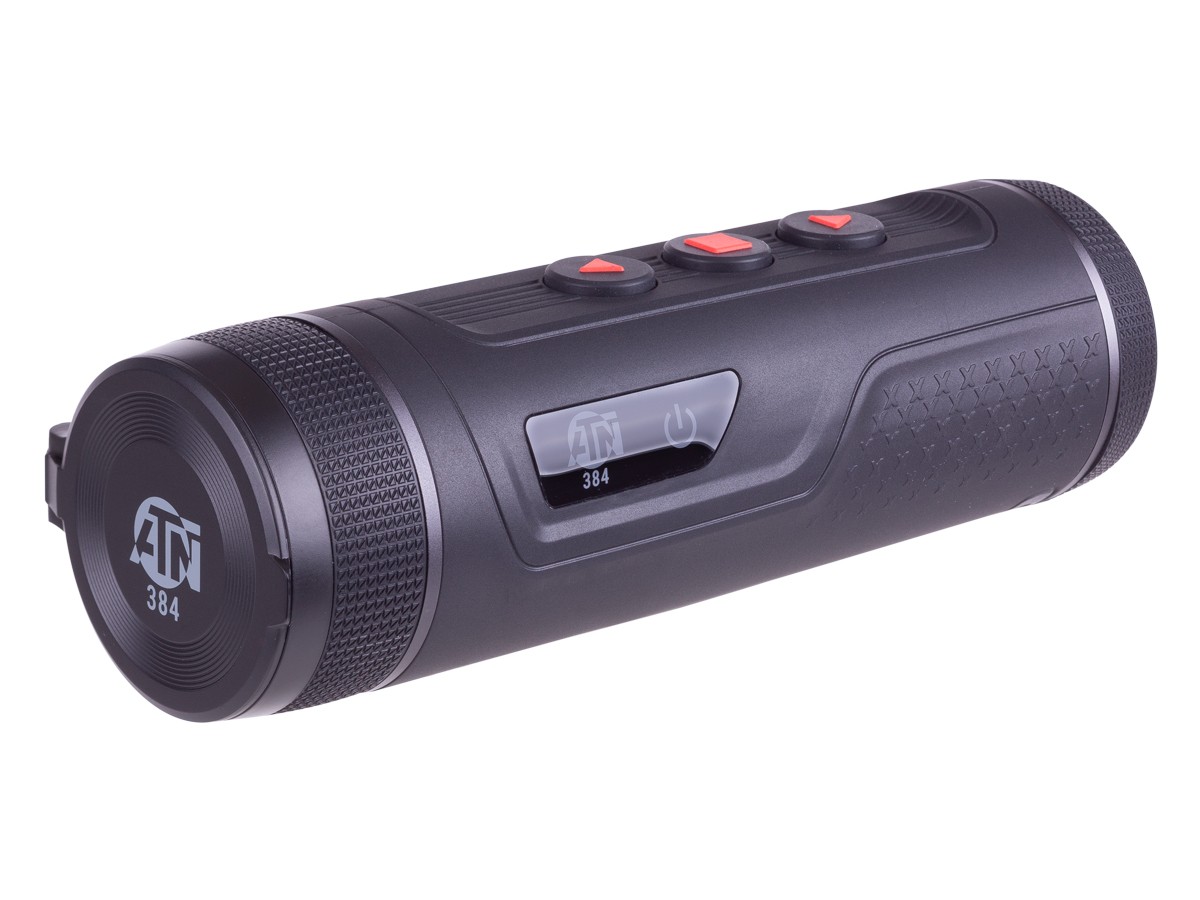
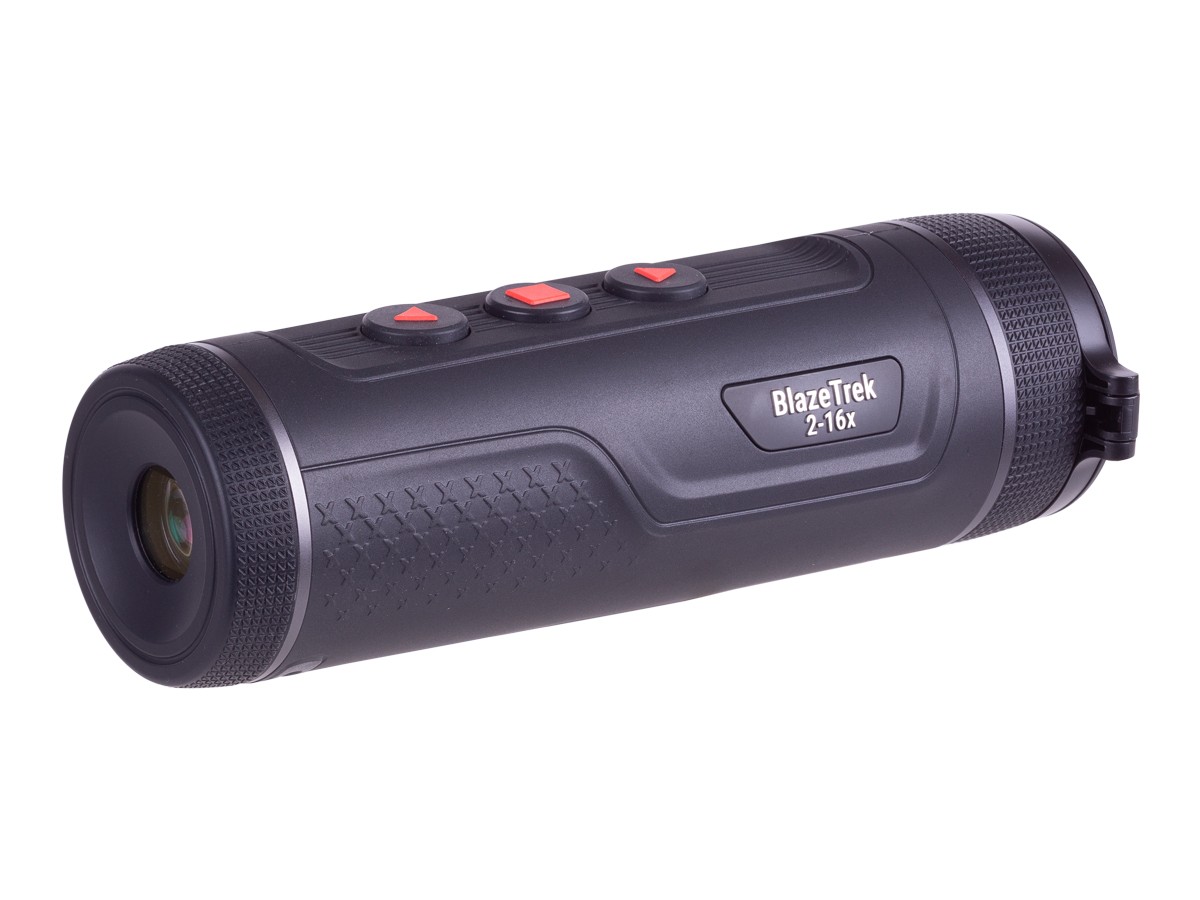
Weighing approximately 0.7 lb (about 320 g or 11.2 oz) and measuring roughly 6.2 × 2.2 × 2 inches, the ATN BlazeTrek 319 Thermal Imaging Monocular is carried comfortably in a pocket or pack. An IP67 rating protects against dust and water immersion, while the operating temperature range of –22 °F to 131 °F (–30 °C to 55 °C) supports use in demanding climates. An internal rechargeable battery provides 7 to 9 hours of runtime and is recharged via USB-C. Auto-suspend and auto-shutdown functions help conserve power during extended sessions. A tripod mount is included for stable, hands-free observation when needed.
Key Features of the ATN BlazeTrek 319 Thermal Imaging Monocular
- 384 × 288 thermal sensor with 12 μm pixel size and <25 mK NETD for high sensitivity
- 2–16× digital magnification for versatile close-to-mid-range scanning
- 800 × 600 AMOLED display delivering sharp, clear images
- Multiple color palettes including White Hot, Black Hot, Iron Red, Alarm, Sepia, and Green Hot
- Integrated photo and video recording with internal storage
- Built-in Wi-Fi and ATN Blaze App connectivity for remote control and media transfer
- Approximately 1,000-yard detection range
- IP67 waterproof and dustproof construction
- Lightweight, pocket-friendly design with diopter adjustment
- USB-C charging and multi-hour battery life
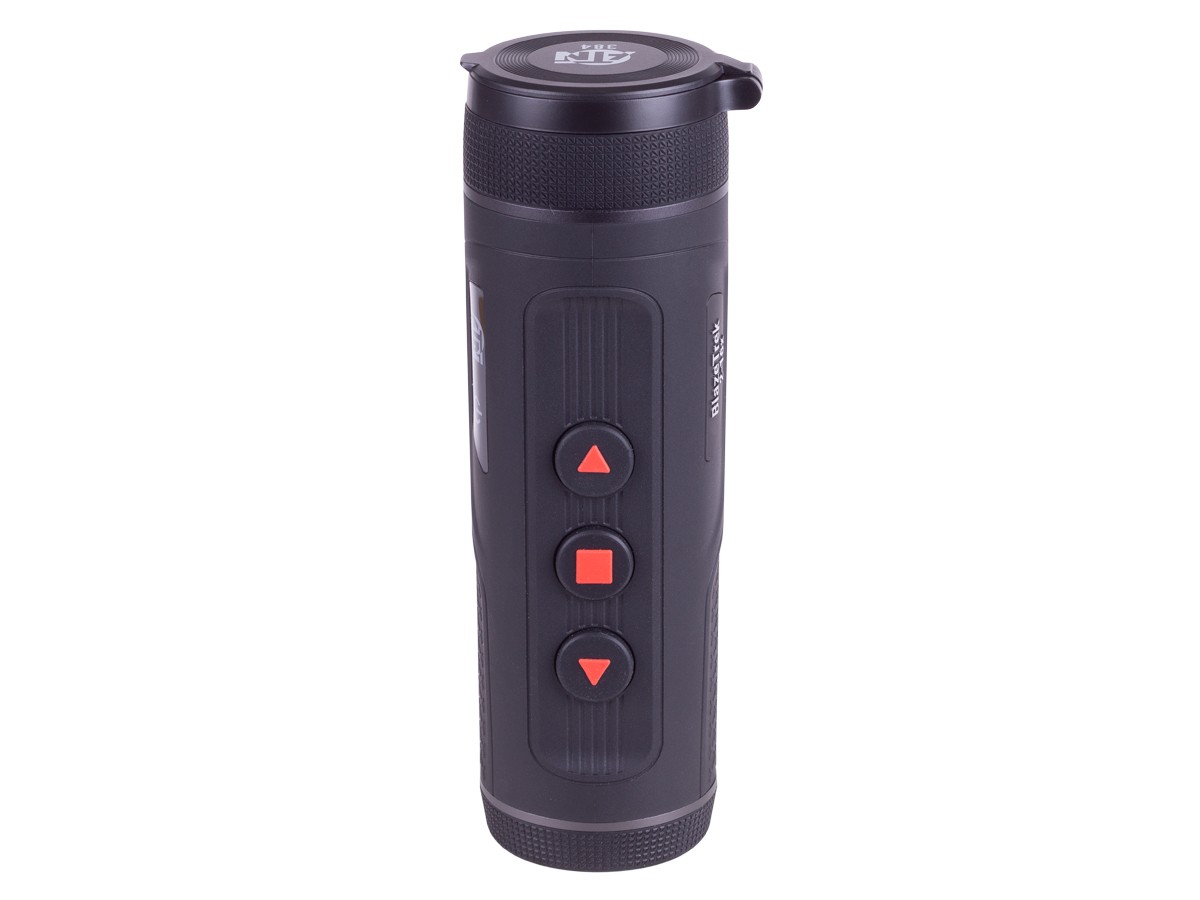
- Simple three-button interface for intuitive operation
Why Choose the ATN BlazeTrek 319 Thermal Imaging Monocular?
Performance that was once limited to bulkier or more expensive systems is now available in a highly portable package. The ATN BlazeTrek 319 Thermal Imaging Monocular balances resolution, sensitivity, and ease of use so that both newcomers and experienced users benefit. Situational awareness is improved, wounded game is located more efficiently, and observation continues long after daylight fades.
Transitioning between wide-area scanning at lower magnification and detailed examination at higher zoom is seamless. Hot-spot detection and ranging tools further enhance practical utility. Because the device is lightweight and weather-sealed, it remains ready for spontaneous outings or planned nighttime operations.
Moreover, the inclusive design ensures that people of varying visual needs and experience levels can operate the monocular comfortably. Diopter adjustment and straightforward controls remove common barriers, while the app integration adds modern convenience without complexity.
Ideal Applications Across Outdoor and Professional Use
Hunters rely on the ATN BlazeTrek 319 Thermal Imaging Monocular for ethical game recovery and nighttime scouting. Outdoor enthusiasts use it for wildlife observation and navigation after dark. Property owners and security-minded individuals employ it for perimeter checks. Search-and-rescue teams and first responders benefit from its ability to locate heat sources in low-visibility conditions. In every case, the combination of long detection range, clear imaging, and recording capability adds real value.
Furthermore, the device’s compact size encourages consistent carry. When thermal capability is needed, it is already on hand rather than left behind because of bulk or weight.
Elevate Your Nighttime Capability Today
Ready-to-use thermal performance is provided by the ATN BlazeTrek 319 Thermal Imaging Monocular. From the sensitive 384 × 288 sensor and crisp AMOLED display to the convenient app connectivity and rugged construction, every element is focused on delivering clear, usable information when light is limited.
Whether the goal is safer hunting, more effective observation, or simply greater confidence after dark, this monocular meets the need. The ATN BlazeTrek 319 Thermal Imaging Monocular is engineered to perform reliably across seasons and conditions while remaining approachable for every user.
Experience the difference that true thermal clarity makes. Add the ATN BlazeTrek 319 Thermal Imaging Monocular to your kit and see what has been missing in the dark.
Complete Guide to Athlon Optics Scopes, Thermal Systems, and Precision Shooting Equipment
The world of precision shooting continues to evolve, and the Athlon Outdoors product lineup remains one of the most respected choices among hunters, target shooters, and long-range enthusiasts. Whether you are researching the Athlon Midas TAC, comparing various Athlon reticles, looking for a powerful thermal optic, or searching for dependable spotting scopes, Athlon offers solutions designed for virtually every shooting discipline.
Athlon Midas TAC and Precision Riflescopes
The Athlon Midas TAC family has earned an excellent reputation among professional marksmen. Products such as the Midas TAC Gen2 HD 6-24×50 APLR15 FFP MOA reticle riflescope, the Athlon Midas TAC 4-16×44, and the well-known Mida 110 configuration deliver outstanding clarity, dependable tracking, and repeatable adjustments.
Many shooters also compare these optics with alternatives such as the Telson Target Master 5-25×56 because of their similar performance characteristics.
Popular configurations include:
- 6-24 scope models
- 4-20x tactical optics
- 2.5-15 scope systems
- 25×56 long-range platforms
- 2.5 x 15, 2.5 15, 2.5/15, 2.5.15, and 15 x 2.5 configurations
These optics are designed for competitive shooting, hunting, and precision target applications.
Athlon Argos BTR Series
The Athlon Argos BTR Gen2 family remains one of the company’s most popular product lines.
Many shooters compare the following models:
- Athlon Argos BTR Gen2 6-24×50
- Athlon Argos BTR Gen3 6-24×50
- Athlon Argos BTR Gen 2
- Athlon BTR Gen 2
- Argos BTR Gen2 6-24×50
- Athlon Argos BTR Gen2 6-24×50 review
- Athlon Argos BTR Gen2 6-24×50 price
Users frequently praise the durability, tracking precision, and image quality of these scopes. Reviews consistently indicate that the Argos lineup delivers impressive performance while remaining affordable.
Athlon Helos BTR Series
The Athlon Helos BTR Gen2 6-24×56 is widely recognized among long-range shooters who need excellent elevation adjustment and first focal plane performance.
Popular models include:
- Athlon Helos BTR Gen2 6-24×56
- Helos BTR Gen2 4-20×50 APRS6 FFP IR MIL
- Athlon Helos BTR Gen2 4-20×50 review
- Helos BTR Gen2 2 12×42
The Helos series is designed to bridge the gap between entry-level optics and premium tactical platforms.
Cronus ATS Thermal Scope Systems
Thermal optics continue to gain popularity, and the Cronus ATS Pro lineup is among the most advanced systems currently available.
The series includes:
- Cronus ATS Pro 25P-250 thermal scope
- Athlon Cronus ATS Pro 25P 250
- Athlon Cronus ATS Pro
- Cronus ATS Pro 25P 250
- Cronus ATS Pro 25P-250 review
- Athlon Cronus ATS Pro 25P-250 review
- Cronus ATS Pro 25P-250 thermal scope review
- Cronus ATS Pro 25P 250 thermal scope review
- ATS Pro systems
Shooters looking for high-performance thermal optics also examine the Cronus ATS 35-400, Cronus ATS Pro 35P 400, Cronus ATS Pro 35P 400 thermal scope, Cronus ATS Pro 35P-400 thermal scope review, 35cl, 35 cl, 35×400, and 400/35 configurations.
Cronus 640 Thermal Series
The Athlon Cronus ATS 50 640 lineup delivers outstanding thermal imaging performance.
Notable products include:
- Cronus ATS 50 640
- Athlon Cronus ATS 50 640
- Cronus ATS 50-640 review
- Athlon Cronus ATS 50-640 review
- Cronus ATS Pro 50L-640 thermal scope
- Athlon Cronus ATS Pro 50L-640
- Athlon 50L-640
- 640 50
- 30 56
These thermal systems are designed for hunting, surveillance, search operations, and nighttime observation.
Thermal Attachments and Clip-On Systems
Many shooters prefer modular equipment because it allows them to transform a conventional optic into a thermal system without replacing the original scope.
Common accessories include:
- Thermal scope attachment
- Thermal scope adapter
- Clip-on thermal scope attachment
- Thermal add on for scope
- Thermal clip on scope attachment
- Thermal adapter for scope
- Clip on thermal optics
- Scope thermal
- Marathon thermal scope
- AS thermal
These accessories allow users to retain their existing optics while benefiting from thermal technology.
Ares ETR and Ares BTR Long-Range Platforms
The Athlon Ares BTR and Athlon ETR series are designed for serious long-range shooters.
Highly sought-after models include:
- Ares ETR 3-18×50
- Ares ETR 3 18×50
- Ares ETR 4.5-30×56
- Ares ETR 4.5 30×56
- Athlon 4.5-30×56
- Athlon ETR
- 4.5×30
- 4.5 x 30
- 4.5 30
- 4.5/30
- 4 5 30
These optics are especially popular among precision rifle competitors.
Spotting Scopes and Observation Equipment
Athlon also manufactures high-quality spotting scopes that complement its riflescope lineup.
Leading products include:
- Athlon Argos 20 60×85 HD
- Athlon Optics Argos HD 20 60×85 spotting scope
- Athlon Argos HD 20-60×85
- Athlon Argos HD spotting scope
- Talos spotting scope
- Athlon Ares spotting scope
- Anton telescope
Many users appreciate the exceptional brightness and clarity these systems provide.
Reticles, Red Dots, and Optical Technology
Modern optics depend heavily on advanced reticle designs. Athlon offers numerous options, including the Apex Halo BDC reticle, precision Athlon reticles, and the popular Athlon Midas Beam red dot.
Many customers researching optic al, Athens scope, and Athalon scopes eventually discover the broad selection of products available from Athlon.
Frequently Asked Questions About Athlon Optics
Where are Athlon Optics made?
Many people ask, “Where are Athlon Optics made?” The company designs its products in the United States while manufacturing is handled by carefully selected facilities that specialize in precision optics production.
Are Athlon scopes any good?
Questions such as Are Athlon scopes any good, Athlon scope review, Athlon rifle scopes reviews, Athlon optics review, Athlon scopes review, and Athlon scopes for sale appear frequently among first-time buyers.
Overall, most users praise the balance between price, durability, optical clarity, and long-term reliability offered by Athlon products.
Whether you need an entry-level hunting optic or a premium thermal system, Athlon continues to offer an extensive catalog capable of satisfying beginners and experienced shooters alike.
Frequently Asked Questions
What is the detection range of this thermal monocular? The device detects human-sized heat signatures at distances approaching 1,000 yards under optimal conditions. Environmental factors such as humidity, temperature contrast, and intervening vegetation influence actual performance. In open fields with clear line of sight, users commonly report reliable detection well beyond several hundred yards, while denser cover reduces effective range. The combination of a sensitive 12-micron sensor and a 19 mm objective lens supports this capability, allowing practical scanning of large areas during night hunts, property checks, or search operations. Recognition and identification distances are shorter than pure detection, as expected with any thermal system of this class. Many users find the range sufficient for most recreational and professional outdoor tasks without needing bulkier long-range units.
How clear are the images produced by the thermal sensor? Image clarity is driven by the 384 × 288 resolution sensor paired with a noise-equivalent temperature difference rating under 25 mK. This sensitivity allows the monocular to distinguish subtle temperature differences, resulting in detailed heat maps even when ambient conditions are challenging. The 50 Hz refresh rate keeps motion smooth, reducing lag when tracking moving subjects. An 800 × 600 AMOLED display further enhances perceived sharpness and contrast. Users frequently comment that the picture remains usable through light fog, smoke, or thin brush where traditional night-vision devices struggle. Color palettes can be switched to emphasize different aspects of the scene—high-contrast modes for quick spotting or more graduated scales for examining fine thermal details. Overall image quality is considered strong for a compact monocular in this price and size category.
What magnification range is available and how does the zoom work? Magnification spans from 2× to 16× through digital zoom. At the lower end the field of view is relatively wide, making it easy to scan large areas quickly. Higher magnification levels allow closer examination of distant heat sources once they have been located. Because the zoom is digital rather than optical, image detail softens at the extreme upper end, which is typical for monoculars of this type. Most practical work occurs in the mid-range where the balance between field of view and target size remains comfortable. The transition between zoom levels is smooth and controlled by simple button presses, so users can adjust on the fly without taking their eye from the eyepiece for long.
Is the monocular suitable for hunting and game recovery? Yes. The combination of long detection range, multiple color palettes, and recording capability makes it a practical tool for locating animals after dark and for recovering wounded game. Heat signatures stand out clearly against cooler backgrounds, allowing hunters to scan fields, wood lines, and thickets efficiently. The compact size and light weight mean the device can be carried throughout a hunt without adding significant bulk. Photo and video recording provide a useful record of sightings or recovery efforts. Many hunters appreciate the ability to share live views or captured media via the companion app when working with a partner. The unit is not a substitute for ethical shot placement or proper tracking skills, yet it significantly improves the odds of successful recovery in low-light conditions.
How long does the battery last and how is it recharged? Runtime typically falls between seven and nine hours of continuous use depending on settings, temperature, and Wi-Fi activity. An internal rechargeable lithium-ion battery powers the device. Charging is performed through a standard USB-C port, so users can top up from a power bank, vehicle adapter, or wall charger. Auto-suspend and auto-shutdown features help conserve energy when the monocular is left idle. In colder weather battery life shortens somewhat, as is common with lithium-based cells; keeping the unit close to the body when not in active use can mitigate this effect. For extended sessions many users carry a compact power bank as insurance, though the native runtime is already generous for most nighttime outings.
Is the device waterproof and durable enough for outdoor use? An IP67 rating means the monocular is protected against dust ingress and can withstand temporary immersion in water up to one meter. It is therefore suitable for rainy conditions, humid environments, and accidental drops into shallow water. The operating temperature range covers approximately –22 °F to 131 °F, allowing reliable function in a wide variety of climates. The housing is compact and relatively robust, though like any precision optic it benefits from reasonable care—avoiding hard impacts and keeping the lens clean. A flip-up lens cover and included carrying pouch provide additional protection during transport. Overall construction is designed for field use rather than laboratory conditions, and most owners report that the unit holds up well under normal hunting and outdoor abuse.
Can photos and videos be recorded, and how is media stored or shared? Yes. The monocular records both still images and video directly to internal memory. Storage capacity is typically 16 GB or 32 GB depending on the specific configuration. Captured files can be reviewed on the device or transferred wirelessly through the companion smartphone app. Wi-Fi connectivity turns the monocular into a hotspot that pairs with the ATN Blaze App, allowing remote control of settings, live viewing on a phone screen, and easy download of media. This feature is useful for documenting hunts, sharing observations with partners, or reviewing thermal footage later for training or analysis. The recording resolution matches the display, so files remain manageable in size while preserving useful detail.
How does the companion app improve the user experience? The free smartphone application expands the monocular’s functionality by enabling wireless control and media management. Once connected via Wi-Fi, users can adjust color palettes, brightness, and other settings from the phone, capture images or start video recording remotely, and stream the live thermal view to a larger screen. This is particularly convenient when the monocular is mounted on a tripod or when a second person wants to observe without needing their own device. The app also simplifies transferring files for later review or sharing. Connection is generally straightforward on both iOS and Android devices, and most users find the interface intuitive after a short learning period.cronus ats pro 25p 250 review
What color palettes are available and when should each be used? Several palettes are provided, commonly including White Hot, Black Hot, Iron Red, Alarm, Sepia, and Green Hot. White Hot and Black Hot offer high-contrast views that many users prefer for quick detection. Iron Red and Alarm modes emphasize hotter objects, helping them stand out against cooler backgrounds. Sepia and Green Hot provide alternative visual styles that some find easier on the eyes during prolonged viewing. The best choice depends on ambient temperature, target contrast, and personal preference; switching between modes takes only a moment and can reveal details that were less obvious in another palette. Experimentation in the field quickly shows which modes work best for a given environment and task.
Is the monocular comfortable for extended viewing sessions? The design prioritizes comfort for repeated use. Eye relief of approximately 15 mm accommodates users who wear glasses, and a diopter adjustment wheel allows fine focus correction for different eyes. The overall weight of roughly 11 ounces and compact dimensions reduce fatigue when the device is held for long periods or carried throughout a day. Simple three-button controls keep operation straightforward even while wearing gloves. Because the monocular can be pocketed or hung on a lanyard when not in active use, it stays ready without becoming a burden. Most users report that they can scan for extended periods without significant discomfort.
Who is this thermal monocular best suited for? It serves a broad audience that includes hunters seeking better night scouting and recovery tools, outdoor enthusiasts interested in wildlife observation after dark, property owners wanting improved situational awareness, and professionals involved in search-and-rescue or security work. The balance of performance, size, and price makes it accessible to both first-time thermal users and experienced operators who want a lightweight secondary unit. Beginners appreciate the straightforward interface and helpful app, while more advanced users value the recording features and solid detection range. The inclusive design—diopter adjustment, simple controls, and clear documentation—helps people of varying experience levels get useful results quickly.
How does this model compare with higher-resolution thermal monoculars? Higher-resolution sensors (such as 640 × 512) generally produce finer detail and slightly longer identification ranges, but they also increase size, weight, and cost. The 384 × 288 sensor in this monocular delivers strong performance for its class and keeps the package pocketable and affordable. For many practical applications—spotting game, scanning property, or locating heat sources at moderate distances—the difference in resolution is less critical than the advantages of portability and battery life. Users who primarily need a compact, ready-to-carry thermal tool often prefer this balance. Those requiring maximum detail at extreme ranges may later step up to larger systems while still keeping the lighter monocular for everyday carry.thermal scope 640
What accessories or additional items are useful with the monocular? A protective pouch, lens cloth, USB-C cable, and lanyard or wrist strap are typically included. Many owners add a compact power bank for multi-day trips, a small tripod for hands-free observation, and a quality carrying case that fits the monocular plus spare batteries or cables. Because the device is already weather-sealed, heavy protective housings are rarely necessary. Keeping the objective lens clean and free of fingerprints maintains the best possible image quality; a microfiber cloth and occasional gentle cleaning are usually sufficient.
Is the learning curve steep for first-time thermal users? Most people become comfortable with basic operation within a short practice session. Powering on, switching palettes, adjusting zoom, and capturing images are controlled by a minimal set of buttons. The companion app further simplifies advanced features once the initial Wi-Fi connection is established. Reading the manual and spending an evening exploring the menus in a familiar environment accelerates the process. Thermal imaging interprets the world differently from visible-light optics, so interpreting heat signatures takes a little practice, yet the device itself is designed to be approachable rather than intimidating.
Can the monocular be used during daytime as well as at night? Thermal imaging works in both daylight and darkness because it detects heat rather than reflected light. Daytime use is therefore fully supported and can be valuable for spotting animals in dense cover, locating heat sources through light foliage, or conducting searches when visibility is reduced by haze or smoke. The same color palettes and zoom functions remain available, giving consistent performance around the clock. Many users keep the monocular accessible during daylight hours precisely because thermal contrast can reveal subjects that blend into the background in visible light.helos btr gen2 4 20×50 aprs6 ffp ir mil
These answers address the most common practical questions owners and prospective buyers raise about performance, features, durability, and everyday use. The monocular is engineered to deliver reliable thermal capability in a portable package that fits a wide range of outdoor and professional needs.athlon cronus thermal
Practical Use Scenarios in the Field
Night falls across a wide stretch of mixed farmland and timber. A hunter steps out of the truck and begins a quiet walk along the edge of a harvested cornfield. Visibility with the naked eye is limited to a few dozen yards. Heat signatures, however, stand out clearly. A distant shape moves near the tree line. The compact monocular is raised, and within moments the animal is confirmed as a mature deer feeding calmly. Magnification is increased for a closer look at body language and direction of travel. The hunter notes the location, lowers the optic, and continues the approach with far greater confidence than would have been possible under starlight alone. Later that same evening the same tool is used to scan a creek bottom where a wounded animal was last seen. Residual heat from the trail is still detectable, guiding the recovery effort and preventing a long, uncertain search in the dark.
On another night a different user stands on a ridge overlooking a large pasture. Coyotes have been working the area, and livestock protection is the priority. The monocular is swept slowly across the open ground. Multiple heat sources appear at different distances. One group is identified as cattle. Another set of smaller, faster-moving signatures is recognized as the predators. Distance is estimated, direction of travel is noted, and a decision is made about whether intervention is required. Because the device is lightweight and ready in seconds, the scan can be repeated every few minutes without fatigue. Battery life supports several hours of intermittent use, so the observer remains effective until the animals move out of the immediate area.
Search-and-rescue teams also rely on thermal capability when time and visibility are limited. After a late-afternoon call about a missing hiker, a small team deploys into wooded terrain as darkness settles. Traditional flashlights illuminate only a narrow cone and can destroy the searchers’ own night vision. Thermal scanning, by contrast, covers wide swaths of ground quickly. A faint heat signature is detected against a cooler hillside. The team adjusts position, increases magnification, and confirms the presence of a person who had become disoriented and stopped moving. Recording the approach and the moment of contact provides useful documentation for after-action review. The waterproof construction proves valuable when the team must cross a damp creek bed and later works in light rain. Throughout the operation the monocular remains accessible in a chest pocket or on a short lanyard, ready for immediate use whenever the terrain opens up.
Wildlife observers and land managers use the same technology in less urgent but equally practical ways. During a spring survey of nesting areas, an observer walks a series of transects after sunset. Heat signatures of birds on nests or mammals moving through undergrowth are logged without the disturbance that bright lights would cause. Color palettes are switched to improve contrast against different backgrounds—cooler vegetation versus warmer soil. Images and short video clips are captured for later comparison with previous seasons. The companion smartphone application allows the observer to review files in the field and tag locations, creating a simple but effective record of activity patterns. Because the monocular is compact, it can be carried on long walks without adding meaningful weight to a daypack.
Property owners in rural and semi-rural settings find everyday utility as well. A landowner hears unusual sounds near outbuildings after dark. Instead of walking the perimeter with a flashlight that announces every step, the owner first scans from a safe vantage point. Heat signatures of animals or, in rarer cases, people become visible well before visual contact would be possible. The ability to distinguish livestock, pets, wildlife, and potential human presence reduces unnecessary alarm while still providing early warning. In cold weather the same scan can reveal whether animals have adequate shelter by showing clustering patterns or unusual inactivity. The long battery life means the device can be kept charged and ready for repeated checks throughout the night if conditions warrant.
Agricultural users apply thermal imaging during calving season or when monitoring large pastures at night. A rancher drives slowly along fence lines and periodically stops to scan for new calves or animals that have become separated. Heat from a newborn stands out clearly against the cooler ground, even when the animal is partially hidden by tall grass. Early detection of distress or isolation improves response time and animal welfare. The same optic is later used to check water sources or to locate animals that have pushed through a fence into neighboring sections. Because the unit tolerates dust and moisture, it continues to function after being carried through muddy conditions or left in a vehicle overnight during temperature swings.
Firefighters and emergency responders sometimes employ thermal monoculars during exterior size-up or when searching for hot spots after a structure fire has been knocked down. Residual heat in walls, attics, or debris piles can be detected from a safer distance, helping prioritize overhaul efforts and reducing the chance of rekindle. In wildland settings the same capability assists with locating smoldering material after a controlled burn or wildfire. The compact form factor allows the optic to be carried alongside other essential gear without requiring a major change in equipment loadout.
Outdoor educators and guides introduce thermal technology to clients during night programs. A group on a nocturnal nature walk gathers around a single monocular mounted briefly on a tripod. Participants take turns observing the heat signatures of bats, owls, or nocturnal mammals. The live view can be shared wirelessly to a phone or tablet so that several people see the same image simultaneously. Discussion of how different animals manage body temperature and how the landscape radiates heat after sunset becomes more concrete when everyone can see the thermal picture. The session ends with the monocular returned to a pocket, ready for the walk back to the trailhead.
In each of these situations the practical advantages remain consistent. The combination of usable detection distance, smooth refresh rate, and multiple display modes allows rapid orientation in low light. Digital magnification bridges the gap between wide-area scanning and closer examination of a specific signature. Recording capability creates a permanent record when documentation matters. Wireless connectivity extends the usefulness of the optic by letting a second person observe or by simplifying media transfer at the end of an outing. Weather resistance and extended battery life mean the tool remains available when conditions are less than ideal.
Users quickly develop personal routines. Some keep the monocular on a short lanyard around the neck so it is always within reach. Others prefer a dedicated pouch on a belt or pack strap. Many develop the habit of performing a quick 360-degree scan upon arriving at a new location after dark, establishing a baseline of heat sources before beginning more focused work. Color palette preference often becomes individualized—some favor high-contrast black-hot for fast detection, while others prefer a more graded palette for studying animal posture or terrain features. Diopter adjustment is set once for a given user and rarely needs further attention during a session.
Maintenance in the field stays simple. A quick wipe of the objective lens with a clean microfiber cloth restores clarity after exposure to rain, dust, or fingerprints. The USB-C port is protected by a cover when not in use, and the overall sealed design reduces concern about brief immersion or heavy dew. At the end of a long night the monocular is powered down, returned to its pouch, and placed where it can be recharged before the next outing. Because runtime is measured in hours rather than minutes, most users find that a single charge covers an entire evening of intermittent scanning plus a reserve for unexpected needs.
The cumulative effect of these practical capabilities is greater confidence and efficiency after dark. Tasks that once required multiple people, bright lights, or simply waiting until morning can now be addressed promptly and with less disturbance to the environment or to the subjects being observed. Whether the goal is ethical game recovery, livestock protection, missing-person response, wildlife documentation, or simple property awareness, the ability to see heat signatures at useful distances changes the decision-making process. Information that was previously unavailable becomes immediately accessible, and that information can be recorded, shared, or acted upon while it is still relevant.
Over repeated use, operators refine their technique. They learn how different surface materials and weather conditions affect thermal contrast. They discover the best magnification settings for particular habitats. They become faster at distinguishing relevant targets from background clutter such as rocks that retain daytime heat or vegetation that cools at different rates. The learning curve is gentle because the interface remains straightforward, yet the depth of useful information available rewards continued practice. In time the monocular shifts from a specialized piece of gear to an everyday tool that is simply part of being prepared for low-light conditions.
These scenarios illustrate how thermal imaging moves from theoretical advantage to concrete, repeatable benefit across a range of outdoor and professional activities. The technology does not replace traditional skills of observation, tracking, or decision-making. Instead it augments those skills by extending the range of usable sensory information when natural light is absent or insufficient. The result is safer, more effective, and often more successful work after the sun goes down.





Reviews
There are no reviews yet.