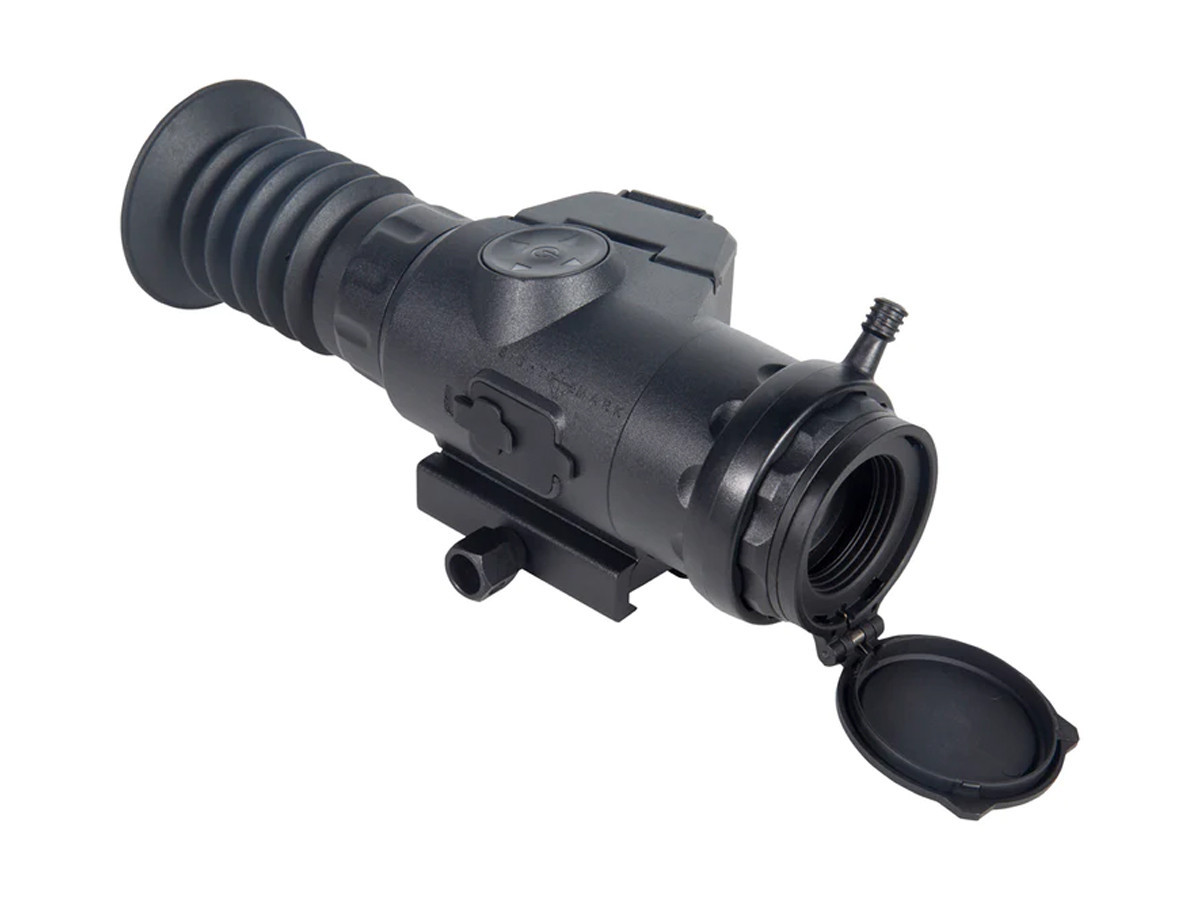
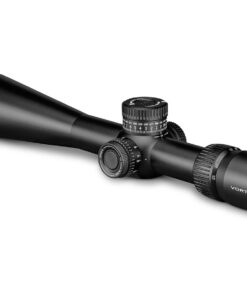
Sightmark Wraith Mini 2-16×35 Thermal Rifle Scope
Delivers compact, high-performance thermal imaging that helps hunters and shooters confidently detect, identify, and engage targets in complete darkness or challenging conditions.
This advanced optic combines a sensitive 384×288 thermal sensor with a bright 1024×768 OLED display, offering clear heat signatures out to impressive distances while remaining lightweight and easy to handle. Whether you pursue hogs at night, protect property, or extend your hunting hours, the Sightmark Wraith Mini 2-16×35 Thermal Rifle Scope brings professional-level capability to a wide range of users.
Why Choose the Sightmark Wraith Mini 2-16×35 Thermal Rifle Scope?
Many shooters seek thermal optics that balance image quality, size, and practical features without unnecessary complexity. The Sightmark Wraith Mini 2-16×35 Thermal Rifle Scope meets those needs with a native 2x optical magnification paired with 1-8x digital zoom, delivering a versatile 2-16x overall range. In addition, its 35mm germanium objective lens gathers thermal energy effectively for medium-range work.
Moreover, the sensor’s NETD of less than 40 mK detects subtle temperature differences, helping reveal animals that blend into vegetation or darkness. As a result, users gain a decisive advantage when light is limited or absent. Furthermore, five thermal color palettes—White Hot, Black Hot, Green Hot, Rainbow, and Magenta—let you adapt the display for better contrast, reduced eye strain, or personal preference across different environments and times of day.
Sharp Thermal Imagery and User-Friendly Display
Crystal-clear thermal images form the foundation of effective night hunting. The Sightmark Wraith Mini 2-16×35 Thermal Rifle Scope processes data from its 384×288 resolution sensor and presents it on a high-resolution OLED screen. Consequently, details stay sharp even when digital zoom is applied within practical distances.
The display also supports rich color rendering and reliable performance across a wide temperature range. Meanwhile, a diopter adjustment and objective focus ring with throw lever help users quickly dial in a sharp view tailored to their eyesight and target distance. Eye relief of approximately 2.4–2.5 inches further supports comfortable use on various platforms.
Versatile Reticles, Profiles, and Recording Features
Customization enhances real-world usefulness. The Sightmark Wraith Mini 2-16×35 Thermal Rifle Scope includes 10 selectable reticle styles and nine reticle colors, so shooters can match the aiming point to their preferred holdover style or lighting conditions. Additionally, five configurable weapon profiles store separate zeros. Therefore, you can switch the optic between different rifles or calibers without re-zeroing each time.
Built-in photo and video recording with audio captures hunts for later review or sharing. The scope accepts microSD cards up to 256 GB, giving ample space for extended sessions. A simple five-button interface keeps operation intuitive, even for those new to thermal technology.
Durable Construction for Real Hunting Conditions
Field reliability matters as much as optical performance. The Sightmark Wraith Mini 2-16×35 Thermal Rifle Scope features a lightweight aluminum housing that weighs just 19.3 ounces and measures about 6.65 inches long. It mounts easily via the included Picatinny rail interface and is rated IPX6 water-resistant. Operating temperatures from –4°F to 122°F ensure dependable function in cold mornings or warm evenings.
Power comes from two CR123A batteries, delivering roughly 3.5 hours in video mode or 4.4 hours in preview mode. An external USB power option extends runtime when you connect a compatible battery pack, supporting longer outings.
Key Specifications of the Sightmark Wraith Mini 2-16×35 Thermal Rifle Scope
- Magnification: 2x optical + 1–8x digital (2–16x overall)
- Objective lens: 35 mm
- Thermal sensor resolution: 384 × 288
- Display: 1024 × 768 OLED
- Detection range: Up to 1,400 yards
- Thermal sensitivity (NETD): <40 mK
- Pixel pitch: 17 μm
- Field of view: 13 degrees
- Color palettes: White Hot, Black Hot, Green Hot, Rainbow, Magenta
- Reticles: 10 styles with 9 color options
- Weapon profiles: 5 stored zeros
- Recording: Photo and video with audio (up to 256 GB microSD)
- Battery: 2 × CR123A (3.5 hrs video / 4.4 hrs preview); USB external power
- Weight: 19.3 oz
- Length: Approximately 6.65 in
- Construction: Aluminum, IPX6 water-resistant
- Operating temperature: –4°F to 122°F
Included Accessories
- Flip-up front and rear lens covers
- Rubber eyecup
- Removable throw lever
- Two CR123A batteries
- USB cable
Who Benefits from the Sightmark Wraith Mini 2-16×35 Thermal Rifle Scope?
Hunters who target nocturnal game, property owners managing wildlife, and recreational shooters exploring thermal technology all find value here. The compact size and modest weight make it well-suited to AR-platform rifles, bolt actions, and other popular configurations. Meanwhile, the combination of solid detection range, multiple display options, and recording capability supports both practical field use and documentation of successful outings.
Because the interface remains straightforward and the optic stores multiple profiles, users of varying experience levels can set it up quickly and focus on the hunt rather than complicated menus. Inclusive design considerations, such as diopter adjustment and adaptable color modes, help accommodate different visual preferences and shooting styles.
Elevate Your Nighttime Capability Today
In short, the Sightmark Wraith Mini 2-16×35 Thermal Rifle Scope packs capable thermal performance into a durable, user-friendly package. It delivers the clarity needed to locate heat signatures at distance, the flexibility of multiple reticles and profiles, and the convenience of onboard recording—all while remaining compact enough for everyday carry in the field.
Ready to extend your effective hunting window and gain an edge after dark? Explore the Sightmark Wraith Mini 2-16×35 Thermal Rifle Scope and experience how modern thermal technology can transform your time afield. Clear images, reliable construction, and thoughtful features come together to support confident, ethical shots when conditions are toughest.
Premium Rangefinding Binoculars, Hunting Optics, and Precision Rifle Scopes
Modern hunters, long-range shooters, and precision marksmen demand exceptional optical performance, and that is why products such as Leica rangefinder binoculars, Leica Geovid 10×42 rangefinder binoculars, Leica Geovid binoculars, Leica binoculars with rangefinder, Leica Geovid Pro 10×42, Geovid Pro 10×42, Leica Geovid rangefinder, Leica Geovid Pro rangefinder binoculars, Leica Geovid rangefinder binoculars, and the Leica Geovid 10×42 continue to attract attention throughout the shooting industry.
Whether enthusiasts are looking for Leica binoculars, Leica small binoculars, binoculars Leica, Leica Geovid binos, Leica bino, Leica binoculars for sale, Leica bino rangefinder, Leica camera binoculars, Leica binos, or a standard Leica binocular, there are options suitable for every environment and shooting application.
Many users also compare Leica products with SIG Sauer binoculars, SIG self stabilizing binoculars, SIG Sauer binos, SIG binoculars, SIG image stabilizing binoculars, SIG binocular, SIG auto stabilizing binoculars, Sigma binoculars, SIG Sauer self stabilized binoculars, and SIG Sauer image stabilized binoculars when evaluating premium optics.
Long-range shooters frequently combine these binocular systems with elite scopes such as the Nightforce ATACR, Nightforce ATACR 5-25×56 F2, Nightforce ATACR 4-20×50, Nightforce ATACR 5-25×56 F1, Nightforce ATACR 4-16×50, Night Force ATACR, ATACR scope, Nightforce attacker, ATACR 4-20, and the Nightforce ATACR 4-20×50 F1. Many professionals also pair their rifles with a Zeiss red dot for faster target acquisition.
Another respected name in the precision optics market is Tangent Theta. Experienced marksmen frequently search for Tangent Theta scopes, Tangent scope, Tangent scopes, Theta optics, Tangent Theta scope, and Tangent optics because of their legendary reputation for repeatability, durability, and optical clarity.
Companies such as Fierce Firearms, Fierce Arms, and Fierce Optics have likewise contributed to the growing popularity of advanced hunting equipment and premium glass systems. Their products are often used alongside specialized equipment featuring 11.5EE, 10×40, 34 56, 34×56, 14×44, 2S14, 2.5×15, 2.5/15, 1/2×42, 12×4.2, 4.5 30, and 4.5/30 specifications.
Among performance-oriented manufacturers, Athlon products remain extremely popular. Examples include the Midas TAC Gen2 HD 6-24×50 APLR15 FFP MOA reticle riflescope, Athlon Midas TAC, Athlon Midas TAC 6-24×50, Athlon Argos BTR Gen2 8-34×56, Athlon BTR Gen 2, Athlon Argos BTR Gen2, Athlon Argos BTR, Athlon Argos BTR Gen 2, Athalon scopes, Athens scope, Athlon Ares BTR, Athlon ETR, Athlon 4.5-30×56, Athlon BTR 2-12, Athlon 2, Athlon reticles, and numerous other models designed for demanding field conditions.
Frequently Asked Questions
What makes this compact thermal riflescope stand out for nighttime hunting?
This optic combines a sensitive 384×288 thermal sensor with a sharp 1024×768 OLED display to reveal heat signatures that remain invisible to the naked eye or traditional optics. Hunters gain the ability to locate animals in total darkness, heavy cover, or adverse weather without relying on ambient light or infrared illuminators. Its compact aluminum body weighs only 19.3 ounces and measures roughly 6.65 inches long, so it adds minimal bulk to a rifle while still delivering a detection range of up to 1,400 yards on deer- or hog-sized targets. Five thermal color palettes, multiple reticle options, and onboard recording further increase its versatility for both practical hunting and documentation of successful outings.
How does the magnification system work?
The scope starts with a true 2x optical magnification provided by the 35 mm germanium objective lens. Digital zoom then expands the view from 1x to 8x, producing an overall magnification range of 2–16x. This combination keeps image quality strong at lower powers for scanning and target acquisition while still allowing closer examination of distant heat sources when needed. Because the optical base remains fixed, users avoid the extreme pixelation sometimes associated with pure digital zoom systems at higher levels. The result is a practical working range ideal for most medium-distance hunting scenarios.
What is the actual detection range in real-world conditions?
Manufacturer testing rates the unit for detection of heat signatures out to approximately 1,400 yards under favorable conditions. Detection simply means the ability to notice a heat source exists; positive identification of species or exact body position typically occurs at shorter distances, often within a few hundred yards depending on terrain, vegetation density, atmospheric conditions, and the size of the animal. In open fields the optic performs strongly for early detection, while denser woods or high humidity can reduce effective range. Many users find it excellent for locating animals well beyond the distances at which ethical shots are normally taken.
Which thermal color modes are available and when should each be used?
Five distinct color palettes are offered: White Hot, Black Hot, Green Hot, Rainbow, and Magenta. White Hot and Black Hot remain the most popular for general hunting because they provide high contrast and are easy on the eyes during long sessions. Green Hot can reduce eye fatigue during extended viewing, while Rainbow and Magenta emphasize subtle temperature differences that help distinguish animals from background clutter or warmer ground. Switching between modes takes only a few button presses, allowing quick adaptation to changing light, vegetation, or personal preference.
How long does the battery last and what power options exist?
Two CR123A batteries power the optic. In standard preview mode runtime reaches about 4.4 hours, while continuous video recording shortens that figure to roughly 3.5 hours. A USB port accepts external power sources such as a portable battery pack, which can extend operating time significantly for all-night sits or multi-day trips. Many hunters carry spare batteries or a compact external pack as standard practice, ensuring the optic remains ready whenever needed.
Can the scope record video and still images?
Yes. A built-in camera captures both still photographs and video with audio. Footage and images store on a microSD card (not included) with support for cards up to 256 GB. This feature lets hunters review shot placement, share successful hunts, or analyze animal behavior after the fact. Recording does increase power consumption, so users often enable it selectively rather than leaving it running continuously.
How many reticle options and weapon profiles are included?
Ten different reticle patterns are available, each offered in nine color choices. Classic crosshairs, duplex-style, and more complex holdover designs give shooters flexibility for various distances and personal aiming preferences. Five separate weapon profiles store individual zero settings, so the same optic can move between different rifles or calibers without requiring a fresh zero every time. Switching profiles is straightforward through the menu system.
Is the optic difficult to mount and zero?
It arrives with a Picatinny rail mount already attached and secures with a simple nut. Eye relief sits around 2.4–2.5 inches, making it compatible with many AR-style platforms and bolt-action rifles. Zeroing follows a standard digital process: fire groups, adjust the digital reticle position via the control buttons, and save the setting to one of the five profiles. Most users complete initial setup relatively quickly once they become familiar with the five-button interface.
How durable is the housing for field use?
The aluminum body resists water to an IPX6 rating and operates reliably in temperatures ranging from –4°F to 122°F. Flip-up lens covers protect the objective and ocular lenses during transport and storage. The overall construction feels solid for its size and weight class, handling the recoil of common hunting calibers without issue. Regular care—keeping the lenses clean and storing the unit in a protective case when not in use—helps maintain long-term performance.
Does this thermal optic work during daylight hours?
Thermal technology detects heat rather than visible light, so the scope functions equally well in bright daylight, twilight, or complete darkness. During the day it can still reveal animals partially hidden by brush or shade because their body heat contrasts with the cooler surroundings. Many hunters appreciate the ability to use one optic across the entire day-night cycle without switching devices.
What items come in the box?
The package typically includes the optic itself, flip-up front and rear lens covers, a rubber eyecup, a removable focus throw lever, two CR123A batteries, and a USB cable. A microSD card is not included and must be purchased separately if recording is desired.
Is the menu system complicated for new thermal users?
The five-button control layout keeps operation relatively simple. Users navigate between color modes, reticles, profiles, zoom levels, and recording functions without needing an extensive manual for basic tasks. While advanced settings exist, most hunters master the everyday controls after a short practice session. Clear on-screen indicators further reduce confusion in low-light conditions.
How does thermal imaging differ from digital night vision?
Digital night vision amplifies existing light or relies on an infrared illuminator, so performance drops in true darkness or when the illuminator is detected by animals. Thermal imaging detects heat differences and requires no external light source, making it far more effective for locating animals at longer ranges or in complete blackout conditions. The trade-off is that thermal generally shows heat shapes rather than detailed visible-light features such as exact coat color or fine facial details.
Who benefits most from this particular model?
Hunters who pursue hogs, coyotes, predators, or other nocturnal game, as well as property owners managing wildlife pressure, gain the greatest advantage. The compact size and moderate weight also suit shooters who prefer lighter setups on AR-platform or shorter-barreled rifles. Recreational users exploring thermal technology for the first time often find the feature set approachable without overwhelming complexity.
What maintenance steps help keep the optic performing well?
Wipe the germanium objective lens gently with a proper lens cloth to remove dust, moisture, or fingerprints. Avoid harsh chemicals. Store the unit with the lens covers closed and remove the batteries during long periods of inactivity. Occasional firmware checks through the manufacturer’s support resources can ensure the latest performance improvements are installed. Treating the optic with the same care given to any quality riflescope preserves image quality and reliability over many seasons.
Can external power packs be used safely?
Yes. The USB port supports compatible external battery packs that supply 5 V power. Many hunters pair the optic with compact Picatinny-mounted battery solutions designed specifically for this purpose. Doing so allows continuous operation far beyond the internal battery runtime, which is especially useful for extended night stands or multi-hour glassing sessions.
How does the field of view compare at different zoom levels?
At the base 2x optical setting the horizontal field of view measures approximately 13 degrees, providing a wide enough window for scanning and tracking moving animals. As digital zoom increases, the field of view narrows accordingly. Most users spend the majority of their time at lower magnification for situational awareness and only increase power once a target has been located and identified.
Is the optic suitable for both beginners and experienced thermal users?
The combination of straightforward controls, multiple stored profiles, and clear image quality makes it accessible to those new to thermal technology. At the same time, the recording capability, reticle variety, and solid detection range satisfy more experienced hunters who already understand how to interpret thermal imagery. Inclusive features such as diopter adjustment and multiple color modes further accommodate different visual preferences and shooting styles.
These answers address the most common questions hunters and shooters raise when evaluating this compact thermal riflescope. The combination of sensitive thermal detection, practical magnification, durable construction, and useful digital features positions it as a capable tool for extending effective hunting time well after sunset.
Shooters interested in low-power variable optics continue to search for solutions such as the 1-10 scope, Ares ETR 1-10, 1-10 LPVO, 1-10 FFP LPVO, 1×10 scope, LPVO 1-8, LPVO 1-10, and the 1-10 rifle scope. Likewise, precision enthusiasts appreciate the performance of the Ares ETR Gen2 UHD 4.5-30×56 APRS12 FFP IR MIL reticle, particularly when accuracy is required at extended distances.
The demand for versatile optics has also increased interest in equipment such as the 2-12x, 2.5-15 scope, AO scope, gun scope, hunting optic, longest range scope, and guides explaining how to buy a rifle scope. These products allow hunters and competitive shooters to adapt to changing terrain, lighting conditions, and target distances with exceptional precision.
From elite Leica Geovid rangefinder binoculars to advanced Nightforce ATACR models, highly regarded Tangent Theta scopes, innovative SIG Sauer binoculars, and dependable Athlon platforms, today’s market offers virtually unlimited possibilities for anyone seeking world-class optical performance.
A Night in the Field with Compact Thermal Capability
The sun had dipped below the tree line more than an hour earlier, leaving the open pasture and surrounding hardwoods in deep shadow. A light breeze moved through the tall grass, carrying the faint scent of damp earth and the occasional distant call of a night bird. Two hunters sat quietly in a ground blind overlooking a well-used travel corridor where hogs had been damaging crops for weeks. One of them rested a rifle across a bipod, the compact thermal optic already powered on and scanning the darkness.
At first the display showed only the cool tones of the landscape. Then a faint heat signature appeared near the far edge of the field, roughly four hundred yards out. The animal moved slowly, its body temperature standing out clearly against the cooler background. The shooter adjusted the focus ring with the throw lever, sharpening the image, and switched from White Hot to Green Hot to reduce eye strain during the long wait. The shape resolved into a sounder of hogs—several adults and a few younger animals—working their way along the tree line.
Because the optic offered a wide field of view at its base 2x optical magnification, the entire group remained visible without constant panning. When the lead sow paused and lifted her head, the shooter increased digital zoom just enough to confirm body orientation and prepare for a clean shot. The reticle, previously set in a simple crosshair style and saved under a dedicated weapon profile, sat steadily on the vital zone. A single well-placed round dropped the animal, and the remaining hogs scattered into the timber. The second hunter continued scanning with the same optic after a quick profile switch, locating two more animals that had circled back toward the field edge.
Throughout the evening the compact size and light weight of the unit made prolonged glassing comfortable. There was no need to fight a heavy optic that shifted the rifle’s balance or forced awkward head positions. When the battery indicator eventually dropped after several hours of intermittent use and brief recording sessions, a small external power pack plugged into the USB port kept the display alive without interruption. The hunters captured short video clips of the approach and the aftermath, complete with ambient sound, so they could later review shot placement and share the sequence with the landowner who had requested help with the crop damage.
Extending the Day into Night on a Coyote Stand
On a different property the following week, a single hunter set up along a fence line where coyotes had been pressuring a small livestock operation. The temperature had already fallen into the low thirties, and a thin layer of frost coated the grass. The optic powered up without hesitation in the cold, its aluminum housing and rated temperature range handling the conditions without issue. Within minutes the display revealed two heat signatures moving parallel to the fence roughly six hundred yards away.
Switching to Black Hot provided strong contrast against the cooler ground, making the animals easy to track as they worked the edge of a brushy draw. The 13-degree field of view at lower magnification allowed continuous monitoring of both coyotes and the surrounding terrain for additional movement. When one animal stopped and turned broadside at about two hundred fifty yards, a slight increase in digital zoom confirmed the clear shot opportunity. The stored zero for this particular rifle eliminated any guesswork, and the shot connected cleanly.
After the recovery, the hunter continued scanning for more than an hour. Occasional brief recordings documented the remaining activity, including a third coyote that appeared later and was taken at a similar distance. Battery life remained adequate for the session, and the flip-up lens covers protected the optics during the walk back to the truck across uneven ground. The entire outing demonstrated how a single lightweight thermal unit could turn an ordinary evening into a productive night of predator management without requiring multiple pieces of specialized gear.
Property Patrol and Early Detection
Not every practical application involves a formal hunt. On a rural property where deer regularly crossed a highway and created a safety hazard, a landowner used the same optic during routine evening checks. Mounted on a lightweight carbine kept ready for the purpose, the unit quickly revealed animals standing in tall grass that would have been invisible under ordinary headlights or a handheld spotlight. Detection of heat signatures at several hundred yards gave enough time to approach carefully or simply note the locations for later mitigation work.
The five color palettes proved useful when ambient conditions changed. On clear, cold nights White Hot delivered crisp outlines. On warmer evenings with residual heat still rising from the ground, Rainbow or Magenta modes helped separate living animals from warm rocks or recently used trails. Because the optic functioned equally well in residual daylight and full darkness, the landowner could begin checks before complete nightfall and continue long after. Multiple weapon profiles allowed the same unit to move between the carbine and a larger caliber rifle kept for other tasks without the need to re-zero each time.
Teaching and Shared Experiences
During a mentored hunt, an experienced shooter introduced a newer companion to thermal imaging. The simple five-button interface allowed the less experienced person to switch color modes, adjust zoom, and start a short recording after only a few minutes of guidance. Watching the heat signatures of deer moving through a food plot in real time created an immediate understanding of how thermal technology changes the possibilities after dark. The onboard camera captured the sequence so both participants could review the approach, the decision-making process, and the eventual ethical shot later that night.
The compact dimensions made it easy to pass the rifle back and forth without fatigue. Diopter adjustment ensured each person could achieve a sharp image matched to their own vision. Inclusive features such as multiple reticle colors and palette options accommodated different preferences and levels of visual comfort, making the experience accessible rather than intimidating.
Multi-Day Trip Reliability
On a longer outing that stretched across three nights of hog control on a large lease, the optic stayed mounted on the primary rifle. Each evening the hunter swapped in fresh CR123A batteries or connected a larger external pack for extended sits. The IPX6 water resistance handled an unexpected light rain without concern, and the operating temperature range covered both the cooler overnight lows and the warmer afternoon setup periods. Lens covers remained closed during travel between stands, protecting the germanium objective from dust and moisture.ares etr 1 10
Recorded footage from successive nights provided a useful record of animal movement patterns, helping the group refine stand locations and timing. The ability to store five separate zeros meant the optic could also be transferred briefly to a second rifle used by a partner without losing the original setup. At the end of the trip the unit showed no signs of wear beyond normal field use, reinforcing its practicality for repeated hard service.icarus scope
Everyday Advantages in the Field
Across these varied situations certain strengths repeated themselves. The combination of true optical magnification and controlled digital zoom kept images usable at the distances where most ethical shots occur. The sensitive thermal sensor revealed animals that would otherwise remain hidden, while the bright OLED display presented the information clearly even during prolonged viewing sessions. Lightweight construction reduced fatigue during long hours of glassing or walking between locations. Straightforward controls and stored profiles minimized time spent on setup and maximized time spent observing.athlon scopes review
Recording capability added value beyond the moment of the shot. Short video clips served as both personal records and useful references for future planning or for sharing with landowners and hunting partners. Battery management remained manageable with basic preparation—spare cells or an external pack—and the option for continuous external power removed the usual anxiety about running dry at a critical moment.nightforce atacr 4 20×50 f1
Weather and temperature extremes tested the housing and internal components, yet the optic continued to function as expected. Whether the night was cold and clear or damp and mild, the thermal image remained a reliable source of information. The wide field of view at lower magnification supported situational awareness, while the ability to increase power quickly allowed precise evaluation of target orientation and distance.avalon aries
These practical experiences illustrate how a well-designed compact thermal riflescope integrates into real hunting and property-management routines. It extends effective hours into the night, improves detection of animals that damage crops or threaten livestock, supports ethical shot placement, and creates lasting records of time spent in the field. For anyone who regularly operates after dark or in low-visibility conditions, the combination of portability, image quality, and useful digital features turns challenging environments into manageable ones.
The scenarios described above are representative of the kinds of nights many hunters and land managers encounter. Success depends on preparation, knowledge of the land, and ethical decision-making, yet the right optic removes many of the limitations that darkness once imposed. With a unit that balances performance, size, and ease of use, those hours after sunset become productive rather than restrictive, opening opportunities that remain closed to traditional optics alone.







Reviews
There are no reviews yet.