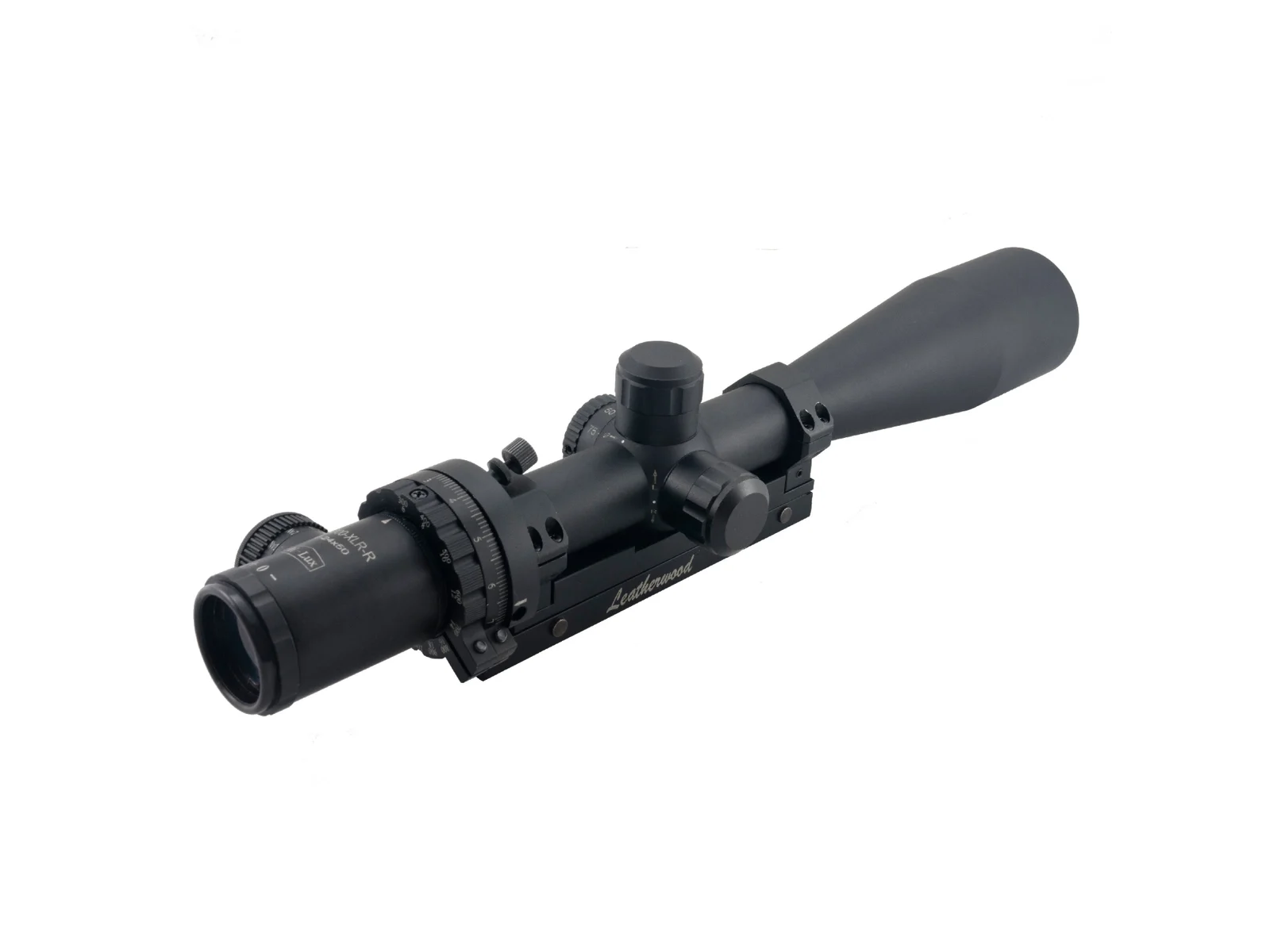
Hi-Lux ART M1200XLR 6X-24X50 Scope with Green Mil Reticle
Long-range shooting performance can be significantly enhanced when dependable optics, versatile magnification, and intelligent trajectory compensation are combined. The Hi-Lux ART M1200XLR 6X-24X50 Scope with Green Mil Reticle has been engineered around those priorities, making it a highly capable optic for shooters who require greater flexibility across extended distances.
Built around the proven Automatic Ranging Trajectory concept, this riflescope has been designed to simplify ranging and trajectory compensation while maintaining a clear, practical sight picture. Furthermore, a powerful 6-24x magnification range has been incorporated so distant targets can be observed, identified, and engaged with greater visual precision.
Instead of relying exclusively on conventional turret calculations, an integrated CAMputer ranging system can be calibrated according to important ballistic information such as muzzle velocity and ballistic coefficient. As a result, long-range aiming can be approached through a more streamlined optical system.
Advanced ART Technology for Long-Range Applications
At the center of the Hi-Lux ART M1200XLR 6X-24X50 Scope with Green Mil Reticle, the Automatic Ranging Trajectory system has been incorporated to support practical distance estimation and trajectory compensation.
Once the CAM system has been calibrated for the ammunition being used, magnification and trajectory compensation are mechanically coordinated as a target of known dimensions is framed through the ranging reticle. Consequently, fewer separate calculations may be required during properly configured use.
According to current product information, ranging compensation has been designed for centerfire applications extending from approximately 300 to 1,200 yards, depending on the rifle, cartridge, ammunition, ballistic performance, environmental conditions, and practical limitations of the selected load.
Therefore, the M1200XLR can be particularly appealing where repeatable long-distance target acquisition is desired.
Powerful 6-24x Magnification Range
A broad 6x to 24x magnification range has been provided so different shooting distances can be accommodated through one optical platform. At the lower end, a wider field of view can be maintained for target location and general observation. Conversely, increased target detail can be obtained as magnification is raised toward 24x.
Additionally, the 50 mm objective lens has been incorporated to provide a generous optical viewing area. Because long-range observation frequently requires careful examination of relatively small or distant targets, this combination of magnification and objective size makes the scope especially suitable for deliberate precision shooting.
Whether targets are being examined at intermediate distances or viewed much farther downrange, magnification can therefore be adapted according to the situation.
Green Illuminated Reticle for Improved Visibility
Reticle visibility can become particularly important whenever the background contains dark vegetation, shadows, or visually complex terrain. For that reason, green illumination has been incorporated into this model.
A clearly visible aiming reference can consequently be maintained under a broader range of lighting and background conditions. Moreover, green illumination can provide strong visual contrast without requiring the sight picture to be unnecessarily complicated.
The illumination system is powered by a CR2032 battery, while current specifications list an approximate battery lifespan of up to 200 hours.
Second Focal Plane Configuration
A second focal plane design has been used in the M1200XLR. Accordingly, the apparent size of the reticle remains visually consistent while magnification is changed.
For shooters familiar with traditional SFP optics, this layout can provide a familiar sight picture across the available magnification range. Furthermore, the ranging system has been engineered around the ART design, allowing magnification adjustment and trajectory compensation to function as part of the scope’s specialized operating concept.
Precision Adjustments and Practical Optical Control
Accurate zeroing must be supported by repeatable mechanical adjustment. Therefore, 1/4 MOA click adjustments have been incorporated for precise correction.
Both maximum windage and elevation adjustment are currently listed at approximately 60 MOA. Additionally, external windage adjustment is integrated into the mounting system, reflecting the specialized mechanical architecture associated with the ART platform.
Once the optic has been correctly mounted, calibrated, and zeroed, controlled corrections can therefore be introduced without sacrificing the practical functionality expected from a long-range riflescope.
30 mm Main Tube Construction
A 30 mm tube diameter has been selected to support the scope’s optical and mechanical components. Rather than being designed as an ultralight hunting optic, the M1200XLR has been developed around substantial long-range functionality.
Current specifications place the optic’s weight at approximately 2.3 lb, while minimum eye relief is listed at about 3 inches.
Consequently, appropriate mounting position, ring compatibility, firearm configuration, and comfortable eye placement should always be confirmed during installation.
Key Features of the Hi-Lux ART M1200XLR 6X-24X50
For convenient product comparison, the main specifications can be summarized as follows:
- 6x-24x variable magnification
- Large 50 mm objective lens
- 30 mm main tube
- Green illuminated ranging reticle
- Automatic Ranging Trajectory technology
- Integrated CAMputer ballistic compensation system
- Second focal plane configuration
- 1/4 MOA click adjustments
- Approximately 60 MOA windage adjustment range
- Approximately 60 MOA elevation adjustment range
- External windage adjustment incorporated into the mount
- Minimum parallax specification of approximately 25 yards
- Approximately 3-inch minimum eye relief
- Field of view listed from approximately 12 ft to 4 ft at 100 yards across the magnification range
- CR2032 battery-powered illumination
- Approximately 200-hour listed battery life
- Designed for extended-range centerfire applications
- Trajectory compensation capability extending toward 1,200 yards when properly configured and when permitted by the rifle, ammunition, and conditions
Designed Around Ballistic Calibration
One of the most distinctive characteristics of the M1200XLR is its ability to be calibrated around ammunition performance.
Ballistic coefficient and muzzle velocity information can be used when configuring the CAM system. Through this process, the scope can be adapted to a broad selection of centerfire ammunition rather than being restricted to one predetermined trajectory.
According to product information, the redesigned system has been intended to accommodate a wide variety of centerfire rifles and cartridges, with examples ranging from .223 Remington-class ammunition through substantially larger cartridges.
Nevertheless, proper ballistic data, accurate zeroing, verified ammunition performance, and real-world confirmation at the range remain essential whenever trajectory compensation is being established.
Made for Shooters Who Value Repeatable Long-Range Performance
For target shooters and experienced long-range users, complicated ranging procedures can consume valuable time. With the ART concept, several ballistic and optical functions have instead been integrated into one coordinated system.
First, ballistic information can be used to calibrate the system. Next, the rifle and optic can be properly zeroed. Afterward, a known-size target can be framed through the ranging reticle while magnification is adjusted. Through the mechanical relationship between magnification and the CAM system, trajectory compensation is then introduced according to the established calibration.
Because of this operating principle, the M1200XLR offers a distinctive alternative to conventional scopes that depend primarily on manual turret dialing or separate ballistic calculations.
Why Choose the Hi-Lux ART M1200XLR 6X-24X50 Scope with Green Mil Reticle?
Rather than being created as a basic high-magnification optic, the Hi-Lux ART M1200XLR 6X-24X50 Scope with Green Mil Reticle has been designed around a specialized long-range shooting system.
Powerful magnification is provided. A large objective has been included. Green reticle illumination has been added for improved visual contrast. Precise MOA adjustments have been incorporated. Most importantly, the ART CAMputer system has been integrated to provide the distinctive ranging and ballistic-compensation functionality for which the platform is known.
Consequently, shooters seeking a feature-rich long-range optic can be provided with much more than simple magnification. Instead, ranging, trajectory compensation, optical observation, and precision adjustment are combined within a single purpose-built system.
For carefully calibrated long-range target shooting and other lawful precision-shooting applications, the M1200XLR delivers an unusual combination of traditional optical engineering and mechanically assisted ballistic compensation.
When dependable magnification, illuminated aiming references, repeatable adjustment, and specialized trajectory technology are required from one optic, the Hi-Lux ART M1200XLR 6X-24X50 Scope with Green Mil Reticle stands as a compelling choice within the Hi-Lux ART lineup.
Element Optics Scopes, Rangefinding Technology, Mounts, and Precision Optic Options
For shooters comparing modern precision optics, element theos has become an important search term, especially for people researching the theos scope and premium long-range configurations such as element theos 6-36, 36×56, and element theos 6 36×56. At the same time, more versatile configurations including element optics 2-10, element 2-10 scope, and element 2 10 scope appeal to users who prefer a wider balance between close-range visibility and higher magnification. Across the broader product family, element helix, element scopes, and related models give buyers several magnification, reticle, and mounting configurations to consider.
When researching an optics-focused scopes website, customers often compare element tactical products with equipment from another optic scope manufacturer. Product searches may also include element prism, titan scope, op element, and helix scope, particularly when comparing compact optics with traditional variable-power designs. Higher magnification options such as element optics 6-24×50 can suit users who prioritize a detailed sight picture and substantial adjustment range.
The premium range also includes the nexus scope, element nexus scopes, and broader nexus scopes category. Searches for nexus tactical equipment frequently lead buyers toward the nexus 4-25×50, while the element titan provides another recognizable alternative. Users comparing a 5-25 scope, 25/56, titan 5, or theos 2-10 generally look closely at optical clarity, turret construction, reticle layout, focal-plane configuration, adjustment tracking, and overall build quality. Consequently, search phrases such as element titan 5 25×56 ffp review and titan25 are commonly associated with buyers researching the Titan platform in greater detail.
Another frequently researched configuration is the element helix 6 24×50, particularly alongside the element nexus gen 2. Although these optics occupy different positions within a product range, potential buyers often compare their specifications before choosing an appropriate design. Reticle selection is equally important, which explains continued interest in rifle scope reticles, while electronic tools such as a ballistic rangefinder can complement a modern optic setup. Some search queries also contain unusual specification formats such as 12×4/2, so checking the manufacturer’s exact specifications remains important before interpreting any numerical value.
Versatile magnification searches commonly include 2-12 scope and 2×12 scope. Meanwhile, terms such as element vision, spectrum element, and even prismatic scale of the elements can appear alongside optics-related searches. A prismatic scope differs structurally from a conventional variable-power riflescope because it uses a prism-based optical system rather than the same internal lens arrangement typically associated with traditional scope designs. Searches for element 3.0 may likewise refer to product generations, technical updates, or model-specific terminology, depending on the context.
Technology-focused users may also investigate element rf and element range products. Within the variable-power category, element theos 2-10 and element theos 2 10 provide alternative search formats for the same general magnification class. Similarly, element 2-10, 10 optic, 2-10 optic, and 2-10x scope describe configurations shoppers may encounter while comparing compact and medium-range optics. Buyers interested in first-focal-plane systems may specifically search for a 2-12 scope ffp, while terms such as fffp 2 can appear as alternate or mistyped search variations.

The Helix family attracts additional attention through searches for helix hd 2 16×50 and hdlr, whereas Titan users frequently research element titan 3 18×50 and element titan 3-18×50. These mid-range magnification configurations can provide a useful compromise between field of view and target detail. The Theos family is also represented by theos 2-10×42 ffp, which combines a practical magnification range with first-focal-plane terminology commonly sought by experienced optics buyers.
Search specifications such as 10×40, .10×40, and 14×50 may describe magnification and objective-lens formats, although exact interpretation should always be checked against official product information. People asking what is a prismatic scope are generally trying to understand how prism optics differ from traditional scope architecture. As with the phrase prismatic scale of the elements, search-engine terminology can occasionally mix scientific and optical expressions, so context matters when evaluating results.
Another product-related term is element hyper 7, together with searches for hqp7-rf-2 specifications details. Users researching newer optical or rangefinding systems may encounter these model codes while comparing technical features, dimensions, mounting options, display systems, or rangefinding capability. The terms element ll and 3×18 can also appear in searches associated with optics or magnification specifications.
For users focused specifically on the 3-18 magnification class, search phrases include 3-18 scopes, 3-18, nightforce 3-18, best 3-18 scopes, and 3×18 scope. Even unusual formatting such as 3:18 may be entered when shoppers are trying to locate comparable models. Regardless of brand, important evaluation factors include image resolution, eye relief, turret repeatability, mechanical reliability, reticle visibility, and low-light performance.
Optical quality also involves controlling distortion and color fringing. Therefore, someone researching chromatic aberration scope performance may be evaluating how effectively a particular optic manages unwanted color separation around high-contrast objects. Better glass, coatings, internal design, and manufacturing tolerances can all influence perceived image quality.
Scope Mounts, Rings, Rangefinders, and Accessory Compatibility
A precision optic also depends on a reliable mounting system. Searches for element mount, dovetail scope mount, and dovetail rings usually reflect the need to match an optic to the appropriate rail or receiver interface. Correct ring diameter, mounting height, rail type, and clearance should always be verified against the optic and platform specifications before purchase.
Electronic rangefinding accessories have expanded the number of configurations available. A picatinny mounted rangefinder or picatinny range finder can be mounted on compatible rail systems, while a rifle rangefinder provides distance information separately or as part of an integrated setup. Search phrases such as weapon mounted range finder, laser range finder for rifle, and rifle range finder generally refer to compact ranging technology intended to provide distance measurements.
Integrated technology has also increased interest in scopes with rangefinders built in, a rangefinder scope for rifle, and a rangefinding rifle scope. These products can combine optical magnification with electronic distance measurement in a single system. Buyers may encounter abbreviations such as wmlrf, while searches for a weapon mounted ballistic calculator or arken wmlrf usually indicate interest in systems that combine ranging information with additional electronic calculations or data.
Mounting accessories deserve equal attention because stability and alignment influence the overall optic installation. A 34mm diving board mount can provide an accessory mounting surface above or around a compatible optic. Similarly, a 34mm scope mount with diving board combines the primary scope mounting structure with an additional accessory interface. The broader term diving board scope mount is frequently used when researching this style of configuration.
Smaller tube systems may use a 30mm diving board mount, while scope diving board searches often refer to elevated accessory rails designed to position compatible devices above an optic. Traditional mounting searches also include picatinny scope rings, 30mm scope mount picatinny, 30mm picatinny scope rings, and picatinny scope mounts. Matching the correct ring diameter and rail standard is essential because a 30mm tube, 34mm tube, dovetail rail, and Picatinny interface are not interchangeable without the appropriate hardware.
Protection is another important consideration once an optic has been mounted. tenebraex scope caps and tenebraex scope covers can help protect exposed lenses when compatible with the selected optic. A flexible allen neoprene scope cover provides another style of external protection for storage and transport. Users running dovetail systems may instead be comparing 30mm dovetail scope rings with other dovetail scope mounts.
Ultimately, choosing between Element Optics families requires more than comparing magnification numbers alone. Whether researching Theos, Helix, Titan, Nexus, Prism, RF technology, rangefinding equipment, or mounting accessories, buyers should evaluate optical clarity, reticle design, adjustment range, focal-plane configuration, tube diameter, rail compatibility, physical dimensions, protective accessories, and manufacturer specifications. Doing so makes it easier to identify an optic and mounting system that properly matches the intended application while avoiding compatibility problems caused by relying solely on product names or search terminology.
Practical Use Scenario
A precision riflescope becomes most valuable when its features can be applied naturally in real shooting conditions rather than simply appearing impressive on a specification sheet. The Hi-Lux ART M1200XLR 6X-24X50 is designed around that principle. Its combination of variable magnification, ballistic compensation, illuminated aiming references, and long-range optical capability allows it to be adapted to several controlled shooting environments where target identification and repeatable adjustment matter.
For many users, the most practical setting will be a long-distance rifle range. At the beginning of a range session, the scope can be used at lower magnification while the shooter establishes a comfortable position and confirms the target area. Once the rifle has been settled onto a stable support, magnification can gradually be increased as smaller aiming points are examined farther downrange.
Rather than immediately working at maximum power, many shooters may find it more comfortable to begin around the lower or middle portion of the magnification range. A wider field of view can therefore be maintained, while target transitions remain easier to manage. After the target has been positively identified, additional magnification can then be introduced when greater visual detail is required.
Long-Range Target Range Use
Imagine a shooter arriving at a controlled outdoor range where targets have been positioned at several known distances. The rifle has already been mounted with the optic, while the selected ammunition has been tested previously for consistency.
The first task would normally involve confirming zero at the established distance. A clearly defined aiming point could be selected, and several carefully controlled shots could be fired from a stable rest. Once impact position has been observed, the adjustment system could be used to refine the point of impact.
Because fine correction capability is provided, relatively small changes can be introduced without relying on large or imprecise adjustments. After zero has been confirmed, the shooter can begin working with targets positioned progressively farther away.
At moderate distance, the optic may only require a medium magnification setting. Meanwhile, the 50 mm objective can help maintain a useful view of the target under ordinary daylight conditions.
As distances increase, higher magnification can be selected so smaller visual references become easier to distinguish. Instead of forcing the shooter to use one fixed power setting, the variable system allows the sight picture to be matched to the size of the target, surrounding terrain, atmospheric conditions, and personal preference.
Working With Known-Size Targets
One of the more distinctive practical applications involves targets with known dimensions. When a target’s approximate size is already understood, the ranging system can become particularly useful.
For example, a steel plate of a standardized dimension may be positioned at an established shooting area. Through the ranging reticle and ART system, the shooter can use the visual relationship between the reticle and target to assist with distance estimation and trajectory compensation.
This approach can reduce the need to continuously move between separate optical devices and the riflescope during an organized shooting session.
Instead, observation, ranging reference, and aiming functions can be performed through one optical platform.
Naturally, ballistic configuration must first be completed correctly. Ammunition velocity, projectile characteristics, zero distance, and actual rifle performance all affect trajectory. Therefore, the system should be regarded as a calibrated shooting aid rather than a substitute for confirmed ballistic data.
Once properly configured, however, the scope can support a more fluid shooting process.
Intermediate-Distance Precision Shooting
Not every practical application requires extreme distance. In fact, one of the advantages of the 6-24x range is that intermediate shooting distances can be accommodated comfortably.
Consider a shooter practicing from 100 to 300 yards on paper targets. At these distances, maximum magnification may not always be necessary. A moderate setting can provide enough image detail while maintaining a broader visual field.
This can be particularly useful during grouped-fire exercises, ammunition comparison sessions, or rifle zero verification.
For example, when testing several ammunition loads, the shooter may use the same target design across multiple lanes. Magnification can remain consistent while each group is observed and compared.
Because the reticle remains visually stable in a second focal plane configuration, the sight picture can feel familiar while power is adjusted.
At these distances, the scope can also be useful for checking point-of-impact movement after small turret corrections.
Instead of walking to the target after every adjustment, the shooter may be able to examine the group through the optic depending on target size, lighting, and environmental conditions.
Use During Varying Light Conditions
Lighting can change dramatically during a single outdoor shooting session. Early morning conditions may produce long shadows, while midday sunlight can create glare and high contrast. Later in the afternoon, darker backgrounds can make a conventional black reticle less distinct.
This is where illuminated aiming references may become especially useful.
Suppose a target has been positioned against dark vegetation or a shaded backstop. A non-illuminated reticle may visually blend into certain parts of the background.
By activating green illumination, the shooter can improve reticle visibility without changing the underlying target image.
The benefit is not simply additional brightness. Instead, better contrast can allow the aiming reference to remain easier to locate when the background becomes visually complicated.
Illumination can therefore be useful during range sessions that continue through changing daylight conditions.
Nevertheless, brightness should be kept appropriate to the environment. Excessive illumination can become distracting, while too little may provide limited benefit.
By using illumination only when required, the shooter can maintain a more natural sight picture.
Supported Shooting From a Bench
A benchrest environment is another practical setting where this optic can be used effectively.
With the rifle placed on a solid front support and rear rest, movement can be minimized. This allows the shooter to take advantage of higher magnification without excessive image instability.
At 20x or 24x, even small body movements become more visible through the optic. Therefore, a stable shooting position becomes increasingly important.
Once properly supported, the rifle can be aligned with the target while the shooter maintains a consistent cheek position and eye placement.
The available eye relief should be carefully respected, especially on rifles generating stronger recoil.
After establishing a natural position, the shooter can refine focus and magnification before beginning the firing sequence.
During group testing, the same aiming point can be used repeatedly, improving consistency between shots.
The scope’s adjustment system can then be used to make measured corrections between groups.
Ammunition Evaluation and Ballistic Testing
Another useful scenario involves ammunition comparison.
Different loads can produce noticeably different trajectories, impact locations, and group sizes. Therefore, the scope can become a valuable observation and aiming tool during ballistic testing.
Imagine three factory loads being tested through the same rifle.
The rifle could first be zeroed with the primary load. Afterward, additional ammunition types could be fired at the same known distance.
Differences in impact position could then be recorded.
If chronograph data is available, velocity information can also be incorporated into the shooter’s ballistic records.
Once an ammunition type has been selected for regular use, the ART system can be configured around that specific ballistic profile.
This creates a more logical relationship between the ammunition, rifle, and optic rather than treating the scope as an isolated component.
Confirming Performance at Multiple Distances
After a ballistic configuration has been established, actual shooting confirmation remains essential.
A practical session could involve targets placed at 100, 200, 300, 400, and farther distances where permitted by the range.
The shooter would begin with the confirmed zero target before progressing outward.
At each stage, the relationship between predicted trajectory and actual impact could be observed.
If the bullets land consistently above or below the expected location, ballistic assumptions can be reviewed.
Environmental conditions may also be considered.
Temperature, air density, elevation, wind, and ammunition consistency can all influence impact position.
Because of these variables, no optical system should be treated as perfectly automatic under every possible condition.
Instead, repeatable range testing can be used to validate the configuration.
Over time, the shooter can develop more reliable data based on the exact rifle and ammunition combination being used.
Practical Magnification Selection
Maximum magnification is often appealing, but it is not automatically the best choice for every shot.
At lower magnification, the field of view is broader. As a result, locating the target may be faster.
Higher magnification provides more visual detail, yet apparent movement can also become more noticeable.
A practical approach is therefore to use the lowest magnification that still provides sufficient target definition.
For instance, a large steel target at moderate distance may be easily viewed at 8x or 10x.
A smaller precision target farther away may justify 16x, 20x, or higher magnification.
By adjusting power according to the actual situation, the shooter can take advantage of the scope’s flexibility rather than treating one setting as universally correct.
Wind Observation and Shot Planning
Wind represents one of the most important variables in long-distance shooting.
Although a riflescope cannot eliminate wind effects, magnification can help the shooter observe visual indicators such as target movement, vegetation, flags, or mirage.
Suppose the shooter is working on a range equipped with wind flags.
Before firing, the target area can be observed carefully.
Changes in flag direction or movement can provide useful information about conditions downrange.
If conditions become inconsistent, the shooter may choose to delay the shot rather than immediately firing.
This patient approach supports repeatable range performance and more meaningful ballistic testing.
Because wind conditions can vary between the firing line and the target, observations should always be interpreted cautiously.
Use With Steel Target Systems
Steel target shooting offers immediate audible and visual feedback.
When properly conducted at a suitable facility with appropriate targets and safe distances, the scope can support this type of precision practice effectively.
Targets may be arranged at increasing distances so the shooter can transition progressively through the course.
Lower magnification might initially be used to identify the next target.
Afterward, magnification can be increased if a smaller aiming area must be resolved.
The illuminated reticle may also be useful when dark steel targets are positioned against similarly dark backgrounds.
By keeping the aiming reference clearly visible, target engagement can become more controlled and deliberate.
Precision Shooting From Prone Position
The optic can also be used effectively from a supported prone position.
A bipod may be used at the front while a rear bag provides additional stability.
Once the rifle is positioned naturally behind the target, the shooter can adjust magnification without changing the entire shooting posture.
At longer distances, the stable prone position can help reduce visible reticle movement.
Consistent shoulder contact, cheek placement, and eye alignment become especially important when higher magnification is being used.
With the rifle properly supported, the shooter can concentrate more effectively on aiming consistency and trigger control.
Training for Repeatable Corrections
A valuable practical exercise involves intentionally moving the point of impact and then returning to the original zero.
For example, the shooter could fire a group at the center target, apply a measured adjustment, fire a second group, and then reverse that adjustment.
This exercise allows the scope’s adjustment system to be evaluated under controlled conditions.
Repeatability can therefore be examined instead of simply assuming that each correction performs perfectly.
Such exercises are particularly useful when a scope will be used regularly at several target distances.
Managing Parallax and Focus
At extended distances, proper parallax adjustment becomes increasingly important.
If the target image and reticle are not properly aligned within the optical system, small changes in eye position can create apparent aiming movement.
Therefore, the shooter should establish a consistent head position while also adjusting the scope appropriately for the target distance.
Once focus, parallax, and magnification have been balanced, the sight picture can become considerably more comfortable.
This is especially useful during longer range sessions where visual fatigue may otherwise become distracting.
A Practical Optic for Structured Precision Shooting
Ultimately, the Hi-Lux ART M1200XLR 6X-24X50 performs best when it is treated as part of a complete precision-shooting system.
The rifle must be properly maintained. Mounting should be secure. Ammunition should be consistent. Ballistic information should be confirmed. Zero should be verified. Environmental conditions should be observed.
Once these fundamentals are established, the scope’s magnification range, green illuminated reticle, adjustment system, and ballistic compensation design can work together more effectively.
Whether being used for paper-target testing, steel-target practice, ammunition evaluation, controlled long-distance shooting, or repeatability exercises, the optic provides a broad range of practical capabilities.
Rather than limiting the shooter to one magnification level or one method of trajectory management, it allows the optical setup to be adjusted according to the situation.
That versatility can make each range session more organized, more measurable, and more useful.
For shooters who value disciplined practice, carefully confirmed ballistic information, and adaptable long-range optics, this scope can function as a practical bridge between traditional magnified aiming and integrated trajectory compensation.



Reviews
There are no reviews yet.