We Deliver Airguns Directly To Your Door
SKU N/A Category

Hawke Vantage HD 30 IR L4A Dot

€200.00

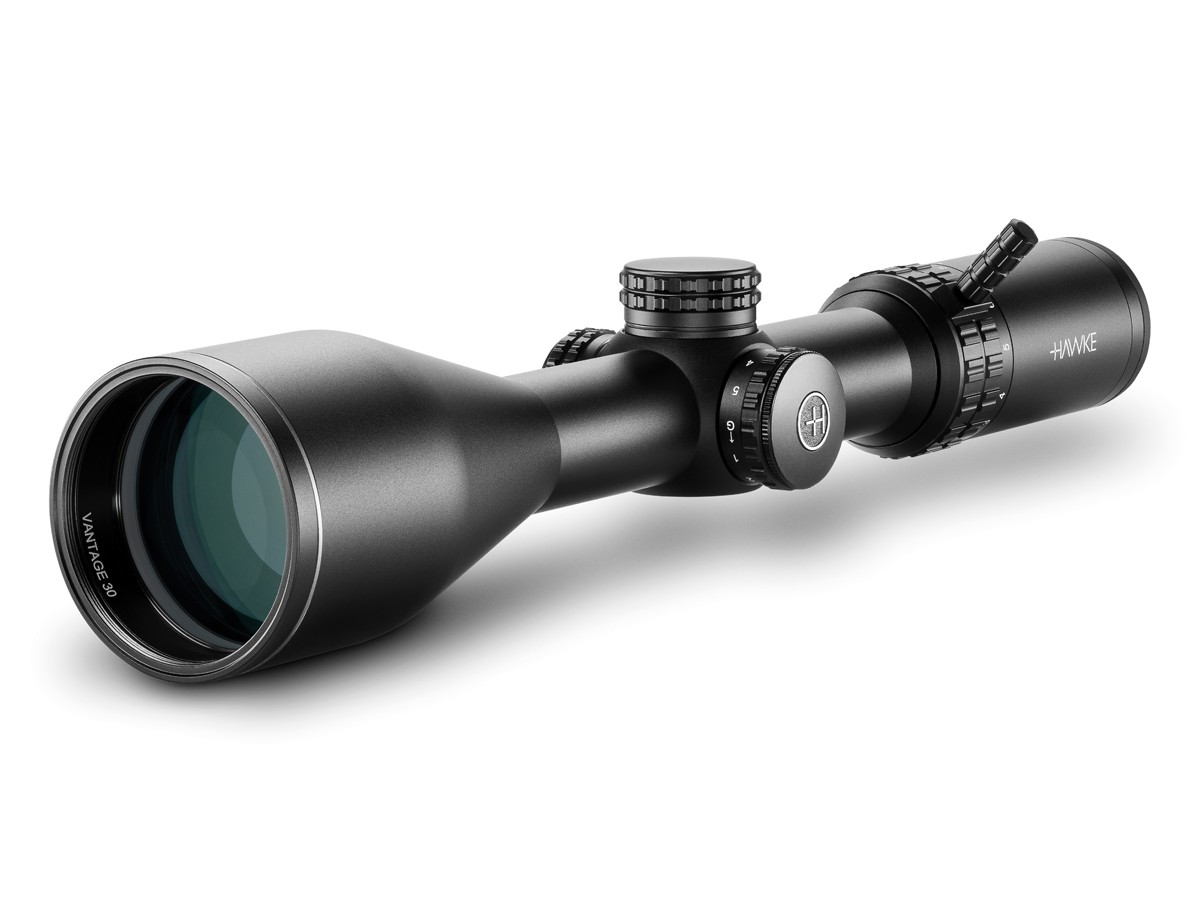
The Hawke Vantage HD 30 3-12×56 IR with L4A Dot reticle gives you a scope with high performance features at a reasonable price thanks to the H2 optics system that combines high technology and clear glass with 11 layer fully multicoated lenses for a bright and crisp sight picture. You’ll appreciate that you get sharp and well defined views even in bad weather and low light because the lenses are waterproof, shockproof, nitrogen purged, and fog proof.

You’ll like the generous field of view you get from this scope because of the wide angle lenses, and the lightweight and durable performance you get from the 30mm aluminum mono tube. You’ll also enjoy that you get ease of use and protection from accidental changes to your turret settings because the capped low profile turrets won’t snag on branches or clothing as easily as competing turret types, which makes them a great choice for hunting or other situations where maneuverability is important.

The Hawke Vantage HD 30 3-12×56 gives you an SFP (second focal plane) L4A Dot reticle, so you get a view that’s more open than other versions and helps you see more of your target because the outer posts are thinner. The reticle gives you accurate measurements at the 4x magnification level, and the 2 MOA floating center dot lets you get precise shots. You can light up the center dot with 5 levels of red or green illumination using the stepped rheostat for brightness that’s visible even in daylight.

If you’re in the market for a scope with high end features at an affordable price for clear and bright views for hunting and shooting success, get the Hawke Vantage HD 30 3-12×56 IR with L4A Dot reticle at Airgun Depot now.

Hawke Vantage HD 30 3-12×56 IR, L4A Dot Features:

  • 56mm objective
  • 30mm aluminum mono tube
  • Capped low-profile turrets
  • Fixed parallax
  • 3-12x magnification
  • Wide angle FOV (43.8-11.4 ft. @ 100 yards)
  • 90mm (3.5″) eye relief
  • Elevation and windage adjustment range: 100 MOA, in 1/4 MOA increments
  • 13.4″ long, 23.6oz
  • H2 optics system
  • 11 layer fully multi-coated wide angle lenses
  • High torque zoom ring
  • Fast focus eyebell
  • Knurled Posi-Grip power selector with removable XL aluminum zoom throw lever
  • Nitrogen purged
  • Shockproof, fog proof, waterproof
  • L4A Dot second focal plane (SFP) 1/4 MOA reticle
  • Red/green illumination in 5 levels with stepped rheostat
  • Includes elasticated lens covers
  • Hawke no-fault lifetime warranty
Specs
  • ManufacturerHawke Sport Optics
  • Condition New
  • Accessories Type Scopes
  • Warranty Lifetime limited warranty
  • Weight 0.23
  • Objective and Magnification 3-12×56

Precision Optics Redefined: Hawke Vantage HD 30 IR L4A Dot Riflescope

Clarity, speed, and dependable aiming are delivered by the Hawke Vantage HD 30 IR L4A Dot across hunting, pest control, and sporting disciplines. Exceptional light transmission is produced by the H2 optical system, while a clean sight picture is maintained by the glass-etched L4A Dot reticle. Consequently, confident shot placement is supported from first light through last light.

Optical Performance Built for Real Conditions

Superior image quality is achieved through 11-layer fully multi-coated lenses. Brightness, contrast, and color fidelity are enhanced even when ambient light is limited. Moreover, a wide-angle field of view is provided so that moving game and surrounding terrain remain visible without constant scanning.

H2 System and Multi-Coated Glass

Light gathering is maximized by the H2 optical design. As a result, targets are resolved with greater definition at dawn, dusk, and in shaded woodland. Furthermore, glare is reduced and edge-to-edge sharpness is preserved across the magnification range. Therefore, identification of vital zones is made easier at typical hunting distances.

Fixed parallax at 100 yards (91 m) is employed so that a simple, reliable setup is obtained. Additionally, generous eye relief of approximately 3.5 inches (90 mm) is offered, which helps protect the shooter during recoil from a wide range of calibers.

L4A Dot Reticle and Illumination Control

A refined variant of the classic L4 pattern is used in the L4A Dot. Thinner outer posts are featured so that more of the target remains visible while aiming. Meanwhile, a floating 2 MOA center dot is presented as the primary aiming point. Accurate holdovers and ranging references are calibrated at 4x magnification (approximately 30 inches from center to post at 100 yards, or 83 cm at 100 m).

Red and Green Illumination

Five brightness levels in both red and green are controlled by a stepped rheostat on the saddle. Consequently, the illuminated center dot can be matched to background conditions without washing out the image. In addition, daylight-usable settings are available so that the aim point stays visible against bright backgrounds. Low-light settings are likewise provided for last-light shots.

Because the reticle sits in the second focal plane (SFP), its apparent size remains constant as magnification is changed. Thus, a familiar picture is retained whether close-range tracking or mid-range precision is required.

Highlight Features of the Hawke Vantage HD 30 IR L4A Dot

  • 30 mm monotube chassis for structural strength and consistent internal alignment
  • H2 optical system with 11-layer fully multi-coated lenses
  • Glass-etched L4A Dot reticle with open posts and 2 MOA floating center dot
  • Red and green illumination across 5 stepped brightness levels
  • Capped low-profile resettable turrets to protect zero in the field
  • Fixed 100-yard / 91 m parallax for straightforward use
  • Fast-focus eyebell for rapid reticle sharpness
  • Knurled Posi-Grip power ring with removable zoom lever on many configurations
  • Nitrogen purged, shockproof, waterproof, and fog proof construction
  • All-calibre rated for firearms and high-power air rifles
  • Hawke No-Fault Lifetime Warranty for long-term confidence

Construction, Turrets, and Field Durability

A one-piece 30 mm aluminum monotube is utilized so that rigidity and optical alignment are maintained under recoil. Nitrogen purging is applied internally; therefore, fogging is prevented when temperature and humidity change rapidly. Waterproof and shockproof sealing is also incorporated, allowing the optic to remain serviceable in rain, snow, and rough transport.

Capped, low-profile turrets are fitted so that accidental bumps against clothing or vegetation are less likely to disturb zero. Resettable turrets are included, enabling a clean return to a known setting after adjustments. Click values typically of 1/4 MOA (or 1/2 MOA on lower-power models) are provided, and generous elevation and windage travel is available for zeroing a wide range of platforms.

High-torque zoom operation is engineered so that magnification does not drift under recoil. Likewise, a removable throw lever is supplied on many Hawke Vantage HD 30 IR L4A Dot configurations, allowing faster power changes when a shot opportunity appears suddenly.

Practical Use Across Disciplines

Versatility is built into the Hawke Vantage HD 30 IR L4A Dot. Driven-game and close-cover work are supported at lower magnification by the wide field of view and uncluttered reticle. Subsequently, mid-range shots on pest species, deer, or targets are handled by increasing power while the illuminated 2 MOA dot remains easy to place.

Air rifle and PCP shooters benefit from all-calibre rating and robust construction. Similarly, centerfire hunters receive enough adjustment range and optical quality for ethical distances without stepping into a much higher price bracket. In addition, the simple L4A layout reduces visual clutter, which helps newer and experienced shooters alike stay focused on the animal rather than on a busy grid.

Inclusive design choices—clear controls, dual-color illumination, and a straightforward reticle—mean the optic can be used comfortably by a broad range of enthusiasts, regardless of experience level or preferred discipline.

Maintenance and Everyday Handling

Lens covers are commonly supplied so that glass stays protected between sessions. Fast-focus adjustment is located at the ocular so that the reticle can be sharpened quickly for different eyes. Because the chassis is sealed and purged, routine care is limited to wiping lenses with a proper cloth and checking mount torque—no complex internal servicing is required for normal use.

Why the Hawke Vantage HD 30 IR L4A Dot Belongs on the Rifle

Value and capability are balanced carefully in this line. Premium-style coatings, a proven reticle, dual-color illumination, and a lifetime no-fault warranty are combined in a package that remains accessible. Moreover, the 30 mm tube accepts widely available rings, so mounting options stay flexible.

Ultimately, a bright, wide, and uncluttered picture is delivered when it matters most. Target acquisition is accelerated by the open L4A posts. Precision is anchored by the illuminated 2 MOA dot. Reliability is reinforced by monotube construction and full weather sealing. Therefore, the Hawke Vantage HD 30 IR L4A Dot stands as a practical, conversion-ready choice for hunters and shooters who need an optic that works as hard as they do.

Responsible, legal use and proper zeroing remain essential. When those fundamentals are observed, consistent performance in the field can be expected from this Hawke Vantage HD 30 IR L4A Dot riflescope for years of service.

Frequently Asked Questions

General Purpose and Suitability

What shooting situations are best supported by this optic?

A wide range of field and range use is supported. Close-cover tracking and driven-game work are handled at lower magnification because a generous field of view is provided. Mid-range pest control, hunting, and target practice are then addressed as power is increased. Consequently, a single optic can be kept on the rifle when conditions change during the day. Moreover, both firearms and high-power air rifles are accommodated because an all-calibre rating is applied. Therefore, mixed-platform owners are not forced to maintain separate scopes for each discipline.

Is this design intended only for experienced hunters?

Inclusive use is intended. A simple, uncluttered aiming pattern is employed so that newer shooters are not overwhelmed. At the same time, enough optical quality and adjustment range are supplied for seasoned hunters and competitors. Additionally, dual-color illumination and straightforward turret operation are included so that users with different visual preferences can work comfortably. As a result, the same package can serve households, clubs, and individual enthusiasts without a steep learning curve.

Reticle, Illumination, and Aiming

How is the L4A Dot pattern constructed?

A refined L4-style layout is used. Thicker outer posts are placed at three, six, and nine o’clock, while a thinner upper post and inner crosshairs leave the center relatively open. A floating 2 MOA center dot is then presented as the primary aim point. Because the outer posts are more open than older L4 designs, more of the target remains visible during the hold. Furthermore, hold references are calibrated at 4x magnification, with approximately 30 inches from center to post at 100 yards (about 83 cm at 100 m). Thus, a clean picture and useful spacing are combined.

Can the center aiming point be illuminated?

Yes. Red and green illumination of the floating center dot is provided across five stepped brightness levels. A rheostat on the saddle is used so that intensity can be matched to background light. Consequently, a daylight-visible setting can be selected when the target is bright, while a dim setting can be chosen at last light so that night vision is not spoiled. In addition, color choice allows the aim point to be contrasted against foliage, snow, or dark hides. Therefore, acquisition speed is improved across a full hunting day.

Why is the reticle placed in the second focal plane?

A constant apparent reticle size is maintained as magnification is changed. The posts and center dot do not grow or shrink with zoom. As a result, a familiar picture is retained whether the rifle is used at low power for tracking or at higher power for a precise hold. Meanwhile, subtension values remain correct at the designated calibration magnification. Likewise, visual clutter is avoided at high power because the reticle does not become overly thick.

Optics, Light, and Image Quality

How is image brightness achieved in low light?

Eleven-layer fully multi-coated lenses are combined with the H2 optical system. Light transmission, contrast, and color fidelity are thereby improved. Moreover, a wide-angle design is employed so that the view does not feel tunnel-like at lower settings. Consequently, game can still be identified in timber, at dawn, and at dusk. Additionally, glare is reduced when the sun sits low on the horizon. Hence, ethical shot selection is supported later into the evening than with uncoated or lightly coated glass.

Is side-focus parallax adjustment included?

Fixed parallax at 100 yards (91 m) is used on these configurations. A simple, set-and-forget setup is therefore obtained. For typical hunting and air-rifle distances around that mark, aiming error from parallax remains small. Furthermore, fewer controls on the saddle mean less to snag in cover. If extreme close or very long distances are the primary use, a side-focus model from the same family can be considered instead. Nevertheless, for most field work the fixed setting is found to be practical and reliable.

What eye relief can be expected?

Approximately 3.5 inches (90 mm) of eye relief is offered on the common mid-power models, with a slightly longer figure on some compact low-power versions. Generous spacing is thereby provided so that facial contact with the ocular is reduced under recoil. In addition, a fast-focus eyebell is fitted so that the reticle can be sharpened quickly for different eyes or glasses. As a result, a usable sight picture can be obtained promptly when a shot opportunity appears.

Construction, Weather, and Recoil

How is durability built into the body?

A one-piece 30 mm aluminum monotube chassis is employed. Structural rigidity and consistent internal alignment are therefore maintained. Nitrogen purging is applied so that internal fogging is prevented when temperature and humidity swing rapidly. Waterproof and shockproof sealing is also incorporated. Consequently, rain, snow, dust, and rough transport are tolerated. All-calibre rating is stated as well, which means both modest air rifles and heavier hunting cartridges can be used without an immediate fear of internal failure.

Will turret settings be knocked off in the field?

Capped, low-profile turrets are fitted. Accidental contact with clothing, slings, or brush is less likely to move the zero. Resettable turrets are included so that a known setting can be restored after a temporary adjustment. Click values of 1/4 MOA are typical on mid-power models, while 1/2 MOA clicks appear on some compact low-power versions. Generous elevation

and windage travel is provided so that a wide range of rifles can be zeroed. Therefore, a hunting-ready zero can be protected between range sessions and field days.

Is a zoom lever supplied?

A knurled Posi-Grip power ring is standard. On many configurations a removable throw lever is also included. Fast magnification changes can thus be made without hunting for a small ring under gloves. High-torque design is used so that the setting does not creep under recoil. Meanwhile, the lever can be removed if a slimmer profile is preferred for storage or a tight case.

Mounting, Compatibility, and Care

What rings are required?

A 30 mm tube diameter is used. Widely available 30 mm rings of appropriate height for the objective and the rifle’s action can therefore be selected. Proper torque and alignment remain essential. Additionally, enough mounting space is typically present on the monotube for a stable two-ring setup. After mounting, a careful zeroing session should be completed before hunting use.

Can the same optic be moved between an air rifle and a firearm?

All-calibre rating is given, and robust construction is employed. Transfer between platforms is therefore possible if rings or a compatible mount are used and a fresh zero is established. Recoil impulse and point of impact will differ, so confirmation on paper is required after any move. Inclusive practice also means checking local laws for both airguns and firearms before any change of use.

What routine care is recommended?

Lenses should be kept clean with a proper microfiber cloth and suitable optics fluid only. Elasticated or flip covers are commonly supplied and should be used between shots. Mount screws should be checked periodically. Because the tube is sealed and purged, internal servicing is not part of normal ownership. Storage in a dry case is advised. Consequently, long service life can be expected when basic handling is observed.

Warranty, Value, and Buying Considerations

What warranty coverage is offered?

A no-fault lifetime warranty is provided by the manufacturer. Accidental damage and defects are thereby addressed under the stated terms. Registration and proof of purchase should be retained. As a result, long-term ownership risk is reduced compared with optics that carry only a short limited guarantee.

Who benefits most from this specification?

Hunters who need a bright, wide view and a simple illuminated aim point are well served. Pest controllers who work from first light to last light likewise gain from dual-color illumination and coated glass. Recreational shooters who want one reliable scope for mixed distances are also included. Furthermore, air-rifle enthusiasts who require a recoil-capable, weather-sealed optic find the construction suitable. Inclusive language applies here: the design is not reserved for a single gender, age group, or experience level.

Are spare parts and accessories easy to source?

Standard 30 mm rings, common CR2032-style illumination cells (where used), and typical lens covers are widely stocked. Aftermarket throw levers and sunshades can often be added if desired. Therefore, support over the life of the optic is straightforward in most markets.

How should expectations be set versus premium flagship scopes?

Excellent value is delivered in this class. Eleven-layer coatings, a glass-etched reticle, dual illumination, monotube strength, and a lifetime no-fault warranty are combined without flagship pricing. Edge resolution and low-light performance will not match the most expensive European glass in every comparison. Nevertheless, for ethical hunting distances and everyday range work, a clear, usable picture is produced. Conversion-minded buyers who need reliability more than exotic features are therefore well matched.
Premium Rangefinding Binoculars, Precision Riflescopes and Advanced Hunting Optics

Modern optical technology gives hunters, sport shooters, wildlife observers, and outdoor enthusiasts more ways to identify distant targets, measure range, and achieve a clearer field of view. Premium Leica rangefinder binoculars remain highly regarded for combining observation and ranging technology in one compact optical platform. Popular searches include Leica Geovid 10×42 rangefinder binoculars, Leica Geovid binoculars, Leica binoculars with rangefinder, Leica Geovid Pro 10×42, and Geovid Pro 10×42. Whether someone is researching a Leica Geovid rangefinder, Leica Geovid Pro rangefinder binoculars, Leica Geovid rangefinder binoculars, or the classic Leica Geovid 10×42, the Geovid family is commonly associated with high-quality glass, strong optical clarity, and practical long-distance observation.

Beyond rangefinding models, the wider Leica binoculars collection appeals to users searching for Leica small binoculars, binoculars Leica, Leica Geovid binos, Leica bino, Leica binoculars for sale, Leica bino rangefinder, Leica camera binoculars, Leica binos, or simply a Leica binocular for travel, field observation, wildlife viewing, and outdoor use. Different magnification formats, including 10×40, can suit users who want a balance between detail, portability, and field of view.

Alternative electronic binocular technologies are also becoming increasingly popular. Searches for SIG Sauer binoculars, SIG self stabilizing binoculars, SIG Sauer binos, SIG binoculars, SIG image stabilizing binoculars, SIG binocular, and SIG auto stabilizing binoculars reflect growing interest in electronically assisted viewing. Likewise, SIG Sauer self stabilized binoculars and SIG Sauer image stabilized binoculars can appeal to users who want reduced visual movement during handheld observation. Some buyers may also encounter broader search variations such as Sigma binoculars or specification terms like 11.5ee while comparing different optical products.

Precision aiming optics occupy another major part of the premium optics market. A Zeiss red dot offers a different sighting concept from traditional magnified optics, while the Nightforce ATACR line is frequently researched by users interested in premium long-range scopes. Common variants include Nightforce ATACR 5-25×56 F2, Nightforce ATACR 4-20×50, Nightforce ATACR 5-25×56 F1, and Nightforce ATACR 4-16×50. Related searches such as Night Force ATACR, ATACR scope, Nightforce attacker, ATACR 4-20, and Nightforce ATACR 4 20×50 F1 often appear when buyers are comparing magnification ranges, focal-plane configurations, turret systems, and optical performance.

At the higher end of precision optics, Tangent Theta products are frequently associated with specialist applications requiring refined mechanical adjustment and premium optical performance. Users may search for Tangent Theta scopes, Tangent scope, Tangent scopes, Theta optics, Tangent Theta scope, and Tangent optics while researching high-performance long-range systems.

The market also includes companies such as Fierce Firearms, Fierce Arms, and Fierce Optics, which may appear in searches involving hunting equipment and optical accessories. Within the Athlon category, meanwhile, one of the more detailed product searches is Midas TAC Gen2 HD 6-24×50 APLR15 FFP MOA reticle riflescope. The broader Athlon Midas TAC family, including Athlon Midas TAC 6-24×50, is often considered by users who want substantial magnification and adjustable target-focused features.

For shooters comparing larger objective and magnification configurations, terms such as 34 56, 34×56, Athlon Argos BTR Gen2 8-34×56, Athlon BTR Gen 2, Athlon Argos BTR Gen2, Athlon Argos BTR, and Athlon Argos BTR Gen 2 commonly appear during product research. Search variations such as Athalon scopes and Athens scope may also lead shoppers toward Athlon products when researching a new gun scope, Icarus scope, longest range scope, or general hunting optic.

Anyone learning how to buy a rifle scope should compare magnification range, objective diameter, reticle design, adjustment system, eye relief, optical quality, focal-plane configuration, overall weight, and intended sporting application. Terms such as AO scope can refer to adjustable-objective configurations, while models in the Athlon Ares BTR family provide additional options for users exploring precision-oriented optics.

Mid-range magnification searches frequently include 2.5×15, Avalon Aries, 2.5/15, Athlon BTR Gen 2, Athlon scopes review, Athlon reticles, 2.5-15 scope, and repeated comparisons involving Athlon Argos BTR Gen2 8-34×56 or 34×56 configurations. These searches demonstrate how buyers often compare reticles, magnification ratios, objective sizes, and scope families rather than selecting an optic solely by maximum magnification.

Low-power variable optics are another major category. Searches such as 1 10 scope, Ares ETR 1 10, 1 10 LPVO, 1-10 LPVO, 1-10 FFP LPVO, 1×10 scope, Athlon ETR, LPVO 1-8, LPVO 1-10, and 1-10 rifle scope reflect demand for versatile magnification systems. An LPVO allows users to move between low magnification for a broad field of view and higher magnification for improved observation at extended distances, making the format useful across several sporting disciplines.

For greater magnification, the Ares ETR Gen2 UHD 4.5-30×56 APRS12 FFP IR MIL reticle represents another precision-focused configuration within the Athlon range. Related product searches include Athlon 4.5-30×56, 4.5 30, Athlon ETR, and 4.5/30. The large 56 mm objective and broad magnification range make this type of optic particularly relevant to users comparing long-distance target and field optics.

Other searches such as 14×44, 2s14, Athlon BTR 2-12, 1/2×42, Athlon BTR Gen 2, 12×4.2, 2-12x, and Athlon 2 demonstrate continued demand for more compact variable-magnification formats. A 2-12x configuration, for example, can provide a useful compromise between field of view and magnified observation without requiring the size or weight of a very high-magnification optic.

Ultimately, premium optics cover far more than a single product category. Leica rangefinder binoculars and Leica Geovid binoculars combine observation with distance measurement, while stabilized SIG Sauer binoculars emphasize steady handheld viewing. Meanwhile, Nightforce ATACR, Tangent Theta scopes, and Athlon families such as the Midas TAC, Argos BTR, Ares BTR, and Ares ETR provide a wide range of magnification, reticle, and focal-plane options. By comparing optical clarity, magnification range, objective diameter, reticle format, adjustment system, physical dimensions, and intended sporting use, buyers can narrow a broad optics market into products that better match their individual requirements.

Practical Field Questions

How should magnification be chosen in the moment?

Low power should be selected when the animal is close or moving through cover, because field of view and speed of acquisition are then maximized. Higher power should be reserved for a stationary or distant target when a precise hold on the 2 MOA dot is required. Because the reticle size does not change with zoom, the same mental picture can be kept. Subsequently, the throw lever—when fitted—allows that change to be made quickly.

What should be checked before a hunt?

Zero should be confirmed. Illumination should be tested on both colors and several brightness steps. Lens covers should be confirmed present. Battery condition should be verified if the cell has not been changed recently. Mount torque should be inspected. Weather seals cannot be seen, yet a fog-free view after a temperature change is a good practical check. When these steps are completed, confidence in the field is increased.

Can the optic be used in rain and snow?

Waterproof construction and nitrogen purging are specified. Use in wet weather is therefore intended. Lenses should still be wiped when water spots affect the view. Extreme thermal shock (for example, moving from a heated vehicle into freezing rain and immediately hunting) should be minimized so that external condensation has time to clear. Overall, all-weather service is a core design goal.

Is this a good first illuminated scope?

A simple reticle, capped turrets, and clearly stepped illumination make a gentle introduction. Inclusive design means controls can be understood without a thick manual. At the same time, enough capability is present that the optic need not be replaced as soon as skill improves. Hence, a first illuminated hunting scope and a long-term field tool can be the same purchase when this specification is chosen.

Practical Use Scenarios

First Light on Agricultural Edges

Quiet movement along a field margin is begun before sunrise. Moisture is still held on grass, and a pale sky is only beginning to lift. A low-to-mid magnification setting is selected so that a wide view of the headland is retained. Consequently, rabbits or pigeons that break from cover can be acquired without hunting through a narrow tunnel of glass.

The illuminated center aiming point is set to a low green intensity. Green is often preferred against damp vegetation because contrast is improved without a harsh glare. Meanwhile, the open outer posts leave enough of the animal visible that a rushed hold is avoided. As the first legal shot window arrives, a stable rest against a fence post or bag is taken. A calm press is executed. After the shot, the same wide picture is used to watch for a second opportunity rather than immediately spinning the power ring.

Furthermore, fixed parallax at a typical hunting distance means no extra turret is fumbled in gloves. Time that would otherwise be spent on side focus is instead spent on wind, background, and a safe backstop. Inclusive practice is observed: every shot is taken only when identification is certain and a safe fall of the projectile is assured.

Tips for Dawn Edge Work

  • A lower power setting is kept until the animal stops.
  • Illumination is started dim and raised only if the aim point disappears.
  • Lens covers are opened only when the rifle is mounted.
  • A second look at the background is taken before the trigger is pressed.

Woodland Stalking and Broken Light

Inside timber, light is uneven. Patches of sun and deep shade are crossed in a few steps. Here the coated glass and wide-angle design are relied upon. Contrast is preserved so that a deer’s outline is separated from trunks and bramble. Moreover, the uncluttered reticle prevents the hold from being lost against bark and leaf clutter.

Magnification is kept modest while the approach is made. When a pause occurs and a shot angle is presented, power is increased just enough for a precise hold on the vital zone. Because the reticle sits in the second focal plane, its apparent size does not swell and hide the shoulder. Therefore, the same mental picture used at the start of the stalk remains usable at the moment of the shot.

Capped turrets are an advantage in this environment. Brush, slings, and clothing are constantly in contact with the rifle. Accidental clicks are reduced by the low-profile caps. After a successful stalk, the caps are left in place until a known range session is planned. Consequently, a hunting zero is protected between encounters.

Weather inside woodland changes quickly. A shower can pass, then sun can heat the tube. Nitrogen purging and sealed construction are relied upon so that an internal fog bloom does not appear at the worst moment. External droplets are wiped with a clean cloth. Then the hunt is continued. Inclusive language applies equally here: stalking is practiced by many ages and body types; a generous eye box and fast-focus ocular help different faces find a full sight picture without strain.

Driven and Close-Cover Encounters

When animals are pushed through rides or break from maize, speed matters more than maximum power. The lowest practical magnification is selected. A wide field of view is thereby obtained so that a moving shape is picked up early. The floating center dot is illuminated at a mid setting that remains visible against a bright ride yet does not bloom.

Both eyes can often be kept open at true low power. Situational awareness is improved. The thick outer posts act as a quick frame, while the open center keeps the animal from being covered. A swinging hold is coordinated with the movement rather than a static aim at empty space. After the animal passes a safe lane, the shot is taken or withheld. No shame is attached to a withheld shot; safety and identification always come first.

A removable throw lever, when fitted, is useful in this style of hunt. Power can be raised in one motion if the animal pauses at a longer gap. High-torque design keeps the ring from walking under recoil between drives. Meanwhile, generous eye relief reduces the chance of a facial knock when a heavier cartridge is used from an awkward kneeling position.

Close-Cover Checklist

  • Lowest useful power is set before the stand is occupied.
  • Illumination color is chosen against the expected background (green for foliage, red for snow or dusk sky).
  • A clear backstop is confirmed for every possible lane.
  • The throw lever is oriented where the support hand can reach it without breaking the mount.
Objective and Magnification

2.5-10×50, 3-12×56

Reviews

There are no reviews yet.

Be the first to review “Hawke Vantage HD 30 IR L4A Dot”

Related Products

FAQ

  • Spring-Piston (Break-Barrel or Underlever): Cock by compressing a spring. Reliable, no external air source needed, but can have more recoil (“spring twang”) and require technique to shoot accurately.
  • Pre-Charged Pneumatic (PCP): Filled from a scuba tank, compressor, or pump. High power, low recoil, multiple shots per fill. Popular for precision and hunting.
  • CO₂: Powered by disposable cartridges. Good for pistols and semi-auto/repeaters, but performance drops in cold weather.
  • Multi-Pump Pneumatic: Hand-pumped to build pressure. Versatile but requires effort.
  • Gas Ram (Nitro Piston): Uses compressed gas instead of a metal spring. Smoother than traditional springers.

Calibers: Most common are .177 (4.5mm) for speed/flat trajectory and general use, and .22 (5.5mm) for better hunting knockdown power. Larger “big bore” (.25, .30, .357+) exist for hunting bigger game where legal.

Yes, many modern PCP and springers deliver enough energy for small game (rabbits, squirrels, birds) and even larger game in some areas. Muzzle energy (in ft-lbs or joules) matters more than velocity alone. Always match caliber, pellet weight, and energy to the game and check local hunting regs.

Treat every airgun as if it is loaded.

  • Always point the muzzle in a safe direction.
  • Keep your finger off the trigger until ready to shoot.
  • Know your target and what is beyond it (pellets can ricochet or travel far).
  • Wear eye protection.
  • Store unloaded, out of reach of children/untrained users, and ideally locked.
  • Never shoot at hard surfaces or in areas where pellets could escape your property.

Follow these rules strictly—airguns cause real injuries.

Laws differ dramatically by country, state/province, and even city. Always verify current local laws before buying, owning, transporting, or using an airgun. Age restrictions (often 18+) are common.

Examples (summaries only; check official sources):

  • UK: Air rifles ≤12 ft-lbs (16.3 joules) and pistols ≤6 ft-lbs generally do not require a license (FAC needed above that).
  • USA: Varies by state. Some treat powerful airguns as firearms; others do not. Many states now allow big-game hunting with air rifles.
  • Canada: Some airguns classified as firearms if they exceed velocity/energy thresholds.
  • Australia: Often treated as firearms; licensing/registration required in most states.
  • EU/France/Belgium/etc.: Varies; many allow low-power (<20J) guns freely to adults, with higher power needing permits. Germany has strict ~7.5J limits in some contexts.
  • Other countries: Some have no restrictions below certain energies; others ban or heavily regulate them.

Resources: Wikipedia “Air gun laws”, airgun forums, or official government sites. For travel, research transit laws carefully.

Consider:

  • Purpose: Plinking/backyard → lower power springer or CO₂. Hunting/precision → PCP.
  • Budget: Entry-level springers are affordable; PCPs need a fill system (extra cost).
  • .177 vs .22: .177 easier for beginners/targets; .22 better for hunting.
  • Power source: Convenience vs performance.
  • Test pellets in your gun—accuracy varies.

Buy from reputable dealers and consider warranties.

  • Clean barrel periodically (especially if accuracy drops) with patches and appropriate tools/solvents. Avoid over-oiling.
  • Lubricate moving parts and seals with airgun-specific oil (not general gun oil). Springers need piston seal oil occasionally.
  • Check screws, seals for leaks (PCP), and safety mechanisms regularly.
  • Store in a cool, dry place, ideally in a case. Avoid leaving cocked for long periods.

Follow your model’s manual. Basic care extends life significantly.

International shipping may be available for select products. Customers are responsible for understanding and complying with their local import laws and regulations before ordering.

Yes. Customers are required to confirm their order number through WhatsApp or Live Chat before orders are processed and shipped.

If local laws prevent shipment to your area, your order may be canceled and refunded according to our store policy.

Processing typically takes 1–3 business days after payment confirmation. Delivery times vary depending on destination, carrier, and product availability.


  • Wrong pellets for your barrel/caliber.
  • “Death grip” or poor shooting form (especially with springers—let the gun recoil naturally).
  • Loose scopes or mounts.
  • Ignoring safety or local laws.
  • Over-oiling or shooting with obstructions.


Pellets are the most common projectile (lead or lead-free). Match them to your gun, caliber, and purpose—test several brands as accuracy varies by barrel.

  • Domed (Round-Head): Best all-rounder. Excellent accuracy, ballistic coefficient, and energy retention. Ideal for target shooting, field target, and general hunting (e.g., JSB Exact, Air Arms Diabolo Field, H&N Field Target Trophy).
  • Wadcutter (Flat-Head): Clean holes in paper. Best for close-range target/plinking (under 20-25 yards).
  • Hollow Point: Expands on impact for better energy dump. Good for small game hunting (e.g., Predator Polymag, H&N Terminator).
  • Pointed: More penetration, but often less accurate than domed.
  • Slugs: Heavier, more aerodynamic for high-power PCPs at longer ranges (better for big game where legal).

Tips: Heavier pellets in .22/.25 for hunting (better momentum). Lighter in .177 for speed/flat trajectory. Always check head size fit (e.g., 4.51-4.53mm variants).

Muzzle energy (ft-lbs or joules) matters more than velocity. Ethical shots require precise placement (head/heart-lung) within effective range.

Rough Guidelines (adjust for distance, pellet, and local laws):

  • Small game (squirrels, rabbits, birds): 9-20+ FPE, .177/.22.
  • Medium (raccoons, etc.): 25+ FPE, .22/.25 recommended.
  • Larger game: 40-100+ FPE in .30+ calibers (up to big bore for deer/hogs where permitted).

PCPs dominate serious hunting due to power and shot count. Springers/gas rams work well for small game but require skill. Always prioritize clean kills and check seasons/species rules.

  • Barrel Cleaning: Use a pull-through kit or rod with patches. Avoid brushes that could damage rifling. Clean when accuracy drops or after 500-1000 shots.
  • Lubrication: Airgun-specific silicone oil for seals/O-rings (sparingly—excess causes dieseling in springers). Springers may need piston lube periodically.
  • PCP Specific: Check for leaks (soapy water test), monitor regulator/hammer settings, and keep fill systems clean. Don’t exceed rated pressure.
  • General: Tighten stock screws, inspect for wear, store properly. Chronograph shots to track consistency.

Common Issues:

  • Inconsistent velocity → dirty barrel, bad pellets, or seal problems.
  • Spring “twang” → tuning or proper hold.
  • Low power → worn seals or under/over-pumping.

Toggle Content

  • Scopes: Airgun-rated (hold zero under recoil). 3-9x or 4-12x common.
  • Fill Systems: Hand pumps, compressors, or tanks for PCPs.
  • Safety Gear: Eye/ear protection, targets with backstops.
  • Noise: Airguns quieter than firearms, but moderators help further.

Budget Tip: Start with a quality springer (~$150-400) before investing in PCP setup.

Airgunning offers endless depth—from backyard plinking to precision competition and ethical hunting. Prioritize safety, legality, and practice. If you want specifics (e.g., recommendations for a country, budget, hunting small game, or a particular type like PCP vs springer), let me know for more targeted info! Shoot responsibly.

Tuning improves accuracy, reduces noise/recoil, or increases power (within legal limits).

  • Springers: Lighter springs, guides, seals, or custom tuning kits for smoother shot cycle. “V-Mach” or similar professional tunes popular.
  • PCPs: Regulator tuning, hammer spring adjustments, valve work for efficiency and shot count. Some add electronic systems.
  • Accessories: Suppressors (often unregulated on airguns), better triggers, stocks, and scopes.

Caution: Check laws—power increases may reclassify your gun. DIY only if experienced; professional tuners recommended.

You must be at least 18 years old to purchase any airgun or related accessories from our store. By placing an order, you confirm that you meet the legal age requirements in your state or country.

Yes. Orders may require age verification before processing and shipping. In some cases, we may request a valid government-issued ID to confirm eligibility.


Translate »