We Deliver Airguns Directly To Your Door
Category

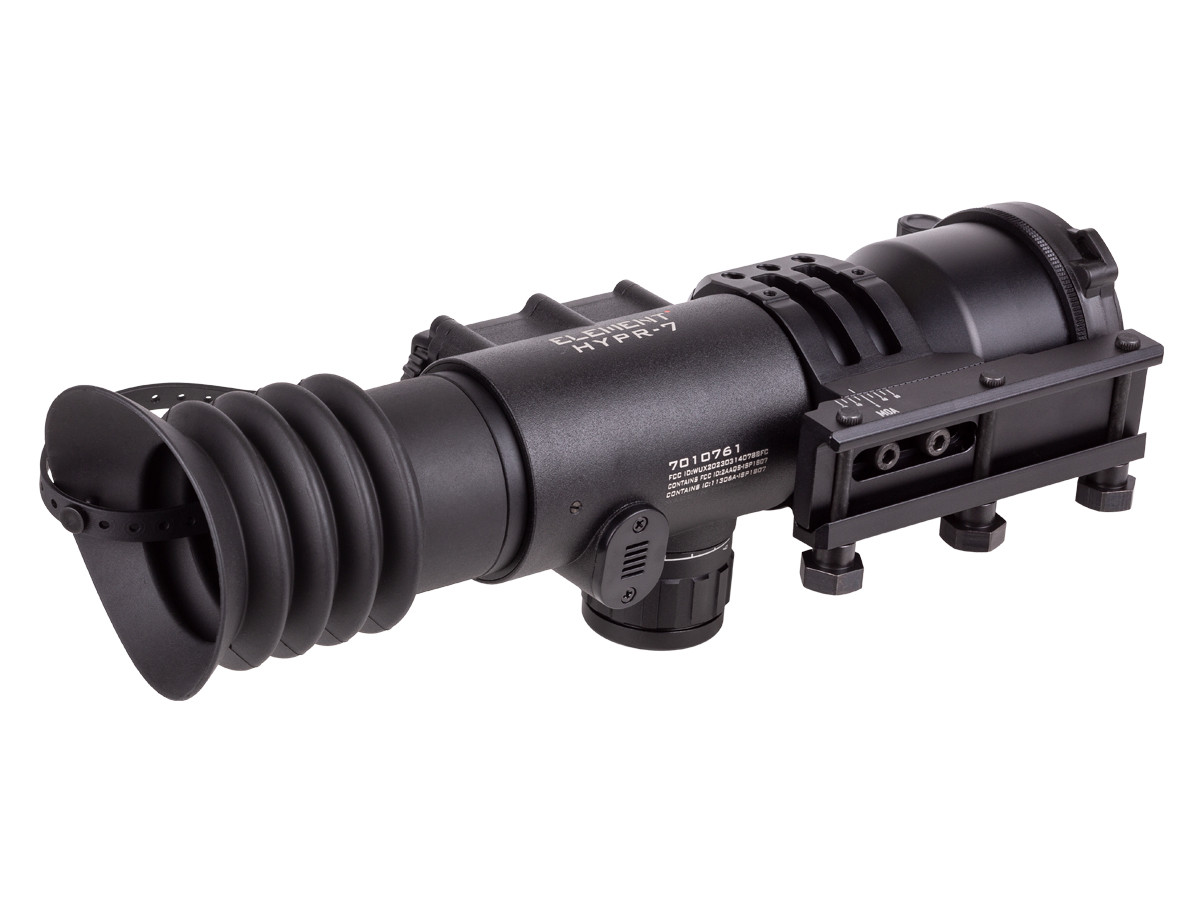
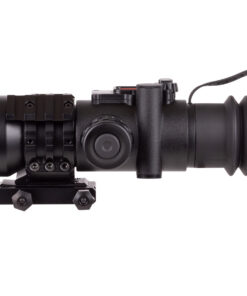
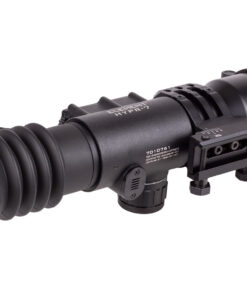
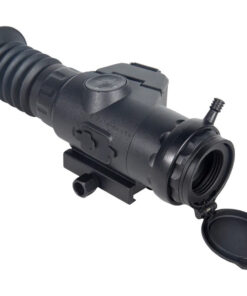
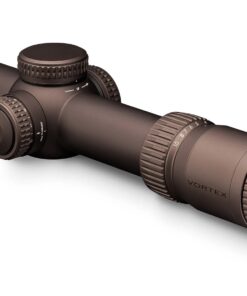
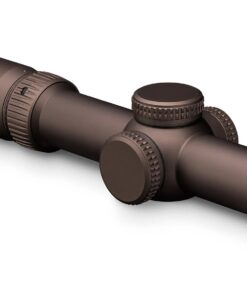
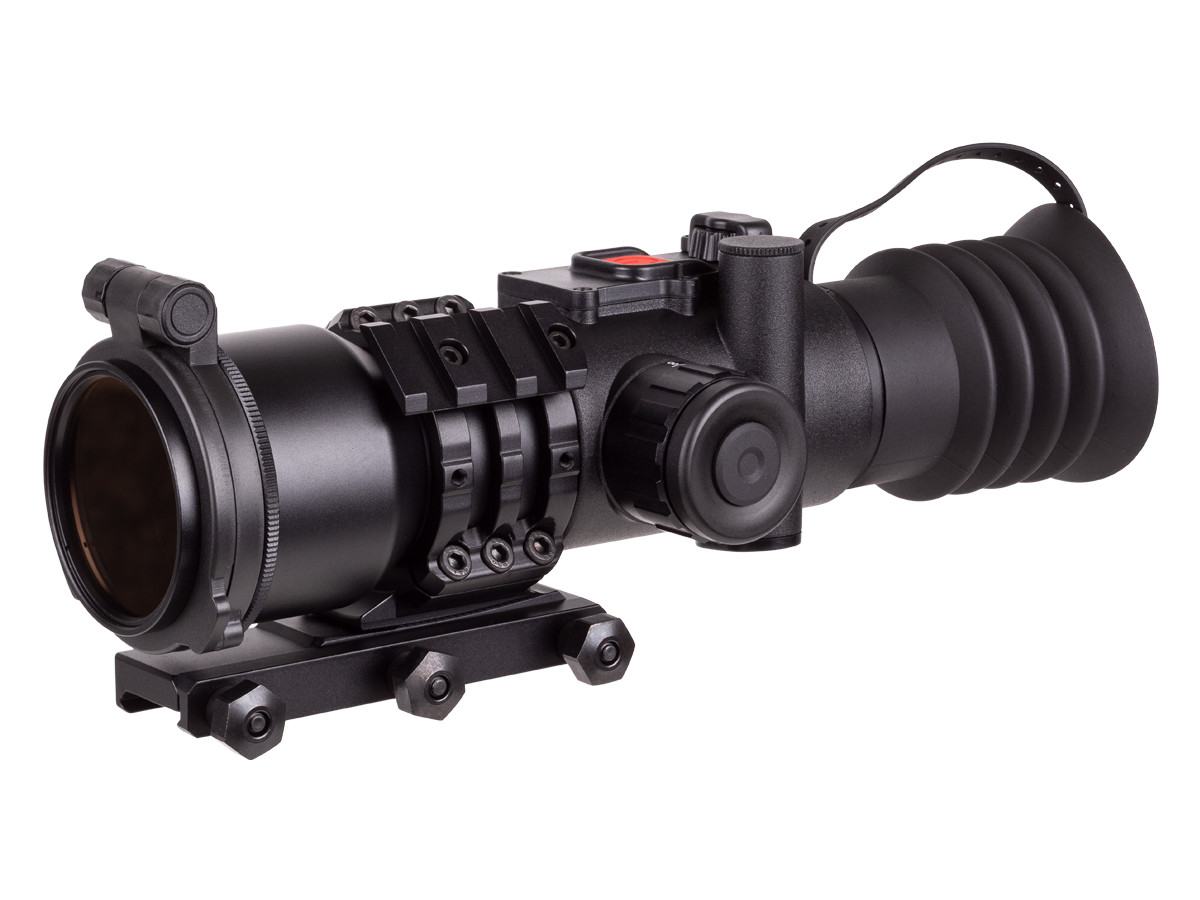
Element Optics HYPR-7

€980.00

Unlock Precision Shooting Excellence with the Element Optics HYPR-7 Scope

Superior performance is delivered by the Element Optics HYPR-7 Scope through its groundbreaking hybrid design. Clarity and resolution from an analog optical system are seamlessly combined with the flexibility of a digital reticle. Further reach and faster engagement are enabled by technology that stays ahead of its time. Consequently, traditional limitations are overcome while modern ballistic solutions are provided instantly.

Designed as a Hybrid Precision Riflescope with fixed 7x magnification, the Element Optics HYPR-7 Scope is engineered for shooters seeking unmatched versatility. From close-range engagements starting at just 6 yards to extended distances, reliable results are achieved across diverse scenarios. Moreover, inclusion of everyone from beginners refining skills to experienced marksmen is prioritized through intuitive operation and adaptable features.

Hybrid Optical Excellence Meets Digital Innovation

An ED optical system paired with a 50mm objective lens is utilized in the Element Optics HYPR-7 Scope. Exceptional light transmission and resolution are ensured by this prismatic configuration. In addition, a digital display is integrated to present real-time data including distance, incline, elevation, windage, and predicted point of impact. Therefore, complex calculations are handled automatically so focus remains on the target.

Parallax adjustment ranging from 6 yards to infinity is offered for precise focusing at any distance. Furthermore, programmable reticles—including an advanced Live BDC mode—are supported. Custom hold points matched to exact ballistic profiles are generated dynamically. Atmospheric changes and incline angles are compensated for continuously. As a result, accuracy is maintained even as conditions shift throughout a session.

Comprehensive Onboard Sensing and Connectivity

Environmental awareness is enhanced by onboard sensors within the Element Optics HYPR-7 Scope. An inclinometer, barometer, thermometer, and hygrometer are all incorporated. Critical data is collected and applied instantly by the powerful ballistic chip. Bluetooth connectivity with external devices is also provided. Seamless integration with compatible rangefinders is achieved so firing solutions appear directly in the field of view.

Configuration is managed through the Element Ballistics App. Up to four ballistic profiles are stored simultaneously. Profiles for different firearms, ammunition loads, or configurations such as suppressed versus unsuppressed setups are switched effortlessly. In addition, custom reticles can be designed and uploaded. Consequently, personalization is elevated to a level rarely found in conventional optics.

Key Product Features Highlighted for Clarity

The following standout attributes are featured in the Element Optics HYPR-7 Scope:

  • ED Optical system with 50mm Objective Lens for superior clarity and resolution
  • Digital Display showing data for Distance, Incline, Elevation & Windage, POI and more
  • Parallax adjustment from 6 yards to Infinity
  • Programmable reticle options, including Live BDC mode that adapts in real time
  • Onboard sensors: Inclinometer, Barometer, Thermometer and Hygrometer
  • Bluetooth Connectivity with External Devices such as rangefinders
  • Tilt-Adjustable Unimount with Accessory Rail Included for flexible mounting
  • Magnetic Flip Cap with ND filter Included for lens protection and light management
  • Full configurability through the Element Ballistics App
  • Storage capacity for 4 Ballistic Profiles at once
  • Waterproof, Fogproof, Shockproof & Nitrogen Purged construction for dependable field use

These capabilities are combined to create a complete shooting system that is ready for immediate deployment.

Technical Specifications of the Element Optics HYPR-7 Scope

Fixed 7x magnification is maintained alongside a generous field of view measuring 25.5 feet at 100 yards (8.8 meters at 100 meters). An exit pupil of 7mm and eye relief of 45mm (1.8 inches) are provided for comfortable viewing. Digital elevation travel of 81 MOA (23.5 MRAD) is complemented by mechanical elevation travel via the mount reaching 160 MOA (46 MRAD). Compact dimensions of 6.81 inches (173mm) in length and a weight of only 18.3 ounces (518g) with battery are achieved. Long battery life from a single AAA cell supports days of continuous operation or weeks to months of normal use. Waterproof, fogproof, and shockproof performance is assured through nitrogen purging.

Practical Benefits for Every Shooter

Speed and confidence are increased when the Element Optics HYPR-7 Scope is employed. Instant firing solutions are calculated so time spent estimating holds is eliminated. Versatility across platforms—including rifles, airguns, and even crossbows—is demonstrated by the wide parallax range and adaptive Live BDC reticle. Moreover, a wide field of view that feels more expansive than traditional 7x optics is delivered because internal space is freed by the absence of conventional turret mechanisms.

Durability is prioritized for demanding environments. Protection against water, fog, and shock is built in so reliability is retained in rain, humidity, or rough handling. Inclusive design ensures accessibility for shooters of varying experience levels and physical needs. Clear data presentation and simple app-based setup reduce the learning curve. Therefore, more time is spent practicing and less time is spent troubleshooting equipment.

Seamless System Integration and Real-World Performance

Pairing with an optional RF Module rangefinder is supported for extended capability. Ranges up to 1000 meters can be measured and transmitted via Bluetooth. Predicted points of impact are then displayed as a flashing indicator within the reticle. Manual range input remains available when external devices are not used. In addition, firmware updates and profile management are handled through the free Element Ballistics App available for both iOS and Android platforms.

Mounting flexibility is enhanced by the included tilt-adjustable Unimount and interchangeable base lengths. Proper eye relief and cant adjustment are achieved across different firearm platforms. Accessory rails allow further expansion of the system. Magnetic flip caps with ND filters protect lenses while controlling light in bright conditions. All essential items needed for immediate use are included so setup is streamlined.

Why the Element Optics HYPR-7 Scope Stands Apart

Innovation is advanced beyond traditional riflescopes by this hybrid approach. Optical purity is preserved while digital intelligence is added. Battery efficiency is maximized so extended sessions remain practical. Customization options exceed those of etched-glass designs. Live adaptation to ballistics and environment sets a new standard for precision work out to approximately 300 meters and beyond in suitable conditions.nightforce atacr 4 20×50 f1

Conversion-focused advantages are clear. Faster target engagement, reduced mental calculation load, and consistent accuracy across changing conditions are delivered. Investment in quality is protected by robust construction and long-term support. Inclusive language and thoughtful ergonomics welcome every shooter into advanced optics without intimidation.

Ready to elevate performance? The Element Optics HYPR-7 Scope is prepared to transform shooting experiences through its unique blend of clarity, intelligence, and reliability. Immediate benefits are experienced once it is mounted and configured. Explore the full potential today and discover how hybrid technology redefines what a precision optic can achieve for all who pursue excellence in marksmanship.

Premium Rangefinding Binoculars, Hunting Optics, and Precision Rifle Scopes

Modern hunters, long-range shooters, and precision marksmen demand exceptional optical performance, and that is why products such as Leica rangefinder binoculars, Leica Geovid 10×42 rangefinder binoculars, Leica Geovid binoculars, Leica binoculars with rangefinder, Leica Geovid Pro 10×42, Geovid Pro 10×42, Leica Geovid rangefinder, Leica Geovid Pro rangefinder binoculars, Leica Geovid rangefinder binoculars, and the Leica Geovid 10×42 continue to attract attention throughout the shooting industry.

Whether enthusiasts are looking for Leica binoculars, Leica small binoculars, binoculars Leica, Leica Geovid binos, Leica bino, Leica binoculars for sale, Leica bino rangefinder, Leica camera binoculars, Leica binos, or a standard Leica binocular, there are options suitable for every environment and shooting application.1 10 lpvo.ares etr 1 10

Many users also compare Leica products with SIG Sauer binoculars, SIG self stabilizing binoculars, SIG Sauer binos, SIG binoculars, SIG image stabilizing binoculars, SIG binocular, SIG auto stabilizing binoculars, Sigma binoculars, SIG Sauer self stabilized binoculars, and SIG Sauer image stabilized binoculars when evaluating premium optics.

Long-range shooters frequently combine these binocular systems with elite scopes such as the Nightforce ATACR, Nightforce ATACR 5-25×56 F2, Nightforce ATACR 4-20×50, Nightforce ATACR 5-25×56 F1, Nightforce ATACR 4-16×50, Night Force ATACR, ATACR scope, Nightforce attacker, ATACR 4-20, and the Nightforce ATACR 4-20×50 F1. Many professionals also pair their rifles with a Zeiss red dot for faster target acquisition.

Another respected name in the precision optics market is Tangent Theta. Experienced marksmen frequently search for Tangent Theta scopes, Tangent scope, Tangent scopes, Theta optics, Tangent Theta scope, and Tangent optics because of their legendary reputation for repeatability, durability, and optical clarity.1 10 scope

Companies such as Fierce Firearms, Fierce Arms, and Fierce Optics have likewise contributed to the growing popularity of advanced hunting equipment and premium glass systems. Their products are often used alongside specialized equipment featuring 11.5EE, 10×40, 34 56, 34×56, 14×44, 2S14, 2.5×15, 2.5/15, 1/2×42, 12×4.2, 4.5 30, and 4.5/30 specifications.avalon aries

Among performance-oriented manufacturers, Athlon products remain extremely popular. Examples include the Midas TAC Gen2 HD 6-24×50 APLR15 FFP MOA reticle riflescope, Athlon Midas TAC, Athlon Midas TAC 6-24×50, Athlon Argos BTR Gen2 8-34×56, Athlon BTR Gen 2, Athlon Argos BTR Gen2, Athlon Argos BTR, Athlon Argos BTR Gen 2, Athalon scopes, Athens scope, Athlon Ares BTR, Athlon ETR, Athlon 4.5-30×56, Athlon BTR 2-12, Athlon 2, Athlon reticles, and numerous other models designed for demanding field conditions.athlon scopes review

Shooters interested in low-power variable optics continue to search for solutions such as the 1-10 scope, Ares ETR 1-10, 1-10 LPVO, 1-10 FFP LPVO, 1×10 scope, LPVO 1-8, LPVO 1-10, and the 1-10 rifle scope. Likewise, precision enthusiasts appreciate the performance of the Ares ETR Gen2 UHD 4.5-30×56 APRS12 FFP IR MIL reticle, particularly when accuracy is required at extended distances.

The demand for versatile optics has also increased interest in equipment such as the 2-12x, 2.5-15 scope, AO scope, gun scope, hunting optic, longest range scope, and guides explaining how to buy a rifle scope. These products allow hunters and competitive shooters to adapt to changing terrain, lighting conditions, and target distances with exceptional precision.

From elite Leica Geovid rangefinder binoculars to advanced Nightforce ATACR models, highly regarded Tangent Theta scopes, innovative SIG Sauer binoculars, and dependable Athlon platforms, today’s market offers virtually unlimited possibilities for anyone seeking world-class optical performance.icarus scope

Frequently Asked Questions

What technology powers this hybrid riflescope and how does the combination of optical and digital systems improve shooting performance? Superior image quality is delivered through a high-grade ED optical system paired with a large 50mm objective lens and a prismatic design. At the same time, a digital overlay is projected into the field of view so that a wide variety of reticles and real-time data can be displayed without sacrificing clarity or introducing lag. Because the reticle is generated electronically rather than etched into glass, unlimited customization becomes possible. Live ballistic compensation is calculated instantly, and environmental changes are continuously factored into the displayed hold points. As a result, shooters of every experience level gain both the pure optical performance of a traditional scope and the adaptive intelligence of modern electronics in a single compact package.

How does the fixed 7x magnification and generous field of view support both close-range and mid-range engagements? A fixed 7x power setting is maintained to provide a consistent, high-resolution image while eliminating the mechanical complexity of variable-power systems. Because no traditional erector tube is required, internal space is optimized, producing a wider field of view than most conventional 7x optics. At 100 yards the view spans 25.5 feet, giving the sensation of a lower-power optic while still delivering the detail needed for precise shot placement. Parallax is adjustable from as close as 6 yards all the way to infinity, so the same optic remains fully usable for near-distance work, dynamic stages, and distances approaching 300 meters. Consequently, one optic serves multiple roles without the need for frequent changes or compromises.

What information appears on the digital display and how is it used during a shot? Critical data is presented directly in the field of view, including distance, incline angle, elevation and windage corrections, atmospheric readings, and the predicted point of impact. When a compatible external rangefinder is connected via Bluetooth, the measured range is received automatically and the ballistic solution is calculated in a fraction of a second. The predicted impact location is then indicated on the reticle so the shooter never needs to look away or perform manual calculations. Even without an external rangefinder, range can be entered manually and the same real-time solution is generated. This constant stream of relevant information keeps decision-making fast and accurate under pressure.

How does the Live BDC reticle function and why is it more effective than traditional fixed BDC designs? A custom bullet-drop compensation reticle is generated on demand from the exact ballistic profile stored in the optic. Hold-over points are placed at user-selected distances and are automatically adjusted for current atmospheric conditions and rifle incline. Unlike static etched BDC reticles that assume a single set of environmental values, this digital version continuously recalculates and stretches or compresses the hold points as temperature, pressure, humidity, or angle change. Wind holds can also be displayed for the chosen distances. The result is a reticle that remains matched to the actual trajectory throughout the day, dramatically improving first-round hit probability across varying conditions.

Which onboard sensors are included and how do they contribute to accuracy? An inclinometer, barometer, thermometer, and hygrometer are built into the housing. These sensors constantly measure rifle angle, air pressure, temperature, and humidity. The data is fed directly into the internal ballistic chip so that every firing solution reflects the real-world environment rather than a generic assumption. Changes in air density or shooting position are therefore compensated for automatically. Shooters no longer need external weather meters or mental corrections; the optic handles the variables in the background and displays only the refined solution needed for the shot.

How is the optic configured and managed through the companion application? Bluetooth connectivity links the riflescope to a free mobile application available for both major smartphone platforms. Through the app, ballistic profiles are created, edited, and transferred in seconds. Up to four complete profiles can be stored in the optic at the same time, allowing rapid switching between different firearms, ammunition loads, or suppressor configurations. Custom reticles can be designed or selected, units of measure can be chosen independently for each profile, and firmware updates are applied wirelessly. The entire process is guided by clear menus so that even first-time users can complete setup quickly and return to the range with confidence.

What battery life can be expected and how is power managed in the field? A single standard AAA battery supplies power for the digital systems. Continuous operation is supported for multiple days, while typical intermittent use extends battery life into weeks or even months. When charge levels become critically low, an emergency mode is activated that disables the ballistic calculator yet still allows the selected reticle to remain visible for several additional hours. An auto-shutoff timer further conserves energy when the optic is left unused. These power-management features ensure the system remains available throughout long training days or multi-day events without frequent battery changes.

What mounting hardware is supplied and how flexible is installation across different platforms? A tilt-adjustable Unimount is included along with two interchangeable base lengths. The longer base accommodates platforms that require greater eye relief, while the shorter base suits more compact setups. An accessory rail is integrated so that additional devices such as lights or lasers can be attached. Proper cant and height can be dialed in precisely, and the rigid construction maintains zero under recoil. Because the mount is designed specifically for this optic, installation remains straightforward and repeatable across rifles, airguns, and other platforms that accept standard rail systems.

Is the optic suitable for crossbows and airguns as well as conventional firearms? The generous close-range parallax capability and adaptive Live BDC reticle make the system highly effective on crossbows and high-powered airguns. Fixed 7x magnification combined with a wide field of view produces a sight picture that feels natural at typical crossbow distances while still providing the precision needed for longer shots. Ballistic profiles can be tailored to the unique trajectories of bolts or pellets, and the onboard sensors continue to refine the solution for angle and atmosphere. Many users report rapid, one-shot zeroing and consistent accuracy once the correct profile is loaded.

How durable is the construction under real-world conditions? The housing is fully waterproof, fogproof, and shockproof. Nitrogen purging prevents internal fogging during rapid temperature changes. Robust aluminum construction withstands the recoil of centerfire rifles and the repeated impacts of competitive or hunting use. Magnetic flip caps with a built-in neutral-density filter protect the lenses while allowing quick access and light control in bright conditions. These protective features ensure reliable performance in rain, dust, humidity, and rough handling, giving shooters confidence that the optic will continue functioning when conditions become challenging.

What eye relief and exit pupil characteristics support comfortable and consistent shooting? Forty-five millimeters of eye relief provide a generous margin that accommodates a variety of shooting positions and facial structures. A 7 mm exit pupil delivers a bright, easy-to-align image even in lower light. Because the optical path is fixed and free of complex moving assemblies, the sight picture remains consistent from shot to shot. These attributes reduce eye strain during extended sessions and help shooters of different builds maintain a solid cheek weld and rapid target acquisition.

How is zeroing performed and how quickly can profiles be switched between different setups? Zeroing follows a straightforward process guided by the digital interface and the companion app. Once a base zero is established, the Live BDC reticle and ballistic calculations take over for all other distances. Because four complete profiles can reside in memory simultaneously, switching between a suppressed and unsuppressed load, or between two different rifles, is accomplished in moments. Each profile retains its own reticle style, unit preferences, and ballistic data, so the optic adapts instantly to the chosen configuration without the need to re-zero or re-enter information.

What accessories are included in the box and what optional items expand the system further? The standard package contains the optic itself, the tilt-adjustable Unimount with two base options, a magnetic flip cap with neutral-density filter, rubber ocular protection, Allen keys, a lens cloth, and comprehensive documentation. An optional rangefinder module can be added to provide automatic distance input via Bluetooth, extending the system into a fully integrated ranging and ballistic solution. Additional profiles and custom reticles are managed through the free app, so the core capability grows without requiring further hardware for most users.

Who benefits most from this hybrid design and how does it lower the barrier to advanced precision shooting? Both newcomers and seasoned marksmen gain clear advantages. New shooters receive instant, accurate hold points and environmental compensation that would otherwise require years of experience to calculate mentally. Experienced shooters appreciate the speed of engagement, the elimination of chart consultation, and the ability to maintain multiple ready-to-use profiles. Inclusive design choices—clear data presentation, long battery life, flexible mounting, and straightforward app control—ensure that physical differences, experience levels, and preferred platforms are all accommodated. The result is a tool that raises performance for everyone who uses it while remaining approachable and reliable in the field.

These answers address the most common questions about performance, setup, durability, and real-world application. With its combination of optical purity, digital intelligence, and practical features, the system is ready to deliver faster, more consistent results across a wide range of shooting disciplines.
A Day on the Range and in the Field

Early morning light filters through the trees as a group of shooters gathers at a private range nestled against rolling hills. Among them are competitors preparing for an upcoming precision match, a hunter refining skills before season opens, and a newer enthusiast eager to improve consistency. Each person carries different firearms—one a lightweight carbine, another a suppressed bolt-action, and a third a crossbow for specialized practice. What unites their preparation is a shared reliance on a compact hybrid optic that adapts quickly to every platform and condition.

Setup begins at the benches. The tilt-adjustable mount is secured to each rail, and the two available base lengths allow perfect eye relief for both shorter and longer actions. Within minutes the optic is powered on with a single AAA battery already installed. The companion application on nearby phones is opened, and previously saved ballistic profiles are transferred via Bluetooth. One profile is loaded for a high-velocity .223 load, another for a heavier hunting projectile, a third for crossbow bolts, and a fourth reserved for a suppressed configuration. Switching between them requires only a few button presses, so the same optic serves every firearm without the need for multiple dedicated scopes.

As the first targets are set at 50 yards, parallax is dialed in with a smooth side adjustment that reaches as close as 6 yards. The wide field of view reveals not only the intended steel plate but also adjacent targets and the surrounding terrain. A digital reticle appears instantly—clean, sharp, and free of the thickness limitations of etched glass. For the initial zeroing session the crosshair style is selected. After a few careful shots the point of impact is confirmed, and the Live BDC function is activated. Hold-over marks for 100, 200, and 300 yards materialize automatically, calculated from the exact muzzle velocity and ballistic coefficient entered earlier.

Atmospheric sensors begin working quietly in the background. Temperature has risen several degrees since the group arrived, and a light breeze is shifting the air density. The barometer and thermometer register the change, and the reticle’s hold points adjust almost imperceptibly. No one needs to consult a weather meter or rewrite dope cards. The predicted point of impact remains accurate even as conditions evolve throughout the morning.

Later the group moves to a more dynamic stage that includes both near and mid-range targets placed at odd angles on a hillside. An optional rangefinder module is mounted on the accessory rail of one carbine. A quick press of the remote switch sends a precise distance reading directly into the optic. Within a fraction of a second the ballistic chip processes incline angle, current atmosphere, and the active profile. A small flashing indicator appears on the reticle exactly where the bullet is expected to strike. The shooter settles behind the optic, aligns the indicator with the target, and the shot lands within an inch of center.

Observers note how little time is spent calculating. Traditional methods of estimating drop, applying wind holds, and compensating for steep angles are replaced by a single glance through the optic. Newer participants, who once struggled with complex charts, find themselves making consistent hits after only a brief familiarization period. The inclusive design—clear data presentation, generous eye relief of 45 mm, and an exit pupil that remains bright even in partial shade—allows every shooter, regardless of experience or physical build, to maintain a comfortable and repeatable position.

By midday the temperature has climbed further and humidity has increased. The hygrometer inside the housing continues feeding data to the ballistic engine. Hold points stretch slightly to account for the denser air. One competitor switches to a different profile for a heavier projectile intended for afternoon steel stages. The reticle updates instantly, and the same Live BDC marks now reflect the new trajectory. No tools are required, and zero is retained because the mechanical adjustments remain untouched. The digital system simply recalculates around the established zero.

A short break is taken for lunch, during which the optic is left powered on. Battery consumption remains minimal; the display dims automatically when not in active use, and the long runtime of the AAA cell ensures there is no concern about running out of power before the day ends. When practice resumes, the magnetic flip cap is opened in one motion, revealing the objective lens protected by the integrated neutral-density filter. Bright overhead sun is softened just enough to keep the digital overlay crisp and readable without washing out the target.

In the afternoon the group relocates to a wooded section of the property that mimics hunting conditions. Targets are partially obscured by brush and placed at unknown distances ranging from 40 to 220 yards. The close-focus capability proves especially valuable here. Parallax is adjusted rapidly for each new presentation, and the wide field of view helps locate animals or steel that appear suddenly among the trees. When a target is spotted on a steep downhill angle, the inclinometer registers the change and the ballistic solution updates before the shot is taken. The result is a first-round hit that would otherwise have required careful estimation of both distance and cosine angle.

One participant experiments with the crossbow profile. Because bolt trajectories drop more dramatically than rifle bullets, the Live BDC marks are spaced differently, yet they remain precise. The same optic that handled centerfire cartridges earlier now delivers accurate holds for the crossbow without any hardware changes. The ability to store four complete profiles means the transition between platforms takes only seconds, making the optic equally at home on a hunting rifle one day and a specialized crossbow the next.

As the light begins to fade, the group returns to the main range for a final series of timed stages. The digital display continues to show remaining battery life, incline, and environmental readings without cluttering the primary aiming view. When a competitor needs to engage multiple targets in rapid succession, the reticle can be switched momentarily to a simpler mil-hash style for faster transitions, then returned to the full Live BDC layout for the longer shots. Every change is accomplished with the control dial and mode button, keeping the eyes behind the optic and the hands on the firearm.

Throughout the entire day the waterproof and fogproof construction is tested by morning dew, a brief afternoon shower, and the temperature swings common in outdoor environments. Nitrogen purging prevents any internal condensation, and the shock-resistant housing absorbs the recoil of repeated strings without losing zero. At the end of the session the optic is wiped down, the magnetic cap is closed, and the profiles remain stored for the next outing. No additional tools or external computers are required; everything needed for future sessions already resides inside the compact 6.81-inch package that weighs little more than a traditional fixed-power scope.

The practical advantages become clear through repeated use. Time once spent flipping through data books or adjusting mechanical turrets is now devoted to actual shooting. Environmental variables that previously introduced uncertainty are measured and compensated automatically. Shooters of different backgrounds—competitive, recreational, and hunting-focused—find the same optic meeting their individual needs without forcing compromise. The combination of pure optical clarity and intelligent digital overlay removes barriers that once separated beginners from advanced techniques.

In the days that follow, several members of the group report taking the optic into real hunting scenarios. One tracks a deer across uneven terrain where shots must be taken quickly at varying angles. Another uses it during a prairie dog outing that demands rapid target acquisition at changing distances. In each case the Live BDC marks, sensor data, and optional rangefinder input produce consistent results even when conditions differ markedly from the range where the profiles were originally created. The ability to refine a profile later through the mobile application—adjusting muzzle velocity or ballistic coefficient after observing actual impacts—further improves performance over successive outings.

Maintenance remains minimal. Occasional cleaning of the exterior lenses, a quick battery check, and periodic firmware updates through the application keep the system operating at peak capability. Because the optical path itself contains no complex moving assemblies beyond the parallax mechanism, long-term reliability is high. The same optic that performed flawlessly during a full day of mixed use continues to deliver the same clarity and precision weeks later with no measurable shift in zero.

This practical demonstration illustrates how a hybrid design transforms ordinary range time and field conditions into opportunities for faster learning and higher hit percentages. By handling the complex calculations in the background and presenting only the refined solution in the field of view, the optic allows every shooter to focus on fundamentals—breath control, trigger press, and target identification—while still benefiting from advanced ballistic science. Inclusive features such as adjustable mounting options, long battery life, and straightforward profile management ensure that the technology remains accessible rather than intimidating.

Whether the goal is competition, hunting, or simply becoming a more consistent marksman, the real-world workflow remains the same: mount the optic, load the appropriate profile, let the sensors and ballistic engine work, and engage targets with greater speed and confidence. The result is not merely improved scores or successful harvests, but a more enjoyable and efficient shooting experience that adapts to the shooter rather than forcing the shooter to adapt to the equipment.

Reviews

There are no reviews yet.

Be the first to review “Element Optics HYPR-7”

Related Products

FAQ

  • Spring-Piston (Break-Barrel or Underlever): Cock by compressing a spring. Reliable, no external air source needed, but can have more recoil (“spring twang”) and require technique to shoot accurately.
  • Pre-Charged Pneumatic (PCP): Filled from a scuba tank, compressor, or pump. High power, low recoil, multiple shots per fill. Popular for precision and hunting.
  • CO₂: Powered by disposable cartridges. Good for pistols and semi-auto/repeaters, but performance drops in cold weather.
  • Multi-Pump Pneumatic: Hand-pumped to build pressure. Versatile but requires effort.
  • Gas Ram (Nitro Piston): Uses compressed gas instead of a metal spring. Smoother than traditional springers.

Calibers: Most common are .177 (4.5mm) for speed/flat trajectory and general use, and .22 (5.5mm) for better hunting knockdown power. Larger “big bore” (.25, .30, .357+) exist for hunting bigger game where legal.

Yes, many modern PCP and springers deliver enough energy for small game (rabbits, squirrels, birds) and even larger game in some areas. Muzzle energy (in ft-lbs or joules) matters more than velocity alone. Always match caliber, pellet weight, and energy to the game and check local hunting regs.

Treat every airgun as if it is loaded.

  • Always point the muzzle in a safe direction.
  • Keep your finger off the trigger until ready to shoot.
  • Know your target and what is beyond it (pellets can ricochet or travel far).
  • Wear eye protection.
  • Store unloaded, out of reach of children/untrained users, and ideally locked.
  • Never shoot at hard surfaces or in areas where pellets could escape your property.

Follow these rules strictly—airguns cause real injuries.

Laws differ dramatically by country, state/province, and even city. Always verify current local laws before buying, owning, transporting, or using an airgun. Age restrictions (often 18+) are common.

Examples (summaries only; check official sources):

  • UK: Air rifles ≤12 ft-lbs (16.3 joules) and pistols ≤6 ft-lbs generally do not require a license (FAC needed above that).
  • USA: Varies by state. Some treat powerful airguns as firearms; others do not. Many states now allow big-game hunting with air rifles.
  • Canada: Some airguns classified as firearms if they exceed velocity/energy thresholds.
  • Australia: Often treated as firearms; licensing/registration required in most states.
  • EU/France/Belgium/etc.: Varies; many allow low-power (<20J) guns freely to adults, with higher power needing permits. Germany has strict ~7.5J limits in some contexts.
  • Other countries: Some have no restrictions below certain energies; others ban or heavily regulate them.

Resources: Wikipedia “Air gun laws”, airgun forums, or official government sites. For travel, research transit laws carefully.

Consider:

  • Purpose: Plinking/backyard → lower power springer or CO₂. Hunting/precision → PCP.
  • Budget: Entry-level springers are affordable; PCPs need a fill system (extra cost).
  • .177 vs .22: .177 easier for beginners/targets; .22 better for hunting.
  • Power source: Convenience vs performance.
  • Test pellets in your gun—accuracy varies.

Buy from reputable dealers and consider warranties.

  • Clean barrel periodically (especially if accuracy drops) with patches and appropriate tools/solvents. Avoid over-oiling.
  • Lubricate moving parts and seals with airgun-specific oil (not general gun oil). Springers need piston seal oil occasionally.
  • Check screws, seals for leaks (PCP), and safety mechanisms regularly.
  • Store in a cool, dry place, ideally in a case. Avoid leaving cocked for long periods.

Follow your model’s manual. Basic care extends life significantly.

International shipping may be available for select products. Customers are responsible for understanding and complying with their local import laws and regulations before ordering.

Yes. Customers are required to confirm their order number through WhatsApp or Live Chat before orders are processed and shipped.

If local laws prevent shipment to your area, your order may be canceled and refunded according to our store policy.

Processing typically takes 1–3 business days after payment confirmation. Delivery times vary depending on destination, carrier, and product availability.


  • Wrong pellets for your barrel/caliber.
  • “Death grip” or poor shooting form (especially with springers—let the gun recoil naturally).
  • Loose scopes or mounts.
  • Ignoring safety or local laws.
  • Over-oiling or shooting with obstructions.


Pellets are the most common projectile (lead or lead-free). Match them to your gun, caliber, and purpose—test several brands as accuracy varies by barrel.

  • Domed (Round-Head): Best all-rounder. Excellent accuracy, ballistic coefficient, and energy retention. Ideal for target shooting, field target, and general hunting (e.g., JSB Exact, Air Arms Diabolo Field, H&N Field Target Trophy).
  • Wadcutter (Flat-Head): Clean holes in paper. Best for close-range target/plinking (under 20-25 yards).
  • Hollow Point: Expands on impact for better energy dump. Good for small game hunting (e.g., Predator Polymag, H&N Terminator).
  • Pointed: More penetration, but often less accurate than domed.
  • Slugs: Heavier, more aerodynamic for high-power PCPs at longer ranges (better for big game where legal).

Tips: Heavier pellets in .22/.25 for hunting (better momentum). Lighter in .177 for speed/flat trajectory. Always check head size fit (e.g., 4.51-4.53mm variants).

Muzzle energy (ft-lbs or joules) matters more than velocity. Ethical shots require precise placement (head/heart-lung) within effective range.

Rough Guidelines (adjust for distance, pellet, and local laws):

  • Small game (squirrels, rabbits, birds): 9-20+ FPE, .177/.22.
  • Medium (raccoons, etc.): 25+ FPE, .22/.25 recommended.
  • Larger game: 40-100+ FPE in .30+ calibers (up to big bore for deer/hogs where permitted).

PCPs dominate serious hunting due to power and shot count. Springers/gas rams work well for small game but require skill. Always prioritize clean kills and check seasons/species rules.

  • Barrel Cleaning: Use a pull-through kit or rod with patches. Avoid brushes that could damage rifling. Clean when accuracy drops or after 500-1000 shots.
  • Lubrication: Airgun-specific silicone oil for seals/O-rings (sparingly—excess causes dieseling in springers). Springers may need piston lube periodically.
  • PCP Specific: Check for leaks (soapy water test), monitor regulator/hammer settings, and keep fill systems clean. Don’t exceed rated pressure.
  • General: Tighten stock screws, inspect for wear, store properly. Chronograph shots to track consistency.

Common Issues:

  • Inconsistent velocity → dirty barrel, bad pellets, or seal problems.
  • Spring “twang” → tuning or proper hold.
  • Low power → worn seals or under/over-pumping.

Toggle Content

  • Scopes: Airgun-rated (hold zero under recoil). 3-9x or 4-12x common.
  • Fill Systems: Hand pumps, compressors, or tanks for PCPs.
  • Safety Gear: Eye/ear protection, targets with backstops.
  • Noise: Airguns quieter than firearms, but moderators help further.

Budget Tip: Start with a quality springer (~$150-400) before investing in PCP setup.

Airgunning offers endless depth—from backyard plinking to precision competition and ethical hunting. Prioritize safety, legality, and practice. If you want specifics (e.g., recommendations for a country, budget, hunting small game, or a particular type like PCP vs springer), let me know for more targeted info! Shoot responsibly.

Tuning improves accuracy, reduces noise/recoil, or increases power (within legal limits).

  • Springers: Lighter springs, guides, seals, or custom tuning kits for smoother shot cycle. “V-Mach” or similar professional tunes popular.
  • PCPs: Regulator tuning, hammer spring adjustments, valve work for efficiency and shot count. Some add electronic systems.
  • Accessories: Suppressors (often unregulated on airguns), better triggers, stocks, and scopes.

Caution: Check laws—power increases may reclassify your gun. DIY only if experienced; professional tuners recommended.

You must be at least 18 years old to purchase any airgun or related accessories from our store. By placing an order, you confirm that you meet the legal age requirements in your state or country.

Yes. Orders may require age verification before processing and shipping. In some cases, we may request a valid government-issued ID to confirm eligibility.


Translate »