Discover Precision Redefined with the Element Optics Theos FFP APR-2D MRAD Reticle
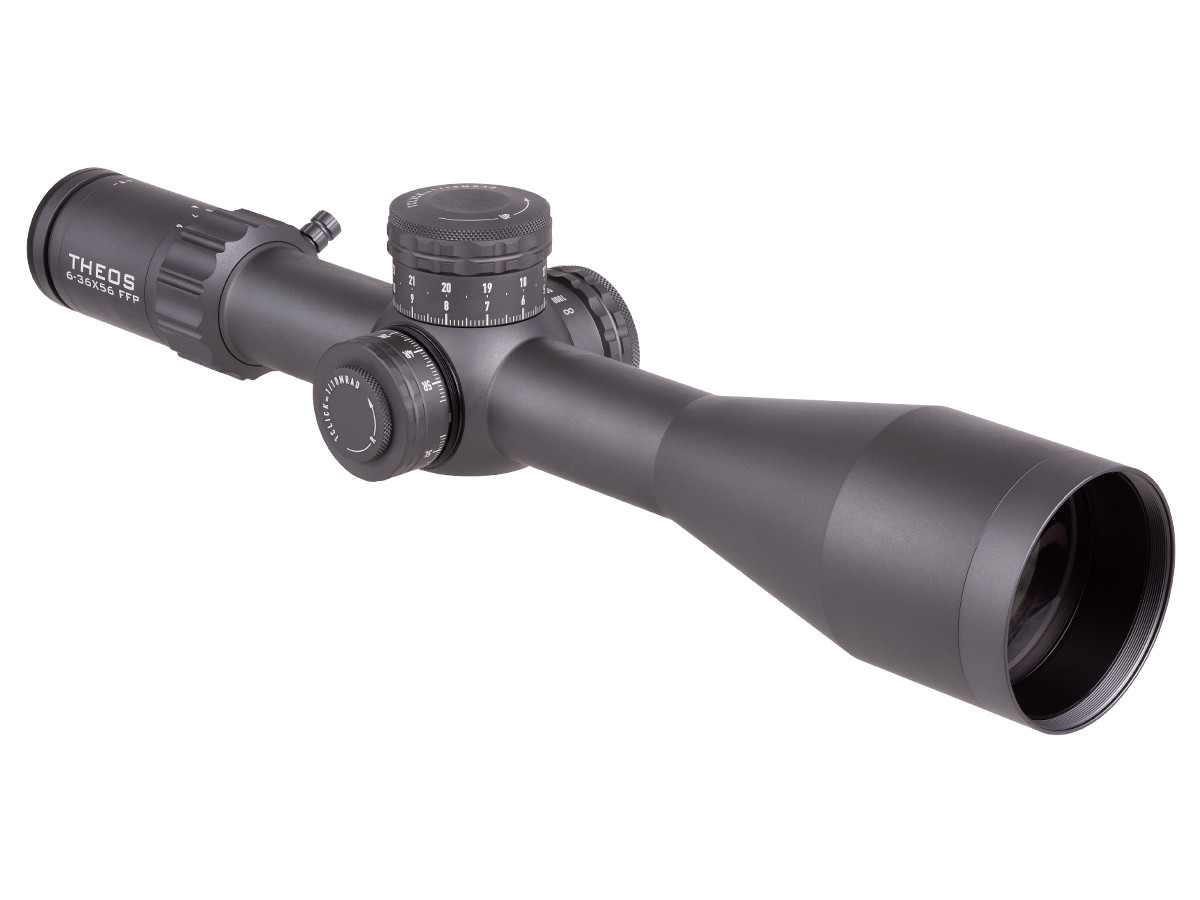
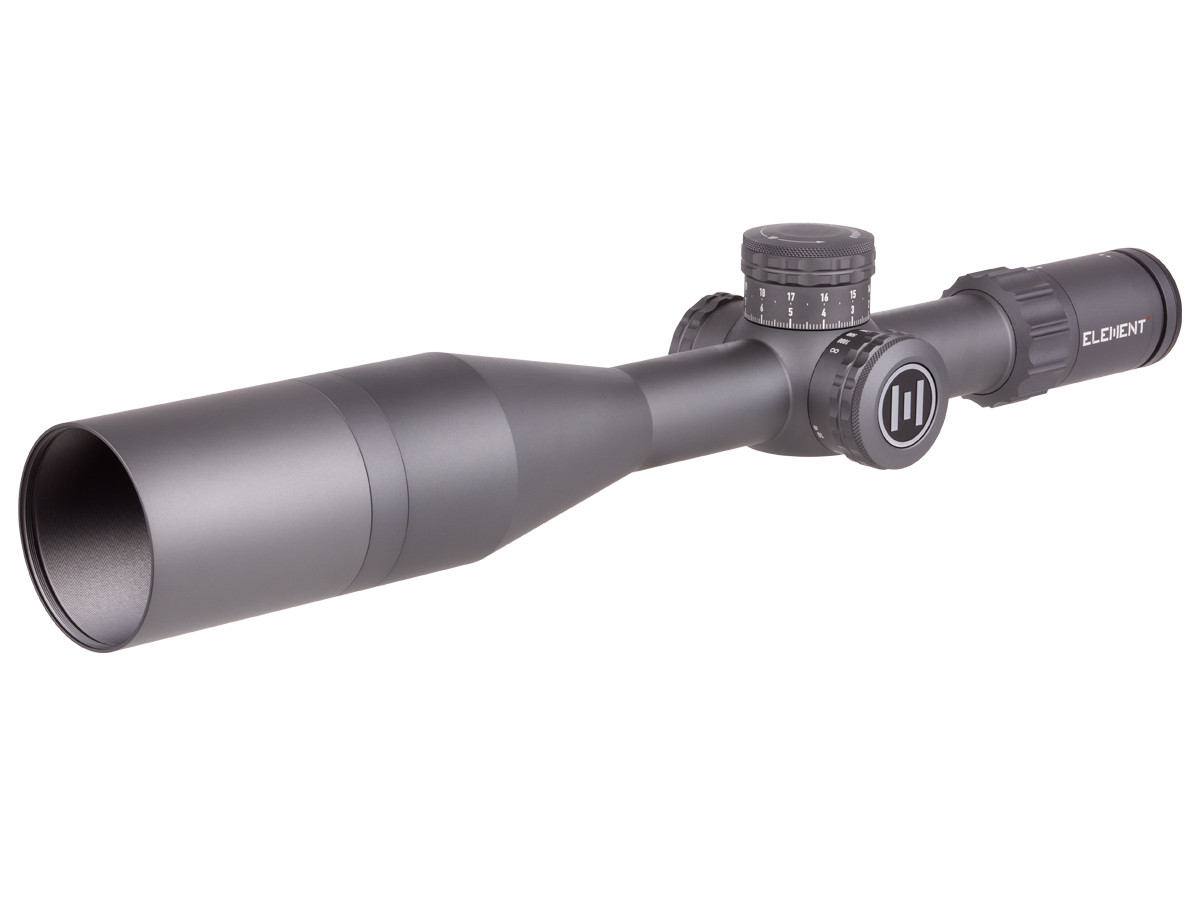
Exceptional long-range performance is delivered by the Element Optics Theos FFP APR-2D MRAD Reticle riflescope, which has been meticulously engineered as the flagship optic in the Element Optics lineup. After more than three years of careful planning, rigorous crafting, and intense testing, this 6-36×56 first focal plane scope is positioned as a top choice for competitive precision rifle shooters, extreme long-range enthusiasts, and dedicated marksmen seeking reliable accuracy. Moreover, its advanced features ensure that holdovers, dialing, and target engagement remain precise across varying conditions and distances.
Furthermore, the combination of ED glass, a robust 34mm tube, and the specialized APR-2D MRAD reticle creates an optic that balances clarity, durability, and usability. In addition, tool-free adjustments and digital illumination are incorporated so that field operations stay efficient. As a result, shooters of all experience levels can achieve consistent results whether competing in PRS/NRL matches or engaging targets at extended ranges.
Superior Optical Clarity and Versatile Magnification
Outstanding light transmission and image sharpness are provided by the advanced fully multi-coated lenses featuring extra-low dispersion (ED) glass and an anti-fouling layer. Consequently, bright, high-contrast views are maintained even in challenging lighting, from dawn to dusk. Additionally, the 56mm objective lens gathers ample light while the 6-36x magnification range offers flexibility for both mid-range observation and extreme precision work.
Eye relief of 74–89 mm (2.9–3.5 inches) is engineered to accommodate various shooting positions and rifle setups comfortably. Meanwhile, the exit pupil ranges from 8.8 mm to 1.6 mm, and the field of view spans 20.3–3.4 feet at 100 yards (6.8–1.1 m at 100 m). Therefore, rapid target acquisition at lower powers transitions smoothly to detailed identification at maximum magnification. An included aperture ring can further be employed to manipulate depth of field when brighter conditions demand it, while a sunshade helps control glare.
Side parallax adjustment from 10 yards (or 10 meters) to infinity is integrated, ensuring that focus remains sharp regardless of distance. Moreover, a removable magnification throw lever is supplied so that power changes can be executed quickly without tools. In this way, the Element Optics Theos FFP APR-2D MRAD Reticle supports dynamic shooting scenarios where speed and precision must coexist.
The Advanced APR-2D MRAD First Focal Plane Reticle
At the heart of this optic lies the Element Optics Theos FFP APR-2D MRAD Reticle, an illuminated all-purpose design optimized for long-range and competitive use. Because it resides in the first focal plane, subtensions remain accurate at every magnification setting. Consequently, ranging, holdovers, and wind corrections stay consistent whether dialing or holding.
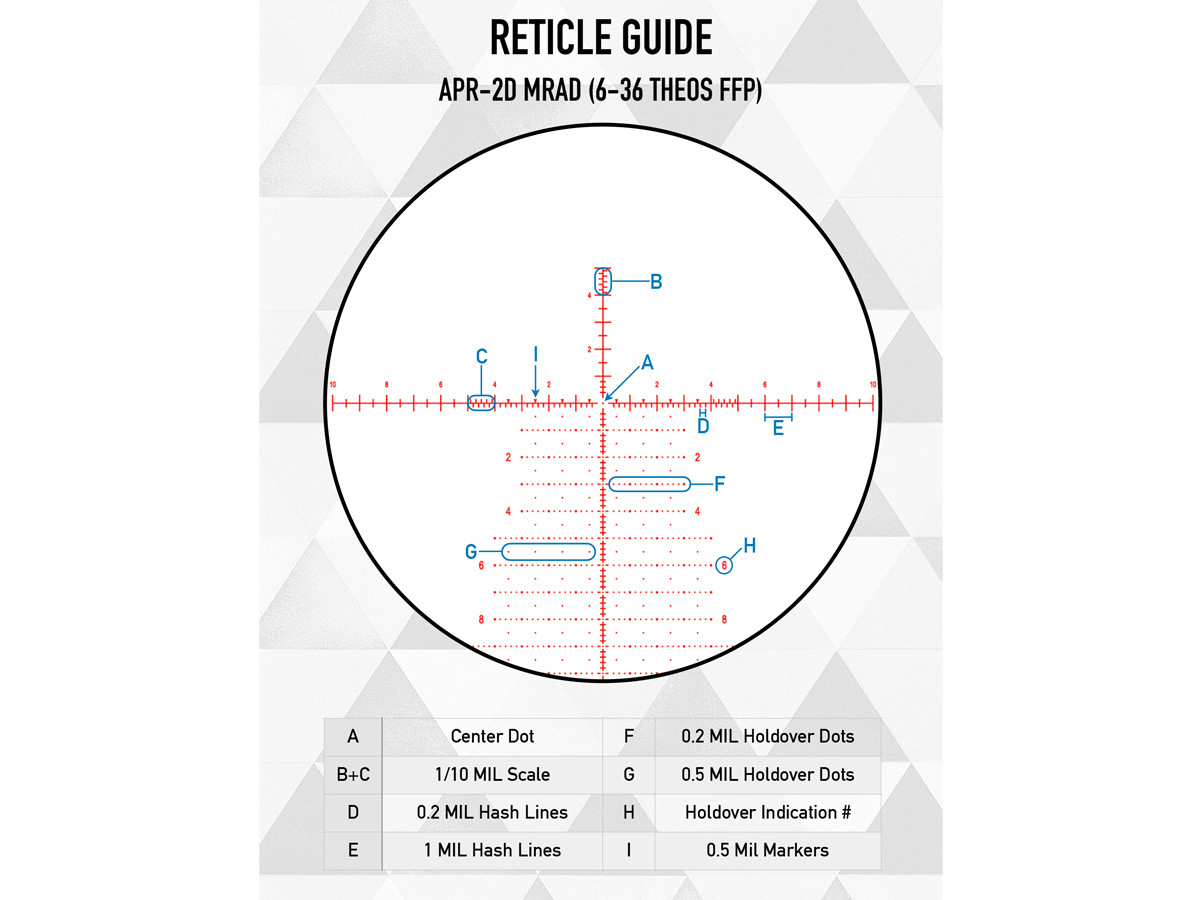
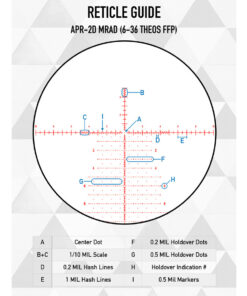
A fine center dot of approximately 0.06 MRAD draws the eye for precise aiming on small targets, while tapered bars guide attention toward the center across the zoom range. Furthermore, 0.2 MRAD divisions on the horizontal and vertical axes enable finer hold adjustments than simpler reticles. Extensive holdover dots arranged in a Christmas-tree pattern below the crosshair allow rapid elevation and windage holds when time does not permit dialing. Numbered markings, intelligently scaled larger farther from center, facilitate quick reference under match pressure.
Illumination is controlled digitally via a button on the parallax knob, offering ten brightness levels that can be activated or adjusted with simple holds and taps. As a result, the reticle remains visible in low light without overwhelming the view at higher powers. In addition, windage dots and 1/10 MRAD scales support precise group measurement and corrections. Overall, the APR-2D configuration balances detail with usability so that both dial-focused and hold-focused shooters benefit equally.
Intuitive Turrets and Reliable Adjustments
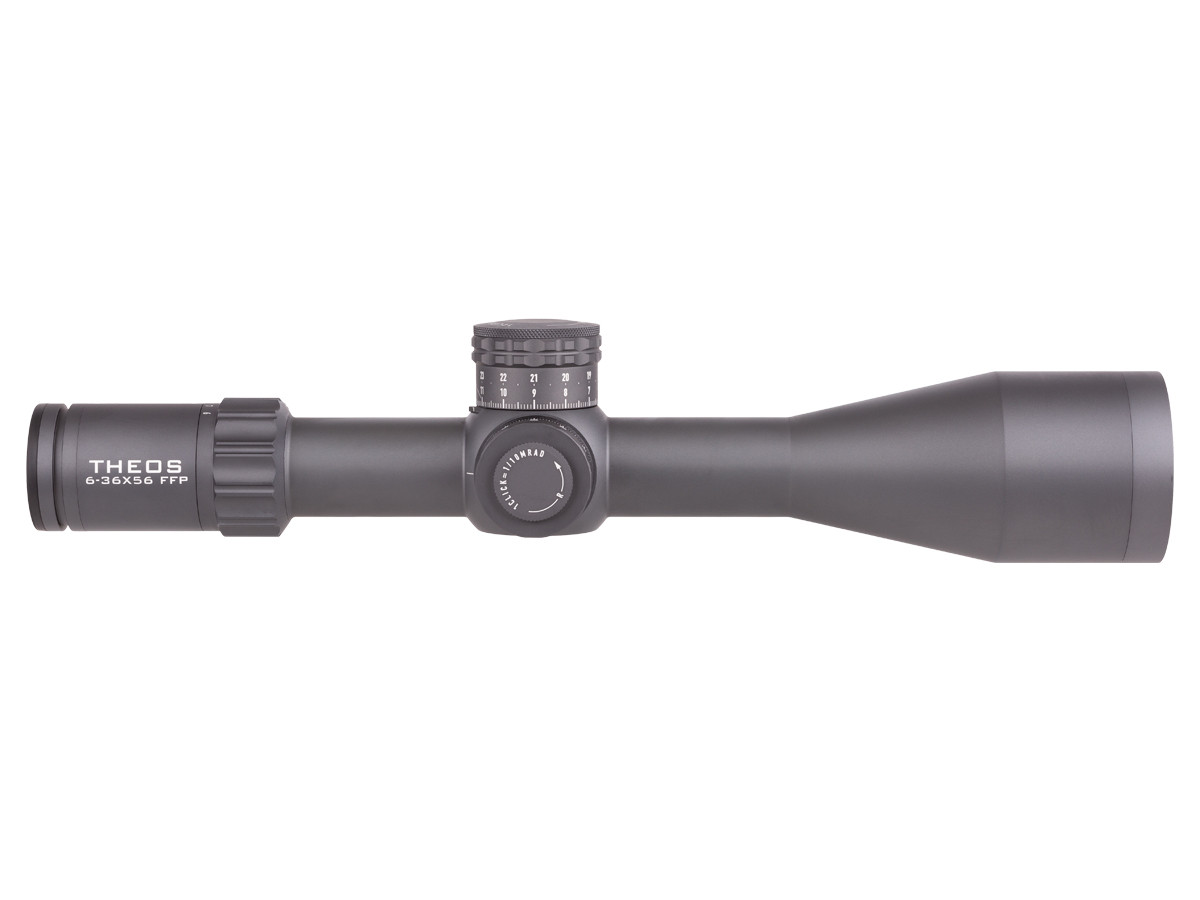
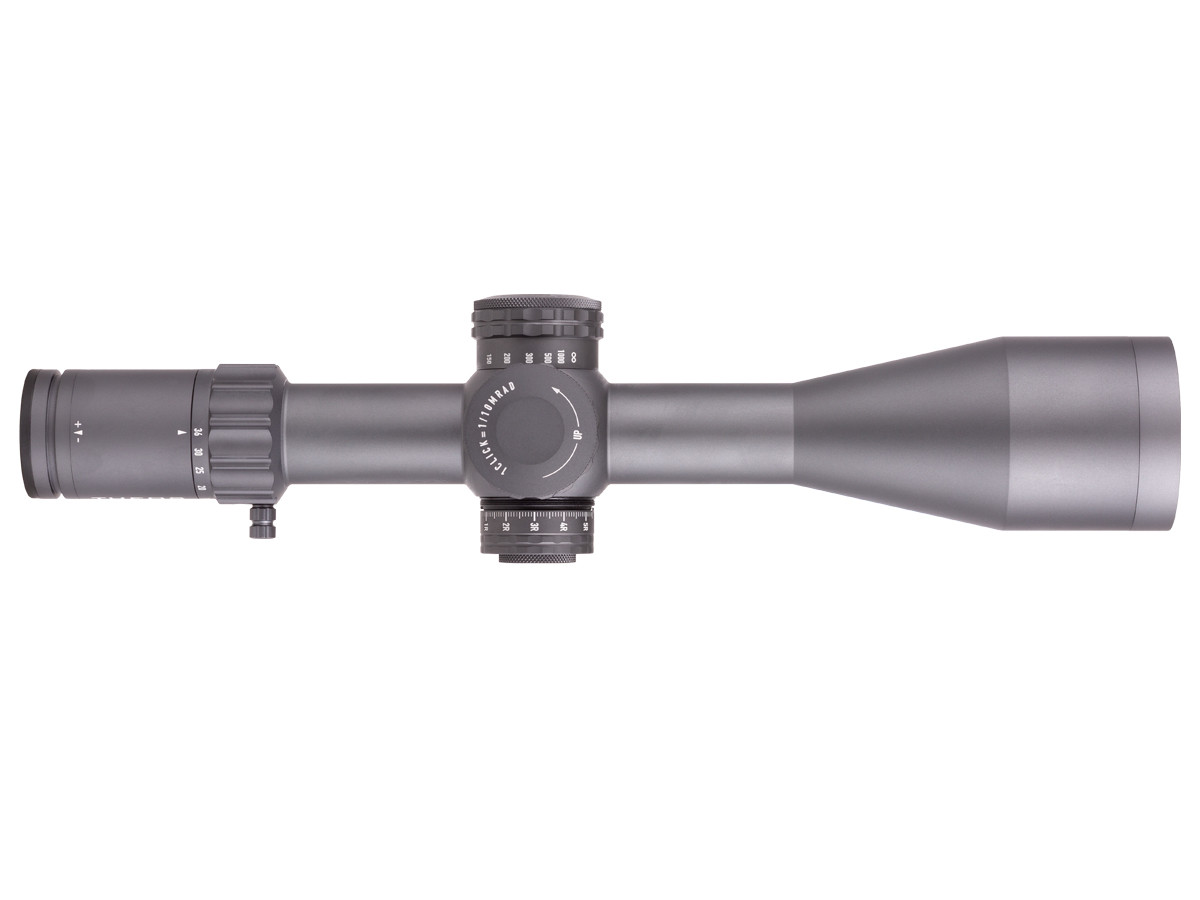
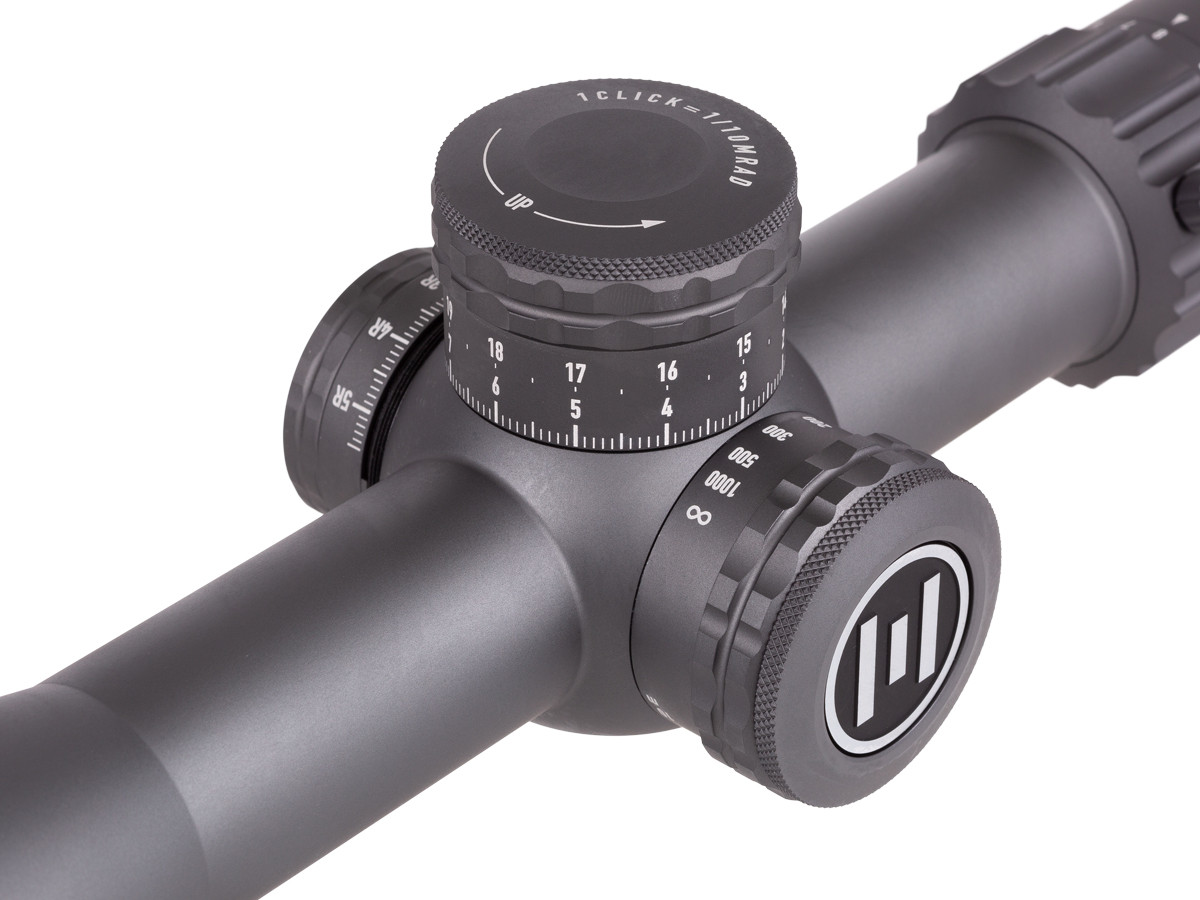
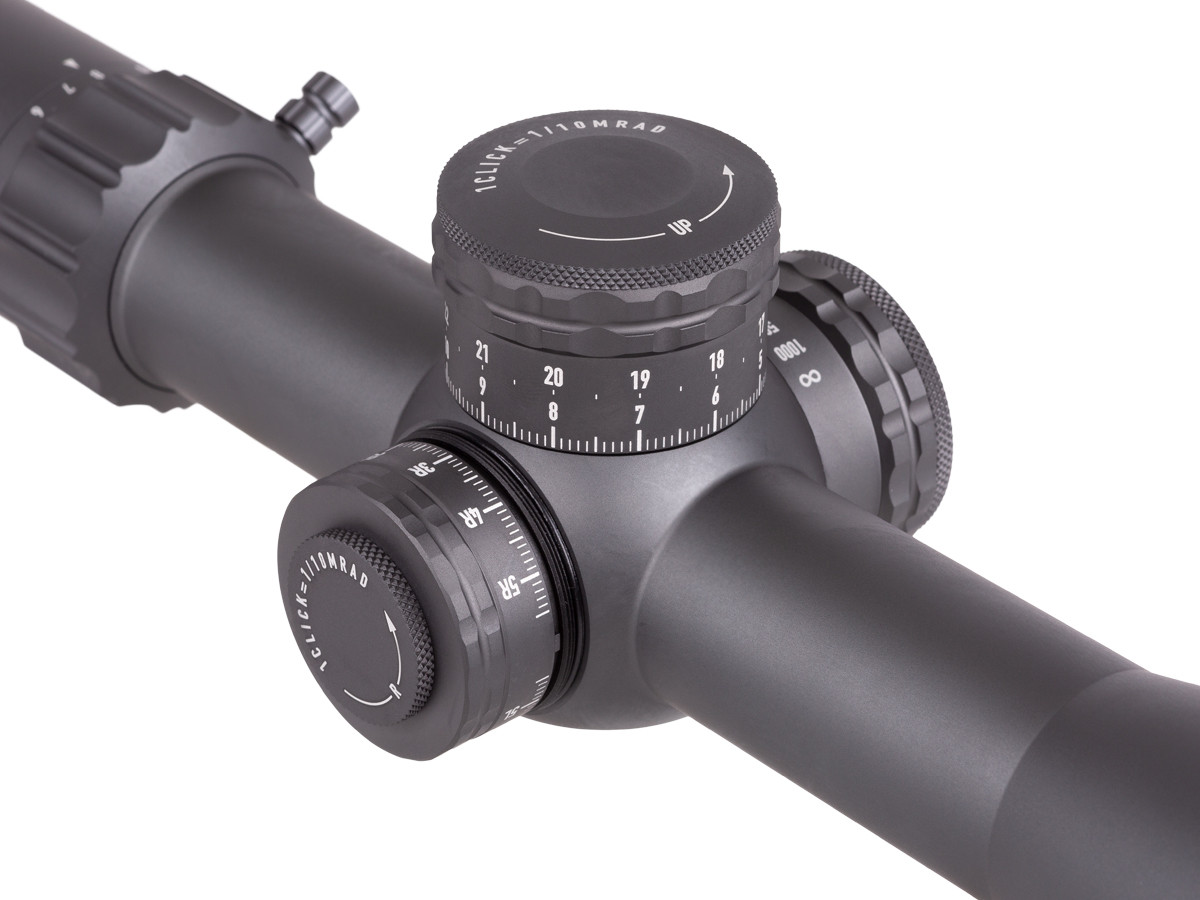
Elevation adjustments totaling 29 MRAD are delivered through exposed tool-free resettable turrets with 1/10 MRAD clicks and 12 MRAD per revolution. A hard mechanical zero-stop that requires no tools is included, returning reliably to the set zero while allowing a few clicks below for emergency corrections. Moreover, a revolution indicator flag provides clear visual confirmation when a full turn is completed, reducing the chance of tracking errors during long strings of fire.
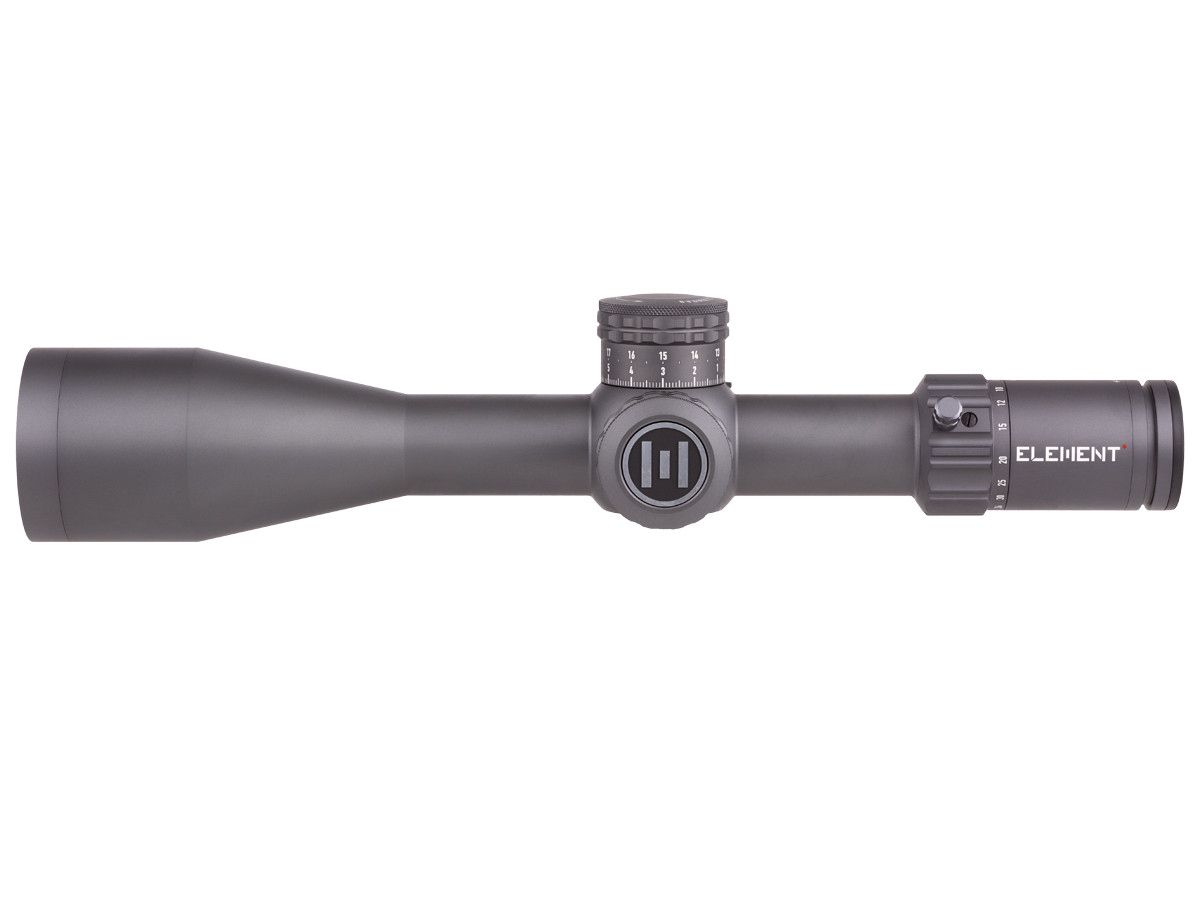
Windage offers 11.6 MRAD of travel and features a capped turret with a removable thread-protection ring, protecting the threads when the cap is left off. Both turrets can be reset without tools, streamlining zeroing and changes in the field. Therefore, the Element Optics Theos FFP APR-2D MRAD Reticle minimizes downtime and maximizes confidence during competition or extended sessions.
Built for Demanding Environments
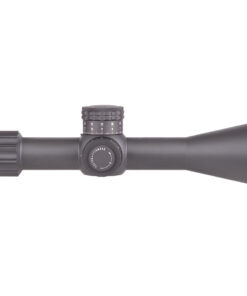
Aircraft-grade aluminum construction forms a durable 34 mm main tube that measures approximately 14.8 inches (377 mm) in length and weighs about 36.5 oz (1035 g). The scope is fully waterproof, fogproof, shockproof, and nitrogen-purged, ensuring reliable performance across temperature swings, moisture, and recoil. Advanced multi-coatings with an anti-fouling layer further protect optical surfaces against the elements.
Accessories including a sunshade, aperture ring, neoprene cover, and throw lever are supplied so that the optic arrives ready for immediate use. In addition, the design prioritizes practicality for shooters who travel, compete, or hunt in varied conditions.
Key Features of the Element Optics Theos FFP APR-2D MRAD Reticle
- 6-36x magnification with 56 mm objective and 34 mm tube
- First focal plane illuminated APR-2D MRAD reticle with 0.2 MRAD increments and Christmas-tree holdovers
- 10-level digital illumination controlled from the parallax knob
- Tool-free resettable turrets with hard mechanical zero-stop and revolution indicator flag
- Elevation range of 29 MRAD and windage of 11.6 MRAD (1/10 MRAD clicks)
- Side parallax from 10 yards/meters to infinity
- ED glass with advanced multi-coatings and anti-fouling layer
- Waterproof, fogproof, shockproof, and nitrogen-purged construction
- Includes sunshade, aperture ring, neoprene cover, and removable throw lever
Why Choose the Element Optics Theos FFP APR-2D MRAD Reticle?
Competitive edge is gained through the thoughtful integration of optical excellence, practical mechanics, and a reticle designed for real-world demands. Whether rapid holds are preferred in timed stages or precise dialing is used for extreme distances, the features support both approaches without compromise. Furthermore, inclusive design considerations ensure that a wide range of shooters—regardless of background or preferred style—can operate the controls efficiently and confidently.ares etr 1 10
In summary, the Element Optics Theos FFP APR-2D MRAD Reticle represents a refined flagship solution that elevates long-range capability. Clarity is maximized by premium glass, adjustments are simplified by tool-free systems, and versatility is expanded by the first focal plane reticle and broad magnification range. Therefore, those seeking a reliable, high-performing optic for precision applications will find this model well suited to their needs. Explore the Element Optics Theos FFP APR-2D MRAD Reticle today and experience how carefully engineered features translate into measurable improvements on the range or in the field.1 10 scope
Premium Rangefinding Binoculars, Hunting Optics, and Precision Rifle Scopes
Modern hunters, long-range shooters, and precision marksmen demand exceptional optical performance, and that is why products such as Leica rangefinder binoculars, Leica Geovid 10×42 rangefinder binoculars, Leica Geovid binoculars, Leica binoculars with rangefinder, Leica Geovid Pro 10×42, Geovid Pro 10×42, Leica Geovid rangefinder, Leica Geovid Pro rangefinder binoculars, Leica Geovid rangefinder binoculars, and the Leica Geovid 10×42 continue to attract attention throughout the shooting industry.
Whether enthusiasts are looking for Leica binoculars, Leica small binoculars, binoculars Leica, Leica Geovid binos, Leica bino, Leica binoculars for sale, Leica bino rangefinder, Leica camera binoculars, Leica binos, or a standard Leica binocular, there are options suitable for every environment and shooting application.1 10 lpvo
Many users also compare Leica products with SIG Sauer binoculars, SIG self stabilizing binoculars, SIG Sauer binos, SIG binoculars, SIG image stabilizing binoculars, SIG binocular, SIG auto stabilizing binoculars, Sigma binoculars, SIG Sauer self stabilized binoculars, and SIG Sauer image stabilized binoculars when evaluating premium optics.
Long-range shooters frequently combine these binocular systems with elite scopes such as the Nightforce ATACR, Nightforce ATACR 5-25×56 F2, Nightforce ATACR 4-20×50, Nightforce ATACR 5-25×56 F1, Nightforce ATACR 4-16×50, Night Force ATACR, ATACR scope, Nightforce attacker, ATACR 4-20, and the Nightforce ATACR 4-20×50 F1. Many professionals also pair their rifles with a Zeiss red dot for faster target acquisition.
Another respected name in the precision optics market is Tangent Theta. Experienced marksmen frequently search for Tangent Theta scopes, Tangent scope, Tangent scopes, Theta optics, Tangent Theta scope, and Tangent optics because of their legendary reputation for repeatability, durability, and optical clarity.
Companies such as Fierce Firearms, Fierce Arms, and Fierce Optics have likewise contributed to the growing popularity of advanced hunting equipment and premium glass systems. Their products are often used alongside specialized equipment featuring 11.5EE, 10×40, 34 56, 34×56, 14×44, 2S14, 2.5×15, 2.5/15, 1/2×42, 12×4.2, 4.5 30, and 4.5/30 specifications.
Among performance-oriented manufacturers, Athlon products remain extremely popular. Examples include the Midas TAC Gen2 HD 6-24×50 APLR15 FFP MOA reticle riflescope, Athlon Midas TAC, Athlon Midas TAC 6-24×50, Athlon Argos BTR Gen2 8-34×56, Athlon BTR Gen 2, Athlon Argos BTR Gen2, Athlon Argos BTR, Athlon Argos BTR Gen 2, Athalon scopes, Athens scope, Athlon Ares BTR, Athlon ETR, Athlon 4.5-30×56, Athlon BTR 2-12, Athlon 2, Athlon reticles, and numerous other models designed for demanding field conditions.nightforce atacr 4 20×50 f1.athlon scopes review
Shooters interested in low-power variable optics continue to search for solutions such as the 1-10 scope, Ares ETR 1-10, 1-10 LPVO, 1-10 FFP LPVO, 1×10 scope, LPVO 1-8, LPVO 1-10, and the 1-10 rifle scope. Likewise, precision enthusiasts appreciate the performance of the Ares ETR Gen2 UHD 4.5-30×56 APRS12 FFP IR MIL reticle, particularly when accuracy is required at extended distances.
The demand for versatile optics has also increased interest in equipment such as the 2-12x, 2.5-15 scope, AO scope, gun scope, hunting optic, longest range scope, and guides explaining how to buy a rifle scope. These products allow hunters and competitive shooters to adapt to changing terrain, lighting conditions, and target distances with exceptional precision.icarus scope
From elite Leica Geovid rangefinder binoculars to advanced Nightforce ATACR models, highly regarded Tangent Theta scopes, innovative SIG Sauer binoculars, and dependable Athlon platforms, today’s market offers virtually unlimited possibilities for anyone seeking world-class optical performance.avalon aries
Frequently Asked Questions
What magnification range is offered and how does it benefit different shooting styles? A versatile 6-36x range is provided so that both close-to-mid distance observation and extreme long-range precision can be handled effectively. Lower powers allow faster target acquisition and a wider field of view, while higher powers deliver the detail needed for precise shot placement and wind reading. Consequently, the optic adapts well to competitive stages, hunting scenarios, and dedicated long-range practice without requiring multiple optics.
How does the first focal plane design improve accuracy? Subtensions remain true at every magnification setting because the reticle is placed in the first focal plane. Therefore, holdover values, ranging calculations, and wind corrections stay consistent whether the power is set at 6x or 36x. This eliminates the need for mental conversion factors that second focal plane designs often require, making the optic especially valuable during timed competitions or rapid target transitions.
Is the reticle illuminated and how is brightness controlled? Yes, ten discrete illumination levels are available and controlled digitally through a single button located on the parallax knob. A brief hold activates or deactivates illumination, while taps cycle through the brightness settings. As a result, the aiming point remains visible in low light without washing out the surrounding reticle features at higher powers. The design keeps the control interface uncluttered and accessible even when gloves are worn.
What is the purpose of the Christmas-tree style holdover pattern? Extensive holdover dots arranged below the main crosshair allow precise elevation and windage holds when there is insufficient time to dial the turrets. Extreme long-range shooters can also use the pattern to call points of impact and make rapid follow-up adjustments. Numbered markings further speed reference under pressure, while the fine center dot remains available for those who prefer pure dialing. In this way, both hold and dial methods are fully supported.
How reliable is the zero-stop mechanism? A hard mechanical zero-stop that requires no tools is incorporated into the elevation turret. Once set, the turret returns positively to the established zero and still permits a few clicks below zero for emergency corrections. Additionally, a revolution indicator flag provides clear visual confirmation after each full turn. These features combine to reduce tracking errors and increase confidence during multi-revolution adjustments common in long-range shooting.
Can the turrets be adjusted without tools in the field? Yes, both elevation and windage turrets are designed for tool-free resetting. The windage turret also includes a removable thread-protection ring so that the exposed threads remain protected when the cap is left off. Consequently, zero changes, load development, or environmental adjustments can be completed quickly without carrying additional tools.
What level of environmental protection is provided? The optic is fully waterproof, fogproof, shockproof, and nitrogen-purged. Aircraft-grade aluminum construction further contributes to durability under recoil and rough handling. Advanced multi-coatings with an anti-fouling layer help maintain optical performance even when the exterior surfaces encounter moisture, dust, or temperature extremes. Users can therefore rely on consistent function across a wide range of outdoor conditions.
Is an aperture ring included and when would it be used? An aperture ring is supplied and can be installed when greater depth of field is desired, particularly in bright daylight conditions. It reduces the effective aperture slightly, increasing the range of distances that appear sharply focused simultaneously. When maximum light gathering is preferred, the ring can simply be removed. A sunshade is also included to manage glare in sunny environments.
How does the side parallax adjustment enhance precision? Parallax can be corrected from 10 yards (or 10 meters) to infinity using the side-focus knob. Accurate parallax adjustment eliminates the apparent shift of the reticle relative to the target when the shooter’s eye position changes slightly. This refinement is especially important at higher magnifications and longer distances, where even small errors can affect point of impact.
What accessories are included with the optic? A sunshade, aperture ring, neoprene protective cover, and removable magnification throw lever are supplied as standard. These items allow the scope to be configured for different lighting conditions, protected during transport, and adjusted more rapidly when needed. The complete package arrives ready for mounting and immediate use on a suitable rifle.
Who is this optic best suited for? Competitive precision rifle shooters, extreme long-range enthusiasts, and serious recreational marksmen who value consistent tracking, clear glass, and a versatile reticle will find the design particularly well matched to their needs. The combination of high magnification, robust mechanics, and an informative first focal plane reticle supports both match environments and personal long-range development equally well.
Why This Optic Stands Out
Competitive edge is gained through the thoughtful integration of optical excellence, practical mechanics, and a reticle designed for real-world demands. Whether rapid holds are preferred in timed stages or precise dialing is used for extreme distances, the features support both approaches without compromise. Furthermore, inclusive design considerations ensure that a wide range of shooters—regardless of background or preferred style—can operate the controls efficiently and confidently.
Clarity is maximized by premium glass, adjustments are simplified by tool-free systems, and versatility is expanded by the first focal plane reticle and broad magnification range. In addition, the overall package of durability features and included accessories reduces the need for aftermarket additions. Therefore, those seeking a reliable, high-performing optic for precision applications will find this model well suited to their needs. Explore the capabilities described above and experience how carefully engineered features translate into measurable improvements on the range or in the field.
Practical Use Scenarios for Precision Long-Range Shooting
Reliable performance under real-world pressure is achieved when advanced optics are paired with thoughtful technique and consistent practice. In competitive environments, field applications, and extended training sessions, the combination of high-magnification clarity, precise adjustments, and an informative first-focal-plane reticle allows shooters of varying experience levels to execute accurate shots efficiently. Moreover, the design supports rapid transitions between observation, ranging, and engagement, making it well suited to dynamic situations where conditions change quickly.
Furthermore, practical success depends on understanding how each feature interacts with shooting positions, environmental factors, and time constraints. Consequently, the following scenarios illustrate how the optic’s capabilities can be applied effectively across common long-range disciplines. Inclusive language is used throughout so that the guidance remains accessible to all participants, regardless of background or preferred style.
Competitive Precision Rifle Matches
Match stages often demand rapid target engagement at unknown distances while accounting for wind, elevation, and positional constraints. During these events, the broad 6-36x magnification range proves especially useful. At lower powers, a wide field of view is maintained so that multiple targets can be located quickly and the stage can be planned efficiently. Once the engagement sequence begins, magnification can be increased smoothly with the removable throw lever, allowing precise aiming on smaller or more distant steel.
Because the reticle remains true at every power setting, holdovers and wind corrections stay consistent without mental conversion. When time is limited, the Christmas-tree pattern of holdover dots is employed for rapid elevation and windage holds. Numbered markings further accelerate reference under pressure, reducing the chance of miscounts during high-stress strings. Meanwhile, the fine center dot remains available for those who prefer to dial every correction. Digital illumination, controlled from the parallax knob, ensures the aiming point stays visible even when stages are run in low-light conditions or under artificial lighting.
Turret adjustments are executed confidently thanks to the hard mechanical zero-stop and revolution indicator flag. After a multi-revolution elevation change, the flag provides immediate visual confirmation that the correct number of turns has been completed. Tool-free resetting allows zero to be reconfirmed between stages without searching for tools. In addition, side parallax can be refined quickly so that the reticle and target remain aligned regardless of head position. As a result, competitors experience fewer tracking errors and maintain higher hit percentages across an entire match day.
Extreme Long-Range Practice and Competition
At distances beyond conventional rifle ranges, optical clarity and precise tracking become critical. The 56 mm objective combined with extra-low dispersion glass delivers the light transmission and resolution needed to identify targets, read mirage, and observe bullet splash at extended ranges. Higher magnification settings reveal fine details that would otherwise remain indistinct, supporting accurate range estimation and wind calls.
Elevation travel of 29 MRAD accommodates substantial trajectory compensation, while the 12 MRAD per revolution design keeps the number of full turns manageable. The revolution indicator flag is particularly valuable here, because multiple revolutions are common and a missed turn can result in a complete miss. Windage adjustments of 11.6 MRAD provide sufficient authority for most crosswind conditions encountered in open terrain. When dialing is preferred, the tactile 0.1 MRAD clicks allow corrections to be made by feel alone if visual confirmation is limited by position or glare.
In situations where rapid follow-up shots are required, the holdover grid is used to estimate remaining elevation and wind without returning to the turrets. Points of impact can be called accurately, and subsequent adjustments applied immediately. Parallax is set carefully at these distances so that any residual shift is eliminated. Over repeated practice sessions, shooters develop confidence that the optic will track true and return to zero reliably, accelerating skill development and reducing frustration caused by equipment inconsistency.
Field and Hunting Applications
When the environment shifts from controlled ranges to natural terrain, durability and adaptability become essential. Waterproof, fogproof, and shockproof construction ensures the optic continues to function after exposure to rain, temperature changes, or rough handling during transport. The anti-fouling layer on the lenses helps maintain image quality even when dust or moisture contacts the exterior surfaces.
In low-light periods such as dawn or dusk, the large objective and multi-coated optics preserve usable brightness. Illumination can be activated at the lowest practical level so that the center aiming point remains visible without blooming. The included aperture ring may be installed during bright midday conditions to increase depth of field, keeping both near and far objects acceptably sharp when scanning terrain. Conversely, the ring is removed when maximum light gathering is required. A sunshade further reduces glare when the sun is low or reflections from water or snow are present.
Side parallax adjustment down to 10 yards (or meters) allows the optic to be used effectively on closer targets when opportunities arise unexpectedly. Eye relief remains comfortable across common shooting positions, including prone, kneeling, and supported standing. Because the magnification range is wide, a single optic can cover both glassing at moderate power and precise shot placement at higher power without changing equipment. This versatility reduces pack weight and simplifies decision-making in the field.
Training and Skill Development Sessions
Consistent practice is the foundation of long-range proficiency. During structured training, the tool-free turrets and positive zero-stop allow frequent zero confirmation and load development without interrupting the flow of a session. Shooters can experiment with different holds versus dialing techniques and immediately compare results. The detailed reticle supports both methods, enabling users to identify which approach yields the highest consistency for their particular style and conditions.
Group measurement is facilitated by the 0.1 MRAD scales on the crosshairs. After a string of fire, the group size can be assessed directly through the optic, providing immediate feedback. Parallax can be refined at each distance so that aiming errors caused by head movement are minimized. Over time, the combination of clear glass, reliable tracking, and an informative reticle accelerates the learning curve for wind reading, hold estimation, and positional shooting.
Inclusive training environments benefit from the straightforward controls. Illumination, magnification, and parallax adjustments are intuitive and can be operated while wearing gloves or under time pressure. New participants can focus on fundamentals rather than fighting complex interfaces, while experienced shooters can exploit the finer features for advanced techniques. Consequently, group progress is supported without unnecessary barriers.
Environmental and Positional Considerations
Wind, mirage, temperature, and terrain introduce variables that must be managed in every practical scenario. The high-resolution image produced by the ED glass and multi-coatings assists in observing mirage direction and intensity, which in turn informs wind calls. When conditions change rapidly, the holdover grid allows immediate compensation without losing sight picture. Elevation and windage turrets remain accessible even in tight positions, and the capped windage design with thread-protection ring keeps the mechanism secure during movement between firing points.
In prone positions on uneven ground, the generous eye relief and well-defined exit pupil help maintain a full sight picture despite minor shifts in head placement. Kneeling or sitting positions benefit from the same characteristics, reducing the need for perfect alignment. The overall weight and balance of the 34 mm tube contribute to stability when the rifle is supported on bipods, bags, or natural rests.
Setup and Daily Handling Best Practices
Before any session, a systematic check of the optic is recommended. Parallax is verified at the expected engagement distance, illumination level is confirmed if low light is anticipated, and the zero-stop is tested with a few elevation adjustments. The throw lever can be installed or removed according to preference, and the sunshade or aperture ring selected based on ambient conditions. After use, the neoprene cover is applied for protection during transport, and lenses are cleaned with appropriate materials to preserve coatings.
These routines become second nature with practice and contribute to consistent performance. Because the mechanical features are designed for field reliability, the time spent on setup remains minimal, allowing more attention to be directed toward shooting fundamentals and environmental observation.
Integrating Features for Maximum Effectiveness
Across all scenarios, the greatest advantage is realized when features are used in combination rather than isolation. Magnification is matched to target size and distance, parallax is refined for the specific range, illumination is set only as bright as necessary, and the choice between holding and dialing is made according to time available and stage complexity. The revolution indicator flag and zero-stop work together to prevent tracking mistakes, while the first-focal-plane reticle ensures that any hold applied remains accurate after a power change.
Shooters who invest time in learning these interactions report higher hit percentages, reduced mental load during stressful moments, and greater enjoyment of the discipline. The optic’s design encourages this learning process by remaining predictable and transparent in its behavior.
Summary of Practical Advantages
In competitive matches, extreme long-range work, field applications, and structured training, the combination of optical quality, mechanical reliability, and reticle versatility supports accurate and efficient shooting. Clear images are delivered in varied light, adjustments remain trustworthy under pressure, and hold or dial methods can be selected according to the situation. Environmental sealing and included accessories further reduce logistical concerns, allowing focus to remain on the shot process itself.
By applying the features thoughtfully across these real-world contexts, users of all experience levels can elevate their consistency and confidence. Whether the goal is a match win, a successful field harvest, or steady improvement in personal skill, the practical capabilities described above translate directly into measurable results on the range and beyond.




Reviews
There are no reviews yet.