Element Optics Helix Gen2 Scope – Refined Performance, Reliable Tracking and Versatile Optics
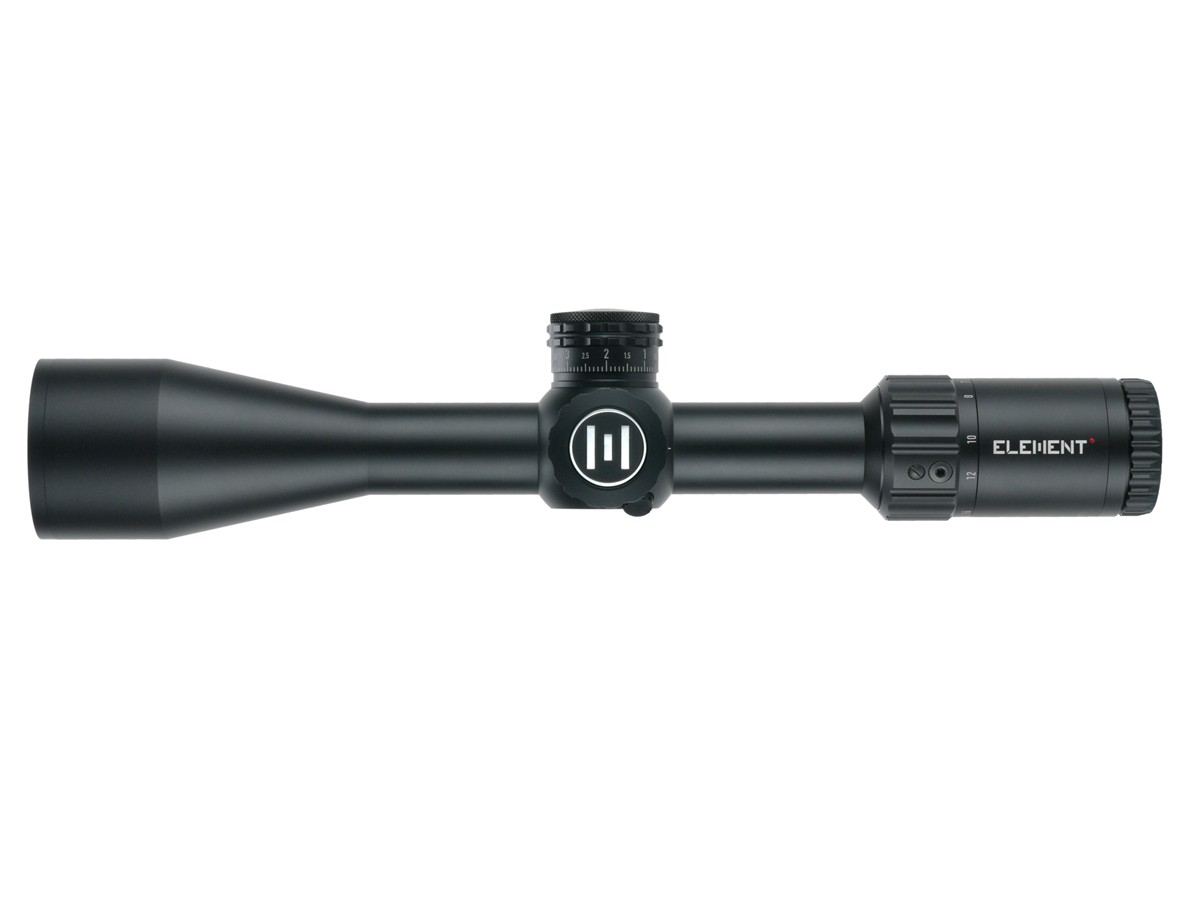
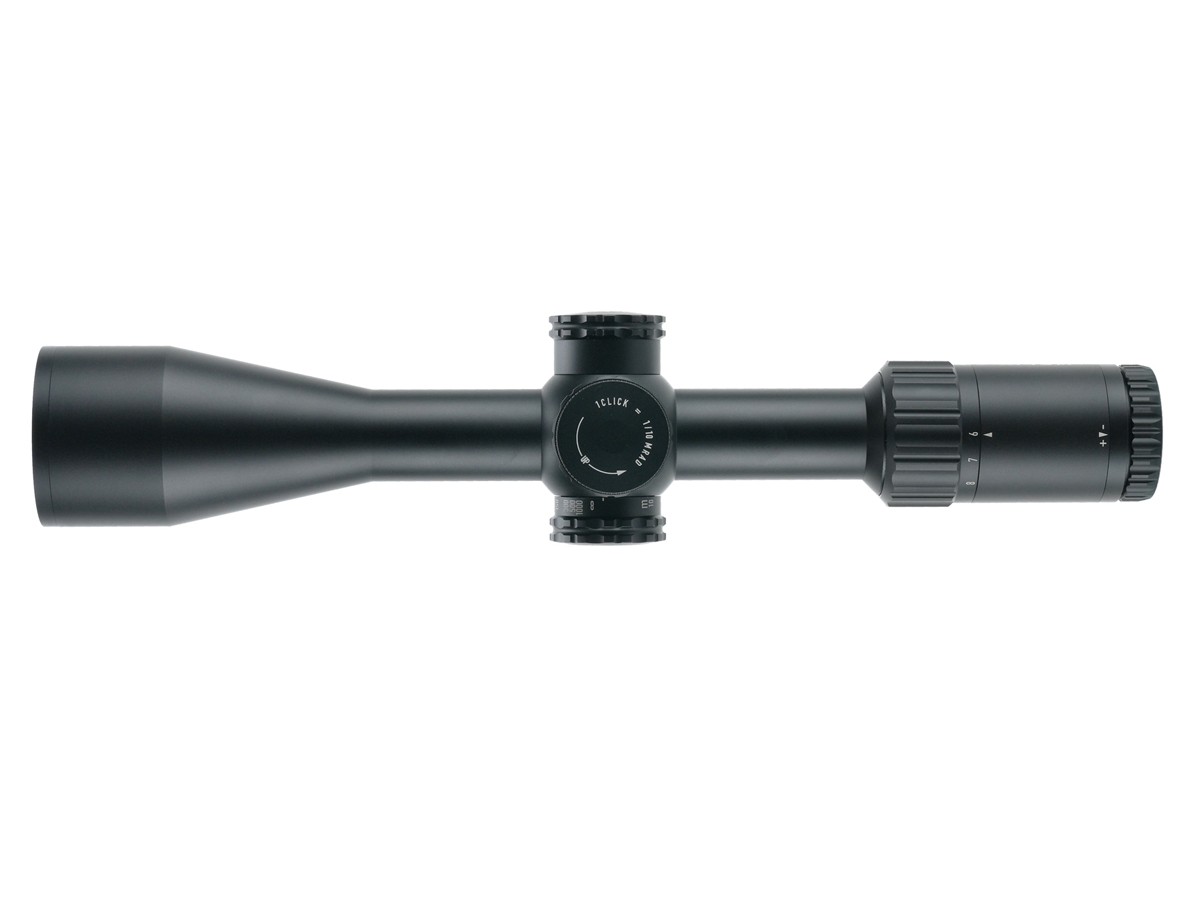
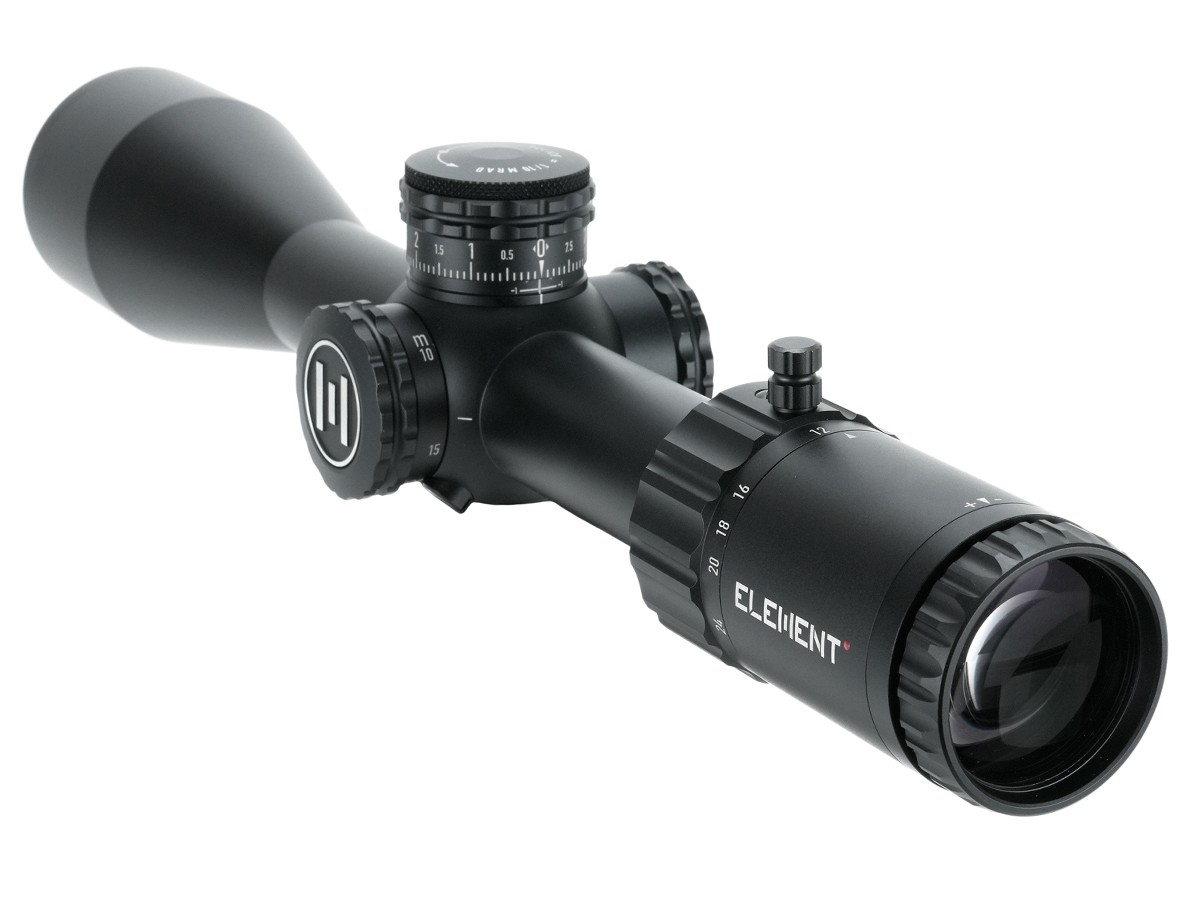
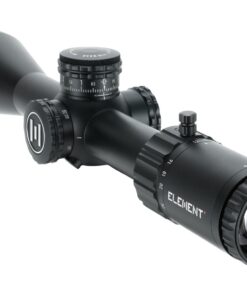
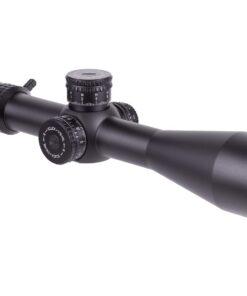
The Element Optics Helix Gen2 scope has been developed for shooters who value dependable adjustment, practical optical performance, intelligent reticle design, and rugged construction. Building on the original HELIX platform, the second generation has been refined with an updated turret system, a wider field of view, a more forgiving eye box, and multiple magnification and focal-plane configurations. The current HELIX GEN 2 family includes 4-16×44 FFP, 6-24×50 FFP, and 6-24×50 SFP models.
Whether an optic is being selected for range work, sporting use, or other lawful shooting applications, consistency matters. Consequently, reliable tracking has been placed at the center of the HELIX GEN 2 design. Furthermore, adjustments have been made easier to manage through a tool-free turret system and integrated zero-stop mechanism.
Why Choose the Element Optics Helix Gen2 Scope?
Performance is not created by magnification alone. Instead, a useful riflescope must combine optical quality, predictable adjustment, comfortable viewing, and durable construction. Those priorities have been incorporated throughout the Element Optics Helix Gen2 scope range.
Most importantly, the turret system has been designed to provide 8 MRAD or 20 MOA per revolution, depending on the selected configuration. Additionally, the zero-stop system has been incorporated so that the established zero can be located more easily after elevation adjustments have been made.
A 30mm main tube is also used across the highlighted HELIX GEN 2 configuration, while side parallax adjustment, an adjustable diopter, weather-resistant construction, and fully multi-coated lenses are included among the listed features.
Highlighted Product Features
- HELIX GEN 2 optical system designed for clear, practical viewing
- Tool-free turret system for convenient adjustment
- 8 MRAD or 20 MOA per revolution, depending on configuration
- Integrated zero stop for easier return to the established zero
- 30mm main body tube
- Side parallax adjustment for improved focus management
- Adjustable diopter for individual reticle focus
- Advanced fully multi-coated lenses
- Strong, rugged construction
- Weather-resistant design
- FFP and SFP configurations available
- Multiple magnification options, including 4-16×44 and 6-24×50
- Element Optics Platinum Lifetime Warranty coverage
Improved Optical Design for Comfortable Viewing
A riflescope may contain impressive specifications, yet those specifications become far less useful when the sight picture feels restrictive. Therefore, the optical system of the HELIX GEN 2 has been revised to provide a larger field of view and a more forgiving eye box compared with the previous design.
As a result, target observation can feel more natural while the shooter settles behind the optic. Likewise, the familiar four-times erector system has been retained within the GEN 2 design.
Fully multi-coated lenses are also featured. Consequently, the optical system has been designed with clarity and practical light management in mind. Rather than unnecessary complication being added, attention has been directed toward the characteristics that matter during regular use.
First or Second Focal Plane Options
Versatility is further provided through both First Focal Plane and Second Focal Plane versions within the HELIX GEN 2 family.
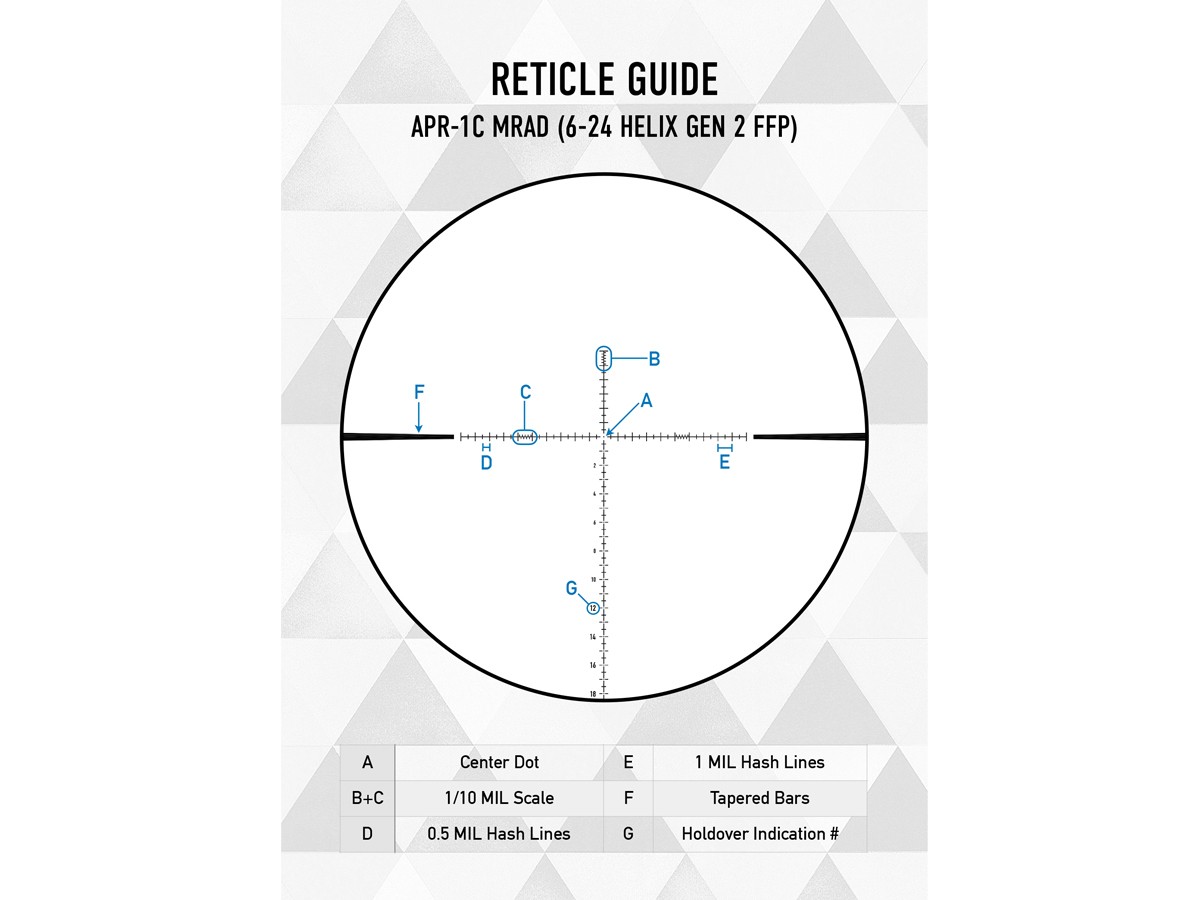
With the 4-16×44 FFP model, for example, the reticle is positioned in the first focal plane so that its calibration remains proportional throughout the magnification range. The official 4-16×44 configuration is supplied with MPR-1C reticle options in either MRAD or MOA.
Meanwhile, shooters who prefer an SFP sight picture can select the 6-24×50 SFP model. On that version, a crisp and uncluttered sight picture has been prioritized across the magnification range.
Therefore, the most suitable configuration can be selected according to individual preferences rather than a single focal-plane system being imposed on every user.
Precise, User-Friendly Turret System
Adjustment controls should be straightforward, repeatable, and easy to understand. For that reason, the HELIX GEN 2 turret system has been made tool-free. Furthermore, 8 MRAD or 20 MOA of adjustment is provided with each turret revolution, depending on the selected measurement system.
This arrangement allows substantial adjustment to be completed without unnecessary turret rotation. Additionally, the zero-stop mechanism has been included so the original zero reference can be recovered more conveniently.
On the 4-16×44 FFP version, adjustments are offered in either 1/10 MRAD or 1/4 MOA increments. Elevation adjustment extends to 26.1 MRAD or 90 MOA, while windage adjustment reaches 13 MRAD or 45 MOA.
Consequently, the Element Optics Helix Gen2 scope combines straightforward controls with the adjustment range expected from a modern precision-oriented optic.
Side Parallax and Individual Focus Adjustment
Visual clarity is influenced by more than lens quality. Accordingly, side parallax adjustment has been included so target focus and parallax can be managed according to range.
For instance, the 4-16×44 FFP configuration provides a minimum parallax distance of approximately 15 yards or 15 metres.
An adjustable diopter is provided as well. Because eyesight varies from person to person, the reticle can therefore be focused according to the individual user’s vision. This feature may appear simple; however, it contributes significantly to comfortable viewing and a clearly defined reticle.
Built for Demanding Conditions
Durability has also been emphasized throughout the HELIX GEN 2 platform. A strong and rugged design is listed among its principal features, alongside weather-resistant construction. Moreover, Element Optics states that stringent quality-control checks are performed to support repeatable operation under demanding conditions.
Consequently, the optic has not been designed merely around impressive specifications on paper. Instead, reliability, mechanical consistency, and environmental resistance have been treated as fundamental parts of the overall package.
A 30mm main tube is used, which also makes compatible mounting solutions widely available. Nevertheless, suitable quality rings should always be selected and installed according to the manufacturer’s instructions. Element Optics specifically recommends appropriate 30mm rings for the HELIX GEN 2 models using this tube size.
Element Optics Helix Gen2 4-16×44 FFP Specifications
For buyers considering the versatile 4-16×44 FFP version, several important specifications have been published by Element Optics:
- Magnification: 4-16×
- Objective Lens: 44mm
- Main Tube: 30mm
- Eye Relief: 4 inches / 102mm
- Field of View: 30.1-7.5 ft at 100 yards
- Click Adjustment: 1/4 MOA or 1/10 MRAD
- Elevation Range: 90 MOA / 26.1 MRAD
- Windage Range: 45 MOA / 13 MRAD
- Minimum Parallax: 15 yards / 15 metres
- Length: 13.8 inches / 350mm
- Weight: 28.5 oz / 808g
These specifications create a balanced platform in which useful magnification, adjustment capability, and manageable dimensions are combined.
A Refined Generation of the HELIX Platform
Ultimately, the Element Optics Helix Gen2 scope has been designed as more than a cosmetic revision of the original HELIX. Instead, meaningful improvements have been incorporated into viewing comfort, turret operation, field of view, and general usability.
Reliable tracking has been prioritized. Likewise, reticle systems have been intelligently configured, adjustments have been simplified, and rugged construction has been maintained. Most importantly, different FFP and SFP options allow the range to serve users with different optical preferences.
For anyone searching for a versatile riflescope that balances optical performance, dependable mechanics, convenient controls, and a strong feature set, the Element Optics Helix Gen2 scope deserves serious consideration. With multiple configurations available and Element Optics’ Platinum Lifetime Warranty supporting the range, it provides a well-rounded solution built around practical performance and long-term confidence.
Premium Rangefinding Binoculars, Precision Riflescopes and Advanced Hunting Optics
Modern optical technology gives hunters, sport shooters, wildlife observers, and outdoor enthusiasts more ways to identify distant targets, measure range, and achieve a clearer field of view. Premium Leica rangefinder binoculars remain highly regarded for combining observation and ranging technology in one compact optical platform. Popular searches include Leica Geovid 10×42 rangefinder binoculars, Leica Geovid binoculars, Leica binoculars with rangefinder, Leica Geovid Pro 10×42, and Geovid Pro 10×42. Whether someone is researching a Leica Geovid rangefinder, Leica Geovid Pro rangefinder binoculars, Leica Geovid rangefinder binoculars, or the classic Leica Geovid 10×42, the Geovid family is commonly associated with high-quality glass, strong optical clarity, and practical long-distance observation.
Beyond rangefinding models, the wider Leica binoculars collection appeals to users searching for Leica small binoculars, binoculars Leica, Leica Geovid binos, Leica bino, Leica binoculars for sale, Leica bino rangefinder, Leica camera binoculars, Leica binos, or simply a Leica binocular for travel, field observation, wildlife viewing, and outdoor use. Different magnification formats, including 10×40, can suit users who want a balance between detail, portability, and field of view.
Alternative electronic binocular technologies are also becoming increasingly popular. Searches for SIG Sauer binoculars, SIG self stabilizing binoculars, SIG Sauer binos, SIG binoculars, SIG image stabilizing binoculars, SIG binocular, and SIG auto stabilizing binoculars reflect growing interest in electronically assisted viewing. Likewise, SIG Sauer self stabilized binoculars and SIG Sauer image stabilized binoculars can appeal to users who want reduced visual movement during handheld observation. Some buyers may also encounter broader search variations such as Sigma binoculars or specification terms like 11.5ee while comparing different optical products.
Precision aiming optics occupy another major part of the premium optics market. A Zeiss red dot offers a different sighting concept from traditional magnified optics, while the Nightforce ATACR line is frequently researched by users interested in premium long-range scopes. Common variants include Nightforce ATACR 5-25×56 F2, Nightforce ATACR 4-20×50, Nightforce ATACR 5-25×56 F1, and Nightforce ATACR 4-16×50. Related searches such as Night Force ATACR, ATACR scope, Nightforce attacker, ATACR 4-20, and Nightforce ATACR 4 20×50 F1 often appear when buyers are comparing magnification ranges, focal-plane configurations, turret systems, and optical performance.
At the higher end of precision optics, Tangent Theta products are frequently associated with specialist applications requiring refined mechanical adjustment and premium optical performance. Users may search for Tangent Theta scopes, Tangent scope, Tangent scopes, Theta optics, Tangent Theta scope, and Tangent optics while researching high-performance long-range systems.
The market also includes companies such as Fierce Firearms, Fierce Arms, and Fierce Optics, which may appear in searches involving hunting equipment and optical accessories. Within the Athlon category, meanwhile, one of the more detailed product searches is Midas TAC Gen2 HD 6-24×50 APLR15 FFP MOA reticle riflescope. The broader Athlon Midas TAC family, including Athlon Midas TAC 6-24×50, is often considered by users who want substantial magnification and adjustable target-focused features.
For shooters comparing larger objective and magnification configurations, terms such as 34 56, 34×56, Athlon Argos BTR Gen2 8-34×56, Athlon BTR Gen 2, Athlon Argos BTR Gen2, Athlon Argos BTR, and Athlon Argos BTR Gen 2 commonly appear during product research. Search variations such as Athalon scopes and Athens scope may also lead shoppers toward Athlon products when researching a new gun scope, Icarus scope, longest range scope, or general hunting optic.
Anyone learning how to buy a rifle scope should compare magnification range, objective diameter, reticle design, adjustment system, eye relief, optical quality, focal-plane configuration, overall weight, and intended sporting application. Terms such as AO scope can refer to adjustable-objective configurations, while models in the Athlon Ares BTR family provide additional options for users exploring precision-oriented optics.
Mid-range magnification searches frequently include 2.5×15, Avalon Aries, 2.5/15, Athlon BTR Gen 2, Athlon scopes review, Athlon reticles, 2.5-15 scope, and repeated comparisons involving Athlon Argos BTR Gen2 8-34×56 or 34×56 configurations. These searches demonstrate how buyers often compare reticles, magnification ratios, objective sizes, and scope families rather than selecting an optic solely by maximum magnification.
Low-power variable optics are another major category. Searches such as 1 10 scope, Ares ETR 1 10, 1 10 LPVO, 1-10 LPVO, 1-10 FFP LPVO, 1×10 scope, Athlon ETR, LPVO 1-8, LPVO 1-10, and 1-10 rifle scope reflect demand for versatile magnification systems. An LPVO allows users to move between low magnification for a broad field of view and higher magnification for improved observation at extended distances, making the format useful across several sporting disciplines.
For greater magnification, the Ares ETR Gen2 UHD 4.5-30×56 APRS12 FFP IR MIL reticle represents another precision-focused configuration within the Athlon range. Related product searches include Athlon 4.5-30×56, 4.5 30, Athlon ETR, and 4.5/30. The large 56 mm objective and broad magnification range make this type of optic particularly relevant to users comparing long-distance target and field optics.
Other searches such as 14×44, 2s14, Athlon BTR 2-12, 1/2×42, Athlon BTR Gen 2, 12×4.2, 2-12x, and Athlon 2 demonstrate continued demand for more compact variable-magnification formats. A 2-12x configuration, for example, can provide a useful compromise between field of view and magnified observation without requiring the size or weight of a very high-magnification optic.
Ultimately, premium optics cover far more than a single product category. Leica rangefinder binoculars and Leica Geovid binoculars combine observation with distance measurement, while stabilized SIG Sauer binoculars emphasize steady handheld viewing. Meanwhile, Nightforce ATACR, Tangent Theta scopes, and Athlon families such as the Midas TAC, Argos BTR, Ares BTR, and Ares ETR provide a wide range of magnification, reticle, and focal-plane options. By comparing optical clarity, magnification range, objective diameter, reticle format, adjustment system, physical dimensions, and intended sporting use, buyers can narrow a broad optics market into products that better match their individual requirements.
Practical Use Scenarios for the Element Optics Helix Gen2 Scope
A quality riflescope becomes valuable when its features translate into practical benefits during real use. Clear glass, dependable tracking, useful magnification, side-focus adjustment, and an intuitive turret system all contribute to a smoother shooting experience. However, those advantages become easier to understand when they are considered within realistic scenarios rather than specifications alone.
Different shooters require different things from their optics. Some spend most of their time practicing at established ranges, while others prefer informal target shooting on private property or participation in organized sporting disciplines. Meanwhile, certain users simply want a versatile optic that can remain useful across changing distances without requiring constant equipment changes.
The following scenarios demonstrate how the scope can fit naturally into several common sporting and recreational applications while maintaining comfort, consistency, and ease of use.
Scenario 1: A Structured Day at the Shooting Range
Imagine arriving at an outdoor shooting range early in the morning. Conditions are calm, visibility is good, and several target distances are available. Instead of immediately increasing magnification, the shooter begins at a moderate setting to establish a wide and comfortable field of view.
This approach allows the target area to be located quickly. Furthermore, the relatively forgiving eye position makes it easier to settle naturally behind the optic without spending unnecessary time trying to find the correct viewing angle.
Before any serious practice begins, the reticle focus can be adjusted to suit the user’s eyesight. Once the reticle appears sharp, side-focus adjustment may be used to improve target clarity at the selected distance. Consequently, the viewing experience becomes more comfortable and distractions are reduced.
During the first few groups, a moderate magnification setting may be preferred. Because excessive magnification is not always necessary, starting lower helps the shooter maintain awareness around the target while observing general consistency.
As practice continues, magnification can gradually be increased when finer target details need to be seen. A smaller scoring area becomes easier to inspect, while precise aiming points can be identified more comfortably.
Rather than forcing the user into one fixed setup, the available magnification range allows the optic to be adapted according to target size, shooting position, and environmental conditions.
Making Adjustments During Practice
Once a stable zero has been established, the turret system becomes particularly useful.
Suppose the shooter wants to confirm point-of-impact consistency at another target distance. Instead of guessing or making unnecessary changes, clearly defined turret adjustments can be used systematically.
Each change can be recorded in a shooting log. Then, after practice at the alternative distance has been completed, the zero-stop feature can assist with returning to the original reference point.
This creates a repeatable process:
- Establish the initial zero.
- Record the turret position.
- Move to another known target distance.
- Apply the required adjustment.
- Complete the practice group.
- Return the turret to the original zero reference.
Because the process is organized, the shooter can focus on consistency rather than constantly wondering whether the optic has been returned to its original setting.
Over time, this type of structured range practice can help users better understand both their equipment and their own shooting habits.
Scenario 2: Precision-Oriented Target Practice
A second practical scenario involves smaller targets positioned farther downrange during organized or recreational target shooting.
Here, visual detail becomes increasingly important.
At lower magnification, the shooter can locate the target and establish a comfortable position. Once that has been accomplished, magnification may be increased gradually. As a result, the aiming area can be viewed more clearly without immediately narrowing the field of view more than necessary.
Side parallax adjustment becomes especially useful in this situation.
When targets are positioned at different known distances, focus may need to be refined. By adjusting the side-focus control, the shooter can bring the target image into clearer definition while reducing the effects of parallax.
Comfort also matters during longer range sessions. Fatigue can develop when users repeatedly strain to see small target details. Therefore, a clearer sight picture and properly focused reticle can help create a more relaxed viewing experience.
Using the Reticle as a Consistent Reference
During precision practice, consistency is essential.
Instead of shifting the aiming point from one shot to another, the shooter can use clearly defined reticle references to maintain a repeatable visual relationship with the target.
When a first focal plane version is being used, reticle subtensions remain proportionally consistent throughout the magnification range. Consequently, users who understand their reticle can maintain a familiar reference system even when magnification changes.
Meanwhile, those using a second focal plane configuration may prefer the reticle’s relatively constant visual size while moving through different magnification settings.
Neither approach is automatically better for every shooter. Rather, each system provides advantages according to personal preference and intended use.
Through repeated practice, the optic becomes less of a separate piece of equipment and more of an integrated part of the shooter’s routine.
Scenario 3: A Recreational Weekend Session
Not every shooting session is centered on competition or highly detailed technical practice.
Consider a relaxed weekend visit to a private range or authorized recreational shooting area. Targets may be positioned at several distances, and the goal is simply to enjoy a comfortable, controlled session.
In this environment, versatility becomes especially valuable.
The session might begin with larger targets positioned closer to the firing line. Lower magnification provides a generous field of view, making target acquisition straightforward.
Later, smaller targets could be introduced farther away. Instead of replacing the optic or changing equipment, magnification can be increased to match the new challenge.
This flexibility allows a single setup to remain useful throughout the day.
Moreover, the shooter may alternate between seated, supported, and other stable shooting positions. A forgiving eye box can make those transitions easier because the viewing position does not feel excessively restrictive.
Keeping the Session Simple
Recreational users often appreciate equipment that does not require complicated procedures.
Tool-free turret adjustments can therefore offer a meaningful advantage. Instead of searching for a coin, screwdriver, or other small tool, the user can make reasonable changes directly through the turret system.
Likewise, a clearly established zero reference simplifies the end of the session.
After experimenting with adjustments, the shooter can return to the original zero and confirm it with a final target group.
This straightforward workflow keeps attention on the experience rather than unnecessary equipment management.
Scenario 4: Training Across Changing Distances
Another useful application involves a training session where targets are positioned at several known distances.
For example, a shooter may begin with one target at a relatively short distance, continue to a medium-distance target, and finish with a smaller target farther away.
Initially, the scope can remain at lower magnification. A wide field of view helps the user transition between targets and maintain visual awareness.
Once the farther target becomes the focus, magnification can be increased.
At the same time, side-focus adjustment can be refined to suit the new distance. Consequently, the target can be viewed more clearly without requiring major changes to the overall setup.
Repeated distance changes also demonstrate why predictable turret operation matters.
If known corrections are being used, each adjustment should produce a controlled and repeatable response. When the session returns to the original distance, the shooter can restore the initial setting and verify zero.
This kind of structured practice can reveal how consistently the optic performs over repeated adjustment cycles.
Learning Through Repetition
The value of such training extends beyond the optic itself.
By repeating the same sequence over multiple range visits, users can gradually develop a familiar process for adjusting magnification, focus, and turret position.
Eventually, these actions become more intuitive.
For instance, the shooter may learn that a certain magnification setting provides the best balance of field of view and target detail at a particular range. Similarly, they may become familiar with the approximate side-focus position needed for common distances.
That familiarity can reduce unnecessary adjustments and make future sessions more efficient.
Scenario 5: A Full-Day Outdoor Range Event
A longer shooting event presents different challenges.
Morning conditions may be cool and bright, while afternoon conditions can become warmer, hazier, or more variable. Light levels may also change as cloud cover develops.
Under these circumstances, the optic needs to remain comfortable throughout several hours of use.
Fully multi-coated lenses can contribute to practical viewing quality by supporting efficient light transmission and contrast. However, magnification should still be selected according to actual conditions rather than maximum capability alone.
High magnification can make heat shimmer and atmospheric movement more noticeable. Therefore, reducing magnification slightly may sometimes create a cleaner and more usable image.
This demonstrates an important principle: maximum magnification is not always the best magnification.
A practical shooter adjusts the optic according to the environment.
Managing Comfort Throughout the Day
Eye position becomes increasingly important during lengthy sessions.
A poorly fitted shooting position can lead to unnecessary neck and eye strain. Therefore, scope mounting, stock position, and individual shooting posture should work together to produce a natural viewing position.
Once a comfortable setup has been established, the shooter should be able to look through the optic without repeatedly stretching forward or pulling backward to find the full sight picture.
The adjustable diopter should also be set before extended use.
When the reticle is properly focused for the user’s eyesight, visual strain can be reduced. Combined with suitable magnification, this can make long sessions considerably more comfortable.
Scenario 6: Organized Target Competition
In an organized sporting environment, repeatability becomes particularly important.
A competitor may have only limited time to prepare before each stage or target sequence. Therefore, controls need to be familiar and adjustments need to be predictable.
Before the event begins, the shooter can confirm zero and verify that the turret reference is correctly established. Magnification can then be selected according to the anticipated target presentation.
During the event, unnecessary adjustments should generally be avoided.
Instead, the user benefits from already understanding how the optic behaves.
This preparation may include knowing:
- Which magnification setting provides the preferred field of view.
- How the reticle appears at different magnification levels.
- Where the side-focus control typically sits for known distances.
- How many turret clicks correspond to previously confirmed corrections.
- How to return to the established zero reference.
Having these details organized before the competition reduces uncertainty.
Confidence Through Equipment Familiarity
Reliable equipment can support confidence, but familiarity creates confidence more effectively than specifications alone.
A competitor who has practiced repeatedly with the same optic knows how quickly adjustments can be made and how the image changes as magnification increases.
Consequently, fewer decisions need to be made during the event itself.
Instead of experimenting, the shooter follows a process that has already been tested.
This is where an intuitive optical system becomes particularly valuable.
Scenario 7: Learning With a New Optic
A beginner purchasing a more capable riflescope may initially feel overwhelmed by magnification controls, turret adjustments, parallax, reticle design, and zero-stop systems.
However, the learning process can be simplified by introducing one feature at a time.
During the first session, the user may focus primarily on achieving a clear sight picture and establishing a comfortable position.
During the second session, side-focus adjustment can be explored at several distances.
Later, magnification changes can be practiced.
Finally, turret adjustments and return-to-zero procedures can be introduced.
This gradual approach helps prevent confusion.
Instead of treating every feature as something that must be mastered immediately, the shooter develops familiarity through controlled practice.
Building a Personal Setup
Every user eventually develops preferred settings.
One person may enjoy moderate magnification for most shooting. Another may prefer a higher setting when viewing smaller targets. Similarly, diopter adjustment and eye position will vary between individuals.
Because personal preferences differ, adaptability becomes an important advantage.
The optic can therefore be configured around the user rather than requiring the user to adapt excessively to the optic.
Practical Versatility for Different Shooters
Across all these scenarios, one characteristic remains consistent: adaptability.
A versatile optic should perform comfortably during simple recreational sessions while also offering enough control for more structured precision practice.
Magnification should be easy to manage. Focus adjustment should remain accessible. Turrets should provide predictable feedback. Reticle visibility should remain useful, and the overall viewing experience should feel natural.
Most importantly, the optic should support the user’s intended sporting application without creating unnecessary complexity.
Whether someone is practicing regularly at a local range, learning the fundamentals of precision optics, participating in organized target events, or simply enjoying occasional recreational shooting, a balanced feature set can provide long-term usefulness.
With thoughtful adjustment and consistent practice, users can take advantage of the optical system in a controlled, practical, and repeatable way.
Rather than relying solely on technical specifications, real value is revealed through repeated use. Clear viewing, manageable controls, flexible magnification, dependable adjustment, and a comfortable eye position can combine to create a more enjoyable shooting experience.
For shooters seeking an optic that can adapt to changing target distances, different practice styles, and varied outdoor conditions, this combination of usability and mechanical refinement makes the platform a practical choice for both developing skills and maintaining consistent performance.
Frequently Asked Questions
What type of shooting is this scope best suited for?
This optic is designed to support a wide range of recreational and precision-oriented shooting activities. It can be used for regular range practice, target shooting, sporting applications, and other lawful shooting disciplines. Because multiple magnification and focal-plane configurations are available, different users can choose a setup that better matches their preferred shooting style.
Is the scope available in both FFP and SFP versions?
Yes. First focal plane and second focal plane configurations are available within the range. An FFP reticle changes apparent size as magnification is adjusted, allowing its subtensions to remain proportional throughout the magnification range. Meanwhile, an SFP reticle maintains a relatively constant apparent size, which some shooters prefer for a cleaner and more familiar sight picture.
What magnification options are available?
Different configurations are offered, including 4-16×44 and 6-24×50 models. Therefore, buyers can select a magnification range based on target size, typical shooting distance, and personal preference. Lower magnification can provide a wider field of view, while higher settings can make smaller or more distant target details easier to observe.
Does it include a zero-stop system?
Yes. A zero-stop mechanism is incorporated into the turret system. Once a reliable zero has been established, the feature can help the shooter return to that reference point after elevation adjustments have been made. This can be particularly useful during structured range practice where different known distances are being used.
Are the turrets easy to adjust?
The turret system has been designed for straightforward adjustment and can be operated without requiring additional tools for normal setting changes. Depending on the selected model, the adjustment system may be configured in MRAD or MOA. Clear turret operation can make range corrections easier to record and repeat during practice.
What is side parallax adjustment used for?
Side parallax adjustment allows the target image to be focused more precisely at different distances while helping minimize apparent reticle movement caused by changes in eye position. During target shooting, the control can be adjusted according to the approximate target distance until a clear and stable sight picture is achieved.
Does the scope have an adjustable diopter?
Yes. Diopter adjustment is provided so the reticle can be focused according to the user’s eyesight. Because vision differs from person to person, setting the diopter correctly can make the reticle appear sharper and may improve viewing comfort during extended shooting sessions.
What size scope rings are required?
Models built around the 30mm main tube require compatible 30mm scope rings. Ring height should also be selected according to the rifle, mounting system, objective diameter, and required clearance. Proper mounting is important because incorrect ring installation or excessive torque can affect both equipment performance and durability.
Are the lenses fully multi-coated?
Yes, the optical system uses fully multi-coated lenses. These coatings are designed to improve light transmission, contrast, and overall viewing quality. Consequently, the sight picture can remain clear across a variety of normal outdoor lighting conditions.
Is maximum magnification always the best setting to use?
No. Higher magnification can make small details easier to see, but it also reduces field of view and can make atmospheric effects such as heat shimmer more noticeable. In many situations, moderate magnification provides a better balance between target detail, image stability, and situational awareness.
Is it suitable for someone new to adjustable riflescopes?
It can be a suitable option for users who are prepared to learn how the controls function. Beginners may find it helpful to learn the system gradually, starting with eye relief and reticle focus before moving on to parallax adjustment, magnification changes, turret corrections, and zero-stop setup.
How should the scope be maintained?
Routine maintenance should remain simple. Exterior surfaces can be wiped with a clean, soft cloth, while lenses should be cleaned only with suitable optical cleaning materials. Dust should be removed gently before wiping the glass to reduce the risk of scratching lens coatings. Harsh chemicals should generally be avoided unless specifically approved by the manufacturer.
Can the scope handle changing outdoor conditions?
The construction is intended for normal demanding outdoor use and incorporates weather-resistant characteristics. Nevertheless, the optic should still be treated as precision equipment. Protective lens caps should be used when appropriate, and prolonged unnecessary exposure to dirt, moisture, or extreme storage conditions should be avoided.
How often should zero be checked?
Zero should be confirmed whenever the optic has been newly installed, after mounting hardware has been adjusted, following significant transport or impact, and periodically during routine use. Competitive or precision-focused shooters may prefer to verify zero more frequently before important shooting sessions.
Why is a forgiving eye box important?
A forgiving eye box can make it easier to obtain a full sight picture without requiring an excessively precise head position. This may improve comfort when changing between stable shooting positions or when using the optic for longer sessions.
Who is this optic most suitable for?
It can suit recreational shooters, target enthusiasts, experienced users, and developing shooters who want a versatile optic with adjustable magnification, side focus, practical reticle options, and a modern turret system. Its strongest appeal comes from combining optical flexibility with straightforward controls and repeatable adjustment.






Reviews
There are no reviews yet.