Vortex Venom FFP Riflescope – Precision Optics Built for Long-Range Performance
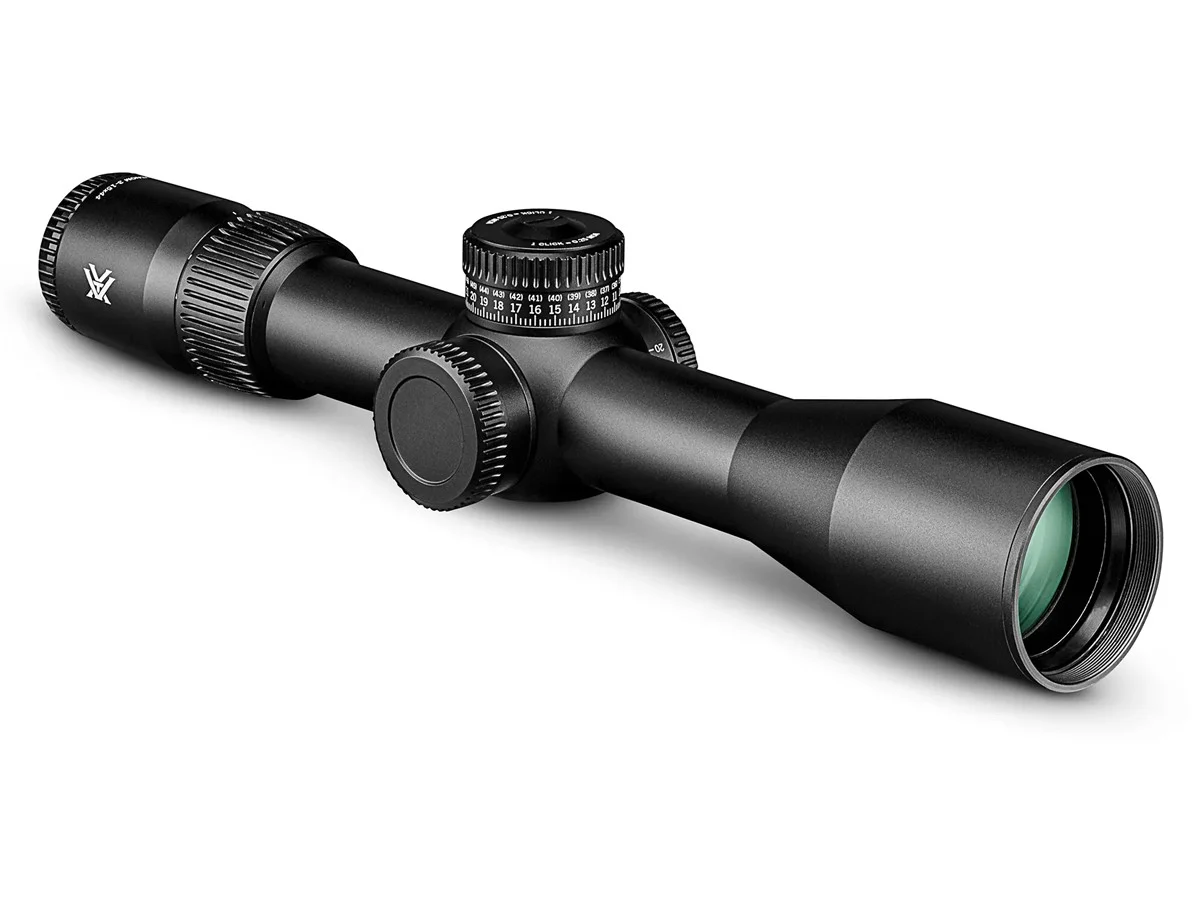
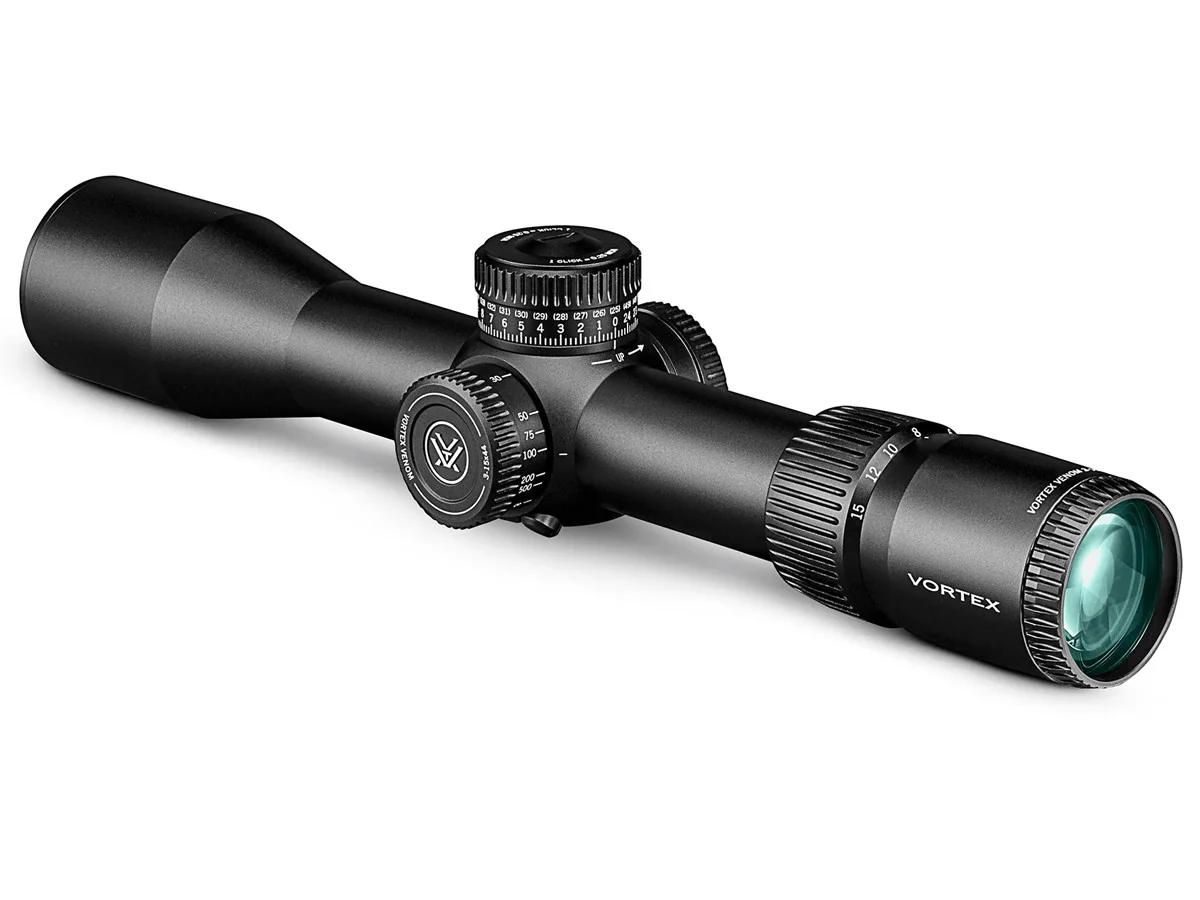
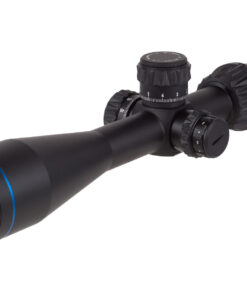
The Vortex Venom FFP Riflescope has been developed for shooters who demand dependable optical performance, precise adjustments, and a versatile first focal plane reticle system. Whether time is being spent refining skills at the range, participating in precision-oriented shooting activities, or setting up a capable long-range rifle, dependable visibility and repeatable adjustments can make a substantial difference.
Designed around Vortex Optics’ reputation for durable sporting optics, the Venom FFP platform combines clear glass, practical controls, and rugged construction within a competitively positioned package. Consequently, advanced optical features can be accessed without automatically moving into the highest-priced premium scope category.
More importantly, the first focal plane configuration allows the reticle to scale as magnification is changed. Therefore, the relationship between the target and reticle markings remains consistent throughout the magnification range. This characteristic is especially valuable when ranging references, elevation holds, or wind-related references are being interpreted through the optic.
Why Choose the Vortex Venom FFP Riflescope?
A modern precision riflescope must provide more than magnification alone. Optical clarity, mechanical repeatability, reticle usability, adjustment range, durability, and ergonomic controls must all work together. With the Vortex Venom FFP Riflescope, these characteristics have been combined into an optic designed to support confident, repeatable use.
Long-range visibility is supported by a high-magnification optical system, while a large objective lens on models such as the Venom 5-25×56 FFP is used to provide a generous viewing platform. Furthermore, the scope’s internal adjustment system has been engineered for repeatable dialing when different distances are being addressed.
At the same time, the optic has not been designed exclusively around maximum magnification. Lower settings can be selected whenever a wider field of view is preferred. As a result, the user can adapt the optic according to target size, distance, environmental conditions, and individual viewing preference.
First Focal Plane Reticle for Consistent Reference Marks
One of the defining characteristics of the Vortex Venom FFP Riflescope is its first focal plane design.
Unlike a traditional second focal plane configuration, the apparent size of an FFP reticle changes together with magnification. Because of this relationship, the reticle’s angular subtensions remain consistent throughout the zoom range.
Therefore, reference markings can be interpreted without being restricted to one specific magnification setting.
Practical Reticle Visibility
At lower magnification, a broader viewing area can be maintained. Once additional target detail is required, magnification can gradually be increased. Meanwhile, the reticle scales naturally with the image.
This arrangement can provide a more intuitive optical experience for users who regularly work at different magnification levels.
Depending on the specific model selected, MOA or MRAD configurations may be available. Matching the turret adjustment system with the chosen reticle system can also simplify calculations and corrections.
High-Quality Optical Performance
Clear target identification remains one of the most important requirements of any riflescope. For that reason, the optical system of the Vortex Venom FFP Riflescope has been designed to deliver useful clarity, contrast, and detail across its working magnification range.
Good optical performance becomes particularly important as distances increase. Fine details can become more difficult to distinguish, especially under variable lighting or atmospheric conditions. Consequently, a capable optical system helps reduce unnecessary visual strain while providing a cleaner sight picture.
Additionally, the large objective design found on the 5-25×56 configuration provides substantial light-gathering capability and supports the high-magnification platform.
Precision Turret Adjustment System
Repeatability is essential whenever turret corrections are being made.
The adjustment system used on the Vortex Venom FFP Riflescope has been developed so elevation and windage changes can be applied in controlled increments. Accordingly, corrections can be entered systematically rather than relying entirely on visual estimation.
After an adjustment has been completed, returning to an established reference setting can also be handled efficiently when the optic has been properly configured.
Furthermore, tactile and clearly defined controls help make the scope easier to operate during extended range sessions.
Side Focus for Improved Image Adjustment
Parallax management becomes increasingly relevant as magnification and distance increase. Therefore, an accessible side-focus control has been incorporated into the Venom FFP design.
Through this adjustment, the image can be refined for the selected viewing distance. Consequently, both target clarity and visual consistency can be improved.
Because the control is positioned conveniently on the scope body, adjustments can be made without significantly disrupting the user’s established position behind the optic.
Rugged Construction for Dependable Use
Optical performance means little if the housing cannot provide dependable protection.
For this reason, the Vortex Venom FFP Riflescope has been constructed around a durable main tube designed to withstand the demands typically encountered during regular sporting and range use.
A substantial tube diameter also provides room for the internal adjustment system. On the Venom 5-25×56 FFP, a 34 mm tube configuration is used.
Meanwhile, the exterior has been designed to withstand routine handling and environmental exposure when the optic is used and maintained appropriately.
Highlighted Vortex Venom FFP Riflescope Features
- First focal plane reticle configuration
- High-magnification capability for detailed viewing
- Large objective lens on the 5-25×56 model
- 34 mm main tube on the Venom 5-25×56 FFP
- MOA and MRAD reticle options depending on configuration
- Accessible side-focus adjustment
- Repeatable elevation and windage controls
- Clear and contrast-rich optical system
- Wide magnification range
- Rugged riflescope construction
- Designed for precision-oriented and recreational shooting
- Backed by Vortex’s established optics support
Comfortable Viewing Across Different Magnification Settings
A riflescope must remain usable rather than becoming unnecessarily complicated.
Accordingly, the controls of the Vortex Venom FFP Riflescope have been arranged around practical operation. Magnification can be changed according to the viewing situation, focus can be refined, and turret adjustments can be managed without excessive complexity.
At reduced magnification, the wider field of view can be useful for locating and observing targets. Conversely, higher magnification can reveal additional detail when greater precision is required.
Therefore, the same optic can accommodate a broad range of viewing requirements.
Built for Shooters Advancing Into Precision Optics
Some entry-level riflescopes provide basic magnification but offer relatively limited adjustment functionality. Premium competition optics, meanwhile, can become considerably more expensive.
The Vortex Venom FFP Riflescope occupies an appealing position between these categories.
Advanced characteristics such as a first focal plane reticle, substantial internal adjustment capability, side focus, and long-range-oriented magnification have been incorporated while accessibility has remained an important part of the platform.
As a result, the Venom can be especially attractive to someone progressing into more sophisticated precision optics.
Vortex Venom 5-25×56 FFP Configuration
The 5-25×56 version provides a particularly versatile long-range configuration.
Its 5x minimum magnification offers a useful starting point for general observation, while 25x maximum magnification provides significantly greater detail for distant viewing. Meanwhile, the 56 mm objective lens complements the high-magnification design.
Additionally, its 34 mm tube provides the structural platform required by the optic’s internal adjustment system.
Together, these characteristics create a scope designed around substantial magnification capability without abandoning useful lower-power flexibility.
A Capable Combination of Clarity, Adjustment and Value
Ultimately, the Vortex Venom FFP Riflescope combines the features many precision-oriented users expect from a modern optic: scalable FFP reticle technology, dependable adjustment controls, substantial magnification, strong construction, and practical optical clarity.
Rather than concentrating on a single specification, the Venom platform has been designed as a balanced optical system. Consequently, magnification, reticle usability, mechanical adjustments, focus control, and structural durability work together to provide a more complete viewing experience.
For buyers comparing first focal plane optics, the Venom deserves consideration because sophisticated features have been combined with straightforward operation and a comparatively accessible position within the Vortex riflescope lineup.
Whether greater magnification is being sought, an FFP reticle system is preferred, or a more capable precision optic is replacing an entry-level scope, the Vortex Venom FFP Riflescope provides a well-rounded platform built around clarity, repeatability, and long-term usability.
Premium Rangefinding Binoculars, Precision Riflescopes and Advanced Hunting Optics
Modern optical technology gives hunters, sport shooters, wildlife observers, and outdoor enthusiasts more ways to identify distant targets, measure range, and achieve a clearer field of view. Premium Leica rangefinder binoculars remain highly regarded for combining observation and ranging technology in one compact optical platform. Popular searches include Leica Geovid 10×42 rangefinder binoculars, Leica Geovid binoculars, Leica binoculars with rangefinder, Leica Geovid Pro 10×42, and Geovid Pro 10×42. Whether someone is researching a Leica Geovid rangefinder, Leica Geovid Pro rangefinder binoculars, Leica Geovid rangefinder binoculars, or the classic Leica Geovid 10×42, the Geovid family is commonly associated with high-quality glass, strong optical clarity, and practical long-distance observation.
Beyond rangefinding models, the wider Leica binoculars collection appeals to users searching for Leica small binoculars, binoculars Leica, Leica Geovid binos, Leica bino, Leica binoculars for sale, Leica bino rangefinder, Leica camera binoculars, Leica binos, or simply a Leica binocular for travel, field observation, wildlife viewing, and outdoor use. Different magnification formats, including 10×40, can suit users who want a balance between detail, portability, and field of view.
Alternative electronic binocular technologies are also becoming increasingly popular. Searches for SIG Sauer binoculars, SIG self stabilizing binoculars, SIG Sauer binos, SIG binoculars, SIG image stabilizing binoculars, SIG binocular, and SIG auto stabilizing binoculars reflect growing interest in electronically assisted viewing. Likewise, SIG Sauer self stabilized binoculars and SIG Sauer image stabilized binoculars can appeal to users who want reduced visual movement during handheld observation. Some buyers may also encounter broader search variations such as Sigma binoculars or specification terms like 11.5ee while comparing different optical products.
Precision aiming optics occupy another major part of the premium optics market. A Zeiss red dot offers a different sighting concept from traditional magnified optics, while the Nightforce ATACR line is frequently researched by users interested in premium long-range scopes. Common variants include Nightforce ATACR 5-25×56 F2, Nightforce ATACR 4-20×50, Nightforce ATACR 5-25×56 F1, and Nightforce ATACR 4-16×50. Related searches such as Night Force ATACR, ATACR scope, Nightforce attacker, ATACR 4-20, and Nightforce ATACR 4 20×50 F1 often appear when buyers are comparing magnification ranges, focal-plane configurations, turret systems, and optical performance.
At the higher end of precision optics, Tangent Theta products are frequently associated with specialist applications requiring refined mechanical adjustment and premium optical performance. Users may search for Tangent Theta scopes, Tangent scope, Tangent scopes, Theta optics, Tangent Theta scope, and Tangent optics while researching high-performance long-range systems.
The market also includes companies such as Fierce Firearms, Fierce Arms, and Fierce Optics, which may appear in searches involving hunting equipment and optical accessories. Within the Athlon category, meanwhile, one of the more detailed product searches is Midas TAC Gen2 HD 6-24×50 APLR15 FFP MOA reticle riflescope. The broader Athlon Midas TAC family, including Athlon Midas TAC 6-24×50, is often considered by users who want substantial magnification and adjustable target-focused features.
For shooters comparing larger objective and magnification configurations, terms such as 34 56, 34×56, Athlon Argos BTR Gen2 8-34×56, Athlon BTR Gen 2, Athlon Argos BTR Gen2, Athlon Argos BTR, and Athlon Argos BTR Gen 2 commonly appear during product research. Search variations such as Athalon scopes and Athens scope may also lead shoppers toward Athlon products when researching a new gun scope, Icarus scope, longest range scope, or general hunting optic.
Anyone learning how to buy a rifle scope should compare magnification range, objective diameter, reticle design, adjustment system, eye relief, optical quality, focal-plane configuration, overall weight, and intended sporting application. Terms such as AO scope can refer to adjustable-objective configurations, while models in the Athlon Ares BTR family provide additional options for users exploring precision-oriented optics.
Mid-range magnification searches frequently include 2.5×15, Avalon Aries, 2.5/15, Athlon BTR Gen 2, Athlon scopes review, Athlon reticles, 2.5-15 scope, and repeated comparisons involving Athlon Argos BTR Gen2 8-34×56 or 34×56 configurations. These searches demonstrate how buyers often compare reticles, magnification ratios, objective sizes, and scope families rather than selecting an optic solely by maximum magnification.
Low-power variable optics are another major category. Searches such as 1 10 scope, Ares ETR 1 10, 1 10 LPVO, 1-10 LPVO, 1-10 FFP LPVO, 1×10 scope, Athlon ETR, LPVO 1-8, LPVO 1-10, and 1-10 rifle scope reflect demand for versatile magnification systems. An LPVO allows users to move between low magnification for a broad field of view and higher magnification for improved observation at extended distances, making the format useful across several sporting disciplines.
For greater magnification, the Ares ETR Gen2 UHD 4.5-30×56 APRS12 FFP IR MIL reticle represents another precision-focused configuration within the Athlon range. Related product searches include Athlon 4.5-30×56, 4.5 30, Athlon ETR, and 4.5/30. The large 56 mm objective and broad magnification range make this type of optic particularly relevant to users comparing long-distance target and field optics.
Other searches such as 14×44, 2s14, Athlon BTR 2-12, 1/2×42, Athlon BTR Gen 2, 12×4.2, 2-12x, and Athlon 2 demonstrate continued demand for more compact variable-magnification formats. A 2-12x configuration, for example, can provide a useful compromise between field of view and magnified observation without requiring the size or weight of a very high-magnification optic.
Ultimately, premium optics cover far more than a single product category. Leica rangefinder binoculars and Leica Geovid binoculars combine observation with distance measurement, while stabilized SIG Sauer binoculars emphasize steady handheld viewing. Meanwhile, Nightforce ATACR, Tangent Theta scopes, and Athlon families such as the Midas TAC, Argos BTR, Ares BTR, and Ares ETR provide a wide range of magnification, reticle, and focal-plane options. By comparing optical clarity, magnification range, objective diameter, reticle format, adjustment system, physical dimensions, and intended sporting use, buyers can narrow a broad optics market into products that better match their individual requirements.
Practical Use Scenarios
A precision optic becomes most valuable when its features translate into practical advantages under realistic conditions. Magnification, reticle design, turret adjustment, optical clarity, focus control, and overall durability all contribute to how effectively an optic can be used across different shooting environments. Instead of considering specifications individually, it is more useful to understand how those characteristics work together during actual range sessions, field observation, training, and long-distance target engagement.
Whether a shooter is developing new skills or refining an established precision setup, predictable optical performance can improve consistency. Likewise, practical controls can reduce unnecessary distraction and allow more attention to be placed on target identification, environmental conditions, and stable shooting fundamentals.
Long-Range Target Shooting at the Range
One of the most common scenarios involves shooting from a controlled bench or supported position at progressively longer distances.
At shorter distances, lower magnification can initially be selected to provide a wider viewing area. This makes target acquisition straightforward while also allowing the shooter to maintain better awareness of the surrounding target zone. Once the shooting position has been established, magnification can then be increased gradually as smaller target details become more important.
For example, a shooter beginning a session at 100 yards may prefer moderate magnification for initial zero confirmation. After several groups have been completed, the target can be inspected more closely through the optic without immediately leaving the firing position.
As distance increases to 200, 300, or 500 yards, additional magnification can be introduced according to target size and atmospheric conditions.
Importantly, more magnification does not always produce better results. Heat shimmer, mirage, haze, and movement in the air can become more noticeable at high power. Therefore, practical use often involves adjusting magnification rather than simply leaving it at the maximum setting.
This flexibility allows the shooter to prioritize image stability and clarity according to actual conditions.
Zeroing a Precision Rifle Setup
Initial zeroing represents another important practical scenario.
Before longer-distance shooting can be approached confidently, a reliable reference point must first be established. The rifle is normally supported securely while the shooter fires controlled groups at a known distance.
After the first group has been evaluated, elevation and windage adjustments can be applied methodically.
Because clearly defined turret movements are available, corrections can be entered in measured increments rather than by guesswork. The shooter can therefore compare the position of the impact group with the intended point of aim and adjust accordingly.
Once the rifle has been properly zeroed, the resulting reference setting can serve as the foundation for future adjustments.
In practical terms, this creates a more organized shooting process. Instead of repeatedly estimating correction, the shooter can work from a known baseline and build confidence in the relationship between the optic, rifle, ammunition, and chosen shooting distance.
Shooting at Multiple Known Distances
A training session may involve targets positioned at several distances rather than a single fixed location.
For instance, steel or paper targets may be arranged at 100, 200, 300, and 400 yards. Under these conditions, the shooter must adapt continuously as the target distance changes.
Lower magnification can be used when moving quickly between closer targets. When attention shifts to a smaller or more distant target, magnification can be increased for a more detailed view.
Meanwhile, turret corrections can be applied when elevation changes are required. Alternatively, the reticle can be used as a visual reference depending on the shooter’s training method.
Because the reticle maintains consistent angular relationships throughout the magnification range, references remain usable even when power settings are changed.
Consequently, the shooter can develop a repeatable process for moving between targets at different distances while maintaining a consistent aiming system.
Precision Training and Skill Development
For shooters developing long-range skills, a capable optic can function as an important training tool.
During early sessions, most attention may be placed on fundamental habits such as body position, trigger control, breathing, follow-through, and stable rifle support.
As those skills improve, more advanced techniques can gradually be introduced.
The shooter may begin experimenting with elevation corrections, wind holds, different magnification levels, or target transitions. Because the optical system provides visible reference points, the relationship between adjustments and point of impact can be studied more systematically.
This can be particularly useful when learning how environmental conditions influence results.
For example, a group landing consistently to one side may be caused by wind, rifle cant, shooter input, or an incorrect adjustment. Through repeated observation and controlled changes, the shooter can begin separating these variables.
Therefore, the optic becomes more than a viewing device. It becomes part of the learning process.
Prone Shooting from a Stable Position
Prone shooting is often chosen for long-range practice because it can provide a stable platform.
Once the rifle has been supported correctly, the shooter can settle behind the optic and establish a comfortable eye position. Proper alignment becomes important because unnecessary head movement may affect visual consistency.
Moderate magnification can first be used to locate the target comfortably.
After alignment has been confirmed, greater magnification may be selected for finer aiming. Side focus can then be adjusted to refine image quality for the specific distance.
Because the shooter is operating from a stable position, small reticle movements become easier to identify.
This can help reveal subtle breathing motion, pulse movement, or inconsistent shoulder pressure. As a result, the optic can assist in diagnosing technique as well as supporting accurate aiming.
Benchrest and Supported Shooting
When used from a shooting bench, the rifle may be supported by a bipod, sandbags, front rest, or similar equipment.
This environment allows the shooter to concentrate heavily on mechanical consistency.
Higher magnification can be particularly useful when small aiming points are being used for group testing. Fine reticle references can be positioned carefully on the target, helping reduce variation in the chosen point of aim.
Furthermore, precise turret adjustments can be tested under controlled conditions.
A shooter may intentionally dial a known number of clicks, fire a group, reverse the adjustment, and verify whether the original impact position is restored. Exercises of this kind can help develop familiarity with the optic’s controls.
Bench shooting also allows ammunition performance to be compared.
When several loads are being evaluated, maintaining the same visual reference point helps reduce one potential variable. Consequently, differences in group size can be assessed more confidently.
Observation Before Taking a Shot
Practical use does not begin only when the trigger is pressed.
A substantial part of responsible shooting involves observation.
Before a target is engaged, the area should be examined carefully. Lower magnification can provide a broader view and make it easier to understand the surrounding environment.
Once a safe and appropriate target has been identified, magnification may then be increased for closer examination.
This progressive approach helps avoid the restricted visual awareness that can occur when maximum magnification is used too early.
Target details, backstop conditions, and surrounding movement can therefore be assessed more effectively.
The optic can also be used to observe conditions between shooting strings, allowing the shooter to remain aware of changes without constantly moving away from the firing position.
Working in Variable Light Conditions
Outdoor lighting can change significantly throughout a shooting session.
Bright midday sunlight may provide excellent visibility, whereas early morning, late afternoon, or overcast conditions can reduce contrast.
A larger objective lens and quality optical system can help preserve a useful image when available light becomes less intense.
However, practical adjustment is still important.
Increasing magnification excessively in dimmer conditions may make the image appear less forgiving. Therefore, reducing magnification slightly can sometimes improve the overall viewing experience.
The shooter may also adjust focus carefully to maintain a clean target image.
These small changes can make the optic more comfortable to use during extended sessions and can reduce unnecessary visual fatigue.
Managing Mirage and Heat Distortion
Warm conditions can produce visible air movement above the ground.
At longer distances, this mirage may cause the target image to appear unstable or distorted.
Although increasing magnification might initially seem like the obvious solution, excessive magnification can actually make the distortion more noticeable.
A more practical approach involves reducing magnification until the target becomes easier to interpret.
The shooter can then use the visible movement of the air as additional environmental information.
Experienced users may even observe mirage direction and intensity when estimating wind behavior downrange.
Therefore, adjustable magnification provides value not only by enlarging the target but also by allowing the image to be optimized for current atmospheric conditions.
Wind Compensation During Outdoor Practice
Wind introduces one of the most challenging variables in precision shooting.
Even when distance is known accurately, changing wind direction or speed can alter the point of impact.
During outdoor training, the shooter may observe flags, vegetation, dust, mirage, or other visible indicators.
Once a wind estimate has been made, an appropriate reticle reference or turret correction can be selected according to the user’s preferred method.
The shot can then be evaluated.
If impact occurs away from the intended point, the correction may be refined for subsequent attempts.
Through repeated practice, the shooter develops a stronger understanding of how changing conditions influence projectile movement.
A clear reticle system supports this process because corrections can be referenced systematically rather than estimated randomly.
Competition-Oriented Range Practice
A precision competition environment can require rapid transitions between distances, target sizes, and shooting positions.
Although the exact format varies, efficient optic operation becomes especially important when time is limited.
Magnification may need to be reduced before moving to a closer or wider target array. Later, additional magnification may be selected when a smaller distant target is presented.
Because the controls can be accessed without unnecessary complexity, adjustments can be incorporated into a practiced routine.
This is particularly valuable during training.
Instead of experimenting during an event, the shooter can rehearse magnification changes, turret dialing, focus adjustment, and target acquisition beforehand.
Repeated practice allows these movements to become familiar and efficient.
Testing Rifle and Ammunition Consistency
Another realistic application involves evaluating equipment performance.
A shooter who has changed ammunition, mounting hardware, stock configuration, or another component may want to confirm whether performance has changed.
By using a consistent aiming point and stable shooting position, groups can be compared more accurately.
Higher magnification can help maintain a precise reference on the target, while clear adjustments allow zero corrections to be applied when necessary.
Over several groups, patterns may become visible.
For example, vertical dispersion may suggest one issue, while horizontal spread may indicate another.
Although the optic itself does not diagnose every problem, a clear and repeatable viewing system can make testing more controlled.
Extended Range Sessions
Comfort becomes increasingly important during long shooting sessions.
An optic that requires constant repositioning or complicated adjustments can become tiring.
By contrast, practical control placement allows small changes to be made without repeatedly abandoning the shooting position.
Magnification can be adapted as conditions change, focus can be refined, and turret settings can be adjusted when distance changes.
This reduces unnecessary interruption.
Over time, such usability can contribute to more consistent training because the shooter remains focused on technique rather than fighting the equipment.
A Versatile Setup for Different Experience Levels
Beginners and experienced shooters may use the same optic differently.
A newer user may begin with basic zeroing, moderate magnification, and simple target work.
Later, more advanced reticle references and turret corrections can be introduced gradually.
An experienced shooter, meanwhile, may immediately take advantage of detailed hold references, precise adjustments, and extended-range capability.
Because the system can accommodate both approaches, the optic does not necessarily need to be replaced as the user’s skills progress.
That versatility makes it suitable for long-term development.
Ultimately, practical value is created when optical clarity, usable magnification, repeatable adjustments, stable reticle references, and durable construction work together. Across controlled range sessions, distance transitions, precision training, equipment testing, and outdoor shooting conditions, these features can provide a dependable platform for shooters who want greater confidence, consistency, and control behind the rifle.







Reviews
There are no reviews yet.