Set 3x Lenses for ATN PS31 Series Goggles – Extended Viewing Performance
Greater observation capability can be achieved with the Set 3x Lenses for ATN PS31 Series Goggles, which has been designed to extend the practical viewing range of compatible ATN PS31 night vision goggles. By increased magnification being provided, distant subjects can be observed more clearly while the familiar functionality of the PS31 platform can be retained.
For users who require more reach from their night vision equipment, a practical upgrade can therefore be provided without an entirely different optical system being purchased. Wildlife observation, property surveillance, outdoor exploration, search activities, and other low-light viewing applications can consequently be supported more effectively.
Furthermore, portability can be maintained because the lens set has been developed as an accessory for the existing goggle platform. Instead of additional night vision equipment being carried, increased optical magnification can simply be added whenever longer-distance observation is required.
Enhanced 3x Magnification for ATN PS31 Night Vision Goggles
A wider range of observation possibilities can be created when standard night vision viewing is supplemented with magnification. With the Set 3x Lenses for ATN PS31 Series Goggles, distant objects can be presented at approximately three times their normal apparent size, allowing additional visual detail to be recognized.
Because compatibility with the PS31 series has been prioritized, the lenses can be integrated into an existing night vision setup while unnecessary complexity can be minimized.
Moreover, greater flexibility can be enjoyed because the optical configuration can be adapted according to changing conditions. Standard viewing can be used whenever a broader field of view is preferred, while the 3x lenses can be selected when distant observation becomes more important.
Key Product Highlights
- 3x optical magnification is provided for extended observation
- Compatibility with ATN PS31 Series Goggles is supported
- Distant subjects can be viewed with improved apparent detail
- Nighttime observation capabilities can be expanded
- A practical accessory-based upgrade can be achieved
- Portability can be maintained without a separate observation device
- Outdoor, surveillance, wildlife, and recreational applications can be supported
- Installation and removal can be handled as viewing requirements change
- Existing PS31 night vision functionality can be complemented
- A compact optical solution can be carried with compatible equipment
More Detail Can Be Observed at Longer Distances
When subjects are positioned farther away, important visual details can become difficult to identify through standard unmagnified night vision optics. Through 3x magnification being introduced, a more detailed view can be provided.
Consequently, animals positioned across an open field can be observed more effectively. Property boundaries can also be inspected from greater distances. Likewise, landmarks, trails, equipment, and other objects can be examined without immediate physical approach being required.
Although environmental conditions will always influence night vision performance, additional optical reach can significantly improve the usefulness of compatible goggles in situations where distance becomes important.
Designed for Flexible Nighttime Observation
Versatility is especially valuable when night vision equipment is being used across changing environments. In wooded areas, close-range visibility may be preferred. Conversely, across open fields, rural properties, or large outdoor spaces, additional magnification may become considerably more useful.
With this lens set being available, equipment can therefore be configured according to the situation rather than one fixed viewing arrangement being relied upon.
As a result, the usefulness of ATN PS31 goggles can be extended across a broader variety of nighttime activities.
Practical Accessory for Existing ATN PS31 Equipment
A complete replacement night vision device does not always have to be purchased when greater viewing range is required. Instead, the capability of existing equipment can be expanded through compatible optical accessories.
The Set 3x Lenses for ATN PS31 Series Goggles has been created specifically for users who want additional magnification while their familiar PS31 system is retained.
Therefore, investment in existing equipment can be better utilized. At the same time, equipment organization can be simplified because fewer independent electronic devices may need to be transported.
Furthermore, no separate power source is generally required for optical magnification itself. The lenses function through optical enlargement, meaning the night vision system’s existing electronic operation can continue to be relied upon.
Ideal for Wildlife and Outdoor Observation
Wildlife behavior is often best observed when unnecessary movement and close physical approach are avoided. Through greater optical reach being provided, animals can be watched from more comfortable distances.
For example, wildlife positioned near tree lines, across fields, or farther along trails can be examined more easily. Consequently, movement patterns and surrounding activity can be observed while disturbance can be reduced.
Outdoor enthusiasts can also benefit when terrain, landmarks, campsites, trails, or distant objects need to be identified after sunset.
Additionally, increased magnification can be valuable during nighttime recreational observation where extra detail is preferred over the wider perspective offered by standard viewing.
Useful for Property and Security Observation
Large properties can present significant visibility challenges during darkness. When distant sections of land, structures, gates, equipment, or boundaries need to be observed, additional magnification can be beneficial.
With 3x lenses being attached to compatible PS31 goggles, farther areas can be visually examined without immediate relocation being necessary.
As a result, observation efficiency can be increased while the user’s existing night vision platform can continue being utilized.
Compact Upgrade Without Unnecessary Equipment
Space and equipment weight can quickly become important when outdoor gear is being carried for extended periods. Therefore, compact accessories are often preferred over additional full-size devices.
Instead of separate magnified night vision equipment being transported, increased viewing capability can be obtained through this lens set.
Furthermore, the lenses can be stored with compatible night vision accessories when magnification is not currently required. They can then be installed whenever a longer-distance view is desired.
This modular approach allows equipment to be adapted while the overall setup can remain relatively straightforward.
Why Choose a Set 3x Lenses for ATN PS31 Series Goggles?
Greater versatility can be gained from equipment when accessories have been selected according to real-world observation needs. With this lens set, additional optical reach can be incorporated into the ATN PS31 platform while its core night vision capability can be preserved.
Instead of being limited exclusively to the goggles’ standard viewing configuration, an alternative magnified perspective can be made available.
Therefore, the lenses can be particularly valuable for users who regularly alternate between close-range navigation and longer-range observation.
In addition, the accessory can be useful for anyone who already owns compatible PS31 equipment and wants its practical functionality to be expanded without another complete night vision system being purchased.
Built Around Convenience and Practical Use
Ease of equipment management is often considered when night vision accessories are selected. Accordingly, a lens-based upgrade can provide a relatively straightforward way of changing optical performance.
When magnification is needed, the lenses can be incorporated into the compatible setup. When a wider standard view becomes preferable, the original configuration can be restored.
Because of this adaptability, users can respond more effectively to changing environments, viewing distances, and observation goals.
Furthermore, greater control can be maintained over how the night vision equipment is configured for each activity.
Excellent Addition to a PS31 Night Vision Setup
For users who want additional range, clearer observation of distant subjects, and greater flexibility from their existing goggles, the Set 3x Lenses for ATN PS31 Series Goggles provides a highly practical optical upgrade.
Through 3x magnification being added, distant objects can be brought visually closer while compatible ATN PS31 technology can continue being used. Consequently, wildlife observation, outdoor exploration, property monitoring, nighttime surveillance, and general long-distance viewing can all be supported more effectively.
Most importantly, existing equipment does not need to be completely replaced simply because additional optical reach is desired. Instead, expanded functionality can be achieved through a compact accessory designed around the PS31 platform.
For night vision users who value versatility, portability, and longer-range viewing capability, this Set 3x Lenses for ATN PS31 Series Goggles can be considered an excellent addition to a well-equipped nighttime observation system.
Element Optics Scopes, Rangefinding Technology, Mounts, and Precision Optic Options
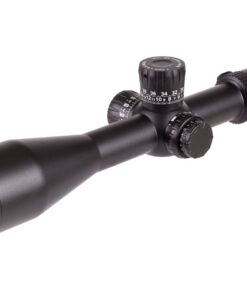
For shooters comparing modern precision optics, element theos has become an important search term, especially for people researching the theos scope and premium long-range configurations such as element theos 6-36, 36×56, and element theos 6 36×56. At the same time, more versatile configurations including element optics 2-10, element 2-10 scope, and element 2 10 scope appeal to users who prefer a wider balance between close-range visibility and higher magnification. Across the broader product family, element helix, element scopes, and related models give buyers several magnification, reticle, and mounting configurations to consider.
When researching an optics-focused scopes website, customers often compare element tactical products with equipment from another optic scope manufacturer. Product searches may also include element prism, titan scope, op element, and helix scope, particularly when comparing compact optics with traditional variable-power designs. Higher magnification options such as element optics 6-24×50 can suit users who prioritize a detailed sight picture and substantial adjustment range.
The premium range also includes the nexus scope, element nexus scopes, and broader nexus scopes category. Searches for nexus tactical equipment frequently lead buyers toward the nexus 4-25×50, while the element titan provides another recognizable alternative. Users comparing a 5-25 scope, 25/56, titan 5, or theos 2-10 generally look closely at optical clarity, turret construction, reticle layout, focal-plane configuration, adjustment tracking, and overall build quality. Consequently, search phrases such as element titan 5 25×56 ffp review and titan25 are commonly associated with buyers researching the Titan platform in greater detail.
Another frequently researched configuration is the element helix 6 24×50, particularly alongside the element nexus gen 2. Although these optics occupy different positions within a product range, potential buyers often compare their specifications before choosing an appropriate design. Reticle selection is equally important, which explains continued interest in rifle scope reticles, while electronic tools such as a ballistic rangefinder can complement a modern optic setup. Some search queries also contain unusual specification formats such as 12×4/2, so checking the manufacturer’s exact specifications remains important before interpreting any numerical value.
Versatile magnification searches commonly include 2-12 scope and 2×12 scope. Meanwhile, terms such as element vision, spectrum element, and even prismatic scale of the elements can appear alongside optics-related searches. A prismatic scope differs structurally from a conventional variable-power riflescope because it uses a prism-based optical system rather than the same internal lens arrangement typically associated with traditional scope designs. Searches for element 3.0 may likewise refer to product generations, technical updates, or model-specific terminology, depending on the context.
Technology-focused users may also investigate element rf and element range products. Within the variable-power category, element theos 2-10 and element theos 2 10 provide alternative search formats for the same general magnification class. Similarly, element 2-10, 10 optic, 2-10 optic, and 2-10x scope describe configurations shoppers may encounter while comparing compact and medium-range optics. Buyers interested in first-focal-plane systems may specifically search for a 2-12 scope ffp, while terms such as fffp 2 can appear as alternate or mistyped search variations.

The Helix family attracts additional attention through searches for helix hd 2 16×50 and hdlr, whereas Titan users frequently research element titan 3 18×50 and element titan 3-18×50. These mid-range magnification configurations can provide a useful compromise between field of view and target detail. The Theos family is also represented by theos 2-10×42 ffp, which combines a practical magnification range with first-focal-plane terminology commonly sought by experienced optics buyers.
Search specifications such as 10×40, .10×40, and 14×50 may describe magnification and objective-lens formats, although exact interpretation should always be checked against official product information. People asking what is a prismatic scope are generally trying to understand how prism optics differ from traditional scope architecture. As with the phrase prismatic scale of the elements, search-engine terminology can occasionally mix scientific and optical expressions, so context matters when evaluating results.
Another product-related term is element hyper 7, together with searches for hqp7-rf-2 specifications details. Users researching newer optical or rangefinding systems may encounter these model codes while comparing technical features, dimensions, mounting options, display systems, or rangefinding capability. The terms element ll and 3×18 can also appear in searches associated with optics or magnification specifications.
For users focused specifically on the 3-18 magnification class, search phrases include 3-18 scopes, 3-18, nightforce 3-18, best 3-18 scopes, and 3×18 scope. Even unusual formatting such as 3:18 may be entered when shoppers are trying to locate comparable models. Regardless of brand, important evaluation factors include image resolution, eye relief, turret repeatability, mechanical reliability, reticle visibility, and low-light performance.
Optical quality also involves controlling distortion and color fringing. Therefore, someone researching chromatic aberration scope performance may be evaluating how effectively a particular optic manages unwanted color separation around high-contrast objects. Better glass, coatings, internal design, and manufacturing tolerances can all influence perceived image quality.
Scope Mounts, Rings, Rangefinders, and Accessory Compatibility
A precision optic also depends on a reliable mounting system. Searches for element mount, dovetail scope mount, and dovetail rings usually reflect the need to match an optic to the appropriate rail or receiver interface. Correct ring diameter, mounting height, rail type, and clearance should always be verified against the optic and platform specifications before purchase.
Electronic rangefinding accessories have expanded the number of configurations available. A picatinny mounted rangefinder or picatinny range finder can be mounted on compatible rail systems, while a rifle rangefinder provides distance information separately or as part of an integrated setup. Search phrases such as weapon mounted range finder, laser range finder for rifle, and rifle range finder generally refer to compact ranging technology intended to provide distance measurements.
Integrated technology has also increased interest in scopes with rangefinders built in, a rangefinder scope for rifle, and a rangefinding rifle scope. These products can combine optical magnification with electronic distance measurement in a single system. Buyers may encounter abbreviations such as wmlrf, while searches for a weapon mounted ballistic calculator or arken wmlrf usually indicate interest in systems that combine ranging information with additional electronic calculations or data.
Mounting accessories deserve equal attention because stability and alignment influence the overall optic installation. A 34mm diving board mount can provide an accessory mounting surface above or around a compatible optic. Similarly, a 34mm scope mount with diving board combines the primary scope mounting structure with an additional accessory interface. The broader term diving board scope mount is frequently used when researching this style of configuration.
Practical Use Scenarios
The Set 3x Lenses for ATN PS31 Series Goggles can be particularly useful when standard unmagnified night vision does not provide enough visual reach for the situation. By additional optical magnification being introduced, distant subjects can be observed more comfortably while the familiar PS31 platform can still be used.
Different environments place different demands on night vision equipment. In some locations, a wide field of view is preferred because nearby movement and surrounding terrain must be monitored. In other situations, however, greater distance becomes more important. With 3x magnification available, the viewing configuration can be adapted more effectively to changing conditions.
Rather than a completely separate magnified night vision device being carried, the existing goggles can be equipped with additional optical capability whenever required. As a result, outdoor observation, wildlife watching, rural property monitoring, nighttime exploration, and other low-light activities can be handled with greater flexibility.
Observing Wildlife Across Open Fields
Wildlife observation is one of the most practical applications for magnified night vision optics. Animals frequently become more active after sunset, while natural darkness can make distant identification considerably more difficult.
Imagine an observer positioned near the edge of a large field during the evening. Standard night vision may allow movement to be detected, but smaller details can remain difficult to distinguish when an animal is located much farther away.
Once the 3x lenses have been fitted, the distant subject can be presented at a larger apparent size. Consequently, body shape, direction of movement, and general behavior may be easier to observe without the animal being approached.
This greater viewing distance can be especially useful when deer, wild boar, foxes, coyotes, or other nocturnal wildlife are being monitored. Instead of unnecessary movement being made through the environment, observation can be performed from a more comfortable stationary position.
Furthermore, disturbance can be reduced because less physical approach may be required. For photographers, wildlife enthusiasts, landowners, and researchers, that advantage can make nighttime observation more controlled and practical.
Monitoring a Large Rural Property
Large properties often contain areas that cannot be inspected easily from one position. Gates, fences, sheds, equipment, livestock areas, and field boundaries may be located hundreds of feet away from the observer.
At night, these distances become even more challenging.
For example, a property owner may hear unusual movement near a distant gate or storage area. Through standard unmagnified goggles, the general area could potentially be viewed, but additional visual detail may still be desired.
With 3x magnification being added, distant objects can be inspected more closely before the user decides whether physical movement toward the area is necessary.
As a result, unnecessary walking around a property in darkness can be reduced. Areas of interest can first be examined visually, allowing a more informed decision to be made.
The same configuration can be useful for checking livestock enclosures, equipment shelters, perimeter fencing, or other property features after sunset.
Moreover, because the magnification is provided through an accessory rather than a completely separate night vision system, the existing equipment setup can remain relatively compact.
Watching Livestock During Nighttime Hours
Farmers and rural property owners may occasionally need to check livestock during darkness. Animals can become restless, fences can be damaged, or unusual activity can occur in distant sections of a field.
When a herd is located some distance away, standard night vision can provide general awareness. However, closer visual inspection may still be needed.
By 3x lenses being used, animals can be viewed at increased apparent size. Consequently, movement patterns and general positioning can be monitored with greater clarity from a distance.
For example, a farmer standing near a barn may be able to examine cattle, sheep, goats, or horses farther across a pasture without immediately walking through the entire field.
Likewise, if one animal appears separated from the group, magnified observation can help determine whether closer inspection should be performed.
Although magnification cannot replace proper animal care or physical inspection when needed, it can provide a valuable first look before action is taken.
Nighttime Hiking and Trail Observation
Outdoor exploration after sunset presents a different set of challenges. Trails can become difficult to interpret, terrain features may blend into darkness, and distant landmarks can become harder to identify.
During a nighttime hike, standard night vision may be preferred for general movement because a wider field of view is often useful. Nevertheless, situations can arise where greater optical reach becomes valuable.
For example, an unclear object may be visible farther along a trail. Instead of immediately approaching it, the observer can switch to magnified viewing.
The 3x lenses can then be used to inspect the object from a greater distance.
Similarly, trail signs, tree lines, rock formations, shelters, and distant landmarks may be easier to recognize when additional magnification has been applied.
Once the distant inspection has been completed, the wider standard configuration can again be used for navigation.
This ability to alternate between viewing styles can make a modular optical setup particularly useful for outdoor enthusiasts.
Observing Campsites and Surrounding Terrain
Camping environments can change significantly once darkness arrives. Sounds can travel farther, wildlife may move near the campsite, and objects located beyond the immediate camp area can become difficult to identify.
If movement is noticed near a tree line or farther across an open area, magnified night vision can provide a more detailed view.
Instead of leaving the campsite immediately, the surrounding terrain can first be observed from a safe and stable position.
For instance, an animal moving along the edge of a field may be recognized more easily when 3x magnification is used. Likewise, another camper, parked vehicle, trail marker, or piece of equipment may be distinguished from background objects.
Because nighttime campsite awareness often involves alternating between nearby and distant observation, removable magnification can be especially practical.
Scanning the Edge of a Forest
Forest edges are common areas for wildlife activity because open ground and dense vegetation meet within a relatively narrow zone.
However, animals positioned near a distant tree line can be difficult to identify through standard optics.
In this scenario, the observer may be positioned across a field while movement is noticed near the forest edge. By the 3x lenses being installed, the area can be examined more closely without physical approach.
Shapes that initially appear vague can become easier to interpret.
Additionally, gaps between trees, brush lines, and open pathways can be observed with greater apparent detail. This may allow movement to be followed more effectively as animals travel between vegetation and open ground.
The advantage becomes particularly noticeable when the observer must remain in one location for extended periods.
Nighttime Observation from a Cabin or Fixed Position
A cabin, observation shelter, elevated platform, or other fixed location provides another practical environment for 3x night vision magnification.
Because the observer is stationary, distant areas can be watched repeatedly over long periods.
For example, a person positioned inside a rural cabin may want to observe a field, tree line, driveway, or livestock area outside.
Standard night vision can provide a broad overview. However, once activity is detected, additional magnification can be used to examine the specific area.
This combination of wide-area observation followed by magnified inspection can make monitoring more efficient.
Furthermore, because the user remains in a fixed position, optical magnification can be used without the same movement-related challenges that may occur during active walking.
Checking Distant Equipment and Structures
Outdoor equipment is often stored across large properties, farms, campsites, or work areas. Machinery, vehicles, trailers, sheds, water tanks, generators, and other objects may need to be visually checked after dark.
Instead of immediately walking to each location, magnified night vision can provide an initial inspection.
For instance, a vehicle parked at the opposite end of a property may be viewed to determine whether its doors appear closed or whether nearby movement can be seen.
Likewise, a storage shed can be examined from a distance before the user walks toward it.
Although fine mechanical inspection cannot be performed through night vision optics alone, general visual checks can still be made more efficiently.
This can save time while reducing unnecessary movement in darkness.
Observing Shorelines and Lakeside Areas
Lakes, rivers, and shorelines provide large open viewing distances where 3x magnification can become particularly useful.
A person camping or staying near a lake may notice movement along the opposite shoreline or near the water’s edge.
Through standard night vision, the movement may be visible but difficult to identify.
By additional optical magnification being introduced, distant shoreline activity can be examined more closely.
Wildlife such as deer, waterfowl, or other animals may be easier to observe. Boats, docks, shelters, and shoreline landmarks may also become easier to distinguish.
Because water often creates wide unobstructed viewing spaces, magnification can provide a noticeable advantage compared with close-range woodland environments.
Outdoor Search and Observation Activities
Nighttime searches sometimes require broad areas to be visually scanned before closer inspection is performed.
For example, a lost piece of outdoor equipment may need to be located across a campsite, field, or rural property.
At first, standard viewing can be used to scan the environment.
Once a possible object has been detected, the 3x lenses can be used for closer visual confirmation.
This method can help reduce unnecessary walking between multiple possible locations.
Similarly, reflective surfaces, equipment shapes, trail markers, or other distinctive objects may become easier to recognize when the apparent image size has been increased.
Observing Movement Along a Driveway or Access Road
Long rural driveways and private access roads can be difficult to observe at night, particularly when outdoor lighting is limited.
If movement is detected at a distant entrance, additional magnification can help provide a clearer view.
A vehicle, animal, or person moving along the road may be observed from farther away.
Moreover, gates, parked equipment, roadside structures, and surrounding vegetation can be inspected without immediate approach.
For property owners, campground operators, or people staying in remote locations, this additional viewing reach can provide useful situational awareness.
Supporting Nighttime Photography Preparation
Nighttime photographers sometimes need to locate wildlife or identify suitable subjects before camera equipment is positioned.
Rather than constantly repositioning the camera setup, night vision can be used first to scan the surrounding environment.
Once movement has been detected, the 3x lenses can provide a closer look.
This allows the photographer to determine whether the subject is worth approaching or whether camera equipment should be redirected.
Additionally, wildlife movement patterns can be monitored from farther away before photographic activity begins.
Because unnecessary disturbance can reduce photography opportunities, the ability to observe from greater distances can be highly valuable.
Stargazing Support and General Night Observation
Although dedicated astronomical equipment is better suited to detailed stargazing, night vision devices can still be used for general nighttime observation.
With added magnification, distant terrestrial objects beneath the night sky can be examined more closely.
For instance, silhouettes along ridgelines, distant buildings, observation towers, or landscape features can be viewed with greater apparent size.
This makes the accessory useful not only for a specific task but also for recreational nighttime viewing.
Adapting Between Close and Distant Viewing
One of the most important practical advantages is flexibility.
Not every situation benefits from magnification.
While walking through dense woodland, a broader viewing perspective may be preferred because nearby obstacles and surrounding terrain must remain visible.
However, once the user reaches an open clearing or notices an object at a distance, additional optical reach may become much more valuable.
By the lenses being fitted only when required, the PS31 system can be adapted to both situations.
This flexibility allows users to select the optical configuration that best matches the immediate environment instead of being restricted to one viewing style.
Long-Range Observation from Elevated Ground
Elevated observation points can provide excellent visibility over large areas.
From a hillside, lookout, tower, or raised platform, distant terrain can already be seen more easily because fewer obstacles are present.
When 3x magnification is added, this advantage can be extended further.
Fields, roads, forest edges, buildings, livestock areas, and distant movement can be examined more closely.
Because the observer is often stationary in these situations, the magnified view can be used comfortably while specific areas are monitored.
A Practical Upgrade for Existing Equipment
Ultimately, the greatest practical benefit is that additional viewing capability can be added without an entirely separate night vision system being purchased or carried.
The existing ATN PS31 setup can remain the foundation of the user’s equipment, while 3x lenses can be introduced whenever additional optical reach is required.
Whether wildlife is being watched across an open field, livestock are being checked from a barn, a distant trail is being examined, or movement around a rural property is being observed, the magnification can provide a useful alternative to standard viewing.
As conditions change, the optical setup can be changed as well.
Consequently, more flexibility can be gained from one night vision platform, while additional equipment bulk can be kept under control. For users who frequently move between close-range awareness and longer-distance observation, this versatility can make the 3x lens set a particularly practical addition to their nighttime equipment.
Smaller tube systems may use a 30mm diving board mount, while scope diving board searches often refer to elevated accessory rails designed to position compatible devices above an optic. Traditional mounting searches also include picatinny scope rings, 30mm scope mount picatinny, 30mm picatinny scope rings, and picatinny scope mounts. Matching the correct ring diameter and rail standard is essential because a 30mm tube, 34mm tube, dovetail rail, and Picatinny interface are not interchangeable without the appropriate hardware.
Protection is another important consideration once an optic has been mounted. tenebraex scope caps and tenebraex scope covers can help protect exposed lenses when compatible with the selected optic. A flexible allen neoprene scope cover provides another style of external protection for storage and transport. Users running dovetail systems may instead be comparing 30mm dovetail scope rings with other dovetail scope mounts.
Ultimately, choosing between Element Optics families requires more than comparing magnification numbers alone. Whether researching Theos, Helix, Titan, Nexus, Prism, RF technology, rangefinding equipment, or mounting accessories, buyers should evaluate optical clarity, reticle design, adjustment range, focal-plane configuration, tube diameter, rail compatibility, physical dimensions, protective accessories, and manufacturer specifications. Doing so makes it easier to identify an optic and mounting system that properly matches the intended application while avoiding compatibility problems caused by relying solely on product names or search terminology.



Reviews
There are no reviews yet.