Hi-Lux PR5 5-25X56 Rifle Scope, FFP, Zero Stop, 0.1 Mil
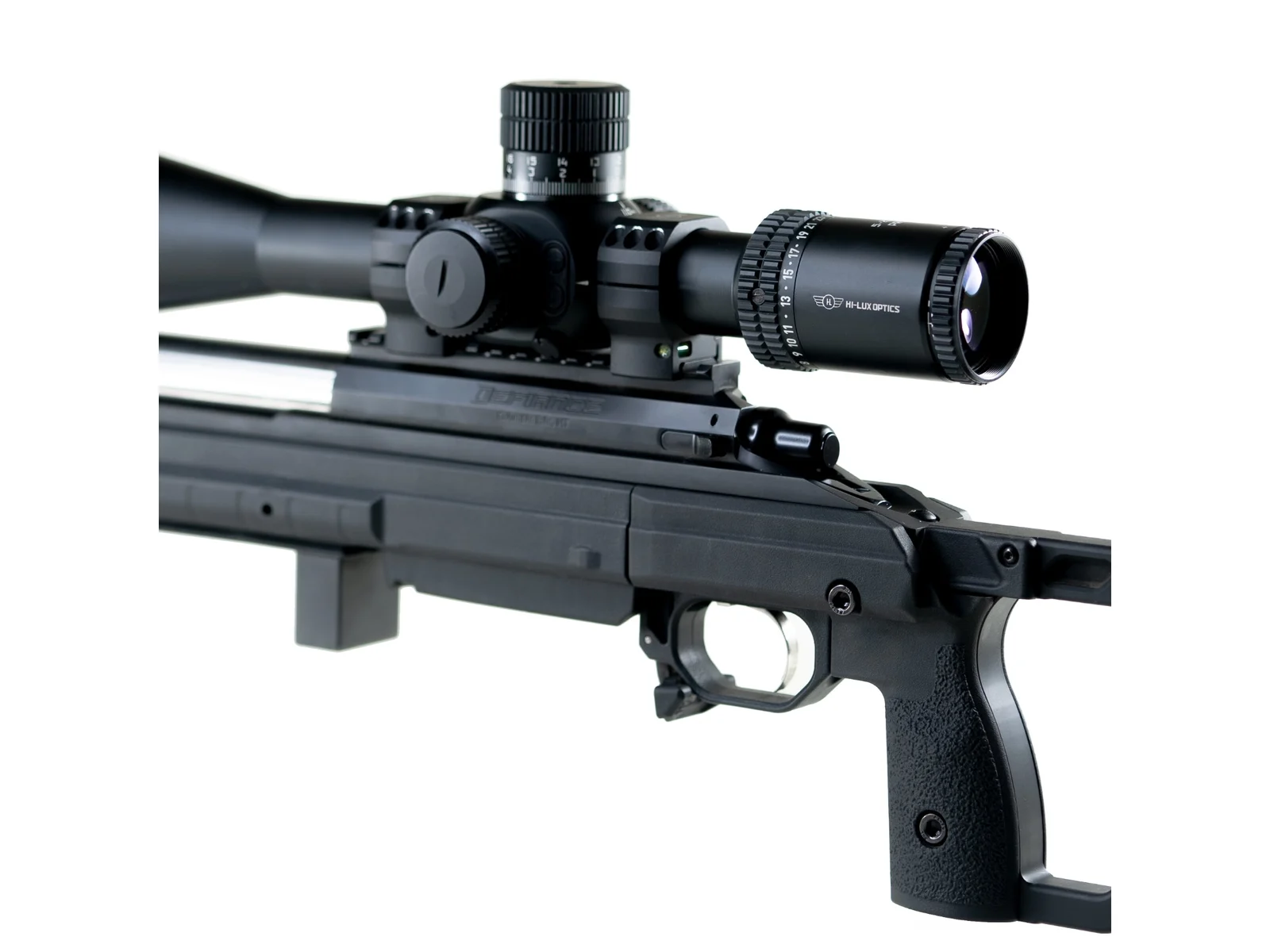
The Hi-Lux PR5 5-25X56 Rifle Scope, FFP, Zero Stop, 0.1 Mil has been engineered for shooters who demand dependable optical clarity, repeatable adjustments, and long-range precision from a modern riflescope. With a versatile 5X to 25X magnification range, a large 56 mm objective lens, and a sophisticated first focal plane reticle system, impressive performance can be achieved across demanding shooting environments.
Because precision shooting requires much more than magnification alone, premium optical components have been incorporated throughout the PR5. Extra-low-dispersion glass has been used to improve image quality, while an APO objective design has been incorporated to reduce chromatic aberration. Consequently, greater detail can be observed when targets are viewed at extended distances.
Furthermore, a rugged 34 mm one-piece tube has been machined from 7075-T6 aluminum, allowing excellent structural rigidity to be maintained. Therefore, the scope can be trusted when consistent performance is required during range sessions, competitions, or challenging field use.
Precision-Focused 5-25X Magnification
A broad 5-25X magnification range has been provided so that different shooting distances can be accommodated effectively. At 5X, a wider field of view can be maintained for target acquisition and observation. Meanwhile, when additional detail is needed, magnification can gradually be increased to 25X.
As a result, the Hi-Lux PR5 can be adapted to a variety of precision-oriented applications without requiring frequent optic changes.
Additionally, a 56 mm objective lens has been fitted to help maximize available light. Improved image brightness can therefore be maintained in changing environmental conditions. When distant targets are being examined, the combination of magnification and light-gathering capability can provide a more comfortable viewing experience.
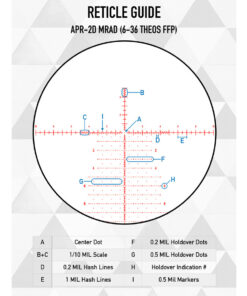
First Focal Plane TRACR Reticle
With the first focal plane TRACR reticle, reticle subtensions are kept proportional as magnification is changed. Consequently, MRAD-based measurements and reference points can remain useful throughout the magnification range.
Rather than being limited to a particular magnification setting, shooters can therefore select an appropriate power level while retaining consistent reticle references.
Furthermore, holdover information has been incorporated along the principal axes and throughout the Christmas-tree-style reticle structure. Therefore, visual reference points can be used efficiently whenever rapid corrections are preferred over turret adjustments.
0.1 MRAD Precision Adjustments
Fine adjustment capability has been provided through 0.1 MRAD click values. Because small and predictable corrections can be made, precise elevation and windage settings can be established more conveniently.
Moreover, push/pull locking turret functionality has been incorporated to help prevent unintended movement. Once settings have been selected, the turrets can therefore be secured until further adjustment is required.
Stainless-steel internal components have also been used within the adjustment system. As a result, reliable and repeatable turret operation has been emphasized for shooters who frequently dial elevation and windage.

Zero Stop for Fast Return to Zero
A practical zero-stop elevation turret has been included so that a previously established zero can be returned to quickly after elevation adjustments have been made.
During long-range shooting, considerable elevation may sometimes be dialed. Consequently, returning manually through several rotations can create unnecessary uncertainty. With the zero-stop system, however, the turret can be brought back toward the established zero position with greater confidence.
Both adjustment turrets can also be re-indexed after sight-in. Therefore, a cleaner reference point can be maintained for future corrections.
ED Glass and APO Objective Technology
Optical quality has been given considerable attention throughout the Hi-Lux PR5 design. Extra-low-dispersion glass has been incorporated to help control color fringing and improve image definition.
In addition, an APO objective has been used. Through this optical configuration, chromatic aberration can be reduced, allowing colors and fine details to be reproduced more accurately.
Because target recognition becomes increasingly challenging as distance increases, better optical correction can provide a meaningful advantage. Accordingly, enhanced clarity can be maintained when small visual details need to be identified.
Side Parallax Adjustment From 10 Yards to Infinity
Parallax adjustment has been provided from approximately 10 yards to infinity. Therefore, the optical system can be refined for both relatively short distances and extended-range viewing.
By properly setting parallax, apparent reticle movement can be minimized when eye position changes slightly behind the optic. As a result, greater consistency can be encouraged during precision shooting.
Additionally, the broad adjustment range can make the scope useful across several shooting disciplines where target distances may vary substantially.
Large 34 mm One-Piece Scope Tube
Durability has been supported through a substantial 34 mm tube diameter. The body has been manufactured from 7075-T6 aluminum bar stock, allowing rigidity and concentricity to be maintained.
Because long-range optics may be exposed to transportation, recoil, outdoor conditions, and repeated adjustment, structural integrity becomes especially important. Therefore, a robust housing has been employed to protect the internal optical and mechanical systems.
Furthermore, approximately 32 MRAD, or 110 MOA, of internal elevation adjustment has been provided. This generous adjustment range can be especially valuable when significant trajectory compensation is required.
Illuminated Reticle for Changing Light Conditions
Reticle illumination has also been included within the PR5 platform. Therefore, additional reticle visibility can be obtained when contrast becomes limited.
Multiple illumination settings can be selected depending on environmental conditions. Moreover, low illumination levels have been designed with night-vision compatibility in mind.
As lighting changes throughout a shooting session, the reticle can consequently be configured for improved visibility without unnecessarily overwhelming the target image.
Comfortable Eye Relief and Practical Field of View
Approximately 3.5 inches of eye relief has been provided to support a comfortable viewing position behind the optic.
At 100 yards, the field of view extends from approximately 24 feet at 5X to approximately 4.8 feet at 25X. Therefore, a wider scene can initially be observed at low magnification before greater target detail is obtained at higher magnification.
Because magnification changes may need to be performed quickly, an included throw lever can also be attached to the magnification ring.
Highlighted Product Features
- 5-25X variable magnification
- 56 mm objective lens
- First focal plane TRACR MRAD reticle
- 0.1 MRAD adjustment clicks
- Zero-stop elevation turret
- Push/pull locking turrets
- Approximately 32 MRAD / 110 MOA elevation adjustment
- 34 mm one-piece scope tube
- 7075-T6 aluminum construction
- Extra-low-dispersion ED glass
- APO objective system
- 10-yard-to-infinity parallax adjustment
- Illuminated reticle
- Approximately 3.5-inch eye relief
- Sunshade included
- Throw lever included
- Flip-up lens covers included
- Designed for precision and extended-range optical performance
Built for Serious Precision Optics Users
For anyone seeking an advanced variable-power optic, the Hi-Lux PR5 5-25X56 Rifle Scope, FFP, Zero Stop, 0.1 Mil offers a well-balanced combination of optical quality, precision adjustment capability, and rugged construction.
Unlike simpler scopes that may emphasize magnification without equally sophisticated mechanical systems, the PR5 has been developed around both optical and adjustment performance. Consequently, dependable tracking, useful reticle references, and high-resolution viewing can be combined within one platform.
Furthermore, the generous adjustment range can support applications where substantial elevation correction may be required. At the same time, locking turrets and a zero-stop mechanism can simplify repeated adjustments.
Why Choose the Hi-Lux PR5 5-25X56?
Greater confidence can be achieved when an optic delivers clear images and predictable controls. For that reason, the PR5 has been equipped with premium ED glass, first focal plane functionality, precise MRAD adjustments, and a mechanically robust housing.
Additionally, essential accessories are already supplied. A sunshade can be used to reduce distracting glare, while flip-up covers can help protect the lenses. Meanwhile, the throw lever can make magnification changes more convenient.
Ultimately, the Hi-Lux PR5 5-25X56 Rifle Scope, FFP, Zero Stop, 0.1 Mil provides a feature-rich optical solution for shooters who value clarity, repeatability, and carefully engineered controls. Through its 5-25X magnification range, 56 mm APO objective, TRACR FFP reticle, locking 0.1 MRAD turrets, and durable 34 mm body, long-range optical capability has been packaged into a highly versatile riflescope.
For buyers comparing premium precision optics, the Hi-Lux PR5 deserves consideration when dependable tracking, clear glass, extensive adjustment capability, and practical long-range features are priorities.
Element Optics Scopes, Rangefinding Technology, Mounts, and Precision Optic Options
For shooters comparing modern precision optics, element theos has become an important search term, especially for people researching the theos scope and premium long-range configurations such as element theos 6-36, 36×56, and element theos 6 36×56. At the same time, more versatile configurations including element optics 2-10, element 2-10 scope, and element 2 10 scope appeal to users who prefer a wider balance between close-range visibility and higher magnification. Across the broader product family, element helix, element scopes, and related models give buyers several magnification, reticle, and mounting configurations to consider.
When researching an optics-focused scopes website, customers often compare element tactical products with equipment from another optic scope manufacturer. Product searches may also include element prism, titan scope, op element, and helix scope, particularly when comparing compact optics with traditional variable-power designs. Higher magnification options such as element optics 6-24×50 can suit users who prioritize a detailed sight picture and substantial adjustment range.
The premium range also includes the nexus scope, element nexus scopes, and broader nexus scopes category. Searches for nexus tactical equipment frequently lead buyers toward the nexus 4-25×50, while the element titan provides another recognizable alternative. Users comparing a 5-25 scope, 25/56, titan 5, or theos 2-10 generally look closely at optical clarity, turret construction, reticle layout, focal-plane configuration, adjustment tracking, and overall build quality. Consequently, search phrases such as element titan 5 25×56 ffp review and titan25 are commonly associated with buyers researching the Titan platform in greater detail.
Another frequently researched configuration is the element helix 6 24×50, particularly alongside the element nexus gen 2. Although these optics occupy different positions within a product range, potential buyers often compare their specifications before choosing an appropriate design. Reticle selection is equally important, which explains continued interest in rifle scope reticles, while electronic tools such as a ballistic rangefinder can complement a modern optic setup. Some search queries also contain unusual specification formats such as 12×4/2, so checking the manufacturer’s exact specifications remains important before interpreting any numerical value.
Versatile magnification searches commonly include 2-12 scope and 2×12 scope. Meanwhile, terms such as element vision, spectrum element, and even prismatic scale of the elements can appear alongside optics-related searches. A prismatic scope differs structurally from a conventional variable-power riflescope because it uses a prism-based optical system rather than the same internal lens arrangement typically associated with traditional scope designs. Searches for element 3.0 may likewise refer to product generations, technical updates, or model-specific terminology, depending on the context.
Technology-focused users may also investigate element rf and element range products. Within the variable-power category, element theos 2-10 and element theos 2 10 provide alternative search formats for the same general magnification class. Similarly, element 2-10, 10 optic, 2-10 optic, and 2-10x scope describe configurations shoppers may encounter while comparing compact and medium-range optics. Buyers interested in first-focal-plane systems may specifically search for a 2-12 scope ffp, while terms such as fffp 2 can appear as alternate or mistyped search variations.
The Helix family attracts additional attention through searches for helix hd 2 16×50 and hdlr, whereas Titan users frequently research element titan 3 18×50 and element titan 3-18×50. These mid-range magnification configurations can provide a useful compromise between field of view and target detail. The Theos family is also represented by theos 2-10×42 ffp, which combines a practical magnification range with first-focal-plane terminology commonly sought by experienced optics buyers.
Search specifications such as 10×40, .10×40, and 14×50 may describe magnification and objective-lens formats, although exact interpretation should always be checked against official product information. People asking what is a prismatic scope are generally trying to understand how prism optics differ from traditional scope architecture. As with the phrase prismatic scale of the elements, search-engine terminology can occasionally mix scientific and optical expressions, so context matters when evaluating results.
Another product-related term is element hyper 7, together with searches for hqp7-rf-2 specifications details. Users researching newer optical or rangefinding systems may encounter these model codes while comparing technical features, dimensions, mounting options, display systems, or rangefinding capability. The terms element ll and 3×18 can also appear in searches associated with optics or magnification specifications.
For users focused specifically on the 3-18 magnification class, search phrases include 3-18 scopes, 3-18, nightforce 3-18, best 3-18 scopes, and 3×18 scope. Even unusual formatting such as 3:18 may be entered when shoppers are trying to locate comparable models. Regardless of brand, important evaluation factors include image resolution, eye relief, turret repeatability, mechanical reliability, reticle visibility, and low-light performance.
Optical quality also involves controlling distortion and color fringing. Therefore, someone researching chromatic aberration scope performance may be evaluating how effectively a particular optic manages unwanted color separation around high-contrast objects. Better glass, coatings, internal design, and manufacturing tolerances can all influence perceived image quality.
Scope Mounts, Rings, Rangefinders, and Accessory Compatibility
A precision optic also depends on a reliable mounting system. Searches for element mount, dovetail scope mount, and dovetail rings usually reflect the need to match an optic to the appropriate rail or receiver interface. Correct ring diameter, mounting height, rail type, and clearance should always be verified against the optic and platform specifications before purchase.
Electronic rangefinding accessories have expanded the number of configurations available. A picatinny mounted rangefinder or picatinny range finder can be mounted on compatible rail systems, while a rifle rangefinder provides distance information separately or as part of an integrated setup. Search phrases such as weapon mounted range finder, laser range finder for rifle, and rifle range finder generally refer to compact ranging technology intended to provide distance measurements.
Integrated technology has also increased interest in scopes with rangefinders built in, a rangefinder scope for rifle, and a rangefinding rifle scope. These products can combine optical magnification with electronic distance measurement in a single system. Buyers may encounter abbreviations such as wmlrf, while searches for a weapon mounted ballistic calculator or arken wmlrf usually indicate interest in systems that combine ranging information with additional electronic calculations or data.
Mounting accessories deserve equal attention because stability and alignment influence the overall optic installation. A 34mm diving board mount can provide an accessory mounting surface above or around a compatible optic. Similarly, a 34mm scope mount with diving board combines the primary scope mounting structure with an additional accessory interface. The broader term diving board scope mount is frequently used when researching this style of configuration.
Smaller tube systems may use a 30mm diving board mount, while scope diving board searches often refer to elevated accessory rails designed to position compatible devices above an optic. Traditional mounting searches also include picatinny scope rings, 30mm scope mount picatinny, 30mm picatinny scope rings, and picatinny scope mounts. Matching the correct ring diameter and rail standard is essential because a 30mm tube, 34mm tube, dovetail rail, and Picatinny interface are not interchangeable without the appropriate hardware.
Protection is another important consideration once an optic has been mounted. tenebraex scope caps and tenebraex scope covers can help protect exposed lenses when compatible with the selected optic. A flexible allen neoprene scope cover provides another style of external protection for storage and transport. Users running dovetail systems may instead be comparing 30mm dovetail scope rings with other dovetail scope mounts.
Ultimately, choosing between Element Optics families requires more than comparing magnification numbers alone. Whether researching Theos, Helix, Titan, Nexus, Prism, RF technology, rangefinding equipment, or mounting accessories, buyers should evaluate optical clarity, reticle design, adjustment range, focal-plane configuration, tube diameter, rail compatibility, physical dimensions, protective accessories, and manufacturer specifications. Doing so makes it easier to identify an optic and mounting system that properly matches the intended application while avoiding compatibility problems caused by relying solely on product names or search terminology.
Frequently Asked Questions
What type of shooting is this scope best suited for?
This optic is designed primarily for precision-focused shooting where clear target identification, repeatable adjustments, and flexible magnification are important. Because a broad magnification range is provided, the optic can be adapted to different distances without frequent equipment changes. It can therefore be considered for target shooting, competition-style use, long-range practice, and other lawful precision applications where a detailed sight picture is preferred.
At lower magnification, a wider field of view can be maintained. Meanwhile, higher magnification can be selected whenever more detailed observation is required. As a result, a useful balance between situational awareness and precise aiming can be achieved.
What does first focal plane mean?
In a first focal plane design, the reticle appears to change size as magnification is increased or decreased. Because the reticle scales together with the target image, its measurement references remain proportional throughout the magnification range.
This can be especially useful for users who rely on reticle-based measurements or correction references. Instead of being limited to one specific magnification setting, the reticle can remain functionally consistent across different power levels. Consequently, the optic can provide greater flexibility when shooting distances change frequently.
What is the benefit of a 5-25X magnification range?
A 5-25X range provides considerable flexibility. At 5X, a larger portion of the surrounding area can be viewed, which can make target acquisition easier. As magnification is increased, smaller details can be observed more clearly.
At 25X, distant targets can be examined with significantly greater visual detail. Therefore, users can adjust the image scale to suit the distance, target size, and environmental conditions. Rather than relying on a fixed magnification level, a broad variable range provides a more adaptable viewing experience.
Why is a 56 mm objective lens useful?
A large objective lens is designed to collect a substantial amount of available light. As a result, a brighter sight picture can be produced compared with smaller objective configurations under comparable conditions.
This can become especially noticeable when magnification is increased or when ambient light levels are reduced. Although overall image quality also depends on glass quality, coatings, internal design, and environmental conditions, the large objective supports comfortable viewing and detailed target observation.
What is the purpose of the zero-stop system?
A zero-stop system allows the elevation turret to be returned quickly to a previously established reference position after adjustments have been made.
For example, when elevation has been changed during a shooting session, the turret can be returned toward the original setting without having to rely exclusively on visual counting. Consequently, the possibility of losing track of the original reference position can be reduced.
The feature is particularly convenient for users who regularly adjust elevation and later need to return to their initial sight-in setting.
How precise are the turret adjustments?
Fine adjustment increments are provided so that small corrections can be made accurately and consistently. Each turret movement represents a defined angular adjustment, allowing users to make controlled changes without relying on guesswork.
Because predictable turret movement is important in precision optics, repeatability is emphasized. When properly mounted and configured, consistent adjustment behavior can help users maintain a reliable relationship between turret settings and point-of-aim corrections.
What are locking turrets?
Locking turrets are designed to help prevent accidental adjustment after a desired setting has been selected. Once the turret position has been established, the locking mechanism can be engaged so that unintended movement is minimized.
This feature can be useful during transportation, equipment handling, or movement between shooting positions. Instead of constantly checking whether a turret has been rotated accidentally, users can secure the selected setting and maintain greater confidence in the optic’s configuration.
Why is extra-low-dispersion glass important?
Extra-low-dispersion glass is used to reduce unwanted color separation and improve image definition. When light passes through optical elements, different wavelengths can sometimes focus slightly differently. This effect can create color fringing around high-contrast objects.
By using specialized optical glass, chromatic aberration can be better controlled. Consequently, edges can appear cleaner, colors can appear more natural, and fine details can be easier to distinguish. This becomes particularly valuable at higher magnification levels.
What does an APO objective system do?
An apochromatic objective is designed to improve color correction and overall image fidelity. Through careful optical engineering, multiple wavelengths can be brought into focus more accurately.
As a result, color distortion can be reduced and visual detail can be preserved more effectively. When targets are being observed at extended distances, improved optical correction can contribute to a clearer and more natural-looking image.
How does side parallax adjustment help?
Parallax adjustment allows the optical system to be matched more closely to the distance of the target. When parallax is not properly adjusted, the reticle can appear to move relative to the target if the user’s eye position shifts behind the scope.
By adjusting the parallax control, this apparent movement can be reduced. Therefore, a more stable relationship between the reticle and target can be maintained. This is particularly helpful for precision shooting where small alignment differences can influence consistency.
Can the optic be used at relatively short distances?
Yes. Because the parallax system can be adjusted for comparatively close distances, the optic is not restricted exclusively to extended-range viewing.
Lower magnification can also be selected when a wider field of view is desired. Consequently, the scope can remain practical across a broad range of target distances, provided the configuration is suitable for the user’s lawful application.
What is the advantage of a 34 mm main tube?
A larger main tube provides additional internal space for the adjustment system while also supporting a robust structural design. In this optic, the tube has been engineered to provide rigidity and durability.
The larger internal diameter can also accommodate a generous elevation adjustment range. Consequently, users who require substantial optical adjustment capacity may benefit from the additional mechanical space provided by the larger tube format.
Will standard 30 mm rings fit this scope?
No. A scope with a 34 mm main tube requires compatible 34 mm mounting rings or a suitable mounting system designed specifically for that diameter.
Using correctly sized mounting hardware is essential because improper rings can damage the optic or prevent secure installation. Before installation, users should therefore verify ring diameter, mounting height, rail compatibility, and available clearance around the objective lens.
Why does mounting height matter?
Mounting height influences eye alignment, cheek position, objective clearance, and overall shooting comfort. Because a large objective lens is fitted, sufficient clearance must be provided above the rifle or mounting surface.
However, the optic should generally not be positioned unnecessarily high. A stable and repeatable viewing position should be maintained whenever possible. Therefore, appropriate ring height should be selected according to the firearm, rail system, stock design, and individual ergonomic requirements.
What is the illuminated reticle used for?
Reticle illumination can improve visibility when the reticle does not contrast strongly against the background. Different brightness settings can typically be selected to suit changing lighting conditions.
Rather than making the entire image brighter, illumination is intended to make the aiming reference easier to see. This can be helpful against dark backgrounds, shaded areas, or other situations where the reticle might otherwise be difficult to distinguish.
Should the highest illumination setting always be used?
No. The highest setting is not necessarily the best choice. Excessive brightness can make the reticle appear larger or more distracting than necessary.
A lower setting is usually preferable when sufficient contrast can already be achieved. Therefore, illumination should be adjusted according to ambient light and personal viewing comfort rather than automatically being set to maximum brightness.
What is eye relief and why is it important?
Eye relief is the approximate distance between the user’s eye and the rear lens at which the full image can be viewed comfortably.
Adequate eye relief helps support a consistent head position and reduces the need to move excessively forward or backward to obtain a complete sight picture. Good eye positioning can therefore improve comfort and consistency during extended shooting sessions.
What does field of view mean?
Field of view describes how much of the surrounding scene can be observed through the optic at a particular distance.
At lower magnification, the field of view is generally wider. As magnification increases, the visible area becomes narrower while the target appears larger. Therefore, lower power can be useful for initial target acquisition, while higher power can be selected for detailed observation.
Why is a throw lever useful?
A throw lever provides additional leverage when rotating the magnification ring. Consequently, power settings can be changed more quickly and conveniently.
This can be especially useful when switching between widely different magnification levels. Instead of gripping the entire adjustment ring, the lever provides a prominent contact point that can make operation easier.
Does higher magnification always provide better accuracy?
Not necessarily. Higher magnification makes the target appear larger, but it can also reduce field of view and make natural movement appear more noticeable.
The most appropriate magnification depends on the target distance, shooting position, environmental conditions, and user’s preference. In many situations, moderate magnification can provide a more stable and comfortable sight picture. Therefore, magnification should be selected according to practical conditions rather than automatically being set to maximum power.
Can image quality change at maximum magnification?
Some differences can be perceived as magnification increases because optical imperfections, atmospheric distortion, mirage, and reduced exit pupil size become more noticeable.
High-quality glass and advanced optical correction can reduce these effects, but environmental conditions still influence the final image. For example, heat shimmer can reduce apparent clarity even when the optic itself is performing correctly.
What accessories are commonly useful with this type of scope?
Compatible mounting rings are essential. Depending on the setup, users may also find protective lens covers, a sunshade, cleaning supplies, and a stable mounting base useful.
A properly fitted sunshade can help reduce unwanted glare, while lens covers can help protect exposed glass during transportation and storage. Nevertheless, accessories should always be selected according to the exact scope dimensions and mounting configuration.
How should the lenses be cleaned?
Loose dust should first be removed gently with an appropriate optical brush or air blower. Afterward, a clean microfiber lens cloth and a suitable optical cleaning solution can be used when necessary.
Harsh household chemicals, abrasive fabrics, and excessive pressure should be avoided. Because optical coatings can be damaged by improper cleaning, careful maintenance is recommended.
How should the scope be stored?
The optic should be stored in a dry, clean environment away from excessive moisture, extreme heat, and corrosive chemicals.
Protective lens covers can be fitted during storage, provided trapped moisture is not present. If the optic has been exposed to rain or humid conditions, it should be allowed to dry appropriately before being placed in long-term storage.







Reviews
There are no reviews yet.