Hi-Lux Malcolm 20X Vintage Target Rifle Scope
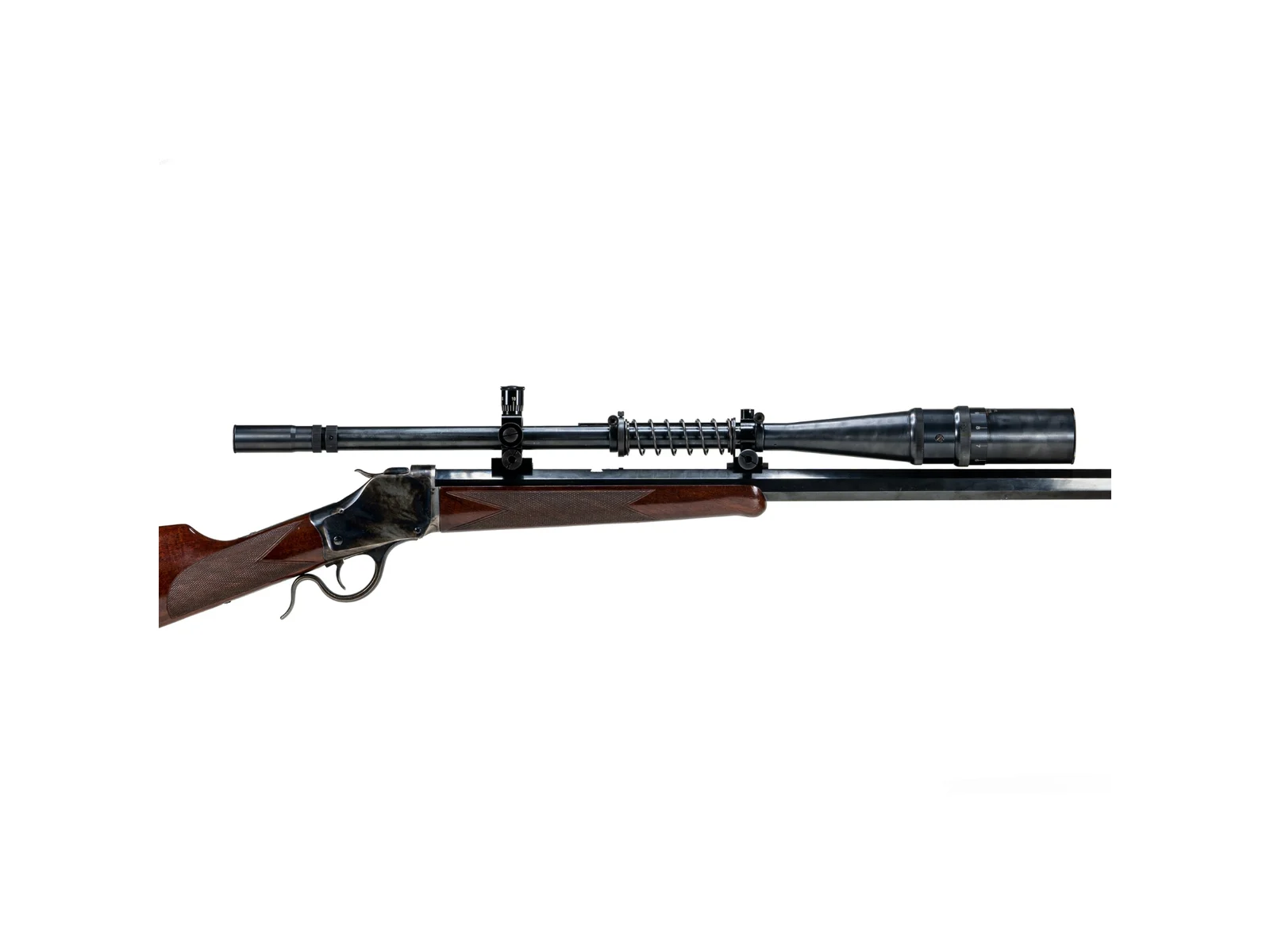
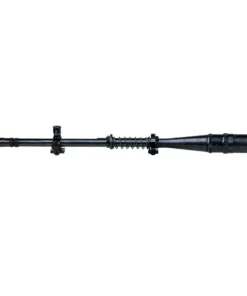
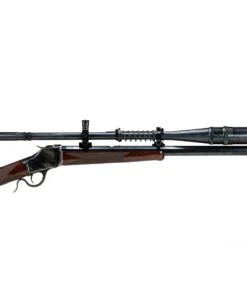
The Hi-Lux Malcolm 20X Vintage Target Rifle Scope has been designed for shooters who want traditional target-scope styling to be combined with modern optical performance. Classic external-adjustment architecture has been retained, while precision-manufactured lenses, a durable steel tube, and finely controlled adjustment hardware have been incorporated to provide a refined shooting experience.
With fixed 20X magnification, a 41mm objective lens, and a fine crosswire reticle, distant targets can be viewed with impressive detail. Furthermore, the long, distinctive profile has been styled to complement vintage and traditional target rifles without sacrificing the optical standards expected from contemporary equipment.
Whether a historic-style rifle is being completed or a dedicated target setup is being assembled, the Hi-Lux Malcolm 20X Vintage Target Rifle Scope can provide a compelling combination of heritage-inspired appearance, repeatable adjustment, and high-magnification visibility.
Vintage Styling Enhanced by Modern Optical Engineering
Although the Malcolm 20X has been inspired by classic target scopes, modern manufacturing processes have been incorporated throughout its construction. Each lens is precision-ground to tight tolerances so that image resolution can be optimized while optical aberration can be reduced.
In addition, the lenses are fully multi-coated with Hi-Lux’s DiamondTuff14 coating. According to Hi-Lux, each coated lens surface provides at least 99.5% light transmission across the visible spectrum. As a result, brightness and image clarity can be maintained while the traditional external-adjustment format is preserved.
Rather than being forced to choose between period-correct styling and contemporary performance, both qualities have been brought together within one carefully engineered optic.
Fixed 20X Magnification for Detailed Target Viewing
A fixed 20X magnification system has been incorporated into the Hi-Lux Malcolm 20X Vintage Target Rifle Scope. Therefore, a highly magnified sight picture can be provided without the additional mechanisms required by a variable-power design.
Fine target details can consequently be observed more easily, particularly when precision shooting is being conducted at established distances.
The 41mm objective lens has also been selected to support the high-magnification optical system. Meanwhile, a field of view of approximately 4 feet at 100 yards is provided. The scope has been listed with an exit pupil of approximately 1.9mm and eye relief of approximately 2.5 inches by Hi-Lux.
Fine Crosswire Reticle
A fine crosswire reticle has been fitted to the Malcolm 20X. Therefore, a clean aiming reference can be maintained without excessive visual obstruction of the target.
For deliberate target shooting, this simplified arrangement can be particularly useful because attention can remain focused on precise point-of-aim placement rather than complex reticle markings.
External Micrometer Adjustment System
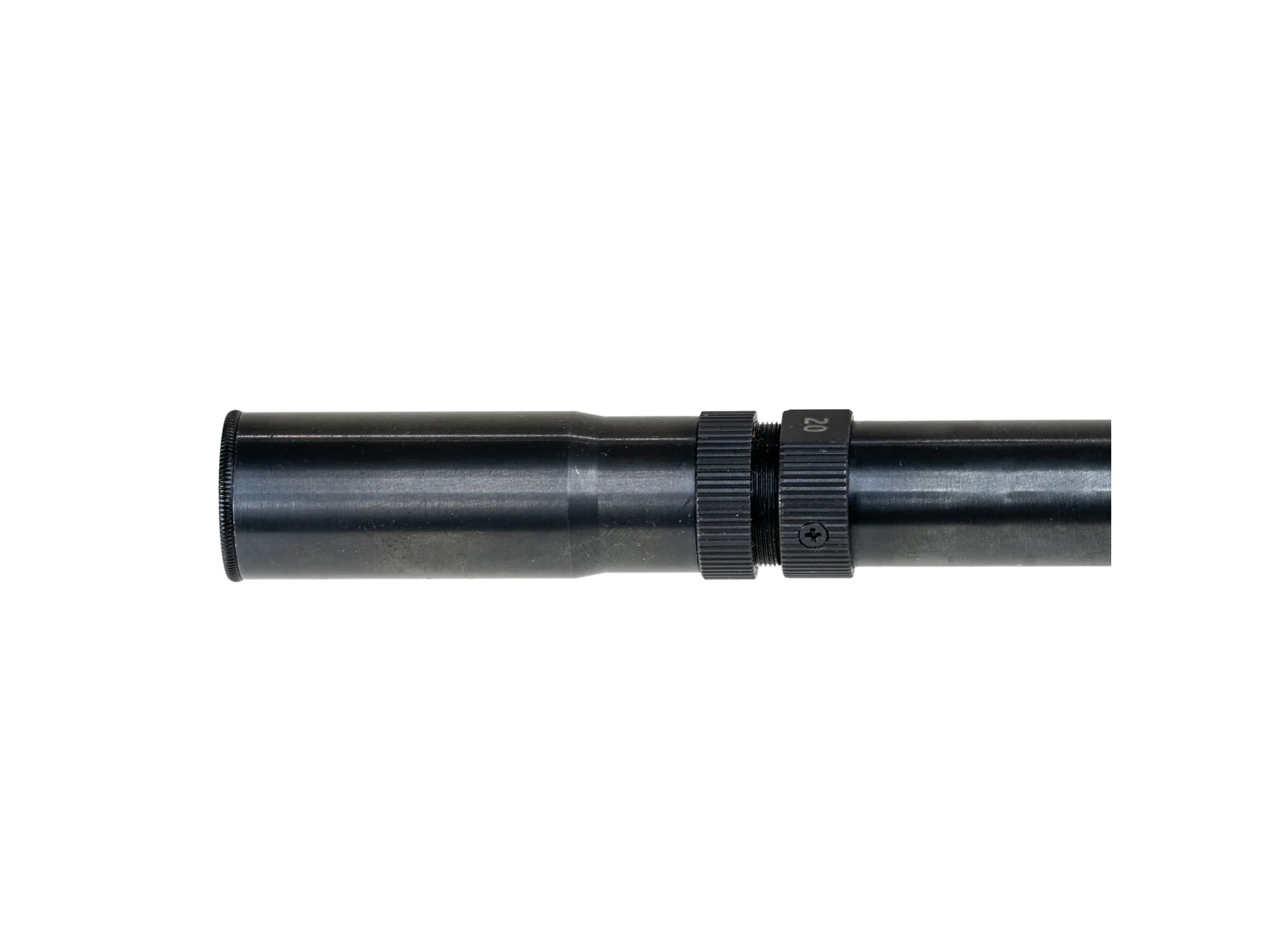
One of the most distinctive characteristics of the Hi-Lux Malcolm 20X Vintage Target Rifle Scope is its external adjustment system.
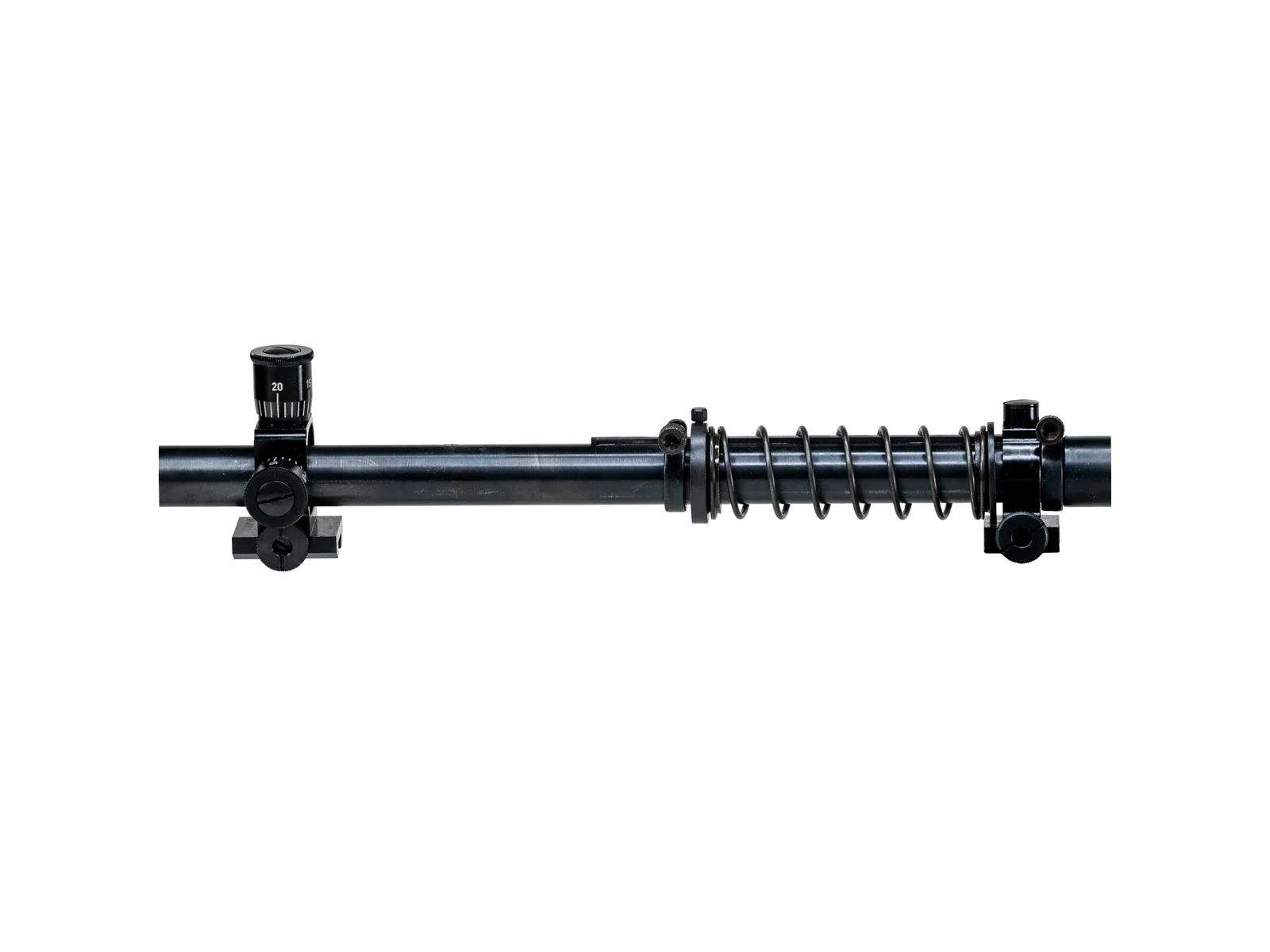
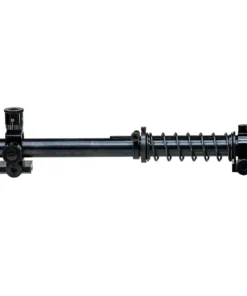
Vintage Sniper Competition mounts are supplied with the scope, while the rear micrometer has been patterned after the classic Unertl-style mounting system. When the front and rear mounting positions are spaced 7.250 inches center-to-center, approximately ¼ MOA adjustment per click is provided.
Consequently, windage and elevation corrections can be made through the mounting system rather than through a conventional internal turret arrangement.
Tactile clicks have also been engineered into the mounts so that adjustments can be made with greater confidence. Backlash has been minimized, which helps repeatable corrections to be maintained during precision target use.
Adjustable Parallax for Different Target Distances
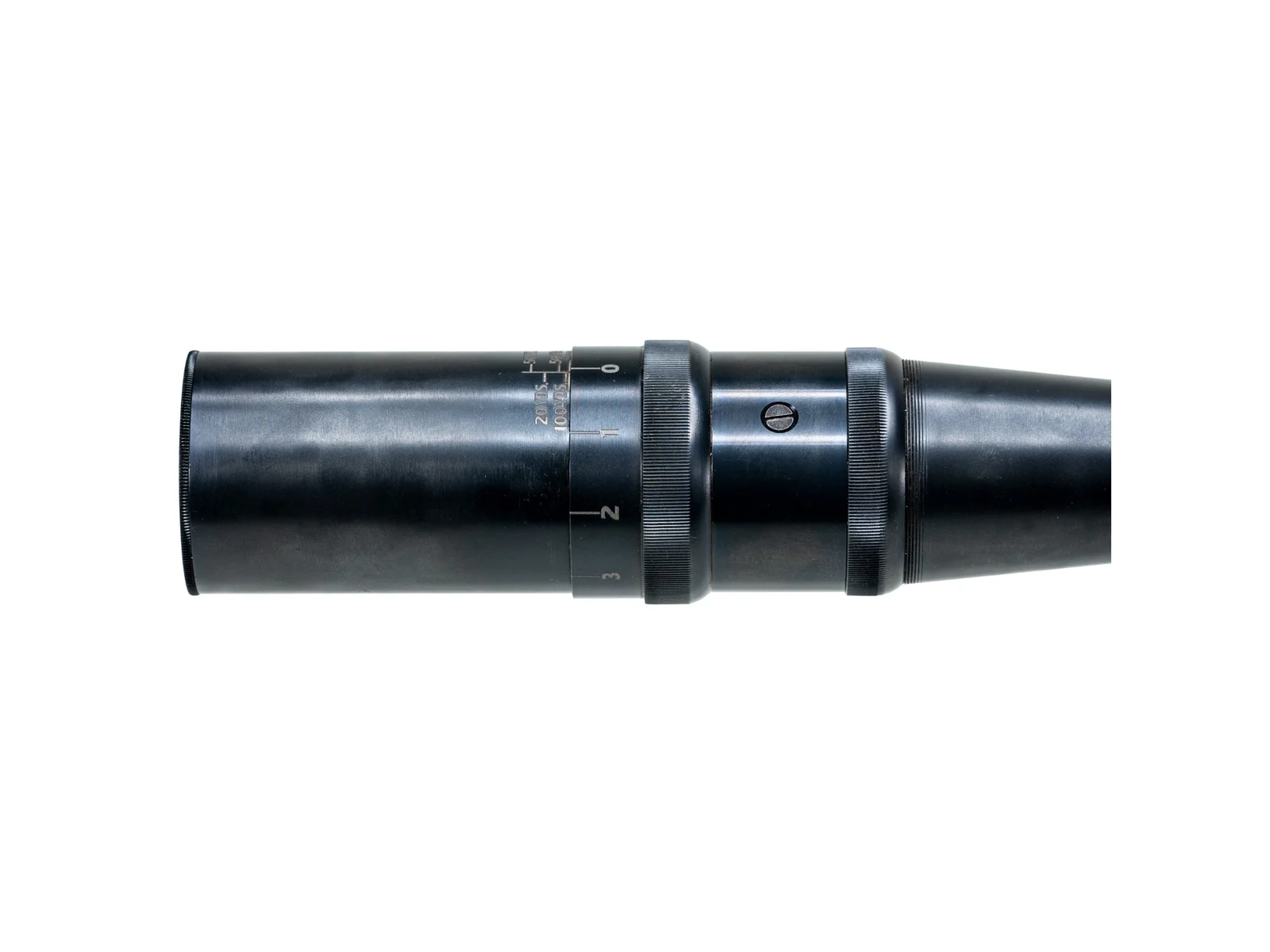
Parallax adjustment has been positioned at the objective end of the scope.
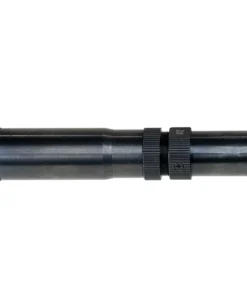
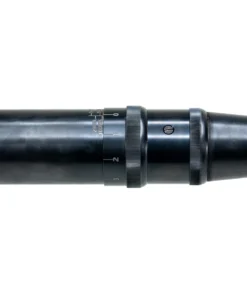
Instead of relying on a typical side-focus turret, the objective lens housing can be shifted axially through the associated lock and index rings. A calibrated scale is provided on the objective bell, while a 10-division index ring is incorporated to assist with repeatable settings.
Therefore, focus and parallax can be refined for the distance at which the rifle is being used.
This traditional mechanical approach contributes strongly to the scope’s vintage character. At the same time, practical control over the sight picture can still be maintained.
Durable Steel-Tube Construction
Strength has not been ignored simply because a traditional appearance has been adopted.
A 3/4-inch steel tube has been used, while a laser spot-welded reinforcing rib has been incorporated to improve rigidity. Additionally, metallic components and threads have been CNC-machined to precise tolerances.
Hardware is hardened to improve durability and resistance to surface wear. As a result, the optic has been engineered not merely as a decorative reproduction but as a functional target-shooting instrument.
The scope measures approximately 25.75 inches in length and weighs around 32 ounces, giving it the unmistakable long-profile appearance associated with classic target optics.
Key Features of the Hi-Lux Malcolm 20X Vintage Target Rifle Scope
- Fixed 20X magnification for detailed target observation
- 41mm objective lens for a clear, highly magnified sight picture
- Fine crosswire reticle for an uncluttered aiming reference
- Fully multi-coated optics with DiamondTuff14 lens treatment
- Precision-ground lens elements manufactured to tight tolerances
- Vintage external adjustment system inspired by traditional target optics
- ¼ MOA adjustment capability when mounts are spaced 7.250 inches center-to-center
- Vintage Sniper Competition mounts included
- Objective-end parallax adjustment
- Range-calibrated parallax scale
- 3/4-inch steel scope tube
- Laser spot-welded reinforcing rib
- CNC-machined metallic components
- Approximate 25.75-inch overall length
- Approximately 32-ounce weight
- 4-foot field of view at 100 yards
- Classic vintage target-rifle appearance
What’s Included?
The package is supplied with more than the optic itself. According to Hi-Lux, the following components are included:
- Malcolm 20X Vintage Target Scope
- Threaded lens covers
- Gen II Unertl-style rings
- Return spring
- 1/2-inch-tall scope blocks with .860-inch and .560-inch hole spacings
Therefore, the essential components required for the intended external-mount system are provided as part of the package.
Return-to-Battery System
A return spring can be installed as part of the external mounting arrangement. Under recoil, movement of the scope can be accommodated by the sliding mount system, after which the spring can assist the scope in returning to its original position.
If the spring is not installed, the scope may instead need to be returned manually to its battery position. This operating principle reflects the traditional mechanical design on which the optic has been based.
Designed for the Traditional Target-Rifle Enthusiast
The Hi-Lux Malcolm 20X Vintage Target Rifle Scope can be particularly attractive when traditional rifle aesthetics are considered just as important as optical performance.
Rather than placing a short modern tactical optic on a historically styled rifle, a long external-adjustment scope can be fitted so that the character of the overall platform is preserved.
At the same time, contemporary lens coatings, precision machining, hardened hardware, and repeatable micrometer adjustments have been incorporated. Consequently, classic appearance does not have to mean outdated optical engineering.
Why Choose the Hi-Lux Malcolm 20X Vintage Target Rifle Scope?
For the right setup, few modern optics reproduce the visual character of traditional external-adjustment target scopes as convincingly.
High magnification has been provided, adjustment hardware has been engineered for repeatability, and modern coatings have been applied to improve optical performance. Meanwhile, the long steel tube and Unertl-inspired mounting arrangement preserve the distinctive appearance associated with vintage target rifles.
Because of this balance, the Hi-Lux Malcolm 20X Vintage Target Rifle Scope can serve both practical and aesthetic objectives.
Whether a classic-style single-shot rifle is being completed, a vintage-inspired target rifle is being upgraded, or a specialized benchrest-style configuration is being assembled, an optic can be selected that looks appropriate while still benefiting from modern manufacturing.
Precision, Heritage, and Optical Clarity Combined
Traditional design has been respected throughout the Hi-Lux Malcolm 20X Vintage Target Rifle Scope, yet contemporary manufacturing technology has been incorporated where it matters most.
Clear fixed-power optics, a fine aiming reticle, objective parallax adjustment, external micrometer mounts, and rugged steel construction are all brought together within a single distinctive package.
Therefore, shooters seeking an optic that combines 20X target magnification, vintage styling, precise external adjustments, and modern lens technology can find an unusually specialized solution in the Malcolm 20X.
For a rifle where historic appearance, target-focused precision, and high-magnification viewing are all valued, the Hi-Lux Malcolm 20X Vintage Target Rifle Scope stands out as a purpose-built choice.
Element Optics Scopes, Rangefinding Technology, Mounts, and Precision Optic Options
For shooters comparing modern precision optics, element theos has become an important search term, especially for people researching the theos scope and premium long-range configurations such as element theos 6-36, 36×56, and element theos 6 36×56. At the same time, more versatile configurations including element optics 2-10, element 2-10 scope, and element 2 10 scope appeal to users who prefer a wider balance between close-range visibility and higher magnification. Across the broader product family, element helix, element scopes, and related models give buyers several magnification, reticle, and mounting configurations to consider.
When researching an optics-focused scopes website, customers often compare element tactical products with equipment from another optic scope manufacturer. Product searches may also include element prism, titan scope, op element, and helix scope, particularly when comparing compact optics with traditional variable-power designs. Higher magnification options such as element optics 6-24×50 can suit users who prioritize a detailed sight picture and substantial adjustment range.
The premium range also includes the nexus scope, element nexus scopes, and broader nexus scopes category. Searches for nexus tactical equipment frequently lead buyers toward the nexus 4-25×50, while the element titan provides another recognizable alternative. Users comparing a 5-25 scope, 25/56, titan 5, or theos 2-10 generally look closely at optical clarity, turret construction, reticle layout, focal-plane configuration, adjustment tracking, and overall build quality. Consequently, search phrases such as element titan 5 25×56 ffp review and titan25 are commonly associated with buyers researching the Titan platform in greater detail.
Another frequently researched configuration is the element helix 6 24×50, particularly alongside the element nexus gen 2. Although these optics occupy different positions within a product range, potential buyers often compare their specifications before choosing an appropriate design. Reticle selection is equally important, which explains continued interest in rifle scope reticles, while electronic tools such as a ballistic rangefinder can complement a modern optic setup. Some search queries also contain unusual specification formats such as 12×4/2, so checking the manufacturer’s exact specifications remains important before interpreting any numerical value.
Versatile magnification searches commonly include 2-12 scope and 2×12 scope. Meanwhile, terms such as element vision, spectrum element, and even prismatic scale of the elements can appear alongside optics-related searches. A prismatic scope differs structurally from a conventional variable-power riflescope because it uses a prism-based optical system rather than the same internal lens arrangement typically associated with traditional scope designs. Searches for element 3.0 may likewise refer to product generations, technical updates, or model-specific terminology, depending on the context.
Technology-focused users may also investigate element rf and element range products. Within the variable-power category, element theos 2-10 and element theos 2 10 provide alternative search formats for the same general magnification class. Similarly, element 2-10, 10 optic, 2-10 optic, and 2-10x scope describe configurations shoppers may encounter while comparing compact and medium-range optics. Buyers interested in first-focal-plane systems may specifically search for a 2-12 scope ffp, while terms such as fffp 2 can appear as alternate or mistyped search variations.
The Helix family attracts additional attention through searches for helix hd 2 16×50 and hdlr, whereas Titan users frequently research element titan 3 18×50 and element titan 3-18×50. These mid-range magnification configurations can provide a useful compromise between field of view and target detail. The Theos family is also represented by theos 2-10×42 ffp, which combines a practical magnification range with first-focal-plane terminology commonly sought by experienced optics buyers.
Search specifications such as 10×40, .10×40, and 14×50 may describe magnification and objective-lens formats, although exact interpretation should always be checked against official product information. People asking what is a prismatic scope are generally trying to understand how prism optics differ from traditional scope architecture. As with the phrase prismatic scale of the elements, search-engine terminology can occasionally mix scientific and optical expressions, so context matters when evaluating results.
Another product-related term is element hyper 7, together with searches for hqp7-rf-2 specifications details. Users researching newer optical or rangefinding systems may encounter these model codes while comparing technical features, dimensions, mounting options, display systems, or rangefinding capability. The terms element ll and 3×18 can also appear in searches associated with optics or magnification specifications.
For users focused specifically on the 3-18 magnification class, search phrases include 3-18 scopes, 3-18, nightforce 3-18, best 3-18 scopes, and 3×18 scope. Even unusual formatting such as 3:18 may be entered when shoppers are trying to locate comparable models. Regardless of brand, important evaluation factors include image resolution, eye relief, turret repeatability, mechanical reliability, reticle visibility, and low-light performance.
Optical quality also involves controlling distortion and color fringing. Therefore, someone researching chromatic aberration scope performance may be evaluating how effectively a particular optic manages unwanted color separation around high-contrast objects. Better glass, coatings, internal design, and manufacturing tolerances can all influence perceived image quality.
Scope Mounts, Rings, Rangefinders, and Accessory Compatibility
A precision optic also depends on a reliable mounting system. Searches for element mount, dovetail scope mount, and dovetail rings usually reflect the need to match an optic to the appropriate rail or receiver interface. Correct ring diameter, mounting height, rail type, and clearance should always be verified against the optic and platform specifications before purchase.
Electronic rangefinding accessories have expanded the number of configurations available. A picatinny mounted rangefinder or picatinny range finder can be mounted on compatible rail systems, while a rifle rangefinder provides distance information separately or as part of an integrated setup. Search phrases such as weapon mounted range finder, laser range finder for rifle, and rifle range finder generally refer to compact ranging technology intended to provide distance measurements.
Integrated technology has also increased interest in scopes with rangefinders built in, a rangefinder scope for rifle, and a rangefinding rifle scope. These products can combine optical magnification with electronic distance measurement in a single system. Buyers may encounter abbreviations such as wmlrf, while searches for a weapon mounted ballistic calculator or arken wmlrf usually indicate interest in systems that combine ranging information with additional electronic calculations or data.
Mounting accessories deserve equal attention because stability and alignment influence the overall optic installation. A 34mm diving board mount can provide an accessory mounting surface above or around a compatible optic. Similarly, a 34mm scope mount with diving board combines the primary scope mounting structure with an additional accessory interface. The broader term diving board scope mount is frequently used when researching this style of configuration.
Smaller tube systems may use a 30mm diving board mount, while scope diving board searches often refer to elevated accessory rails designed to position compatible devices above an optic. Traditional mounting searches also include picatinny scope rings, 30mm scope mount picatinny, 30mm picatinny scope rings, and picatinny scope mounts. Matching the correct ring diameter and rail standard is essential because a 30mm tube, 34mm tube, dovetail rail, and Picatinny interface are not interchangeable without the appropriate hardware.
Protection is another important consideration once an optic has been mounted. tenebraex scope caps and tenebraex scope covers can help protect exposed lenses when compatible with the selected optic. A flexible allen neoprene scope cover provides another style of external protection for storage and transport. Users running dovetail systems may instead be comparing 30mm dovetail scope rings with other dovetail scope mounts.
Ultimately, choosing between Element Optics families requires more than comparing magnification numbers alone. Whether researching Theos, Helix, Titan, Nexus, Prism, RF technology, rangefinding equipment, or mounting accessories, buyers should evaluate optical clarity, reticle design, adjustment range, focal-plane configuration, tube diameter, rail compatibility, physical dimensions, protective accessories, and manufacturer specifications. Doing so makes it easier to identify an optic and mounting system that properly matches the intended application while avoiding compatibility problems caused by relying solely on product names or search terminology.
Frequently Asked Questions
What type of shooter is this scope best suited for?
This optic is designed primarily for people who appreciate traditional target-rifle styling while still expecting modern optical performance. It is particularly suitable for vintage-inspired rifles, classic single-shot platforms, precision target setups, and traditional bench-style shooting configurations.
Because the design follows the long external-adjustment format associated with historic target optics, it is especially appealing when visual authenticity matters. At the same time, modern manufacturing techniques, coated lenses, and refined mechanical controls help make the scope practical rather than purely decorative.
Consequently, it can suit collectors, recreational target shooters, vintage-rifle enthusiasts, and anyone building a traditional-looking precision setup.
Is the magnification fixed or variable?
The magnification is fixed at 20 power.
A fixed magnification system means that the internal optical arrangement remains consistent rather than changing between different magnification levels. For deliberate target shooting, this can offer a straightforward viewing experience because the same magnification is used throughout each shooting session.
Furthermore, fixed-power optics usually provide a simpler operating system since no magnification ring has to be adjusted. The shooter can therefore concentrate on alignment, focus, and external corrections.
Because 20X is relatively powerful, the scope is particularly useful when small target details need to be observed at established shooting distances.
What does the 41mm objective lens do?
The objective lens is responsible for gathering light and transmitting the image through the optical system.
With a 41mm objective, sufficient light can be collected to support the high fixed magnification while still maintaining the traditional proportions of the scope. The design balances optical performance with the long, narrow appearance associated with classic target optics.
Image quality is also influenced by lens coatings, optical alignment, environmental lighting, and focus adjustment. Therefore, objective size should not be considered in isolation.
In this design, the objective system works together with coated glass and precision-ground lens elements to produce a clear, detailed target image.
Does this scope use modern lens coatings?
Yes. Modern multi-layer lens coatings are used to improve light transmission and image performance.
These coatings help reduce reflections across lens surfaces. As a result, more usable light can pass through the optical system while glare and unwanted internal reflections can be minimized.
Additionally, improved light transmission can contribute to better contrast and clearer target definition under suitable lighting conditions.
This combination is important because the optic retains a historic external appearance while benefiting from modern optical engineering inside.
What type of reticle is included?
A fine crosswire reticle is used.
This reticle style is deliberately simple. Rather than filling the field of view with multiple markings, ranging references, or complex hold points, the fine crosswire provides a clean aiming reference.
Because the lines remain relatively unobtrusive, small target details can be viewed without excessive obstruction.
For precision target shooting, this traditional reticle arrangement can be especially useful when a clearly defined point of aim is preferred.
How are windage and elevation adjustments made?
Windage and elevation are controlled through the external mounting system.
Unlike many modern scopes, which place adjustment mechanisms inside the scope body, this traditional design uses external micrometer-style controls. Consequently, the scope tube and mount work together as part of the adjustment system.
Each correction can be made through the external hardware, allowing the alignment of the optic to be changed relative to the rifle.
This approach reflects the mechanical principles used on many historic target scopes while incorporating modern machining and improved repeatability.
How precise are the adjustment clicks?
When the mounting blocks are positioned at the specified spacing, approximately one-quarter minute of angle can be achieved per click.
This fine adjustment interval allows relatively small corrections to be applied.
However, proper installation and correct spacing are important because the relationship between the front and rear mounts influences the effective adjustment value.
For that reason, installation specifications should always be followed carefully rather than assuming that any mounting distance will produce the same correction.
What is an external adjustment scope?
An external adjustment scope changes its alignment through the mounting system rather than relying entirely on internal adjustment mechanisms.
When windage or elevation is changed, the scope’s position is mechanically altered relative to the rifle.
This system gives the optic its distinctive vintage appearance because the micrometer components remain visible outside the tube.
Historically, this style was commonly associated with specialized target optics and long-range competition equipment.
Today, it remains attractive to people who value traditional engineering and mechanical simplicity.
What does return-to-battery mean?
Return-to-battery refers to the scope returning to its original operating position after it has moved within the external mount system.
Because this style of optic can slide in its mounts during recoil, a return spring may be used to help reposition the scope.
When properly configured, the spring assists the optic in returning toward the same starting position after each shot.
Alternatively, some traditional configurations may require the scope to be returned manually.
This feature is part of the historic operating principle that distinguishes external-adjustment optics from conventional internally adjusted scopes.
Does the scope include a return spring?
Yes, a return spring is supplied.
The spring can be incorporated into the external mounting arrangement where appropriate.
Its purpose is to assist with returning the optic toward its original battery position after movement.
The included component helps preserve the traditional mechanical operation expected from this style of scope.
However, setup should always follow the manufacturer’s installation guidance so that the system functions correctly.
Is parallax adjustable?
Yes. Parallax can be adjusted through the objective-end focusing system.
Instead of using a modern side-focus knob, adjustment is performed near the objective.
The objective assembly can be repositioned so that focus and parallax can be refined for different target distances.
A calibrated scale and index arrangement help provide reference points for repeatable settings.
This approach preserves the vintage appearance of the scope while still giving the shooter practical control over focus and parallax.
Why is parallax adjustment important?
Parallax occurs when the apparent position of the reticle changes relative to the target as the viewer’s eye moves behind the scope.
When parallax is correctly adjusted, this apparent movement can be reduced.
For precision target shooting, controlling parallax is particularly important because even small alignment inconsistencies can influence the apparent point of aim.
Therefore, adjustable parallax helps create a more consistent viewing relationship between the eye, reticle, and target.
At higher magnification, careful focus and parallax adjustment can become even more noticeable.
What material is used for the main tube?
The main tube is constructed from steel.
Steel provides the strength required for the long and relatively narrow scope body.
A reinforcing rib is also incorporated to improve structural rigidity.
Furthermore, metallic components are precision-machined to support accurate fit and operation.
The combination of steel construction and modern machining allows the optic to retain its historically appropriate profile while providing dependable mechanical integrity.
What is the tube diameter?
The tube diameter is three-quarters of an inch.
This narrow tube contributes significantly to the traditional appearance of the optic.
Unlike larger modern tactical scopes, which frequently use 30mm or 34mm tubes, the slimmer profile closely resembles classic precision optics from earlier shooting eras.
Because the tube dimensions are specialized, compatible mounting components should always be used.
Standard modern rings should not automatically be assumed to fit.
How long is the scope?
The overall length is approximately 25.75 inches.
That extended length is one of the most distinctive visual features of the design.
It gives the optic the long, elegant profile associated with vintage target rifles and externally adjusted precision scopes.
The length also influences mounting requirements, rifle proportions, and overall balance.
Therefore, prospective owners should consider available mounting space before installation.
How much does it weigh?
The scope weighs approximately 32 ounces.
Although the narrow tube creates a visually lightweight appearance, the steel construction and external hardware contribute meaningful mass.
That weight should be considered when planning the complete rifle setup.
For some traditional target configurations, the added mass may be completely appropriate. However, users who prioritize extremely lightweight equipment may prefer to compare the total assembled weight before making a final decision.
What is the field of view?
The field of view is approximately four feet at 100 yards.
Because the optic uses fixed 20X magnification, the field of view is naturally narrower than that of a low-power scope.
This is normal for higher magnification systems.
A narrower view allows the target to appear larger, although less surrounding area is visible.
Therefore, the optic is designed more for deliberate target observation than for situations where an extremely wide field of view is necessary.
Is eye relief important with this design?
Yes. Eye relief is always an important consideration when positioning an optic.
The listed eye relief is approximately 2.5 inches.
Correct positioning helps the shooter obtain a full sight picture without unnecessary movement or strain.
Because rifle dimensions, shooting position, stock design, and individual body proportions can differ, mounting placement should be carefully evaluated.
A comfortable and repeatable head position is generally preferable to forcing the eye into an unnatural location.
Are mounting components included?
Yes. The package includes specialized mounting components designed for the external-adjustment system.
Threaded lens covers, external rings, a return spring, and mounting blocks are supplied with the optic.
This is helpful because the scope uses a specialized configuration rather than ordinary contemporary rings.
Even so, rifle compatibility should still be checked before installation.
Hole spacing, block location, receiver configuration, and available mounting surfaces can vary between rifles.
Will it fit every vintage rifle?
No. Compatibility should not automatically be assumed.
Although the optic has been created for traditional and vintage-inspired rifle setups, mounting dimensions vary considerably between different firearms.
The location of mounting holes, receiver shape, barrel profile, available block spacing, and stock geometry can all affect installation.
Therefore, the rifle should be checked carefully before purchasing or mounting the scope.
Professional installation may also be appropriate when the platform requires drilling, modification, or precise alignment.
Does the scope suit competition-style target shooting?
It can be well suited to traditional target shooting applications where its magnification, reticle, and mounting system match the user’s requirements.
The fixed 20X magnification provides a detailed target view, while the fine crosswire keeps the aiming reference simple.
Additionally, the external micrometer system allows controlled windage and elevation adjustments.
Nevertheless, competition rules can differ between organizations and events.
For that reason, anyone planning formal competition use should confirm equipment eligibility with the relevant governing body before participating.
Is it mainly decorative or fully functional?
It is designed as a functional optic rather than merely a decorative reproduction.
Although the appearance strongly reflects historic target scopes, modern lens coatings, precision machining, reinforced construction, and practical adjustment features are incorporated.
This allows traditional aesthetics to be combined with contemporary manufacturing quality.
Consequently, the scope can appeal to both collectors and active target shooters.
What makes this optic different from a modern tactical scope?
The most obvious difference is the overall design philosophy.
Modern tactical optics usually feature shorter tubes, large internal turrets, variable magnification systems, side-focus controls, and complex reticles.
By contrast, this optic uses a long narrow steel tube, external micrometer adjustments, objective-end parallax control, fixed magnification, and a fine traditional crosswire.
Therefore, the user experience is intentionally different.
The design prioritizes historic character, mechanical visibility, and traditional target-scope operation rather than modern tactical styling.
Is this scope suitable for someone who values period-correct appearance?
Yes. That is one of its strongest advantages.
A modern optic can often look visually out of place on a traditional or vintage-inspired rifle.
This design avoids that problem by using proportions, external hardware, and tube styling associated with earlier generations of target optics.
At the same time, modern improvements are incorporated where they can enhance optical clarity and durability.
Therefore, traditional appearance can be preserved without giving up every benefit of contemporary manufacturing.
How should the lenses be maintained?
Lens surfaces should be kept free from abrasive debris, fingerprints, oil, and dust.
Loose particles should generally be removed gently before the lens is wiped.
A clean lens cloth or suitable optical-cleaning material should be used instead of rough fabrics.
Harsh household chemicals should also be avoided because they may damage optical coatings.
Furthermore, protective lens covers can be used during storage and transportation to reduce unnecessary exposure to dust and contact.
How should the external adjustment mechanism be maintained?
The adjustment system should be kept clean and protected from excessive dirt, grit, and corrosion.
Because the mount includes precision mechanical components, abrasive contamination should not be allowed to accumulate around the moving surfaces.
Adjustments should also be made smoothly rather than forced.
If unusual resistance develops, the system should be inspected rather than aggressively turned.
Appropriate maintenance guidance from the manufacturer should always be followed when lubrication or component servicing is required.
What should be checked before installation?
Several points should be confirmed before mounting.
First, the available mounting-block spacing should be measured. Next, the rifle’s mounting surfaces and existing holes should be inspected for compatibility.
Eye relief should also be considered so that the scope can be positioned comfortably.
In addition, clearance around the barrel, receiver, stock, and other components should be verified.
Finally, the external adjustment system should be aligned properly so that full movement is available without binding.
Careful preparation can prevent installation problems and help the scope operate as intended.
Why choose this type of optic instead of a conventional scope?
The decision usually comes down to character, intended use, and preference.
A conventional modern optic can provide practical features such as variable magnification, internal turrets, illuminated reticles, and compact dimensions.
However, those features may not complement a traditionally styled rifle.
This optic offers something different: classic proportions, visible mechanical adjustments, high fixed magnification, and a distinctive target-shooting experience.
Therefore, it is particularly appealing when visual authenticity and traditional operation are important parts of the overall rifle setup.
What is the biggest advantage of this design?
Its greatest advantage is the combination of traditional styling and modern optical construction.
The external-adjustment format gives the rifle a distinctive historical appearance, while precision-ground lenses and modern coatings help support clear target viewing.
Furthermore, the fine crosswire, fixed magnification, and objective parallax adjustment maintain the deliberate simplicity expected from a dedicated target optic.
As a result, buyers do not have to choose entirely between heritage-inspired appearance and practical performance.
Who should consider buying this scope?
It is worth considering for anyone building or upgrading a vintage-style target rifle, traditional competition-inspired platform, classic single-shot setup, or historically themed precision rifle.
Collectors may appreciate the visual authenticity, while active shooters may value the 20X magnification, fine reticle, external corrections, and adjustable parallax.
Most importantly, it suits users who want an optic with a distinctive mechanical identity rather than another conventional modern scope.
For the right rifle and the right purpose, it can provide a refined balance of tradition, precision, durability, and optical clarity.




Reviews
There are no reviews yet.