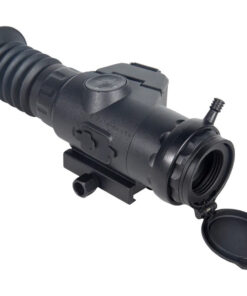
ATN BlazeSeeker 210 Thermal Imaging Monocular
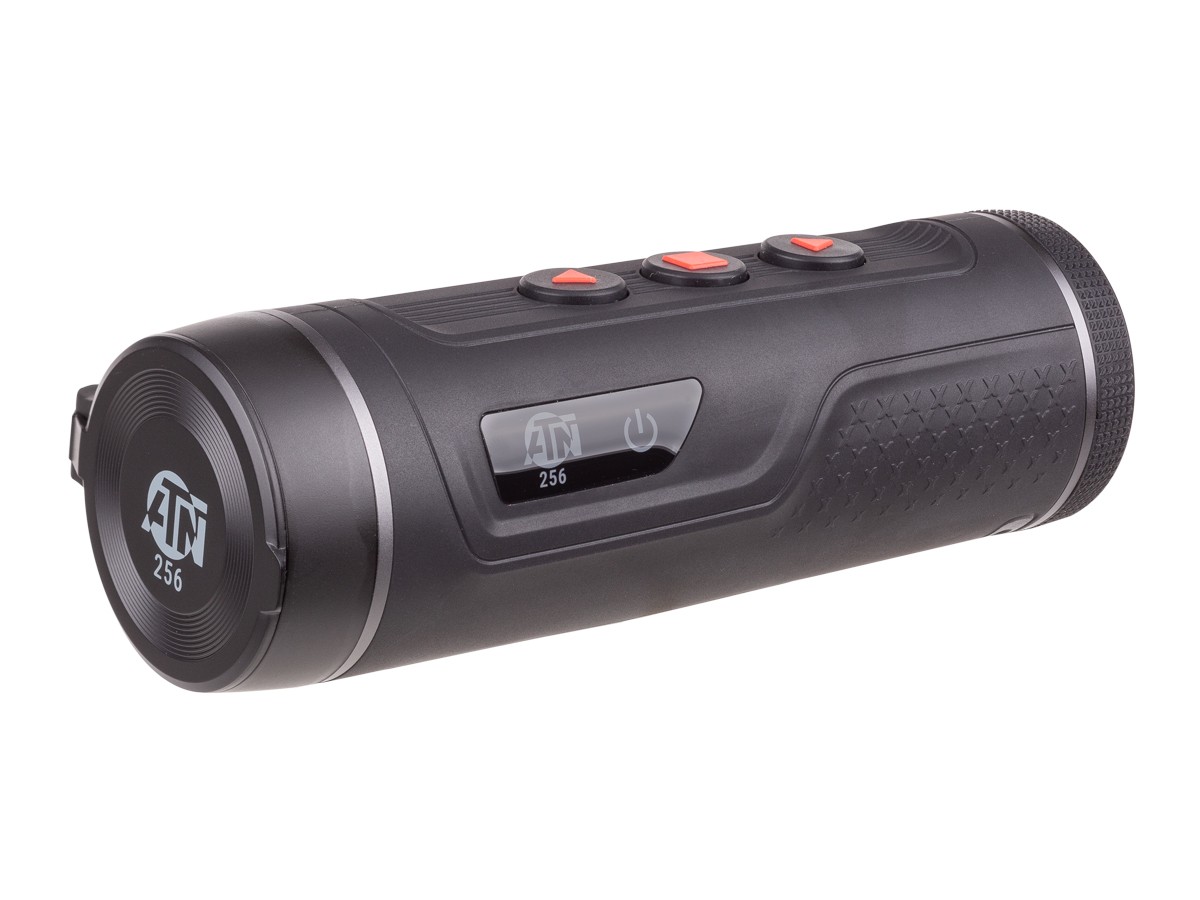
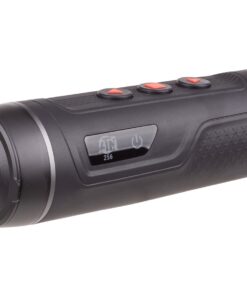
When dependable thermal visibility is required after daylight disappears, the ATN BlazeSeeker 210 Thermal Imaging Monocular is designed to provide a compact, practical, and highly accessible solution. Heat signatures can be detected in darkness and challenging lighting conditions, while a portable monocular format makes observation easier during outdoor exploration, wildlife monitoring, property inspection, search activities, and nighttime field use.
At the heart of the BlazeSeeker 210, a 256 × 192 thermal sensor with a 12 μm pixel pitch and 50 Hz refresh rate is incorporated. Additionally, thermal sensitivity is rated below 35 mK on the referenced model, allowing relatively small temperature differences to be distinguished for clearer thermal definition.
Rather than depending on visible light, heat energy is interpreted and converted into an observable thermal image. Consequently, warm animals, people, equipment, structures, and other heat-producing objects can be identified when conventional optical viewing becomes difficult.
Why Choose the ATN BlazeSeeker 210 Thermal Imaging Monocular?
A useful thermal monocular should provide more than the ability to see heat. Instead, portability, image fluidity, simple controls, practical viewing options, and dependable field performance should all be combined.
With the ATN BlazeSeeker 210 Thermal Imaging Monocular, those capabilities have been brought together within a compact handheld platform. Therefore, users who need thermal observation without carrying unnecessarily bulky equipment can benefit from a more convenient approach.
Furthermore, the 50 Hz refresh rate helps moving heat signatures appear smoother during scanning. This becomes particularly valuable when wildlife is being followed, an area is being searched, or the monocular is being moved continuously across a landscape.
Powerful Thermal Detection
Thermal performance is supported by the integrated 256 × 192 sensor. Although environmental conditions can always influence thermal observation, temperature differences can still be translated into recognizable shapes without a conventional light source.
As a result, the BlazeSeeker 210 can be useful during:
- Nighttime wildlife observation
- Outdoor exploration and scouting
- Property and perimeter inspections
- Search and observation activities
- Locating heat-producing objects
- Camping and nighttime navigation support
- General thermal surveying
- Low-light field observation
Because thermal imaging is based on emitted heat rather than reflected visible light, complete darkness does not prevent thermal signatures from being displayed.
Multiple Thermal Viewing Palettes
Different environments can make different thermal palettes more useful. For that reason, multiple viewing modes have been incorporated into the BlazeSeeker platform.
The BlazeSeeker 210 provides White Hot, Black Hot, Rainbow, Iron Red, and Alarm thermal palettes, allowing the displayed image to be adapted according to personal preference and the observation environment.
For example, White Hot can provide a straightforward representation in which warmer objects appear brighter. Conversely, Black Hot reverses that relationship. Meanwhile, color-based palettes can make temperature variations more visually distinctive.
Therefore, a single display style does not have to be relied upon in every situation.
Smooth 50 Hz Thermal Viewing
When a moving subject is tracked, refresh rate becomes especially important. A slower display can make movement appear less fluid, whereas the 50 Hz refresh rate provided by the BlazeSeeker 210 allows thermal imagery to be updated rapidly.
Consequently, scanning can feel more natural and moving heat signatures can be followed more comfortably.
Whether an animal is crossing an open area or a user is sweeping across terrain, the faster refresh rate contributes to a more responsive viewing experience.
Practical Digital Zoom Capability
Additional observation flexibility is provided through digital magnification. According to ATN’s BlazeSeeker documentation, supported digital zoom levels can include 1×, 2×, 4×, and 8×, depending on the specific model configuration.
Therefore, once an interesting heat signature has been identified, the displayed image can be enlarged for closer examination without immediately changing position.
Digital zoom is especially convenient when:
- A distant thermal signature needs closer examination
- Wildlife is being observed from a respectful distance
- An area cannot easily be approached
- Additional visual context is required during inspection
- A specific heat source needs to be isolated within the scene
Designed for Flexible Outdoor Observation
Portability can be just as important as optical performance. Large thermal equipment may become inconvenient during longer periods outdoors. In contrast, a compact monocular can be kept accessible and brought into operation quickly.
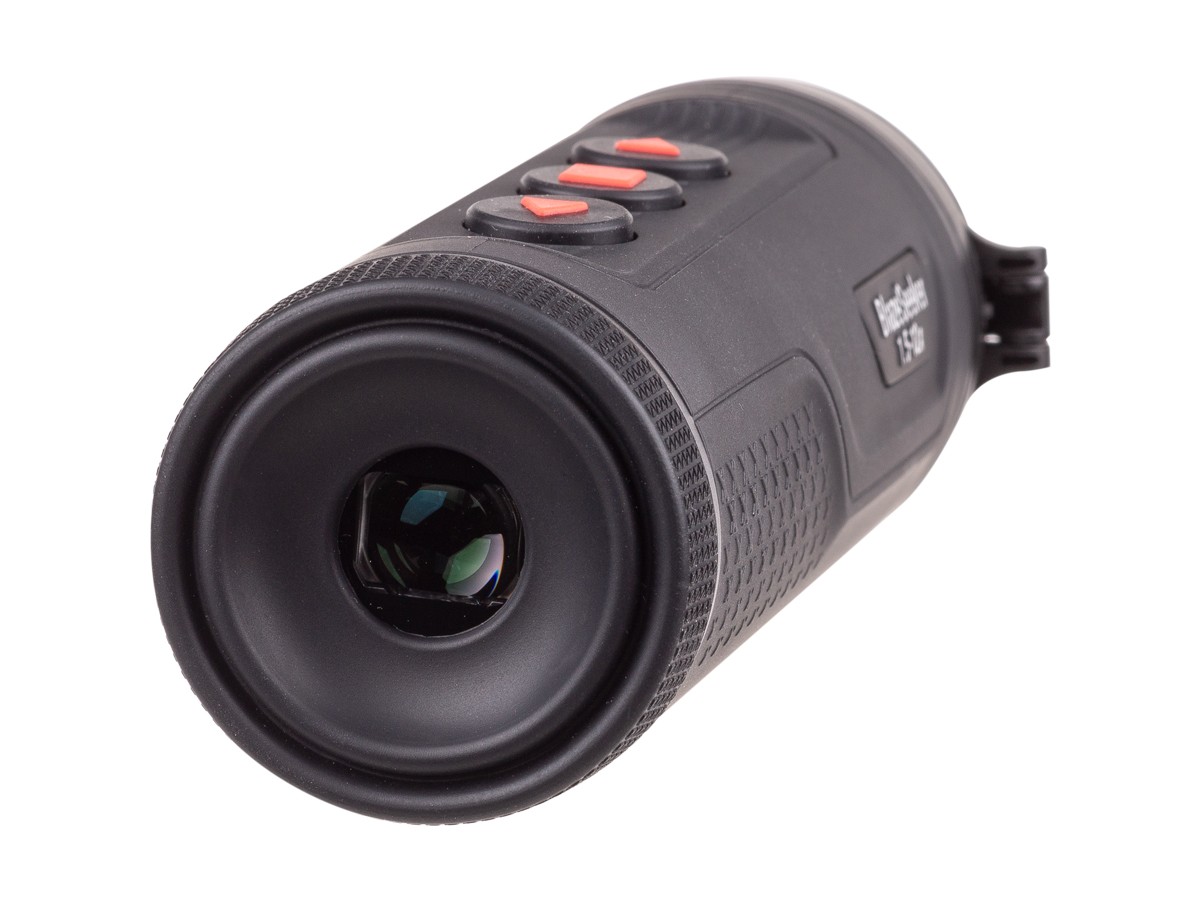
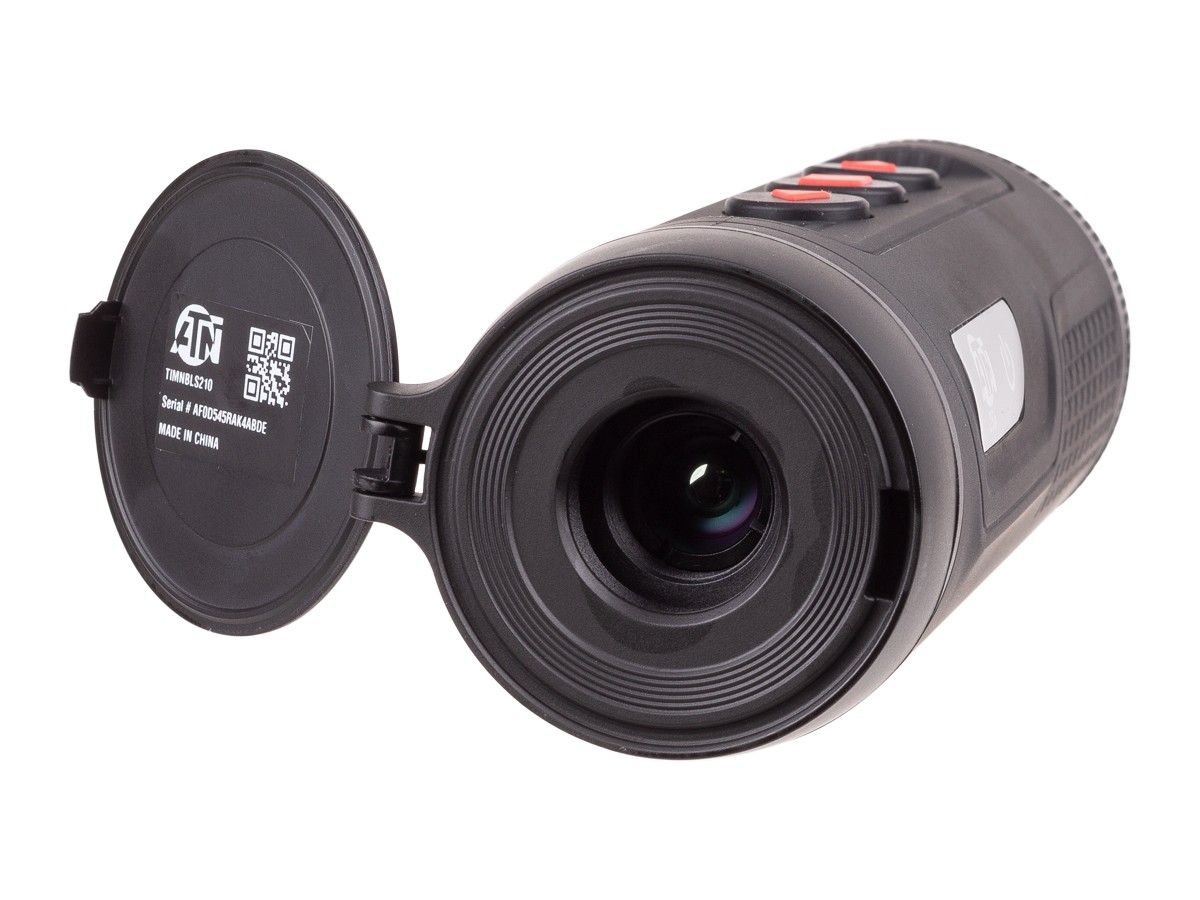
Accordingly, the ATN BlazeSeeker 210 Thermal Imaging Monocular has been positioned as a compact thermal observation device rather than an unnecessarily complicated system.
Moreover, its handheld format makes it suitable for people with varying levels of thermal-imaging experience. Experienced outdoor users can appreciate its practical feature set, while newcomers can benefit from controls designed around straightforward thermal observation.
Wi-Fi Connectivity and Smart Functions
Modern thermal equipment can provide useful capabilities beyond basic observation. Within ATN’s BlazeSeeker platform, Wi-Fi functionality allows a compatible smartphone to connect with the monocular through the associated application.
Consequently, the thermal experience can extend beyond the eyepiece itself.
Several additional functions are also described in the BlazeSeeker operating documentation, including adjustable brightness, contrast settings, on-screen information, compass functionality, Hot Point functionality, Forest Mode, and ranging functions on supported configurations.
These features can help the device adapt to different viewing environments instead of restricting users to one fixed configuration.
Hot Point Detection for Faster Identification
During thermal scanning, one of the most valuable capabilities can be the rapid identification of a strong heat source.
When Hot Point functionality is enabled on supported BlazeSeeker configurations, the hottest point in the thermal scene can automatically be highlighted.
Therefore, visually searching every part of the image may become less necessary. A prominent heat source can instead be identified more quickly, which can be particularly useful when scanning vegetation, structures, open terrain, or complicated backgrounds.
Forest Mode for Challenging Environments
Thermal contrast may vary according to vegetation, atmospheric conditions, surrounding temperatures, and terrain.
For those situations, ATN’s documented Forest Mode is designed to emphasize higher-temperature targets, making those targets easier to distinguish within certain backgrounds.
As a result, users can adapt their thermal viewing approach when ordinary image settings do not provide the preferred level of separation.
Key Features of the ATN BlazeSeeker 210
For shoppers comparing compact thermal imaging options, the BlazeSeeker 210 brings together several notable characteristics:
- 256 × 192 thermal sensor
- 12 μm pixel pitch
- 50 Hz thermal refresh rate
- Low thermal sensitivity rating for improved temperature differentiation
- Multiple thermal color palettes
- Digital zoom capability
- Wi-Fi connectivity
- Adjustable image brightness and contrast
- Hot Point functionality
- Forest Mode on supported configurations
- Compact handheld design
- User-friendly thermal observation platform
- Useful performance for nighttime and low-light environments
- Suitable for wildlife observation, outdoor exploration, inspections, and general thermal scanning
The combination provides a balanced thermal imaging experience without requiring users to carry a large optical system.
Clear Thermal Awareness When Visible Light Is Limited
One of the biggest advantages offered by thermal imaging is the ability to detect temperature differences rather than depending on ordinary illumination.
Therefore, the ATN BlazeSeeker 210 Thermal Imaging Monocular can continue providing useful visual information when an ordinary binocular or monocular becomes less effective.
In total darkness, warm objects can still be distinguished from cooler surroundings. Likewise, during difficult low-light periods around dawn or dusk, thermal contrast can provide additional situational awareness.
Importantly, thermal imaging should still be treated as an observation aid rather than a replacement for appropriate judgment, navigation equipment, or safety procedures.
A Practical Choice for Thermal Imaging
Ultimately, the ATN BlazeSeeker 210 Thermal Imaging Monocular provides a compelling combination of thermal sensitivity, smooth imaging, portability, flexible viewing modes, and useful electronic features.
Instead of being limited to simple heat detection, users are provided with multiple thermal palettes, digital magnification, connectivity options, adjustable display settings, and specialized observation functions.
For outdoor enthusiasts, wildlife observers, property owners, field professionals, campers, and anyone interested in seeing beyond the limitations of visible light, the BlazeSeeker 210 offers an accessible route into dependable thermal observation.
Most importantly, its combination of a 256 × 192 thermal sensor, 50 Hz refresh rate, multiple viewing palettes, smart thermal functions, and compact design makes it suitable for both occasional and frequent field use.
When greater awareness is required after sunset, the ATN BlazeSeeker 210 Thermal Imaging Monocular delivers the technology needed to detect heat, examine surroundings, and observe the environment from an entirely different perspective.
Premium Rangefinding Binoculars, Hunting Optics, and Precision Rifle Scopes
Modern hunters, long-range shooters, and precision marksmen demand exceptional optical performance, and that is why products such as Leica rangefinder binoculars, Leica Geovid 10×42 rangefinder binoculars, Leica Geovid binoculars, Leica binoculars with rangefinder, Leica Geovid Pro 10×42, Geovid Pro 10×42, Leica Geovid rangefinder, Leica Geovid Pro rangefinder binoculars, Leica Geovid rangefinder binoculars, and the Leica Geovid 10×42 continue to attract attention throughout the shooting industry.
Whether enthusiasts are looking for Leica binoculars, Leica small binoculars, binoculars Leica, Leica Geovid binos, Leica bino, Leica binoculars for sale, Leica bino rangefinder, Leica camera binoculars, Leica binos, or a standard Leica binocular, there are options suitable for every environment and shooting application.
Many users also compare Leica products with SIG Sauer binoculars, SIG self stabilizing binoculars, SIG Sauer binos, SIG binoculars, SIG image stabilizing binoculars, SIG binocular, SIG auto stabilizing binoculars, Sigma binoculars, SIG Sauer self stabilized binoculars, and SIG Sauer image stabilized binoculars when evaluating premium optics.
Long-range shooters frequently combine these binocular systems with elite scopes such as the Nightforce ATACR, Nightforce ATACR 5-25×56 F2, Nightforce ATACR 4-20×50, Nightforce ATACR 5-25×56 F1, Nightforce ATACR 4-16×50, Night Force ATACR, ATACR scope, Nightforce attacker, ATACR 4-20, and the Nightforce ATACR 4-20×50 F1. Many professionals also pair their rifles with a Zeiss red dot for faster target acquisition.
Another respected name in the precision optics market is Tangent Theta. Experienced marksmen frequently search for Tangent Theta scopes, Tangent scope, Tangent scopes, Theta optics, Tangent Theta scope, and Tangent optics because of their legendary reputation for repeatability, durability, and optical clarity.
Companies such as Fierce Firearms, Fierce Arms, and Fierce Optics have likewise contributed to the growing popularity of advanced hunting equipment and premium glass systems. Their products are often used alongside specialized equipment featuring 11.5EE, 10×40, 34 56, 34×56, 14×44, 2S14, 2.5×15, 2.5/15, 1/2×42, 12×4.2, 4.5 30, and 4.5/30 specifications.
Among performance-oriented manufacturers, Athlon products remain extremely popular. Examples include the Midas TAC Gen2 HD 6-24×50 APLR15 FFP MOA reticle riflescope, Athlon Midas TAC, Athlon Midas TAC 6-24×50, Athlon Argos BTR Gen2 8-34×56, Athlon BTR Gen 2, Athlon Argos BTR Gen2, Athlon Argos BTR, Athlon Argos BTR Gen 2, Athalon scopes, Athens scope, Athlon Ares BTR, Athlon ETR, Athlon 4.5-30×56, Athlon BTR 2-12, Athlon 2, Athlon reticles, and numerous other models designed for demanding field conditions.
Shooters interested in low-power variable optics continue to search for solutions such as the 1-10 scope, Ares ETR 1-10, 1-10 LPVO, 1-10 FFP LPVO, 1×10 scope, LPVO 1-8, LPVO 1-10, and the 1-10 rifle scope. Likewise, precision enthusiasts appreciate the performance of the Ares ETR Gen2 UHD 4.5-30×56 APRS12 FFP IR MIL reticle, particularly when accuracy is required at extended distances.
The demand for versatile optics has also increased interest in equipment such as the 2-12x, 2.5-15 scope, AO scope, gun scope, hunting optic, longest range scope, and guides explaining how to buy a rifle scope. These products allow hunters and competitive shooters to adapt to changing terrain, lighting conditions, and target distances with exceptional precision.
From elite Leica Geovid rangefinder binoculars to advanced Nightforce ATACR models, highly regarded Tangent Theta scopes, innovative SIG Sauer binoculars, and dependable Athlon platforms, today’s market offers virtually unlimited possibilities for anyone seeking world-class optical performance.
Frequently Asked Questions About the ATN BlazeSeeker 210 Thermal Imaging Monocular
1. What is the ATN BlazeSeeker 210 designed for?
The ATN BlazeSeeker 210 is designed for thermal observation in conditions where normal eyesight and conventional optics become less effective. Instead of relying on visible light, the device detects differences in heat and converts those temperature variations into a thermal image.
Because of this technology, the monocular can be useful for wildlife observation, outdoor exploration, camping, property inspections, nighttime navigation support, search activities, and general thermal scanning.
Its compact handheld design also makes it easier to carry during longer outdoor sessions. Rather than transporting large observation equipment, users can keep the monocular accessible when moving through fields, forests, campsites, farms, or other outdoor environments.
2. Can the BlazeSeeker 210 be used in complete darkness?
Yes. Thermal imaging does not require visible light in the same way that conventional binoculars, cameras, or ordinary monoculars do.
Instead, heat energy emitted by objects is detected. Therefore, animals, people, warm machinery, buildings, and other heat-producing objects can still appear within the thermal image even when the surrounding area is completely dark.
However, image clarity can still be influenced by environmental conditions. Heavy rain, dense fog, extreme humidity, and similar atmospheric conditions may reduce the level of thermal detail that can be observed.
Even so, the ability to operate without external illumination remains one of the biggest advantages of thermal observation technology.
3. What type of thermal sensor does it use?
The BlazeSeeker 210 uses a 256 × 192 thermal detector with a 12-micron pixel pitch.
This sensor is designed to detect temperature differences within the scene and convert those differences into a viewable thermal image.
For many everyday observation applications, this resolution provides a useful balance between image detail, portability, and overall device size.
The smaller 12-micron pixel structure also contributes to efficient thermal detection within a compact optical platform.
4. What does the 50 Hz refresh rate mean?
A 50 Hz refresh rate means that the thermal image can be refreshed up to 50 times every second.
This becomes especially important when moving subjects are being observed. Wildlife crossing a field, people moving through an area, or a user scanning quickly from one direction to another can appear smoother when a higher refresh rate is provided.
Therefore, the image tends to feel more responsive compared with devices that use significantly slower refresh rates.
Smooth viewing can also reduce the visual interruption that may occur when tracking moving heat signatures.
5. Is the BlazeSeeker 210 suitable for wildlife observation?
Yes. Wildlife observation is one of the practical uses for a compact thermal monocular.
Animals naturally produce body heat, which can help them stand out from cooler vegetation, open ground, trees, rocks, and other surroundings.
During early morning, evening, or nighttime observation, thermal imaging can make it easier to identify movement that might otherwise remain hidden in darkness.
Nevertheless, thermal imaging should be used responsibly. Observers should maintain appropriate distances, avoid disturbing animals, and respect applicable wildlife and land-access regulations.
6. Can it be used during daytime?
Yes. Thermal technology can be used during both daytime and nighttime conditions.
Unlike ordinary night-vision equipment, thermal imaging does not depend on darkness to function. Instead, temperature differences between objects are analyzed.
During the day, warm surfaces, animals, people, engines, roofs, machinery, and other heat-producing objects can still be detected.
However, strong sunlight can warm many surrounding surfaces. Consequently, thermal contrast may sometimes be lower during very hot daytime conditions compared with cooler evenings or nighttime environments.
7. What thermal color palettes are available?
The monocular offers multiple thermal viewing palettes that allow the displayed image to be adjusted according to the situation and the user’s viewing preference.
Available options can include White Hot, Black Hot, Rainbow, Iron Red, and Alarm modes.
White Hot typically displays warmer objects as brighter areas, while Black Hot generally reverses that presentation. Color-based palettes can highlight temperature variations using different colors, potentially making certain thermal differences easier to distinguish.
Because each environment can produce different thermal patterns, having several palettes allows the display to be adapted more effectively.
8. Does the monocular include digital zoom?
Yes. Digital zoom is provided to help enlarge objects that have already been detected within the thermal scene.
Depending on the operating configuration, different magnification levels can be selected.
Digital zoom can be particularly useful when an object is visible but additional visual inspection is needed.
However, users should remember that digital magnification enlarges the existing image rather than adding new sensor resolution. Therefore, extremely high digital zoom levels may reduce apparent image sharpness.
For general scanning, lower magnification is often preferable because a wider field of view can be maintained.
9. Is it difficult to operate for beginners?
The BlazeSeeker 210 is intended to provide relatively straightforward handheld thermal observation.
Users who are new to thermal technology may need some time to understand how different materials, temperatures, weather conditions, and viewing modes affect the displayed image.
However, the basic process of scanning, selecting palettes, adjusting the display, and identifying heat signatures can usually be learned quickly.
Beginners may benefit from practicing in familiar surroundings before relying on the monocular during longer outdoor trips.
Testing the device on buildings, trees, vehicles, pets, and other familiar subjects can help users understand how various temperature patterns appear.
10. Can the image brightness and contrast be adjusted?
Yes. Adjustable display settings can be used to improve viewing comfort and thermal image interpretation.
Brightness adjustments can be particularly useful when moving between darker and brighter environments.
Contrast changes can also help separate warmer and cooler areas within the scene.
Rather than assuming one setting will work perfectly everywhere, users should experiment with different configurations.
For example, a setting that works well in an open field may not provide the same visual results in a heavily wooded environment.
11. What is Hot Point detection?
Hot Point detection is a thermal feature designed to identify or highlight the warmest area within the observed scene.
This can make it easier to locate a significant heat source without manually studying every section of the display.
For instance, when a wooded area, building, field, or group of objects is being scanned, the function can help draw attention toward a stronger thermal signature.
Its usefulness will still depend on the environment because naturally warm objects may also be detected.
Therefore, the feature should be treated as an observation aid rather than an automatic identification system.
12. What is Forest Mode used for?
Forest Mode is intended to improve the visibility of warmer targets within environments where vegetation and complicated thermal backgrounds can make identification more difficult.
Forests often contain leaves, branches, tree trunks, damp ground, rocks, and other materials that produce different temperature patterns.
By adjusting how thermal information is displayed, Forest Mode can make certain warmer subjects easier to separate from the surrounding background.
This can be useful when observing wildlife or scanning dense vegetation.
Nevertheless, users should try different viewing modes because environmental conditions can change rapidly.
13. Does it have Wi-Fi connectivity?
Yes. Wi-Fi connectivity can be used with compatible mobile-device functionality.
Wireless connection can make it possible to integrate the monocular with supported applications and additional viewing or device-control features.
For users who want a more connected thermal-imaging experience, this adds convenience beyond basic handheld viewing.
Before using wireless functions, the device should be properly configured and any required application should be installed on the compatible smartphone or tablet.
Battery consumption may also increase when wireless connectivity is active, so users may choose to disable it when it is not needed.
14. How portable is the BlazeSeeker 210?
Portability is one of the significant advantages of this type of thermal monocular.
The handheld format allows it to be carried more conveniently than many larger thermal observation systems.
This can make a noticeable difference during camping trips, property inspections, wildlife observation, hiking, or fieldwork where equipment weight needs to be managed carefully.
A compact device can also be retrieved and used more quickly when an unexpected heat signature is noticed.
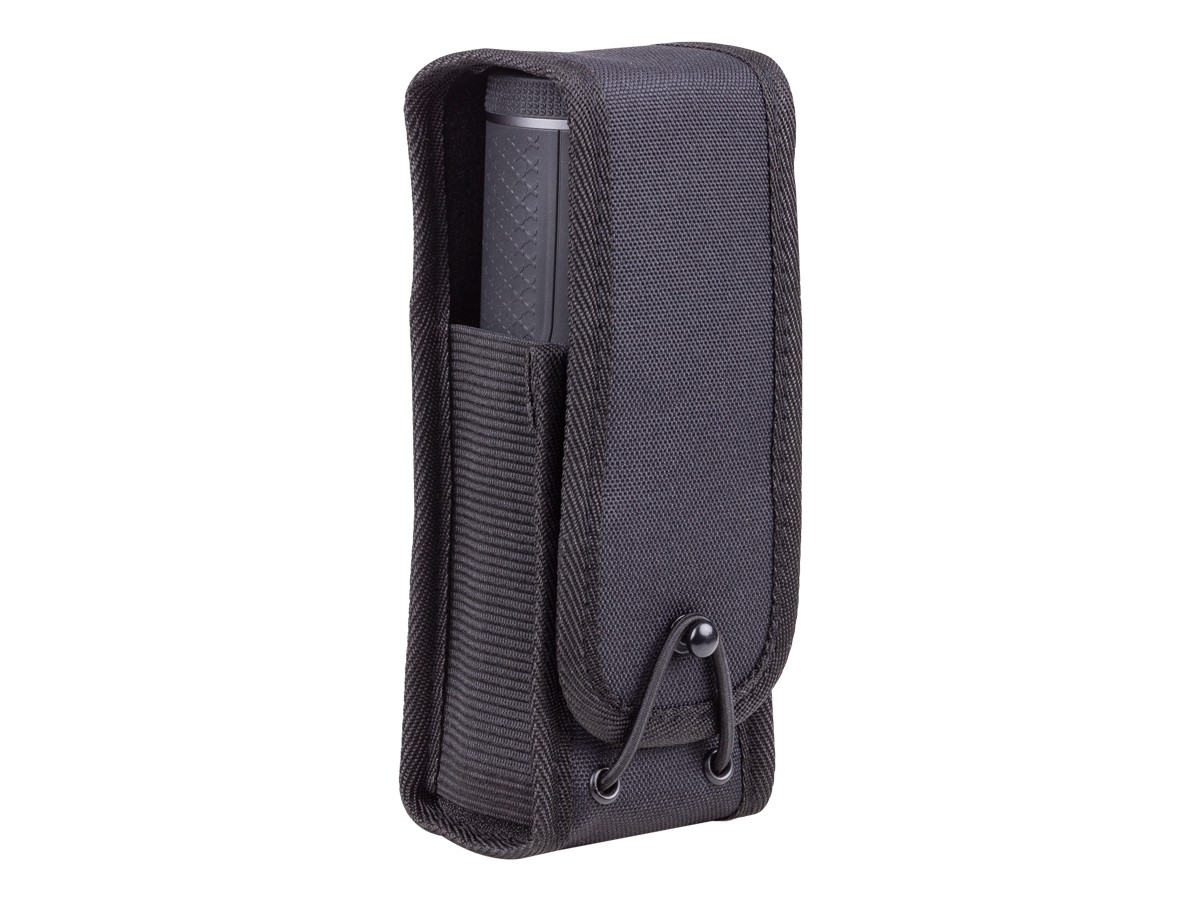
For additional protection during transportation, users should keep the monocular inside a suitable protective case whenever possible.
15. Can it be used for property inspections?
Yes. Thermal imaging can provide useful visual information during general property inspections.
Heat differences around buildings, machinery, roofs, walls, windows, vehicles, and equipment may become visible through thermal observation.1 10 lpvo
For example, unusually warm or cool areas may indicate something that deserves further inspection.
However, a handheld thermal monocular should not automatically be treated as a substitute for specialized professional diagnostic equipment.
If serious electrical, structural, insulation, or mechanical problems are suspected, inspection should be performed by a qualified professional using appropriate testing methods.
16. How does weather affect thermal performance?
Weather can significantly influence thermal imaging.
Cool, dry conditions often create stronger temperature differences between warm subjects and their surroundings.
In contrast, heavy rain, fog, high humidity, and very warm environmental temperatures can reduce thermal contrast.
Rain can also cool outdoor surfaces, while strong sunlight can heat rocks, walls, roads, and vegetation.
Because of these effects, the same location may look considerably different through a thermal monocular at different times of the day.
Users can usually achieve better results by becoming familiar with how local weather conditions influence thermal signatures.
17. Can thermal imaging see through walls?
No. Thermal monoculars do not provide X-ray vision and cannot see through solid walls.
Instead, they detect infrared energy emitted or reflected from surfaces.
If heat from an object changes the temperature of a wall or another surface, the temperature difference may sometimes become visible.
However, the device is displaying the surface temperature pattern rather than directly seeing an object behind the wall.
This distinction is important because unrealistic expectations about thermal imaging can lead to incorrect interpretations.
18. Can the monocular see through fog, smoke, or vegetation?
Thermal technology may provide better visibility than ordinary optics in some challenging environments, but it cannot see through every obstacle.nightforce atacr 4 20×50 f1
Light vegetation, certain smoke conditions, or mild atmospheric interference may still allow heat signatures to be detected.
However, dense branches, thick walls, heavy vegetation, substantial smoke, heavy rain, and dense fog can block or weaken thermal information.
Consequently, users should never assume that a hidden person, animal, or object will always be visible through an obstruction.
19. Who is this thermal monocular best suited for?
The device may be suitable for many different users, including wildlife enthusiasts, property owners, campers, outdoor explorers, field workers, farmers, land managers, and people who want a portable thermal observation tool.athlon scopes review
Its combination of thermal detection, multiple viewing modes, digital magnification, compact dimensions, and smart functions makes it versatile.
Beginners can benefit from its relatively accessible operating format, while more experienced users can appreciate the ability to customize the viewing experience.ares etr 1 10
The most suitable application will ultimately depend on the environment, observation distance, target size, weather conditions, and individual expectations.
20. Why choose this model instead of a standard optical monocular?
A standard monocular enlarges visible light, which means its usefulness can decrease dramatically after sunset.
Thermal imaging provides an entirely different form of information because temperature differences are displayed instead.
Therefore, warm subjects may remain detectable even when visual details have disappeared into darkness.
The BlazeSeeker 210 also provides multiple thermal palettes, digital zoom, adjustable display functions, and other thermal-specific features that cannot be reproduced by a conventional optical monocular.icarus scope
For people who frequently observe environments during low-light or nighttime conditions, this additional capability can provide significantly greater situational awareness.1 10 scope
21. Is it a good option for camping and outdoor exploration?
Yes. A compact thermal monocular can become a useful addition to outdoor equipment.
During camping, thermal observation may help users inspect surrounding areas, identify animals from a distance, examine campsites after dark, or observe unusual heat sources.avalon aries
Its handheld format makes it easier to pack alongside other essential outdoor equipment.
Nevertheless, the device should complement rather than replace flashlights, maps, communication devices, navigation tools, weather preparation, and other essential safety equipment.
22. How can users get the best performance from the monocular?
Better performance can usually be achieved through correct setup and regular practice.
Users should begin by adjusting brightness and contrast for the surrounding conditions. Different thermal palettes should then be tested to determine which provides the clearest separation between the subject and background.
Lower digital magnification is generally useful when searching broad areas, while higher magnification can be used after a heat signature has been located.
The lens should also be kept clean, while the device should be protected from unnecessary impacts, moisture exposure beyond its rated protection, and extreme storage temperatures.
Most importantly, practicing in different environments allows users to understand how weather, vegetation, buildings, animals, vehicles, and other objects appear through thermal imaging.
With regular use, thermal patterns become easier to interpret, helping users gain more practical value from the monocular during real-world observation.


Reviews
There are no reviews yet.