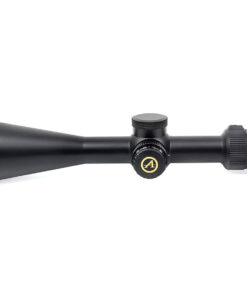
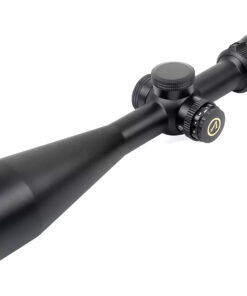
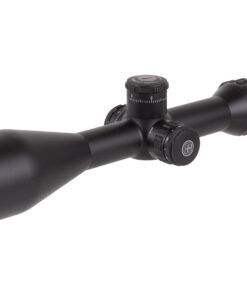
Athlon Talos BTR Gen 2 APLR2 IR 4-14×44, First Focal Plane
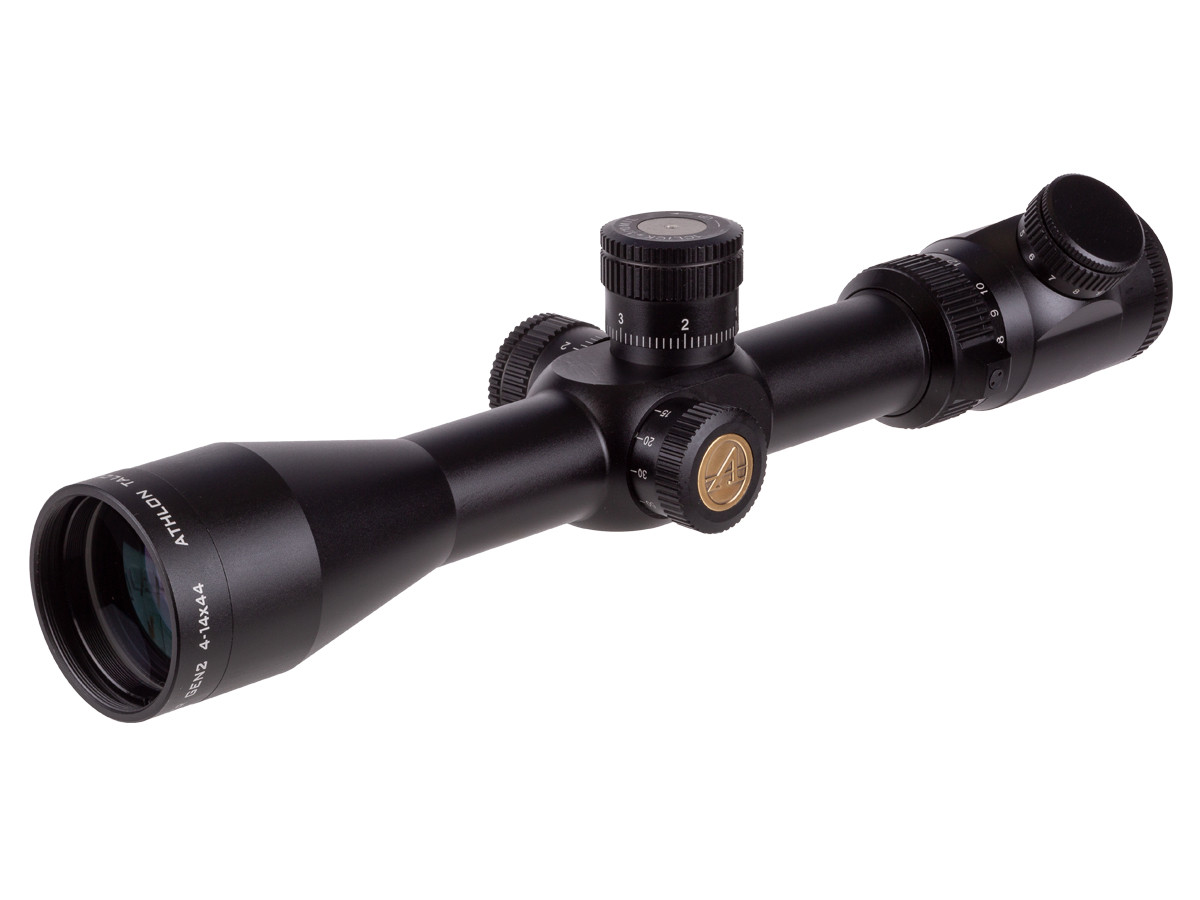
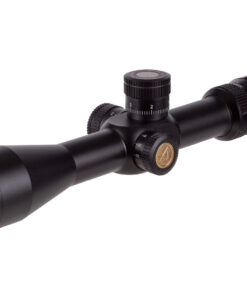
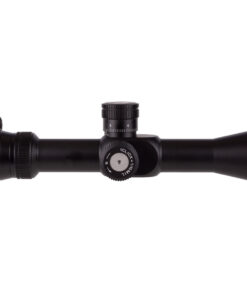
For shooters who value repeatable adjustments, a versatile magnification range, and an illuminated first focal plane reticle, the Athlon Talos BTR Gen 2 APLR2 IR 4-14×44, First Focal Plane has been designed as a capable precision optic. A practical balance between optical performance, adjustment capability, and rugged construction is provided, allowing the scope to be considered for target shooting, hunting applications, and other lawful sporting uses.
Across its 4-14x magnification range, flexibility is provided for both wider-field observation and more detailed aiming. Meanwhile, a 44 mm objective lens is incorporated to support useful light transmission without requiring an excessively large optical package. The Gen 2 model is also built around a 30 mm main tube, giving the optic a solid mounting platform and allowing its internal adjustment system to be accommodated effectively.
Precision Is Enhanced by the First Focal Plane Design
Unlike a conventional second focal plane configuration, a first focal plane reticle is positioned so that its apparent size changes together with magnification. Consequently, the reticle’s MIL-based subtensions remain proportional throughout the magnification range.
Because consistent subtension values are maintained, ranging, corrections, and hold references can be interpreted without being limited to one particular magnification setting. Greater flexibility is therefore provided when magnification has to be changed as viewing conditions or target distances change.
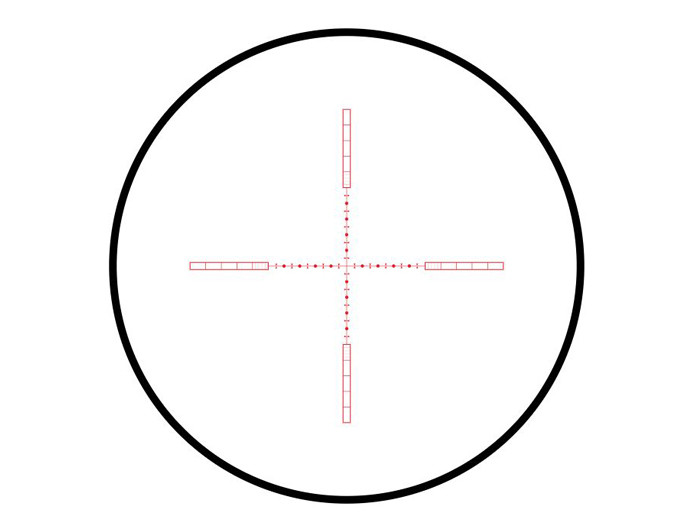
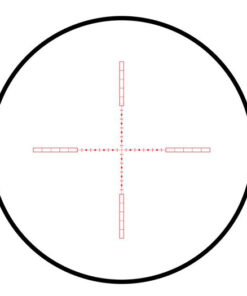
Furthermore, the APLR2 illuminated MIL reticle has been etched into glass. As a result, a defined aiming structure is maintained while illumination can be introduced when increased reticle visibility is useful. Athlon officially identifies this configuration as the APLR2 FFP IR MIL version.
4-14x Magnification for Versatile Observation
At the lower end of the magnification range, a wider field of view can be maintained. Therefore, target acquisition and general observation can be performed more comfortably.
As magnification is increased toward 14x, finer visual details can be examined more easily. Accordingly, a useful balance is provided for shooters who do not want to be restricted to either a low-power optic or an extremely high-magnification scope.
A field of view measuring approximately 27.2 feet at 4x and 7.9 feet at 14x at 100 yards is specified by Athlon. Additionally, eye relief is listed at approximately 3.23 to 3.15 inches throughout the zoom range.
Side Focus Parallax Adjustment From 10 Yards
Precise focusing becomes increasingly important whenever magnification is increased. For that reason, side-focus parallax adjustment from 10 yards onward has been incorporated into the Athlon Talos BTR Gen 2.
By allowing parallax to be adjusted for different target distances, a sharper target image can be achieved while apparent reticle movement caused by inconsistent eye positioning can be reduced when the optic is correctly configured.
Moreover, the conveniently positioned side-focus control allows adjustments to be made without requiring the shooter to reach toward the objective bell.
Exposed Turrets With 0.1 MIL Adjustments
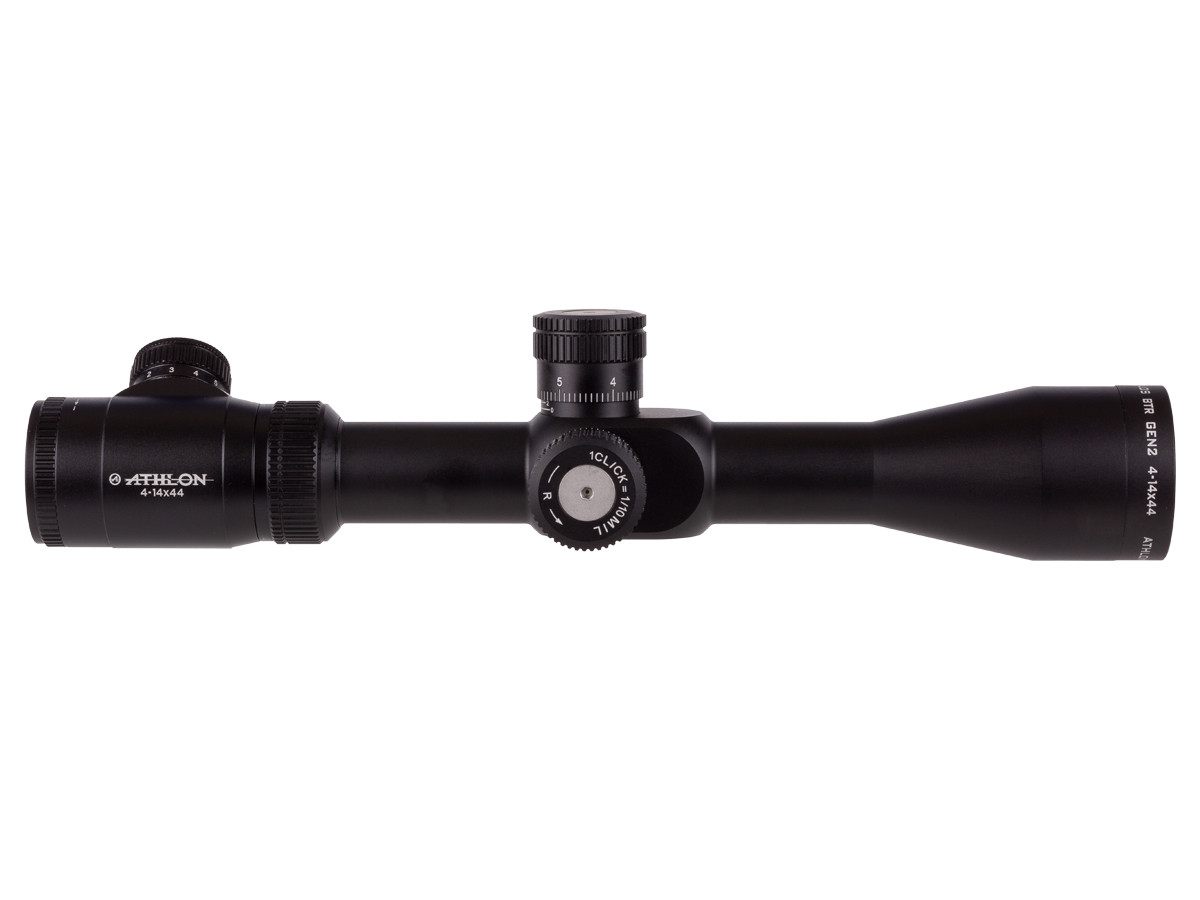
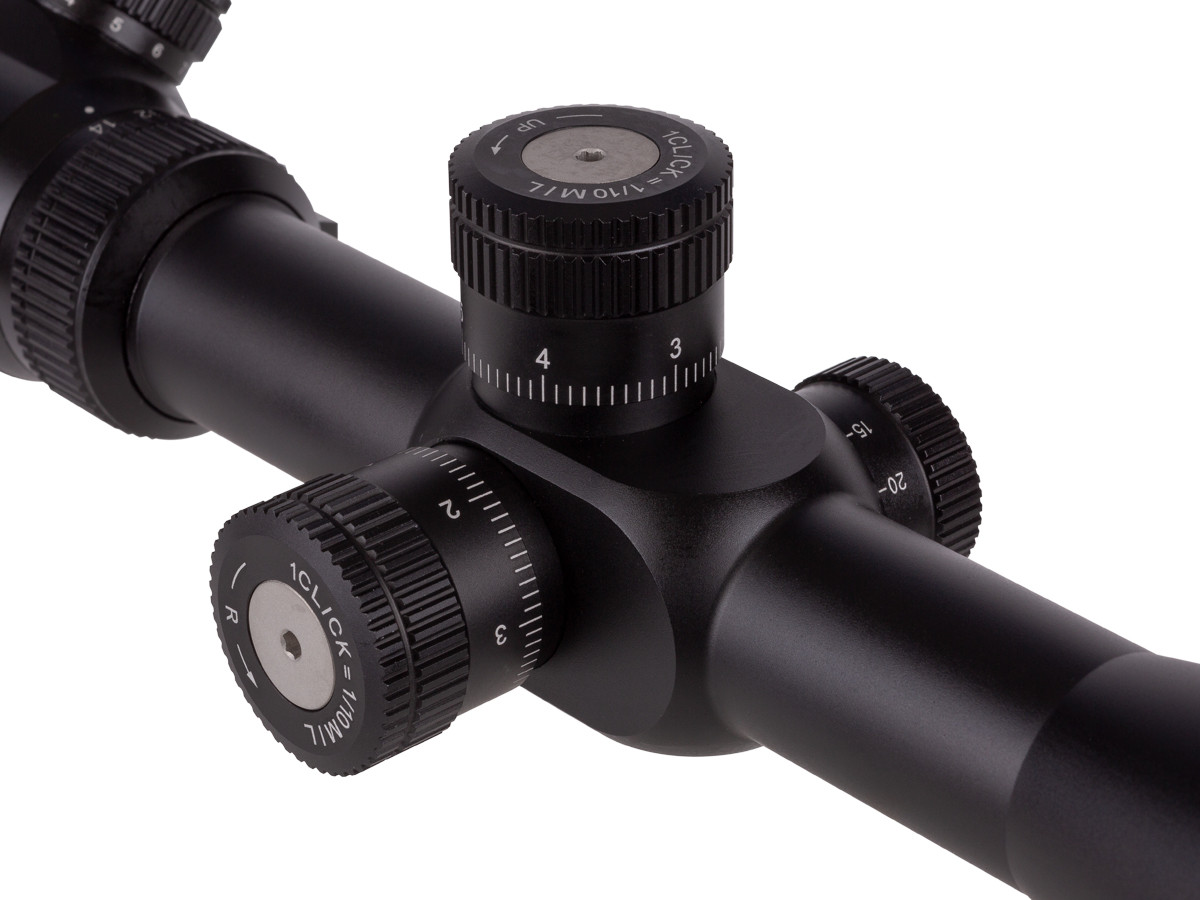
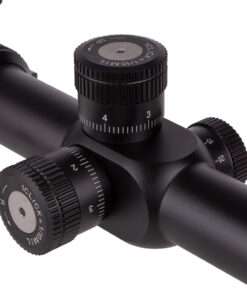
For shooters who prefer dialing corrections, exposed turrets have been fitted to this model. Each adjustment click is specified at 0.1 MIL, allowing measured elevation and windage changes to be applied.
In addition, 20 MIL of total elevation adjustment and 20 MIL of total windage adjustment are listed for the scope. Therefore, a useful adjustment range is available for zeroing and correction requirements.
Most importantly, the Talos BTR Gen 2 was developed with upgraded turrets compared with the preceding generation. A precision zero-stop system has also been incorporated into the Gen 2 platform, making a defined return-to-zero reference possible after elevation adjustments have been dialed.
Multicoated Optics for Improved Viewing
Optical performance is supported through the use of multicoated lenses. Through these coatings, unwanted reflection can be reduced and available light can be transmitted more effectively through the optical system.
Consequently, image clarity and contrast can be supported across different outdoor lighting conditions. The 44 mm objective also provides a practical compromise between light-gathering capability and overall dimensions.
Instead of an oversized objective housing being required, a relatively streamlined profile is maintained while useful optical performance is preserved.
Illuminated Etched-Glass APLR2 Reticle
When backgrounds become dark or visually complicated, an unilluminated reticle can sometimes become harder to distinguish. Therefore, illumination has been incorporated into the APLR2 reticle.
Because the reticle itself is etched into glass, the aiming structure can still be viewed without depending entirely on illumination. Greater versatility is consequently provided across different viewing environments.
Combined with the first focal plane configuration, the reticle can be used as a consistent visual reference throughout the available magnification range.
Rugged 6061-T6 Aluminum Construction
Durability has also been prioritized. The main housing is manufactured using 6061-T6 aircraft-grade aluminum, helping the optic withstand the routine physical demands associated with outdoor and sporting use.
Furthermore, the scope has been designed to be waterproof, fog proof, and shock resistant. Nitrogen purging is used within the optic to help maintain resistance against internal fogging and moisture intrusion.
Changing weather conditions can therefore be managed with greater confidence, while the sealed construction helps protect the internal optical system during outdoor use.
Practical Size and Balanced Configuration
Despite the combination of a 30 mm tube, 44 mm objective, exposed turrets, illumination, and first focal plane system, manageable overall dimensions are maintained.
A total length of approximately 12.9 inches and a weight of around 25.9 ounces are specified.
Because of this configuration, substantial precision-oriented functionality is provided without forcing the optic into an unusually oversized format.
Highlighted Athlon Talos BTR Gen 2 Features
- 4-14x variable magnification
- 44 mm objective lens
- First focal plane optical design
- APLR2 illuminated MIL reticle
- Etched-glass reticle construction
- 30 mm main tube
- 0.1 MIL turret adjustments
- 20 MIL total elevation adjustment
- 20 MIL total windage adjustment
- Side-focus parallax adjustment from 10 yards
- Precision zero-stop system
- Exposed adjustment turrets
- Multicoated lenses
- 6061-T6 aircraft-grade aluminum construction
- Nitrogen-purged optical system
- Waterproof construction
- Fog-proof performance
- Shock-resistant design
- Approximately 12.9-inch overall length
- Approximately 25.9-ounce weight
Why Choose the Athlon Talos BTR Gen 2 APLR2 IR 4-14×44?
Versatility is one of the strongest advantages offered by the Athlon Talos BTR Gen 2 APLR2 IR 4-14×44, First Focal Plane. Rather than concentrating on a single feature, multiple precision-oriented technologies have been combined into one practical optical system.
For instance, magnification can be changed while the first focal plane reticle remains proportionally useful. At the same time, parallax can be adjusted through the side-focus mechanism. Measured corrections can then be applied through the exposed MIL turrets, while the zero stop provides a convenient reference for returning to the established zero.
Additionally, reticle illumination can be activated when visibility needs to be increased. The etched-glass construction ensures that the reticle itself remains defined, while multicoated lenses help preserve useful image quality.
Built for Shooters Who Expect More From a Versatile Scope
Whether a precision-oriented optic is being selected for range use, recreational target shooting, or lawful hunting applications, dependable adjustment capability and optical versatility are often considered essential.
With the Athlon Talos BTR Gen 2 APLR2 IR 4-14×44, those requirements are addressed through a first focal plane illuminated MIL reticle, 4-14x magnification, side-focus parallax adjustment, multicoated optics, exposed turrets, and rugged aluminum construction.
Ultimately, a combination of practical magnification, repeatable MIL-based controls, durable construction, and modern first focal plane functionality is delivered. For anyone seeking a feature-rich optic without moving into an unnecessarily complicated platform, the Athlon Talos BTR Gen 2 APLR2 IR 4-14×44 First Focal Plane riflescope provides a compelling balance of precision, adaptability, and usability.
Frequently Asked Questions
What is the Athlon Talos BTR Gen 2 4-14×44 designed for?
The Athlon Talos BTR Gen 2 4-14×44 is designed for users who want a versatile riflescope that combines variable magnification, a first focal plane reticle, illuminated aiming references, side-focus adjustment, and exposed turrets. Its 4-14x magnification range makes it adaptable to different sporting and recreational shooting environments, while the 44 mm objective lens provides a practical balance between optical performance and manageable size.
Because several adjustment features are integrated into one platform, the scope can be configured according to target distance, lighting conditions, and personal viewing preferences. It is therefore suitable for shooters who want more control than a basic fixed-power or entry-level optic generally provides.
What does first focal plane mean on this scope?
A first focal plane, or FFP, scope places the reticle within the optical system so that the apparent size of the reticle changes as magnification is increased or decreased. As a result, the relationship between the reticle markings and the viewed target remains proportional throughout the magnification range.
This feature is especially useful when measured reticle references are being interpreted at different magnification levels. Instead of being restricted to a specific magnification setting, the reticle remains proportionally consistent across the available zoom range.
For many users, this creates a more flexible and intuitive viewing experience, particularly when magnification needs to be adjusted frequently.
What magnification range does the scope provide?
The scope provides a variable magnification range from 4x to 14x. At 4x, a broader field of view is available, which can make target observation and general scanning more comfortable. As magnification is increased, finer details can be viewed more clearly.
At 14x, the optic provides increased visual detail for situations where closer examination of the target is desirable. Because users are not restricted to one fixed magnification level, the scope can be adapted to a wider variety of viewing situations.
The 4-14x range is widely appreciated because it offers practical flexibility without making the optical system excessively large or complicated.
Why is the 44 mm objective lens important?
The 44 mm objective lens is designed to collect and transmit available light through the optical system while maintaining relatively practical dimensions. A larger objective can support image brightness, especially when magnification is increased or ambient light becomes less favorable.
However, optical performance is influenced by more than objective diameter alone. Lens coatings, optical design, environmental conditions, and the user’s eye position also contribute to perceived clarity and brightness.
The 44 mm configuration therefore provides a useful middle ground between light-gathering capability, mounting height, overall dimensions, and portability.
Does the scope have an illuminated reticle?
Yes. The scope incorporates an illuminated reticle designed to improve reticle visibility when the background or surrounding environment makes conventional dark reticle lines harder to distinguish.
Illumination can be particularly useful when viewing dark vegetation, shaded areas, or other visually complex backgrounds. However, illumination does not need to be used constantly. Because the reticle is etched into glass, the aiming structure remains visible even when illumination is switched off.
This gives users the option to select illuminated or non-illuminated viewing depending on their circumstances and personal preference.
What is the benefit of an etched-glass reticle?
An etched-glass reticle is physically incorporated into the optical system rather than relying entirely on projected illumination. Consequently, the reticle remains visible even when illumination is disabled or the battery is depleted.
Glass-etched reticles can also provide sharply defined aiming references and contribute to consistent visibility across different lighting conditions.
Because the reticle structure itself remains present independently of illumination, users gain greater flexibility. Illumination can therefore be treated as an enhancement rather than an essential requirement for basic reticle visibility.
What does side-focus parallax adjustment do?
Side-focus adjustment is designed to help reduce parallax error and improve image focus at different viewing distances. Parallax can occur when the reticle and target image do not appear to lie on the same optical plane, which may cause apparent movement when the shooter’s eye position changes.
By adjusting the side-focus control to better match the viewing distance, both image clarity and reticle stability can be improved.
The control is conveniently positioned on the side of the scope, allowing adjustments to be made without reaching forward toward the objective housing.
How close can the parallax adjustment be set?
The side-focus system can be adjusted from approximately 10 yards onward. This relatively close minimum focusing distance increases versatility, especially for users who may be viewing targets at shorter ranges as well as at longer distances.
Because the optic is not limited to a long minimum parallax distance, it can be configured for a wider variety of recreational and sporting applications.
Actual image sharpness can still vary depending on eyesight, magnification, lighting conditions, and environmental factors, so fine adjustment may be required for the clearest possible view.
What type of turret adjustments are used?
The scope uses exposed turrets with MIL-based adjustment increments. Each click represents 0.1 MIL, allowing controlled and repeatable adjustments to be made.
Exposed turrets make adjustment controls immediately accessible, which can be convenient for users who frequently change elevation or windage settings.
Clear turret indexing is also useful because adjustments can be tracked more easily. However, the user should always become familiar with the optic’s controls and verify settings in a safe, controlled environment before relying on them during sporting use.
Does the Athlon Talos BTR Gen 2 include a zero stop?
Yes. The Gen 2 platform incorporates a zero-stop system. Once correctly configured, the zero stop creates a mechanical reference point that assists the user in returning the elevation turret to the established zero setting after adjustments have been made.
This feature can be particularly useful for users who regularly dial elevation changes and want a more convenient reference for returning to their original setting.
Proper setup should always be completed according to the manufacturer’s instructions so that the zero-stop mechanism operates as intended.
What size main tube does the scope use?
The riflescope uses a 30 mm main tube. This tube diameter is commonly associated with variable-power optics that require adequate internal space for adjustment mechanisms and durable structural construction.
When selecting mounting hardware, compatible 30 mm rings or an appropriate mounting system should be chosen. Ring height will depend on the specific platform, base, objective clearance, and desired shooting position.
Care should also be taken not to overtighten mounting rings, because excessive torque can potentially damage the scope tube or affect optical alignment.
Are the lenses coated?
Yes. The optical surfaces are treated with lens coatings designed to reduce unwanted reflection and improve light transmission.
These coatings help preserve image contrast and clarity across different viewing conditions. They can also reduce glare that may otherwise interfere with the visual image.
To preserve the coatings, the lenses should be cleaned carefully. Loose debris should first be removed with suitable optical-cleaning equipment, after which a lens-safe cloth or cleaning solution can be used when necessary.
Is the scope waterproof and fog resistant?
The scope is designed with environmental sealing and internal nitrogen purging to help resist water intrusion and internal fogging.
These features are especially useful when the optic is exposed to changing temperatures, damp conditions, or outdoor environments.
However, waterproof construction does not mean the scope should be unnecessarily submerged or subjected to improper cleaning methods. After exposure to moisture, the exterior should be dried and inspected before storage.
Is the scope shock resistant?
Yes. The scope is built to withstand the normal mechanical stresses associated with compatible sporting platforms and outdoor use.
Its aluminum construction contributes to structural strength while maintaining practical weight.
Nevertheless, proper mounting remains important. A poorly fitted mount, loose fasteners, excessive torque, or physical impact can negatively affect any optical device. Regular inspection of the mounting system is therefore recommended.
What material is used for the scope body?
The main housing is manufactured from 6061-T6 aircraft-grade aluminum. This alloy is commonly used where strength, durability, and relatively low weight are required.
The construction helps create a rigid platform for the internal optical and adjustment components while keeping the overall optic manageable.
As with any precision optical product, scratches, dents, hard impacts, and improper clamping should still be avoided.
Is the 4-14×44 configuration suitable for different lighting conditions?
The scope is designed to remain versatile across a variety of daytime and transitional lighting conditions. The 44 mm objective, multicoated optics, adjustable magnification, and illuminated reticle all contribute to this adaptability.
At lower magnification, the image may appear brighter and a wider field of view is generally available. When greater detail is required, magnification can be increased.
In darker conditions, reticle illumination can improve aiming-reference visibility. However, the optic is not a substitute for dedicated night-vision or thermal equipment.
Does higher magnification always provide a better image?
Not necessarily. Higher magnification makes smaller details appear larger, but it also reduces the field of view and can make movement, atmospheric distortion, or minor positioning errors more noticeable.
Image brightness may also appear reduced at maximum magnification depending on lighting conditions.
For that reason, users should select only as much magnification as is required for the viewing situation. Lower magnification can often provide faster observation and a wider visual field, while higher magnification is better suited to inspecting smaller details.
How should the scope be cleaned?
Routine maintenance should begin by removing dust, sand, and loose debris before the lens surfaces are wiped. An optical blower or soft lens brush can be used for this purpose.
After loose particles have been removed, a clean microfiber lens cloth may be used gently. If oil, fingerprints, or stubborn contamination remains, a lens-safe cleaning solution can be applied according to the manufacturer’s recommendations.
Household paper towels, abrasive fabrics, aggressive solvents, and excessive pressure should be avoided because they can damage protective lens coatings.
The external body can usually be wiped with a clean, slightly damp cloth and dried afterward.
How should the optic be stored?
The optic should be stored in a dry, temperature-stable location whenever possible. Before storage, moisture and surface contamination should be removed.
Lens caps can help protect the glass against dust and accidental contact. However, the optic should not be sealed away while heavily wet because trapped moisture may create unnecessary problems.
Periodic inspection is recommended, especially after extended storage or demanding outdoor use. Batteries should also be checked if the illuminated reticle has not been used for a long period.
Why might the reticle appear blurry?
A blurry reticle can occur when the eyepiece focus has not been adjusted correctly for the user’s eyesight.
The ocular focus should be set so that the reticle appears crisp as soon as the user looks through the optic. The target itself should not be used as the primary reference when adjusting reticle focus.
If the target image is blurry while the reticle remains sharp, parallax or target-focus adjustment may need to be changed instead. Correctly setting both controls helps produce a clearer overall sight picture.
Can people who wear glasses use the scope?
Many people who wear prescription glasses can use variable riflescopes successfully. Comfort will depend on eye relief, prescription requirements, shooting position, and how the optic is mounted.
The scope should be positioned so that a full field of view can be obtained comfortably without forcing the user’s head unnaturally forward or backward.
Users who normally require corrective lenses should generally configure the optic while wearing whatever eyewear they normally use during sporting activities.
Why is correct eye relief important?
Eye relief describes the distance between the user’s eye and the rear lens at which the full field of view can be seen.
Correct eye relief improves comfort, supports a consistent viewing position, and helps prevent the user from positioning their eye unnecessarily close to the optic.
Mounting position should therefore be established carefully before the rings are fully tightened. The complete magnification range should also be checked, because usable eye position can vary slightly as magnification changes.
What makes the Gen 2 version different from a simpler entry-level scope?
The Gen 2 configuration combines several features that are often sought by users wanting increased optical and adjustment flexibility. These include a first focal plane reticle, illumination, exposed MIL turrets, side-focus parallax adjustment, a zero-stop mechanism, a 30 mm main tube, and variable 4-14x magnification.
Rather than being limited primarily to basic magnification and zeroing, the optic provides additional controls that allow the viewing system to be adapted more precisely.
This makes it especially appealing to users who value adjustability but still want a relatively straightforward and compact optical platform.
Is the Athlon Talos BTR Gen 2 a good value option?
For buyers comparing feature sets, the scope provides a strong combination of first focal plane functionality, illuminated reticle technology, side focus, exposed turrets, zero-stop capability, and durable construction.
Value should always be judged according to individual needs, intended application, preferred reticle system, mounting requirements, and budget. However, users looking for multiple precision-oriented features within one optic may find the configuration particularly attractive.
Ultimately, the best scope is one that matches the user’s intended lawful sporting application, equipment compatibility, viewing preferences, and expected environmental conditions.
Premium Rangefinding Binoculars, Precision Riflescopes and Advanced Hunting Optics
Modern optical technology gives hunters, sport shooters, wildlife observers, and outdoor enthusiasts more ways to identify distant targets, measure range, and achieve a clearer field of view. Premium Leica rangefinder binoculars remain highly regarded for combining observation and ranging technology in one compact optical platform. Popular searches include Leica Geovid 10×42 rangefinder binoculars, Leica Geovid binoculars, Leica binoculars with rangefinder, Leica Geovid Pro 10×42, and Geovid Pro 10×42. Whether someone is researching a Leica Geovid rangefinder, Leica Geovid Pro rangefinder binoculars, Leica Geovid rangefinder binoculars, or the classic Leica Geovid 10×42, the Geovid family is commonly associated with high-quality glass, strong optical clarity, and practical long-distance observation.
Beyond rangefinding models, the wider Leica binoculars collection appeals to users searching for Leica small binoculars, binoculars Leica, Leica Geovid binos, Leica bino, Leica binoculars for sale, Leica bino rangefinder, Leica camera binoculars, Leica binos, or simply a Leica binocular for travel, field observation, wildlife viewing, and outdoor use. Different magnification formats, including 10×40, can suit users who want a balance between detail, portability, and field of view.
Alternative electronic binocular technologies are also becoming increasingly popular. Searches for SIG Sauer binoculars, SIG self stabilizing binoculars, SIG Sauer binos, SIG binoculars, SIG image stabilizing binoculars, SIG binocular, and SIG auto stabilizing binoculars reflect growing interest in electronically assisted viewing. Likewise, SIG Sauer self stabilized binoculars and SIG Sauer image stabilized binoculars can appeal to users who want reduced visual movement during handheld observation. Some buyers may also encounter broader search variations such as Sigma binoculars or specification terms like 11.5ee while comparing different optical products.
Precision aiming optics occupy another major part of the premium optics market. A Zeiss red dot offers a different sighting concept from traditional magnified optics, while the Nightforce ATACR line is frequently researched by users interested in premium long-range scopes. Common variants include Nightforce ATACR 5-25×56 F2, Nightforce ATACR 4-20×50, Nightforce ATACR 5-25×56 F1, and Nightforce ATACR 4-16×50. Related searches such as Night Force ATACR, ATACR scope, Nightforce attacker, ATACR 4-20, and Nightforce ATACR 4 20×50 F1 often appear when buyers are comparing magnification ranges, focal-plane configurations, turret systems, and optical performance.
At the higher end of precision optics, Tangent Theta products are frequently associated with specialist applications requiring refined mechanical adjustment and premium optical performance. Users may search for Tangent Theta scopes, Tangent scope, Tangent scopes, Theta optics, Tangent Theta scope, and Tangent optics while researching high-performance long-range systems.
The market also includes companies such as Fierce Firearms, Fierce Arms, and Fierce Optics, which may appear in searches involving hunting equipment and optical accessories. Within the Athlon category, meanwhile, one of the more detailed product searches is Midas TAC Gen2 HD 6-24×50 APLR15 FFP MOA reticle riflescope. The broader Athlon Midas TAC family, including Athlon Midas TAC 6-24×50, is often considered by users who want substantial magnification and adjustable target-focused features.
For shooters comparing larger objective and magnification configurations, terms such as 34 56, 34×56, Athlon Argos BTR Gen2 8-34×56, Athlon BTR Gen 2, Athlon Argos BTR Gen2, Athlon Argos BTR, and Athlon Argos BTR Gen 2 commonly appear during product research. Search variations such as Athalon scopes and Athens scope may also lead shoppers toward Athlon products when researching a new gun scope, Icarus scope, longest range scope, or general hunting optic.
Anyone learning how to buy a rifle scope should compare magnification range, objective diameter, reticle design, adjustment system, eye relief, optical quality, focal-plane configuration, overall weight, and intended sporting application. Terms such as AO scope can refer to adjustable-objective configurations, while models in the Athlon Ares BTR family provide additional options for users exploring precision-oriented optics.
Mid-range magnification searches frequently include 2.5×15, Avalon Aries, 2.5/15, Athlon BTR Gen 2, Athlon scopes review, Athlon reticles, 2.5-15 scope, and repeated comparisons involving Athlon Argos BTR Gen2 8-34×56 or 34×56 configurations. These searches demonstrate how buyers often compare reticles, magnification ratios, objective sizes, and scope families rather than selecting an optic solely by maximum magnification.
Low-power variable optics are another major category. Searches such as 1 10 scope, Ares ETR 1 10, 1 10 LPVO, 1-10 LPVO, 1-10 FFP LPVO, 1×10 scope, Athlon ETR, LPVO 1-8, LPVO 1-10, and 1-10 rifle scope reflect demand for versatile magnification systems. An LPVO allows users to move between low magnification for a broad field of view and higher magnification for improved observation at extended distances, making the format useful across several sporting disciplines.
For greater magnification, the Ares ETR Gen2 UHD 4.5-30×56 APRS12 FFP IR MIL reticle represents another precision-focused configuration within the Athlon range. Related product searches include Athlon 4.5-30×56, 4.5 30, Athlon ETR, and 4.5/30. The large 56 mm objective and broad magnification range make this type of optic particularly relevant to users comparing long-distance target and field optics.
Other searches such as 14×44, 2s14, Athlon BTR 2-12, 1/2×42, Athlon BTR Gen 2, 12×4.2, 2-12x, and Athlon 2 demonstrate continued demand for more compact variable-magnification formats. A 2-12x configuration, for example, can provide a useful compromise between field of view and magnified observation without requiring the size or weight of a very high-magnification optic.
Ultimately, premium optics cover far more than a single product category. Leica rangefinder binoculars and Leica Geovid binoculars combine observation with distance measurement, while stabilized SIG Sauer binoculars emphasize steady handheld viewing. Meanwhile, Nightforce ATACR, Tangent Theta scopes, and Athlon families such as the Midas TAC, Argos BTR, Ares BTR, and Ares ETR provide a wide range of magnification, reticle, and focal-plane options. By comparing optical clarity, magnification range, objective diameter, reticle format, adjustment system, physical dimensions, and intended sporting use, buyers can narrow a broad optics market into products that better match their individual requirements.
Practical Use Scenarios
Range Training and Precision Practice
A controlled shooting range is one of the most practical environments in which this optic can be appreciated. During routine target practice, the 4-14x magnification range allows the shooter to adapt the sight picture to both closer and more distant targets without changing optics.
At lower magnification, a broader field of view is provided. Therefore, locating targets and transitioning between different aiming points can be completed more comfortably. As the distance increases, magnification can be raised gradually so that smaller details become easier to observe.
Because the reticle is positioned in the first focal plane, its proportional relationship to the target is maintained throughout the magnification range. Consequently, the shooter does not have to depend on one specific magnification setting when using the reticle as a visual reference.
During precision practice, the side-focus adjustment can also be used to improve target clarity and minimize apparent reticle movement caused by parallax. When the target distance changes, the focus control can be adjusted accordingly. As a result, a more stable and clearly defined sight picture can be maintained.
For people who regularly practice on paper or steel targets at known distances, the exposed turrets provide another useful feature. Adjustments can be made in measured increments, while the zero-stop system provides a reliable mechanical reference for returning to the established setting afterward.
Recreational Target Shooting at Different Distances
Recreational target shooting often involves more than one distance. One session may begin with relatively close targets before moving to smaller targets positioned farther away.
In that type of environment, a variable-power optic becomes particularly useful. At 4x, the shooter can maintain a wider viewing area and acquire larger targets without excessive magnification. Then, as the target becomes smaller or farther away, magnification can be increased toward 10x, 12x, or 14x depending on the required level of detail.
Because the magnification can be changed without compromising the proportional behavior of the first focal plane reticle, the user is given more flexibility throughout the session.
Furthermore, the 44 mm objective lens supports a useful balance between image brightness and overall optic size. The scope can therefore provide enough optical capability for detailed viewing while remaining relatively manageable on the firearm.
This combination can be especially valuable for users who prefer one optic that can cover several common recreational shooting distances instead of relying on separate scopes for different activities.
Using the Scope During Early Morning Conditions
Outdoor shooting conditions are not always perfectly bright. During early morning practice or hunting where legally permitted, ambient light may initially be limited.
In such conditions, the multicoated optical system helps available light pass through the scope efficiently. The 44 mm objective also contributes to maintaining a usable image when illumination levels are lower than during the middle of the day.
If the background appears dark, the illuminated reticle can be activated so that the aiming reference becomes easier to distinguish.


Reviews
There are no reviews yet.