Athlon Optics Heras SPR APLR9 6-24×56 – Precision Built for Long-Range Performance
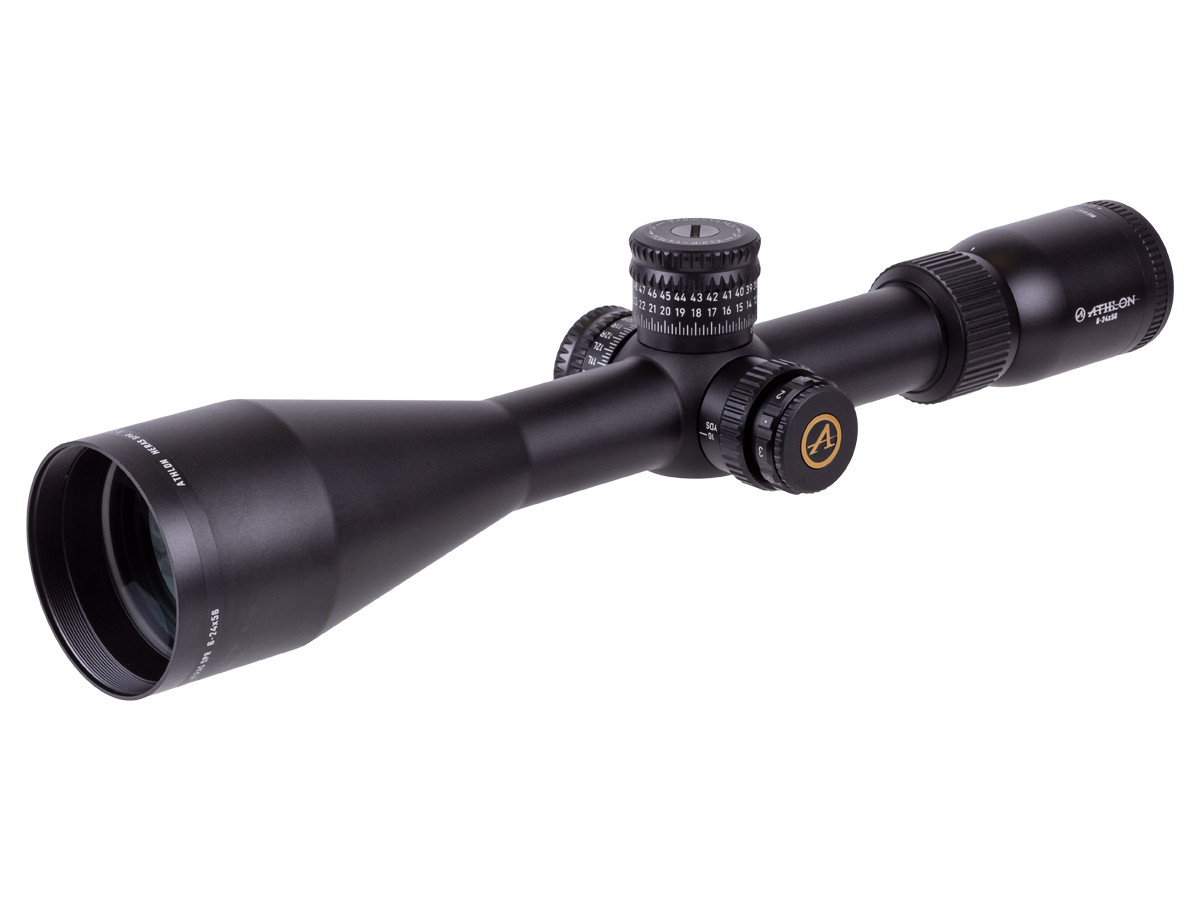
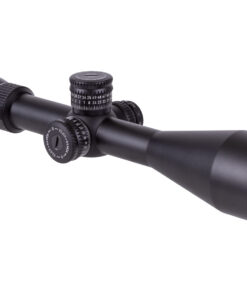
When precision, clarity, and dependable adjustment are demanded, the Athlon Optics Heras SPR APLR9 6-24×56 is designed to deliver a highly capable optical system for demanding shooters. Built around a broad 6-24x magnification range, this riflescope is especially well suited to precision target shooting, long-range applications, small-caliber rifles, and high-performance airguns.
More importantly, a generous 56 mm objective lens is incorporated so that available light can be gathered effectively. As a result, bright and detailed target images can be maintained across a wide range of shooting conditions. Furthermore, advanced fully multi-coated optics are used to improve light transmission, brightness, and color fidelity.
Rather than being designed only around magnification, the Athlon Optics Heras SPR APLR9 6-24×56 has been equipped with features that allow adjustments to be made confidently and consistently. Consequently, everything from target acquisition to elevation correction can be approached with greater control.
Athlon Optics Heras SPR APLR9 6-24×56 Key Features
For shooters who value dependable functionality, an impressive combination of optical and mechanical features has been incorporated into the Heras SPR platform.
Highlighted Product Features
- 6-24x variable magnification for medium- to long-range observation and precision shooting
- Large 56 mm objective lens for strong light-gathering capability
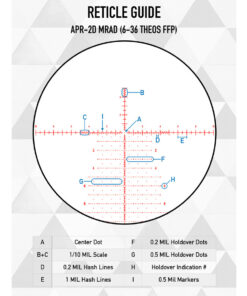
- APLR9 illuminated MOA reticle for enhanced visibility and precise hold references
- First Focal Plane reticle configuration
- 30 mm main tube for a robust and versatile optical platform
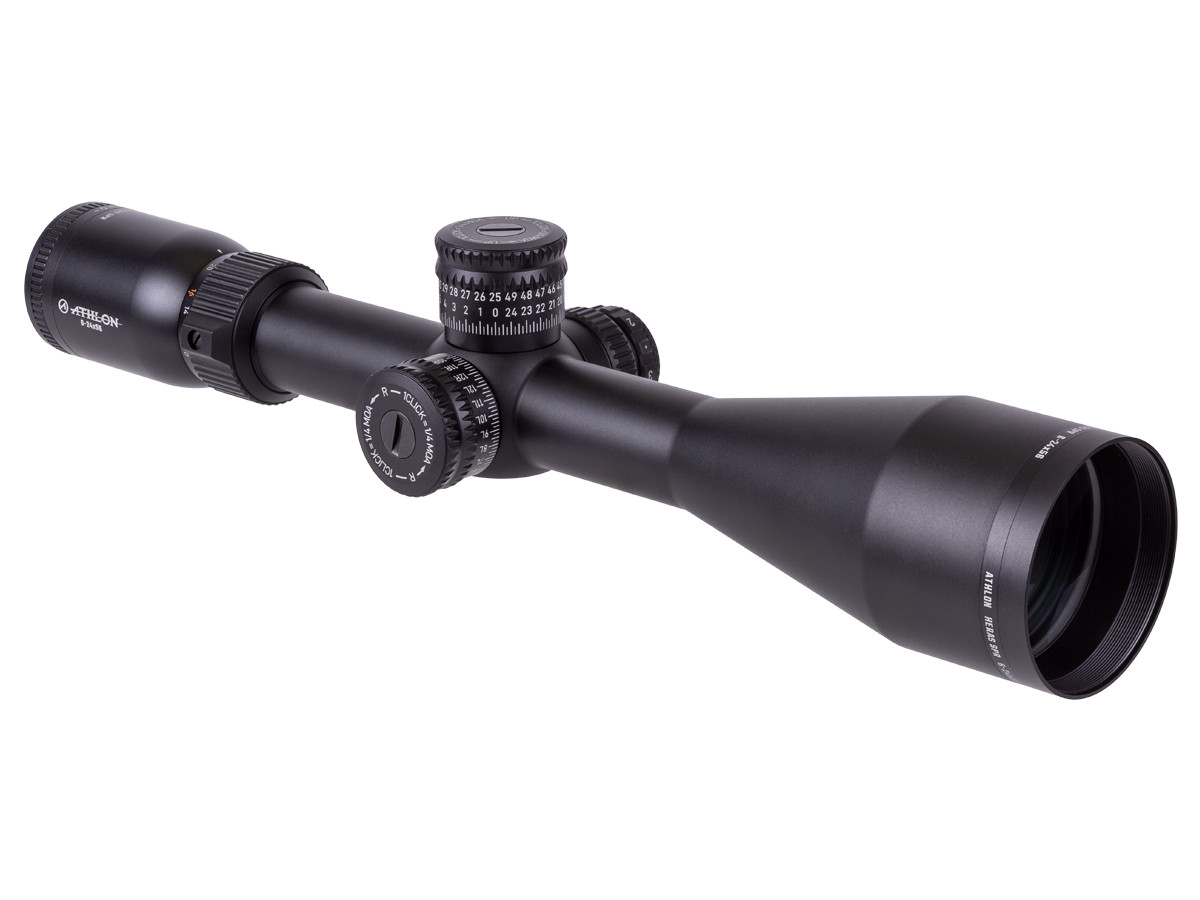
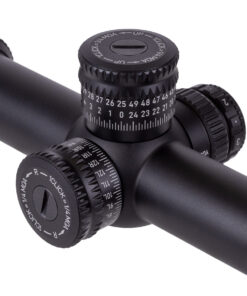
- 0.25 MOA click adjustments for precise correction
- Precision Zero Stop System for a reliable return to established zero
- Locking turret design to help prevent accidental adjustment
- Advanced fully multi-coated lenses for improved brightness and color reproduction
- Parallax adjustment down to 10 yards
- 3.6-inch eye relief for comfortable viewing
- 19.9–5.1 ft field of view at 100 yards
- Argon-purged construction for improved resistance to internal fogging
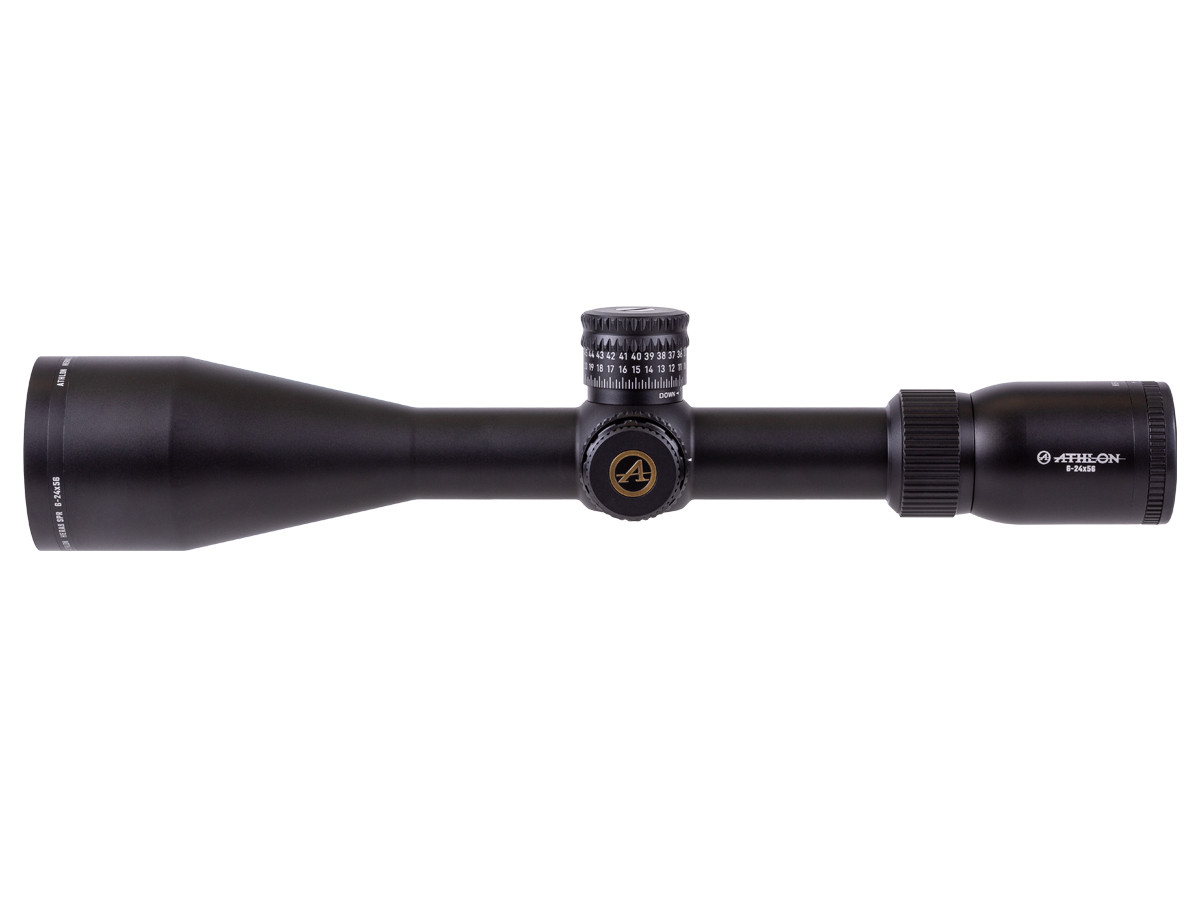
- 14.4-inch overall length
- Approximately 32.3 oz weight
These core specifications are published by Athlon for the HERAS SPR 6-24×56 APLR9 configuration.
Exceptional 6-24x Magnification for Precision Shooting
Through the versatile magnification system, different shooting distances can be addressed without requiring a change in optics. At 6x magnification, a wider viewing area is provided, which can make target identification and initial positioning easier. Meanwhile, as magnification is increased toward 24x, considerably more target detail can be observed.
Therefore, the scope can be adapted as shooting conditions change.
For range users, smaller targets can be inspected with greater visual confidence. Likewise, for airgun enthusiasts, distant targets can be approached with a level of magnification suited to precise pellet placement. Additionally, small-caliber rifle users can benefit when tighter aiming references are required at extended distances.
Athlon itself positions this model for extending the practical capabilities of small-caliber firearms and airguns.
Large 56 mm Objective for Bright, Detailed Images
Optical performance can become especially important as magnification increases. For that reason, a 56 mm objective lens has been incorporated into the Athlon Optics Heras SPR APLR9 6-24×56.
With its larger objective diameter, available light can be collected effectively before being transmitted through the optical system. Moreover, Athlon’s advanced fully multi-coated lens treatment is applied to improve light transmission while helping produce optimum brightness and true-to-life color representation.
Consequently, targets can be presented with strong visual definition, while details can remain easier to distinguish during changing light conditions.
Advanced Fully Multi-Coated Optics
Rather than relying solely on lens size, optical coatings are also used to enhance performance. Light transmission is improved through these coatings, while brightness and color accuracy are supported across the visible spectrum.
As a result, the viewing experience feels more refined when targets are being evaluated at higher magnification.
APLR9 First Focal Plane Illuminated Reticle
One of the most important features of the Athlon Optics Heras SPR APLR9 6-24×56 is its APLR9 FFP IR MOA reticle.
Because the reticle is positioned in the first focal plane, its apparent size changes together with magnification. Therefore, the reticle’s relationship with the target remains proportional throughout the magnification range.
This configuration can be particularly useful when MOA-based references are being used for measured corrections, holds, or target evaluation.
Additionally, illumination has been integrated into the reticle. Consequently, reticle visibility can be enhanced when contrast between the target and surrounding environment becomes less favorable.
Precise 0.25 MOA Adjustments
Precise corrections are essential whenever a riflescope is being configured for accurate shooting. Accordingly, the APLR9 MOA model is provided with 0.25 MOA click adjustments.
Through these quarter-MOA increments, measured elevation or windage corrections can be entered with considerable precision.
Furthermore, an adjustable elevation turret has been incorporated into the design. Therefore, elevation changes can be dialed as different target distances are encountered.
Precision Zero Stop for Reliable Return to Zero
Once an established zero has been obtained, returning to that reference point should remain simple. For this reason, Athlon’s Precision Zero Stop System is included.
With the system correctly configured, the elevation adjustment can be returned to the original zero position with a distinct mechanical stop.
Consequently, shooters who dial elevation for different distances can return to their established baseline with greater confidence.
Locking Turret Protection
Accidental adjustments can create unnecessary problems, especially when equipment is being transported or handled frequently. Therefore, locking functionality has been incorporated into the turret system.
Athlon describes its locking turret mechanism as being operated by pulling the turret upward for adjustment and pushing it downward to lock the setting into position.
Because unintended movement can be minimized, established settings can be preserved more effectively.
Adjustable Parallax from 10 Yards
A particularly useful feature is provided through the scope’s parallax adjustment beginning at 10 yards.
This short minimum distance makes the optic especially attractive for air rifle and rimfire applications, where targets may be engaged considerably closer than they would be with many traditional long-range centerfire setups.
Moreover, as target distance changes, parallax can be corrected accordingly. Therefore, image focus and aiming consistency can be optimized for the distance being used.
Comfortable 3.6-Inch Eye Relief
Viewing comfort has also been considered.
A 3.6-inch eye relief is provided throughout the published specifications for the 6-24×56 Heras SPR series.
Consequently, a practical viewing position can be established while proper scope mounting and shooting technique are maintained.
Additionally, the field of view ranges from 19.9 feet to 5.1 feet at 100 yards, depending on magnification.
At lower magnification, a broader scene can therefore be observed. Conversely, when higher magnification is selected, target detail can be prioritized.
Durable 30 mm Construction
A 30 mm main tube forms the structural foundation of the Athlon Optics Heras SPR APLR9 6-24×56.
Furthermore, the optic is argon purged. According to Athlon, argon is used because of its thermal characteristics and its ability to support enhanced fog-resistant performance.
Therefore, greater confidence can be maintained when the optic is exposed to changing environmental conditions.
At approximately 14.4 inches long and 32.3 ounces, the scope provides a substantial precision-optic platform without becoming unnecessarily oversized for its magnification category.
Designed for Long-Range, Rimfire, and Airgun Applications
Versatility represents one of the strongest qualities of this model.
For an airgun enthusiast, the 10-yard parallax capability can be particularly valuable. Meanwhile, rimfire shooters can take advantage of high magnification for small targets at extended distances. In addition, precision-oriented users can benefit from the FFP MOA reticle, zero-stop system, and quarter-MOA adjustments when repeatable corrections are required.
Whether targets are being engaged from a bench, at a formal range, or within another lawful sporting environment, the optic can be configured around different shooting requirements.
Why Choose the Athlon Optics Heras SPR APLR9 6-24×56?
Instead of forcing buyers to choose between useful magnification, precision adjustments, and modern reticle technology, these qualities are brought together within one platform.
Bright optical performance is supported by the 56 mm objective and fully multi-coated lenses. Likewise, accurate adjustment is encouraged through quarter-MOA clicks and a precision zero stop. Meanwhile, accidental turret movement can be reduced through the locking system.
Most importantly, the illuminated APLR9 First Focal Plane MOA reticle provides a versatile aiming interface that remains proportional throughout the magnification range.
Consequently, the Athlon Optics Heras SPR APLR9 6-24×56 can be considered an excellent option for shooters seeking a feature-rich precision optic without moving directly into significantly more expensive premium categories.
Upgrade Your Precision with the Athlon Optics Heras SPR APLR9 6-24×56
Greater confidence can be achieved when dependable optics, repeatable adjustments, and a versatile magnification range are combined.
With 6-24x power, a 56 mm objective, APLR9 illuminated FFP MOA reticle, precision zero stop, locking turret system, advanced fully multi-coated glass, 10-yard parallax adjustment, and a durable 30 mm tube, the Athlon Optics Heras SPR APLR9 6-24×56 provides a compelling package for precision-minded users.ares etr 1 10
Whether improved target visibility is being sought, longer-range capability is being developed, or an airgun or small-caliber rifle is being upgraded with more capable glass, this Heras SPR model has been engineered to provide the optical performance and adjustment control needed to make every setup more purposeful.
Premium Rangefinding Binoculars, Hunting Optics, and Precision Rifle Scopes
Modern hunters, long-range shooters, and precision marksmen demand exceptional optical performance, and that is why products such as Leica rangefinder binoculars, Leica Geovid 10×42 rangefinder binoculars, Leica Geovid binoculars, Leica binoculars with rangefinder, Leica Geovid Pro 10×42, Geovid Pro 10×42, Leica Geovid rangefinder, Leica Geovid Pro rangefinder binoculars, Leica Geovid rangefinder binoculars, and the Leica Geovid 10×42 continue to attract attention throughout the shooting industry.
Whether enthusiasts are looking for Leica binoculars, Leica small binoculars, binoculars Leica, Leica Geovid binos, Leica bino, Leica binoculars for sale, Leica bino rangefinder, Leica camera binoculars, Leica binos, or a standard Leica binocular, there are options suitable for every environment and shooting application.1 10 scope
Many users also compare Leica products with SIG Sauer binoculars, SIG self stabilizing binoculars, SIG Sauer binos, SIG binoculars, SIG image stabilizing binoculars, SIG binocular, SIG auto stabilizing binoculars, Sigma binoculars, SIG Sauer self stabilized binoculars, and SIG Sauer image stabilized binoculars when evaluating premium optics.
Long-range shooters frequently combine these binocular systems with elite scopes such as the Nightforce ATACR, Nightforce ATACR 5-25×56 F2, Nightforce ATACR 4-20×50, Nightforce ATACR 5-25×56 F1, Nightforce ATACR 4-16×50, Night Force ATACR, ATACR scope, Nightforce attacker, ATACR 4-20, and the Nightforce ATACR 4-20×50 F1. Many professionals also pair their rifles with a Zeiss red dot for faster target acquisition.
Another respected name in the precision optics market is Tangent Theta. Experienced marksmen frequently search for Tangent Theta scopes, Tangent scope, Tangent scopes, Theta optics, Tangent Theta scope, and Tangent optics because of their legendary reputation for repeatability, durability, and optical clarity.nightforce atacr 4 20×50 f1
Frequently Asked Questions About the Athlon Optics Heras SPR APLR9 6-24×56
1. What is the Athlon Optics Heras SPR APLR9 6-24×56 designed for?
The Athlon Optics Heras SPR APLR9 6-24×56 is designed for shooters who need a versatile precision optic for medium- and long-range applications. Its 6-24x magnification range provides enough flexibility for target identification at lower power while also allowing detailed aiming at extended distances.
Because a large 56 mm objective lens is incorporated, strong light-gathering performance is supported throughout the magnification range. Furthermore, the scope combines precise turret adjustments, an illuminated first focal plane reticle, adjustable parallax, and a zero-stop system.
Consequently, it can be well suited to precision target shooting, rimfire rifles, small-caliber platforms, and compatible high-performance air rifles. Its combination of optical clarity and mechanical adjustment makes it particularly attractive to users who want greater control over shot placement.
2. What does the 6-24×56 configuration mean?
The numbers describe the magnification range and objective lens diameter.
The 6-24x portion means that the target can be viewed from six times to twenty-four times magnification. At 6x, a broader field of view is available, making target acquisition easier. Conversely, at 24x, much more target detail can be seen.
Meanwhile, the 56 refers to the 56 mm objective lens positioned at the front of the scope. A larger objective allows more available light to enter the optical system. Therefore, brightness and image definition can be improved, especially when compared with scopes using smaller objective lenses under similar conditions.
3. Is the Athlon Optics Heras SPR APLR9 6-24×56 suitable for long-range shooting?
Yes. The scope has been configured with several features that are useful for long-range precision shooting.
First, up to 24x magnification allows smaller or more distant targets to be examined closely. Additionally, precise turret adjustments make calculated elevation and windage corrections easier to apply.
The first focal plane reticle also remains proportional as magnification changes. Therefore, the reticle references can remain useful across different power settings. Combined with adjustable parallax and a zero-stop system, the optic provides a practical foundation for shooters who regularly dial corrections at changing distances.
Naturally, overall shooting performance will still depend on the rifle, ammunition or projectile, mounting system, environmental conditions, and the shooter’s technique.
4. What is special about the APLR9 reticle?
The APLR9 reticle is designed to provide detailed aiming references for precision shooting.
Instead of relying only on a simple center crosshair, the reticle gives users additional reference points that can assist with elevation and windage holds. Because this model uses a first focal plane configuration, the reticle changes apparent size together with magnification.
As a result, the relationship between the reticle markings and the target is maintained throughout the zoom range. This can be especially valuable when measured corrections or holdovers are being used.
Furthermore, illumination is incorporated to improve reticle visibility when the background offers limited contrast.
5. What does first focal plane mean?
A first focal plane, commonly abbreviated as FFP, refers to the location of the reticle inside the optical system.
With an FFP scope, the reticle appears to grow or shrink as magnification is increased or decreased. Although its apparent size changes, its relationship to the target remains consistent.
This characteristic is particularly useful for precision shooters who rely on reticle measurements. Instead of needing to use one specific magnification setting for accurate subtensions, reticle references can generally be used throughout the magnification range.
Therefore, shooters who frequently change magnification may appreciate the additional flexibility offered by the first focal plane design.
6. Is the reticle illuminated?
Yes. An illuminated reticle is incorporated into the design.
Illumination can be helpful when the reticle becomes difficult to distinguish from a dark target or visually complex background. Instead of changing the basic optical function of the scope, illumination simply increases reticle visibility.
This can improve aiming confidence in changing light conditions. However, brightness should normally be adjusted according to the environment. Excessive illumination can overpower the target image, while a lower setting may provide better contrast when ambient light is limited.
7. What are the advantages of a 56 mm objective lens?
A 56 mm objective lens offers substantial light-gathering capability.
As light enters the front of the optic, the larger objective provides the optical system with more available light than many smaller objective configurations. Consequently, the viewed image can remain bright and detailed, particularly when higher magnification is being used.
The large objective can also contribute to a more comfortable viewing experience during early morning, late afternoon, or overcast conditions.
However, a 56 mm objective usually requires appropriately sized scope rings. Therefore, mounting height and rifle clearance should be checked before installation.
8. Does the scope have adjustable parallax?
Yes. Adjustable parallax is provided, and the adjustment reaches down to short distances.
Parallax adjustment becomes particularly useful when targets are engaged at significantly different ranges. By adjusting the system for the target distance, the target image can be brought into sharper focus while apparent reticle movement caused by improper eye positioning can also be reduced.
This capability is especially beneficial for rimfire and air rifle users because these platforms are often used at shorter ranges than traditional centerfire rifles.
Moreover, precise parallax adjustment becomes increasingly important as magnification rises.
9. Is the scope suitable for air rifles?
It can be an excellent option for compatible precision air rifles.
One major advantage is the short-range parallax adjustment. Airgun shooting frequently takes place at relatively close distances, and many traditional long-range riflescopes cannot focus or correct parallax properly at those ranges.
Additionally, the 6-24x magnification range provides useful flexibility for target shooting. Lower magnification can be selected for closer targets, while higher magnification can help with small targets or detailed shot placement farther away.
Before mounting any optic on an air rifle, compatibility with the specific rifle and recoil system should still be confirmed.
10. Is it a good scope for rimfire rifles?
Yes. Its optical and adjustment features can complement many precision rimfire configurations.
Rimfire shooting often involves relatively small targets at varying distances. Consequently, high magnification can become valuable when precise target definition is needed.
At the same time, adjustable parallax allows the optic to be configured for shorter target distances. The precision turret system and first focal plane reticle can also assist users who want to make elevation corrections as range changes.
For target-oriented rimfire rifles, the combination of magnification, parallax control, and precise adjustments makes this scope particularly appealing.
11. What is the benefit of the zero-stop system?
The zero-stop system allows the elevation turret to be returned quickly to an established zero reference.
For example, after a rifle has been zeroed, the shooter may dial additional elevation for a longer-distance target. Once that target has been completed, the turret can be rotated back until the mechanical stop is reached.
This makes the original zero easier to locate without needing to count every click manually.
Therefore, users who frequently dial elevation can benefit considerably from a well-configured zero stop. It adds convenience while also helping reduce adjustment errors during repeated distance changes.
12. Why are locking turrets useful?
Locking turrets help prevent accidental changes to established settings.
A scope may be handled during transportation, repositioned on a bench, or moved through equipment cases. During this process, an exposed turret can potentially be bumped or rotated.
With a locking system, the turret can be secured after the desired adjustment has been made. Consequently, users can have greater confidence that their settings will remain unchanged until another deliberate correction is required.
This feature is particularly valuable for shooters who frequently transport their equipment between shooting locations.
13. What type of adjustments does the scope use?
The MOA configuration uses precise quarter-MOA adjustment increments.
Each click represents a small change in the point of impact. Therefore, windage and elevation corrections can be entered gradually rather than through large adjustment steps.
Fine click values are particularly helpful when precision zeroing is being performed. They also allow detailed corrections to be made as range or environmental conditions change.
For users who already calculate trajectories or corrections in MOA, the adjustment system integrates naturally with that workflow.
14. How important are fully multi-coated lenses?
Lens coatings have a major influence on optical performance.
Every time light passes through an untreated glass surface, some light can be reflected away instead of reaching the shooter’s eye. Multi-layer coatings help reduce these losses.
As a result, improved light transmission, contrast, and color reproduction can be achieved. Furthermore, internal reflections and glare may be better controlled.
For a high-magnification optic, these benefits become particularly noticeable because image quality needs to remain usable as magnification increases.
15. Is the Athlon Optics Heras SPR APLR9 6-24×56 weather resistant?
The scope is constructed for outdoor use and incorporates internal protection against moisture-related optical problems.
Argon purging is used within the optic to help reduce internal fogging as temperatures and environmental conditions change.
This can be especially valuable when equipment moves between warm and cold environments. Nevertheless, proper maintenance should still be carried out. Lens caps should be used during storage, external moisture should be wiped away, and the optic should be kept clean after exposure to rain, dust, or debris.
16. What size scope rings are required?
The scope uses a 30 mm main tube, so compatible 30 mm scope rings are required.
However, ring diameter is only one consideration. Because the optic uses a large 56 mm objective lens, sufficient height must also be provided so the objective clears the rifle barrel, rail, or receiver.
The ideal ring height will therefore depend on the firearm, rail system, barrel profile, and mounting arrangement.
Whenever possible, the scope should be mounted as low as practical while still maintaining adequate physical clearance and a comfortable shooting position.
17. Is 24x magnification always necessary?
No. Higher magnification is simply another tool that can be selected when needed.
For many targets, lower or moderate magnification may provide a more comfortable viewing experience. A wider field of view also makes locating targets easier.
However, 24x magnification can become extremely useful when small details need to be examined, when precise target aiming points are used, or when groups are being observed at longer distances.
The variable magnification system allows the user to select the most appropriate level rather than being restricted to one fixed power.
18. Who should consider buying this scope?
The scope is best suited to users who prioritize precision, high magnification, adjustable parallax, and repeatable turret control.
It can be particularly attractive to long-range target shooters, rimfire enthusiasts, air rifle users, and anyone building a precision-oriented setup.
Furthermore, those who prefer a first focal plane illuminated reticle and MOA-based adjustments may find the design especially convenient.
Beginners can also use the optic, although learning how to correctly configure parallax, zero stop, reticle references, and turret adjustments will help them take full advantage of its capabilities.
19. How should the scope be maintained?
Routine maintenance is relatively straightforward.
Lens surfaces should be cleaned with suitable optical cleaning tools rather than rough cloth or abrasive material. Dust should first be removed gently before fingerprints or marks are wiped away.
Additionally, turret caps, adjustment controls, and mounting hardware should be inspected periodically. Scope ring screws should remain correctly torqued according to the mount manufacturer’s recommendations.
After exposure to moisture, the exterior should be dried before storage. Protective lens covers can also help keep the glass free from dust and accidental contact.
Proper care will preserve optical clarity and help maintain reliable performance over time.
20. Why choose the Athlon Optics Heras SPR APLR9 6-24×56?
The strongest reason is the balance of magnification, optical performance, precision adjustments, and practical shooting features.
Instead of providing only high magnification, the scope adds a first focal plane illuminated reticle, adjustable parallax, locking turrets, fine MOA adjustments, and a zero-stop system. Meanwhile, the 56 mm objective and multi-coated optical system support bright, detailed viewing.
Consequently, the optic can adapt to different distances, target sizes, and shooting disciplines without requiring users to sacrifice key precision features.
For shooters seeking a capable scope that can support both developing skills and more advanced precision shooting techniques, the Heras SPR platform offers a comprehensive and versatile solution.
Companies such as Fierce Firearms, Fierce Arms, and Fierce Optics have likewise contributed to the growing popularity of advanced hunting equipment and premium glass systems. Their products are often used alongside specialized equipment featuring 11.5EE, 10×40, 34 56, 34×56, 14×44, 2S14, 2.5×15, 2.5/15, 1/2×42, 12×4.2, 4.5 30, and 4.5/30 specifications.
Among performance-oriented manufacturers, Athlon products remain extremely popular. Examples include the Midas TAC Gen2 HD 6-24×50 APLR15 FFP MOA reticle riflescope, Athlon Midas TAC, Athlon Midas TAC 6-24×50, Athlon Argos BTR Gen2 8-34×56, Athlon BTR Gen 2, Athlon Argos BTR Gen2, Athlon Argos BTR, Athlon Argos BTR Gen 2, Athalon scopes, Athens scope, Athlon Ares BTR, Athlon ETR, Athlon 4.5-30×56, Athlon BTR 2-12, Athlon 2, Athlon reticles, and numerous other models designed for demanding field conditions.avalon aries
Shooters interested in low-power variable optics continue to search for solutions such as the 1-10 scope, Ares ETR 1-10, 1-10 LPVO, 1-10 FFP LPVO, 1×10 scope, LPVO 1-8, LPVO 1-10, and the 1-10 rifle scope. Likewise, precision enthusiasts appreciate the performance of the Ares ETR Gen2 UHD 4.5-30×56 APRS12 FFP IR MIL reticle, particularly when accuracy is required at extended distances.
The demand for versatile optics has also increased interest in equipment such as the 2-12x, 2.5-15 scope, AO scope, gun scope, hunting optic, longest range scope, and guides explaining how to buy a rifle scope. These products allow hunters and competitive shooters to adapt to changing terrain, lighting conditions, and target distances with exceptional precision.
From elite Leica Geovid rangefinder binoculars to advanced Nightforce ATACR models, highly regarded Tangent Theta scopes, innovative SIG Sauer binoculars, and dependable Athlon platforms, today’s market offers virtually unlimited possibilities for anyone seeking world-class optical performance.icarus scope.athlon scopes review.1 10 lpvo
Practical Use Scenario – Athlon Optics Heras SPR APLR9 6-24×56
Imagine arriving at a shooting range early in the morning with changing light, variable wind, and targets positioned at several different distances. In this type of environment, the Athlon Optics Heras SPR APLR9 6-24×56 can show why a precision-oriented riflescope benefits from combining high magnification, a large objective lens, adjustable parallax, and repeatable turret controls.
A shooter begins by setting up a precision rifle on a stable bench. Before firing, the optic is checked to ensure the mounting system remains secure and that the established zero has not shifted. At this stage, the magnification is kept close to the lower end of the 6-24x range. Because a wider field of view is available at lower magnification, the target can be located quickly without unnecessary searching through the optic.
Once the rifle is settled, magnification is increased gradually. Instead of immediately moving to maximum power, the shooter selects a moderate setting that provides a clear balance between target detail and field of view. This approach can make aiming more comfortable while still allowing small target features to be identified.
Beginning with a Shorter-Distance Target
The first target is positioned relatively close to the firing line. Before the shot is taken, the side parallax adjustment is configured for the approximate target distance.
This step becomes particularly important when precision is required. If parallax is not correctly adjusted, slight changes in head position can cause the reticle to appear to move across the target. Therefore, the ability to adjust parallax down to short distances becomes useful for rimfire rifles and compatible air rifles.
After parallax is corrected, the image appears sharper and the aiming point feels more stable. The illuminated reticle can then be activated if the target background makes the reticle difficult to distinguish.
Rather than using excessive illumination, the brightness can be kept at a level that simply improves visibility. Consequently, the target remains clear while the reticle can still be positioned precisely.
The first group is fired, and the impacts are inspected. If a small correction is needed, the quarter-MOA turret adjustments can be used to refine the zero. Because the adjustments are made in fine increments, the shooter can make controlled changes without introducing an unnecessarily large correction.
Moving to a Longer-Distance Target
After the rifle has been confirmed at the initial distance, attention shifts to a target positioned considerably farther away.
Magnification can now be increased. At 18x, 20x, or even closer to the full 24x setting, smaller aiming points become easier to examine. However, the exact magnification selected will depend on target size, atmospheric conditions, shooter preference, and available light.
Meanwhile, the 56 mm objective helps provide a bright viewing image. This becomes useful as magnification increases because high-power viewing can otherwise make the image appear less forgiving in difficult lighting.
The shooter then adjusts the parallax again to match the longer distance. Once the target image is properly focused and apparent reticle movement has been minimized, attention can be directed toward the required elevation correction.
Because the scope uses a first focal plane reticle, the relationship between the reticle markings and the target remains consistent as magnification changes. Therefore, measured holds can be used without being restricted to only one magnification setting.
Using the Elevation Turret and Zero Stop
Suppose the shooter has previously recorded an elevation correction for the longer-distance target.
Instead of holding entirely above the target using the reticle, the required elevation can be dialed directly into the turret. Each adjustment is made deliberately, allowing the optic to be configured for the new distance.
Once the correction has been entered, the shooter can return to the firing position and confirm the sight picture.
Wind conditions may also have changed during the session. Rather than rushing the shot, the shooter observes the target area and makes a suitable wind correction through either the turret or reticle references, depending on personal shooting technique.
After several accurate shots have been completed, the elevation turret can be returned to the original zero setting. The zero-stop system provides a defined reference point, making the return process considerably easier.
This feature becomes particularly valuable during a session involving several distances. Without a zero stop, a shooter may need to carefully track rotations or repeatedly verify the turret position. With the system correctly configured, returning to the established baseline becomes more straightforward.





Reviews
There are no reviews yet.