We Deliver Airguns Directly To Your Door
SKU N/A Category

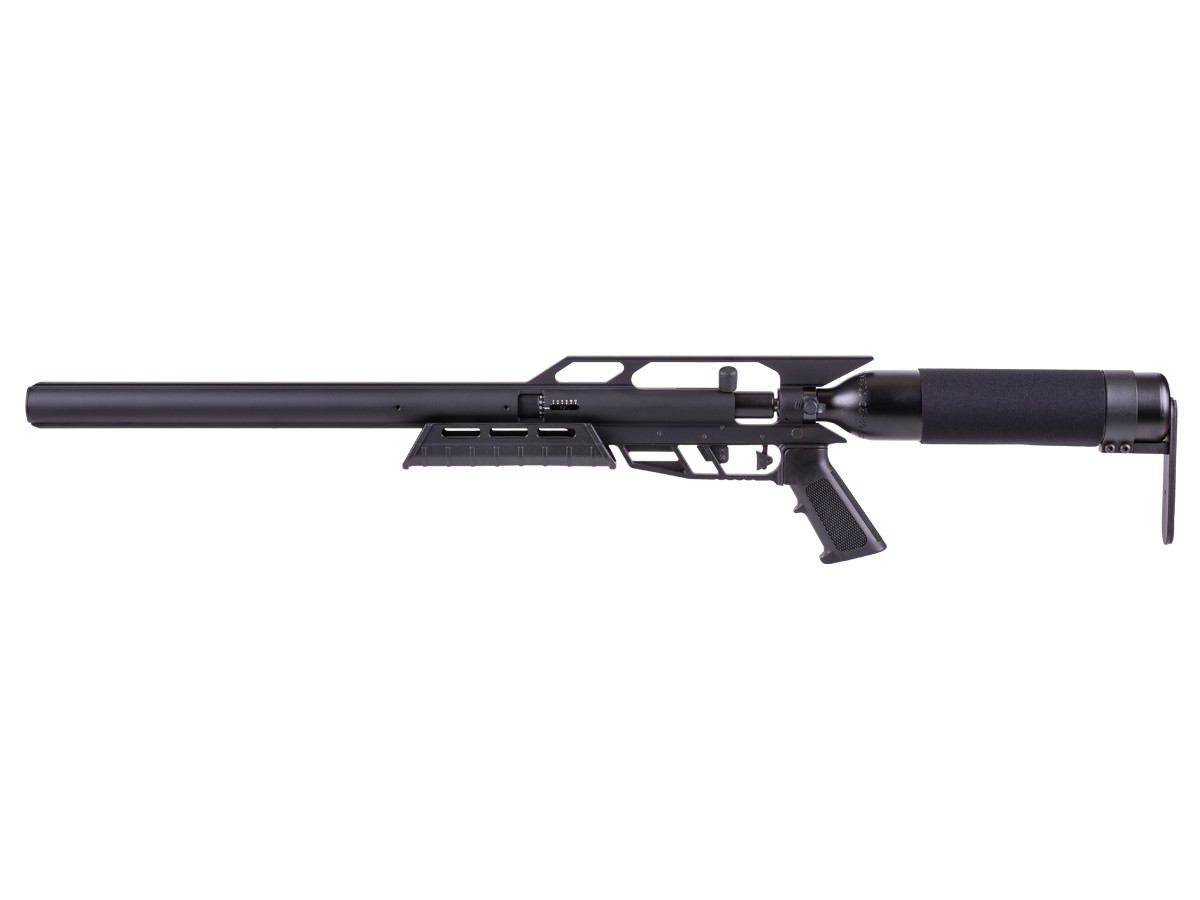
AirForce Condor SS

€500.00

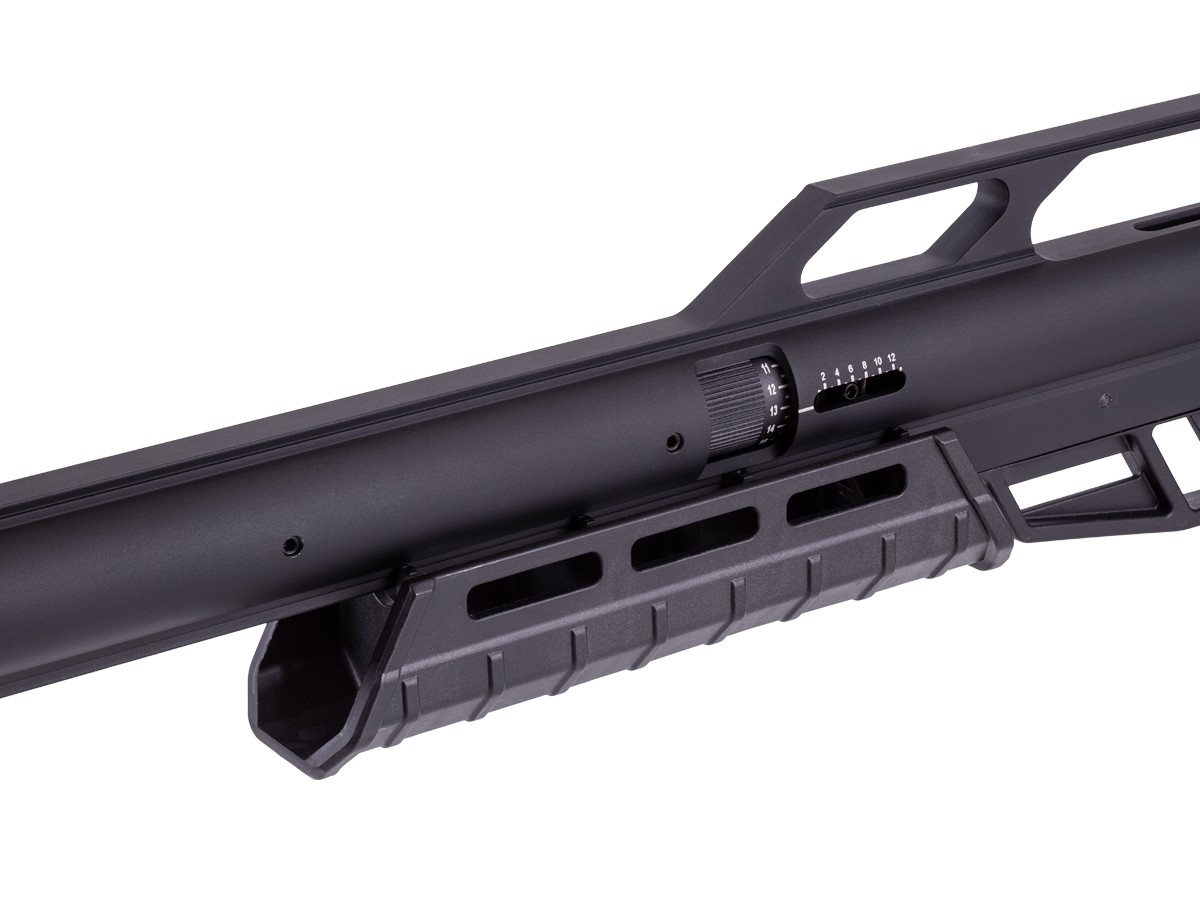
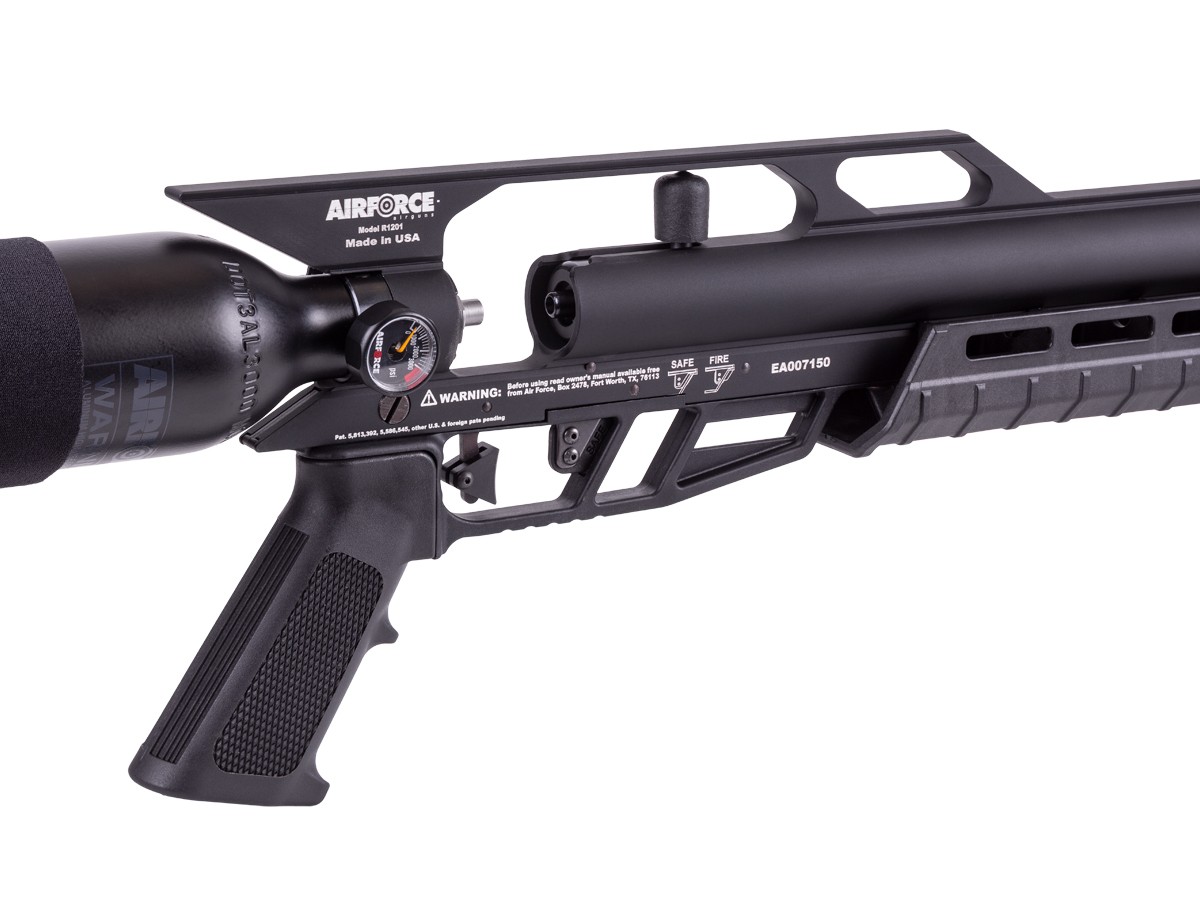
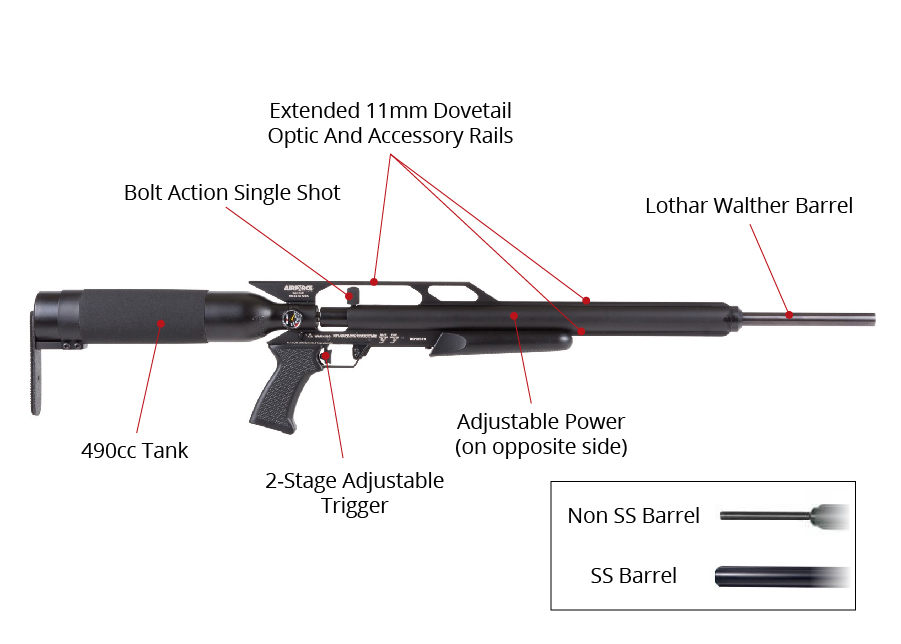
AirForce has kicked it up a notch with their new baffle system which makes the AirForce Condor SS quieter. The AirForce Condor delivers from 600 fps to a rip-snorting 1300 fps (in .177) and it’s recoilless! Accurate (1″ at 50 yards) and powerful, this PCP offers extreme flexibility. It has an 18″ Lothar Walther barrel (1:16 twist). You can also buy 12″ and 24″ barrels. Change-outs are easy and don’t require any special tools, but the gun will be unsilenced. Built in the USA. NOTE: The .20 cal. pellets are slightly longer than the .22 cal. pellets of the same weight. Therefore, they drag in the barrel a little more and produce lower velocities. The quoted figures (showing the .20 cal. gun shooting slower than the .22 cal. gun) are actual test figures and are correct.AirForce Condor Features Diagram You’ll need an adapter to fill the reservoir with air. The type of adapter depends on how you plan to fill your gun. A scuba tank will require a different adapter than a hand pump or carbon fiber tank. If you use a hand pump, the type of adapter you need depends on the brand of hand pump you use. There are lots of ways to configure this gun- including rail-mounted accessories (coin-slot screws for each changeout). You can choose the scope, laser, flashlight, night vision equipment, extra tanks, quick-detach fiber-optic sights and attachments for the type of refilling unit you plan to use. If you replace the barrel with a longer one, the gun will not be silenced. Carrying an extra filled tank when shooting in the field is a lot easier than carrying a scuba or carbon fiber tank for refills. The .177-caliber Condor SS has a special tank valve spring. If you plan to attach other caliber barrels to your gun, you may want to buy a tank made for the other calibers (.20, .22 & .25 calibers use the same tank).

Click here for California's Proposition 65 warning. Click here for California’s Proposition 65 warning.
Specs
  • ManufacturerAirForce
  • Caliber .177
  • Velocity 1300 fps
  • Condition New
  • Ammo Type Pellets
  • Action Bolt-action
  • Barrel Style Rifled
  • Fire Mode Single-shot
  • Gun Weight 6.10
  • Overall Length 38.13
  • Barrel Length 18.00
  • Loudness 4-Medium-High
  • Mechanism Pre-charged pneumatic
  • Rail 11mm dovetail
  • Safety Automatic
  • Front Sights none
  • Rear Sights none
  • Use Hunting
  • Warranty Lifetime limited warranty

Discover Unmatched Performance with the AirForce Condor SS

Precision power and quiet operation are delivered by the AirForce Condor SS, a pre-charged pneumatic air rifle engineered for serious shooters seeking versatility and reliability. Crafted in the USA, this model combines high energy output with integrated sound suppression, making it suitable for target practice, pest control, and small-game pursuits by enthusiasts of every background.

Through careful design, exceptional accuracy and adjustable performance are achieved, allowing the rifle to adapt to varied needs without compromise. Moreover, its lightweight construction ensures comfortable handling for extended sessions, while inclusive features welcome both new and experienced users alike.

Exceptional Power and Adjustable Performance

Remarkable velocity and energy levels are produced by the AirForce Condor SS across multiple calibers. Up to 1300 feet per second can be reached in .177, with substantial foot-pounds of energy generated in .20, .22, and .25 configurations depending on pellet selection and power setting. Consequently, effective results at moderate to longer ranges become possible for responsible applications.

Furthermore, user-adjustable power settings are incorporated, enabling fine-tuning from lower outputs ideal for backyard plinking to higher levels suited for field use. In addition, consistent shot-to-shot performance is maintained through the efficient air delivery system. Therefore, air is conserved effectively, supporting dozens of shots per fill under typical conditions.

The recoilless nature of the design further enhances control, so follow-up shots can be placed with greater ease and stability by shooters of diverse physical builds.

Quiet Operation Through Advanced Sound Suppression

Noise is significantly reduced by the integrated Sound-Loc baffle system within the shrouded 18-inch Lothar Walther barrel. As a result, the AirForce Condor SS operates far more quietly than many comparable high-power air rifles, making it neighbor-friendly and less disruptive in varied environments.

Additionally, the aluminum shroud works in harmony with the precision rifled barrel to preserve accuracy while muffling the report. However, full power potential remains available when needed. This balance of discretion and capability is especially valued by those who prioritize thoughtful, low-impact shooting practices.

Precision Engineering and User-Friendly Design

An ambidextrous grip and automatic safety engaged upon cocking are provided, ensuring accessibility for left- and right-handed users. The two-stage adjustable trigger offers a clean break, while the extended 11 mm dovetail rail accommodates a wide range of optics.

Lightweight at approximately 6.1 pounds and compact at roughly 38 inches overall, the rifle is easily transported and maneuvered. Moreover, the Spin-Loc tank system (around 490 cc capacity, fillable to 3000 psi) features a convenient pressure gauge and refill nipple. Spare tanks can therefore be carried and swapped quickly in the field.

Interchangeable barrels in different lengths and calibers are supported on the modular platform, expanding versatility without specialized tools—though suppression effectiveness may vary with non-standard configurations.

Key Features of the AirForce Condor SS Highlighted:

  • Single-shot bolt-action PCP mechanism
  • 18-inch precision Lothar Walther barrel with integrated Sound-Loc suppression
  • Available calibers: .177, .20, .22, and .25
  • Adjustable power for customized velocity and energy
  • Ambidextrous grip and automatic safety
  • Extended 11 mm dovetail rail for optics and accessories
  • Spin-Loc removable air tank with gauge
  • Lightweight aluminum construction for reduced fatigue
  • Made in the USA with limited lifetime warranty support
  • Finish options including black, blue, and red

These elements are combined to create a flexible tool that serves target shooters, pest managers, and recreational users equally well.

Versatility Across Applications and Skill Levels

Whether backyard accuracy practice or ethical small-game work is pursued, the AirForce Condor SS adapts readily. Power can be dialed down for cost-effective pellet use during training, then increased for greater terminal performance when required. In addition, the quiet signature supports shooting in more locations where louder alternatives might not be practical.

Inclusive design choices—such as the ambidextrous layout and manageable weight—ensure the rifle can be enjoyed by people of different ages, strengths, and experience levels. Furthermore, the modular nature encourages personalization, from scope selection to barrel swaps, so each user can configure a setup that feels natural and effective.

Reliable American manufacturing underpins durability, while the pre-charged pneumatic system delivers consistent results once proper filling equipment is used. Consequently, long-term value is realized through low per-shot costs compared with many traditional firearms ammunition options.

Why the AirForce Condor SS Stands Out for Discerning Shooters

Superior balance of power, quietness, and modularity is offered by this model within its class. Accuracy potential of approximately one-inch groups at 50 yards (with suitable pellets and conditions) is frequently reported, supporting confident shot placement. Moreover, the absence of significant recoil aids technique development for everyone from beginners refining fundamentals to advanced marksmen refining long-range skills.

Transitioning between practice and practical use is seamless thanks to the adjustable features. In addition, the compact profile and light weight make carrying the AirForce Condor SS comfortable during extended outings. Safety features and straightforward operation further promote responsible enjoyment.

When high performance is sought without unnecessary complexity or excessive noise, this rifle meets the need. Therefore, many choose it as a primary or complementary tool in their collection.

Elevate Your Experience Today

Ready access to adjustable power, precision accuracy, and subdued operation is provided by the AirForce Condor SS. From its USA-built quality to the thoughtful details that welcome a broad range of users, this air rifle delivers engaging, informative performance that converts interest into lasting satisfaction.

Explore available calibers and finishes, pair it with quality optics and pellets, and experience how quiet capability and reliable energy can transform practice sessions and field applications alike. The AirForce Condor SS awaits those prepared to step up to a higher standard of airgun excellence—order yours and discover the difference precision engineering makes.

Exploring Top Precision and Power Options: Air Arms XTi-50 FT and AirForce Tex-Rex Carbine

Competitive shooters and serious hunters often search for specialised tools that match their exact needs. Two standout platforms frequently discussed in these circles are the Air Arms XTi-50 FT Left handed air rifle and the AirForce Tex-Rex Carbine. Each serves a distinct purpose—one prioritises match-winning accuracy in Field Target disciplines, while the other delivers compact big-bore power for hunting. Understanding their strengths helps shooters decide which best fits their goals.

Air Arms XTi-50 FT Left Handed Air Rifle Overview

The Air Arms XTi-50 FT Left handed air rifle represents the pinnacle of modern Field Target design. Purpose-built as an Air Arms XTi-50 competition rifle, it offers left-handed shooters a true dedicated configuration rather than a compromised ambidextrous setup. Many consider it among the best left handed Field Target air rifle options currently available. An Air Arms XTi-50 FT review typically highlights its free-floating match-grade Lothar Walther barrel, micro-adjustable air stripper, titanium components for weight reduction, and an infinitely adjustable laminated stock complete with hamster, butt hook, and cheekpiece.

Air Arms XTi-50 FT specs include a .177-only calibre limited to under 12 ft-lbs for international Field Target rules, approximately 100 consistent shots per fill from a 200-bar titanium cylinder, and a weight around 10.3 lbs for the FT version. The fully regulated action delivers exceptional shot-to-shot consistency, while the match-grade trigger offers extensive adjustment. Precision PCP rifle for competition shooting does not get much more specialised than this model.

Shooters frequently ask how accurate is Air Arms XTi-50 FT. Independent tests and competition results show groups that can be covered by a small coin at 50 yards under good conditions, with the rifle already claiming major Field Target titles. What is Air Arms XTi-50 FT Left handed? It is a factory left-hand stock and action configuration of Air Arms’ flagship competition rifle, ensuring proper ergonomics for southpaw competitors. Those looking to buy Air Arms XTi-50 FT Left handed online or searching where to buy Air Arms XTi-50 FT Left handed will find it available through specialist dealers, often listed as Air Arms XTi-50 FT Left handed for sale with options for laminate finishes.

AirForce Tex-Rex Carbine Overview

On the hunting side, the AirForce Tex-Rex Carbine stands out as a compact yet extremely powerful big-bore platform. An AirForce Tex-Rex Carbine review emphasises its short overall length of approximately 39 inches and weight near 7 lbs unscoped, making it highly manoeuvrable in blinds or dense cover. AirForce Tex-Rex Carbine specs typically list a 24.75-inch Lothar Walther barrel, 500 cc carbon-fibre tank, fill pressures up to 4,500 psi, and energy outputs reaching 900+ foot-pounds depending on calibre (.457 or .510) and Bias Port orifice selection.is AirForce Tex-Rex Carbine good for beginnersCarbine

Key AirForce Tex-Rex Carbine features include a user-tunable Bias Port system that lets shooters balance maximum power against shot count, a titanium valve, Picatinny optics rail, M-LOK forearm, and a two-stage adjustable trigger. The AirForce Tex-Rex Carbine compact carbine design prioritises field handling without sacrificing the hard-hitting performance expected from the Texan family. An AirForce Tex-Rex Carbine regulated air system is not present in the traditional sense; instead, the Bias Port and high-pressure tank provide tunable consistency.

Many buyers search for AirForce Tex-Rex Carbine for sale, AirForce Tex-Rex Carbine price (commonly around the mid-$1,400 range), AirForce Tex-Rex Carbine best price, AirForce Tex-Rex Carbine deals, and AirForce Tex-Rex Carbine shop options. Retailers often promote the ability to buy AirForce Tex-Rex Carbine online, order AirForce Tex-Rex Carbine today, or check AirForce Tex-Rex Carbine near me and AirForce Tex-Rex Carbine available now status. Questions such as what is AirForce Tex-Rex Carbine, who should use AirForce Tex-Rex Carbine, and why choose AirForce Tex-Rex receive consistent answers: it suits experienced hunters seeking compact big-bore power for medium to large game.

AirForce Tex-Rex Carbine accuracy performance is strong when paired with quality heavy slugs, and the platform rewards proper tuning. An AirForce Tex-Rex Carbine user experience review often notes straightforward sidelever operation and solid reliability. For those new to high-power PCPs, is AirForce Tex-Rex Carbine good for beginners? Most experienced users recommend prior familiarity with big-bore systems and safe high-pressure filling practices. An AirForce Tex-Rex Carbine maintenance guide and broader AirForce Tex-Rex Carbine guide stress clean dry air, correct Bias Port selection, and regular inspection of seals and rails.

Comparing Competition Precision and Hunting Power

When evaluating Air Arms XTi-50 vs FX Impact comparison or broader best Field Target rifles comparison, the XTi-50 frequently ranks at the top for pure FT specialisation. Its dedicated left-handed configuration, extensive stock adjustability, and competition-proven consistency give it an edge for serious Field Target air rifle left handed users. The FX Impact offers greater modularity and multi-calibre flexibility, yet the XTi-50 remains purpose-built for the discipline.

In contrast, the AirForce Tex-Rex Carbine serves an entirely different role. While the Air Arms model focuses on sub-12 ft-lbs precision at known distances, the Tex-Rex delivers extreme energy in a carbine-length package suited to ethical big-game hunting. Shooters seeking a left handed PCP air rifle for competition will gravitate toward the XTi-50 FT, whereas those prioritising compact high-power hunting performance look to the Tex-Rex.

Making the Right Choice

Ultimately the decision depends on intended use. Competitive Field Target athletes benefit from the refined ergonomics and consistency of the Air Arms XTi-50 FT Left handed air rifle. Hunters who value manoeuvrability combined with serious terminal performance find the AirForce Tex-Rex Carbine an excellent match. Both platforms represent high-end engineering in their respective categories, and both reward careful research into current pricing, availability, and supporting accessories.

Calibres, Power Options, FAC Considerations and Recommended Accessories for the AirForce Condor SS

A wide range of shooting preferences is accommodated by the AirForce Condor SS through its selection of calibres, fully adjustable power system and extensive accessory ecosystem. Consequently, the platform can be tailored to target work, pest management or small-game applications while remaining accessible to shooters of varied experience levels and physical abilities. Inclusive design choices ensure that both newcomers and seasoned enthusiasts can configure a setup that feels natural and effective.

Available Calibres and Their Strengths

Four popular calibres are offered on the AirForce Condor SS, each delivering distinct ballistic characteristics while sharing the same modular frame and 18-inch Lothar Walther barrel platform.

  • .177 – Highest velocities (frequently approaching or exceeding 1,200–1,300 fps with lighter pellets) are achieved, making this calibre excellent for precise target shooting and longer-range practice where flat trajectories are valued.
  • .20 – A balanced middle ground is provided, combining respectable speed with improved energy transfer compared with .177, and it is often favoured for its efficiency and accuracy potential.
  • .22 – The most versatile all-round choice for many users, delivering strong energy (commonly in the 40–60+ ft-lbs range depending on pellet and power setting) alongside excellent pellet availability and terminal performance suitable for pest control and small game.
  • .25 – Maximum energy potential is realised (frequently 70–90+ ft-lbs with appropriate heavy pellets or slugs on higher settings), offering authoritative knockdown capability for larger pests and ethical small-game work when shot placement is prioritised.

Barrel swaps between these calibres are supported on the modular AirForce platform, allowing one rifle to serve multiple roles. Note that .177 tanks sometimes use a different valve spring, so matching tanks are recommended when changing between .177 and the larger calibres to maintain optimal performance.

Adjustable Power and Performance Characteristics

Power is controlled via a simple side-mounted adjustment wheel, enabling users to select lower settings for high shot counts and quieter practice or higher settings for maximum energy. Typical velocity ranges span roughly 600–1,300 fps depending on calibre, pellet weight and power level. Energy output scales accordingly: lighter .177 pellets at elevated settings produce high speed, while heavier .22 and .25 projectiles generate substantial foot-pounds for hunting applications.

Furthermore, the Ring-Loc valve system (standard on current models) permits additional fine-tuning through interchangeable orifice caps. Lower-power orifices increase shot count and efficiency, while larger orifices unlock higher energy levels. Shot strings of 35–50 (or more on reduced power) per 3,000 psi fill of the approximately 490 cc tank are commonly reported, with consistency improved by careful chronographing and pellet selection. The recoilless design further aids control across the full power spectrum, benefiting shooters of all strengths.

FAC Considerations in Relevant Jurisdictions

In the United Kingdom and certain other regions, air rifles producing more than 12 foot-pounds of muzzle energy require a Firearms Certificate (FAC). The AirForce Condor SS readily exceeds this threshold on medium-to-high power settings, particularly in .22 and .25 calibers. Therefore, prospective owners in FAC-regulated areas must obtain the appropriate certificate before purchasing or using the rifle at full capability.

Lower power settings can keep the rifle below the 12 ft-lb limit for non-FAC use where local law permits, but verification with a chronograph is strongly advised. Always consult current local regulations, as requirements vary by jurisdiction. Responsible ownership includes confirming legal status, safe storage and adherence to all licensing conditions. Inclusive guidance is encouraged so that every interested shooter can navigate compliance confidently.

Essential and Performance-Enhancing Accessories

A rich selection of accessories expands the AirForce Condor SS into a highly personalised system:

  • Optics and mounting – Quality airgun-rated scopes (e.g., 4-16×50 or similar with adjustable objective) paired with 11 mm dovetail rings or Picatinny adapters deliver precise aiming. Extended rails support bipods, lights or lasers.
  • Air supply solutions – Spare Spin-Loc tanks, high-pressure carbon-fibre bottles, hand pumps or scuba adapters ensure convenient filling and extended field sessions.
  • Sound and power management – Additional Sound-Loc kits, aftermarket moderators (via thread adapters where compatible) and Ring-Loc valve pin kits allow further noise reduction and energy customisation.
  • Handling and support – Forearm grips with M-LOK slots, bipods, sling attachments and rubber butt pads improve comfort during prolonged use.
  • Barrel options – Optional 12-inch or 24-inch Lothar Walther barrels (where available) alter velocity, length and handling characteristics, though the integral shroud is optimised for the standard 18-inch length.
  • Complete shooting kits – Factory or retailer packages often include a scope, rings, bipod, extra pellets and filling accessories for ready-to-use convenience.

These components are readily available from AirForce and specialist retailers, enabling everyone from casual plinkers to dedicated field users to refine their setup. When quality pellets matched to the chosen calibre and power level are selected, accuracy potential of roughly one-inch groups at 50 yards becomes realistically attainable under good conditions.

By thoughtfully matching calibre, power setting and accessories to intended use—and by observing all legal requirements—the AirForce Condor SS delivers adaptable, high-performance capability that remains engaging and inclusive for a broad community of shooters. Explore the options that best suit your goals and experience the refined power of this American-made platform.

Select Caliber

.177, .20, .22, .25

Reviews

There are no reviews yet.

Be the first to review “AirForce Condor SS”

Related Products

FAQ

  • Spring-Piston (Break-Barrel or Underlever): Cock by compressing a spring. Reliable, no external air source needed, but can have more recoil (“spring twang”) and require technique to shoot accurately.
  • Pre-Charged Pneumatic (PCP): Filled from a scuba tank, compressor, or pump. High power, low recoil, multiple shots per fill. Popular for precision and hunting.
  • CO₂: Powered by disposable cartridges. Good for pistols and semi-auto/repeaters, but performance drops in cold weather.
  • Multi-Pump Pneumatic: Hand-pumped to build pressure. Versatile but requires effort.
  • Gas Ram (Nitro Piston): Uses compressed gas instead of a metal spring. Smoother than traditional springers.

Calibers: Most common are .177 (4.5mm) for speed/flat trajectory and general use, and .22 (5.5mm) for better hunting knockdown power. Larger “big bore” (.25, .30, .357+) exist for hunting bigger game where legal.

Yes, many modern PCP and springers deliver enough energy for small game (rabbits, squirrels, birds) and even larger game in some areas. Muzzle energy (in ft-lbs or joules) matters more than velocity alone. Always match caliber, pellet weight, and energy to the game and check local hunting regs.

Treat every airgun as if it is loaded.

  • Always point the muzzle in a safe direction.
  • Keep your finger off the trigger until ready to shoot.
  • Know your target and what is beyond it (pellets can ricochet or travel far).
  • Wear eye protection.
  • Store unloaded, out of reach of children/untrained users, and ideally locked.
  • Never shoot at hard surfaces or in areas where pellets could escape your property.

Follow these rules strictly—airguns cause real injuries.

Laws differ dramatically by country, state/province, and even city. Always verify current local laws before buying, owning, transporting, or using an airgun. Age restrictions (often 18+) are common.

Examples (summaries only; check official sources):

  • UK: Air rifles ≤12 ft-lbs (16.3 joules) and pistols ≤6 ft-lbs generally do not require a license (FAC needed above that).
  • USA: Varies by state. Some treat powerful airguns as firearms; others do not. Many states now allow big-game hunting with air rifles.
  • Canada: Some airguns classified as firearms if they exceed velocity/energy thresholds.
  • Australia: Often treated as firearms; licensing/registration required in most states.
  • EU/France/Belgium/etc.: Varies; many allow low-power (<20J) guns freely to adults, with higher power needing permits. Germany has strict ~7.5J limits in some contexts.
  • Other countries: Some have no restrictions below certain energies; others ban or heavily regulate them.

Resources: Wikipedia “Air gun laws”, airgun forums, or official government sites. For travel, research transit laws carefully.

Consider:

  • Purpose: Plinking/backyard → lower power springer or CO₂. Hunting/precision → PCP.
  • Budget: Entry-level springers are affordable; PCPs need a fill system (extra cost).
  • .177 vs .22: .177 easier for beginners/targets; .22 better for hunting.
  • Power source: Convenience vs performance.
  • Test pellets in your gun—accuracy varies.

Buy from reputable dealers and consider warranties.

  • Clean barrel periodically (especially if accuracy drops) with patches and appropriate tools/solvents. Avoid over-oiling.
  • Lubricate moving parts and seals with airgun-specific oil (not general gun oil). Springers need piston seal oil occasionally.
  • Check screws, seals for leaks (PCP), and safety mechanisms regularly.
  • Store in a cool, dry place, ideally in a case. Avoid leaving cocked for long periods.

Follow your model’s manual. Basic care extends life significantly.

International shipping may be available for select products. Customers are responsible for understanding and complying with their local import laws and regulations before ordering.

Yes. Customers are required to confirm their order number through WhatsApp or Live Chat before orders are processed and shipped.

If local laws prevent shipment to your area, your order may be canceled and refunded according to our store policy.

Processing typically takes 1–3 business days after payment confirmation. Delivery times vary depending on destination, carrier, and product availability.


  • Wrong pellets for your barrel/caliber.
  • “Death grip” or poor shooting form (especially with springers—let the gun recoil naturally).
  • Loose scopes or mounts.
  • Ignoring safety or local laws.
  • Over-oiling or shooting with obstructions.


Pellets are the most common projectile (lead or lead-free). Match them to your gun, caliber, and purpose—test several brands as accuracy varies by barrel.

  • Domed (Round-Head): Best all-rounder. Excellent accuracy, ballistic coefficient, and energy retention. Ideal for target shooting, field target, and general hunting (e.g., JSB Exact, Air Arms Diabolo Field, H&N Field Target Trophy).
  • Wadcutter (Flat-Head): Clean holes in paper. Best for close-range target/plinking (under 20-25 yards).
  • Hollow Point: Expands on impact for better energy dump. Good for small game hunting (e.g., Predator Polymag, H&N Terminator).
  • Pointed: More penetration, but often less accurate than domed.
  • Slugs: Heavier, more aerodynamic for high-power PCPs at longer ranges (better for big game where legal).

Tips: Heavier pellets in .22/.25 for hunting (better momentum). Lighter in .177 for speed/flat trajectory. Always check head size fit (e.g., 4.51-4.53mm variants).

Muzzle energy (ft-lbs or joules) matters more than velocity. Ethical shots require precise placement (head/heart-lung) within effective range.

Rough Guidelines (adjust for distance, pellet, and local laws):

  • Small game (squirrels, rabbits, birds): 9-20+ FPE, .177/.22.
  • Medium (raccoons, etc.): 25+ FPE, .22/.25 recommended.
  • Larger game: 40-100+ FPE in .30+ calibers (up to big bore for deer/hogs where permitted).

PCPs dominate serious hunting due to power and shot count. Springers/gas rams work well for small game but require skill. Always prioritize clean kills and check seasons/species rules.

  • Barrel Cleaning: Use a pull-through kit or rod with patches. Avoid brushes that could damage rifling. Clean when accuracy drops or after 500-1000 shots.
  • Lubrication: Airgun-specific silicone oil for seals/O-rings (sparingly—excess causes dieseling in springers). Springers may need piston lube periodically.
  • PCP Specific: Check for leaks (soapy water test), monitor regulator/hammer settings, and keep fill systems clean. Don’t exceed rated pressure.
  • General: Tighten stock screws, inspect for wear, store properly. Chronograph shots to track consistency.

Common Issues:

  • Inconsistent velocity → dirty barrel, bad pellets, or seal problems.
  • Spring “twang” → tuning or proper hold.
  • Low power → worn seals or under/over-pumping.

Toggle Content

  • Scopes: Airgun-rated (hold zero under recoil). 3-9x or 4-12x common.
  • Fill Systems: Hand pumps, compressors, or tanks for PCPs.
  • Safety Gear: Eye/ear protection, targets with backstops.
  • Noise: Airguns quieter than firearms, but moderators help further.

Budget Tip: Start with a quality springer (~$150-400) before investing in PCP setup.

Airgunning offers endless depth—from backyard plinking to precision competition and ethical hunting. Prioritize safety, legality, and practice. If you want specifics (e.g., recommendations for a country, budget, hunting small game, or a particular type like PCP vs springer), let me know for more targeted info! Shoot responsibly.

Tuning improves accuracy, reduces noise/recoil, or increases power (within legal limits).

  • Springers: Lighter springs, guides, seals, or custom tuning kits for smoother shot cycle. “V-Mach” or similar professional tunes popular.
  • PCPs: Regulator tuning, hammer spring adjustments, valve work for efficiency and shot count. Some add electronic systems.
  • Accessories: Suppressors (often unregulated on airguns), better triggers, stocks, and scopes.

Caution: Check laws—power increases may reclassify your gun. DIY only if experienced; professional tuners recommended.

You must be at least 18 years old to purchase any airgun or related accessories from our store. By placing an order, you confirm that you meet the legal age requirements in your state or country.

Yes. Orders may require age verification before processing and shipping. In some cases, we may request a valid government-issued ID to confirm eligibility.


Translate »