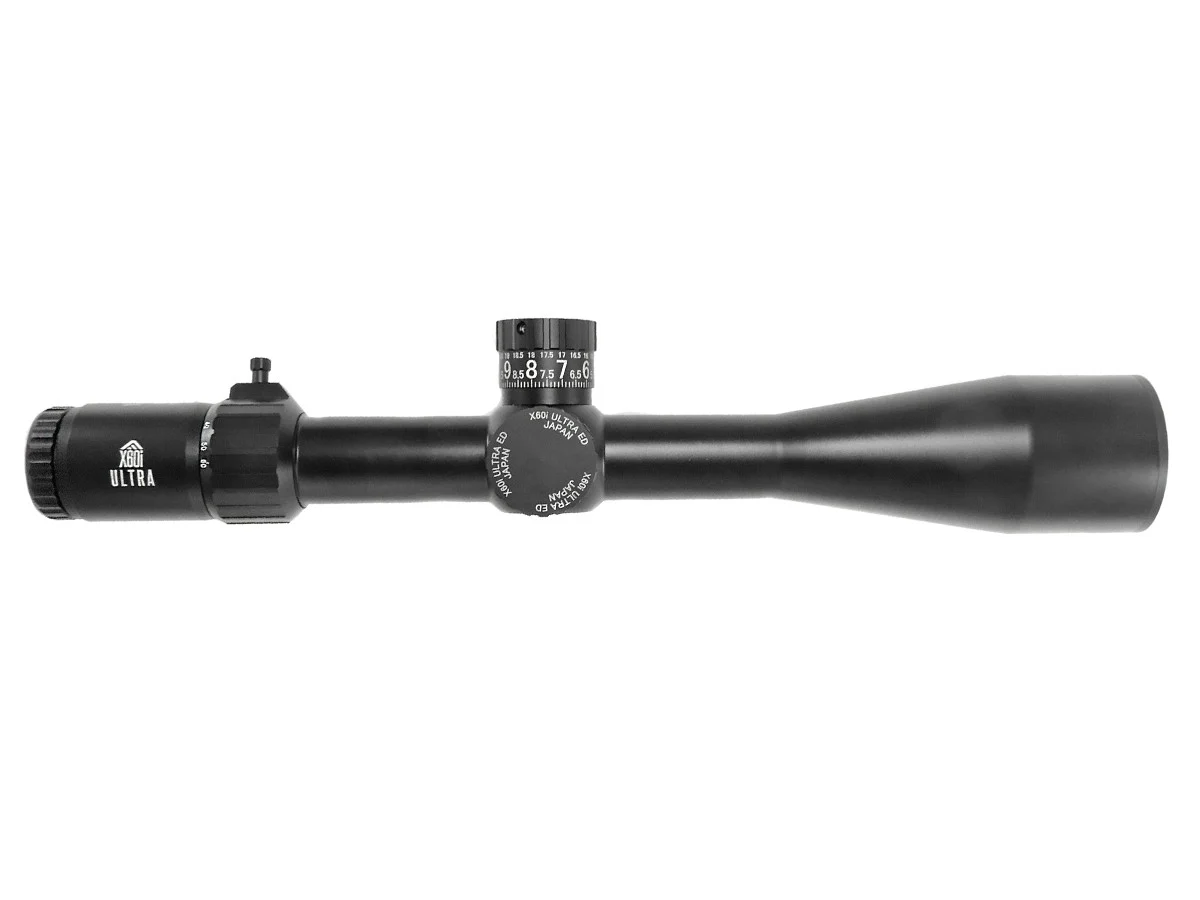
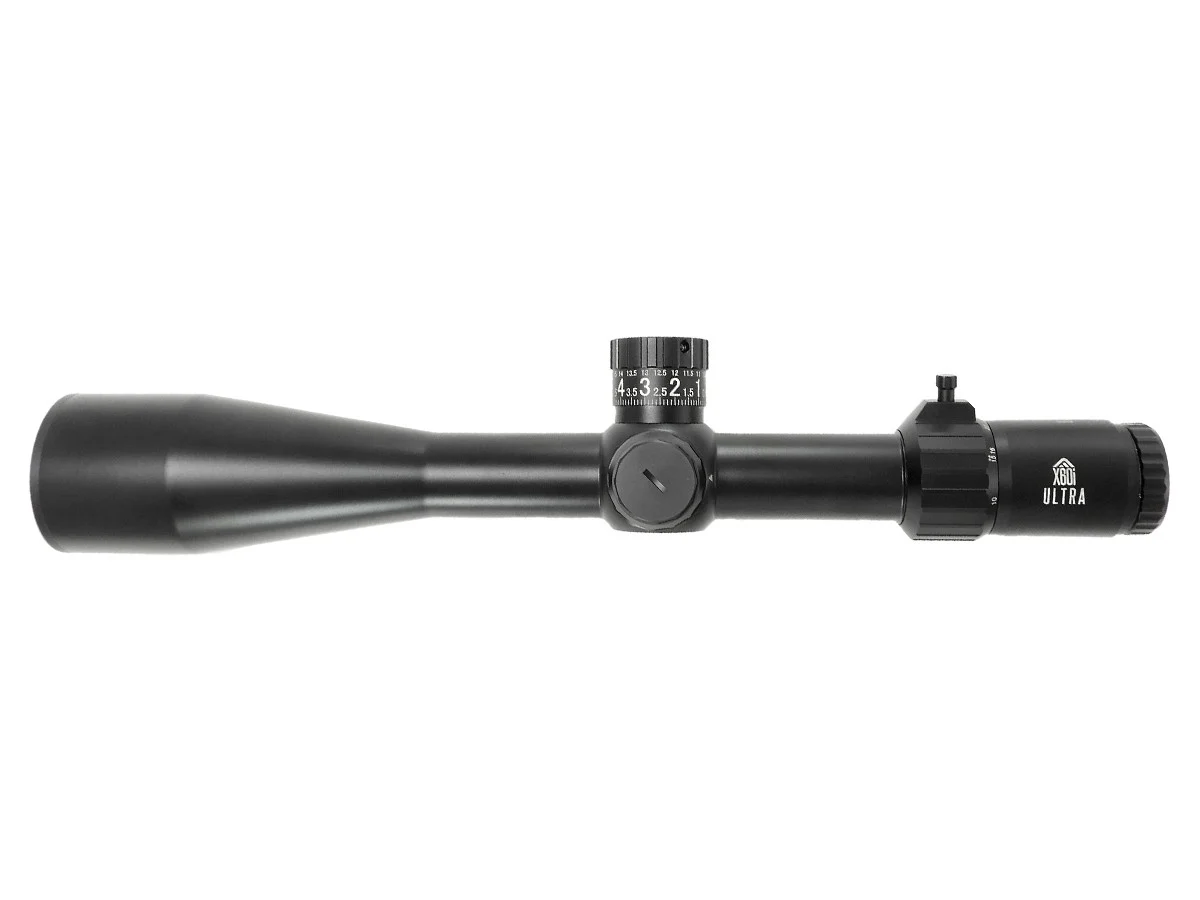
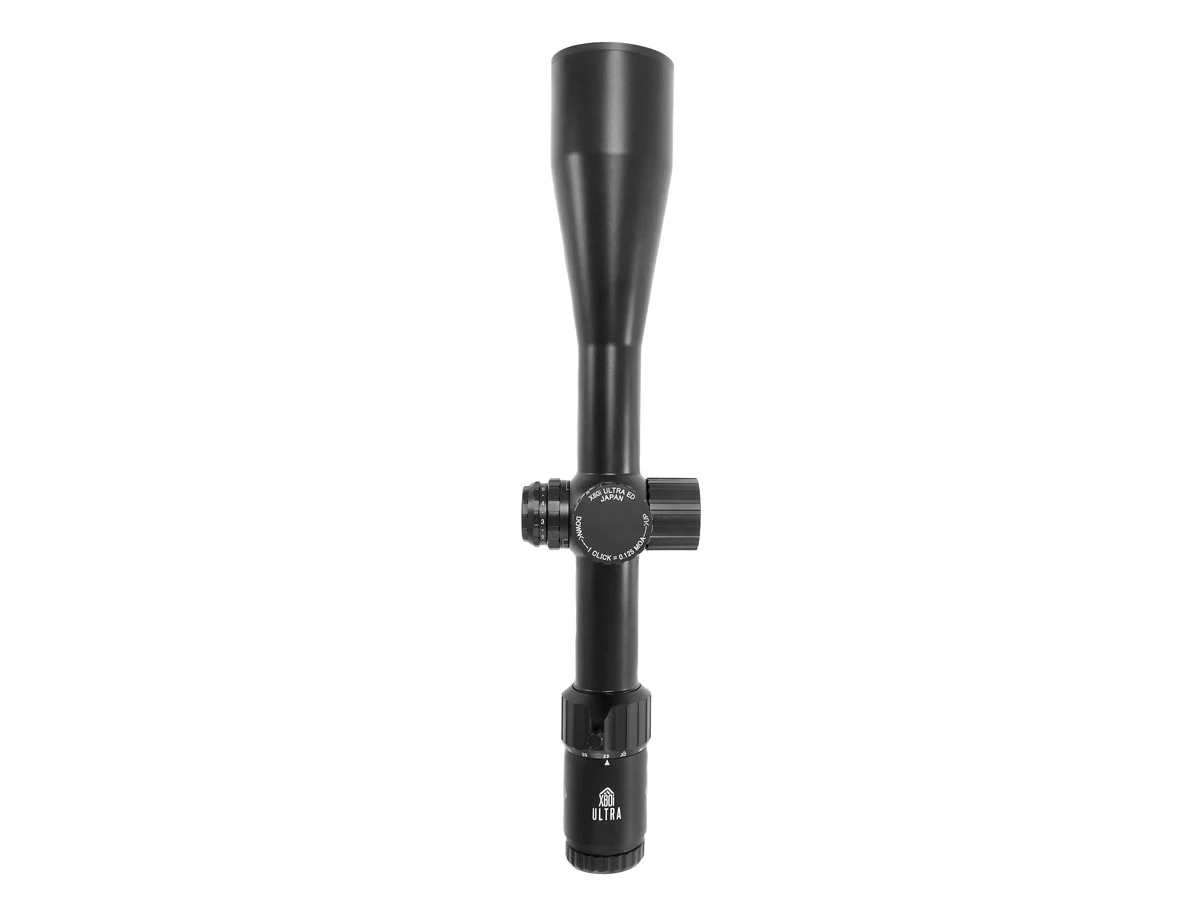
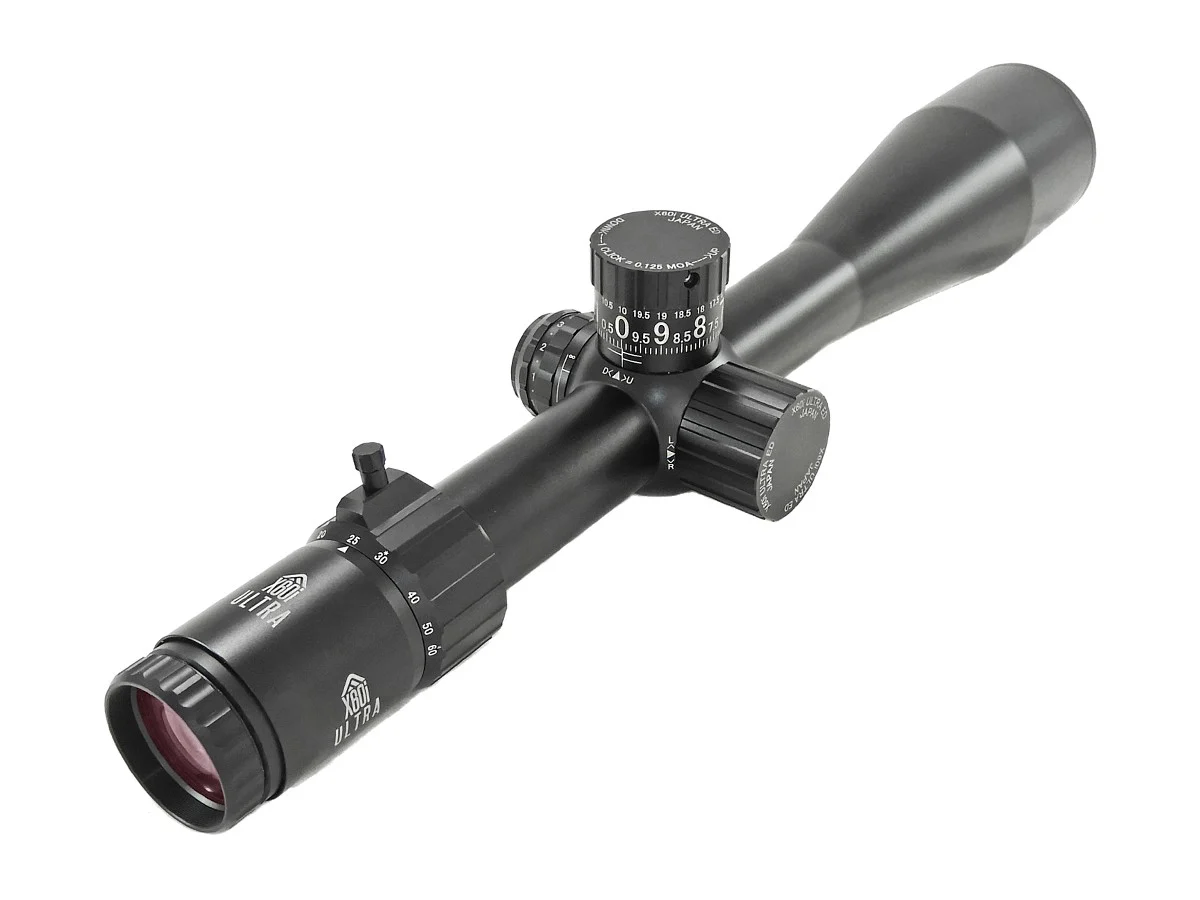
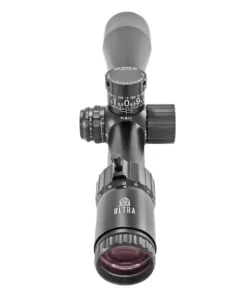
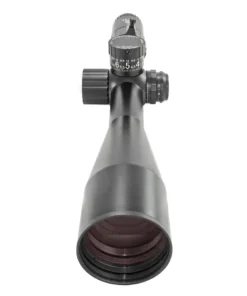
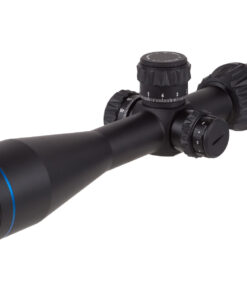
Falcon X60i Ultra 10-60x56i ED SFP Riflescope, 1/8 MOA, 34mm Tube
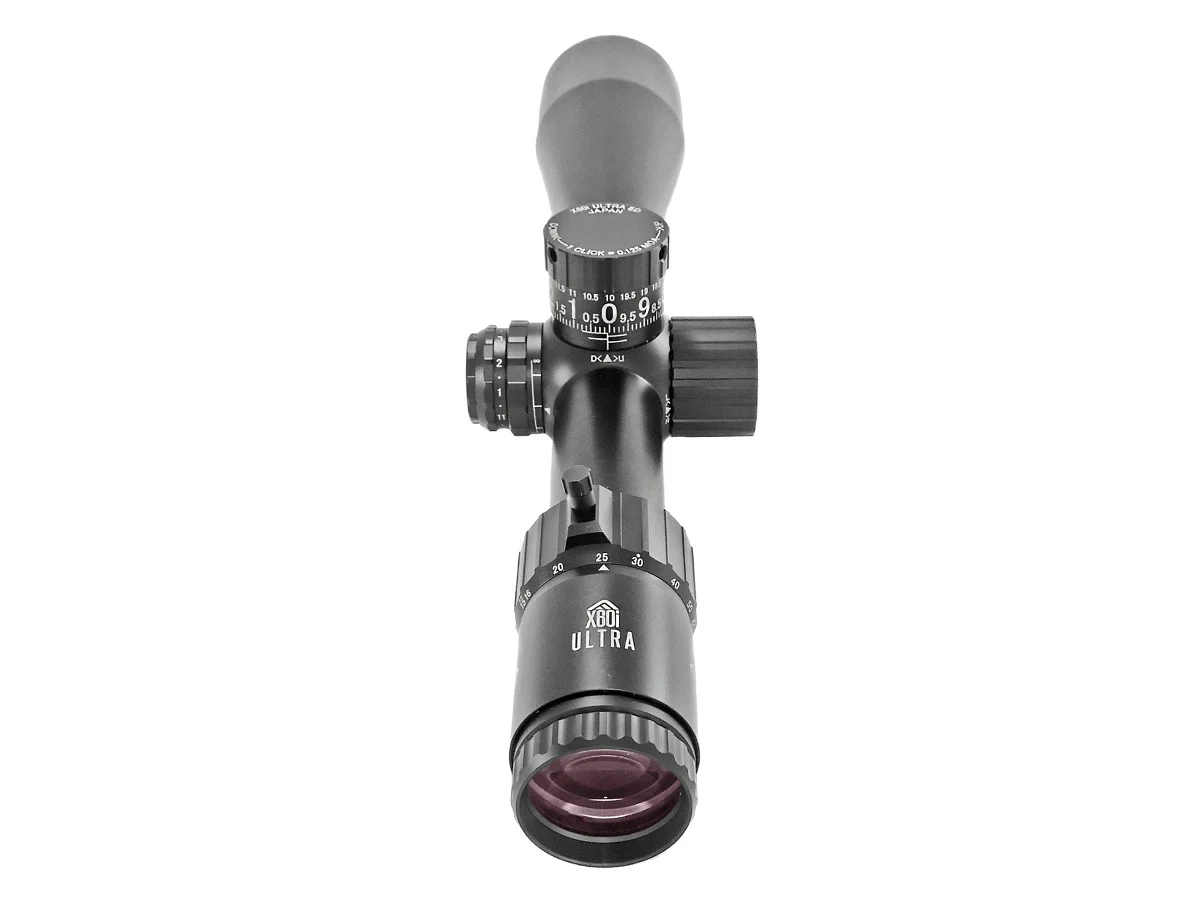
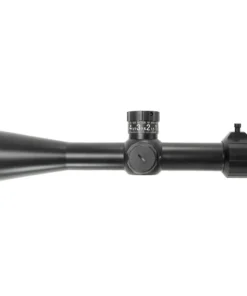
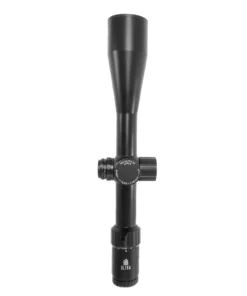
Exceptional optical performance has been engineered into the Falcon X60i Ultra 10-60x56i ED SFP Riflescope, 1/8 MOA, 34mm Tube for shooters who demand refined image quality, repeatable adjustment, and competition-focused precision. Built around an advanced 6x optical system, this premium riflescope has been developed for field target, benchrest, long-range target shooting, and other precision applications where fine visual detail is valued.
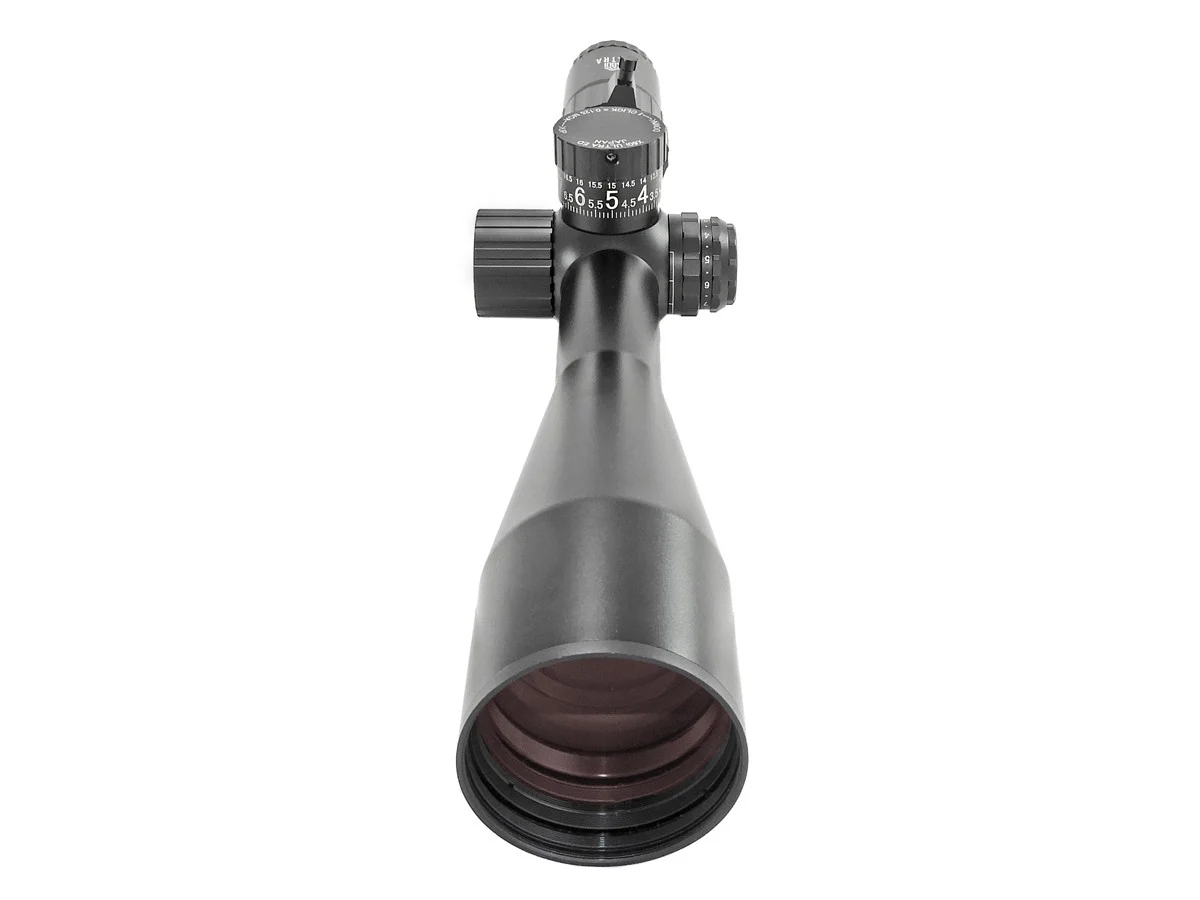
At the heart of the optic, Dense Fluor-Crown ED glass has been incorporated to reduce dispersion while improved resolution and color fidelity are maintained. Consequently, fine target details can be distinguished more clearly throughout the magnification range. Moreover, a large 56 mm objective has been paired with the ED optical system so a bright, detailed sight picture can be provided under varied lighting conditions.
Premium 10-60x Magnification for Precision Observation
A highly versatile 10-60x magnification range has been provided, allowing targets to be viewed at moderate magnification before extremely fine details are examined at higher power. Therefore, the optic can be adapted to changing target distances and competition requirements without replacing equipment.
More importantly, a snap-focus cam system has been engineered into the design so fast and repeatable ranging can be achieved. Temperature sensitivity has also been reduced through this system, which can be particularly valuable when consistent optical behavior is required during extended competition sessions.
Meanwhile, side focus adjustment has been provided from approximately 8 meters to infinity. As a result, focus can be refined across a broad range of shooting distances while parallax-related viewing errors can be minimized when the scope has been correctly configured.
Dense Fluor-Crown ED Optical System
Optical clarity has been prioritized throughout the Falcon X60i Ultra. Dense Fluor-Crown ED glass has been used so chromatic dispersion can be controlled and fine details can remain clearly defined. Additionally, colors can be rendered more naturally, while image sharpness can be preserved when higher magnification levels are selected.
Instead of relying solely on extreme magnification, the entire optical package has been designed around resolution, consistency, and usability. Consequently, the benefits of the 60x upper magnification setting can be better utilized during precise target observation.
E-CDi Second Focal Plane Competition Reticle
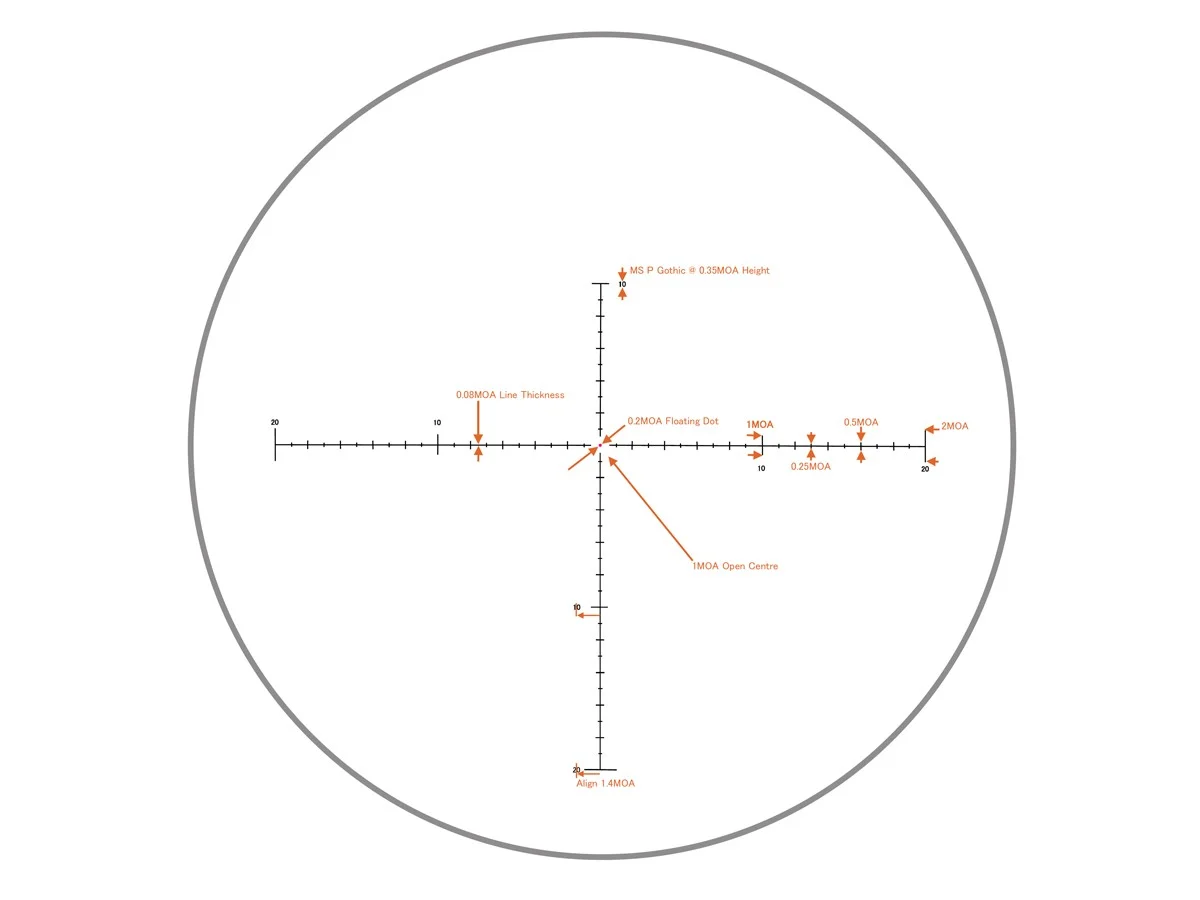
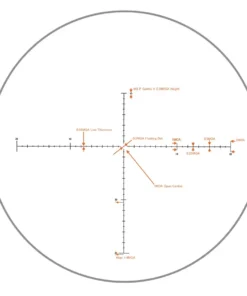
An E-CDi Enhanced Competition Dot reticle has been installed in the second focal plane. Because an exceptionally fine aiming reference has been incorporated, excessive target coverage can be avoided when small aiming points are being viewed.
Furthermore, red illumination has been integrated into the reticle, with 11 illumination levels being provided. An off position has been placed between illumination settings, allowing the preferred brightness level to be accessed more conveniently.
Since the reticle is positioned in the second focal plane, its apparent size is maintained as magnification is changed. MOA calibration points have been designed around specified magnification settings, allowing the system to be used predictably when configured according to Falcon’s guidance.
Fine 1/8 MOA Adjustment System
Precise mechanical adjustment has been emphasized through 1/8 MOA click values. Each turret revolution provides 10 MOA of adjustment, while more than 70 MOA of total elevation travel has been specified.
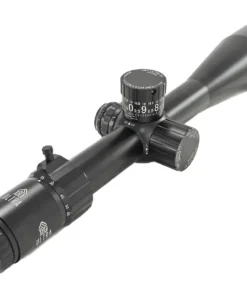
Additionally, an oversized elevation turret has been fitted with clearly laser-etched MOA markings and a revolution indexing scale. Therefore, adjustment position can be identified more easily during target competition.
Windage adjustment has also been thoughtfully configured. A capped windage turret has been included for users who prefer a set-and-maintain arrangement; however, the cap can be removed whenever direct turret access is preferred.
An unrestricted zero-stop system has also been incorporated, helping a previously established reference setting to be recovered efficiently.
Key Falcon X60i Ultra Features
Highlights include:
- 10-60x variable magnification range
- Large 56 mm objective lens
- Dense Fluor-Crown ED optical system
- 34 mm one-piece main tube construction
- E-CDi Enhanced Competition Dot SFP reticle
- Red illuminated reticle with 11 brightness settings
- Fine 1/8 MOA click adjustments
- 10 MOA adjustment per turret revolution
- 70+ MOA elevation adjustment range
- Side focus from approximately 8 m to infinity
- Oversized elevation turret with revolution indexing
- Unrestricted zero-stop system
- Capped windage turret
- Fast-focus eyepiece
- Removable magnification throw lever
- Nitrogen-purged internal construction
- Waterproof, fog-resistant, and shock-resistant construction
- Sunshade and flip-up lens covers supplied
- Designed in the United Kingdom and built in Japan
Strong 34mm One-Piece Construction
Durability has been supported by a robust 34 mm tube and one-piece tube/saddle construction. Consequently, a solid mechanical platform has been created for the internal adjustment and optical systems.
The riflescope measures approximately 424 mm in overall length, while its listed weight is approximately 1,020 grams. Although substantial construction has been used, that additional structure has been directed toward optical stability, adjustment capacity, and competition-oriented performance.
Furthermore, the scope has been nitrogen purged and waterproof tested. Falcon also states that the optic has been recoil tested through high-recoil platforms, although correct rings, mounting procedures, and manufacturer-specified torque values should always be followed.
Designed Around Field Target and Benchrest Requirements
Rather than being designed as a basic general-purpose optic, the X60i Ultra has been developed as Falcon’s fourth-generation competition riflescope. Therefore, several design choices have been focused specifically on precision disciplines.
For instance, the exceptionally fine competition dot allows small target details to remain visible. Likewise, the high magnification range supports detailed target inspection, while the snap-focus mechanism assists with consistent ranging. In addition, the oversized elevation controls allow adjustments to be read and operated without unnecessary complexity.
Because these systems have been combined into one platform, a more integrated competition-oriented experience can be achieved.
Clear Viewing Across the Magnification Range
At lower magnification, a wider field of view can be maintained for initial target acquisition and observation. Subsequently, magnification can be increased when finer details need to be examined.
The field of view has been specified at approximately 3.47 meters to 0.64 meters at 100 meters, depending on magnification. Meanwhile, eye relief ranges from approximately 100 mm to 87 mm, helping a practical viewing position to be maintained across the zoom range.
Additionally, the supplied throw lever allows the magnification ring to be operated more efficiently. A sunshade is also supplied, while flip-up lens covers help protect the optical surfaces during transport and storage.
Why Choose the Falcon X60i Ultra 10-60x56i ED SFP Riflescope?
A compelling combination of magnification, ED glass, precise MOA adjustment, and competition-oriented engineering has been brought together in this optic. Instead of one feature being emphasized at the expense of everything else, image quality, mechanical adjustment, reticle refinement, and structural durability have all been addressed.
For precision target shooters, the extremely fine 1/8 MOA adjustment system can provide the level of refinement expected from a dedicated competition optic. At the same time, the 10-60x optical range allows fine details to be studied without sacrificing the flexibility of variable magnification.
Furthermore, the large objective, ED glass, illuminated competition reticle, zero-stop system, and 34 mm construction create a comprehensive package rather than requiring important features to be added separately.
Falcon X60i Ultra Specifications
Magnification: 10-60x
Objective Lens: 56 mm
Main Tube: 34 mm
Focal Plane: Second Focal Plane
Reticle: E-CDi Enhanced Competition Dot
Reticle Illumination: Red, 11 levels
Adjustment: 1/8 MOA per click
Adjustment Per Revolution: 10 MOA
Elevation Range: 70+ MOA
Parallax Adjustment: Approximately 8 m to infinity
Field of View at 100 m: 3.47-0.64 m
Eye Relief: 100-87 mm
Overall Length: Approximately 424 mm
Weight: Approximately 1,020 g
Construction: One-piece tube/saddle design
Included Accessories: Throw lever, sunshade, and flip-up lens covers
Refined Optics for Demanding Precision Shooting
Ultimately, the Falcon X60i Ultra 10-60x56i ED SFP Riflescope, 1/8 MOA, 34mm Tube has been created for shooters who place optical resolution, fine adjustment, and repeatable competition performance at the top of their priorities.
Exceptional magnification capability has been combined with ED glass, a precision competition reticle, side focus, an oversized elevation turret, and a durable 34 mm platform. Consequently, a sophisticated optic has been produced for field target, benchrest, and precision target applications where small details and consistent adjustments matter.
With its Japanese-built construction, competition-focused optical architecture, extensive adjustment range, and carefully refined control system, the Falcon X60i Ultra represents a premium solution for anyone seeking a high-magnification precision riflescope built around clarity, consistency, and repeatable performance.
Premium Rangefinding Binoculars, Precision Riflescopes and Advanced Hunting Optics
Modern optical technology gives hunters, sport shooters, wildlife observers, and outdoor enthusiasts more ways to identify distant targets, measure range, and achieve a clearer field of view. Premium Leica rangefinder binoculars remain highly regarded for combining observation and ranging technology in one compact optical platform. Popular searches include Leica Geovid 10×42 rangefinder binoculars, Leica Geovid binoculars, Leica binoculars with rangefinder, Leica Geovid Pro 10×42, and Geovid Pro 10×42. Whether someone is researching a Leica Geovid rangefinder, Leica Geovid Pro rangefinder binoculars, Leica Geovid rangefinder binoculars, or the classic Leica Geovid 10×42, the Geovid family is commonly associated with high-quality glass, strong optical clarity, and practical long-distance observation.
Beyond rangefinding models, the wider Leica binoculars collection appeals to users searching for Leica small binoculars, binoculars Leica, Leica Geovid binos, Leica bino, Leica binoculars for sale, Leica bino rangefinder, Leica camera binoculars, Leica binos, or simply a Leica binocular for travel, field observation, wildlife viewing, and outdoor use. Different magnification formats, including 10×40, can suit users who want a balance between detail, portability, and field of view.
Alternative electronic binocular technologies are also becoming increasingly popular. Searches for SIG Sauer binoculars, SIG self stabilizing binoculars, SIG Sauer binos, SIG binoculars, SIG image stabilizing binoculars, SIG binocular, and SIG auto stabilizing binoculars reflect growing interest in electronically assisted viewing. Likewise, SIG Sauer self stabilized binoculars and SIG Sauer image stabilized binoculars can appeal to users who want reduced visual movement during handheld observation. Some buyers may also encounter broader search variations such as Sigma binoculars or specification terms like 11.5ee while comparing different optical products.
Precision aiming optics occupy another major part of the premium optics market. A Zeiss red dot offers a different sighting concept from traditional magnified optics, while the Nightforce ATACR line is frequently researched by users interested in premium long-range scopes. Common variants include Nightforce ATACR 5-25×56 F2, Nightforce ATACR 4-20×50, Nightforce ATACR 5-25×56 F1, and Nightforce ATACR 4-16×50. Related searches such as Night Force ATACR, ATACR scope, Nightforce attacker, ATACR 4-20, and Nightforce ATACR 4 20×50 F1 often appear when buyers are comparing magnification ranges, focal-plane configurations, turret systems, and optical performance.
At the higher end of precision optics, Tangent Theta products are frequently associated with specialist applications requiring refined mechanical adjustment and premium optical performance. Users may search for Tangent Theta scopes, Tangent scope, Tangent scopes, Theta optics, Tangent Theta scope, and Tangent optics while researching high-performance long-range systems.
The market also includes companies such as Fierce Firearms, Fierce Arms, and Fierce Optics, which may appear in searches involving hunting equipment and optical accessories. Within the Athlon category, meanwhile, one of the more detailed product searches is Midas TAC Gen2 HD 6-24×50 APLR15 FFP MOA reticle riflescope. The broader Athlon Midas TAC family, including Athlon Midas TAC 6-24×50, is often considered by users who want substantial magnification and adjustable target-focused features.
For shooters comparing larger objective and magnification configurations, terms such as 34 56, 34×56, Athlon Argos BTR Gen2 8-34×56, Athlon BTR Gen 2, Athlon Argos BTR Gen2, Athlon Argos BTR, and Athlon Argos BTR Gen 2 commonly appear during product research. Search variations such as Athalon scopes and Athens scope may also lead shoppers toward Athlon products when researching a new gun scope, Icarus scope, longest range scope, or general hunting optic.
Anyone learning how to buy a rifle scope should compare magnification range, objective diameter, reticle design, adjustment system, eye relief, optical quality, focal-plane configuration, overall weight, and intended sporting application. Terms such as AO scope can refer to adjustable-objective configurations, while models in the Athlon Ares BTR family provide additional options for users exploring precision-oriented optics.
Mid-range magnification searches frequently include 2.5×15, Avalon Aries, 2.5/15, Athlon BTR Gen 2, Athlon scopes review, Athlon reticles, 2.5-15 scope, and repeated comparisons involving Athlon Argos BTR Gen2 8-34×56 or 34×56 configurations. These searches demonstrate how buyers often compare reticles, magnification ratios, objective sizes, and scope families rather than selecting an optic solely by maximum magnification.
Low-power variable optics are another major category. Searches such as 1 10 scope, Ares ETR 1 10, 1 10 LPVO, 1-10 LPVO, 1-10 FFP LPVO, 1×10 scope, Athlon ETR, LPVO 1-8, LPVO 1-10, and 1-10 rifle scope reflect demand for versatile magnification systems. An LPVO allows users to move between low magnification for a broad field of view and higher magnification for improved observation at extended distances, making the format useful across several sporting disciplines.
For greater magnification, the Ares ETR Gen2 UHD 4.5-30×56 APRS12 FFP IR MIL reticle represents another precision-focused configuration within the Athlon range. Related product searches include Athlon 4.5-30×56, 4.5 30, Athlon ETR, and 4.5/30. The large 56 mm objective and broad magnification range make this type of optic particularly relevant to users comparing long-distance target and field optics.
Other searches such as 14×44, 2s14, Athlon BTR 2-12, 1/2×42, Athlon BTR Gen 2, 12×4.2, 2-12x, and Athlon 2 demonstrate continued demand for more compact variable-magnification formats. A 2-12x configuration, for example, can provide a useful compromise between field of view and magnified observation without requiring the size or weight of a very high-magnification optic.
Ultimately, premium optics cover far more than a single product category. Leica rangefinder binoculars and Leica Geovid binoculars combine observation with distance measurement, while stabilized SIG Sauer binoculars emphasize steady handheld viewing. Meanwhile, Nightforce ATACR, Tangent Theta scopes, and Athlon families such as the Midas TAC, Argos BTR, Ares BTR, and Ares ETR provide a wide range of magnification, reticle, and focal-plane options. By comparing optical clarity, magnification range, objective diameter, reticle format, adjustment system, physical dimensions, and intended sporting use, buyers can narrow a broad optics market into products that better match their individual requirements.
Practical Use Scenarios
A high-magnification precision optic becomes most valuable when it is used in situations where small aiming errors, fine target details, repeatable adjustments, and consistent visual feedback all matter. Rather than serving only one narrow shooting discipline, this type of optical system can be applied across several controlled target-shooting environments. Its strongest advantages become apparent when the shooter needs to observe subtle details, make small mechanical corrections, and maintain a stable sight picture over repeated shots.
Benchrest Shooting
Benchrest shooting is one of the clearest situations in which a high-magnification optic becomes particularly useful. In this discipline, the rifle is supported on a front rest and rear bag, allowing the shooter to focus heavily on consistency, point of aim, wind conditions, and group placement.
Because the rifle is already stabilized, the shooter can take advantage of high magnification without struggling as much with natural body movement. Small aiming points can therefore be examined closely, and minor changes in point of impact can be identified more easily.
Fine turret adjustments also become important in this environment. When a shooter wants to move the point of impact by a very small amount, coarse adjustments may provide more correction than desired. Smaller adjustment increments allow more refined changes to be made.
For example, a shooter working on a tightly grouped target may notice that several shots are consistently landing slightly above the intended centre. Instead of making a large correction, a small number of fine elevation clicks can be applied. The next group can then be fired and evaluated.
Because the adjustment process is gradual, unnecessary overcorrection can be reduced.
Precision Paper Target Shooting
Paper targets remain one of the most common places where detailed optics are appreciated. Traditional circular targets, scoring rings, grid targets, and printed precision cards can all require careful aiming.
At lower magnification, the shooter may see the entire target clearly but struggle to distinguish the smallest central aiming reference. As magnification is increased, finer target details become easier to identify.
This is particularly useful when aiming at small dots, narrow lines, or precision scoring zones.
In addition, high magnification can make shot placement easier to monitor between groups. Although a spotting scope may still be useful at longer distances, the riflescope itself can often provide enough visual detail to confirm whether shots are grouping around the intended aiming point.
That immediate feedback can make a structured shooting session more efficient.
Field Target Competition
Field target shooting presents a different practical challenge. Targets are placed at varying distances, and shooters may need to estimate range before taking a shot.
A close-focus side parallax system can become especially valuable in this discipline because the shooter can adjust focus until the target image becomes sharp. With experience, the focus position may also contribute to range estimation.
For instance, when a target appears at an unknown distance, the shooter can rotate the side-focus control gradually until the target becomes clearly defined. The approximate range can then be interpreted using previously established markings or personal reference points.
Once distance has been estimated, the shooter can apply the appropriate elevation correction.
High magnification may also help with identifying small target apertures. Since field target scoring often depends on accurately striking a limited kill zone, the ability to see the target clearly can support more deliberate aiming.
Air Rifle Accuracy Testing
When an air rifle is being tested for accuracy, consistency matters more than speed. Different pellets, pressure settings, regulator adjustments, barrel configurations, or power levels may be compared across multiple groups.
A precision optic can support this process by providing a highly repeatable aiming reference.
Suppose several pellet types are being tested at the same distance. Each five-shot group should ideally be fired using the same aiming point. If the centre mark is small, high magnification can help the shooter maintain a consistent hold across every group.
As a result, differences in group size are more likely to reflect ammunition or rifle performance rather than inconsistent aiming.
This can make testing more meaningful.
Pellet Selection and Ammunition Testing
Even within the same calibre, different projectiles can produce noticeably different results. Weight, shape, head diameter, manufacturing tolerance, and ballistic design may all influence performance.
Therefore, controlled comparison becomes important.
A shooter may set up several identical targets and fire one pellet type at each target. By maintaining the same magnification, parallax setting, rest position, and aiming technique, a more useful comparison can be created.
Small group differences can then be observed.
One pellet may produce a tight circular cluster, while another may create vertical stringing. A third may shift the group slightly left or right.
Those patterns can help the shooter identify which projectile is most compatible with the rifle.
Zeroing a Precision Rifle
Zeroing is another practical situation where fine controls become useful.
The process begins by firing a group at a known distance. Instead of adjusting the optic after every individual shot, several shots should normally be fired first so that the true group centre can be established.
Once the average point of impact has been identified, the required correction can be calculated.
Fine elevation and windage adjustments allow that correction to be applied gradually.
For example, if a group is centred slightly low, elevation can be increased in small increments. Another group can then be fired to confirm the change.
Once the desired zero has been achieved, a zero-stop system can provide a useful mechanical reference point. If elevation is later dialled for another distance, the turret can eventually be returned to the established zero.
This is especially useful during structured range sessions where multiple distances are being used.
Long-Range Target Practice
Longer distances introduce additional variables. Small changes in elevation become more significant, environmental effects become easier to observe, and target details appear considerably smaller.
High magnification can help the shooter maintain a precise aiming reference at these distances.
However, maximum magnification does not always need to be used.
Atmospheric conditions may make very high magnification less useful. Heat shimmer, haze, mirage, and unstable air can distort the image. In those conditions, reducing magnification slightly may actually provide a clearer and more usable sight picture.
Therefore, the broad magnification range becomes useful because it allows the shooter to adapt rather than remaining locked into one power setting.
Reading Mirage at the Range
Mirage is often viewed as an optical problem, yet experienced target shooters may also use it as environmental information.
At longer distances, moving air can create visible waves or distortions in the sight picture. When observed carefully, those patterns may provide clues about wind conditions near the target.
High magnification makes these effects easier to see.
The shooter may notice that the image appears to drift or ripple in a particular direction. Combined with flags, vegetation, and other environmental indicators, this visual information can contribute to a more informed wind call.
Nevertheless, mirage should not be interpreted in isolation. It is only one source of information.
Small Target Identification
Not every range target is large or visually obvious.
Some precision exercises use very small printed aiming points, narrow scoring zones, tiny steel plates, or miniature silhouettes. In such situations, a large target may still be easy to see at lower power, while the exact intended point of aim remains difficult to identify.
Higher magnification helps separate those details visually.
A fine reticle also becomes important because a thick aiming mark can obscure a significant portion of a small target.
By keeping the central aiming reference visually minimal, the shooter can place the reticle more precisely without covering the entire scoring area.
Repeated Elevation Dialling
Some target sessions require frequent transitions between distances.
A shooter may begin at one distance, move to another, then return to the original zero. During this process, the elevation turret may be adjusted repeatedly.
Reliable mechanical indexing becomes particularly important.
Clear turret markings help the shooter track how much elevation has been added. A revolution indicator can also reduce confusion when larger adjustments are required.
Without a clear reference system, it can become surprisingly easy to lose track of how far the turret has been rotated.
A defined zero stop provides another safeguard because it gives the shooter a repeatable mechanical reference when returning to the original setting.
Competition Preparation
Before a match, many shooters spend time confirming rifle setup rather than simply firing random groups.
The optic may be checked at several distances. Turret tracking may be confirmed. Parallax settings may be recorded. Magnification preferences may also be tested for different target sizes.
A high-magnification optic supports this process because small discrepancies can be identified more easily.
For example, a shooter might confirm the zero at the competition distance, dial a known elevation correction, fire another group, and then return to zero. If the next group returns to the original point of impact, confidence in the adjustment system is increased.
Repeated testing can therefore help identify setup problems before competition begins.
Scope Tracking Evaluation
Mechanical tracking is another area where fine precision matters.
A common range test involves aiming at a fixed reference point while dialing the turrets through a known pattern. The resulting impacts can then be compared with the expected movement.
Because each adjustment is mechanically defined, the shooter can evaluate whether the optic is responding consistently.
A stable rest, carefully measured target, and repeatable aiming point are essential.
High magnification can assist because the same exact reference can be used throughout the test.
Indoor Target Shooting
Indoor ranges provide a more controlled environment because wind and weather are largely removed.
Under these conditions, the shooter can focus heavily on technique, rifle consistency, ammunition behaviour, and optical setup.
Illumination may also become useful indoors.
Depending on target colour and range lighting, the centre of the reticle may become difficult to distinguish against darker backgrounds. A low illumination setting can improve contrast without overwhelming the target image.
Excessive brightness should normally be avoided because a very bright aiming point can appear larger than it actually is.
Therefore, adjustable illumination allows the shooter to select only the level required.
Low-Light Range Sessions
Early morning or late afternoon target shooting may involve reduced ambient light.
A large objective lens and quality optical coatings can help maintain a more usable image under these conditions.
However, magnification still plays an important role.
At maximum power, the perceived image may become darker than it is at a moderate setting. Consequently, reducing magnification slightly can improve visual comfort when available light becomes limited.
Reticle illumination can then be added at a low setting if necessary.
The goal should be to create enough contrast to aim accurately without allowing the illuminated centre to dominate the sight picture.
Load Development
For firearms used on controlled ranges, load development requires consistent aiming and careful recording.
Different powder charges, projectile weights, seating depths, or other legitimate loading variables may be tested according to applicable manufacturer data and safe loading practices.
The optic’s role in this process is straightforward: it provides a repeatable visual reference.
When every test group is aimed in the same manner, the shooter can compare group shape and point of impact more effectively.
Optical precision therefore supports data collection rather than replacing proper load-development methodology.
Training for Trigger Control
A detailed sight picture also reveals shooter movement very clearly.
At high magnification, even small disturbances caused by breathing, grip tension, trigger movement, or poor follow-through can become visible.
This makes the optic useful as a training tool.
If the reticle moves sharply as the trigger is pressed, the shooter may be introducing unnecessary input. By practicing a smoother trigger press, that movement can gradually be reduced.
Similarly, remaining behind the optic after the shot encourages better follow-through.
The magnified sight picture therefore provides immediate visual feedback on technique.
Confirming Rifle Setup After Maintenance
Whenever a rifle has been cleaned, transported, serviced, or had components removed and reinstalled, the zero should be confirmed before serious target work begins.
A short verification session can reveal whether the point of impact has shifted.
The shooter can begin at a familiar distance, fire a controlled group, and compare it with the previously recorded zero.
If the group remains centred, no major correction may be needed.
If it has moved, the fine adjustment system allows the zero to be restored carefully.
Practical Value Across Precision Disciplines
The greatest advantage of a high-magnification precision optic is not simply that it makes the target appear larger.
Its real value comes from the combination of detailed observation, precise aiming, fine mechanical correction, controlled parallax adjustment, and repeatable return-to-zero capability.
Benchrest shooters can use those characteristics to evaluate tiny groups. Field target competitors can apply them to range estimation and small kill zones. Air rifle enthusiasts can compare pellet performance more consistently. Long-range target shooters can dial elevation and observe environmental conditions more clearly.
Meanwhile, anyone involved in structured accuracy testing can benefit from a stable, highly visible aiming reference.
Ultimately, this type of optic performs best when precision is treated as a process. A stable shooting position, appropriate magnification, correctly adjusted parallax, careful turret use, consistent trigger control, and disciplined record keeping all work together.
When those elements are combined, the optic becomes more than a viewing device. It becomes an important measurement and aiming component within a complete precision-shooting system.




Reviews
There are no reviews yet.