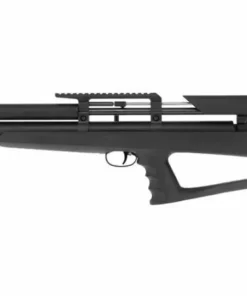
Frequently Asked Questions about the Snowpeak PR900W Gen 3 Wood Regulated PCP Air Rifle
What makes this rifle different from earlier versions?
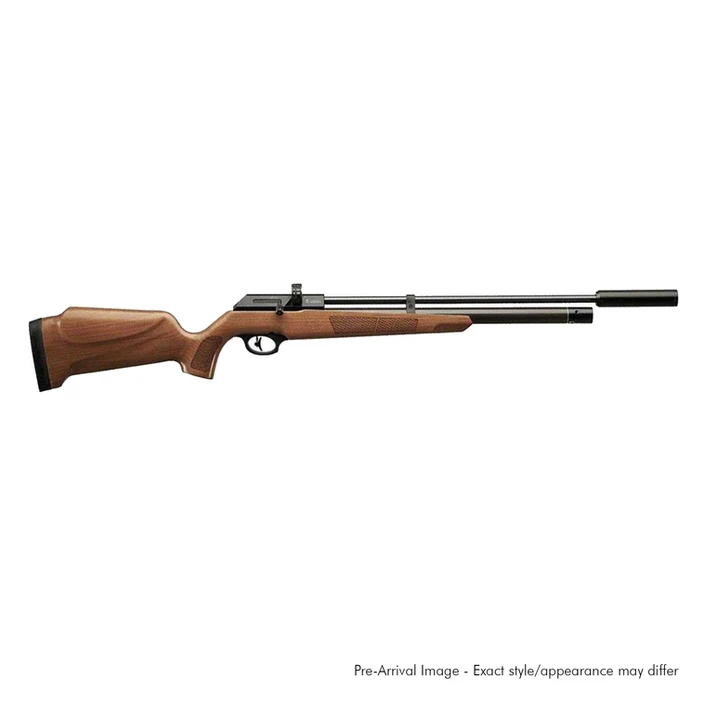
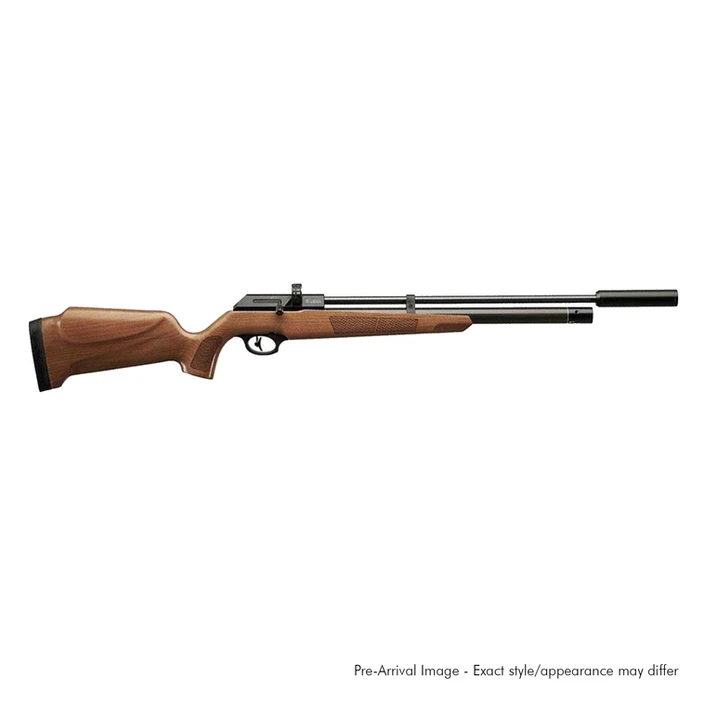
The third-generation model introduces several practical upgrades that improve everyday usability. An integrated regulator now maintains more consistent air pressure across a useful portion of the fill, which helps keep shot-to-shot velocity steadier. The magazine system has also been redesigned, moving away from the older, more fiddly style to larger and more reliable Remington-type magazines. In addition, the air reservoir has been enlarged, supporting a higher number of shots per fill under normal conditions. The classic wood stock remains comfortable and attractive while incorporating modern ergonomic details such as checkering and a raised cheek piece. Together these changes create a more refined and dependable platform than previous generations.
Which calibres are available?
Buyers can choose from three widely used calibres. The 4.5 mm (.177) option suits target shooting and situations where a flatter trajectory is preferred. The 5.5 mm (.22) version offers a strong balance of energy and trajectory, making it popular for mixed range and field use. The 6.35 mm (.25) calibre is selected when higher energy delivery is the priority. Magazine capacity varies by calibre, typically providing 12 rounds in .177, 10 rounds in .22, and 9–10 rounds in .25. Each calibre benefits from the same regulated system and wood stock design, so the core handling experience remains consistent.
How much power does the rifle produce?
Power output depends on calibre, pellet weight, regulator setting and the specific market configuration. Manufacturer velocity figures are approximately 1000 fps in .177, 950 fps in .22 and 850 fps in .25, although real-world results vary with ammunition. Energy levels commonly fall in the mid-teens to low-forties of joules depending on the version and local tuning. Many rifles supplied to the UK market are configured to remain within the 12 ft-lbs limit that does not require a Firearms Certificate, while higher-powered versions are available for holders of the appropriate certificate. Always confirm the exact power of any individual rifle with a chronograph before use, as production and regional variations exist.
Is a Firearms Certificate required in the UK?
Rifles that produce no more than 12 ft-lbs of muzzle energy may be owned by adults aged 18 and over without a Firearms Certificate, subject to normal airgun laws regarding storage, transport and use. Higher-powered versions that exceed this limit require a valid FAC. Retailers clearly indicate whether a particular rifle is sub-12 ft-lbs or FAC-rated. Buyers outside the United Kingdom should check their local legislation, because power limits and licensing rules differ significantly between countries. Legal compliance remains the responsibility of the owner at all times.
How many shots can I expect from one fill?
Shot count is influenced by calibre, pellet choice, power setting and how far the pressure is allowed to drop. Under typical conditions many users report around 100 shots per fill, although the number of optimally consistent regulated shots is often lower, commonly in the region of 40–60 depending on the setup. The regulated design helps maintain usable consistency across a larger portion of the air supply than many unregulated rifles of similar size. Filling to the recommended maximum and using an efficient pellet will maximise the number of good shots available.
What is included in the box?
A typical package contains the complete wood-stocked rifle, two multi-shot magazines matched to the chosen calibre, a single-shot loading tray, a removable silencer that is usually pre-fitted, and a user manual. Some packages also include a fill probe or basic O-rings. This ready-to-use kit allows new owners to begin shooting once a suitable optic and pellets have been obtained. Filling equipment such as a pump or air cylinder is not included and must be sourced separately.
Is the rifle suitable for beginners?
Yes. The combination of moderate weight, straightforward bolt operation, adjustable two-stage trigger and regulated consistency makes the platform approachable for newcomers. The wood stock provides a comfortable and secure hold, while the manual safety offers an additional layer of control. At the same time the rifle retains enough performance and refinement to remain interesting as skills develop. Inclusive design features such as a well-shaped cheek piece and balanced handling help shooters of varying sizes and experience levels achieve a stable shooting position.
What kind of accuracy can I expect?
With a quality optic and carefully selected pellets, the rifle is capable of producing tight groups at typical airgun distances. Many users report good cloverleaf or sub-inch groups at 25–30 yards under favourable conditions, with useful accuracy extending further when wind and technique are managed. The regulated system contributes to this consistency by reducing velocity variation. As with any air rifle, best results come from testing several pellet types to find the one that the individual barrel prefers and from maintaining a stable shooting position.
Does the rifle have open sights?
Most versions of this model are supplied without open sights and are intended primarily for use with a scope or red-dot sight mounted on the 11 mm dovetail rail. This design choice reflects the expectation that modern shooters will add optics for improved precision. The raised cheek piece on the wood stock helps achieve correct eye alignment with common scope heights.
How is the rifle filled with air?
Filling is performed through a Foster-style quick-connect port located at the front of the air reservoir. A compatible fill probe or adapter is required to connect a hand pump, scuba tank or compressor. Maximum fill pressure is typically 250 bar, although many users store the rifle at a lower pressure for safety and longevity. Always use dry, clean air and follow the manufacturer’s recommendations regarding maximum pressure and storage practices. A pressure gauge on the rifle helps monitor remaining air.
What maintenance is required?
Routine care is straightforward. After each session wipe the exterior to remove moisture and dirt, especially from the wood stock. Periodically inspect and lightly lubricate the O-rings on the fill probe and magazines with a suitable silicone grease. The barrel benefits from occasional cleaning with a soft pull-through or cleaning rod and appropriate airgun solvents, although over-cleaning should be avoided. Store the rifle with some residual pressure rather than completely empty, and keep it in a dry, secure location. Following these simple steps helps preserve both performance and appearance.
Can I fit a different silencer?
Yes. The muzzle is usually threaded ½-inch UNF, allowing the factory silencer to be removed and replaced with other compatible moderators if desired. The supplied silencer already provides a useful reduction in report for range or field use, yet some shooters prefer aftermarket options for further noise reduction or a different aesthetic.
What accessories are most useful?
A quality 11 mm dovetail scope is the most important addition for most users. Spare magazines increase the number of shots available between reloads. A reliable fill probe, spare O-rings and a small supply of silicone grease support ongoing maintenance. A bipod or shooting rest improves stability during range sessions, while a sling aids field carry. A protective case is recommended for transport and storage. High-quality pellets in several weights and designs allow thorough testing to find the most accurate load for the individual rifle.
Is the wood stock durable enough for regular field use?
The European beech or similar hardwood stock is finished for outdoor use and features checkering for improved grip in varied conditions. A rubber butt pad protects both the stock and the shooter’s shoulder. While any wood surface benefits from care and protection from prolonged exposure to rain, the stock is designed to withstand normal field and range conditions when treated reasonably. Some markets also offer alternative stock finishes such as tan or camouflage for those who prefer a different appearance.
How does the trigger feel?
The two-stage trigger is adjustable within a practical range, commonly between approximately 2 and 5 pounds. This allows shooters to tailor the pull weight to personal preference and intended use. The first stage takes up cleanly and the second stage breaks with reasonable predictability once adjusted. Combined with the regulated power delivery, the trigger contributes to the rifle’s overall accuracy potential.
What is the overall length and weight?
With the silencer fitted the rifle measures approximately 103 cm. Removing the silencer shortens it to around 91 cm. Weight is typically 2.5–2.7 kg depending on the exact stock and accessories, making the rifle easy to carry for extended periods and suitable for younger or smaller-framed shooters as well as adults.
Can the rifle be used for pest control?
When configured with appropriate power and used within local laws, the rifle is capable of humane pest control at suitable distances. The .22 and .25 calibres are most often chosen for this role because of their energy delivery. Success depends on accurate shot placement, correct pellet selection, and strict adherence to legal requirements and ethical standards. Always confirm that the power level and intended use comply with the regulations in your area.
Is left-handed operation possible?
The bolt is located on the right side and the wood stock is generally designed with a traditional right-hand orientation, although some versions feature a dual-sided cheek piece that improves comfort for left-eyed shooters. Left-handed users can still operate the rifle effectively, particularly when using a scope, but the controls remain configured for right-hand operation.
How should the rifle be stored?
Store the rifle in a dry, secure location out of reach of unauthorised persons, preferably in a locked cabinet or case. Maintain a moderate residual air pressure rather than leaving the reservoir completely empty. Avoid extreme temperatures and prolonged exposure to direct sunlight or moisture. Proper storage protects both the mechanical components and the wood finish while supporting long-term reliability.
Where can I find additional support or parts?
Spare magazines, fill probes, O-rings and other common parts are available through specialist airgun retailers and authorised distributors. Consulting the user manual and contacting the retailer or importer for model-specific advice is the best first step when questions arise. Regular maintenance and the use of quality pellets and optics will help ensure the rifle continues to perform as intended for many seasons of enjoyable shooting.
These answers cover the most common questions that arise when considering or owning the Snowpeak PR900W Gen 3 Wood Regulated PCP Air Rifle. The combination of regulated consistency, classic wood aesthetics, practical features and accessible performance continues to make this model a popular choice for a wide range of shooters. Careful setup, legal compliance and routine care allow owners to enjoy reliable results whether the focus is target practice, recreational plinking or responsible field use.
Snowpeak Airguns, PCP Rifles, Pistols, Optics, and Shooting Equipment Overview
Snowpeak airguns have become widely recognized among enthusiasts searching for accessible PCP rifles, compact air pistols, and versatile recreational shooting platforms. The wider Snowpeak sports range includes everything from the Snowpeak AP900 and Snowpeak Max 1 to compact designs such as the Snowpeak PP750, PP750, and Snow Peak PP750. Other frequently researched models include the Snowpeak P35, Snow Peak PP20, Snowpeak M25, AP900B PCP air rifle, PR900 Gen 3, Snowpeak M60, Snowpeak P35X, P35X, PP750 air pistol, and Snowpeak M60B.
For people researching the brand, common searches include Snowpeak Max 1 price, P35X PCP, PCP P 35, Snow Peak PP750, M25 rifle, Snowpeak AP900, M25 weapon, Snow Peak PP20, rifle M60, CR650, P 35, P35X PCP, and Snowpeak P35 vs P35X. These searches reflect how broad the modern Snowpeak airguns catalog has become, spanning traditional air gun platforms, compact PCP designs, and larger-caliber configurations.
Understanding Snowpeak PCP Platforms
For newcomers asking what is a PCP airgun, PCP means pre-charged pneumatic. Instead of depending on a spring piston for each shot, a PCP rifle stores compressed air inside an onboard reservoir. That stored air powers each discharge until the reservoir requires refilling. This system is commonly associated with smoother operation, reduced mechanical movement, and consistent shot behavior when properly maintained.
Models such as the Snowpeak P35, Snowpeak P35X, P35X PCP, Snowpeak M25, Snowpeak M60, Snowpeak M60B, Snowpeak Max 1, PR900 Gen 3, and AP900B PCP air rifle illustrate the different configurations available within the category. Meanwhile, the Snowpeak PP750, Snow Peak PP750, PP750 air pistol, and Snowpeak PP20 demonstrate how PCP technology can also be packaged into compact pistol-style platforms.
The search term pistolet pcp arcea-snowpeak onix sport is another example of how Snowpeak products are researched internationally. Likewise, people looking into Snow Peak brand origin, Snowpeaks, air gun, snowfall gun, or broader Snowpeak sports information are often comparing manufacturers, specifications, availability, construction quality, and intended use.
Snowpeak P35 and P35X
The Snowpeak P35 has gained attention because of its compact bullpup-style architecture. Searches for P35, P 35, PCP P 35, Snowpeak P35, and Snowpeak P35X frequently appear together because buyers and enthusiasts naturally compare the original platform with the newer P35X.
The Snowpeak P35 vs P35X comparison usually centers on differences in configuration, ergonomics, external design, operating system refinements, and model-specific specifications. Searches such as P35X, P35X PCP, P35X PCP, and Snowpeak P35X indicate strong interest in understanding how the updated platform differs from earlier P35 variants.
Before using any PCP platform, users should follow the manufacturer’s manual, comply with local airgun regulations, use compatible ammunition, and inspect the pressure system and seals regularly.
Snowpeak M25, M60, and M60B
The Snowpeak M25 is another frequently researched PCP platform. Search terms such as M25 rifle, M-25, Snowpeak M25, and M25 weapon are commonly used by people comparing larger Snowpeak rifles. The M25 should be evaluated according to caliber, reservoir pressure, configuration, overall weight, and local legal restrictions rather than simply by appearance.
The Snowpeak M60 and Snowpeak M60B also generate considerable interest. Users often search Snowpeak M60B, M 60B, rifle M60, rifle M60, and Snowpeak M60 when trying to identify specifications or distinguish these airguns from similarly named historical firearms.
The phrase how much did the M60 weigh usually refers to the military M60 machine gun rather than the Snowpeak M60 airgun. These are entirely different products, despite the similarity in naming, so specifications should never be confused between them.
Other model-related searches encountered in the wider airgun market include rifle M50, M50 rifle, T Rex 6000, SR 1000X, CR650, and M357. These terms may refer to unrelated airgun platforms or different manufacturers and should be researched by exact make and model before comparing specifications.
Snowpeak PP750 and PP20
The Snowpeak PP750 remains one of the brand’s most frequently searched compact platforms. It appears online under several variations, including PP750, Snow Peak PP750, Snow Peak PP750, Snow Peak PP750, Snowpeak PP750, and PP750 air pistol.
The PP750 air pistol format appeals to users looking for a smaller PCP platform rather than a full-length air rifle. Because specifications can differ between production versions and markets, users should verify caliber, reservoir capacity, operating pressure, overall dimensions, and supplied accessories from current manufacturer documentation.
The Snowpeak PP20 and Snow Peak PP20 occupy another part of the PCP pistol segment. As with any air rifle and air pistol platform, proper storage, safe handling, eye protection, and compliance with local laws remain essential.
9mm Pellet and Larger-Caliber Airguns
Larger-caliber PCP systems have also increased interest in searches such as 9mm pellet and pellet 9mm. Larger projectiles require a platform specifically designed and rated for that caliber. Ammunition should never be substituted simply because dimensions appear similar.
Products across the PCP rifle market can vary considerably in output, operating pressure, projectile compatibility, and intended purpose. Consequently, ammunition specifications should always be matched to the manufacturer’s documentation.
Snowpeak Accessories and Optics
Choosing appropriate air gun accessories can improve practical usability. Common accessories include cases, cleaning equipment, fill equipment, compatible mounts, pressure-system components, and optical sights.
Optics are particularly important when configuring a PCP rifle for sporting or target use. Searches for Athlon Argos BTR Gen2, Argon scope, Athalon scopes, Athalon scopes, Athlon Talos spotting scope review, and Athlon Heras SPR 15 60×56 review show that users frequently compare magnified optics alongside airguns.
Other optical searches include 60-56, 27×56, 60/56, optic for SPR, SPR optic, prism sights for AR15, optic prism, Athlon Midas Beam red dot, red dot sights for shotguns, red dot for 45-70, red dot for 10/22, red dot Layton, and my red dot.
These optical sights serve different purposes. A magnified scope is generally intended for more precise target observation, whereas a red-dot or prism optic emphasizes rapid sight alignment at shorter distances.
Understanding MOA and MIL
Optics terminology often creates confusion for newer shooters. Searches such as MIL AN, MOA shooter, MOA vs MIL, what is MOA on a rifle scope, milliradians vs MOA, difference between MIL and MOA, difference between MOA and MIL, and MOA vs MILs all relate to angular measurement systems used in optical sights.
MOA means minute of angle, while MIL generally refers to milliradians. Both systems provide angular references that can be used for scope adjustment and reticle measurement. Neither system is automatically superior; consistency between the reticle, turret markings, and the user’s preferred measurement method is usually more important.
Understanding the system built into an optic helps users interpret adjustments correctly rather than mixing MOA and MIL values.
Red Dots, Prism Optics, and Visual Artifacts
Red-dot owners sometimes search unusual phrases such as red dots with white halo, red dot with white halo on skin, and my red dot. A visible halo around a projected aiming point can result from several factors, including brightness settings, viewing conditions, optical quality, or the user’s eyesight.
The appearance of a dot through a camera may also differ from what the eye sees directly. Users experiencing persistent distortion should check the optic according to its manufacturer’s troubleshooting instructions and consider having their eyesight evaluated if similar visual effects occur across several different optics.
Prism sights for AR15 and optic prism searches involve another optical category. Prism optics use an etched reticle and prism-based optical system rather than relying exclusively on a projected dot.
Athlon Optics and High-Magnification Scopes
The Athlon Argos BTR Gen2 is commonly researched alongside other Athlon products because it belongs to a broad optics lineup covering riflescopes, spotting scopes, and electronic sights. Searches for Athlon Talos spotting scope review and Athlon Heras SPR 15 60×56 review typically come from users comparing optical clarity, magnification range, controls, physical dimensions, and overall usability.
The Athlon Heras SPR 15 60×56 review keyword and specifications such as 60-56, 60/56, and 27×56 generally relate to magnification and objective-size discussions. Higher magnification is useful only when combined with appropriate optical quality, stable mounting, proper eye relief, and realistic expectations regarding environmental conditions.
Hammocking Meaning in Shooting and General Searches
Some keyword research connected to outdoor and shooting content also includes hammocking, hammocking meaning, hamocking, and what is hammocking. Hammocking ordinarily describes relaxing, sleeping, or camping using a suspended hammock. It is not a technical airgun term.
When hammocking near outdoor recreational areas, equipment should be stored securely and separately where required by local law. Outdoor recreation and shooting activities should also be conducted only in designated, lawful areas.
Benjamin Air Rifles and Other PCP Platforms
Snowpeak is only one manufacturer within the larger airgun sector. Benjamin air rifle products are another widely recognized category. Common searches include Benjamin Marauder, Benjamin Marauder, Benjamin air rifles, Benjamin Marauder PCP, Benjamin Bulldog, Benjamin Prowler, and Benjamin Bulldog 457 20 joules.
The Benjamin Marauder is associated with the PCP rifle category, while the Benjamin Bulldog represents a different large-bore concept. Consumers may also encounter terms such as BB gun rifle, hunting air rifle, air pellet gun, break barrel pellet gun, and CO2 pellet guns.
These terms describe different propulsion systems and configurations. A break barrel pellet gun typically relies on a spring or gas-piston powerplant, while a PCP rifle relies on compressed air stored in a reservoir. CO2 pellet guns use carbon-dioxide cartridges, whereas a BB gun rifle may use BBs rather than traditional diabolo pellets depending on its design.
Airbows and Arrow-Based Airgun Systems
Another specialist category includes the air bow, airbow, air bow rifle, Benjamin Airbow, and arrow gun. Instead of firing conventional pellets, these platforms launch specially designed arrows using compressed air.
Because arrow-launching PCP equipment differs substantially from ordinary pellet rifles, only compatible projectiles and components should be used. Manufacturer instructions should always determine acceptable pressure, projectile specifications, maintenance procedures, and operating limits.
Huben GK1 and Compact PCP Pistols
The Huben GK1 and Huben GK1 air pistol are frequently compared with other compact PCP systems because they occupy the specialized pneumatic pistol segment. Their operating architecture, magazine system, dimensions, controls, and specifications differ from platforms such as the Snowpeak PP750.
Anyone comparing a Huben GK1 air pistol with a PP750 air pistol should therefore focus on documented specifications, ergonomics, legal classification, ammunition compatibility, maintenance requirements, and intended sporting use.
Airgun Safety, Maintenance, and Responsible Ownership
Whether the platform is a Snowpeak AP900, Snowpeak Max 1, Snowpeak P35, Snowpeak P35X, Snowpeak M25, Snowpeak M60, Snowpeak M60B, PR900 Gen 3, AP900B PCP air rifle, Snowpeak PP750, Snowpeak PP20, Benjamin Marauder, Benjamin Bulldog, or Huben GK1, responsible ownership starts with understanding exactly how the equipment works.
Compressed-air reservoirs should never be filled beyond their specified pressure limits. Seals, valves, fittings, and pressure indicators should be inspected according to manufacturer recommendations. Compatible ammunition should be used, and damaged components should be replaced with suitable parts.
Safe storage is equally important. An air gun should be treated as capable of causing serious injury. Users should keep equipment secured from unauthorized access and follow all applicable laws concerning possession, transportation, discharge, age restrictions, power limits, and hunting.
From the compact Snow Peak PP750 and Snowpeak PP20 to the P35X PCP, Snowpeak M25, Snowpeak M60, and Snowpeak Max 1, Snowpeak airguns cover numerous sporting configurations. Understanding the differences between each platform, choosing compatible air gun accessories and optical sights, and learning concepts such as MOA vs MIL provides a much stronger foundation for evaluating modern PCP equipment responsibly.
Practical Use Scenarios
Understanding how a modern regulated PCP air rifle performs in real-world situations helps shooters decide whether it matches their lifestyle and goals. The following scenarios illustrate everyday applications, from relaxed backyard sessions to focused range practice and responsible field work. Each example highlights how the combination of consistent power delivery, comfortable handling, multi-shot capability and quiet operation supports different activities while remaining accessible to shooters of varying experience levels.
Weekend Target Practice at the Local Club
Imagine arriving at the club range on a clear Saturday morning. After a quick safety check and chronograph verification, the rifle is filled to the recommended pressure. A modest 3-9× or 4-12× scope is already mounted on the 11 mm rail, zeroed at 25 yards during a previous session. Two magazines are loaded with the preferred dome pellets that the barrel has shown to favour.
The first string of shots demonstrates the value of the integrated regulator. Velocity remains steady, so the point of impact stays predictable even as the pressure gauge slowly drops. Follow-up shots come quickly thanks to the smooth bolt and reliable magazines. Groups tighten as the shooter settles into a comfortable prone or benchrest position supported by the ergonomic wood stock and rubber butt pad. The raised cheek piece keeps the eye aligned with the scope without strain, allowing longer strings without fatigue.
Between relays the single-shot tray can be fitted for deliberate practice, helping refine trigger control and follow-through. The removable silencer keeps the report neighbour-friendly and reduces the need to wear heavy hearing protection for every shot. By the end of the morning a full fill has delivered dozens of consistent shots, and the shooter leaves with improved confidence and a clear record of group sizes. This kind of regular, low-stress practice builds fundamental skills that transfer to every other form of airgun use.
Relaxed Backyard or Garden Plinking
Not every session needs formal targets or measured distances. Many owners simply enjoy informal plinking in a safe, private outdoor space. Reactive targets such as spinners, knockdowns or tin cans placed at varying distances turn practice into play. The light overall weight makes the rifle easy to carry from the house to the garden, while the balanced design allows natural offhand or supported positions.
Magazines are loaded in advance and kept in a small pouch. A quick fill from a hand pump or small air cylinder is all that is required before shooting begins. The regulated system ensures that the first shot and the twentieth feel similarly powerful, so there is no need to compensate for a declining power curve. The quiet report from the fitted silencer means sessions can take place without disturbing neighbours, provided local bylaws and safe backstops are observed.
Children or less experienced family members can be introduced under close supervision. The manageable weight, clear safety and straightforward bolt operation lower the barrier to entry. Inclusive coaching focuses on stance, breathing and trigger press rather than wrestling with a heavy or inconsistent rifle. Short, positive sessions build enthusiasm and safe habits that last a lifetime.
Responsible Pest Control Around Buildings and Allotments
When legal and ethical conditions allow, the same platform serves effectively for pest management. A typical scenario might involve early-morning or late-evening visits to a farmyard, stable block or large garden where rats, rabbits or similar small pests are causing damage. The rifle is carried with a simple sling, magazines pre-loaded with suitable hollow-point or heavy dome pellets, and a compact scope already zeroed for the expected distances.
The consistent energy delivery of the regulated system is particularly valuable here. Knowing that each shot will land with similar power reduces the risk of under-powered impacts and supports humane results when range and shot placement are correct. The relatively quiet report helps avoid unnecessary disturbance to livestock or nearby residents. Light weight and compact length (especially with the silencer fitted) allow the rifle to be carried for extended periods without fatigue while still remaining ready for a quick, steady shot from a supported position.
Preparation is essential. Local regulations, landowner permission, and a clear understanding of safe backstops and maximum engagement distances must all be confirmed beforehand. Shot placement practice on paper or reactive targets at realistic ranges builds the skill needed for ethical outcomes. After the session the rifle is unloaded, residual pressure checked, and the exterior wiped clean before secure storage. Used in this disciplined way, the platform becomes a practical tool rather than a purely recreational one.
Introducing New Shooters and Shared Family Sessions
Many owners find particular satisfaction in sharing the activity with partners, friends or younger family members. A typical introduction begins with a thorough safety briefing, demonstration of the manual safety, and supervised dry handling. Once comfortable, the new shooter loads a single pellet via the tray or a partially filled magazine and takes the first shots from a supported position at close range.
The adjustable two-stage trigger can be set to a lighter, more forgiving weight for beginners, while the wood stock’s shape and checkering provide a secure hold even for smaller hands. Consistent velocity removes one source of frustration that often appears with spring-powered or unregulated airguns. Positive early results encourage continued practice. Over successive sessions the same rifle can grow with the shooter as power settings, optics and techniques become more advanced.
Inclusive language and coaching matter. Emphasising process over results, celebrating safe habits, and allowing each person to progress at their own pace create a welcoming atmosphere. The platform’s approachable weight and quiet operation support longer, more enjoyable shared sessions without physical strain or excessive noise.
Extended Range Days and Skill Development
For shooters focused on improving precision, the rifle supports structured training. A typical range day might include a warm-up at 20 yards, followed by deliberate group shooting at 30 and 40 yards, and then reactive or timed exercises. The multi-shot magazines allow efficient use of time, while the single-shot tray can be swapped in when maximum precision is the goal.
The regulated air system shines during longer strings. Rather than watching groups open up as pressure falls, the shooter can concentrate on wind reading, hold-over and follow-through. Data from a chronograph or simple group measurement can be recorded in a notebook, building a personal performance log. Over weeks and months the combination of consistent equipment and deliberate practice produces measurable improvement.
Accessories such as a bipod, rear bag or shooting mat further stabilise the platform for bench or prone work. A quality scope with clear adjustments makes it easy to apply corrections and confirm zero. Because the rifle remains relatively light, transitioning between supported and unsupported positions feels natural rather than cumbersome.
Seasonal Field Walks and Casual Observation
Some owners simply enjoy carrying a capable air rifle during countryside walks where legal. The compact length and modest weight make it practical to take along without dominating the experience. A low-magnification scope or red-dot keeps the rifle ready for opportunistic target practice on safe natural features or for dealing with legal pest opportunities if they arise.
The wood stock’s classic appearance and solid feel complement a day outdoors. Checkering maintains grip even if conditions turn damp, and the rubber butt pad cushions the shoulder during any longer carries. After the walk the rifle is checked, cleaned of surface moisture, and returned to secure storage with residual pressure maintained. These low-pressure outings reinforce safe handling habits and keep skills current between formal range visits.
Preparing for Competition or Structured Events
Although not a dedicated match rifle, the platform can serve as an excellent training tool for those preparing for club competitions or informal challenge events. Consistent velocity simplifies the development of hold-over charts and wind-doping skills. The adjustable trigger allows the shooter to refine a personal release that can later transfer to higher-level equipment if desired.
Practice sessions can simulate competition conditions: limited time, varied positions, and the need to manage magazines efficiently. The quiet silencer is appreciated by range officers and fellow shooters. Over time the rifle becomes a reliable baseline against which progress can be measured.
Everyday Practical Tips Across All Scenarios
Regardless of the specific activity, a few habits maximise enjoyment and performance. Always verify local laws and obtain necessary permissions. Match pellets carefully to the individual barrel through testing rather than assumption. Keep the fill probe and O-rings clean and lightly lubricated. Store the rifle securely with moderate residual pressure. Wipe the wood stock after exposure to moisture and avoid prolonged direct sunlight. Maintain a simple log of zero settings, preferred pellets and chronograph readings so that each session begins from a known baseline.
Safety remains the foundation of every use case. Treat the rifle as a precision tool, never point it at anything that should not be shot, and confirm a safe backstop before every shot. Inclusive and responsible practice ensures that the activity remains enjoyable for the individual and acceptable to the wider community.
Across these varied scenarios the same core strengths appear repeatedly: predictable power delivery, comfortable handling, practical multi-shot capacity, quiet operation and approachable weight. Whether the goal is relaxed plinking, structured skill development, ethical pest management or shared family time, the platform supports the activity without unnecessary complexity. With thoughtful setup, regular maintenance and respect for legal and ethical boundaries, it becomes a versatile companion capable of delivering satisfying results for many seasons of shooting.

Reviews
There are no reviews yet.