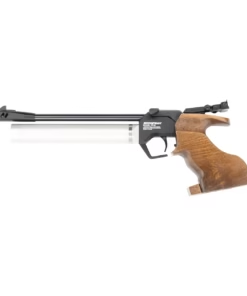
Snowpeak PP700SA PCP – Air Pistol – Compact PCP Performance and Precision
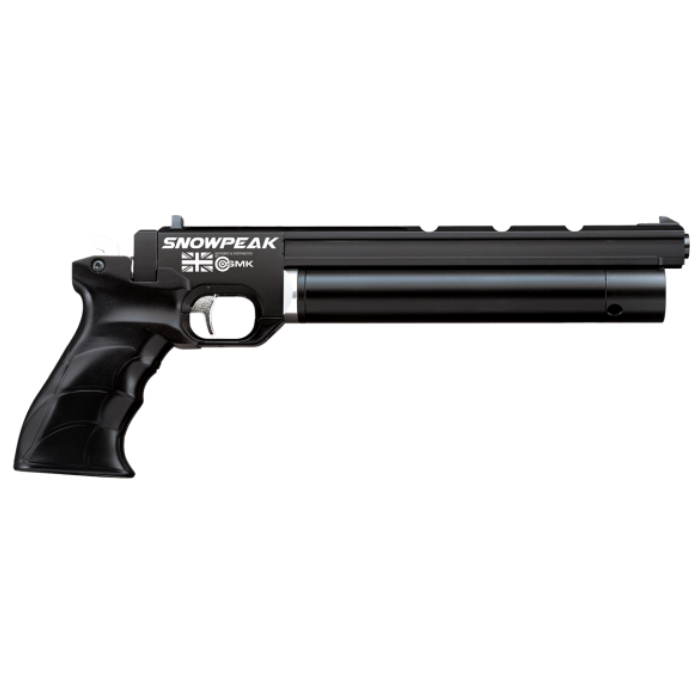
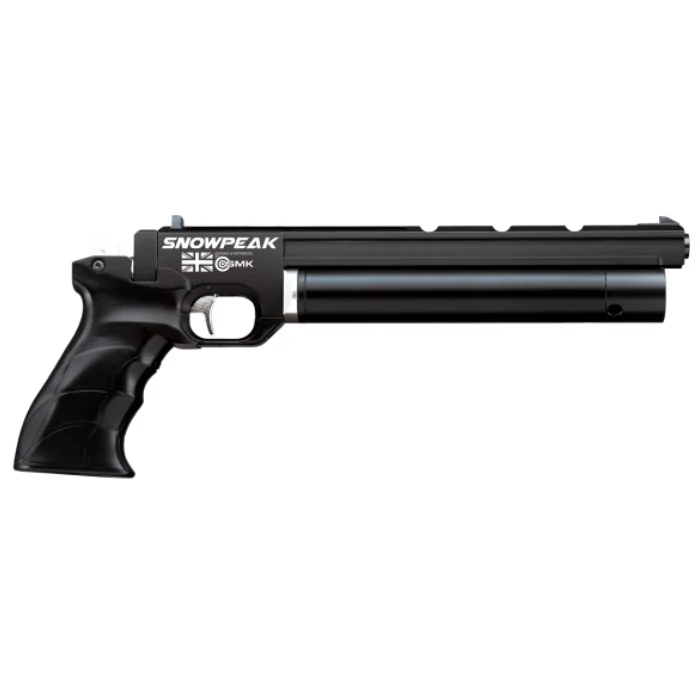
The Snowpeak PP700SA PCP – Air Pistol has been designed for shooters who value compact dimensions, controlled handling, and the smooth characteristics provided by pre-charged pneumatic technology. Rather than being burdened with unnecessary complexity, the platform has been built around straightforward operation, practical accuracy, and a lightweight format. Consequently, an enjoyable shooting experience can be achieved whether recreational target practice, training, or general range use is being considered.
Because PCP power is used, the firing cycle is kept noticeably smooth. Heavy spring movement is avoided, while recoil and vibration are reduced when compared with many traditional spring-powered alternatives. As a result, sight alignment can be maintained more easily, consistent technique can be developed, and each shot can be approached with greater confidence.
Furthermore, the Snowpeak PP700SA PCP – Air Pistol has been produced in both 4.5 mm (.177) and 5.5 mm (.22) configurations. A 72cc air reservoir is incorporated, while a maximum filling pressure of 25 MPa is specified by Snowpeak. A two-stage adjustable trigger, front and rear sights, and a 12 mm dovetail rail are also provided. The pistol measures approximately 365 mm in length and weighs about 0.9 kg.
Why Choose the Snowpeak PP700SA PCP – Air Pistol?
A useful balance between portability and PCP performance has been achieved with this model. Instead of the longer dimensions normally associated with PCP rifles, a substantially smaller platform is provided. Therefore, transportation, storage, and bench handling can all be made more convenient.
At the same time, precise shot preparation has been encouraged by the pistol’s straightforward operating format. Every shot can be approached deliberately, which makes the platform particularly suitable for shooters who want to concentrate on breathing, trigger control, sight picture, and follow-through.
Additionally, unnecessary weight has been kept to a minimum. Because the pistol weighs approximately 0.9 kg, fatigue can be reduced during extended practice sessions. Nevertheless, sufficient substance is retained for a stable feel in the hands.
Key Features at a Glance
- PCP power system for a smooth and controlled firing cycle
- Available in .177 / 4.5 mm and .22 / 5.5 mm
- 72cc compressed-air capacity
- Maximum fill pressure of 25 MPa
- Two-stage adjustable trigger
- 12 mm dovetail rail
- Front and rear sights
- Compact approximately 365 mm overall length
- Lightweight approximately 0.9 kg construction
- Consistent valve system
- Compact design suited to controlled target practice
- Simple layout that can be appreciated by developing and experienced shooters
Specifications are based on Snowpeak’s published PP700S-A information.
Smooth PCP Operation
One of the strongest qualities of the Snowpeak PP700SA PCP – Air Pistol is found in its pre-charged pneumatic system. Compressed air is stored inside the pistol before shooting; therefore, repeated manual spring compression is not required between shots.
Because strong spring movement is absent during discharge, relatively little mechanical disturbance is introduced. Consequently, a more settled sight picture can be maintained. This characteristic can be particularly valuable during paper-target practice, where small differences in trigger technique and pistol movement can influence group consistency.
Moreover, the firing experience is made more refined by the regulated-style consistency provided through Snowpeak’s consistent valve arrangement. Instead of being focused solely on raw performance, the pistol has been configured around repeatable delivery and practical usability.
Adjustable Two-Stage Trigger for Greater Control
Accurate pistol shooting is strongly influenced by trigger control. Therefore, a two-stage adjustable trigger has been incorporated into the PP700SA design.
With a two-stage system, initial movement can be taken up before the final release point is reached. As a result, the shot can be prepared more deliberately while the sights remain aligned with the intended target.
More importantly, the trigger can be adjusted within the manufacturer’s specified parameters. Consequently, the shooting experience can be better matched to individual preferences rather than forcing every user to work with exactly the same trigger feel.
For target shooters, this feature can become particularly useful because consistency is often developed through repetition. Once a comfortable setup has been established, the same trigger technique can be practised from one session to another.
Compact Dimensions for Convenient Handling
Portability has clearly been considered in the Snowpeak PP700SA PCP – Air Pistol design. With an overall length of roughly 365 mm, a compact shooting platform is provided without abandoning the essential features expected from a PCP pistol.
Because the overall footprint remains small, storage can be simplified when the pistol is kept legally and securely. Likewise, transporting the pistol to an authorised range or appropriate shooting location can be more convenient when all applicable local regulations are followed.
Furthermore, the compact format can help when shooting from a bench. Less space is occupied, while the pistol can still be held steadily with an appropriate stance and grip.
Lightweight Without Feeling Overcomplicated
At around 0.9 kg, the PP700SA remains relatively light. Therefore, extended practice sessions can be approached without the level of fatigue that can accompany much heavier platforms.
For newer shooters, manageable weight can also make correct technique easier to practise. Meanwhile, experienced users may appreciate the uncomplicated handling and portability offered by the design.
Open Sights and Optic Compatibility
Both front and rear sights are provided by Snowpeak, allowing the pistol to be used in a straightforward open-sight configuration. This setup can be especially useful for traditional target practice and for developing fundamental sight-alignment skills.
However, additional flexibility is provided through the 12 mm dovetail rail. Compatible sighting equipment may therefore be mounted where legally permitted and appropriate for the intended shooting discipline.
This adaptability allows the PP700SA to remain useful as shooting preferences develop. Initially, open sights may be preferred. Later, a compatible optic may be considered without requiring an entirely different PCP platform.
.177 and .22 Calibre Options
Different shooting requirements can be accommodated because the Snowpeak PP700SA PCP – Air Pistol is offered in both .177 (4.5 mm) and .22 (5.5 mm) versions.
The .177 configuration is commonly associated with recreational target shooting because smaller pellets and relatively flat trajectories are often preferred for paper and reactive targets. Conversely, the .22 configuration uses a larger pellet and provides a different shooting feel.
Nevertheless, calibre choice should always be matched to the intended lawful use, local regulations, suitable ammunition, and the specific power specification of the version being purchased.
Designed for Recreational Target Shooting
The PP700SA can be particularly well suited to shooters who enjoy deliberate, accuracy-focused sessions. Instead of encouraging rushed shooting, its compact PCP arrangement allows concentration to be placed on technique.
Breathing can be controlled more carefully. Likewise, grip pressure can be repeated from shot to shot, while trigger movement can be monitored. Over time, these fundamentals can contribute to improved consistency.
Because of this straightforward character, the pistol can serve as a useful recreational platform for experienced users as well as developing shooters who are being appropriately supervised and following applicable safety requirements.
Practical, Simple, and Purposeful PCP Design
Ultimately, the Snowpeak PP700SA PCP – Air Pistol has been created around a relatively simple idea: compact PCP performance should be made accessible without unnecessary bulk.
A lightweight frame has been combined with adjustable trigger control, usable sights, optic-mounting capability, a compact compressed-air reservoir, and two popular calibre choices. Consequently, a versatile platform is provided for controlled recreational and target shooting.
For users seeking a compact PCP pistol that emphasises manageable handling, smooth operation, and straightforward functionality, the Snowpeak PP700SA PCP – Air Pistol offers a well-rounded combination of features.
Whether open sights are preferred or a compatible optic is later fitted, the platform can be configured around individual target-shooting preferences. Moreover, because PCP operation reduces the mechanical movement commonly associated with spring-powered systems, a composed shooting experience can be maintained.
Above all, responsible ownership should always remain central. The pistol should be handled, transported, stored, filled, and operated according to the manufacturer’s instructions and all applicable local laws.
With its compact dimensions, two-stage adjustable trigger, .177 and .22 calibre availability, lightweight construction, and practical PCP system, the Snowpeak PP700SA PCP – Air Pistol provides an appealing option for shooters seeking a portable and precision-oriented air pistol for lawful recreational use.
Snowpeak Airguns, PCP Rifles, Air Pistols and Umarex Airguns
For shooters researching Snowpeak airguns, Snowpeak Sports, and the wider Snowpeaks product range, there are many PCP rifles, air pistols, and shooting accessories to consider. Popular searches include the Snowpeak AP900, Snowpeak AP900B PCP air rifle, Snowpeak MAX 1, Snowpeak MAX 1 price, Snowpeak PP750, PP750, Snow Peak PP750, and PP750 air pistol. Buyers also regularly compare models such as the Snowpeak P35, P35, P 35, PCP P 35, Snowpeak P35X, P35X, P35X PCP, and Snowpeak P35 vs P35X.
Other Snowpeak models attracting attention include the Snow Peak PP20, Snowpeak PP20, Snowpeak M25, M25 rifle, M-25, M25 weapon, Snowpeak M60, Snowpeak M60B, M 60B, rifle M60, rifle M50, and M50 rifle. Searches such as Snow Peak brand origin are also common among buyers who want to understand the manufacturer before choosing a rifle or pistol.
Snowpeak PCP Models and Related Airgun Searches
The PCP category covers everything from compact pistols to full-size hunting and target rifles. Searches frequently include PR900 Gen 3, CR650, SR 1000X, T Rex 6000, and pistolet PCP Arcea-Snowpeak Onix Sport. People comparing pneumatic platforms may also search what is a PCP airgun, air gun, air rifle, pellet pistol, air gun accessories, 9mm pellet, and pellet 9mm.
Some search phrases overlap with firearm terminology even when shoppers are researching airgun products. These include rifle M60, how much did the M60 weigh, rifle M50, M50 rifle, M25 weapon, and snowfall gun. Therefore, model specifications should always be checked carefully so that a historical firearm search is not confused with a modern sporting airgun product.
Umarex Airguns, Air Rifles, Pistols and PCP Platforms
Alongside Snowpeak products, Umarex USA, UmarexUSA, Umarex airguns, and Umarex air rifles are widely searched by recreational shooters, target shooters, and PCP enthusiasts. The Umarex range includes PCP rifles, CO₂-powered platforms, break-barrel pistols, BB guns, airsoft replicas, and large-caliber airgun systems.
Popular PCP searches include Umarex Notos, Umarex Notos Carbine, Umarex Gauntlet, Umarex Gauntlet 2, Umarex Gauntlet 30, Umarex Zelos, Umarex Origin, Umarex Komplete, and Umarex Komplete NCR .22. Hunters researching larger airgun platforms may also encounter the Umarex Hammer, Umarex Hammer .50 caliber, Umarex Hammer Carbine, Umarex Primal 20, and Umarex AirSaber.
Umarex Pistols, BB Guns and T4E Models
For handgun-style platforms, popular searches include Umarex BB gun, BBgun, BB gun pistol, metal BB gun, Umarex TR50, Umarex HDR 50, Umarex T4E, Umarex T4E Smith, Umarex Smith, and Umarex P2P DR50 how many joules.
Glock-style replicas remain another major category. Search terms include Glock BB gun, Glock 19 BB gun, Umarex Glock 19, Umarex Glock 19X, Umarex Glock 19 Gen3 .177 caliber BB gun air pistol, Umarex Glock 17, Umarex Glock 17 Gen 5, Umarex Glock, airsoft Glock, airsoft Glock 19, Glock 17 airsoft, and Glock airsoft gun.
Other replica and recreational searches include Umarex MP40, Umarex MP5, Umarex Legends, Umarex HK Heckler, Umarex shotgun, and airsoft pistol.Umarex DX17.
Break-Barrel and Sporting Umarex Airguns
Shooters looking for spring or gas-piston platforms frequently research the Umarex Trevox, loading Umarex Trevox break barrel .177, Umarex pistol break barrel, Umarex Fusion 2, Umarex Synergis Elite, and Amazon Umarex Browning 800 Express. These platforms provide alternatives for people who want an airgun without relying on a high-pressure PCP charging system.
Additional searches across the Umarex catalog include Umarex H, while broader terms such as air rifle, pellet pistol, air gun, and air gun accessories help buyers compare platforms, ammunition, optics, filling equipment, targets, cases, and other shooting equipment.
Whether the focus is a Snowpeak M60, Snowpeak M25, Snowpeak P35X, Snowpeak PP750, Snowpeak MAX 1, Umarex Notos, Umarex Gauntlet 2, Umarex Origin, or Umarex Hammer Carbine, buyers should compare caliber, operating system, power level, dimensions, intended use, and local regulations before selecting an airgun.
Practical Use Scenarios
A compact PCP air pistol becomes most valuable when its design can be translated into practical, repeatable use. Rather than being limited to a single type of shooting session, this platform can be incorporated into several controlled recreational environments where consistency, portability, and deliberate shot placement are important. Its relatively light weight, manageable dimensions, pre-charged pneumatic operation, and adjustable trigger make it suitable for users who want a straightforward shooting experience without unnecessary bulk.
Because different shooters approach practice in different ways, the pistol can be adapted to short training sessions, longer target sessions, bench-supported practice, informal recreational shooting, and technique-development exercises. However, every use should remain within applicable local law, safe shooting conditions, and the manufacturer’s operating instructions.
Indoor Target Practice
One of the most practical applications can be found in controlled indoor target shooting. Where a suitable legal indoor range is available, the pistol can be used for deliberate paper-target practice at appropriate distances.
Indoor shooting offers several advantages because environmental factors are reduced. Wind is removed from the equation, lighting can often be kept more consistent, and the shooter can focus almost entirely on technique. Consequently, trigger control, grip consistency, breathing, sight alignment, and follow-through can all be examined more carefully.
For example, a shooter may begin with larger paper targets while becoming familiar with the pistol. Once consistent groups are produced, smaller aiming points can gradually be introduced. In this way, the difficulty level can be increased without changing the equipment itself.
Because pre-charged pneumatic operation produces a relatively smooth firing cycle, unnecessary mechanical disturbance is reduced. Therefore, mistakes caused by the shooter’s own movement can become easier to identify. If a group repeatedly drifts in one direction, grip pressure, trigger movement, or sight alignment can be reviewed rather than automatically blaming the equipment.
This type of controlled practice can be especially helpful for anyone trying to improve consistency over time.
Backyard or Private-Property Target Use Where Legal
In locations where private-property airgun use is lawful, properly controlled target practice may also be possible. However, a secure backstop, appropriate shooting distance, safe direction of fire, and full compliance with local regulations should always be established before any session begins.
In this environment, portability becomes particularly useful. A compact pistol requires less space than a full-length rifle, while targets can often be arranged without creating an unnecessarily complicated setup.
Paper targets, approved airgun targets, and purpose-built pellet traps may be incorporated where they are suitable for the calibre, power level, and shooting environment. Because the focus remains on accuracy rather than excessive distance, a relatively small practice area can still provide meaningful training.
Furthermore, shorter sessions can be convenient. Instead of dedicating an entire afternoon to shooting, a user may practise for a controlled period while concentrating on one specific skill.
For instance, one session could focus on consistent grip placement. Another could concentrate on trigger release. A later session might be used to compare different approved pellets to determine which produces the most consistent grouping.
By approaching practice in this structured way, recreational shooting can become more productive.
Bench-Rest Accuracy Practice
Although pistols are commonly fired freehand, bench-supported shooting can provide useful information about both the equipment and ammunition.
When the pistol is supported safely on an appropriate rest, some of the natural movement associated with unsupported shooting can be reduced. Consequently, group patterns can be examined more objectively.
A shooter testing several pellet types, for example, may fire controlled groups using the same target distance and similar air-pressure conditions. The resulting groups can then be compared. This process can help determine whether one pellet design performs more consistently than another.
Bench shooting is also useful when checking an optic after installation. Once a compatible sight has been fitted correctly, a stable shooting position can make adjustment easier.
Rather than making large changes after individual shots, several-shot groups can be fired before adjustments are considered. This method can prevent the user from constantly chasing isolated impacts across the target.
Additionally, bench-supported practice may be beneficial for shooters who are still developing confidence with the pistol. Once sight alignment and trigger operation have become familiar from a stable position, unsupported practice can be introduced gradually.
Open-Sight Training
Traditional open sights remain highly useful for developing fundamental shooting skills.
When open sights are used, the shooter must maintain a consistent relationship between the rear sight, front sight, and target. Because small alignment errors can influence the impact point, careful visual discipline is encouraged.
A useful training routine can begin with relatively large targets. The shooter can concentrate on keeping the front sight consistently positioned while applying pressure to the trigger smoothly.
After basic consistency has been established, the target size may be reduced.
This progression helps prevent frustration because accuracy requirements are increased gradually rather than immediately.
Open-sight practice can also reduce reliance on electronic or optical accessories. As a result, fundamental visual alignment skills remain part of the shooter’s technique.
Optic-Based Recreational Shooting
Some users may prefer a compatible optic for recreational target sessions. Where a suitable sight is fitted correctly to the available rail, target acquisition may become easier depending on the shooter’s preferences and the type of optic chosen.
A compact red-dot-style sight, for example, can simplify the aiming process because the shooter is not required to align traditional front and rear sights in exactly the same way.
However, good trigger technique and stable handling remain important. An optic does not automatically eliminate shooter error.
Therefore, practical practice should still be structured around repeatability.
The shooter might begin by confirming zero from a supported position. Once a consistent point of impact has been established, unsupported groups can be attempted.
This approach allows the optic to be verified before the shooter’s personal technique becomes the main variable.
Moreover, because an optic can make aiming points easier to identify, small target challenges can become more enjoyable for experienced recreational shooters.
Short-Distance Precision Drills
Precision practice does not always require long shooting distances.
At shorter controlled distances, small aiming points can still create demanding exercises. Tiny printed circles, numbered targets, or approved reactive targets can be used to encourage deliberate shooting.
For example, several small circles may be placed across a target sheet. Only one shot could be taken at each circle.
This removes the temptation to fire repeatedly at the same aiming point until a good group appears. Instead, each shot must be treated individually.
Such exercises can improve concentration because the shooter must reset grip, breathing, sight picture, and trigger preparation before every shot.
Another useful exercise involves alternating between two target sizes. A larger target may be engaged first, followed by a smaller one. The change encourages the shooter to adjust visual concentration while keeping handling technique consistent.
These drills can make a simple target session more engaging without requiring excessive equipment.
Developing Trigger Control
Trigger technique plays a major role in accurate pistol shooting.
A two-stage trigger allows the shooter to become familiar with the initial take-up before reaching the final release point. Consequently, deliberate trigger preparation can be practised.
During controlled dry handling, where permitted by the manufacturer and performed safely with the pistol confirmed unloaded and depressurised or otherwise prepared according to instructions, the user may become familiar with the feel and position of the trigger. However, the manufacturer’s guidance should always be followed regarding dry firing.
During live target practice, trigger control can be developed by applying pressure progressively rather than suddenly.
The goal should be for the shot to break without disturbing sight alignment.
One effective drill involves firing slow groups where speed is completely ignored. Several seconds may be spent preparing each shot.
While this process may initially feel overly deliberate, it can expose unnecessary movement and help build consistent habits.
Eventually, smoother trigger operation may become more natural.
Grip and Stability Exercises
Because a pistol is supported primarily through the hands and arms, grip consistency becomes highly important.
A user can practise placing the hand in the same position each time the pistol is picked up. Finger placement, wrist angle, and pressure should remain as repeatable as reasonably possible.
If grip pressure changes dramatically between shots, group consistency may also change.
Therefore, practical sessions can be used to identify a comfortable, repeatable grip rather than simply attempting to hold the pistol as tightly as possible.
Short sessions can be particularly effective because muscle fatigue remains limited.
Once fatigue begins to affect stability, continuing to shoot may reinforce poor technique. Consequently, quality practice is often more valuable than simply firing a large number of pellets.
Recreational Plinking
Where lawful and conducted with an appropriate backstop, recreational plinking can provide an enjoyable alternative to formal paper-target shooting.
Approved reactive airgun targets can produce immediate visual or audible feedback. This makes them useful for informal practice because the shooter can quickly determine whether the target has been struck.
Metal targets should only be used when specifically designed for airgun use and positioned according to the manufacturer’s safety recommendations.
Household objects, glass containers, hard surfaces, or unsuitable materials should not be used because ricochets, fragments, and environmental waste can create unnecessary hazards.
Properly designed targets provide a much safer and more repeatable experience.
Plinking sessions can also be structured rather than random. Targets of different sizes may be arranged at safe distances, allowing the shooter to move from larger to smaller aiming points.
In this way, an enjoyable recreational activity can still contribute to improved accuracy.
Pellet Comparison Sessions
Different pellets can sometimes produce noticeably different grouping patterns from the same air pistol.
Therefore, controlled ammunition comparison can become a useful practical activity.
Several suitable pellet types can be tested under similar conditions. Each type should be fired at a separate target so results can be compared clearly.
Consistency is more important than speed during this process.
The same shooting position, distance, aiming method, and approximate reservoir pressure should be maintained as closely as possible.
After several groups have been completed, the shooter can evaluate which pellet produces the smallest and most consistent pattern.
However, pellet choice should always remain within the calibre and ammunition specifications recommended for the pistol.
Introducing Responsible New Shooters
Where local laws allow and appropriate supervision is provided, a compact air pistol may also be used to introduce eligible new shooters to basic target-shooting principles.
The emphasis should begin with safety rather than accuracy.
Safe muzzle direction, trigger discipline, correct handling, range commands, target identification, and secure storage should be understood before live shooting begins.
Once these principles have been established, simple targets can be introduced at manageable distances.
The relatively compact format can make demonstrations easier because the instructor can clearly explain the controls and handling sequence.
Nevertheless, supervision should remain continuous.
A new shooter should never be encouraged to fire rapidly before basic handling habits have been established.
Instead, each shot should be treated as a complete process: identify the target, establish a safe direction, adopt a stable position, align the sights, prepare the trigger, fire, and then return to a safe condition.
Skill-Progression Sessions
A particularly effective use scenario involves dividing practice into stages.
The first stage may focus entirely on stable positioning and sight alignment.
The second stage may introduce trigger-control exercises.
Later sessions can concentrate on smaller groups or more challenging targets.
Eventually, the shooter may combine all these skills into complete accuracy drills.
This progressive approach prevents too many variables from being introduced at once.
Furthermore, measurable improvement becomes easier to identify.
Targets can be dated and stored so group size can be compared across several weeks or months. As technique improves, patterns may become noticeably tighter.
This visual record can provide useful motivation while also revealing areas that require additional practice.
Portable Range Sessions
A compact pistol can also be convenient for regular travel to authorised shooting ranges.
Because overall size and weight are relatively modest, the equipment can be transported in an appropriate locked case according to applicable regulations.
Essential accessories can be organised separately, including approved pellets, eye protection, charging equipment where permitted, targets, cleaning supplies, and any documentation required locally.
A checklist can help prevent important items from being forgotten.
Once at the range, the pistol can be prepared according to range rules and manufacturer instructions.
Its compact format can be particularly useful on smaller shooting benches where space may be shared with other equipment.
At the end of the session, the pistol should be made safe, inspected, and stored correctly before transport.
Controlled Accuracy Challenges
Recreational shooting can become more engaging when clear goals are introduced.
For example, a shooter may attempt to place five shots inside a predetermined scoring ring before moving to a smaller target.
Another challenge could involve achieving consistent groups across several consecutive targets rather than producing one exceptional group.
This encourages repeatability.
A timed element may eventually be added for experienced shooters, but accuracy and safety should always remain more important than speed.
The purpose of these exercises is not simply to fire faster. Instead, the goal is to maintain correct technique while working under slightly increased pressure.
By varying target size, shooting position, sight system, and session structure, the same pistol can support a broad range of recreational exercises.
A Versatile Platform for Regular Practice
Ultimately, the strongest practical advantage of this type of air pistol lies in its adaptability.
It can be used during carefully structured accuracy sessions, casual recreational practice, open-sight training, optic-supported shooting, pellet testing, bench-supported evaluation, and supervised skill development.
Because the platform remains compact and relatively lightweight, regular practice can be organised without the logistical demands associated with larger equipment.
At the same time, the smooth PCP firing cycle allows concentration to remain focused on technique.
For shooters who enjoy improving accuracy gradually, this creates significant long-term value.
Rather than being used only occasionally, the pistol can become part of a consistent practice routine.
Different exercises can be introduced as skill develops, while equipment adjustments can be evaluated under controlled conditions.
Most importantly, every practical use scenario should remain centred on responsible ownership. Suitable targets, secure backstops, eye protection, safe handling procedures, lawful shooting locations, correct filling equipment, and proper storage should always form part of the routine.
When these principles are maintained, a compact PCP air pistol can provide an enjoyable, structured, and highly adaptable platform for recreational target shooting and ongoing skills development.
Frequently Asked Questions
What type of air pistol is this model?
It is a pre-charged pneumatic (PCP) air pistol, meaning compressed air is stored inside an onboard reservoir and released in controlled amounts when the pistol is fired. Unlike traditional spring-powered designs, no heavy spring needs to move during the firing cycle. Consequently, recoil and vibration can remain relatively low, allowing the shooter to concentrate more easily on sight alignment, grip consistency, trigger control, and follow-through.
This operating system also makes the pistol suitable for recreational target shooting and regular accuracy practice. Before use, however, the reservoir must be filled with suitable high-pressure equipment and according to the manufacturer’s specified pressure limits.
Which calibres are available?
Snowpeak lists the PP700S-A in 4.5 mm (.177) and 5.5 mm (.22) configurations.
The .177 version can be an appealing choice for paper-target shooting and precision-oriented recreational use because smaller, generally lighter pellets are widely available. Conversely, the .22 version fires a larger pellet and provides a different trajectory and shooting character.
Neither calibre is automatically the better choice for every shooter. Instead, intended use, local legislation, ammunition availability, and personal preference should be considered before purchasing.
Is it suitable for target shooting?
Yes. Its combination of compact dimensions, PCP operation, open sights, and an adjustable two-stage trigger makes it well suited to controlled recreational target practice.
Because the firing cycle does not involve the heavy movement produced by a spring-powered mechanism, relatively little mechanical disturbance occurs during each shot. Therefore, shooters can focus closely on developing consistent technique.
Paper targets, approved airgun targets, and properly designed pellet traps can all be incorporated into practice sessions where their use is legal and a suitable backstop is provided.
What is the maximum filling pressure?
Snowpeak specifies a maximum filling pressure of 25 MPa, equivalent to approximately 250 bar.
The reservoir should never be filled beyond the manufacturer’s stated maximum. Furthermore, only properly rated PCP filling equipment should be used.
Suitable charging options may include a PCP hand pump, approved high-pressure compressor, or suitable diving/SCBA cylinder equipped with the correct filling hardware. Users should always inspect hoses, connectors, gauges, and seals before charging and follow the manufacturer’s filling procedure.
How large is the air reservoir?
The manufacturer’s specification lists an air capacity of 72cc.
This compact reservoir contributes to the pistol’s relatively small overall dimensions and light weight. Actual usable shot count can vary according to calibre, power configuration, fill pressure, pellet choice, temperature, and individual setup.
For that reason, a fixed number of shots per fill should not be assumed unless it has been verified for the exact version being purchased.
Does it have an adjustable trigger?
Yes. A two-stage adjustable trigger is included. Snowpeak lists a trigger range of 1–5 lbf.
A two-stage design allows initial trigger movement to be taken up before the final release point is reached. This can help shooters prepare each shot more deliberately while maintaining sight alignment.
Any trigger adjustment should remain within the manufacturer’s specifications. Extremely light or improperly adjusted trigger settings can create safety concerns, so changes should be made carefully and tested in a safe environment.
Does it have a regulator?
Snowpeak describes the pistol as having a consistent valve.
This system is intended to support more consistent air delivery during a shooting session. Stable air delivery can be valuable because significant velocity variation may contribute to changes in pellet impact.
Nevertheless, consistency also depends on pellet quality, reservoir pressure, temperature, barrel condition, and shooter technique. Therefore, the valve system should be viewed as one component of an overall accuracy-focused design rather than a guarantee that every shot will produce an identical result.
Does the pistol include open sights?
Yes. Snowpeak lists both a front sight and rear sight as standard features.
Open sights allow the pistol to be used without purchasing an additional optic. They can also be valuable for shooters who want to practise fundamental sight alignment.
When using open sights, the relationship between the rear sight, front sight, and target should remain consistent from shot to shot. Small alignment changes can influence point of impact, making open-sight practice useful for developing disciplined technique.
Can an optic be fitted?
The manufacturer lists a 12 mm dovetail rail for the model.
This rail can accommodate compatible mounting systems and suitable optics. Depending on personal preference, some shooters may choose a compact red-dot sight or another lightweight sighting system designed for an appropriate dovetail mount.
Compatibility should always be confirmed before purchase because not every optic uses the same mounting standard. Weight and balance should also be considered, since an unnecessarily large optic can make a compact pistol less comfortable to handle.
Does it include a magazine?
Snowpeak’s current product information states that a magazine is included.
However, exact magazine configuration or capacity can vary by market or package, so buyers should confirm what is supplied with the specific unit offered by the retailer.
Where a magazine is used, pellets should be loaded according to the manufacturer’s instructions. Damaged or deformed pellets should not be forced into the magazine because this can affect feeding reliability and accuracy.
What velocity does it produce?
Snowpeak currently lists velocities of 800 fps for the 4.5 mm version and 700 fps for the 5.5 mm version on its standard PP700S-A specification page.
Actual velocity can vary depending on pellet weight, pressure, local-market configuration, and other factors. Snowpeak also publishes a separate low-power regional version with substantially lower velocities, showing why buyers should confirm the exact specification supplied in their country.
Velocity alone should not be used to determine legal classification. Muzzle energy, calibre, local legislation, and the airgun’s configuration may all be relevant.
Is this an FAC air pistol?
That depends on the country, power configuration, and applicable legislation.
“FAC” is primarily a UK licensing term. Air pistols and air rifles are treated differently under UK law, while other jurisdictions apply completely different licensing, ownership, and energy rules.
Therefore, buyers should verify the exact muzzle-energy specification of the individual pistol rather than assuming its legal status from the model name or advertised velocity.
Where licensing is required, the necessary authorization should be obtained before purchasing or possessing the airgun.
Is it suitable for beginners?
It can be suitable for an eligible new shooter when appropriate supervision, range procedures, and safety instruction are provided.
Its compact dimensions and relatively light construction can make handling manageable. Furthermore, its PCP firing cycle can help new users concentrate on fundamental technique without significant spring recoil.
However, a PCP air pistol still requires responsible handling and knowledge of high-pressure charging equipment.
New users should learn safe muzzle direction, trigger discipline, loading procedures, pressure limits, storage practices, and range commands before live shooting begins.

Reviews
There are no reviews yet.