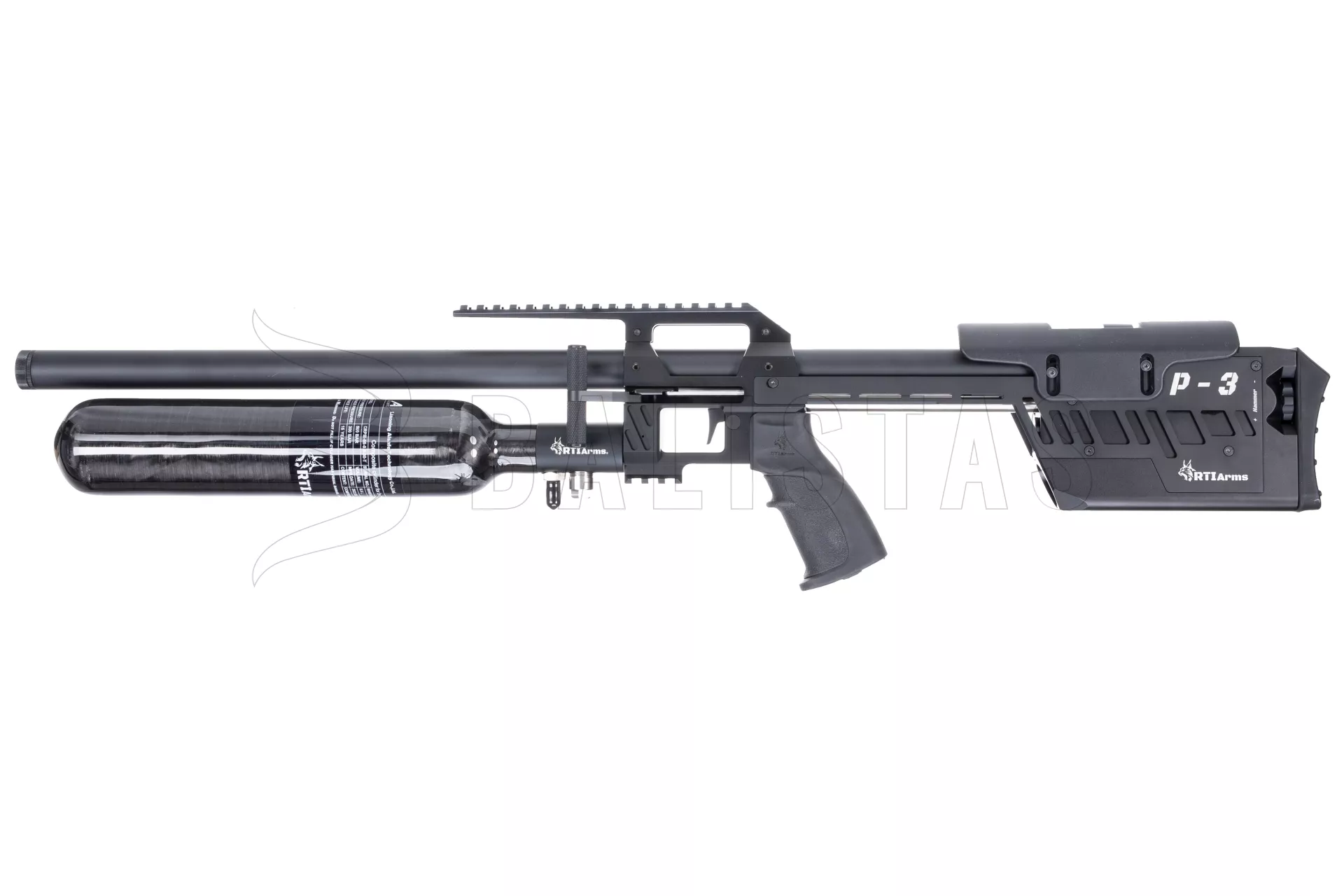
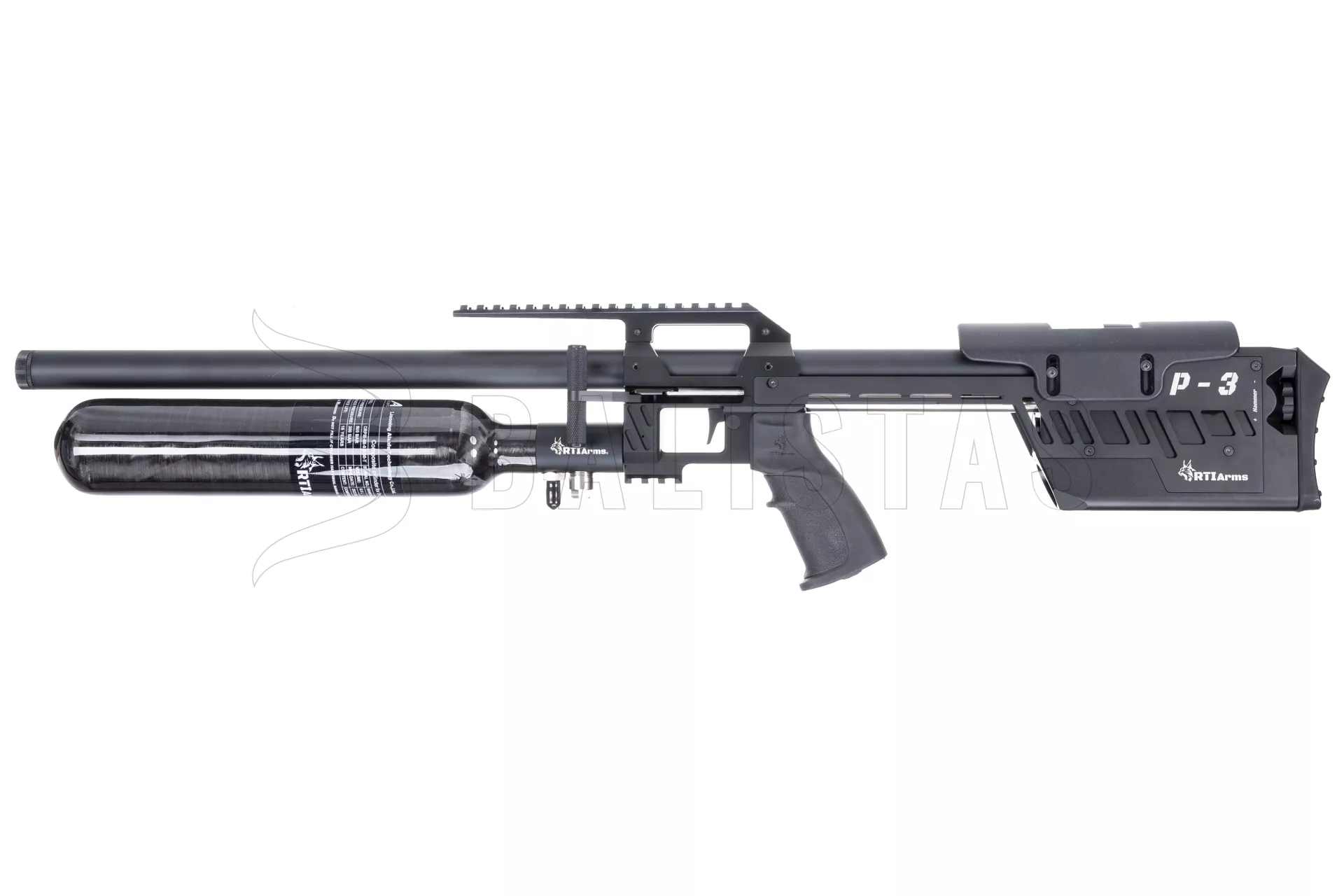
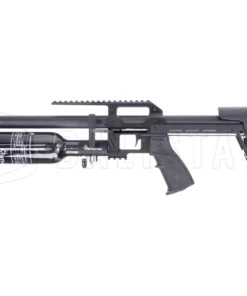
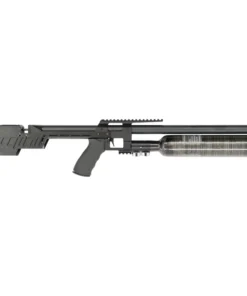
Precision, compact handling, and regulated power are brought together in the RTI Priest 3 Performance Bullpup PCP Air Rifle. Engineered in Slovenia by RTI Arms as a further development of the Priest and Prophet platforms, this Performance configuration is built for shooters who want a short, balanced bullpup that can still be tuned for target work, pest control, or higher-power field use where local law allows.
A machined aluminum chassis, side-lever action, and Performance-grade air system are combined so that consistency can be maintained across a fill. Because the action sits rearward in a bullpup layout, overall length is kept modest while a 24-inch barrel can still be used on the standard-length rifle. As a result, pointability in tight spaces is improved without the barrel being shortened to an extreme.
The following features are supplied so that the rifle can be configured for serious use from the first session:
A compact silhouette is achieved because the magazine, trigger group, and action are placed behind the shooter’s firing hand. Consequently, a standard-length Performance rifle of about 790 mm (31″) can still be carried more easily than many conventional-layout PCPs of similar barrel length. Weight is typically listed near 3.3 kg (7.3 lb) unscoped, so a solid, planted feel is given without an overly front-heavy balance.
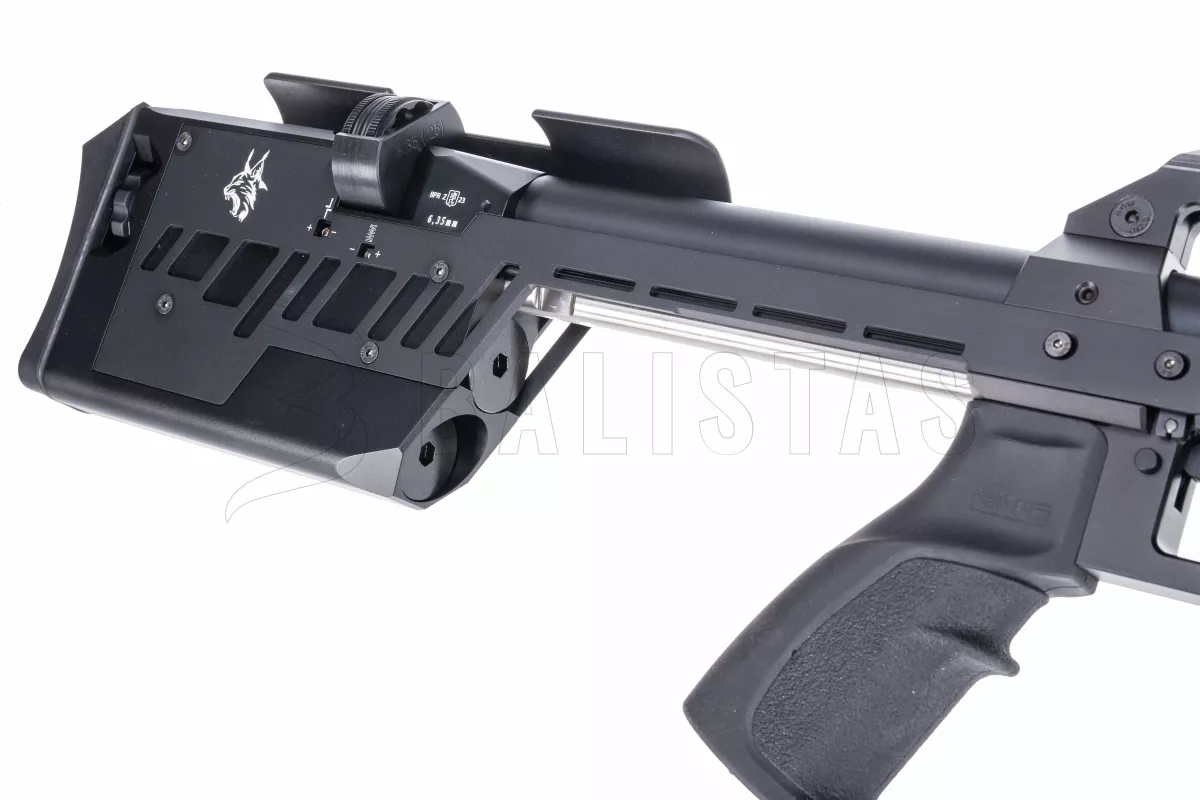
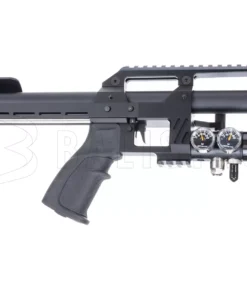
Furthermore, an adjustable cheekpiece can be swapped or raised so that a proper sight picture is obtained with a wide range of scopes. In addition, the rubber buttpad is used to stabilize the shoulder weld during longer strings. Meanwhile, the AR-style grip allows familiar control for shooters who already run modern sporting rifles. Because the magazine is ambidextrous, left- and right-handed operation can be supported without a separate action set.
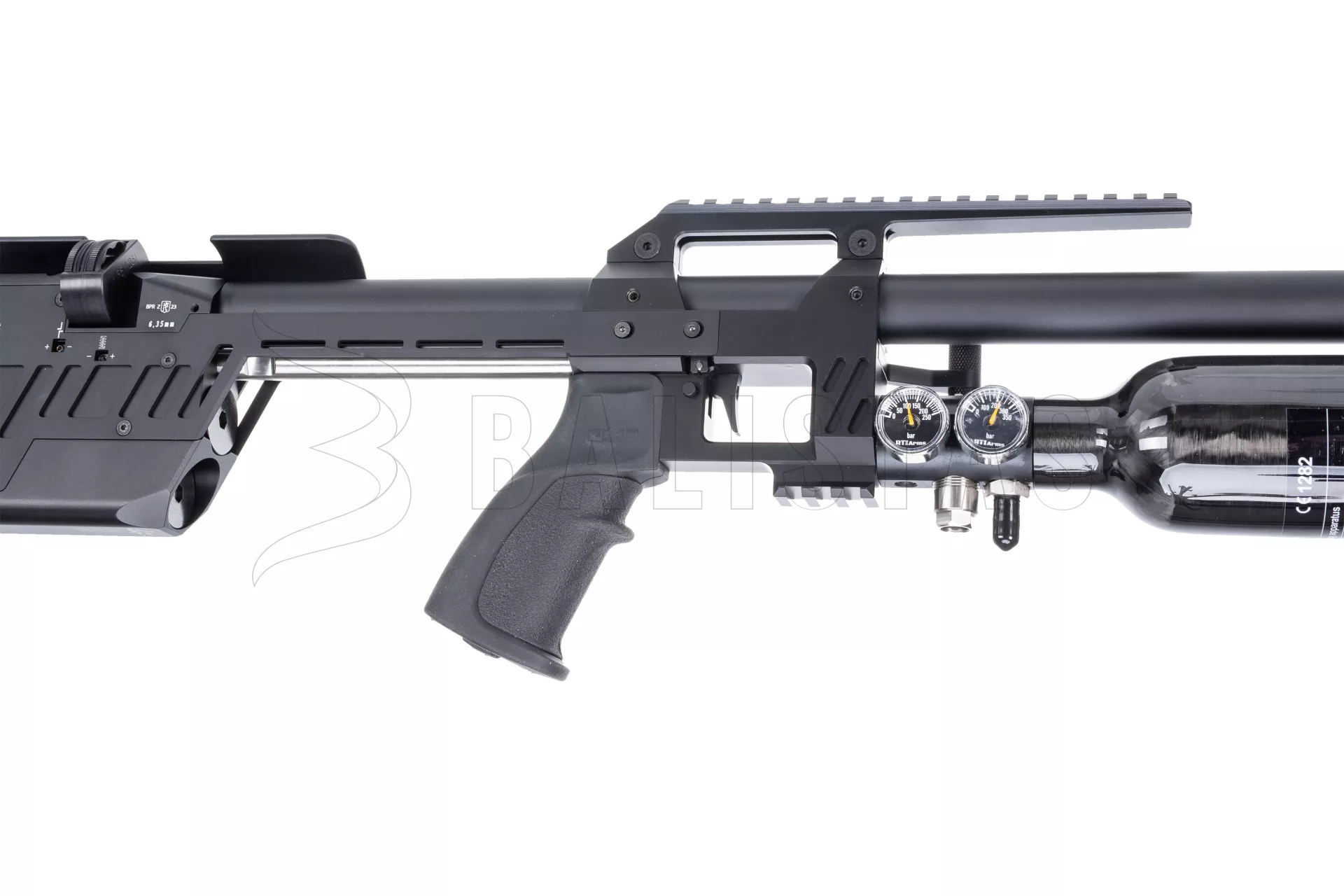
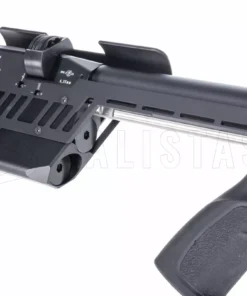
Moreover, a short additional Picatinny section ahead of the trigger guard is often present so that a bipod or other support can be mounted. Therefore, the same rifle can be used offhand in cover, from a vehicle window, or from a rested bench.
Consistent air is the foundation of a regulated PCP. For that reason, the Performance edition is given an externally adjustable regulator so that output pressure can be changed without the bottle first being emptied. In practice, regulator settings from about 80 to 180 bar are published. At the same time, a 70 cc plenum is integrated so that each shot is fed from a more stable air volume.
Because an assisted valve is used, opening and closing times are kept extremely short. As a result, high energy can be produced at lower regulated pressures than many older designs required. Published energy bands for the platform (jurisdiction and tune dependent) include roughly:
Lower-power factory tunes (for example 7 J, 16 J, 20 J, or 24 J) can also be supplied where law requires them. Accordingly, the same platform can be specified for legal-limit target use or for FAC / high-power field work.
On a 500 cc bottle, published shot-count ranges are approximately 180–38 in .177, 170–35 in .22, 160–30 in .25, and 150–25 in .30, with the higher shot figures corresponding to milder regulator settings. Compact 320 cc bottles, when chosen instead, yield fewer shots. Therefore, the Standard-length Performance bottle is usually preferred when long strings or higher energy are needed.
A bottle-mounted gauge is provided so that remaining pressure can be monitored. In addition, hammer-spring tension can be micro-adjusted so that valve lock time is matched to pellet weight and regulator setting. When those two controls are used together, velocity spread can be tightened for match or hunting pellets.
Caliber choice should be matched to intended use. A .177 barrel is typically selected when high shot count and flat trajectory are wanted for targets. By contrast, .22 is widely chosen as an all-round hunting and pest-control caliber. Meanwhile, .25 and .30 are specified when heavier slugs or greater terminal energy are required and local law permits those power levels.
Barrel assignment follows the same logic. Lothar Walther choked barrels are listed for certain .177 and .30 setups, while RTI RPB barrels with light choke and twists such as 1:16″ or 1:20″ are used in .22 and .25 so that both pellets and slugs can be stabilized. A 24″ (60 cm) tube is standard on the longer Performance rifle; compact versions use a shorter 20″ tube in some calibers.
FAC and power rules vary by country and sometimes by region. Consequently, energy output, magazine use, and even ownership itself must be confirmed against local regulations before a high-power configuration is ordered. Responsible storage, safe handling, and appropriate backstops are expected with every PCP, regardless of tune.
Accessory support is generous. Because a 20–150 MOA rail is fitted, long-range elevation can be dialed without running out of turret travel. Likewise, the 1/2″ UNF thread allows a moderator or RTI Hušh-style suppressor to be installed where legal. Caliber-change kits, extra magazines, ARCA/Picatinny bipod extensions, and an optional arrow barrel for X7 2212 arrows are catalogued as add-ons. A 15 mm pellet length is the usual magazine limit; slightly longer projectiles can be single-loaded.
Field work in woodland, farm buildings, and vehicles is made easier by the bullpup layout. At the same time, the regulated Performance air system is intended to keep groups honest on paper at 50–100 yards when pellets are matched to the barrel. Side-lever cycling can be kept in the shoulder, so follow-up shots are not delayed by a long bolt throw.
Because the regulator, hammer wheel, cheekpiece, and rail angle can all be adjusted, the same chassis can be refined for HFT-style precision or for heavier hunting slugs. Inclusive design is further supported by ambidextrous magazine insertion and a reversible cheekpiece, so a wider range of shooters can obtain a correct head position.
When a compact, tunable, multi-caliber PCP is required—and when a carbon bottle plus external regulator are wanted as standard rather than as later upgrades—the RTI Priest 3 Performance Bullpup PCP Air Rifle is positioned as a complete platform. Local legality should be verified, a suitable moderator and optic should be fitted, and a consistent pellet or slug should be chosen. After those steps are completed, the rifle is ready to be used as a precise, efficient bullpup for range sessions and responsible field shooting.
Barra Air Rifles, BB Guns, PCP Systems, Electric Airguns, and Advanced Shooting Platforms
The modern airgun market offers a wide range of shooting platforms designed for beginners, enthusiasts, and experienced shooters. From traditional BB gun designs to advanced pneumatic systems, today’s technology provides improved accuracy, power, reliability, and versatility. The Barra product range has gained attention among airgun users because of its combination of innovative engineering and practical shooting performance.
Popular models include the Barra 300Z, Barra 350Z, Barra 250Z, Barra 400, Barra 400E Gen 2, Barra 400 E, 400E, 400 e, Bara 400E, Barra 1100Z, Barra 1100Z Gen 2, Barra 1200G, Barra 100, BA-400, Barra 1866, Barra 1866 Rosie Bundle, Barra 270Z, Barra Sportsman 900, and Sportsman 900. These platforms are designed for different shooting preferences, including recreational shooting, target practice, and precision applications.
A BB gun rifle provides a classic shooting experience, while a BB rifle offers a compact and accessible option for users interested in recreational shooting. Many shooters also search for a BB gun rifle with scope because an optic can improve aiming consistency and overall shooting control. Traditional accessories and variations include BB rifle pump, BB gun pump, and BB gun rifle pump systems.
PCP Air Rifle and Compressed Air Technology
Advanced airgun technology has been transformed through precharged pneumatic systems. A PCP rifle uses stored air pressure to deliver consistent performance, making it a popular choice among users who want accuracy and power. A PCP air rifle operates through compressed air stored inside a reservoir, allowing multiple shots before refilling.
Many shooters research air rifle compressed air technology because it provides smooth operation, reduced vibration, and improved shot consistency. A compressed air pellet guns platform uses high-pressure air to propel pellets efficiently, while a high pressure air rifle is designed for users who require increased performance.
Other related systems include air gun compressed, compressed air guns, and compressed air rifle designs. These platforms are commonly paired with equipment such as a PCP pump for air rifle and other filling accessories.
For new users asking PCP air rifle meaning, what is a PCP air rifle, what is PCP air rifle, or whats a PCP gun, the answer refers to a precharged pneumatic system that stores compressed air before shooting. A pre charged pneumatic air rifles setup provides an alternative to spring-powered designs and is widely used for precision shooting.
Barra PCP Models and Caliber Options
The Barra 250Z PCP air rifle is designed for shooters looking for a powerful and compact pneumatic platform. The Barra 250Z for sale market includes different configurations, including the Barra 250Z .25 cal version.
Large-caliber airguns are becoming increasingly popular, with options such as a 25 cal air rifle 1000 fps, 25 caliber pellet rifle, .25 PCP air rifle, PCP 25 caliber air rifle, 25 caliber air rifle, and 25 Z configurations.
These larger-caliber platforms are designed for users who want increased energy and performance compared with smaller calibers. Other popular caliber choices include the 22 cal air rifle, 22 caliber air rifle, 22 caliber pellet gun, and 22 pellet rifle 1200 fps options.
Electric BB Guns and Automatic Airgun Platforms
Electric-powered shooting systems have created another category within recreational shooting. An electric BB gun uses battery-powered technology to provide a unique shooting experience. Related designs include electric pellet gun, electric air gun, air gun electric, electric rifle, battery powered air gun, electric BB guns, electric guns, and airsoft air guns electric.
Users searching for high-speed systems may look for terms such as most powerful fully automatic BB gun, full auto BB gun electric, best full auto BB gun, best full auto BB guns, full auto BB gun 1000 fps, full auto BB gun, and fully automatic BB gun.
These platforms are designed for users who want rapid operation and modern features. Performance-focused searches may also include strong BB guns when comparing powerful recreational shooting options.
Pellet Guns, Break Barrel, and Traditional Air Rifles
Traditional airgun designs remain popular because of their simplicity and reliability. A pellet gun provides a practical option for target shooting, while a pellet rifle offers improved stability and accuracy.
A pellet sniper platform is designed for users interested in precision shooting. Classic spring-powered systems include the break barrel pellet gun 1200 fps, break barrel, and single shot 22 break barrel rifle.
For beginners researching what is a break barrel air rifle, this system works through a hinged barrel mechanism that compresses a spring or gas piston before each shot. These designs remain popular because they require minimal additional equipment.
Additional traditional options include air gun pump action, air rifle pump action, pump pellet gun, and pump BB pistol platforms.
Barra Sportsman and Additional Airgun Platforms
The Sportsman 900 air rifle and Sportsman 900 BB gun provide versatile options for recreational users. These models are part of the wider selection of Barra shooting products designed for different experience levels.
Other available platforms include 250Z, Barra 300Z, and various modern Barra configurations. Accessories such as pellet trap for 1200 fps, camouflage pellet guns, and Mossy Oak 308 products allow shooters to customize their equipment.
Users interested in alternative power systems may also explore a CO2 rifle, lever action air rifle, and lever action PCP air rifle. These designs combine traditional handling with modern airgun technology.
Choosing the Right Airgun System
Selecting the right platform depends on shooting purpose, preferred caliber, power requirements, and experience level. A PCP review can help users compare different pneumatic systems, while PCP shooting provides insight into the performance advantages of regulated air platforms.
Whether choosing a Barra model, a compressed air system, an electric shooting platform, or a traditional spring-powered design, understanding features and applications helps buyers select the correct equipment.
From the Barra 400E price to advanced PCP technology and modern electric systems, today’s airgun market provides a wide range of choices for recreational shooters, target enthusiasts, and experienced users seeking reliable performance.
Practical Use in the Field, on the Range and Around the Holding
A compact, regulated pre-charged rifle is most useful when the job changes from one hour to the next. Tight farm buildings, woodland edges, a vehicle window, a bench at fifty yards and a longer lane at a hundred yards can all be asked of the same platform. Because the action is placed rearward and the air system can be tuned, those different tasks can be handled without a second gun being packed for every outing. The scenarios below are written so that the rifle can be matched to real ground, real weather and real legal limits rather than to a brochure photograph.
Inclusive use is assumed throughout. Left- and right-handed shooters can be accommodated by an ambidextrous magazine and a cheekpiece that can be set for either side. Furthermore, a short overall length helps younger or smaller-framed adults who find a conventional full-length sporter awkward in a hide. Safety, permission and local law remain the first conditions of every outing.
Pest Control Around Buildings, Yards and Feed Stores
Rats, feral pigeons and similar permitted pests are often taken at short to medium range in places where a long barrel becomes a liability. Doorways, feed passages, loft hatches and the gap between parked machinery leave little room for a swing. In those conditions a bullpup layout is preferred because the muzzle can still be kept on the safe side of a doorway while the shooter’s hands stay close to the body.
A .22 pellet of moderate weight is commonly chosen for this work when energy is kept within the local unlicensed limit. Alternatively, a heavier .22 or a .25 load can be used where a certificate allows more power and a humane strike at slightly longer yardage is needed. Because the regulator can be set, a quiet, efficient tune can be selected for night work near livestock so that air is not wasted and report is kept down once a moderator is fitted.
Lighting is often poor. Therefore a compact optic with a bright reticle is usually mounted rather than a large target scope. A bipod is rarely needed inside a building; instead, a door frame, a sack of feed or a kneeling position is used as a rest. Follow-up shots matter. Side-lever cycling can be completed without the rifle being taken from the shoulder, so a second pest that appears after the first shot can be addressed quickly if it is safe and legal to do so.
Access routes should be walked in daylight first. Backstops of brick, earth or deep timber must be confirmed. After that reconnaissance is finished, the same compact rifle can be carried in a slip through a yard without catching on gates.
Useful setup for yard work
- A legal-limit or modest FAC tune so that over-penetration through thin cladding is reduced
- A moderator where the law allows it
- A compact scope or red-dot with a clear aiming point in low light
- Spare magazines already filled with a known pellet
- A headlamp that can be run on a dim setting so that night vision is not destroyed
Woodland Edges, Rides and Permission Ground
Permission ground is rarely a tidy range. Brambles, young plantation and a wet ditch force the shooter to kneel, sit or lean. A short rifle can be slipped through a gap in a hedge without the muzzle being waved across an unsafe line. At the same time, a twenty-four-inch barrel on the standard-length version still gives the pellet a useful start when a rabbit or corvid is taken at forty to sixty yards along a ride.
Wind is the main enemy on an open ride. Consequently a heavier pellet in .22 or a slug in .25 is often selected when the certificate allows it, because drift is reduced and energy at the target is better retained. The regulator is then set so that a consistent string can be fired from one fill while a morning walk is completed. A 500 cc bottle is an advantage here: several stands can be visited before a refill is required.
An adjustable cheekpiece is used so that a higher-mounted hunting scope still gives a full sight picture from a hasty kneeling position. Meanwhile the rubber buttpad helps the rifle stay in the shoulder when a coat is worn. Because the centre of gravity sits close to the body, the muzzle can be held on a small gap for a long wait without the fore-end dipping.
Quarry identification must be certain. Leaves, shadow and a similar-sized bird can deceive. Therefore the shot is only taken when a clear, legal target and a safe backstop are both present. After the shot, the area is approached on a safe line so that a follow-up can be made if needed.
Work From a Vehicle, High Seat or Hide
Many permissions are covered from a truck window, a high seat or a small hide. Space in front of the shooter is limited. A conventional rifle with a long fore-end often cannot be pointed without the muzzle striking glass or timber. A bullpup avoids that problem because much of the length sits behind the trigger hand.
From a vehicle, the engine is switched off, a rest is improvised on a folded jacket, and the muzzle is kept inside the legal and safe envelope of the window. A modest magnification scope is preferred so that a wide field of view is kept for animals that appear at the edge of a field. The adjustable rail can be left at a mild angle for these ranges; extreme MOA is reserved for longer deliberate shots.
In a high seat, a bipod or a clamped rest can be attached to the short rail ahead of the trigger guard. Because the rifle is not excessively long, it can be brought up without catching the seat frame. Cold hands are common. An AR-style grip and a side lever that does not require a long rearward stretch help when gloves are worn.
A hide built of nets and poles is even tighter. Here the compact length is used so that the shooter can turn on a bucket seat without the muzzle sweeping the net. Pellets are kept in magazines rather than loose tins so that noise is reduced when a reload is made.
Range Practice, Zeroing and Skill Building
Every field rifle is only as useful as the zero that has been confirmed. A bench or a sandbag at a club range is therefore the first practical use for many owners. Groups are shot at twenty-five, then forty or fifty yards, and later at seventy-five or one hundred yards if the power level and pellet support that distance.
Because hammer tension and regulator pressure can both be adjusted, a chosen pellet can be tuned until vertical stringing is reduced. After a satisfactory zero is obtained, the same settings are noted so that they can be repeated after a barrel clean or a calibre change. A 20–150 MOA rail is then useful when a high-mounted scope is used at longer distances: elevation can be built into the mount so that the turret is not already at the stop.
Inclusive practice sessions can be run for mixed groups. A lighter trigger setting—still safe, still two-stage—can be used for precision work, then returned to a slightly heavier pull for cold-weather hunting. Left-handed members of a club can insert the magazine from their side without a special action being ordered.
Dry checks of the safety, magazine seating and fill pressure should be made before live fire. After the session, moisture is wiped from the barrel crown and the Foster fitting so that the next outing starts clean.
Longer Lanes, Slugs and Higher-Power Permissions
Where a certificate allows higher energy, the same chassis can be used on longer farmland lanes. A .25 or .30 barrel with a suitable slug is then chosen so that wind drift is reduced and humane energy is still present at the far end of a safe shot. The regulator is raised within the published band, and shot count is accepted as lower in exchange for that energy.
A free-floated, choked barrel helps groups stay together when slugs are used, provided the projectile length still fits the magazine or is single-loaded. Because slugs are more sensitive to damage, they are seated carefully and not forced. A moderator becomes almost essential at these power levels if neighbours and livestock are close; legality of that moderator must be confirmed first.
Longer shots demand more from the shooter than from the rifle. Range estimation, wind reading and a solid rest matter more than a few extra joules. Therefore a bipod, a rear bag and a scope with reliable tracking are fitted before those lanes are attempted. The adjustable rail is set toward the higher MOA end so that hold-over is reduced.
Competition-Style Precision and Informal Field Target Practice
Not every owner enters a formal league, yet many enjoy field-target style targets in the garden or on club ground. Knock-down targets at varied distances reward a consistent regulator and a crisp trigger. The two-stage unit can be lightened toward the lower published pull—around two hundred grams when it is safe to do so—so that a clean break is obtained.
A .177 barrel is often preferred for this game because trajectory is flatter and more shots are available from one fill. Alternatively, a mild .22 tune is used when the same rifle must also serve for hunting. The cheekpiece is raised until the full sight picture is seen without neck strain during a long sitting stage.
Wind flags, or simple tape on canes, should be read before each lane. After a miss, the rifle is not blamed first: pellet choice, fouling and a shift in regulator setting are checked in that order.
Travel Between Permissions, Overnight Storage and Seasonal Changes
Practical use includes the hours when the rifle is not fired. A hard case is used for vehicles so that the carbon bottle and the adjustable rail are not knocked out of alignment. Fill pressure is left at a sensible level for storage rather than at a maximum that will sit unused for months. Local rules on transport—unloaded, sleeved, locked, out of sight—are followed.
Seasonal change affects point of impact. Winter clothing raises the head; a cheekpiece adjustment is then required. Cold air also changes regulator behaviour slightly, so a few confirmation shots are fired at a safe zeroing board after the first frost. Summer heat and dust call for a cover over the Foster port and a check that magazines still rotate freely.
Inclusive family or club use means that more than one person may handle the same rifle. Each user should set the cheekpiece and confirm the zero rather than assume the last setting still fits.
Putting a Session Together
A typical productive day can be planned as follows. Permission and legal power are confirmed first. Then a calibre and pellet that have already been grouped on paper are loaded. The regulator and hammer wheel are left on the settings that produced that group. A moderator and a compact optic are fitted. Magazines are filled at home so that time on the ground is not spent thumbing pellets in the wind.
On arrival, a short safe zero check is made if the rifle has travelled far. After that, stands are walked in an order that keeps the wind in a known quarter. Shots are taken only when the backstop is certain. At the end of the day the bottle pressure is noted, the barrel is dry-wiped, and the case is closed.
When those habits are kept, a compact regulated bullpup earns its place: it can be carried through a yard at dawn, rested on a hide stick at noon, and grouped on a club target before dark—without the name of the rifle needing to be repeated for the work to be done.
Frequently Asked Questions
Clear answers are needed before a regulated compact PCP is ordered, filled or carried onto permission ground. The questions below are written so that calibre choice, legal power, filling, accessories and day-to-day use can be understood without a model name being repeated. Local law still comes first. Where a certificate, joule limit or hunting rule differs from one country to another, that local rule is the one that must be followed.
Inclusive use is assumed. Left- and right-handed shooters, mixed experience levels and both legal-limit and certificated setups are covered.
Buying, Calibre and Intended Work
Which calibre should be chosen first?
A .177 barrel is usually selected when a flatter trajectory and a high shot count are wanted for paper and close pest work. By contrast, a .22 barrel is treated as the all-round choice for mixed permissions. Meanwhile a .25 or .30 barrel is specified when heavier projectiles and greater energy are required and a certificate allows that output. Because barrels and magazines can later be changed with a kit, a first calibre can be chosen for the work that will be done most often rather than for every possible future job.
Can pellets and slugs both be used?
Pellets are supported in every chambering. In addition, proprietary barrels used in .22 and .25 are described as suitable for slugs as well as pellets, provided projectile length stays within the magazine limit of about 15 mm, or 16 mm when a single shot is loaded by hand. Damaged slugs should not be forced. After a slug is adopted, a fresh group should be shot so that zero is confirmed.
Is a compact bottle enough, or is the larger bottle needed?
A smaller bottle keeps weight and length down for buildings and vehicle work. However, fewer consistent shots are produced, especially at higher regulator settings. A larger carbon bottle is therefore preferred when long walks, FAC-level energy or a full morning of stands are planned. The same action can be specified with either vessel depending on how the rifle will actually be carried.barra 250z 25 cal
Can more than one person in a household use the same rifle?
Yes, provided every user is legally entitled to possess and use it. An ambidextrous magazine and a cheekpiece that can be set for either side allow left- and right-handed members of a family or club to obtain a workable head position. After a change of user, cheek height and zero should be checked rather than assumed.full auto electric bb gun.b a r r a,what gen is black 2,ar bb gun
FAC, Power, Law and Responsible Ownership
Is a certificate always required?
Not in every country and not at every energy level. Many regions allow a low-power air rifle to be used without a firearm certificate, while energy above a stated limit—such as 12 ft-lb in the United Kingdom—places the rifle under FAC or equivalent rules. Factory tunes at 7 J, 16 J, 20 J or 24 J are published so that a legal-limit specification can be requested. Higher published bands in each calibre apply only where the law allows them.bara 250z
Can power be turned down after a high-power rifle has been received?
Regulator pressure on the Performance-style air system can be adjusted externally within the published band, and hammer tension can be micro-adjusted without tools. As a result, energy and shot count can be balanced. That said, a factory legal-limit build is the safer route when no certificate is held. Altering a rifle to exceed a local limit is not lawful. Confirmation from the supplier and from local regulations should be obtained before any tune is changed.bb gunning.barra 400e aeg
Are hunting and pest control automatically permitted once the rifle is owned?
Ownership and use are separate questions. Permission from the landholder, a safe backstop, a legal quarry species and, where required, a certificate or hunting licence must all be in place. Night shooting, vehicle shooting and the use of a moderator are also restricted in some regions. Those rules should be read before the first outing.250 z










Reviews
There are no reviews yet.