We Deliver Airguns Directly To Your Door
SKU N/A Category

Remington Spirit XB Series

€467.00

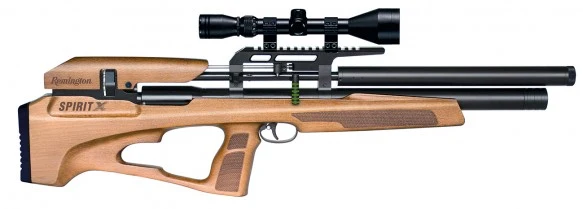
The Spirit™, the first regulated PCP bull pup from Remington®

This full sized, well-balanced rifle is ideal for both vermin control and target shooting.

The ergonomic designed stock is very popular in comfort when shooting, and the thumbhole gives a strong area with the styled grip.

The precision made rifled barrel has a side lever action with a very unique, sturdy customised bolt, is multi shot controlled and to finish has a 1/2” UNF threaded sound moderator.

The high quality pressure gauge is clear and accurate, with a max fill pressure of 200 bar.

There is a manual safety in the trigger guard, are all made from metal for superb control.

Action MULTI SHOT SIDE LEVER
Type PCP
Stock Synthetic (high grade)
Trigger Two stage (adjustable)
Length (total) 67cm
Weight 2.4kg
  • Manual safety


Remington Spirit XB Series PCP Air Rifle – Precision, Performance, and Compact Bullpup Engineering

Remington Spirit XB Series PCP Air Rifle – Advanced Regulated PCP Technology

The Remington Spirit XB Series PCP Air Rifle has been developed around the advantages of regulated pre-charged pneumatic technology, compact bullpup engineering, and practical shooting comfort. A carefully balanced combination of precision, reliability, and ergonomic handling has been incorporated into this distinctive air rifle platform.

Furthermore, consistent compressed-air delivery is supported by an internal regulation system, while accurate pellet guidance is provided through a precision-rifled barrel. Consequently, a dependable shooting experience can be achieved during recreational target practice and other lawful shooting activities.

Unlike conventional spring-powered designs, compressed air is stored within a dedicated reservoir and released through a controlled pneumatic mechanism. As a result, mechanical vibration is reduced, and smoother operation is generally experienced.

Additionally, the compact bullpup configuration has been designed to preserve practical barrel length without requiring an unnecessarily long overall rifle. A comfortable shooting position is encouraged through its ergonomic stock, while convenient handling is supported by the thoughtfully arranged controls.

Key Features and Product Highlights

Several practical features have been integrated into the Remington Spirit XB Series PCP Air Rifle to support accuracy, comfort, and everyday usability.

  • Regulated PCP System: More consistent compressed-air delivery is supported by internal pressure regulation.
  • Compact Bullpup Configuration: Overall dimensions are reduced while practical barrel length is maintained.
  • Precision-Rifled Barrel: Pellet stability and repeatable accuracy are supported by precision-machined rifling.
  • Multi-Shot Side-Lever Action: Convenient pellet cycling is provided through a mechanical side-lever arrangement.
  • Ergonomic Thumbhole Stock: Comfortable hand positioning and balanced handling are encouraged.
  • Adjustable Trigger System: Trigger characteristics can be configured according to the specifications of the supplied variant.
  • Integrated Pressure Gauge: Reservoir pressure can be monitored before and during shooting sessions.
  • 200-Bar Maximum Fill Pressure: A defined compressed-air filling limit is specified for the Spirit PCP platform.
  • Manual Safety Mechanism: Additional handling control is provided through a manually operated safety.
  • Threaded Muzzle: Compatible muzzle accessories may be accommodated where permitted by local regulations.

Precision Engineering and Regulated PCP Performance

Consistent Compressed-Air Delivery

Reliable pneumatic performance is supported by a regulated air-delivery system. Through this arrangement, variations in reservoir pressure can be managed more effectively during normal operation.

Moreover, consistency between successive shots is supported by controlled pressure delivery. Nevertheless, actual performance is influenced by pellet selection, reservoir pressure, maintenance condition, and the specifications of the particular model.

Unlike unregulated pneumatic designs, where changing reservoir pressure may produce greater velocity variations, a regulated system is intended to maintain more predictable performance throughout its operating range.

Consequently, the regulated mechanism is particularly relevant when repeatable results are being evaluated during supervised target shooting.

Precision-Rifled Barrel Construction

Accuracy is supported by the precision-rifled barrel incorporated into the platform.

Inside the barrel, spiral rifling is used to impart rotational stability to compatible pellets. Through this process, a more predictable flight path can be supported when suitable ammunition and appropriate shooting conditions are used.

Furthermore, repeatability is influenced by the quality of the barrel, the condition of its internal surfaces, and the consistency of the pneumatic mechanism.

For this reason, periodic inspection and manufacturer-approved maintenance are recommended.

Compact Bullpup Design and Ergonomic Handling

Balanced Construction for Comfortable Shooting

A distinctive appearance is created by the bullpup layout, through which the action is positioned farther toward the rear of the rifle.

As a result, overall length is reduced without the same degree of barrel shortening associated with certain conventional layouts.

Additionally, handling comfort is supported through an ergonomically shaped stock. Natural hand placement is encouraged by the thumbhole configuration, while improved stability may be experienced when suitable shooting positions are adopted.

The compact profile is particularly relevant wherever convenient storage, transport, and controlled handling are required.

Durable Stock Materials and Practical Finishing

Stock construction is determined by the specific model supplied within the product range.

Synthetic-stock configurations are valued for their comparatively straightforward maintenance requirements and resistance to ordinary environmental exposure.

Alternatively, hardwood configurations are appreciated for their traditional appearance, distinctive grain patterns, and substantial feel.

Regardless of the selected finish, the stock should be protected from unsuitable storage conditions and maintained according to the manufacturer’s recommendations.

Multi-Shot Side-Lever Action and Trigger Characteristics

Convenient Mechanical Operation

A multi-shot side-lever mechanism is incorporated into the Spirit PCP family.

Through this arrangement, pellet cycling is supported by a manually operated lever, while successive shots can be prepared using the manufacturer’s specified loading system.

Furthermore, mechanical durability is supported by metal components used in important operating controls.

Smooth functioning depends on correct maintenance, compatible ammunition, and proper handling.

Adjustable Trigger and Manual Safety

Controlled trigger operation is supported by an adjustable trigger system on applicable variants.

Through the available adjustment provisions, trigger characteristics may be configured by a qualified technician or in accordance with the manufacturer’s instructions.

Meanwhile, an additional handling safeguard is provided by the manual safety mechanism positioned near the trigger assembly.

Nevertheless, safe handling practices must always be observed, regardless of the safety’s position.

Air Reservoir Capacity and Pressure Monitoring

Integrated Pressure Gauge

Reservoir monitoring is made convenient through an integrated pressure gauge.

Before shooting sessions, available air pressure can be checked against the manufacturer’s recommended operating range.

Furthermore, the Spirit PCP platform is commonly specified with a maximum filling pressure of 200 bar.

However, the precise reservoir capacity, filling arrangement, and permitted operating limits must be verified against the supplied model documentation.

Responsible Compressed-Air Maintenance

Compressed-air safety is supported through correct filling procedures and regular equipment inspection.

Only compatible, manufacturer-approved charging equipment should be used, and the stated maximum pressure must never be exceeded.

Additionally, seals, connections, and external components should be inspected for visible wear or deterioration.

Where servicing is required, the work should be performed by appropriately qualified personnel.

Calibre Options and Shooting Applications

Available Calibre Configurations

Different calibre options may be offered within the Spirit product family, including .177 (4.5 mm), .22 (5.5 mm), and certain .25 (6.35 mm) configurations.

However, availability should be confirmed for the exact XB Series variant before any specifications are published.

Performance characteristics are influenced by calibre, pellet mass, factory power configuration, and local regulatory requirements.

Recreational and Sporting Applications

The platform is primarily associated with recreational target shooting, precision practice, and other legally permitted airgun activities.

During organised shooting sessions, repeatable performance can be evaluated through suitable targets and controlled range conditions.

Furthermore, comfortable handling may be appreciated by experienced enthusiasts who prefer compact pneumatic designs.

Any field application must be conducted only where lawful and with appropriate safety precautions.

Maintenance, Durability, and Long-Term Reliability

Long-term reliability is supported by regular inspection, appropriate storage, and responsible equipment handling.

After use, external surfaces should be checked for accumulated moisture, dirt, and visible damage.

Additionally, the manufacturer’s maintenance intervals should be followed for seals, mechanical components, and pneumatic systems.

Unnecessary dismantling should be avoided, particularly where pressurised components are involved.

When proper care is maintained, the useful service life of the rifle’s components can be better protected.

Technical Specifications

The following specifications are associated with the Remington Spirit PCP platform. Exact XB Series configurations should be confirmed against the manufacturer’s documentation.

  • Manufacturer: Remington
  • Product Family: Spirit PCP Series
  • Power Source: Pre-Charged Pneumatic
  • Pressure Regulation: Internally regulated
  • Action: Multi-shot side lever
  • Stock Design: Compact bullpup with thumbhole grip
  • Barrel: Precision rifled
  • Trigger: Adjustable on specified variants
  • Maximum Fill Pressure: 200 bar
  • Safety: Manual safety mechanism
  • Approximate Overall Length: 67 cm on commonly listed Spirit variants
  • Muzzle: 1/2-inch UNF threaded on specified variants
  • Calibre: Dependent on model configuration
  • Weight: Dependent on stock material and version

Conclusion – Compact Design and Regulated Pneumatic Performance

The Remington Spirit XB Series PCP Air Rifle is distinguished by the combination of regulated compressed-air technology, precision-oriented engineering, and compact bullpup construction.

Through its pneumatic operating system, consistent air delivery is supported, while comfortable handling is encouraged by the ergonomic stock configuration.

Furthermore, convenient pressure monitoring, mechanical side-lever operation, and a precision-rifled barrel are incorporated into the broader Spirit platform.

For experienced shooting enthusiasts, these characteristics provide a useful basis for evaluating handling preferences, maintenance requirements, and technical suitability.

Ultimately, the rifle’s capabilities should be assessed against the exact model specification, applicable legislation, and the intended lawful shooting environment.

Remington Spirit XB Series PCP Air Rifle – Calibres, FAC Power, Recommended Scopes and Essential Accessories

The Remington Spirit XB Series PCP Air Rifle has been developed with regulated pneumatic technology, compact bullpup construction, and versatile calibre configurations. Through its precision-oriented engineering, dependable performance is supported across recreational target shooting and other legally authorised applications.

Furthermore, different factory power ratings are offered within the broader Spirit range, allowing suitable configurations to be selected according to regional legislation and intended use.

Available Calibres and Performance Characteristics

.177 Calibre (4.5mm) – Precision and Target Shooting

The .177 calibre is widely appreciated for its relatively flat pellet trajectory and suitability for conventional target shooting.

Through its smaller pellet diameter, predictable ballistic characteristics can be achieved when ammunition is correctly matched to the barrel and factory power rating.

Additionally, this calibre is commonly preferred for paper-target practice and controlled recreational shooting.

Factory versions rated at 7.5, 10, and 16 joules are documented within the Spirit product family. However, actual energy output should always be verified against the exact model supplied.

.22 Calibre (5.5mm) – Versatile Sporting Performance

The .22 calibre is recognised for its heavier pellet options and widespread availability in recreational airgun shooting.

Compared with .177 ammunition, greater pellet mass is commonly encountered, although trajectory and velocity are influenced by the specific ammunition and factory power setting.

Moreover, regulated compressed-air delivery is intended to reduce variations between shots.

A 16-joule factory configuration has been documented for the Spirit X in .22 calibre, while other configurations may be supplied in different markets.

.25 Calibre (6.35mm) – Larger-Calibre Configuration

A .25 calibre option is listed by certain retailers within the Spirit X and related PCP product families.

Larger-diameter pellets are generally associated with greater projectile mass. Consequently, performance characteristics differ from those of smaller-calibre configurations.

Nevertheless, no universal muzzle-energy rating should be assumed for this variant.

Availability, magazine compatibility, factory pressure settings, and approved ammunition specifications should be confirmed before purchase.

FAC and Non-FAC Power Configurations

UK Non-FAC Air Rifle Classification

In England and Wales, air rifles producing no more than 12 foot-pounds of muzzle energy are generally classified within the non-FAC air-rifle category, subject to other applicable legal requirements.

This threshold is approximately 16.3 joules.

Accordingly, UK-market Spirit configurations are commonly supplied below the relevant statutory limit.

Important distinctions apply in Scotland, where most air weapons require an Air Weapon Certificate or another recognised authority. Separate restrictions also apply in Northern Ireland.

FAC-Rated Configurations

A Firearm Certificate (FAC) is generally required in England and Wales for an air rifle capable of exceeding 12 foot-pounds of muzzle energy.

Any higher-powered variant must therefore be assessed according to the applicable firearms legislation.

Furthermore, factory-certified power ratings must be distinguished from theoretical performance claims.

Unauthorised alteration of pneumatic components, regulator settings, or other power-related mechanisms should be avoided.

Only factory-approved specifications and legally compliant configurations should be advertised.

Power Output and Regulated PCP Technology

Factory Muzzle Energy

Several factory energy ratings have been published for the Spirit product family.

  • 7.5 joules: Documented on selected European-market variants.
  • 10 joules: Offered on certain factory configurations.
  • 16 joules: Published for selected .177 and .22 models.
  • Higher FAC output: Not established for the exact XB variant and requiring manufacturer confirmation.

Actual muzzle energy is determined by the supplied configuration rather than calibre alone.

Pressure Regulation and Air Reservoir

A regulated compressed-air system is incorporated into the platform to support consistent pressure delivery.

Meanwhile, a clearly visible pressure gauge is provided for convenient reservoir monitoring.

A maximum fill pressure of 200 bar is specified across multiple Spirit and Spirit X listings.

Furthermore, a 265cc air capacity is documented for certain models, although this specification should not be assumed to apply universally.

The stated filling limit must never be exceeded.

Recommended Scopes and Optical Accessories

3-9×50 Telescopic Scope

A 3-9×50 scope represents a practical optical configuration for ordinary recreational target shooting.

Indeed, several Spirit packages are supplied with this magnification range and compatible mounting hardware.

Through its adjustable magnification, a range of target-viewing preferences can be accommodated.

4-12×40 Adjustable Scope

A 4-12×40 optic may be considered where additional magnification is preferred for range-based target observation.

Furthermore, adjustable objective or parallax correction features may be useful where included.

Compatibility should be checked against the rifle’s available mounting space, eye-relief requirements, and rail specifications.

Recommended Optics Brands

The following established optics manufacturers offer models that may be considered for compatibility evaluation:

  • Hawke Sport Optics
  • Vortex Optics
  • Nikko Stirling
  • MTC Optics
  • UTG Optics

Before installation, the rail interface, ring dimensions, optic weight, and eye relief should be confirmed.

Essential Accessories and Maintenance Equipment

PCP Charging Equipment

A compatible high-pressure filling system is required for normal PCP operation.

A certified hand pump, suitable charging cylinder, or manufacturer-approved compressor may be used where the correct fittings and pressure controls are provided.

Additionally, filtered, dry compressed air should be used to protect internal components.

Pellet Storage and Maintenance Accessories

Appropriate maintenance equipment is recommended for dependable long-term ownership.

  • Calibre-Matched Pellets: Ammunition should be selected according to the manufacturer’s approved specifications.
  • Protective Rifle Case: Secure storage and transportation are supported by a suitable padded case.
  • Manufacturer-Approved Cleaning Kit: Routine barrel care can be undertaken using compatible materials.
  • Replacement Seals: Approved spare seals may be retained for professional servicing.
  • Pressure-Rated Filling Adapter: Safe connection is supported by the correct manufacturer-specified fitting.
  • Protective Scope Covers: Optical surfaces are shielded against ordinary dust and accidental contact.
  • Certified Gun Cabinet: Secure storage is supported by an appropriate locking system.
  • Operating Manual: Filling limits, inspection intervals, and safety requirements can be readily referenced.

Choosing the Appropriate Configuration

The Remington Spirit XB Series PCP Air Rifle offers a combination of compact handling, regulated compressed-air operation, and several documented calibre options within the broader product family.

For conventional target shooting, the .177 configuration is frequently considered, while .22 and .25 variants provide alternative pellet characteristics.

Furthermore, practical optical compatibility is supported by the availability of conventional telescopic sights, including the commonly supplied 3-9×50 configuration.

Ultimately, the correct rifle should be selected according to verified factory specifications, local licensing requirements, approved accessories, and the owner’s intended lawful shooting activities.

Through appropriate equipment selection, regular maintenance, and responsible handling, the rifle’s performance and serviceability can be preserved over time.

Brocock BRK and Benjamin Air Rifles: Complete Guide to PCP Technology, Precision, Calibres and Accessories

Discover the Engineering Behind Brocock Airguns and Benjamin Air Rifles

Modern airgun technology has transformed recreational target shooting, competitive marksmanship, and precision air-powered sporting equipment. Today, manufacturers combine advanced pneumatic systems, ergonomic construction, and innovative engineering to produce dependable shooting platforms. Among the established names in this industry, brocock ltd and Benjamin continue to attract attention from enthusiasts seeking technical sophistication and reliable performance.

The evolution of brocock airguns reflects a strong emphasis on compact designs, efficient compressed-air systems, and consistent shot delivery. Similarly, the Benjamin product range offers numerous configurations, from traditional pellet rifles to specialized pneumatic platforms.

Whether researching a compressed air rifle, comparing a conventional pellet gun, or exploring advanced sporting equipment, understanding the available technologies helps buyers make informed decisions.

Brocock BRK Air Rifles: Innovation and Precision Engineering

Brocock Sniper XR and BRK Sniper XR

The brocock sniper xr represents an important development in regulated pneumatic rifle engineering. Featuring a semi-bullpup configuration, adjustable ergonomics, and a sidelever operating system, this model emphasizes handling convenience and mechanical consistency.

Additionally, the brk sniper xr incorporates a regulated air-delivery system designed to reduce variations between successive shots. Its adjustable stock components provide flexibility for different shooting positions.

For enthusiasts researching the .25 caliber brocock sniper xr, calibre selection deserves particular attention. The larger pellet diameter offers different projectile characteristics compared with smaller calibres, while energy output and shot capacity depend on the specific configuration.

The sniper xr also offers an example of how modern engineering combines compact dimensions with adjustable controls.

Brocock Commander XR and BRK Commander

Another noteworthy platform is the brocock commander xr, which combines a tactical-inspired stock configuration with pneumatic engineering.

The brocock commander has attracted interest from enthusiasts who appreciate adjustable furniture, modular features, and consistent operation.

Similarly, buyers researching brk ghost and Commander models often compare ergonomics, overall dimensions, available calibres, and compatible accessories.

Searches for brocock commander xr price should be evaluated using current retailer listings because pricing varies according to country, configuration, condition, and included equipment.

BRK Ghost Air Rifle: Modern Design and Customization

The brk ghost air rifle represents a distinctive approach to modern PCP rifle design. Its bullpup layout places major operating components within a compact overall configuration while retaining a full-length barrel arrangement appropriate to the model.

Furthermore, the BRK Ghost offers adjustable ergonomic components and a mechanical design intended to support controlled operation.

Owners researching ghost accessories should pay attention to manufacturer compatibility, factory specifications, and approved replacement components.

A replacement ghost handle, for example, should be checked against the exact model and production variant before purchase.

Likewise, a magpul sl k buttpad is a product-specific accessory reference rather than a guarantee of compatibility with every rifle stock.

Pathfinder XR and Compact BRK Models

The pathfinder xr offers another example of the manufacturer’s emphasis on compact pneumatic platforms.

Buyers researching the brk pathfinder, brk pathfinder xr, or general pathfinder air rifle specifications should compare verified product dimensions, stock arrangements, and applicable power ratings.

The brk concept xr is another model worth examining when comparing compact sporting rifles.

While these designs share elements of the manufacturer’s engineering philosophy, each has its own configuration and intended handling characteristics.

For anyone comparing several platforms, factors such as overall weight, trigger characteristics, stock adjustment, and service support are more useful than appearance alone.Remington Spirit XB Series PCP Air Rifle.

What Are PCP Air Rifles and How Do They Work?

New enthusiasts frequently ask, what are pcp air rifles?

The abbreviation PCP means precharged pneumatic, referring to an air-powered system that stores compressed air in a pressurized cylinder or reservoir.

Consequently, understanding pcp rifle meaning helps explain the operating principles behind modern pneumatic sporting rifles.

Other common searches include what does pcp mean in air rifles, what is pcp air rifle, what is a pcp air rifle, and what is a pre charged pneumatic air rifle.

All describe the same general operating technology.

Likewise, what is a pcp air gun and pcp air rifle meaning refer to compressed-air propulsion rather than spring-powered or carbon-dioxide systems.

A pcp rifle stores energy before firing, whereas a break barrel pellet gun typically compresses a spring or gas ram through a cocking action.

This distinction also explains why a pneumatic gun, gun pneumatic, and pneumatic weapons may refer to several different mechanisms, depending on the context.

Modern pcp air rifles often feature pressure regulators, adjustable triggers, and specialized magazines. Nevertheless, operating pressure, energy output, and maintenance requirements vary substantially between models.

Essential Accessories and Equipment Compatibility

Properly selected accessories contribute to equipment suitability and long-term maintenance.

For example, the 0db moderator and 0 db moderator are search variations referring to a sound-moderating accessory. Actual sound reduction depends on the individual device, rifle configuration, and applicable legal requirements.

Meanwhile, a pcp o ring kit may contain replacement seals for specified components. Seal dimensions, materials, and pressure ratings must match the manufacturer’s requirements.

Optics are another consideration. A buyer researching how to connect scope equipment should first confirm the mounting-rail standard and the compatibility of the selected mounting system.

The mtc copperhead 4 16×44 is one example of an optical sight that may appear in airgun accessory searches.

Separately, what does prc stand for in guns is a terminology question commonly encountered during broader firearm research. PRC often refers to Precision Rifle Cartridge, which is distinct from PCP pneumatic technology.

Some searches also include bro air, a broad term that may appear alongside BRK and Brocock product research without identifying a specific manufacturer model.

Benjamin Air Rifles: Traditional Performance and Modern Pneumatic Technology

Benjamin Marauder and Popular PCP Models

The benjamin air rifle range encompasses numerous designs developed for different shooting preferences. From conventional air pellet gun platforms to specialized pneumatic systems, the manufacturer offers equipment for recreational and sporting applications.

Among its recognized products, the benjamin marauder has established a strong presence in PCP airgun discussions.

The benjamin marauder pcp and benjamin marauder pcp air rifle are associated with regulated or unregulated configurations, depending on model and generation. Similarly, the benjamin marauder air rifle is frequently considered by enthusiasts researching accurate pneumatic equipment.

Buyers comparing the benjamin marauder .25, benjamin marauder 22, and benjamin marauder regulated variants should verify the exact specifications rather than assume identical performance.

The benjamin marauder pistol provides another distinct option for enthusiasts interested in compact air-powered platforms.

Additionally, searches for benjamin pellet, benjamin pellet gun, and benjamin air pistol reflect the manufacturer’s broader presence in the sporting airgun market.

For owners of older equipment, benjamin air rifle repair should involve model identification, manufacturer-approved parts, and qualified servicing of pressurized components.

Benjamin Bulldog and Big-Bore Airguns

The benjamin bulldog is associated with the development of larger-calibre PCP platforms.

In particular, the benjamin bulldog 457 belongs to the big-bore category, while the bulldog 357 represents another calibre designation within the family.

Those researching benjamin bulldog 457 20 joules should distinguish search terminology from verified factory specifications, since this phrase does not establish an official 20-joule configuration.

More broadly, big bore air guns differ from conventional small-calibre pellet rifles in projectile dimensions, pressure-system requirements, and applicable regulations.

A hunting air rifle or hunting pellet gun must also be evaluated according to local laws, permitted activities, and the manufacturer’s intended application.

Benjamin Trail, Prowler and Break-Barrel Models

Traditional spring and gas-piston airguns remain popular alongside pneumatic equipment.

The benjamin prowler and benjamin trail np are examples associated with conventional sporting air-rifle designs.

Likewise, the benjamin np trail xl and benjamin air rifle 22 break barrel appear frequently in searches involving gas-piston technology.

The phrase benjamin break may also describe general interest in the manufacturer’s break-barrel products.

Enthusiasts comparing a benjamin 22 caliber pellet rifle with PCP alternatives should consider the differences in cocking mechanism, maintenance, recoil behavior, and operating requirements.

Benjamin Airbow Technology and Arrow-Launching Systems

The benjamin airbow belongs to a specialized category that uses compressed air to propel compatible arrows rather than conventional pellets.

Also called an air bow, airbow, arrow gun, air bow rifle, or air bow gun, this equipment differs substantially from standard pellet platforms.

The benjamin pioneer airbow helped establish the manufacturer’s presence in this category.

More recent searches for benjamin airbow m600, benjamin m600 airbow, and the general benjamin bow category reflect interest in advanced arrow-launching technology.

An airbow rifle may also be compared with an air powered crossbow, although their propulsion mechanisms and equipment requirements are different.

The M600 is a distinct PCP-powered arrow launcher with manufacturer-specific arrows and components.

Benjamin Airguns
+1


Understanding Pellet Gun Calibres and Power Ratings

Airgun buyers frequently compare .177 pellet guns, 177 pellet guns, a 22 pellet gun, and a .25 pcp air rifle.

Each calibre has its own projectile characteristics, compatible ammunition, and model-specific performance limits.

Similarly, searches for a high powered pellet gun, high power pellet gun, or pellet rifle 1500 fps should be assessed carefully. Advertised velocity alone does not establish accuracy, suitability, or energy output.

A bolt action pellet gun describes a particular loading or cycling arrangement rather than a specific power system.

Other familiar categories include the bb gun rifle, air gun rifle, airrifle, and the broader grouping of air rifle and air pistol equipment.

In comparison, co2 pellet guns use carbon dioxide cartridges, while PCP platforms rely on stored high-pressure air.

The search term m357 may refer to different products and requires model confirmation before any technical comparison.

Choosing the Right Airgun and Understanding Online Availability

Buyers asking can i buy air rifles online should first investigate local restrictions, age requirements, licensing obligations, and shipping regulations.

Rules vary significantly by jurisdiction, especially for higher-powered equipment and specialized arrow-launching platforms.

Whether comparing benjamin air rifles or modern BRK sporting platforms, reliable model specifications, lawful ownership, and qualified maintenance remain essential considerations.

The Brocock product family includes established Sniper XR, Commander XR, Pathfinder XR, Concept XR, and Ghost designs, while the manufacturer’s newer range includes updated XR2 variants.

Brocock
+2


Ultimately, selecting appropriate air-powered sporting equipment involves balancing ergonomics, engineering quality, compatible accessories, and long-term support. Understanding the distinctions between compressed-air systems, gas-piston mechanisms, and specialized arrow platforms makes product comparisons clearer and more informative.

A well-informed buying decision begins with accurate technical information, clearly identified models, and responsible equipment ownership.

Frequently Asked Questions (FAQs)

1. What makes this pre-charged pneumatic air rifle different from traditional air rifles?

A regulated compressed-air operating system is incorporated to provide controlled air delivery and repeatable shooting performance. Unlike conventional spring-powered mechanisms, compressed air is stored inside a dedicated reservoir before being released during firing.

Consequently, mechanical vibration is generally reduced, while smoother operation is experienced. Furthermore, a compact bullpup configuration is used to maintain convenient overall dimensions without substantially sacrificing barrel length.

Additional handling convenience is provided through an ergonomic stock, side-lever action, and integrated pressure monitoring. These characteristics make the platform suitable for recreational target shooting and other legally permitted applications.

2. Which calibres are available?

Several calibre configurations have been documented within the wider product family, including .177 (4.5mm), .22 (5.5mm), and certain .25 (6.35mm) options.

The .177 version is commonly associated with target shooting, while heavier pellet selections are available in .22. Additionally, larger-diameter ammunition is associated with the .25 configuration.

However, availability varies according to regional distribution and the exact model supplied. Therefore, the manufacturer’s specifications should be checked before a particular calibre is selected.

3. Is this air rifle suitable for beginners?

The platform may be considered by adults who have received appropriate instruction in safe airgun handling.

However, compressed-air equipment, mechanical loading systems, and legal requirements must be understood before operation.

Additionally, safe storage procedures and appropriate protective equipment should be established.

Although the controls may be relatively straightforward, supervision and formal training are recommended for inexperienced users. Furthermore, local restrictions concerning age, possession, and permitted shooting locations must always be respected.

4. What is the maximum filling pressure?

A maximum filling pressure of 200 bar has been specified for commonly documented models within this product family.

Nevertheless, the precise pressure limit must be confirmed against the identification markings and instruction manual supplied with the individual rifle.

Under no circumstances should the manufacturer’s maximum permitted pressure be exceeded.

Additionally, compatible high-pressure charging equipment must be used, while filling connections should be inspected for damage before operation.

5. Does the rifle have a built-in pressure regulator?

An internal pressure-regulation system is incorporated into documented configurations to support more consistent compressed-air delivery.

Through pressure regulation, variations in operating pressure can be reduced over an appropriate portion of the reservoir’s usable range.

Consequently, improved shot-to-shot consistency may be experienced compared with certain unregulated designs.

However, actual results are influenced by ammunition, maintenance condition, temperature, and factory configuration. Therefore, uniform performance under every operating condition should not be assumed.

6. What is the difference between FAC and non-FAC versions?

The distinction is determined by applicable firearms legislation and muzzle-energy classification.

In England and Wales, air rifles exceeding 12 foot-pounds of muzzle energy generally require a Firearm Certificate.

By comparison, models remaining within the applicable non-FAC threshold are subject to different possession requirements.

Nevertheless, separate legislation applies in Scotland and Northern Ireland, while additional restrictions may apply internationally.

Accordingly, compliance must be confirmed for the intended location before any model is acquired or used.

7. How much power can be produced?

Power output is determined by the specific factory configuration.

Published energy ratings within the wider product family include 7.5, 10, and approximately 16 joules.

However, higher output should not be presumed without verified manufacturer documentation.

Furthermore, energy measurements are influenced by the pellets used and the testing conditions.

For accurate product comparisons, factory-certified muzzle-energy specifications should be consulted rather than unsupported performance claims.

8. Is the rifle supplied with a telescopic scope?

Scope inclusion depends on the selected retail package.

Certain configurations have been advertised with a 3-9×50 telescopic sight, while other packages may be supplied without optics.

Consequently, the included equipment should be checked against the retailer’s product inventory.

Where a separate sight is required, mounting compatibility, eye relief, and available rail space should be assessed before purchase.

9. Can different telescopic sights be fitted?

Compatible optical equipment may be installed when the correct mounting arrangement is provided.

However, the dimensions and interface of the mounting rail must first be verified.

Furthermore, adequate eye relief and suitable clearance around the loading mechanism should be maintained.

Models from established optical manufacturers may be considered, provided their mounting specifications match the supplied platform.

Professional installation may be preferred where compatibility remains uncertain.

10. What type of stock is supplied?

An ergonomic bullpup-style stock is associated with documented configurations.

Through this construction, overall rifle length is reduced by positioning the action toward the rear of the platform.

Additionally, a thumbhole-style grip is incorporated into certain versions to support comfortable hand placement.

Stock materials and finishes may vary between regional packages. Therefore, the selected configuration should be verified against current product photographs and official specifications.

11. Is the barrel designed for precision shooting?

A rifled barrel is incorporated to support stable pellet flight and repeatable accuracy.

During firing, rotational movement is imparted to suitable pellets by the internal rifling.

Consequently, predictable performance may be achieved when compatible ammunition and appropriate shooting conditions are maintained.

Nevertheless, accuracy is also influenced by environmental conditions, equipment maintenance, and the shooter’s technique.

For this reason, no fixed accuracy guarantee should be assumed without standardised testing.

12. What type of loading mechanism is included?

A manually operated side-lever mechanism is associated with the documented product family.

Through this arrangement, the loading cycle is controlled mechanically, while compatible magazine systems are used on multi-shot configurations.

Furthermore, convenient operation is supported by the compact placement of the controls.

However, the precise magazine capacity and loading arrangement vary by model and calibre.

Only approved components should be used, and the manufacturer’s operating instructions must always be followed.

13. How many shots can be fired from one air fill?

The number of usable shots is influenced by reservoir capacity, calibre, factory power rating, and regulator characteristics.

Additionally, performance may be affected by temperature and the condition of internal pneumatic components.

Therefore, a universal shot count cannot be accurately assigned to every version.

Published manufacturer testing data should be consulted for model-specific expectations. Actual performance may differ from those published figures under different operating conditions.

14. Does the rifle produce significant recoil?

Compared with conventional spring-piston designs, recoil and mechanical vibration are generally reduced by pre-charged pneumatic operation.benjamin air bow

Because compressed air is released without a large spring-driven piston cycle, a smoother firing sensation is commonly experienced.

However, the absence of significant spring vibration should not be interpreted as completely recoil-free operation.

A small amount of movement may still be noticeable, depending on equipment configuration and operating conditions.

15. Is a manual safety mechanism included?

A manually operated safety mechanism is included on documented configurations.

An additional level of handling control is provided through this mechanism when it is used correctly.

Nevertheless, accidental discharge cannot be prevented by mechanical safety components under every circumstance.

Therefore, the rifle must always be treated as loaded until verified otherwise.

Safe muzzle direction, controlled trigger contact, and secure storage remain essential responsibilities.

16. Can the rifle be used for outdoor shooting?

Outdoor recreational target shooting may be undertaken where the activity is legally permitted and suitable safety arrangements have been established.

However, an appropriate shooting area, secure backstop, and effective control of the surrounding environment are required.

Furthermore, local laws concerning airgun discharge must be observed.

Environmental conditions, including wind and precipitation, may influence performance.

Accordingly, organised shooting ranges are generally preferred where access is available.

17. Are replacement magazines available?

Replacement magazines may be available through authorised distributors and specialist equipment suppliers.

However, compatibility depends on the exact model, calibre, and magazine design.

Consequently, magazine interchangeability should never be assumed solely because two rifles belong to the same product family.

Before replacement components are ordered, the manufacturer’s part numbers should be compared with the specifications of the original equipment.
Caliber

.177, .22

Reviews

There are no reviews yet.

Be the first to review “Remington Spirit XB Series”

Related Products

FAQ

  • Spring-Piston (Break-Barrel or Underlever): Cock by compressing a spring. Reliable, no external air source needed, but can have more recoil (“spring twang”) and require technique to shoot accurately.
  • Pre-Charged Pneumatic (PCP): Filled from a scuba tank, compressor, or pump. High power, low recoil, multiple shots per fill. Popular for precision and hunting.
  • CO₂: Powered by disposable cartridges. Good for pistols and semi-auto/repeaters, but performance drops in cold weather.
  • Multi-Pump Pneumatic: Hand-pumped to build pressure. Versatile but requires effort.
  • Gas Ram (Nitro Piston): Uses compressed gas instead of a metal spring. Smoother than traditional springers.

Calibers: Most common are .177 (4.5mm) for speed/flat trajectory and general use, and .22 (5.5mm) for better hunting knockdown power. Larger “big bore” (.25, .30, .357+) exist for hunting bigger game where legal.

Yes, many modern PCP and springers deliver enough energy for small game (rabbits, squirrels, birds) and even larger game in some areas. Muzzle energy (in ft-lbs or joules) matters more than velocity alone. Always match caliber, pellet weight, and energy to the game and check local hunting regs.

Treat every airgun as if it is loaded.

  • Always point the muzzle in a safe direction.
  • Keep your finger off the trigger until ready to shoot.
  • Know your target and what is beyond it (pellets can ricochet or travel far).
  • Wear eye protection.
  • Store unloaded, out of reach of children/untrained users, and ideally locked.
  • Never shoot at hard surfaces or in areas where pellets could escape your property.

Follow these rules strictly—airguns cause real injuries.

Laws differ dramatically by country, state/province, and even city. Always verify current local laws before buying, owning, transporting, or using an airgun. Age restrictions (often 18+) are common.

Examples (summaries only; check official sources):

  • UK: Air rifles ≤12 ft-lbs (16.3 joules) and pistols ≤6 ft-lbs generally do not require a license (FAC needed above that).
  • USA: Varies by state. Some treat powerful airguns as firearms; others do not. Many states now allow big-game hunting with air rifles.
  • Canada: Some airguns classified as firearms if they exceed velocity/energy thresholds.
  • Australia: Often treated as firearms; licensing/registration required in most states.
  • EU/France/Belgium/etc.: Varies; many allow low-power (<20J) guns freely to adults, with higher power needing permits. Germany has strict ~7.5J limits in some contexts.
  • Other countries: Some have no restrictions below certain energies; others ban or heavily regulate them.

Resources: Wikipedia “Air gun laws”, airgun forums, or official government sites. For travel, research transit laws carefully.

Consider:

  • Purpose: Plinking/backyard → lower power springer or CO₂. Hunting/precision → PCP.
  • Budget: Entry-level springers are affordable; PCPs need a fill system (extra cost).
  • .177 vs .22: .177 easier for beginners/targets; .22 better for hunting.
  • Power source: Convenience vs performance.
  • Test pellets in your gun—accuracy varies.

Buy from reputable dealers and consider warranties.

  • Clean barrel periodically (especially if accuracy drops) with patches and appropriate tools/solvents. Avoid over-oiling.
  • Lubricate moving parts and seals with airgun-specific oil (not general gun oil). Springers need piston seal oil occasionally.
  • Check screws, seals for leaks (PCP), and safety mechanisms regularly.
  • Store in a cool, dry place, ideally in a case. Avoid leaving cocked for long periods.

Follow your model’s manual. Basic care extends life significantly.

International shipping may be available for select products. Customers are responsible for understanding and complying with their local import laws and regulations before ordering.

Yes. Customers are required to confirm their order number through WhatsApp or Live Chat before orders are processed and shipped.

If local laws prevent shipment to your area, your order may be canceled and refunded according to our store policy.

Processing typically takes 1–3 business days after payment confirmation. Delivery times vary depending on destination, carrier, and product availability.


  • Wrong pellets for your barrel/caliber.
  • “Death grip” or poor shooting form (especially with springers—let the gun recoil naturally).
  • Loose scopes or mounts.
  • Ignoring safety or local laws.
  • Over-oiling or shooting with obstructions.


Pellets are the most common projectile (lead or lead-free). Match them to your gun, caliber, and purpose—test several brands as accuracy varies by barrel.

  • Domed (Round-Head): Best all-rounder. Excellent accuracy, ballistic coefficient, and energy retention. Ideal for target shooting, field target, and general hunting (e.g., JSB Exact, Air Arms Diabolo Field, H&N Field Target Trophy).
  • Wadcutter (Flat-Head): Clean holes in paper. Best for close-range target/plinking (under 20-25 yards).
  • Hollow Point: Expands on impact for better energy dump. Good for small game hunting (e.g., Predator Polymag, H&N Terminator).
  • Pointed: More penetration, but often less accurate than domed.
  • Slugs: Heavier, more aerodynamic for high-power PCPs at longer ranges (better for big game where legal).

Tips: Heavier pellets in .22/.25 for hunting (better momentum). Lighter in .177 for speed/flat trajectory. Always check head size fit (e.g., 4.51-4.53mm variants).

Muzzle energy (ft-lbs or joules) matters more than velocity. Ethical shots require precise placement (head/heart-lung) within effective range.

Rough Guidelines (adjust for distance, pellet, and local laws):

  • Small game (squirrels, rabbits, birds): 9-20+ FPE, .177/.22.
  • Medium (raccoons, etc.): 25+ FPE, .22/.25 recommended.
  • Larger game: 40-100+ FPE in .30+ calibers (up to big bore for deer/hogs where permitted).

PCPs dominate serious hunting due to power and shot count. Springers/gas rams work well for small game but require skill. Always prioritize clean kills and check seasons/species rules.

  • Barrel Cleaning: Use a pull-through kit or rod with patches. Avoid brushes that could damage rifling. Clean when accuracy drops or after 500-1000 shots.
  • Lubrication: Airgun-specific silicone oil for seals/O-rings (sparingly—excess causes dieseling in springers). Springers may need piston lube periodically.
  • PCP Specific: Check for leaks (soapy water test), monitor regulator/hammer settings, and keep fill systems clean. Don’t exceed rated pressure.
  • General: Tighten stock screws, inspect for wear, store properly. Chronograph shots to track consistency.

Common Issues:

  • Inconsistent velocity → dirty barrel, bad pellets, or seal problems.
  • Spring “twang” → tuning or proper hold.
  • Low power → worn seals or under/over-pumping.

Toggle Content

  • Scopes: Airgun-rated (hold zero under recoil). 3-9x or 4-12x common.
  • Fill Systems: Hand pumps, compressors, or tanks for PCPs.
  • Safety Gear: Eye/ear protection, targets with backstops.
  • Noise: Airguns quieter than firearms, but moderators help further.

Budget Tip: Start with a quality springer (~$150-400) before investing in PCP setup.

Airgunning offers endless depth—from backyard plinking to precision competition and ethical hunting. Prioritize safety, legality, and practice. If you want specifics (e.g., recommendations for a country, budget, hunting small game, or a particular type like PCP vs springer), let me know for more targeted info! Shoot responsibly.

Tuning improves accuracy, reduces noise/recoil, or increases power (within legal limits).

  • Springers: Lighter springs, guides, seals, or custom tuning kits for smoother shot cycle. “V-Mach” or similar professional tunes popular.
  • PCPs: Regulator tuning, hammer spring adjustments, valve work for efficiency and shot count. Some add electronic systems.
  • Accessories: Suppressors (often unregulated on airguns), better triggers, stocks, and scopes.

Caution: Check laws—power increases may reclassify your gun. DIY only if experienced; professional tuners recommended.

You must be at least 18 years old to purchase any airgun or related accessories from our store. By placing an order, you confirm that you meet the legal age requirements in your state or country.

Yes. Orders may require age verification before processing and shipping. In some cases, we may request a valid government-issued ID to confirm eligibility.


Translate »