Hi-Lux Malcolm 8X Lyman
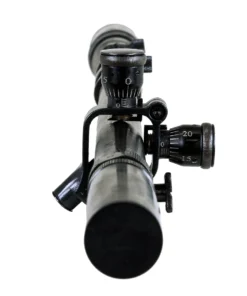
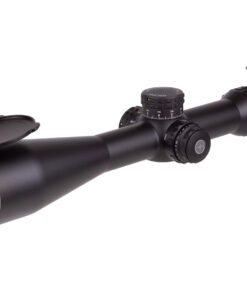
A distinctive combination of historic styling, competition-focused engineering, and modern optical refinement is offered by the Hi-Lux Malcolm 8X Vintage Sniper Competition Scope. Designed to reproduce the appearance and mechanical character associated with classic externally adjusted target optics, this scope has been refined for shooters, collectors, and vintage competition enthusiasts who appreciate traditional equipment without wanting to sacrifice contemporary optical quality.
Rather than being styled like a conventional modern tactical optic, a long, narrow 3/4-inch steel-tube profile has been retained. Consequently, an unmistakably period-inspired appearance is provided when the scope is installed on an appropriate vintage-style competition rifle. At the same time, modern manufacturing improvements have been incorporated throughout the design so that smoother adjustment, greater durability, and enhanced optical clarity can be enjoyed.
Vintage Styling Enhanced by Modern Engineering
The historical character of the Hi-Lux Malcolm 8X Vintage Sniper Competition Scope has been preserved carefully. However, several mechanical improvements have been introduced to make the Gen II design more refined than earlier versions.
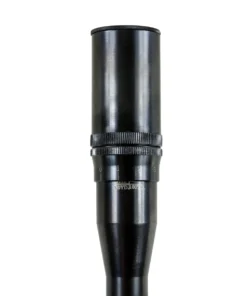
A fixed 8X magnification has been provided, while a 31 mm objective lens has been incorporated to maintain the traditional proportions of the scope. Additionally, the optic has been constructed around a slender 3/4-inch tube, giving the entire assembly the authentic long-tube silhouette expected from this style of telescopic sight.
Moreover, improved threading has been used throughout the rifle tube and objective assembly. As a result, smoother operation and a more refined mechanical feel have been provided.
For additional structural integrity, the rib along the scope body has been securely attached to maintain straightness and strength. Hardened screws have also been incorporated into the scope and mounting components so that durability can be improved during repeated competition use.
Key Features of the Hi-Lux Malcolm 8X Vintage Sniper Competition Scope
For shoppers who prefer specifications to be reviewed quickly, the principal features can be summarized as follows:
- Fixed 8X magnification for a consistent sight picture
- 31 mm objective lens
- Fine crosswire reticle
- 3/4-inch diameter scope tube
- Approximately 3.15-inch eye relief
- 11-foot field of view at 100 yards
- Approximately 23-inch overall scope length
- Approximately 25.4-ounce weight
- Competition-style external micrometer adjustment system
- 1/4 MOA adjustment capability with specified mount spacing
- Reindexable adjustment turrets after initial zeroing
- Improved precision-cut threads
- Hardened mounting and scope hardware
- Threaded protective lens covers included
- Front and rear rings supplied
- Mounting blocks and adjustment tool included with the standard package
Because the essential components are supplied together, a coordinated vintage-style optical system is provided rather than merely a standalone scope tube.
Precise Competition-Style External Adjustments
One of the most recognizable characteristics of the design is found in its external adjustment system.
Unertl-style competition micrometer adjustments have been incorporated into the Hi-Lux Malcolm 8X Vintage Sniper Competition Scope. Therefore, adjustment is performed through the mounting system rather than through the internal turret arrangement commonly encountered on modern optics.
When the front and rear mounts are positioned at the specified 7.250-inch center-to-center spacing, precise 1/4 MOA click adjustments are provided. Furthermore, backlash between clicks has been minimized through the competition micrometer design.
After the desired zero has been established, the turrets can also be reindexed to zero. Consequently, reference settings can be read more conveniently during organized competition or range use.
Fine Crosswire Reticle for a Traditional Sight Picture
A fine crosswire reticle has been installed to complement the scope’s historically inspired configuration.
Instead of a visually complex modern reticle containing numerous reference marks, a clean and uncluttered aiming image has been retained. Therefore, the vintage character of the optical system is reinforced while a precise visual reference is still provided.
In addition, the straightforward reticle design allows the target area to remain comparatively unobstructed. For enthusiasts seeking a traditional competitive shooting experience, this simplicity can be particularly appealing.
Fixed 8X Optical Configuration
Consistency has been prioritized through the fixed-power optical configuration.
Because 8X magnification has been permanently selected, no magnification ring needs to be adjusted. As a result, the sight picture remains predictable from one viewing session to the next.
Meanwhile, an 11-foot field of view at 100 yards is provided, while approximately 3.15 inches of eye relief has been specified. Therefore, the optical geometry remains closely aligned with the long-tube competition concept on which the product is based.
Modern multi-coated lens technology has also been applied to the vintage-inspired optical system. Consequently, useful improvements in image brightness, contrast, and clarity have been provided while the exterior appearance remains deliberately traditional.
Built for Vintage Competition Enthusiasts
The Hi-Lux Malcolm 8X Vintage Sniper Competition Scope has been developed specifically around vintage sniper competition requirements and has been refined with feedback associated with competitive use.
Accordingly, the scope should be especially attractive to enthusiasts who want period-correct visual character while still benefiting from newly manufactured components.
Furthermore, the Gen II configuration has been improved in several important areas. More precise threads have been incorporated, stronger hardware has been used, and the competition micrometer system has been refined. Therefore, the scope is positioned as more than a decorative reproduction.
Its appeal is created by the balance between heritage and functionality.
Long-Tube Steel Construction
At approximately 23 inches long, the scope immediately presents a different profile from compact contemporary optics.
Likewise, its approximately 25.4-ounce weight contributes to the substantial feel expected from a steel-bodied vintage-style telescope. Because the construction has been developed around historically recognizable proportions, the scope can complement period-oriented competition setups where modern oversized optic bodies would appear visually inconsistent.
Durability has also been emphasized through hardened screws and strengthened components. Consequently, both appearance and mechanical reliability have been considered during production.
What’s Included
A useful selection of components is supplied with the Hi-Lux Malcolm 8X package. Typically, the following components are included:
- Malcolm 8X scope
- Front ring
- Rear ring
- Threaded lens covers
- Two stop rings
- Front mounting block
- Rear mounting block
- T-tool for the supplied mounting hardware
Therefore, many of the principal components associated with the external adjustment system are provided together.
Why Choose the Hi-Lux Malcolm 8X Vintage Sniper Competition Scope?
For someone interested purely in the styling and features of the latest compact variable-power optics, another design may be preferred. However, for enthusiasts interested in historically inspired competitive optics, a very different experience is delivered here.
Traditional long-tube aesthetics are preserved. Meanwhile, modern lens coatings, refined machining, smoother threads, hardened components, and precise competition micrometers are incorporated.
As a result, the Hi-Lux Malcolm 8X Vintage Sniper Competition Scope offers a compelling bridge between classic optical design and modern production standards.
Collectors can appreciate its distinctive appearance, while vintage competition enthusiasts can benefit from its purpose-built configuration. Furthermore, people who appreciate mechanical simplicity may find the fixed-power design and external adjustment system particularly appealing.
A Refined Interpretation of a Classic Competition Scope
Ultimately, the Hi-Lux Malcolm 8X Vintage Sniper Competition Scope has been created for those who value heritage, mechanical precision, and authentic visual character.
A fixed 8X optical system is combined with a fine crosswire reticle, precision external adjustments, a slender steel tube, and carefully upgraded components. Therefore, the familiar qualities of classic externally adjusted scopes are maintained while several limitations associated with aging original optics are avoided.
For a vintage-inspired competition build, historical collection, or traditional range setup, an attractive combination of craftsmanship and modern optical refinement is provided. Instead of attempting to disguise its heritage, the design celebrates it.
Consequently, the Hi-Lux Malcolm 8X stands out as a specialized optic for enthusiasts who want classic form, carefully executed mechanical details, and competition-oriented functionality brought together in one distinctive package.
Element Optics Scopes, Rangefinding Technology, Mounts, and Precision Optic Options
For shooters comparing modern precision optics, element theos has become an important search term, especially for people researching the theos scope and premium long-range configurations such as element theos 6-36, 36×56, and element theos 6 36×56. At the same time, more versatile configurations including element optics 2-10, element 2-10 scope, and element 2 10 scope appeal to users who prefer a wider balance between close-range visibility and higher magnification. Across the broader product family, element helix, element scopes, and related models give buyers several magnification, reticle, and mounting configurations to consider.
When researching an optics-focused scopes website, customers often compare element tactical products with equipment from another optic scope manufacturer. Product searches may also include element prism, titan scope, op element, and helix scope, particularly when comparing compact optics with traditional variable-power designs. Higher magnification options such as element optics 6-24×50 can suit users who prioritize a detailed sight picture and substantial adjustment range.
The premium range also includes the nexus scope, element nexus scopes, and broader nexus scopes category. Searches for nexus tactical equipment frequently lead buyers toward the nexus 4-25×50, while the element titan provides another recognizable alternative. Users comparing a 5-25 scope, 25/56, titan 5, or theos 2-10 generally look closely at optical clarity, turret construction, reticle layout, focal-plane configuration, adjustment tracking, and overall build quality. Consequently, search phrases such as element titan 5 25×56 ffp review and titan25 are commonly associated with buyers researching the Titan platform in greater detail.
Another frequently researched configuration is the element helix 6 24×50, particularly alongside the element nexus gen 2. Although these optics occupy different positions within a product range, potential buyers often compare their specifications before choosing an appropriate design. Reticle selection is equally important, which explains continued interest in rifle scope reticles, while electronic tools such as a ballistic rangefinder can complement a modern optic setup. Some search queries also contain unusual specification formats such as 12×4/2, so checking the manufacturer’s exact specifications remains important before interpreting any numerical value.
Versatile magnification searches commonly include 2-12 scope and 2×12 scope. Meanwhile, terms such as element vision, spectrum element, and even prismatic scale of the elements can appear alongside optics-related searches. A prismatic scope differs structurally from a conventional variable-power riflescope because it uses a prism-based optical system rather than the same internal lens arrangement typically associated with traditional scope designs. Searches for element 3.0 may likewise refer to product generations, technical updates, or model-specific terminology, depending on the context.
Technology-focused users may also investigate element rf and element range products. Within the variable-power category, element theos 2-10 and element theos 2 10 provide alternative search formats for the same general magnification class. Similarly, element 2-10, 10 optic, 2-10 optic, and 2-10x scope describe configurations shoppers may encounter while comparing compact and medium-range optics. Buyers interested in first-focal-plane systems may specifically search for a 2-12 scope ffp, while terms such as fffp 2 can appear as alternate or mistyped search variations.
The Helix family attracts additional attention through searches for helix hd 2 16×50 and hdlr, whereas Titan users frequently research element titan 3 18×50 and element titan 3-18×50. These mid-range magnification configurations can provide a useful compromise between field of view and target detail. The Theos family is also represented by theos 2-10×42 ffp, which combines a practical magnification range with first-focal-plane terminology commonly sought by experienced optics buyers.
Search specifications such as 10×40, .10×40, and 14×50 may describe magnification and objective-lens formats, although exact interpretation should always be checked against official product information. People asking what is a prismatic scope are generally trying to understand how prism optics differ from traditional scope architecture. As with the phrase prismatic scale of the elements, search-engine terminology can occasionally mix scientific and optical expressions, so context matters when evaluating results.
Another product-related term is element hyper 7, together with searches for hqp7-rf-2 specifications details. Users researching newer optical or rangefinding systems may encounter these model codes while comparing technical features, dimensions, mounting options, display systems, or rangefinding capability. The terms element ll and 3×18 can also appear in searches associated with optics or magnification specifications.
For users focused specifically on the 3-18 magnification class, search phrases include 3-18 scopes, 3-18, nightforce 3-18, best 3-18 scopes, and 3×18 scope. Even unusual formatting such as 3:18 may be entered when shoppers are trying to locate comparable models. Regardless of brand, important evaluation factors include image resolution, eye relief, turret repeatability, mechanical reliability, reticle visibility, and low-light performance.
Optical quality also involves controlling distortion and color fringing. Therefore, someone researching chromatic aberration scope performance may be evaluating how effectively a particular optic manages unwanted color separation around high-contrast objects. Better glass, coatings, internal design, and manufacturing tolerances can all influence perceived image quality.
Scope Mounts, Rings, Rangefinders, and Accessory Compatibility
A precision optic also depends on a reliable mounting system. Searches for element mount, dovetail scope mount, and dovetail rings usually reflect the need to match an optic to the appropriate rail or receiver interface. Correct ring diameter, mounting height, rail type, and clearance should always be verified against the optic and platform specifications before purchase.
Electronic rangefinding accessories have expanded the number of configurations available. A picatinny mounted rangefinder or picatinny range finder can be mounted on compatible rail systems, while a rifle rangefinder provides distance information separately or as part of an integrated setup. Search phrases such as weapon mounted range finder, laser range finder for rifle, and rifle range finder generally refer to compact ranging technology intended to provide distance measurements.
Integrated technology has also increased interest in scopes with rangefinders built in, a rangefinder scope for rifle, and a rangefinding rifle scope. These products can combine optical magnification with electronic distance measurement in a single system. Buyers may encounter abbreviations such as wmlrf, while searches for a weapon mounted ballistic calculator or arken wmlrf usually indicate interest in systems that combine ranging information with additional electronic calculations or data.
Mounting accessories deserve equal attention because stability and alignment influence the overall optic installation. A 34mm diving board mount can provide an accessory mounting surface above or around a compatible optic. Similarly, a 34mm scope mount with diving board combines the primary scope mounting structure with an additional accessory interface. The broader term diving board scope mount is frequently used when researching this style of configuration.
Smaller tube systems may use a 30mm diving board mount, while scope diving board searches often refer to elevated accessory rails designed to position compatible devices above an optic. Traditional mounting searches also include picatinny scope rings, 30mm scope mount picatinny, 30mm picatinny scope rings, and picatinny scope mounts. Matching the correct ring diameter and rail standard is essential because a 30mm tube, 34mm tube, dovetail rail, and Picatinny interface are not interchangeable without the appropriate hardware.
Protection is another important consideration once an optic has been mounted. tenebraex scope caps and tenebraex scope covers can help protect exposed lenses when compatible with the selected optic. A flexible allen neoprene scope cover provides another style of external protection for storage and transport. Users running dovetail systems may instead be comparing 30mm dovetail scope rings with other dovetail scope mounts.
Ultimately, choosing between Element Optics families requires more than comparing magnification numbers alone. Whether researching Theos, Helix, Titan, Nexus, Prism, RF technology, rangefinding equipment, or mounting accessories, buyers should evaluate optical clarity, reticle design, adjustment range, focal-plane configuration, tube diameter, rail compatibility, physical dimensions, protective accessories, and manufacturer specifications. Doing so makes it easier to identify an optic and mounting system that properly matches the intended application while avoiding compatibility problems caused by relying solely on product names or search terminology.
Practical Use Scenarios
Traditional Competition Shooting
One of the most natural environments for this optic is a traditional competition setting where historically inspired equipment is preferred. Instead of relying on oversized modern tactical optics, competitors can maintain the classic appearance of their rifle while still benefiting from clear glass, dependable mechanical adjustments, and a fixed magnification system.
During a formal range session, the shooter can establish a comfortable firing position, confirm the chosen zero, and use the external adjustment system to make calculated corrections. Because the magnification remains fixed, there is no need to think about changing power settings between shots. Consequently, attention can remain focused on breathing control, trigger technique, position, wind conditions, and repeatable sight alignment.
The fine crosswire design is particularly useful when a clean aiming reference is desired. Rather than filling the viewing area with numerous markings, the reticle presents a straightforward point of reference. This uncluttered configuration can be helpful when aiming at traditional paper targets, scoring rings, or clearly defined competition targets.
Furthermore, the externally adjusted mounting system creates a shooting experience that feels fundamentally different from operating a modern internally adjusted scope. Each correction becomes a more deliberate part of the process. For enthusiasts who appreciate the mechanical character of older target optics, that interaction can become an important part of the enjoyment.
Sight-In Sessions at the Range
A dedicated sight-in session is another practical situation where this optical system performs well.
Before any competitive or recreational shooting begins, the rifle can be placed on a stable rest and initial groups can be fired at a known distance. Once the average point of impact has been identified, elevation and windage corrections can be applied through the external micrometer system.
Because precise mechanical adjustments are available, the shooter can make incremental corrections rather than relying on approximate movement. After the desired zero has been achieved, the adjustment references can be reindexed. Therefore, future corrections can be tracked more easily from a familiar starting point.
This process is especially valuable for shooters who enjoy carefully documenting their range settings. For example, one zero position might be established for a common competition distance, while additional reference notes may be recorded for different distances or ammunition types.
During repeated sight-in sessions, consistency becomes important. By using the same ammunition, rest position, target style, and shooting technique, the shooter can evaluate whether changes in point of impact are related to environmental conditions, ammunition variation, rifle performance, or adjustment inputs.
As a result, the optic becomes part of a complete precision-oriented range routine rather than merely an aiming device.
Vintage Rifle Builds
Collectors and shooting enthusiasts often assemble rifles that are inspired by historical competition or military configurations. In such builds, the appearance of the optic can be just as important as its function.
A modern compact scope with a large objective housing may provide excellent performance, yet it can look visually out of place on a rifle intended to represent an earlier design period. By comparison, a long, narrow steel-tube configuration creates a much more appropriate silhouette.
Once mounted correctly, the optic can complement traditional stocks, classic barrel profiles, vintage-inspired mounting arrangements, and historically styled accessories. Consequently, the complete rifle can maintain a more coherent appearance.
This type of setup can be especially appealing for collectors who occasionally shoot their rifles instead of keeping them exclusively as display pieces. Rather than relying on a fragile or aging original optic, a newly manufactured reproduction-style system can provide a more practical alternative.
The owner can therefore enjoy the classic visual character while benefiting from modern lens coatings, improved manufacturing tolerances, fresh components, and replacement availability.
Historic-Themed Range Events
Some shooting clubs and enthusiast groups organize range days centered around historical firearms, traditional competition equipment, or period-inspired rifle builds. In these environments, equipment authenticity can contribute significantly to the experience.
A long-tube optic fits naturally into this setting because it immediately creates a recognizable traditional appearance. Moreover, the fixed magnification and external adjustment system encourage a shooting style that feels different from using highly modern optical technology.
During such an event, shooters may compare rifle configurations, discuss historical design features, evaluate adjustment systems, and examine how older optical concepts influenced modern scope engineering.
Therefore, the optic can become part of both the shooting activity and the educational experience.
For participants who are interested in mechanical design, the visible external adjustment system can also make the relationship between mount movement and point-of-impact correction easier to understand. Instead of having most adjustment mechanisms hidden inside a large central turret housing, the operation is more visually apparent.
Benchrest Practice
A stable benchrest environment provides an excellent opportunity to understand how the scope responds to measured corrections.
With the rifle supported securely, a shooter can fire controlled groups and observe the relationship between adjustment input and target movement. Because unnecessary rifle movement is reduced, evaluating optical alignment and mechanical repeatability becomes easier.
For instance, the shooter might fire a three- or five-shot group, measure the offset from the intended point of aim, calculate the required adjustment, and then apply the corresponding correction. Another group can then be fired to verify the result.
This systematic process can be useful for anyone learning how minute-of-angle adjustments translate into target movement.
Moreover, the fixed magnification simplifies the comparison between groups because the visual scale remains consistent. The shooter is not accidentally comparing one group at a lower magnification with another viewed at a higher power.
As a result, a benchrest session can become an effective way to build confidence in both the rifle and the optical system.
Recreational Target Shooting
Not every practical use has to involve formal competition.
Recreational shooters who enjoy paper targets, steel plates, or traditional range sessions can also appreciate the mechanical simplicity of the design. A fixed-power scope eliminates the temptation to constantly change magnification. Instead, the shooter adapts to one familiar optical view.
This simplicity can be refreshing.
Once the rifle has been properly zeroed, the shooter can concentrate on producing consistent groups and improving fundamental marksmanship skills. Trigger control, natural point of aim, follow-through, breathing, and body position become the primary focus.
Because the reticle is comparatively simple, target acquisition can remain straightforward. For shooters who prefer a clean viewing area rather than a heavily marked tactical reticle, this can create a more relaxed and traditional shooting experience.
Furthermore, recreational range sessions are ideal for becoming comfortable with the external adjustment mechanism without the pressure of competition.
Load Testing and Ammunition Evaluation
Shooters who experiment with different ammunition combinations often need a consistent optical system when comparing accuracy.
During ammunition testing, several loads may be fired under similar conditions. Group size, vertical dispersion, horizontal dispersion, velocity consistency, and point-of-impact shifts can then be recorded.
A fixed magnification system can be particularly beneficial in this situation because one variable is removed from the test. Magnification remains unchanged throughout the evaluation, so differences between groups are less likely to be influenced by inconsistent optic settings.
After one ammunition type has been tested, another can be evaluated using the same shooting position and target distance. If a noticeable point-of-impact change occurs, the external adjustments can be used to compensate after the preferred ammunition has been selected.
In this way, the optic supports a methodical testing process.
Wind Reading Practice
Longer range sessions frequently require shooters to consider wind direction and speed.
While the optic itself does not replace good wind-reading skills, its consistent magnification and fine aiming reference can help the shooter observe how changing wind conditions affect point of impact.
For example, groups may begin to move horizontally as the wind increases. Instead of assuming that the rifle or ammunition has suddenly become inconsistent, an experienced shooter can compare flag movement, environmental conditions, previous shots, and target impact location.
The adjustment system can then be used when a deliberate correction is required.
Alternatively, some shooters may prefer to maintain a known mechanical zero and compensate through their aiming technique, depending on the style of competition or practice being performed.
Either approach can help develop a deeper understanding of external ballistics and range conditions.
Collector Display With Functional Capability
A historically styled rifle is often displayed because of its craftsmanship and visual appeal. However, many collectors prefer equipment that remains functional rather than purely decorative.
In this scenario, the optic can serve two purposes.
First, its long steel-tube design contributes significantly to the overall appearance of the rifle. From a display perspective, the narrow profile and external mounts create a distinctive traditional silhouette.
Second, the rifle can still be taken to the range and used under appropriate conditions. This combination makes the setup more versatile than a display-only historical reproduction.
Collectors can therefore enjoy the aesthetic appeal at home while retaining the option to conduct carefully controlled shooting sessions.
Training New Shooters in Basic Scope Adjustment
Although modern scopes are common, the operating principles behind optical adjustments can sometimes feel abstract to new shooters.
An external adjustment design can provide a useful educational opportunity because the movement and correction process are easier to visualize. A new shooter can be shown how elevation changes move the point of impact vertically and how windage changes shift it horizontally.
By firing a group, making a measured adjustment, and firing again, the relationship between mechanical movement and target impact can be demonstrated directly.
The fixed-power optical system also keeps the lesson relatively simple. There is no variable magnification system, complex illumination menu, digital interface, or advanced reticle to explain before basic marksmanship training begins.
Consequently, the shooter can focus on the essential principles first.
Controlled Outdoor Range Sessions
Outdoor ranges introduce changing lighting, temperature, wind, and atmospheric conditions.
In bright daylight, modern lens coatings can help maintain a usable image while the traditional body style is preserved. As the light changes during the session, the shooter can evaluate target clarity and contrast without needing to change magnification.
The moderate objective size also keeps the appearance consistent with the historic design rather than turning the rifle into a modern long-range platform.
At the same time, shooters should always position themselves correctly behind the optic. Consistent head placement and eye relief remain important for achieving a stable sight picture.
Once a repeatable cheek position has been established, target acquisition becomes more predictable from shot to shot.
Precision Practice at Known Distances
Known-distance ranges are particularly well suited to this type of optical system.
Targets may be positioned at clearly marked intervals, allowing the shooter to establish and record specific adjustment references. After zeroing at one distance, additional corrections can be tested at longer or shorter target positions.
These values can then be written into a personal data book.
Over time, the shooter develops a practical reference chart based on the specific rifle, ammunition, environmental conditions, and mounting configuration being used.
Such record keeping can greatly improve consistency.
Rather than guessing at future corrections, the shooter can return to previously confirmed settings and fine-tune them when necessary.
Why These Scenarios Matter
The strongest advantage of this optical system is not that it attempts to imitate every feature found in modern precision optics. Instead, its value comes from offering a more traditional shooting experience supported by refined contemporary manufacturing.
Competition shooters can use it for historically styled events. Recreational marksmen can enjoy deliberate fixed-power shooting. Collectors can complete vintage-inspired builds. Meanwhile, precision enthusiasts can use the mechanical adjustments for structured range testing, ammunition evaluation, and known-distance practice.
Most importantly, the design encourages thoughtful shooting.
Each sight adjustment, firing position, ammunition choice, and environmental observation becomes part of the overall process. Therefore, the optic is particularly well suited to shooters who enjoy understanding their equipment rather than simply relying on automatic or highly complex systems.
Whether it is being used from a stable bench, on a carefully constructed vintage rifle, during a traditional competition, or at a relaxed weekend range session, the combination of classic form and functional precision creates a distinctive experience that remains difficult to reproduce with modern tactical optics.



Reviews
There are no reviews yet.