Gamo HPA Tactical PCP Bundle: Complete Precision Setup for Every Shooter
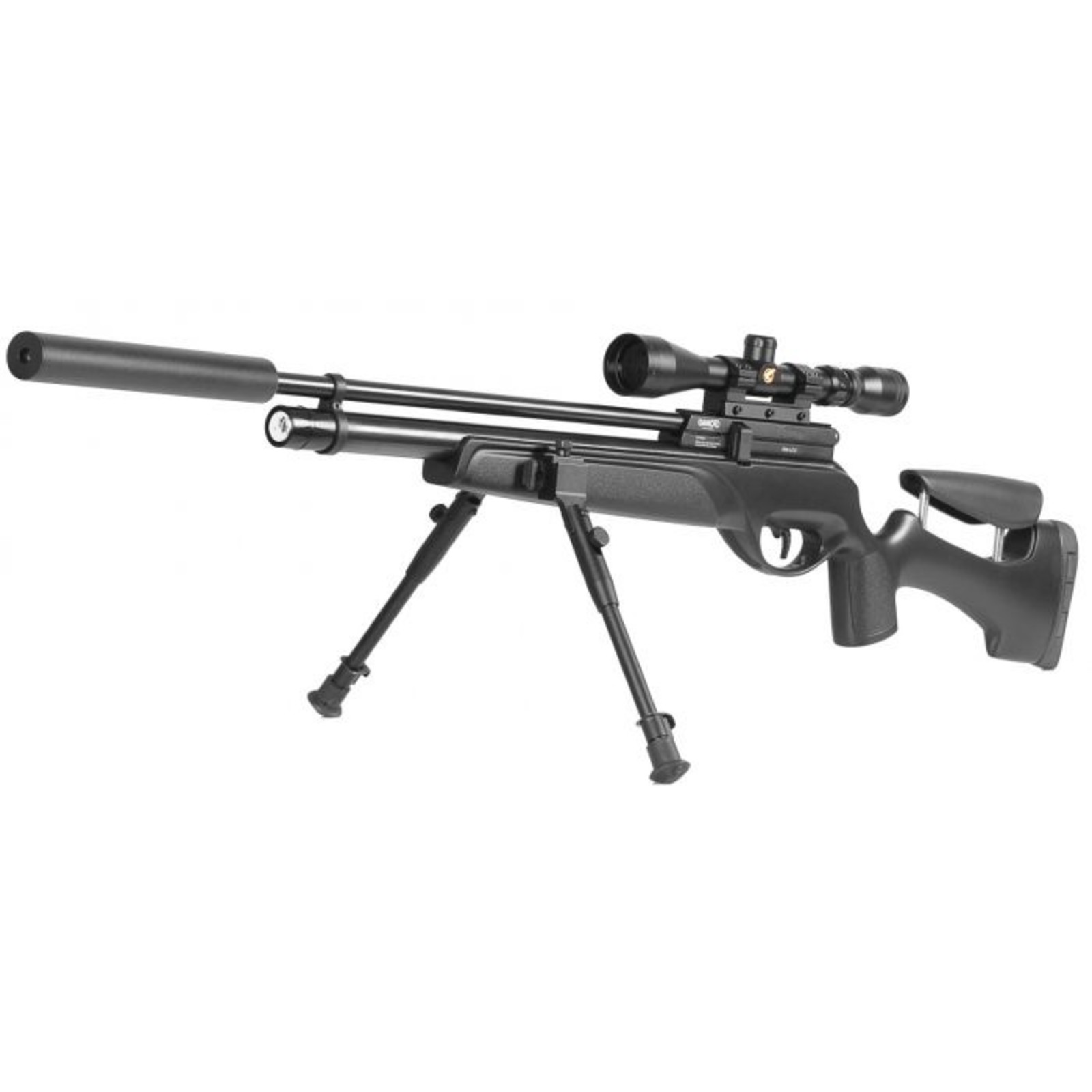
Unmatched field readiness is delivered by the Gamo HPA Tactical PCP Bundle. Consistent power, tactical handling, and ready-to-use accessories are combined in one complete package so that target practice, pest control, and precision sessions can be started without extra shopping trips.
Why the Gamo HPA Tactical PCP Bundle Is Chosen
Smooth, repeatable shots are produced by Gamo’s latest-generation pre-charged pneumatic system. High-pressure air is stored in a reinforced steel cylinder and is released through a mechanical valve so that pellets of suitable weight are driven with even energy. Consequently, group sizes remain tight and follow-up shots stay predictable.
Moreover, a cold-hammer-forged barrel is fitted so that pellet stability is improved and long-range consistency is supported. In addition, an ambidextrous synthetic stock with an adjustable cheek piece is provided so that a comfortable cheek weld can be obtained by both left-handed and right-handed shooters. Furthermore, textured grip panels and an SWA multi-panel recoil pad are included so that control is maintained during longer sessions.
Therefore, the Gamo HPA Tactical PCP Bundle is designed for shooters who want a complete, no-guesswork platform rather than a bare rifle that still needs optics, support, and sound control.
Core Performance Highlights
- Pre-charged pneumatic (PCP) powerplant is used so that consistent air delivery is maintained shot after shot.
- 5.5 mm (.22) caliber configuration is offered so that a useful balance of trajectory and impact is achieved.
- Up to approximately 40 joules of muzzle energy is generated in applicable markets (local power limits must always be observed).
- A 10-shot rotary magazine is supplied so that rapid cycling is possible without constant single loading.
- Fill pressure around 200–232 bar and an integrated gauge are provided so that remaining air can be monitored at a glance.
- Roughly three full magazines per fill are typically available, depending on pellet weight and local power setting.
- Bolt-action operation is employed so that each pellet is seated cleanly and reliably.
- An 11 mm dovetail rail is machined so that a scope can be mounted securely.
- Side accessory rails are present so that the included bipod can be attached quickly.
- A 1/2 UNF threaded muzzle is fitted so that the supplied sound moderator can be installed.
- CAT two-stage custom trigger is adjustable in both stages so that take-up and break can be tailored.
- Overall length is typically around 102–113 cm and unladen weight is about 3.3–3.9 kg, so that the rifle remains portable yet stable.
What Is Included in the Gamo HPA Tactical PCP Bundle
A ready-to-shoot kit is assembled so that the most common extras do not have to be sourced separately. Bundle contents can vary slightly by retailer, yet the following items are commonly packaged together:
- Gamo HPA Tactical PCP rifle in 5.5 mm with 10-shot magazine
- Adjustable folding bipod mounted on the side rails
- Threaded sound moderator for reduced report
- Optical sight (commonly a 3–9×40 or similar Gamo scope, depending on pack)
- High-pressure fill probe or compatible pump connection hardware
- In many complete packs, a high-pressure hand pump and hose are added so that filling can be completed at home
As a result, the Gamo HPA Tactical PCP Bundle can be taken to the range after pellets are added and local legal requirements are met.
Stock, Trigger, and Handling Details
Comfort over long strings is supported by the automotive-grade polymer stock. Height of the cheek piece can be adjusted so that eye alignment with the optic is correct. Meanwhile, the pistol-grip geometry and textured surfaces help the rifle stay planted in wet or gloved conditions.
Additionally, the CAT trigger can be tuned independently in its first and second stages. Consequently, a light, predictable break can be set for precision work, or a slightly heavier pull can be preferred for field use. A manual safety, together with an automatic cocking safety on many examples, is incorporated so that an unintended discharge is less likely when the action is cycled.
Practical Use of the Gamo HPA Tactical PCP Bundle
Supported shooting is made easier by the included bipod. Prone or bench positions can therefore be adopted quickly, and the moderator helps keep sessions more neighbour-friendly. Because a multi-shot magazine is used, a full string can be fired with only a short bolt cycle between shots.
Furthermore, the cold-forged barrel and consistent PCP feed make the platform suitable for paper targets, reactive targets, and responsible pest control where that activity is lawful. Pellet choice still matters: high-quality 5.5 mm match or hunting-weight pellets should be tested so that the most accurate combination for a given rifle is identified.
Meanwhile, fill discipline should be observed. The on-board gauge should be checked before each session, and the cylinder should not be overfilled beyond the marked working pressure. After use, residual pressure should be managed according to the manual, and the rifle should be stored unloaded, with the magazine removed, in a secure location.
Accuracy, Power, and Legal Notes
Power figures quoted for the Gamo HPA Tactical PCP Bundle differ by country. In some markets a higher-energy FAC-style setting near 40 J is sold; in others a lower, licence-free or declaration-level setting is supplied. Velocity and shot count therefore change with local specification, pellet weight, and fill pressure. Local airgun laws, age limits, storage rules, and hunting regulations must be verified before purchase and use.
Inclusive design is reflected in the ambidextrous stock and adjustable comb, so that a wider range of shooters can obtain a workable fit without aftermarket work.
Care and Long-Term Reliability
Longevity is supported when simple habits are followed. The barrel should be kept clean with a suitable PCP-safe method. O-rings and the fill probe should be inspected and lightly lubricated with airgun-safe grease. The magazine should be kept free of grit. After damp sessions, metal surfaces should be wiped dry.
In addition, the sound moderator and bipod should be checked for tightness before each outing. Scope mounts should be confirmed so that zero is retained. When these steps are observed, the Gamo HPA Tactical PCP Bundle remains a dependable everyday PCP rather than a rifle that spends more time on the bench than on the range.
Who Benefits Most from This Bundle
New PCP owners are helped because pump, moderator, bipod, and often a scope are already matched to the rifle. Experienced shooters are equally well served because the cold-forged barrel, adjustable trigger, and tactical furniture provide a solid base that can later be upgraded with a preferred optic or higher-capacity filling method.
Thus, value is concentrated in one purchase: a proven Gamo PCP action, a usable accessory set, and a stock that can be shared across shooting styles.
Responsible ownership remains essential. Eye and ear protection should be worn, a safe backstop should always be used, and every shot should be treated as if the rifle is loaded. When those habits are paired with the Gamo HPA Tactical PCP Bundle, a complete, conversion-ready platform is placed in the hands of shooters who want precision without assembling a kit piece by piece.
Gamo Air Rifles, PCP Systems, Pellet Pistols, and Shooting Accessories
When precision, reliability, and performance are required, Gamo air rifles are recognized among shooters who value innovative designs and consistent accuracy. A wide range of gamo pellet guns, gamo pellet rifles, and gamo air rifles has been developed for target shooting, pest control, training, and recreational use. From classic break barrel air rifles to advanced PCP platforms, Gamo provides options for beginners and experienced shooters looking for dependable air-powered performance.
Modern high powered air rifles and high power air rifles combine velocity, accuracy, and improved technology to deliver excellent shooting experiences. Models such as the Gamo Swarm Magnum 10X Gen3i, Gamo Swarm Magnum, Gamo Swarm Maxxim Gen 3, and Swarm Magnum Gen3i are designed with multi-shot capabilities, allowing faster follow-up shots compared with traditional single-shot designs. The Gamo Swarm Magnum Pro 10X Gen3i represents the next level of magazine-fed pellet rifle technology, offering improved handling and convenience for demanding shooters.
Break Barrel Air Rifles and Pellet Pistols
A break barrel air rifle remains one of the most popular choices because of its simple operation, durability, and self-contained power system. A gamo break barrel rifle uses a spring piston or gas piston mechanism to generate power without requiring external air tanks. For shooters searching for reliable performance, the Gamo 177 platform provides excellent accuracy with .177 caliber pellets.
A break barrel pellet pistol offers the same operating principle in a compact handgun format. Options such as a break barrel air pistol, break barrel pistol, and break action pellet pistol provide an engaging shooting experience for training and target practice. A 22 caliber break barrel air pistol delivers larger pellet performance, while the best break barrel pellet pistol options are selected for balance, accuracy, and durability.
For users searching for powerful compact options, a most powerful break barrel pellet gun can provide increased velocity and energy compared with standard models. These platforms are often chosen by shooters who want a practical combination of power and simplicity. Other popular handgun categories include the 22 pellet pistol, bee bee gun pistol, air pistol, air pistols, and pellet pistols.
Gamo Swarm Magazine Technology
The Gamo Swarm series changed the way many shooters use break barrel rifles by introducing magazine-fed shooting systems. The Gamo Swarm 10X technology allows multiple pellets to be loaded for faster shooting sessions. A multi shot pellet gun with a reliable magazine system provides greater convenience for target practice and recreational shooting.
Popular Swarm models include:
- Gamo Swarm Magnum
- Gamo Swarm 10X
- Gamo Magnum Gen3i
- Gamo Swarm Magnum Gen3i
- Gamo Swarm Magnum Pro 10X Gen3i
These rifles are designed for shooters who want the benefits of a pellet gun with magazine functionality while maintaining the advantages of a break barrel platform.
PCP Air Rifles and Gamo Arrow Technology
For shooters looking for advanced performance, PCP air rifles provide excellent consistency through regulated compressed air systems. A precharged pneumatic rifle stores high-pressure air in a reservoir, allowing smooth operation, reduced vibration, and improved shot consistency.
Popular PCP categories include:
- PCP air rifle
- PCP air rifles
- PCP rifle
- PCP guns
- PCP rifles
- PCP air gun
- PCP pellet rifle
- Rifle PCP
- Air rifle compressed air
The Gamo Arrow PCP series introduces modern PCP technology with lightweight designs and precision-focused performance. The Gamo Arrow PCP air rifle, PCP Arrow guns, Arrow rifle, Arrow rifles, and Arrow air rifle platforms provide shooters with a versatile option for target shooting and field use. The Gamo Arrow .22 and Gamo Arrow Classic models deliver larger caliber performance with excellent accuracy.
Lever Action and Alternative Air Rifle Designs
Different shooters prefer different operating systems, which is why lever-style air rifles continue to attract attention. Under lever air rifles, also known as underlever air rifles, provide a fixed barrel design that can improve consistency and accuracy. A side lever air gun or side lever air rifle offers smooth cocking operation while maintaining a streamlined profile.
Other traditional designs include:
- Lever action pellet gun
- Lever action air rifle
- Air gun thumb lever
For shooters interested in classic Gamo models, the Gamo Shadow 1000, Shadow 1000 Gamo, and Gamo 1000 Shadow remain recognizable names. The 1000/4.5 designation refers to the popular .177 caliber format used by many air rifle enthusiasts.
Gas Piston Air Rifles and High Velocity Shooting
Many modern rifles use gas piston technology instead of traditional springs. When asking what is a gas piston air rifle, the answer is a system that replaces the metal spring with a gas-filled cylinder, providing smoother cocking, reduced vibration, and consistent power.
Some high-velocity rifles are marketed around impressive speed ratings, including the Gamo 1800 FPS air rifle. Shooters often research the Gamo 1800 FPS air rifle price when comparing powerful break barrel options. These rifles are designed for users who want increased velocity while maintaining the practicality of a self-contained airgun.
CO2 Pistols and Pellet Handguns
CO2-powered handguns provide convenient operation and realistic shooting experiences. A CO2 pistol, pistol CO2, or CO2 air pistol uses disposable CO2 cartridges to propel pellets or BBs. Popular categories include:
- CO2 pistols
- CO2 gun
- CO2 guns
- C02 pistol
- C02 guns
- Guns CO2
- CO 2 Gen
A pellet handgun, pellet pistol, pistol pellet gun, and pellet gun pistol can be used for recreational shooting, training, and improving shooting skills. These compact platforms provide an accessible entry point for new shooters.
Airgun Maintenance and Cleaning Equipment
Proper maintenance helps preserve accuracy and extend the service life of any air-powered firearm. Regular airgun maintenance and air gun maintenance routines help prevent performance issues caused by dirt, debris, or improper storage.
Recommended maintenance products include:
- Pellet rifle cleaning kit
- Pellet gun cleaning kit
- Airgun lubricant
Using the correct cleaning equipment ensures that barrels, seals, and moving components remain protected while maintaining consistent shooting performance.
Air Rifle Targets and Shooting Accessories
Accurate shooting requires quality practice equipment. Whether using a PCP rifle, break barrel rifle, or pellet pistol, proper targets improve skill development. Popular options include:
- Pellet gun targets
- Air rifle targets
- Targets for air rifle
- Airgun targets
- Air gun targets
- Air rifle shooting targets
- Airgun shooting targets
- Air rifle target
- Air pistol targets
- Pellet rifle target
From beginner practice sessions to advanced accuracy training, quality targets help shooters measure performance and improve technique.
Choosing the Right Gamo Airgun
Selecting the correct airgun depends on the intended purpose, preferred shooting style, caliber, and experience level. A beginner may prefer a reliable Gamo pellet gun or break barrel air rifle, while experienced shooters may choose a PCP air rifle for greater consistency and customization.
Whether searching for the best air rifles, a powerful pellet platform, a compact air pistol, or a precision PCP system, Gamo offers a wide selection designed for recreational shooters, target enthusiasts, and experienced airgun users. With options ranging from the Gamo Arrow PCP air rifle to the Gamo Swarm Magnum Gen3i, shooters can find a platform suited to their specific needs.
Calibres, FAC, Power and Accessories for the Gamo HPA Tactical PCP Bundle
A complete understanding of calibre choice, legal power class, and matching accessories is required before the Gamo HPA Tactical PCP Bundle is put into regular use. Performance, legality, and long-term satisfaction are all shaped by those four factors. Consequently, each point is examined below so that an informed, responsible purchase can be completed.
Calibres Offered with the Gamo HPA Tactical PCP Bundle
The Gamo HPA Tactical PCP Bundle is most commonly supplied in 5.5 mm (.22). In some markets a 4.5 mm (.177) variant of the same HPA Tactical platform is also listed. A 6.35 mm (.25) listing appears only rarely and should not be assumed for every bundle.
Therefore, pellet selection must be matched to the barrel that is actually delivered. A 5.5 mm tube is generally preferred where a slightly heavier pellet, a flatter mid-range impact, and useful energy transfer are wanted for pest work or longer paper targets. Meanwhile, a 4.5 mm option, where legally sold, is often chosen when a flatter trajectory and a higher pellet count per fill are valued for formal target practice.
Moreover, magazine geometry is calibre-specific. A 10-shot rotary magazine is typically supplied with the Gamo HPA Tactical PCP Bundle in 5.5 mm. Pellets longer than about 10 mm should not be forced into the rotor, because feeding faults and barrel damage can then be caused. High-quality diabolo pellets from reputable makers should be tested in small batches so that the most accurate weight for that individual barrel is identified.
How Calibre Affects Shot Count and Feel
Because air volume is fixed in the 153 cc class cylinder used on many HPA Tactical rifles, a lighter 4.5 mm pellet usually yields more usable shots per fill than a heavier 5.5 mm pellet at the same fill pressure. Conversely, greater downrange authority is often reported with the .22 bundle in FAC-legal markets. Inclusive fitting is still supported either way: the ambidextrous stock and adjustable cheek piece remain unchanged across calibres, so that both left-handed and right-handed shooters can obtain a workable weld.
FAC Status, Power Classes and Legal Limits
Power output of the Gamo HPA Tactical PCP Bundle is not universal. Local law determines whether a sub-12 ft-lb / low-joule version or a higher-energy FAC-style version is sold.
In several European listings the same platform is advertised at approximately 24 J in a restricted configuration and at up to about 40 J where a higher category (often declaration or FAC-equivalent) is permitted. Fill pressure is commonly specified around 200–232 bar. A regulator is not fitted on standard HPA Tactical examples, so muzzle energy declines gradually as cylinder pressure falls. For that reason the on-board gauge should be watched and the usable shot string should be kept inside the flatter portion of the curve.
Furthermore, “FAC” in UK terms means a firearm certificate is required once kinetic energy exceeds the airgun threshold (typically 12 ft-lb for rifles). In other countries a hunting licence, a weapons declaration, or a simple age-restricted sale may apply instead. No assumption should be made that a 40 J bundle can be imported or used in a 12 ft-lb territory. Shipping, storage, transport, and hunting use must all be checked against current national and regional rules before the Gamo HPA Tactical PCP Bundle is ordered.
Additionally, velocity figures published online (often in the 268–360 m/s range for 5.5 mm, depending on pellet and power setting) should be treated as indicative only. Chronograph results on the actual rifle, with the pellets that will be used, remain the only reliable measure.
Responsible Power Management
Overfilling above the marked working pressure must be avoided. Likewise, aftermarket “tuning” that raises energy above the legal class of the certificate or licence must not be attempted. When those limits are respected, consistent groups and a safer ownership experience are far more likely to be obtained.
Accessories Included and Recommended Add-Ons
The strength of the Gamo HPA Tactical PCP Bundle is that essential extras are already matched to the rifle. Typical factory or retailer packs include some or all of the following:
- 10-shot rotary magazine in the correct calibre
- Folding bipod attached to the side rails
- 1/2 UNF sound moderator for the threaded muzzle
- 11 mm dovetail-ready optic (often a 3–9×40 or similar Gamo scope in complete packs)
- Fill probe; in fuller kits a high-pressure hand pump and hose are added
- Integrated manometer on the air cylinder
Consequently, a first range session can usually be started once legal pellets and a safe backstop are arranged.
Accessories That Are Commonly Added Later
Even a complete bundle benefits from a short, considered extras list:
- A 1/8 BSP to Foster adapter is frequently useful when a pump with a quick-connect is used instead of the Gamo probe.
- A padded hard or soft case with a side pocket for the bipod legs protects the optic and moderator in transit.
- A second magazine reduces downtime during longer strings.
- Quality mounts (if the included rings are basic) keep zero more stable.
- A dedicated PCP-safe cleaning kit and a small bottle of airgun oil for O-rings extend seal life.
- Extra 5.5 mm (or 4.5 mm) match and hunting-weight pellets allow proper barrel testing.
- A compact compressor or scuba-fill adapter can later replace hand-pumping if shot volume increases.
Side rails already accept lights or a laser where local law allows accessory mounting. The 11 mm dovetail remains the primary optic interface; a Picatinny converter can be added if a modern rail optic is preferred.
Inclusive use is supported by these extras as well: an adjustable bipod and cheek piece let shooters of different stature share the same Gamo HPA Tactical PCP Bundle without a custom stock. Safety accessories—eye protection, a pellet trap or verified backstop, and secure storage—should be treated as non-negotiable rather than optional.
In summary, calibre should be confirmed on the carton, power class should be matched to the owner’s certificate or local limit, and the supplied bipod, moderator, magazine, and fill hardware should be inspected before the first fill. When those steps are completed, the Gamo HPA Tactical PCP Bundle functions as a coherent, conversion-ready PCP system rather than a collection of unmatched parts.
Practical Use Scenarios in the Field and on the Range
A complete pre-charged kit is only as useful as the way it is handled after the carton is opened. Everyday shooting, careful zeroing, supported positions, filling discipline, and quiet neighbour-friendly practice can all be organised so that consistent results are obtained without drama. The guidance below is written so that left-handed and right-handed shooters, newer PCP users, and experienced marksmen can apply the same rifle in a lawful, inclusive, and repeatable way.
First Session After Unpacking
The rifle should be inspected before any air is introduced. Magazine fit, moderator thread engagement, bipod clamp tightness, and scope-ring screws are checked so that nothing is left loose from transit. The cylinder gauge is then read while the action is still empty. Only after that visual pass is a fill begun, and only to the working pressure marked on the rifle—not beyond it.
Pellets of the correct calibre and a safe length are selected next. A small sample from one tin is used first so that feeding through the ten-shot rotor can be confirmed. Short, oversized, or damaged pellets are set aside, because a jam at the breech is far more disruptive than a few unused pellets left in the box.
A safe backstop is prepared before the first live shot. An approved pellet catcher, a thick purpose-built trap, or a verified natural bank with a clear downrange area is required. Eye protection is worn by everyone on the line. Ear protection is recommended even when a moderator is fitted, because the remaining report and the mechanical click of the bolt are still present.
Establishing a Workable Zero
The optic is brought onto paper at a short, known distance—often ten to fifteen metres—so that the first group can be found quickly. Three-shot clusters are fired from a supported rest. Elevation and windage are then adjusted in small increments. Once the group sits near the aiming mark, the target is moved to the intended working distance, commonly twenty-five to fifty metres for general practice.
Because this platform is unregulated, point of impact will drift slightly as cylinder pressure falls. Therefore the most useful zero is taken in the middle of the expected shot string, not on the first magazine after a fresh fill and not on the last few low-pressure shots. A simple note of fill pressure and pellet brand is kept with the rifle so that the same combination can be repeated later.
Inclusive setup matters here. Cheek-piece height is raised or lowered until a full sight picture is seen without neck strain. Length of pull cannot be changed much on a fixed tactical stock, so stance and shoulder pocket are adjusted instead. Both left- and right-handed shooters can use the same comb and pistol grip; only bolt side and magazine insertion direction stay as designed.
Supported Shooting with the Bipod
The folding bipod is the accessory that most changes how the rifle is used. On a bench, the legs are set so that the forend sits level and the butt is supported by a rear bag or the non-firing hand. On the ground, a prone position is adopted with the magazine clear of the soil and the moderator kept out of the dirt.
Leg length is matched to the surface. Uneven ground is compensated by independent leg adjustment where the bipod allows it. Recoil on a PCP of this class is modest, yet the rifle will still bounce if the bipod is perched on a slick table edge. A rubberised or slightly yielding surface is preferred.
Follow-up shots are taken with a short bolt stroke and a pause for the sights to settle. The ten-shot magazine makes a full string possible without leaving the position. After the rotor is empty, the rifle is pointed in a safe direction, the bolt is opened, and a fresh magazine is inserted only when the muzzle remains controlled.
Standing, Kneeling, and Improvised Rests
Not every shot can be taken prone. A kneeling position with the support hand on the magazine well or forend, never on the barrel or moderator, can be used for shorter sessions. A fence post, a shooting stick, or a rucksack can serve as an improvised rest provided the rifle is not levered against a hard edge that marks the stock.
Offhand standing is the least stable method and should be reserved for close, large targets or for dry practice. The tactical furniture helps with grip, but it does not replace a solid bone-supported position. Inclusive coaching applies equally: a shorter-statured shooter may need a higher rest; a taller shooter may need the bipod legs opened further so that the spine stays relaxed.
Filling, Shot Count and Session Planning
A typical fill in the 200–232 bar class supports roughly three ten-shot magazines in many 5.5 mm setups, with variation according to pellet weight and local power setting. Planning a session around that figure prevents the last, weak shots from being treated as “still good enough.”brake barrel bb gun
Hand-pumping, where a pump is part of the kit, is done with the rifle secured, the probe fully seated, and the pump stroke kept smooth. Overheating of the pump head is avoided by pausing between sets of strokes. A Foster-style adapter, if used, is kept clean and capped when not connected so that grit is not driven into the valve.
A scuba bottle or compressor, used only with the correct hose and a bleed procedure, shortens fill time for high-volume days. Residual pressure in the hose is always dumped before the probe is removed. The on-board gauge is trusted more than memory: if the needle is low, a top-up is completed before groups are expected to match the recorded zero.
Weather, Light and Quiet Practice
Wind is the largest outdoor variable. Flags, grass movement, or a simple ribbon on a stick are watched so that a hold-off can be applied instead of chasing the turrets on every gust. Light rain is tolerated by the synthetic stock better than by a bare wood finish, yet the optic lenses and the muzzle thread should still be dried after the session.
Low light favours a modest magnification on the included scope. A 3–9 class optic is left toward the lower end at dusk so that a brighter sight picture is retained. The moderator reduces report and muzzle blast, which is appreciated on suburban ranges and on private land where livestock or neighbours are nearby. It does not make the rifle silent, and safe direction remains the first rule.
Pest Control and Ethical Field Use Where Lawful
Where small-pest control is legal and a suitable permission is held, the same supported positions and the same known zero are used. Shots are taken only at ranges that have been confirmed on paper with the same pellet. A clear backstop is still required. No shot is taken toward buildings, public paths, or hard surfaces that can cause a ricochet.
Magazine management in the field is kept simple: a loaded rotor is carried only when a shot is imminent, and the rifle is made safe when obstacles, fences, or vehicles are crossed. The bipod stays folded during a walk and is deployed only when a stable shot is presented. Inclusive practice means a spotter of any background can call conditions while the shooter stays on the trigger—communication is kept calm and specific.
Legal power class must match the task and the certificate or local limit. A higher-energy configuration is not an excuse for longer, poorly judged shots. Placement still decides the outcome.
Maintenance Between Sessions and After Travel
After a damp or dusty day the exterior is wiped, the moderator is checked for tightness, and the bore is given only the cleaning method recommended for a PCP—never a dripping wet patch left in a hammer-forged tube. The magazine is emptied and inspected for lead flakes. O-rings on the probe are given a film of airgun-safe grease, not motor oil.
Scope rings are confirmed after a car journey, because a tactical stock and a long forend can transmit bumps into the optic. Zero is verified with a three-shot group before any “important” session is trusted. Spare magazines, a small hex set, and a tin of the proven pellet live in the same case as the bipod so that nothing essential is left at home.
Sharing the Rifle and Building Skill
Because the stock is ambidextrous and the comb is adjustable, the same rifle can be shared in a household or a club without a second chassis. Each user should reset cheek height and trigger preference if the CAT stages have been altered. A short dry-fire or snap-cap routine—only if the maker allows dry cycling—helps new shooters learn the two-stage break before live pellets are used.
Skill is built in layers: first a tight group from the bench, then the same group from the bipod on grass, then a short timed string that still stays on the card. Volume of fire is less useful than a written record of distance, pellet, fill pressure, and wind. That notebook turns a complete kit into a known tool instead of a surprise every weekend.
Safety Habits That Belong in Every Scenario
The muzzle is controlled even when the magazine is out. The safety is applied when the rifle is moved, then taken off only when the sights are on a legitimate target. Children and inexperienced visitors are kept behind the firing line. Storage at home is unloaded, with air management and magazine removal completed as the manual describes, and with access restricted.
Transport follows local rules: cased, separated from pellets if required, and never left on display in an unattended vehicle. Range commands, if shooting on a formal layout, are followed without argument. Inclusive clubs work best when every shooter—new or seasoned—uses the same simple language for “stop,” “safe,” and “clear.”
When these scenarios are treated as a routine rather than an afterthought, the tactical PCP kit earns its keep: quiet enough for a backyard-adjacent range where that is lawful, stable enough on a bipod for small groups at practical distances, and complete enough that a fill, a magazine change, and a supported shot can be completed without a second shopping list. Consistency, not speed, remains the measure of a good day with this class of rifle.



Reviews
There are no reviews yet.