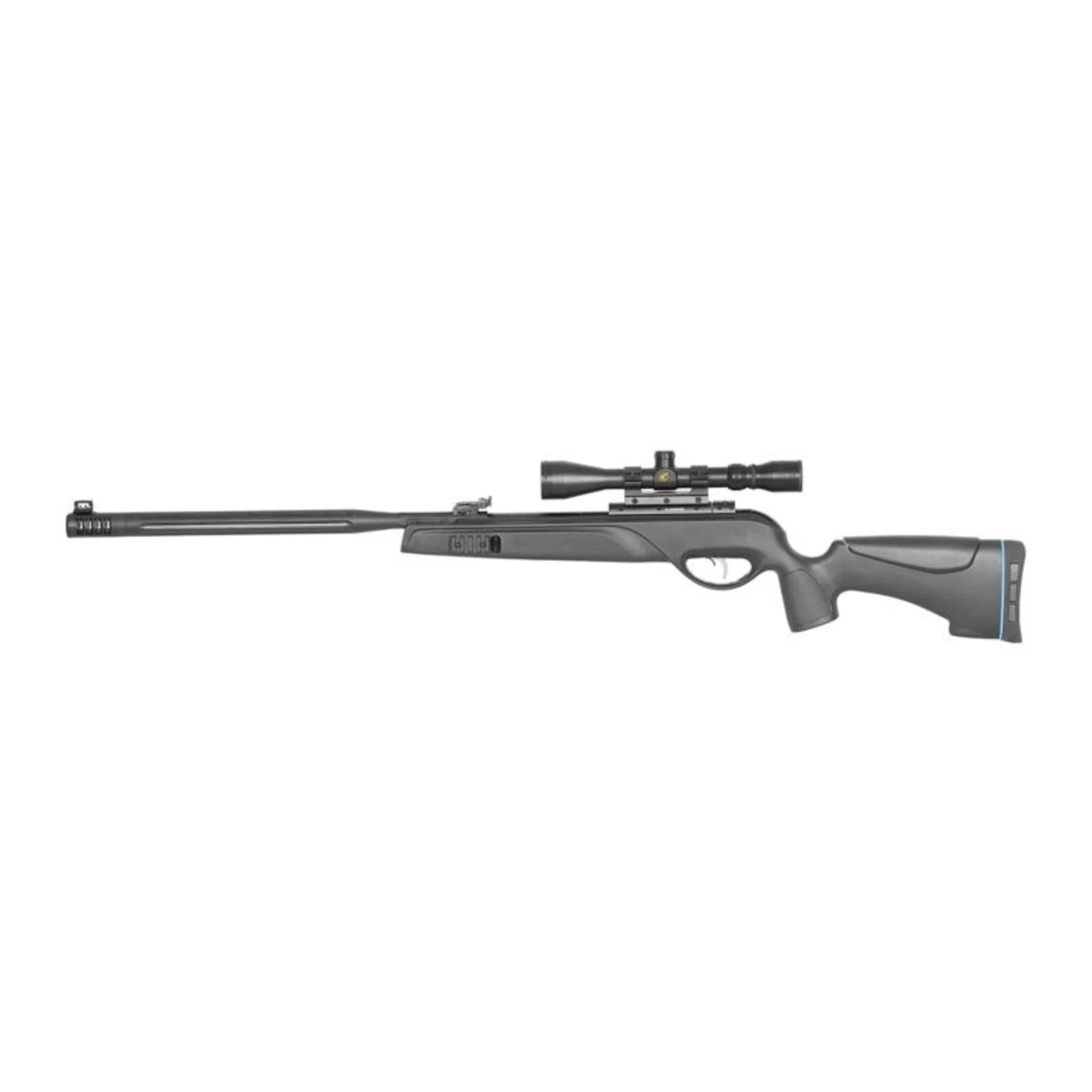
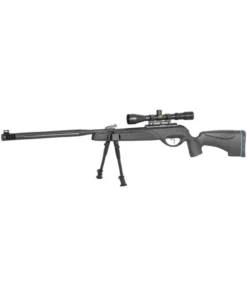
Gamo HPA MI Maxxim IGT Black Break Barrel Air Rifle
Focus keyword: Gamo HPA MI Maxxim IGT Black Break Barrel Air Rifle
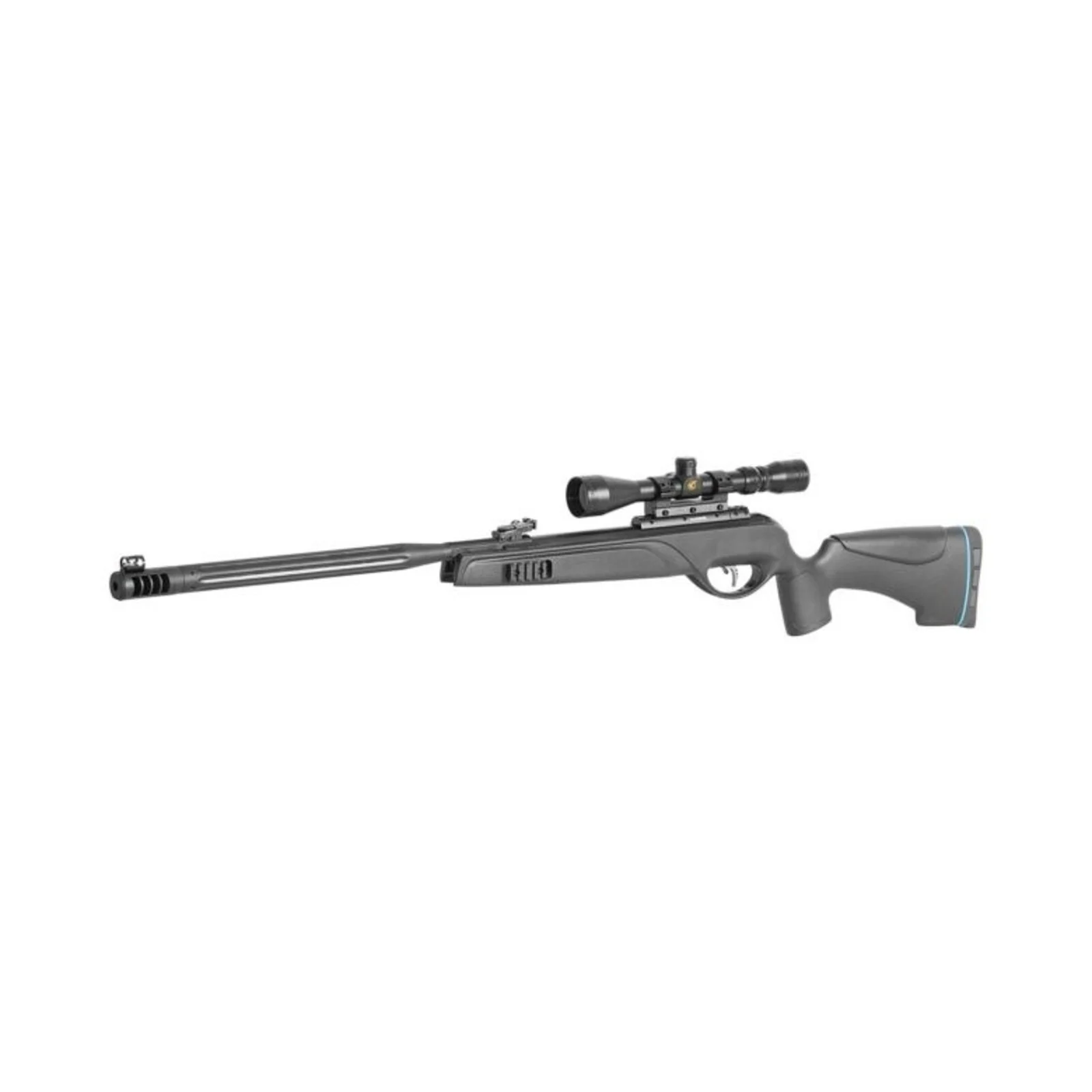
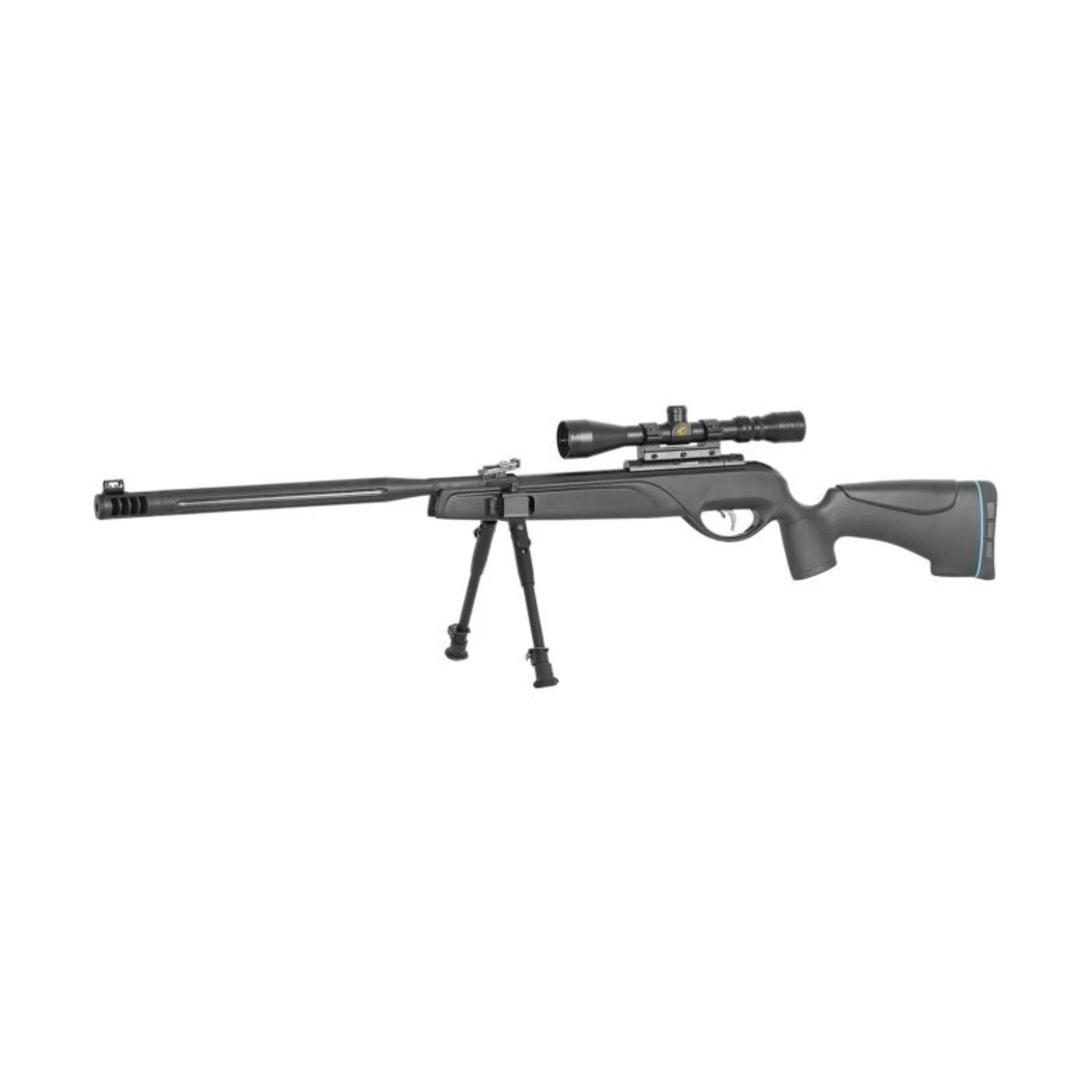
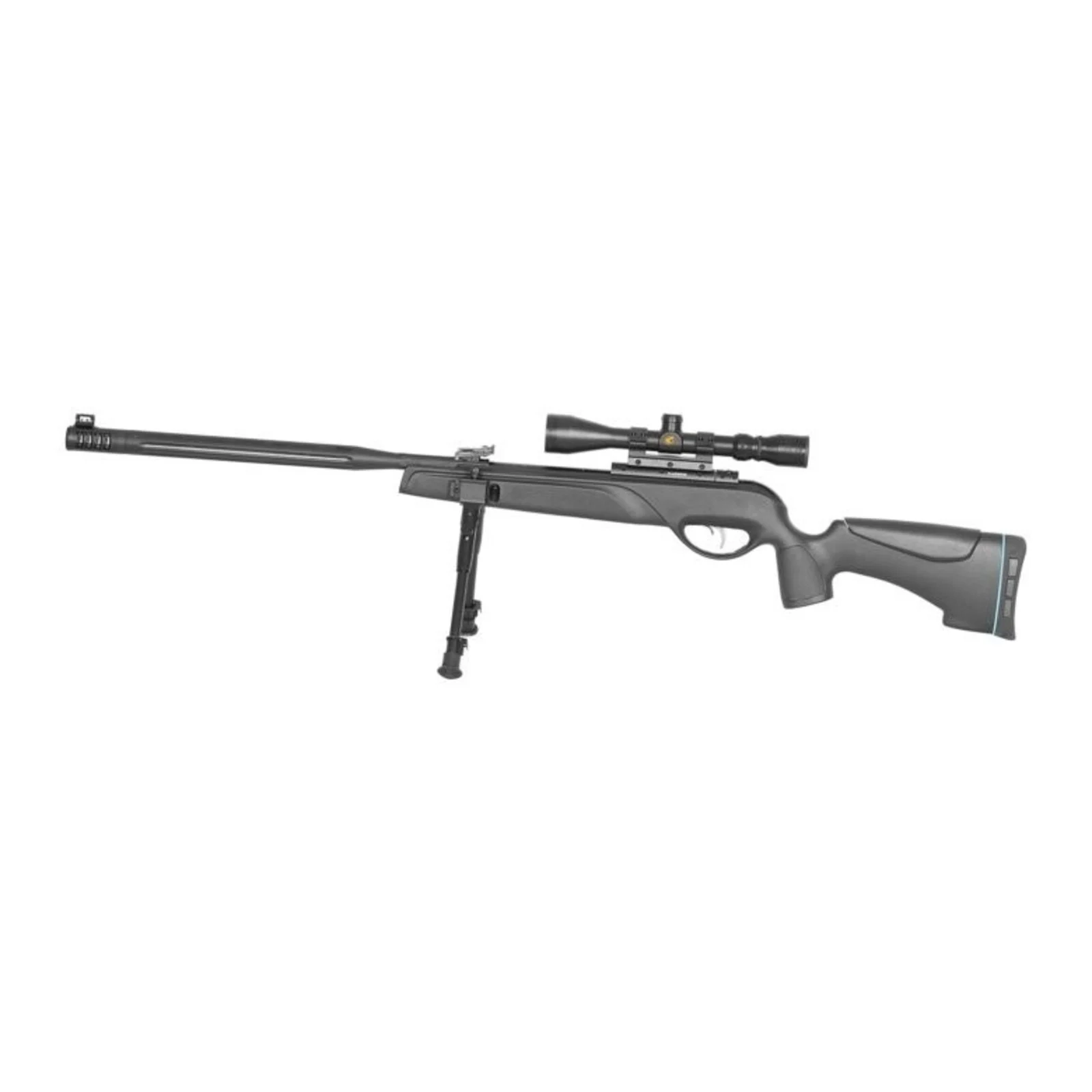
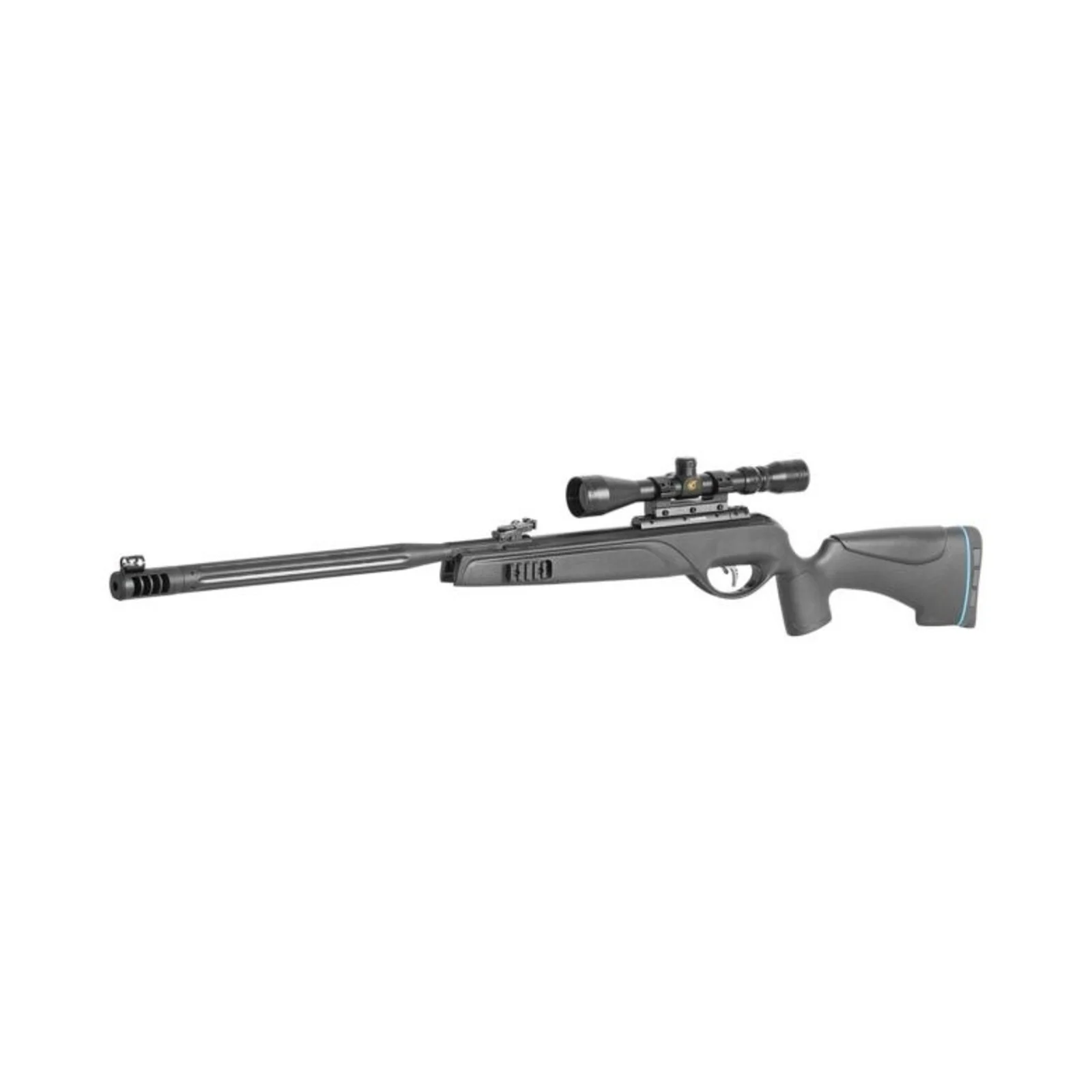
A complete shooting platform is presented by the Gamo HPA MI Maxxim IGT Black Break Barrel Air Rifle. Precision, quiet operation, and tactical versatility are combined in a single-shot break-barrel package that has been trusted by backyard marksmen, pest-control users, and field shooters across many markets. Smooth power delivery is provided by IGT Inert Gas Technology. Report is reduced by the Whisper Maxxim dual-chamber shroud. Recoil is managed by the SWA pad and RRR rail. A stable firing position is enabled by side Picatinny rails and the folding bipod that is commonly included. An adjustable CAT trigger, an adjustable cheekpiece, and an all-weather black synthetic stock are fitted so that a wide range of shooters can be accommodated.
Legal energy limits, pellet choice, and local airgun rules must always be observed. Power figures published by retailers vary by country (commonly listed around 24 J where permitted; restricted versions are also sold). Velocity claims also vary with pellet weight. Responsible ownership, safe handling, and local compliance are required before any use.
Why the Gamo HPA MI Maxxim IGT Black Break Barrel Air Rifle Is Chosen
A best-selling tactical break-barrel formula has been refined by Gamo over several seasons. The traditional coil spring has been replaced by a sealed gas piston. Consequently, cocking effort is smoothed, vibration is reduced, and shot-to-shot consistency is improved compared with many conventional springers. Meanwhile, a polymer Maxxim shroud with two damping chambers and a muzzle brake is fitted over the rifled barrel, so muzzle blast is moderated and balance is improved.
Furthermore, an 11 mm dovetail with Gamo’s Recoil Reducing Rail (RRR) is provided so that a scope can be protected from the two-way recoil typical of spring-piston and gas-ram rifles. In addition, lateral Weaver/Picatinny sections on the fore-end allow a two-piece or folding bipod to be attached without hanging weight from the barrel itself—an important advantage on a break-barrel action.
Therefore, the Gamo HPA MI Maxxim IGT Black Break Barrel Air Rifle is frequently selected when a ready-to-shoot kit (rifle, 3–9×40 WR-class optic, and bipod on many listings) is preferred over a bare action.
Highlighted product listing
- Action: Single-shot break barrel
- Powerplant: IGT inert-gas piston (gas ram)
- Typical listed energy: Up to 24 J where legally permitted (restricted versions exist)
- Calibers commonly offered: 4.5 mm / .177 and 5.5 mm / .22
- Listed velocities (manufacturer / retailer ranges): Up to ~386 m/s (.177) and ~268 m/s (.22) with light pellets; real lead-pellet speeds are lower and pellet-dependent
- Barrel system: Whisper Maxxim dual-chamber shroud and muzzle brake
- Trigger: CAT two-stage, independently adjustable
- Safety: Manual safety plus automatic cocking safety
- Optics rail: 11 mm dovetail with RRR recoil-reducing rail
- Accessory rails: Side Picatinny/Weaver on the fore-end for bipod
- Stock: Automotive-grade glass-filled nylon, matte black, ambidextrous, adjustable cheekpiece
- Recoil pad: SWA Shock Wave Absorber with removable inserts (up to ~74% absorption claimed)
- Open sights: TruGlo-style fiber-optic sights on many examples
- Typical weight: About 3.0–3.2 kg (rifle only; higher with scope and bipod)
- Typical overall length: About 1,150–1,210 mm
- Typical barrel length: About 500–505 mm
- Common package items: 3–9×40 WR / WRH scope, mounts, folding or two-part bipod, caps, tools, manual
- Origin: Gamo, Spain
Design Overview of the Gamo HPA MI Maxxim IGT Black Break Barrel Air Rifle
A tactical silhouette is created by the black polymer stock, raised adjustable comb, and shrouded barrel. Consequently, the rifle can be used from a bench, a prone bipod position, or a standing rest without looking like a traditional sporting wood springer.
Moreover, glass-filled nylon of automotive grade is used so that weather, knocks, and storage humidity are resisted better than many timber stocks. Non-slip texturing is applied to the grip and fore-end. As a result, a secure hold can be maintained in gloves or damp conditions.
Additionally, an adjustable cheekpiece is provided so that eye alignment with a scope can be refined. Removable padding inside the butt and SWA inserts allow length-of-pull feel and pad firmness to be tuned. Therefore, shooters of different statures can be fitted more comfortably than with a fixed comb and hard pad.
IGT Inert Gas Technology Explained
The heart of the Gamo HPA MI Maxxim IGT Black Break Barrel Air Rifle is the IGT gas piston. A sealed pneumatic cylinder is substituted for a steel coil spring. Nitrogen (or equivalent inert gas) is compressed when the barrel is broken and the action is cocked. Upon trigger release, that gas expands and drives the piston, which in turn compresses air in the compression tube and launches the pellet.
Advantages that are commonly attributed to IGT
- Smoother cocking stroke compared with many coil springs
- Reduced “twang” and stock vibration
- More consistent power over the life of the unit than a spring that can take a set
- Less sensitivity to temperature-related spring fatigue in typical use
- Improved potential for grouping once the rifle is pellet-tuned
Nevertheless, a gas ram is not recoil-free. Forward and rearward piston movement still occurs. Therefore the SWA pad, RRR rail, and correct scope rings remain important. Furthermore, dry-firing without a pellet must be avoided, because the piston and seals can be damaged when no pellet is present to create back-pressure.
Whisper Maxxim Barrel Shroud and Muzzle Brake
Two noise-damping chambers are integrated into the Maxxim shroud. Report is reduced and a degree of muzzle-brake effect is added. Consequently, neighbors and quarry are less likely to be startled than with an unshrouded high-power springer, although the rifle is not a true PCP-level “whisper” gun.
In addition, the polymer jacket helps protect the steel rifled barrel and contributes to a bull-barrel appearance. Balance is shifted slightly forward, which many shooters find helpful when a bipod is fitted.
Open fiber-optic sights are retained on numerous examples, so the rifle can still be used if the scope is removed. However, most owners will mount glass on the 11 mm rail.
CAT Custom Action Trigger
A two-stage CAT trigger is fitted. First-stage travel and second-stage break can be adjusted independently by screws. Consequently, a crisp, predictable release can be approached after careful setup.
A manual safety and an automatic cocking safety are also provided. The automatic system is designed to engage as the rifle is cocked, reducing the chance of an accidental discharge during loading. Even so, the muzzle must always be kept pointed in a safe direction, and the pellet must be loaded only when the action is fully open and controlled.
Trigger work beyond factory adjustment can void warranty and must be performed only by a qualified gunsmith where local law allows.
SWA Shock Wave Absorber and RRR Rail
Up to 74% additional recoil absorption is claimed for the SWA pad versus a standard pad. Modular inserts let firmness be changed. Combined with the RRR rail—a spring-loaded element intended to isolate some recoil energy from the scope—the package is intended to protect optics and the shooter’s shoulder during extended sessions.
Even with these systems, quality two-piece mounts, correct ring torque, and a scope rated for spring-piston / gas-ram recoil should be used. A cheap optic that is not built for bidirectional recoil will still fail.
Stock, Ergonomics, and Accessory Rails
An ambidextrous layout is used so that left- and right-handed shooters can be served. The raised comb and adjustable cheekpiece support scoped use. Textured grip panels reduce slip.
Crucially, Picatinny/Weaver sections are placed on both sides of the fore-end. A two-part or folding tactical bipod can therefore be mounted to the stock rather than to the moving barrel. Accuracy is protected because barrel harmonics are not loaded by a hanging bipod clamp on the shroud.
The folding bipod supplied in many kits can be adjusted for height and stance so that a stable prone or bench position is reached quickly.
Optics Package Commonly Bundled
A Gamo 3–9×40 WR / WRH class scope is included in a large number of retail kits, together with mounts. A 30/30-style reticle and 1-inch tube are typical. This optic is adequate for getting on paper and for moderate-range plinking or pest work.
However, many experienced owners eventually upgrade the glass. The factory scope is a convenience starter, not a match optic. After the rifle is broken in, a more robust airgun-rated scope with adjustable objective or side parallax is often preferred.
The 11 mm dovetail plus RRR remains compatible with a wide range of aftermarket rings.
Calibers, Power, FAC Considerations, and Accessories
Two primary calibers are marketed.
.177 / 4.5 mm
A flatter trajectory is generally obtained. Higher listed velocities are published. This caliber is often chosen for targets, longer-range plinking, and smaller pests where legal.
.22 / 5.5 mm
Greater pellet mass and energy transfer at typical pest-control distances are obtained. Velocity numbers look lower, yet terminal performance on small game (where lawful) can be preferred.
Energy is commonly advertised at 24 J / about 17.7 ft-lb in unrestricted listings. In other jurisdictions the same model name is sold at 7.5 J or other local limits. Buyers must confirm the exact specification of the unit being shipped and must comply with FAC, licensing, age, and storage rules in their country.
Accessories that pair well
- Quality lead domed pellets in several head sizes for grouping tests
- Heavy or mid-weight pellets if the gas ram prefers them
- Airgun-rated scope and two-piece mounts
- Pellet pouch, range flags, and a chrono for tuning
- Soft case long enough for the ~115–121 cm rifle with scope
- Barrel rest or shooting bags in addition to the bipod
- Appropriate hearing and eye protection
PBA / alloy pellets are mentioned in factory literature for maximum advertised speed. For accuracy and barrel life, high-quality lead pellets are usually recommended first.
Practical Use Scenarios
Backyard and club target shooting
A rest or bipod is deployed. Groups are fired at 20–40 m while pellets are swapped until the tightest combination is found. The CAT trigger is refined. Recoil is managed with a consistent hold (artillery hold is often taught for break-barrels).
Pest control where lawful
A quiet-enough report and 24 J class energy (where legal) allow humane dispatch of permitted species at appropriate ranges when shot placement is correct. Local wildlife law must be checked. A .22 pellet is often selected for this role.
Field practice and hunter field target style practice
The folding bipod and adjustable comb support positional shooting. The rifle remains a single-shot break-barrel, so a deliberate loading rhythm is required.
Training new shooters
The all-weather stock, included optic, and moderate weight (~3.2 kg) make an approachable trainer only under direct adult supervision, with eye protection, a safe backstop, and strict muzzle discipline. Break-barrel cocking effort is still significant; youth or smaller-framed shooters may need assistance.
Accuracy Development and Hold
Break-barrel gas-ram rifles reward a consistent artillery hold: the fore-end is rested, not clenched; the same pressure is applied every shot; follow-through is maintained. After a break-in period of several tins, the preferred pellet is locked in.
Chronographing is useful because advertised fps figures are usually obtained with very light alloy pellets. Real lead speeds will be lower and more relevant to trajectory charts.
Maintenance and Longevity
- The rifle must never be dry-fired.
- The pivot and cocking linkage should be kept clean and lightly lubricated with products safe for airguns.
- The barrel crown and shroud ports should be kept free of debris.
- Seals and the gas ram are service items; a qualified airgun technician should be used when power drops or cocking feel changes.
- The stock screws should be checked after the first sessions.
- The scope mounts should be inspected because gas-ram recoil is bidirectional.
Storage should be in a dry cabinet, uncocked, with local secure-storage rules observed.
Safety, Law, and Inclusive Use
Air rifles are not toys. Eye protection must be worn by everyone on the range. A safe backstop capable of stopping the pellet must be used. The muzzle must be controlled at all times. Local age limits, energy limits, transport rules, and hunting laws must be followed.
The ambidextrous stock and adjustable comb are intended so that shooters of different body types and handedness can be included. Coaching and correct fit matter more than marketing language.
Frequently Asked Questions
Is the Gamo HPA MI Maxxim IGT Black Break Barrel Air Rifle a PCP?
No. A break-barrel IGT gas piston is used. No air tank or pump is required.
How loud is the Whisper Maxxim system?
Report is reduced versus an unshrouded springer, but the rifle is not silent.
Is the bipod attached to the barrel?
On this model the intended mounting is the side rails on the stock, which is the correct approach for a break-barrel.
Can left-handed shooters use it?
An ambidextrous stock is fitted. Cheekpiece height can be adjusted.
What energy should be expected?
Confirm the exact listing for your country. Many EU/export pages state 24 J; other markets receive reduced-power versions.
Is the included 3–9×40 enough?
It is a starter optic. An airgun-rated upgrade is recommended for serious use.
Which caliber should be chosen?
.177 is typically chosen for trajectory and targets; .22 is typically chosen for energy on pests where legal.
Conversion Close
A complete tactical break-barrel kit is offered by the Gamo HPA MI Maxxim IGT Black Break Barrel Air Rifle: IGT power, Whisper Maxxim moderation, CAT trigger, SWA pad, RRR rail, adjustable comb, side-rail bipod capability, and—on most kits—a scope already in the box. When local law is respected and the rifle is pellet-tuned, a dependable platform for targets and permitted field use is obtained.
Calibres, Power Limits, FAC Notes, and Accessories
Lawful specification must be confirmed before a purchase is completed, because the same model name is released at different energy levels in different countries. Consequently, catalogue velocity claims should be treated as marketing maxima rather than as a guarantee with everyday lead pellets. Moreover, accessories should be chosen to support the action type: a break-barrel gas-piston rifle still produces two-way recoil, so optics and mounts must be rated accordingly.
Inclusive setup is possible. Therefore, comb height, pad inserts, and rest height can be adapted so that shooters of different statures and handedness obtain a usable sight picture without unsafe improvisation.
Calibres That Are Commonly Offered
Two primary pellet diameters are marketed. Each is single-shot and breech-loaded after the barrel is broken.
.177 / 4.5 mm is generally selected when a flatter path and a higher listed speed are desired. Target cards, longer plinking lanes, and small permitted pests at modest range are typical roles. Because pellet mass is lower, wind drift remains visible and must be read.
.22 / 5.5 mm is generally selected when greater mass and energy transfer at typical field distances are preferred. Groups may look slower on a chronograph, yet terminal performance on lawful quarry can be improved when shot placement is correct.
A highlighted comparison used during buying decisions includes:
- Trajectory flatness usually favoured by .177
- On-target momentum usually favoured by .22
- Pellet cost and availability in local tins
- Club or national energy caps that may force a reduced-power version
- Intended distance of most shots, not the longest shot imagined
Head-size testing is still required in either calibre. Therefore, several lots of quality domed lead should be grouped before a “house” pellet is declared. Alloy or PBA ammunition is sometimes cited for maximum advertised feet-per-second figures; accuracy and barrel life are more often served by lead first.
Power Output and How Figures Are Published
Unrestricted retail pages frequently list about 24 joules (approximately 17.7 ft-lb). Associated catalogue speeds are often quoted near 386 m/s in .177 and 268 m/s in .22 with very light pellets. In other jurisdictions the identical styling is sold closer to 7.5 J or another statutory ceiling.
Real lead-pellet velocity is almost always lower than the headline number. Consequently, a chronograph session after break-in is the only reliable way to build a drop chart. Furthermore, power can vary with pellet weight, seal condition, temperature, and cocking completeness. Dry-firing must never be used as a test, because piston and seals can be damaged when no pellet creates back-pressure.
Energy is not a substitute for placement. A lawful 24 J class shot still requires a safe backstop and a distance at which the chosen pellet groups.
FAC, Licensing, and Local Classification
Classification is determined by the law of the destination country, not by marketing language.
In the United Kingdom, air rifles that exceed 12 ft-lb (about 16.3 J) at the muzzle are generally treated as firearms requiring a Firearms Certificate (FAC) unless a specific exemption applies. A 24 J listing therefore sits above that sub-12 threshold and must be handled as an FAC item where that framework applies. Sub-12 versions of similar platforms exist in other catalogues; the exact unit on the invoice is what matters.
Elsewhere in Europe and beyond, joule limits, age rules, transport rules, hunting permissions, and storage duties differ widely. Some markets allow 24 J without a certificate equivalent; others restrict sale to 7.5 J or require permits, IDs, or dealer-only transfer. Import and customs declarations must match the actual power of the shipped rifle.
No scenario in this section authorises use that local statute forbids. Landowner permission, species lists, and night-shooting rules remain separate obligations even when energy is legal.
Accessories That Complete a Usable Kit
Many retail packages already include a 3–9×40 WR / WRH-class scope, rings, and a folding or two-part bipod. Those items get a new owner on paper. They are not automatically match-grade. After groups stabilize, an airgun-rated optic with adjustable parallax is frequently fitted to the 11 mm dovetail and recoil-reducing rail.
A highlighted accessory list that pairs cleanly with this action:
- Quality two-piece mounts torqued to spec and rated for spring-piston / gas-ram recoil
- Several tins of mid- and heavy-weight lead domes in both head sizes for the chosen calibre
- Soft or hard case long enough for a 115–121 cm rifle with optic fitted
- Bipod attached to the side Picatinny / Weaver rails on the stock, never hung from the moving barrel
- Shooting bags as a second rest so that hold can be compared with bipod use
- Chronograph for honest velocity and extreme-spread notes
- SWA pad inserts to tune shoulder feel
- Eye and hearing protection for every person on the line
- Pellet pouch, target cards, and a notebook for group data
- Airgun-safe lubricant for the pivot only, applied sparingly
Open fiber-optic sights remain available on many examples if glass is removed. A barrel rest that does not contact the shroud crown is preferred during sight-in.
Warranty and service should be considered when trigger screws are turned beyond factory guidance. Internal work on the gas piston belongs with a qualified technician. Storage must leave the action uncocked and must follow local secure-storage rules.
When calibre, measured power, paperwork, and accessories are aligned, the rifle can be used as a grouping tool, a supervised trainer, or—only where explicitly lawful—a pest tool. Specification on the carton and on the dealer invoice overrides any generic web table.
Gamo Air Rifles, PCP Systems, Pellet Pistols, and Shooting Accessories
When precision, reliability, and performance are required, Gamo air rifles are recognized among shooters who value innovative designs and consistent accuracy. A wide range of gamo pellet guns, gamo pellet rifles, and gamo air rifles has been developed for target shooting, pest control, training, and recreational use. From classic break barrel air rifles to advanced PCP platforms, Gamo provides options for beginners and experienced shooters looking for dependable air-powered performance.
Modern high powered air rifles and high power air rifles combine velocity, accuracy, and improved technology to deliver excellent shooting experiences. Models such as the Gamo Swarm Magnum 10X Gen3i, Gamo Swarm Magnum, Gamo Swarm Maxxim Gen 3, and Swarm Magnum Gen3i are designed with multi-shot capabilities, allowing faster follow-up shots compared with traditional single-shot designs. The Gamo Swarm Magnum Pro 10X Gen3i represents the next level of magazine-fed pellet rifle technology, offering improved handling and convenience for demanding shooters.
Break Barrel Air Rifles and Pellet Pistols
A break barrel air rifle remains one of the most popular choices because of its simple operation, durability, and self-contained power system. A gamo break barrel rifle uses a spring piston or gas piston mechanism to generate power without requiring external air tanks. For shooters searching for reliable performance, the Gamo 177 platform provides excellent accuracy with .177 caliber pellets.
A break barrel pellet pistol offers the same operating principle in a compact handgun format. Options such as a break barrel air pistol, break barrel pistol, and break action pellet pistol provide an engaging shooting experience for training and target practice. A 22 caliber break barrel air pistol delivers larger pellet performance, while the best break barrel pellet pistol options are selected for balance, accuracy, and durability.pellet guns that can kill
For users searching for powerful compact options, a most powerful break barrel pellet gun can provide increased velocity and energy compared with standard models. These platforms are often chosen by shooters who want a practical combination of power and simplicity. Other popular handgun categories include the 22 pellet pistol, bee bee gun pistol, air pistol, air pistols, and pellet pistols.
Gamo Swarm Magazine Technology
The Gamo Swarm series changed the way many shooters use break barrel rifles by introducing magazine-fed shooting systems. The Gamo Swarm 10X technology allows multiple pellets to be loaded for faster shooting sessions. A multi shot pellet gun with a reliable magazine system provides greater convenience for target practice and recreational shooting.
Popular Swarm models include:
- Gamo Swarm Magnum
- Gamo Swarm 10X
- Gamo Magnum Gen3i
- Gamo Swarm Magnum Gen3i
- Gamo Swarm Magnum Pro 10X Gen3i
These rifles are designed for shooters who want the benefits of a pellet gun with magazine functionality while maintaining the advantages of a break barrel platform.
PCP Air Rifles and Gamo Arrow Technology
For shooters looking for advanced performance, PCP air rifles provide excellent consistency through regulated compressed air systems. A precharged pneumatic rifle stores high-pressure air in a reservoir, allowing smooth operation, reduced vibration, and improved shot consistency.
Popular PCP categories include:
- PCP air rifle
- PCP air rifles
- PCP rifle
- PCP guns
- PCP rifles
- PCP air gun
- PCP pellet rifle
- Rifle PCP
- Air rifle compressed air
The Gamo Arrow PCP series introduces modern PCP technology with lightweight designs and precision-focused performance. The Gamo Arrow PCP air rifle, PCP Arrow guns, Arrow rifle, Arrow rifles, and Arrow air rifle platforms provide shooters with a versatile option for target shooting and field use. The Gamo Arrow .22 and Gamo Arrow Classic models deliver larger caliber performance with excellent accuracy.
Lever Action and Alternative Air Rifle Designs
Different shooters prefer different operating systems, which is why lever-style air rifles continue to attract attention. Under lever air rifles, also known as underlever air rifles, provide a fixed barrel design that can improve consistency and accuracy. A side lever air gun or side lever air rifle offers smooth cocking operation while maintaining a streamlined profile.
Other traditional designs include:
- Lever action pellet gun
- Lever action air rifle
- Air gun thumb lever
For shooters interested in classic Gamo models, the Gamo Shadow 1000, Shadow 1000 Gamo, and Gamo 1000 Shadow remain recognizable names. The 1000/4.5 designation refers to the popular .177 caliber format used by many air rifle enthusiasts.
Gas Piston Air Rifles and High Velocity Shooting
Many modern rifles use gas piston technology instead of traditional springs. When asking what is a gas piston air rifle, the answer is a system that replaces the metal spring with a gas-filled cylinder, providing smoother cocking, reduced vibration, and consistent power.
Some high-velocity rifles are marketed around impressive speed ratings, including the Gamo 1800 FPS air rifle. Shooters often research the Gamo 1800 FPS air rifle price when comparing powerful break barrel options. These rifles are designed for users who want increased velocity while maintaining the practicality of a self-contained airgun.
CO2 Pistols and Pellet Handguns
CO2-powered handguns provide convenient operation and realistic shooting experiences. A CO2 pistol, pistol CO2, or CO2 air pistol uses disposable CO2 cartridges to propel pellets or BBs. Popular categories include:
- CO2 pistols
- CO2 gun
- CO2 guns
- C02 pistol
- C02 guns
- Guns CO2
- CO 2 Gen
A pellet handgun, pellet pistol, pistol pellet gun, and pellet gun pistol can be used for recreational shooting, training, and improving shooting skills. These compact platforms provide an accessible entry point for new shooters.co2 air pistols
Airgun Maintenance and Cleaning Equipment
Proper maintenance helps preserve accuracy and extend the service life of any air-powered firearm. Regular airgun maintenance and air gun maintenance routines help prevent performance issues caused by dirt, debris, or improper storage.
Recommended maintenance products include:
- Pellet rifle cleaning kit
- Pellet gun cleaning kit
- Airgun lubricant
Using the correct cleaning equipment ensures that barrels, seals, and moving components remain protected while maintaining consistent shooting performance.shotgun pellet gun,air pellet pistol.pellet gun pistols.gamo 10x
Air Rifle Targets and Shooting Accessories
Accurate shooting requires quality practice equipment. Whether using a PCP rifle, break barrel rifle, or pellet pistol, proper targets improve skill development. Popular options include:
- Pellet gun targets
- Air rifle targets
- Targets for air rifle
- Airgun targets
- Air gun targets
- Air rifle shooting targets
- Airgun shooting targets
- Air rifle target
- Air pistol targets
- Pellet rifle target
From beginner practice sessions to advanced accuracy training, quality targets help shooters measure performance and improve technique.
Practical Use Scenarios
A wide range of field and range tasks can be supported once a stable hold, a verified backstop, and locally lawful energy limits have been confirmed. Consequently, productive sessions are obtained when the same loading rhythm, the same rest, and the same pellet lot are repeated. Moreover, confidence is built gradually, because break-barrel gas-piston rifles reward consistency more than haste. Therefore, each scenario below is approached as a controlled exercise rather than as an unstructured outing.
Inclusive participation is encouraged. Accordingly, left- and right-handed shooters, different statures, and mixed experience levels can be accommodated through cheekpiece height, pad inserts, and coaching. Nevertheless, supervision, eye protection, and muzzle discipline remain mandatory for every participant.
Zeroing and First-Range Familiarization
A solid bench or a deployed bipod is prepared first. Subsequently, a large paper target is placed at a short, known distance so that the initial point of impact can be located without guesswork. Afterward, the action is cocked fully, a single pellet is seated flush at the breech, and the barrel is returned smoothly until lock-up is felt. Meanwhile, the support hand remains relaxed under the fore-end so that the artillery hold can be learned from the first group.
Once a three- or five-shot cluster has been printed, scope adjustments are applied in small increments. In addition, the same point of aim is retained between shots so that flyer causes can be isolated. Furthermore, chronograph readings may be collected if a meter is available, because advertised speeds with ultra-light alloy pellets rarely match everyday lead ammunition. As a result, a realistic zero and a realistic trajectory note are produced before longer distances are attempted.
Fatigue is reduced when cocking effort is shared or when shorter strings are fired. Consequently, new shooters are not rushed through a full tin on day one. Instead, trigger stages are felt, follow-through is practiced, and the automatic cocking safety is verified after every reload.
Backyard and Club Target Practice
A permanent or portable backstop capable of stopping the pellet is required. Thereafter, distances of roughly twenty to forty metres are commonly used for grouping work. Meanwhile, wind flags or simple ribbons are observed so that drift is not blamed on the rifle.
Pellet testing is conducted methodically. First, one lot of mid-weight domed lead is fired. Next, a slightly heavier or lighter dome is compared. Then, a wadcutter or a pointed design may be tried only if grouping data justify the change. Highlighted notes that are typically recorded include:
- Group size at a fixed distance with a named pellet
- Point-of-impact shift when the rest is changed from bags to bipod
- Felt vibration differences after the first hundred rounds of break-in
- Preferred CAT first-stage travel after incremental screw adjustment
- Hold pressure that produced the tightest cluster
Moreover, session length is limited so that sloppy loading does not appear. Therefore, quality is prioritized over round count. In addition, the shrouded muzzle still produces report; neighbors and club rules are respected by choosing hours and backstops carefully.
When open fiber-optic sights are used instead of glass, the same rest and the same follow-through are retained. Subsequently, a return to the scope confirms whether the zero has shifted after transport.
Supported Prone and Field Positions
A folding or two-piece bipod is attached to the side rails on the stock rather than to the barrel. Consequently, harmonics of the break-barrel tube are not loaded by hanging weight. After the legs are extended and cant is leveled, a natural point of aim is found by shifting the whole body, not by muscling the grip.
Prone strings are kept short because neck and shoulder strain accumulate. Meanwhile, the adjustable comb is raised or lowered until a full sight picture is seen without neck craning. Furthermore, the Shock Wave pad and removable inserts are used to tune felt recoil for the individual shoulder.
Kneeling and sitting positions are introduced only after prone groups have become predictable. In those postures, a bag or a pack is placed under the support hand so that the fore-end is still rested, not clenched. As a result, the same artillery-hold principle is preserved away from the bench.
Inclusive coaching matters here. Accordingly, a smaller-framed shooter may be given a higher comb setting and a shorter string, while a taller shooter may need more length-of-pull feel from the pad. Either way, the same safety brief is delivered before the first cocked barrel is presented.
Pest Management Where Explicitly Lawful
Local wildlife, energy, and land-access rules must be confirmed before any live quarry is considered. Where such use is permitted, a humane distance, a clear backstop, and a pellet that groups tightly in that rifle are selected first. Subsequently, .22 is often preferred for energy transfer at typical pest ranges, while .177 may be chosen where a flatter path is needed and legal limits allow.
A quiet approach is aided by the dual-chamber shroud, yet silence is not claimed. Therefore, animals are not pursued in settings where report will create conflict with neighbors or livestock. Moreover, only species and methods allowed by statute are engaged. Shot placement is practiced on paper until it is automatic; guesswork in the field is not a substitute for that work.
Transport to the site is completed with the rifle uncocked, cased as required, and unloaded. Upon arrival, the bipod or a natural rest is used so that an unstable offhand poke is avoided. After the task, the action is left uncocked and the site is left tidy.
Hunter-Field-Target Style Practice and Positional Drills
Although this platform is a single-shot sporting rifle rather than a dedicated match PCP, positional discipline can still be trained. Consequently, reducers, kill-zone cards, and mixed distances are set on private or club ground. Then, one pellet is loaded for each lane so that a deliberate cadence is enforced.
Wind reading is practiced with the same hold used on the zeroing range. Meanwhile, the CAT second stage is kept consistent so that a snatched shot is not introduced when the target looks difficult. Furthermore, time pressure is added only after clean hits are routine; rushed cocking is a common source of barrel-close variation.
Highlighted drills that are frequently rotated include:
- Three shots from bipod at a known distance, then three from bags
- A sitting shot after a short walk so that breathing is reset
- A cold-barrel first shot recorded separately from a warm-barrel group
- Weak-side supported shots so that ambidextrous stock geometry is actually used
- Low-light fiber-optic confirmation if legal lighting allows
Because each shot requires a full cocking stroke, stamina becomes part of the lesson. Therefore, hydration and rest intervals are planned, and anyone who cannot complete a safe cocking motion is not asked to continue.
Family Introduction and Supervised Training
An introduction session is structured around observation first. The uncocked rifle is shown, the shroud and rail are identified, and the rule that the muzzle never covers a person is repeated. Subsequently, dry handling without a pellet is limited to teaching shoulder placement and cheek weld; live dry-firing of the gas piston is forbidden.
When live fire begins, a single adult controls the cocking stroke if the trainee cannot close the barrel smoothly. Eye protection is worn by every person on the line, including observers. Moreover, a short distance and a large target are used so that success is felt early without encouraging unsafe confidence.
Inclusive language and pacing are applied. Accordingly, no assumption is made about strength, handedness, or prior experience. Instead, comb height, pad firmness, and rest height are adjusted until a repeatable picture is seen. Praise is attached to safe process—loading, pointing, follow-through—rather than only to holes in paper.
Travel, Seasonal, and All-Weather Use
The glass-filled nylon stock is intended to tolerate damp storage better than many timber layouts. Nevertheless, the rifle is dried after rain, and the pivot is kept free of grit. In cold weather, extra attention is given to a firm lock-up and to pellet seating, because numb fingers increase the chance of a partial close.
A case long enough for the optic and bipod is used in vehicles. Upon reaching a new range, a confirmation group is fired before any “record” string, because bumps in transit can shift rings even when a recoil-reducing rail is present.
Seasonal pest or target calendars should still be filtered through local law. Therefore, no scenario is treated as automatically legal merely because the equipment is suitable.
Session Close-Out and Skill Transfer
At the end of every outing the barrel is confirmed empty, the safety condition is checked, and screws on stock and mounts are felt for movement. Subsequently, notes on pellet, distance, and wind are written while memory is fresh. As a result, the next visit starts from data rather than from optimism.
Skill transfer occurs when the same hold used on the bench is demanded in the field. Consequently, sloppy offhand shots are not excused after careful zeroing work. Furthermore, guests and newer shooters are given the same brief that experienced users receive, so that inclusive access never becomes informal risk.
When these scenarios are followed, a gas-piston break-barrel is used as a teaching tool, a grouping instrument, and—only where statutes allow—a pest tool. Precision is produced by repetition, lawful limits, and a rested action, not by rushing the cocking lever or by changing pellets every shot.brake barrel bb gun
Choosing the Right Gamo Airgun
Selecting the correct airgun depends on the intended purpose, preferred shooting style, caliber, and experience level. A beginner may prefer a reliable Gamo pellet gun or break barrel air rifle, while experienced shooters may choose a PCP air rifle for greater consistency and customization.
Whether searching for the best air rifles, a powerful pellet platform, a compact air pistol, or a precision PCP system, Gamo offers a wide selection designed for recreational shooters, target enthusiasts, and experienced airgun users. With options ranging from the Gamo Arrow PCP air rifle to the Gamo Swarm Magnum Gen3i, shooters can find a platform suited to their specific needs.10m rifle,


Reviews
There are no reviews yet.