We Deliver Airguns Directly To Your Door
SKU N/A Category

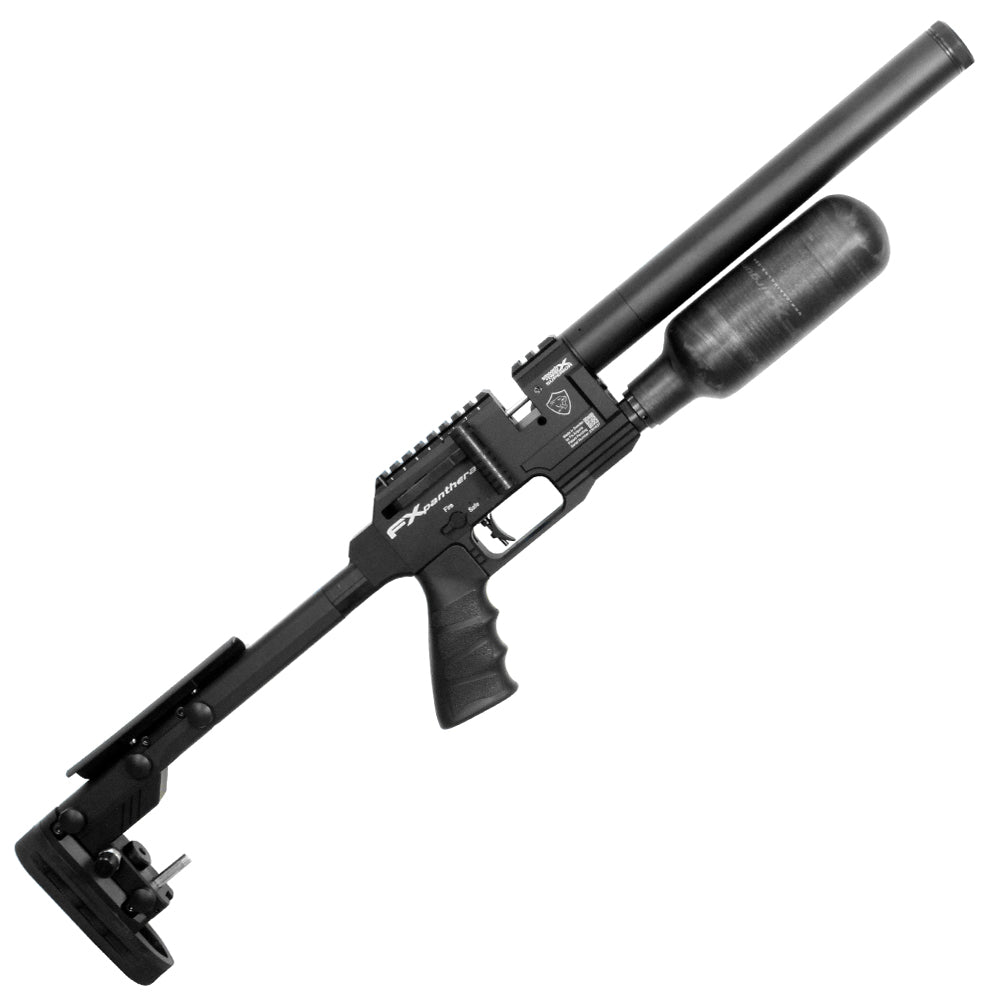
FX Panthera Hunter PCP

€1,660.00

FX Panthera Hunter Sub 12 ft/lb air rifle

The worlds first air rifle to feature an over the barrel plenum! Built initially for target shooting this hunting version of the FX Panthera features a redesigned bottle system and a shortened 300mm barrel that will have you shooting up to 300 shots per fill in .22 calibre.

Featuring all the technology you would expect from a world leading airgun manufacturer the FX Panthera Hunter adopts a side lever cocking mechanism, front mounted 300cc bottle and an all new over barrel plenum system to create a consistency never before seen in a rifle of this type.

Shot to shot consistency is so refined that some users have shot 10 shot strings and achieved deviations as low as 3-4. This level of consistency in-terms of airflow and fps, leads to a level of accuracy that even the best rimfire rifles struggle to keep pace with.

So how have FX Achieved this in the Panthera

It starts with an FX Dynamic Block, a new unit created from the ground up for hi-performance shooting. The FX unit utilizes a small one-piece valve for high power / short impulse air release, it is is extremely efficient and allows a very precise air flow.

The next stage is the Panthera’s already legendary plenum – an over-the-barrel plenum which provides an ultra consistent regulated pressure. This location not only allows the plenum to be larger than previous rifles (FAC models), but also has the added benefit of stiffening the area around the barrel. Precise levels of pressure are maintained by the single AMP MKII Regulator.

Tuneable and compact In the FX Panthera Hunter model, gone are the Arca rails and M-lok accessory rails to make a lightweight simplified Air Rifle that takes all the best bits of the Panthera and loses all the competition necessary parts. The result is a tune-able state-of-the-art rifle that you can shoot all-day.

At the heart of this rifles mechanism is the tried and tested Quick Tune System (the same as found on the FX Impact M3). Dual angled Manometers on the left side of the block show the bottle pressure and the regulated plenum pressure, for instant feedback to the operator.

Precision hunting performance is delivered by the FX Panthera Hunter PCP,

Field-ready compact power is provided through Swedish engineering that has been refined for shooters who demand consistency, balance, and adaptability. Moreover, every shot string is supported by regulated airflow, a short-impulse valve, and a Superior Smooth Twist X barrel so that accuracy can be maintained across pellets and slugs. Consequently, the platform is trusted by hunters and target shooters who prefer a lighter, shorter rifle without sacrificing energy or shot count.

Compact Chassis and Balanced Handling of the FX Panthera Hunter PCP

A front-mounted 300cc carbon-fiber bottle is used so that weight is shifted forward and off-hand stability is improved. Furthermore, overall length is kept between approximately 775 mm and 870 mm depending on caliber, while weight is held near 6.1–6.5 lb. In addition, an adjustable cheek rest and rubber buttpad are fitted so that length of pull and comb height can be tailored. Likewise, an ergonomic FX UG1 grip is provided, and a reversible sidelever is included so that left- and right-handed operation is supported without tools.

An extended Picatinny rail with 30 MOA cant is mounted so that long-range optics can be zeroed with extra elevation. Meanwhile, accessory rails on both sides of the block allow lights, lasers, or bipods to be attached. Therefore, the FX Panthera Hunter PCP can be configured for woodland stalking, range work, or pest control without a bulky competition chassis.

Key Features Highlighted

  • Reversible sidelever action is employed for fast, quiet cycling
  • 300cc carbon-fiber bottle is installed for high fill capacity at 250 BAR / 3,625 PSI
  • High-power short-impulse Dynamic Block valve is utilized for efficient air use
  • Over-the-barrel Dynamic Plenum design is incorporated for consistent pressure
  • Quick Tune System is offered for external power and regulator adjustments
  • AMP MKII Adjustable Match Precision regulator is fitted for shot-to-shot consistency
  • Superior Smooth Twist X barrel with STX liner is used for pellet and slug accuracy
  • Dual angled manometers are provided so bottle and regulated pressure can be monitored
  • 2-stage adjustable Quick Set Trigger is included with hunting, PRS, and benchrest profiles
  • Foster quick-disconnect fill port is located for rapid, clean fills
  • 1/2 UNF threaded muzzle is supplied so moderators or brakes can be added
  • Hard-shell case and magazine are supplied with the rifle

Calibers, Power, and Shot Capacity of the FX Panthera Hunter PCP

Four popular calibers are offered so that the same platform can serve different roles. Consequently, .177 and .22 versions use a 300 mm barrel, while .25 uses 380 mm and .30 uses 395 mm. Moreover, magazine capacities of 21, 18, 16, and 13 rounds respectively are provided.

Typical shot counts on a 250 BAR fill are reported as approximately 140 in .177, 80 in .22, 48 in .25, and 34 in .30 when standard pellets are used. Additionally, maximum energies of roughly 28 FPE (.177), 50 FPE (.22), 73 FPE (.25), and 105 FPE (.30) can be achieved with slug-power kits and appropriate projectiles. Therefore, small-game hunting, longer-range pest control, and high-volume practice can all be addressed by one compact FX Panthera Hunter PCP.

Because the AMP MKII regulator holds plenum pressure steady, extreme spread is kept low and velocity consistency is preserved even as bottle pressure drops. In the same way, the short-impulse valve meters air quickly so that efficiency is maintained at both FAC and lower power settings.

Practical Field Use and Tuning

Field accuracy at 30–60 yards is routinely demonstrated when quality pellets or slugs are matched to the STX liner. Furthermore, the compact length allows the rifle to be carried through brush and vehicles more easily than full-length competition models. Likewise, the front bottle placement reduces muzzle-heavy feel during off-hand shots.

Power can be adjusted via the Quick Tune System and hammer-spring wheel so that legal limits or preferred ammunition can be met. In addition, the three-profile trigger can be switched without disassembly, allowing a crisp hunting break or a lighter benchrest pull to be selected. As a result, the same FX Panthera Hunter PCP can be used for morning pest work and afternoon target sessions.

Responsible ownership is always required: local airgun laws, FAC requirements where applicable, and safe storage practices must be followed. Moreover, hearing protection and eye protection should be used, and the rifle should be treated with the same care given to any precision airgun.

Why the FX Panthera Hunter PCP Is Chosen by Serious Shooters

Swedish manufacturing quality is combined with modular accessories so that the rifle can grow with the owner. Dual-bottle kits, folding-stock adapters, and additional plenums can be added later. Consequently, initial investment is protected while performance remains current.

Quiet operation is aided by the shrouded barrel and efficient valve, making the rifle suitable for suburban pest control when a moderator is fitted. Meanwhile, the 30 MOA rail and consistent regulator support longer shots when slugs are used in .25 or .30. Therefore, one compact platform covers a wide range of hunting and recreational needs.

Inclusive design is reflected in the reversible lever, ambidextrous cheek piece, and adjustable stock so that shooters of different statures and dominant hands can be accommodated. In short, comfort and control are prioritized alongside raw performance.

When a lightweight, high-shot-count, tunable hunting PCP is required, the FX Panthera Hunter PCP is selected by those who value precision engineering, field practicality, and the ability to customize every aspect of the shot. Ready-to-hunt packages that include case and magazine allow the rifle to be put into service immediately after legal checks and a proper zero are completed.
FX Panthera Hunter - .22 PCP Air Rifle

FX Airguns, PCP Air Rifles, Hatsan Models and Modern Airgun Platforms

Modern airguns cover a wide range of platforms, from a basic pellet gun or BB gun to sophisticated regulated PCP airguns designed for target shooting, sporting applications, and long-range precision. Buyers researching an air rifle and air pistol collection will often encounter manufacturers such as FX and Hatsan because both companies offer extensive selections of air rifles, accessories, configurations, and caliber choices.

FX Airguns Sweden and the FX PCP Rifle Range

FX Airguns has become strongly associated with Swedish airgun engineering. Searches for fx airguns sweden, fx airguns sverige, fxairguns, and fx usa commonly lead enthusiasts toward the manufacturer’s extensive PCP lineup. In the American market, fx airguns usa is another widely searched phrase when people are researching available models, specifications, support, and accessories.

Among fx air rifles, the Impact family remains particularly recognizable. Searches frequently include fx impact, f x impact, fx impact m4, fx m4, impact m4 air rifle, and impact m4 500mm when comparing current configurations. The modular design philosophy associated with the Impact platform has helped make the fx air rifle range popular among shooters who appreciate adjustability and configurable PCP systems.

Earlier generations remain widely researched as well. The fx impact m3, impact m3, fx impact mk3, fx m3, and fx m3 airgun continue to attract attention from owners comparing generations or researching replacement components.

Caliber-specific searches include fx impact m3 .22cal air rifle, fx impact m3 .22cal air rifle. 600mm barrel, and the more general fx impact m3 air rifle. People comparing international pricing may also search fx impact m3 precio, fx impact m3 precio en usa, or fx impact m3 price before checking local regulations, specifications, and availability.

Beyond the Impact series, the FX catalog includes several distinctive designs. The fx leopard and fx leopard airgun are frequently researched alongside fx leopard .22 pcp specs by users interested in specifications and configuration details.

Other notable searches include fx drs, fx drs tactical, fx drs classic, and fx drs pro. These terms reflect interest in the different DRS configurations and their intended shooting styles.

The wider FX family also includes models such as the fx king, fx wildcat, fx panthera, and fx dreamline. Collectively, these platforms demonstrate the variety available to anyone researching a premium pcp air rifle, pellet rifle, or configurable precision air gun.

Some enthusiasts also search fx outdoors when researching outdoor shooting equipment and related products, while marketplaces and information sources such as guns.com may appear during broader online research.

Understanding Pellet Guns and PCP Air Rifles

A traditional pellet gun uses shaped pellets rather than conventional firearm ammunition. The broader term pellet guns can describe spring-powered, CO₂-powered, pneumatic, and PCP platforms.

A PCP air rifle stores compressed air inside a reservoir. This system can provide consistent pressure across multiple shots depending on the rifle’s regulator, reservoir capacity, caliber, and power configuration.

For shooters comparing ammunition sizes, .177 caliber remains one of the most common options. Larger configurations are also available, including the increasingly searched 30 cal air rifle category.

Some users accidentally search pallet gun when looking for pellet-powered equipment. Regardless of terminology, specifications such as energy output, caliber, barrel length, intended range, and local legal requirements should always be reviewed before use.

The practical range of air rifle platforms varies significantly. Pellet weight, velocity, environmental conditions, barrel design, optics, and shooter technique can all affect useful range and accuracy.

Hatsan Air Rifle and PCP Platforms

The hatsan air rifle lineup covers traditional spring-powered designs as well as modern PCP systems. Searches such as hatsanusa, hatsan usa, hatsan air guns, and hatsan pcp are commonly used by enthusiasts researching the company’s models.

One of the most recognizable platforms is the hatsan blitz. Search variations include hatsun blitz, hatzan blitz, hatsan blitz full automatic, hatsan blitz 30 cal, and hatsan blitz .30 cal. Specifications and legal classifications can vary by market, so owners should verify the rules applicable in their jurisdiction.

Another frequently researched model is the hatsan model 95, also searched as hatsan mod 95 and mod 95. This traditional air rifle platform remains familiar to shooters interested in conventional stock designs.

The hatsan 125 is another established model, while the hatsan 135 family attracts shooters researching powerful spring-piston platforms. Related searches include hatsan 135 vortex air rifle, hatsan 135 carnivore, and hatsan big bore carnivore rifle.

Hatsan Sortie, BullBoss and Bullpup Designs

Compact and semi-automatic PCP designs form another part of Hatsan’s catalog. The hatsan sortie is commonly researched alongside hatsan sortie tact, hatsan sortie tact semi-auto pcp, and hatsan sortie accessories.

Bullpup enthusiasts may encounter the hatsan bullboss, bullmaster, and hatsan hercules bully. Their compact layouts are designed to reduce overall length while maintaining useful barrel dimensions.

Other PCP models include the hatsan flash, hatsan flashpup qe, and hatsan invader. These rifles provide additional choices for people comparing conventional and bullpup PCP configurations.

Hatsan Hercules, Piledriver and Large-Caliber Platforms

For people researching larger airgun platforms, hatsan hercules and hatsan piledriver often appear in search results. Large-bore air rifles differ considerably from standard .177 and .22 pellet rifles in projectile size, power output, air consumption, and intended application.

The hatsan harpoon is associated with specialized projectile launching, while an arrow launcher represents another distinct air-powered category. Such equipment can be subject to different legal rules depending on location, so local regulations should be checked before ownership or use.

Additional Hatsan Models

The Hatsan catalog extends well beyond its best-known rifles. The hatsan airtact and hatsan airtact air rifle provide another entry point into the brand’s conventional rifle selection.

Other searches include hatsan zada, hatsan neutron star, hatsan factor rc, hatsan velox, and hatsan jet 2. Each platform serves a somewhat different role, making specifications such as caliber, reservoir capacity, operating system, barrel configuration, and overall dimensions important comparison points.

Shoppers researching discounted equipment may also encounter hatsan refurbished listings or broader searches for refurbished air rifles. Condition, warranty coverage, seals, regulators, reservoirs, and service history should be checked carefully when evaluating previously used or factory-refurbished equipment.

Airgun Optics, Pellets and Accessories

Accessories can significantly affect how an air rifle is configured. A compact 4×20 optic may suit basic shooting applications, while more advanced PCP rifles are frequently paired with adjustable optics.

Pellet choice also matters. Products such as h&n field target trophy bleifrei provide an option for shooters specifically researching lead-free projectile designs. Pellet diameter, weight, head size, and barrel compatibility should all be considered when evaluating accuracy.

Terms such as econ ii may also appear when researching airgun-related equipment and accessories. Compatibility should always be verified against the exact manufacturer, model, and specification rather than relying solely on a product name.

Comparing FX and Hatsan Air Guns

FX and Hatsan approach the modern air rifle market from different directions. FX is particularly well known for highly configurable PCP platforms such as the Impact, Panthera, Wildcat, Dreamline, Leopard, DRS, and King. Hatsan, meanwhile, maintains an exceptionally broad range spanning spring-powered rifles, PCP systems, bullpups, semi-automatic platforms, and larger-caliber airguns.

Whether researching an FX Impact M3, FX Impact M4, FX DRS, Hatsan Blitz, Hatsan Sortie, Hatsan Hercules, or another platform, specifications should be compared carefully. Caliber, operating pressure, reservoir capacity, barrel length, projectile compatibility, optics mounting, overall dimensions, energy output, and regional legal requirements can all influence which configuration is appropriate for a particular lawful sporting or target-shooting application.
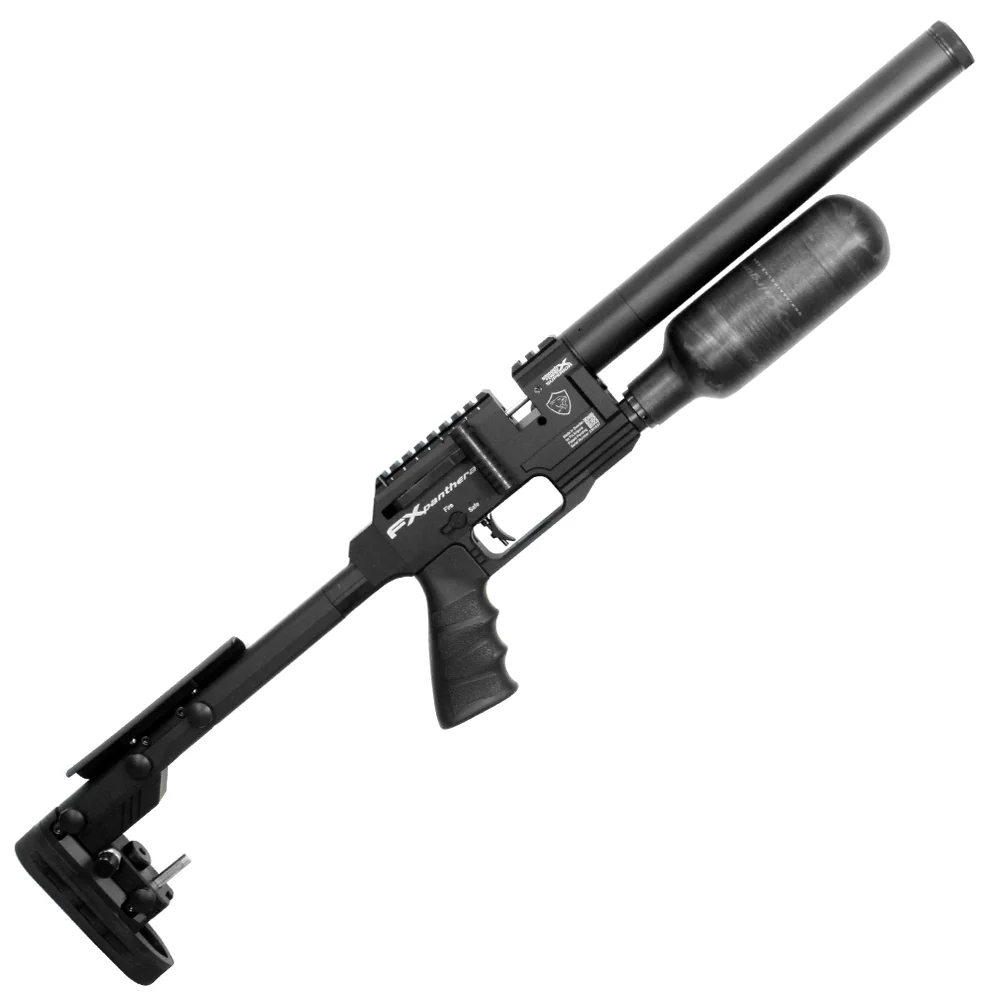
Field versatility is demonstrated when a compact, regulated, carbon-bottle hunting PCP is taken from the vehicle into real terrain. Moreover, practical value is revealed only after the rifle is carried, zeroed, and used under changing light, wind, and quarry conditions. Consequently, the following scenarios describe how the platform is employed by hunters, pest controllers, and recreational shooters who require a short, balanced, tunable air rifle rather than a long competition chassis.

Woodland and Hedgerow Stalking

Quiet movement through mixed woodland is supported by the short overall length and forward bottle placement. Therefore the rifle can be carried across the chest or at the trail without catching on brambles as readily as a longer barrel. In addition, weight remains modest, so fatigue is reduced during a two-hour stalk. Meanwhile, the reversible sidelever is operated without shifting grip, allowing a follow-up shot to be prepared while the supporting hand stays on the forend.

Shots at 25–45 yards are commonly taken from a kneeling or sitting position against a tree. Accuracy is maintained because regulated plenum pressure keeps velocity consistent after the first few shots of a fill. Furthermore, a compact moderator can be fitted to the threaded muzzle so that report is kept low enough that nearby quarry is less likely to be alerted. Ethical ranges are observed: small game is engaged only when a clear vital-zone shot is presented and a safe backstop exists.

Inclusive practice is possible because length of pull and cheek height can be adjusted before the stalk begins. Likewise, both left- and right-handed shooters can use the same rifle after the lever is reversed. As a result, mixed groups or family members of different statures can share one platform during a morning in the woods.

Typical woodland sequence

  • The rifle is filled the evening before and stored legally
  • Zero is confirmed at 30 yards with the chosen pellet or slug
  • The rifle is slung or carried muzzle-down while moving
  • A rest is taken against a trunk or bag when a target appears
  • The shot is released only after wind and distance are judged
  • The area is approached quietly after the shot to recover quarry

Pest Control Around Buildings, Allotments, and Farm Yards

Close-range pest work is a primary role for a short hunting PCP. Consequently, rats, feral pigeons, and rabbits around sheds or feed stores can be engaged from 15–35 yards. Moreover, the compact profile allows the rifle to be used from doorways, behind gates, or from a vehicle window without excessive swing. In the same way, the dual manometers let remaining air and regulator pressure be checked at a glance before a session begins.

Power can be set to a moderate level so that over-penetration through thin shed walls is reduced while still delivering humane energy on small pests. Additionally, high magazine capacity in the smaller calibers permits several shots before a reload is required. Therefore a single fill often lasts an entire evening of opportunistic control.

Safety is prioritized: shots are taken only when a solid backstop is confirmed and no livestock, pets, or people are in line. Hearing protection is still recommended even with a moderator. Inclusive language applies here as well—any authorized person who has been trained can operate the rifle once local laws and landowner permission have been observed.

Supported Precision Practice at Known Distances

Bench or bipod practice is used to confirm zero and to learn trajectory. A 30 MOA rail allows a scope to be mounted with extra elevation for 50–80 yard work. Furthermore, the two-stage trigger can be set to a lighter profile so that group size is not enlarged by a heavy pull. Consistency of the regulator is then tested by firing 10-shot strings and recording extreme spread.

Pellet or slug selection is refined during these sessions. Different weights are tried until the tightest group at the intended hunting distance is obtained. Likewise, moderator and cheek-weld changes are evaluated so that the same setup will be used in the field. As a result, confidence is built before live quarry is pursued.

Wind flags or natural indicators are observed so that hold-off can be practiced. Subsequently, the same data is applied when a rabbit sits at the edge of a field. Inclusive participation is encouraged: newer shooters can begin at 25 yards and move outward as groups tighten, while experienced shooters can test heavier slugs at longer ranges where legal.

Off-Hand and Improvised-Position Hunting

Not every shot is taken from a bench. Therefore off-hand, kneeling, and sitting positions are practiced until the compact balance of the front-mounted bottle is understood. Recoil is modest and travels straight back, so sight picture is recovered quickly. In addition, the textured grip and adjustable buttpad help keep the rifle from slipping when gloves are worn.

Improvised rests—fence posts, backpacks, or vehicle doors—are used when a formal bipod cannot be deployed. The side Picatinny rails accept a lightweight bipod if one is preferred. Meanwhile, the short barrel reduces the chance of the muzzle striking the ground when the shooter drops to a knee. Consequently, a humane shot can still be taken when quarry appears suddenly at close range.

Follow-up shots are prepared by cycling the sidelever without breaking cheek weld more than necessary. Magazine capacity in .22 and .25 is usually sufficient for a short sequence of pests. Ethical limits remain: if the first shot is uncertain, the shot is not taken.

FX Panthera Hunter - .22 PCP Air Rifle

Caliber-Specific Roles in Daily Use

Smaller bores are frequently chosen for high-volume practice and close pest work because ammunition cost is lower and shot count per fill is higher. Conversely, .25 and .30 configurations are selected when slightly more energy and a heavier projectile are desired for larger rabbits or longer shots across open ground. Barrel length increases only modestly with the larger calibers, so the rifle remains compact.

Trajectory differences are learned on the range and then applied in the field. A flatter .22 pellet path may be preferred in windy hedgerows, while a heavier .30 slug may be chosen when a solid hit on a larger pest is required. Power is then tuned so that the chosen projectile stays within legal limits for the location. Inclusive choice is preserved: shooters who prefer milder recoil can stay with .177 or .22, while those who need more terminal performance can step up after proper authorization.

Dawn, Dusk, and Low-Light Sessions

Many hunting opportunities occur at first and last light. The compact rifle is therefore carried during these windows because it can be brought to the shoulder quickly. A quality optic with good light transmission is mounted on the canted rail so that a clear sight picture is obtained in fading light. Furthermore, a small weapon light can be attached to a side rail when legal and appropriate for pest work around buildings.

Quiet cycling of the sidelever helps prevent alarm when animals are already on edge at dusk. Moderator use further reduces the chance that a second animal will be spooked. Safety is increased by confirming the target and what lies beyond it before the trigger is pressed—low light never excuses an unidentified shot.

Transport, Carry, and Rapid Deployment

The short packed length (especially if a folding-stock adapter is later fitted) allows the rifle to be placed in a vehicle or locked cabinet more easily than a full-length competition model. A hard case is commonly used for travel to the permission. Once on site, the rifle is uncased, a magazine is inserted, and a quick pressure check is made. Foster quick-disconnect filling means a top-up can be performed from a tank in minutes if needed.

Carry methods vary: a simple sling for woodland walks, or a ready hold for farm-yard work. Weight distribution from the forward bottle reduces muzzle rise and fatigue. Inclusive access is supported because the same adjustments that aid stalking also help shooters with shorter arms or different shoulder geometry.

Ethical Shot Placement, Recovery, and Session Close

Every practical scenario ends with the same obligations. A clear view of the vital area is required before the shot is released. After the shot, the area is approached carefully and quarry is recovered promptly. Wounded animals are followed up immediately. The rifle is then made safe, the magazine is removed, and remaining air pressure is noted for the next fill.

Maintenance after a wet or dusty session is performed so that the regulator, valve, and liner continue to perform. Inclusive responsibility applies to every user: legal storage, licensed power levels where required, and respect for landowner rules are non-negotiable.

When these practical scenarios are combined—stalking, pest control, supported practice, off-hand hunting, caliber matching, low-light work, transport, and ethics—the compact regulated hunting PCP is shown to be a working tool rather than a range-only curiosity. Consistent airflow, adjustable fit, and short handling characteristics allow the same rifle to be used from first light in the woods to last light around the barns, provided the shooter supplies the judgment, the zero, and the restraint that every air rifle demands.

Common questions are answered below so that owners and prospective buyers can understand how a compact, regulated, carbon-bottle hunting PCP is filled, tuned, carried, and used legally. Moreover, each reply is written to support safe, inclusive, and conversion-minded decisions without repeating a model name. Consequently, local laws should still be confirmed, because regulations differ by country and even by region.

Legal Power, Certificates, and Responsible Ownership

Is extra authorization needed when higher energy is required?

A Firearm Certificate or equivalent national permit is required in many jurisdictions once muzzle energy exceeds the unlicensed air-rifle limit. In the United Kingdom that threshold is commonly 12 ft-lbs; elsewhere similar distinctions exist between low-power and high-power airguns. Therefore the regulator and hammer-spring settings must be left at or below the legal limit unless the correct paperwork is held. Furthermore, storage, transport, and use rules that apply to firearms often apply to FAC-level air rifles as well. Inclusive compliance is expected of every shooter regardless of experience.

Can the same rifle be used both below and above the unlicensed limit?

Power is not permanently locked. Instead it is controlled by the AMP-style regulator, the hammer-spring wheel, and the external Quick Tune adjustments. Consequently a modest setting can be used for backyard practice where only low power is legal, while a higher setting can be selected later if a certificate has been granted. Meanwhile, velocity should be chronographed after every change so that the rifle remains inside the intended legal band.

What safety practices are expected in every scenario?

Eye and hearing protection are worn. A positive identification of the target and of what lies beyond it is made before the trigger is pressed. The rifle is stored unloaded, with the magazine removed, in a locked cabinet that meets local standards. Landowner permission is obtained before any pest or hunting session. Inclusive responsibility applies: guests and family members are given the same briefing as the primary owner.

Calibers, Projectiles, and Expected Performance

Which bore sizes are typically offered?

Four common calibers are produced so that ammunition cost, recoil, and terminal performance can be matched to the job. Smaller bores are often chosen for high-volume practice and close pest work. Larger bores are selected when a heavier projectile and more energy are desired for bigger rabbits or slightly longer field shots. Barrel length increases only modestly with the larger sizes, so overall compactness is largely preserved.

Are pellets, slugs, or both supported?

Both standard pellets and longer slugs can be used because the breech and magazine lid are designed to accept projectiles up to roughly 13 mm. A Smooth Twist X liner is fitted so that a consistent seal is formed around either type. Therefore a shooter can practice with inexpensive pellets and then switch to slugs for hunting if the liner and power setting have been matched. Group testing on the range remains the only reliable way to confirm which projectile the individual barrel prefers.

How many shots are usually obtained from one fill?

Shot count depends on caliber, projectile weight, and power setting. Higher counts are recorded with light pellets in the smaller bores; fewer shots are obtained when heavy slugs and FAC-level energy are used. A 300 cc carbon-fiber bottle filled to 250 BAR supplies the air. Dual gauges allow remaining bottle pressure and regulated plenum pressure to be read at a glance, so a session can be ended before velocity begins to fall.

What energies are commonly quoted?

Published figures vary with ammunition and hammer weight. Modest energies suitable for unlicensed use can be set on any caliber. Higher figures—often cited in the 40–105 ft-lb region depending on bore and slug—are available only where the law and the certificate allow. Chronograph verification after tuning is strongly recommended because listed maxima assume specific test projectiles.

Filling, Regulation, and Day-to-Day Operation

How is the rifle filled?

A Foster quick-disconnect port is used. A compatible probe or hose is attached, the bottle is charged to a maximum of 250 BAR / 3,625 PSI, and the connector is removed. Dust caps should be replaced immediately. Over-filling is avoided because seals and the regulator are designed around the stated working pressure. Inclusive practice includes teaching every authorized user the same fill routine.

Why are two pressure gauges fitted?

One gauge displays bottle pressure; the other displays the pressure held in the plenum by the regulator. Consistent plenum pressure is what keeps velocity stable from the first shot of a fill to the last usable shot. Therefore both readings are checked before a hunt or a range session. If regulated pressure drifts, the AMP-style regulator can be adjusted externally.

How is the trigger adapted to different tasks?

A two-stage adjustable trigger with selectable profiles is provided. A heavier hunting break can be chosen for gloved winter use; a lighter profile can be selected for bench practice. Changes are made without stripping the action. Dry-fire practice with an empty magazine (where the manufacturer permits it) helps the shooter learn the break before live ammunition is used.

Can left-handed shooters use the rifle comfortably?

The sidelever is reversible. An ambidextrous cheek piece and an adjustable buttpad are also fitted. Consequently length of pull and comb height can be set for either shoulder. Inclusive design therefore allows the same rifle to be shared by mixed-handed households after a few minutes of adjustment.

Field Use, Accessories, and Maintenance

Is the platform intended mainly for hunting or for the range?

Both roles are supported. The short length and forward bottle placement favor stalking and farm-yard pest control. The 30 MOA rail, consistent regulator, and tunable trigger also favor zero confirmation and longer practice strings. Many owners therefore keep one zero for 30-yard hunting and confirm a second hold or turret setting for 50–70 yard practice where legal.

Which accessories are most often added first?

A quality moderator is frequently fitted to the 1/2 UNF muzzle thread. Extra magazines, a bipod on the side rails, and a second carbon bottle via an adapter kit are common next steps. A folding-stock adapter can reduce packed length for vehicle transport. Optics with good low-light performance take advantage of the canted rail. None of these items is required for basic function; each simply extends the same action.

How should the rifle be carried in woodland?

A simple sling or a ready chest carry is used so that the muzzle stays controlled and the sidelever remains accessible. The compact overall length reduces snagging in brambles compared with a long-barreled competition rifle. When a shot presents, a tree, fence post, or kneeling position is used whenever possible. Off-hand shots are practiced in advance so that they remain ethical if no rest is available.

What maintenance is required after wet or dusty days?

The exterior is wiped dry. The fill port cap is checked. The bore is inspected and, if needed, cleaned according to liner recommendations—excessive brushing of a Smooth Twist X liner is usually avoided. Regulator and valve areas are kept free of grit. Periodic inspection of o-rings and the carbon bottle is performed as directed by the manufacturer. Inclusive ownership includes logging fill dates and any power changes so that the next user knows the current setup.

Can the rifle be used at dawn and dusk?

Low-light hunting is a typical application. A bright optic and, where legal, a compact weapon light on a side rail improve identification. The quiet sidelever and an optional moderator help prevent nearby animals from being alarmed after the first shot. Target identification remains mandatory; fading light is never accepted as an excuse for an uncertain shot.

Buying, Sharing, and Long-Term Suitability

Who is this style of rifle generally suited to?

Shooters who want a short, balanced hunting PCP rather than a long PRS chassis often find the layout comfortable. Newer shooters benefit from adjustable fit and moderate recoil. Experienced hunters appreciate the ability to raise power legally and to switch between pellets and slugs. Inclusive fit—reversible lever, adjustable comb and pad—means a wide range of body sizes and dominant hands can be accommodated.

What should be confirmed before the first live session?

Local airgun law, any certificate requirements, and landowner permission are verified. A chronograph check confirms that the current tune is legal. Zero is established at the intended hunting distance with the exact pellet or slug that will be used. Eye and ear protection are staged. A safe backstop is identified. Only then is the magazine loaded.

How is the rifle stored between trips?

Unloaded, magazine out, in a locked cabinet that meets local rules. The bottle may be left with a partial fill or emptied according to the owner’s preference and the manufacturer’s guidance; extreme temperature swings are avoided. Documentation of the current regulator setting is kept with the rifle so that the next outing starts from a known baseline.

Will one platform cover both close pests and longer field shots?

Within legal energy limits, yes. Close work around buildings is handled by the short handling characteristics and high shot counts of the smaller calibers. Slightly longer field shots are supported by the canted rail, consistent regulator, and the option of heavier projectiles in the larger bores. Ethical range is still defined by the shooter’s ability to place a vital-zone hit, not by the maximum energy printed on a chart.

When these answers are read together, a clear picture emerges: a compact regulated hunting PCP is filled to 250 BAR, tuned to a legal power band, zeroed with a chosen projectile, and then carried into woodland, farm yards, or the range. Accessories extend capability; they do not replace judgment. Inclusive, lawful use—shared adjustments, shared safety rules, and shared respect for quarry—remains the standard against which every session is measured.

FX Panthera Hunter - .22 PCP Air Rifle

Dawn, Dusk, and Low-Light Sessions

Many hunting opportunities occur at first and last light. The compact rifle is therefore carried during these windows because it can be brought to the shoulder quickly. A quality optic with good light transmission is mounted on the canted rail so that a clear sight picture is obtained in fading light. Furthermore, a small weapon light can be attached to a side rail when legal and appropriate for pest work around buildings.

Quiet cycling of the sidelever helps prevent alarm when animals are already on edge at dusk. Moderator use further reduces the chance that a second animal will be spooked. Safety is increased by confirming the target and what lies beyond it before the trigger is pressed—low light never excuses an unidentified shot.

Transport, Carry, and Rapid Deployment

The short packed length (especially if a folding-stock adapter is later fitted) allows the rifle to be placed in a vehicle or locked cabinet more easily than a full-length competition model. A hard case is commonly used for travel to the permission. Once on site, the rifle is uncased, a magazine is inserted, and a quick pressure check is made. Foster quick-disconnect filling means a top-up can be performed from a tank in minutes if needed.

Carry methods vary: a simple sling for woodland walks, or a ready hold for farm-yard work. Weight distribution from the forward bottle reduces muzzle rise and fatigue. Inclusive access is supported because the same adjustments that aid stalking also help shooters with shorter arms or different shoulder geometry.

Caliber

.177 (4.5 mm),, .22 (5.5 mm),, .25 (6.35 mm),, .30 (7.62 mm)

Reviews

There are no reviews yet.

Be the first to review “FX Panthera Hunter PCP”

Related Products

FAQ

  • Spring-Piston (Break-Barrel or Underlever): Cock by compressing a spring. Reliable, no external air source needed, but can have more recoil (“spring twang”) and require technique to shoot accurately.
  • Pre-Charged Pneumatic (PCP): Filled from a scuba tank, compressor, or pump. High power, low recoil, multiple shots per fill. Popular for precision and hunting.
  • CO₂: Powered by disposable cartridges. Good for pistols and semi-auto/repeaters, but performance drops in cold weather.
  • Multi-Pump Pneumatic: Hand-pumped to build pressure. Versatile but requires effort.
  • Gas Ram (Nitro Piston): Uses compressed gas instead of a metal spring. Smoother than traditional springers.

Calibers: Most common are .177 (4.5mm) for speed/flat trajectory and general use, and .22 (5.5mm) for better hunting knockdown power. Larger “big bore” (.25, .30, .357+) exist for hunting bigger game where legal.

Yes, many modern PCP and springers deliver enough energy for small game (rabbits, squirrels, birds) and even larger game in some areas. Muzzle energy (in ft-lbs or joules) matters more than velocity alone. Always match caliber, pellet weight, and energy to the game and check local hunting regs.

Treat every airgun as if it is loaded.

  • Always point the muzzle in a safe direction.
  • Keep your finger off the trigger until ready to shoot.
  • Know your target and what is beyond it (pellets can ricochet or travel far).
  • Wear eye protection.
  • Store unloaded, out of reach of children/untrained users, and ideally locked.
  • Never shoot at hard surfaces or in areas where pellets could escape your property.

Follow these rules strictly—airguns cause real injuries.

Laws differ dramatically by country, state/province, and even city. Always verify current local laws before buying, owning, transporting, or using an airgun. Age restrictions (often 18+) are common.

Examples (summaries only; check official sources):

  • UK: Air rifles ≤12 ft-lbs (16.3 joules) and pistols ≤6 ft-lbs generally do not require a license (FAC needed above that).
  • USA: Varies by state. Some treat powerful airguns as firearms; others do not. Many states now allow big-game hunting with air rifles.
  • Canada: Some airguns classified as firearms if they exceed velocity/energy thresholds.
  • Australia: Often treated as firearms; licensing/registration required in most states.
  • EU/France/Belgium/etc.: Varies; many allow low-power (<20J) guns freely to adults, with higher power needing permits. Germany has strict ~7.5J limits in some contexts.
  • Other countries: Some have no restrictions below certain energies; others ban or heavily regulate them.

Resources: Wikipedia “Air gun laws”, airgun forums, or official government sites. For travel, research transit laws carefully.

Consider:

  • Purpose: Plinking/backyard → lower power springer or CO₂. Hunting/precision → PCP.
  • Budget: Entry-level springers are affordable; PCPs need a fill system (extra cost).
  • .177 vs .22: .177 easier for beginners/targets; .22 better for hunting.
  • Power source: Convenience vs performance.
  • Test pellets in your gun—accuracy varies.

Buy from reputable dealers and consider warranties.

  • Clean barrel periodically (especially if accuracy drops) with patches and appropriate tools/solvents. Avoid over-oiling.
  • Lubricate moving parts and seals with airgun-specific oil (not general gun oil). Springers need piston seal oil occasionally.
  • Check screws, seals for leaks (PCP), and safety mechanisms regularly.
  • Store in a cool, dry place, ideally in a case. Avoid leaving cocked for long periods.

Follow your model’s manual. Basic care extends life significantly.

International shipping may be available for select products. Customers are responsible for understanding and complying with their local import laws and regulations before ordering.

Yes. Customers are required to confirm their order number through WhatsApp or Live Chat before orders are processed and shipped.

If local laws prevent shipment to your area, your order may be canceled and refunded according to our store policy.

Processing typically takes 1–3 business days after payment confirmation. Delivery times vary depending on destination, carrier, and product availability.


  • Wrong pellets for your barrel/caliber.
  • “Death grip” or poor shooting form (especially with springers—let the gun recoil naturally).
  • Loose scopes or mounts.
  • Ignoring safety or local laws.
  • Over-oiling or shooting with obstructions.


Pellets are the most common projectile (lead or lead-free). Match them to your gun, caliber, and purpose—test several brands as accuracy varies by barrel.

  • Domed (Round-Head): Best all-rounder. Excellent accuracy, ballistic coefficient, and energy retention. Ideal for target shooting, field target, and general hunting (e.g., JSB Exact, Air Arms Diabolo Field, H&N Field Target Trophy).
  • Wadcutter (Flat-Head): Clean holes in paper. Best for close-range target/plinking (under 20-25 yards).
  • Hollow Point: Expands on impact for better energy dump. Good for small game hunting (e.g., Predator Polymag, H&N Terminator).
  • Pointed: More penetration, but often less accurate than domed.
  • Slugs: Heavier, more aerodynamic for high-power PCPs at longer ranges (better for big game where legal).

Tips: Heavier pellets in .22/.25 for hunting (better momentum). Lighter in .177 for speed/flat trajectory. Always check head size fit (e.g., 4.51-4.53mm variants).

Muzzle energy (ft-lbs or joules) matters more than velocity. Ethical shots require precise placement (head/heart-lung) within effective range.

Rough Guidelines (adjust for distance, pellet, and local laws):

  • Small game (squirrels, rabbits, birds): 9-20+ FPE, .177/.22.
  • Medium (raccoons, etc.): 25+ FPE, .22/.25 recommended.
  • Larger game: 40-100+ FPE in .30+ calibers (up to big bore for deer/hogs where permitted).

PCPs dominate serious hunting due to power and shot count. Springers/gas rams work well for small game but require skill. Always prioritize clean kills and check seasons/species rules.

  • Barrel Cleaning: Use a pull-through kit or rod with patches. Avoid brushes that could damage rifling. Clean when accuracy drops or after 500-1000 shots.
  • Lubrication: Airgun-specific silicone oil for seals/O-rings (sparingly—excess causes dieseling in springers). Springers may need piston lube periodically.
  • PCP Specific: Check for leaks (soapy water test), monitor regulator/hammer settings, and keep fill systems clean. Don’t exceed rated pressure.
  • General: Tighten stock screws, inspect for wear, store properly. Chronograph shots to track consistency.

Common Issues:

  • Inconsistent velocity → dirty barrel, bad pellets, or seal problems.
  • Spring “twang” → tuning or proper hold.
  • Low power → worn seals or under/over-pumping.

Toggle Content

  • Scopes: Airgun-rated (hold zero under recoil). 3-9x or 4-12x common.
  • Fill Systems: Hand pumps, compressors, or tanks for PCPs.
  • Safety Gear: Eye/ear protection, targets with backstops.
  • Noise: Airguns quieter than firearms, but moderators help further.

Budget Tip: Start with a quality springer (~$150-400) before investing in PCP setup.

Airgunning offers endless depth—from backyard plinking to precision competition and ethical hunting. Prioritize safety, legality, and practice. If you want specifics (e.g., recommendations for a country, budget, hunting small game, or a particular type like PCP vs springer), let me know for more targeted info! Shoot responsibly.

Tuning improves accuracy, reduces noise/recoil, or increases power (within legal limits).

  • Springers: Lighter springs, guides, seals, or custom tuning kits for smoother shot cycle. “V-Mach” or similar professional tunes popular.
  • PCPs: Regulator tuning, hammer spring adjustments, valve work for efficiency and shot count. Some add electronic systems.
  • Accessories: Suppressors (often unregulated on airguns), better triggers, stocks, and scopes.

Caution: Check laws—power increases may reclassify your gun. DIY only if experienced; professional tuners recommended.

You must be at least 18 years old to purchase any airgun or related accessories from our store. By placing an order, you confirm that you meet the legal age requirements in your state or country.

Yes. Orders may require age verification before processing and shipping. In some cases, we may request a valid government-issued ID to confirm eligibility.


Translate »