FX Panthera Hunter Compact FAC – Compact PCP Performance Built for Precision
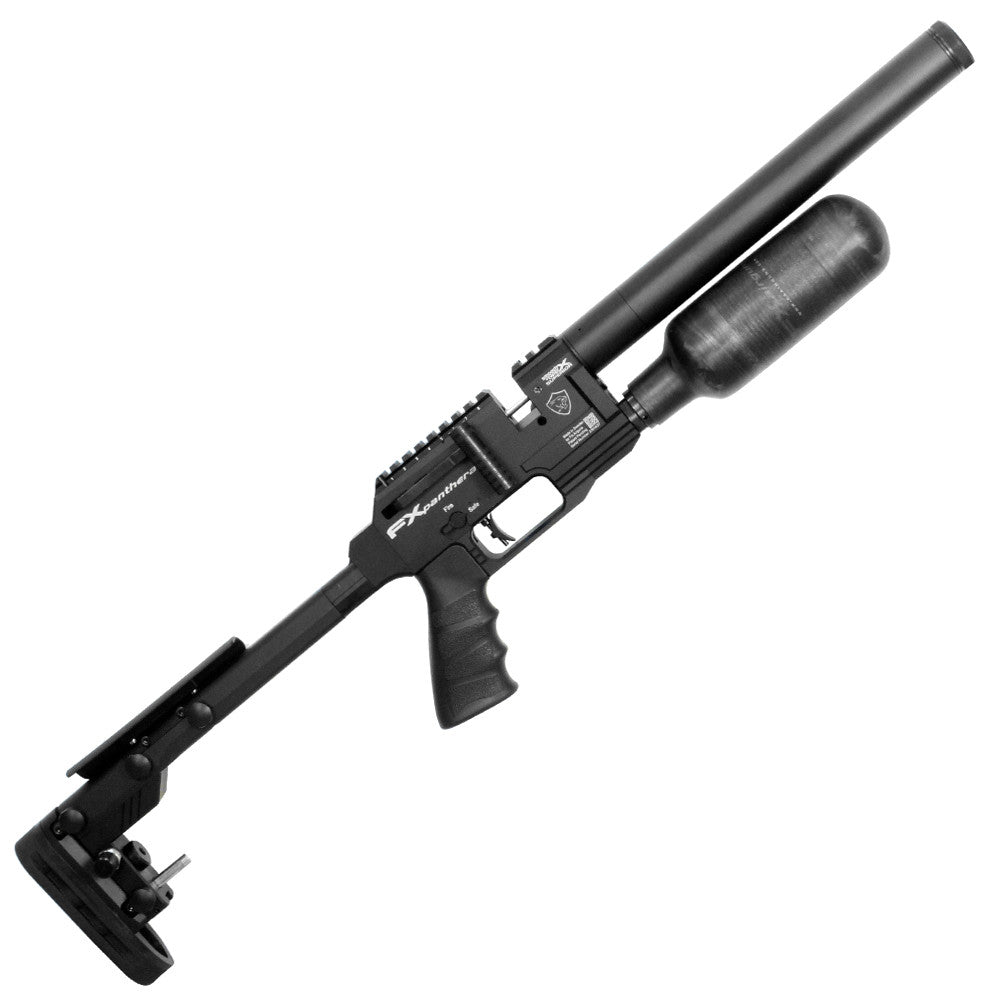
The FX Panthera Hunter Compact FAC has been developed for shooters who want substantial PCP performance in a shorter, highly adaptable platform. While the original Panthera platform was created around precision shooting and advanced airflow management, the Hunter Compact configuration has been refined for portability, pellet performance, adjustability, and practical handling.
Instead of excessive overall length being accepted, a compact architecture has been used. Consequently, easier transportation, improved manoeuvrability, and comfortable off-hand shooting can be achieved without the sophisticated tuning features associated with the Panthera platform being sacrificed.
Available across several calibre configurations, the FX Panthera Hunter Compact FAC can be selected to suit different shooting preferences and regional requirements. Furthermore, its externally adjustable systems allow performance to be refined while its modular construction provides considerable scope for accessories and future configuration changes.
Why Choose the FX Panthera Hunter Compact FAC?
Compact proportions have been combined with advanced FX Airguns technology so that a versatile rifle can be created for experienced PCP enthusiasts. Rather than being limited to one fixed configuration, the platform has been designed around adjustment.
Most importantly, the rifle is equipped with FX’s regulated airflow system and a high-power, short-impulse valve architecture. Because air delivery is carefully managed, consistent performance can be supported while the rifle remains remarkably compact.
At the same time, a carbon-fibre air bottle is positioned toward the front. Therefore, weight distribution is kept balanced for practical shooting positions.
Key Product Highlights
- Compact Panthera-based PCP platform
- Available in .177, .22, .25 and .30 calibre
- FX Superior STX barrel liner system
- 300cc carbon-fibre air cylinder
- Maximum fill pressure of 250 bar / 3,625 psi
- Externally adjustable AMP MkII regulator
- Quick Tune hammer-spring adjustment system
- Adjustable match trigger
- Adjustable rear stock and cheekpiece
- Reversible sidelever arrangement
- Full-length Picatinny optics rail
- Built-in angled optics rail
- High-capacity removable magazine
- Dual angled WIKA pressure gauges
- Built-in shroud system, subject to regional configuration
- Optional Panthera/Dynamic accessories available
Manufacturer specifications confirm that configurations and output may vary according to calibre and regional legislation.
Advanced FX Airflow Technology
At the centre of the FX Panthera Hunter Compact FAC is an airflow system engineered around efficient air release. A patented over-the-barrel plenum concept is incorporated into the Panthera architecture, while a short-impulse valve system is used to deliver the required air rapidly.
As a result, a considerable amount of performance can be extracted from a relatively compact PCP platform.
Moreover, the plenum specification is matched to the calibre configuration. The .177 and .22 versions are listed by FX with a 62cc Macro Plenum, whereas the .25 and .30 versions use the larger 120cc Macro XL Plenum.
Because these systems are integrated into a tunable platform, performance characteristics can be adjusted more precisely than would normally be possible with a basic fixed-output PCP rifle.
FX Superior STX Barrel System
Accuracy potential is supported by an FX Superior STX barrel liner. Depending on calibre, different barrel lengths are used so that compact dimensions can be maintained while appropriate performance can still be delivered.
The current manufacturer specification lists the Hunter Compact with barrel configurations extending from approximately 300mm to 395mm depending on calibre.
Rather than unnecessarily extending the rifle, barrel length has therefore been matched to the intended configuration.
Furthermore, the STX system provides the established modularity associated with modern FX platforms. Consequently, experienced users can build their rifle around particular ammunition preferences and shooting requirements.
Externally Adjustable Performance
One of the strongest features of the FX Panthera Hunter Compact FAC is the level of adjustment available.
An externally adjustable AMP MkII regulator is fitted. In addition, micro and macro hammer-spring adjustments are provided through the FX Quick Tune system.
Therefore, fine tuning can be approached systematically.
Rather than internal components needing to be accessed for every change, important performance controls are made more accessible. Nevertheless, adjustments should always be carried out according to the manufacturer’s instructions and applicable local regulations.
Adjustable Match Trigger
Trigger characteristics also play an important role in precision shooting.
For that reason, an adjustable match trigger is included. Trigger-blade reach and height can be altered, while the blade itself can also be rotated to achieve a preferred finger position.
Consequently, a more personalised trigger interface can be established.
Compact and Balanced Handling
Although power and tuning capability are important, handling has also been prioritised.
A 300cc removable carbon-fibre bottle is positioned toward the front of the rifle. This arrangement allows balance to be distributed differently from conventional rear-bottle PCP designs.
Meanwhile, the rear stock can be adjusted for length of pull. Its recoil pad can also be adjusted in height and angle, while the cheekpiece can be raised to support different head positions and optic setups.
Therefore, shooters with different body proportions can establish a more comfortable interface.
Additionally, an AR-style grip configuration is provided, further increasing ergonomic familiarity and customisation potential.
Ambidextrous-Friendly Configuration
The FX Panthera Hunter Compact FAC has also been designed with adaptable operation in mind.
Its sidelever is normally positioned on the right; however, the mounting system allows it to be relocated for left-handed operation.
Likewise, the cheekpiece uses an ambidextrous mounting arrangement.
As a result, the platform can be configured for a wider range of users rather than forcing everyone into exactly the same operating position.
High-Capacity Magazine System
A removable high-capacity magazine is supplied with the platform.
Magazine capacity varies by calibre, with the manufacturer listing:
- .177 – up to 21 shots
- .22 – up to 18 shots
- .25 – up to 16 shots
- .30 – up to 13 shots
A deeper magazine lid has also been designed to accommodate longer projectiles, with FX listing maximum ammunition length at approximately 13mm.
Consequently, the rifle provides flexibility for users working with compatible pellets or projectiles within manufacturer recommendations.
Optics and Accessory Mounting
A full Picatinny optics rail is integrated into the rifle.
Additionally, an angle is built into the rail to support optic adjustment at extended distances. FX lists earlier configurations with 20 MOA and notes 30 MOA on later production.
Numbered markings are also incorporated into the rail, allowing an optic position to be reproduced more easily after removal.
Moreover, the Panthera platform supports several optional accessory configurations, including additional air-bottle arrangements, accessory rails and compatible stock solutions.
FAC Performance Across Multiple Calibres
The FX Panthera Hunter Compact FAC is available in .177, .22, .25 and .30 calibre configurations.
Output varies substantially between versions.
According to FX’s published maximum-setting specifications, selected versions can reach approximately:
- .22 – up to 54 joules / 40 ft-lb
- .25 – up to 96 joules / 71 ft-lb
- .30 – up to 145 joules / 107 ft-lb
Actual output can differ according to ammunition, setup and national regulations. FX specifically states that rifles may leave the factory at lower power levels where legislation requires it.
Therefore, local licensing and ownership requirements should always be checked before purchase or use.
Air Capacity and Convenient Filling
A maximum filling pressure of 250 bar / 3,625 psi is specified.
Air pressure and regulator pressure can be monitored through dual angled WIKA gauges. As a result, essential pressure information remains visible during preparation and tuning.
Charging is completed through a rear Foster quick-disconnect connection, while a protective dust cap is provided.
Furthermore, additional bottle configurations can be incorporated through compatible FX Dynamic accessories where desired.
Built for Adaptability
Perhaps the defining characteristic of the FX Panthera Hunter Compact FAC is adaptability.
A compact PCP rifle is supplied as the starting point; however, the platform can subsequently be configured with compatible stock systems, rails, air-capacity upgrades and other accessories.
Therefore, one rifle can be adapted around different preferences rather than being permanently restricted to its original setup.
Combined with FX’s regulator technology, STX barrel system, adjustable trigger, carbon-fibre air cylinder and modular architecture, this flexibility makes the Panthera Hunter Compact particularly attractive to users who value sophisticated PCP engineering.
FX Panthera Hunter Compact FAC – Compact Engineering Without Compromise
The FX Panthera Hunter Compact FAC brings the engineering principles of the Panthera family into a noticeably shorter package.
Precision-oriented airflow management is retained. Extensive adjustment is provided. Multiple calibres are offered. Meanwhile, ergonomic features allow the rifle to be configured around individual shooting styles.
Consequently, the Hunter Compact delivers a strong combination of compact handling, modularity and high-output PCP capability.
For experienced airgun enthusiasts looking for an adjustable platform that can be configured rather than simply accepted as supplied, the FX Panthera Hunter Compact FAC provides an exceptionally flexible foundation.
Whether compact dimensions, calibre choice, adjustable ergonomics or advanced PCP technology is being prioritised, a carefully engineered solution has been provided within one versatile platform.
Please note: FAC classification, ownership rules, permitted muzzle energy and hunting regulations vary by jurisdiction. Local requirements should always be confirmed before ordering, possessing or using this rifle.
FX Panthera Hunter Compact FAC Calibres, Power and Accessories
The FX Panthera Hunter Compact FAC has been designed to provide considerable flexibility across several calibre configurations while retaining the compact architecture that defines this version of the Panthera platform. Different projectile preferences, shooting disciplines, legal requirements, and performance expectations can therefore be accommodated through an appropriate calibre selection.
Rather than one universal configuration being offered, the rifle can be selected in .177, .22, .25, and .30 calibre. Each calibre provides a different balance of projectile weight, energy, air consumption, trajectory characteristics, and magazine capacity. Consequently, buyers can choose a configuration that better reflects their intended lawful use.
FX lists the Hunter Compact with calibre-dependent specifications, including different barrel and plenum arrangements. Therefore, specifications should always be confirmed for the exact rifle configuration being ordered.
.177 Calibre
The .177 calibre FX Panthera Hunter Compact FAC provides the smallest projectile diameter within the range. Because lighter ammunition can be used, a relatively flat trajectory can be achieved with compatible pellet configurations.
Additionally, .177 remains familiar to many airgun shooters because of its widespread pellet availability and broad selection of projectile designs.
In the Hunter Compact platform, the smaller calibre also benefits from the Panthera’s regulated airflow architecture, adjustable trigger, STX barrel system, and externally accessible tuning controls.
Accordingly, users who prefer smaller-calibre precision shooting can still benefit from the sophisticated engineering incorporated throughout the larger Panthera family.
.22 Calibre
For buyers seeking a balance between compact-rifle efficiency and higher FAC energy, .22 calibre provides another important option.
FX publishes maximum output figures of approximately 40 ft-lb / 54 joules for certain .22 Hunter Compact configurations. However, actual factory output can vary according to market, projectile, configuration, and regional legislation.
As a result, published maximum figures should be treated as configuration limits rather than guaranteed output for every individual rifle.
The .22 magazine provides capacity for up to 18 rounds, giving the platform a useful combination of capacity and calibre versatility.
.25 Calibre
Moving upward, the .25 calibre FX Panthera Hunter Compact FAC provides greater projectile mass and considerably higher potential energy.
FX has published maximum figures of approximately 71 ft-lb / 96 joules for selected .25 configurations.
Furthermore, the larger calibre benefits from the Panthera architecture’s increased air-management capacity. The Hunter Compact specification uses calibre-dependent plenum arrangements, with the larger .25 and .30 versions receiving the larger plenum configuration.
The magazine accommodates up to 16 rounds in .25 calibre, allowing substantial capacity to be retained despite the larger projectile diameter.
Therefore, .25 represents an appealing middle ground for shooters who want greater FAC performance while still retaining relatively generous magazine capacity.
.30 Calibre
At the upper end of the standard Hunter Compact range, .30 calibre provides the greatest published energy potential.
FX lists maximum figures of approximately 107 ft-lb / 145 joules for certain configurations. Consequently, the .30 version represents a considerable step upward from conventional low-energy air rifles.
Its magazine holds up to 13 rounds, reflecting the larger diameter of compatible ammunition.
Because output at this level is significant, applicable licensing, ownership, transport, and use requirements should be checked carefully before purchase.
Understanding the FAC Configuration
The term FAC is generally used in markets where an air rifle exceeding a specified legal power threshold may require firearm certification, licensing, registration, or another form of regulatory approval.
Therefore, an FX Panthera Hunter Compact FAC should not automatically be assumed to have identical legal status everywhere.
For example, a rifle can be manufactured in a high-output configuration but subsequently be supplied at a lower factory setting for a particular country. FX itself notes that output can differ according to regional legal restrictions.
Consequently, the exact muzzle energy printed on the rifle documentation or supplied by an authorised distributor should be checked instead of assuming that every Panthera Hunter Compact produces its theoretical maximum power.
Regulated Power Delivery
Performance is supported by the FX AMP MkII regulator, which forms an important part of the rifle’s regulated pneumatic system.
In addition, FX incorporates Macro and Micro Power Adjusters into the Panthera architecture. These controls are designed to allow authorised configuration and refinement of the rifle according to manufacturer guidance.
Dual pressure gauges are also incorporated. Consequently, both relevant pressure information and the rifle’s remaining air supply can be monitored more conveniently.
A 300cc carbon-fibre bottle is fitted, while a maximum fill pressure of 250 bar is specified for applicable current configurations.
FX Panthera Hunter Compact Accessories
Another major advantage is provided by the extensive accessory ecosystem surrounding the Panthera platform.
Compatible accessory options may include:
- FX 300cc carbon-fibre bottle
- FX 480cc carbon-fibre bottle
- FX 580cc carbon-fibre bottle
- FX M-LOK weights
- FX Dynamic barrel weight
- Compatible Picatinny-mounted optics
- Scope rings and optic mounting hardware
- Compatible bipods
- Accessory rails and mounting hardware
- Replacement WIKA pressure gauges
- Compatible grips
- Alternative stock components
- Additional magazines
- Protective fill-port accessories
- Suitable rifle cases and storage solutions
FX officially lists 300cc, 480cc and 580cc carbon-fibre bottles among Panthera-platform accessory options, alongside M-LOK weights and the Dynamic barrel weight.
Optics and Mounting Flexibility
A Picatinny optics rail allows compatible scopes and mounting systems to be installed without requiring a proprietary optic interface.
Meanwhile, Panthera models also provide dedicated accessory mounting provisions, allowing compatible supporting equipment to be integrated into the platform. FX documentation identifies the Picatinny rail and accessory mounting points as core elements of the Panthera architecture.
Consequently, the rifle can be configured around different practical requirements while retaining a clean and integrated appearance.
A Versatile FAC Platform Across Four Calibres
Overall, the FX Panthera Hunter Compact FAC provides buyers with considerable choice.
The .177 configuration emphasises smaller-calibre efficiency, while .22 introduces an excellent balance between projectile size and available FAC performance. Moving to .25 provides substantially greater energy potential, whereas .30 delivers the highest published maximum output among the standard configurations discussed here.
Combined with the regulated air system, carbon-fibre bottle, adjustable ergonomics, removable magazine, Picatinny interface and broad accessory compatibility, each calibre is built upon the same highly configurable Panthera foundation.
Therefore, the most appropriate FX Panthera Hunter Compact FAC calibre can be selected according to legal requirements, preferred ammunition, desired energy range and intended lawful shooting application rather than simply choosing the largest available option.
Important: FAC classification and permitted air-rifle power differ between jurisdictions. Exact specifications, legal requirements and factory output should always be confirmed for the destination market before purchase or use.
Western Airguns, Benjamin PCP Rifles and Big-Bore Airgun Guide
People searching for air guns near me or comparing air gun dealers near me increasingly look beyond conventional pellet rifles toward PCP platforms, compact bullpups, hunting configurations, and American-designed big-bore systems. Whether the search begins with airguns usa, air rifle dealers, air rifle online, or airguns online, understanding the major platforms, calibers, operating systems, and intended applications makes it easier to compare available models responsibly.
Western Airguns and Big-Bore PCP Platforms
Among modern PCP manufacturers, western airguns has attracted considerable attention for compact designs and larger-caliber platforms. Searches such as western air guns, western air gun, western rifles, western firearm, western firearms, and western arms are commonly associated with people researching the Western Airguns product family.
Popular models include the western rattler, western rattler air gun, and western rattler bullpup. Buyers researching larger calibers may also encounter the western rattler 357, 357 rattler, 357 air rifle, .35 cal air rifle, western rattler 45, and western big bore bushbuck 45. These searches generally relate to powerful PCP platforms designed around larger projectiles rather than conventional small-caliber recreational pellet rifles.
The term western rattler bullpup for sale is frequently used by shoppers comparing availability, while western rattler bullpup amazon may appear in searches from users attempting to determine whether the platform is offered through major marketplaces. Availability, shipping rules, age restrictions, and licensing requirements should always be verified for the buyer’s jurisdiction.
Another recognizable Western platform is the western mordax. Related searches include western mordax pcp, western airguns mordax, western mordax venom, mordax venom, mordax airgun, mordax air gun, and mordax air gun price. People using these phrases are generally researching specifications, configurations, pricing, and availability rather than a traditional spring-powered rifle.
The western sidewinder is another platform frequently associated with the brand. Search phrases include western sidewinder compact, sidewinder gun, sidewiner, sidewinder length, and even technical searches such as sidewinder k7a-00008 manual. Product dimensions, magazine systems, air-cylinder capacity, operating pressure, and manufacturer documentation should be checked against the exact version because specifications can vary.
For customers researching very large-caliber Western models, bush buck and bushbuck air rifle price are common search phrases. Big-bore platforms are sometimes described broadly as a big bore pellet gun, big air rifle, big game airgun, or big game air guns. Their intended use, permissible energy level, and legal hunting applications vary significantly between regions.
Bullpup and PCP Air Rifle Technology
A bullpup air rifle places much of the action behind the trigger, allowing a comparatively long barrel to be packaged into a shorter overall platform. This layout has become particularly popular with pcp guns, pcp rifle, and pcp air rifles because compressed-air cylinders and magazines can be incorporated into relatively compact designs.
A compressed air rifle stores high-pressure air and releases a controlled amount during each shot. This system differs substantially from a break barrel pellet gun, where the barrel is typically used to cock a spring or gas-ram mechanism.
People researching an accurate pellet rifle or long range air rifle often compare regulator performance, barrel quality, projectile consistency, trigger characteristics, stock fit, shot count, and optics compatibility. Accuracy depends on the complete system rather than power alone.
Some shoppers also search for a semi automatic pellet gun or full auto air gun. These terms describe different cycling mechanisms and should not be treated as interchangeable. Regulations governing semi-automatic or fully automatic air-powered platforms may also differ from regulations covering manually cycled rifles.
Search phrases such as lethal air guns and steel penetrating full auto airgun sometimes appear online, but airguns should never be treated as toys or casually tested against unsafe targets. High-energy models can cause severe injury and should be used only with suitable backstops, eye protection, safe handling procedures, and full compliance with local law.
People also ask where do bullets land when shot in air. Projectiles fired upward eventually return toward the ground, and their landing point cannot be safely predicted. For that reason, an airgun or firearm should never be discharged vertically or in any direction without a verified safe impact area and backstop.
Other Western-Style and Specialty Airgun Searches
A number of additional terms appear alongside Western Airguns searches, including serpent arms, venom arms, desert scorpion pistol, atlas airguns, and lindstradt air gun. Similar searches may also include edgun west, edgunwest, and ed gun west, which are spelling variations commonly entered by people researching EDgun-related products and U.S. availability.
Search terms such as az air guns can relate to retailers, regional airgun communities, or businesses associated with Arizona. Because similar names can refer to different organizations, buyers should verify the manufacturer, retailer, warranty provider, and exact product before ordering.
A double barrel air gun or shotgun air rifle represents another specialized category that differs considerably from the typical single-barrel PCP rifle. Likewise, searches for a western arms shotgun may refer to products from a different manufacturer than Western Airguns, so model identification remains important.
Benjamin Air Rifles and PCP Platforms
Benjamin has a long history in the airgun market, which is why searches for a benjamin air rifle, benjamin air rifles, benjamin pellet gun, and benjamin pellet remain common among recreational shooters and hunters.
One of the best-known PCP families is the benjamin marauder. Search variations include benjamin marauder pcp and benjamin marauder air rifle. The Marauder platform is often researched by users comparing PCP rifles for target use, recreational shooting, and lawful pest-control applications.
Another widely searched model is the benjamin bulldog, a larger-caliber PCP platform. Queries such as benjamin bulldog 457 20 joules may refer to specific regional configurations, energy-restricted versions, or product information. Because power specifications can differ by market, purchasers should verify the manufacturer’s specifications and applicable regulations.
The benjamin prowler represents another area of interest for users comparing more traditional air-rifle configurations. Meanwhile, benjamin air rifle 22 break barrel is frequently searched by shoppers specifically looking for .22-caliber break-barrel designs.
Older or heavily used rifles may lead owners to search for benjamin air rifle repair. Seal condition, valves, pressure systems, triggers, barrels, stocks, and other components should be inspected or serviced according to manufacturer recommendations, particularly when dealing with high-pressure PCP equipment.
Airbows, Arrow Rifles and Alternative Air-Powered Platforms
Not every compressed-air hunting platform uses pellets. Searches for air bow, airbow, air bow rifle, arrow gun, benjamin airbow, and benjamin bow refer to systems designed to propel arrows using compressed air.
These products differ fundamentally from ordinary air pellet gun systems and should be selected according to their intended purpose and applicable local hunting regulations. Buyers should also confirm compatible arrows, pressure requirements, filling equipment, optics mounting options, and manufacturer-recommended accessories.
Air Pistols and Hunting-Oriented Searches
An air rifle and air pistol can serve very different roles depending on caliber, energy, operating system, and regional law. Searches such as hunting air pistol, air pistols for hunting, and co2 pellet guns often involve very different products.
CO2-powered models typically use replaceable carbon-dioxide cartridges, whereas PCP pistols rely on pre-charged compressed air. Local regulations determine whether either type can lawfully be used for hunting.
The term m357 can also appear when shoppers research revolver-style air pistols or products carrying similar model designations. Because this phrase can refer to multiple items, checking the manufacturer’s full model number is important before selecting accessories or replacement components.
Additional Airgun Types and Search Categories
The broader airgun market includes everything from a basic bb gun rifle and traditional spring-powered designs to sophisticated regulated PCP systems. Some buyers search for a pellet gun with silencer, although suppressor, moderator, and sound-reduction laws vary significantly between jurisdictions.
Others look for a hunting air rifle, big game air guns, or other high-powered platforms. The appropriate caliber and energy level depend on local law, target species where hunting is legal, shooting distance, projectile selection, and manufacturer recommendations.
A search such as air gun for semi truck may refer to an air-powered accessory, cleaning tool, pneumatic device, or another product entirely rather than an air rifle. Clarifying the intended equipment category is therefore important before purchasing anything based solely on that phrase.
Choosing Between Western, Benjamin and Other Airgun Platforms
Comparing products from western airguns, Benjamin, EDgun-related brands, and other PCP manufacturers requires more than comparing advertised power figures. Consider overall length, weight, caliber availability, magazine capacity, fill pressure, regulator design, shot count, trigger system, stock configuration, warranty coverage, parts availability, and manufacturer support.
A compact western sidewinder, larger western rattler, western mordax pcp, traditional benjamin marauder, big-bore benjamin bulldog, or another pcp air rifles platform may suit very different users and applications.
Responsible selection should therefore begin with the intended lawful use, followed by caliber, dimensions, power level, filling equipment, ammunition availability, service support, and local regulatory requirements. Whether someone begins their search with air guns near me, air gun dealers near me, air rifle dealers, or airguns online, careful comparison helps distinguish between recreational airguns, precision PCP rifles, hunting-oriented systems, specialty bullpups, and big-bore platforms.
Practical Use Scenarios
A compact regulated PCP rifle becomes especially valuable when versatility is required across several legitimate shooting environments. Instead of being designed around only one narrow discipline, this platform can be adapted for precision practice, pest-control work where legally permitted, farm and estate use, field shooting, equipment testing, and general recreational airgun activity.
Because the rifle combines compact dimensions with adjustable ergonomics, substantial air capacity, a regulated power system, and a modular accessory layout, it can be configured around different shooting positions and locations. As a result, the user can move from a controlled range environment to a field setting without needing an entirely different platform for every situation.
Its compact proportions also make the rifle easier to carry, store, transport, and position compared with many longer high-powered PCP rifles. At the same time, the regulated system is designed to support repeatable performance, which is particularly useful whenever consistent point of impact is important.
Precision Target Shooting at the Range
One of the most natural applications is precision target shooting.
At a formal airgun range or suitable private range, the rifle can be used for structured practice from benches, bags, bipods, or supported field positions. Because the stock, cheekpiece, trigger position, and optic setup can be adjusted, the shooter can establish a more repeatable body position before each shot.
That consistency matters.
When a rifle fits the shooter correctly, less movement is introduced during the aiming process. Consequently, attention can be focused on trigger control, breathing, sight picture, and wind conditions rather than on fighting an uncomfortable shooting position.
The integrated optics rail also allows an appropriate scope to be mounted according to the intended distance. A compact optic can be chosen for general use, while a higher-magnification optic can be fitted when paper targets, small reactive targets, or longer-distance precision shooting are being prioritised.
A bipod can also be added where compatible.
For bench shooting, this allows a stable front support to be created quickly. Rear bags may then be used to further stabilise the rifle, making it easier to assess ammunition consistency, group size, and zero.
Pellet Testing and Ammunition Evaluation
Another practical use involves evaluating different compatible pellets.
Every barrel can show preferences for particular projectile weights, shapes, and manufacturing tolerances. Therefore, controlled testing can be useful when determining which ammunition produces the most consistent groups.
A structured test can be carried out from a stable rest.
Different pellet types can be fired into paper targets at the same distance while variables such as wind, shooting position, and optic settings are kept as consistent as possible. Group size can then be compared.
Because the rifle uses a regulated pneumatic system, shot-to-shot consistency can be supported while ammunition is being evaluated.
This makes the platform useful for shooters who enjoy fine-tuning their equipment rather than simply using the first pellet available.
Once a suitable projectile is identified, the rifle can be zeroed around that ammunition and used consistently with the same configuration.
Recreational Airgun Shooting
Recreational shooting remains another important application.
On an approved range or lawful private property with a secure backstop, targets can be arranged at different distances to create an engaging shooting session.
Paper targets can be used for accuracy practice. Meanwhile, suitable reactive targets can provide immediate feedback when struck.
Different shooting positions can also be introduced.
For example, the user may practise from a bench first, then move to kneeling or supported standing positions. This creates a broader shooting experience and helps the shooter understand how the rifle behaves when support is reduced.
The compact design is particularly useful in these scenarios because the rifle does not require excessive space to handle comfortably.
When targets are repositioned or equipment is moved between shooting stations, the shorter overall package can also be easier to manage.
Farm and Agricultural Property Use
On farms and agricultural properties, air rifles are sometimes used for lawful pest management where local regulations permit.
In such environments, manoeuvrability becomes particularly valuable.
Farm buildings, storage areas, barns, and equipment zones can offer less operating space than a traditional open shooting range. A shorter rifle can therefore be easier to position without the barrel extending unnecessarily into surrounding structures or obstacles.
However, safe shooting conditions remain essential.
A proper backstop must always be present, and the user must confirm exactly what lies beyond the intended target area. Buildings, livestock, vehicles, roads, machinery, and people must be fully accounted for before any shot is considered.
The rifle’s adjustable configuration can be useful when work takes place from different supported positions.
For instance, a shooter may need to use a bench, vehicle-free observation point, gatepost, or purpose-built rest. Being able to adjust the rifle’s ergonomics helps establish a comfortable shooting position without excessive movement.
Legal Pest-Control Applications
Where authorised by local law, a suitably configured air rifle can also be used for pest species control.
This application places particular importance on accuracy, appropriate projectile selection, legal power limits, and responsible shot placement.
A rifle should never be selected purely because it produces the highest possible muzzle energy.
Instead, the calibre and power configuration should be matched to the lawful task, expected distance, approved quarry species, and applicable regulations.
This is one reason multiple calibre options can be beneficial.
A user may select a smaller calibre for certain applications, whereas a heavier projectile may be preferred where greater retained energy is legally and practically appropriate.
In every case, local hunting laws, landowner permission, licensing requirements, minimum or maximum power restrictions, species rules, and seasonal regulations must be checked beforehand.
Field Shooting and Outdoor Practice
Outdoor field shooting introduces different challenges from indoor or bench-based shooting.
Wind becomes more influential. Shooting positions may be less stable. Distances can vary, and the terrain may affect how comfortably equipment can be deployed.
A compact rifle can be advantageous because less bulk needs to be managed while moving between positions.
The platform can be carried in an appropriate case or sling system, depending on local regulations and compatible equipment. Once at the shooting position, a bipod or supported rest can be used to create a stable platform.
The adjustable stock can also help when moving between clothing layers.
For example, a shooter wearing a thicker outdoor jacket may prefer a slightly different length of pull from the setting used during warmer range sessions.
Having that flexibility can improve comfort without requiring permanent modification.
Longer-Distance Airgun Practice
When the rifle is configured appropriately and the shooting environment is controlled, longer-distance airgun practice can also be explored.
This type of shooting places greater emphasis on understanding trajectory, wind, projectile consistency, and optic adjustment.
Targets should be positioned against a safe backstop, and distances should be measured accurately.
The shooter can then observe how point of impact changes as range increases.
Such sessions can be particularly useful for learning the practical limits of a chosen projectile and rifle configuration.
Rather than assuming that a particular calibre will perform identically at every distance, the user can gather actual results from the rifle.
These observations can then be recorded in a shooting log.
Information such as distance, weather, pellet type, pressure level, and group size can be documented. Over time, a detailed performance record can be created.
Bipod-Supported Shooting
The accessory mounting system makes supported shooting another useful scenario.
When a compatible bipod is fitted, the rifle can be stabilised quickly on a bench or suitable ground surface.
This reduces some of the movement created during unsupported shooting and can make it easier to evaluate the rifle’s mechanical consistency.
A bipod is especially useful during extended practice sessions.
Instead of supporting the full forward weight of the rifle continuously, the front end can be rested securely while the shooter concentrates on sight alignment and trigger technique.
However, the shooting surface can affect stability.
Soft soil, uneven ground, or loose surfaces may allow bipod legs to shift. Consequently, the shooter should ensure that the support is planted securely before firing.
Shooting From a Bench Rest
Bench-rest shooting is particularly well suited to evaluating accuracy.
The rifle can be placed on a stable front support while the rear stock is controlled using a bag or other suitable rest.
This provides a highly repeatable position.
As a result, it becomes easier to distinguish shooter error from ammunition or equipment performance.
Bench shooting can be used for zeroing optics, comparing pellets, checking consistency, or confirming that an accessory installation has not changed point of impact.
When a scope has recently been removed and reinstalled, for example, a bench session can verify whether the previous zero has been maintained.
Zeroing and Optic Setup
Setting up an optic correctly is another practical use scenario.
After the scope and rings have been installed according to manufacturer recommendations, the rifle can be secured on a stable rest.
Initial shots can then be taken at a suitable short distance to confirm alignment.
Once the point of impact is on target, the zero can be refined at the intended primary shooting distance.
Because the optic rail allows different scopes to be fitted, the rifle can be configured around specific priorities.
A lightweight optic may be preferred for compact handling. Alternatively, a larger scope with finer reticle detail may be chosen for precision target shooting.
Whichever system is selected, proper mounting torque, eye relief, reticle alignment, and safe zeroing procedures should be observed.
Chronograph Testing and Performance Verification
Experienced PCP users may also use a chronograph to verify the rifle’s performance.
Chronograph testing can show projectile velocity and help confirm whether the rifle remains within applicable legal power limits.
This can be particularly important in jurisdictions where maximum muzzle energy is regulated.
When measurements are taken, the exact projectile weight should be recorded alongside the velocity.
The information can then be used to calculate muzzle energy accurately.
Testing should be performed using safe equipment placement and a reliable backstop.
Rather than relying on estimated power figures, chronograph data provides a direct measurement from the individual rifle and ammunition combination.
Training New Shooters Under Supervision
When properly configured and legally appropriate, the rifle may also be used to introduce an eligible new shooter to precision airgun shooting under responsible supervision.
For this purpose, controlled range conditions should be prioritised.
The rifle should be set up to fit the user comfortably, and all safety procedures should be explained before handling begins.
A stable bench position can help reduce unnecessary movement.
The shooter can then focus on the basic fundamentals of safe muzzle direction, trigger discipline, breathing, and sight alignment.
Because the stock and cheekpiece are adjustable, the rifle can potentially be adapted to different body dimensions more easily than a completely fixed platform.
Equipment and Accessory Evaluation
The platform can also be useful for users who enjoy comparing shooting accessories.
Different optics, mounts, bipods, grips, or support systems can be installed where compatible.
Each change can then be evaluated in a controlled setting.
For example, a shooter may compare two optic mounting heights to determine which provides better cheek alignment.
Similarly, different bipod positions may be tested to see how they affect balance.
The modular nature of the rifle means these changes can be approached systematically rather than permanently altering the core platform.
Compact Storage and Transportation
Practical use extends beyond firing the rifle itself.
A shorter overall length can simplify storage and lawful transportation.
A suitable padded or hard rifle case can be selected to protect the optic, barrel, air system, and external controls.
Because less case length may be required than with a longer rifle, storage in secure cabinets or dedicated transport compartments may also become easier.
All applicable transport laws should still be followed.
The rifle should be unloaded during transportation, and any requirements relating to cases, locks, cylinders, certificates, or vehicle storage should be observed.
Versatility Across Different Shooting Environments
The strongest practical advantage is its ability to operate across several legitimate use cases without requiring a completely different rifle for each one.american made air rifles
It can be configured for range shooting in one session and then prepared for lawful field use at another time.
Accessories can be changed.
Optics can be selected according to distance.
Stock adjustments can be altered according to shooting position.
Compatible ammunition can be tested until a reliable combination is found.
Most importantly, the rifle can be adapted without abandoning the fundamental characteristics that make the platform attractive in the first place: compact handling, regulated performance, adjustability, and modularity.airrifle
For shooters who value one configurable PCP platform capable of supporting recreational, precision, field, agricultural, and equipment-testing applications, this type of compact regulated rifle offers considerable practical flexibility when used responsibly and within local law.


Reviews
There are no reviews yet.