FX Dreamline Tactical – Premium Modular PCP Air Rifle with Precision Engineering and Customisable Design
FX Dreamline Tactical – Advanced Performance, Tactical Styling, and Exceptional Versatility
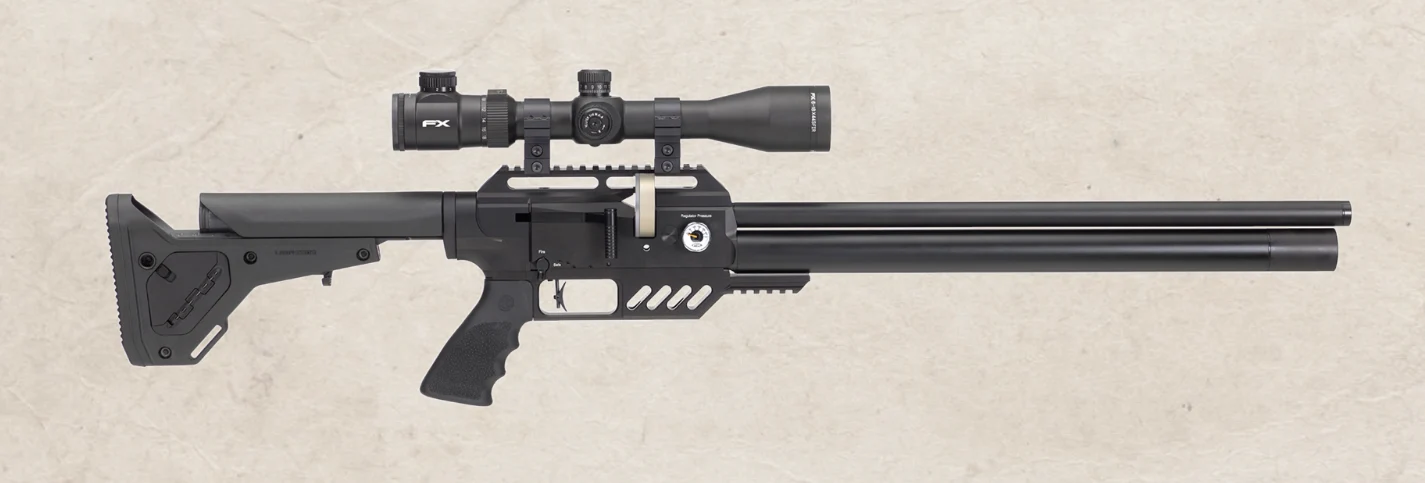
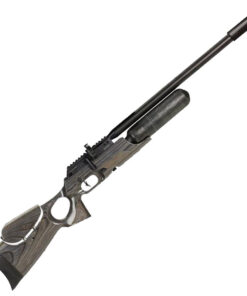
The FX Dreamline Tactical has been developed to deliver an exceptional combination of precision engineering, modular versatility, modern tactical styling, and dependable shooting performance. Through its innovative construction, the advanced technology associated with FX Airguns has been incorporated into a lightweight and adaptable pre-charged pneumatic (PCP) air rifle.
Unlike conventional air rifles, greater flexibility has been introduced through a modular platform that can be configured according to individual shooting preferences. Furthermore, precision-oriented components have been integrated to support consistent performance during recreational target shooting and other lawful airgun activities.
Innovative Tactical Design and Customisable Construction
A distinctive tactical appearance has been achieved through the incorporation of an AR-compatible receiver arrangement. Consequently, opportunities for personalisation have been provided through compatible grips, rear stocks, and other suitable components.
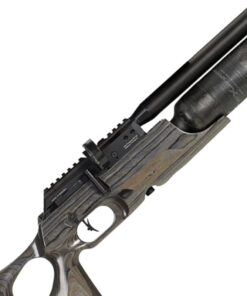
Additionally, a full-length Picatinny optics rail has been included to accommodate appropriate sighting equipment. Through this arrangement, optical accessories can be mounted without compromising the streamlined appearance of the rifle.
Moreover, the lightweight construction has been developed to promote convenient handling during extended target practice.
Depending on the selected configuration, different barrel lengths and compressed-air reservoir arrangements may be supplied. Therefore, individual preferences concerning portability, appearance, and handling can be accommodated.
The Tactical model is normally supplied without a rear stock and buffer tube, allowing compatible furniture to be selected separately.
FX Dreamline Tactical – Advanced Engineering and Technical Features
FX Smooth Twist X Barrel Technology
At the centre of this advanced air rifle, the renowned FX Smooth Twist X (STX) barrel system has been incorporated to support repeatable projectile performance.
Through its interchangeable barrel-liner construction, additional flexibility has been introduced to the Dreamline platform.
Furthermore, the barrel assembly has been manufactured using precision-oriented engineering principles associated with the FX product range.
Several important advantages have been provided through this innovative system:
- Precision-oriented construction: Consistent barrel manufacturing standards have been prioritised.
- Interchangeable liner technology: Compatible barrel liners can be fitted according to manufacturer specifications.
- Modular compatibility: The barrel system has been incorporated into the wider Dreamline platform.
- Match-grade design: Performance characteristics suited to precision target activities have been emphasised.
Consequently, the barrel system has become one of the most recognisable characteristics of the Dreamline family.
Adjustable Match Precision Regulator
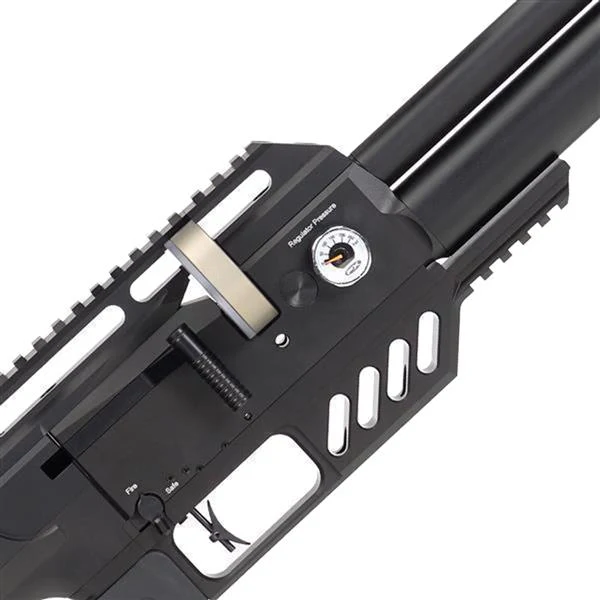
An Adjustable Match Precision (AMP) regulator has been incorporated into the air-management system.
Through this regulator, compressed-air delivery is controlled to support consistency between shots.
Additionally, an externally accessible regulator adjustment arrangement has been provided. However, all adjustments should be undertaken in accordance with manufacturer instructions and applicable legal restrictions.
Because consistent air pressure is important in PCP technology, significant attention has been directed toward regulator construction and dependable operation.
Furthermore, separate pressure gauges are provided on listed configurations for monitoring reservoir pressure and regulator pressure.
Smooth Sidelever Cocking Mechanism
A convenient sidelever cocking arrangement has been integrated to promote smooth mechanical operation.
With this system, magazine indexing has been coordinated with the rifle’s cycling mechanism.
Moreover, the sidelever arrangement has been designed to reduce unnecessary complexity during routine handling.
The removable rotary magazine has also been manufactured from durable polymer material, providing an established feeding arrangement across the Dreamline family.
Adjustable Match-Grade Trigger
A precision-oriented adjustable trigger has been included as another important component of the rifle’s construction.
Through its match-grade design, a controlled trigger response has been prioritised.
Furthermore, the adjustment capability has been incorporated to accommodate permitted setup preferences, with all changes required to remain within manufacturer recommendations.
The trigger mechanism has also been combined with a manual safety system, although safe handling procedures must always be followed independently of any mechanical safety device.
FX Dreamline Tactical – Highlighted Product Specifications
The following manufacturer-listed features should be considered when reviewing the available configurations:
- Manufacturer: FX Airguns
- Model: FX Dreamline Tactical
- Airgun Type: Pre-Charged Pneumatic (PCP)
- Operating System: Compressed Air
- Barrel Technology: FX Smooth Twist X (STX)
- Regulator: Adjustable Match Precision (AMP)
- Cocking Mechanism: Sidelever Action
- Magazine: Removable Rotary Magazine
- Trigger: Adjustable Match-Grade Trigger
- Safety Mechanism: Manual Safety
- Optics Mounting: Picatinny Rail
- Grip Arrangement: AR-Compatible; Hogue Pistol Grip Listed
- Rear Stock: Compatible Rear Stock and Buffer Tube Selected Separately
- Available Calibres: .177, .22, .25, and .30, Subject to Configuration
- Listed Barrel Lengths: 380 mm, 480 mm, 500 mm, and 600 mm, Depending on Variant
- Maximum Listed Fill Pressure: 230 BAR / Approximately 3,300 PSI
- Air Reservoir: Cylinder and Bottle Configurations
- Pressure Monitoring: Reservoir and Regulator Pressure Gauges
- Construction: Modular Tactical Platform
Specifications, included components, and legal power ratings may vary by market, production version, and individual configuration.
Lightweight Construction and Comfortable Handling
Balanced Design for Recreational Shooting
Through its comparatively lightweight construction, the platform has been developed with handling convenience in mind.
For the manufacturer-listed Tactical configuration, an approximate weight of 2.1 kg without a rear stock has been specified. However, the completed rifle’s weight will depend on the selected stock, optics, reservoir, and other fitted components.
Additionally, the modular arrangement has been designed to accommodate different ergonomic preferences.
Through its adaptable construction, the rifle can be configured for a range of lawful sporting and recreational environments.
Practical Storage and Transport Considerations
A relatively compact base configuration has been made available within the Tactical range.
Consequently, transportation and storage requirements can be considered according to the completed rifle’s dimensions.
Nevertheless, suitable locking storage arrangements should always be used, and the rifle should be transported unloaded in accordance with local regulations.
Premium Construction and Long-Term Ownership
Durable Materials and Refined Manufacturing
High-quality materials have been incorporated throughout the Dreamline platform to support dependable mechanical performance.
Additionally, an emphasis has been placed on precision manufacturing, modular construction, and serviceability.
Through the use of established FX component systems, a consistent engineering approach has been maintained across several Dreamline configurations.
Furthermore, routine inspection and maintenance requirements have been addressed through the availability of manufacturer servicing information.
Maintenance and Responsible Ownership
Regular external inspections should be conducted to identify wear, damaged seals, loose fittings, or other maintenance concerns.
Likewise, the compressed-air system should be filled only with suitable equipment and in accordance with the specified pressure limits.
Internal servicing and regulator-related work should be performed by suitably qualified personnel.
Additionally, compatible magazines and other components should be selected according to the manufacturer’s model-specific guidance.
Why the FX Dreamline Tactical Stands Out
An attractive combination of sophisticated construction, modular adaptability, and advanced PCP technology has been achieved with this model.
Unlike traditional fixed-configuration air rifles, a considerable degree of personalisation has been supported through the Dreamline concept.
Moreover, the interchangeable barrel-liner system, precision regulator, rotary magazine, and adjustable trigger have been brought together within one integrated platform.
Through its AR-compatible arrangement, additional configuration possibilities have also been provided.
For recreational target enthusiasts, particular value may be found in the combination of modern aesthetics, manufacturer-supported modularity, and precision-focused engineering.
Furthermore, its relationship to the wider FX Dreamline family has established a recognisable technical foundation.
Conclusion – FX Dreamline Tactical Air Rifle
The FX Dreamline Tactical PCP Air Rifle has been engineered as a versatile, precision-oriented platform featuring modern tactical styling and adaptable construction.
Through the integration of the FX Smooth Twist X barrel, AMP regulator, adjustable trigger, and sidelever magazine system, a comprehensive selection of advanced PCP features has been provided.
Additionally, the AR-compatible receiver arrangement has been designed to accommodate individual configuration preferences.
Overall, the FX Dreamline Tactical can be recognised for its modular engineering, refined manufacturing, and distinctive design within the premium airgun category. For enthusiasts evaluating a configurable sporting air rifle, its technical features and manufacturer-supported options provide a useful basis for comparison.
Snowpeak Airguns, PCP Rifles, Air Pistols and Umarex Airguns
For shooters researching Snowpeak airguns, Snowpeak Sports, and the wider Snowpeaks product range, there are many PCP rifles, air pistols, and shooting accessories to consider. Popular searches include the Snowpeak AP900, Snowpeak AP900B PCP air rifle, Snowpeak MAX 1, Snowpeak MAX 1 price, Snowpeak PP750, PP750, Snow Peak PP750, and PP750 air pistol. Buyers also regularly compare models such as the Snowpeak P35, P35, P 35, PCP P 35, Snowpeak P35X, P35X, P35X PCP, and Snowpeak P35 vs P35X.
Other Snowpeak models attracting attention include the Snow Peak PP20, Snowpeak PP20, Snowpeak M25, M25 rifle, M-25, M25 weapon, Snowpeak M60, Snowpeak M60B, M 60B, rifle M60, rifle M50, and M50 rifle. Searches such as Snow Peak brand origin are also common among buyers who want to understand the manufacturer before choosing a rifle or pistol.
Snowpeak PCP Models and Related Airgun Searches
The PCP category covers everything from compact pistols to full-size hunting and target rifles. Searches frequently include PR900 Gen 3, CR650, SR 1000X, T Rex 6000, and pistolet PCP Arcea-Snowpeak Onix Sport. People comparing pneumatic platforms may also search what is a PCP airgun, air gun, air rifle, pellet pistol, air gun accessories, 9mm pellet, and pellet 9mm.
Some search phrases overlap with firearm terminology even when shoppers are researching airgun products. These include rifle M60, how much did the M60 weigh, rifle M50, M50 rifle, M25 weapon, and snowfall gun. Therefore, model specifications should always be checked carefully so that a historical firearm search is not confused with a modern sporting airgun product.
Umarex Airguns, Air Rifles, Pistols and PCP Platforms
Alongside Snowpeak products, Umarex USA, UmarexUSA, Umarex airguns, and Umarex air rifles are widely searched by recreational shooters, target shooters, and PCP enthusiasts. The Umarex range includes PCP rifles, CO₂-powered platforms, break-barrel pistols, BB guns, airsoft replicas, and large-caliber airgun systems.
Popular PCP searches include Umarex Notos, Umarex Notos Carbine, Umarex Gauntlet, Umarex Gauntlet 2, Umarex Gauntlet 30, Umarex Zelos, Umarex Origin, Umarex Komplete, and Umarex Komplete NCR .22. Hunters researching larger airgun platforms may also encounter the Umarex Hammer, Umarex Hammer .50 caliber, Umarex Hammer Carbine, Umarex Primal 20, and Umarex AirSaber.
Umarex Pistols, BB Guns and T4E Models
For handgun-style platforms, popular searches include Umarex BB gun, BBgun, BB gun pistol, metal BB gun, Umarex TR50, Umarex HDR 50, Umarex T4E, Umarex T4E Smith, Umarex Smith, and Umarex P2P DR50 how many joules.
Glock-style replicas remain another major category. Search terms include Glock BB gun, Glock 19 BB gun, Umarex Glock 19, Umarex Glock 19X, Umarex Glock 19 Gen3 .177 caliber BB gun air pistol, Umarex Glock 17, Umarex Glock 17 Gen 5, Umarex Glock, airsoft Glock, airsoft Glock 19, Glock 17 airsoft, and Glock airsoft gun.
Other replica and recreational searches include Umarex MP40, Umarex MP5, Umarex Legends, Umarex HK Heckler, Umarex shotgun, and airsoft pistol.Umarex DX17.
Break-Barrel and Sporting Umarex Airguns
Shooters looking for spring or gas-piston platforms frequently research the Umarex Trevox, loading Umarex Trevox break barrel .177, Umarex pistol break barrel, Umarex Fusion 2, Umarex Synergis Elite, and Amazon Umarex Browning 800 Express. These platforms provide alternatives for people who want an airgun without relying on a high-pressure PCP charging system.
Additional searches across the Umarex catalog include Umarex H, while broader terms such as air rifle, pellet pistol, air gun, and air gun accessories help buyers compare platforms, ammunition, optics, filling equipment, targets, cases, and other shooting equipment.
Whether the focus is a Snowpeak M60, Snowpeak M25, Snowpeak P35X, Snowpeak PP750, Snowpeak MAX 1, Umarex Notos, Umarex Gauntlet 2, Umarex Origin, or Umarex Hammer Carbine, buyers should compare caliber, operating system, power level, dimensions, intended use, and local regulations before selecting an airgun.
FX Dreamline Tactical – Calibres, FAC Power, Recommended Scopes and Essential Accessories
The FX Dreamline Tactical has been engineered to accommodate different shooting preferences through an innovative modular PCP platform. Multiple calibre options, regulated compressed-air technology, and compatible optical accessories have been incorporated into its design. Consequently, considerable flexibility has been provided for recreational target shooting, precision practice, and other lawful sporting applications.
Furthermore, both standard and higher-powered FAC configurations may be encountered, depending on the country, legal requirements, and selected model. Through its advanced Smooth Twist X barrel system, compatibility with manufacturer-approved barrel configurations has also been established.
Available Calibres for the FX Dreamline Tactical
Four primary calibre options have been listed by FX Airguns. Each calibre has been associated with different projectile characteristics, magazine capacities, and manufacturer-specified performance figures.
.177 Calibre (4.5 mm) – Precision Target Shooting
The .177 configuration has traditionally been preferred for paper targets, recreational competitions, and precision-oriented shooting activities. Through its smaller pellet diameter, a broad selection of target-grade ammunition has been made available.
Additionally, a magazine capacity of 22 pellets has been specified for this calibre. For shooters interested in structured target practice, the widespread availability of .177 pellets may be considered an important advantage.
.22 Calibre (5.5 mm) – Versatile Sporting Performance
The .22 configuration has been widely recognised as a versatile option within the sporting airgun market. A variety of pellet designs and weights has been developed for use with compatible air rifles.
Furthermore, an 18-shot rotary magazine has been specified. Through this configuration, recreational target enthusiasts have been provided with another option for evaluating accuracy, pellet compatibility, and shooting consistency.
.25 Calibre (6.35 mm) – Larger-Calibre Sporting Configuration
The .25 option has been incorporated for customers seeking a larger projectile diameter. Accordingly, a compatible Smooth Twist X barrel configuration is required.
A 16-shot magazine capacity has been listed for this model. Additionally, the larger calibre should be considered alongside the rifle’s certified power rating and relevant ownership regulations.
.30 Calibre (7.62 mm) – Specialist Configuration
The .30 version has been included among the manufacturer’s listed calibre options. Through its larger diameter, a specialist configuration has been made available for markets where ownership and use are permitted.
A 13-shot magazine capacity has been specified. However, actual availability should be confirmed with an authorised supplier because regional restrictions and model specifications may differ.
FAC Versions and Legal Power Classifications
The term FAC (Firearm Certificate) is commonly encountered in the United Kingdom when discussing air rifles exceeding the applicable licensing threshold.
In England and Wales, an air rifle capable of exceeding 12 ft-lb of muzzle energy generally requires a firearm certificate. Different legal arrangements apply in Scotland and Northern Ireland.
Therefore, legal classification must be verified according to the location in which the rifle will be possessed and used.
For the FX Dreamline Tactical, both reduced-power and full-power configurations have been associated with the wider Dreamline product family.
Importantly, FAC classification should not be interpreted as a universal power specification. Instead, the actual energy rating must be established through the specific model’s manufacturer documentation and applicable certification requirements.
Manufacturer-Listed Power and Energy Specifications
The following maximum performance figures have been published for the standard Dreamline Tactical configurations:
- .177 / 4.5 mm: Up to 24 joules (approximately 18 ft-lb).
- .22 / 5.5 mm: Up to 41 joules (approximately 30 ft-lb).
- .25 / 6.35 mm: Up to 60 joules (approximately 45 ft-lb).
- .30 / 7.62 mm: Configuration-dependent; an official figure has not been consistently specified for the standard Tactical version.
These figures represent published maximum values rather than guaranteed performance for every individual rifle.
Furthermore, a maximum fill pressure of 230 BAR, approximately 3,300 PSI, has been specified. Through the AMP regulator, consistent air-pressure management has been incorporated into the rifle’s operation.
Actual performance may be affected by factory settings, regional restrictions, projectile selection, and production configuration.
Recommended Scopes for the FX Dreamline Tactical
Hawke Vantage 3-9×40 AO Rifle Scope
The Hawke Vantage 3-9×40 AO can be considered a practical optical choice for recreational target shooting. Through its adjustable objective, parallax correction has been provided for suitable shooting distances.
Additionally, the 3-9× magnification range has been designed to accommodate different target-viewing preferences.
Hawke Airmax 4-12×40 AO Rifle Scope
For precision-oriented airgun enthusiasts, the Hawke Airmax 4-12×40 AO may be considered.
Through its higher magnification range, additional detail can be observed during supported target activities. Furthermore, an airgun-oriented reticle design has been incorporated into selected Airmax configurations.
Element Optics Helix 4-16×44 FFP
The Element Optics Helix 4-16×44 FFP represents another premium optical option.
A first focal plane reticle has been incorporated, allowing reticle subtensions to remain proportional as magnification is changed. Additionally, its adjustable optical features may be appreciated during precision target practice.
Important: All recommended scopes should be paired with suitable Picatinny-compatible mounts, with the correct tube diameter, ring height, and eye relief verified before purchase.
Essential Accessories for the FX Dreamline Tactical
Recommended Equipment and Maintenance Accessories
The following accessories may be considered for safe operation, routine care, and convenient storage:
- PCP Air Compressor: A properly rated compressor may be selected for compatible compressed-air filling requirements.
- High-Pressure Hand Pump: A manufacturer-approved PCP hand pump may be considered where appropriate.
- Certified Air Cylinder: A suitable pressure-rated filling cylinder can be used with approved connections.
- Compatible Magazine: An original or manufacturer-approved replacement magazine may be selected for the correct calibre.
- Picatinny Scope Rings: Properly sized rings are required for compatible optical installation.
- Protective Rifle Case: A padded and lockable storage case is recommended for transportation and security.
- Barrel Cleaning Equipment: Manufacturer-approved cleaning products should be used for routine maintenance.
- Chronograph: A suitable measuring instrument may be used to verify muzzle energy and legal compliance.
- Safety Glasses: Appropriate protective eyewear should be worn during shooting activities.
- Maintenance Seal Kit: Genuine FX replacement seals may be obtained for qualified servicing.
Final Considerations for Calibre, Power and Accessories
Through the combination of multiple calibre options, regulated PCP technology, and modular construction, the FX Dreamline Tactical has been established as a highly adaptable sporting air rifle.
Moreover, a wide selection of compatible optics, filling equipment, and maintenance accessories can be considered according to individual requirements.
Ultimately, the most appropriate configuration should be determined by lawful intended use, local licensing conditions, manufacturer specifications, and personal shooting preferences.
Frequently Asked Questions (FAQs)
1. What makes this PCP air rifle different from conventional air rifles?
A combination of modular engineering, sophisticated compressed-air technology, and precision-focused components has been incorporated into this advanced sporting platform. Unlike conventional spring-powered alternatives, compressed air is used to propel each pellet.
Furthermore, a regulated air-delivery system has been introduced to promote consistency between shots. Through its modular construction, compatible components can also be selected according to individual preferences.
Additionally, a sidelever mechanism and removable rotary magazine have been integrated to provide convenient mechanical operation. Consequently, the platform has been recognised for its modern construction and adaptable design.
2. Is this air rifle suitable for beginners?
Although the platform has been developed with advanced features, responsible beginners may also find its operating characteristics approachable when appropriate training and supervision are provided.
However, familiarity with compressed-air systems, safe handling procedures, and local regulations should be established before use.
Furthermore, guidance should be obtained from a qualified instructor or experienced airgun professional. Through structured training, appropriate handling habits can be developed.
For inexperienced users, particular attention should be given to safe storage, muzzle direction, trigger discipline, and the manufacturer’s operating instructions.
3. What type of power system is used?
A pre-charged pneumatic operating system has been incorporated. Through this technology, compressed air is stored within a pressure-rated reservoir and released in controlled quantities during operation.
Unlike spring-piston designs, no spring-powered compression cycle is required for each shot.
Additionally, a pressure-regulation system has been included to support consistent air delivery.
The reservoir must be filled using suitable equipment designed for PCP applications. Manufacturer pressure limitations must always be observed, and incompatible filling equipment should never be connected.
4. Is a firearm certificate required for ownership?
Licensing requirements are determined by the jurisdiction, certified muzzle energy, and applicable firearm legislation.
In England and Wales, air rifles capable of exceeding the applicable 12 ft-lb threshold are generally subject to firearm certificate requirements. Separate regulations apply in Scotland, Northern Ireland, and other countries.
Therefore, the relevant legal classification should be verified before purchase, possession, or transportation.
Additionally, imported or modified configurations may be subjected to different restrictions. Appropriate documentation should be obtained from authorised dealers or licensing authorities.
5. How accurate is this air rifle?
Precision-oriented engineering has been incorporated through the barrel system, regulated compressed-air operation, and adjustable trigger mechanism.
However, a universal accuracy guarantee cannot be provided because results are influenced by ammunition quality, mechanical condition, environmental conditions, and shooter experience.
Furthermore, different factory configurations may produce different results during controlled testing.
For meaningful accuracy comparisons, consistent testing conditions should be established at an authorised shooting range. Suitable targets and properly maintained equipment should also be used.
6. What is the maximum filling pressure?
A maximum filling pressure of approximately 230 BAR, equivalent to around 3,300 PSI, has been listed for standard configurations.
Nevertheless, the exact pressure rating should always be confirmed against the individual rifle’s documentation and reservoir markings.
Exceeding the specified pressure limit must be avoided because excessive pressure may damage components and create serious safety hazards.
Additionally, only clean, dry compressed air from properly maintained, compatible filling equipment should be introduced into the reservoir. Oxygen and unsuitable industrial gases must never be used.
7. Can different barrel configurations be accommodated?
A modular barrel arrangement has been incorporated to support compatible manufacturer-approved components.
Through this engineering concept, greater flexibility has been provided within the product family.
Nevertheless, compatibility should never be assumed between components merely because similar external dimensions are present.
All replacement parts should be checked against manufacturer documentation, and barrel-related servicing should be entrusted to appropriately qualified professionals.
Furthermore, any alteration affecting legal classification must be assessed against local regulations before work is performed.
8. Does the rifle include a detachable magazine?
A removable rotary magazine system has been incorporated into the design.
Through this arrangement, multiple compatible pellets can be accommodated within the magazine, depending on the calibre configuration.
Furthermore, different magazine capacities have been specified for different models.
Correct magazine selection is important because incompatible components may cause feeding problems or mechanical damage.
Additionally, the magazine should be removed and the chamber independently checked before cleaning, transportation, or storage.
A removed magazine must never be considered sufficient evidence that the rifle is unloaded.
9. Is the trigger adjustable?
An adjustable match-grade trigger has been incorporated as part of the precision-focused design.
Through this component, individual preferences concerning approved factory adjustment parameters can be accommodated.
However, adjustment work must remain consistent with manufacturer instructions and established safety requirements.
Excessively light or incorrectly adjusted triggers may create unsafe operating conditions.
Consequently, professional inspection is recommended whenever unusual trigger behaviour, inconsistent engagement, or unexpected mechanical resistance is experienced.
The rifle should never be used when a trigger-related defect is suspected.
10. What materials are used in its construction?
A combination of precision-manufactured metal components, durable synthetic materials, and specialised mechanical assemblies has been incorporated throughout the platform.
Furthermore, corrosion-resistant surface treatments may be applied to selected components according to the production version.
Through this approach, durability and manageable weight have been considered during product development.
However, individual materials and finishes may vary between configurations.
For accurate information concerning a particular production model, the manufacturer’s official specifications should be consulted before purchase.
11. Can an optical sight be installed?
A Picatinny-compatible optics mounting arrangement has been incorporated into the platform.
Consequently, suitable optical sights can be accommodated when compatible mounting hardware is selected.
Different scope designs may be considered for recreational target shooting, although compatibility must be confirmed before installation.
Furthermore, adequate eye relief and a comfortable viewing position should be maintained.
Optical components should be inspected periodically for signs of damage or loose mounting hardware.
Professional installation may be preferred when compatibility or correct mounting requirements are uncertain.
12. Is the platform suitable for indoor target shooting?
Indoor recreational target shooting may be undertaken only within a properly equipped facility where airgun use is specifically permitted.
Suitable pellet traps, secure backstops, ventilation arrangements, and protective equipment must be provided.
Additionally, the facility’s permitted muzzle-energy limits should be confirmed before shooting.
Ordinary household walls, furniture, doors, and improvised backstops should never be considered reliable pellet-stopping materials.
Furthermore, range supervision and established operating procedures should be followed whenever required.
Through these precautions, unnecessary risks to participants and surrounding property can be reduced.
13. What maintenance is required?
Routine external inspections, careful cleaning, and periodic professional servicing are recommended.
Before maintenance, the rifle should be unloaded, and its condition should be verified according to manufacturer instructions.
Furthermore, attention should be directed toward identifying damaged seals, unusual pressure loss, corrosion, or loose external components.
Only manufacturer-approved cleaning materials and lubricants should be used.
Internal pressure-system servicing should be undertaken by qualified personnel because residual compressed air can create serious hazards.
Additionally, the manufacturer’s recommended maintenance intervals should be followed to support dependable operation over time.
14. How should the rifle be stored?
Secure storage arrangements should be established to prevent unauthorised access, accidental handling, and environmental damage.
A locked cabinet or suitable security-rated storage system is recommended.
Furthermore, the rifle should be unloaded before storage, with ammunition and accessories secured appropriately.
Dry environmental conditions should be maintained to reduce corrosion and moisture-related deterioration.
However, storage pressure requirements should be determined from the manufacturer’s instructions rather than assumed.
Where children or other unauthorised individuals may be present, additional access-control measures should be implemented.
15. How long can the compressed-air system retain pressure?
Pressure retention depends on the condition of the reservoir, seals, valves, and associated components.
When properly maintained, a compatible PCP system may retain pressure during normal storage periods.
Nevertheless, a specific retention duration cannot be guaranteed.
Gradual or unexpected pressure loss may indicate damaged seals or another mechanical concern requiring inspection.
Furthermore, abnormal pressure readings should not be ignored.
If leakage is suspected, use should be discontinued until the equipment has been examined by a qualified technician.
16. Can the rifle be used in different weather conditions?
Outdoor operation may be possible under suitable environmental conditions, provided the manufacturer’s limitations are respected.
Nevertheless, heavy rain, excessive humidity, extreme temperatures, and prolonged exposure to moisture may affect mechanical components.
Additionally, optical accessories and external finishes may require particular care after exposure to adverse weather.
Following permitted outdoor use, exterior moisture should be removed using suitable maintenance materials.
Compressed-air equipment should also be inspected for condensation-related concerns.
Storage in a dry, temperature-stable environment is recommended whenever practical.
17. What should be checked before purchasing a used model?
Several important conditions should be verified before a previously owned unit is purchased.
First, the serial number and relevant ownership documentation should be examined.
Furthermore, the condition of the reservoir, barrel, trigger, magazine, and pressure gauges should be assessed.
Evidence of unauthorised alterations, damaged seals, corrosion, or neglected maintenance should also be considered.
Where possible, an inspection by a qualified airgun technician should be requested.
Additionally, the certified power classification and ownership requirements should be confirmed to ensure legal compliance.
18. Are replacement components available?
Manufacturer-approved replacement components may be obtained through authorised distributors, specialised service centres, or established airgun retailers.
Common service requirements may involve seals, magazines, approved external fittings, and maintenance-related parts.
However, availability may differ according to model generation, country, and distributor inventory.
Furthermore, correct compatibility should be confirmed using the individual rifle’s identification information.
Unverified aftermarket components should be avoided when their mechanical suitability or safety cannot be established.
Professional servicing is particularly important for parts associated with the compressed-air system.
19. What safety precautions should always be followed?
Fundamental firearm and airgun safety principles must always be observed.
The muzzle should be directed toward a safe area, and the trigger should remain untouched until lawful shooting activity has been authorised and the target area has been verified.
Furthermore, every rifle should be treated as loaded until its condition has been personally checked.
Appropriate eye protection should be worn, and a reliable backstop must be provided.
Mechanical safety devices should never be regarded as substitutes for responsible handling.
Additionally, unauthorised access must be prevented through secure storage.
20. Why is this platform considered a premium sporting air rifle?
A combination of sophisticated mechanical engineering, adaptable construction, and recognised manufacturing technology has been incorporated into the platform.
Unlike basic fixed-configuration alternatives, a modular design philosophy has been adopted to support compatible component selection.
Furthermore, regulated compressed-air technology, a precision-oriented barrel system, and modern external fittings have been integrated.
Through these features, a broad selection of ownership preferences can be accommodated.
Nevertheless, suitability should always be evaluated according to intended lawful activities, available support services, maintenance requirements, and personal preferences.
21. Does the rifle require specialist servicing?
Professional servicing is recommended for components associated with the regulator, reservoir, valves, and other pressurised assemblies.
Although routine external inspection may be performed by an informed owner, internal mechanical repairs require appropriate technical knowledge.
Furthermore, compressed-air components can remain pressurised even when the rifle is not being used.
Unauthorised disassembly may create safety hazards, damage internal parts, or affect warranty coverage.
Consequently, manufacturer-approved service procedures should be followed, and genuine replacement components should be preferred.
22. Is a warranty normally included?
Warranty coverage may be provided through authorised retailers or manufacturer-supported distribution arrangements.
However, the duration, eligibility requirements, exclusions, and claims procedures can differ between countries.
Furthermore, warranty protection may depend on proof of purchase, correct maintenance, and the absence of unauthorised modifications.
Before purchasing, the applicable warranty terms should be reviewed carefully.
Additional attention should be given to servicing arrangements, replacement-part availability, and the retailer’s return policy.
23. How can long-term reliability be supported?
Long-term reliability can be supported through proper storage, regular inspection, suitable compressed-air filling equipment, and adherence to manufacturer maintenance recommendations.
Additionally, unnecessary exposure to moisture, dirt, and extreme temperatures should be minimised.
Compatible consumables should be used, while damaged components should be replaced only through appropriate servicing procedures.
Furthermore, unusual mechanical sounds, inconsistent pressure readings, or unexplained performance changes should be investigated promptly.
Through responsible ownership and preventive maintenance, avoidable wear may be reduced.
24. Is the rifle suitable for organised target competitions?
Eligibility for organised target competitions depends on the applicable sporting discipline and event regulations.
Different competitions may specify permitted calibres, equipment dimensions, energy limits, optical accessories, and rifle classifications.
Therefore, acceptance should be confirmed with the relevant competition organiser before registration.
Furthermore, specialised competition categories may require additional equipment certification or inspection.
Although precision-focused features have been incorporated into the platform, suitability for a particular event should never be assumed without reviewing its official rules.
25. What should be considered before selecting a configuration?
Several practical factors should be evaluated before a final purchasing decision is made.
First, local licensing and ownership regulations should be confirmed.
Additionally, the intended lawful sporting activity, available training facilities, storage arrangements, and maintenance requirements should be considered.
The selected configuration should also be evaluated for ergonomic comfort and compatibility with approved accessories.
Furthermore, the availability of authorised servicing and replacement components may influence long-term ownership convenience.
Ultimately, a configuration should be chosen according to verified manufacturer specifications, regulatory compliance, and individual requirements rather than appearance alone.
Practical Use Scenarios – Versatility, Precision, Comfort, and Everyday Shooting Experiences
A wide range of recreational and sporting applications can be accommodated through the combination of modern PCP engineering, modular construction, and precision-oriented components. From supervised target practice to organised shooting-club activities, reliable equipment and responsible handling can contribute significantly to the overall experience.
Furthermore, different environments may require distinct approaches to equipment preparation, transportation, maintenance, and personal comfort. Consequently, the practical advantages of a configurable sporting platform can be appreciated across several recreational situations.
Through careful preparation and appropriate supervision, a rewarding experience can be developed while recognised safety standards and local regulations are maintained.
1. Recreational Target Shooting at an Approved Range
Recreational target shooting has long been recognised as an enjoyable activity through which concentration, patience, and responsible equipment handling can be developed.
Within an approved shooting environment, paper targets and other permitted range materials may be used for structured practice. Additionally, clearly marked shooting positions and designated safety areas are generally provided.
Through a regulated compressed-air system, mechanical consistency has been prioritised as an important aspect of the equipment’s design.
Furthermore, a comfortable shooting experience may be supported by suitable ergonomic arrangements and properly fitted protective equipment.
For individuals participating in recreational range sessions, several practical advantages may be appreciated:
- Structured Practice: Target activities can be organised according to established range rules.
- Consistent Equipment: Regulated air delivery supports repeatable mechanical operation.
- Comfortable Handling: Suitable external components can accommodate different physical preferences.
- Safety Awareness: Responsible handling habits can be reinforced through supervision.
- Organised Participation: Progress can be recorded during authorised sporting sessions.
Ultimately, recreational shooting can be enjoyed as a structured leisure activity when safe facilities, appropriate instruction, and suitable equipment are provided.
2. Precision-Oriented Paper Target Sessions
During precision-oriented paper target activities, concentration and consistent participation are often emphasised.
For example, formal target sheets may be provided at an established shooting club, allowing individual results to be recorded and reviewed.
Additionally, the use of standardised targets can support meaningful comparisons between practice sessions.
Through precision-manufactured mechanical components, a dependable foundation for organised sporting participation has been established.
Nevertheless, actual results are influenced by environmental conditions, equipment condition, individual experience, and the requirements of the selected discipline.
Moreover, a properly maintained optical sight can provide a clear viewing experience when suitable mounting arrangements have been established.
In this setting, particular importance should be assigned to supervision, equipment inspection, and compliance with range-specific operating procedures.
3. Supervised Shooting Club Activities
Within a registered shooting club, opportunities for responsible recreational participation may be provided to individuals with different levels of experience.
Through supervised activities, established safety procedures can be introduced and reinforced.
Additionally, club instructors may provide information concerning range etiquette, lawful equipment possession, and appropriate protective clothing.
For newcomers, an organised environment can offer valuable opportunities to become familiar with the responsibilities associated with sporting airgun ownership.
Meanwhile, experienced members may appreciate the availability of structured sessions, recognised safety standards, and designated equipment areas.
Furthermore, manufacturer-approved accessories can be evaluated for basic comfort and compatibility with the assistance of qualified personnel.
Through this supervised approach, participation can be supported without unnecessary exposure to avoidable risks.
4. Recreational Skill Development
The development of patience, discipline, and attention to detail may be encouraged through structured recreational activities.
For sporting enthusiasts, target-based participation can provide opportunities for personal improvement over time.
Progress may be documented through scorecards, attendance records, or club-approved performance assessments.
Additionally, constructive feedback from qualified instructors can support responsible learning.
Equipment familiarity may also be developed through supervised demonstrations of safety mechanisms, storage procedures, and manufacturer-recommended handling practices.
Consequently, the wider experience can involve more than recorded target results alone.
Through consistent participation, an appreciation of equipment maintenance, sporting etiquette, and regulatory responsibilities may also be established.
5. Outdoor Sporting Range Environments
Outdoor shooting facilities may provide a different recreational experience from indoor ranges because natural lighting, changing weather conditions, and open-air surroundings are encountered.
However, participation should be restricted to authorised locations with suitable safety infrastructure.
Before use, the facility’s operating regulations and equipment restrictions should be reviewed.
Furthermore, appropriate weather protection may be required for both participants and sporting equipment.
Through suitable transportation cases, external surfaces and delicate optical components can be protected against accidental contact during movement between designated areas.
After exposure to outdoor conditions, cleaning and inspection should be undertaken according to manufacturer guidance.
Therefore, a combination of safe facility management and responsible equipment care can support enjoyable outdoor participation.
6. Indoor Shooting Range Applications
Indoor facilities are frequently selected for recreational target sessions because controlled environmental conditions can be provided.
Through designated firing positions, approved backstops, and managed access arrangements, a structured setting can be established.
Additionally, consistent indoor lighting may improve general visibility during supervised activities.
Suitable hearing and eye protection should be used whenever required by the facility.
For compressed-air sporting equipment, particular attention must be directed toward approved ventilation arrangements and the range’s permitted equipment categories.
Furthermore, the use of ordinary household rooms or improvised targets should never be treated as equivalent to a professionally managed indoor facility.
Only properly authorised environments with appropriate safety provisions should be considered.
7. Equipment Familiarisation and Technical Education
A modular sporting platform can provide a useful subject for technical education when demonstrations are undertaken by qualified professionals.
For example, the general principles of compressed-air storage, pressure regulation, mechanical cycling, and optical mounting may be explained during supervised instructional sessions.
Through these demonstrations, a clearer understanding of modern PCP engineering can be developed.
Additionally, the relationship between precision manufacturing and mechanical consistency may be discussed.
However, internal pressure-system adjustments and repairs should be reserved for appropriately trained technicians.
The equipment should be verified as unloaded and made safe before any permitted educational inspection.
Consequently, mechanical familiarity can be encouraged without unnecessary disassembly or hazardous experimentation.
8. Organised Sporting Events and Club Competitions
Participation in organised target events may be considered where the equipment meets the relevant competition requirements.
Different sporting disciplines are governed by distinct regulations concerning equipment categories, permitted accessories, legal power limits, and participant eligibility.
Therefore, the applicable rulebook should be consulted before an event is entered.
Additionally, equipment inspections may be required by organisers.
Through these procedures, fair participation and safety compliance can be supported.
For enthusiasts interested in sporting events, structured competition may provide opportunities to meet other participants, observe established standards, and develop greater familiarity with organised recreational shooting.
Nevertheless, competitive suitability must always be confirmed rather than assumed.
9. Comfortable Shooting Experiences for Different Users
Individual comfort requirements can differ significantly because body proportions, physical abilities, and personal preferences are not identical.
Through an adaptable external design, opportunities for approved ergonomic configuration have been provided.
For example, compatible furniture may be selected to accommodate particular comfort requirements, subject to manufacturer specifications and legal restrictions.
Furthermore, qualified instructors may help participants assess whether equipment dimensions and overall weight are suitable.
Appropriate support arrangements may also be made available at accessible sporting facilities.
Consequently, the equipment selection process can be approached inclusively, with attention directed toward safe handling and individual comfort.
10. Recreational Shooting With Family Members
Where permitted by law, supervised recreational shooting may be incorporated into organised family sporting activities.
However, age restrictions, instructor qualifications, and facility rules must be respected.
For younger participants, access should be provided only when legal requirements are satisfied and responsible adult supervision has been established.
Additionally, suitable protective equipment and clearly defined safety procedures should be required.
During introductory sessions, emphasis may be placed on range etiquette, equipment awareness, and respect for established rules.
Through this organised approach, responsible sporting values can be introduced.
Unsupervised access should never be permitted, and secure storage must be maintained outside authorised activities.
11. Routine Equipment Inspection and Care
Practical ownership also involves regular attention to equipment condition.
Before authorised use, visible external components may be inspected for damage, corrosion, or other concerns.
Furthermore, the condition of approved pressure-monitoring components should be assessed according to the manufacturer’s instructions.
After recreational sessions, exterior surfaces can be cleaned with appropriate maintenance products.
Protective cases should be kept dry and free from debris that may damage finishes or optical equipment.
Additionally, unusual pressure loss or mechanical behaviour should be referred to qualified service personnel.
Through preventive maintenance, unnecessary deterioration may be reduced and long-term serviceability supported.
12. Safe Transportation Between Approved Locations
Transportation represents another important practical consideration.
For journeys between home, authorised dealers, service centres, and shooting facilities, the applicable legal requirements should be followed.
The equipment should be unloaded and secured within a suitable protective case.
Where required, locked transportation arrangements and appropriate documentation must also be provided.
Furthermore, ammunition and accessories should be stored according to local regulations.
During vehicle transportation, unauthorised access must be prevented.
Consequently, suitable preparation can contribute to secure and compliant movement between permitted locations.
13. Storage Within a Responsible Ownership Routine
Secure storage arrangements should be regarded as an essential part of everyday ownership.
A suitable locked cabinet or security-rated storage solution should be selected according to local requirements.
Additionally, the storage location should be protected against excessive humidity, temperature fluctuations, and unauthorised access.
The equipment should be unloaded before storage, while manufacturer guidance concerning reservoir pressure should be observed.
Furthermore, ammunition and maintenance accessories should be secured appropriately.
For households in which children or visitors may be present, additional precautions may be necessary.
Through these measures, responsible ownership practices can be maintained between sporting sessions.
14. Optical Equipment Evaluation at Approved Facilities
Different optical accessories may be evaluated for viewing comfort, clarity, and compatibility within a supervised sporting environment.
For example, a suitable scope may be inspected for eye relief, field of view, and general optical condition.
Furthermore, mounting compatibility should be assessed before accessories are purchased.
The manufacturer’s documentation should be consulted to verify the correct mounting interface and accessory dimensions.
During approved target activities, clear optics can contribute to a more comfortable viewing experience.
However, professional assistance should be obtained whenever installation or equipment compatibility is uncertain.
15. Long-Term Recreational Ownership
Long-term ownership should be supported through careful product selection, access to suitable maintenance services, and knowledge of applicable regulations.
For example, authorised distributors may provide information concerning genuine replacement components and recommended inspection intervals.
Additionally, qualified service centres can assess mechanical concerns before further use is considered.
The availability of compatible accessories may also influence purchasing decisions.
Through responsible maintenance and secure storage, the equipment’s original condition may be preserved for an extended period.
Nevertheless, all pressurised components should remain subject to manufacturer inspection requirements and applicable safety standards.



Reviews
There are no reviews yet.