Frequently Asked Questions (FAQs)
General Questions About Design and Performance
1. What makes a bullpup air rifle different from a traditional air rifle?
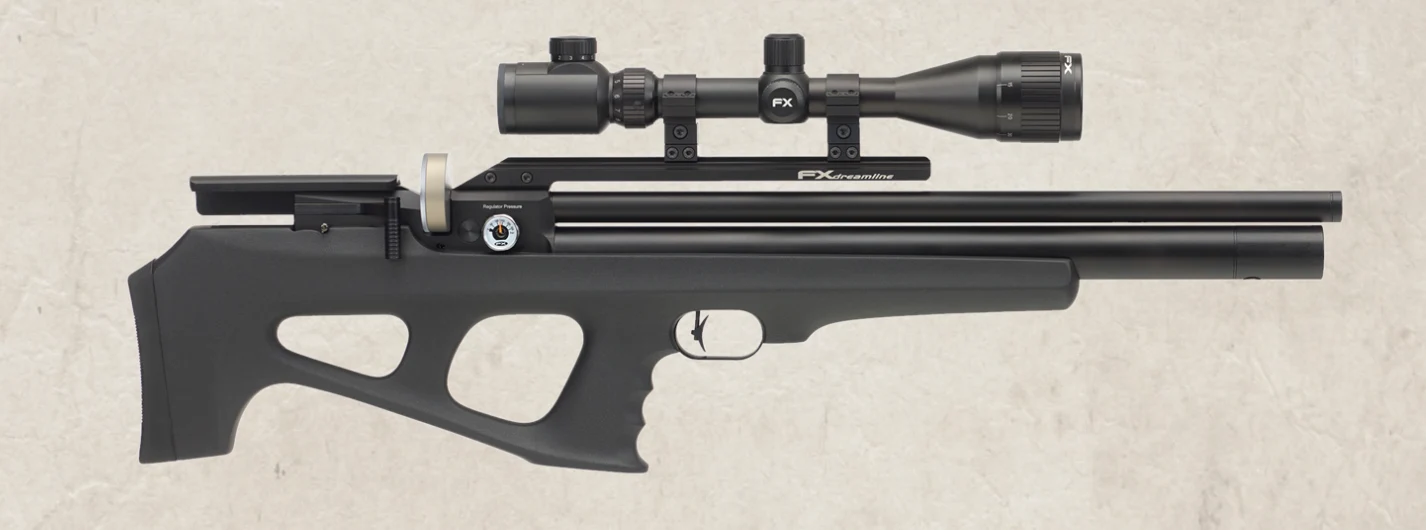
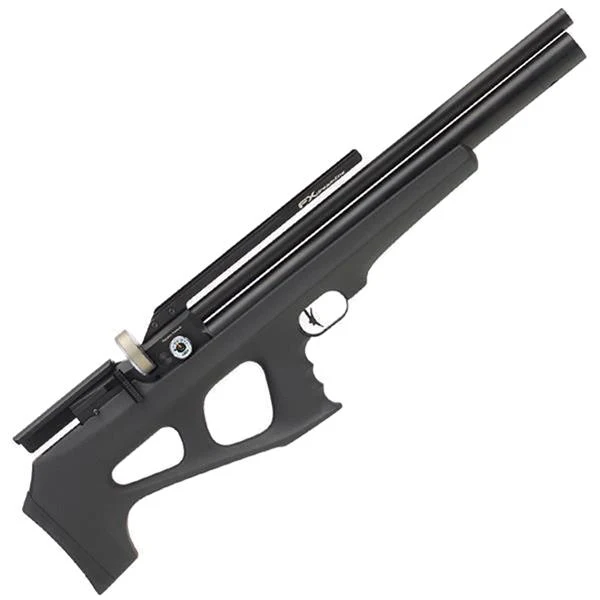
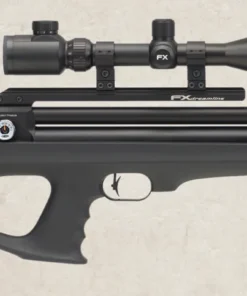
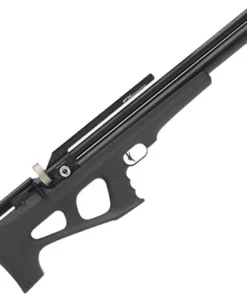
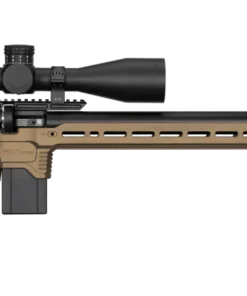
A bullpup air rifle features a distinctive configuration in which the action is positioned farther toward the rear of the stock. Unlike conventional designs, the trigger is located ahead of the action, allowing the overall length to be reduced without necessarily shortening the barrel.
Consequently, this arrangement creates a compact exterior while retaining many of the mechanical characteristics associated with full-length models. Furthermore, the positioning of internal components influences weight distribution, ergonomics, and the location of operating controls.
Although the appearance differs considerably, the underlying compressed-air operating principles remain similar to those found in other pre-charged pneumatic platforms.
2. What are the main advantages of a bullpup configuration?
The primary advantage is the compact arrangement of its mechanical components. By positioning the action toward the rear, manufacturers can incorporate a substantial barrel length within a relatively short overall structure.
Additionally, this design produces a different balance from conventional rifles. Some owners appreciate the compact profile, while others prefer the familiar handling characteristics of traditional stocks.
However, ergonomics are subjective. Trigger positioning, cheekpiece geometry, sight height, and control accessibility should all be evaluated individually.
Ultimately, the advantages depend on the intended lawful sporting activity, personal preferences, and the specifications of the particular model.
3. Is this type of air rifle suitable for beginners?
A regulated PCP air rifle can be understood by a beginner, but it requires familiarity with compressed-air equipment, pressure limits, safe handling procedures, and routine maintenance.
For that reason, formal instruction and supervised familiarization are strongly recommended for anyone without previous experience.
Furthermore, the compact layout may feel unfamiliar compared with traditional sporting rifles. This difference does not necessarily make the design more difficult, but the location of its controls deserves attention.
Beginners should prioritize safe operation, appropriate protective equipment, secure storage, and compliance with local regulations rather than selecting equipment based solely on appearance or technical sophistication.
4. What is a pre-charged pneumatic operating system?
A pre-charged pneumatic system uses compressed air stored in an onboard pressure reservoir.
Unlike spring-powered airguns, which rely on a compressed spring or gas ram to generate operating energy, PCP equipment uses previously stored compressed air.
Consequently, the operating mechanism incorporates pressure-bearing components, valves, and seals designed for pneumatic use.
Many regulated platforms also contain a pressure regulator that controls the air supplied to the firing mechanism.
Although the principle is relatively straightforward, these systems involve substantial pressure. Therefore, maintenance and servicing must follow the manufacturer’s requirements.
Calibres and Technical Specifications
5. What calibres are commonly available?
The broader platform has been manufactured in several calibre configurations, including .177, .22, .25, and .30, depending on the particular version and regional market.
However, not every calibre has necessarily been available in every production generation.
Different configurations may also have different barrels, magazines, operating specifications, and regulatory classifications.
Accordingly, the exact calibre should be confirmed from the manufacturer’s markings and relevant documentation.
Furthermore, ammunition must always match the calibre designated for the individual rifle. Using incompatible ammunition or components can cause mechanical damage and create serious safety hazards.
6. Does barrel length affect performance?
Barrel length can influence several technical characteristics of a pneumatic air rifle, including its overall dimensions and interaction with the compressed-air operating system.
However, a longer barrel does not automatically guarantee superior accuracy.
Manufacturing quality, barrel condition, ammunition consistency, and environmental conditions remain important considerations.
Additionally, published performance figures may vary between different barrel lengths and factory configurations.
When comparing models, it is important to distinguish the manufacturer’s stated specifications from independent measurements.
A meaningful technical comparison should account for the complete system instead of treating barrel length as the only determining factor.
7. What is an adjustable regulator?
An adjustable regulator is a pressure-control component incorporated into certain PCP systems.
Its purpose is to maintain a regulated pressure supply from the main air reservoir, within the operating limits established by the manufacturer.
As a result, the regulator helps manage changes in reservoir pressure throughout the usable charge.
Nevertheless, actual consistency also depends on component condition, temperature, ammunition, and other mechanical factors.
Because the regulator forms part of a pressurized system, adjustments and servicing should be performed only according to approved manufacturer procedures or by a qualified professional.
8. What is the difference between regulated and unregulated PCP systems?
A regulated system includes a component that controls the pressure supplied from the air reservoir to the firing mechanism.
By comparison, an unregulated system operates without that separate pressure-control stage.
Both designs can function effectively when properly engineered and maintained.
However, their pressure characteristics differ, particularly as the stored air supply decreases.
A regulator is not a guarantee of perfect shot-to-shot consistency, nor does its presence eliminate the need for inspection.
Instead, it represents one engineering method of managing pneumatic pressure within a specified operating range.
Construction and Mechanical Features
9. What is the purpose of a synthetic stock?
A synthetic stock provides structural support for the rifle’s external assembly while offering an alternative to natural timber.
One advantage is its resistance to the moisture-related swelling and shrinking associated with some wooden materials.
Additionally, synthetic stocks can be manufactured with molded contours and consistent external dimensions.
Nevertheless, durability depends on the material formulation, manufacturing quality, and conditions of use.
Synthetic construction should not be interpreted as resistance to every type of impact or environmental exposure.
Regular cleaning, appropriate storage, and inspection remain necessary to preserve its condition.
10. What is a sidelever action?
A sidelever action is a mechanical arrangement in which a lever located along the side of the action operates the rifle’s repeating mechanism.
The design differs from traditional bolt-action arrangements in its external controls and mechanical movement.
In bullpup configurations, the lever’s location is influenced by the rearward position of the action.
Consequently, accessibility and ergonomic preferences may vary among different users.
Mechanical components should be inspected periodically for signs of damage, wear, or unusual resistance.
Any suspected malfunction should be assessed by a qualified technician rather than addressed through unauthorized modification.
11. How does a detachable magazine system work?
A detachable magazine is designed to hold a specified quantity of compatible ammunition within a removable component.
Magazine capacity generally depends on calibre and design.
Because individual models may use different magazine generations, components should not be assumed compatible simply because they have a similar appearance.
Furthermore, damaged or incorrectly matched magazines may cause mechanical problems.
Manufacturer-approved components are therefore important when replacing worn or missing accessories.
Safe handling procedures must always be followed, and the presence or absence of a magazine should never be treated as proof that the rifle is unloaded.
12. What is the purpose of an adjustable trigger?
An adjustable trigger assembly allows certain mechanical characteristics to be established within the manufacturer’s specified adjustment range.
These characteristics can include aspects of trigger movement and the feel of the mechanism.
However, trigger systems are safety-critical components. Unauthorized changes or incorrect adjustments can create dangerous operating conditions.
Consequently, servicing should be undertaken only by qualified personnel following appropriate technical documentation.
A properly maintained trigger should function consistently and safely within its intended design limits.
Importantly, an adjustable trigger does not remove the need for disciplined handling or adherence to standard firearm and airgun safety practices.
Air Reservoir and Pressure Questions
13. What is the purpose of the air reservoir?
The air reservoir stores compressed air required by the pneumatic operating system.
Its construction must withstand the pressures specified by the manufacturer.
Different rifle configurations may incorporate cylindrical reservoirs or bottle-style arrangements, each with distinct physical characteristics.
However, reservoir size alone does not determine overall performance.
Pressure ratings, internal system design, and factory specifications must also be considered.
Because the reservoir is a pressure-bearing component, dents, corrosion, unauthorized alterations, and visible damage require professional attention.
A damaged reservoir should never be used until its condition has been properly assessed.
14. Why are pressure gauges important?
Pressure gauges provide information about the compressed-air system.
On platforms equipped with separate reservoir and regulator gauges, each indicator serves a different monitoring purpose.
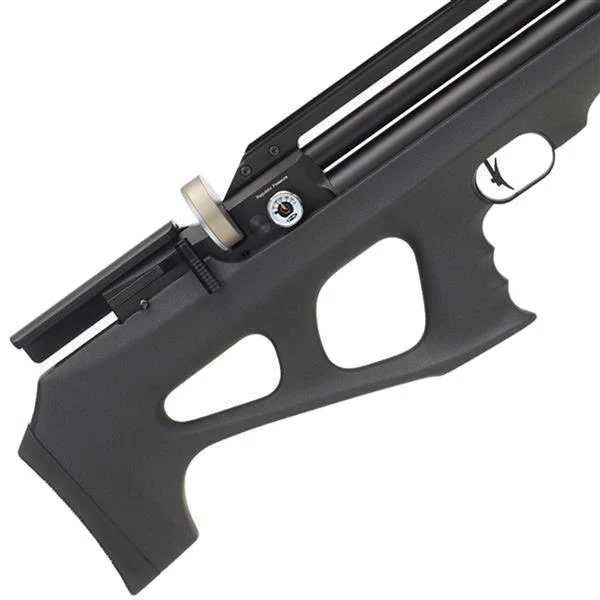
The reservoir gauge displays the pressure associated with the stored air supply, while the regulator gauge reflects pressure within the regulated section.
Nevertheless, gauges can become inaccurate or damaged over time.
Therefore, unusual readings should not be ignored.
A qualified technician should inspect equipment that exhibits inconsistent pressure indications, visible leakage, or other abnormal behavior.
Pressure gauges should also be protected from impact and handled according to the manufacturer’s guidance.
15. Can compressed-air equipment require periodic servicing?
Yes. PCP systems contain mechanical and pneumatic components that can experience wear as they age.
For example, seals may deteriorate, external fittings may become damaged, and pressure-monitoring equipment may require inspection.
The frequency of servicing depends on equipment condition, manufacturer recommendations, storage environment, and usage history.
Rather than following an arbitrary maintenance interval, owners should consult the documentation supplied with their particular model.
Furthermore, repairs involving pressure-bearing assemblies should be completed by appropriately qualified professionals.
Routine inspection supports safe ownership and can help identify developing problems before they become more serious.
Accuracy, Consistency, and Reliability
16. Does a match-grade barrel guarantee exceptional accuracy?
No. A match-grade barrel indicates a particular manufacturing or design standard, but it does not guarantee a specific result under every condition.
Accuracy is influenced by multiple interacting variables, including mechanical condition, ammunition quality, environmental conditions, and the testing methodology.
Additionally, manufacturer specifications and independent testing results may differ.
The condition of an individual rifle is especially important when evaluating previously owned equipment.
Therefore, accuracy claims should be supported by credible testing rather than broad marketing statements.
A high-quality barrel is one component of a complete mechanical system, not an independent guarantee of precision.
17. How do environmental conditions affect pneumatic equipment?
Temperature, humidity, moisture, and airborne contaminants can influence the condition of pneumatic equipment.
For example, temperature changes can affect gas pressure, while prolonged moisture exposure may contribute to corrosion on susceptible metallic components.
Additionally, dust and debris may accumulate around exposed external surfaces.
Proper storage and routine inspection help reduce these risks.
However, owners should avoid unapproved lubricants and cleaning agents because certain substances may be incompatible with seals or pressure-bearing components.
The manufacturer’s maintenance documentation should remain the primary reference for appropriate care.
18. How long can a properly maintained PCP air rifle last?
Service life depends on manufacturing quality, maintenance history, storage conditions, component availability, and overall mechanical condition.
A well-maintained platform may remain functional for many years, although individual parts can require replacement over time.
Seals, gauges, magazines, and other serviceable components may have different wear characteristics.
Furthermore, an older rifle should not automatically be considered unsafe or reliable solely because of its age.
Condition matters more than appearance alone.
Professional inspection is particularly valuable when purchasing secondhand equipment or returning a long-stored rifle to service.
Accessories and Compatibility
19. Are all accessories compatible with every version?
No. Compatibility may differ between production generations, calibre configurations, and individual variants.
Even products belonging to the same manufacturer’s family may use different dimensions, connection standards, or mechanical interfaces.
Consequently, visual similarity is not sufficient evidence of interchangeability.
Before obtaining replacement parts, owners should verify the model designation, serial information where applicable, and relevant factory part numbers.
Furthermore, accessories must comply with local laws and manufacturer specifications.
Incorrectly matched components can cause damage or create unsafe operating conditions.
20. Why is the scope-mounting interface important?
The mounting interface establishes the physical connection standard between the rifle and compatible optical equipment.
Different platforms may incorporate dovetail arrangements, Picatinny rails, or other mounting systems.
Although these interfaces can appear similar, their dimensions and compatibility requirements are not necessarily identical.
Furthermore, optical equipment varies in size, mass, and mounting clearance.
Therefore, compatibility should be verified through the relevant manufacturer’s documentation.
Secure and appropriate mounting is important for preventing damage to equipment and maintaining a safe mechanical configuration.
21. Can replacement components be obtained for older models?
Replacement-part availability depends on the manufacturer, production generation, geographic market, and whether a component remains supported.
Some common service items may remain available long after a model’s original release.
However, discontinued or redesigned components can become more difficult to obtain.
Additionally, later parts may not always be backward-compatible with earlier versions.
For this reason, owners should consult an authorized service provider when identifying replacements.
Serial information and official component diagrams can assist with correct model identification.
Maintenance, Storage, and Ownership
22. How should a PCP air rifle be stored?
Safe storage begins with preventing unauthorized access.
Equipment should be kept in a secure location that complies with applicable legal requirements.
Additionally, the storage environment should be reasonably dry, clean, and protected from extreme temperatures.
The manufacturer’s recommendations concerning reservoir pressure during storage should also be followed.
Importantly, ammunition should be secured appropriately, and the rifle should be checked using approved safe-handling procedures.
Long-term storage should include periodic condition assessments, particularly where humidity or temperature fluctuations are common.
23. What signs indicate that professional maintenance may be necessary?
Several conditions can indicate a need for professional inspection.
These include unexplained pressure loss, unusual mechanical resistance, damaged components, inconsistent gauge readings, or visible deterioration around pressure-bearing assemblies.
Furthermore, abnormal noises or other changes in operation should not be dismissed.
A malfunctioning rifle should be removed from service until its condition has been assessed.
Attempts to repair pressurized components without proper training and equipment can be dangerous.
Consequently, qualified service personnel should evaluate any concern involving the integrity of the compressed-air system.
24. Are there special legal requirements for owning PCP air rifles?
Legal requirements vary substantially between countries and, in some cases, between individual states or regions.
Depending on the jurisdiction, ownership may be subject to age restrictions, licensing, registration, permissible muzzle-energy limits, transport rules, and safe-storage obligations.
Furthermore, particular calibres or configurations may be regulated differently.
Therefore, prospective owners should consult current local legislation and relevant licensing authorities before acquiring equipment.
International transport and shipment may also involve additional restrictions.
Compliance should be confirmed independently rather than inferred from a manufacturer’s product description.
25. What should be checked when evaluating a secondhand PCP air rifle?
A secondhand rifle should be assessed for its overall condition, maintenance history, correct model identification, and evidence of unauthorized modification.
External damage, corrosion, missing components, and questionable pressure-system integrity deserve particular attention.
Additionally, documentation establishing lawful ownership and the exact factory configuration can be valuable.
Because some defects are not readily visible, a professional inspection may be appropriate.
The availability of replacement components should also be considered, especially for discontinued versions.
Ultimately, safety, authenticity, legal compliance, and verified mechanical condition should take priority over cosmetic appearance or unsupported performance claims.
Final FAQ Summary
Understanding a regulated bullpup air rifle involves more than examining its compact appearance. Pneumatic engineering, mechanical construction, manufacturer specifications, maintenance requirements, and safe ownership practices all contribute to an informed assessment.
Consequently, reliable technical documentation and professional servicing remain essential references. By distinguishing verified specifications from general assumptions, owners and prospective owners can better understand the equipment’s design, maintenance responsibilities, and regulatory considerations.



Reviews
There are no reviews yet.