Element Optics Immersive Series – Ultra-Compact Prismatic Optics Built for an Expanded View
A fresh perspective on compact aiming optics has been introduced through the Element Optics Immersive Series. Instead of the distant, restricted image often associated with conventional riflescopes, a broader and more engaging sight picture has been created through a specialized prismatic optical system. As a result, improved peripheral awareness, impressive field of view, and a remarkably compact footprint can be enjoyed.
Built around fixed-magnification designs, the Element Optics Immersive Series currently includes configurations such as the 5×30, 10×40, and 14×50. Each model has been developed around a similar principle: more visual information should be presented while unnecessary bulk is reduced. Element Optics currently lists these three magnification options as part of the Immersive family.
For shooters who value compact equipment, refined optical clarity, and an unconventional viewing experience, this series has been positioned as an innovative alternative to a traditional riflescope.
Why the Element Optics Immersive Series Stands Apart
Rather than simply shrinking a conventional scope, the optical system has been approached differently. A prismatic design has been used so that a large field of view can be delivered from a remarkably short housing.
Because the viewed image is presented differently from that of a conventional riflescope, the surroundings can be observed with greater awareness. Consequently, target observation can feel more natural and less restricted.
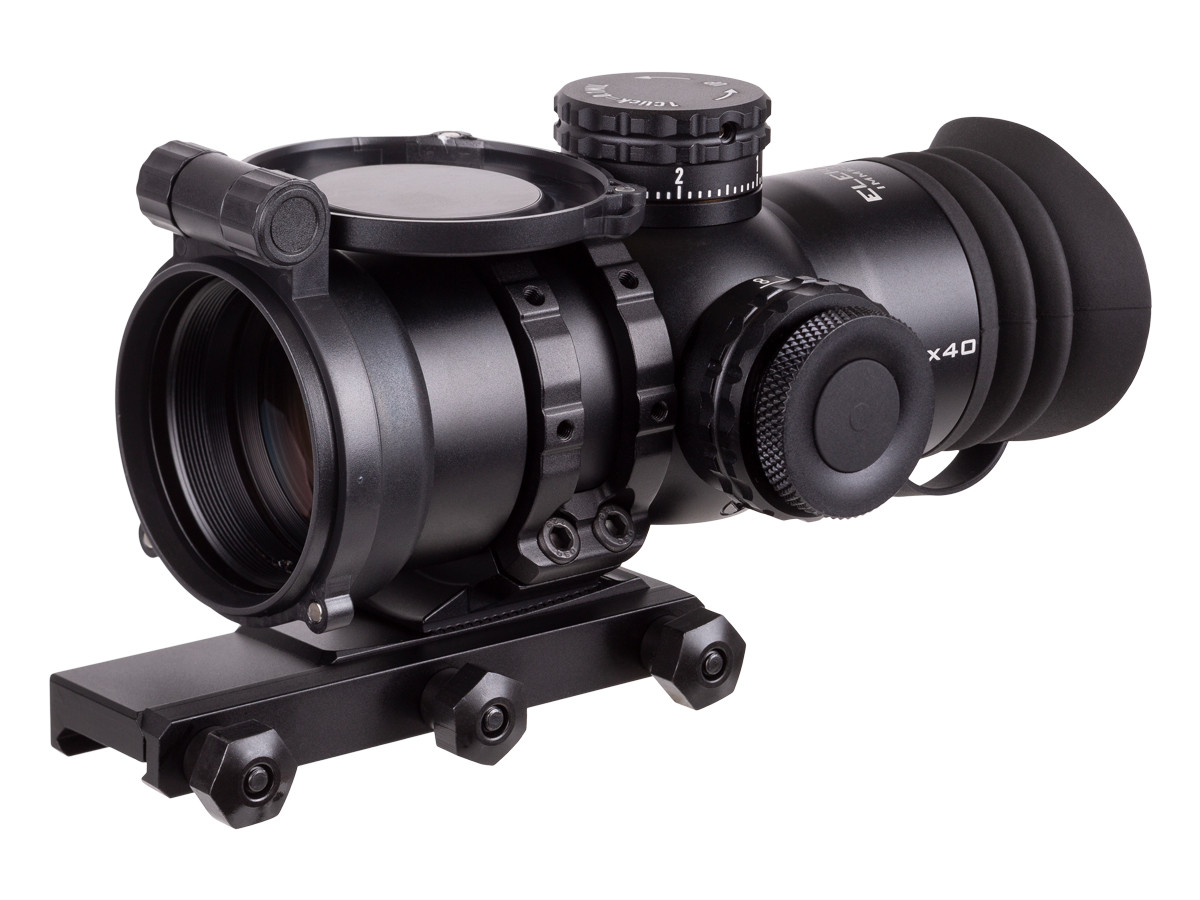
Additionally, ED glass has been incorporated into the 10×40 configuration to help control chromatic aberration while preserving image sharpness. According to Element Optics, the Immersive platform has specifically been engineered around a market-leading field of view and an experience intended to make the shooter feel more visually connected to the scene.
Compact Prismatic Construction
Space is often limited on modern sporting platforms. Therefore, unnecessary optic length can become inconvenient.
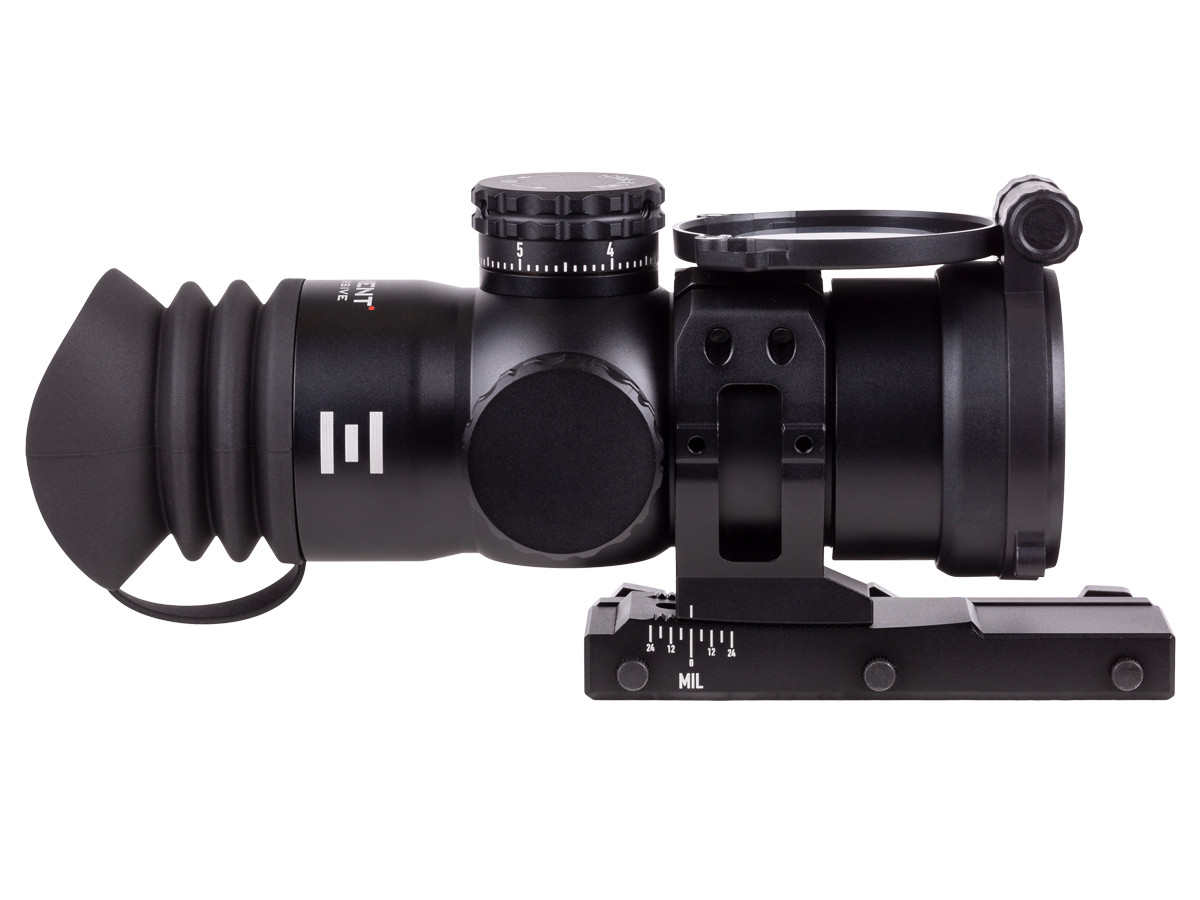
With the Element Optics Immersive Series, an extremely short optical package has been developed. Consequently, additional rail space may remain available for compatible accessories while the overall setup can be kept streamlined.
Moreover, weight distribution can be improved because a long conventional scope does not need to be mounted across a large portion of the platform.
Exceptional Field of View
One of the strongest characteristics of the series is its unusually broad field of view.
On the 10×40 model, for example, a field of view of approximately 34 feet at 100 yards is specified. Its short-eye-relief design has been used specifically to generate a dramatically wider image than would normally be expected from a conventional optic at comparable magnification.
Therefore, more of the surrounding environment can remain visible without sacrificing useful magnification.
Highlighted Element Optics Immersive Series Features
For quick product comparison, several important characteristics can be highlighted:
- Ultra-compact prismatic optical construction
- Fixed-magnification configurations including 5×30, 10×40, and 14×50
- Exceptionally wide field of view
- ED glass used to improve sharpness and reduce chromatic aberration on applicable models
- Illuminated reticle system
- Push-button illumination controls
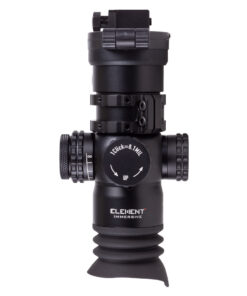
- Side parallax adjustment
- Exposed elevation turret
- Capped windage turret
- Resettable adjustment turrets
- Tilt-adjustable Unimount supplied with selected models
- Multiple base lengths supplied with compatible configurations
- Waterproof construction
- Fog-resistant optical system
- Nitrogen-purged internal system
- Shock-resistant construction
- Magnetic flip cap supplied on selected configurations
- Rubber eyecup included with compatible models
- MOA and MRAD reticle/adjustment options available depending on configuration
These characteristics are listed by Element Optics for models within the Immersive range, although specifications should always be checked against the exact magnification being purchased.
Optical Performance Designed Around Clarity
Good magnification alone cannot guarantee an enjoyable viewing experience. Therefore, optical quality has been treated as a central part of the design.
Through the use of quality glass and a specialized optical arrangement, a bright and highly detailed sight picture can be produced. Color fringing can also be reduced through the ED-glass system used in applicable Immersive configurations.
More importantly, the field surrounding the central aiming point can remain much more visible.
This broader visual presentation can be particularly valuable during target observation, recreational shooting, competition-oriented setups, or other compatible sporting applications where rapid visual awareness is appreciated.
Illuminated Reticle for Flexible Visibility
Changing backgrounds can make a conventional reticle difficult to distinguish. For that reason, reticle illumination has been integrated into the Immersive platform.
On the 10×40, illumination is controlled through a push-button system. Consequently, reticle visibility can be adapted to different lighting situations more conveniently.
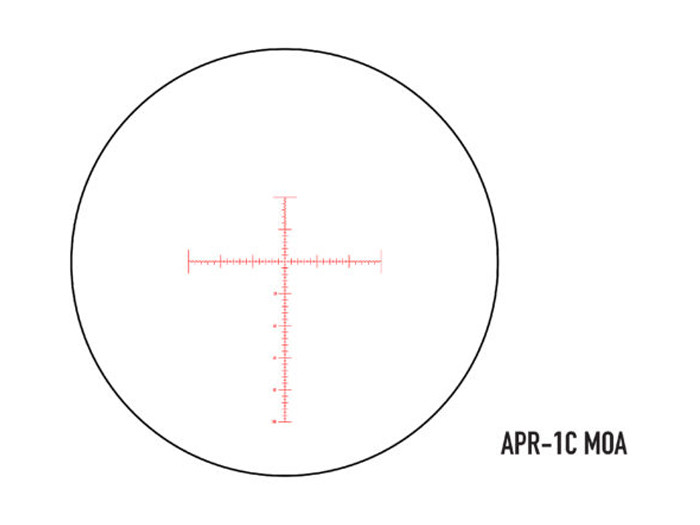
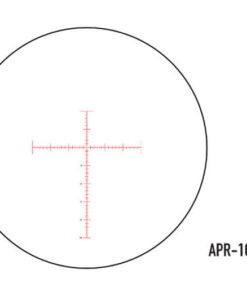
Rather than dominating the image, the reticle is intended to provide an organized reference point while the wide sight picture remains available.
Practical Adjustment System
Precision optics must also be convenient to adjust.
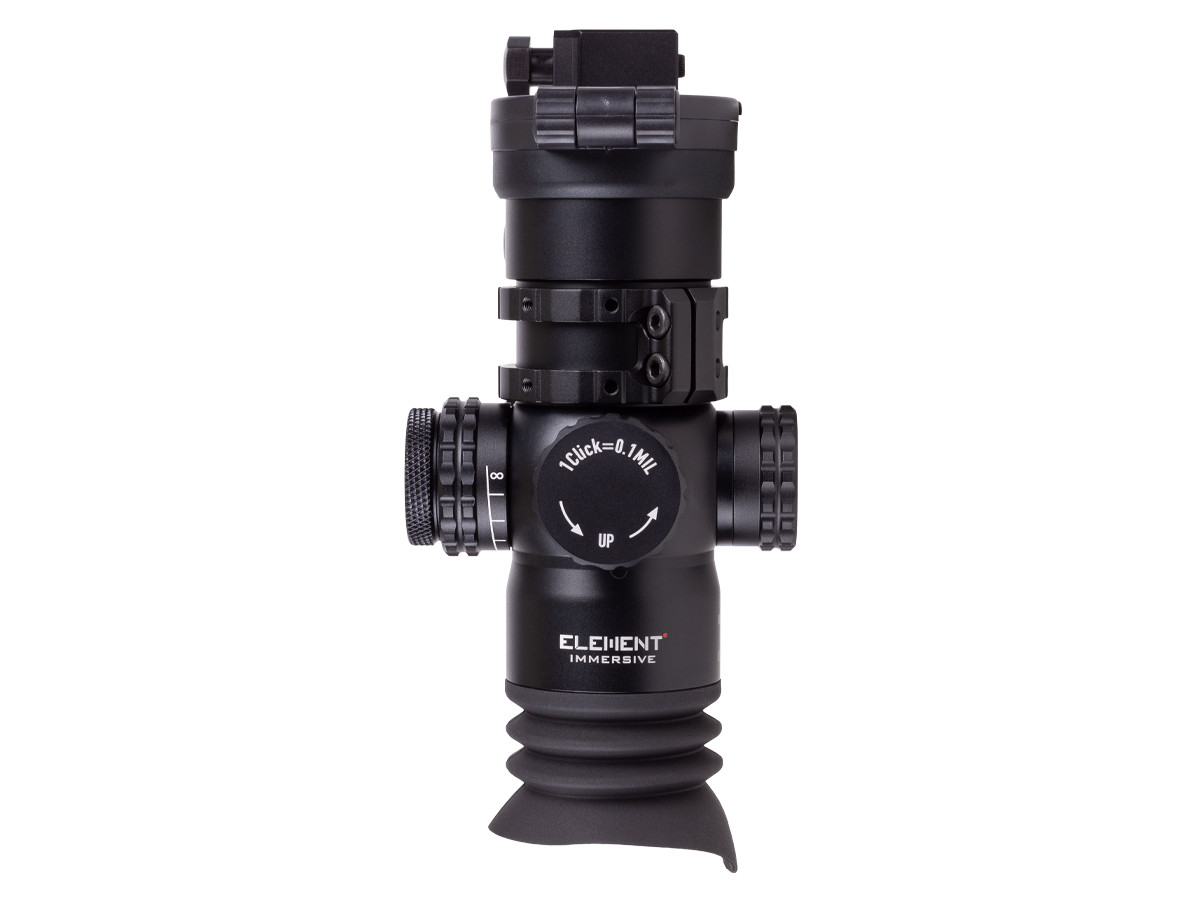
Accordingly, exposed elevation controls and capped windage adjustment have been incorporated into applicable Immersive models. Both adjustment systems can be reset, helping settings to be managed more efficiently.
In addition, side parallax adjustment is provided. On the 10×40, adjustment is specified from approximately 6 yards to infinity, allowing the optical image to be refined across a broad range of viewing distances.
Adjustment options are also offered in both angular systems depending on configuration. The 10×40, for example, is listed with 1/4 MOA or 1/10 MRAD click values.
Compact Size Without a Conventional Scope Profile
One of the most noticeable advantages of the Element Optics Immersive Series is physical size.
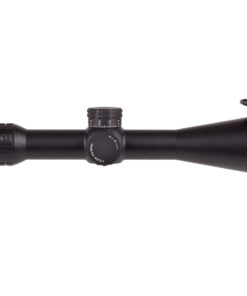
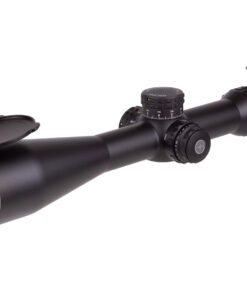
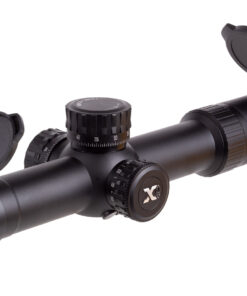
The 10×40 measures approximately 135 mm (5.31 inches) in length and weighs about 485 g (17.1 oz) with its mount.
Because such substantial fixed magnification has been packaged into a relatively short body, a distinctive balance between magnification and compactness has been achieved.
A cleaner profile can therefore be maintained without moving immediately toward a larger variable-power riflescope.
Adjustable Mounting Flexibility
Mount positioning can have a significant influence on comfort, alignment, and overall usability.
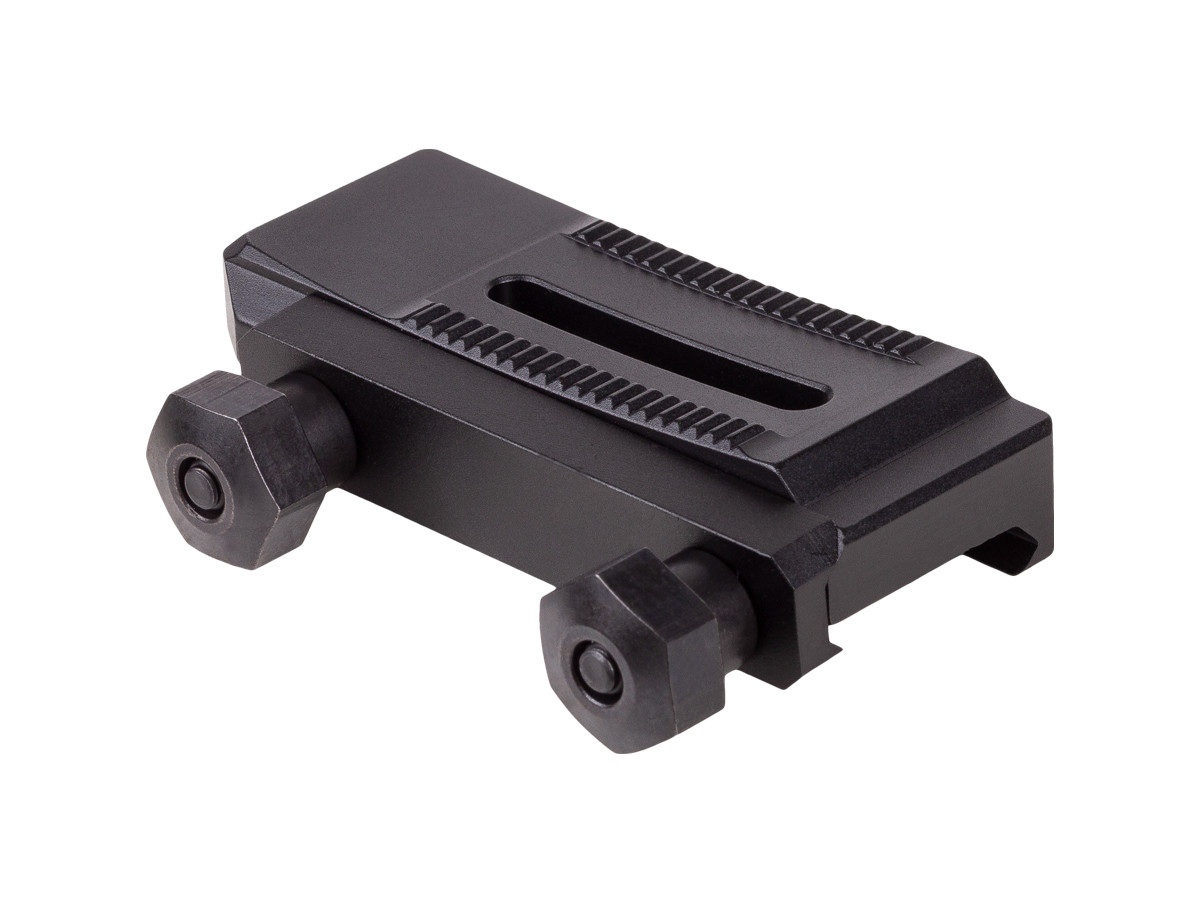
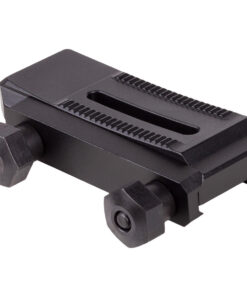
For that reason, a tilt-adjustable Unimount and multiple base lengths are supplied with certain Immersive configurations. The mounting arrangement can consequently be adapted more effectively to different compatible setups.
Built for Challenging Outdoor Conditions
Optical equipment can be exposed to humidity, temperature changes, dust, and unpredictable weather.
Therefore, environmental protection has been incorporated into the Immersive construction. Applicable models are described by Element Optics as waterproof, fogproof, shockproof, and nitrogen purged.
Internal fogging can consequently be minimized, while the enclosed optical assembly is better protected from changing environmental conditions.
Accessories such as a magnetic flip cap and rubber eyecup are also supplied with the 10×40 configuration, further improving practical usability.
Choosing Between 5×30, 10×40, and 14×50
Different magnification levels are offered because different viewing priorities are encountered.
Element Optics Immersive 5×30
For users who prefer lower fixed magnification and a compact sighting system, the 5×30 can provide a versatile starting point. The reduced magnification may be particularly appealing when a broad visual picture and quick observation are prioritized.
Element Optics Immersive 10×40
Greater detail can be obtained through the 10×40, while the unusually broad field of view remains a major attraction. Element lists 10× magnification, a 40 mm objective, 18 mm eye relief, and a 34-foot field of view at 100 yards for this configuration.
Element Optics Immersive 14×50
When additional fixed magnification is preferred, the 14×50 extends the Immersive concept toward more detailed observation while retaining the compact prismatic format.
Compatibility must always be checked carefully. In particular, Element Optics states that its 10×40 and 14×50 models are intended for zero-recoiling rifles only.
Why Choose the Element Optics Immersive Series?
A conventional optical experience has deliberately been avoided with this range.
Instead, compact dimensions, strong magnification options, wide peripheral visibility, precise adjustment controls, illuminated reticles, and modern prismatic engineering have been combined.
As a result, the Element Optics Immersive Series can be an appealing option for enthusiasts who want something substantially different from a traditional tubular riflescope.
Furthermore, several magnification choices are available, allowing the optic to be selected around the intended viewing style rather than forcing every user into the same configuration.
Whether compactness, optical clarity, field of view, or refined adjustment controls are prioritized, meaningful advantages can be found throughout the range.
Experience a Different Kind of Optic
More than another compact scope has been created by the Element Optics Immersive Series. A fundamentally different visual experience has been delivered through its prismatic design.
A broad sight picture is presented. Overall optic length is reduced. High-quality optical components are incorporated. Practical adjustment systems are provided. Meanwhile, the distinctive short-body architecture allows the setup to remain streamlined.
For buyers seeking premium optical engineering combined with a genuinely unconventional field of view, the Element Optics Immersive Series deserves serious consideration.
Choose the Immersive configuration that matches your compatible platform and preferred magnification, and experience how much visual performance can be packaged into an exceptionally compact optic.\
Premium Rangefinding Binoculars, Hunting Optics, and Precision Rifle Scopes
Modern hunters, long-range shooters, and precision marksmen demand exceptional optical performance, and that is why products such as Leica rangefinder binoculars, Leica Geovid 10×42 rangefinder binoculars, Leica Geovid binoculars, Leica binoculars with rangefinder, Leica Geovid Pro 10×42, Geovid Pro 10×42, Leica Geovid rangefinder, Leica Geovid Pro rangefinder binoculars, Leica Geovid rangefinder binoculars, and the Leica Geovid 10×42 continue to attract attention throughout the shooting industry.
Whether enthusiasts are looking for Leica binoculars, Leica small binoculars, binoculars Leica, Leica Geovid binos, Leica bino, Leica binoculars for sale, Leica bino rangefinder, Leica camera binoculars, Leica binos, or a standard Leica binocular, there are options suitable for every environment and shooting application.
Many users also compare Leica products with SIG Sauer binoculars, SIG self stabilizing binoculars, SIG Sauer binos, SIG binoculars, SIG image stabilizing binoculars, SIG binocular, SIG auto stabilizing binoculars, Sigma binoculars, SIG Sauer self stabilized binoculars, and SIG Sauer image stabilized binoculars when evaluating premium optics.
Long-range shooters frequently combine these binocular systems with elite scopes such as the Nightforce ATACR, Nightforce ATACR 5-25×56 F2, Nightforce ATACR 4-20×50, Nightforce ATACR 5-25×56 F1, Nightforce ATACR 4-16×50, Night Force ATACR, ATACR scope, Nightforce attacker, ATACR 4-20, and the Nightforce ATACR 4-20×50 F1. Many professionals also pair their rifles with a Zeiss red dot for faster target acquisition.
Another respected name in the precision optics market is Tangent Theta. Experienced marksmen frequently search for Tangent Theta scopes, Tangent scope, Tangent scopes, Theta optics, Tangent Theta scope, and Tangent optics because of their legendary reputation for repeatability, durability, and optical clarity.
Companies such as Fierce Firearms, Fierce Arms, and Fierce Optics have likewise contributed to the growing popularity of advanced hunting equipment and premium glass systems. Their products are often used alongside specialized equipment featuring 11.5EE, 10×40, 34 56, 34×56, 14×44, 2S14, 2.5×15, 2.5/15, 1/2×42, 12×4.2, 4.5 30, and 4.5/30 specifications.
Among performance-oriented manufacturers, Athlon products remain extremely popular. Examples include the Midas TAC Gen2 HD 6-24×50 APLR15 FFP MOA reticle riflescope, Athlon Midas TAC, Athlon Midas TAC 6-24×50, Athlon Argos BTR Gen2 8-34×56, Athlon BTR Gen 2, Athlon Argos BTR Gen2, Athlon Argos BTR, Athlon Argos BTR Gen 2, Athalon scopes, Athens scope, Athlon Ares BTR, Athlon ETR, Athlon 4.5-30×56, Athlon BTR 2-12, Athlon 2, Athlon reticles, and numerous other models designed for demanding field conditions.
Shooters interested in low-power variable optics continue to search for solutions such as the 1-10 scope, Ares ETR 1-10, 1-10 LPVO, 1-10 FFP LPVO, 1×10 scope, LPVO 1-8, LPVO 1-10, and the 1-10 rifle scope. Likewise, precision enthusiasts appreciate the performance of the Ares ETR Gen2 UHD 4.5-30×56 APRS12 FFP IR MIL reticle, particularly when accuracy is required at extended distances.
The demand for versatile optics has also increased interest in equipment such as the 2-12x, 2.5-15 scope, AO scope, gun scope, hunting optic, longest range scope, and guides explaining how to buy a rifle scope. These products allow hunters and competitive shooters to adapt to changing terrain, lighting conditions, and target distances with exceptional precision.
From elite Leica Geovid rangefinder binoculars to advanced Nightforce ATACR models, highly regarded Tangent Theta scopes, innovative SIG Sauer binoculars, and dependable Athlon platforms, today’s market offers virtually unlimited possibilities for anyone seeking world-class optical performance.
Frequently Asked Questions About the Element Optics Immersive Series
1. What is the Element Optics Immersive Series?
The Element Optics Immersive Series is a line of compact prismatic optics designed to deliver fixed magnification while maintaining a remarkably wide field of view. Instead of using the longer tubular layout commonly associated with traditional riflescopes, the series is built around a short-body optical design that allows users to see more of the surrounding environment while still benefiting from useful magnification.
This design approach makes the Immersive Series particularly appealing to users who want a compact optic without giving up clarity, target detail, or an organized reticle system. The viewing experience is also noticeably different from that of a conventional scope because the image appears broader and more connected to the surrounding scene.
Different magnification options are available within the range, allowing users to choose a configuration that better matches their intended application, viewing distance, and preferred level of detail.
4. Is the Element Optics Immersive Series suitable for beginners?
Yes, the series can be suitable for beginners, especially for users who prefer a straightforward fixed-magnification optic.
Because magnification does not need to be continuously adjusted, one variable is removed from the shooting process. This can make the optic feel simpler once correct positioning, reticle use, parallax adjustment, and zeroing procedures have been learned.
Nevertheless, the unusual short-eye-relief design may feel different to someone who has only used traditional scopes. Correct head placement and optic positioning should therefore be established carefully.
Beginners should also learn basic optic safety, mounting procedures, and adjustment principles before use. When these fundamentals are understood, the Immersive Series can offer an intuitive and highly engaging viewing experience.
5. What magnification options are available?
The Immersive family has been developed with several fixed-magnification configurations. Options within the range include 5×30, 10×40, and 14×50 models.
Each configuration serves a slightly different viewing preference.
The 5×30 offers lower magnification and can be useful when a broad visual picture is preferred. Meanwhile, the 10×40 provides substantially more target detail while still retaining the wide-field concept of the series.
For users who require even more magnification, the 14×50 offers increased visual detail and a larger objective configuration.
The ideal choice depends on typical viewing distances, target size, platform compatibility, and how much magnification is actually required.
6. Does the Immersive Series have variable magnification?
No. The optics in this range are based around fixed magnification rather than a zoom system.
Fixed magnification offers several potential advantages. The optical layout can remain compact, operation is simplified, and the user does not need to stop and select a different magnification setting.
For some users, this straightforward setup can improve consistency because the sight picture remains familiar every time the optic is used.
However, people who regularly move between very short and much longer distances may prefer a variable-power optic. The choice ultimately depends on whether simplicity and compactness are more important than zoom versatility.
7. How good is the field of view?
The wide field of view is one of the most important characteristics of the Immersive design.
A much broader portion of the environment can be seen when compared with many conventional magnified optics. This expanded visual picture can make target observation feel more natural while also preserving greater awareness of surrounding objects.
Such a feature may be particularly useful when multiple visual reference points need to be monitored or when the user simply prefers an optic that feels less restrictive.icarus scope
Importantly, the broader image is not achieved by removing magnification. Instead, the prismatic layout is engineered so that useful magnification and a wide visual presentation can be combined.
8. What is the advantage of a prismatic optic?
A prism-based design allows magnification to be incorporated into a much shorter optical body.
Traditional scopes rely on a longer arrangement of lenses and internal components. A prism system can redirect light internally, allowing the overall package to be shortened considerably.
This can produce several practical benefits. Less rail space may be required, the setup can feel more compact, and the optic can often provide a distinctive wide-field viewing experience.
An etched reticle can also be incorporated into many prism-style optics, allowing the aiming reference to remain visible even if illumination is not being used.
For users who want fixed magnification in a short package, this optical architecture can therefore offer an attractive alternative.
9. Does the reticle illuminate?
Yes, illumination is available on models within the range.
Reticle illumination can make the aiming reference easier to identify when the background is dark, complex, or poorly contrasted. Instead of relying entirely on the natural visibility of the etched reticle, additional brightness can be introduced when required.
This can be particularly useful when lighting conditions change during a shooting session.
Because the reticle itself remains part of the optical system, the optic can still provide a visible aiming reference without illumination in many situations. Illumination should therefore be viewed as an enhancement rather than the only way the reticle can be used.
10. Can parallax be adjusted?
Yes, applicable models feature side parallax adjustment.
Parallax adjustment allows the user to refine the relationship between the reticle and the viewed target at different distances. When properly adjusted, unwanted apparent reticle movement can be minimized if the eye shifts slightly behind the optic.
This becomes increasingly important when greater precision is required.
The side-mounted control also makes adjustment convenient because the user’s position does not need to be significantly changed.
Correct parallax adjustment can therefore contribute to a sharper sight picture, improved consistency, and more dependable reticle alignment.
11. Is the optic difficult to mount?
Mounting is designed to be relatively straightforward when the correct platform and mounting system are used.
Certain models are supplied with dedicated mounting hardware intended to make positioning easier. Multiple mounting lengths may also be provided, depending on configuration, helping users achieve appropriate eye positioning.
Because eye relief is shorter than that of many traditional riflescopes, mounting position is particularly important.
The optic should be positioned so that a complete sight picture can be obtained comfortably without forcing the head forward or backward.
Once an appropriate position has been established, mounting screws should be tightened according to the manufacturer’s recommended specifications.
12. Is the Immersive Series waterproof?
The series has been developed for outdoor use, and models within the range include weather-resistant construction.
Waterproofing helps protect internal optical components when equipment is exposed to rain, humidity, or damp environments.
In addition, nitrogen purging is used in applicable models to reduce the possibility of internal fogging when temperature changes occur.
Such protection can be valuable for users who regularly operate outdoors or travel between warm and cold environments.
Although weather resistance adds durability, normal care is still recommended. The optic should be dried after heavy exposure to water, lenses should be cleaned properly, and unnecessary impact should be avoided.
13. Is the Element Optics Immersive Series durable?
Durability has been incorporated into the design through a robust housing and shock-resistant construction.
A compact optic can also benefit structurally from having a shorter body because less material extends away from the mounting point.
Nevertheless, durability should always be considered alongside platform compatibility.
Some higher-magnification configurations are intended for specific low- or zero-recoil applications. Manufacturer recommendations should therefore be checked before installing the optic on a particular rifle.
Using an optic outside its intended application can reduce reliability and may affect warranty coverage.
14. What is the difference between the 5×30 and 10×40 models?
The main differences are magnification and objective size.
The 5×30 offers five-power magnification, making it suitable for users who prefer a broader and less magnified image.
By comparison, the 10×40 provides twice the magnification and allows smaller details to be observed more easily at greater distances.
The 10×40 may therefore be preferred for precision-oriented target observation, while the 5×30 can provide a more flexible visual experience at closer or moderate distances.
Neither option is automatically better. The correct model depends on how the optic will be used.
15. When should someone consider the 14×50 version?
The 14×50 can be considered when additional fixed magnification is required.
At fourteen-power magnification, considerably more target detail can be viewed than with the lower-powered configurations. This can make the model attractive to users who regularly shoot or observe at longer distances.
The larger objective also supports the higher-magnification optical system.
However, increased magnification usually makes movement more noticeable and can narrow the practical usability window for close-range observation.
Users should therefore select the 14×50 because they genuinely need additional magnification rather than simply choosing the highest available number.
16. Does the Immersive Series require batteries?
Battery power is required for the illuminated reticle system.
However, the optic itself does not become completely unusable if the battery is depleted because the etched reticle can still remain visible.
This provides an important level of redundancy.
Battery condition should nevertheless be checked periodically, particularly before extended outdoor sessions.
Keeping a spare compatible battery with shooting equipment can also prevent unnecessary interruption.
17. How should the lenses be cleaned?
Lens surfaces should be cleaned carefully to protect optical coatings.
Loose dust should first be removed with a suitable blower or soft lens brush. Once abrasive particles have been cleared, a clean microfiber lens cloth can be used.
If fingerprints or oily marks are present, a dedicated optical lens-cleaning solution can be applied sparingly.
Household glass cleaners, rough paper towels, or abrasive fabrics should be avoided because coatings may be damaged.
Protective lens caps should also be used whenever the optic is being stored or transported.
18. Is the Immersive Series good for precision target shooting?
Yes, the range can be well suited to precision-oriented use when the correct magnification and compatible platform are selected.
A defined etched reticle, repeatable adjustment system, side parallax control, and clear fixed magnification can all contribute to a consistent shooting setup.
The wider sight picture may also help users maintain better visual awareness while remaining focused on the target.
Higher-magnification models can provide additional detail, while lower-powered options may be easier to use across a broader range of distances.
Proper mounting, zeroing, parallax adjustment, and consistent shooting technique will ultimately determine how effectively the optic performs.
19. Why choose this series instead of a conventional variable scope?
The decision primarily comes down to priorities.
A conventional variable-power riflescope offers flexibility because magnification can be changed. However, that flexibility usually comes with additional size, weight, and mechanical complexity.
The Immersive design takes a different approach.
Magnification is fixed, while the optic is kept extremely compact and the field of view is emphasized.
For users who already know the magnification range they need, the lack of zoom may not be a disadvantage at all.
Instead, compactness, simplicity, and a distinctive visual experience may provide greater practical value.
20. Is the Element Optics Immersive Series worth buying?
For users who specifically value wide field of view, compact construction, fixed magnification, illuminated reticles, and modern prismatic engineering, the series can offer excellent value.
Its biggest advantage is not simply magnification. Rather, the combination of strong optical performance and unusually compact dimensions sets it apart.
The series is particularly attractive for people who want a different experience from the long, narrow sight picture commonly associated with traditional scopes.
Before buying, the exact magnification, platform compatibility, mounting requirements, and intended use should be considered carefully.
When the correct configuration is matched to the application, the Immersive Series can provide a highly capable, compact, and distinctive optical solution.nightforce atacr 4 20×50 f1
Practical Use Scenarios for the Element Optics Immersive Series
The real value of a premium optic becomes easier to understand when it is considered in practical situations rather than through technical specifications alone. The Element Optics Immersive Series has been designed around compactness, fixed magnification, broad visual awareness, and a distinctive prismatic viewing experience. Consequently, it can fit naturally into several recreational, sporting, and observation-focused environments.
Instead of relying on a long conventional scope body, a much shorter optical system is provided. Therefore, users can build streamlined setups while still benefiting from useful magnification and a highly detailed sight picture. Whether the optic is being used during structured range sessions, precision target practice, equipment testing, or outdoor observation, the wide field of view can become one of its most noticeable advantages.1 10 lpvo
The following scenarios demonstrate how the design can be used in realistic, responsible settings.
Scenario 1: Recreational Target Shooting at a Controlled Range
Imagine arriving at an established outdoor shooting range for a relaxed weekend target session. Several distances are available, and the objective is not speed or competition. Instead, the session is focused on consistency, equipment familiarity, and enjoyable target practice.
A compact optic can be especially convenient in this environment.
Once the equipment has been safely prepared according to the range rules, a broad sight picture can be appreciated immediately. Rather than seeing only a narrow section around the target, more of the surrounding target board and range environment can remain visible.
Because fixed magnification is provided, little time needs to be spent changing magnification settings. The same visual reference can be maintained throughout the session.
For a user who prefers straightforward equipment, this consistency can be valuable. The viewing experience remains familiar each time the optic is brought into position.
Why the Wide Field of View Matters
A broad field of view does more than make the image appear impressive.
During recreational target practice, it can make it easier to maintain visual awareness of nearby target markers, backboards, and other clearly designated objects within the shooting lane.
Additionally, the target may feel less isolated within the optic.
This can create a more comfortable experience for people who dislike the restricted “tunnel” sensation sometimes associated with higher-magnification conventional scopes.
Consequently, the user can concentrate on the target while still retaining a stronger sense of the surrounding environment.
Scenario 2: Precision-Oriented Paper Target Practice
Consider a second user who enjoys carefully measured paper-target sessions.
Instead of simply firing a few groups and leaving, this person records results, compares equipment settings, and studies consistency across multiple sessions.
In this environment, a higher fixed-magnification configuration can become useful.
Fine details on printed targets can be observed more clearly, while the etched reticle provides a stable visual reference. Furthermore, side parallax adjustment can help the optical image remain properly refined for the viewing distance.
Rather than constantly changing magnification, the user can work with one consistent sight picture.
This consistency can help when comparing results because fewer optical variables are being introduced between groups.
A More Organized Viewing Experience
A carefully designed reticle can also improve the overall experience of structured target practice.
Instead of viewing only a magnified image, reference markings can be used to maintain consistent visual alignment and to observe where previous impacts are located in relation to the central aiming point.
For recreational precision work, this can make range sessions feel more structured and repeatable.athlon scopes review
However, the optic should always be used on a compatible platform and within the manufacturer’s recommendations.
Scenario 3: Compact Equipment Setup
Some users prioritize minimalism.
They may already have a platform with limited available rail space or simply prefer equipment that does not feel unnecessarily bulky.
A traditional scope can occupy a significant portion of the upper mounting area. By contrast, the short prismatic body used within the Immersive family allows a substantial amount of optical performance to be concentrated into a smaller physical package.
Therefore, a cleaner overall setup can be created.
This is particularly useful when the goal is to reduce excess equipment rather than continuously add accessories.
Better Balance and Handling
Overall balance can also influence how comfortable equipment feels during a long range session.
When a long optic extends significantly across the top of a platform, weight distribution can become noticeable.
A more compact design can help keep the setup feeling centralized.
Although the actual effect will vary depending on the platform and configuration, many users may appreciate the reduced visual and physical bulk.
For people who transport equipment regularly, the shorter dimensions may also make storage and protective cases easier to organize.
Scenario 4: Outdoor Observation Before a Shooting Session
Optics are often used for more than the moment when a target is being engaged.
At a controlled outdoor range or sporting facility, users may spend time observing target boards, checking range markers, or studying environmental conditions before beginning their session.avalon aries
A wide-field magnified optic can be useful during these moments.
The broader image allows the user to visually scan more of the designated range area without feeling excessively restricted.
For example, multiple numbered target boards may be positioned across the same general direction.
Instead of repeatedly searching through a narrow image, a wider portion of the scene can remain visible.
This can make general observation more comfortable.1 10 scope
Useful Magnification Without a Large Spotting Scope
For some recreational users, carrying a large spotting scope may feel unnecessary for shorter range sessions.
A fixed magnified optic can offer a convenient alternative for basic target observation, depending on distance and target size.
Of course, it will not replace a dedicated high-power spotting optic in every situation.ares etr 1 10
Nevertheless, the additional visual detail provided by a 10× or 14× configuration can reduce the need to constantly walk forward simply to inspect larger target markings when range rules and equipment setup allow visual confirmation from the firing line.
Scenario 5: Competition Practice in a Sporting Environment
A user preparing for an organized sporting competition may focus heavily on consistency.
Equipment positioning, visual reference, and repeatability can all matter during training.
A fixed-power optic can be useful because the same magnification is presented every time.
The user does not need to remember whether the optic was previously left at a different zoom level.
Consequently, practice sessions can begin with a familiar image.
The wide field of view can also help maintain awareness of the designated competition environment.
Building Familiarity Through Repetition
Consistent equipment can support consistent habits.
When the same visual picture is repeatedly presented during practice, the user can become increasingly familiar with the relationship between eye position, reticle placement, and target presentation.
Over time, less conscious effort may be needed to establish a comfortable viewing position.
This does not replace proper training, safe handling, or range procedures.
However, an optic that feels predictable can make sporting practice more enjoyable and organized.
Scenario 6: Using the 5×30 for Moderate-Distance Recreation
Not every user requires high magnification.
For general recreational target shooting at moderate distances, the 5×30 configuration can provide a useful balance between magnification and environmental awareness.
The image is enlarged enough to improve target visibility, yet the magnification remains relatively modest.
Therefore, target acquisition can feel less restrictive.
For users moving between different target boards during a controlled session, the broader visual presentation can be especially comfortable.
Additionally, lower magnification generally makes small movements appear less dramatic than they do through higher-powered optics.
This can make the viewing experience feel steadier to some users.








Reviews
There are no reviews yet.