Element Optics HYPR-7 Rifle Scope – Advanced Hybrid Precision Optics
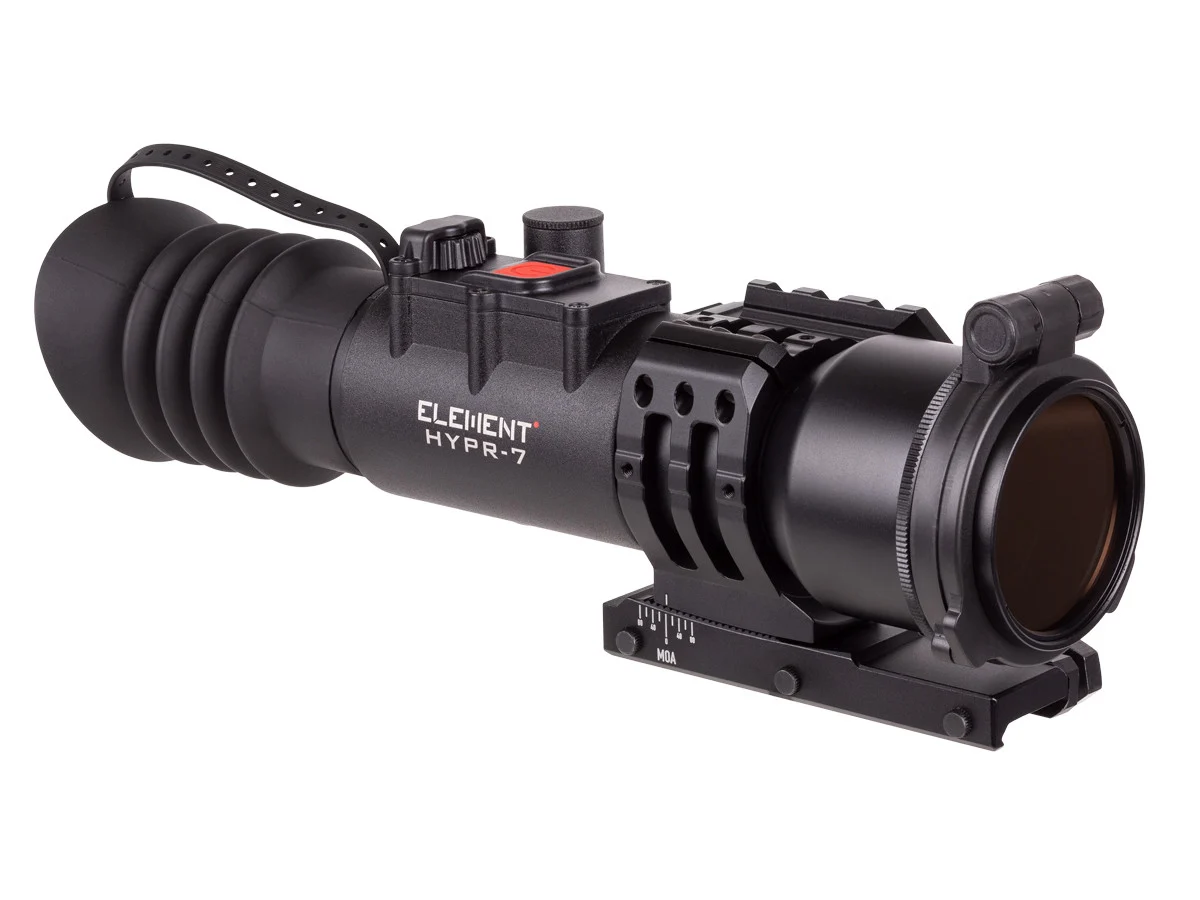
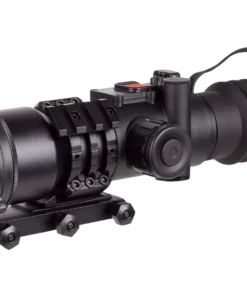
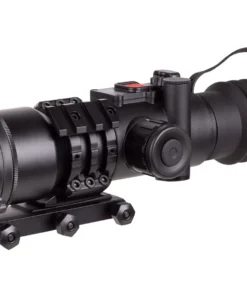
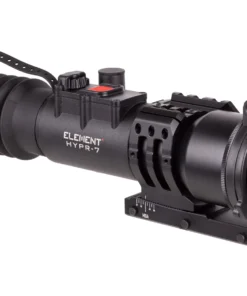
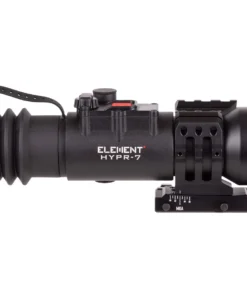
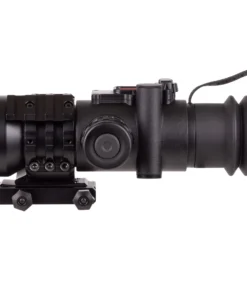
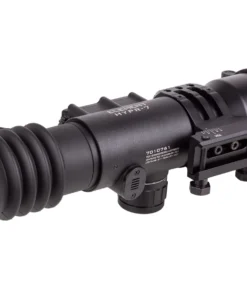
The Element Optics HYPR-7 Rifle Scope brings traditional optical clarity together with intelligent digital technology in one remarkably compact platform. Instead of choosing between conventional glass and modern electronic functionality, users are provided with both. Consequently, the HYPR-7 has been developed for people who value a clear optical image while also appreciating immediately accessible environmental and ballistic information.
At the heart of the system, a fixed 7x prismatic optical configuration is combined with a large 50mm objective lens and ED glass. As a result, a bright, detailed sight picture can be maintained without relying completely on a digital camera or video screen. Furthermore, important information can be presented through the integrated digital display without sacrificing the familiar feel of looking through quality glass.
Why Choose the Element Optics HYPR-7 Rifle Scope?
Rather than being designed as an ordinary fixed-power optic, the Element Optics HYPR-7 Rifle Scope has been engineered as a hybrid precision system. Distance, incline, elevation, windage, point-of-impact information and other relevant data can be displayed digitally within the viewing system. Meanwhile, the optical image continues to be provided through the ED glass system.
Because a programmable reticle has been incorporated, the display can be adapted more readily to individual preferences. Live BDC functionality is also supported, while multiple ballistic profiles can be stored for convenient configuration. Up to four profiles are supported simultaneously through the system.
Additionally, connectivity has been prioritized. Bluetooth support allows compatible external devices to be integrated, while configuration can be managed through the Element Ballistics App. Therefore, settings do not have to remain isolated within the optic itself.
Highlighted HYPR-7 Features
- Fixed 7x magnification for a consistent optical view
- 50mm ED optical system designed for clarity and light transmission
- Prismatic optical configuration
- Digital information display for distance, incline, elevation, windage and POI data
- Programmable digital reticle
- Live BDC functionality
- Four ballistic profiles can be stored simultaneously
- Built-in inclinometer
- Integrated barometer
- Integrated thermometer
- Integrated hygrometer
- Bluetooth connectivity for compatible external devices
- Element Ballistics App configuration
- Parallax adjustment from 6 yards to infinity
- Tilt-adjustable Unimount included
- Accessory rail incorporated into the mounting system
- Magnetic front flip cap with ND filter included
- Waterproof and fogproof construction
- Shock-resistant design
- Nitrogen-purged optical system
Premium ED Glass Meets a Digital Reticle
Clear optical performance remains one of the strongest characteristics of the HYPR-7. Instead of replacing conventional optics entirely with an electronic image, the design has been based around an analog ED optical system. Consequently, natural image detail and optical resolution can be retained while digital information is layered into the user experience.
A 7mm exit pupil is provided, while the field of view measures approximately 25.5 feet at 100 yards, or 8.8 metres at 100 metres. Eye relief is specified at 45mm. Combined with its fixed 7x magnification, these specifications create a specialized optical platform that remains compact despite the amount of technology contained inside it.
Intelligent Environmental Sensors
Conditions can change considerably during outdoor use. For that reason, several environmental sensors have been incorporated directly into the Element Optics HYPR-7 Rifle Scope.
An inclinometer is included for angle information. Moreover, atmospheric pressure can be measured through the onboard barometer. Temperature information is provided through the integrated thermometer, whereas relative humidity can be monitored through the hygrometer.
Because these systems have been combined inside a single optic, significantly more information can be made available without requiring several independent instruments. The digital system can subsequently work alongside compatible external equipment and the Element Ballistics ecosystem.
Programmable Display and Connected Technology
Customization represents another major advantage of the HYPR-7 platform. Instead of requiring every user to work with precisely the same reticle arrangement, the programmable digital system allows different display configurations to be selected.
Furthermore, settings can be managed through the Element Ballistics App, helping create a more integrated digital workflow. Bluetooth connectivity also allows compatible external devices to communicate with the system.
For users who frequently change equipment configurations, support for four stored ballistic profiles can be particularly convenient. Profiles can remain available inside the system rather than being recreated whenever the associated setup changes.
Compact Construction With an Included Adjustable Mount
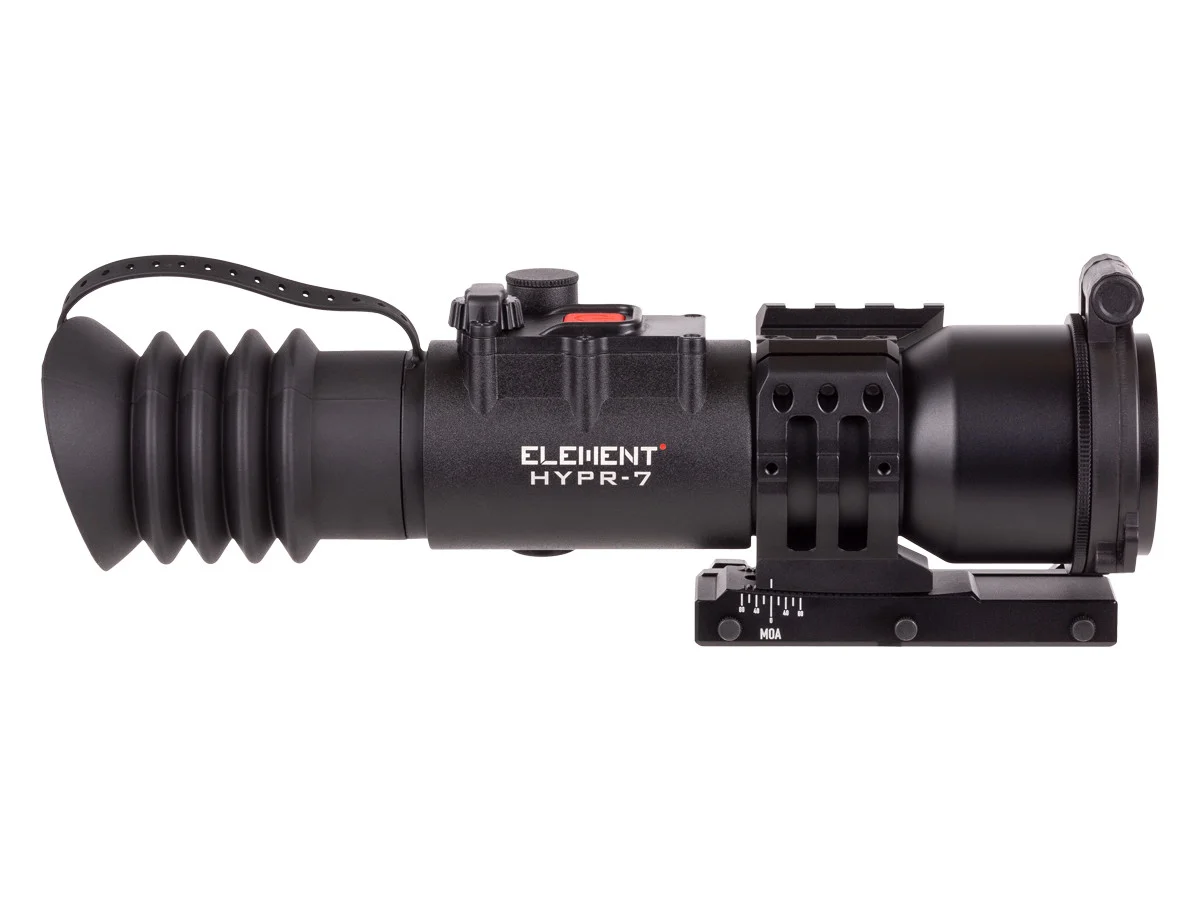
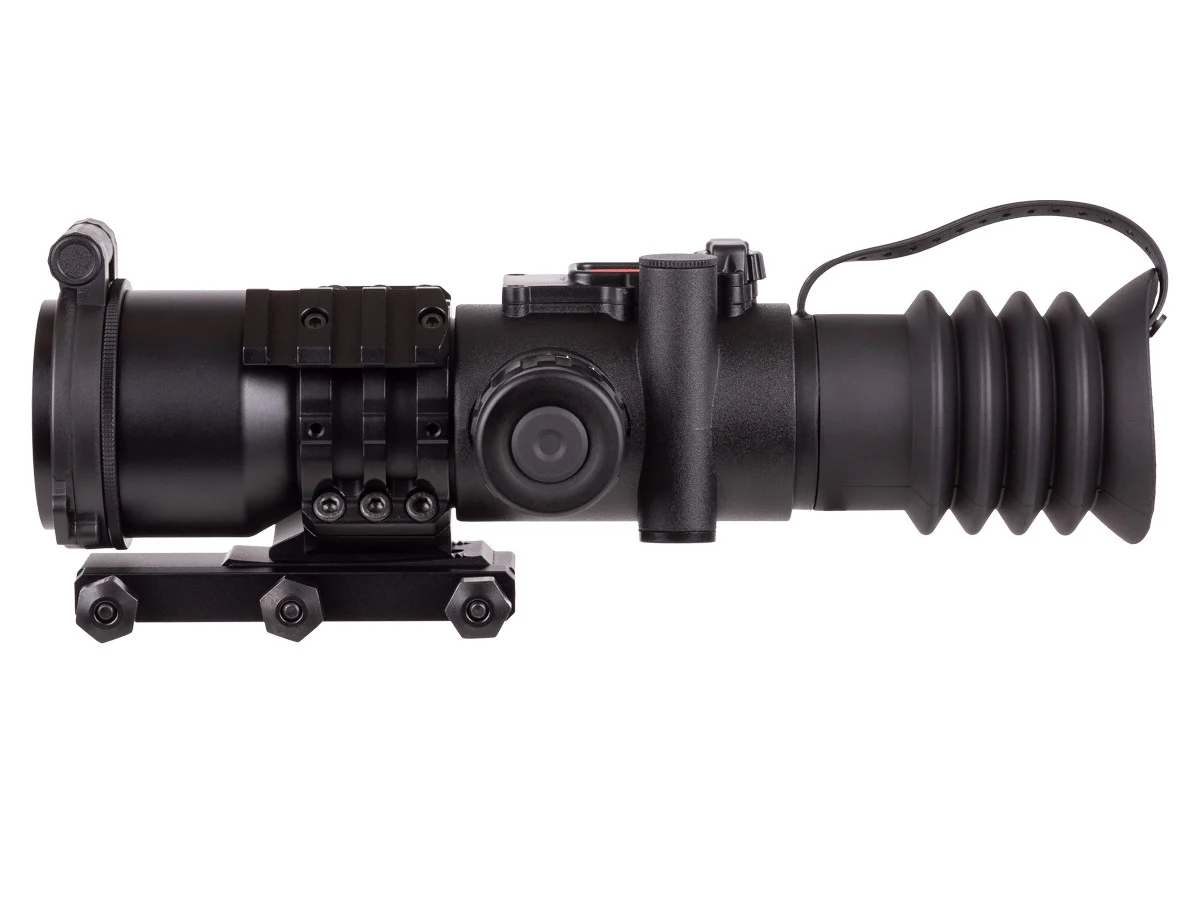
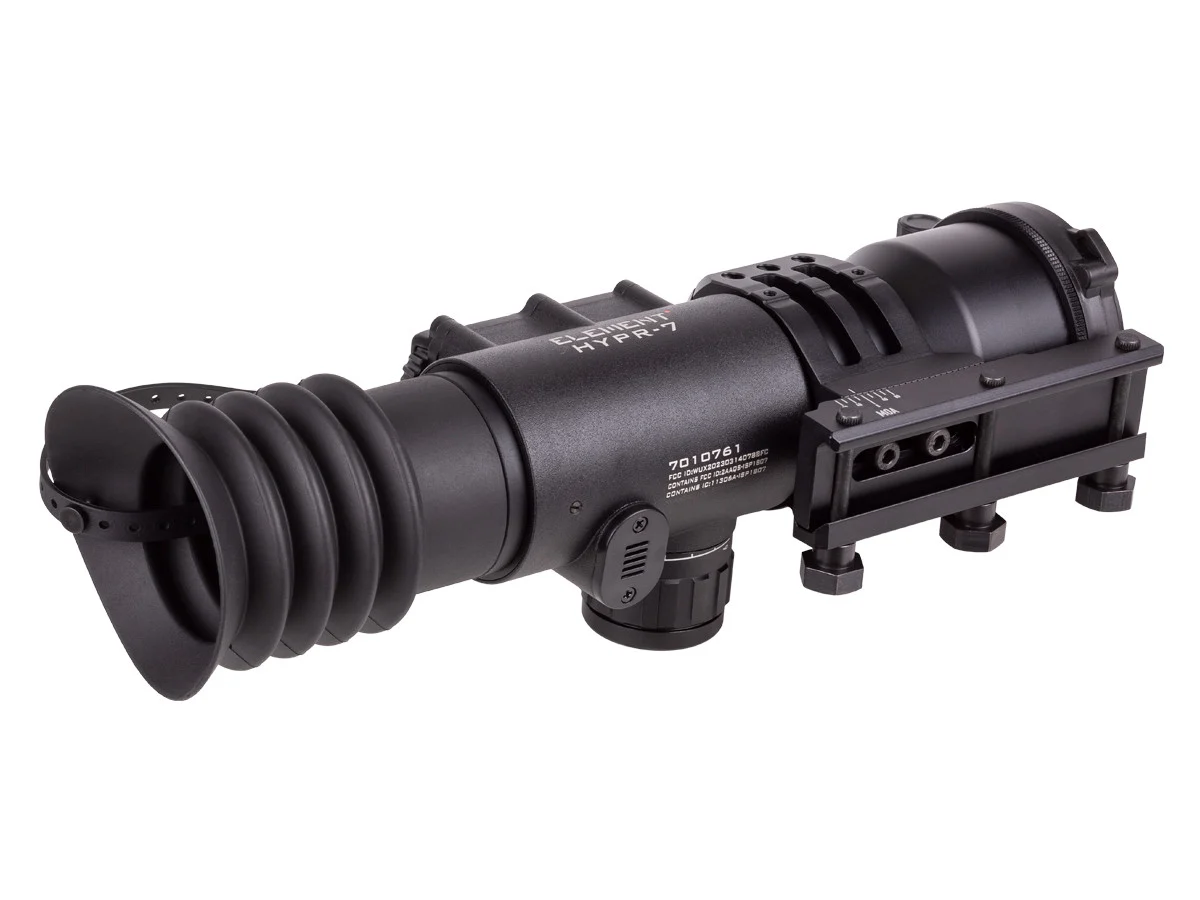
Despite its advanced electronics and 50mm objective lens, the HYPR-7 remains relatively compact. Overall length is approximately 6.81 inches or 173mm, while weight with the battery installed is around 18.3 ounces or 518 grams.
An adjustable Unimount is included rather than leaving the mounting solution entirely separate. The mount offers considerable mechanical elevation adjustment, with Element specifying approximately 160 MOA or 46 MRAD of mechanical elevation travel. Digital elevation travel is listed at 81 MOA or 23.5 MRAD.
Furthermore, an accessory rail has been incorporated into the supplied mounting system, making the overall package more adaptable to compatible accessories.
Built for Changing Outdoor Conditions
Optical performance becomes far less valuable when equipment cannot tolerate changing weather conditions. Therefore, environmental resistance has been incorporated into the HYPR-7 design.
The optic is specified by Element Optics as waterproof, fogproof and shockproof, while the internal optical system has also been nitrogen purged. Accordingly, greater protection is provided against internal fogging and demanding outdoor environments.
A magnetic front flip cap is included as well. Importantly, the cap incorporates an ND filter, adding another practical component to the complete package rather than requiring it to be purchased separately.
Element Optics HYPR-7 Rifle Scope Specifications
Magnification: 7x
Optical System: Prismatic
Objective Lens Diameter: 50mm
Exit Pupil: 7mm
Eye Relief: 45mm / 1.8 inches
Field of View: 25.5 ft at 100 yards / 8.8m at 100m
Minimum Parallax: 6 yards / 6 metres
Digital Elevation Travel: 81 MOA / 23.5 MRAD
Mechanical Elevation Travel: 160 MOA / 46 MRAD
Overall Length: 6.81 inches / 173mm
Weight With Battery: 18.3 oz / 518g
Waterproof: Yes
Fogproof: Yes
Shock Resistant: Yes
Nitrogen Purged: Yes
A Different Approach to Modern Precision Optics
Ultimately, the Element Optics HYPR-7 Rifle Scope stands apart because conventional optical quality and advanced digital functionality have been brought together rather than treated as separate technologies.
Clear ED glass provides the visual foundation. Meanwhile, programmable reticles, onboard environmental sensors, Bluetooth connectivity, app-based configuration and multiple stored profiles introduce the flexibility expected from modern electronic systems.
Additionally, the included tilt-adjustable mount, accessory rail, magnetic ND-filter flip cap and weather-resistant construction create a more complete package from the beginning. Therefore, users looking for a compact hybrid optic with sophisticated digital integration can consider the HYPR-7 as an advanced alternative to a conventional fixed-power riflescope.
For those who value premium glass, programmable technology, environmental sensing, integrated connectivity and rugged construction, the Element Optics HYPR-7 offers an unusually comprehensive combination in a compact 7×50 platform.
Element Optics Scope Families, Magnification Formats, Reticles, Rangefinding Technology, and Mounting Systems
Modern optical systems cover a wide spectrum of magnification ranges, reticle configurations, optical architectures, and mounting standards. Among frequently researched product families, element theos is commonly associated with precision-oriented optics, while the general search phrase theos scope is often used by people comparing different models within the same family. Specific searches such as element theos 6-36 and 36×56 generally reflect interest in higher-magnification configurations, while element theos 6 36×56 represents another commonly entered variation of the same type of specification.
At the lower and intermediate magnification end, element optics 2-10 is frequently compared with terms such as element 2-10 scope and element 2 10 scope. These searches usually indicate interest in a broader field of view at lower magnification combined with additional image enlargement when required. Across the wider product family, element scopes may encompass several optical configurations intended for different observation distances and applications.
Another major family is element helix, which is regularly researched alongside broader terms such as helix scope. People comparing magnification specifications may also encounter element optics 6-24×50 and element helix 6 24×50, where the numbers identify magnification and objective-lens formats commonly used to categorize optical products.
Understanding Element, Nexus, Titan, and Theos Terminology
Visitors using a scopes website may encounter several families positioned within different optical categories. The phrase element tactical may appear in searches involving ruggedized optical equipment, while optic scope manufacturer is a broader search used by readers researching who designs or produces particular optical systems. Another search variation, op element, can appear when users enter shortened or incomplete brand-related queries.
Within the same broader ecosystem, element prism describes searches connected with compact prism-based optics rather than conventional variable optical assemblies. Meanwhile, titan scope generally refers to another family frequently compared with Helix, Nexus, and Theos products.
Research surrounding the Nexus line commonly includes nexus scope, element nexus scopes, and nexus scopes. The phrase nexus tactical may also appear in comparative research, whereas nexus 4-25×50 identifies a more specific magnification and objective configuration. Updated-generation research frequently uses element nexus gen 2, particularly when readers want to distinguish newer designs from earlier versions.
Another recognizable family is element titan. Searches such as 5-25 scope are broader and can include products from many manufacturers, while 25/56 may appear as shorthand or an incorrectly formatted specification entered by users. Other search variations include titan 5, titan25, and the longer phrase element titan 5 25×56 ffp review, which typically indicates research focused on specifications, optical behavior, reticle layout, and user observations.
The Theos family also generates lower-magnification searches including theos 2-10, element theos 2-10, and element theos 2 10. A related generic phrase, element 2-10, can be used when the exact product designation is not yet known. Broader searches such as 10 optic, 2-10 optic, and 2-10x scope normally focus more on magnification class than on a specific optical family.
One specific configuration frequently entered into search engines is theos 2-10×42 ffp. In this type of designation, the numbers commonly communicate the magnification range and objective diameter, while FFP generally refers to a first-focal-plane reticle arrangement.
Magnification Ranges and Optical Formats
Magnification terminology can initially seem complicated because equivalent ranges may be written in several ways. For example, 2-12 scope and 2×12 scope may be used by searchers looking for variable optics even though manufacturers usually follow more standardized formatting. Likewise, 2-12 scope ffp adds a focal-plane criterion to the search.
Unconventional phrases such as fffp 2 may simply reflect typing variations, indexing artifacts, or incomplete search queries. Similarly, 12×4/2 may appear online without representing a standardized optical specification. When researching technical products, specification sheets should therefore be distinguished from user-generated search phrases.
Additional terminology includes helix hd 2 16×50, which combines a product-family reference with a magnification and objective format, and hdlr, which may appear in search datasets as an abbreviation or incomplete product reference.
The Titan line is also associated with intermediate magnification searches. element titan 3 18×50 and element titan 3-18×50 are two formatting variations that readers may encounter. Generic searches such as 3×18, 3-18 scopes, and 3-18 represent broader magnification research rather than one particular model.
Comparable searches may extend to competing optical families, as shown by nightforce 3-18. Someone entering best 3-18 scopes is generally conducting comparative research across several manufacturers, while 3×18 scope is another common way of expressing the magnification category. Even the unusual notation 3:18 can appear in search data despite not being the conventional method for presenting scope magnification.
Other magnification-related expressions include 10×40, .10×40, and 14×50. Because punctuation and spacing vary significantly in search queries, readers should verify the manufacturer’s specification rather than assuming every search-string variation represents a separate product.
Prism Optics and Optical Image Characteristics
The phrase what is a prismatic scope usually reflects an educational search about prism-based optical architecture. A prismatic scope typically uses a prism assembly as part of its optical system, producing a configuration that differs from a traditional variable optic.
The expression prismatic scale of the elements belongs to a different scientific context and ordinarily refers to chemical trends rather than sporting optics. Its appearance beside optical keywords can therefore result from overlapping searches around the word “element.” Similarly, spectrum element can have scientific meanings unrelated to optical equipment.

Other broad or ambiguous search terms include element vision, element 3.0, element hyper 7, and element ll. Such phrases should be checked against authoritative model documentation before they are interpreted as formal product names. Searches for hqp7-rf-2 specifications details likewise suggest that the user is looking for a particular technical specification set and should compare model documentation carefully.
One important optical concept is chromatic aberration scope performance. Chromatic aberration occurs when different wavelengths of light are not brought to precisely the same focal point, potentially producing colored fringes around high-contrast objects. Lens design, glass selection, coatings, and optical correction all influence how noticeable this effect becomes.
Reticles, Rangefinding, and Measurement Technology
Among the most important optical components are rifle scope reticles, which provide the reference pattern visible within the optical field. Reticles can differ substantially in geometry, subtension, focal-plane position, and intended measurement methodology.
A ballistic rangefinder combines distance measurement with additional calculation functionality in certain systems. Searches for element rf and element range often indicate interest in electronic distance-measuring equipment associated with the same brand ecosystem.
Terms such as picatinny mounted rangefinder and picatinny range finder describe rangefinding devices categorized according to their mounting interface. Other common searches include rifle rangefinder, weapon mounted range finder, laser range finder for rifle, and rifle range finder. These phrases largely represent different ways users search for distance-measuring equipment.
Integrated systems may be researched through phrases such as scopes with rangefinders built in, rangefinder scope for rifle, and rangefinding rifle scope. Although these search terms appear similar, actual products can differ considerably in optical architecture, electronic integration, ranging technology, display design, and environmental specifications.
Abbreviations are also common. wmlrf is frequently associated with weapon-mounted laser rangefinding terminology, while arken wmlrf identifies a manufacturer-specific search variation. The phrase weapon mounted ballistic calculator generally refers to electronic equipment that processes range and ballistic data as part of a broader measurement system.
Mounting Interfaces and Ring Terminology
Mounting terminology is another major part of optical research because compatibility depends on dimensions and interface standards. The phrase element mount broadly covers mounting equipment associated with Element-branded optics.
A dovetail scope mount interfaces with a dovetail-style rail, while dovetail rings describe rings intended for compatible dovetail mounting systems. These should not automatically be treated as interchangeable with Picatinny components because rail geometry and attachment systems can differ.
Searches surrounding elevated accessory platforms include 34mm diving board mount, 34mm scope mount with diving board, and diving board scope mount. Related variants include 30mm diving board mount and scope diving board. In these expressions, 30 mm or 34 mm commonly refers to the diameter of the optic tube or compatible ring structure rather than the rail width.
Picatinny mounting terminology includes picatinny scope rings, 30mm scope mount picatinny, 30mm picatinny scope rings, and picatinny scope mounts. Correct compatibility depends on the optic’s tube diameter, ring dimensions, rail standard, available clearance, and the specifications of the equipment involved.
Dovetail-specific searches can become even more precise, including 30mm dovetail scope rings and dovetail scope mounts. Buyers and researchers should distinguish tube diameter from rail-interface dimensions, because both measurements affect component compatibility.
Protective Covers and Optical Accessories
Protecting lenses from dust, moisture, scratches, and debris is another part of optical-equipment care. Searches for tenebraex scope caps generally relate to rigid or semi-rigid lens protection, while tenebraex scope covers may refer to a broader category of protective accessories.
A flexible alternative may appear under searches such as allen neoprene scope cover, where a soft protective material is used to cover much of the optic’s exterior during storage or transport.
Accessories should always be selected by checking verified dimensions rather than relying solely on model-family names. Objective diameter, ocular diameter, tube size, turret dimensions, and overall optic length can all affect whether a protective accessory fits correctly.
Interpreting Element Optics Search Terminology
Because optical searches contain many overlapping product names, abbreviations, formatting differences, and user-generated spellings, individual keywords should be interpreted in context rather than treated as separate specifications automatically. Families including Theos, Helix, Titan, and Nexus can be researched by magnification range, objective diameter, focal-plane configuration, optical characteristics, and compatible mounting format.
Consequently, technical research is most reliable when model-specific documentation is used to verify magnification, objective diameter, tube dimensions, reticle configuration, adjustment system, optical construction, and accessory compatibility. Search terminology can help locate relevant information, but verified technical documentation remains the appropriate reference for determining what a particular optical model actually includes.
Practical Use Scenarios
A modern hybrid optic becomes most valuable when its features are applied to real conditions rather than judged only from a specification sheet. In practical use, clarity, consistency, environmental awareness, mounting stability, reticle visibility, and ease of configuration all influence how comfortable and useful an optic feels over time. Because this model combines conventional glass with an integrated digital information layer, it can fit a variety of lawful sporting and recreational environments while reducing the need to constantly move attention between several separate devices.
Recreational Range Shooting
For recreational range use, a consistent fixed-magnification view can make the shooting experience feel simple and repeatable. Instead of frequently changing magnification and then readjusting visual expectations, the same optical perspective is maintained from one session to the next. Consequently, users can spend more time concentrating on sight alignment, equipment consistency, and responsible marksmanship fundamentals.
The large objective lens also becomes useful during long sessions where viewing comfort matters. A bright, detailed image can reduce visual strain, particularly when targets contain small scoring rings, contrasting shapes, or fine markings. Furthermore, the combination of traditional glass and a digital overlay allows essential information to remain available without replacing the natural optical image with a fully electronic screen.
At an established shooting range, distance is often known in advance. Even so, environmental information can still be valuable for recording conditions between sessions. Temperature, atmospheric pressure, inclination, and humidity may vary from one day to another. Therefore, having access to environmental data can help users maintain more complete range notes and better understand why equipment may appear to behave differently under changing conditions.
For enthusiasts who keep shooting journals, this becomes particularly convenient. A range session can be documented alongside weather information, ammunition or pellet selection, mounting configuration, and other observations. Over time, these records can make equipment testing more structured and easier to compare.
Benchrest and Accuracy Testing
Bench-supported shooting places strong emphasis on repeatability. Small changes in posture, equipment setup, ammunition consistency, or environmental conditions can affect results. As a result, an optic that provides a stable image and clearly presented information can contribute to a more methodical testing process.
When a rifle or air rifle is supported securely on a bench, users can focus on evaluating group consistency rather than reacting to movement caused by unsupported shooting positions. A fixed 7x view can be especially useful at moderate distances because the visual scale remains unchanged throughout the session. Consequently, comparisons between groups can feel more straightforward.
The integrated sensor system can also support detailed equipment evaluation. Rather than simply recording whether a group was larger or smaller, shooters can note the surrounding conditions at the time each series was completed. Temperature changes, for example, may coincide with changes in ammunition performance, air pressure systems, or general equipment behavior. Similarly, significant atmospheric differences between testing days can be documented for future reference.
This does not replace proper range procedures or disciplined testing methods. However, it can provide additional context, which may be useful when evaluating mechanical consistency across multiple sessions.
Air Rifle Target Shooting
Air rifle enthusiasts often work at relatively short or moderate distances where parallax adjustment becomes especially important. Because the optical system can be adjusted down to close distances, it is well suited to environments where targets are not positioned hundreds of yards away.
In a controlled airgun range, users may move between different target distances during the same session. Therefore, close-range focus capability helps maintain a clear target image rather than forcing the optic to operate outside its practical focusing range. This becomes particularly useful for precision-oriented recreational shooting, club competitions, informal target practice, and equipment testing.
A compact overall design can also complement air rifles that would feel unbalanced with a very long traditional scope. Reduced overall length may help preserve a more manageable profile, especially when the rifle itself has been designed around a compact action or short receiver.
In addition, digital profile storage can be convenient for users who legally operate more than one compatible sporting setup. Separate profiles can be retained for different configurations instead of manually rebuilding every setting from the beginning. That convenience can make regular range use feel more organized.
Field Target and Structured Sporting Events
Field target and similar organized airgun disciplines often place targets at varied distances and angles. In such settings, equipment must remain clear, predictable, and comfortable to use throughout a full course.
An onboard inclinometer can provide useful environmental awareness when targets are positioned above or below the shooter’s level. Likewise, the digital information system can reduce the number of separate instruments that would otherwise need to be carried.
Compact equipment can be beneficial during events that require movement between multiple shooting lanes. Instead of carrying a bulky optic and several independent electronic tools, users can consolidate some functions into a single system. This may make transportation between stages more convenient while reducing clutter around the shooting position.
Nevertheless, competition rules should always be checked before electronic aids are used. Some events restrict certain technologies, while others permit them. Therefore, the optic’s advanced capabilities should be matched to the regulations of the specific discipline rather than assumed to be universally acceptable.
Responsible Hunting Where Legally Permitted
In jurisdictions where hunting with rifles or air rifles is lawful, optical clarity becomes especially valuable during variable outdoor conditions. Woodland edges, open farmland, uneven terrain, and changing daylight can all create visual challenges. A high-quality optical image can help users identify what they are looking at more clearly before any decision is made.
Responsible hunting requires positive identification of the intended quarry, awareness of the surrounding area, compliance with local seasons and licensing requirements, and recognition of safe shooting directions. An optic can assist with visibility, but it does not replace those responsibilities.
Environmental sensors may also be useful during long periods outdoors. Temperature and atmospheric changes can be monitored without relying on separate devices, while the inclinometer can provide additional awareness in uneven terrain.
The relatively compact design may be appreciated by people who spend extended periods walking through legal hunting areas. Large, heavy optics can increase fatigue when combined with other field equipment. Therefore, a shorter optic may contribute to better overall balance and easier transport.
Pest-Control Applications by Authorized Users
In some agricultural or professional environments, lawful pest management may be performed by trained or authorized individuals. Where regulations permit this activity, clear optics can support accurate observation and responsible target identification.
The close parallax capability may be useful because pest-control distances can sometimes be considerably shorter than traditional long-range shooting distances. Furthermore, a clear optical image helps distinguish the intended animal from surrounding objects, livestock, buildings, equipment, or other non-target elements.
Because these situations can occur around farms or controlled properties, strict attention to safe backstops and legal requirements remains essential. Technology should be treated as an aid to observation and equipment consistency rather than a substitute for professional judgment.
Equipment Testing Across Different Conditions
One of the strongest practical uses of an integrated environmental system is controlled equipment comparison. Shooters who test different ammunition, pellets, rifle configurations, or accessories can record more than group size alone.
For example, one session may take place during cool, dry weather while another occurs during warmer, more humid conditions. Without environmental data, differences may be attributed entirely to equipment changes. However, having access to atmospheric information allows the user to document the broader context.
This can be particularly useful for air rifles, where temperature may affect pressure systems, seals, lubricants, and projectile behavior. Similarly, conventional rifles may display differences related to ammunition temperature, barrel condition, and changing environmental factors.
By creating structured records, users can gradually build a clearer picture of how their sporting equipment performs across seasons rather than drawing conclusions from a single afternoon at the range.
Multi-Rifle Sporting Setups
Some enthusiasts own several lawful sporting rifles or air rifles for different purposes. One setup may be intended for short-range target work, another for club competition, while a third may be reserved for general recreational use.
Stored profiles can make moving between compatible configurations more convenient. Instead of repeatedly entering the same information, users can retain several established settings and select the appropriate one when equipment changes.
This does not eliminate the need to verify zero or confirm that mounts remain secure after installation. Every setup should still be checked carefully before serious use. Nevertheless, profile storage can reduce repetitive configuration work and help maintain a more organized workflow.
Training and Skill Development
Technology can also be used as a learning aid when approached correctly. Newer shooters often benefit from understanding how environmental conditions, equipment setup, stability, and sight alignment interact.
Rather than treating digital information as something that replaces judgment, users can compare what the sensors show with what they observe during practice. Over time, this may help develop a better understanding of changing conditions and equipment behavior.
For example, a shooter might notice that two sessions performed under different temperatures produce slightly different results. Instead of immediately adjusting equipment, they can review the conditions, confirm mounting stability, and repeat the test. This method encourages structured learning rather than constant unnecessary adjustment.
Experienced shooters can use the same information differently. Instead of learning basic relationships, they may use environmental data to document fine variations during long-term equipment evaluation.
Outdoor Practice in Variable Weather
Outdoor ranges rarely provide perfectly consistent conditions. Bright sunlight may be followed by cloud cover, temperatures can change throughout the day, and humidity may rise or fall.
A weather-resistant optic becomes particularly valuable under these conditions. Waterproofing, fog resistance, nitrogen purging, and shock resistance provide additional confidence when equipment is exposed to changing environments.
This does not mean the optic should be intentionally mistreated. Proper care remains important, especially after exposure to rain, dust, mud, or large temperature changes. However, protective construction can make normal outdoor use less stressful.
The included front protection also helps shield the objective lens while equipment is being transported or stored. Protecting optical surfaces can preserve image quality and reduce the amount of cleaning required over time.
Use in Bright Conditions
Strong daylight can occasionally make electronic displays more difficult to view. An integrated neutral-density filter can therefore be useful when lighting becomes exceptionally bright.
Rather than changing the entire setup, the front cap system can provide additional control over incoming light. This may improve viewing comfort in highly illuminated environments, depending on conditions and user preference.
Bright ranges, open fields, dry environments, and reflective terrain can all create high levels of visual glare. Having another method of managing light can make the optic more adaptable across changing outdoor environments.
Club and Training Range Environments
Shooting clubs often include users with very different levels of experience. Some focus on casual recreation, while others are interested in testing equipment, developing competition skills, or maintaining consistent sporting routines.
In such environments, a hybrid optic can become a useful tool because it offers both familiar optical viewing and access to additional information. Traditional scope users can continue looking through real glass, while users interested in digital features can explore programmable settings and environmental data.
This combination may also make the optic suitable for demonstrations where instructors explain equipment behavior. Instead of describing atmospheric changes only in theory, the displayed information can provide a direct reference during the session.
Traveling Between Legal Sporting Venues
Compact dimensions can become especially valuable for users who travel between ranges, clubs, farms, or competition locations. Shorter equipment is generally easier to store inside protective cases and may leave more space for other accessories.
The included mounting system can also simplify overall equipment planning because a compatible mount does not necessarily have to be sourced separately. Nevertheless, users should always confirm compatibility with their specific platform before installation.
Transport regulations should also be followed carefully. Firearms and airgun laws differ widely between countries, states, provinces, and local jurisdictions. Therefore, equipment should always be transported, stored, and used according to applicable law.
Long-Term Recreational Ownership
Practical value is not limited to a single shooting session. Over months and years, convenience features often become just as important as headline specifications.
A compact build, configurable profiles, integrated environmental sensing, strong optical clarity, and protective construction can reduce the amount of additional equipment required for regular sporting use. Instead of constantly adding separate accessories, users can rely on several integrated functions.
That integrated approach may be particularly attractive to people who prefer a cleaner equipment setup. Fewer independent devices can mean fewer batteries to manage, fewer accessories to pack, and less clutter around the shooting position.
Ultimately, the greatest benefit comes from versatility. Whether the optic is being used for recreational range sessions, lawful hunting, airgun competition, equipment testing, or structured training, the combination of conventional optical performance and digital information can support a more organized and informed experience.
Responsible use should always remain the priority. Local regulations, range rules, competition requirements, safe handling procedures, proper maintenance, and careful target identification must be followed regardless of how advanced the equipment becomes. When those fundamentals are respected, the technology can serve its intended role: improving convenience, visibility, environmental awareness, and consistency during legitimate sporting and recreational use.




Reviews
There are no reviews yet.