Daystate Wolverine R Hi-Lite Regulated Forester
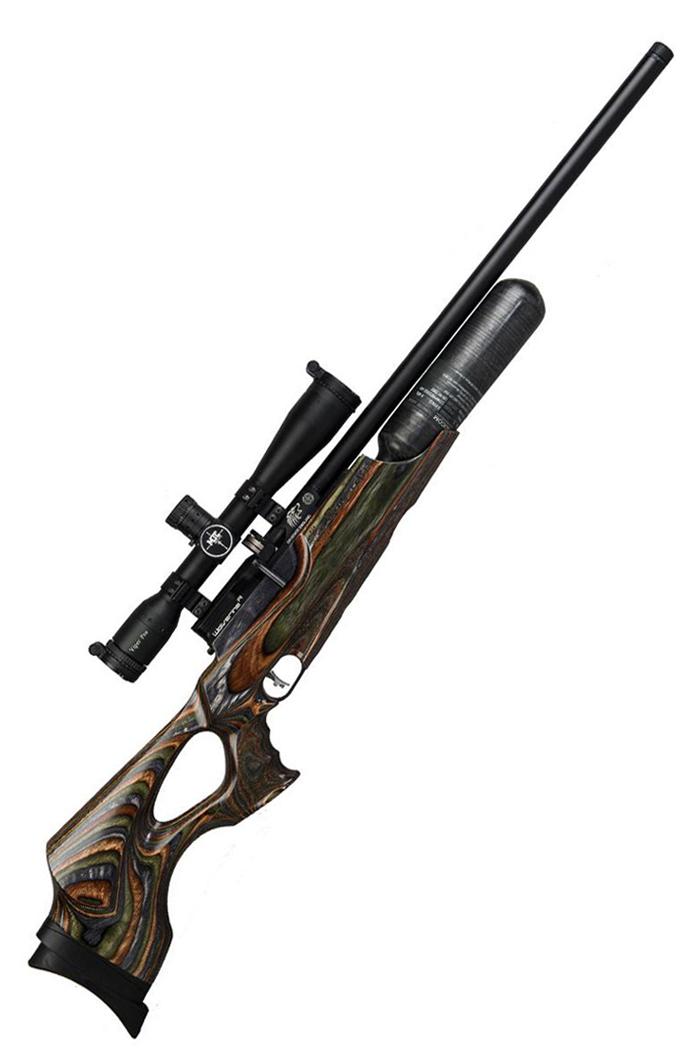
Exceptional mechanical PCP engineering is brought together with distinctive British styling in the Daystate Wolverine R Hi-Lite Regulated Forester. Designed as a premium member of Daystate’s renowned Wolverine family, this regulated pre-charged pneumatic air rifle is distinguished by its Forester laminate stock, lightweight Hi-Lite air system, refined sidelever action, and highly consistent regulated performance.
Above all, reliable shot-to-shot performance has been prioritized. A Huma-Air regulator has been incorporated into the Wolverine R platform so that controlled air delivery can be maintained throughout the usable charge. Consequently, excellent consistency can be achieved while efficient use of the rifle’s compressed-air supply is also promoted. Daystate states that the regulator was developed in partnership with Huma-Air and was introduced to improve consistency, efficiency, and downrange accuracy.
Premium Regulated Mechanical PCP Performance
A sophisticated mechanical system is provided by the Daystate Wolverine R Hi-Lite Regulated Forester, while unnecessary electronic complexity is avoided. Instead, dependable mechanical operation is combined with modern regulation technology.
Furthermore, the Wolverine R platform has been equipped with a smooth sidelever cocking system. Right- or left-side operation can be factory configured, allowing the rifle’s ambidextrous stock design to be better accommodated. Therefore, comfortable operation can be enjoyed by a wider range of shooters.
Air management is handled through the Hi-Lite configuration’s lightweight carbon-fibre bottle. A 480cc capacity has been specified for the Hi-Lite version, while fill pressures of up to 250 bar have been listed for relevant configurations. As a result, substantial air capacity can be carried without unnecessary bulk being introduced into the overall design.
Huma-Air Regulated Consistency
Consistency has been placed at the centre of the Wolverine R design. Rather than allowing pressure variations within the air reservoir to influence every shot directly, regulated air delivery is provided.
Therefore, a more controlled quantity of air can be released during each firing cycle. In turn, velocity variation can be reduced, efficient air consumption can be encouraged, and predictable performance can be maintained throughout much of the usable fill.
This feature becomes particularly valuable during extended shooting sessions, where repeatability is expected from a premium PCP platform. Moreover, the regulator allows the mechanical Wolverine design to deliver the refined performance normally expected from modern regulated rifles.
Forester Laminate Stock With Distinctive Styling
Immediately noticeable styling is provided by the Forester laminate stock. Layered woodland-inspired tones are combined to produce a distinctive appearance that separates this version from conventional walnut and standard laminate configurations.
However, appearance has not been prioritized at the expense of usability. A thumbhole sporter configuration is incorporated, while ambidextrous characteristics are retained. Consequently, a stable and natural shooting position can be supported.
The Forester concept has also formed part of Daystate’s history. Earlier Forester editions were produced before the distinctive treatment was subsequently applied to the Wolverine R as a special-edition configuration.
Lightweight Hi-Lite Air System
Reduced front-end weight is encouraged through the carbon-fibre Hi-Lite bottle system. Consequently, the rifle can remain substantial and stable without being made unnecessarily cumbersome.
According to Daystate’s published Wolverine R specifications, the Hi-Lite model is approximately 38 inches (965 mm) long, uses a 17-inch/approximately 430 mm barrel, and weighs approximately 7.4 lb (3.36 kg) before optics, although exact weight can vary with configuration.
Those dimensions allow the rifle to remain relatively compact for a full-size regulated PCP. Therefore, comfortable handling can be maintained whether the rifle is being used from a supported position or carried between shooting locations.
Key Daystate Wolverine R Hi-Lite Regulated Forester Features
- Premium regulated mechanical PCP system
- Huma-Air regulator for controlled shot-to-shot air delivery
- 480cc carbon-fibre Hi-Lite air bottle
- Distinctive Forester laminate thumbhole sporter stock
- Sidelever cocking action
- Right- or left-side lever configuration available
- Ambidextrous stock design
- 10-shot magazine system
- Magnetic single-shot loading tray
- Adjustable two-stage mechanical trigger
- Independent manual safety
- Lever-open firing deactivation system
- Approximately 38-inch overall length
- Approximately 17-inch barrel
- Approximately 7.4 lb unscoped weight
- Multiple calibre configurations depending on market and specification
Daystate’s historical and current Wolverine documentation lists the Hi-Lite configuration in .177, .22 and .25 calibres, while market-specific power levels and legal availability can differ.
Refined Sidelever Operation
Smooth cycling has been encouraged through the sidelever action. Compared with the earlier Wolverine 2 bolt arrangement, the R model was redesigned around sidelever cocking.
As a result, repeat operation can be performed with minimal unnecessary movement. Additionally, the lever can be configured for either side, depending on factory specification. This characteristic complements the rifle’s ambidextrous stock and makes the platform adaptable to different users.
A magazine-fed system is also provided. The published specification lists a 10-shot magazine, while a magnetic single-shot loading tray has been supplied as a standard feature on relevant configurations.
Therefore, different shooting preferences can be accommodated without altering the fundamental character of the rifle.
Adjustable Two-Stage Mechanical Trigger
Precise trigger control is supported by a two-stage mechanical release system. Adjustment for stage length and release weight has been specified for the Wolverine R platform, allowing the trigger characteristics to be configured appropriately within manufacturer guidance.
Furthermore, safety has been incorporated into the mechanical design. An independent manual safety is provided, while a lever-open deactivation mechanism prevents firing when the sidelever remains open.
These features contribute to the carefully engineered feel expected from Daystate’s premium mechanical PCP range.
Efficient Air Capacity and Shot Count
One of the major benefits offered by the regulated Wolverine R platform is improved air utilization.
For the Hi-Lite version, Daystate historically published figures reaching up to 500 shots at 12 ft/lb in certain configurations, although actual shot count varies according to calibre, factory power setting, fill pressure, pellet choice, atmospheric conditions, and individual rifle configuration.
Calibres, FAC Power and Accessories
The Daystate Wolverine R Hi-Lite Regulated Forester has been developed as a premium regulated PCP platform capable of being supplied in several calibre and power configurations. Therefore, shooters can select a specification suited to their intended lawful use, local regulations, preferred pellet weight, and desired handling characteristics.
Importantly, the exact calibre and muzzle-energy configuration should always be confirmed before purchase. Daystate specifications have varied between production periods and markets. Published Wolverine R Hi-Lite literature has listed .177, .22 and .25 calibre versions with energy levels reaching up to 35 ft-lb (47 joules), while Daystate’s current Wolverine R webpage lists standard Hi-Lite configurations primarily in .177 and .22.
.177 Calibre – 4.5mm
A .177 calibre configuration can be selected where a smaller projectile and relatively flat trajectory are preferred.
Because .177 pellets are normally lighter than equivalent .22 or .25 ammunition, higher velocity can generally be achieved at a comparable legal power level. Consequently, the calibre is commonly associated with precision-oriented shooting and target applications.
Furthermore, the regulated firing system allows consistent air delivery to be maintained as reservoir pressure decreases. This consistency can help preserve predictable point of impact throughout the usable air charge.
For jurisdictions where non-FAC limits apply, a lower-powered factory version may be supplied. Higher-output specifications should only be possessed and operated where legally permitted.
.22 Calibre – 5.5mm
Arguably the most versatile option within the Wolverine platform is .22 calibre (5.5mm).
A useful compromise between projectile weight, trajectory, air consumption, and retained energy can be provided by this calibre. Consequently, .22 configurations are offered across numerous Wolverine R variants.
The current Daystate Wolverine R specification lists an 11-shot magazine capacity in .22 calibre. Therefore, multiple pellets can be carried within the self-indexing magazine while a single-shot loading tray can also be used where compatible.
Because FAC versions can operate considerably above UK sub-12 ft-lb levels, users should verify the factory muzzle-energy specification rather than assuming that every .22 Wolverine R produces the same output.
.25 Calibre – 6.35mm
Certain Wolverine R Hi-Lite and Forester-era specifications have also been offered in .25 calibre (6.35mm).
The larger projectile diameter permits heavier pellets to be used, while higher-energy factory configurations can take advantage of the greater projectile mass. Earlier official Daystate literature lists .25 among the Hi-Lite options and gives maximum energy for the configuration of up to 35 ft-lb (47J).
A 10-shot magazine capacity has also been specified for .25 Wolverine R configurations. Availability, however, can depend upon model year and regional distributor inventory.
FAC Power Configuration
The term FAC is commonly used in the UK airgun market for rifles producing muzzle energy above the ordinary non-FAC threshold applicable there.
For the Wolverine R Hi-Lite platform, Daystate has historically published maximum energy of approximately:
- Up to 35 ft-lb / 47 joules – Wolverine R Hi-Lite
- Up to 12 ft-lb / 16 joules – certain lower-power configurations
- Up to 60 ft-lb / 81 joules – Wolverine R HP versions
However, the 60 ft-lb specification applies to the separate HP/Hi-Power Wolverine R platform, rather than meaning every Wolverine R Hi-Lite Forester produces 60 ft-lb. The HP model also receives a longer 23-inch barrel compared with the approximately 17-inch barrel used on the standard Hi-Lite.
Consequently, calibre, model designation and factory setting should all be checked when an FAC rifle is being purchased.
Huma-Air Regulated Power Delivery
Performance is supported by a Huma-Air regulator, which has been integrated into the Wolverine R mechanical action.
Instead of allowing the firing valve to operate directly across widely varying reservoir pressures, a regulated supply of air is delivered to the firing system. As a result, more consistent shot-to-shot performance can be achieved while compressed-air efficiency can also be improved.
A 480cc carbon-fibre bottle is fitted to the Hi-Lite configuration, providing substantial air capacity without the weight that would normally be associated with a similarly sized conventional metal reservoir.
This combination of regulation and generous air capacity is especially valuable on higher-powered factory configurations because more air is normally consumed with each shot.
Compatible Accessories and Equipment
A premium PCP rifle can be configured with appropriate accessories according to the intended shooting environment and legal requirements.
Optics and Mounting Equipment
A suitable telescopic sight can be fitted to create a complete precision-oriented setup. Scope magnification should be selected according to the intended shooting distance and application.
Quality scope mounts should also be chosen so that the optic remains securely positioned while maintaining proper eye relief.
Daystate Magazines
The Wolverine R uses a self-indexing magazine system.
Depending upon calibre, Daystate currently specifies capacities including:
- 13 shots in .177
- 11 shots in .22
- 10 shots in .25
- Different capacities on specific HP configurations
Spare compatible magazines can therefore be useful where quick magazine changes are preferred.
Single-Shot Loading Tray
A compatible single-shot tray allows individual pellets to be loaded directly.
This can be particularly useful during controlled target shooting or ammunition testing because individual pellets can be handled separately without filling a magazine.
Moderator Compatibility
Where permitted by local legislation and supported by the exact barrel configuration, an appropriate airgun moderator may be fitted.
Compatibility should always be checked according to the rifle’s thread specification and production version rather than assuming that every Daystate accessory will fit every Wolverine variant.
Filling Equipment
Because the Wolverine R Hi-Lite is a PCP rifle, an appropriate high-pressure air source is required.
Compatible equipment can include a certified diving cylinder, PCP compressor, or suitable high-pressure hand pump together with the correct filling connection. Only clean, dry compressed air and manufacturer-approved filling pressures should be used.
Gun Case and Maintenance Accessories
A properly sized protective rifle case can help safeguard the laminate stock, barrel, scope and action during lawful transport or storage.
Additional practical equipment may include approved cleaning products, replacement magazine systems, optic accessories and genuine Daystate service components.
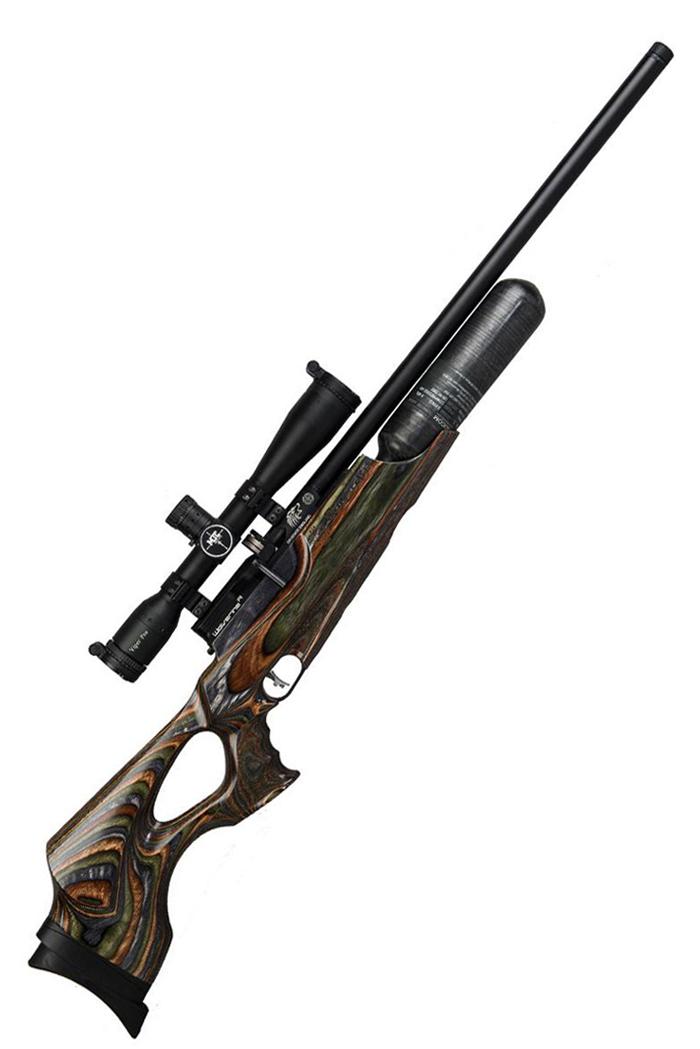
Overall, the Daystate Wolverine R Hi-Lite Regulated Forester combines multiple calibre choices, regulated FAC-capable performance, a large carbon-fibre air reservoir and extensive accessory compatibility. Whether supplied in a lower-energy configuration or a higher-powered factory version, the exact specification should always be matched to the intended use and applicable firearms or airgun regulations.
Higher-powered versions naturally provide fewer shots per charge because more compressed air is consumed for each cycle. For that reason, advertised shot counts should always be interpreted according to the specific calibre and factory-set energy level.
Precision-Focused British Engineering
The Daystate Wolverine R Hi-Lite Regulated Forester has been designed around repeatability rather than unnecessary complexity. Mechanical operation is retained, while a precision regulator, efficient carbon-fibre air system, refined trigger, magazine feeding, and premium stock are combined into one integrated platform.
Consequently, the rifle occupies a distinctive position within Daystate’s range. Traditional mechanical operation is preserved, yet modern PCP technology is extensively incorporated.
Moreover, the Forester laminate gives this particular configuration a visual identity that differs significantly from conventional Wolverine models.
Why the Wolverine R Hi-Lite Forester Stands Out
A combination of regulation, substantial air capacity, relatively low weight, reversible sidelever operation, premium laminate furniture, and proven Wolverine engineering allows this model to stand apart.
For owners who value mechanical PCP design, consistent regulated operation, distinctive craftsmanship, and premium construction, the Daystate Wolverine R Hi-Lite Regulated Forester provides a carefully integrated platform.
Ultimately, a highly refined balance between traditional mechanical operation and modern regulated PCP engineering is delivered. From its lightweight carbon-fibre bottle to its Forester laminate stock and Huma-Air regulated action, each major component has been selected to complement the Wolverine concept.
Calibre, muzzle-energy limits, possession requirements, and permitted uses vary between jurisdictions. Therefore, the rifle should always be purchased, possessed, transported, and used in accordance with applicable local laws and manufacturer safety requirements.
Snowpeak Airguns, PCP Rifles, Air Pistols and Umarex Airguns
For shooters researching Snowpeak airguns, Snowpeak Sports, and the wider Snowpeaks product range, there are many PCP rifles, air pistols, and shooting accessories to consider. Popular searches include the Snowpeak AP900, Snowpeak AP900B PCP air rifle, Snowpeak MAX 1, Snowpeak MAX 1 price, Snowpeak PP750, PP750, Snow Peak PP750, and PP750 air pistol. Buyers also regularly compare models such as the Snowpeak P35, P35, P 35, PCP P 35, Snowpeak P35X, P35X, P35X PCP, and Snowpeak P35 vs P35X.
Other Snowpeak models attracting attention include the Snow Peak PP20, Snowpeak PP20, Snowpeak M25, M25 rifle, M-25, M25 weapon, Snowpeak M60, Snowpeak M60B, M 60B, rifle M60, rifle M50, and M50 rifle. Searches such as Snow Peak brand origin are also common among buyers who want to understand the manufacturer before choosing a rifle or pistol.
Snowpeak PCP Models and Related Airgun Searches
The PCP category covers everything from compact pistols to full-size hunting and target rifles. Searches frequently include PR900 Gen 3, CR650, SR 1000X, T Rex 6000, and pistolet PCP Arcea-Snowpeak Onix Sport. People comparing pneumatic platforms may also search what is a PCP airgun, air gun, air rifle, pellet pistol, air gun accessories, 9mm pellet, and pellet 9mm.
Some search phrases overlap with firearm terminology even when shoppers are researching airgun products. These include rifle M60, how much did the M60 weigh, rifle M50, M50 rifle, M25 weapon, and snowfall gun. Therefore, model specifications should always be checked carefully so that a historical firearm search is not confused with a modern sporting airgun product.
Umarex Airguns, Air Rifles, Pistols and PCP Platforms
Alongside Snowpeak products, Umarex USA, UmarexUSA, Umarex airguns, and Umarex air rifles are widely searched by recreational shooters, target shooters, and PCP enthusiasts. The Umarex range includes PCP rifles, CO₂-powered platforms, break-barrel pistols, BB guns, airsoft replicas, and large-caliber airgun systems.
Popular PCP searches include Umarex Notos, Umarex Notos Carbine, Umarex Gauntlet, Umarex Gauntlet 2, Umarex Gauntlet 30, Umarex Zelos, Umarex Origin, Umarex Komplete, and Umarex Komplete NCR .22. Hunters researching larger airgun platforms may also encounter the Umarex Hammer, Umarex Hammer .50 caliber, Umarex Hammer Carbine, Umarex Primal 20, and Umarex AirSaber.
Umarex Pistols, BB Guns and T4E Models
For handgun-style platforms, popular searches include Umarex BB gun, BBgun, BB gun pistol, metal BB gun, Umarex TR50, Umarex HDR 50, Umarex T4E, Umarex T4E Smith, Umarex Smith, and Umarex P2P DR50 how many joules.
Glock-style replicas remain another major category. Search terms include Glock BB gun, Glock 19 BB gun, Umarex Glock 19, Umarex Glock 19X, Umarex Glock 19 Gen3 .177 caliber BB gun air pistol, Umarex Glock 17, Umarex Glock 17 Gen 5, Umarex Glock, airsoft Glock, airsoft Glock 19, Glock 17 airsoft, and Glock airsoft gun.
Other replica and recreational searches include Umarex MP40, Umarex MP5, Umarex Legends, Umarex HK Heckler, Umarex shotgun, and airsoft pistol.Umarex DX17.
Break-Barrel and Sporting Umarex Airguns
Shooters looking for spring or gas-piston platforms frequently research the Umarex Trevox, loading Umarex Trevox break barrel .177, Umarex pistol break barrel, Umarex Fusion 2, Umarex Synergis Elite, and Amazon Umarex Browning 800 Express. These platforms provide alternatives for people who want an airgun without relying on a high-pressure PCP charging system.
Additional searches across the Umarex catalog include Umarex H, while broader terms such as air rifle, pellet pistol, air gun, and air gun accessories help buyers compare platforms, ammunition, optics, filling equipment, targets, cases, and other shooting equipment.
Whether the focus is a Snowpeak M60, Snowpeak M25, Snowpeak P35X, Snowpeak PP750, Snowpeak MAX 1, Umarex Notos, Umarex Gauntlet 2, Umarex Origin, or Umarex Hammer Carbine, buyers should compare caliber, operating system, power level, dimensions, intended use, and local regulations before selecting an airgun.
Practical Use Scenarios
The most convincing way to understand a premium regulated PCP rifle is to consider how its design translates into real-world use. Instead of being judged only by specifications, reservoir capacity, stock design, or published power figures, its value becomes clearer when those features are considered during realistic shooting sessions. Across formal target practice, controlled outdoor shooting, recreational range use, equipment testing, and carefully managed pest-control work where lawful, a refined regulated platform can offer a combination of repeatability, comfort, balance, and dependable mechanical operation.
Because the rifle has been designed around consistent air delivery, a large air supply, smooth sidelever operation, and an ergonomic stock, it can be adapted to several legitimate sporting and recreational environments. In each situation, however, safe handling, proper backstops, suitable ammunition, local regulations, and manufacturer guidance should always be followed.
Extended Target Practice at the Range
A particularly natural setting for this rifle is an organized shooting range where longer practice sessions are planned.
During a typical session, the rifle may be filled before arrival or topped up using an approved high-pressure air source. Once the shooting position has been established, the regulated firing system can become especially useful. Instead of noticeable performance changes being introduced as reservoir pressure gradually decreases, controlled air delivery is maintained over much of the usable fill.
As a result, the shooter can concentrate more effectively on fundamentals such as breathing, trigger control, sight picture, consistency of hold, and follow-through.
The large carbon-fibre air bottle also becomes valuable during an extended session. Frequent interruptions for refilling can be reduced, allowing more time to be spent actually shooting. This can be especially convenient when the range is located some distance from a compressor or charging station.
A quality optic can be fitted and zeroed for the chosen pellet. Once a reliable combination has been established, repeated groups can be fired to evaluate consistency. Because the trigger is adjustable, it can be configured within the manufacturer’s recommended parameters to provide a predictable release.
For bench-rested shooting, the rifle can be supported securely on suitable front and rear rests. In this environment, much of the human movement that affects accuracy can be reduced. Therefore, pellet performance, point-of-impact consistency, and rifle setup can be examined more precisely.
Pellet Testing and Accuracy Evaluation
Another practical use involves systematic pellet testing.
Even high-quality air rifles can show clear preferences for particular pellet designs, head sizes, or weights. Consequently, several compatible pellet types may be tested under controlled conditions before a preferred option is selected.
A safe range with a suitable backstop should first be used. The same distance can then be maintained for each test group, while environmental conditions should be kept as consistent as reasonably possible.
For this type of work, a single-shot loading tray can be particularly useful where one is available for the rifle. Each pellet can be individually inspected and loaded, allowing damaged or visibly inconsistent ammunition to be excluded from the test.
Several groups can then be fired with each pellet type.
Rather than judging ammunition from a single unusually good or bad group, a broader pattern can be considered. Group size, consistency, point of impact, and reliability can all be evaluated.
Because regulated air delivery helps reduce pressure-related variation, differences between pellet types may become easier to identify. Therefore, the selected ammunition can be chosen according to repeatable results rather than assumption.
Once a suitable pellet has been identified, the same type can be used for future range sessions whenever consistent performance is required.
Recreational Outdoor Shooting
Controlled outdoor recreational shooting can also highlight the handling characteristics of the rifle.
Where a lawful shooting area and secure backstop are available, targets can be placed at appropriate distances while ensuring that the complete danger area behind each target remains controlled.
Different shooting positions can then be practiced.
From a seated position, the thumbhole-style stock can provide a stable interface between the rifle and shooter. From a supported standing position, balance becomes increasingly important. Meanwhile, prone or supported kneeling positions can be used where the environment and range rules permit them.
The lighter carbon-fibre reservoir helps prevent excessive front-end weight from dominating the rifle’s handling. Consequently, the platform can remain relatively manageable even when an optic and other permitted accessories have been fitted.
During a recreational session, magazine operation can also improve convenience. Several pellets can be loaded before a firing string begins, reducing the need to handle individual pellets after every shot.
Nevertheless, normal safety discipline should be maintained at all times. The muzzle should remain pointed in a safe direction, the safety should be used appropriately, and the rifle should only be loaded when the shooter is ready to fire within an approved environment.
Precision Practice From a Supported Position
Many shooters prefer supported shooting because it allows technique and equipment setup to be evaluated separately.
In this scenario, a shooting bench or stable platform can be used. The rifle can be supported securely without applying excessive pressure to the barrel, bottle, or other components that were not designed to be used as hard support points.
A carefully adjusted optic can then be used to establish a repeatable aiming point.
The mechanical trigger system becomes particularly important during this form of practice. A controlled trigger press should be applied without disturbing the rifle immediately before the shot breaks.
After firing, the shooter can maintain the same position momentarily to encourage consistent follow-through.
When repeated over a number of groups, this process can reveal whether inconsistent results are being caused by ammunition, environmental conditions, scope setup, shooting technique, or another factor.
For experienced recreational shooters, this type of session can also be used to monitor whether the rifle remains zeroed after transport.
Controlled Pest Management Where Legally Permitted
In some jurisdictions, suitable air rifles may be legally used for certain forms of pest control when the shooter has the required permission and complies with local regulations.
In such circumstances, the most important considerations are safe shot selection, suitable equipment, appropriate projectile choice, and a reliable backstop.
No shot should be taken merely because a target animal is visible. Instead, the complete area must first be assessed. Buildings, roads, livestock, people, property, hard surfaces, and the potential path of a missed or deflected pellet must all be considered.
Where lawful pest management is undertaken, regulated shot consistency can be valuable because the rifle’s performance remains more predictable across the usable air charge.
The shooter should also confirm the rifle’s zero and condition before beginning any pest-control activity. Equipment that has been transported or stored for an extended period should not simply be assumed to remain correctly sighted.
A short verification session against a safe target can therefore be carried out beforehand.
Only lawful quarry suitable for the rifle, calibre, energy level, and local regulations should be considered. Any uncertainty should result in the shot being declined.
Farm and Property Use
On rural property, an air rifle may be used for lawful target practice or authorized pest management where regulations permit.
The relatively quiet mechanical nature of a PCP platform can make it suitable for controlled environments where unnecessary disturbance is undesirable, although it should never be assumed that the rifle is silent.
Before any shooting begins, a dedicated area should be established with a substantial and suitable backstop.
Targets should be positioned so that every pellet entering or passing through the target is safely contained. Shooting toward roads, neighbouring property, buildings, livestock areas, water surfaces, or hard materials should be avoided.
The large air reservoir can be convenient when the shooting location is distant from a filling source. A properly charged rifle can be taken to the designated shooting area without requiring immediate access to additional compressed air.
After use, it should be unloaded, made safe, and stored according to local legal requirements.
Informal Competition and Club Shooting
A mechanically regulated rifle can also be enjoyable during informal club competitions.
In this environment, repeatable performance becomes particularly important because each shot contributes directly to the final score.
The rifle can first be zeroed according to the course or competition format. Scope settings can then be confirmed before the event begins.
When the shooting position changes between stages, an ergonomic stock can help provide a familiar point of contact. However, technique must still be adjusted according to whether the shot is being taken from a bench, seated position, standing position, or another approved competition stance.
Magazine capacity may also improve efficiency between stages where the rules permit magazine-fed operation.
Where single loading is required, a compatible single-shot tray can instead be used.
Because club rules can differ, accessories, power levels, target types, and permissible shooting positions should always be confirmed before participation.
Zeroing a New Scope
A newly installed optic should always be zeroed before the rifle is relied upon for serious shooting.
The process can begin at a relatively short, safe distance so that the initial point of impact can be identified easily.
Once the pellets are landing consistently on the target, small adjustments can be made to the optic.
The distance can then be increased gradually until the preferred zero range is reached.
During this process, consistent shooting technique is important. If the shooter repeatedly changes cheek position, grip pressure, or support placement, the resulting groups may become difficult to interpret.
The stock design can help by providing repeatable contact points.
Once the final zero has been established, several confirmation groups should be fired rather than relying on a single shot.
The rifle can then be stored with the optic protected from accidental impact.
Long Range-Style Target Practice Within Airgun Limits
Some shooters enjoy testing precision at progressively greater distances on approved ranges.
When this type of practice is carried out, environmental factors become increasingly noticeable.
Wind, pellet design, pellet velocity, target size, temperature, and shooting stability can influence results.
Instead of immediately moving to a distant target, the rifle can first be verified at a familiar range.
Targets can then be positioned at progressively greater distances where the range layout safely allows it.
This approach helps the shooter understand how the pellet’s trajectory changes over distance.
It also encourages more disciplined observation of wind and shooting technique.
The purpose should remain precision practice rather than attempting unsafe or unrealistic shots.
Training New Responsible Shooters
A premium PCP can also be introduced to a new adult shooter under competent supervision, provided that local laws and range requirements permit it.
Before any pellet is loaded, the person should first be shown how the safety operates, how the magazine is handled, where the muzzle must be pointed, and how the rifle should be placed down safely.
Dry handling can then be practiced without ammunition.
Once the new shooter demonstrates an understanding of the controls, live shooting can begin on a controlled range with a close, easily visible target.
A stable bench-supported position is often helpful because it allows the new shooter to concentrate on the sights and trigger without managing the full weight of the rifle.
The adjustable trigger should not be altered unnecessarily for inexperienced users. Instead, the rifle should remain configured safely and predictably.
Equipment Familiarization After Maintenance
Whenever routine maintenance, optic removal, transport, or service work has been completed, a short verification session is advisable.
The rifle can first be inspected visually.
The stock, optic mounts, magazine, air reservoir, and filling equipment should be checked for obvious problems.
Air pressure should then be confirmed according to manufacturer recommendations.
A small number of pellets can be fired at a safe target to ensure that the rifle is functioning normally.
If the optic has been removed or disturbed, zero should be reconfirmed.
Unusual sounds, inconsistent operation, visible damage, or unexplained air loss should not simply be ignored. Appropriate inspection or qualified servicing should instead be arranged.
A Versatile Premium Shooting Platform
Across these scenarios, the rifle is most effective when its core strengths are allowed to work together.
Regulated air delivery supports consistency. A substantial carbon-fibre reservoir supports extended use. Smooth mechanical operation simplifies repeat shots, while the stock and trigger system help provide a stable and controlled interface.
No single configuration will be ideal for every person or every type of shooting. Pellet selection, optic choice, calibre, power level, accessories, and legal restrictions can all affect how the rifle should be configured.
However, for controlled target practice, recreational club shooting, ammunition testing, scope setup, precision practice, and lawful property or pest-management applications, the platform can provide a refined and highly adaptable shooting experience.
Ultimately, its practical advantage is not based on one specification alone. Instead, the combination of regulation, balance, air capacity, mechanical simplicity, ergonomics, and premium construction allows the rifle to be used confidently across a wide range of responsible shooting environments.


Reviews
There are no reviews yet.