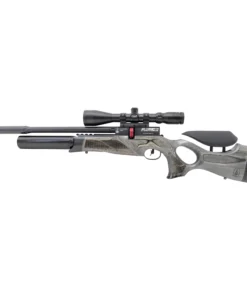
BSA Scorpion TS PCP Air Rifle – Precision Engineering, Reliable Performance & Exceptional Shooting Comfort
BSA Scorpion TS PCP Air Rifle – Advanced British Engineering for Precision Shooting
The BSA Scorpion TS PCP Air Rifle has been developed to deliver an outstanding combination of accuracy, reliability, shooting comfort, and modern pneumatic technology. Designed as an evolution of the renowned BSA Scorpion series, this impressive airgun has been enhanced with improved air efficiency, upgraded ergonomics, and a refined multi-shot loading system.
Furthermore, exceptional shooting consistency has been prioritized through the incorporation of a precision-engineered cold hammer-forged barrel. Consequently, dependable performance can be enjoyed during recreational target shooting, controlled range practice, and other lawful airgun activities.
With its lightweight construction and durable synthetic stock, excellent maneuverability has been achieved without sacrificing structural strength. Additionally, enhanced handling has been provided through its ergonomically designed ambidextrous configuration, allowing comfortable use by both right-handed and left-handed shooters.
Above all, the BSA Scorpion TS PCP Air Rifle has been positioned as an accessible introduction to the benefits of pre-charged pneumatic technology. Through its carefully balanced combination of performance, convenience, and engineering quality, an excellent shooting experience can be obtained by beginners and experienced enthusiasts alike.
Key Features and Product Highlights
-
Pre-Charged Pneumatic Technology: Consistent compressed-air operation has been incorporated for reliable shooting performance.
-
Cold Hammer-Forged Barrel: Precision engineering has been utilized to support excellent accuracy and durability.
-
Multi-Shot Magazine System: Convenient pellet loading has been provided through an improved rotary magazine.
-
Ambidextrous Synthetic Stock: Comfortable handling has been accommodated for right-handed and left-handed shooters.
-
Fully Adjustable Two-Stage Trigger: Greater control over trigger feel has been provided.
-
Enhanced Air Efficiency: An improved firing mechanism has been incorporated to support a higher shot count.
-
Integrated Pressure Gauge: Remaining air pressure can be monitored conveniently.
-
Quick-Fill System: Practical cylinder refilling has been simplified.
-
Bolt-Action Mechanism: Smooth and controlled manual cycling has been incorporated.
-
Compact Ergonomic Design: Convenient handling and transportation have been supported.
-
Multiple Calibre Options: Different shooting preferences have been accommodated through available calibre configurations.
-
Durable Tactical Appearance: A modern synthetic finish has been combined with traditional British airgun craftsmanship.
Precision Barrel Technology and Consistent Accuracy
Cold Hammer-Forged Barrel for Reliable Performance
At the foundation of the BSA Scorpion TS PCP Air Rifle, a precision-manufactured cold hammer-forged barrel has been incorporated to support consistent pellet travel and dependable shot placement.
Through this established manufacturing process, carefully controlled barrel dimensions have been achieved. As a result, the potential for repeatable accuracy has been enhanced when suitable ammunition and appropriate shooting techniques are employed.
Furthermore, consistent shooting results can be supported through regular maintenance and the selection of high-quality pellets.
Unlike products developed primarily around appearance, this rifle has been engineered with functional performance as a central consideration. Consequently, practical shooting enjoyment can be enhanced through a dependable combination of barrel quality, balance, and carefully refined mechanical components.
Improved Pneumatic Efficiency
Through its enhanced compressed-air system, efficient air consumption has been prioritized.
Additionally, BSA’s lightweight Strike Fast hammer system has been incorporated to support an improved firing cycle and a flatter power curve.
Therefore, a greater number of shots can be obtained from a suitable air fill under the manufacturer’s specified test conditions.
Moreover, unnecessary interruptions during extended range sessions can be reduced through the rifle’s improved air capacity.
Ergonomic Synthetic Stock and Comfortable Handling
Ambidextrous Design for Versatile Shooting
Exceptional handling comfort has been considered throughout the development of the synthetic stock.
In particular, an ambidextrous configuration has been introduced to accommodate different shooting preferences. Consequently, greater flexibility can be enjoyed by individuals who prefer either a right-handed or left-handed shooting position.
Furthermore, the stock has been designed to provide a practical combination of structural durability and manageable weight.
Because synthetic materials have been selected, resistance to ordinary environmental exposure has been improved compared with more maintenance-intensive traditional finishes.
Additionally, routine cleaning and exterior care can be performed conveniently.
Compact Construction and Balanced Weight
With a manufacturer-listed overall length of approximately 88 cm and a weight of 3.1 kg for the specified configuration, practical maneuverability has been emphasized.
As a result, comfortable handling can be supported during target practice and routine movement around approved shooting facilities.
Likewise, a balanced shooting position can be encouraged through the rifle’s carefully developed proportions.
Rather than unnecessary bulk being introduced, practical dimensions have been maintained for everyday convenience.
Advanced Multi-Shot Magazine and Bolt-Action Operation
Convenient Magazine Loading System
An improved multi-shot magazine arrangement has been incorporated into the BSA Scorpion TS PCP Air Rifle to simplify pellet management.
Furthermore, smoother magazine indexing has been introduced to support dependable operation.
Depending on calibre, magazine capacities of eight or ten pellets have been provided.
Additionally, a numbered magazine rotor and last-shot indicator have been incorporated to improve convenience.
Through these practical improvements, greater attention can be devoted to structured range sessions rather than repeated manual loading.
Smooth Bolt-Action Mechanism
A traditional bolt-action system has been retained to provide a familiar mechanical interface.
As a result, controlled loading and cycling can be performed through a straightforward operating mechanism.
Additionally, reliable mechanical engagement has been prioritized through the rifle’s refined construction.
For shooters who appreciate uncomplicated controls, an appealing balance between traditional operation and modern pneumatic engineering has been achieved.
Adjustable Trigger System and Enhanced Shooting Control
Fully Adjustable Two-Stage Trigger
A fully adjustable two-stage trigger has been incorporated to accommodate individual shooting preferences.
Through this system, trigger characteristics can be configured within the manufacturer’s specified adjustment limits.
Consequently, improved comfort and a more predictable trigger feel can be obtained.
Furthermore, the trigger assembly has been developed to support precise, controlled shooting.
Appropriate adjustment should always be performed according to the manufacturer’s instructions, with the rifle unloaded and its safety requirements observed.
Calibre Options and Technical Specifications
Several calibre configurations have been offered to accommodate differing recreational and sporting requirements.
The following specifications have been published by BSA for its 16-joule configuration.
| Specification | Manufacturer-listed details |
|---|---|
| Manufacturer | BSA Guns |
| Model | Scorpion TS |
| Operating system | Pre-Charged Pneumatic (PCP) |
| Action | Bolt action |
| Available calibres | .177, .22, .25 |
| Power rating | Approximately 16 J / 12 ft-lb |
| Filling pressure | 232 bar |
| Overall length | 88 cm |
| Barrel length | 38.6 cm |
| Weight | 3.1 kg |
| Magazine capacity | 10 shots (.177/.22); 8 shots (.25) |
| Trigger | Adjustable two-stage |
| Stock | Ambidextrous synthetic |
| Barrel | Cold hammer-forged |
Specifications, velocities, power outputs, and shot counts can vary by market and configuration. A scope is not included in BSA’s standard product listing.
Long-Term Durability, Maintenance, and Everyday Convenience
Built for Dependable Ownership
Durability has been emphasized through the combination of modern synthetic materials and established manufacturing techniques.
Furthermore, routine maintenance has been simplified through accessible external components and the integrated pressure gauge.
Through appropriate storage and regular inspection, the rifle’s mechanical condition can be preserved.
Additionally, only manufacturer-approved filling equipment and pressure limits should be used to maintain safe pneumatic operation.
Convenient Accessory Compatibility
Practical customization can be supported through compatible optics, protective cases, and approved shooting accessories.
Moreover, accessory selection can be tailored to individual preferences and local legal requirements.
For optimal compatibility, mounting dimensions and accessory specifications should be verified before purchase.
Why Choose the BSA Scorpion TS PCP Air Rifle?
An excellent balance between traditional airgun craftsmanship and modern pneumatic innovation has been achieved with this distinctive model.
Through its improved air efficiency, dependable magazine system, precision barrel, and ergonomic construction, several important characteristics have been combined into one practical platform.
Furthermore, the benefits of a reputable British airgun manufacturer have been incorporated without unnecessary complexity.
For recreational shooters, practical convenience has been prioritized. Meanwhile, experienced enthusiasts have been provided with a capable platform for regular target practice.
Most importantly, dependable functionality and thoughtful engineering have been emphasized throughout its development.
Conclusion – Precision, Quality, and Exceptional Value
The BSA Scorpion TS PCP Air Rifle has been designed to provide reliable performance, comfortable handling, and the advantages of modern compressed-air technology.
With its precision-engineered barrel, adjustable trigger, improved magazine system, and efficient pneumatic mechanism, a refined shooting experience has been made accessible.
Furthermore, enduring quality has been supported by BSA’s established manufacturing heritage.
For enthusiasts seeking a dependable, carefully engineered PCP airgun, an appealing combination of functionality, versatility, and long-term shooting enjoyment has been provided.
Explore the BSA Scorpion TS PCP Air Rifle and discover a modern expression of British airgun engineering.
Brocock BRK and Benjamin Air Rifles: Complete Guide to PCP Technology, Precision, Calibres and Accessories
Discover the Engineering Behind Brocock Airguns and Benjamin Air Rifles
Modern airgun technology has transformed recreational target shooting, competitive marksmanship, and precision air-powered sporting equipment. Today, manufacturers combine advanced pneumatic systems, ergonomic construction, and innovative engineering to produce dependable shooting platforms. Among the established names in this industry, brocock ltd and Benjamin continue to attract attention from enthusiasts seeking technical sophistication and reliable performance.
The evolution of brocock airguns reflects a strong emphasis on compact designs, efficient compressed-air systems, and consistent shot delivery. Similarly, the Benjamin product range offers numerous configurations, from traditional pellet rifles to specialized pneumatic platforms.
Whether researching a compressed air rifle, comparing a conventional pellet gun, or exploring advanced sporting equipment, understanding the available technologies helps buyers make informed decisions.
Brocock BRK Air Rifles: Innovation and Precision Engineering
Brocock Sniper XR and BRK Sniper XR
The brocock sniper xr represents an important development in regulated pneumatic rifle engineering. Featuring a semi-bullpup configuration, adjustable ergonomics, and a sidelever operating system, this model emphasizes handling convenience and mechanical consistency.
Additionally, the brk sniper xr incorporates a regulated air-delivery system designed to reduce variations between successive shots. Its adjustable stock components provide flexibility for different shooting positions.
For enthusiasts researching the .25 caliber brocock sniper xr, calibre selection deserves particular attention. The larger pellet diameter offers different projectile characteristics compared with smaller calibres, while energy output and shot capacity depend on the specific configuration.
The sniper xr also offers an example of how modern engineering combines compact dimensions with adjustable controls.
Brocock Commander XR and BRK Commander
Another noteworthy platform is the brocock commander xr, which combines a tactical-inspired stock configuration with pneumatic engineering.
The brocock commander has attracted interest from enthusiasts who appreciate adjustable furniture, modular features, and consistent operation.
Similarly, buyers researching brk ghost and Commander models often compare ergonomics, overall dimensions, available calibres, and compatible accessories.
Searches for brocock commander xr price should be evaluated using current retailer listings because pricing varies according to country, configuration, condition, and included equipment.
BRK Ghost Air Rifle: Modern Design and Customization
The brk ghost air rifle represents a distinctive approach to modern PCP rifle design. Its bullpup layout places major operating components within a compact overall configuration while retaining a full-length barrel arrangement appropriate to the model.
Furthermore, the BRK Ghost offers adjustable ergonomic components and a mechanical design intended to support controlled operation.
Owners researching ghost accessories should pay attention to manufacturer compatibility, factory specifications, and approved replacement components.
A replacement ghost handle, for example, should be checked against the exact model and production variant before purchase.
Likewise, a magpul sl k buttpad is a product-specific accessory reference rather than a guarantee of compatibility with every rifle stock.
Pathfinder XR and Compact BRK Models
The pathfinder xr offers another example of the manufacturer’s emphasis on compact pneumatic platforms.
Buyers researching the brk pathfinder, brk pathfinder xr, or general pathfinder air rifle specifications should compare verified product dimensions, stock arrangements, and applicable power ratings.
The brk concept xr is another model worth examining when comparing compact sporting rifles.
While these designs share elements of the manufacturer’s engineering philosophy, each has its own configuration and intended handling characteristics.
For anyone comparing several platforms, factors such as overall weight, trigger characteristics, stock adjustment, and service support are more useful than appearance alone.
What Are PCP Air Rifles and How Do They Work?
New enthusiasts frequently ask, what are pcp air rifles?
The abbreviation PCP means precharged pneumatic, referring to an air-powered system that stores compressed air in a pressurized cylinder or reservoir.
Consequently, understanding pcp rifle meaning helps explain the operating principles behind modern pneumatic sporting rifles.
Other common searches include what does pcp mean in air rifles, what is pcp air rifle, what is a pcp air rifle, and what is a pre charged pneumatic air rifle.
All describe the same general operating technology.
Likewise, what is a pcp air gun and pcp air rifle meaning refer to compressed-air propulsion rather than spring-powered or carbon-dioxide systems.
A pcp rifle stores energy before firing, whereas a break barrel pellet gun typically compresses a spring or gas ram through a cocking action.
This distinction also explains why a pneumatic gun, gun pneumatic, and pneumatic weapons may refer to several different mechanisms, depending on the context.
Modern pcp air rifles often feature pressure regulators, adjustable triggers, and specialized magazines. Nevertheless, operating pressure, energy output, and maintenance requirements vary substantially between models.
Essential Accessories and Equipment Compatibility
Properly selected accessories contribute to equipment suitability and long-term maintenance.
For example, the 0db moderator and 0 db moderator are search variations referring to a sound-moderating accessory. Actual sound reduction depends on the individual device, rifle configuration, and applicable legal requirements.
Meanwhile, a pcp o ring kit may contain replacement seals for specified components. Seal dimensions, materials, and pressure ratings must match the manufacturer’s requirements.
Optics are another consideration. A buyer researching how to connect scope equipment should first confirm the mounting-rail standard and the compatibility of the selected mounting system.
The mtc copperhead 4 16×44 is one example of an optical sight that may appear in airgun accessory searches.
Separately, what does prc stand for in guns is a terminology question commonly encountered during broader firearm research. PRC often refers to Precision Rifle Cartridge, which is distinct from PCP pneumatic technology.
Some searches also include bro air, a broad term that may appear alongside BRK and Brocock product research without identifying a specific manufacturer model.
Benjamin Air Rifles: Traditional Performance and Modern Pneumatic Technology
Benjamin Marauder and Popular PCP Models
The benjamin air rifle range encompasses numerous designs developed for different shooting preferences. From conventional air pellet gun platforms to specialized pneumatic systems, the manufacturer offers equipment for recreational and sporting applications.
Among its recognized products, the benjamin marauder has established a strong presence in PCP airgun discussions.
The benjamin marauder pcp and benjamin marauder pcp air rifle are associated with regulated or unregulated configurations, depending on model and generation. Similarly, the benjamin marauder air rifle is frequently considered by enthusiasts researching accurate pneumatic equipment.
Buyers comparing the benjamin marauder .25, benjamin marauder 22, and benjamin marauder regulated variants should verify the exact specifications rather than assume identical performance.
The benjamin marauder pistol provides another distinct option for enthusiasts interested in compact air-powered platforms.
Additionally, searches for benjamin pellet, benjamin pellet gun, and benjamin air pistol reflect the manufacturer’s broader presence in the sporting airgun market.
For owners of older equipment, benjamin air rifle repair should involve model identification, manufacturer-approved parts, and qualified servicing of pressurized components.
Benjamin Bulldog and Big-Bore Airguns
The benjamin bulldog is associated with the development of larger-calibre PCP platforms.
In particular, the benjamin bulldog 457 belongs to the big-bore category, while the bulldog 357 represents another calibre designation within the family.
Those researching benjamin bulldog 457 20 joules should distinguish search terminology from verified factory specifications, since this phrase does not establish an official 20-joule configuration.
More broadly, big bore air guns differ from conventional small-calibre pellet rifles in projectile dimensions, pressure-system requirements, and applicable regulations.
A hunting air rifle or hunting pellet gun must also be evaluated according to local laws, permitted activities, and the manufacturer’s intended application.
Benjamin Trail, Prowler and Break-Barrel Models
Traditional spring and gas-piston airguns remain popular alongside pneumatic equipment.
The benjamin prowler and benjamin trail np are examples associated with conventional sporting air-rifle designs.
Likewise, the benjamin np trail xl and benjamin air rifle 22 break barrel appear frequently in searches involving gas-piston technology.
The phrase benjamin break may also describe general interest in the manufacturer’s break-barrel products.
Enthusiasts comparing a benjamin 22 caliber pellet rifle with PCP alternatives should consider the differences in cocking mechanism, maintenance, recoil behavior, and operating requirements.
Benjamin Airbow Technology and Arrow-Launching Systems
The benjamin airbow belongs to a specialized category that uses compressed air to propel compatible arrows rather than conventional pellets.
Also called an air bow, airbow, arrow gun, air bow rifle, or air bow gun, this equipment differs substantially from standard pellet platforms.
The benjamin pioneer airbow helped establish the manufacturer’s presence in this category.
More recent searches for benjamin airbow m600, benjamin m600 airbow, and the general benjamin bow category reflect interest in advanced arrow-launching technology.
An airbow rifle may also be compared with an air powered crossbow, although their propulsion mechanisms and equipment requirements are different.
The M600 is a distinct PCP-powered arrow launcher with manufacturer-specific arrows and components.
Understanding Pellet Gun Calibres and Power Ratings
Airgun buyers frequently compare .177 pellet guns, 177 pellet guns, a 22 pellet gun, and a .25 pcp air rifle.
Each calibre has its own projectile characteristics, compatible ammunition, and model-specific performance limits.
Similarly, searches for a high powered pellet gun, high power pellet gun, or pellet rifle 1500 fps should be assessed carefully. Advertised velocity alone does not establish accuracy, suitability, or energy output.
A bolt action pellet gun describes a particular loading or cycling arrangement rather than a specific power system.
Other familiar categories include the bb gun rifle, air gun rifle, airrifle, and the broader grouping of air rifle and air pistol equipment.
In comparison, co2 pellet guns use carbon dioxide cartridges, while PCP platforms rely on stored high-pressure air.
The search term m357 may refer to different products and requires model confirmation before any technical comparison.
Choosing the Right Airgun and Understanding Online Availability
Buyers asking can i buy air rifles online should first investigate local restrictions, age requirements, licensing obligations, and shipping regulations.
Rules vary significantly by jurisdiction, especially for higher-powered equipment and specialized arrow-launching platforms.
Whether comparing benjamin air rifles or modern BRK sporting platforms, reliable model specifications, lawful ownership, and qualified maintenance remain essential considerations.
The Brocock product family includes established Sniper XR, Commander XR, Pathfinder XR, Concept XR, and Ghost designs, while the manufacturer’s newer range includes updated XR2 variants.
Ultimately, selecting appropriate air-powered sporting equipment involves balancing ergonomics, engineering quality, compatible accessories, and long-term support. Understanding the distinctions between compressed-air systems, gas-piston mechanisms, and specialized arrow platforms makes product comparisons clearer and more informative.
A well-informed buying decision begins with accurate technical information, clearly identified models, and responsible equipment
BSA Scorpion TS PCP Air Rifle – Calibres, FAC Power, Recommended Scopes and Essential Accessories
The BSA Scorpion TS PCP Air Rifle has been engineered to deliver consistent shooting performance through advanced pneumatic technology, precision barrel manufacturing, and carefully selected calibre configurations. Furthermore, reliable accuracy and practical versatility have been emphasized throughout its development, making this model suitable for recreational target shooting and regulated sporting activities.
Through its improved air management system, enhanced magazine operation, and ergonomic construction, a refined shooting experience has been provided. Additionally, a wide selection of compatible optics and maintenance accessories can be considered to support comfortable ownership.
Available Calibres and Shooting Characteristics
.177 Calibre (4.5mm) – Precision and Target Shooting
The .177 calibre configuration has traditionally been preferred for recreational target shooting and precision-oriented practice.
Because relatively lightweight pellets are commonly used, flatter short-range trajectories can be achieved compared with heavier pellets fired at equivalent muzzle energy.
Furthermore, a maximum muzzle velocity of approximately 706 feet per second (215 m/s) has been listed by BSA for its 16-joule configuration.
Additional advantages have been provided through its ten-shot rotary magazine, allowing convenient pellet management during supervised range sessions.
Consequently, this configuration can be considered by enthusiasts who value economical ammunition and repeatable target practice.
.22 Calibre (5.5mm) – Balanced Performance
An appealing balance between pellet weight, energy delivery, and recreational shooting convenience has been offered through the .22 calibre configuration.
Compared with .177 ammunition, heavier pellets are commonly used, although actual performance is influenced by pellet design and muzzle energy.
Moreover, a manufacturer-listed maximum velocity of approximately 585 feet per second (178 m/s) has been associated with the standard 16-joule model.
A ten-shot magazine has also been provided, supporting convenient use during organized shooting activities.
For individuals seeking an adaptable recreational airgun, this calibre can be considered where legally permitted.
.25 Calibre (6.35mm) – Heavy Pellet Configuration
A larger projectile diameter has been accommodated through the .25 calibre version.
With heavier ammunition generally being used, different ballistic characteristics can be expected compared with smaller calibre alternatives.
Furthermore, a maximum velocity of approximately 405 feet per second (123 m/s) has been published for the 16-joule configuration.
An eight-shot magazine has been incorporated to accommodate the larger pellets.
Consequently, calibre selection should be guided by the intended lawful activity, ammunition availability, and local regulatory requirements.
The published specifications for all three calibres are available through BSA’s official Scorpion TS product page.
FAC Power and Muzzle Energy Explained
Standard Power – Approximately 12 ft-lb / 16 Joules
For the standard UK-oriented configuration, a nominal energy rating of approximately 12 foot-pounds, equivalent to about 16 joules, has been published.
Through the rifle’s pneumatic system, compressed air is used to propel pellets, while the cold hammer-forged barrel supports repeatable shooting performance.
Additionally, a maximum fill pressure of 232 bar has been specified.
Approximate shot counts of 140 for .177, 140 for .22, and 136 for .25 have been published under BSA’s stated testing conditions.
However, actual results may differ according to ammunition, ambient conditions, and the individual rifle’s factory configuration.
FAC and Higher-Power Versions
In the United Kingdom, the term FAC (Firearm Certificate) is commonly associated with air rifles exceeding the relevant legal muzzle-energy threshold.
Higher-power Scorpion TS configurations have appeared in international product catalogues, including versions listed at approximately 28 joules.
Nevertheless, the availability and certification requirements of these configurations must be confirmed for the specific market.
Importantly, an ordinary 16-joule model should not be represented as a 28-joule FAC version unless its factory identification and documentation establish that specification.
Furthermore, unauthorized power modification should be avoided, and all applicable licensing requirements should be observed.
Recommended Rifle Scopes and Optical Accessories
BSA 3-9×40 Rifle Scope – Recreational Shooting
A BSA 3-9×40 scope can be considered for general recreational target shooting, provided the selected version is compatible with the rifle.
Through its variable magnification, different target-viewing preferences can be accommodated.
Additionally, a straightforward sight picture can be provided without excessive optical complexity.
For beginners, familiarization with sight alignment and basic optical adjustments can be supported through an appropriate scope.
Hawke Vantage 4-12×40 AO – Adjustable Focus
The Hawke Vantage 4-12×40 AO can also be considered for range use.
Through its adjustable objective, parallax correction can be supported at suitable distances.
Furthermore, increased magnification can be made available when detailed target observation is required.
Before installation, appropriate mounting rings, eye relief, and available clearance should be verified.
BSA Essential and Compatible Mounts
A selection of BSA scope mounts has been offered for compatible PCP airguns.
Nevertheless, the Scorpion TS rail dimensions should be checked against the exact mount specification before purchase.
Likewise, ring diameter must be matched to the scope tube, while mounting height should be selected according to objective-lens clearance and comfortable eye positioning.
Essential Accessories for Reliable PCP Ownership
PCP Charging Equipment
A PCP-rated hand pump, compatible high-pressure compressor, or approved charging cylinder may be used where supported by the manufacturer’s instructions.
Furthermore, the correct filling connector should be verified before charging.
Because high-pressure air equipment is involved, manufacturer-specified pressure limits must never be exceeded.
Spare Magazines and Quality Pellets
Additional factory-compatible magazines can be considered for convenient organization of recreational shooting sessions.
Moreover, correctly sized, manufacturer-approved pellets should be selected for the corresponding calibre.
Damaged or unsuitable ammunition should be avoided to protect the rifle’s barrel and loading components.
Protective Cases and Maintenance Supplies
A padded rifle case can be used to protect the airgun during lawful transportation.
Additionally, non-abrasive cleaning materials, suitable exterior cloths, and approved maintenance products can be kept available.
For long-term storage, a dry and secure location should be selected, with access restricted according to applicable safety requirements.
Conclusion – Choosing the Right Configuration
The BSA Scorpion TS PCP Air Rifle has been developed around practical handling, dependable pneumatic efficiency, and established British barrel engineering.
Through its three calibre options, standard 16-joule performance, and compatible optical accessories, a versatile recreational shooting platform has been made available.
Furthermore, convenient ownership can be supported through suitable charging equipment, protective storage, and routine maintenance.
Ultimately, the most appropriate configuration should be selected according to manufacturer specifications, local legislation, and individual sporting preferences.benjamin air bow
Frequently Asked Questions (FAQs)
1. What is a pre-charged pneumatic airgun, and how does it work?
A pre-charged pneumatic airgun is powered by compressed air stored inside a specially designed high-pressure reservoir. Unlike spring-powered alternatives, energy is supplied through previously compressed air rather than a mechanical spring.
When the trigger is activated, a controlled quantity of compressed air is released through the firing mechanism. Consequently, the projectile is propelled through the barrel.
Furthermore, relatively smooth operation can be achieved because heavy spring movement and associated vibration are eliminated. As a result, consistent shooting performance can be supported during recreational target practice.
Additionally, the reservoir can be refilled using approved high-pressure charging equipment, provided the manufacturer’s instructions are followed.
2. What are the main advantages of compressed-air technology?
Several practical advantages have been associated with compressed-air technology, including consistent operation, reduced mechanical vibration, and convenient multi-shot functionality.
Furthermore, the absence of a powerful moving spring can contribute to smoother firing characteristics. Consequently, shooting comfort can be improved, particularly during extended recreational sessions.
Another benefit is provided through the availability of integrated pressure gauges, which allow reservoir pressure to be monitored.
Additionally, convenient magazine systems can be incorporated without requiring the mechanism to be manually cocked against a heavy spring.
However, specialized charging equipment is required, and regular inspections must be performed to maintain dependable operation.
3. Which calibre is most suitable for recreational target shooting?
For recreational target shooting, smaller calibres are frequently selected because affordable ammunition, manageable ballistic characteristics, and broad availability are generally appreciated.
The 4.5 mm option is commonly associated with target practice, while the 5.5 mm configuration is often selected for general sporting applications.
Meanwhile, the 6.35 mm configuration accommodates heavier pellets and provides different ballistic characteristics.
Nevertheless, no single calibre should automatically be considered ideal for every application.
Instead, the intended activity, available shooting facilities, local regulations, and manufacturer’s specifications should be considered before a selection is made.
4. What is the difference between standard-power and FAC-rated versions?
Standard-power configurations are generally manufactured to comply with particular market requirements, while higher-energy versions may be subject to additional firearms legislation.
In the United Kingdom, an air rifle producing more than 12 foot-pounds of muzzle energy generally requires a Firearm Certificate.
Furthermore, an increase in muzzle energy can result in different pellet velocities, air consumption rates, and operating characteristics.
Importantly, certification requirements vary between countries and jurisdictions.
Therefore, the legal classification of an individual airgun should always be confirmed through the appropriate authority, and factory identification should be checked before purchase.
5. How many shots can be expected from a full air reservoir?
The number of available shots depends on several factors, including reservoir capacity, operating pressure, calibre, factory power configuration, and environmental conditions.
For the standard 16-joule configuration, manufacturer-published figures of approximately 136 to 140 shots have been associated with different calibre options.
However, these figures should be treated as reference values rather than guaranteed results under every condition.
Furthermore, variations in pellet selection and pressure management can influence consistency throughout an air fill.
For accurate expectations, the specifications supplied with the exact factory configuration should be consulted.
6. What is the maximum recommended filling pressure?
A maximum filling pressure of 232 bar has been specified for the standard configuration.
This pressure should be regarded as a strict manufacturer limit rather than a suggested target to exceed.
Furthermore, only equipment rated for the required pressure should be used.
Before filling, the reservoir, connectors, hoses, and charging system should be inspected for visible damage or deterioration.
Additionally, the manufacturer’s procedures should be followed throughout the charging process.
Overpressurization must be avoided because serious mechanical damage or personal injury could otherwise result.
7. Can a manual hand pump be used for charging?
Yes. A compatible high-pressure hand pump can be used when its pressure rating, connector type, and manufacturer instructions are suitable.
However, considerable physical effort may be required because compressed air must be delivered at very high pressure.
Furthermore, moisture management should be considered to reduce the possibility of internal contamination.
Alternatively, an approved compressor or certified air cylinder can be used where the correct equipment and procedures are available.
Regardless of the charging method, the maximum permitted reservoir pressure must be respected.
8. Is an external air compressor necessary?
An external compressor is not always required because several approved filling methods may be available.
For example, a suitable manual pump or high-pressure charging cylinder can be used.
Nevertheless, a compatible compressor may provide additional convenience when frequent reservoir refilling is required.
If a compressor is selected, its pressure rating, filtration system, connector compatibility, and maintenance requirements should be verified.
Moreover, ordinary household or automotive tire compressors should not be substituted for specialized high-pressure charging equipment.
9. Is the synthetic stock suitable for left-handed shooters?
An ambidextrous stock has been incorporated to accommodate both left-handed and right-handed shooting preferences.
Consequently, comfortable shoulder positioning can be supported without requiring a dedicated stock orientation.
Furthermore, synthetic construction provides practical resistance to ordinary moisture exposure and everyday handling.
However, comfort can vary according to individual body dimensions, dominant eye, and preferred shooting position.
For this reason, stock fit and control accessibility should be evaluated before purchase whenever possible.
10. What type of trigger mechanism is provided?
A two-stage adjustable trigger has been incorporated to provide a customizable trigger feel.
Through this arrangement, separate stages of trigger movement can be experienced before the firing mechanism is released.
Additionally, factory-approved adjustments may allow certain characteristics to be adapted to individual preferences.
Nevertheless, adjustment should be performed only within the limits specified by the manufacturer.
For safety, an unloaded condition should always be confirmed before inspection or authorized maintenance is undertaken.
Unapproved changes to safety-critical components should be avoided.
11. How many pellets can be stored in the magazine?
Magazine capacity is determined by the selected calibre configuration.
For the 4.5 mm and 5.5 mm versions, ten-pellet rotary magazines have been provided. Meanwhile, an eight-pellet magazine has been incorporated into the 6.35 mm configuration.
Furthermore, a numbered rotor has been included to simplify the identification of magazine positions.
A last-shot indicator has also been introduced, providing additional convenience during routine range use.
Nevertheless, only magazines specifically approved for the corresponding configuration should be used to ensure correct fit and operation.
12. Can the airgun be used without a telescopic sight?
Yes. However, the availability of alternative sighting arrangements depends on the equipment installed and the compatibility of the individual configuration.
A telescopic sight is not included as standard with the manufacturer’s product listing.
Consequently, an appropriate optical system may need to be purchased separately.
Before selecting an optic, the mounting interface, ring dimensions, and available clearance should be verified.
Furthermore, professional fitting can be considered when uncertainty exists regarding compatibility.
13. Is regular maintenance required?
Yes. Regular maintenance is recommended to preserve mechanical reliability, external condition, and safe operation.
After use, exterior surfaces can be wiped with an appropriate soft cloth, while visible signs of damage should be checked.
Furthermore, the air reservoir and filling connectors should be inspected in accordance with manufacturer guidance.
Only approved cleaning and maintenance products should be used.
Additionally, internal servicing should be entrusted to qualified technicians when specialized disassembly or pressure-system work is required.
Through appropriate maintenance, unnecessary wear and avoidable mechanical problems can be reduced.
14. Can different pellet brands be used?
Different brands can generally be considered when the ammunition is manufactured for the correct calibre and meets the relevant specifications.
However, consistency may vary because pellet dimensions, weight, manufacturing tolerances, and material composition are not identical across all products.
Consequently, suitable factory-approved ammunition should be selected rather than relying exclusively on brand recognition.
Furthermore, damaged or deformed pellets should be rejected.
For dependable recreational performance, ammunition quality and compatibility should always be prioritized.
15. How should the equipment be stored when not in use?
A secure, dry, and access-controlled storage location should be selected.
Before storage, the unloaded condition should be verified according to manufacturer instructions.
Furthermore, ammunition should be stored separately where required or recommended.
A padded case may be used for physical protection, although long-term moisture accumulation should be avoided.
Additionally, unauthorized access must be prevented through appropriate security measures.
Reservoir pressure during extended storage should be managed according to the manufacturer’s specific recommendations rather than assumptions about complete depressurization.
16. Is this type of equipment suitable for beginners?
Beginner suitability depends on the individual’s experience, access to competent instruction, and understanding of applicable safety procedures.
Nevertheless, features such as an ergonomic stock, accessible pressure gauge, and straightforward bolt-action mechanism can provide practical convenience.
Furthermore, familiarization with loading procedures, safe handling, and pressure-system management should be completed before independent use.
Supervised instruction at an authorized shooting facility is strongly recommended.
Through appropriate training, essential safety responsibilities can be understood before more advanced recreational activities are considered.
17. What should be checked before purchasing a pre-owned example?
Several important factors should be evaluated before a second-hand purchase is completed.
First, the condition of the stock, barrel exterior, and visible mechanical components should be inspected.
Furthermore, the air reservoir’s maintenance history and any evidence of leakage should be reviewed.
Magazine compatibility, documentation, serial-number identification, and ownership legitimacy should also be confirmed.
Additionally, an inspection by a qualified airgun technician can be arranged when mechanical condition cannot be established confidently.
Any unresolved defects should be addressed before the equipment is used.
18. Is a manufacturer’s warranty usually provided?
Warranty coverage is generally determined by the manufacturer, authorized distributor, market, and applicable consumer-protection laws.
Therefore, coverage periods and exclusions should be confirmed before a purchase is completed.
Furthermore, proof of purchase may be required when warranty assistance is requested.
Unauthorized modifications, improper maintenance, and accidental damage may be excluded from certain warranty arrangements.
For dependable after-sales support, applicable terms should be reviewed directly with the supplier.
19. What safety precautions should always be observed?
All airguns should be treated as potentially loaded until their condition has been positively verified.
Furthermore, the muzzle must always be directed in a safe direction, and the trigger should remain untouched until lawful firing is intended.
Appropriate eye protection should be worn at shooting facilities.
Additionally, a suitable backstop must be provided, and the area beyond the target must be considered.
Mechanical safety devices should never be treated as substitutes for responsible handling.
Local legislation, landowner permissions, and range regulations must also be respected.

Reviews
There are no reviews yet.