Engineered for seamless performance that empowers every airgun enthusiast. Whether filling PCP rifles at home or in the field, this innovative solution delivers reliable high-pressure air with remarkable efficiency. Moreover, its compact design ensures effortless portability, while advanced features provide consistent results that shooters of all experience levels appreciate.
In today’s dynamic shooting sports environment, access to dependable compressed air stands essential for uninterrupted enjoyment. The BSA PCP 300 Bar Electric Compressor has been developed precisely for this purpose. Consequently, enthusiasts experience reduced downtime and enhanced focus on their passion. Additionally, its multi-voltage compatibility makes it suitable for diverse settings, from residential outlets to vehicle power sources.
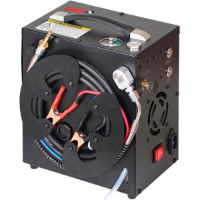
Transitioning smoothly between power options proves straightforward. For instance, the unit operates effectively on AC 220V or 110V household electricity as well as DC 12V from a car battery. Therefore, flexibility is built into every aspect of its design. Furthermore, the compressor reaches a maximum working pressure of 300 bar (with capability noted up to 320 bar in testing), which aligns perfectly with most modern PCP air rifles and air tanks.
These attributes ensure the compressor meets the needs of diverse users, including recreational shooters, competitive marksmen, and professional instructors alike. Moreover, inclusive design considerations make setup accessible regardless of prior technical experience.
Furthermore, the unit’s durability has been proven through real-world testing. Consequently, many users report years of reliable service with minimal maintenance. Transitioning to this compressor also supports environmental considerations, as fewer disposable cylinders or travel-related emissions are produced over time.
Detailed specifications have been refined to support informed purchasing decisions:
Such comprehensive capabilities make the compressor a versatile addition to any shooting setup.
Whether you are a weekend plinker, a dedicated hunter, or part of a competitive team, the BSA PCP 300 Bar Electric Compressor delivers meaningful advantages. Firstly, portability allows effortless movement between locations. Secondly, quick fill times keep sessions flowing smoothly. Moreover, the dry air output helps maintain rifle accuracy by minimizing moisture-related issues inside air reservoirs.
In addition, cost savings accumulate quickly. Instead of relying on external fill services or multiple dive tanks, a single investment provides independence. Therefore, more resources can be directed toward ammunition, targets, or training. Furthermore, inclusive language in the accompanying manual ensures that instructions are clear and approachable for all users, including those new to PCP systems.
Proper care routines have been simplified for this compressor. Regular checks of the water trap and basic cleaning procedures are all that is typically required. Additionally, replacement parts and filters are readily available through BSA’s established network. Consequently, downtime remains minimal even after extensive use.
Transitioning to best practices, such as allowing adequate cooldown periods between extended fills, extends the unit’s lifespan significantly. Moreover, storage in a dry environment preserves internal components effectively.
Selecting this compressor represents an investment in freedom and performance. Its combination of power, portability, and precision has been praised across shooting communities. However, beyond technical merits, the real value lies in how it transforms everyday experiences. Shooters report greater enjoyment because technical limitations fade into the background.
BSA has prioritized user feedback throughout development. As a result, intuitive controls, clear pressure gauges, and sturdy carry handles have been incorporated. Moreover, safety valves and thermal protection features are included to prevent overheating or over-pressurization. Therefore, confidence is instilled with every use, regardless of skill level.
Additionally, the unit’s aesthetic design blends functionality with modern appeal, making it a welcome addition to any gear collection. Transitioning from older filling methods to this advanced compressor often feels like a significant upgrade in both performance and convenience.
Consequently, users enjoy greater freedom in choosing where and when to shoot. Moreover, the established reputation of the BSA brand adds assurance regarding quality and after-sales support.
Whether filling a favorite rifle for a relaxing afternoon or preparing for an important competition, reliable results are delivered consistently. Additionally, the long-term savings and convenience justify the investment for enthusiasts at every level. Therefore, upgrading your setup with this exceptional tool is a decision that continues to pay dividends with every use.
Practical Use Scenario: Elevating Your Airgun Sessions with a High-Pressure Electric Compressor
Imagine stepping into your backyard on a crisp morning, rifle in hand, ready for an engaging practice session. The high-pressure electric compressor has been set up on a sturdy table near a standard household outlet. Once connected and powered on, the unit begins delivering clean, dry air efficiently. Within minutes, the rifle’s reservoir reaches optimal pressure, allowing seamless transitions between shots without interruption. This scenario reflects how modern portable compressors transform routine maintenance into a quick, satisfying ritual that keeps enthusiasm high.
Preparing for a Relaxing Home Plinking Session
At home, convenience becomes the foundation of enjoyable shooting. The compressor is positioned in a well-ventilated garage or shed area. Power leads are plugged into a domestic socket, and the fill hose is securely attached to the rifle. As the process starts, a steady hum is noticed, yet noise levels remain manageable for residential environments. Moreover, built-in water traps ensure moisture is captured effectively, protecting internal rifle components from corrosion.
Transitioning smoothly, the fill is monitored via clear gauges. For a typical 0.5-liter air cylinder, pressure climbs rapidly from lower levels to full capacity in a reasonable timeframe. Consequently, multiple rifles or bottles can be serviced one after another. Additionally, the compact size allows storage in a corner when not in use, freeing up valuable space. Families and individual enthusiasts alike appreciate how this setup encourages inclusive participation, with beginners learning proper procedures alongside experienced users.
Furthermore, safety protocols are followed diligently. Pressure relief valves are checked beforehand, and the area is kept clear of obstructions. Once complete, the rifle is tested with a few shots at paper targets, revealing improved consistency and accuracy. In this way, weekend plinking evolves from occasional activity into a regular, rewarding hobby that strengthens skills and provides relaxation.
Field Adventures and On-the-Go Refills
Venturing into the countryside for a hunting outing introduces different demands. The compressor travels easily in a vehicle trunk due to its lightweight and sturdy construction. Upon arrival at a remote spot, it is powered via the car’s 12-volt outlet using appropriate leads. This flexibility ensures air replenishment remains possible far from any commercial fill stations.
For example, after several successful shots on targets or during a hunt, the reservoir level drops. The unit is then deployed quickly on a flat surface, perhaps protected by a simple tarp. Connection is made, and the compressor operates reliably even in varied outdoor temperatures. Moreover, its efficient motor maintains steady output, restoring full pressure without lengthy delays. Therefore, hunting trips extend naturally, with focus remaining on the experience rather than logistical concerns.
Additionally, group outings benefit significantly. Friends or club members take turns using the equipment, fostering camaraderie while ensuring everyone stays prepared. Transitioning between different air rifles proves straightforward, as adapters handle various fittings. In such scenarios, the compressor supports extended sessions in woodlands or open fields, where independence from external services enhances overall satisfaction and safety.
Competitive Training and Range Days
At a busy shooting range, time efficiency matters greatly. The electric compressor is brought along for dedicated practice days. Set up near a bench, it allows rapid top-ups between strings of fire. Competitors notice how consistent pressure translates into tighter groupings and better scores. Furthermore, the dry air output minimizes variability caused by moisture, which is particularly valuable during longer events.
Subsequently, training routines are refined. For instance, drills involving quick reloads or positional shooting are repeated without concern for air depletion. The compressor’s performance supports high-volume practice, helping users build muscle memory and confidence. Moreover, its quiet operation respects fellow shooters, maintaining a pleasant atmosphere at public or club facilities.
In addition, instructors often incorporate the tool when teaching newcomers. Demonstrations highlight proper filling techniques, emphasizing safety and precision. Consequently, students gain hands-on knowledge that accelerates their progress. Over multiple sessions, noticeable improvements emerge in both technique and enjoyment, as technical hurdles are removed effectively.
Maintenance Routines and Long-Term Care
Beyond active use, practical maintenance ensures lasting reliability. After each session, the compressor is allowed to cool naturally before disconnection. Water traps are emptied and inspected, removing any accumulated condensation. This simple step, performed regularly, prevents issues and extends component life significantly.
Furthermore, storage practices are optimized. The unit is kept in a dry, dust-free environment, with hoses coiled neatly and power leads protected. Periodic checks of connections and seals are recommended, identifying any wear early. Transitioning to these habits becomes second nature, requiring minimal effort while delivering substantial benefits.
Additionally, seasonal considerations are addressed. In colder months, the compressor is warmed slightly before operation to ensure optimal performance. In warmer conditions, extra attention is given to ventilation. Such proactive approaches keep the equipment functioning at peak levels, supporting year-round shooting activities for enthusiasts across different climates and lifestyles.
Multi-Rifle Management for Collectors and Clubs
Enthusiasts who own several air rifles discover even greater value. The compressor handles diverse tank sizes and pressure requirements with ease. For club events or collection maintenance, multiple fills are completed efficiently in succession. Moreover, organized workflows are established, such as labeling bottles or maintaining usage logs, which streamline the entire process.
Consequently, larger groups benefit from shared access. Clubs often designate a central filling station equipped with the unit, promoting equitable use among members. Inclusive policies ensure beginners and veterans alike can participate fully. Furthermore, the compressor’s durability withstands frequent operation, making it ideal for communal settings where demand remains steady.
In these environments, cost savings become particularly evident. Instead of repeated visits to distant suppliers, air is generated on-site whenever needed. Therefore, budgets are freed for other essentials like targets, pellets, or upgrades, enhancing the overall community experience.
Emergency Preparedness and Backup Solutions
Practical scenarios also include unexpected situations. During a remote camping trip, for example, a rifle needs refilling after unplanned use. The compressor’s vehicle compatibility provides a reliable backup. Once connected, it restores functionality quickly, allowing continuation of activities without disruption.
Additionally, power outage preparedness is supported. While primarily electric, the dual-source design offers options when household electricity is unavailable. Transitioning to alternative power keeps plans intact. Moreover, carrying a small toolkit with spare fuses or filters adds an extra layer of readiness for dedicated users.
Such versatility proves invaluable for those who integrate shooting into broader outdoor lifestyles, including hiking, survival training, or wildlife observation. The compressor thus serves not merely as equipment but as a dependable partner in diverse adventures.
Enhancing Accuracy and Performance Consistency
Technical advantages appear clearly during extended use. Consistent high-pressure fills contribute to stable velocity, which directly improves shot placement. Shooters observe tighter patterns on targets and more predictable trajectories in the field. Furthermore, reduced moisture content preserves seals and internals, minimizing maintenance on the rifles themselves.
Consequently, confidence grows with each session. Data tracking, such as chronograph readings before and after fills, confirms the benefits. In addition, experimentation with different pellet types becomes more productive when air supply remains stable. These practical outcomes encourage deeper engagement with the sport, from casual fun to serious competition.
Integrating into Daily and Weekly Routines
Many users incorporate the compressor into broader lifestyles seamlessly. For busy professionals, quick evening sessions at home become feasible. The unit is stored accessibly and deployed as needed, fitting around work and family commitments. Moreover, weekend warriors plan longer outings knowing reliable air support is available.
Transitioning between activities flows naturally. After work, a short backyard session recharges mental energy. On holidays, family trips include shooting elements supported by the compressor. Additionally, educational workshops or youth programs utilize it to teach responsibility and safety in controlled environments.
Over time, these routines build lasting habits. Enthusiasts report higher overall satisfaction and more frequent participation because barriers to entry are lowered effectively. The compressor thus supports holistic enjoyment that extends beyond individual uses.
Advanced Applications for Experienced Users
For those with deeper involvement, specialized scenarios emerge. Custom tuning projects benefit from precise pressure control during testing. Regulators and valves are adjusted methodically, with repeated fills ensuring accurate feedback. Furthermore, long-range shooting setups rely on the compressor’s capacity for sustained high-pressure needs.
In addition, research-oriented users document performance metrics across conditions. Data collected during various weather scenarios helps refine techniques and equipment choices. Consequently, innovations and personal records are achieved more readily. The tool empowers advanced exploration while remaining approachable for core functions.
Wrapping Up the Practical Advantages
Across all these scenarios, the high-pressure electric compressor proves itself as a transformative addition. From quiet home sessions to adventurous field expeditions, competitive training, and communal activities, it delivers consistent support. Moreover, its thoughtful design accommodates users of varying backgrounds and experience levels, promoting an inclusive shooting community.
Practical integration requires minimal learning curve yet yields substantial returns in convenience, performance, and enjoyment. Whether maintaining a single rifle or managing extensive collections, the benefits compound over time. Ultimately, this equipment enables shooters to focus on what matters most: skill development, memorable experiences, and the pure satisfaction of well-executed shots in any setting.
The daystate blackwolf represents a modern evolution in premium PCP air-rifle engineering, combining electronic control, configurable performance, ergonomic handling, and refined styling. It sits within a wider product family that includes the daystate redwolf, delta wolf, huntsman daystate, and daystate alpha wolf platforms. These models appeal to precision-oriented shooters who value consistency, adjustability, advanced electronics, and premium manufacturing quality.
Although buyers sometimes search for wolf delta, day state, daysta, deltaw, or simply blackwolf, these terms generally relate to Daystate’s wolf-themed PCP air rifles or common variations of the product names. A frequent question is, what is a delta wolf? The Daystate Delta Wolf is an electronically regulated pre-charged pneumatic rifle designed around digital firing management, interchangeable components, and user-adjustable performance settings. Therefore, the delta wolf meaning is closely connected to an adaptable electronic airgun platform rather than a single conventional mechanical configuration.
Daystate Blackwolf and Electronic Performance Control
The daystate blackwolf incorporates sophisticated electronic management intended to regulate each firing cycle. In electronic PCP rifles, the firing system controls how the valve releases compressed air, helping improve shot-to-shot consistency. Some enthusiasts describe these systems informally as electronic wolves, referring to the electronically managed Blackwolf, Red Wolf, Delta Wolf, or Alpha Wolf families.
The rifle’s electronic architecture can contribute to a reduced lock time, which is the interval between trigger activation and pellet discharge. Buyers may also encounter the alternative phrase lock timing, although lock time is the more commonly used technical expression. Features such as an ats tuner, barrel configuration, electronic programming, regulator setup, and ammunition selection can influence performance. However, adjustments should always remain within the manufacturer’s specifications and the legal energy limits applicable in the owner’s jurisdiction.
The Blackwolf is designed to provide a smooth operation, including a refined loading system, accessible controls, and potentially short cocking movement depending on its final configuration. Components such as the cocking ball, index pin, pin magazine, and magazine indexing mechanism must remain clean and correctly aligned. Any internal repair should be completed by a qualified Daystate technician rather than through improvised disassembly.
Daystate Redwolf, Alpha Wolf, and Delta Wolf Comparisons
The daystate redwolf remains one of the manufacturer’s most recognizable electronic PCP rifles. Its combination of digital control, premium finishing, and competition-grade potential makes it popular among target shooters and experienced airgun enthusiasts. Searches for daystate redwolf price and daystate redwolf price comparisons often reflect differences in caliber, stock material, barrel specification, power rating, region, taxes, and included accessories.
The daystate alpha wolf advances the electronically controlled design with an integrated digital interface and highly configurable architecture. Terms such as red alpha wolf, alpha red wolf, and model alpha gun are sometimes used by shoppers comparing different color schemes or confusing the Alpha Wolf with the Red Wolf. The phrase model alpha gun should be verified carefully because listings may use it loosely rather than as an official Daystate designation.
The alpha wolf barrel configuration may vary depending on caliber, jurisdiction, and retailer specifications. Owners should only use compatible barrels, probes, magazines, and seals approved for their exact model. Both daystate alpha wolf and daystate alpha wolf searches frequently focus on electronic adjustability, modularity, barrel options, and stock ergonomics. A third mention of daystate alpha wolf commonly appears in searches comparing it with the Delta Wolf and Red Wolf.
Meanwhile, the daystate delta wolf and daystate delta wolf platform is often selected by shooters who want an adaptable chassis-style rifle with electronic control. The terms wolf delta and wolf gun may refer to this model in informal online discussions, although buyers should rely on the full official model name when ordering parts.
Huntsman Daystate and Traditional Sporting Design
The huntsman daystate combines a more traditional sporting profile with modern PCP performance. Compared with highly modular electronic models, the Huntsman line typically emphasizes simplicity, balance, field-friendly proportions, and classic stock design. A second search for huntsman daystate often relates to walnut-stock versions, regulated actions, magazine compatibility, or lightweight hunting configurations.
A premium stock walnut finish can provide a warm, traditional appearance, while a safari stock may offer a more robust field-oriented shape. Accessories such as a bradley cheek riser, dima stock, or professionally fitted stock replacement may improve cheek weld or accommodate a particular optic height. However, any replacement stock must provide correct action clearance, mounting alignment, safety operation, and structural support.
The phrases rimfire stocks, griffin gun, and unfend may appear alongside Daystate searches, but they do not necessarily describe official Daystate components. Buyers should confirm manufacturer compatibility before ordering any chassis, stock, grip, or adapter.
Daystate Wolverine Sapphire and Related Searches
The daystate wolverine sapphire is associated with a distinctive premium finish and the well-established Wolverine PCP platform. A second mention of daystate wolverine sapphire often appears in searches comparing limited-edition finishes, stock designs, and high-power configurations.
The general term wolverine gun may refer to a Daystate Wolverine air rifle, while wolveriner may be a misspelling. The phrase wolfpack armory wolverine could relate to a separate firearm or retailer-specific product, so it should not automatically be treated as a Daystate model.
Some travelers also ask, can wolverine go on planes? Air-rifle transportation rules vary by airline, departure country, destination, transit point, and local law. A PCP rifle should never be taken to an airport without advance airline approval, a suitable locked case, confirmed legal documentation, and verification that the air reservoir is handled according to the airline’s compressed-gas requirements.
Magazines, Pellets, and Caliber Compatibility
Magazine compatibility is determined by the rifle’s exact model, generation, and caliber. A 177 magazine, mag 177, 25 magazine, or pin magazine should never be assumed to fit every Daystate platform. The correct magazine must match the action, indexing mechanism, pellet orientation, caliber, and probe design.
There are many 177 pellets types, including domed, flat-head, pointed, hollow-point, and heavier long-range designs. A slug pellet has a different profile from a conventional diabolo pellet and may require a suitable barrel, twist rate, power level, and magazine. Likewise, 5.0 mm pellets are not interchangeable with .177, .22, or .25-caliber ammunition. Owners should follow the caliber marking shown on the rifle and use only ammunition recommended for that barrel.
The phrase pellet rifle describes the broader product category, while air gun, air guns, and air gun pc may be used as general shopping terms. In PCP terminology, air rifle compressed air refers to the high-pressure air stored inside the rifle’s cylinder or bottle. Charging equipment must be rated for the required pressure and used according to the manufacturer’s instructions.
Buddy Bottles, Seals, and Maintenance Accessories
Bottle-equipped PCP rifles may use a protective buddy bottle cover to reduce cosmetic damage and improve grip. Because this is a popular accessory, buddy bottle cover appears repeatedly in searches. The cover must not obstruct the pressure gauge, filling port, bottle threads, or safety markings.
A compatible pcp o ring kit can be useful for routine servicing, but O-rings differ in diameter, thickness, hardness, and material. Installing an incorrect seal may cause leakage or unsafe pressure retention. High-pressure components should be serviced only after the rifle has been safely depressurized in accordance with the official manual.
The unrelated phrase how to put extinguisher call back together sometimes appears in mixed keyword datasets. Fire extinguishers are pressurized safety equipment and should not be dismantled or reassembled by an unqualified person. A certified fire-equipment technician should inspect or replace any extinguisher that has been discharged or opened.
Butt Pads, Cheek Support, and Rifle Fit
A properly adjusted rifle butt pad can improve shoulder placement and repeatability. Search terms such as rubber butt, butt pad rifle, and rubber butt pad usually refer to recoil pads or non-slip shoulder pads fitted to the rear of a stock. PCP air rifles generate less recoil than many powder-burning rifles, but a well-shaped pad can still improve stability and comfort.
A picatinny bag rider may support bench-rest positioning when compatible with the rifle’s rear stock or chassis. Gecko grips may describe textured grip accessories designed to improve hand contact. These additions should not interfere with the safety, trigger, cocking mechanism, or bottle clearance.
For reference, 3.55kg in lbs equals approximately 7.83 pounds. This conversion can help buyers assess rifle weight before adding a scope, moderator, bipod, rail adapter, sling, or other accessories.
Sling Installation and Safe Carrying
Many users search how to put a gun sling on a rifle, how to put a rifle sling on, how to install a rifle sling, how to put sling on rifle, installing a rifle sling, and attaching a sling to a rifle. The correct method depends on whether the stock uses swivel studs, QD sockets, chassis mounting points, or an accessory rail. Owners should use the manufacturer-approved mounting locations and confirm that every fastener is secure before carrying the rifle.
Misspellings such as riffle sling and rigle sling typically refer to a rifle sling. Regardless of terminology, the rifle should always be unloaded, pointed in a safe direction, and handled under the assumption that the sling could fail. A sling must never be attached to a component that is not designed to support the rifle’s weight.
M-LOK and Picatinny Rail Accessories
Modern chassis rifles frequently accept an mlok to picatinny rail adapter. Buyers may also search for the best m-lok to picatinny rail adapter, m-lok to picatinny adapter, picatinny m lok adapter, or similar rail-conversion components. The adapter should match the rail-slot specification, accessory dimensions, and expected load.
Correct fastener length is essential because an excessively long screw can contact the barrel, air cylinder, bottle, or internal component. Accessories should be fitted according to the adapter manufacturer’s torque guidance. Over-tightening may damage the rail slots, while under-tightening may allow the accessory to move.
Moderators, Thread Adapters, and Muzzle Protection
Searches for an airgun moderator, air rifle moderator, 0db, 0db moderator, 0 db moderator, and repeated terms such as 0 db moderator, 0 db moderator, and 0 db moderator often relate to Daystate-compatible sound moderators. Buyers may also encounter air gun suppressor, air gun suppressors, hogan decimeater silencer, or silencer thread adapter.
The possession, purchase, importation, and use of a moderator or suppressor may be restricted or prohibited depending on local law. Owners must confirm the legal requirements before acquiring or installing one. Any device must also match the rifle’s caliber, muzzle thread, pressure level, and barrel configuration.
A thread protector rifle accessory, also called a muzzle thread protector, protects exposed muzzle threads when no compatible muzzle device is fitted. It should be installed without forcing mismatched threads. Improvised adapters or incorrectly aligned devices can cause pellet clipping and equipment damage.
Other Technical and Shopping-Intent Keywords
The term firing cycle covers the sequence from trigger activation through valve opening, air release, pellet acceleration, and valve closure. Electronic Daystate rifles manage portions of this cycle digitally, while mechanical models use conventional hammer and valve systems.
The phrase weatherby vanguard trigger adjustment relates to a firearm platform rather than a Daystate PCP rifle. Trigger servicing on any rifle should follow the manufacturer’s official instructions and applicable law. Unsafe trigger modification can compromise sear engagement and create an unintentional-discharge hazard.
The search fx airgun dealer near me usually comes from buyers comparing Daystate rifles with FX Airguns products. Popular comparison terms include fx impact m3 .22cal air rifle. 600mm barrel, fx impact m3, fx impact mk3, fx m3 airgun, fx m3, impact m3, and fx impact m3 air rifle. Pricing searches such as fx impact m3 precio, fx impact m3 precio en usa, and fx impact m3 price reflect regional differences in taxes, power specifications, barrel kits, stock availability, and included accessories.
Both Daystate and FX produce advanced PCP platforms, but their control systems, barrel designs, magazines, chassis layouts, and tuning methods differ. Therefore, accessories should never be transferred between platforms unless the manufacturer explicitly confirms compatibility.
Choosing the Right Daystate Wolf Platform
The Daystate Blackwolf is suited to buyers seeking a highly refined electronic PCP rifle with modern ergonomics. The Red Wolf remains attractive to shooters who prefer an elegant stock-based platform with established electronic performance. The Delta Wolf emphasizes modularity, while the Alpha Wolf provides an advanced digital interface and configurable design. The Huntsman offers a more traditional sporting experience, and the Wolverine family provides robust PCP performance across several configurations.
Before purchasing, buyers should compare caliber, local energy limits, rifle weight, stock dimensions, magazine capacity, bottle size, charging pressure, barrel specification, warranty coverage, and authorized service availability. Choosing the correct configuration is more important than selecting a rifle solely from search terms, appearance, or advertised maximum power.
Frequently Asked Questions About High-Pressure Electric Compressors for PCP Airguns
Q: What makes a portable electric compressor a worthwhile investment for airgun enthusiasts? Portable electric compressors have been designed to deliver reliable high-pressure air directly where it is needed most. These units eliminate dependence on external fill stations or heavy dive tanks, which streamlines every shooting session. Moreover, their compact nature allows easy transport, while efficient motors provide consistent output that supports both casual and intensive use. Consequently, users experience greater freedom and reduced costs over time. Additionally, safety features such as automatic shut-off mechanisms and pressure monitoring have been integrated, ensuring peace of mind during operation. Transitioning to this type of equipment often transforms how enthusiasts approach their hobby, making regular practice more accessible and enjoyable for individuals and groups alike.
Q: How quickly can a typical air rifle reservoir be filled using a modern electric compressor? Fill times vary based on starting pressure and cylinder size, yet most systems achieve rapid results. For instance, a standard 0.5-liter vessel can be brought from 200 bar to full capacity in approximately 6-7 minutes. Complete fills from empty generally take 18-20 minutes under normal conditions. Furthermore, the steady air output of around 11 liters per minute has been optimized for efficiency. Therefore, multiple rifles or bottles are serviced without significant waiting periods. In addition, real-world performance remains stable across different power sources, allowing seamless use at home or in the field. These capabilities ensure that shooting sessions maintain momentum, keeping focus on skill development rather than equipment management.
Q: Is it suitable for beginners who are new to PCP airguns? Absolutely, these compressors have been engineered with user-friendliness in mind. Clear instructions and intuitive controls make setup straightforward, even for those with limited technical experience. Moreover, inclusive design elements accommodate a wide range of ages and backgrounds. Safety mechanisms prevent common errors, such as over-pressurization, while gradual learning resources help newcomers build confidence. Consequently, families and educational groups frequently incorporate them into introductory sessions. Transitioning from manual pumps or CO2 systems feels natural, as the electric operation requires minimal physical effort. Additionally, the quieter performance compared to traditional alternatives creates a more welcoming environment for first-time users.
Q: What power options are available and how do they enhance versatility? Versatility stands as a core strength. Operation is supported through standard household outlets at 110V or 220V, as well as 12V vehicle systems. This multi-source compatibility ensures functionality in diverse locations, from urban homes to remote outdoor areas. Furthermore, switching between power types is accomplished quickly with included leads. Therefore, users maintain independence regardless of circumstances. In addition, energy-efficient motors minimize consumption while delivering strong performance. Such flexibility has been particularly appreciated by travelers, hunters, and those participating in club events where access to electricity varies.
Q: How does the compressor handle moisture and deliver clean air? Integrated water traps and cooling systems have been incorporated to manage condensation effectively. As air is compressed, moisture is captured before it reaches the rifle, protecting seals and internals from potential damage. Moreover, regular draining of these traps is simple and recommended after each use. Consequently, drier air contributes to more consistent velocities and longer equipment life. Additionally, basic filtration elements ensure particles are minimized. Transitioning to routine maintenance of these components becomes an easy habit that preserves overall system integrity and shooting accuracy.
Q: What maintenance is required to keep the compressor performing optimally? Routine care has been kept straightforward. After sessions, the unit is allowed to cool, water traps are emptied, and external surfaces are wiped clean. Periodic inspection of hoses, connections, and seals identifies any wear early. Furthermore, storage in a dry environment prevents corrosion. Therefore, with minimal effort, reliability is maintained for years. In addition, replacement filters and parts are generally accessible through established channels. These practices ensure the compressor remains a dependable partner across countless filling cycles, supporting both recreational and competitive pursuits.
Q: Can it be used in noisy environments or shared spaces? Noise levels are typically managed around 72 dB, which is comparable to many household appliances. This allows comfortable operation in garages, ranges, or even near residential areas without causing significant disturbance. Moreover, strategic placement away from living spaces further reduces impact. Consequently, family members and neighbors experience minimal interference. Additionally, the steady operation avoids sudden loud spikes common in other compressor types. Transitioning to evening or indoor-adjacent use becomes feasible, broadening opportunities for practice regardless of time or location constraints.
Q: How portable is the unit for travel and outdoor activities? Dimensions and weight have been optimized for practicality, with many models weighing under 20 pounds and fitting easily into vehicle trunks or backpacks. Sturdy handles and compact footprints facilitate carrying. Furthermore, durable construction withstands bumps during transport. Therefore, adventures such as camping trips, hunting excursions, or range visits are fully supported. In addition, quick setup and breakdown routines keep preparation time low. These attributes make the compressor an excellent companion for dynamic lifestyles where mobility is essential.
Q: What safety features should users be aware of? Multiple safeguards have been built in, including pressure relief valves, thermal protection, and automatic shut-off when targets are reached. Users are encouraged to follow basic guidelines, such as checking connections before starting and never exceeding recommended pressures. Moreover, clear gauge displays allow real-time monitoring. Consequently, risks are minimized effectively. Additionally, proper ventilation during use is advised to disperse any heat. Transitioning to safe habits ensures enjoyable experiences for all involved, from solo users to large groups.
Q: How does it compare to manual pumps or scuba tank fills? Electric compressors offer substantial advantages in convenience and speed. Manual pumps require considerable physical effort and time, while scuba fills involve travel and recurring costs. In contrast, on-demand electric solutions provide independence and consistency. Furthermore, dry air output often surpasses basic alternatives. Therefore, long-term savings and reduced hassle make them preferable for regular users. Additionally, the ability to fine-tune fills supports precise tuning and experimentation. These practical differences enhance overall satisfaction and performance in the sport.
Q: Is it compatible with different types of PCP rifles and accessories? Broad compatibility has been achieved through standard fittings and available adapters. Most popular air rifles, bottles, and regulators work seamlessly. Moreover, pressure ranges up to 300 bar or higher cover the majority of modern PCP systems. Consequently, collectors and multi-rifle owners benefit greatly. In addition, specialized attachments for different applications are easily integrated. Transitioning between various setups is smooth, supporting diverse shooting disciplines such as plinking, hunting, and competition.
Q: What should be considered for long-term storage? When not in regular use, the compressor is best kept in a cool, dry location away from direct sunlight. Hoses should be disconnected and coiled properly, while power cords are protected from damage. Furthermore, occasional test runs prevent seals from drying out. Therefore, readiness is maintained even after periods of inactivity. Additionally, covering the unit helps shield it from dust. These simple steps ensure the equipment remains ready whenever the next shooting opportunity arises.
Q: How does using a dedicated compressor impact overall shooting costs? Significant savings accumulate quickly. Eliminating fees for external fills and reducing wear from inconsistent pressures extends rifle life. Moreover, time saved translates into more actual shooting rather than logistics. Consequently, budgets stretch further toward pellets, targets, or upgrades. In addition, energy costs per fill remain low due to efficient design. Transitioning to self-sufficient operation thus represents a smart financial choice for dedicated enthusiasts.
Q: Can it support group activities and club use? Yes, these compressors handle higher demand effectively. Clubs often set up dedicated stations where members share access. Durable components withstand frequent cycles, while quick fill times keep lines moving. Furthermore, inclusive operation allows participants of all levels to contribute and learn. Therefore, community events run smoothly. Additionally, the portability enables temporary setups at different venues. Such versatility strengthens group engagement and fosters shared appreciation for the sport.
Q: What performance can be expected in varying weather conditions? Reliable operation has been observed across temperature ranges, though extreme cold may require slightly longer warm-up periods. Adequate ventilation prevents overheating in hot environments. Moreover, consistent motor performance maintains fill rates effectively. Consequently, users adapt routines with minor adjustments for optimal results. In addition, protective covers or indoor use during harsh weather extends usability. These considerations ensure year-round reliability for outdoor-oriented shooters.
Q: Why choose an electric model over gas-powered alternatives? Electric units provide cleaner, quieter, and more convenient operation without fuel mixing or exhaust fumes. Startup is instant, and maintenance is generally simpler. Furthermore, dual power options add flexibility not always found in combustion engines. Therefore, they suit indoor and sensitive environments better. Additionally, environmental benefits appeal to many modern enthusiasts. Transitioning to electric solutions often aligns with contemporary preferences for sustainable and user-friendly equipment.



Reviews
There are no reviews yet.