Athlon Optics Midas TAC Gen2 HD – Precision Optics Built for Long-Range Performance
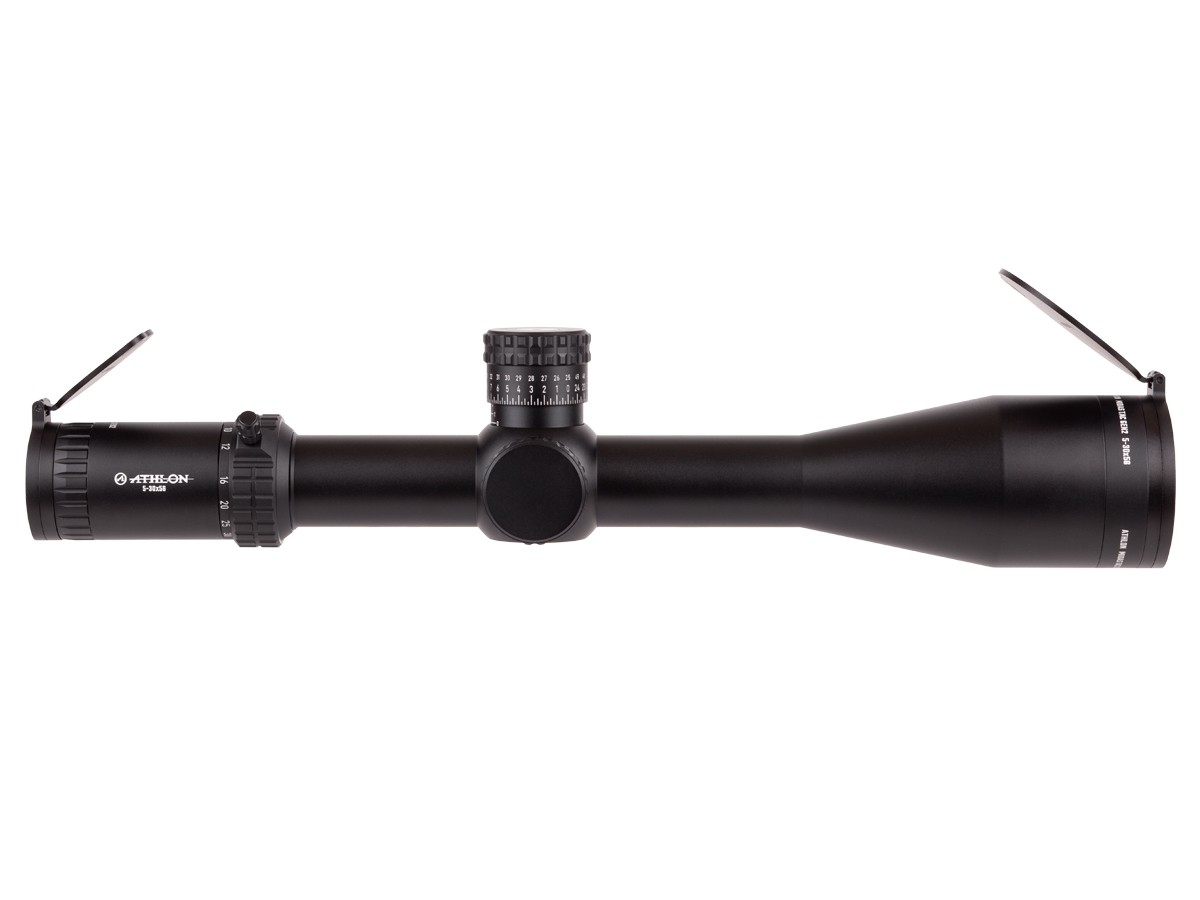
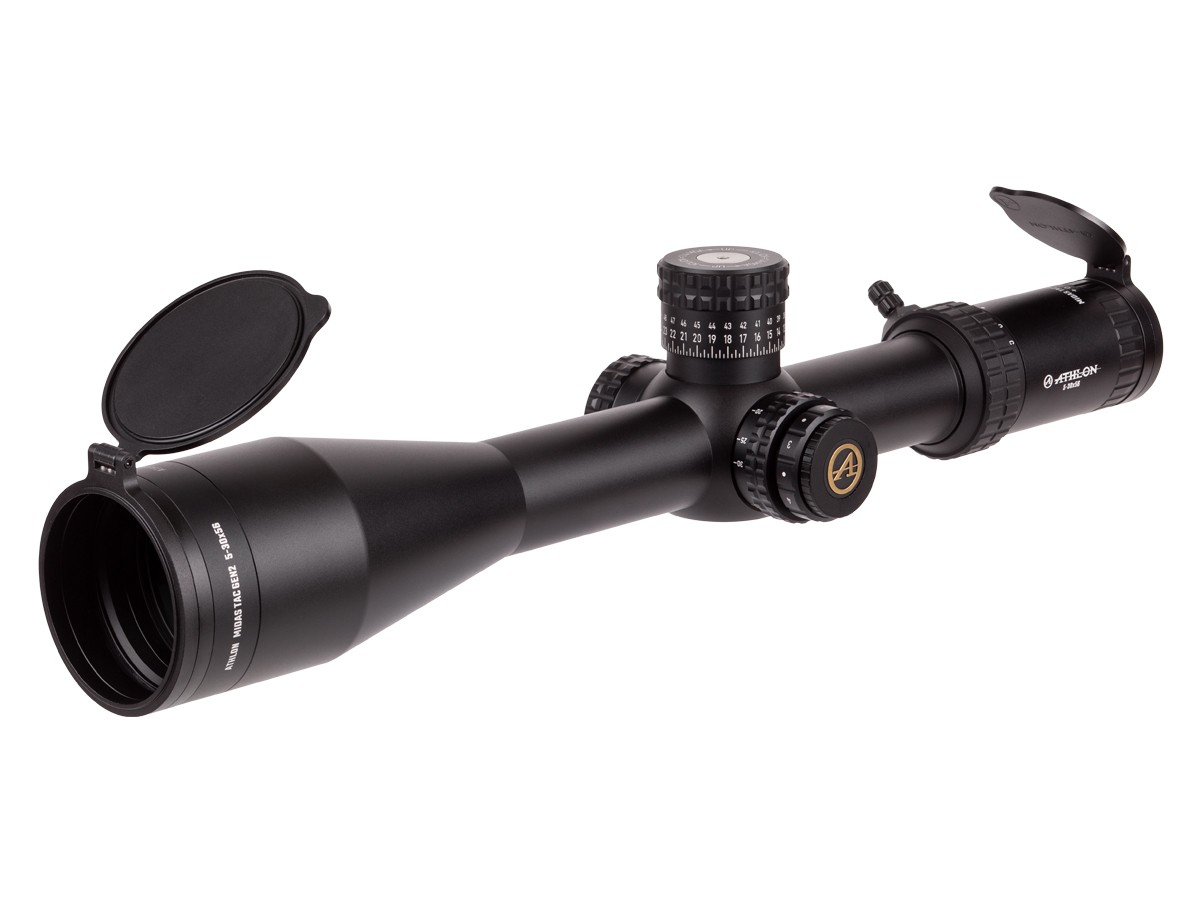
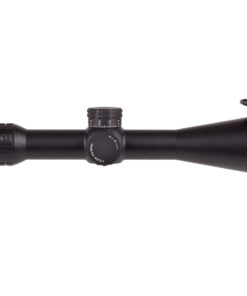
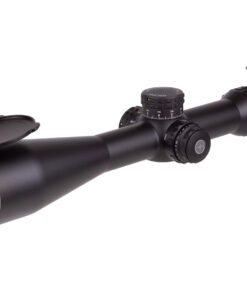
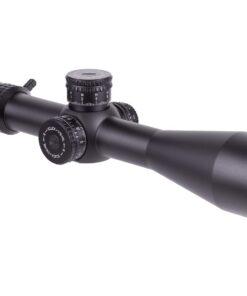
The Athlon Optics Midas TAC Gen2 HD has been developed for shooters who demand refined optical performance, dependable adjustments, and a rugged riflescope platform without unnecessarily complicated controls. Designed as the next generation of Athlon’s popular Midas TAC family, this optic combines HD glass, advanced fully multi-coated lenses, first focal plane reticle options, a precision zero stop, and durable construction within a streamlined tactical design.
Whether precision target shooting, recreational long-range shooting, or demanding field use is being considered, excellent visibility and repeatable adjustment can be provided by the Athlon Optics Midas TAC Gen2 HD. Furthermore, several magnification and reticle configurations are offered, allowing a setup to be selected according to individual preferences and shooting applications.
Why Choose the Athlon Optics Midas TAC Gen2 HD?
Greater confidence can be created when an optic provides both dependable mechanics and high-quality glass. Therefore, the Athlon Optics Midas TAC Gen2 HD has been engineered around practical features that support precise aiming while keeping operation straightforward.
First, enhanced image quality is delivered through HD glass. Meanwhile, advanced fully multi-coated lenses are used so light transmission and visual clarity can be optimized. Consequently, targets can be identified more easily while details are preserved across varying magnification settings.
Additionally, a first focal plane configuration is incorporated across the listed Midas TAC Gen2 HD models. Because the reticle is positioned in the first focal plane, its apparent size is changed as magnification is adjusted. As a result, the reticle’s subtensions remain useful throughout the magnification range.
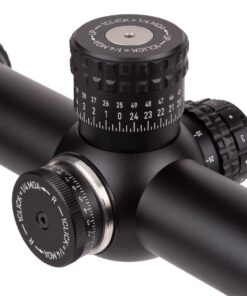
At the same time, unnecessary complexity has been avoided. An exposed elevation turret is combined with capped windage on the current 4-16×44 and 6-24×50 configurations listed by Athlon. Therefore, elevation adjustments can be accessed conveniently while unintended windage movement can be reduced.
Key Features of the Athlon Optics Midas TAC Gen2 HD
Several premium characteristics are integrated into the Midas TAC Gen2 platform so dependable optical and mechanical performance can be maintained.
- HD glass is incorporated for improved resolution and image clarity.
- Advanced fully multi-coated lenses are provided to support effective light transmission.
- First focal plane reticles are available for practical ranging and hold references across magnification settings.
- A Precision Zero Stop is included for easier and more repeatable return-to-zero operation.
- Exposed elevation adjustments are provided for convenient dialing.
- Capped windage adjustment is used on listed Gen2 HD configurations for additional protection.
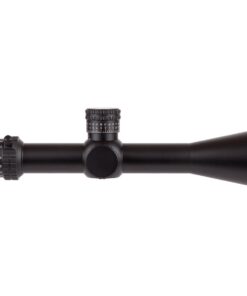
- A 30 mm main tube is used on current 4-16×44 and 6-24×50 Gen2 HD models.
- Multiple MIL and MOA configurations are offered so the preferred adjustment system can be selected.
- Generous 3.7-inch eye relief is listed on the 4-16×44 and 6-24×50 models.
HD Optical Performance for Better Target Definition
Clear optics become increasingly important as distance is increased. For that reason, HD glass has been incorporated into the Athlon Optics Midas TAC Gen2 HD.
Through improved optical resolution, fine details can be observed more effectively. Moreover, advanced fully multi-coated lens surfaces are utilized throughout the optic. Consequently, image quality can remain bright and useful under a broad variety of outdoor conditions.
Rather than simply providing high magnification, the Midas TAC Gen2 HD has been designed so useful visual information can be maintained as magnification is increased. Accordingly, target edges, contrasting surfaces, and surrounding terrain can be distinguished more comfortably.
Most importantly, better optical clarity can make extended observation considerably easier. Therefore, the scope can be particularly appealing to users who spend substantial time behind their optic.
First Focal Plane Reticle Design
A first focal plane reticle is one of the major advantages offered by the Athlon Optics Midas TAC Gen2 HD.
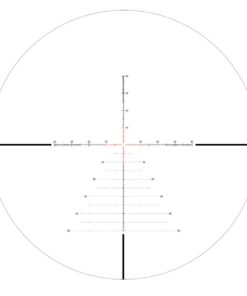
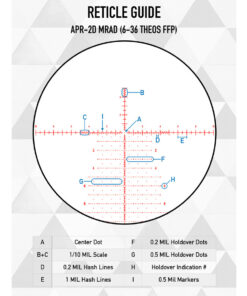
As magnification is changed, the reticle is scaled along with the viewed image. Because of that relationship, designated reticle subtensions remain consistent relative to the target. Therefore, ranging references and hold points can be used without being restricted to a single magnification setting.
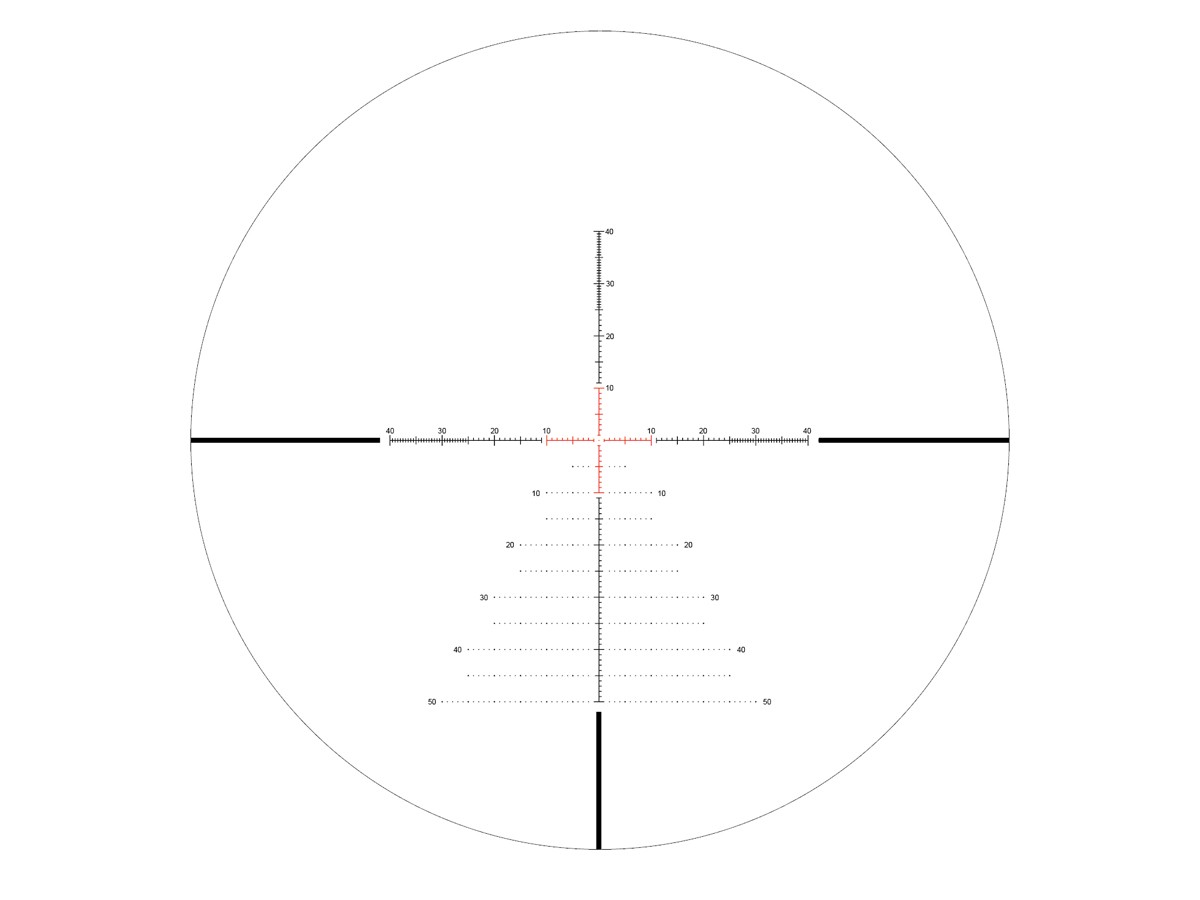
Different reticle arrangements are offered across the product family. For example, Athlon currently lists APRS14 and APRS15 MIL configurations as well as an APLR15 MOA configuration among its 6-24×50 Gen2 HD options.
As a result, the system can be matched more closely to an individual’s preferred measurement format.
Athlon Optics Midas TAC Gen2 HD 4-16×44
For users wanting a balance between manageable size and versatile magnification, the 4-16×44 Midas TAC Gen2 HD provides an attractive configuration.
A 30 mm tube is used, while a 3.7-inch eye relief is specified. Additionally, the field of view is listed at approximately 27.7 to 7 feet at 100 yards. Its overall length is approximately 14.2 inches, while the listed weight is 23.8 ounces.
Because 4× magnification is available at the lower end, broader observation can be achieved more conveniently. Nevertheless, 16× maximum magnification provides enough flexibility for many precision-oriented applications.
Therefore, this configuration can be particularly attractive when versatility is valued more highly than extremely high magnification.
Athlon Optics Midas TAC Gen2 HD 6-24×50
When additional magnification is preferred, the Athlon Optics Midas TAC Gen2 HD 6-24×50 provides a broader high-power range.
Its 50 mm objective lens is paired with a 30 mm main tube. Furthermore, a 3.7-inch eye relief is specified. Athlon lists the field of view at approximately 17.8 to 4.6 feet at 100 yards, depending on magnification. Overall length is approximately 14.6 inches, while weight is approximately 26.3 ounces.
Meanwhile, several reticle options are available. Consequently, MIL or MOA users can select a configuration that integrates more naturally with their preferred shooting system.
Because 24× magnification can be reached, smaller or more distant targets can be examined with greater detail. Nevertheless, the 6× lower setting still offers useful flexibility whenever a wider field of view is needed.athlon scopes review.avalon aries
Precision Zero Stop for Repeatable Adjustments
Reliable elevation adjustments become particularly important whenever frequent dialing is required.
Therefore, a Precision Zero Stop has been incorporated into the Athlon Optics Midas TAC Gen2 HD line.
Once the optic has been properly zeroed and the system has been configured, a defined reference point can be established. Consequently, returning the elevation turret toward the original zero becomes faster and more intuitive.nightforce atacr 4 20×50 f1
Additionally, repeatable control can help simplify range sessions in which multiple elevation corrections are being made. Rather than relying exclusively on visual turret markings, the zero-stop mechanism provides a practical mechanical reference.icarus scope
Built for Demanding Outdoor Use
Optical quality means little if structural durability cannot be maintained. Accordingly, robust construction has been emphasized throughout the Midas TAC Gen2 design. Athlon specifically describes the Gen2 redesign as featuring sturdy, robust construction alongside performance and appearance upgrades.
Furthermore, this construction can be beneficial when an optic is regularly transported, mounted, adjusted, and exposed to changing environmental conditions.
At the same time, the streamlined design avoids unnecessary controls that could interfere with straightforward operation. Therefore, users can concentrate on target acquisition, reticle placement, and adjustment rather than navigating an overly complicated interface.
Who Should Consider the Athlon Optics Midas TAC Gen2 HD?
The Athlon Optics Midas TAC Gen2 HD can be considered by shooters who prioritize optical clarity, useful magnification, repeatable adjustments, and first focal plane functionality.1 10 scope
Precision target shooters can appreciate its reticle and turret arrangement. Likewise, recreational long-range users can benefit from its HD optical system and broad adjustment capabilities. Furthermore, individuals transitioning toward more advanced precision optics can be provided with professional-style features without an unnecessarily complicated layout.
Ultimately, different configurations can be selected according to shooting distance, preferred reticle system, desired objective size, and magnification requirements.ares etr 1 10
Athlon Optics Midas TAC Gen2 HD: Performance Without Unnecessary Complexity
Performance, usability, and value have been brought together effectively within the Athlon Optics Midas TAC Gen2 HD.
Through HD glass, fully multi-coated lenses, first focal plane reticles, precision zero-stop functionality, and carefully designed turret controls, a capable precision-optics platform has been created.
Furthermore, multiple magnification and reticle configurations allow the scope to be selected according to individual shooting preferences instead of forcing every user into the same setup.
For anyone searching for a high-quality precision riflescope with dependable mechanics and refined optical performance, the Athlon Optics Midas TAC Gen2 HD deserves serious consideration. Whether the versatile 4-16×44 configuration or the higher-powered 6-24×50 version is selected, excellent functionality can be provided within a rugged, purpose-built platform.
Consequently, when clarity, repeatability, practical controls, and long-range capability are being prioritized, the Athlon Optics Midas TAC Gen2 HD represents a strong addition to a precision-oriented equipment setup.
Premium Rangefinding Binoculars, Hunting Optics, and Precision Rifle Scopes
Modern hunters, long-range shooters, and precision marksmen demand exceptional optical performance, and that is why products such as Leica rangefinder binoculars, Leica Geovid 10×42 rangefinder binoculars, Leica Geovid binoculars, Leica binoculars with rangefinder, Leica Geovid Pro 10×42, Geovid Pro 10×42, Leica Geovid rangefinder, Leica Geovid Pro rangefinder binoculars, Leica Geovid rangefinder binoculars, and the Leica Geovid 10×42 continue to attract attention throughout the shooting industry.
Whether enthusiasts are looking for Leica binoculars, Leica small binoculars, binoculars Leica, Leica Geovid binos, Leica bino, Leica binoculars for sale, Leica bino rangefinder, Leica camera binoculars, Leica binos, or a standard Leica binocular, there are options suitable for every environment and shooting application.
Many users also compare Leica products with SIG Sauer binoculars, SIG self stabilizing binoculars, SIG Sauer binos, SIG binoculars, SIG image stabilizing binoculars, SIG binocular, SIG auto stabilizing binoculars, Sigma binoculars, SIG Sauer self stabilized binoculars, and SIG Sauer image stabilized binoculars when evaluating premium optics.
Long-range shooters frequently combine these binocular systems with elite scopes such as the Nightforce ATACR, Nightforce ATACR 5-25×56 F2, Nightforce ATACR 4-20×50, Nightforce ATACR 5-25×56 F1, Nightforce ATACR 4-16×50, Night Force ATACR, ATACR scope, Nightforce attacker, ATACR 4-20, and the Nightforce ATACR 4-20×50 F1. Many professionals also pair their rifles with a Zeiss red dot for faster target acquisition.
Another respected name in the precision optics market is Tangent Theta. Experienced marksmen frequently search for Tangent Theta scopes, Tangent scope, Tangent scopes, Theta optics, Tangent Theta scope, and Tangent optics because of their legendary reputation for repeatability, durability, and optical clarity.
Companies such as Fierce Firearms, Fierce Arms, and Fierce Optics have likewise contributed to the growing popularity of advanced hunting equipment and premium glass systems. Their products are often used alongside specialized equipment featuring 11.5EE, 10×40, 34 56, 34×56, 14×44, 2S14, 2.5×15, 2.5/15, 1/2×42, 12×4.2, 4.5 30, and 4.5/30 specifications.
Among performance-oriented manufacturers, Athlon products remain extremely popular. Examples include the Midas TAC Gen2 HD 6-24×50 APLR15 FFP MOA reticle riflescope, Athlon Midas TAC, Athlon Midas TAC 6-24×50, Athlon Argos BTR Gen2 8-34×56, Athlon BTR Gen 2, Athlon Argos BTR Gen2, Athlon Argos BTR, Athlon Argos BTR Gen 2, Athalon scopes, Athens scope, Athlon Ares BTR, Athlon ETR, Athlon 4.5-30×56, Athlon BTR 2-12, Athlon 2, Athlon reticles, and numerous other models designed for demanding field conditions.1 10 lpvo
Shooters interested in low-power variable optics continue to search for solutions such as the 1-10 scope, Ares ETR 1-10, 1-10 LPVO, 1-10 FFP LPVO, 1×10 scope, LPVO 1-8, LPVO 1-10, and the 1-10 rifle scope. Likewise, precision enthusiasts appreciate the performance of the Ares ETR Gen2 UHD 4.5-30×56 APRS12 FFP IR MIL reticle, particularly when accuracy is required at extended distances.
The demand for versatile optics has also increased interest in equipment such as the 2-12x, 2.5-15 scope, AO scope, gun scope, hunting optic, longest range scope, and guides explaining how to buy a rifle scope. These products allow hunters and competitive shooters to adapt to changing terrain, lighting conditions, and target distances with exceptional precision.
From elite Leica Geovid rangefinder binoculars to advanced Nightforce ATACR models, highly regarded Tangent Theta scopes, innovative SIG Sauer binoculars, and dependable Athlon platforms, today’s market offers virtually unlimited possibilities for anyone seeking world-class optical performance.
Frequently Asked Questions About the Athlon Optics Midas TAC Gen2 HD
What is the Athlon Optics Midas TAC Gen2 HD?
The Athlon Optics Midas TAC Gen2 HD is a precision-oriented riflescope designed for shooters who value optical clarity, dependable adjustments, practical reticle functionality, and durable construction. It belongs to Athlon Optics’ Midas TAC family and combines high-definition glass with a streamlined tactical design.
Instead of relying on unnecessary controls, the scope has been developed around features that are useful for precision shooting. Depending on the selected configuration, users can benefit from first focal plane reticles, exposed elevation adjustments, capped windage, a zero-stop system, and multiple magnification options. Therefore, it can be suited to target shooting, recreational long-range use, competition practice, and other precision-focused applications.
Is the Athlon Optics Midas TAC Gen2 HD a first focal plane scope?
Yes. The Athlon Optics Midas TAC Gen2 HD is offered with a first focal plane reticle system. In a first focal plane scope, the reticle visually changes size as magnification is increased or decreased.
As a result, the relationship between the reticle markings and the target remains consistent throughout the magnification range. This can be especially useful when MIL or MOA references are being used for ranging, elevation holds, or wind corrections.
Therefore, users are not generally restricted to one magnification setting when working with the reticle’s subtensions. This makes the first focal plane configuration particularly useful for shooters who frequently change magnification while maintaining the same aiming references.
How clear is the glass on the Midas TAC Gen2 HD?
High-definition glass is one of the main features of the Midas TAC Gen2 HD. The optical system has been designed to provide strong resolution, useful contrast, and clear target definition across the magnification range.
Additionally, fully multi-coated lenses are used to improve light transmission and reduce unwanted reflections. Consequently, a brighter and more detailed image can be maintained under a variety of shooting conditions.
While environmental factors such as haze, lighting, temperature, and atmospheric distortion can still affect what is seen through any scope, the HD optical system helps provide a clearer overall viewing experience.
What is the difference between the Midas TAC Gen2 HD and the previous generation?
The Midas TAC Gen2 HD represents an updated version of the earlier Midas TAC platform. Several aspects of the optic have been refined to improve overall usability, optical performance, styling, and mechanical functionality.
The newer generation places greater emphasis on HD optical performance, practical turret operation, durable construction, and modern reticle configurations. Furthermore, the scope has been developed to appeal to shooters who want premium features without moving into unnecessarily complex or excessively expensive optic systems.
Therefore, users upgrading from an older model may notice improvements in overall refinement, clarity, controls, and shooting ergonomics.
Is the Midas TAC Gen2 HD good for long-range shooting?
The Athlon Optics Midas TAC Gen2 HD can be a strong option for long-range shooting because it combines useful magnification with first focal plane reticles and repeatable turret adjustments.
For example, higher-magnification versions such as the 6-24×50 configuration provide enough magnification for detailed target observation at extended ranges. Moreover, the reticle and elevation turret can be used together when precise adjustments are required.
Nevertheless, successful long-range shooting depends on much more than magnification. Proper rifle setup, ammunition consistency, environmental awareness, range estimation, and shooting fundamentals remain important. However, the optic itself provides many of the features typically expected from a dedicated precision riflescope.
Is the Athlon Midas TAC Gen2 HD suitable for beginners?
Yes, it can be suitable for beginners who are interested in learning precision shooting.
Although the scope includes advanced features, the overall control layout remains relatively straightforward. Therefore, new users can learn how elevation adjustments, reticle references, magnification, parallax, and zero-stop systems work without dealing with an overly complicated optic.
At the same time, the scope offers enough capability to remain useful as a shooter’s experience grows. Consequently, it can serve as a long-term optic rather than something that must immediately be replaced once more advanced shooting techniques are learned.
What magnification should I choose?
The best magnification depends on the intended shooting application.
A 4-16×44 configuration provides a versatile balance between a wider field of view and enough magnification for precision work. Because the magnification begins at 4×, it can be easier to locate targets quickly and observe a wider area.
Conversely, a 6-24×50 configuration provides more magnification at the upper end. Therefore, it may be preferred when smaller targets or longer shooting distances are common.
Ultimately, the best option should be selected according to typical shooting distance, target size, preferred field of view, rifle configuration, and personal shooting style.
What does the zero-stop feature do?
The zero-stop mechanism provides a mechanical reference point that helps the elevation turret return to the established zero position.
After the rifle has been properly zeroed and the zero-stop has been configured, elevation adjustments can be dialed for different distances. Once the shooter is finished, the turret can be returned toward the original zero point more quickly and confidently.
This feature can be particularly useful during long-range shooting sessions where frequent elevation changes are made. Additionally, it helps reduce the possibility of accidentally losing track of the original zero position after multiple turret rotations.
Does the Midas TAC Gen2 HD have exposed turrets?
The Midas TAC Gen2 HD uses an exposed elevation turret on current configurations, allowing elevation adjustments to be accessed quickly.
Meanwhile, windage is generally protected by a cap on models where capped windage is used. This combination provides a practical balance. Elevation can be dialed regularly, while the windage adjustment is protected against unintended movement.
As a result, the optic can work well for shooters who prefer dialing elevation while using the reticle for wind holds.
Is the Midas TAC Gen2 HD available in MIL and MOA versions?
Yes. Different configurations are offered so users can select a system based on their preferred measurement format.
MIL-based systems use milliradian measurements, whereas MOA-based systems use minutes of angle. Neither system is automatically better for every shooter. Instead, familiarity and consistency are generally more important.
A shooter already using MIL-based reticles and ballistic information may prefer a MIL configuration. Conversely, someone accustomed to MOA adjustments may feel more comfortable with an MOA model.
Ideally, the turret adjustments and reticle measurement system should match so calculations and corrections remain simple.
What is the advantage of a 30 mm tube?
A 30 mm main tube provides a strong, widely supported platform for precision riflescopes.
One benefit is that a larger internal adjustment range can potentially be accommodated compared with some smaller tube designs. Additionally, 30 mm scope rings and mounts are widely available, making installation relatively straightforward.
The larger tube should not be confused with objective lens diameter, however. Tube diameter primarily relates to the mechanical structure and internal adjustment system, whereas the objective lens influences light gathering and overall optical design.
Is the Athlon Midas TAC Gen2 HD good in low light?
The HD glass and fully multi-coated lens system are designed to support effective light transmission. Therefore, the optic can provide useful image brightness during changing lighting conditions.
A larger objective lens, such as the 50 mm objective found on certain models, can also support a bright viewing experience when the exit pupil and magnification settings are appropriate.
Nevertheless, no conventional riflescope can create light that is not present. Low-light performance will always be influenced by available ambient light, magnification level, environmental conditions, and the shooter’s eyesight.
For the best results, moderate magnification can often provide a brighter image than extremely high magnification during poor lighting.
Does the scope have parallax adjustment?
Precision-oriented riflescopes such as the Midas TAC Gen2 HD are designed with parallax adjustment to help shooters obtain a more accurate sight picture at different distances.
Correct parallax adjustment can reduce apparent reticle movement against the target when the shooter’s eye shifts slightly behind the optic.
Additionally, a properly adjusted parallax setting can improve image focus at the target distance. This becomes increasingly important as magnification and shooting distance increase.
However, parallax adjustment should not be treated as a substitute for consistent head position and proper shooting fundamentals.
How durable is the Midas TAC Gen2 HD?
The Midas TAC Gen2 HD has been developed as a rugged precision optic intended for regular field and range use.
Its construction is designed to withstand the normal mechanical stresses associated with mounting, recoil, transportation, and outdoor environments. Furthermore, a strong main tube helps provide structural rigidity and protects the internal optical system.
Nevertheless, proper mounting remains important. Scope rings should be installed according to appropriate torque specifications, and unnecessary overtightening should be avoided because excessive pressure can potentially damage an optic or interfere with internal movement.
Is the Midas TAC Gen2 HD waterproof and weather resistant?
The scope is designed for outdoor use and is intended to tolerate changing environmental conditions.
Weather-resistant construction is particularly important because precision optics can encounter moisture, temperature changes, dust, and humidity during normal use.
Even so, users should continue to care for the optic properly. Lens caps should be used during transport when practical, exterior moisture should be wiped away after exposure, and lenses should be cleaned using appropriate optical cleaning materials rather than abrasive cloths.
Proper maintenance can help preserve both optical clarity and exterior finish over the long term.
How much eye relief does the Midas TAC Gen2 HD provide?
Current configurations are designed to provide generous eye relief, helping the shooter maintain a comfortable viewing position while reducing the likelihood of contact between the scope and the face under recoil.
Proper eye relief is especially important during installation. Before the scope rings are fully tightened, the optic should be positioned so a complete field of view can be obtained naturally from the shooter’s normal firing position.
The scope should not require the user’s head to be stretched forward or pushed backward unnaturally. Correct mounting can substantially improve comfort, repeatability, and overall shooting performance.
Is the Midas TAC Gen2 HD heavy?
The Midas TAC Gen2 HD falls within a practical weight range for a precision riflescope with its magnification, turret system, and optical features.
The exact weight depends on the chosen model. Higher-magnification configurations with larger objective lenses generally weigh more than smaller versions.
For a dedicated precision or target rifle, this additional weight may not be a major concern. However, shooters building lightweight field rifles should consider the combined weight of the scope, rings, mount, rifle, and accessories before making a final selection.
What type of shooting is the Midas TAC Gen2 HD best suited for?
The scope is particularly well suited to precision-oriented applications.
It can be used for recreational target shooting, long-range practice, competition-style shooting, range training, and other situations where reliable adjustments and clear optics are valued.
The first focal plane reticle also makes the optic suitable for users who frequently work with elevation or wind references.
Additionally, because multiple magnification options are available, the system can be adapted to different rifle setups and shooting distances rather than being restricted to a single specialized role.
Is the Midas TAC Gen2 HD worth buying?
For users looking for a combination of HD glass, first focal plane capability, practical turrets, a precision zero stop, and durable construction, the Athlon Optics Midas TAC Gen2 HD offers a compelling package.
Its appeal comes from balancing advanced functionality with straightforward operation. Rather than adding features simply for complexity, the design focuses on tools that can provide genuine value during precision shooting.
Therefore, it can be especially attractive to shooters who want to move beyond entry-level optics while maintaining reasonable usability and long-term versatility.
The final decision should still be based on preferred magnification, reticle system, rifle setup, shooting distance, and budget. However, for many precision-focused users, the Midas TAC Gen2 HD can provide a strong balance between optical quality, mechanical capability, and practical performance.
How do you maintain the Athlon Optics Midas TAC Gen2 HD?
Routine maintenance is relatively simple. Exterior dust should first be removed carefully using an appropriate lens brush or air blower. Afterward, fingerprints or smudges can be cleaned with lens-safe fluid and a microfiber optical cloth.
Furthermore, turret caps, mounting hardware, and rings should occasionally be inspected to ensure everything remains secure.
The optic should also be stored in a dry environment whenever possible. If it becomes wet during outdoor use, surface moisture should be removed before long-term storage.
Most importantly, the lenses should not be wiped with rough clothing, paper towels, or dirty materials because small abrasive particles can damage optical coatings.
Why is the Athlon Optics Midas TAC Gen2 HD popular among precision shooters?
The appeal of the Athlon Optics Midas TAC Gen2 HD comes from the combination of optical clarity, practical controls, useful magnification ranges, first focal plane reticles, and dependable adjustment features.
Additionally, the design serves shooters who want premium functionality without an unnecessarily complicated operating system.
Because both MIL and MOA preferences can be accommodated through different configurations, a wider range of users can select a model that matches their existing shooting workflow.
Ultimately, the scope is designed around the requirements that matter most during precision shooting: seeing the target clearly, maintaining a consistent aiming reference, making repeatable adjustments, and returning confidently to zero. For those reasons, the Midas TAC Gen2 HD can be considered a capable and versatile optic for shooters seeking dependable performance across a wide variety of precision-oriented applications.
Practical Use Scenarios for the Athlon Optics Midas TAC Gen2 HD
The Athlon Optics Midas TAC Gen2 HD is designed to deliver practical value in situations where optical clarity, repeatable adjustments, target identification, and consistent sight alignment matter. While technical specifications explain what a riflescope contains, real-world use reveals how those features actually affect the experience behind the optic. From structured range sessions to precision-oriented field observation, the scope is built around features that can make shooting more organized, predictable, and comfortable.
Rather than serving only one narrow purpose, the optic can be adapted to different experience levels and shooting environments. Its combination of HD glass, first focal plane reticle design, adjustable magnification, parallax control, and precision turret functionality makes it useful for shooters who prefer a methodical approach to target work.
Scenario 1: A Structured Precision Range Session
One of the most natural environments for the optic is a controlled shooting range where targets are positioned at several known distances.
Imagine arriving at a range with targets placed at 100, 200, 300, and farther distances. Initially, a lower magnification setting can be selected so the target area remains easy to locate. A wider field of view can make orientation more convenient, especially when several targets are positioned across the same range.
Once the desired target has been identified, magnification can be increased gradually. As a result, smaller aiming points become easier to observe without immediately jumping to maximum magnification.
This flexibility matters because extremely high magnification is not always necessary. In many situations, a moderate setting provides a better balance between image stability, field of view, and target detail.
Furthermore, the HD optical system can help preserve visual definition as magnification is increased. Instead of simply making an unclear image appear larger, improved glass quality can support stronger edge definition and contrast.
For someone spending an extended afternoon at the range, that difference can become noticeable. Less effort may be required to identify target markings, locate previous impacts, or maintain focus on a specific aiming point.
Working Through Several Distances
After a baseline zero has been established, the elevation system becomes especially useful.
For example, the shooter may begin at the established zero distance and then move progressively to farther targets. Appropriate elevation adjustments can be made according to previously confirmed ballistic information.
Because the elevation turret is designed for convenient access, adjustments can be made without removing protective caps each time.
After finishing with a farther target, the turret can be returned toward its established zero reference. The zero-stop system can provide a useful mechanical endpoint, reducing uncertainty about whether the elevation adjustment has been returned to the original position.
Consequently, a range session can become more systematic.
Instead of repeatedly wondering where the turret started, the shooter has a defined reference. This can be particularly helpful when several distances are being practiced during the same session.
Scenario 2: Learning Precision Optic Fundamentals
The scope can also be useful for someone progressing from a simpler optic into a more advanced precision-oriented system.
A beginner may initially be unfamiliar with concepts such as first focal plane reticles, parallax adjustment, elevation dialing, or MIL and MOA references. However, these features can be learned gradually instead of being used all at once.
For instance, the shooter may begin by concentrating exclusively on obtaining a consistent sight picture. Proper eye relief can be established, followed by comfortable head positioning and a repeatable cheek weld.
Once those fundamentals become familiar, magnification adjustments can be introduced.
Later, parallax control can be practiced. The user can observe how the target image becomes sharper as the parallax setting is adjusted for different distances.
Eventually, reticle references and elevation adjustments can be incorporated.
Therefore, the optic can function as a platform that grows with the user. Advanced features are available when needed, but basic operation does not require every function to be mastered immediately.
Developing Consistency
A practical training session may involve repeatedly mounting the rifle into the same position and checking whether a full, clear image appears immediately.
If the eye position is inconsistent, dark edges or partial image loss may appear. By repeating the setup, the shooter can develop more consistent alignment.
Similarly, the first focal plane reticle can help introduce more structured observation.
Because the reticle changes apparent size as magnification changes, its relationship to the target remains useful throughout the zoom range. Consequently, the shooter can begin learning how reticle references behave at different magnification settings without being restricted to one designated power.
This makes the optic useful not only as aiming equipment but also as a training tool for understanding how modern precision optics function.
Scenario 3: Small-Target Precision Practice
Another practical use involves shooting at relatively small targets where precise aiming becomes more important than rapid target transitions.
Examples could include paper target grids, scoring rings, steel plates, or other controlled range targets.
In this environment, the higher magnification settings become particularly useful.
Once the rifle is positioned securely, magnification can be increased until the target provides enough visual detail for precise aiming. However, maximum magnification does not always need to be selected.
Instead, the user can choose the lowest magnification that still provides the required target detail. This often creates a more stable and comfortable viewing experience.
Additionally, parallax adjustment can be refined for the target distance.
When both image focus and parallax are properly managed, the reticle can appear more stable in relation to the target. Consequently, small aiming errors may become easier to identify.
Reviewing Groups and Technique
Precision practice is not only about hitting a target. It is also about evaluating consistency.
After a group has been completed, the optic may help the shooter observe the general location of impacts depending on distance, target type, lighting, and caliber.
From there, shooting technique can be evaluated.
If impacts are consistently positioned away from the desired point, the shooter can determine whether an adjustment is appropriate or whether technique should first be examined.
This disciplined approach is preferable to making random turret changes after every shot.
Therefore, the scope supports a more organized process in which observation, technique, and adjustment are separated into logical steps.
Scenario 4: Changing Light Conditions During an Outdoor Range Day
Outdoor shooting conditions rarely remain identical throughout the day.
Morning light can be soft, midday light can become harsh, and late-afternoon contrast can change significantly. Cloud cover may also move repeatedly across the range.
In these situations, optical coatings and HD glass become more relevant.
During bright conditions, contrast can help distinguish target edges against surrounding backgrounds. Meanwhile, under dimmer conditions, efficient light transmission can help preserve a usable image.
The user may also reduce magnification when available light decreases.
Lower magnification typically provides a larger exit pupil, depending on the objective diameter and selected power. Consequently, the viewed image may appear brighter and more comfortable.
This demonstrates why magnification should be treated as an adjustable tool rather than something that must always remain at maximum power.
Managing Mirage and Atmospheric Distortion
On warm days, heat rising from the ground can create visible atmospheric distortion.
At high magnification, this distortion may become more obvious. The target can appear to shimmer or move even though the rifle and target remain stationary.
In such a situation, reducing magnification can often provide a more useful image.
Therefore, a practical user learns to adjust the optic according to conditions rather than automatically assuming more magnification will always produce better results.
This adaptability can make the Midas TAC Gen2 HD particularly valuable during long range sessions where environmental conditions change over several hours.
Scenario 5: Switching Between Wider Observation and Detailed Target Viewing
A versatile optic should make it easy to move between general observation and detailed aiming.
Suppose several targets are positioned across a large shooting area. At a lower magnification setting, the shooter can scan the available target field without excessive movement.
Once a specific target has been located, magnification can be increased.
This method is often more efficient than attempting to locate a target while already using very high magnification.
At higher power, the field of view becomes narrower. Therefore, small movements of the rifle can shift the viewed area considerably.
By beginning at lower magnification and then increasing power after target acquisition, the process becomes smoother and more controlled.
Why This Matters During Repeated Practice
During a session involving several targets, constant repositioning may be required.
A shooter might engage one target, move to another lane, return to a previous target, and then inspect a separate scoring area.
Being able to adjust magnification quickly allows the optic to adapt to each task.
As a result, the shooter does not need separate optics for general observation and precision aiming within the same range environment.
Scenario 6: Reticle-Based Practice Without Constant Turret Adjustment
Not every correction needs to be dialed into the elevation turret.
The first focal plane reticle can also be used as a visual reference during structured practice.
For example, a shooter may intentionally leave the turret at the established zero while practicing predetermined reticle holds on known targets.
Because the reticle subtensions remain proportionally consistent throughout the magnification range, these references can remain useful as magnification changes.
This method can help the user become more familiar with the reticle layout.
Additionally, it reduces unnecessary turret movement during drills designed specifically around visual holds.
Combining Dialing and Holding
A more experienced user may choose to combine both methods.
Elevation can be dialed for a primary target distance, while smaller corrections are made using reticle references.
Alternatively, the shooter may dial elevation while using the reticle only for lateral corrections.
The important point is flexibility.
The scope does not force a single method. Instead, the shooter can select an approach that matches the training objective and personal preference.
Scenario 7: Extended Sessions Where Comfort Matters
A precision shooting session can last several hours.
During that time, eye fatigue, neck position, and viewing comfort can influence concentration.
Correct scope placement becomes especially important.
If the optic is mounted too far forward or backward, the shooter may constantly reposition the head to obtain a full image. Over time, this can become uncomfortable.
However, when eye relief and mounting position are properly established, the sight picture can appear naturally as the rifle is shouldered.
This reduces unnecessary movement and helps create a repeatable shooting position.
Furthermore, the user can adjust magnification according to the task rather than keeping the optic at an unnecessarily demanding setting.
Moderate magnification can often provide enough detail while remaining easier on the eyes.
Scenario 8: Testing Different Ammunition or Equipment Configurations
Precision shooters frequently compare ammunition, accessories, or rifle configurations during range testing.
In this situation, consistency becomes essential.
The same target distance, aiming point, magnification, and shooting position should ideally be maintained while different variables are evaluated.
The optic can support this process by providing repeatable adjustments and clear target references.
For example, several ammunition types may be tested in separate groups. The shooter can maintain the same aiming point while observing how each group changes in size or position.
Similarly, changes to rifle support equipment can be evaluated without changing the optic setup unnecessarily.
Because the zero system and turret reference remain consistent, the shooter can return to a known baseline after experimental adjustments.
Scenario 9: A Shooter Progressing Toward More Advanced Range Work
Perhaps the strongest practical advantage of the Midas TAC Gen2 HD is that it can continue to provide useful functionality as a shooter’s skills develop.
Initially, it can be used as a straightforward magnified optic.
Later, the user can begin experimenting with parallax adjustment, magnification management, reticle measurements, and elevation dialing.
Eventually, more structured precision exercises can be introduced.
This progression means the scope does not need to be replaced simply because the user becomes more experienced.
Instead, features that seemed advanced at the beginning can become valuable tools over time.
Practical Value in Everyday Use
The Athlon Optics Midas TAC Gen2 HD is most useful when its features are treated as practical tools rather than technical specifications on a product page.
HD glass supports clearer observation. Adjustable magnification allows the field of view and target detail to be balanced. First focal plane reticles provide consistent references across the zoom range. Parallax adjustment helps refine focus and alignment at different distances. Meanwhile, exposed elevation controls and a zero-stop system support organized, repeatable range adjustments.
Together, these features create a riflescope that can adapt to different skill levels and structured shooting scenarios.
Whether the user is establishing a zero, practicing at multiple known distances, evaluating equipment, learning reticle references, or simply improving consistency during an extended range session, the optic can provide a predictable and practical viewing platform.
Ultimately, its strongest real-world advantage is versatility. Instead of requiring one rigid operating style, the scope allows each shooter to develop a workflow that matches their experience, equipment, environment, and precision goals.





Reviews
There are no reviews yet.