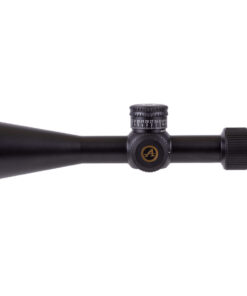
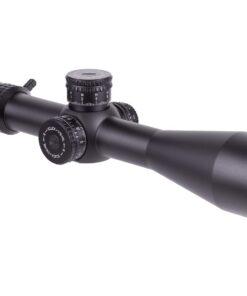
Athlon Optics Heras SPR AAGR2 – Premium 4-20×50 Precision Riflescope
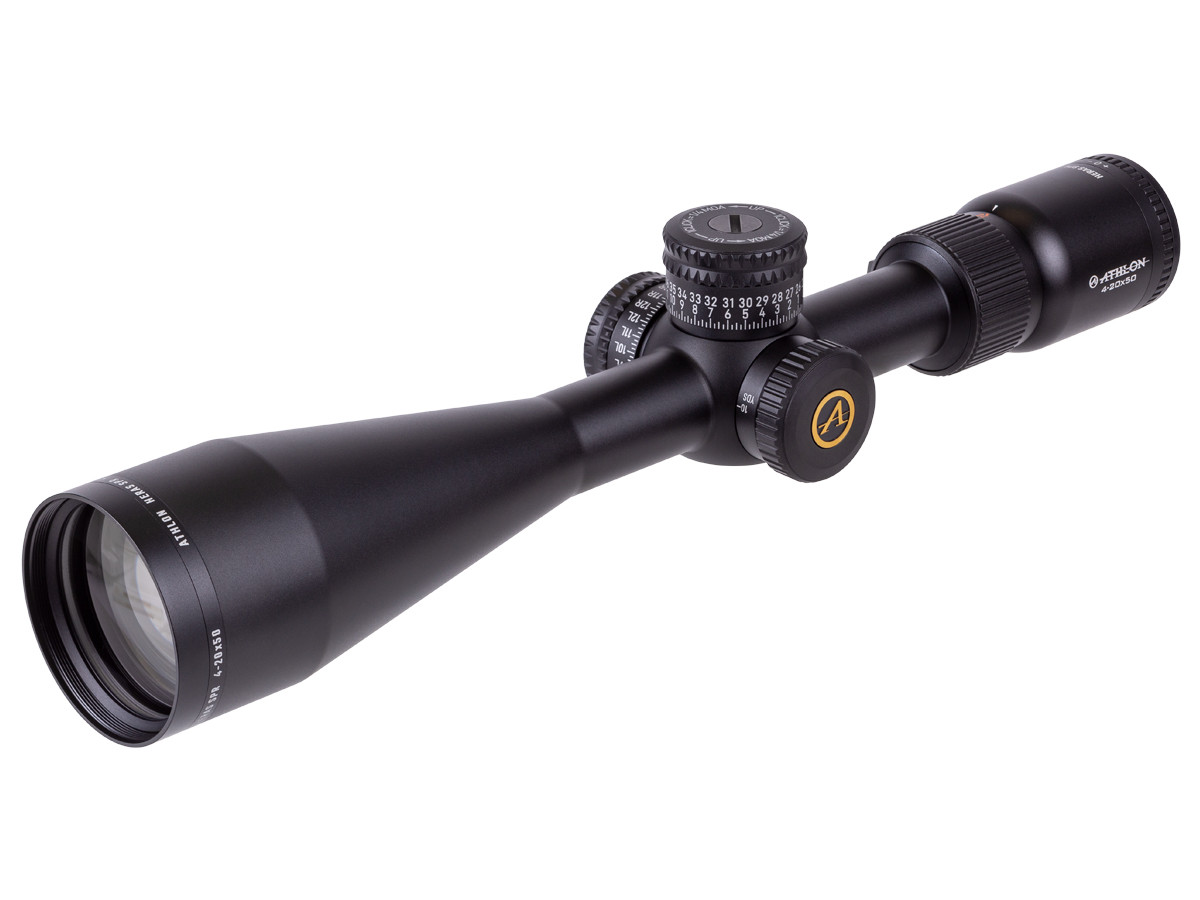
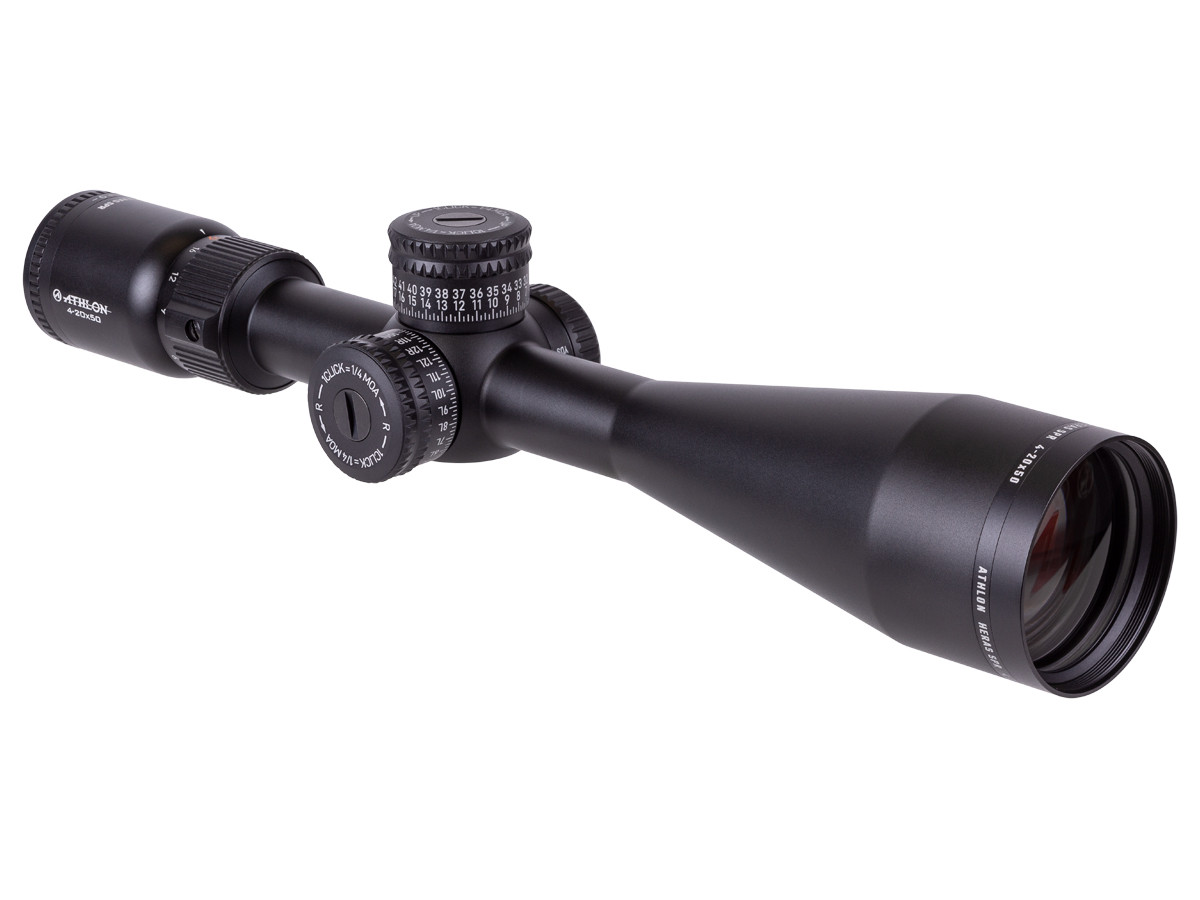
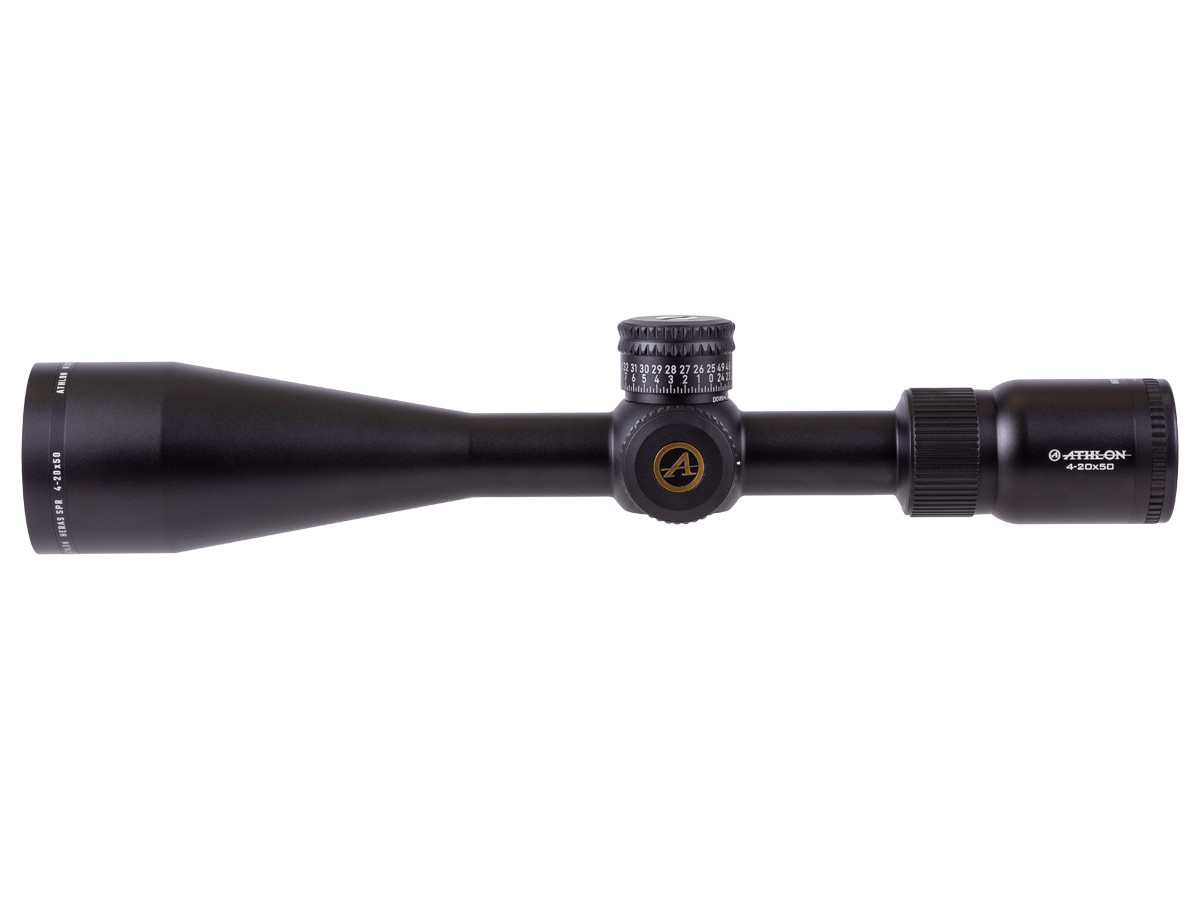
The Athlon Optics Heras SPR AAGR2 has been designed for users who want dependable optical performance, versatile magnification, precise adjustments, and a practical reticle system in one refined riflescope. Built around a versatile 4-20× magnification range and a large 50 mm objective lens, this optic delivers the flexibility required for everything from general target observation to demanding long-range applications.
Rather than being limited to one shooting distance, the Heras SPR has been engineered as a crossover optic. Clear observation can therefore be maintained across changing ranges, while its adjustment system provides the control expected from a modern precision riflescope.
Additionally, advanced fully multi-coated lenses have been incorporated to improve light transmission, brightness, and color reproduction. Athlon describes the optic as having a 1-inch main tube, 3.6-inch eye relief, and a field of view ranging from 27.9 feet to 5.6 feet at 100 yards, depending on magnification.
Why Choose the Athlon Optics Heras SPR AAGR2?
Versatility is one of the strongest qualities offered by the Athlon Optics Heras SPR AAGR2. At 4× magnification, a comparatively broad field of view can be maintained. As magnification is increased toward 20×, meanwhile, smaller details can be examined with considerably greater precision.
Consequently, the optic can be adapted to different distances without requiring an excessively complicated setup.
A 50 mm objective lens has also been incorporated. Because more usable light can be gathered through the objective, a bright and detailed sight picture can be maintained under a wide range of lighting conditions.
Furthermore, optical clarity has been supported by Athlon’s advanced fully multi-coated lens system. Better light transmission, optimum brightness, and accurate color reproduction are specifically emphasized by the manufacturer.
Highlighted Product Features
- 4-20× magnification range for versatile short-to-long-distance observation
- Large 50 mm objective lens for a bright, detailed sight picture
- AAGR2 second focal plane reticle for precise aiming references
- Advanced fully multi-coated optics for improved light transmission and color reproduction
- Side parallax adjustment from approximately 10 yards to infinity
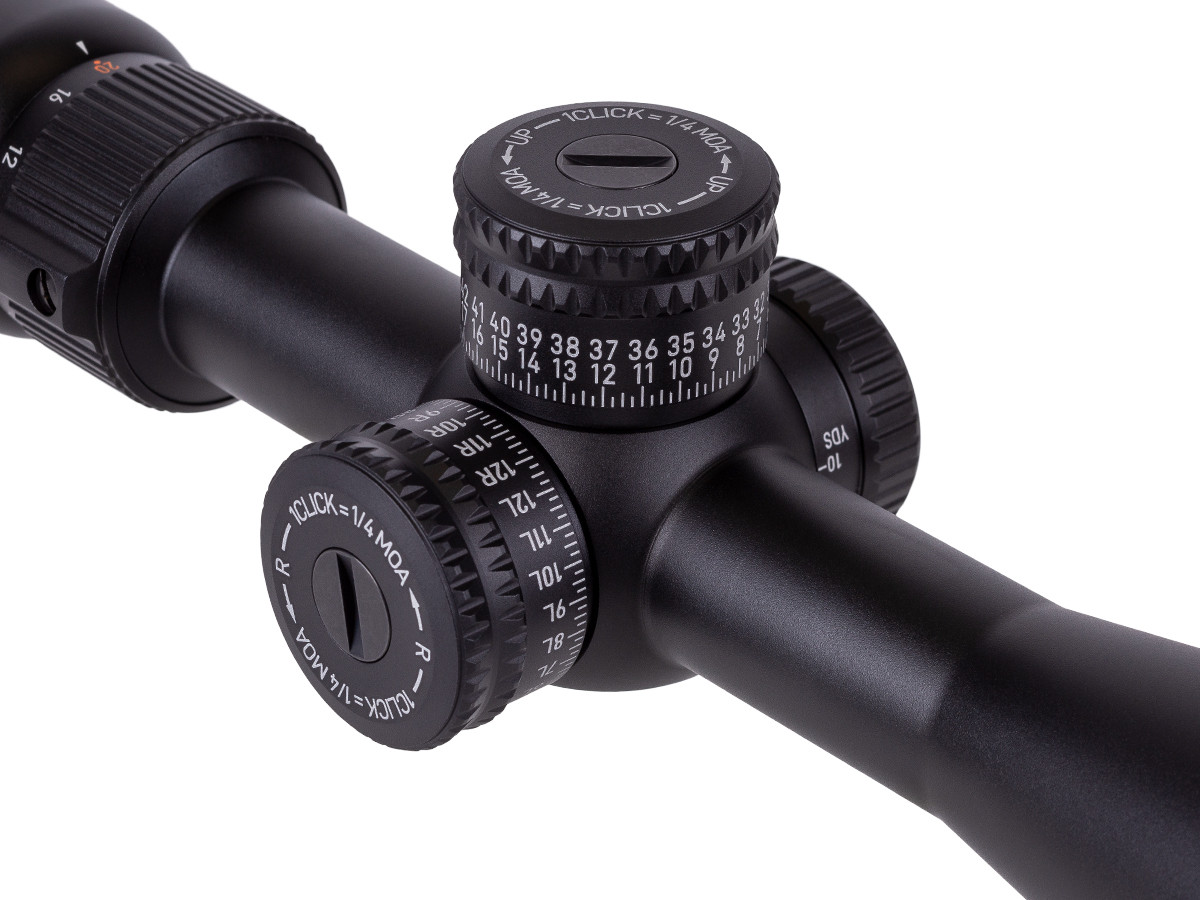
- Precision zero-stop system for a dependable return to the established zero
- Locking turret functionality to help prevent unintended adjustment
- 1-inch main tube for a streamlined mounting profile
- 3.6-inch eye relief for comfortable viewing
- MOA and MIL configurations available to suit different user preferences
- Non-illuminated reticle configuration on the 4-20×50 AAGR2 models
- Designed for hunting and long-range applications
Official specifications confirm the principal dimensions and adjustment format of the Heras SPR 4-20×50 series.
AAGR2 Reticle Designed for Useful Reference Points
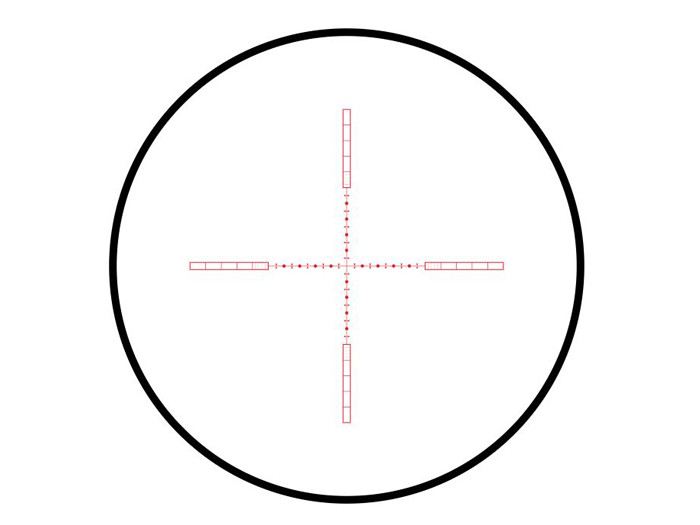
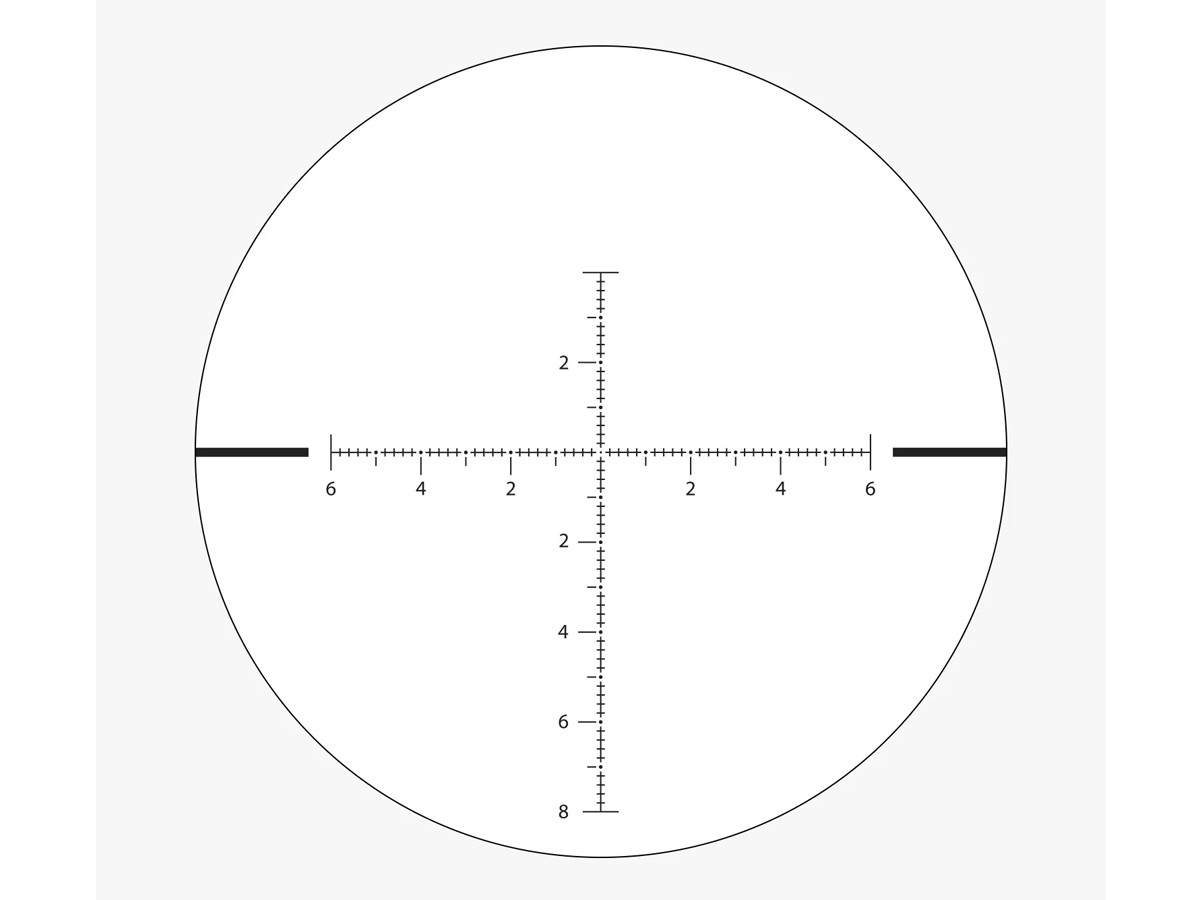
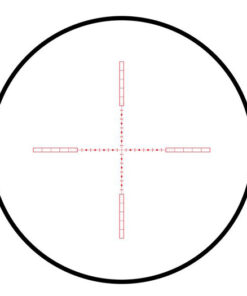
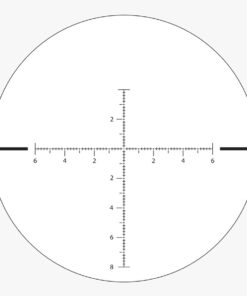
At the center of the Athlon Optics Heras SPR AAGR2 experience is its AAGR2 reticle.
Because the reticle is positioned in the second focal plane, its apparent size remains constant as magnification is changed. As a result, users who prefer an uncluttered and familiar sight presentation can retain a consistent visual reference throughout the zoom range.
For the MOA version, Athlon specifies a 0.2-MOA floating center dot together with 1-MOA increment hash marks. Additional reference points are incorporated into the reticle design to support accurate holds and measurement.
Accordingly, the reticle balances visibility with useful aiming information instead of overwhelming the sight picture with excessive markings.
Available MOA and MIL Options
Different adjustment preferences can also be accommodated.
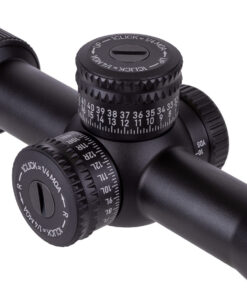
The MOA configuration uses 0.25-MOA click adjustments, while the MIL version uses 0.1-MIL clicks. Therefore, buyers can select a system that better matches their existing equipment, calculations, and personal preferences.
That choice can be especially valuable for users who already work consistently in either angular measurement system.
Precise Side Parallax Adjustment
Parallax control has been made particularly versatile.
The Athlon Optics Heras SPR AAGR2 provides parallax adjustment down to approximately 10 yards and extends toward infinity. Consequently, accurate focus can be achieved across an unusually broad range of distances. Athlon specifically positions this capability as useful for both longer-range platforms and close-range airgun applications.
For users who regularly change target distances, this adjustment range can make the optic significantly more adaptable.
Rather than accepting a fixed parallax distance, the image and reticle relationship can be refined for the intended range.
Locking Turrets for Greater Adjustment Security
Unintentional turret movement can create unnecessary frustration. For that reason, locking turret functionality has been incorporated into the Heras SPR platform.
Athlon’s system allows the relevant turret to be raised for adjustment and then pushed back into the locked position. Consequently, accidental movement can be reduced once the preferred setting has been established.
This arrangement combines convenient access with additional security.
Precision Zero Stop
Another valuable feature is Athlon’s precision zero-stop system.
Once the optic has been correctly configured, the system provides a defined stopping point when returning to the original zero. Therefore, adjustments can be made when required while a reliable reference position is retained.
Athlon describes the system as providing a sharp and precise stop at the initial zero position.
For users who frequently dial adjustments, that feature adds considerable practical value.
Advanced Fully Multi-Coated Glass
Image quality depends heavily on the quality and treatment of the optical surfaces.
For this reason, advanced fully multi-coated glass has been used throughout the Athlon Optics Heras SPR AAGR2. Athlon states that these coatings are intended to provide improved light transmission, optimum brightness, and true color across the visible light spectrum.
Consequently, targets can be viewed with improved definition while surrounding details remain natural and recognizable.
A clearer image can also reduce the effort required to distinguish fine details, particularly as magnification increases.
Comfortable 3.6-Inch Eye Relief
Viewing comfort has not been overlooked.
A 3.6-inch eye relief is specified for the 4-20×50 Heras SPR AAGR2. Because sufficient eye relief can help create a more comfortable and repeatable viewing position, this measurement contributes to the optic’s overall usability.
Moreover, proper eye positioning supports a complete sight picture and allows the user to take greater advantage of the available field of view.
Wide 4-20× Magnification Capability
Few features influence versatility as directly as magnification.
At the lower end, 4× magnification provides an effective balance between detail and surrounding awareness. Conversely, 20× magnification allows distant details to be inspected far more closely.
Therefore, one optic can accommodate a broad variety of viewing distances.
At 100 yards, Athlon specifies a field of view of approximately 27.9 feet at 4× and 5.6 feet at 20×.
That range gives users the freedom to zoom out for broader observation before increasing magnification when greater detail becomes necessary.
Built for Users Who Value Practical Precision
Instead of relying on unnecessary complexity, the Athlon Optics Heras SPR AAGR2 combines features that directly contribute to optical performance and adjustment control.
Its 4-20×50 configuration provides a strong foundation. Meanwhile, the side-focus parallax adjustment increases flexibility. Locking adjustments help preserve selected settings, while the precision zero stop makes returning to the established reference straightforward.
Just as importantly, the AAGR2 reticle provides useful aiming references without creating an excessively crowded viewing area.
For buyers seeking a versatile second focal plane optic, these combined characteristics create a well-rounded package.
Who Is the Athlon Optics Heras SPR AAGR2 For?
The Heras SPR can be an excellent choice for users who value:
- Variable magnification across a wide working range
- Clear and bright optical performance
- A second focal plane reticle
- Choice between MOA and MIL configurations
- Fine parallax adjustment
- Secure turret controls
- Repeatable zero-reference capability
- A large 50 mm objective
- Practical long-distance observation capability
- A streamlined 1-inch scope body
Because these characteristics have been combined into one platform, the optic can transition effectively between different recreational and precision-oriented environments.
Athlon Optics Heras SPR AAGR2 – Precision, Clarity and Versatility Combined
Ultimately, the Athlon Optics Heras SPR AAGR2 stands out as a thoughtfully configured 4-20×50 riflescope that combines optical clarity, useful magnification, precise adjustments, and an intelligently designed reticle.
Bright viewing is supported by advanced fully multi-coated glass. Precise focusing is assisted by side parallax adjustment beginning at approximately 10 yards. Meanwhile, locking adjustment functionality and the precision zero-stop system provide added confidence when settings are changed.
Additionally, the availability of both MOA and MIL versions allows the optic to suit a wider range of individual preferences.
For anyone seeking a feature-rich second focal plane riflescope with a practical combination of clarity, control, and long-range versatility, the Athlon Optics Heras SPR AAGR2 offers a compelling balance of modern optical engineering and straightforward usability.
Frequently Asked Questions
What makes this riflescope suitable for precision-focused users?
This riflescope has been designed around a combination of optical clarity, broad magnification, practical adjustment controls, and a detailed second focal plane reticle. Its 4-20× magnification range allows users to move from wider observation to more detailed target viewing without changing optics. Furthermore, the large 50 mm objective lens supports good light transmission and helps maintain a bright image when higher magnification is selected.
Another important advantage is the combination of side parallax adjustment, locking turret functionality, and a precision zero-stop system. These features make adjustments more controlled and repeatable. Consequently, users can establish their preferred settings, make necessary changes, and return to the original reference point with greater confidence.
What magnification range does the scope provide?
A 4-20× variable magnification range is provided. At 4×, the field of view remains relatively broad, which helps with target acquisition and general observation. Meanwhile, increasing magnification toward 20× allows smaller or more distant details to be examined more closely.
Because the magnification range is broad, the optic can be adapted to different target distances and shooting environments. Rather than being restricted to a narrow application, the scope can be adjusted according to the level of detail required.
What is the advantage of the 50 mm objective lens?
The 50 mm objective lens is designed to gather a useful amount of available light and direct it through the optical system. As a result, a bright and detailed image can be maintained under a variety of lighting conditions.
A larger objective can be particularly beneficial when magnification is increased because more light is required to preserve image brightness and clarity. Therefore, the 50 mm configuration creates a practical balance between optical performance and overall scope dimensions.
Is the reticle located in the first or second focal plane?
The reticle is positioned in the second focal plane. Consequently, the apparent size of the reticle remains visually consistent as magnification is increased or decreased.
Many users appreciate this configuration because the reticle does not appear to grow or shrink while the zoom setting is changed. Therefore, the sight picture remains familiar across the magnification range.
However, users should always understand how the reticle subtensions are calibrated at different magnification settings before relying on them for precise measurements.
What type of reticle is included?
A detailed precision-oriented reticle is incorporated into the optic. It has been designed to provide a clear central aiming point together with useful reference markings.
The layout allows the central portion of the target to remain visible while additional marks can be used for reference when appropriate. Consequently, the reticle can provide more information than a simple duplex design without creating an excessively cluttered sight picture.
This balance is particularly useful for users who want practical reference marks while still prioritizing target visibility.
Is the reticle illuminated?
The standard 4-20×50 configuration discussed here uses a non-illuminated reticle. Therefore, no battery is required for reticle illumination.
A non-illuminated configuration can be appealing to users who prefer simplicity, lower maintenance requirements, and fewer electronic components. Furthermore, the etched reticle remains visible without depending on an electronic power source.
Can the scope be adjusted for parallax?
Yes. Side parallax adjustment is provided, allowing the image and reticle relationship to be refined for different target distances.
The adjustment extends from approximately 10 yards toward infinity. Consequently, the optic can be adapted to relatively close targets as well as much longer distances.
Proper parallax adjustment can also improve apparent image sharpness while helping reduce aiming errors that may occur when the user’s eye is not positioned perfectly behind the optic.
Why is a parallax adjustment starting around 10 yards useful?
A low minimum parallax setting greatly increases versatility. Many traditional riflescopes are optimized primarily for medium or long distances, whereas a scope capable of focusing from approximately 10 yards can also be useful for closer-range precision applications.
Therefore, users who frequently work at changing distances can make finer adjustments instead of relying on a fixed parallax setting.
The low adjustment range can also be particularly useful when detailed target observation is required at shorter distances.
Does the scope have locking turrets?
Yes, locking turret functionality is incorporated into the design. The turrets can be adjusted when required and secured afterward to help prevent accidental movement.
This feature can be valuable when equipment is being carried, transported, or handled in environments where exposed adjustment controls might otherwise be disturbed.
As a result, established settings can be protected more effectively between deliberate adjustments.
What is a zero-stop system?
A zero stop creates a defined mechanical reference point at the user’s established zero setting. Once properly configured, the turret can be adjusted away from zero and later returned until the stop is reached.
Consequently, users do not have to rely entirely on visual markings or count revolutions when returning to the original setting.
The system is especially useful for people who regularly make elevation adjustments and want a predictable reference point.
Does the optic use MOA or MIL adjustments?
Different configurations are available, allowing users to select either MOA or MIL-based adjustment systems.
The MOA version typically provides quarter-MOA click adjustments, while the MIL version uses 0.1-MIL clicks. Therefore, buyers can choose the measurement system that best matches their experience, preferred calculations, and existing equipment.
Using the same angular measurement system throughout an optical setup can make adjustments easier to understand and manage.
What is the difference between MOA and MIL?
MOA and MIL are angular measurement systems used for optical adjustments. Both systems allow precise correction of point of impact, although they use different units and numerical values.
MOA is commonly divided into quarter-MOA clicks on many riflescopes. MIL-based optics frequently use 0.1-MIL adjustments.
Neither system is automatically superior. Instead, the best choice usually depends on familiarity, reticle design, preferred calculations, and the equipment already being used.
How much eye relief is provided?
Approximately 3.6 inches of eye relief is provided. This distance allows the user’s eye to remain behind the ocular lens while still obtaining a complete sight picture.
Proper eye relief improves comfort and makes consistent head positioning easier. Furthermore, maintaining an appropriate distance between the optic and the eye is an important part of correct scope setup.
The exact mounting position should always be adjusted to suit the user’s natural posture and equipment configuration.
Are the lenses fully multi-coated?
Yes. Advanced fully multi-coated optical surfaces are incorporated into the system.
These coatings are intended to improve light transmission while reducing unwanted reflections across multiple lens surfaces. Consequently, brightness, contrast, and color reproduction can be improved compared with untreated optics.
Optical coatings are especially important in variable-magnification scopes because multiple internal glass elements are involved in transmitting the final image.
How clear is the image at high magnification?
Image quality at high magnification depends on several factors, including lighting, atmospheric conditions, target distance, parallax adjustment, and proper focus.
The large objective lens and multi-coated optical system are designed to maintain useful brightness and detail throughout the magnification range. However, as with any riflescope, atmospheric distortion can become more noticeable when viewing distant targets at higher magnification.
For this reason, the highest magnification setting is not always automatically the best choice. Users should select the lowest magnification that provides the required level of detail.
Is 20× magnification always necessary?
No. Higher magnification is useful when additional detail is needed, but it also narrows the field of view and makes natural movement appear more noticeable.
At many distances, a moderate magnification setting can provide a faster and more comfortable sight picture. Meanwhile, higher settings can be selected when finer details need to be examined.
Therefore, the ability to move continuously between 4× and 20× is more valuable than simply operating the optic permanently at maximum power.
Is the scope suitable for different target distances?
Yes. The combination of variable magnification and adjustable parallax makes the optic adaptable to a broad range of distances.
Lower magnification can be selected when a wider field of view is preferred. Conversely, greater magnification can be used when distant details require closer observation.
Because the parallax system can also be adjusted, image focus can be refined as target distance changes.
How should the scope be mounted?
The scope uses a 1-inch main tube, so compatible 1-inch rings are required.
Ring height should be selected according to the equipment, mounting rail, objective-lens clearance, and desired cheek position. The objective bell should clear the platform without being mounted unnecessarily high.
Additionally, the optic should be positioned so that a full sight picture can be obtained while the user maintains a natural and repeatable posture.
Correct mounting is essential because even a high-quality optic can perform poorly if eye relief, alignment, or ring installation is incorrect.
Should the rings be overtightened?
No. Scope rings should be tightened according to the ring manufacturer’s recommended torque specifications.
Excessive torque can place unnecessary pressure on the main tube and may interfere with internal adjustments. Conversely, rings that are too loose may allow the optic to shift.
Therefore, a properly calibrated torque tool should be used whenever possible.
How should the lenses be cleaned?
Loose dust should first be removed with a lens blower or a clean optical brush. Afterward, a clean microfiber cloth and suitable lens-cleaning solution can be used to remove fingerprints, oils, or light residue.
Harsh household cleaners should be avoided because they may damage optical coatings.
Additionally, excessive rubbing should not be used when abrasive particles are present. Removing loose debris before wiping helps reduce the risk of scratching the lens surface.
How should the scope be stored?
The optic should be stored in a dry, protected environment whenever it is not being used.
Moisture, dirt, and heavy dust should be removed before long-term storage. Lens caps can also be fitted to protect exposed glass surfaces.
Furthermore, the optic should not be stored where extreme heat, excessive humidity, or corrosive chemicals are present.
Proper storage helps preserve lens coatings, adjustment mechanisms, and external finishes.
Is the scope difficult to operate for newer users?
The optic includes several precision-oriented features, but its basic controls remain straightforward.
Magnification is adjusted through the power ring, parallax is controlled from the side adjustment, and elevation and windage settings are managed through the turrets.
Newer users may require some practice to understand angular adjustments, zero stops, and reticle subtensions. However, once these concepts are understood, the controls become considerably easier to use.
Reading the manufacturer’s reticle and adjustment instructions before making detailed corrections is strongly recommended.
What should be checked before using the optic?
Mounting security, eye relief, focus, turret settings, and parallax adjustment should all be checked.
The rings and mounting system should be inspected to confirm that nothing has loosened. Additionally, the lenses should be clean and free from obstruction.
Users should also confirm that the turret settings are appropriate for the intended activity and that the magnification level provides a comfortable field of view.
Why choose this optic over a basic fixed-power scope?
A fixed-power scope can be simple and effective, but it cannot provide the same degree of magnification flexibility.
With variable 4-20× power, users can adapt the sight picture to different target distances and observation requirements. Furthermore, side parallax adjustment, locking turrets, detailed reticle markings, and a zero-stop system provide capabilities that are not normally found on very basic optics.
Therefore, this design is better suited to users who want greater adjustment control and more flexibility from one optical system.
Who is this riflescope best suited for?
It is best suited to users who value clear optics, a broad magnification range, repeatable adjustment controls, and a detailed second focal plane reticle.
It can also appeal to people who prefer a traditional 1-inch main tube but still want modern precision features such as adjustable parallax, locking turrets, and a mechanical zero reference.
Ultimately, its strongest advantage is versatility. Rather than being designed around only one narrow type of use, the optic combines practical features that can be adapted to different viewing distances, environments, and precision requirements.
Premium Rangefinding Binoculars, Precision Riflescopes and Advanced Hunting Optics
Modern optical technology gives hunters, sport shooters, wildlife observers, and outdoor enthusiasts more ways to identify distant targets, measure range, and achieve a clearer field of view. Premium Leica rangefinder binoculars remain highly regarded for combining observation and ranging technology in one compact optical platform. Popular searches include Leica Geovid 10×42 rangefinder binoculars, Leica Geovid binoculars, Leica binoculars with rangefinder, Leica Geovid Pro 10×42, and Geovid Pro 10×42. Whether someone is researching a Leica Geovid rangefinder, Leica Geovid Pro rangefinder binoculars, Leica Geovid rangefinder binoculars, or the classic Leica Geovid 10×42, the Geovid family is commonly associated with high-quality glass, strong optical clarity, and practical long-distance observation.
Beyond rangefinding models, the wider Leica binoculars collection appeals to users searching for Leica small binoculars, binoculars Leica, Leica Geovid binos, Leica bino, Leica binoculars for sale, Leica bino rangefinder, Leica camera binoculars, Leica binos, or simply a Leica binocular for travel, field observation, wildlife viewing, and outdoor use. Different magnification formats, including 10×40, can suit users who want a balance between detail, portability, and field of view.
Alternative electronic binocular technologies are also becoming increasingly popular. Searches for SIG Sauer binoculars, SIG self stabilizing binoculars, SIG Sauer binos, SIG binoculars, SIG image stabilizing binoculars, SIG binocular, and SIG auto stabilizing binoculars reflect growing interest in electronically assisted viewing. Likewise, SIG Sauer self stabilized binoculars and SIG Sauer image stabilized binoculars can appeal to users who want reduced visual movement during handheld observation. Some buyers may also encounter broader search variations such as Sigma binoculars or specification terms like 11.5ee while comparing different optical products.
Precision aiming optics occupy another major part of the premium optics market. A Zeiss red dot offers a different sighting concept from traditional magnified optics, while the Nightforce ATACR line is frequently researched by users interested in premium long-range scopes. Common variants include Nightforce ATACR 5-25×56 F2, Nightforce ATACR 4-20×50, Nightforce ATACR 5-25×56 F1, and Nightforce ATACR 4-16×50. Related searches such as Night Force ATACR, ATACR scope, Nightforce attacker, ATACR 4-20, and Nightforce ATACR 4 20×50 F1 often appear when buyers are comparing magnification ranges, focal-plane configurations, turret systems, and optical performance.
At the higher end of precision optics, Tangent Theta products are frequently associated with specialist applications requiring refined mechanical adjustment and premium optical performance. Users may search for Tangent Theta scopes, Tangent scope, Tangent scopes, Theta optics, Tangent Theta scope, and Tangent optics while researching high-performance long-range systems.
The market also includes companies such as Fierce Firearms, Fierce Arms, and Fierce Optics, which may appear in searches involving hunting equipment and optical accessories. Within the Athlon category, meanwhile, one of the more detailed product searches is Midas TAC Gen2 HD 6-24×50 APLR15 FFP MOA reticle riflescope. The broader Athlon Midas TAC family, including Athlon Midas TAC 6-24×50, is often considered by users who want substantial magnification and adjustable target-focused features.
For shooters comparing larger objective and magnification configurations, terms such as 34 56, 34×56, Athlon Argos BTR Gen2 8-34×56, Athlon BTR Gen 2, Athlon Argos BTR Gen2, Athlon Argos BTR, and Athlon Argos BTR Gen 2 commonly appear during product research. Search variations such as Athalon scopes and Athens scope may also lead shoppers toward Athlon products when researching a new gun scope, Icarus scope, longest range scope, or general hunting optic.
Anyone learning how to buy a rifle scope should compare magnification range, objective diameter, reticle design, adjustment system, eye relief, optical quality, focal-plane configuration, overall weight, and intended sporting application. Terms such as AO scope can refer to adjustable-objective configurations, while models in the Athlon Ares BTR family provide additional options for users exploring precision-oriented optics.
Mid-range magnification searches frequently include 2.5×15, Avalon Aries, 2.5/15, Athlon BTR Gen 2, Athlon scopes review, Athlon reticles, 2.5-15 scope, and repeated comparisons involving Athlon Argos BTR Gen2 8-34×56 or 34×56 configurations. These searches demonstrate how buyers often compare reticles, magnification ratios, objective sizes, and scope families rather than selecting an optic solely by maximum magnification.
Low-power variable optics are another major category. Searches such as 1 10 scope, Ares ETR 1 10, 1 10 LPVO, 1-10 LPVO, 1-10 FFP LPVO, 1×10 scope, Athlon ETR, LPVO 1-8, LPVO 1-10, and 1-10 rifle scope reflect demand for versatile magnification systems. An LPVO allows users to move between low magnification for a broad field of view and higher magnification for improved observation at extended distances, making the format useful across several sporting disciplines.
For greater magnification, the Ares ETR Gen2 UHD 4.5-30×56 APRS12 FFP IR MIL reticle represents another precision-focused configuration within the Athlon range. Related product searches include Athlon 4.5-30×56, 4.5 30, Athlon ETR, and 4.5/30. The large 56 mm objective and broad magnification range make this type of optic particularly relevant to users comparing long-distance target and field optics.
Other searches such as 14×44, 2s14, Athlon BTR 2-12, 1/2×42, Athlon BTR Gen 2, 12×4.2, 2-12x, and Athlon 2 demonstrate continued demand for more compact variable-magnification formats. A 2-12x configuration, for example, can provide a useful compromise between field of view and magnified observation without requiring the size or weight of a very high-magnification optic.
Ultimately, premium optics cover far more than a single product category. Leica rangefinder binoculars and Leica Geovid binoculars combine observation with distance measurement, while stabilized SIG Sauer binoculars emphasize steady handheld viewing. Meanwhile, Nightforce ATACR, Tangent Theta scopes, and Athlon families such as the Midas TAC, Argos BTR, Ares BTR, and Ares ETR provide a wide range of magnification, reticle, and focal-plane options. By comparing optical clarity, magnification range, objective diameter, reticle format, adjustment system, physical dimensions, and intended sporting use, buyers can narrow a broad optics market into products that better match their individual requirements.
Practical Use Scenarios
Precision Target Practice at Medium Distance
A practical starting point for this optic is controlled target practice at medium distances, where the broad magnification range can be used to balance field of view with fine detail. At lower magnification, the user can locate the target quickly and maintain better awareness of the surrounding area. Once the target has been identified, magnification can gradually be increased until the desired level of detail is achieved.
This flexibility is useful because maximum magnification is not always necessary. In many situations, a moderate setting produces a steadier image and allows the user to observe the entire target more comfortably. Therefore, instead of immediately moving to the highest available power, the magnification can be matched to the target size and distance.
Side parallax adjustment can also be used to refine the image as distance changes. After the target has been brought into clear focus, a consistent sight picture can be maintained more easily. As a result, the user spends less time struggling with visual uncertainty and more time concentrating on repeatable positioning and controlled observation.
For structured practice sessions, the locking turrets can help preserve established settings after adjustments have been completed. Consequently, unintended movement during handling or transport is less likely to disturb the chosen setup.
Longer-Range Target Observation
When smaller targets must be examined at greater distances, the upper end of the magnification range becomes especially useful. Rather than moving physically closer simply to inspect fine details, the user can increase magnification and evaluate the target from the existing position.
Higher magnification can reveal smaller reference points, target markings, and surface details that may be difficult to distinguish at lower power. However, environmental conditions should still be considered. Heat shimmer, dust, haze, and changing light can affect image quality at long distances. Therefore, the user may occasionally achieve a clearer view by reducing magnification slightly instead of remaining at maximum power.
This type of adjustment is where a variable optic becomes particularly practical. The user is not locked into a single viewing scale and can react to changing conditions immediately.
Parallax control becomes equally valuable in this situation. As viewing distance increases, precise focus adjustment can help maintain a cleaner relationship between the reticle and target image. Consequently, distant details can be observed with greater consistency.
Bench-Based Accuracy Sessions
A stable bench setup provides an excellent environment for making full use of a precision-oriented optic. Because the equipment is supported, the user can concentrate on sight picture consistency, focus, magnification, and adjustment behavior.
At the beginning of the session, a lower magnification setting can be used to confirm target position and overall alignment. Afterward, magnification can be increased when closer inspection of the target is required.
The side-focus control can then be adjusted until the image appears sharp and comfortable. Once the preferred setting has been established, turret adjustments can be made deliberately rather than rushed.
A zero-stop mechanism becomes especially practical during repeated adjustment exercises. After a reference position has been established, the user can make temporary changes and later return to the original reference without relying entirely on memory or visual markings.
For someone who regularly records performance during controlled sessions, this repeatable adjustment behavior can make the process more organized and easier to evaluate.
Outdoor Range Use in Changing Light
Outdoor environments rarely provide completely consistent lighting. Bright sunlight may be present during one part of a session, while clouds or late-afternoon conditions may reduce available light later.
A large objective lens and fully multi-coated optical surfaces become useful in such situations because they are designed to support light transmission and image clarity. Consequently, the user can continue observing the target even when lighting becomes less favorable.
Magnification can also be adjusted according to available light. At very high magnification, the image may appear less forgiving under poor lighting conditions. Therefore, reducing magnification can sometimes produce a brighter and more comfortable sight picture.
This adaptability is valuable during extended outdoor sessions where lighting changes gradually rather than remaining constant.
Furthermore, lens caps should be used whenever practical between sessions to protect exposed glass from dust and debris. If rain or moisture is encountered, external surfaces should be dried before the optic is stored.
Close-Distance Precision Practice
Although the optic offers substantial magnification, its adjustable parallax range also makes it useful for relatively close-distance precision practice.
When a target is positioned closer than the typical fixed-parallax distance found on many conventional scopes, the side adjustment can be used to refine focus. This allows the user to obtain a more usable sight picture rather than accepting unnecessary blur.
At close distances, lower magnification will usually provide the most practical viewing experience. The wider field of view makes target acquisition easier, while the reticle remains visually manageable.
For careful paper-target work, the combination of low magnification and close parallax adjustment can be particularly convenient. Small target details can still be observed without creating an excessively narrow view.
This scenario demonstrates why the optic should not be viewed only as a long-distance solution. Its broader adjustment range allows it to remain useful across several controlled-distance applications.
Airgun and Low-Distance Target Applications
When used on a compatible setup for lawful recreational target activities, close parallax capability can offer additional flexibility. Many target sessions in this category take place at shorter ranges where a scope designed only for distant use may struggle to focus properly.



Reviews
There are no reviews yet.