We Deliver Airguns Directly To Your Door
SKU N/A Category

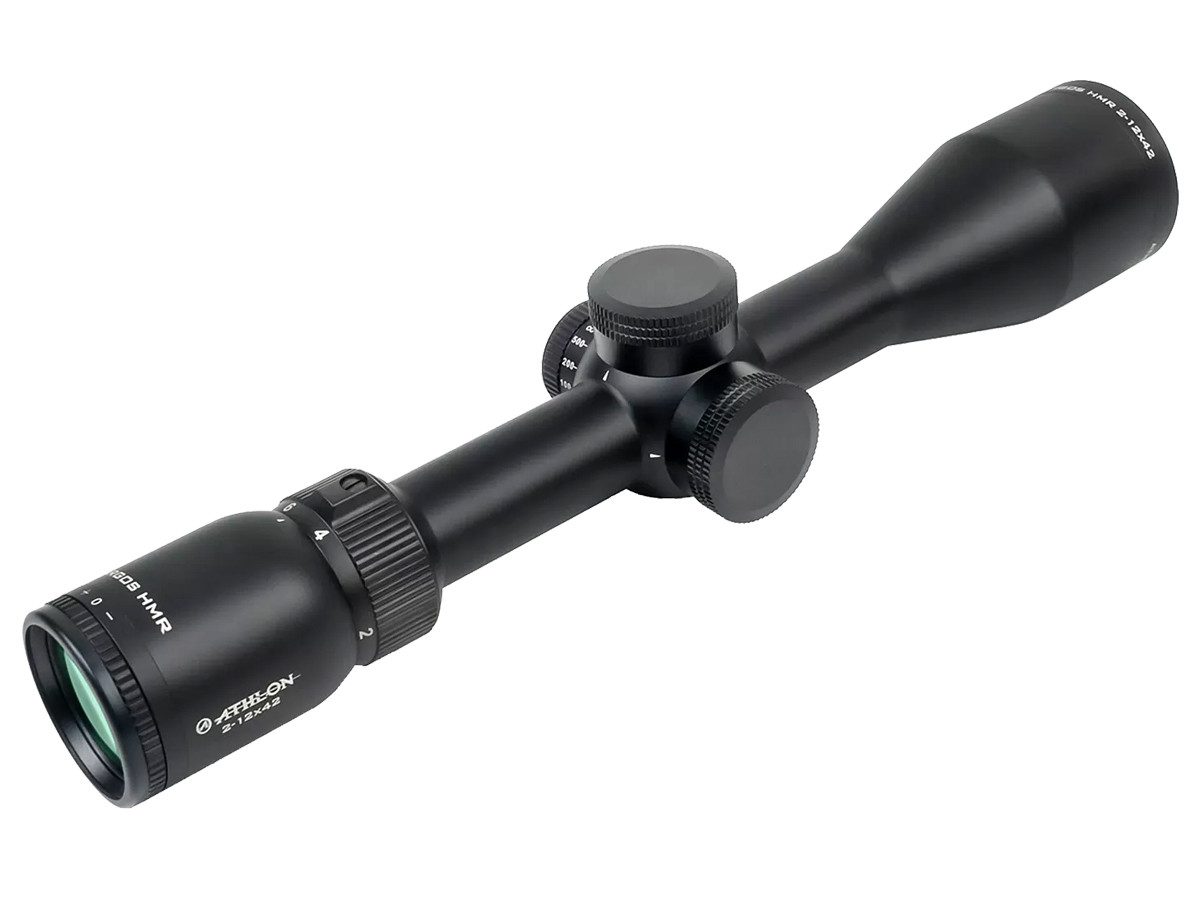
Athlon Optics Argos HMR BDC 600A 2-12×42

€200.00

The Athlon Optics Argos HMR 2-12×42 SF with BDC 600A reticle gives you the hunting performance you need without adding unnecessary size or weight. You get a 1 inch one piece aircraft grade aluminum tube for excellent toughness, plus a 42mm objective lens that gives you sharp views with incredible clarity.

This scope gives you a bright and intense view thanks to the advanced fully multicoated lenses that have better light transmission than standard scopes, and it’s covered by the Athlon Gold Medal Lifetime Warranty. Plus, it’s shockproof, waterproof, and argon purged to give you superior fogproofing results compared to competing scopes that use other methods.

The Athlon Optics Argos HMR 2-12×42 gives you a wide field of view for improved visibility and 3.6 inches of eye relief. You don’t have to worry about unplanned adjustments to your settings from hitting or bumping the knobs, because the turrets are capped. You can adjust both the windage and elevation turrets in a range of 80 MOA, with .25 MOA clicks and 15 MOA per turn.

You’ll like the BDC 600A SFP (Second Focal Plane) MOA reticle, because it makes it fast and easy to find your target for accurate shots. You get accurate measurements at 12X magnification, a straightforward reticle with etched glass, bracketing posts, wind drift marks on both sides, and ammo drop compensation marks on the bottom. You can light up the center part with the crosshair using variable brightness levels.

If you’re searching for a scope you can adapt to your needs to unlock better hunting results, get an Athlon Optics Argos HRM 2-12×42 SF with BDC 600A reticle at Airgun Depot today.

Athlon Optics Argos HMR BDC 600A 2-12×42, Second Focal Plane, MOA Features:

  • 42mm objective lens
  • 2-12x magnification
  • Aircraft grade aluminum 1″ tube
  • Capped turrets
  • 3.6″ eye relief
  • 10 yds to infinity side parallax adjustment
  • 55.7-9.6 feet field of view at 100 yards
  • 0.25 MOA click value
  • 15 MOA adjustment range per rotation
  • 80 MOA total elevation and windage adjustment
  • 11.8″ long
  • 19.8 oz
  • BDC 600A SFP (Second Focal Plane) MOA Etched Glass Reticle
  • Illuminated reticle with variable brightness
  • Advanced Fully-Multicoated lenses
  • One piece tube
  • Waterproof
  • Fogproof
  • Shockproof
  • Argon purged
  • Lifetime warranty
Specs
  • Manufacturer Athlon Optics
  • Condition New
  • Accessories Type Scopes
  • Warranty Lifetime limited warranty
  • Weight 1.25
  • Reticle Type BDC 600A

Athlon Optics Argos HMR BDC 600A 2-12×42 — Compact Hunting Riflescope Description

Versatile mid-range hunting performance is delivered by the Athlon Optics Argos HMR BDC 600A 2-12×42, a compact second-focal-plane riflescope built for timber, field, and stand work. Bright, true-color images are produced through advanced fully multi-coated glass, while holdovers out to longer hunting distances are supported by the illuminated BDC 600A reticle when magnification is set correctly. Furthermore, weather resistance, shock resistance, and a transferable lifetime warranty are provided so confidence can be maintained from first light through last legal shooting light.

Optical Clarity Across the Full 2–12x Range

Light transmission is maximized by advanced fully multi-coated lenses, so brightness and color fidelity are preserved across the visible spectrum. Consequently, game can be distinguished in shadowed timber and at last light without the washed-out look associated with lesser coatings. Moreover, a 42 mm objective is paired with a 1-inch tube so a useful exit pupil is retained at higher power while overall bulk is kept modest.

A wide field of view of 55.7 feet at 100 yards is offered at 2x, therefore close-range tracking in cover is simplified. In contrast, 9.6 feet at 100 yards is presented at 12x, so precise placement on distant animals remains practical. Additionally, 3.6 inches of eye relief is maintained so facial clearance is preserved with magnum recoil and with heavier hunting jackets.

Side-focus parallax adjustment from 10 yards to infinity is included. As a result, image focus and aiming-point coincidence can be refined at typical hunting distances instead of being locked to a single factory setting.

Glass, Coatings, and Low-Light Use

Optimum brightness is achieved because reflections are reduced and usable light is increased by the multi-coat process. True color is retained so antler tines, body language, and background contrast can be read more reliably. Likewise, dawn and dusk sessions are supported because the illuminated center of the BDC 600A reticle can be raised when ambient light falls.

BDC 600A Illuminated Reticle (Second Focal Plane)

An etched-glass BDC 600A IR reticle is employed so durability under recoil is improved and a complex holdover pattern can be supported. Because the reticle sits in the second focal plane, apparent reticle size stays constant as magnification is changed. However, ballistic subtensions for the BDC 600A on this 2–12x model are valid at 12x. Sight-in at 100 yards may be completed at any magnification; thereafter, the correct power must be selected if the printed hold marks are to be used as intended.

Reference marks for drop and wind drift are provided so ranging and compensation can be applied without constant turret spinning in the field. In addition, the center portion can be illuminated at multiple brightness levels, therefore a usable aiming point remains available in low light without washing out the surrounding glass.

According to Athlon’s reticle guidance, the BDC 600A pattern may be applied across a range of common hunting cartridges when the scope is used at the specified magnification, including loads such as .223 Win 55 gr, .243 Win 95 gr, .25-06 Rem 115 gr, .270 Win 130 gr, .270 WSM 150 gr, 7 mm Rem Mag 150 gr, 7 mm WSM 150 gr, .300 Win Mag 180 gr, .300 WSM 180 gr, .308 Win 150 gr, and .338 Win 200 gr. Individual trajectory should still be verified with the ammunition actually carried.

Practical Holdover Use

After a 100-yard zero is established, hold marks can be used for farther shots instead of exposing turrets in wet weather. Meanwhile, capped 0.25 MOA windage and elevation turrets remain available when a precise dialed correction is preferred. Fifteen MOA of travel per revolution and 80 MOA of total elevation and windage adjustment are specified on the official product sheet, so adequate mechanical travel is present for typical hunting zeros and for modest rail cant.

Construction Built for Field Abuse

A heat-treated, one-piece aircraft-grade aluminum tube is used so strength is increased and leak paths associated with multi-piece bodies are reduced. Argon purging is applied because argon’s lower thermal conductivity compared with nitrogen improves fog resistance when a warm optic is carried into cold air. Waterproof sealing is maintained so rain, snow, and accidental immersion do not compromise the interior. Shock resistance is engineered to withstand severe recoil events, therefore zero can be expected to hold through a hunting season of slings, truck racks, and repeated shots.

Capped turrets protect the adjustments from snags and accidental bumps. Consequently, a hunting-style setup is preserved: set it, cap it, and hunt.

Athlon Optics Argos HMR BDC 600A 2-12×42 — Highlighted Specifications

  • Magnification: 2–12x variable
  • Objective lens: 42 mm
  • Tube diameter: 1 inch
  • Reticle: BDC 600A SFP illuminated MOA, etched glass (SKU 214004)
  • Focal plane: Second
  • Eye relief: 3.6 inches
  • Field of view at 100 yards: 55.7–9.6 ft
  • Click value: 0.25 MOA
  • Adjustment per rotation: 15 MOA
  • Total elevation / windage: 80 MOA / 80 MOA
  • Parallax: Side focus, 10 yards to infinity
  • Turrets: Capped
  • Purging: Argon
  • Length: 11.8 inches
  • Weight: 19.8 oz
  • Finish: Matte
  • Coatings: Advanced fully multi-coated
  • Ratings: Waterproof, fog proof, shockproof
  • Warranty: Athlon transferable lifetime (Gold Medal) coverage for defects and damage from normal use

Compact dimensions of 11.8 inches and a weight of 19.8 ounces allow the optic to be mounted on lightweight hunting rifles without dominating the balance of a walking gun.

Field Applications for Hunters and Precision Shooters

Close cover work is supported at 2x because a generous field of view is available for moving game. Mid-range shots across fields and food plots are handled as magnification is increased. Furthermore, a 12x top end remains useful for confirmation of antler points or for tighter groups on steel and paper during practice.

Because a 1-inch tube is used, a wide selection of standard rings and bases can be fitted. Therefore, existing hunting rifles can often be upgraded without a complete mount change. Inclusive use is intended: the same optic can be shared among family members and hunting partners once eye relief and a comfortable cheek weld are set for each shooter.

Responsible use still requires local hunting regulations, safe backstops, and verification of actual drop with the load in the chamber. The BDC pattern is a reference tool, not a substitute for range confirmation and ethical shot selection.

Warranty, Value, and Why This Scope Is Chosen

Repair or replacement for damage from normal use is covered under Athlon’s transferable lifetime warranty, with no receipt and no registration required under published terms (deliberate abuse, theft, and unauthorized repair are excluded). As a result, long-term ownership cost is reduced compared with optics that expire after a short calendar warranty.

Value is concentrated where it matters for hunting: usable glass, a practical BDC, side parallax, argon sealing, and a compact 1-inch chassis. Unnecessary extra weight and 30 mm bulk are avoided. Consequently, the Athlon Optics Argos HMR BDC 600A 2-12×42 is positioned as a ready-to-hunt riflescope for shooters who want holdover capability, low-light illumination, and weatherproof construction without moving into premium-price 34 mm tactical glass.

A complete hunting setup is finished when quality rings, a level, and a confirmed 100-yard zero are added. After those steps are completed, the Argos HMR can be carried into the season with the expectation that brightness, hold marks, and mechanical reliability will be available when a shot is presented.

Premium Rangefinding Binoculars, Precision Riflescopes and Advanced Hunting Optics

Modern optical technology gives hunters, sport shooters, wildlife observers, and outdoor enthusiasts more ways to identify distant targets, measure range, and achieve a clearer field of view. Premium Leica rangefinder binoculars remain highly regarded for combining observation and ranging technology in one compact optical platform. Popular searches include Leica Geovid 10×42 rangefinder binoculars, Leica Geovid binoculars, Leica binoculars with rangefinder, Leica Geovid Pro 10×42, and Geovid Pro 10×42. Whether someone is researching a Leica Geovid rangefinder, Leica Geovid Pro rangefinder binoculars, Leica Geovid rangefinder binoculars, or the classic Leica Geovid 10×42, the Geovid family is commonly associated with high-quality glass, strong optical clarity, and practical long-distance observation.

Beyond rangefinding models, the wider Leica binoculars collection appeals to users searching for Leica small binoculars, binoculars Leica, Leica Geovid binos, Leica bino, Leica binoculars for sale, Leica bino rangefinder, Leica camera binoculars, Leica binos, or simply a Leica binocular for travel, field observation, wildlife viewing, and outdoor use. Different magnification formats, including 10×40, can suit users who want a balance between detail, portability, and field of view.

Alternative electronic binocular technologies are also becoming increasingly popular. Searches for SIG Sauer binoculars, SIG self stabilizing binoculars, SIG Sauer binos, SIG binoculars, SIG image stabilizing binoculars, SIG binocular, and SIG auto stabilizing binoculars reflect growing interest in electronically assisted viewing. Likewise, SIG Sauer self stabilized binoculars and SIG Sauer image stabilized binoculars can appeal to users who want reduced visual movement during handheld observation. Some buyers may also encounter broader search variations such as Sigma binoculars or specification terms like 11.5ee while comparing different optical products.

Precision aiming optics occupy another major part of the premium optics market. A Zeiss red dot offers a different sighting concept from traditional magnified optics, while the Nightforce ATACR line is frequently researched by users interested in premium long-range scopes. Common variants include Nightforce ATACR 5-25×56 F2, Nightforce ATACR 4-20×50, Nightforce ATACR 5-25×56 F1, and Nightforce ATACR 4-16×50. Related searches such as Night Force ATACR, ATACR scope, Nightforce attacker, ATACR 4-20, and Nightforce ATACR 4 20×50 F1 often appear when buyers are comparing magnification ranges, focal-plane configurations, turret systems, and optical performance.

At the higher end of precision optics, Tangent Theta products are frequently associated with specialist applications requiring refined mechanical adjustment and premium optical performance. Users may search for Tangent Theta scopes, Tangent scope, Tangent scopes, Theta optics, Tangent Theta scope, and Tangent optics while researching high-performance long-range systems.

The market also includes companies such as Fierce Firearms, Fierce Arms, and Fierce Optics, which may appear in searches involving hunting equipment and optical accessories. Within the Athlon category, meanwhile, one of the more detailed product searches is Midas TAC Gen2 HD 6-24×50 APLR15 FFP MOA reticle riflescope. The broader Athlon Midas TAC family, including Athlon Midas TAC 6-24×50, is often considered by users who want substantial magnification and adjustable target-focused features.

For shooters comparing larger objective and magnification configurations, terms such as 34 56, 34×56, Athlon Argos BTR Gen2 8-34×56, Athlon BTR Gen 2, Athlon Argos BTR Gen2, Athlon Argos BTR, and Athlon Argos BTR Gen 2 commonly appear during product research. Search variations such as Athalon scopes and Athens scope may also lead shoppers toward Athlon products when researching a new gun scope, Icarus scope, longest range scope, or general hunting optic.

Anyone learning how to buy a rifle scope should compare magnification range, objective diameter, reticle design, adjustment system, eye relief, optical quality, focal-plane configuration, overall weight, and intended sporting application. Terms such as AO scope can refer to adjustable-objective configurations, while models in the Athlon Ares BTR family provide additional options for users exploring precision-oriented optics.

Mid-range magnification searches frequently include 2.5×15, Avalon Aries, 2.5/15, Athlon BTR Gen 2, Athlon scopes review, Athlon reticles, 2.5-15 scope, and repeated comparisons involving Athlon Argos BTR Gen2 8-34×56 or 34×56 configurations. These searches demonstrate how buyers often compare reticles, magnification ratios, objective sizes, and scope families rather than selecting an optic solely by maximum magnification.

Low-power variable optics are another major category. Searches such as 1 10 scope, Ares ETR 1 10, 1 10 LPVO, 1-10 LPVO, 1-10 FFP LPVO, 1×10 scope, Athlon ETR, LPVO 1-8, LPVO 1-10, and 1-10 rifle scope reflect demand for versatile magnification systems. An LPVO allows users to move between low magnification for a broad field of view and higher magnification for improved observation at extended distances, making the format useful across several sporting disciplines.

For greater magnification, the Ares ETR Gen2 UHD 4.5-30×56 APRS12 FFP IR MIL reticle represents another precision-focused configuration within the Athlon range. Related product searches include Athlon 4.5-30×56, 4.5 30, Athlon ETR, and 4.5/30. The large 56 mm objective and broad magnification range make this type of optic particularly relevant to users comparing long-distance target and field optics.

Other searches such as 14×44, 2s14, Athlon BTR 2-12, 1/2×42, Athlon BTR Gen 2, 12×4.2, 2-12x, and Athlon 2 demonstrate continued demand for more compact variable-magnification formats. A 2-12x configuration, for example, can provide a useful compromise between field of view and magnified observation without requiring the size or weight of a very high-magnification optic.

Ultimately, premium optics cover far more than a single product category. Leica rangefinder binoculars and Leica Geovid binoculars combine observation with distance measurement, while stabilized SIG Sauer binoculars emphasize steady handheld viewing. Meanwhile, Nightforce ATACR, Tangent Theta scopes, and Athlon families such as the Midas TAC, Argos BTR, Ares BTR, and Ares ETR provide a wide range of magnification, reticle, and focal-plane options. By comparing optical clarity, magnification range, objective diameter, reticle format, adjustment system, physical dimensions, and intended sporting use, buyers can narrow a broad optics market into products that better match their individual requirements.

Frequently Asked Questions

What magnification range is offered, and when is each end of the zoom most useful?

A 2–12x variable range is provided so close cover and mid-range field shots can be handled with one optic. At 2x, a wide field of view is presented, therefore moving game in timber or along a trail can be tracked with less tunnel vision. At 12x, a tighter view is produced so antler details, impact placement, and distant target confirmation can be evaluated more carefully. Intermediate settings are typically chosen for stand hunting and food-plot work, where a balance between field of view and aiming precision is preferred. Because the reticle remains in the second focal plane, apparent reticle size stays constant while the image is enlarged, so the picture can be zoomed without the hold marks growing or shrinking on the glass.

How does the BDC 600A reticle work, and at which power are the hold marks valid?

An etched-glass BDC 600A pattern is used so drop references and wind-drift marks can be applied after a 100-yard zero is established. For this 2–12x model, subtensions are specified as valid at 12x. Sight-in at 100 yards may be completed at any magnification; afterward, the highest power must be selected if the printed holdovers are to match the published hash spacing. When a different magnification is used, the image size changes while the reticle size does not, so those hashes no longer represent the same angular values. Consequently, either 12x should be selected for BDC use, or a known hold should be confirmed on paper at the exact power that will be used in the field.

Which cartridges are commonly associated with this BDC pattern?

Compatibility with a variety of hunting loads is described by the manufacturer when the reticle is used at the correct power. Listed examples include .223 Win 55 gr, .243 Win 95 gr, .25-06 Rem 115 gr, .270 Win 130 gr, .270 WSM 150 gr, 7 mm Rem Mag 150 gr, 7 mm WSM 150 gr, .300 Win Mag 180 gr, .300 WSM 180 gr, .308 Win 150 gr, and .338 Win 200 gr. Those pairings are starting references only. Actual drop is affected by barrel length, altitude, temperature, muzzle velocity, and bullet ballistic coefficient. Therefore, a confirmed zero and a few verification shots at known distances are still recommended before any hunting season is opened.

Is the reticle illuminated, and how is brightness controlled?

Illumination of the center aiming area is provided so a usable point of aim can be retained at dawn, dusk, and in shaded timber. Multiple brightness steps are typically arranged so output can be matched to conditions. Intermediate “off” positions are often placed between intensity settings, therefore a preferred level can be left selected while the lamp is switched off to save the battery. In bright midday sun, illumination is usually left off because an etched reticle already remains visible. In low light, a moderate setting is preferred so bloom does not hide the target. A CR2032-style cell is commonly used in this class of optic; the battery compartment should be kept clean and the cap seated firmly after any change.

Why is a second-focal-plane design used instead of a first-focal-plane design?

A second-focal-plane layout is chosen so the reticle appears the same size at every magnification. For many hunters, that consistency makes a fine center easier to see at low power and keeps the picture uncluttered at high power. The tradeoff is that BDC spacing is correct at one designated magnification—in this case 12x. First-focal-plane reticles scale with zoom and can be used for holds at more than one power, but they also become very fine at low magnification and heavier at high magnification. For a compact hunting scope with a traditional BDC, the second-focal-plane approach is widely regarded as practical and easy to teach to new shooters in a shared household or hunting camp.

What tube size is used, and which rings can be mounted?

A 1-inch main tube is employed. Standard 1-inch rings in low, medium, or high height can therefore be selected according to barrel contour, objective clearance, and comb height. Because a 42 mm objective is fitted, medium rings are often sufficient on many hunting rifles, while a heavier barrel or a tall rail may require a taller set so the bell does not contact the barrel or handguard. Inclusive setup is intended: once ring height and a comfortable cheek weld are established, the same rifle can be used by more than one shooter after a brief length-of-pull and eye-relief check.

How much eye relief is available, and why does that matter?

Approximately 3.6 inches of eye relief is specified. That distance helps keep the ocular away from the brow when magnum recoil is present and when heavy winter clothing adds bulk behind the stock. A usable “eyebox” is also needed so a full sight picture can be obtained quickly from odd field positions. If a dark crescent appears at the edge of the view, head position should be adjusted until the image is round and bright. After mounting, a consistent cheek weld should be practiced so the same eye distance is repeated on every shot.

Can parallax be adjusted, and from what distance?

Side-focus parallax adjustment from 10 yards to infinity is included. Parallax error occurs when the target image and the reticle do not sit in the same optical plane; a small head movement then makes the aiming point appear to shift on the target. By turning the side knob until the picture is sharp and the reticle stays planted, that error can be reduced at the distance being used. For most centerfire hunting, settings around typical shot distances are sufficient. For close work or precision practice, the knob should be refined at the exact range.

How large is the field of view at 100 yards?

A field of view of 55.7 feet at 100 yards is given at 2x, while 9.6 feet at 100 yards is given at 12x. The wide low-power view supports tracking and close shots in brush. The narrower high-power view supports precise placement. When a moving animal is expected, a lower magnification is often left set until the shot is presented; magnification can then be increased if time and a stable rest allow.

What click value and total adjustment are provided?

Clicks of 0.25 MOA are used, so each increment moves the point of impact one-quarter minute of angle. Official product data lists 15 MOA of travel per turret revolution and 80 MOA of total elevation and windage adjustment. Capped turrets are fitted so accidental bumps in a scabbard or truck rack are less likely to move zero. After a confirmed zero, caps can be replaced for hunting. If a dialed correction is preferred for a known long shot, the cap can be removed, the adjustment made, and the cap returned after the shot.

How long and how heavy is the scope?

A length of 11.8 inches and a weight of 19.8 ounces are specified. That compact size helps a walking rifle stay balanced and reduces the chance of the optic hanging on brush. Compared with larger 50 mm or 56 mm hunting scopes, less mass is added over the action, which many hunters appreciate on all-day stalks.

Is the optic waterproof, fog proof, and shockproof?

A sealed, argon-purged, one-piece aircraft-grade aluminum tube is used. Argon is selected because its thermal behavior supports fog resistance when a warm scope is carried into cold air. Waterproof construction is intended to protect the interior during rain, snow, or an accidental drop into water. Shock resistance is engineered so repeated recoil and ordinary field knocks are tolerated. Deliberate abuse is never recommended; the design is meant for normal hunting and range use.

What lens coatings are applied?

Advanced fully multi-coated lenses are specified so reflected light is reduced and transmission is increased. Brighter, more color-correct images are the intended result, especially at the edges of legal shooting light. Coatings also help resist some surface moisture, but lenses should still be protected with caps when the rifle is carried through brush or rain.

How should a 100-yard zero be established?

A solid rest, consistent ammunition, and a safe backstop are required. After the optic is mounted and the action is confirmed empty during setup, a bore-sight or rough alignment is often used to get on paper. Groups are then fired at 100 yards, and windage and elevation are adjusted until the group is centered on the intended point of aim. Because 0.25 MOA clicks are used, small, counted adjustments can be made rather than large guesses. After the zero is confirmed, turret caps should be seated. If BDC holds will be used, additional confirmation groups at known longer distances should be fired at 12x.

Can this scope be used on more than one rifle?

Transfer between rifles is possible when 1-inch rings and a similar rail height are used, but a new zero must be confirmed after every remount. Return-to-zero rings or a dedicated mount for each rifle reduce frustration. Inclusive household use is common: one optic can be shared if each shooter checks eye relief and records the zero for the ammunition that will be used.

Is this reticle intended for airguns as well as powder-burning rifles?

The published BDC references are built around listed centerfire hunting loads at 12x. Airgun trajectories differ sharply by caliber, pellet or slug weight, muzzle energy, and regulator behavior. Therefore, the printed hashes should not be assumed to match an air rifle until drop is measured at the actual velocities and distances that will be used. The glass, side focus, illumination, and durable tube can still be useful on a suitable airgun if rings, eye relief, and a custom hold chart are established. Legal power limits and local airgun regulations must always be followed.

What maintenance is recommended?

Lens caps should be kept in place during transport. Dust should be blown off before any cloth is used. A clean microfiber cloth and a proper lens cleaner are preferred over shirtsleeves or paper towels. The exterior can be wiped dry after rain. Battery contacts should be inspected if illumination becomes intermittent. Turret caps should remain snug. After a hard drop, zero should be verified before the next hunt.

What warranty coverage is described by the manufacturer?

A transferable lifetime warranty is published for repair or replacement when damage occurs through normal use. No receipt and no registration are described as required under that program. Coverage exclusions typically include deliberate damage, misuse, theft, and work performed outside authorized service. Published warranty language should be read before a claim is submitted.

How should rings be torqued and aligned?

Manufacturer torque values for both the base and the ring caps should be followed. Uneven cap pressure can pinch the tube and harm tracking. A level can be used so the reticle is square to the rifle. After torque is applied, a tracking check on paper confirms that elevation and windage move the group as expected. If the group walks unpredictably, mounting stress or a loose base should be investigated before the optic is blamed.

What accessories are commonly added after purchase?

Flip-up or bikini caps, a throw lever on the magnification ring, a bubble level, and quality 1-inch rings are frequently added. A rear bag or bipod helps confirmation groups. A simple data card in the stock can list 12x holds for the exact load in use so every member of a hunting party can apply the same references.

How is low-light performance described?

Brightness is supported by fully multi-coated glass and a 42 mm objective. Illumination then adds a visible center when the background darkens. Performance will not match a large-objective premium night-hunting scope, yet for typical legal hunting light the combination is widely considered adequate. Clean lenses and a sensible brightness setting matter as much as raw aperture.

What should be checked if the image looks dim or the reticle seems off-center?

First, magnification, focus, and side parallax should be refined. Second, eye position should be adjusted until the view is full and round. Third, lens surfaces should be inspected for film or rain spots. Fourth, illumination should be cycled to confirm the battery. If mechanical zero suddenly changes, mounts and action screws should be checked before internal damage is assumed.

Who is this compact 2–12x hunting scope intended for?

Hunters who want one optic for timber and open fields are the primary audience. New shooters benefit from a constant-size reticle and capped turrets. Experienced hunters benefit from side focus, argon sealing, and a practical BDC once holds are verified. Inclusive language is appropriate here: the same riflescope can be learned by partners and family members when safety rules, a shared zero card, and ethical shot selection are treated as part of the setup—not as optional extras.

Practical Use Scenarios

A compact 2–12x hunting riflescope is most useful when magnification, parallax, and holdovers are matched to the ground that is actually being hunted. The following scenes describe how that workflow can be applied by a single shooter or by a shared camp, without treating the optic as a substitute for a safe backstop, a confirmed zero, or local game laws.

First Light From a Stand

Before legal shooting light, the rifle is settled on the rest and the magnification ring is left near 4–6x so a useful field of view is retained. Side focus is refined until the lane and the reticle sit together. If the timber remains dark, a low illumination setting is selected so the center mark can be seen without washing out the glass. When a deer steps into the shooting lane at a paced 80–120 yards, the picture is already close to a 100-yard zero. No turret cap needs to be removed for that first ethical shot. After the animal leaves or the shot is taken, magnification can be raised only if time remains and the rest is still solid. Inclusive use is straightforward here: a partner who takes the same stand later can repeat the same power, parallax mark, and brightness step if those settings were written on a stock card. 

Reticle Type

AHMC, BDC 600, BDC 600A

Reviews

There are no reviews yet.

Be the first to review “Athlon Optics Argos HMR BDC 600A 2-12×42”

Related Products

FAQ

  • Spring-Piston (Break-Barrel or Underlever): Cock by compressing a spring. Reliable, no external air source needed, but can have more recoil (“spring twang”) and require technique to shoot accurately.
  • Pre-Charged Pneumatic (PCP): Filled from a scuba tank, compressor, or pump. High power, low recoil, multiple shots per fill. Popular for precision and hunting.
  • CO₂: Powered by disposable cartridges. Good for pistols and semi-auto/repeaters, but performance drops in cold weather.
  • Multi-Pump Pneumatic: Hand-pumped to build pressure. Versatile but requires effort.
  • Gas Ram (Nitro Piston): Uses compressed gas instead of a metal spring. Smoother than traditional springers.

Calibers: Most common are .177 (4.5mm) for speed/flat trajectory and general use, and .22 (5.5mm) for better hunting knockdown power. Larger “big bore” (.25, .30, .357+) exist for hunting bigger game where legal.

Yes, many modern PCP and springers deliver enough energy for small game (rabbits, squirrels, birds) and even larger game in some areas. Muzzle energy (in ft-lbs or joules) matters more than velocity alone. Always match caliber, pellet weight, and energy to the game and check local hunting regs.

Treat every airgun as if it is loaded.

  • Always point the muzzle in a safe direction.
  • Keep your finger off the trigger until ready to shoot.
  • Know your target and what is beyond it (pellets can ricochet or travel far).
  • Wear eye protection.
  • Store unloaded, out of reach of children/untrained users, and ideally locked.
  • Never shoot at hard surfaces or in areas where pellets could escape your property.

Follow these rules strictly—airguns cause real injuries.

Laws differ dramatically by country, state/province, and even city. Always verify current local laws before buying, owning, transporting, or using an airgun. Age restrictions (often 18+) are common.

Examples (summaries only; check official sources):

  • UK: Air rifles ≤12 ft-lbs (16.3 joules) and pistols ≤6 ft-lbs generally do not require a license (FAC needed above that).
  • USA: Varies by state. Some treat powerful airguns as firearms; others do not. Many states now allow big-game hunting with air rifles.
  • Canada: Some airguns classified as firearms if they exceed velocity/energy thresholds.
  • Australia: Often treated as firearms; licensing/registration required in most states.
  • EU/France/Belgium/etc.: Varies; many allow low-power (<20J) guns freely to adults, with higher power needing permits. Germany has strict ~7.5J limits in some contexts.
  • Other countries: Some have no restrictions below certain energies; others ban or heavily regulate them.

Resources: Wikipedia “Air gun laws”, airgun forums, or official government sites. For travel, research transit laws carefully.

Consider:

  • Purpose: Plinking/backyard → lower power springer or CO₂. Hunting/precision → PCP.
  • Budget: Entry-level springers are affordable; PCPs need a fill system (extra cost).
  • .177 vs .22: .177 easier for beginners/targets; .22 better for hunting.
  • Power source: Convenience vs performance.
  • Test pellets in your gun—accuracy varies.

Buy from reputable dealers and consider warranties.

  • Clean barrel periodically (especially if accuracy drops) with patches and appropriate tools/solvents. Avoid over-oiling.
  • Lubricate moving parts and seals with airgun-specific oil (not general gun oil). Springers need piston seal oil occasionally.
  • Check screws, seals for leaks (PCP), and safety mechanisms regularly.
  • Store in a cool, dry place, ideally in a case. Avoid leaving cocked for long periods.

Follow your model’s manual. Basic care extends life significantly.

International shipping may be available for select products. Customers are responsible for understanding and complying with their local import laws and regulations before ordering.

Yes. Customers are required to confirm their order number through WhatsApp or Live Chat before orders are processed and shipped.

If local laws prevent shipment to your area, your order may be canceled and refunded according to our store policy.

Processing typically takes 1–3 business days after payment confirmation. Delivery times vary depending on destination, carrier, and product availability.


  • Wrong pellets for your barrel/caliber.
  • “Death grip” or poor shooting form (especially with springers—let the gun recoil naturally).
  • Loose scopes or mounts.
  • Ignoring safety or local laws.
  • Over-oiling or shooting with obstructions.


Pellets are the most common projectile (lead or lead-free). Match them to your gun, caliber, and purpose—test several brands as accuracy varies by barrel.

  • Domed (Round-Head): Best all-rounder. Excellent accuracy, ballistic coefficient, and energy retention. Ideal for target shooting, field target, and general hunting (e.g., JSB Exact, Air Arms Diabolo Field, H&N Field Target Trophy).
  • Wadcutter (Flat-Head): Clean holes in paper. Best for close-range target/plinking (under 20-25 yards).
  • Hollow Point: Expands on impact for better energy dump. Good for small game hunting (e.g., Predator Polymag, H&N Terminator).
  • Pointed: More penetration, but often less accurate than domed.
  • Slugs: Heavier, more aerodynamic for high-power PCPs at longer ranges (better for big game where legal).

Tips: Heavier pellets in .22/.25 for hunting (better momentum). Lighter in .177 for speed/flat trajectory. Always check head size fit (e.g., 4.51-4.53mm variants).

Muzzle energy (ft-lbs or joules) matters more than velocity. Ethical shots require precise placement (head/heart-lung) within effective range.

Rough Guidelines (adjust for distance, pellet, and local laws):

  • Small game (squirrels, rabbits, birds): 9-20+ FPE, .177/.22.
  • Medium (raccoons, etc.): 25+ FPE, .22/.25 recommended.
  • Larger game: 40-100+ FPE in .30+ calibers (up to big bore for deer/hogs where permitted).

PCPs dominate serious hunting due to power and shot count. Springers/gas rams work well for small game but require skill. Always prioritize clean kills and check seasons/species rules.

  • Barrel Cleaning: Use a pull-through kit or rod with patches. Avoid brushes that could damage rifling. Clean when accuracy drops or after 500-1000 shots.
  • Lubrication: Airgun-specific silicone oil for seals/O-rings (sparingly—excess causes dieseling in springers). Springers may need piston lube periodically.
  • PCP Specific: Check for leaks (soapy water test), monitor regulator/hammer settings, and keep fill systems clean. Don’t exceed rated pressure.
  • General: Tighten stock screws, inspect for wear, store properly. Chronograph shots to track consistency.

Common Issues:

  • Inconsistent velocity → dirty barrel, bad pellets, or seal problems.
  • Spring “twang” → tuning or proper hold.
  • Low power → worn seals or under/over-pumping.

Toggle Content

  • Scopes: Airgun-rated (hold zero under recoil). 3-9x or 4-12x common.
  • Fill Systems: Hand pumps, compressors, or tanks for PCPs.
  • Safety Gear: Eye/ear protection, targets with backstops.
  • Noise: Airguns quieter than firearms, but moderators help further.

Budget Tip: Start with a quality springer (~$150-400) before investing in PCP setup.

Airgunning offers endless depth—from backyard plinking to precision competition and ethical hunting. Prioritize safety, legality, and practice. If you want specifics (e.g., recommendations for a country, budget, hunting small game, or a particular type like PCP vs springer), let me know for more targeted info! Shoot responsibly.

Tuning improves accuracy, reduces noise/recoil, or increases power (within legal limits).

  • Springers: Lighter springs, guides, seals, or custom tuning kits for smoother shot cycle. “V-Mach” or similar professional tunes popular.
  • PCPs: Regulator tuning, hammer spring adjustments, valve work for efficiency and shot count. Some add electronic systems.
  • Accessories: Suppressors (often unregulated on airguns), better triggers, stocks, and scopes.

Caution: Check laws—power increases may reclassify your gun. DIY only if experienced; professional tuners recommended.

You must be at least 18 years old to purchase any airgun or related accessories from our store. By placing an order, you confirm that you meet the legal age requirements in your state or country.

Yes. Orders may require age verification before processing and shipping. In some cases, we may request a valid government-issued ID to confirm eligibility.


Translate »