We Deliver Airguns Directly To Your Door

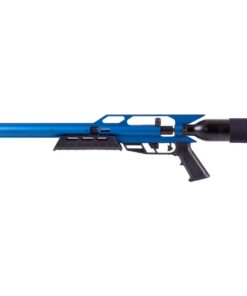
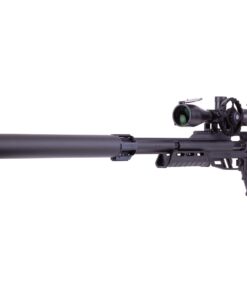
AirForce TalonBolt PCP Air Rifle

€350.00

The AirForce TalonBolt gives you a PCP bolt air rifle engineered from the popular Talon platform for accuracy and reliability. It slings bolts downrange at speeds up to 440 fps with power up to 146 fpe for performance that won’t let you down on your next hunt.

You’ll love the ability to change the speed and power of your shots thanks to the Ring-Loc™ valve system. The PCP arrow rifle comes with a valve that helps you extend your shot count, great for bowfishing and using broadheads, and a valve for peak speed and power. You can also use compatible Ring-Loc™ accessories for additional power tuning possibilities.

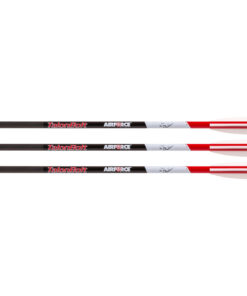
The AirForce TalonBolt gives you peace of mind with its custom bolts that use tough carbon fiber weave construction and dual shatter resistant impact collars that make them sturdier than air gun bolts from other manufacturers. And you’ll appreciate how easy it is to see them in flight and track where they hit because of the vanes that glow in the dark, the high visibility markings, and the HitMarker™ band.

With this arrow rifle, you get excellent maneuverability. It has an overall length of 40 inches and weighs in at only 5.3 pounds without accessories, so you won’t have any problem carrying it on a long day in the field. Plus, the 490cc air cylinder has a fill pressure of just 2000 psi, so it helps save air in your refill bottle and is relatively easy to fill using a hand pump.

If you need a bolt shooting air rifle with adjustable features for maximum accuracy and hunting performance, get an AirForce TalonBolt from Airgun Depot today.

AirForce TalonBolt Features:

  • PCP
  • Bolt action
  • Ring-Loc valve system for user-adjustable power
  • Max velocity: 440 fps
  • Max energy: 146 fpe
  • .180 Ring-Loc™ orifice: approx. 350 fps, up to 15 shots per fill
  • .220 Ring-Loc™ orifice: up to 10 total shots per fill (4 at over 400 fpsli>
  • 490cc air cylinder
  • 2000 psi fill pressure
  • Two stage position adjustable trigger
  • Textured AR compatible pistol grip
  • 11mm dovetail optics rail
  • Butt plate rotates left and right
  • Barrel length: 26″
  • Overall length: 40″
  • Weight: 5.3 lbs.
  • Includes three 340 grain airgun bolts including 100 grain field points
  • Made in the USA
Specs
  • ManufacturerAirForce
  • Velocity 440 fps
  • Condition New
  • Ammo Type Arrows
  • Action Bolt-action
  • Fire Mode Single-shot
  • Gun Weight 5.30
  • Overall Length 40.00
  • Barrel Length 26.00
  • Loudness 5-High
  • Magazine Capacity 1
  • Mechanism Pre-charged pneumatic
  • Rail 11mm dovetail
  • Safety Automatic
  • Front Sights none
  • Rear Sights none
  • Shots per Fill 4
  • Trigger Adjustability Two-stage non-adjustable
  • Use Hunting
  • Warranty’s

AirForce TalonBolt PCP Air Rifle: Precision Bolt Power for the Field

Serious hunting performance is delivered by the AirForce TalonBolt PCP Air Rifle through compressed-air propulsion of dedicated carbon-fiber bolts. Lightweight carry is combined with adjustable power so that medium-game hunting, pest control, and bowfishing can be approached with one USA-built platform. Velocities exceeding 400 FPS and energy approaching 146 FPE are produced when the full-size 18-inch bolts are launched, while a modest 2000 PSI fill pressure is required so that more fills can be obtained from a scuba tank or compressor before a refill is needed.

Adjustable Power Through the Ring-Loc Valve System

User-adjustable output is made possible by AirForce’s Ring-Loc valve system. Two orifices are supplied so that shot character can be matched to the task. Approximately 350 FPS and up to fifteen shots per fill are obtained when the smaller .180 orifice is installed; higher velocity and fewer high-energy shots are produced when the larger orifice is fitted, with several projectiles remaining above 400 FPS. Broadhead flight can therefore be stabilized at reduced speed, and bowfishing use can be supported without a second airgun being purchased. Further fine-tuning remains available because additional Ring-Loc components can be fitted later.

Consequently, a single 490 cc air cylinder is able to serve both high-impact hunting strings and longer practice or fishing sessions. Fill pressure is kept at 2000 PSI so that hand-pump or shop fills stay practical. Unregulated delivery is employed, yet consistent results are still achieved when the selected orifice and fill discipline are observed.

Purpose-Built Bolts and Field Feedback

Special 18-inch carbon-fiber bolts are included and are engineered specifically for this platform. A heavy weave plus dual shatter-resistant impact collars are used so that durability exceeds that of many competing airgun arrows. High-visibility glow-in-the-dark vanes are fitted, and a HitMarker band is applied so that impact type can be read after the shot and the next move can be planned. Three bolts complete with 100-grain field points are supplied from the factory; additional six-packs can be obtained so that a hunting day is not cut short.

Moreover, the bolts slide over an internal launch tube rather than being seated like conventional pellets. Stabilization is provided by the 26-inch barrel, and tight grouping is supported when optics are mounted on the 11 mm dovetail rail. Picatinny adapters are included so that a wider range of rings and sights can be attached without extra hardware being sourced immediately.

Handling, Safety, and All-Day Carry

A finished weight of only 5.3 pounds is achieved, so all-day carry in the field is made realistic. Overall length is held at 40 inches while a 26-inch barrel is retained for velocity. A textured AR-compatible pistol grip is provided, and an ambidextrous layout is used so that left- and right-handed shooters are both accommodated. The rubber butt plate can be rotated left or right until a comfortable cheek weld and shoulder pocket are found.

Additionally, a two-stage trigger that is adjustable for position is fitted, allowing length of pull and finger placement to be refined. An automatic safety is engaged on cocking so that an unintended discharge is discouraged. Dry-firing is permitted by design, which simplifies storage and maintenance checks. Synthetic construction and a durable finish are employed so that weather and brush contact are tolerated.

Highlighted Product Listings

  • Pre-charged pneumatic, single-shot bolt-action platform
  • Ring-Loc valve system for user-adjustable power and shot count
  • 490 cc air cylinder filled to 2000 PSI
  • Maximum velocity approximately 440 FPS; muzzle energy up to 146 FPE
  • .180 orifice: ~350 FPS and up to 15 shots per fill
  • Larger orifice: up to 10 shots, with several remaining above 400 FPS
  • 26-inch barrel; 40-inch overall length; 5.3 lb weight
  • Two-stage position-adjustable trigger
  • Textured AR-style pistol grip and rotating rubber butt plate
  • 11 mm dovetail rail plus two-piece Picatinny adapters
  • Automatic safety engaged on cocking
  • Three 18-inch carbon-fiber bolts with field points, glow vanes, and HitMarker bands
  • Designed and manufactured in the USA
  • Suggested uses: hunting, pest control, and bowfishing

Practical Use Across Hunting and Fishing

Medium-game and large-pest hunting can be undertaken because energy and bolt mass are sufficient for ethical shots inside practical air-bolt ranges. Stealth is aided by the absence of a powder report, although the report remains relatively loud for an airgun and hearing protection is still recommended. Bowfishing is supported when velocity is reduced so that the bolt remains controllable in water and on fish. Target practice and sight-in sessions can be conducted on the same fill when the smaller orifice is installed, stretching a single charge across more shots.

Furthermore, optics can be added so that precise placement is obtained at the distances typical of bolt hunting. Because the platform is modular in the AirForce tradition, future accessories and additional Ring-Loc orifices can be introduced without the rifle itself being replaced. Responsible ownership remains essential: local airgun and hunting regulations must be confirmed, and only appropriate game and distances should be selected.

Why the AirForce TalonBolt PCP Air Rifle Belongs in the Kit

Lightweight construction, USA manufacture, and a fill pressure that is easier to reach than many 3000 PSI PCP rifles are combined in one package. Power can be dialed to the job rather than being locked at a single setting. Dedicated bolts with impact protection and visual feedback are supplied so that the first hunts can begin immediately. Inclusive design details—ambidextrous grip orientation, rotating butt plate, and position-adjustable trigger—allow a wide range of shooters to obtain a stable hold.

Therefore, the AirForce TalonBolt PCP Air Rifle is offered as a focused solution for outdoor enthusiasts who want bolt-launching performance without the bulk of a conventional crossbow or the complexity of a high-pressure big-bore pellet rifle. Consistent field results are produced when the supplied orifices, quality bolts, and sound fill discipline are used together. Ready-to-hunt capability is provided out of the box, while room for optics and extra bolts remains available as experience grows.

Exploring Top Precision and Power Options: Air Arms XTi-50 FT and AirForce Tex-Rex Carbine

Competitive shooters and serious hunters often search for specialised tools that match their exact needs. Two standout platforms frequently discussed in these circles are the Air Arms XTi-50 FT Left handed air rifle and the AirForce Tex-Rex Carbine. Each serves a distinct purpose—one prioritises match-winning accuracy in Field Target disciplines, while the other delivers compact big-bore power for hunting. Understanding their strengths helps shooters decide which best fits their goals.

Air Arms XTi-50 FT Left Handed Air Rifle Overview

The Air Arms XTi-50 FT Left handed air rifle represents the pinnacle of modern Field Target design. Purpose-built as an Air Arms XTi-50 competition rifle, it offers left-handed shooters a true dedicated configuration rather than a compromised ambidextrous setup. Many consider it among the best left handed Field Target air rifle options currently available. An Air Arms XTi-50 FT review typically highlights its free-floating match-grade Lothar Walther barrel, micro-adjustable air stripper, titanium components for weight reduction, and an infinitely adjustable laminated stock complete with hamster, butt hook, and cheekpiece.

Air Arms XTi-50 FT specs include a .177-only calibre limited to under 12 ft-lbs for international Field Target rules, approximately 100 consistent shots per fill from a 200-bar titanium cylinder, and a weight around 10.3 lbs for the FT version. The fully regulated action delivers exceptional shot-to-shot consistency, while the match-grade trigger offers extensive adjustment. Precision PCP rifle for competition shooting does not get much more specialised than this model.

Shooters frequently ask how accurate is Air Arms XTi-50 FT. Independent tests and competition results show groups that can be covered by a small coin at 50 yards under good conditions, with the rifle already claiming major Field Target titles. What is Air Arms XTi-50 FT Left handed? It is a factory left-hand stock and action configuration of Air Arms’ flagship competition rifle, ensuring proper ergonomics for southpaw competitors. Those looking to buy Air Arms XTi-50 FT Left handed online or searching where to buy Air Arms XTi-50 FT Left handed will find it available through specialist dealers, often listed as Air Arms XTi-50 FT Left handed for sale with options for laminate finishes.

AirForce Tex-Rex Carbine Overview

On the hunting side, the AirForce Tex-Rex Carbine stands out as a compact yet extremely powerful big-bore platform. An AirForce Tex-Rex Carbine review emphasises its short overall length of approximately 39 inches and weight near 7 lbs unscoped, making it highly manoeuvrable in blinds or dense cover. AirForce Tex-Rex Carbine specs typically list a 24.75-inch Lothar Walther barrel, 500 cc carbon-fibre tank, fill pressures up to 4,500 psi, and energy outputs reaching 900+ foot-pounds depending on calibre (.457 or .510) and Bias Port orifice selection.

Key AirForce Tex-Rex Carbine features include a user-tunable Bias Port system that lets shooters balance maximum power against shot count, a titanium valve, Picatinny optics rail, M-LOK forearm, and a two-stage adjustable trigger. The AirForce Tex-Rex Carbine compact carbine design prioritises field handling without sacrificing the hard-hitting performance expected from the Texan family. An AirForce Tex-Rex Carbine regulated air system is not present in the traditional sense; instead, the Bias Port and high-pressure tank provide tunable consistency.

Many buyers search for AirForce Tex-Rex Carbine for sale, AirForce Tex-Rex Carbine price (commonly around the mid-$1,400 range), AirForce Tex-Rex Carbine best price, AirForce Tex-Rex Carbine deals, and AirForce Tex-Rex Carbine shop options. Retailers often promote the ability to buy AirForce Tex-Rex Carbine online, order AirForce Tex-Rex Carbine today, or check AirForce Tex-Rex Carbine near me and AirForce Tex-Rex Carbine available now status. Questions such as what is AirForce Tex-Rex Carbine, who should use AirForce Tex-Rex Carbine, and why choose AirForce Tex-Rex receive consistent answers: it suits experienced hunters seeking compact big-bore power for medium to large game.

AirForce Tex-Rex Carbine accuracy performance is strong when paired with quality heavy slugs, and the platform rewards proper tuning. An AirForce Tex-Rex Carbine user experience review often notes straightforward sidelever operation and solid reliability. For those new to high-power PCPs, is AirForce Tex-Rex Carbine good for beginners? Most experienced users recommend prior familiarity with big-bore systems and safe high-pressure filling practices. An AirForce Tex-Rex Carbine maintenance guide and broader AirForce Tex-Rex Carbine guide stress clean dry air, correct Bias Port selection, and regular inspection of seals and rails.

Comparing Competition Precision and Hunting Power

When evaluating Air Arms XTi-50 vs FX Impact comparison or broader best Field Target rifles comparison, the XTi-50 frequently ranks at the top for pure FT specialisation. Its dedicated left-handed configuration, extensive stock adjustability, and competition-proven consistency give it an edge for serious Field Target air rifle left handed users. The FX Impact offers greater modularity and multi-calibre flexibility, yet the XTi-50 remains purpose-built for the discipline.

In contrast, the AirForce Tex-Rex Carbine serves an entirely different role. While the Air Arms model focuses on sub-12 ft-lbs precision at known distances, the Tex-Rex delivers extreme energy in a carbine-length package suited to ethical big-game hunting. Shooters seeking a left handed PCP air rifle for competition will gravitate toward the XTi-50 FT, whereas those prioritising compact high-power hunting performance look to the Tex-Rex.

Making the Right Choice

Ultimately the decision depends on intended use. Competitive Field Target athletes benefit from the refined ergonomics and consistency of the Air Arms XTi-50 FT Left handed air rifle. Hunters who value manoeuvrability combined with serious terminal performance find the AirForce Tex-Rex Carbine an excellent match. Both platforms represent high-end engineering in their respective categories, and both reward careful research into current pricing, availability, and supporting accessories.

Calibres, FAC Considerations, Power Settings, and Accessories for the AirForce TalonBolt PCP Air Rifle

Traditional pellet calibres are not used by the AirForce TalonBolt PCP Air Rifle. Instead, dedicated 18-inch carbon-fiber air bolts are launched through a purpose-built tube. A total projectile weight of approximately 400 grains is typically obtained when a 100-grain field point is fitted to the supplied bolts. Consequently, “calibre” language familiar from .177, .22, or .25 PCP rifles is replaced by bolt length, shaft construction, and tip weight. Broadheads, field points, and fishing points can still be interchanged so that hunting, practice, and bowfishing roles are covered by one platform.

Moreover, legal classification is determined by muzzle energy and by the laws of the destination country rather than by a numbered pellet calibre. Energy approaching 146 FPE can be produced at the higher Ring-Loc setting. Therefore, in jurisdictions where airguns above a statutory limit (commonly 12 ft-lbs in the United Kingdom) require a Firearm Certificate, FAC status must be confirmed before purchase or use. In many other regions the same rifle is treated as a high-power airgun or air-arrow launcher. Inclusive advice is offered to every buyer: local hunting, transport, and ownership rules should be verified, and only legal game and ranges should be selected.

Power Delivery and Ring-Loc Adjustment

User-adjustable power is provided through the Ring-Loc valve system rather than through a regulator wheel or hammer-spring change. Two orifices are supplied from the factory. Approximately 350 FPS and as many as fifteen shots per 2000 PSI fill are obtained when the smaller .180 orifice is installed. Higher velocity—up to about 440 FPS—and fewer full-power shots are produced when the larger orifice is fitted, with several bolts remaining above 400 FPS on a single charge. As a result, broadhead flight can be calmed for tighter groups, while maximum energy can be reserved for ethical hunting shots.

Furthermore, the 490 cc cylinder is filled only to 2000 PSI. Easier topping-off from a scuba tank, shop fill, or compatible compressor is therefore achieved compared with many 3000 PSI PCP rifles. Unregulated output is employed, so shot-to-shot consistency depends on orifice choice and on starting pressure being kept within the intended window. Dry-firing is permitted by design, which simplifies function checks after accessories are added.

In addition, energy figures near 146 FPE are quoted for the heavier bolt and the high-output orifice. Practical hunting ranges remain those at which bolt flight and penetration stay ethical; distance should never be stretched beyond what the chosen tip and sighting system can support. Hearing protection is still recommended because loudness is rated high for an air-powered arm.

Highlighted Power and Projectile Notes

  • Projectile type: 18-inch carbon-fiber air bolts (not conventional pellets)
  • Typical complete bolt weight: approximately 400 grains with 100-grain field point
  • Maximum published velocity: about 440 FPS
  • Maximum published energy: up to 146 FPE
  • Low-output Ring-Loc (.180): ~350 FPS, up to 15 shots per fill
  • High-output Ring-Loc: fewer shots, several remaining above 400 FPS
  • Fill pressure: 2000 PSI / 137 BAR
  • Cylinder volume: 490 cc (some listings note ~500 cc)
  • Action: single-shot bolt-action PCP
  • Legal note: energy may place the rifle in FAC or equivalent categories depending on jurisdiction

Accessories That Complete the System

A ready-to-hunt kit is started by the three factory bolts, yet additional shafts are strongly recommended so that a day afield is not ended by a lost or damaged bolt. Six-packs of matching 18-inch carbon-fiber bolts with glow vanes, dual impact collars, and HitMarker bands are offered by the manufacturer. Extra field points and compatible broadheads can be fitted so that practice and hunting loads remain distinct.

Optics support is already built in. An 11 mm dovetail rail is machined on the receiver, and two-piece Picatinny adapters are included so that Weaver-style or Picatinny rings can be mounted without delay. Dedicated 4×32 illuminated BDC-style scopes intended for bolt or crossbow use can be added; generous eye relief and a non-reflective finish are typical of those packages. Consequently, precise aiming is obtained once zero is confirmed with the same bolt weight that will be used in the field.

Additionally, air supply accessories remain essential. A hand pump rated for the 2000 PSI working pressure, a scuba-tank adapter, or an electric compressor can be paired with the rifle. Because fill pressure is modest, more complete fills are often obtained from a given tank volume. Spare Ring-Loc orifices allow further tuning if extra valves become available. Slings, cases, and rotating-butt-plate-friendly cheek pieces can be fitted to the lightweight 5.3 lb chassis so that carry and shouldering stay comfortable for shooters of different statures.

Trigger and grip accessories are limited because a two-stage, position-adjustable trigger and an AR-compatible textured pistol grip are already installed. Nevertheless, aftermarket grips that share AR interface dimensions may be evaluated by users who want a different texture or angle. Safety remains automatic on cocking; no extra safety device is required for basic function, though a quality case with a lock is advised for transport.

Finally, inclusive use is supported when accessories are chosen for the individual rather than for a single body type. Left- and right-handed shooters are both served by the ambidextrous grip layout and the rotating rubber butt plate. Optics height and ring choice can be adjusted until a natural cheek weld is found. When bolts, orifices, air supply, and sights are matched to the intended quarry and to local law, the AirForce TalonBolt PCP Air Rifle is positioned as a complete, expandable air-bolt system rather than a conventional multi-calibre pellet rifle.

Reviews

There are no reviews yet.

Be the first to review “AirForce TalonBolt PCP Air Rifle”

Related Products

FAQ

  • Spring-Piston (Break-Barrel or Underlever): Cock by compressing a spring. Reliable, no external air source needed, but can have more recoil (“spring twang”) and require technique to shoot accurately.
  • Pre-Charged Pneumatic (PCP): Filled from a scuba tank, compressor, or pump. High power, low recoil, multiple shots per fill. Popular for precision and hunting.
  • CO₂: Powered by disposable cartridges. Good for pistols and semi-auto/repeaters, but performance drops in cold weather.
  • Multi-Pump Pneumatic: Hand-pumped to build pressure. Versatile but requires effort.
  • Gas Ram (Nitro Piston): Uses compressed gas instead of a metal spring. Smoother than traditional springers.

Calibers: Most common are .177 (4.5mm) for speed/flat trajectory and general use, and .22 (5.5mm) for better hunting knockdown power. Larger “big bore” (.25, .30, .357+) exist for hunting bigger game where legal.

Yes, many modern PCP and springers deliver enough energy for small game (rabbits, squirrels, birds) and even larger game in some areas. Muzzle energy (in ft-lbs or joules) matters more than velocity alone. Always match caliber, pellet weight, and energy to the game and check local hunting regs.

Treat every airgun as if it is loaded.

  • Always point the muzzle in a safe direction.
  • Keep your finger off the trigger until ready to shoot.
  • Know your target and what is beyond it (pellets can ricochet or travel far).
  • Wear eye protection.
  • Store unloaded, out of reach of children/untrained users, and ideally locked.
  • Never shoot at hard surfaces or in areas where pellets could escape your property.

Follow these rules strictly—airguns cause real injuries.

Laws differ dramatically by country, state/province, and even city. Always verify current local laws before buying, owning, transporting, or using an airgun. Age restrictions (often 18+) are common.

Examples (summaries only; check official sources):

  • UK: Air rifles ≤12 ft-lbs (16.3 joules) and pistols ≤6 ft-lbs generally do not require a license (FAC needed above that).
  • USA: Varies by state. Some treat powerful airguns as firearms; others do not. Many states now allow big-game hunting with air rifles.
  • Canada: Some airguns classified as firearms if they exceed velocity/energy thresholds.
  • Australia: Often treated as firearms; licensing/registration required in most states.
  • EU/France/Belgium/etc.: Varies; many allow low-power (<20J) guns freely to adults, with higher power needing permits. Germany has strict ~7.5J limits in some contexts.
  • Other countries: Some have no restrictions below certain energies; others ban or heavily regulate them.

Resources: Wikipedia “Air gun laws”, airgun forums, or official government sites. For travel, research transit laws carefully.

Consider:

  • Purpose: Plinking/backyard → lower power springer or CO₂. Hunting/precision → PCP.
  • Budget: Entry-level springers are affordable; PCPs need a fill system (extra cost).
  • .177 vs .22: .177 easier for beginners/targets; .22 better for hunting.
  • Power source: Convenience vs performance.
  • Test pellets in your gun—accuracy varies.

Buy from reputable dealers and consider warranties.

  • Clean barrel periodically (especially if accuracy drops) with patches and appropriate tools/solvents. Avoid over-oiling.
  • Lubricate moving parts and seals with airgun-specific oil (not general gun oil). Springers need piston seal oil occasionally.
  • Check screws, seals for leaks (PCP), and safety mechanisms regularly.
  • Store in a cool, dry place, ideally in a case. Avoid leaving cocked for long periods.

Follow your model’s manual. Basic care extends life significantly.

International shipping may be available for select products. Customers are responsible for understanding and complying with their local import laws and regulations before ordering.

Yes. Customers are required to confirm their order number through WhatsApp or Live Chat before orders are processed and shipped.

If local laws prevent shipment to your area, your order may be canceled and refunded according to our store policy.

Processing typically takes 1–3 business days after payment confirmation. Delivery times vary depending on destination, carrier, and product availability.


  • Wrong pellets for your barrel/caliber.
  • “Death grip” or poor shooting form (especially with springers—let the gun recoil naturally).
  • Loose scopes or mounts.
  • Ignoring safety or local laws.
  • Over-oiling or shooting with obstructions.


Pellets are the most common projectile (lead or lead-free). Match them to your gun, caliber, and purpose—test several brands as accuracy varies by barrel.

  • Domed (Round-Head): Best all-rounder. Excellent accuracy, ballistic coefficient, and energy retention. Ideal for target shooting, field target, and general hunting (e.g., JSB Exact, Air Arms Diabolo Field, H&N Field Target Trophy).
  • Wadcutter (Flat-Head): Clean holes in paper. Best for close-range target/plinking (under 20-25 yards).
  • Hollow Point: Expands on impact for better energy dump. Good for small game hunting (e.g., Predator Polymag, H&N Terminator).
  • Pointed: More penetration, but often less accurate than domed.
  • Slugs: Heavier, more aerodynamic for high-power PCPs at longer ranges (better for big game where legal).

Tips: Heavier pellets in .22/.25 for hunting (better momentum). Lighter in .177 for speed/flat trajectory. Always check head size fit (e.g., 4.51-4.53mm variants).

Muzzle energy (ft-lbs or joules) matters more than velocity. Ethical shots require precise placement (head/heart-lung) within effective range.

Rough Guidelines (adjust for distance, pellet, and local laws):

  • Small game (squirrels, rabbits, birds): 9-20+ FPE, .177/.22.
  • Medium (raccoons, etc.): 25+ FPE, .22/.25 recommended.
  • Larger game: 40-100+ FPE in .30+ calibers (up to big bore for deer/hogs where permitted).

PCPs dominate serious hunting due to power and shot count. Springers/gas rams work well for small game but require skill. Always prioritize clean kills and check seasons/species rules.

  • Barrel Cleaning: Use a pull-through kit or rod with patches. Avoid brushes that could damage rifling. Clean when accuracy drops or after 500-1000 shots.
  • Lubrication: Airgun-specific silicone oil for seals/O-rings (sparingly—excess causes dieseling in springers). Springers may need piston lube periodically.
  • PCP Specific: Check for leaks (soapy water test), monitor regulator/hammer settings, and keep fill systems clean. Don’t exceed rated pressure.
  • General: Tighten stock screws, inspect for wear, store properly. Chronograph shots to track consistency.

Common Issues:

  • Inconsistent velocity → dirty barrel, bad pellets, or seal problems.
  • Spring “twang” → tuning or proper hold.
  • Low power → worn seals or under/over-pumping.

Toggle Content

  • Scopes: Airgun-rated (hold zero under recoil). 3-9x or 4-12x common.
  • Fill Systems: Hand pumps, compressors, or tanks for PCPs.
  • Safety Gear: Eye/ear protection, targets with backstops.
  • Noise: Airguns quieter than firearms, but moderators help further.

Budget Tip: Start with a quality springer (~$150-400) before investing in PCP setup.

Airgunning offers endless depth—from backyard plinking to precision competition and ethical hunting. Prioritize safety, legality, and practice. If you want specifics (e.g., recommendations for a country, budget, hunting small game, or a particular type like PCP vs springer), let me know for more targeted info! Shoot responsibly.

Tuning improves accuracy, reduces noise/recoil, or increases power (within legal limits).

  • Springers: Lighter springs, guides, seals, or custom tuning kits for smoother shot cycle. “V-Mach” or similar professional tunes popular.
  • PCPs: Regulator tuning, hammer spring adjustments, valve work for efficiency and shot count. Some add electronic systems.
  • Accessories: Suppressors (often unregulated on airguns), better triggers, stocks, and scopes.

Caution: Check laws—power increases may reclassify your gun. DIY only if experienced; professional tuners recommended.

You must be at least 18 years old to purchase any airgun or related accessories from our store. By placing an order, you confirm that you meet the legal age requirements in your state or country.

Yes. Orders may require age verification before processing and shipping. In some cases, we may request a valid government-issued ID to confirm eligibility.


Translate »