Air Arms MPR Sporter – Precision, Comfort, and Exceptional Target Shooting Performance
The Air Arms MPR Sporter brings precision engineering, excellent handling, and dependable performance together in a purpose-built pre-charged pneumatic air rifle. Designed for competitive target shooting, structured training, and skill development, this remarkable rifle combines British craftsmanship with practical ergonomic features.
Whether you are an enthusiastic beginner, a developing club shooter, or an experienced competitor, the rifle offers a rewarding combination of accuracy, balance, and comfort. Furthermore, its thoughtful design supports consistent shooting techniques while allowing users to concentrate on improving their results.
Unlike conventional sporting air rifles, this model has been developed specifically for precision-oriented disciplines. Consequently, its lightweight construction, adjustable components, and carefully engineered action provide a highly controlled shooting experience.
Why Choose the Air Arms MPR Sporter?
Exceptional Precision for Target Shooting
Accuracy remains one of the most important considerations when selecting a competition-oriented air rifle. Fortunately, the Air Arms MPR Sporter benefits from the manufacturer’s extensive experience in precision airgun engineering.
At the heart of its performance lies a quality Lothar Walther barrel, designed to deliver reliable pellet placement and consistent accuracy.
Additionally, its pre-charged pneumatic operating system produces minimal recoil. As a result, shooters can maintain a stable sight picture while concentrating on trigger control, breathing, and correct positioning.
Every aspect of the rifle emphasizes repeatability. Therefore, users can develop confidence through regular practice without unnecessary distractions from excessive recoil or cumbersome handling.
Lightweight and Balanced Construction
Comfort plays a significant role in successful target shooting, especially during extended training sessions.
For this reason, the rifle features a carefully balanced construction that makes it particularly attractive to developing shooters and individuals who prefer manageable equipment.
Weighing approximately 3.1 kg, the rifle provides sufficient stability without becoming unnecessarily heavy.
Moreover, its overall length of approximately 945 mm makes it relatively compact compared with many full-sized competition air rifles.
This thoughtful combination supports controlled handling during standing, kneeling, and other appropriate target-shooting positions.
Equally important, the manageable dimensions help users develop effective shooting techniques through regular practice.
Air Arms MPR Sporter Key Features and Benefits
The following features make this precision air rifle an appealing option for recreational target enthusiasts and competitive club shooters:
- Precision Lothar Walther Barrel: Supports excellent accuracy and repeatable target shooting performance.
- Pre-Charged Pneumatic System: Delivers smooth operation with minimal recoil and consistent handling.
- .177 Calibre Configuration: Designed for precision target shooting and popular competitive disciplines.
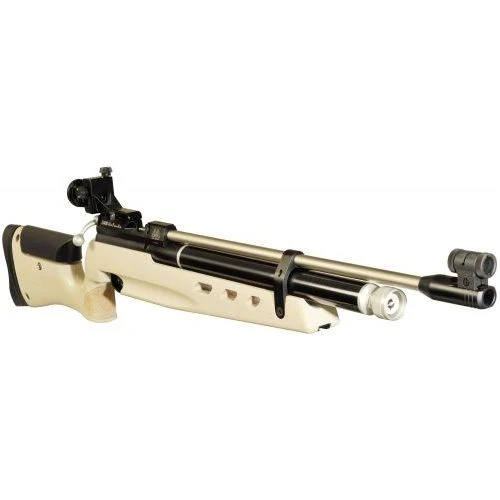
- Ambidextrous Stock Design: Accommodates both left-handed and right-handed shooters.
- Adjustable Ergonomic Components: Allow users to establish a comfortable and repeatable shooting position.
- Lightweight Construction: Provides manageable handling during practice and competition.
- Approximately 120 Shots Per Fill: Offers extended shooting sessions under suitable operating conditions.
- Compact Sporting Design: Combines practical dimensions with excellent balance.
- British Engineering: Reflects Air Arms’ longstanding experience in manufacturing precision air rifles.
- Target-Focused Power Output: Approximately 5.15 ft-lb, making it particularly suitable for precision paper-target disciplines.
Advanced Engineering for Consistent Results
Smooth PCP Performance
The Air Arms MPR Sporter uses a pre-charged pneumatic operating system, which stores compressed air within its dedicated cylinder.
Consequently, users benefit from a shooting experience characterized by minimal mechanical disturbance.
Unlike spring-powered alternatives, PCP technology avoids the pronounced movement associated with a spring-driven piston. This allows shooters to focus more effectively on maintaining a consistent shooting position.
Furthermore, the rifle incorporates a self-regulating firing-valve design intended to support dependable shot-to-shot performance.
Although the standard Sporter version does not feature a separate factory-fitted pressure regulator, its carefully engineered valve system contributes to predictable operation across its intended working range.
As a result, the rifle provides a practical foundation for precision training and competitive skill development.
Precision Barrel Technology
A high-quality barrel plays an essential role in achieving accurate results.
Accordingly, the rifle incorporates a precision-engineered Lothar Walther barrel measuring approximately 486 mm.
This component supports consistent pellet travel and reliable accuracy when paired with suitable ammunition.
Additionally, careful barrel manufacturing helps minimize inconsistencies that could otherwise affect target performance.
For shooters seeking dependable equipment, this level of engineering makes a meaningful difference during regular practice.
Adjustable Stock and Ergonomic Comfort
Designed for Different Shooting Preferences
One of the most appealing characteristics of this rifle is its adaptable stock arrangement.
Rather than forcing every shooter into an identical position, the design allows important aspects of the fit to be customized.
For example, the adjustable cheekpiece supports a more natural head position and consistent sight alignment.
Meanwhile, adjustable butt-pad components help users achieve a comfortable relationship between the stock and shoulder.
Furthermore, its ambidextrous construction makes the rifle accessible to individuals with different shooting preferences.
These features prove particularly useful in club environments where shooters may have different physical proportions and experience levels.
Confidence During Extended Practice
Longer shooting sessions demand equipment that remains comfortable and manageable.
Therefore, the rifle’s balanced design supports controlled handling while reducing unnecessary physical strain.
Its ergonomic configuration also encourages users to develop consistent positioning habits.
Moreover, the adjustable components allow the rifle to accommodate changes in shooting technique as experience develops.
For newcomers, this adaptability provides an accessible introduction to precision air rifle shooting.
Experienced users, meanwhile, can appreciate the opportunity to refine their equipment fit according to personal preferences.
Ideal Applications for the Air Arms MPR Sporter
Precision Target Practice
The rifle is especially well suited to structured target practice at approved shooting facilities.
Its moderate power output, minimal recoil, and quality barrel make it appropriate for developing accuracy and concentration.
Additionally, the manageable design supports repeated practice without the unnecessary weight associated with some larger competition rifles.
Club Shooting and Skill Development
Many shooting clubs emphasize correct technique, consistency, and responsible equipment handling.
In these environments, the rifle provides a useful combination of precision and accessibility.
Furthermore, its adaptable features allow developing shooters to refine their preferred setup as their skills progress.
The result is equipment that can remain useful throughout different stages of target-shooting development.
Recreational Competition
Beyond regular practice, the rifle offers a practical platform for appropriate sporting competitions.
Its target-oriented construction supports controlled performance, while its familiar PCP operation helps maintain a predictable shooting experience.
Consequently, users can focus on personal improvement and sporting enjoyment.
Technical Specifications
| Specification |
Details |
| Manufacturer |
Air Arms |
| Model |
MPR Sporter |
| Rifle Type |
Pre-Charged Pneumatic (PCP) |
| Calibre |
.177 / 4.5 mm |
| Approximate Muzzle Energy |
5.15 ft-lb |
| Barrel |
Lothar Walther |
| Barrel Length |
486 mm |
| Overall Length |
945 mm |
| Weight |
Approximately 3.1 kg |
| Approximate Shot Count |
120 per fill |
| Factory Regulated |
No |
| Stock Configuration |
Ambidextrous, adjustable |
| Primary Application |
Precision target shooting |
Specifications reflect the manufacturer’s published MPR Sporter configuration. Actual shot count and performance depend on operating conditions, ammunition, and rifle condition.
Durability, Maintenance, and Long-Term Value
Built Around Quality Components
Air Arms has developed a strong reputation for manufacturing precision-oriented airguns, and this model reflects that engineering approach.
Its robust construction and carefully selected components support reliable performance when the rifle is properly maintained.
Furthermore, the quality barrel and well-designed pneumatic action make it suitable for regular target practice.
Routine inspections, appropriate storage, and manufacturer-recommended servicing help preserve long-term functionality.
A Practical Investment in Shooting Development
Choosing suitable equipment involves more than comparing appearance or individual specifications.
Comfort, reliability, consistent performance, and adaptability all contribute to long-term satisfaction.
The rifle addresses these considerations through a thoughtful combination of ergonomic features and target-focused engineering.
Moreover, its accessible dimensions make it particularly attractive to shooters seeking a manageable precision platform.
Why the Air Arms MPR Sporter Stands Out
The Air Arms MPR Sporter offers an appealing balance between serious precision engineering and everyday shooting practicality.
Its compact dimensions provide comfortable handling, while the adjustable stock supports a more personalized shooting experience.
Meanwhile, the precision barrel and PCP operating system deliver the characteristics expected from a purpose-built target air rifle.
For developing competitors, the design encourages consistent training and progressive improvement.
Equally, experienced recreational shooters can appreciate its dependable construction and refined handling characteristics.
Ultimately, this model combines the performance-focused qualities of a competition air rifle with the accessibility needed for enjoyable, regular practice.
Discover the Air Arms MPR Sporter Today
Invest in a precision air rifle designed to support your target-shooting ambitions.
With its Lothar Walther barrel, adjustable ambidextrous stock, lightweight construction, and dependable PCP technology, the Air Arms MPR Sporter provides an excellent platform for accuracy, comfort, and continued skill development.
Whether you are preparing for club competitions or building confidence through regular practice, this carefully engineered rifle offers lasting sporting value.
Explore the Air Arms MPR Sporter today and experience British precision engineering designed around accuracy, control, and shooting enjoyment.
Snowpeak Airguns, PCP Rifles, Air Pistols and Umarex Airguns
For shooters researching Snowpeak airguns, Snowpeak Sports, and the wider Snowpeaks product range, there are many PCP rifles, air pistols, and shooting accessories to consider. Popular searches include the Snowpeak AP900, Snowpeak AP900B PCP air rifle, Snowpeak MAX 1, Snowpeak MAX 1 price, Snowpeak PP750, PP750, Snow Peak PP750, and PP750 air pistol. Buyers also regularly compare models such as the Snowpeak P35, P35, P 35, PCP P 35, Snowpeak P35X, P35X, P35X PCP, and Snowpeak P35 vs P35X.
Other Snowpeak models attracting attention include the Snow Peak PP20, Snowpeak PP20, Snowpeak M25, M25 rifle, M-25, M25 weapon, Snowpeak M60, Snowpeak M60B, M 60B, rifle M60, rifle M50, and M50 rifle. Searches such as Snow Peak brand origin are also common among buyers who want to understand the manufacturer before choosing a rifle or pistol.
Snowpeak PCP Models and Related Airgun Searches
The PCP category covers everything from compact pistols to full-size hunting and target rifles. Searches frequently include PR900 Gen 3, CR650, SR 1000X, T Rex 6000, and pistolet PCP Arcea-Snowpeak Onix Sport. People comparing pneumatic platforms may also search what is a PCP airgun, air gun, air rifle, pellet pistol, air gun accessories, 9mm pellet, and pellet 9mm.
Some search phrases overlap with firearm terminology even when shoppers are researching airgun products. These include rifle M60, how much did the M60 weigh, rifle M50, M50 rifle, M25 weapon, and snowfall gun. Therefore, model specifications should always be checked carefully so that a historical firearm search is not confused with a modern sporting airgun product.
Umarex Airguns, Air Rifles, Pistols and PCP Platforms
Alongside Snowpeak products, Umarex USA, UmarexUSA, Umarex airguns, and Umarex air rifles are widely searched by recreational shooters, target shooters, and PCP enthusiasts. The Umarex range includes PCP rifles, CO₂-powered platforms, break-barrel pistols, BB guns, airsoft replicas, and large-caliber airgun systems.
Popular PCP searches include Umarex Notos, Umarex Notos Carbine, Umarex Gauntlet, Umarex Gauntlet 2, Umarex Gauntlet 30, Umarex Zelos, Umarex Origin, Umarex Komplete, and Umarex Komplete NCR .22. Hunters researching larger airgun platforms may also encounter the Umarex Hammer, Umarex Hammer .50 caliber, Umarex Hammer Carbine, Umarex Primal 20, and Umarex AirSaber.
Umarex Pistols, BB Guns and T4E Models
For handgun-style platforms, popular searches include Umarex BB gun, BBgun, BB gun pistol, metal BB gun, Umarex TR50, Umarex HDR 50, Umarex T4E, Umarex T4E Smith, Umarex Smith, and Umarex P2P DR50 how many joules.
Glock-style replicas remain another major category. Search terms include Glock BB gun, Glock 19 BB gun, Umarex Glock 19, Umarex Glock 19X, Umarex Glock 19 Gen3 .177 caliber BB gun air pistol, Umarex Glock 17, Umarex Glock 17 Gen 5, Umarex Glock, airsoft Glock, airsoft Glock 19, Glock 17 airsoft, and Glock airsoft gun.
Other replica and recreational searches include Umarex MP40, Umarex MP5, Umarex Legends, Umarex HK Heckler, Umarex shotgun, and airsoft pistol.Umarex DX17.
Break-Barrel and Sporting Umarex Airguns
Shooters looking for spring or gas-piston platforms frequently research the Umarex Trevox, loading Umarex Trevox break barrel .177, Umarex pistol break barrel, Umarex Fusion 2, Umarex Synergis Elite, and Amazon Umarex Browning 800 Express. These platforms provide alternatives for people who want an airgun without relying on a high-pressure PCP charging system.
Additional searches across the Umarex catalog include Umarex H, while broader terms such as air rifle, pellet pistol, air gun, and air gun accessories help buyers compare platforms, ammunition, optics, filling equipment, targets, cases, and other shooting equipment.
Whether the focus is a Snowpeak M60, Snowpeak M25, Snowpeak P35X, Snowpeak PP750, Snowpeak MAX 1, Umarex Notos, Umarex Gauntlet 2, Umarex Origin, or Umarex Hammer Carbine, buyers should compare caliber, operating system, power level, dimensions, intended use, and local regulations before selecting an airgun.
Frequently Asked Questions (FAQs)
1. What makes this air rifle suitable for precision target shooting?
This air rifle has been specifically engineered to provide accuracy, stability, and consistency during competitive and recreational target shooting. Its pre-charged pneumatic operating system delivers minimal recoil, allowing users to maintain better control throughout their shooting sessions.
Furthermore, the precision-manufactured barrel contributes to reliable pellet placement, while the adjustable stock components support comfortable positioning. Consequently, both developing and experienced shooters can benefit from its balanced construction.
Unlike traditional spring-powered alternatives, its compressed-air operation produces less mechanical movement during firing. Therefore, shooters can concentrate on sight alignment, breathing, and maintaining consistent technique.
Additionally, its manageable weight makes extended training sessions more comfortable, particularly for individuals who prefer a lightweight competition-oriented platform.

2. Which calibre is available for this rifle?
The standard configuration is chambered in .177 calibre, also identified as 4.5mm. This calibre has been widely adopted for precision air rifle competitions because of its excellent suitability for standardized target disciplines.
Furthermore, .177 pellets are available in numerous match-grade configurations, allowing shooters to select ammunition appropriate for their preferences.
High-quality wadcutter pellets are commonly selected for paper-target shooting because their flat heads create clearly defined holes in suitable targets.
Additionally, the relatively small projectile diameter allows standardized scoring systems to be used effectively.
However, ammunition selection should always be based on compatibility, consistency, and manufacturer recommendations rather than appearance alone.
3. How much power does the rifle produce?
The manufacturer’s published muzzle energy is approximately 5.15 foot-pounds, equivalent to around 7 joules.
This moderate output has been selected to complement precision target-shooting applications rather than high-energy sporting activities.
Moreover, lower muzzle energy can provide a comfortable shooting experience with minimal disturbance during firing.
Because competitive accuracy depends heavily on consistency, additional power is not automatically beneficial.
Furthermore, the rifle’s compressed-air operating system supports predictable shooting characteristics when properly maintained.
Actual measured performance may vary slightly according to ammunition, operating conditions, and equipment condition.
4. Does this rifle require a firearms certificate?
Certification requirements depend on the country and jurisdiction where the rifle is purchased, possessed, or used.
In England and Wales, an air rifle operating below the statutory 12 foot-pound threshold generally does not require a firearms certificate, provided other applicable legal requirements are satisfied.
However, Scotland operates a separate air weapon certification system, while Northern Ireland has different firearms legislation.
Furthermore, international buyers may encounter registration, import authorization, licensing, or transportation requirements.
Consequently, local regulations should always be reviewed before purchasing or importing an air rifle.
The manufacturer’s published energy rating should not be treated as a guarantee of legal compliance in every jurisdiction.
5. Is this rifle suitable for beginners?
Yes, its manageable dimensions, minimal recoil, and adaptable stock arrangement make it suitable for beginners receiving appropriate instruction and supervision.
Furthermore, the design encourages the development of fundamental shooting skills, including proper posture, sight alignment, and controlled trigger operation.
Because the rifle has been developed for precision applications, unnecessary mechanical distractions are minimized.
Additionally, its moderate weight makes it easier to handle than certain heavier competition models.
Nevertheless, beginners should receive suitable safety training before participating in shooting activities.
Supervised practice at an approved shooting range provides an appropriate environment for developing confidence and responsible equipment-handling habits.
6. Can experienced shooters use this model in competitions?
Experienced shooters can certainly appreciate its precision-oriented design and adjustable ergonomic features.
Its quality barrel, consistent pneumatic operation, and balanced construction provide characteristics valued in structured target disciplines.
Furthermore, the adjustable stock components allow individual preferences to be accommodated more effectively.
However, competition eligibility depends on the regulations established by the relevant governing organization.
Some events impose specific restrictions concerning sighting systems, rifle dimensions, stock modifications, weight, or accessory configurations.
Therefore, competitors should verify the applicable equipment rules before entering an event.
With an appropriate configuration, this rifle can serve as a practical sporting platform for suitable club competitions.
7. What type of barrel is fitted?
A precision-manufactured Lothar Walther barrel is incorporated into the standard design.
This component has been selected for its suitability for accurate pellet shooting and repeatable target performance.
Furthermore, the barrel’s manufacturing quality helps support consistent projectile travel when appropriate ammunition is used.
Its published length is approximately 486mm, contributing to the rifle’s target-oriented configuration.
Nevertheless, overall accuracy depends on several factors beyond barrel construction.
Ammunition consistency, equipment condition, and suitable sighting equipment all influence results.
Consequently, careful maintenance and appropriate pellet selection are recommended to preserve reliable performance over time.
8. How many shots can be fired from one air fill?
Approximately 120 shots per fill are listed in the manufacturer’s published specifications.
This capacity makes the rifle suitable for extended practice sessions without excessively frequent refilling.
However, the actual number of usable shots may differ according to ambient temperature, rifle condition, starting pressure, and other operational variables.
Furthermore, the consistency of the final shots may differ from those obtained within the rifle’s preferred operating pressure range.
Therefore, shooters should monitor the available air pressure and follow the manufacturer’s filling instructions.
Regular inspection of filling equipment also contributes to safe and dependable operation.
9. What is the maximum recommended filling pressure?
The manufacturer specifies a filling pressure of 200 bar.
This pressure must be respected when using compatible pre-charged pneumatic filling equipment.
Furthermore, the air supply should be clean, dry, and appropriate for the rifle’s compressed-air system.
Only compatible filling connectors and equipment rated for the required working pressure should be used.
Importantly, exceeding the manufacturer’s stated pressure limit can create dangerous operating conditions and potentially damage internal components.
Consequently, filling should always be performed according to the official operating instructions.
If uncertainty exists about filling equipment compatibility, assistance should be obtained from an authorized dealer or qualified airgun technician.
10. Is the rifle fitted with a regulator?
The standard configuration does not include a separate factory-fitted pressure regulator.
Instead, a self-regulating firing-valve design is incorporated to support consistent performance across the intended operating range.
This arrangement has been developed to provide dependable target-shooting characteristics without requiring the same internal configuration as certain regulated PCP rifles.
Furthermore, the moderate muzzle-energy specification complements its intended precision applications.
Although regulated systems offer advantages in some airguns, the absence of a separate regulator does not automatically indicate inferior accuracy.
Overall performance depends on the complete engineering design, ammunition compatibility, and proper maintenance.
11. Which pellets provide the best accuracy?
High-quality .177 match pellets are generally recommended for precision paper-target shooting.
Popular options include established match-grade products from JSB, RWS, H&N, and other reputable manufacturers.
Furthermore, wadcutter pellets are commonly preferred for traditional paper-target disciplines because of their clean target-hole characteristics.
However, even pellets manufactured to similar specifications can produce different results in individual barrels.
Consequently, one particular product cannot be guaranteed to deliver the tightest groups in every rifle.
Selecting clean, undamaged ammunition from consistent production batches supports more predictable performance.
Additionally, manufacturer guidance should always be considered when choosing suitable pellet weights and designs.
12. Can a telescopic scope be fitted?
Yes, compatible telescopic sights can be installed using suitable dovetail mounting equipment.
Nevertheless, sight selection should reflect the intended shooting discipline and applicable competition rules.
For recreational precision practice, compact scopes with clear optics and appropriate focusing distances may provide a comfortable viewing experience.
Furthermore, lightweight designs are generally preferable when maintaining the rifle’s original balance is important.
Close-range focusing capability should receive particular attention because some general-purpose scopes cannot focus adequately at shorter target distances.
For certain formal competitions, traditional aperture sights may be required instead.
Therefore, equipment compatibility and sporting regulations should be checked before purchasing additional optics.
13. Is the stock adjustable?
Yes, adjustable stock components are provided to improve comfort and accommodate different shooting preferences.
The cheekpiece can help establish a comfortable head position, while butt-pad adjustment supports an appropriate shoulder fit.
Furthermore, the ambidextrous stock design makes the rifle accessible to both right-handed and left-handed shooters.
These ergonomic features are particularly beneficial in environments where consistent positioning is emphasized.
Additionally, adjustable components allow the equipment fit to be reassessed as a shooter’s preferences develop.
However, all adjustments should remain within the manufacturer’s design limitations.
For regulated competitions, stock dimensions and permitted attachments must also comply with the relevant equipment rules.
14. How heavy is the rifle?
The published weight is approximately 3.1 kilograms, although actual carried weight may increase when optics and additional accessories are installed.
This manageable construction offers a practical balance between stability and portability.
Furthermore, the rifle’s compact dimensions make it suitable for shooters who prefer equipment that can be handled comfortably during extended practice.
Its approximate overall length of 945mm also contributes to its relatively compact profile.
Nevertheless, individual comfort depends on physical proportions, preferred shooting positions, and accessory arrangements.
Consequently, selecting lightweight, compatible equipment can help preserve the manufacturer’s intended handling characteristics.
15. Is this rifle suitable for hunting?
This model has primarily been developed for precision target shooting rather than hunting.
Its published muzzle energy, specialized ergonomics, and intended applications reflect that purpose.
Furthermore, the moderate power output should not be confused with the performance characteristics of higher-powered sporting air rifles.
For humane pest-control applications, equipment selection requires careful consideration of applicable laws, animal welfare, and professional guidance.
Consequently, buyers seeking a dedicated hunting rifle should consider models specifically designed and appropriately rated for that purpose.
This configuration is best appreciated as a controlled, accurate, and comfortable target-shooting platform.
16. What accessories are recommended for regular use?
Several compatible accessories can improve convenience, equipment protection, and long-term ownership satisfaction.
A suitable protective case helps reduce the possibility of accidental damage during storage and transportation.
Furthermore, quality match pellets, appropriate targets, and a compatible pellet trap provide useful equipment for authorized shooting environments.
A manufacturer-compatible filling connector and properly rated PCP air supply are also essential.
Additionally, suitable cleaning materials can help preserve barrel condition when used according to manufacturer recommendations.
Optional shooting mats, protective eyewear, and approved sighting systems may offer further practical benefits.
However, unnecessary accessories should be avoided when they compromise balance or competition compliance.
17. How should the rifle be cleaned and maintained?
Routine maintenance should follow the manufacturer’s official instructions.
External surfaces can be inspected periodically for accumulated dirt, moisture, or signs of wear.
Furthermore, the barrel should only be cleaned using methods and materials suitable for precision airguns.
Harsh cleaning products and inappropriate tools should be avoided because they may damage sensitive components.
Compressed-air seals, filling connectors, and other pressure-system components should be inspected by qualified personnel when servicing is required.
Additionally, unnecessary disassembly of the pneumatic system should be avoided.
Proper storage in a dry, secure environment helps preserve the rifle’s appearance and functionality.
Regular maintenance supports dependable performance and contributes to long-term equipment reliability.
18. Can the rifle be used by left-handed shooters?
Yes, its ambidextrous stock has been designed to accommodate both right-handed and left-handed users.
This flexibility makes the model attractive to shooting clubs, training organizations, and households where different individuals may use similar equipment.
Furthermore, adjustable ergonomic components support a comfortable fit for a wider range of shooters.
Nevertheless, stock compatibility does not necessarily mean every control or operating feature is identical from both sides.
Therefore, prospective buyers should examine the actual rifle configuration and confirm that its controls meet their preferences.
The adjustable design provides a practical foundation for developing consistent shooting techniques.
19. What is the expected lifespan of the rifle?
A precise service-life estimate cannot be guaranteed because longevity depends on usage frequency, storage conditions, maintenance practices, and individual component wear.
However, quality construction and appropriate servicing can support many years of recreational and competitive use.
Furthermore, the precision barrel and carefully engineered pneumatic components have been designed for dependable operation.
Seals and other serviceable parts may eventually require professional inspection or replacement.
Consequently, following recommended maintenance procedures is important for preserving long-term performance.
Responsible handling, suitable ammunition, and secure storage also contribute to equipment preservation.
20. Why should buyers consider this rifle over conventional alternatives?
Its greatest advantage lies in the combination of precision-focused engineering, ergonomic adaptability, and manageable handling.
Unlike many general-purpose air rifles, this design prioritizes repeatable target performance over high muzzle energy.
Furthermore, the quality barrel, minimal recoil, and adjustable stock components support controlled shooting experiences.
Beginners can appreciate the approachable configuration, while experienced enthusiasts may value its target-oriented characteristics.
Additionally, the manufacturer’s established reputation in precision airgun production contributes to its appeal.
For buyers seeking an accurate, comfortable, and purpose-built sporting platform, this rifle represents a compelling choice.
Ultimately, its greatest value comes from supporting consistent practice, responsible sporting enjoyment, and continued development in precision target shooting.
Practical Use Scenarios – Precision, Comfort, and Everyday Shooting Applications
Precision shooting requires more than dependable equipment. Confidence, consistency, comfortable handling, and regular practice must also be considered when developing successful shooting habits. Fortunately, modern pre-charged pneumatic technology provides a practical combination of minimal recoil, predictable performance, and manageable operation.
Whether competitive skills are being developed, recreational shooting is enjoyed, or structured training is undertaken, a purpose-built target rifle can offer exceptional versatility within its intended sporting applications.
Furthermore, adjustable ergonomic components, a quality barrel, and moderate muzzle energy contribute to a controlled shooting experience. Consequently, users can concentrate on accuracy, concentration, and personal improvement without unnecessary mechanical distractions.
The following practical scenarios demonstrate how these characteristics can be appreciated in different target-shooting environments.
1. Precision Target Shooting at Indoor Ranges
Developing Accuracy in Controlled Environments
Indoor target ranges provide an excellent environment for individuals seeking consistent practice conditions. Because wind and changing outdoor weather conditions are largely eliminated, attention can be directed toward fundamental shooting techniques.
Furthermore, standardized distances and suitable paper targets make performance easier to evaluate over successive training sessions.
A low-recoil pneumatic system is particularly beneficial in these environments because excessive movement during firing is minimized.
Additionally, carefully designed ergonomic features support comfortable positioning throughout structured practice.
For newer enthusiasts, indoor range sessions offer opportunities to become familiar with equipment handling under qualified supervision.
Experienced participants, meanwhile, can use the same environment to maintain confidence and evaluate their consistency.
Benefits of Indoor Practice
Several advantages can be appreciated during properly supervised indoor sessions:
- Controlled environmental conditions throughout practice.
- Reduced interference from outdoor wind and changing weather.
- Consistent shooting distances and standardized targets.
- Comfortable conditions for structured skill development.
- Opportunities to evaluate individual progress.
- Convenient access to club supervision and safety facilities.
- Suitable environments for learning responsible equipment handling.
Consequently, indoor ranges remain among the most practical locations for regular precision shooting.
2. Recreational Shooting at Established Clubs
Enjoyable Sporting Activities for Different Experience Levels
Shooting clubs provide welcoming environments where participants with different levels of experience can enjoy organized recreational activities.
For beginners, opportunities to learn from experienced instructors can make early participation more comfortable.
Additionally, club facilities often provide standardized equipment requirements, appropriate targets, and established safety procedures.
A lightweight, precision-oriented rifle complements these settings because prolonged handling can remain comfortable.
Furthermore, adjustable stock components may help accommodate different physical proportions and personal preferences.
Rather than emphasizing maximum muzzle energy, club shooting generally rewards concentration, consistency, and responsible participation.
As a result, target-focused equipment can provide an enjoyable introduction to organized shooting sports.
Building Confidence Through Regular Attendance
Regular club participation allows practical experience to develop progressively.
Over time, greater familiarity with range procedures and equipment characteristics can contribute to improved confidence.
Moreover, interactions with experienced members provide opportunities to understand equipment maintenance, competition expectations, and sporting etiquette.
For recreational shooters, these social and educational advantages often become just as valuable as the shooting activity itself.
3. Competitive Target Shooting and Sporting Events
Preparing for Structured Competition
Competitive environments place particular importance on consistency, concentration, and reliable equipment.
Therefore, a rifle with balanced handling and predictable operation can provide an appropriate foundation for organized sporting participation.
Furthermore, minimal recoil reduces unnecessary mechanical disturbance, making the shooting experience more comfortable.
Adjustable ergonomic features also support personalized equipment fit, which can be important during longer competitions.
However, competition eligibility must always be confirmed against the rules of the relevant organizing body.
Specific limitations may apply to rifle dimensions, sighting systems, accessories, weight, and stock configuration.
Consequently, equipment should be assessed carefully before any formal event.
Supporting Long-Term Sporting Development
Participation in organized competitions can encourage discipline, patience, and personal accountability.
Additionally, competitors often benefit from clear performance records that make gradual improvement easier to recognize.
For developing participants, smaller club events can provide useful experience before more demanding competitions are considered.
Experienced competitors may appreciate the opportunity to evaluate their consistency under standardized conditions.
Ultimately, the sporting environment rewards responsible preparation and sustained commitment rather than unnecessary equipment complexity.
4. Youth Development and Supervised Training Programs
Introducing Responsible Sporting Participation
Organized training programs can introduce eligible younger participants to precision shooting under qualified adult supervision.
In these circumstances, manageable equipment dimensions and comfortable ergonomics are especially valuable.
Furthermore, an adjustable stock may allow instructors to assess whether equipment fits an individual participant appropriately.
Low recoil and moderate power also complement controlled training environments, although appropriate safety precautions remain essential.
Age restrictions, club regulations, and local legal requirements must always be followed.
Additionally, instructors should ensure that equipment is suitable for each participant’s physical ability and experience.
Encouraging Concentration and Responsibility
Precision sports can provide opportunities to develop patience, discipline, and attention to established procedures.
For example, supervised range activities emphasize listening carefully, following instructions, and respecting safety boundaries.
Furthermore, structured participation may encourage confidence through clearly defined personal achievements.
Rather than focusing entirely on scores, instructors can recognize responsible behavior, progress, and consistent participation.
Consequently, a supportive learning environment can make target shooting a constructive recreational activity for eligible participants.
5. Extended Practice Sessions and Comfortable Handling
Benefits of Lightweight Construction
Longer shooting sessions can become physically demanding when equipment is excessively heavy or poorly balanced.
Fortunately, a manageable rifle configuration helps reduce unnecessary discomfort during suitable range activities.
Moreover, an adjustable cheekpiece and butt-pad arrangement can improve general equipment fit.
A comfortable stock configuration is particularly valuable because individual body proportions vary considerably.
Furthermore, a relatively compact overall design makes transportation and handling less cumbersome than with some larger competition platforms.
Although personal comfort remains subjective, well-balanced equipment can make repeated recreational sessions more enjoyable.
Maintaining a Consistent Shooting Experience
Extended practice also places importance on dependable mechanical operation.
A compressed-air power system avoids the pronounced spring movement associated with traditional spring-piston rifles.
Consequently, shooting characteristics remain relatively smooth and predictable.
Additionally, adequate air capacity reduces the frequency of interruptions for refilling.
Actual performance, however, depends on the rifle’s condition, operating pressure, and environmental conditions.
For this reason, manufacturer-recommended servicing and appropriate pressure monitoring remain important.
6. Paper Target Shooting and Accuracy Evaluation
A Practical Environment for Measurable Progress
Paper targets provide a convenient and widely recognized method of recording shooting results.
Because target patterns remain visible after each session, performance can be compared across different practice periods.
Furthermore, standardized targets make progress easier to assess without relying entirely on subjective impressions.
Match-grade wadcutter pellets are especially popular in paper-target disciplines because their shape creates clearly defined holes in suitable target material.
Additionally, consistent ammunition quality helps reduce uncertainty when reviewing shooting results.
For recreational participants, these characteristics make paper targets an accessible and economical training option.
Choosing Appropriate Target Equipment
Compatible target holders and pellet traps should be selected according to the range environment and applicable safety requirements.
Furthermore, the equipment must be suitable for the projectile type and muzzle energy involved.
Commercially manufactured target systems are generally preferable to improvised arrangements.
Where indoor facilities are used, adequate ventilation and responsible lead-handling practices should also be considered.
Consequently, properly equipped ranges provide more suitable environments for regular target practice.
7. Training With Traditional Aperture Sights
Appreciating Classic Competition Equipment
Traditional aperture sighting systems remain closely associated with precision air rifle disciplines.
Unlike telescopic optics, these systems provide a relatively simple visual arrangement that is familiar to many competitive shooters.
Furthermore, properly matched front and rear sight components can offer a lightweight alternative to larger optical accessories.
For formal 10-metre disciplines, aperture sights may be required under the applicable sporting regulations.
Consequently, equipment selection should reflect the intended competition rather than personal preference alone.
Comfort and Equipment Compatibility
Appropriate sight selection depends on compatibility with the rifle’s mounting arrangements.
Additionally, individual eyesight and personal comfort should be considered when evaluating different sighting systems.
Shooter preferences can vary significantly, particularly between recreational and competitive environments.
Therefore, guidance from a qualified instructor or experienced equipment specialist can be valuable before selecting a complete sighting package.
The objective is to choose equipment suited to the intended sporting activity without adding unnecessary weight or complexity.
8. Recreational Shooting With Telescopic Optics
Comfortable Target Observation
Telescopic sights offer another option for recreational enthusiasts who prefer magnified target viewing.
For example, compact optics may make target details easier to observe during supervised range activities.
Furthermore, lightweight designs can complement a balanced rifle without creating excessive bulk.
However, some scopes have minimum focusing distances that make them unsuitable for close-range precision shooting.
Therefore, optical compatibility should be confirmed before purchasing.
Additionally, mounting equipment must match the rifle’s rail and the optic’s tube dimensions.
Selecting Practical Optical Accessories
Moderate magnification is often sufficient for general recreational paper-target activities.
Meanwhile, higher magnification may be appreciated in certain approved range environments.
Nevertheless, increased magnification is not automatically associated with better shooting performance.
Optical clarity, appropriate focusing capability, comfortable eye relief, and manageable weight can be equally important.
Consequently, a carefully selected compact scope may provide greater practical value than an unnecessarily large alternative.
9. Regular Practice in Educational Shooting Programs
Supporting Organized Learning Activities
Educational sporting programs often emphasize consistency, responsible conduct, and measurable personal development.
In such settings, purpose-built target equipment provides a useful foundation for supervised participation.
Furthermore, predictable pneumatic operation allows instructors to concentrate on general equipment familiarity and established range procedures.
An adjustable stock can also help accommodate participants with different physical characteristics, subject to appropriate fitting assessments.
Additionally, standardized equipment can simplify maintenance planning and administrative organization.
For schools, clubs, and approved training organizations, these practical characteristics may contribute to smoother program management.
Encouraging Long-Term Participation
Participants who feel comfortable with their equipment may be more inclined to continue attending organized activities.
Moreover, positive early experiences can encourage interest in recreational competitions and further instruction.
Structured programs also provide opportunities to develop concentration, patience, and respect for sporting regulations.
Consequently, reliable and manageable equipment can contribute to an accessible learning environment.
10. Convenient Ownership and Routine Equipment Care
Practical Storage and Transportation
Responsible ownership includes secure storage, suitable transportation, and regular inspection.
A protective rifle case helps reduce exposure to dust, moisture, and accidental impact during transport.
Furthermore, compact overall dimensions make storage more convenient than with certain larger precision rifles.
However, firearms and airguns must always be stored according to local legal requirements and manufacturer guidance.
Access should be restricted to authorized individuals, and transportation should comply with applicable regulations.
Additionally, ammunition and compressed-air filling equipment require appropriate storage arrangements.
Supporting Reliable Long-Term Performance
Routine maintenance helps preserve the rifle’s mechanical condition and overall appearance.
External surfaces should be kept clean and dry, while suitable manufacturer-approved products should be used when servicing is necessary.
Furthermore, pressure-containing components should only be inspected or repaired by appropriately qualified personnel.
Regular attention to equipment condition can reduce unexpected interruptions during organized shooting activities.
Consequently, responsible maintenance contributes to safety, reliability, and long-term ownership satisfaction.
11. Precision Shooting as a Relaxing Recreational Hobby
Combining Concentration With Sporting Enjoyment
Precision shooting can provide an engaging recreational activity for individuals who appreciate structured challenges and measurable improvement.
Unlike sports focused primarily on speed or physical strength, target shooting places considerable importance on patience and concentration.
Furthermore, club environments often provide opportunities to meet individuals with similar interests.
The combination of personal achievement, technical appreciation, and organized participation can make the activity particularly rewarding.
Additionally, access to comfortable equipment supports enjoyable sessions for participants with different experience levels.
Progressing at a Comfortable Pace
Every participant develops at a different pace, and progress does not need to be measured exclusively through competitive scores.
For some individuals, becoming more familiar with organized range activities represents a meaningful achievement.
Others may prefer regular recreational sessions or eventual participation in sanctioned competitions.
Regardless of individual objectives, suitable equipment and responsible supervision provide a sound foundation for continued enjoyment.
Conclusion – Practical Versatility for Precision Shooting Enthusiasts
A purpose-built precision air rifle offers valuable benefits across a wide range of controlled sporting environments.
From indoor target ranges and recreational club sessions to supervised training programs and organized competitions, dependable pneumatic technology supports enjoyable, consistent participation.
Furthermore, manageable weight, adjustable ergonomic components, and minimal recoil contribute to a comfortable shooting experience.
The ability to accommodate appropriate optical equipment, match-grade ammunition, and practical range accessories also provides flexibility for different sporting preferences.
Ultimately, the greatest advantages are experienced through responsible ownership, regular maintenance, suitable equipment selection, and participation in approved shooting environments.
For shooters who appreciate accuracy, controlled performance, quality engineering, and long-term sporting enjoyment, this precision-focused design offers an excellent foundation for continued development and rewarding target practice.


Reviews
There are no reviews yet.