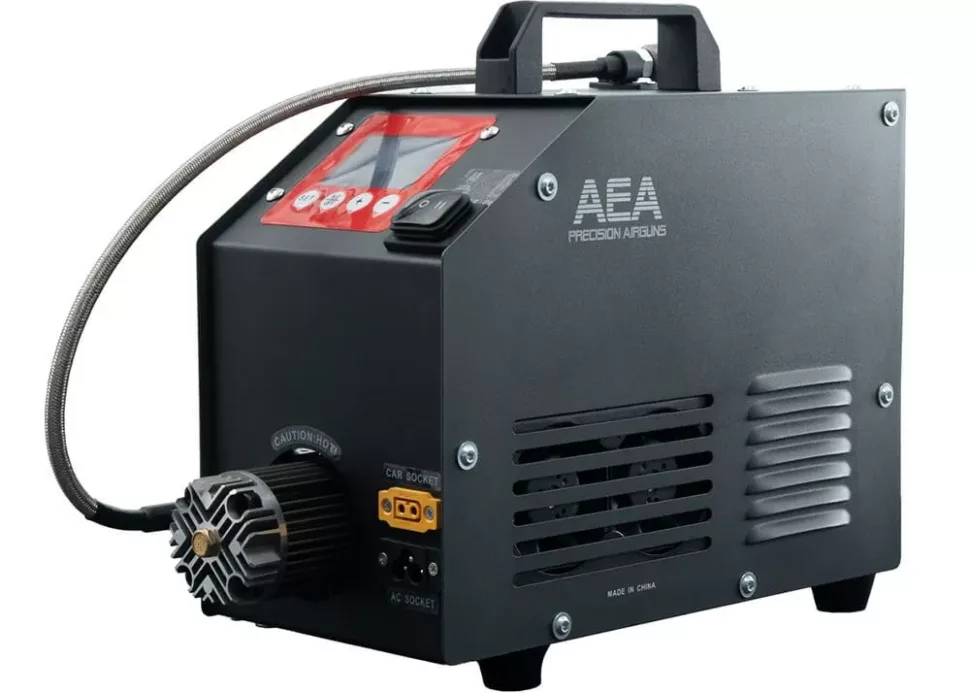
AEA Air Compressor 480 Bar 7000 PSI – Experience Unmatched High-Pressure Performance for Every Adventure
When precision and power are required in demanding applications, the AEA Air Compressor 480 Bar 7000 PSI stands out as a top-tier solution. Designed with advanced engineering, this compressor has been crafted to deliver exceptional results for enthusiasts and professionals alike. Whether filling PCP airguns, supporting specialized equipment, or meeting high-pressure needs in the field, reliable performance is consistently achieved.
Why the AEA Air Compressor 480 Bar 7000 PSI Excels in High-Pressure Environments
High-pressure air systems demand equipment that performs safely and efficiently. The AEA Air Compressor 480 Bar 7000 PSI is built to exceed expectations. Its robust construction supports operations up to 480 Bar (approximately 7000 PSI), with CE certification extending to 620 Bar (9000 PSI) for added confidence.
Transitioning seamlessly from standard compressors, this model offers superior capabilities. Oil-free operation ensures cleaner air output, which is especially beneficial for sensitive applications. Moreover, the built-in safety features provide peace of mind during extended use.
Key Features That Set the AEA Air Compressor Apart
Several standout attributes make this compressor a preferred choice:
- Extreme Pressure Capacity: Capable of reaching 480 Bar / 7000 PSI, the unit handles the most demanding PCP airgun fills with ease.
- Advanced Safety Systems: Auto-stop functionality, powered by electronic pressure sensors, works alongside a mechanical safety valve to prevent over-pressurization.
- Versatile Power Options: Operation is supported on both 110V AC and 12V DC (car battery), enabling convenient use at home or on the go.
- Oil-Free and Low-Maintenance Design: Cleaner air is delivered without the hassle of oil changes, while the inline drying filter helps maintain moisture-free output.
- Portable and User-Friendly: Compact engineering combined with a built-in inverter makes transport straightforward for field enthusiasts.
Furthermore, these features combine to create a compressor that not only meets but often surpasses industry standards.
How the AEA Air Compressor 480 Bar 7000 PSI Enhances Your Experience
Users benefit immensely when powerful, reliable equipment is selected. In addition, the auto-stop mechanism allows focus on the task rather than constant monitoring. Consequently, filling sessions become more efficient and less stressful.
For PCP airgun owners who seek higher fill pressures, this compressor opens new possibilities. Tanks and guns rated for elevated pressures are filled quickly and accurately. As a result, longer shooting sessions are enjoyed without frequent refills.
Technical Specifications of the AEA Air Compressor 480 Bar 7000 PSI
Understanding the details helps in making informed decisions. The following highlights key specifications:
- Operating Pressure: Up to 480 Bar (7000 PSI), software-limited for safety
- Certification: CE certified to 620 Bar (9000 PSI)
- Power Supply: 110V AC / 12V DC compatibility
- Design: Oil-free with inline drying filter (note: filter typically rated to 310 Bar)
- Safety: Electronic auto-stop and mechanical fail-safe valve
- Additional: Built-in inverter for versatile deployment
Notably, these specifications ensure broad compatibility across various high-pressure needs.
Benefits for PCP Airgun Enthusiasts and Professionals
Transitioning to practical advantages, the AEA Air Compressor 480 Bar 7000 PSI transforms how high-pressure air is managed. Firstly, portability means adventures are no longer limited by stationary equipment. Secondly, the oil-free system reduces contamination risks, which is vital for precision shooting. Thirdly, the high output pressure supports modern airguns designed for elevated fills.
In addition to these, quieter operation compared to many traditional models contributes to a more pleasant experience. Moreover, durability built into the design leads to long-term value and fewer interruptions.
Ideal Applications for the AEA Air Compressor 480 Bar 7000 PSI
This compressor serves a wide range of users effectively:
- PCP airgun filling for recreational and competitive shooting
- Specialized industrial or testing applications requiring high-pressure air
- Field use where 12V power is readily available
- Home workshops seeking a versatile, high-capacity unit
As such, inclusivity is embraced by accommodating diverse needs, from weekend hobbyists to dedicated professionals.
Safety and Maintenance Tips for Optimal Performance
While powerful equipment is exciting, responsible use remains essential. Therefore, always follow manufacturer guidelines. The auto-stop feature is highly effective, yet visual monitoring during operation is recommended. Additionally, the drying filter should be maintained according to pressure ratings to ensure consistent moisture control.
Furthermore, regular inspection of hoses and connections enhances longevity. Consequently, many years of reliable service are achieved when these practices are followed.
Why Choose the AEA Air Compressor 480 Bar 7000 PSI Today
In summary, superior engineering, versatile functionality, and robust safety measures make this compressor an outstanding investment. Not only does it deliver exceptional pressure, but it also prioritizes user safety and convenience. Hence, whether upgrading existing setups or starting fresh, outstanding results are delivered.
Transitioning from hesitation to confidence becomes effortless with a product engineered for real-world demands. Moreover, the conversion to higher performance is immediate upon integration into your workflow.
Ultimately, the AEA Air Compressor 480 Bar 7000 PSI empowers every user to achieve more. Its engaging blend of power and practicality invites exploration of new limits in high-pressure applications. Discover the difference that thoughtful design and reliable performance can make—elevate your capabilities with this exceptional compressor.
PCP Air Rifles, Tactical Platforms, Air Pistols, Moderators, and Precision Accessories
Modern PCP technology gives recreational shooters, target enthusiasts, and responsible pest-control users access to highly adjustable platforms with smooth firing cycles, consistent power delivery, and excellent mechanical accuracy. Buyers researching brocock ltd, brocock airguns, Huben, FX, Karma Airguns, or Kral Arms will find everything from lightweight field rifles to compact air pistols and regulated competition-style systems.
Brocock and BRK PCP Air Rifle Platforms
The brocock sniper xr remains a widely recognized PCP platform for shooters who want a practical combination of accuracy, handling, adjustability, and dependable compressed-air performance. Searches for brocock sniper xr, sniper xr, brk sniper xr, and .25 caliber brocock sniper xr often come from buyers comparing caliber options, stock configurations, barrel performance, and suitability for field shooting.
The brocock commander xr is designed around a tactical-style layout with an adjustable stock, accessory mounting capability, and a balanced configuration. Customers comparing the brocock commander, brocock commander xr, and brocock commander xr price should assess the rifle’s condition, caliber, included bottle, magazine capacity, moderator compatibility, and optic package before purchasing.
Another important platform is the brk ghost, also searched as the brk ghost air rifle. Its modular design appeals to shooters who want an adaptable PCP system with adjustable power settings, ergonomic controls, and options for different barrel lengths. Popular related searches include ghost handle, ghost accessories, buttpad, Magpul SL K, and compatible air-management components.
The brk concept xr offers a compact tactical configuration, while the pathfinder xr, brk pathfinder, brk pathfinder xr, and pathfinder air rifle are attractive to users who prioritize low weight and portability. These rifles demonstrate how bro air engineering has developed from traditional sporting designs into modular PCP platforms that can accept optics, moderators, slings, and other carefully selected accessories.
What Are PCP Air Rifles?
Many new buyers ask, what are pcp air rifles, what is a pre charged pneumatic air rifle, what is a pcp air rifle, what is pcp air rifle, or what is a pcp air gun. PCP means pre-charged pneumatic. A precharged pneumatic rifle or pistol stores high-pressure air inside a cylinder or bottle. When the trigger is activated, a controlled quantity of air propels the pellet through the barrel.
The basic pcp rifle meaning is therefore a rifle powered by previously compressed air rather than a spring piston or disposable carbon-dioxide cartridge. The phrase what does pcp mean in air rifles refers to the same operating principle. A PCP system can provide reduced recoil, repeatable velocity, smooth cocking, and multiple usable shots from one fill.
A compressed air rifle, air gun, pellet rifle, or pcp bb gun must still be handled responsibly. Local legislation may classify products differently depending on muzzle energy, caliber, overall length, intended use, and licensing requirements. The abbreviation PCP should not be confused with PRC. Buyers asking what does prc stand for in guns are usually referring to “Precision Rifle Cartridge” in the context of firearm cartridges, rather than pre-charged pneumatic airguns.
Calibers, Maintenance, and Optic Setup
A .25 pcp air rifle is commonly selected when the user wants a heavier projectile than standard .177 or .22-caliber options. A larger pellet can retain more energy, although its trajectory, air consumption, and useful shot count will depend on the rifle’s regulator, valve, barrel, projectile weight, and power setting.
Routine maintenance helps protect the performance of PCP equipment. A quality pcp o ring kit may include replacement seals for fill probes, pressure cylinders, magazines, valves, or threaded fittings. Users should install only the correct seal dimensions and pressure-rated materials recommended for the individual platform.
To connect scope equipment correctly, confirm the rail type, ring diameter, optic clearance, and eye-relief position. The mtc copperhead 4 16×44 is an example of a variable-magnification optic that may suit target or field applications when paired with appropriate mounts. The scope must be level, securely installed, and adjusted without overtightening its rings.
Moderators and Sound-Management Accessories
A compatible 0db moderator, also written as 0 db moderator, may reduce the muzzle report produced by certain air rifles. Other common searches include airgun moderators, air gun suppressors, pcp moderator, pcp moderators, and air gun moderator.
Moderator legality varies significantly by jurisdiction. Thread type, bore diameter, caliber rating, barrel alignment, and manufacturer approval must be verified before installation. A moderator that is incorrectly aligned can affect accuracy or create a dangerous projectile obstruction.
Huben GK1 Compact PCP Air Pistols
The huben gk1 is a compact semi-automatic PCP air pistol known for its unconventional design and high-capacity shooting format. It is frequently searched as the huben gk1 air pistol, huben gk1 pistol, gk1, k1 gun, and huben k1 25.
Compact versions include the huben gk1 shorty, gk1 shorty, huben gk1 25 shorty, and huben gk1 .25 shorty. Customers comparing the huben gk1 mini, huben gk1 v3, or a standard GK1 should examine barrel length, caliber, cylinder size, magazine configuration, grip design, power adjustment, and regional energy restrictions.
Pricing searches such as huben gk1 price, huben gk1 shorty price, huben gk1 price in usa, and huben gk1 for sale can produce very different results depending on import costs, availability, warranty support, included magazines, and the specific model generation. A listing described as huben gk1 amazon should be verified carefully because complete high-pressure airguns may not be offered through every marketplace or in every jurisdiction.
The phrase most powerful air pistol is commonly used in marketing, but it should not be treated as a universal technical classification. Actual performance depends on caliber, projectile weight, barrel length, valve tuning, pressure, and legal energy limits. A 25 huben model may produce different results from another caliber, even when both are sold under the GK1 family.
Available huben gk1 accessories may include magazines, fill probes, grips, cases, moderators, maintenance seals, and sighting equipment. All parts should be selected according to the exact version of the pistol.
The Spanish term pistola de aire comprimido means compressed-air pistol. Buyers using the search phrase pistola de aire comprimido should still confirm whether the product is PCP powered, CO₂ powered, spring powered, or single-stroke pneumatic.
Pellet Molds and Projectile Casting
Some experienced users research an airgun pellet mold, airgun pellet molder, pellet mold, .177 pellet mold, slug casting, or pellet casting. Producing projectiles requires careful control of diameter, weight, alloy consistency, surface finish, and barrel compatibility.
A poorly sized projectile may damage seals, obstruct a barrel, produce unstable velocity, or reduce accuracy. Cast pellets or slugs should never be assumed safe simply because they fit into a magazine. The final dimensions must suit the specific barrel, chamber, magazine, power level, and manufacturer recommendations.
The phrase kraz cool airguns may appear in community searches involving customized air pistols, unusual PCP builds, and specialist accessories. Buyers should distinguish between informal user modifications and products supported by the original manufacturer.
FX Impact M3 Air Rifle
The fx impact m3 is a modular bullpup PCP rifle with extensive external adjustment options. It is also searched as the fx impact mk3, fx m3 airgun, fx m3, impact m3, and fx impact m3 air rifle.
A configuration described as the fx impact m3 .22cal air rifle. 600mm barrel combines a .22-caliber system with a 600 mm barrel format. Its practical performance depends on liner selection, regulator settings, hammer adjustment, projectile choice, pressure stability, and the user’s tuning experience.
Customers researching fx impact m3 price, fx impact m3 precio, or fx impact m3 precio en usa should verify whether the listing includes a bottle, magazine, moderator, case, optic, bipod, spare liner, fill probe, and warranty coverage. The quoted price can vary substantially by configuration and country.
Airguns, Pellet Rifles, and BB Guns
The term air guns covers a broad category that includes spring-piston rifles, CO₂ pistols, single-stroke pneumatic systems, multi-pump pneumatics, and PCP platforms. A bb gun normally fires spherical BB ammunition, whereas a pellet rifle generally uses diabolo-shaped pellets or purpose-designed slugs.
The term air pcp is sometimes used informally to describe a PCP airgun. Regardless of terminology, every airgun should be treated as capable of causing serious injury. Safe storage, a reliable backstop, eye protection, correct ammunition, and compliance with local laws remain essential.
Karma Airguns and Red Panda Platforms
Karma platforms are increasingly discussed by users searching for karma eq air rifle, karma red panda, karma sls compact, karma sls, air karma, and karma airguns. These products are generally associated with modern PCP layouts, regulated power delivery, precision barrels, adjustable ergonomics, and configurations intended for target or field use.
The karma red panda should not be confused with novelty searches such as red panda hat or general panda guns terminology. Model-specific information should always be checked using official technical specifications.
The phrase 25 karma often refers to a .25-caliber Karma airgun. The karma sls compact and standard karma sls may appeal to users who value a shorter platform. Buyers should compare cylinder capacity, barrel length, power range, magazine design, shot count, and total weight.
Searches for eq air and eq magazine typically relate to Karma’s EQ platform and its compatible magazine system. Magazine compatibility must be verified by caliber and model generation.
The phrase full auto pcp describes a PCP capable of automatic fire. Legal treatment can differ sharply by country or state, and some products may be restricted even when powered solely by compressed air. Users must confirm local regulations before purchasing, importing, modifying, or operating any automatic-capable airgun.
Kral Arms and Puncher Series
Kral arms produces a range of sporting and tactical-style air rifles. Common searches include krql, which is often a spelling error for Kral, as well as kral np 02, kral puncher, kral breaker puncher, kral puncher k, shadow puncher, and puncher mega.
The kral np 02 is known for its compact configuration, while the kral breaker puncher uses a bullpup-style layout. The kral puncher, kral puncher k, shadow puncher, and puncher mega represent different approaches to stock design, air capacity, barrel length, and handling.
International buyers may search for Kral products using الكرال, an Arabic rendering associated with the brand name. Specifications can differ between export markets because manufacturers and distributors may adjust power output to meet local regulations.
Clarifying Firearm-Related Search Terms
Some keyword groups contain firearm terms that are not interchangeable with airgun terminology. A 223 rifle, 223 guns, or 223 arma generally refers to a firearm chambered for a .223-caliber cartridge, not a PCP air rifle. The term kr9 may also refer to products unrelated to the Kral PCP family, depending on the manufacturer and market.
These products require different ammunition, storage practices, licenses, background checks, transportation procedures, and legal compliance. An air rifle listing should never be presented as equivalent to a cartridge firearm.
Choosing the Right PCP Platform
The best airgun is not necessarily the platform with the highest advertised power. A suitable choice depends on intended use, local energy limits, caliber, weight, barrel length, air capacity, regulator consistency, magazine reliability, trigger quality, service support, and spare-parts availability.
A buyer comparing the brocock sniper xr, brocock commander xr, brk ghost, brk pathfinder xr, huben gk1, fx impact m3, karma red panda, or kral puncher should review verified specifications rather than relying only on promotional labels. Proper setup, responsible use, regular seal inspection, correct ammunition, and lawful accessories will contribute more to dependable performance than unnecessary modification.
Discover the Power of High-Pressure Air Systems in Everyday and Specialized Applications
High-pressure air equipment transforms how tasks are approached across numerous fields. From precision shooting to technical maintenance, reliable compressors enable greater efficiency and extended capabilities. In the following scenarios, practical ways these advanced systems are integrated into real-world activities are explored, highlighting benefits for enthusiasts, professionals, and adventurers alike.
Preparing for a Full Day of Precision Shooting
Early mornings often begin with careful preparation when a day of competitive or recreational shooting is planned. Tanks are gathered, equipment is checked, and air pressure levels are verified. With a high-capacity compressor available, fills are completed quickly and accurately on-site.
Initially, the process starts by connecting the fill hose to the tank or airgun reservoir. Subsequently, the unit is powered on—whether through a standard outlet or a vehicle’s power source. Pressure builds steadily, and automatic safeguards ensure the target level is reached without overshooting. As a result, shooters spend less time on logistics and more time honing skills.
Furthermore, this setup proves especially valuable during multi-stage events. Between rounds, quick top-offs maintain consistent performance. In addition, moisture-controlled air helps preserve internal components, leading to smoother operation and reduced maintenance over time. Participants of all experience levels appreciate how such equipment levels the playing field and supports longer, more enjoyable sessions.
Supporting Off-Grid Adventures and Field Expeditions
Explorers and outdoor enthusiasts frequently operate far from conventional power sources. In remote locations, dependable air supply becomes essential for equipment that relies on compressed air. Portable compressors designed for dual-voltage operation shine in these environments.
Transitioning from base camp to the trail, the compressor is loaded into a vehicle. Once the destination is reached, it is unpacked and connected to a 12-volt system. Consequently, high-pressure fills are achieved even in wilderness settings. Hunters using pre-charged pneumatic rifles benefit immensely, as they can maintain optimal pressures throughout extended trips.
Moreover, the oil-free design contributes to cleaner output, which is critical when environmental conditions introduce dust or humidity. Additionally, built-in safety features provide reassurance during solo adventures. Thus, users focus on the experience rather than worrying about equipment reliability. Families, groups, and individual adventurers all find these tools inclusive and accessible, encouraging broader participation in outdoor sports.
Enhancing Workshop Efficiency for Technical Projects
Home workshops and small professional shops often handle projects requiring precise pressure control. Whether maintaining tools, testing components, or customizing gear, a versatile high-pressure compressor streamlines workflows.
First, routine maintenance tasks are tackled with confidence. Cylinders are filled to exact specifications, allowing for accurate testing and calibration. Next, custom modifications are performed more effectively because consistent air supply is readily available. Therefore, project timelines are shortened, and results are improved.
In particular, technicians working on specialized pneumatic devices appreciate the high output capacity. Furthermore, the ability to operate the unit quietly supports shared or residential spaces. As such, productivity increases while maintaining a comfortable environment for everyone involved.
Bullet-point highlights of workshop advantages include:
- Rapid tank refills that minimize downtime
- Precise pressure control for delicate applications
- Reduced contamination thanks to advanced filtration
- Flexible power options that adapt to different shop setups
- Long-term durability that lowers overall ownership costs
Notably, these benefits extend to educational settings where students learn about pneumatics and engineering principles hands-on.
Competitive Sports and Training Regimens
Athletes dedicated to air-powered sports invest significant time in training. Consistent equipment performance separates good sessions from exceptional ones. High-pressure compressors play a pivotal role in maintaining peak readiness.
During intensive training blocks, multiple fills occur throughout the day. Because the compressor reaches elevated pressures efficiently, athletes push their limits without interruption. Subsequently, endurance and accuracy improve as variables related to air pressure are controlled.
Additionally, teams benefit when shared equipment is used. Coaches organize filling stations that keep everyone supplied. Hence, group dynamics are strengthened and collective performance is elevated. Beginners are welcomed into the sport more easily because the technology removes common barriers associated with air management.
Moreover, data-driven shooters who track shot counts and pressures find the system supports detailed logging and optimization. Consequently, personal records are broken more frequently, and progress is accelerated.
Industrial and Specialized Technical Applications
Beyond recreational uses, high-pressure air systems support various professional fields. Laboratories, testing facilities, and specialized manufacturing environments utilize such equipment for controlled experiments and operations.
For instance, pressure testing of components is conducted safely and repeatedly. In these cases, the compressor’s safety mechanisms ensure compliance with stringent protocols. Furthermore, portability allows deployment across different stations or sites.
Transitioning between tasks becomes seamless. As a result, operational efficiency rises, and costs associated with external filling services are reduced. Professionals in diverse sectors—including research, engineering, and maintenance—incorporate these tools to enhance their capabilities.
In addition, the design considerations for safety and ease of use make the technology approachable for teams with varying technical backgrounds. Inclusive training programs can therefore be implemented more effectively.
Long-Term Ownership and Community Integration
Users who invest in quality high-pressure equipment often become part of vibrant communities. Online forums, local clubs, and events serve as hubs where experiences are shared and knowledge is exchanged.
Over time, owners discover creative applications that extend the utility of their compressor. For example, some adapt it for alternative pneumatic projects or emergency preparedness kits. Thus, the initial purchase yields ongoing value and inspires innovation.
Furthermore, maintenance routines are straightforward, encouraging responsible ownership. Regularly, filters are checked and connections are inspected, which prolongs service life. Consequently, users enjoy sustained performance while contributing to sustainable practices within their circles.
Community benefits highlighted:
- Shared knowledge about optimization techniques
- Group purchasing or maintenance workshops
- Mentorship opportunities for new users
- Collaborative events that promote the sport or hobby
- Support networks that enhance safety awareness
Ultimately, these interactions foster a sense of belonging and continuous learning for all participants.
Seasonal Considerations and Adaptability
Different seasons present unique challenges and opportunities. Summer heat, winter cold, and variable humidity all influence equipment performance. Versatile compressors are engineered to handle such fluctuations.
During hot weather expeditions, efficient cooling and reliable operation prevent overheating issues. In contrast, cold-weather reliability ensures consistent starts and pressure delivery. Therefore, year-round usability is achieved without seasonal limitations.
Additionally, storage and transport solutions are considered as part of the overall ecosystem. Protective cases and organized setups keep the compressor ready for spontaneous outings. As such, flexibility becomes a key advantage that users of all lifestyles appreciate.
Maximizing Value Through Proper Usage Practices
To fully realize the potential of advanced air compression technology, best practices are followed. Initially, reading comprehensive manuals builds foundational understanding. Subsequently, hands-on experience reinforces safe and effective techniques.
Key recommendations include:
- Monitoring pressure gauges throughout the filling process
- Allowing adequate cooldown periods between extended sessions
- Using appropriate hoses and fittings rated for high pressures
- Storing the unit in clean, dry conditions when not in use
- Scheduling periodic professional inspections for peace of mind
Moreover, these habits not only extend equipment lifespan but also enhance user confidence. Hence, satisfaction levels remain high over many years of service.
Future-Proofing Your Setup with Scalable Solutions
As interests evolve, so do equipment needs. A compressor with substantial headroom supports future upgrades to higher-pressure devices. In this way, obsolescence is avoided, and investments are protected.
Furthermore, compatibility with various accessories expands possibilities. Adapters, additional filters, and monitoring tools integrate smoothly. Consequently, the system grows alongside the user’s ambitions.
Enthusiasts exploring new disciplines—such as long-range shooting, technical hunting, or experimental projects—find their existing compressor remains relevant. Thus, adaptability serves as a cornerstone of long-term enjoyment.
Frequently Asked Questions About High-Pressure Air Compressors
High-pressure air systems generate many questions from users exploring their capabilities. The following comprehensive FAQ addresses common inquiries, providing clear insights to support informed decisions and optimal usage. Whether you are new to the technology or seeking advanced guidance, these answers are crafted to empower every enthusiast and professional.
What Makes High-Pressure Compressors Essential for Precision Applications?
Modern equipment often requires air delivered at elevated pressures to achieve peak performance. Compressors capable of reaching substantial output levels enable consistent results in demanding scenarios. For instance, pre-charged pneumatic devices function more effectively when filled to higher specifications, resulting in flatter power curves and extended shot counts.
Additionally, these systems reduce the frequency of refills during activities. Consequently, users enjoy uninterrupted sessions whether competing, training, or exploring. Moreover, the technology supports a wider range of equipment, accommodating both standard and specialized setups. This inclusivity allows beginners and veterans alike to participate confidently.
How Do Safety Features Contribute to Reliable Operation?
Safety remains a top priority in any high-pressure environment. Advanced units incorporate multiple layers of protection, including automatic shut-off mechanisms and mechanical relief valves. When pressure approaches predefined limits, the system intervenes smoothly to prevent over-pressurization.
Furthermore, electronic sensors monitor conditions in real time, providing an extra layer of security. As a result, operators experience greater peace of mind during extended use. In addition, oil-free designs minimize contamination risks, which could otherwise compromise safety or performance over time.
Regular adherence to recommended practices further enhances these built-in safeguards. Thus, responsible users maintain excellent safety records across diverse applications.
Can These Compressors Be Used in Remote or Mobile Settings?
Portability features make high-pressure compressors highly adaptable to various environments. Dual-voltage compatibility allows seamless switching between standard household power and vehicle-based 12-volt systems. Therefore, field operations become far more practical.
Transitioning from home workshops to outdoor locations requires minimal adjustments. Subsequently, adventurers and mobile professionals benefit from on-site filling capabilities. Moreover, compact designs facilitate easy transport without sacrificing power output.
Notably, this versatility opens doors for inclusive participation. Families on camping trips, teams at remote ranges, and individuals pursuing solo hobbies all gain access to reliable air supply regardless of location.
What Maintenance Practices Ensure Long-Term Performance?
Proper care extends the service life of high-pressure equipment significantly. Routine tasks focus on keeping components clean and well-maintained. Initially, inspecting hoses and connections before each use is recommended. Next, filter elements should be checked and replaced according to usage intensity and environmental conditions.
Furthermore, allowing adequate cooling periods between heavy sessions prevents unnecessary wear. Consequently, the compressor remains efficient and reliable over many years. In addition, storing the unit in a dry, dust-free area when not in operation protects sensitive parts.
Bullet points summarizing essential maintenance steps include:
- Visual inspection of all fittings and seals prior to operation
- Timely replacement of drying filters to maintain air quality
- Periodic lubrication of moving parts where specified by guidelines
- Monitoring for unusual noises or vibrations during runs
- Professional servicing at recommended intervals for optimal results
As such, these straightforward practices are accessible to users of all technical backgrounds.
How Does Oil-Free Technology Improve Air Quality?
Oil-free operation represents a major advancement in compressor design. By eliminating oil from the compression process, cleaner air is delivered directly to connected equipment. This reduction in contaminants benefits precision instruments and pneumatic devices sensitive to moisture or residue.
Moreover, maintenance becomes simpler because there are no oil changes or related disposals to manage. Therefore, operational costs decrease while environmental impact is minimized. Additionally, users report fewer issues related to internal buildup, leading to smoother long-term function.
In practical terms, this technology supports a broad spectrum of applications, from recreational shooting to technical testing, ensuring consistent results every time.
What Pressure Levels Are Typically Needed for Different Activities?
Pressure requirements vary depending on the specific equipment and intended use. Standard setups often operate effectively around 200–300 bar, while advanced configurations benefit from higher capacities up to 450–480 bar equivalents. Consequently, having headroom in the compressor allows future-proofing as needs evolve.
For example, competitive shooters experimenting with higher-pressure platforms achieve performance gains through elevated fills. Furthermore, technical users testing components appreciate the flexibility to dial in exact requirements safely. As a result, one versatile unit accommodates multiple activities without constant upgrades.
Transitioning between different pressure settings is made straightforward with intuitive controls on modern systems.
Are These Compressors Suitable for Beginners?
Absolutely—user-friendly designs lower the barrier to entry for newcomers. Clear instructions, automatic safety features, and straightforward power connections make initial experiences positive and educational. Initially, starting with shorter fill cycles helps build familiarity. Subsequently, confidence grows quickly as consistent results are observed.
Moreover, community resources and detailed guides provide additional support. Hence, individuals from diverse backgrounds successfully integrate high-pressure systems into their hobbies or professions. Inclusive design ensures that age, prior experience, or technical comfort levels do not limit enjoyment or utility.
How Do These Systems Compare in Terms of Efficiency and Noise?
Efficiency is enhanced through optimized engineering that balances power output with energy consumption. Many units deliver rapid fills while managing heat effectively. In comparison to older technologies, contemporary compressors often run more quietly, making them appropriate for residential or shared spaces.
Furthermore, lower vibration levels contribute to comfortable operation. Consequently, extended sessions are less fatiguing. Additionally, the combination of speed and quiet performance improves overall user satisfaction across various settings.
What Should Be Considered When Choosing Accessories?
Compatible accessories expand functionality and safety. High-quality hoses rated for elevated pressures, additional filters, and pressure gauges enhance the core system. When selecting these items, matching specifications to the compressor’s capabilities is essential.
Moreover, protective cases and transport solutions safeguard the investment during travel. Thus, thoughtful accessory choices create a complete ecosystem tailored to individual needs.
Key considerations include:
- Pressure ratings that exceed operational requirements
- Compatibility with existing equipment
- Ease of maintenance for filters and seals
- Portability features for mobile users
- Quality certifications that align with safety standards
As a result, users build setups that deliver reliable performance for years.
How Does Proper Usage Impact Overall Costs?
Investing in quality equipment often leads to lower long-term expenses. Durable construction reduces the need for frequent replacements, while efficient operation keeps energy consumption reasonable. Furthermore, on-site filling eliminates reliance on external services, generating significant savings over time.
Consequently, the initial purchase is offset by convenience and extended usability. In addition, minimal maintenance requirements further control costs. Users across budgets discover strong value when these systems are integrated thoughtfully.
Addressing Common Concerns About High-Pressure Equipment
Many potential users express hesitation regarding complexity or safety. However, modern designs address these concerns directly through automation and robust engineering. Therefore, worries are alleviated once basic operational principles are understood.
Moreover, comprehensive support materials and responsive communities provide ongoing assistance. Thus, adoption rates continue to grow as more people experience the benefits firsthand.




Reviews
There are no reviews yet.