Hawke Prism Sight – Compact Optical Performance for Fast, Confident Aiming
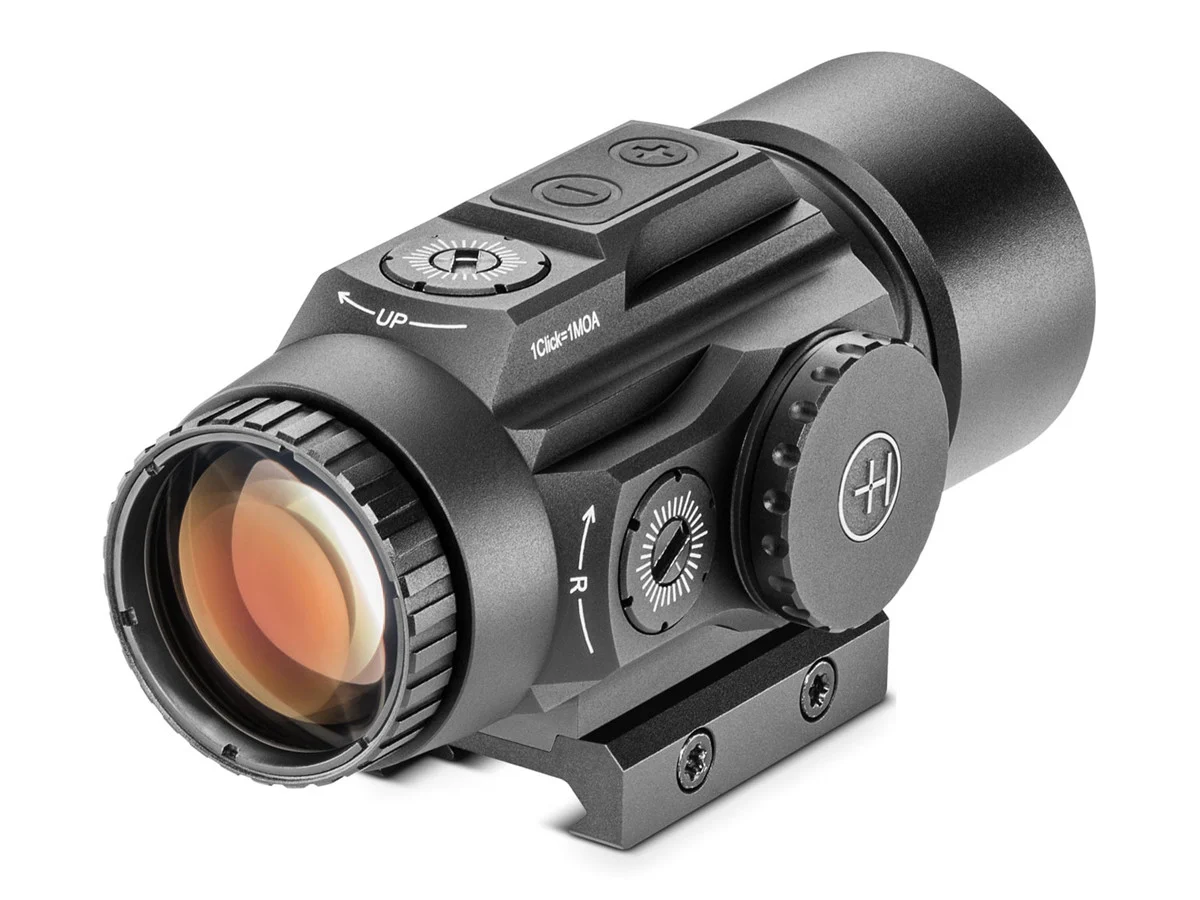
The Hawke Prism Sight has been designed for users who want a compact optical system that combines a clearly defined aiming point, practical magnification, and a streamlined footprint. Instead of carrying the size and complexity normally associated with a traditional variable-power optic, a prism-based sight can be mounted when a simpler and more compact aiming solution is preferred.
Because the reticle is incorporated into the optical system, dependable aiming can be maintained while a clear sight picture is provided. Furthermore, the compact configuration makes the Hawke Prism Sight particularly attractive for platforms where reduced bulk, straightforward handling, and rapid target acquisition are valued.
Whether an optic is being selected for target practice, recreational shooting, training, or general sporting use, excellent visibility and intuitive operation remain important. For that reason, Hawke optics have been developed with attention given to optical clarity, practical controls, and durable construction.
Why Choose a Hawke Prism Sight?
A traditional riflescope can provide substantial magnification flexibility. However, that additional capability is not required for every application. When targets are being engaged at closer or moderate distances, a compact prism optic may provide a more practical balance between magnification, field of view, and overall handling.
With a Hawke Prism Sight, the aiming system is housed inside a relatively compact optical body. Consequently, unnecessary length can be reduced while useful optical performance is retained.
Additionally, a prism sight can provide a more defined aiming reference than a basic non-magnified sight. The target can therefore be viewed through an optical system designed to improve practical aiming confidence.
Compact Design With Useful Optical Capability
One of the primary advantages of a prism configuration is its compact construction. Rather than being built around a long conventional scope tube, the optical components can be contained within a shorter housing.
As a result, less space may be occupied on the mounting rail. Likewise, the firearm or compatible sporting platform can retain a more balanced profile.
For users who prefer equipment that does not feel unnecessarily bulky, this design can be particularly valuable. Moreover, reduced optical length can leave additional rail space available for compatible accessories when required.
Clear Optical Performance
Optical quality remains one of the most important characteristics of any sighting system. A sight is only useful when the intended target and aiming reference can be identified clearly.
Hawke has long used multi-coated optical systems across many of its products to support light transmission, image brightness, and contrast. Fully multi-coated optics are used by Hawke in various optical products specifically to improve light transmission and image contrast.
Consequently, the Hawke Prism Sight concept is well suited to users who want a compact optic without abandoning the benefits associated with a true optical sighting system.
Defined Reticle for Confident Aiming
Through a prism-based design, the reticle can be presented as part of the optical viewing system rather than relying solely on a projected dot.
Because of this configuration, a crisp aiming reference can be provided for careful target alignment. Furthermore, the reticle remains visually familiar to users who have previously worked with conventional scope-style aiming systems.
When a consistent cheek position and correct eye alignment are maintained, accurate and repeatable aiming can be supported.
Practical Advantages of the Hawke Prism Sight
Several characteristics make a prism sight attractive for recreational and sporting applications.
Key product benefits include:
- Compact optical construction for a streamlined setup
- Clearly defined aiming reference for confident target acquisition
- Practical magnification options depending on the specific Hawke model selected
- Reduced overall bulk compared with many full-length riflescopes
- Optical viewing system suited to close and intermediate-range applications
- Convenient controls designed for straightforward adjustment
- Durable housing intended for regular sporting use
- Efficient use of mounting space on compatible platforms
- Versatile configuration for training, range sessions, and recreational shooting
- Hawke optical engineering from an established optics manufacturer
Specifications, magnification, reticle configuration, illumination settings, dimensions, and mounting arrangements can vary between individual Hawke prism models. Therefore, the specifications of the exact model being purchased should always be checked before mounting or use.
Designed for Fast Target Acquisition
Speed can become important when targets are being engaged at relatively short distances. Excessive magnification may narrow the field of view and make target acquisition more demanding. Hawke notes more generally that increasing magnification reduces field of view and makes movement more noticeable.
For this reason, a compact prism sight with moderate magnification can provide an effective middle ground.
The target can be visually enlarged while a relatively usable viewing area is maintained. Meanwhile, the reticle can be brought onto the intended aiming point without the extensive adjustment normally associated with a high-magnification optic.
Ideal for Range and Recreational Applications
At a controlled shooting range, repeatable aiming is essential. Once the sight has been correctly mounted and zeroed, the same aiming reference can be used throughout a training session.
Correct mounting and comfortable eye relief should always be established before zeroing. Hawke similarly recommends that its riflescopes be mounted securely and positioned to provide optimum eye relief before the zeroing process is completed.
Therefore, careful initial setup should be considered an important part of achieving consistent performance from any prism optic.
Built Around Simplicity
Complicated controls are not always necessary. In many situations, equipment that can be understood quickly and operated consistently will provide the better user experience.
Accordingly, the Hawke Prism Sight is particularly appealing to people who prefer a focused optical solution. Instead of repeatedly changing magnification, users can concentrate on positioning, target identification, reticle placement, and consistent shooting fundamentals.
Furthermore, fewer adjustments may need to be considered during routine use. This streamlined approach can make the optic suitable for both experienced enthusiasts and users who are moving beyond basic open sights.
Durable Construction for Regular Use
Sporting optics are regularly exposed to movement, handling, vibration, temperature changes, dust, and moisture. Therefore, dependable external construction is extremely important.
A compact prism housing can provide a solid platform for the internal optical system while keeping the overall package manageable. Nevertheless, correct maintenance should still be performed.
Lens surfaces should be protected from unnecessary abrasion, while loose debris should be removed before wiping. Hawke recommends using a blower or fine brush before cleaning optical surfaces and advises against abrasive household cleaning products.
By following proper care practices, optical clarity and external condition can be preserved more effectively.
A Versatile Alternative to Traditional Optics
Different sighting systems serve different purposes. Red-dot sights are commonly chosen for extremely close-range speed, while traditional riflescopes are frequently selected when substantial magnification flexibility is required.
A prism sight occupies an important position between those categories.
Some magnification can be provided without the length of a conventional variable-power scope. At the same time, a structured optical reticle can be viewed instead of relying solely on a projected aiming dot.
Consequently, the Hawke Prism Sight can be considered by users who want compact dimensions, optical magnification, and a recognizable reticle-based aiming experience within one integrated sight.
Suitable for Different Types of Shooters
Experienced users may appreciate the reduced bulk and straightforward functionality. Conversely, newer users may value an aiming system that remains relatively simple to understand.
Likewise, recreational shooters can benefit from an optic that can be used for repeated range sessions without requiring unnecessary complexity.
Because shooting requirements vary, the exact magnification and reticle should always be matched to the intended application.
Why the Hawke Prism Sight Deserves a Place on Your Setup
Optical equipment should complement the way a platform is actually being used. Therefore, purchasing the largest or highest-magnification scope is not automatically the best choice.
When portability, quick handling, moderate magnification, and a defined aiming reference are prioritized, a prism sight can offer an excellent alternative.
With its compact optical format, practical sighting concept, and Hawke’s established approach to sporting optics, the Hawke Prism Sight delivers an appealing combination of simplicity and capability.
More importantly, unnecessary complexity can be avoided without giving up the advantages of an optical aiming system.
For range use, recreational shooting, training, or other lawful sporting applications, the Hawke Prism Sight provides a versatile solution for users seeking a compact and purpose-driven optic.
Upgrade Your Optical Setup With a Hawke Prism Sight
A good sight should help the user concentrate on the target rather than the equipment. That objective is supported through the compact design and straightforward optical configuration offered by a Hawke Prism Sight.
Whether a smaller alternative to a traditional riflescope is required or a more structured optical solution is preferred over basic sights, the Hawke prism platform can provide a highly practical choice.
Choose the appropriate Hawke Prism Sight for your required magnification, reticle, mounting arrangement, and intended application, then enjoy a compact sighting solution designed around clarity, efficient handling, and confident aiming.
Element Optics Scopes, Rangefinding Technology, Mounts, and Precision Optic Options
For shooters comparing modern precision optics, element theos has become an important search term, especially for people researching the theos scope and premium long-range configurations such as element theos 6-36, 36×56, and element theos 6 36×56. At the same time, more versatile configurations including element optics 2-10, element 2-10 scope, and element 2 10 scope appeal to users who prefer a wider balance between close-range visibility and higher magnification. Across the broader product family, element helix, element scopes, and related models give buyers several magnification, reticle, and mounting configurations to consider.
When researching an optics-focused scopes website, customers often compare element tactical products with equipment from another optic scope manufacturer. Product searches may also include element prism, titan scope, op element, and helix scope, particularly when comparing compact optics with traditional variable-power designs. Higher magnification options such as element optics 6-24×50 can suit users who prioritize a detailed sight picture and substantial adjustment range.
The premium range also includes the nexus scope, element nexus scopes, and broader nexus scopes category. Searches for nexus tactical equipment frequently lead buyers toward the nexus 4-25×50, while the element titan provides another recognizable alternative. Users comparing a 5-25 scope, 25/56, titan 5, or theos 2-10 generally look closely at optical clarity, turret construction, reticle layout, focal-plane configuration, adjustment tracking, and overall build quality. Consequently, search phrases such as element titan 5 25×56 ffp review and titan25 are commonly associated with buyers researching the Titan platform in greater detail.
Another frequently researched configuration is the element helix 6 24×50, particularly alongside the element nexus gen 2. Although these optics occupy different positions within a product range, potential buyers often compare their specifications before choosing an appropriate design. Reticle selection is equally important, which explains continued interest in rifle scope reticles, while electronic tools such as a ballistic rangefinder can complement a modern optic setup. Some search queries also contain unusual specification formats such as 12×4/2, so checking the manufacturer’s exact specifications remains important before interpreting any numerical value.
Versatile magnification searches commonly include 2-12 scope and 2×12 scope. Meanwhile, terms such as element vision, spectrum element, and even prismatic scale of the elements can appear alongside optics-related searches. A prismatic scope differs structurally from a conventional variable-power riflescope because it uses a prism-based optical system rather than the same internal lens arrangement typically associated with traditional scope designs. Searches for element 3.0 may likewise refer to product generations, technical updates, or model-specific terminology, depending on the context.
Technology-focused users may also investigate element rf and element range products. Within the variable-power category, element theos 2-10 and element theos 2 10 provide alternative search formats for the same general magnification class. Similarly, element 2-10, 10 optic, 2-10 optic, and 2-10x scope describe configurations shoppers may encounter while comparing compact and medium-range optics. Buyers interested in first-focal-plane systems may specifically search for a 2-12 scope ffp, while terms such as fffp 2 can appear as alternate or mistyped search variations.
The Helix family attracts additional attention through searches for helix hd 2 16×50 and hdlr, whereas Titan users frequently research element titan 3 18×50 and element titan 3-18×50. These mid-range magnification configurations can provide a useful compromise between field of view and target detail. The Theos family is also represented by theos 2-10×42 ffp, which combines a practical magnification range with first-focal-plane terminology commonly sought by experienced optics buyers.
Search specifications such as 10×40, .10×40, and 14×50 may describe magnification and objective-lens formats, although exact interpretation should always be checked against official product information. People asking what is a prismatic scope are generally trying to understand how prism optics differ from traditional scope architecture. As with the phrase prismatic scale of the elements, search-engine terminology can occasionally mix scientific and optical expressions, so context matters when evaluating results.
Another product-related term is element hyper 7, together with searches for hqp7-rf-2 specifications details. Users researching newer optical or rangefinding systems may encounter these model codes while comparing technical features, dimensions, mounting options, display systems, or rangefinding capability. The terms element ll and 3×18 can also appear in searches associated with optics or magnification specifications.
For users focused specifically on the 3-18 magnification class, search phrases include 3-18 scopes, 3-18, nightforce 3-18, best 3-18 scopes, and 3×18 scope. Even unusual formatting such as 3:18 may be entered when shoppers are trying to locate comparable models. Regardless of brand, important evaluation factors include image resolution, eye relief, turret repeatability, mechanical reliability, reticle visibility, and low-light performance.
Optical quality also involves controlling distortion and color fringing. Therefore, someone researching chromatic aberration scope performance may be evaluating how effectively a particular optic manages unwanted color separation around high-contrast objects. Better glass, coatings, internal design, and manufacturing tolerances can all influence perceived image quality.
Scope Mounts, Rings, Rangefinders, and Accessory Compatibility
A precision optic also depends on a reliable mounting system. Searches for element mount, dovetail scope mount, and dovetail rings usually reflect the need to match an optic to the appropriate rail or receiver interface. Correct ring diameter, mounting height, rail type, and clearance should always be verified against the optic and platform specifications before purchase.
Electronic rangefinding accessories have expanded the number of configurations available. A picatinny mounted rangefinder or picatinny range finder can be mounted on compatible rail systems, while a rifle rangefinder provides distance information separately or as part of an integrated setup. Search phrases such as weapon mounted range finder, laser range finder for rifle, and rifle range finder generally refer to compact ranging technology intended to provide distance measurements.
Integrated technology has also increased interest in scopes with rangefinders built in, a rangefinder scope for rifle, and a rangefinding rifle scope. These products can combine optical magnification with electronic distance measurement in a single system. Buyers may encounter abbreviations such as wmlrf, while searches for a weapon mounted ballistic calculator or arken wmlrf usually indicate interest in systems that combine ranging information with additional electronic calculations or data.
Mounting accessories deserve equal attention because stability and alignment influence the overall optic installation. A 34mm diving board mount can provide an accessory mounting surface above or around a compatible optic. Similarly, a 34mm scope mount with diving board combines the primary scope mounting structure with an additional accessory interface. The broader term diving board scope mount is frequently used when researching this style of configuration.
Smaller tube systems may use a 30mm diving board mount, while scope diving board searches often refer to elevated accessory rails designed to position compatible devices above an optic. Traditional mounting searches also include picatinny scope rings, 30mm scope mount picatinny, 30mm picatinny scope rings, and picatinny scope mounts. Matching the correct ring diameter and rail standard is essential because a 30mm tube, 34mm tube, dovetail rail, and Picatinny interface are not interchangeable without the appropriate hardware.
Protection is another important consideration once an optic has been mounted. tenebraex scope caps and tenebraex scope covers can help protect exposed lenses when compatible with the selected optic. A flexible allen neoprene scope cover provides another style of external protection for storage and transport. Users running dovetail systems may instead be comparing 30mm dovetail scope rings with other dovetail scope mounts.
Ultimately, choosing between Element Optics families requires more than comparing magnification numbers alone. Whether researching Theos, Helix, Titan, Nexus, Prism, RF technology, rangefinding equipment, or mounting accessories, buyers should evaluate optical clarity, reticle design, adjustment range, focal-plane configuration, tube diameter, rail compatibility, physical dimensions, protective accessories, and manufacturer specifications. Doing so makes it easier to identify an optic and mounting system that properly matches the intended application while avoiding compatibility problems caused by relying solely on product names or search terminology.
Frequently Asked Questions
What is a prism sight, and how does it work?
A prism sight is a compact optical aiming device that uses a prism-based internal optical system rather than the conventional lens arrangement found in many traditional riflescopes. This construction allows the sight to remain relatively short while still providing a defined aiming reference and, depending on the model, a degree of fixed magnification.
Because the reticle is incorporated into the optical system, the aiming point can remain clearly visible during normal use. As a result, the user is provided with a structured sight picture that can be useful for recreational shooting, range practice, training, and other lawful sporting applications.
Unlike a standard variable-power riflescope, magnification generally does not need to be adjusted repeatedly. Therefore, operation can be kept straightforward while the user concentrates on target alignment, body position, and consistent aiming technique.

What are the main advantages of using a compact prism optic?
Several practical benefits can be provided by a compact prism-based optic. Most importantly, useful optical capability can be delivered without requiring the length of a full-sized scope.
Reduced dimensions can make the overall setup easier to handle. Furthermore, rail space can be preserved for other compatible equipment when necessary. A shorter optic can also help maintain a streamlined appearance and reduce unnecessary bulk.
Another important advantage is the clearly defined reticle. Rather than relying exclusively on a projected aiming point, a structured optical reticle can be viewed through the sight. Consequently, precise alignment may be easier for users who prefer a traditional reticle-style aiming reference.
Is a prism sight suitable for beginners?
Yes. A prism sight can be suitable for beginners when it is selected correctly and installed according to the manufacturer’s instructions.
Straightforward operation is one of the reasons this type of optic may appeal to newer users. Because fixed magnification is often used, fewer adjustments may need to be considered during ordinary range sessions.
Once proper eye relief, mounting position, and zero have been established, the user can focus on developing fundamental skills. Consistent stance, trigger control, breathing, and sight alignment can therefore receive greater attention.
Nevertheless, every user should become familiar with the specific optic before use. Controls, adjustment values, reticle design, and mounting requirements can vary between models.
Does a prism sight provide magnification?
Many prism optics are produced with fixed magnification, although the exact power depends on the individual model. Some are intended to provide minimal magnification for rapid target acquisition, whereas others provide additional visual enlargement for targets positioned farther away.
Fixed magnification can offer several advantages. Because no zoom ring needs to be operated, the sight can remain relatively compact and simple. Additionally, the user always knows what level of magnification will be available when the optic is brought into position.
The correct magnification should be chosen according to the intended shooting distance and application. Excessive magnification can reduce field of view, while insufficient magnification may make smaller targets more difficult to identify clearly.
What type of shooting is this optic best suited for?
This style of optic can be used for several sporting and recreational purposes. Range shooting represents one of the most common applications because the sight can provide a consistent aiming reference throughout repeated practice sessions.
Training exercises can also benefit from the compact configuration. Since excessive controls are avoided, attention can be placed on repeatable shooting fundamentals.
Depending on the specific model and applicable regulations, it may also be considered for other lawful sporting applications where compact dimensions, moderate magnification, and a defined reticle are preferred.
The intended engagement distance should always be considered before selecting an optic.
How important is eye relief?
Eye relief is extremely important because it determines the distance between the user’s eye and the rear optical surface at which the full sight picture can be viewed comfortably.
Incorrect positioning can result in a restricted field of view, shadowing around the image, or an uncomfortable shooting position. Therefore, the optic should be positioned carefully before mounting screws are fully tightened.
A natural head position should be maintained during setup. Once the user can shoulder or position the sporting platform comfortably while obtaining a full sight picture, the mounting location can be finalized.
Correct eye relief can improve consistency because the same head position can be reproduced more easily from shot to shot.
How should the sight be mounted correctly?
Proper installation begins with confirming that the optic and mounting interface are compatible with the intended platform. Mounting surfaces should be clean, and all hardware should be inspected before installation.
The optic should then be positioned so that comfortable eye relief can be achieved without forcing the head forward or backward unnaturally.
After the position has been established, mounting hardware should be tightened according to the manufacturer’s recommendations. Excessive tightening should be avoided because unnecessary stress may be placed on components.
Once securely installed, the optic should be checked for movement before zeroing begins.
Does the sight need to be zeroed?
Yes. Any adjustable optical aiming device should generally be zeroed so that the point of aim corresponds appropriately with the point of impact at the selected distance.
Before zeroing, the optic should be securely mounted and the platform should be confirmed to be functioning correctly.
Initial adjustments can then be made using a stable shooting position. Groups should be fired carefully so that consistent results can be observed before correction is applied.
Small adjustments are usually preferable to random large movements. Once the desired zero has been established, several confirmation groups should be fired to verify repeatability.
What distance should be used for zeroing?
The appropriate zeroing distance depends on the equipment, application, projectile characteristics, and expected shooting distances.
For recreational range use, a commonly used distance may be selected according to the facilities available and the type of platform being used. However, no single zeroing distance is ideal for every setup.
Users should consider where most targets will be positioned. A zero that closely reflects normal use can make aiming more intuitive.
Whenever the zeroing distance is changed significantly, the relationship between point of aim and point of impact should be verified again.
Can this type of optic be used with both eyes open?
Depending on magnification, individual eyesight, and user preference, some users may be able to shoot comfortably with both eyes open.
Keeping both eyes open can help maintain greater environmental awareness and may improve target acquisition during certain close-range sporting exercises.
However, higher fixed magnification can make this technique more difficult for some people. Therefore, comfort and visual processing should guide the decision.
There is no requirement to use one particular technique in every situation. Users should choose the method that provides the clearest sight picture and safest control of their equipment.
Is an illuminated reticle necessary?
Illumination can be useful, but it is not required in every lighting condition.
A bright aiming reference may help the reticle remain visible against dark or complicated backgrounds. Conversely, excessive illumination can cause glare or make the reticle appear less defined.
Brightness should therefore be adjusted according to ambient conditions whenever illumination is available.
In brighter daylight, lower illumination or the non-illuminated appearance of the reticle may be sufficient. In darker environments, a moderate brightness setting may improve visibility without overwhelming the target image.
What happens if the battery runs out?
The answer depends on the individual sight design. Prism-based systems commonly use an etched or otherwise integrated reticle, meaning the reticle may remain visible even when illumination is unavailable.
However, electronic illumination will stop working if the battery is depleted.
For this reason, spare batteries should be carried when illumination is considered important. Battery condition should also be checked periodically rather than waiting for failure during use.
Exact battery requirements, operating time, and replacement procedures should always be confirmed in the manual supplied with the particular model.
How clear is the image through a prism optic?
Image quality depends on lens coatings, optical design, magnification, lighting conditions, and correct eye position.
When the optic has been designed and adjusted properly, a clear target image should be provided throughout the usable field of view. Correct eye relief is especially important because poor positioning can create optical shadowing or reduce the usable image area.
Lens cleanliness also affects clarity. Dust, fingerprints, oil, and moisture can reduce contrast. Consequently, optical surfaces should be inspected and cleaned carefully when necessary.
How should the lenses be cleaned?
Loose dust and debris should be removed before any wiping takes place. A clean optical blower or suitable soft brush can be used first.
After larger particles have been removed, a dedicated lens cloth can be used gently. If additional cleaning is required, an optical cleaning solution intended for coated lenses should be selected.
Paper towels, rough fabric, and aggressive household chemicals should be avoided. These materials can potentially scratch coatings or leave residue.
Lens covers should also be used during storage whenever they are supplied.
Can the optic be used in wet weather?
Weather resistance depends on the construction and environmental sealing of the exact model.
Many modern sporting optics are designed to tolerate normal outdoor conditions. Nevertheless, users should not assume that weather resistance means the optic can be submerged or exposed indefinitely to severe conditions.
After use in rain, external moisture should be removed before storage. The optic should then be allowed to dry naturally in an appropriate environment.
Manufacturer specifications should always be consulted for exact waterproofing, fog-proofing, or temperature ratings.
How durable are compact prism sights?
Compact optics are generally designed to withstand normal handling and repeated sporting use when they are mounted correctly.
A shorter housing may also provide a rigid structure around the internal optical system. However, durability should never be interpreted as permission for careless handling.
Hard impacts, drops, excessive torque on mounting hardware, or improper storage can damage any precision optic.
Regular inspection is therefore recommended. Mounting hardware, lenses, adjustment controls, and the exterior housing should be checked periodically.
Will the zero remain consistent after repeated use?
A correctly installed quality optic should be capable of maintaining a stable zero during normal use, provided that the mounting system remains secure and the equipment is not subjected to damage.
If the point of impact changes unexpectedly, the mounting hardware should be checked first. Other factors, including ammunition or projectile variation, platform condition, user technique, environmental conditions, and mechanical changes, should also be considered.
Zero should be confirmed periodically, particularly after transportation, impact, or equipment modification.
Is a prism optic better than a red-dot sight?
Neither system is universally better. Instead, each offers different advantages.
A red-dot sight is commonly favored when minimal visual obstruction and very rapid close-range acquisition are required. A prism optic, however, may provide fixed magnification and a more structured reticle.
Therefore, the better choice depends on intended use. Users who want a compact optical system with some magnification may prefer the prism configuration, while those prioritizing extremely close-range speed may prefer a non-magnified electronic sight.
Is it better than a traditional variable riflescope?
Again, suitability depends on the intended application.
A traditional variable optic provides the advantage of changing magnification across a wider range. This flexibility can be particularly useful when targets are encountered at very different distances.
However, a variable riflescope is usually longer and may require more adjustment.
A compact prism optic provides a simpler alternative when fixed magnification is sufficient. Consequently, users who value reduced size and straightforward operation may prefer the prism configuration.
How should the optic be stored?
Storage should take place in a clean, dry location where excessive heat, moisture, and accidental impact can be avoided.
Lens covers should be fitted when available. Batteries may also need to be removed during very long storage periods, depending on manufacturer recommendations.
Before storing the optic, dirt and moisture should be removed carefully. Mounting hardware can also be inspected so that any developing issue is identified early.
Protective cases provide additional security during transportation and long-term storage.
Who should consider buying this type of sight?
This optical format can be considered by anyone seeking a compact, easy-to-use sighting system for lawful recreational, sporting, or target applications.
Newer users may appreciate the straightforward controls. Experienced shooters, meanwhile, may value the reduced bulk and efficient use of mounting space.
People who do not require continuously adjustable magnification may find the fixed optical arrangement especially convenient.
Ultimately, the best choice depends on intended distance, reticle preference, mounting compatibility, eyesight, and individual shooting style.
What should be checked before purchasing?
Compatibility should always be verified before an optic is purchased.
The mounting interface, available rail space, magnification level, eye relief, reticle type, overall dimensions, weight, illumination system, and adjustment method should all be considered.
The intended use should also guide the decision. An optic that performs well during close-range practice may not necessarily be the best option for longer-distance precision shooting.
By matching the sight to the equipment and intended application, a more comfortable and effective setup can be achieved.




Reviews
There are no reviews yet.