Hi-Lux ART M1000PRO 2X-10X42 Scope with Red MOA Reticle
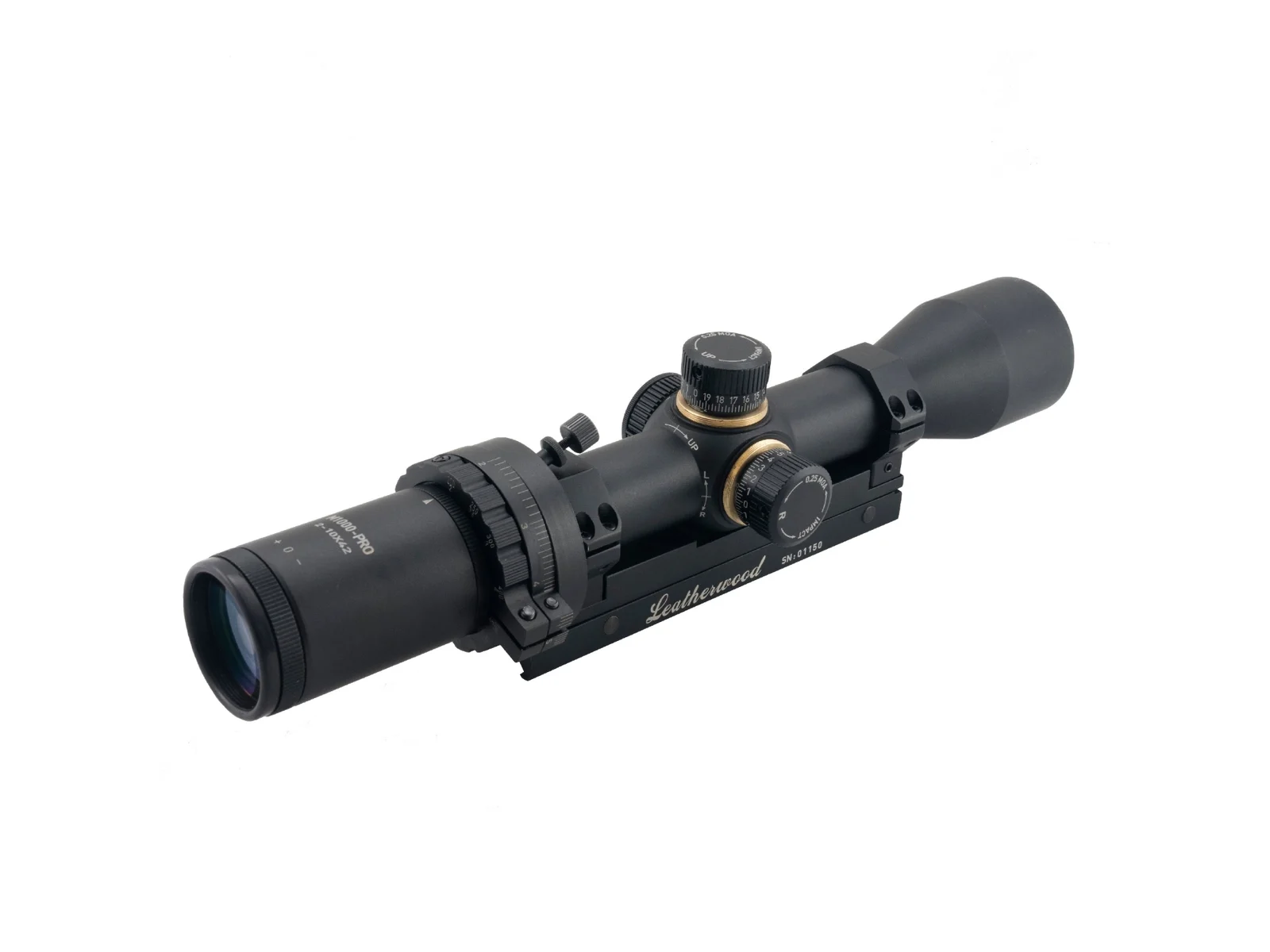
Precision, versatility, and proven ranging technology are brought together in the Hi-Lux ART M1000PRO 2X-10X42 Scope with Red MOA Reticle. Designed around the legendary Automatic Ranging Trajectory system, this advanced riflescope has been developed for shooters who value efficient ranging, practical trajectory compensation, and dependable optical performance across changing distances.
Rather than relying exclusively on conventional holdover calculations, users can take advantage of the integrated ART trajectory system. Once the system has been properly configured for the rifle and ammunition combination, trajectory compensation can be incorporated into the ranging process. Consequently, faster adjustments can be made when distances change.
Furthermore, the versatile 2-10x magnification range allows both relatively close targets and more distant objectives to be viewed effectively. At the same time, the 42mm objective lens provides a balanced combination of light transmission, manageable dimensions, and useful optical clarity.
For hunters, recreational shooters, and precision-oriented users who appreciate traditional MOA adjustments combined with specialized ranging technology, the Hi-Lux ART M1000PRO 2X-10X42 Scope with Red MOA Reticle offers an especially distinctive optical platform.
Advanced Automatic Ranging Trajectory Technology
At the heart of this scope is Hi-Lux’s Automatic Ranging Trajectory, or ART, system. The technology traces its heritage to Jim Leatherwood’s original Auto-Ranging Telescope concept, while the modern M1000PRO incorporates refinements intended for contemporary shooting applications.

Through the integrated mount and trajectory cam, external trajectory adjustment can be performed as range changes. Once the appropriate cam setting has been matched to the firearm’s ballistic trajectory, compensation can be applied over extended distances.
Two practical ranging approaches are supported. A known-size target can be framed through the reticle, or the trajectory cam can be dialed when the distance has already been established. According to published product information, the system can provide trajectory compensation from approximately 200 to 1,000 yards, depending on correct setup and ballistic configuration.
Therefore, conventional guesswork associated with long-distance holdover can potentially be reduced.
Versatile 2-10×42 Optical Configuration
A useful balance between field awareness and target identification is provided by the 2-10x magnification system.
At 2x, a comparatively broad field of view can be maintained. As a result, targets can be located more quickly, while situational awareness can remain comfortable in closer-range environments.
When additional target detail is required, magnification can be increased progressively toward 10x. Consequently, the same optic can remain practical across a wide range of shooting distances without forcing users to choose between a dedicated low-power optic and a much larger high-magnification scope.
42mm Objective Lens
The 42mm objective has been selected to create a practical compromise between optical performance and overall size.
Sufficient light can be gathered for normal daytime and changing-light applications, while excessive bulk is avoided. Moreover, the optical system has been listed with fully multi-coated lenses and ED glass in available specifications, helping support image clarity and contrast.
Red Illuminated HR1 MOA Ranging Reticle
Target reference points are made easier to identify through the HR1 MOA ranging reticle.
Because the reticle is MOA-based, shooters who already work with minutes of angle can maintain a familiar measurement system. Meanwhile, red illumination can improve reticle visibility when the target or background does not provide sufficient contrast.
Multiple illumination settings have also been specified for the optic, allowing brightness to be adapted according to surrounding conditions rather than being restricted to one illumination level.
Since the reticle is positioned in the second focal plane, its apparent size remains consistent as magnification is changed.
Key Features of the Hi-Lux ART M1000PRO 2X-10X42 Scope
- 2-10x variable magnification for flexible short-to-extended-range viewing
- 42mm objective lens for a balanced optical configuration
- HR1 MOA ranging reticle for practical target measurement
- Red reticle illumination for enhanced visibility against difficult backgrounds
- Automatic Ranging Trajectory system for specialized trajectory compensation
- Integrated trajectory cam designed to coordinate ranging and elevation compensation
- Approximately 200-1,000-yard trajectory compensation capability when correctly configured
- 1/4 MOA adjustment increments for precise correction
- Second focal plane reticle configuration
- 30mm main tube
- External windage adjustment incorporated into the mounting system
- Picatinny-compatible integrated mounting arrangement
- Fixed 100-yard parallax specification
- CR2032 battery-powered illumination
- Weather-resistant construction
- Shockproof and fogproof design characteristics
- Matte black exterior finish
Published specifications list a 30mm tube, 1/4 MOA click adjustments, CR2032 battery operation, and a Picatinny mounting system.
Precise 1/4 MOA Adjustments
Fine zeroing adjustments can be achieved through the 1/4 MOA click system.
Instead of being limited to coarse correction increments, shooters can make controlled changes to point of impact. This becomes especially useful while establishing an accurate zero before configuring the ART trajectory system.
Additionally, external windage adjustment has been incorporated into the front portion of the mounting system. Therefore, the overall ART configuration differs significantly from a conventional riflescope and ring combination.
Integrated Picatinny Mounting System
Another notable characteristic is the integrated mounting arrangement.
Rather than requiring users to purchase ordinary standalone scope rings, the ART system has been designed around a dedicated mount that interfaces with a Picatinny rail. This mounting architecture is important because mechanical movement associated with the trajectory cam forms part of the ART operating concept.
Consequently, the Hi-Lux ART M1000PRO 2X-10X42 Scope with Red MOA Reticle should be viewed as an integrated optical and trajectory-compensation system rather than merely a traditional riflescope.
Durable Construction for Demanding Environments
Field equipment needs to tolerate considerably more than controlled bench conditions.
For that reason, durable aluminum construction has been employed. Available specifications list 6061-T6 aluminum, while weather resistance, shock resistance, fog resistance, and an IP66 water-resistance rating are also identified for the model.
Accordingly, the optic has been designed with changing outdoor environments in mind.
A matte exterior finish additionally helps keep distracting reflections under control. Meanwhile, protective accessories such as flip-up lens covers can help protect exposed optical surfaces during transport and storage.
Designed for Shooters Who Want More Than Conventional Magnification
Many riflescopes provide magnification, elevation adjustment, and a reticle. However, the Hi-Lux ART M1000PRO 2X-10X42 Scope with Red MOA Reticle adds a specialized mechanical ranging and trajectory-compensation concept.
Once the system has been properly calibrated, a known-size target can be framed through the ranging reticle while the ART mechanism assists with corresponding trajectory adjustment. Alternatively, when distance has already been measured, the cam can be dialed directly.
Because of this design, shooters interested in historical Leatherwood ART technology can gain access to an updated implementation without giving up useful modern features such as illumination, variable magnification, modern lens coatings, and a Picatinny-compatible mounting platform.
Practical Magnification for Multiple Shooting Environments
Not every situation requires extreme magnification.
Indeed, excessive magnification can reduce field of view and make target acquisition more difficult. With a starting magnification of 2x, the M1000PRO remains usable when wide visual awareness is valuable.
Conversely, the upper 10x setting provides substantially greater target detail when distance increases.
Therefore, the optic can transition naturally between broader observation and more deliberate aiming without requiring equipment changes.
Why Choose the Hi-Lux ART M1000PRO 2X-10X42 Scope with Red MOA Reticle?
Shooters who appreciate mechanical innovation, MOA-based ranging, and adaptable magnification will find several compelling attributes in this model.
Above all, its identity is defined by the ART system. Distance estimation and trajectory compensation have been integrated into one coordinated platform, while the HR1 MOA reticle provides the visual reference needed to support the system.
Furthermore, the red illumination system can improve reticle definition when environmental contrast becomes challenging. The 2-10x magnification range adds versatility, whereas the 42mm objective keeps the optical package practical.
Durability has also been considered through aluminum construction and environmental sealing. At the same time, precise 1/4 MOA adjustment capability supports careful zeroing and refinement.
Element Optics Scopes, Rangefinding Technology, Mounts, and Precision Optic Options
For shooters comparing modern precision optics, element theos has become an important search term, especially for people researching the theos scope and premium long-range configurations such as element theos 6-36, 36×56, and element theos 6 36×56. At the same time, more versatile configurations including element optics 2-10, element 2-10 scope, and element 2 10 scope appeal to users who prefer a wider balance between close-range visibility and higher magnification. Across the broader product family, element helix, element scopes, and related models give buyers several magnification, reticle, and mounting configurations to consider.
When researching an optics-focused scopes website, customers often compare element tactical products with equipment from another optic scope manufacturer. Product searches may also include element prism, titan scope, op element, and helix scope, particularly when comparing compact optics with traditional variable-power designs. Higher magnification options such as element optics 6-24×50 can suit users who prioritize a detailed sight picture and substantial adjustment range.
The premium range also includes the nexus scope, element nexus scopes, and broader nexus scopes category. Searches for nexus tactical equipment frequently lead buyers toward the nexus 4-25×50, while the element titan provides another recognizable alternative. Users comparing a 5-25 scope, 25/56, titan 5, or theos 2-10 generally look closely at optical clarity, turret construction, reticle layout, focal-plane configuration, adjustment tracking, and overall build quality. Consequently, search phrases such as element titan 5 25×56 ffp review and titan25 are commonly associated with buyers researching the Titan platform in greater detail.
Another frequently researched configuration is the element helix 6 24×50, particularly alongside the element nexus gen 2. Although these optics occupy different positions within a product range, potential buyers often compare their specifications before choosing an appropriate design. Reticle selection is equally important, which explains continued interest in rifle scope reticles, while electronic tools such as a ballistic rangefinder can complement a modern optic setup. Some search queries also contain unusual specification formats such as 12×4/2, so checking the manufacturer’s exact specifications remains important before interpreting any numerical value.
Versatile magnification searches commonly include 2-12 scope and 2×12 scope. Meanwhile, terms such as element vision, spectrum element, and even prismatic scale of the elements can appear alongside optics-related searches. A prismatic scope differs structurally from a conventional variable-power riflescope because it uses a prism-based optical system rather than the same internal lens arrangement typically associated with traditional scope designs. Searches for element 3.0 may likewise refer to product generations, technical updates, or model-specific terminology, depending on the context.
Technology-focused users may also investigate element rf and element range products. Within the variable-power category, element theos 2-10 and element theos 2 10 provide alternative search formats for the same general magnification class. Similarly, element 2-10, 10 optic, 2-10 optic, and 2-10x scope describe configurations shoppers may encounter while comparing compact and medium-range optics. Buyers interested in first-focal-plane systems may specifically search for a 2-12 scope ffp, while terms such as fffp 2 can appear as alternate or mistyped search variations.
The Helix family attracts additional attention through searches for helix hd 2 16×50 and hdlr, whereas Titan users frequently research element titan 3 18×50 and element titan 3-18×50. These mid-range magnification configurations can provide a useful compromise between field of view and target detail. The Theos family is also represented by theos 2-10×42 ffp, which combines a practical magnification range with first-focal-plane terminology commonly sought by experienced optics buyers.
Search specifications such as 10×40, .10×40, and 14×50 may describe magnification and objective-lens formats, although exact interpretation should always be checked against official product information. People asking what is a prismatic scope are generally trying to understand how prism optics differ from traditional scope architecture. As with the phrase prismatic scale of the elements, search-engine terminology can occasionally mix scientific and optical expressions, so context matters when evaluating results.
Another product-related term is element hyper 7, together with searches for hqp7-rf-2 specifications details. Users researching newer optical or rangefinding systems may encounter these model codes while comparing technical features, dimensions, mounting options, display systems, or rangefinding capability. The terms element ll and 3×18 can also appear in searches associated with optics or magnification specifications.
For users focused specifically on the 3-18 magnification class, search phrases include 3-18 scopes, 3-18, nightforce 3-18, best 3-18 scopes, and 3×18 scope. Even unusual formatting such as 3:18 may be entered when shoppers are trying to locate comparable models. Regardless of brand, important evaluation factors include image resolution, eye relief, turret repeatability, mechanical reliability, reticle visibility, and low-light performance.
Optical quality also involves controlling distortion and color fringing. Therefore, someone researching chromatic aberration scope performance may be evaluating how effectively a particular optic manages unwanted color separation around high-contrast objects. Better glass, coatings, internal design, and manufacturing tolerances can all influence perceived image quality.
Scope Mounts, Rings, Rangefinders, and Accessory Compatibility
A precision optic also depends on a reliable mounting system. Searches for element mount, dovetail scope mount, and dovetail rings usually reflect the need to match an optic to the appropriate rail or receiver interface. Correct ring diameter, mounting height, rail type, and clearance should always be verified against the optic and platform specifications before purchase.
Electronic rangefinding accessories have expanded the number of configurations available. A picatinny mounted rangefinder or picatinny range finder can be mounted on compatible rail systems, while a rifle rangefinder provides distance information separately or as part of an integrated setup. Search phrases such as weapon mounted range finder, laser range finder for rifle, and rifle range finder generally refer to compact ranging technology intended to provide distance measurements.
Integrated technology has also increased interest in scopes with rangefinders built in, a rangefinder scope for rifle, and a rangefinding rifle scope. These products can combine optical magnification with electronic distance measurement in a single system. Buyers may encounter abbreviations such as wmlrf, while searches for a weapon mounted ballistic calculator or arken wmlrf usually indicate interest in systems that combine ranging information with additional electronic calculations or data.
Mounting accessories deserve equal attention because stability and alignment influence the overall optic installation. A 34mm diving board mount can provide an accessory mounting surface above or around a compatible optic. Similarly, a 34mm scope mount with diving board combines the primary scope mounting structure with an additional accessory interface. The broader term diving board scope mount is frequently used when researching this style of configuration.
Smaller tube systems may use a 30mm diving board mount, while scope diving board searches often refer to elevated accessory rails designed to position compatible devices above an optic. Traditional mounting searches also include picatinny scope rings, 30mm scope mount picatinny, 30mm picatinny scope rings, and picatinny scope mounts. Matching the correct ring diameter and rail standard is essential because a 30mm tube, 34mm tube, dovetail rail, and Picatinny interface are not interchangeable without the appropriate hardware.
Protection is another important consideration once an optic has been mounted. tenebraex scope caps and tenebraex scope covers can help protect exposed lenses when compatible with the selected optic. A flexible allen neoprene scope cover provides another style of external protection for storage and transport. Users running dovetail systems may instead be comparing 30mm dovetail scope rings with other dovetail scope mounts.
Ultimately, choosing between Element Optics families requires more than comparing magnification numbers alone. Whether researching Theos, Helix, Titan, Nexus, Prism, RF technology, rangefinding equipment, or mounting accessories, buyers should evaluate optical clarity, reticle design, adjustment range, focal-plane configuration, tube diameter, rail compatibility, physical dimensions, protective accessories, and manufacturer specifications. Doing so makes it easier to identify an optic and mounting system that properly matches the intended application while avoiding compatibility problems caused by relying solely on product names or search terminology.
A Specialized Scope Built Around Proven ART Principles
Ultimately, the Hi-Lux ART M1000PRO 2X-10X42 Scope with Red MOA Reticle represents much more than a conventional variable-power riflescope.
Its integrated ranging system, trajectory cam, MOA reticle, illuminated aiming references, versatile magnification range, and durable construction have all been combined around one objective: making changing-distance engagement more systematic.
Whether historical ART technology is especially appealing or a practical trajectory-compensating optic is being sought, the M1000PRO delivers a distinctive combination of established design principles and contemporary optical features.
For shooters who want a versatile 2-10×42 riflescope with a red illuminated MOA reticle, integrated mounting architecture, and a trajectory-compensation system capable of supporting demanding field applications, the Hi-Lux ART M1000PRO 2X-10X42 Scope with Red MOA Reticle deserves serious consideration.
Practical Use Scenario
A variable-power optic with an integrated ranging and trajectory-compensation system becomes especially useful when shooting conditions change quickly and target distances cannot be treated as fixed. Instead of being limited to one specific type of field environment, the optic can be adapted to closer observation, intermediate-distance target engagement, and more deliberate long-range shooting. Because magnification, ranging references, illumination, and trajectory adjustment are combined into one platform, practical use can remain straightforward once the system has been properly configured.
Preparing the Rifle Before Entering the Field
Before any practical shooting session begins, the optic should be mounted securely and checked carefully. Correct installation is essential because repeatable accuracy depends on maintaining a consistent relationship between the rifle, mounting system, and optical axis.
First, the mounting interface should be inspected for dirt, oil, or debris. Once the rail has been cleaned, the mount can be positioned so comfortable eye relief is maintained while the shooter assumes a natural firing position. Rather than forcing the head forward or backward, the optic should be aligned so a full sight picture can be obtained immediately.
Next, the rifle should be zeroed using the ammunition that will actually be used in the field. Different projectile weights, velocities, and ballistic characteristics can produce noticeably different trajectories. Therefore, using one load during zeroing and another during practical shooting can reduce the usefulness of any trajectory-compensation system.
After a dependable zero has been established, the ranging and trajectory mechanism can be configured to correspond with the ballistic performance of the selected ammunition. This stage should not be rushed. Accurate setup provides the foundation for reliable performance later.
Using Low Magnification at Closer Distances
At shorter distances, a lower magnification setting can provide several advantages. A wider field of view can be maintained, target acquisition can be accelerated, and surrounding movement can be monitored more easily.
Imagine a shooter observing a large open section of farmland, woodland edge, or recreational range. A target may appear unexpectedly at a comparatively short distance. Instead of searching through a narrow, highly magnified sight picture, the shooter can remain at the lower end of the magnification range.
The target can then be located quickly, while enough surrounding terrain remains visible to maintain awareness of the environment.
This flexibility can be particularly useful when moving between shooting positions. If the rifle is being carried through varying terrain, keeping magnification low allows the optic to remain ready for unexpected closer-range opportunities.
Once additional detail becomes necessary, magnification can be increased gradually rather than changed abruptly.
Transitioning to Medium-Range Engagements
Intermediate distances represent one of the most practical environments for a variable-power optical system.
At these distances, a moderate magnification setting can provide enough visual enlargement to identify precise aiming points while retaining a usable field of view. The shooter can therefore balance detail with situational awareness.
Consider a steel target positioned several hundred yards from the firing point. At low magnification, the target may remain visible but comparatively small. By increasing magnification, the aiming reference can be placed more precisely without immediately moving to maximum power.
Meanwhile, the MOA-based reticle can provide useful visual references. Instead of treating the reticle as a simple central aiming point, the shooter can use its markings to evaluate target size, estimate corrections, and understand the relationship between point of aim and expected impact.
When wind conditions are present, horizontal references can also help the shooter make informed corrections. Although wind remains variable and must be judged carefully, a clearly defined reticle provides a structured visual system for applying measured holds.
Practical Target Ranging in Open Terrain
One of the strongest practical advantages of an integrated ranging system becomes evident when the exact target distance is unknown.
Suppose a shooter is observing a target located across an open field. The target is clearly visible, but its distance has not been measured with an external rangefinder.
If the approximate dimensions of the target are known, the ranging references can be used to estimate distance. The shooter can frame the target according to the reticle system and make the required adjustment using the integrated trajectory mechanism.
Because ranging and trajectory compensation are designed to work together, the process can become more efficient than estimating distance first and then calculating a completely separate holdover.
However, accurate results still depend on correct calibration and proper technique. The system should therefore be practiced extensively on known-distance targets before being relied upon in more demanding situations.
Range markers at 100, 200, 300, 400, and 500 yards can be used during practice. By comparing known distances with optical estimates, the shooter can develop greater confidence in the ranging process.
Working With Known Distances
An integrated trajectory system can also be useful when distance has already been established.
For example, a rangefinder may indicate that a target is positioned at a specific distance. Rather than estimating the range through the reticle, the shooter can use the known measurement and apply the corresponding trajectory setting.
This creates a useful combination of modern electronic ranging and mechanical optical compensation.
A shooter might measure a distant target, adjust the trajectory system accordingly, establish a stable firing position, and then concentrate on wind, trigger control, and follow-through.
By separating elevation compensation from the final firing sequence, mental workload can be reduced. Instead of attempting to remember an approximate holdover, a more structured correction can be applied.
Using Higher Magnification for Precision Work
When target detail becomes more important, higher magnification can be selected.
Imagine a small target placed near the far end of a shooting range. At moderate magnification, the target can be identified easily, but the exact center may still be difficult to distinguish. Increasing magnification provides a more detailed aiming picture and allows finer shot placement.
Maximum magnification can be especially useful from supported positions. When a rifle is rested on a bench, bipod, shooting bag, or stable field support, additional magnification can be used more effectively because rifle movement has already been reduced.
However, maximum magnification is not always necessary.
Higher power also magnifies natural movement, atmospheric distortion, heat shimmer, and minor instability. Therefore, experienced shooters often use only as much magnification as conditions require.
A slightly lower setting may provide a cleaner and more stable image during heavy mirage or unstable shooting conditions.
Hunting-Oriented Field Applications
During lawful hunting activities, adaptable magnification can be especially valuable because opportunities rarely occur at one predictable distance.
A shooter may begin the day moving through dense terrain where shorter sight lines dominate. Low magnification can be maintained to support quick observation and a wide field of view.
Later, the terrain may open into fields, valleys, or larger clearings. At that point, magnification can be increased so distant animals or reference points can be observed more clearly.
Importantly, target identification should always be completed before any firing decision is made. Magnification can assist with visual assessment, but proper identification, a safe background, and compliance with local hunting regulations remain essential.
If a legal and appropriate shot is eventually considered, the ranging system can help determine whether the target is within a distance the shooter has practiced successfully.
The optic should never be treated as a replacement for shooting discipline. Instead, it can be used as a tool that supports a well-practiced process.
Range Training and Skill Development
A structured shooting range provides one of the best environments for learning how the system behaves.
Targets can be positioned at multiple known distances, allowing the shooter to test ranging accuracy, magnification preferences, and trajectory settings under controlled conditions.
A practical training session might begin at 100 yards with confirmation of zero.
Afterward, the shooter can move to 200 yards and observe how point of impact changes. The trajectory system can then be adjusted and compared against actual results.
The same process can be repeated at 300, 400, and greater distances where the range safely permits.
Rather than immediately attempting difficult shots, gradual progression allows useful data to be collected.
Notes can be recorded for ammunition type, environmental conditions, magnification setting, range adjustment, wind correction, and actual impact location.
Over time, these records can reveal patterns that improve consistency.
Using Reticle Illumination in Changing Light
Illuminated reticle functionality can become particularly helpful when contrast is poor.
During bright daylight, illumination may not be required. A conventional dark reticle can often remain clearly visible against light-colored targets.
However, visibility may become more difficult when the target is positioned against dark vegetation, shaded terrain, or another low-contrast background.
In these circumstances, red illumination can help the aiming references remain identifiable.
Brightness should be kept only as high as necessary. Excessive illumination can cause the reticle to appear overly bright and may reduce target clarity.
A lower illumination setting can often provide a cleaner aiming reference in subdued conditions.
Managing Wind and Environmental Conditions
Trajectory compensation primarily addresses elevation, but real-world shooting also requires attention to wind, temperature, atmospheric conditions, and shooting angle.
For instance, a correctly adjusted elevation setting does not automatically compensate for a strong crosswind.
The shooter must still evaluate wind direction and speed before applying an appropriate horizontal correction.
At longer distances, even moderate changes in wind can shift impact significantly.
Similarly, temperature and air density can influence projectile behavior. Ammunition that performs one way during cool morning conditions may produce slightly different results during a hot afternoon.
For this reason, practical experience remains important.
The optic can simplify part of the ballistic process, but environmental judgment must still be developed through practice.
Supported and Unsupported Shooting Positions
Optical performance can only be fully utilized when the rifle is controlled effectively.
From a bench or prone position, a stable rest can reduce movement and make higher magnification easier to use.
A bipod may provide front support, while a rear bag can help maintain elevation and alignment.
In field conditions, however, ideal support may not always be available.
A tree, shooting stick, backpack, barricade, or other appropriate support can sometimes be used to stabilize the rifle.
When shooting from kneeling or standing positions, reducing magnification can make natural movement appear less dramatic and provide a more manageable sight picture.
Therefore, magnification should be selected according to shooting stability rather than distance alone.
Confirming Accuracy After Transport
Rifles and optics can experience vibration or impact during transportation.
After a long trip, rough vehicle ride, or extended period in storage, zero should be confirmed before important shooting begins.
A simple confirmation group can reveal whether the system has retained alignment.
Mounting fasteners should also be inspected periodically.
Although durable construction is intended to withstand normal field use, routine checks remain good practice.
Lens surfaces should be kept free from dust, moisture, and fingerprints. Protective covers can be used during transport, while appropriate lens-cleaning materials should be used when cleaning becomes necessary.
Building Confidence Through Repetition
The greatest practical advantage of an advanced optical system is achieved when its operation becomes familiar.
A shooter who understands the magnification control, ranging references, illumination settings, trajectory mechanism, and adjustment system can operate them more efficiently than someone using the equipment for the first time.
Repeated practice helps establish a predictable sequence:
identify the target, determine distance, select appropriate magnification, apply the required correction, verify a safe firing environment, establish a stable position, and execute the shot with controlled trigger technique.
When this process is repeated consistently, equipment adjustments become less distracting.
Instead, attention can remain focused on safety, target identification, environmental conditions, and shooting fundamentals.
Ultimately, the system is most useful when it supports disciplined marksmanship rather than attempting to replace it. With careful calibration, regular practice, and appropriate use of magnification and ranging features, the optic can provide a versatile platform for recreational range work, precision practice, and lawful field applications across a broad variety of distances and environmental conditions.


Reviews
There are no reviews yet.