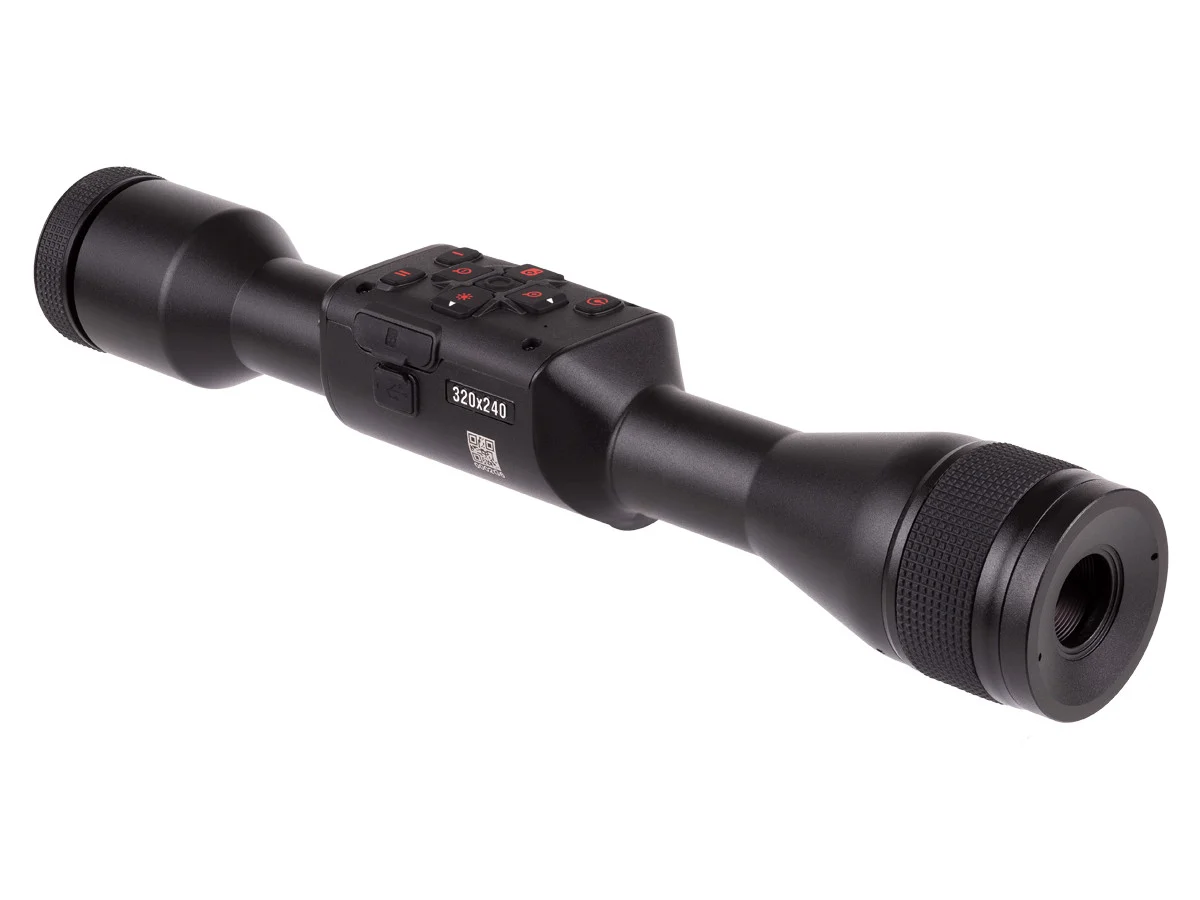
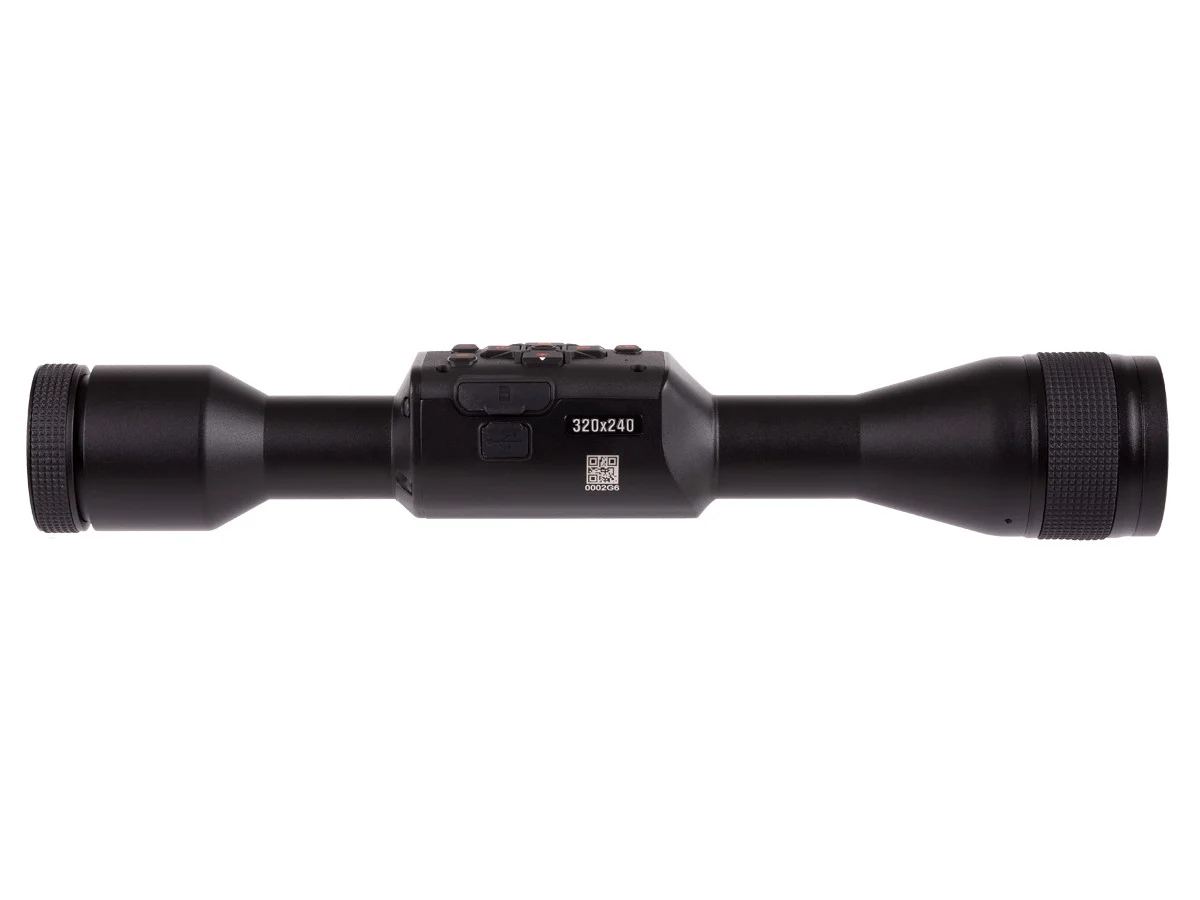
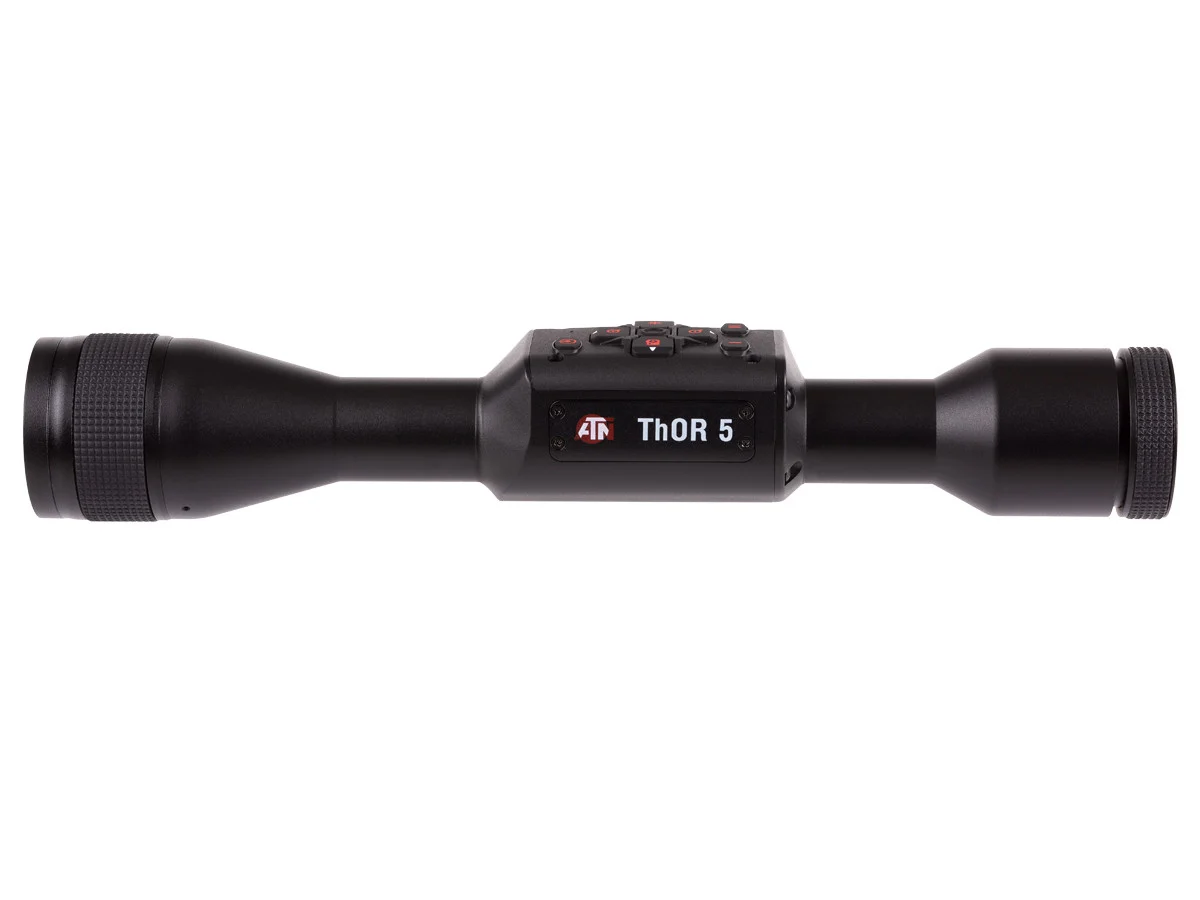
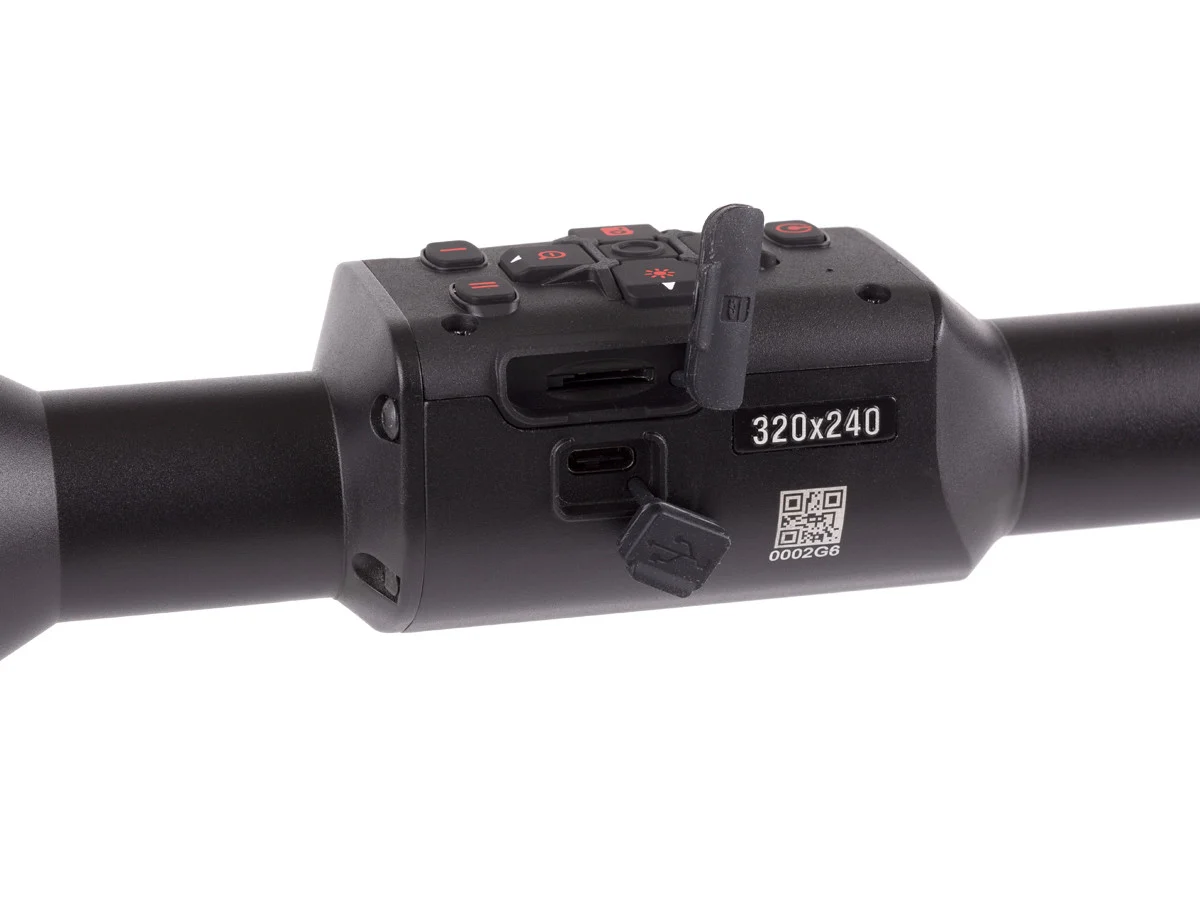
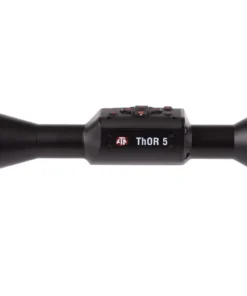
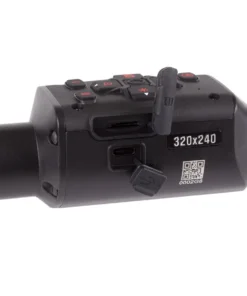
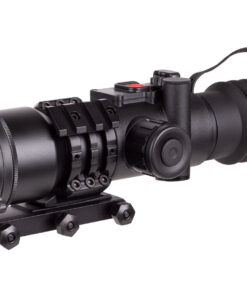
ATN Thor 5 Thermal Rifle Scope – Advanced Thermal Imaging for Confident Field Observation
The ATN Thor 5 Thermal Rifle Scope has been developed for users who expect advanced thermal imaging, dependable field performance, and a modern digital viewing experience from one streamlined optic. Through an upgraded thermal platform, heat signatures can be detected when ordinary visible-light optics are limited by darkness, shadows, brush, or challenging environmental conditions. As a result, greater situational awareness can be maintained during authorized nighttime observation, wildlife management, property monitoring, and sporting applications.
Rather than relying on ambient light, thermal energy is detected and translated into a detailed digital image. Therefore, subjects can be distinguished by differences in heat instead of conventional color and brightness. Because visibility can be maintained across changing lighting conditions, the ATN Thor 5 can be relied upon when observation continues after sunset.
Why Choose the ATN Thor 5 Thermal Rifle Scope?
A modern thermal optic should be judged by much more than image visibility alone. Image processing, display quality, operating controls, physical durability, battery efficiency, and user comfort should all be considered. With the ATN Thor 5 Thermal Rifle Scope, these elements have been brought together within a platform designed for practical field use.
Furthermore, unnecessary complexity has been reduced through an interface that can be learned without requiring constant menu navigation. Settings can be adjusted according to environmental conditions, while thermal information can be presented clearly through the internal display.
Most importantly, performance has been designed around situations in which conventional viewing methods may become ineffective. When darkness removes visible detail, thermal contrast can still be displayed. Consequently, movement, animals, and other heat-producing objects can be identified more effectively within the optic’s intended operating conditions.
Advanced Thermal Imaging Technology
Heat Detection Without Visible Light
Thermal imaging is created through detected infrared energy rather than reflected visible light. Because of this technology, observation can be continued in complete darkness without depending on a traditional illumination source.
Changes in thermal contrast are processed electronically before being presented through the digital display. Therefore, warmer and cooler areas can be differentiated even when their visible colors would otherwise appear nearly identical.
Moreover, various environmental factors can affect thermal performance. Rain, fog, humidity, vegetation, temperature changes, and atmospheric conditions may influence detection and image detail. Nevertheless, the thermal platform has been engineered to provide practical visibility across a wide range of typical field conditions.
Clear Digital Viewing Experience
Image quality can determine whether a thermal optic feels useful or frustrating. For that reason, significant importance has been placed on digital processing and display performance throughout the ATN Thor 5 platform.
Fine thermal differences can be rendered electronically, while the image can be viewed through the integrated eyepiece. Additionally, different viewing preferences can be accommodated through adjustable thermal display options where supported by the selected Thor 5 configuration.
As conditions change, settings can be refined so that useful thermal separation is maintained. Consequently, the optic can be adapted to open terrain, woodland environments, nighttime property observation, and other lawful outdoor applications.
Key ATN Thor 5 Features
The ATN Thor 5 Thermal Rifle Scope has been designed around a combination of thermal performance, digital functionality, and field-ready construction.
- Advanced thermal imaging is provided for observation in darkness and difficult lighting conditions.
- Heat-based detection is used instead of dependence on visible-light illumination.
- Digital image processing is incorporated to improve the presentation of thermal information.
- Multiple viewing options may be provided depending on the specific Thor 5 model and configuration.
- A streamlined operating interface has been created for convenient field adjustments.
- A durable exterior platform has been designed for regular outdoor handling.
- Integrated digital functionality is provided for a more modern thermal-optic experience.
- Extended field operation can be supported by an efficient electronic design.
- Different magnification and sensor configurations may be selected according to the exact Thor 5 variant being purchased.
- A compact optical format has been used to combine thermal capability with practical equipment management.
Built for Real Outdoor Conditions
Durability That Can Be Trusted
Outdoor equipment can be exposed to dust, temperature fluctuations, moisture, transportation vibration, and repeated handling. Accordingly, a thermal optic should be constructed with field conditions in mind.
With the Thor 5 platform, a robust housing has been used so that delicate thermal electronics can be protected during normal operation. At the same time, unnecessary bulk has been minimized wherever possible.
Because field equipment must often be transported between locations, practical dimensions can be particularly valuable. Storage, handling, and equipment organization can therefore be made easier than would be possible with oversized observation systems.
Simple Controls and Practical Operation
Technology becomes significantly more useful when it can be operated naturally. Therefore, the ATN Thor 5 interface has been designed so that essential functions can be accessed without excessive complication.
Settings can be selected according to the user’s viewing requirements, while adjustments can be made as environmental conditions change. Moreover, time that might otherwise be spent navigating complicated controls can instead be directed toward observation and field awareness.
For new thermal-optic users, familiarization should always be completed before field use. Once controls have been understood, however, the system can be operated with considerably greater confidence.
When Is a Thermal Scope Most Useful?
Thermal equipment becomes particularly valuable when visible contrast has been reduced. After sunset, for example, ordinary optics may provide very little usable information unless artificial illumination is introduced. By comparison, thermal signatures can still be detected because heat energy rather than visible light is being measured.
Similarly, animals or objects that visually blend into their surroundings may produce noticeable thermal contrast. As a result, observation can sometimes be improved in woodland, grassland, agricultural, and low-light environments.
Nevertheless, thermal technology should not be viewed as unrestricted vision through every obstruction. Solid structures cannot normally be seen through, while thick vegetation and difficult weather can reduce usable thermal information.
Designed for Hunters, Landowners and Outdoor Users
The ATN Thor 5 Thermal Rifle Scope can be considered by experienced outdoor users as well as people entering thermal observation for the first time. Its combination of advanced electronics and practical controls allows modern thermal capability to be accessed without an unnecessarily complicated operating system.
For authorized wildlife observation and management, heat signatures can be detected during periods when conventional visibility has been reduced. For rural property monitoring, improved nighttime awareness can also be provided. Furthermore, outdoor enthusiasts can use thermal technology to experience their surroundings from an entirely different perspective where local regulations permit its use.
Applicable hunting, wildlife, firearm, thermal-imaging, and nighttime-use regulations should always be checked before the optic is used.
Why the ATN Thor 5 Stands Out
A strong thermal optic should provide more than impressive specifications on paper. Reliable performance, understandable controls, useful image quality, physical durability, and practical field handling must also be delivered.
Through the Thor 5 platform, these requirements have been combined into a modern thermal observation system. Consequently, a compelling balance between advanced technology and everyday usability has been created.
Instead of a conventional optical image being depended upon after daylight disappears, thermal information can be displayed directly to the user. Therefore, nighttime observation can be approached with considerably greater awareness.
A Modern Thermal Upgrade for Serious Field Observation
When dependable thermal capability, modern digital technology, and practical field design are being prioritized, the ATN Thor 5 Thermal Rifle Scope deserves serious consideration. Advanced thermal detection has been combined with intuitive operation, durable construction, and adaptable digital viewing so that useful information can continue to be observed when ordinary lighting conditions become challenging.
Whether equipment is being upgraded for lawful sporting use, authorized wildlife management, nighttime land observation, or general outdoor thermal viewing, the ATN Thor 5 provides a sophisticated solution within one integrated platform.
With thermal information being displayed independently of visible light, greater observation capability can be maintained throughout changing conditions. Ultimately, the ATN Thor 5 Thermal Rifle Scope has been designed for users who want modern thermal technology, practical field operation, and dependable performance brought together in a refined digital optic.
Premium Rangefinding Binoculars, Precision Riflescopes and Advanced Hunting Optics
Modern optical technology gives hunters, sport shooters, wildlife observers, and outdoor enthusiasts more ways to identify distant targets, measure range, and achieve a clearer field of view. Premium Leica rangefinder binoculars remain highly regarded for combining observation and ranging technology in one compact optical platform. Popular searches include Leica Geovid 10×42 rangefinder binoculars, Leica Geovid binoculars, Leica binoculars with rangefinder, Leica Geovid Pro 10×42, and Geovid Pro 10×42. Whether someone is researching a Leica Geovid rangefinder, Leica Geovid Pro rangefinder binoculars, Leica Geovid rangefinder binoculars, or the classic Leica Geovid 10×42, the Geovid family is commonly associated with high-quality glass, strong optical clarity, and practical long-distance observation.
Beyond rangefinding models, the wider Leica binoculars collection appeals to users searching for Leica small binoculars, binoculars Leica, Leica Geovid binos, Leica bino, Leica binoculars for sale, Leica bino rangefinder, Leica camera binoculars, Leica binos, or simply a Leica binocular for travel, field observation, wildlife viewing, and outdoor use. Different magnification formats, including 10×40, can suit users who want a balance between detail, portability, and field of view.
Alternative electronic binocular technologies are also becoming increasingly popular. Searches for SIG Sauer binoculars, SIG self stabilizing binoculars, SIG Sauer binos, SIG binoculars, SIG image stabilizing binoculars, SIG binocular, and SIG auto stabilizing binoculars reflect growing interest in electronically assisted viewing. Likewise, SIG Sauer self stabilized binoculars and SIG Sauer image stabilized binoculars can appeal to users who want reduced visual movement during handheld observation. Some buyers may also encounter broader search variations such as Sigma binoculars or specification terms like 11.5ee while comparing different optical products.
Precision aiming optics occupy another major part of the premium optics market. A Zeiss red dot offers a different sighting concept from traditional magnified optics, while the Nightforce ATACR line is frequently researched by users interested in premium long-range scopes. Common variants include Nightforce ATACR 5-25×56 F2, Nightforce ATACR 4-20×50, Nightforce ATACR 5-25×56 F1, and Nightforce ATACR 4-16×50. Related searches such as Night Force ATACR, ATACR scope, Nightforce attacker, ATACR 4-20, and Nightforce ATACR 4 20×50 F1 often appear when buyers are comparing magnification ranges, focal-plane configurations, turret systems, and optical performance.
At the higher end of precision optics, Tangent Theta products are frequently associated with specialist applications requiring refined mechanical adjustment and premium optical performance. Users may search for Tangent Theta scopes, Tangent scope, Tangent scopes, Theta optics, Tangent Theta scope, and Tangent optics while researching high-performance long-range systems.
The market also includes companies such as Fierce Firearms, Fierce Arms, and Fierce Optics, which may appear in searches involving hunting equipment and optical accessories. Within the Athlon category, meanwhile, one of the more detailed product searches is Midas TAC Gen2 HD 6-24×50 APLR15 FFP MOA reticle riflescope. The broader Athlon Midas TAC family, including Athlon Midas TAC 6-24×50, is often considered by users who want substantial magnification and adjustable target-focused features.
For shooters comparing larger objective and magnification configurations, terms such as 34 56, 34×56, Athlon Argos BTR Gen2 8-34×56, Athlon BTR Gen 2, Athlon Argos BTR Gen2, Athlon Argos BTR, and Athlon Argos BTR Gen 2 commonly appear during product research. Search variations such as Athalon scopes and Athens scope may also lead shoppers toward Athlon products when researching a new gun scope, Icarus scope, longest range scope, or general hunting optic.
Anyone learning how to buy a rifle scope should compare magnification range, objective diameter, reticle design, adjustment system, eye relief, optical quality, focal-plane configuration, overall weight, and intended sporting application. Terms such as AO scope can refer to adjustable-objective configurations, while models in the Athlon Ares BTR family provide additional options for users exploring precision-oriented optics.
Mid-range magnification searches frequently include 2.5×15, Avalon Aries, 2.5/15, Athlon BTR Gen 2, Athlon scopes review, Athlon reticles, 2.5-15 scope, and repeated comparisons involving Athlon Argos BTR Gen2 8-34×56 or 34×56 configurations. These searches demonstrate how buyers often compare reticles, magnification ratios, objective sizes, and scope families rather than selecting an optic solely by maximum magnification.
Low-power variable optics are another major category. Searches such as 1 10 scope, Ares ETR 1 10, 1 10 LPVO, 1-10 LPVO, 1-10 FFP LPVO, 1×10 scope, Athlon ETR, LPVO 1-8, LPVO 1-10, and 1-10 rifle scope reflect demand for versatile magnification systems. An LPVO allows users to move between low magnification for a broad field of view and higher magnification for improved observation at extended distances, making the format useful across several sporting disciplines.
For greater magnification, the Ares ETR Gen2 UHD 4.5-30×56 APRS12 FFP IR MIL reticle represents another precision-focused configuration within the Athlon range. Related product searches include Athlon 4.5-30×56, 4.5 30, Athlon ETR, and 4.5/30. The large 56 mm objective and broad magnification range make this type of optic particularly relevant to users comparing long-distance target and field optics.
Other searches such as 14×44, 2s14, Athlon BTR 2-12, 1/2×42, Athlon BTR Gen 2, 12×4.2, 2-12x, and Athlon 2 demonstrate continued demand for more compact variable-magnification formats. A 2-12x configuration, for example, can provide a useful compromise between field of view and magnified observation without requiring the size or weight of a very high-magnification optic.
Ultimately, premium optics cover far more than a single product category. Leica rangefinder binoculars and Leica Geovid binoculars combine observation with distance measurement, while stabilized SIG Sauer binoculars emphasize steady handheld viewing. Meanwhile, Nightforce ATACR, Tangent Theta scopes, and Athlon families such as the Midas TAC, Argos BTR, Ares BTR, and Ares ETR provide a wide range of magnification, reticle, and focal-plane options. By comparing optical clarity, magnification range, objective diameter, reticle format, adjustment system, physical dimensions, and intended sporting use, buyers can narrow a broad optics market into products that better match their individual requirements.
Practical Use Scenarios
Thermal imaging becomes most valuable when ordinary visibility starts to break down. In real outdoor environments, users often face darkness, changing weather, uneven terrain, vegetation, glare, distance, and rapid shifts in temperature. Under those conditions, heat-based viewing can provide additional visual information that conventional daylight optics may not reveal. Consequently, this type of technology can support a wide range of lawful sporting, observation, wildlife-management, and rural property applications.
Nighttime Wildlife Observation
Wildlife activity often increases after daylight disappears. Unfortunately, conventional visual identification can become difficult once natural light fades. Thermal viewing offers a practical alternative because heat differences can still be displayed even when the surrounding landscape appears almost completely dark.
For landowners, wildlife enthusiasts, and authorized management personnel, this capability can make nighttime observation considerably more efficient. Animals moving across fields, woodland edges, or open agricultural areas may create recognizable thermal signatures against cooler surroundings. As a result, users can observe movement without depending entirely on visible illumination.
Furthermore, the absence of strong artificial lighting can make observation less intrusive in certain situations. Instead of flooding an area with visible light, thermal information is gathered from naturally emitted heat. This allows users to study movement patterns, identify active areas, and monitor wildlife behavior during periods when traditional visual equipment may offer limited detail.
Naturally, environmental conditions still matter. Heavy vegetation, rain, atmospheric moisture, and similar temperatures between an animal and its surroundings can reduce thermal contrast. Even so, the technology can provide a meaningful advantage whenever darkness would otherwise prevent useful observation.
Monitoring Open Farmland After Dark
Agricultural properties can cover large areas that become difficult to monitor at night. Fields, fence lines, storage zones, and livestock areas may stretch beyond the reach of ordinary lighting. Therefore, thermal imaging can become an important observation tool for farmers and rural property managers.
From a stationary position, users can scan open ground for heat signatures that may indicate livestock, wildlife, or unexpected activity. Because the display is based on temperature differences, visual awareness can be maintained even when the landscape itself appears almost completely black.
In addition, changes can be identified across broad areas without constantly repositioning visible lights. This can be especially useful during early morning hours, late evening checks, and overnight property inspections.
For livestock owners, thermal observation may also help confirm whether animals are present in expected locations. While it should never replace physical inspection or professional animal care, it can provide a convenient first layer of situational awareness across large properties.
Woodland and Forest-Edge Observation
Dense woodland presents a very different challenge from open farmland. Shadows, branches, tree trunks, undergrowth, and changing elevation can reduce visible contrast, even during daylight. After sunset, these limitations become even more pronounced.
Thermal imaging can help users detect heat differences through gaps in vegetation and along woodland edges. Movement that might otherwise blend into a dark background can become easier to notice when a warm subject crosses a cooler section of terrain.
For example, an animal stepping from cover into a clearing may become immediately distinguishable. Similarly, a user scanning the edge of a forest may notice thermal activity that would have remained hidden through ordinary low-light viewing.
However, thermal technology should not be mistaken for the ability to see directly through solid vegetation. Thick brush, large trees, buildings, and other physical barriers still block thermal information. Nevertheless, partial visibility through openings and gaps can make woodland observation considerably more productive.
Early-Morning Field Checks
Before sunrise, outdoor conditions can be particularly difficult for visual observation. Low ambient light, ground mist, long shadows, and uneven terrain can all reduce clarity. At the same time, many outdoor activities begin during these early hours.
Thermal imaging can support pre-dawn field checks by providing visual information before sufficient daylight becomes available. Users can scan nearby terrain, identify heat-producing subjects, and develop a better understanding of what is present before continuing with normal daytime activities.
This capability can be especially useful on farms, large rural properties, outdoor facilities, and wildlife-management areas. Rather than waiting for sunrise, users can begin monitoring earlier while maintaining awareness of heat signatures across the landscape.
Additionally, thermal contrast may sometimes be particularly noticeable during cooler early-morning temperatures. When the ground and vegetation have cooled overnight, warmer animals may stand out more clearly against their surroundings.
Rural Property Surveillance
Large rural properties often contain areas that cannot be illuminated continuously. Barns, fence lines, equipment yards, storage sheds, access roads, and distant gates may all remain dark for significant periods.
Thermal observation can supplement conventional property-security systems by allowing users to visually inspect areas where visible light is limited. A heat signature moving near a boundary or structure can be easier to notice than the same movement through ordinary nighttime optics.
Consequently, property owners may gain additional awareness without permanently installing bright lighting across every section of land.
However, responsible observation remains important. Thermal equipment should be used in accordance with privacy laws and local regulations, particularly when neighboring properties or public areas are nearby.
Tracking Animal Movement Across Fields
Understanding how wildlife moves through a property can be useful for land management, conservation, observation, and lawful sporting activities. Thermal imaging can assist by allowing movement to be monitored during nighttime periods when animals may be most active.
Users can observe travel corridors between woodland, water sources, feeding areas, and open fields. Over time, recurring movement patterns may become easier to recognize.
For example, repeated thermal activity along the same fence line may indicate a regularly used passage. Similarly, movement between vegetation and open land may reveal how animals interact with different parts of the property.
Because this type of information is gathered through direct observation rather than assumption, land-management decisions can be made with a clearer understanding of actual nighttime activity.
Observation Around Farm Buildings
Barns, sheds, grain storage areas, equipment structures, and livestock facilities can attract wildlife, especially in rural regions. Checking these areas after dark with ordinary flashlights may provide only a narrow field of view.
Thermal viewing allows users to scan larger sections of the environment for heat-producing subjects. Movement around walls, doorways, fencing, or stored equipment can therefore be noticed more quickly.
This can help property managers identify animal activity without walking directly into every area first. In addition, inspection can be performed from a safer and more convenient distance when terrain or structures make immediate access difficult.
Of course, thermal observation does not replace proper lighting, secure fencing, locks, cameras, or routine physical inspection. Instead, it can be used as an additional situational-awareness tool.
Observation in Complete Darkness
One of the clearest practical advantages of thermal technology appears when no usable visible light is available. Unlike conventional optical systems that depend on reflected light, thermal sensors detect infrared energy.
Therefore, darkness itself does not prevent the creation of an image.
In complete darkness, warm subjects can still be separated from cooler surroundings according to their thermal contrast. This makes heat-based observation especially useful during remote outdoor activity where streetlights, buildings, or artificial illumination may be absent.
Moreover, users are not required to wait for their eyes to adapt to darkness in the same way they would with traditional viewing methods. Instead, thermal information is presented directly through the electronic display.
Low-Light Observation at Dusk
Dusk can create surprisingly difficult viewing conditions. Although some light remains, contrast often disappears quickly as the landscape transitions from daylight into darkness.
During this period, conventional optics may provide inconsistent visibility. Thermal imaging, however, continues operating based on heat rather than remaining sunlight.
As a result, users can transition from late-afternoon observation into evening conditions without losing thermal awareness simply because visible light levels have dropped.
This can be particularly useful when wildlife activity begins near sunset. Instead of stopping observation as the environment becomes darker, users can continue monitoring heat signatures through the changing conditions.
Scanning Uneven Terrain
Hills, depressions, drainage areas, rocks, and irregular vegetation can create natural hiding places where animals or other heat-producing subjects become difficult to see.
Thermal imaging can assist when scanning these landscapes by helping users notice heat differences against surrounding terrain. A warm subject partly visible above a depression or along a ridgeline may create a recognizable thermal signature.
Furthermore, the ability to scan methodically across the landscape can help users develop a clearer picture of activity before moving through unfamiliar terrain.
Safe movement should always remain the priority. Thermal imagery can support awareness, but it should never replace proper lighting, maps, route planning, and careful physical navigation.
Authorized Pest and Wildlife Management
In areas where local regulations permit nighttime wildlife or pest management, thermal technology can provide improved observation before any management decision is made.
A clearer understanding of what is present can help users avoid acting on incomplete visual information. Because thermal signatures can be observed in darkness, users may be able to spend more time identifying movement and evaluating the surrounding environment.
Responsible identification remains essential. Heat signatures alone should never be treated as automatic confirmation of a subject’s identity. Users should always follow applicable legal requirements, safe operating procedures, and local wildlife regulations.
Used responsibly, thermal equipment can contribute to more deliberate observation and improved awareness during authorized management work.
Boundary and Fence-Line Inspections
Long fence lines can be difficult to inspect after dark, particularly across farms and large rural properties. Heat-based viewing can assist users who need to check whether animals or people are moving near a boundary.
By scanning along the fence, users can look for thermal activity without illuminating the entire area. This can make routine checks more convenient during late-night or early-morning periods.
In livestock areas, thermal observation may also provide a quick way to confirm that animals are generally within the expected section of the property before a closer inspection is carried out.
Outdoor Observation During Cold Conditions
Cold weather can sometimes create strong thermal contrast. When vegetation, soil, and surrounding objects become significantly cooler than animals or people, heat signatures may appear more distinct.
Consequently, winter and cold-season observation can be especially interesting for thermal users. Movement across snow-covered or cold terrain may be easier to recognize because the surrounding environment provides a cooler background.
Environmental conditions can still influence performance, yet the fundamental advantage remains the same: the displayed image is generated from heat differences instead of visible color.
Supporting General Situational Awareness
Perhaps the broadest practical benefit is improved situational awareness. Thermal technology provides another way to interpret an environment, especially when normal visual information is limited.
Whether users are checking farmland, monitoring wildlife, observing distant fields, inspecting property boundaries, or simply studying nighttime activity, heat-based imaging can reveal details that may otherwise remain unnoticed.
Nevertheless, thermal observation should complement rather than replace conventional awareness. Distance, terrain, weather, physical barriers, local regulations, and the limitations of thermal sensors must always be considered.
When used responsibly, the technology can expand the range of conditions in which meaningful observation remains possible. Darkness, shadows, and changing light levels become less restrictive, while users gain a clearer understanding of heat-producing activity across their surroundings.
Ultimately, practical value comes from versatility. A single thermal platform can support nighttime wildlife watching, property monitoring, agricultural observation, authorized management activities, pre-dawn field checks, and general outdoor awareness. Because those scenarios occur under very different conditions, having adaptable imaging technology can make field observation significantly more convenient, informative, and dependable.
Frequently Asked Questions
What is a thermal rifle scope used for?
A thermal rifle scope is designed to detect infrared energy produced by people, animals, vehicles, and surrounding objects. Instead of depending on visible light, it creates an image based on temperature differences. Therefore, it can be useful for lawful nighttime observation, wildlife management, property monitoring, and other outdoor activities where ordinary visibility is limited.
Can it be used in complete darkness?
Yes. Because thermal imaging detects heat rather than reflected visible light, it can operate in complete darkness. No moonlight, street lighting, or external illumination is required for basic thermal detection. However, image quality may still be influenced by weather, humidity, distance, vegetation, and surrounding temperatures.
Does thermal imaging work during the daytime?
Yes. Thermal technology can be used during both daytime and nighttime conditions. Since the sensor responds to heat differences rather than visible brightness, operation does not depend on darkness. Nevertheless, thermal contrast can vary throughout the day as the ground, buildings, vegetation, and other surfaces heat up or cool down.
Can thermal optics see through trees or walls?
No. Thermal imaging does not normally allow users to see through solid walls, trees, vehicles, or other dense objects. Instead, the sensor detects infrared energy coming from visible surfaces. Thin vegetation or gaps between branches may allow partial heat signatures to be noticed, but thick barriers will generally block thermal information.
How far can heat signatures be detected?
Detection distance depends on several factors, including sensor resolution, lens size, environmental conditions, target size, temperature contrast, and the specific model configuration. Larger heat-producing subjects may be detected from greater distances than smaller ones. Recognition and identification distances are generally shorter than basic detection distance.
Does weather affect thermal performance?
Yes. Rain, heavy fog, high humidity, and rapidly changing temperatures can reduce thermal contrast and image clarity. Conversely, cooler conditions may sometimes produce stronger contrast between warm animals and their surroundings. Therefore, real-world performance can vary depending on atmospheric and environmental conditions.
Is thermal imaging useful for wildlife observation?
Thermal imaging can be extremely useful for observing wildlife, especially during evening, nighttime, and early-morning hours. Animals that are difficult to distinguish visually may produce noticeable heat signatures. However, responsible identification should always be completed, and all applicable wildlife regulations should be followed.
Is special lighting required?
No external visible-light source is required for thermal operation. Because infrared energy is detected directly, users can observe heat signatures without using a flashlight or traditional spotlight. This makes thermal equipment particularly practical in remote locations where artificial lighting may be unavailable.
How should a thermal optic be maintained?
The lens should be kept clean using materials recommended for optical equipment. Additionally, the device should be stored in a dry, protected environment when not in use. Excessive moisture, impacts, extreme heat, and improper cleaning products should be avoided. Battery condition should also be checked regularly before extended outdoor use.
Is thermal equipment legal everywhere?
Regulations vary significantly by country, state, region, and intended use. In some locations, thermal optics may be restricted for certain hunting or nighttime activities. Therefore, local laws and wildlife regulations should always be verified before use. Responsible operation ensures that the equipment is used safely, legally, and appropriately.




Reviews
There are no reviews yet.