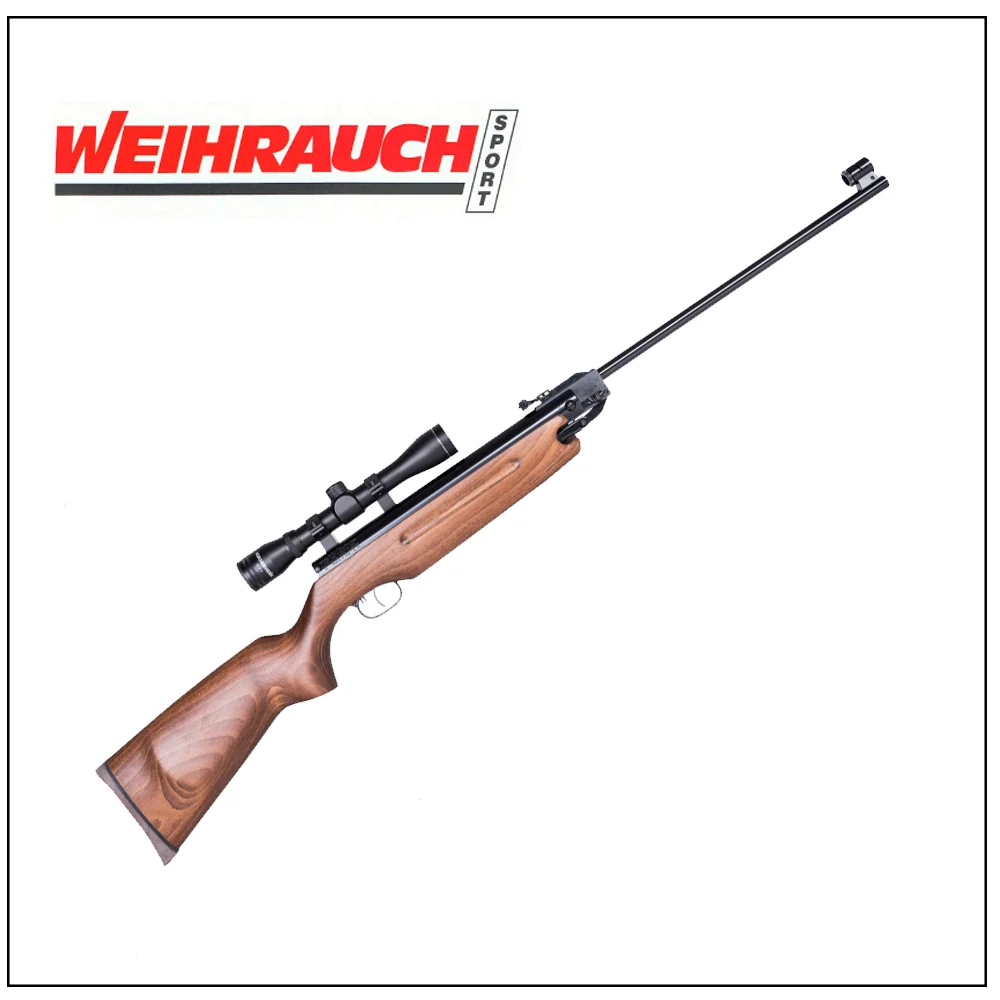
Weihrauch HW35K – Traditional Design and Engineering Heritage
The Weihrauch HW35K is part of the established HW35 family, a range associated with traditional airgun manufacturing and longstanding engineering heritage. The model name represents a design tradition in which attention to construction, exterior finishing and mechanical craftsmanship has remained central to the product’s identity.
Weihrauch has developed a reputation for producing airguns with recognisable traditional styling. Consequently, the HW35K can be presented as a product of interest to collectors, enthusiasts and individuals researching the company’s established product range.
Design and Construction
A traditional appearance is maintained throughout the HW35K’s overall design. Its exterior presentation reflects the classic styling associated with established sporting airgun models.
Particular attention should be given to the following product characteristics when documenting an individual example:
- Overall exterior condition.
- Stock material and finish.
- Metalwork condition.
- Visible markings and manufacturer identification.
- Completeness of the supplied components.
- Evidence of previous repairs or replacement parts.
- Original packaging and accompanying documentation, where available.
Furthermore, accurate product photography should be provided so that prospective customers can independently assess the item’s visible condition.
Manufacturing Heritage
Weihrauch is a recognised German airgun manufacturer with a long history in the industry. Its products have been associated with traditional manufacturing methods, established product designs and attention to finishing.
Moreover, the HW35 name has become an identifiable part of the manufacturer’s product history. This heritage provides useful context for anyone researching the model or comparing historical Weihrauch products.
Exterior Finish and Presentation
The exterior presentation of an individual HW35K should be assessed independently rather than assumed from the model name.
For example, the condition of the stock, metal surfaces and external components should be documented accurately. Likewise, any scratches, marks, corrosion, modifications or replacement components should be disclosed clearly.
As a result, customers can make informed purchasing decisions based on the actual item being listed.
Product Information and Inspection
Before an individual unit is advertised, its identification and documented condition should be verified.
The following information should be included where available:
- Manufacturer: Weihrauch.
- Model designation: HW35K.
- Product category: Air rifle.
- Serial number: To be verified against the individual item.
- Manufacturing date: Subject to available documentation.
- Included accessories: To be individually listed.
- Original documentation: To be confirmed.
- Condition: To be established through inspection.
Importantly, specifications should not be inferred from another HW35 variant. Model-specific details must be confirmed through the manufacturer’s documentation.
Responsible Ownership and Legal Considerations
Airgun ownership is subject to different legal requirements depending on the country or region. Therefore, purchasers should independently establish the applicable licensing, registration, transportation, storage and ownership requirements before completing a transaction.
In addition, appropriate safety procedures should be observed during handling, storage and maintenance. The manufacturer’s documentation should be consulted for model-specific safety instructions.
Why Accurate Product Information Matters
A well-prepared product listing should provide transparent information about the individual item rather than relying exclusively on general descriptions of the model.
Clear photographs, verified identification, an honest condition report and complete accessory information all contribute to a more reliable purchasing experience.
Ultimately, the Weihrauch HW35K should be documented with attention to its manufacturing heritage, identifiable characteristics and verified condition.
Calibres, FAC Classification, Power, Specifications and Equipment Compatibility
Calibre Options and Product Identification
The Weihrauch HW35K belongs to a traditional air rifle range whose specifications should be verified against the exact production version. Calibre identification is particularly important because different markets may have different configurations and legal requirements.
When preparing a product listing, the calibre should be confirmed using the manufacturer’s documentation and the markings on the individual rifle. This prevents confusion between different HW35 variants and ensures that customers receive accurate product information.
FAC Classification and Legal Power Categories
FAC refers to Firearms Certificate in the United Kingdom. Air rifles are classified according to their muzzle energy and the applicable firearms legislation.
The classification of an individual HW35K must be established from its verified output and the laws governing the country where it is possessed. A standard specification should not automatically be assumed to apply to every production variant.
For example, UK airgun legislation distinguishes between air rifles exceeding the applicable non-FAC energy threshold and those falling within it. Other countries have their own licensing and registration frameworks.
Before purchasing, customers should verify:
-
The documented power classification.
-
Applicable licensing requirements.
-
Manufacturer specifications.
-
Any relevant ownership restrictions.
-
Import and export requirements.
Power Specifications and Verification
The HW35 family is associated with spring-piston construction. However, published power figures can vary according to the specific model, production version and national market.
The manufacturer’s official HW35 specification provides reference information for the standard model, but it should not be substituted for a verified HW35K specification.
For an accurate commercial listing, the following should be recorded:
-
Verified model designation.
-
-
Manufacturer’s documented energy classification.
-
Applicable legal category.
-
Individual product condition.
-
Supporting inspection documentation.
Scope and Optical Equipment Compatibility
The HW35K belongs to a traditional sporting air rifle family. Its original sighting equipment and mounting arrangements should be documented when describing an individual example.
Any additional optical equipment should be assessed by a qualified airgun professional for mechanical compatibility, manufacturer approval and safe installation. Compatibility should never be assumed simply because an accessory is advertised for another Weihrauch model.
Accessories and Ownership Equipment
A professional product listing should distinguish between original equipment, optional accessories and subsequently purchased items.
The following ownership and storage accessories can be documented where supplied:
-
Protective carrying case: For secure storage and transportation in accordance with local regulations.
-
Manufacturer’s documentation: Provides important identification and safety information.
-
Secure storage equipment: Helps prevent unauthorised access.
-
Protective equipment: Appropriate eye protection should be used in designated sporting environments.
-
Inspection records: Useful for establishing the condition and service history of a previously owned example.
-
Original accessories: Any included factory-supplied components should be identified separately.
Product Specification Summary
| Specification |
Information |
| Manufacturer |
Weihrauch |
| Model |
HW35K |
| Category |
Spring-piston air rifle |
| Action type |
Break-barrel |
| Calibre |
.177 / .22, subject to variant verification |
| Power classification |
Verify individual version |
| FAC status |
Depends on verified output and jurisdiction |
| Manufacturer origin |
Germany |
| Documentation |
Manufacturer specifications recommended |
Final Product Considerations
The Weihrauch HW35K represents a traditional model within the manufacturer’s established airgun range. Its product identity, manufacturing heritage and exterior presentation make accurate documentation particularly important.
For prospective purchasers, the most valuable information is a verified specification sheet, transparent condition report, original documentation and confirmation of applicable legal requirements.
Manufacturer reference: Weihrauch official HW35 specifications.
Gamo Air Rifles, PCP Airguns, Pellet Pistols and Modern Airgun Systems
Choosing the right gamo air rifle depends on how the rifle will be used, the preferred caliber, the powerplant, and the shooter’s experience level. Gamo produces a broad range of recreational, target, and sporting airguns, so buyers searching for a gamo pellet gun, gamo air rifles, or a traditional gamo pellet rifle can compare several operating systems before deciding which configuration best fits their needs.
One of the most familiar designs is the break barrel air rifle. This platform remains popular because it combines straightforward operation with a self-contained powerplant. Shooters comparing high powered air rifles or a high power air rifle should consider much more than headline velocity. Pellet weight, caliber, barrel length, trigger quality, consistency, and shooting conditions all affect practical performance.
Models chambered as a gamo 177 configuration are frequently selected for target shooting and recreational use because .177 pellets generally offer a flatter trajectory than heavier calibers. Likewise, a gamo break barrel rifle provides the simplicity many shooters want without the need for a separate compressed-air charging system.
Break-Barrel Rifles and Pistols
People researching the best air rifles frequently encounter spring-powered and gas-piston break-barrel platforms. Search terms such as brake barrel bb gun are also common, although pellet rifles and BB guns are technically different categories and may use different ammunition and barrel designs.
Compact airguns include the break barrel pellet pistol, break barrel air pistol, and break barrel pistol. Larger-caliber searches may include a 22 caliber break barrel air pistol, while buyers may also look for a break action pellet pistol, the best break barrel pellet pistol, or a 22 pellet pistol for recreational shooting.
Power-oriented shoppers sometimes search for the most powerful break barrel pellet gun. However, raw velocity should never be the only specification considered. Accuracy, appropriate ammunition, safe handling, and local laws are equally important. A phrase such as bee bee gun pistol may be used informally by shoppers, but users should confirm whether a particular handgun actually fires steel BBs, lead pellets, or another compatible projectile.
Gamo Swarm Multi-Shot Air Rifles
Gamo’s magazine-fed break-barrel systems have helped popularize multi-shot operation in a category that historically required a pellet to be loaded manually after every shot.
The gamo swarm magnum 10x gen3i is closely associated with this concept, while searches for the gamo swarm magnum, gamo swarm maxxim gen 3, and swarm magnum gen3i reflect interest in different Swarm generations and configurations. Another commonly researched model is the gamo swarm magnum pro 10x gen3i.
The broader gamo magnum gen3i category appeals to shooters who want high-energy break-barrel performance together with magazine-fed convenience. Gamo’s multi-shot technology is also frequently found through searches for gamo 10x, multi shot pellet gun, gamo swarm, gamo swarm 10x, and pellet gun with magazine.
A magazine system can make repeated target sessions more convenient because pellets can be prepared before shooting begins. Nevertheless, users should always verify magazine compatibility, pellet length, pellet diameter, and model generation before ordering replacements.
Gamo Arrow PCP Air Rifles
Shooters interested in pre-charged pneumatic technology may encounter the gamo arrow range. The gamo arrow pcp combines a PCP powerplant with a lightweight sporting format, while the full term gamo arrow pcp air rifle is commonly used when comparing it with conventional spring or gas-piston rifles.
Related searches include pcp arrow guns, arrow rifle, pcp arrow gun, arrow rifles, and arrow air rifle. These phrases generally reflect interest in compact PCP-style sporting rifles rather than traditional break-barrel platforms.
Caliber-specific buyers may search for a gamo arrow .22, while the gamo arrow classic may appeal to shooters looking for another Arrow-series configuration.
PCP technology uses stored compressed air rather than relying on a spring or piston being compressed for each shot. This can produce a smooth firing cycle, reduced mechanical movement, and consistent shot-to-shot performance when the rifle is properly filled and maintained.
Understanding PCP Airguns
A pcp air rifle uses a reservoir filled with high-pressure air. PCP stands for precharged pneumatic, and the technology is widely used in modern sporting and precision airguns.
Searches for pcp air rifles, pcp rifle, pcp guns, pcp rifles, and pcp air gun generally refer to this same basic operating principle. Some buyers describe the platform as an air rifle compressed air system, while others search for a pcp pellet rifle or use the reversed phrase rifle pcp.
PCP rifles usually require additional filling equipment such as a suitable hand pump, compressor, or certified high-pressure cylinder. Users should follow the manufacturer’s recommended fill pressure because overfilling a reservoir can be unsafe and may also reduce performance.
Gas-Piston and Lever-Operated Airguns
A common beginner question is what is a gas piston air rifle. Instead of using a traditional coiled steel spring, a gas-piston system compresses gas inside a sealed cylinder. When the trigger is released, the piston moves rapidly and compresses air behind the pellet.
Other mechanical airgun designs include under lever air rifles, the singular underlever air rifle, and the alternative spelling under lever air rifle. In these designs, a separate lever positioned beneath the barrel is used to cock the mechanism.
Shooters may also research a side lever air gun or side lever air rifle, where the cocking lever operates from the side of the receiver. These fixed-barrel layouts can provide a different shooting experience compared with conventional break-barrel systems.
Search terms such as lever action pellet gun, air gun thumb lever, and lever action air rifle can refer to several different mechanisms, so buyers should check the specific manufacturer’s action type rather than assuming every lever-operated airgun works identically.
Gamo Shadow and High-Velocity Searches
Long-running Gamo product lines continue to generate searches including gamo shadow 1000, shadow 1000 gamo, and gamo 1000 shadow. Another associated search phrase is 1000/4.5, which is often used by shoppers researching 4.5 mm or .177-class air rifles.
Velocity-focused buyers may also search for a gamo 1800 fps air rifle. Advertised velocity can vary according to pellet composition and weight, so actual shooting performance may differ when standard lead pellets are used.
Likewise, shoppers researching gamo 1800 fps air rifle price should compare the exact model number, caliber, powerplant, bundled optic, warranty, and regional specification rather than relying solely on a velocity figure.
Other unusual search terms such as shotgun pellet gun may describe an airgun with styling inspired by a shotgun rather than a conventional pellet rifle. Searches for pellet guns that can kill should be approached from a safety perspective: airguns are not toys, and even relatively modest-powered models can cause severe or fatal injuries. Every airgun should therefore be handled with the same disciplined muzzle and trigger control expected of potentially dangerous sporting equipment.
Air Pistols, Pellet Pistols and CO2 Systems
The air pistol category includes many different operating systems, and modern air pistols may use springs, gas pistons, CO2 cartridges, or pre-charged pneumatic reservoirs.
For pellet-firing handguns, common searches include pellet pistols, pellet pistol, pistol pellet gun, pellet handgun, pellet gun pistol, pellet gun pistols, pistol air, and air pellet pistol.
CO2-powered handguns form another major category. A co2 pistol typically uses a disposable carbon-dioxide cartridge to propel BBs or pellets. Buyers may also search for pistol co2, co2 pistols, or the commonly mistyped c02 pistol.
Related searches include co2 air pistols, co2 gun, c02 guns, guns co2, and co 2 gen. Regardless of spelling, the key consideration is ammunition compatibility and the correct cartridge type specified by the manufacturer.
CO2 performance can be affected by ambient temperature because pressure changes as the cartridge becomes warmer or colder. For that reason, shooters should expect some variation in velocity during different environmental conditions.
Target Shooting and 10-Meter Airgun Use
Precision shooting requires appropriate targets and a safe backstop. A 10m rifle is generally associated with structured 10-meter air-rifle shooting, where accuracy, repeatability, shooting position, and trigger control are emphasized.
Recreational shooters may use pellet gun targets, while rifle users commonly search for air rifle targets, targets for air rifle, and airgun targets. The term air gun targets is another broad variation covering both rifle and pistol applications.
Dedicated practice setups can include air rifle shooting targets and airgun shooting targets designed to provide clear aiming points and easy scoring. Depending on the shooting discipline, an air rifle target may use small scoring rings intended for precision practice.
Handgun shooters may choose air pistol targets, whereas a pellet rifle target should be paired with a backstop capable of safely containing the pellets used by the particular rifle.
Airgun Cleaning and Maintenance
Regular airgun maintenance helps preserve reliability, accuracy, and safe function. Although airguns generally require less bore cleaning than many powder-burning firearms, seals, external metalwork, fasteners, magazines, and moving components still need periodic inspection.
A pellet rifle cleaning kit can contain cleaning rods, pull-through systems, suitable patches, and other airgun-safe tools. Likewise, a pellet gun cleaning kit can help remove accumulated debris when cleaning is genuinely required.
Proper air gun maintenance also involves checking stock screws, inspecting seals, keeping optics securely mounted, and following the manufacturer’s lubrication guidance. Excessive oil should be avoided because unsuitable lubricants can damage seals or cause unwanted combustion inside some spring-piston airguns.
For PCP equipment, reservoir condition, fill fittings, O-rings, and pressure gauges should also be inspected periodically. Magazine-fed models should be kept clean so pellets feed smoothly without deformation.
Ultimately, the best choice depends on the intended use. A traditional break-barrel rifle offers simplicity, a Gamo Swarm platform adds multi-shot convenience, and a PCP system provides a smoother firing cycle with an external filling requirement. Comparing caliber, powerplant, ergonomics, ammunition, maintenance demands, and safe target equipment makes it much easier to select an airgun that delivers dependable performance for responsible recreational or target shooting.
Frequently Asked Questions About the Weihrauch HW35K
1. What Is the Weihrauch HW35K?
The Weihrauch HW35K is an air rifle belonging to the established HW35 product family manufactured by Weihrauch in Germany. It is associated with traditional sporting airgun design and classic exterior styling. Its model designation is useful when researching manufacturer information, identifying a particular example or comparing historical products within the same range.
2. Who Manufactures This Model?
It is manufactured by Weihrauch, a German company known for its history in airgun production. The manufacturer has developed a recognised range of products over several decades. Its product catalogue includes traditional designs and different configurations intended for lawful sporting and recreational markets.
3. Is This a Traditional or Modern Design?
The model belongs to a traditional design family. Its appearance reflects the styling associated with established sporting airguns rather than the contemporary tactical appearance found on some newer products. Consequently, it may be of interest to people researching traditional German airgun manufacturing.
4. What Makes the HW35 Family Recognisable?
The product family is recognised through its distinctive model designation, traditional exterior presentation and longstanding position within the manufacturer’s catalogue. However, individual examples can differ in age, finish, configuration and condition. Therefore, the exact identity of an item should always be established through its markings and documentation.
5. Is the HW35K Suitable for Collectors?
It may be of interest to collectors who appreciate traditional German sporting airguns. Collectibility can depend on several factors, including manufacturing date, originality, condition, documented history and the availability of original accessories.
Furthermore, an example with identifiable markings and supporting documentation can be easier to research than one with an uncertain history.
6. How Can I Identify an Authentic Example?
Identification should be based on the manufacturer’s markings, model designation, serial number and available documentation. Where authenticity is uncertain, an authorised manufacturer representative or qualified airgun technician should be consulted.
Customers should avoid relying exclusively on photographs or seller descriptions when establishing authenticity.
7. What Should I Check Before Purchasing?
A prospective purchaser should review the complete product description and request an accurate condition report.
Important considerations include:
- Manufacturer identification.
- Model designation.
- Visible exterior condition.
- Stock condition and finish.
- Metalwork condition.
- Presence of original markings.
- Included accessories.
- Available documentation.
- Any disclosed repairs or modifications.
These details help establish a clearer understanding of the individual item.
8. Does Every Example Have the Same Appearance?
No. Differences can occur because of manufacturing periods, production variations, previous ownership and replacement components. Older examples may also display signs of normal ageing.
Therefore, photographs of the actual item should always be used when describing its appearance.
9. Is the Stock Made from Wood?
The stock configuration should be confirmed against the particular example being advertised. Different products within a manufacturer’s range may have different exterior configurations.
Where a wooden stock is present, its finish, visible marks, cracks and general condition should be documented accurately.
10. What Should Be Included in the Product Listing?
A professional listing should contain the manufacturer, model designation, verified specifications, condition assessment, clear photographs and an accurate inventory of included components.
Additionally, any known alterations, missing accessories or cosmetic imperfections should be disclosed before a transaction is completed.
11. Is the HW35K a Collectible German Airgun?
Its connection to a recognised German manufacturer gives it historical interest within the traditional airgun market. Nevertheless, market value and collectibility should not be assumed from the model name alone.
Age, originality, documentation and actual condition all influence how an individual example may be evaluated.
12. How Should Its Condition Be Described?
Condition should be reported objectively. Terms such as excellent, good, fair or requiring attention should be supported by visible evidence and, where appropriate, a professional inspection.
For instance, cosmetic scratches should be distinguished from structural damage. Similarly, any uncertainty about mechanical condition should be disclosed rather than presented as a confirmed fault-free status.
13. Are Original Accessories Important?
Original accessories can contribute to the completeness and historical documentation of an older product. However, their significance depends on the specific accessory and the individual item’s history.
A seller should distinguish original equipment from subsequently purchased or replacement accessories.
14. Can the Manufacturing Date Be Established?
It may be possible to establish an approximate manufacturing period through serial-number records and manufacturer documentation. However, the serial number should not be interpreted using an unverified dating chart.
For accurate identification, the manufacturer’s official information or an authorised representative should be consulted.
15. Does the Model Have Different Calibre Options?
Calibre availability should be established using the documentation for the exact model variant and production period. Specifications from another member of the HW35 family should not automatically be applied to the HW35K.
A purchaser should verify the individual item’s markings and accompanying records before relying on a stated calibre.
16. Is It Important to Verify the Power Classification?
Yes. Legal classifications and permitted power limits differ between jurisdictions. An air rifle that is lawful in one country may require licensing, registration or additional authorisation elsewhere.
Consequently, buyers should verify the applicable regulations with the relevant national authorities before purchasing, transporting or taking possession of the product.
17. Can It Be Purchased Across International Borders?
International transactions may be subject to export controls, import permits, customs procedures and carrier restrictions. Requirements can differ considerably between countries.
The purchaser and seller should establish the applicable requirements before arranging payment or shipment. A carrier’s willingness to transport an item should not be treated as confirmation that the transaction is legally authorised.
18. What Documentation Should Accompany a Purchase?
Where applicable, documentation may include proof of purchase, manufacturer information, relevant ownership or licensing records, and any required import or export authorisations.
The precise requirements depend on the country and the legal classification of the individual item.
19. How Should the Product Be Stored?
It should be stored securely in accordance with the manufacturer’s instructions and applicable local legislation. Access should be restricted to authorised adults, with particular attention given to preventing access by children and unauthorised individuals.
A suitable secure storage arrangement should also protect the product from environmental damage.
20. Does an Older Example Require Professional Inspection?
An older example should be assessed by a suitably qualified airgun technician, particularly when its maintenance history is unknown.
A professional inspection can help establish its general condition and identify concerns that may not be visible in ordinary product photographs.
21. How Can Buyers Distinguish Cosmetic Wear from Damage?
Cosmetic wear generally relates to the appearance of exterior surfaces, whereas structural or mechanical damage may affect the integrity or safe condition of an item.
Because photographs cannot establish every aspect of mechanical condition, professional assessment should be sought whenever uncertainty exists.
22. Are Replacement Components Always Original?
No. Replacement components may come from the original manufacturer, an authorised supplier or an independent aftermarket manufacturer.
Any replacement parts should be identified accurately in the product description. This is particularly important when originality is relevant to a collector or prospective purchaser.
23. What Should I Do If the Serial Number Is Difficult to Read?
Do not attempt to alter or recreate the marking. Instead, have the item examined by a qualified professional or contact the manufacturer for identification guidance.
The serial number should be recorded accurately wherever it can be read.
24. Is a Professional Condition Report Worth Requesting?
Yes. A written assessment can provide additional confidence when purchasing an older or previously owned product.
Ideally, the report should distinguish between visible cosmetic condition, verified identification and aspects that require specialist examination.
25. How Can I Confirm That the Advertised Item Matches the Photographs?
Request recent photographs of the actual item, including its identifying markings and overall exterior condition. The photographs should represent the same individual product described in the listing.
A clear inventory of accessories and an honest condition statement should also be provided.
26. What Should I Do If the Product Arrives with Undisclosed Damage?
Document the condition immediately after receiving the shipment. Retain the packaging, photographs and transaction records, then contact the seller and delivery provider through their official claims procedures.
Any applicable consumer protection rights should also be reviewed.
27. Is the Model Suitable for Someone Researching German Airgun History?
It can be a useful subject for researching the development of traditional German airgun manufacturing. Its association with the HW35 family provides a starting point for examining product history, manufacturing heritage and changes in exterior presentation over time.
Manufacturer publications and historical catalogues are useful supporting resources.
28. Where Can I Find Reliable Product Information?
The manufacturer’s official website and historical product documentation should be treated as primary reference sources. Qualified technicians and authorised representatives may also assist with identification and condition-related questions.
Third-party listings can provide additional context, although their specifications should be independently verified.
29. What Is the Most Important Thing to Know Before Buying?
The most important consideration is that the individual item’s identity, condition, completeness and legal status should be established before a purchase is completed.
A model name alone cannot confirm the condition or specifications of a previously owned example.
30. Why Is Accurate Documentation Important?
Accurate documentation supports transparency between sellers and purchasers. It also makes it easier to distinguish different product variants, establish manufacturing history and understand the condition of an individual example.
Ultimately, a reliable listing should communicate verified information, disclose relevant imperfections and provide clear photographs rather than making unsupported claims.
Practical Use Scenarios and Real-World Ownership Considerations
1. Introduction to Everyday Ownership
The Weihrauch HW35K can be discussed from several practical ownership perspectives, including product identification, responsible storage, maintenance history and participation in lawful sporting activities. Its traditional design also makes it an interesting subject for enthusiasts researching established German airgun manufacturing.
For prospective owners, understanding the responsibilities associated with ownership is just as important as understanding the product itself. Therefore, a practical assessment should consider the environment in which the item will be stored, the applicable legal requirements and the availability of professional inspection services.
2. Sporting and Recreational Environments
Organised sporting environments provide an important context for discussing traditional airguns. Where ownership and use are lawful, designated facilities can offer controlled environments with established safety procedures.
Participants should follow the facility’s rules, manufacturer instructions and applicable regulations. Furthermore, appropriate supervision and protective equipment should be provided wherever required.
A responsible sporting environment should include:
- Clearly established safety procedures.
- Restricted access to authorised participants.
- Suitable protective equipment.
- Appropriate storage arrangements.
- Compliance with local legislation.
- Qualified supervision where necessary.
These considerations contribute to a more responsible approach to recreational participation.
3. Product Inspection Before Ownership
One of the most important practical considerations is the assessment of the individual item before purchase.
Although two products may carry the same model designation, their condition can differ considerably. Previous ownership, storage conditions, age and maintenance history may all influence the overall presentation.
A thorough condition report should distinguish between cosmetic observations and matters requiring professional examination.
Particular attention should be given to:
- Exterior finish.
- Stock condition.
- Manufacturer markings.
- Visible corrosion or deterioration.
- Completeness of documentation.
- Originality of included components.
- Evidence of previous repairs.
Where mechanical condition cannot be established visually, an inspection by a qualified technician should be requested.
4. Ownership by Collectors and Enthusiasts
Traditional sporting airguns can be of interest to collectors because they provide insight into the development of established manufacturing companies.
The HW35 family has an identifiable place within Weihrauch’s product history. Consequently, collectors may research manufacturing periods, historical catalogues, original finishes and differences between documented versions.
For collection purposes, accurate records are particularly valuable.
A useful collection record may include:
- Manufacturer and model designation.
- Verified serial-number information.
- Available manufacturing documentation.
- Purchase history.
- Previous ownership records, where available.
- Condition photographs.
- Original accessories and packaging.
Such documentation helps preserve the item’s history and makes future identification easier.
5. Storage in Residential Environments
Secure storage is an essential aspect of responsible ownership.
An air rifle should be kept in a secure location that prevents access by children, visitors and other unauthorised individuals. Storage arrangements should also comply with the legal requirements of the relevant jurisdiction.
Environmental conditions deserve attention as well. Excessive moisture, unsuitable temperatures and prolonged exposure to damaging conditions may contribute to deterioration of exterior materials.
Owners should consult the manufacturer’s recommendations when selecting an appropriate storage arrangement.
6. Maintenance and Long-Term Preservation
Long-term preservation should be approached through manufacturer-approved maintenance guidance and professional servicing.
The condition of an older product should not be assumed to be satisfactory simply because its exterior appears attractive. Internal components may require examination even when no obvious external deterioration is visible.
For this reason, professional assessment is particularly valuable when the maintenance history is incomplete.
A responsible ownership record should document inspections, servicing dates, identified concerns and any replacement components.
7. Ownership of Previously Used Examples
Previously owned examples require additional attention because their history may not be fully known.
A product may have been stored for many years, transferred between owners or subjected to previous repairs. Therefore, the buyer should request an accurate description of its history wherever possible.
A seller should disclose:
- Known cosmetic imperfections.
- Previous professional servicing.
- Replacement components.
- Missing original accessories.
- Available ownership documentation.
- Any outstanding inspection concerns.
Transparency is important because it helps prevent misunderstandings after a transaction.
8. Transportation and Travel Considerations
Transportation requirements vary between countries and may also differ within individual jurisdictions.
Before moving an air rifle between locations, owners should establish whether permits, declarations or additional documentation are required.
International transportation can involve additional restrictions, including customs procedures, export controls and carrier-specific conditions.
A responsible owner should never assume that permission to possess an item automatically includes permission to transport or export it.
9. Educational and Historical Research
The model can also serve as a useful reference point for people studying the history of German airgun production.
Research may involve examining historical catalogues, comparing manufacturer publications and reviewing changes in product presentation over time.
This type of research helps explain how traditional sporting airgun designs have remained recognisable across different manufacturing periods.
Furthermore, historical documentation can assist collectors in distinguishing original characteristics from later alterations.





Reviews
There are no reviews yet.