AirMaks Arms Katran Compact – Lightweight Precision in a Compact PCP Platform
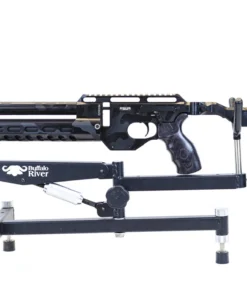
The AirMaks Arms Katran Compact has been engineered for shooters who want excellent accuracy, portability, refined ergonomics, and dependable PCP performance in a highly manageable package. Designed around the successful Katran platform, this compact air rifle combines a rigid aluminium chassis, adjustable furniture, a regulated air system, and a precision CZ barrel. As a result, an exceptionally versatile rifle has been created for target shooting, pest management where legally permitted, and general recreational use.
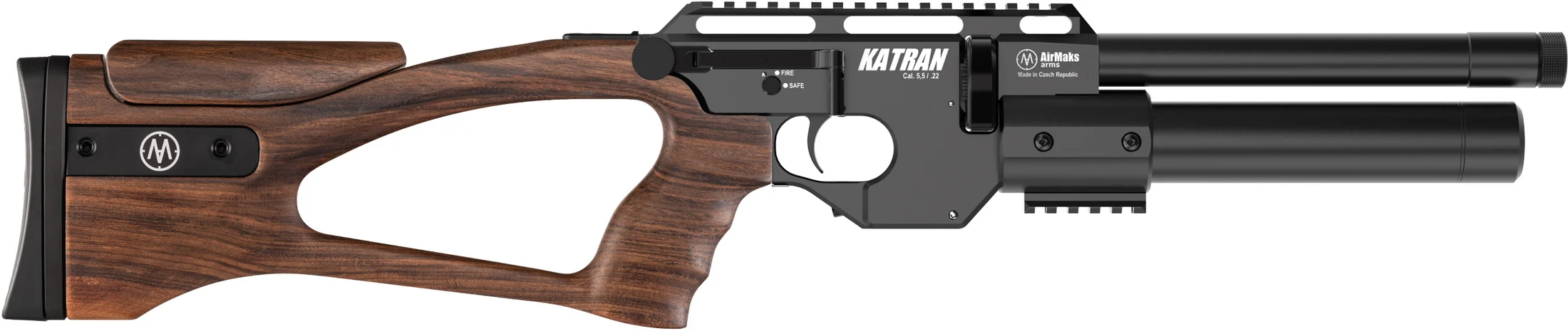
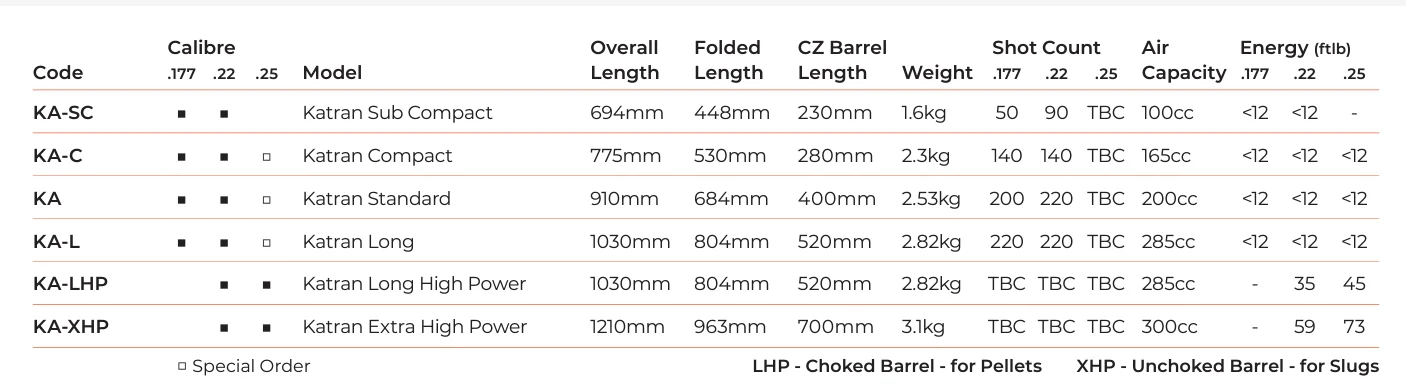
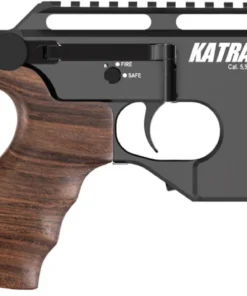
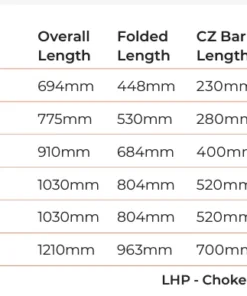
Rather than simply shortening a full-size rifle, the AirMaks Arms Katran Compact has been carefully configured to maintain balance and stability despite its reduced overall dimensions. The rifle measures approximately 775 mm with the stock extended and around 530 mm when folded. Additionally, its unscoped weight is approximately 2.3 kg, allowing it to be transported and handled comfortably.
Compact Construction Designed Around Practical Shooting
One of the strongest characteristics of the AirMaks Arms Katran Compact is its folding and adjustable stock arrangement. The overall footprint can therefore be reduced significantly for transportation or storage. Meanwhile, the adjustable cheek piece and butt pad allow the shooting position to be adapted according to body size, optic height, and personal preference.
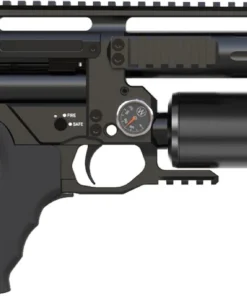
Furthermore, a rigid aluminium handguard has been fitted to create a durable and lightweight front section. Accessory mounting provision has also been incorporated, while a 20 MOA Picatinny optics rail provides a secure mounting platform for compatible scopes. Consequently, a properly configured optic can be installed without compromising the rifle’s clean, streamlined layout.
Key Features of the AirMaks Arms Katran Compact
- Compact PCP air rifle platform
- Approximately 775 mm overall length
- Approximately 530 mm folded length
- Approximately 2.3 kg unscoped weight
- 280 mm CZ barrel
- 1:17.7 barrel twist specification
- Maximum 300 bar fill pressure
- 165 cc air cylinder on the standard Compact/C configuration
- Regulated pneumatic system
- Folding and adjustable stock
- Height-adjustable cheek piece
- Adjustable butt pad
- Two-stage adjustable trigger
- Reversible side-lever cocking system
- Manual safety with configurable left/right positioning
- Multi-shot magazine system
- Anti-double-feed system
- 20 MOA Picatinny optics rail
- Accessory-ready handguard
- 1/2-inch UNF moderator thread
- Available in popular pellet calibres depending on market specification
The manufacturer documentation lists the Compact Katran C/CB family in .177, .22, and .25 configurations, with magazine capacities of 18, 16, and 14 shots respectively. Availability can vary by distributor and local regulations.
Precision CZ Barrel and Regulated PCP Performance
Accuracy has been placed at the centre of the AirMaks Arms Katran Compact design. A 280 mm CZ barrel is fitted to the compact platform, while a regulated pneumatic system helps maintain consistent operating pressure from shot to shot. Because pressure variations are better controlled, more predictable pellet velocity and repeatable point-of-impact performance can be achieved when the rifle is correctly set up.
In addition, the barrel is surrounded by a protective shroud. A 1/2-inch UNF threaded muzzle interface has also been provided, allowing a compatible moderator to be fitted where ownership and use are legally permitted.
The regulator contributes significantly to the rifle’s composed shooting characteristics. Instead of relying solely on raw reservoir pressure, controlled air delivery is provided to the firing system. Therefore, properly matched pellets, appropriate power settings, and a correctly adjusted optic can produce a highly consistent shooting experience.
Smooth Reversible Side-Lever Operation
A conveniently positioned side lever is used for cycling the action. Importantly, the cocking system can be configured from one side to the other, increasing usability for a wider range of shooters. The safety arrangement can likewise be changed between left- and right-side positioning according to the manufacturer’s specification.
Moreover, an anti-double-feed mechanism is incorporated into the magazine system. This feature helps reduce the possibility of accidentally loading a second pellet before the previous one has been discharged.
High-Capacity Multi-Shot Magazine System
Depending on calibre, generous magazine capacities are provided:
- .177 / 4.5 mm – up to 18 shots
- .22 / 5.5 mm – up to 16 shots
- .25 / 6.35 mm – up to 14 shots
These capacities make the platform particularly convenient during extended target sessions because frequent magazine changes can be reduced.
Adjustable Two-Stage Trigger for Greater Control
A two-stage trigger system has been incorporated into the AirMaks Arms Katran Compact. Trigger characteristics can therefore be adjusted according to the manufacturer’s permitted adjustment range. Because predictable trigger behaviour is important for accurate shooting, this flexibility can help experienced users establish a more comfortable and repeatable release.
Furthermore, the AR-style grip and adjustable rear assembly encourage a stable hand position. Combined with the adjustable cheek piece, the rifle can be configured around different shooting positions rather than forcing every shooter into one fixed setup.
High-Pressure 300 Bar PCP Air System
The standard Compact configuration uses a 165 cc air cylinder with a maximum fill pressure of 300 bar according to AirMaks Katran documentation. This high-pressure system allows useful shot capacity to be achieved while maintaining the compact profile of the rifle.
Nevertheless, fill pressure requirements should always be respected. Suitable charging equipment rated for the required pressure must be used, and manufacturer instructions should always be followed.
Because the rifle is regulated, compressed air is delivered more consistently throughout the usable pressure range. Consequently, greater velocity stability can be obtained compared with many basic unregulated PCP platforms.
Excellent Portability Without Sacrificing Adjustability
Compact air rifles can sometimes feel cramped. However, the AirMaks Arms Katran Compact avoids much of that compromise through its adjustable stock system.
The cheek piece can be positioned to establish a better relationship between the shooter’s eye and scope. Likewise, the butt section can be adjusted to improve shoulder placement. When transportation becomes the priority, the stock can be folded, reducing the overall length to approximately 530 mm.
Therefore, the rifle can be particularly appealing to shooters who frequently transport their equipment or simply prefer a smaller storage footprint.
Accessory-Ready Tactical Layout
Another major advantage of the Katran Compact is its adaptable accessory interface. The top Picatinny rail provides a solid foundation for optical sights, while the handguard offers additional mounting possibilities.
Depending on the chosen setup, compatible accessories may include:
- Rifle scope
- Scope mounts
- Bipod
- Shooting rest
- Sling hardware
- Pellet holder
- Protective optic covers
- Suitable moderator where legally permitted
- PCP filling equipment
- Protective rifle case
Instead of forcing unnecessary accessories onto the rifle, the modular arrangement allows the final configuration to be tailored around the shooter’s intended use.
Who Is the AirMaks Arms Katran Compact For?
The AirMaks Arms Katran Compact should appeal to shooters searching for a lightweight, regulated and highly adjustable PCP rifle. Its reduced dimensions make it attractive for shooters who value mobility, while the CZ barrel and regulated action provide the foundation required for precision-oriented shooting.
Additionally, experienced PCP owners may appreciate the external adjustability, configurable side lever, ergonomic chassis, high-capacity magazine system, and folding stock. Newer PCP users can also benefit from the straightforward layout, provided that correct PCP charging and handling procedures are understood.
Power specifications vary according to market, calibre and local legal requirements. For example, UK retailers commonly offer sub-12 ft-lb versions, while higher-output configurations may be available in jurisdictions where they are permitted.
Why Choose the AirMaks Arms Katran Compact?
For shooters who do not want to choose between portability and serious PCP engineering, the AirMaks Arms Katran Compact offers an impressive middle ground. Its compact 775 mm layout, folding stock, approximately 2.3 kg weight, regulated pneumatic action and quality CZ barrel combine to create a rifle that feels purposeful rather than merely shortened.
Meanwhile, practical features such as the multi-shot magazine, anti-double-feed system, adjustable two-stage trigger, reversible side lever and accessory-ready chassis significantly improve everyday usability.
Ultimately, the AirMaks Arms Katran Compact delivers a refined combination of accuracy potential, adjustability, portability and modern PCP engineering. Whether it is being selected for controlled target shooting, recreational use or lawful pest-control applications, this compact Katran provides a highly configurable platform that can be adapted around the individual shooter.
AirMaks Arms Katran Compact Calibres, FAC Power, Scope and Accessories
The AirMaks Arms Katran Compact is designed to offer a flexible combination of compact handling, regulated PCP performance and calibre choice. Depending on the market and configuration, the Katran Compact platform can be found in .177, .22 and .25 calibre, although individual retailers may stock only selected versions. AirMaks documentation lists all three calibres for the compact Katran C/CB family, while current UK listings commonly concentrate on .177 and .22 versions.
Because each calibre provides different characteristics, the most suitable choice will depend on the intended shooting discipline, local legislation and permitted power level. Furthermore, pellet selection, barrel length and regulator setup should always be considered as part of the complete rifle configuration rather than independently.
.177 Calibre AirMaks Arms Katran Compact
The .177 calibre, or 4.5 mm version, is particularly suitable for shooters who value a relatively flat trajectory and economical pellet consumption. Consequently, it can work very well for precision target shooting and general recreational use.
A further benefit is magazine capacity. AirMaks specifies an 18-shot magazine for the .177 Katran platform, which provides generous capacity for repeated target shooting without constant magazine changes.
In markets such as the United Kingdom, current Compact listings are commonly configured at approximately 11 to 11.5 ft-lb, keeping them below the usual 12 ft-lb rifle threshold.
Because .177 pellets are comparatively light, careful pellet matching becomes important, particularly where higher power versions are legally available.
.22 Calibre Katran Compact
For many shooters, .22 calibre or 5.5 mm provides an excellent balance between pellet weight, retained energy and manageable trajectory.
The manufacturer specifies a 16-shot magazine capacity in .22 calibre. Therefore, plenty of follow-up shots are available before reloading becomes necessary.
European full-power versions have been listed at approximately 32 joules in .22 calibre, although exact output depends on the specific rifle, market configuration and legal restrictions.
Meanwhile, UK-market examples are normally sold at approximately 11–11.5 ft-lb unless an appropriate higher-power configuration and licensing route is being used.
As a result, .22 is often selected by shooters wanting a versatile PCP platform without moving to the larger .25 calibre.
.25 Calibre Katran Compact
Where available and legally permitted, the .25 calibre or 6.35 mm Katran Compact provides the largest projectile option within the manufacturer-listed Compact family.
AirMaks documentation specifies a 14-shot magazine for this calibre.
Some European-market Katran C versions are listed at approximately 48 joules in .25 calibre. However, this figure should never be assumed for every rifle because factory specification, regulator settings, barrel configuration and local-market restrictions can change the delivered output.
The heavier projectile also creates a noticeably more curved trajectory than a typical .177 setup. Consequently, accurate range estimation and a properly zeroed scope become increasingly important.
FAC and Full-Power Configuration
The term FAC is commonly used in the UK to describe an air rifle exceeding the legal power threshold that can be possessed without a Firearm Certificate. Therefore, an FAC-rated Katran should only be purchased, possessed or used when the appropriate legal requirements have been satisfied.
Non-FAC UK examples of the Katran Compact are currently listed around 11–11.5 ft-lb.
Higher-output versions are available in other jurisdictions. For example, European listings show approximately 32 joules for .22 and 48 joules for .25 versions.
Importantly, the manufacturer provides dedicated information for trigger mechanism and power adjustment through its technical support material. Any adjustment affecting muzzle energy should therefore be performed only within applicable legislation and preferably by a qualified technician or authorised service specialist.
PCP Pressure and Regulated Power Delivery
A maximum 300-bar fill pressure is specified across the Katran family. The Compact C/CB configuration is listed with a 165 cc cylinder or larger bottle configuration depending on model variant.
Is it suitable for a first PCP rifle?
It can be, provided the new owner understands PCP filling equipment, high-pressure air safety, and local legal requirements.
The controls are straightforward, while the magazine system and adjustable stock are relatively user-friendly. Nevertheless, a first-time PCP owner should become familiar with filling pressure, safe charging procedures, magazine loading, and regular inspection.
Once these fundamentals are understood, the platform can provide a refined introduction to regulated PCP shooting.
What accessories are worth buying first?
The most useful first purchases are normally a suitable scope, quality Picatinny mounts, charging equipment, pellets, and a protective case.
A spare magazine can also be useful during longer shooting sessions. After those essentials have been covered, a bipod, sling, chronograph, shooting bag, or other accessories can be added according to personal preference.
Choosing lightweight equipment is generally recommended because it helps preserve the compact handling that makes the rifle appealing in the first place.
Because a regulated action is used, air pressure is reduced to a controlled operating level before each shot. Consequently, shot-to-shot velocity can remain more consistent through the useful portion of the air charge.
That consistency is particularly valuable when a quality optic has been fitted because predictable velocity makes zeroing and pellet-drop compensation easier.
Recommended Scope for the AirMaks Arms Katran Compact
The rifle uses a Picatinny optics rail, with current retailer specifications describing a 20 MOA rail.
For a compact rifle, an excessively large optic can undermine the main advantage of the platform. Therefore, a lightweight variable-power scope generally provides the best balance.
A 3-12×44 or 4-16×44 scope is an excellent all-round choice. These magnification ranges provide enough versatility for target shooting while remaining relatively compact.
For closer-range use, a 2-10×42 or similarly compact optic can preserve the rifle’s fast handling characteristics.
Meanwhile, shooters concentrating on precision target work may prefer a 4-16×50 or 6-24×50 optic, although increased weight and physical size should be considered.
Useful scope features include:
- Adjustable parallax or side focus
- Fine illuminated or non-illuminated reticle
- Reliable repeatable turret adjustment
- Clear glass with strong edge-to-edge resolution
- Lightweight construction
- Picatinny-compatible scope rings
- Suitable eye relief
- Locking or capped turrets where preferred
Recommended Accessories
Several accessories can complement the AirMaks Arms Katran Compact without compromising its lightweight character.
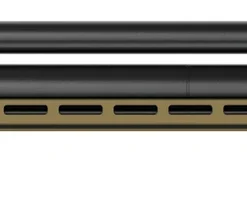
A quality bipod is one of the most practical upgrades for supported target shooting. The rifle’s handguard provides accessory mounting capability through its KeyMod arrangement, allowing compatible adapters and accessories to be installed.
A suitable PCP charging system is equally important. Because the rifle can be filled to 300 bar, any cylinder, compressor, hose and filling hardware must be appropriately rated for the pressure being used.
Other useful additions include:
- Spare magazines in the correct calibre
- High-quality matched pellets
- Picatinny scope mounts or rings
- Compact bipod
- Protective hard or padded rifle case
- Cleaning equipment suitable for PCP barrels
- Pellet storage case
- Shooting rest or rear bag
- Sling and appropriate mounting hardware
- Chronograph for lawful velocity verification
- Correct AirMaks fill probe and filling accessories
The Katran C is also supplied by some retailers with a magazine, fill probe and filling kit, although exact included accessories should always be confirmed with the individual seller.
Finally, the barrel assembly includes a 1/2-inch UNF muzzle thread, allowing compatible muzzle accessories to be fitted where legal.
Overall, the ideal AirMaks Arms Katran Compact setup combines the correct calibre and lawful power specification with a lightweight scope, dependable mounts, suitable PCP charging equipment and carefully selected shooting accessories. When those components are properly matched, the rifle retains the compact handling that defines the Katran while providing an adaptable platform for accurate and enjoyable shooting.
Daystate, Delta Wolf, Alpha Wolf and Premium PCP Air Rifle Accessories
For shooters researching premium PCP platforms, daystate blackwolf, daystate redwolf, delta wolf, huntsman daystate, and daystate alpha wolf frequently appear among the most searched Daystate-related terms. Whether someone searches for wolf delta, day state, daystate delta wolf, blackwolf, deltaw, daysta, or wants to understand the delta wolf meaning, these rifles are commonly associated with modern PCP engineering, electronic control systems, adjustable configurations, and high-end airgun performance.
People asking what is a delta wolf are generally researching the electronic Daystate platform and how it differs from conventional PCP rifles. Related searches often include electronic wolves, firing cycle, lock time, lock timing, short cocking, cocking ball, index pin, and pin magazine. Searches may also focus on configuration-specific components such as an alpha wolf barrel, stock walnut, safari stock, dima stock, stock replacement, rimfire stocks, or a rifle butt pad.
Daystate Red Wolf, Alpha Wolf and Wolverine Searches
The daystate redwolf family remains closely connected with searches for daystate redwolf price, red alpha wolf, alpha red wolf, and the newer daystate blackwolf platform. Some shoppers may also compare these rifles with the daystate wolverine sapphire, wolverine gun, wolveriner, wolf gun, wolfpack armory wolverine, or even search unusual phrases such as can wolverine go on planes while researching transport rules.
Accessories frequently searched alongside these platforms include a rubber butt, rubber butt pad, butt pad rifle, bradley cheek riser, gecko grips, picatinny bag rider, and buddy bottle cover. Cosmetic or clothing-related search phrases such as red bodywarmer and black snood may also appear alongside broader brand searches.
Magazine-related searches include 177 magazine, mag 177, and 25 magazine, while ammunition research can include 177 pellets types, 5.0 mm pellets, and slug pellet. Because pellet suitability depends on the rifle, barrel, legal power level, and intended range use, compatible ammunition should always be selected according to the manufacturer’s specifications.
PCP Air Systems, Moderators and Thread Accessories
Many enthusiasts researching Daystate rifles also search for air rifle compressed air, compressed air rifle, what are pcp air rifles, and what is a pre charged pneumatic air rifle. These searches relate to the fundamental operating principle of PCP systems, in which stored compressed air is used to power each shot.
Common accessory searches include air gun pc, air gun suppressor, air gun suppressors, airgun moderator, air rifle moderator, 0db, 0db moderator, and 0 db moderator. Buyers may also encounter searches for a hogan decimeater silencer, silencer thread adapter, thread protector rifle, and muzzle thread protector when comparing muzzle accessories and compatible threaded components. Local regulations should always be checked before purchasing or fitting sound-moderating equipment.
Maintenance-related searches often include pcp o ring kit, while tuning-oriented users may look for an ats tuner. Search terms such as unfend can also appear in broad airgun keyword datasets, even when the intended product or meaning is unclear.
M-LOK, Picatinny and Rifle Sling Accessories
Accessory compatibility is another major area of interest. Common searches include mlok to picatinny rail adapter, best m-lok to picatinny rail adapter, m-lok to picatinny adapter, and picatinny m lok adapter. These adapters are often researched by users who want to mount compatible optics, rests, bipods, bags, or other permitted accessories on an appropriate rail system.
Sling-related searches include riffle sling, rigle sling, how to put a gun sling on a rifle, how to put a rifle sling on, how to install a rifle sling, how to put sling on rifle, installing a rifle sling, and attaching a sling to a rifle. Because attachment arrangements differ between stocks, rails, swivels, and chassis systems, the correct mounting points should always be confirmed from the manufacturer’s documentation.
Other general mechanical or unrelated search phrases found within broader keyword datasets include how to put extinguisher call back together, weatherby vanguard trigger adjustment, and 3.55kg in lbs. While these terms may appear in search data, they are not necessarily specific to Daystate PCP rifles.
BRK, Brocock and XR Air Rifle Searches
Alongside Daystate products, many buyers compare models produced under the Brocock and BRK families. Popular searches include brocock ltd, brocock sniper xr, brocock commander xr, pathfinder xr, brk ghost, brocock airguns, brocock commander, brk ghost air rifle, and brk sniper xr.
The brocock sniper xr is often researched by shooters comparing compact PCP platforms, while the brocock commander xr and brocock commander searches generally relate to larger tactical-style PCP configurations. Meanwhile, brk ghost and brk ghost air rifle searches reflect growing interest in BRK-branded PCP systems.
Those comparing local purchasing options may also search fx airgun dealer near me, even when their primary interest is Daystate or Brocock. This reflects the way many airgun shoppers compare several premium manufacturers before deciding which PCP platform, stock configuration, calibre, regulator setup, magazine system, and accessory package best matches their intended sporting use.
Additional Daystate and Airgun Search Terms
Broader searches surrounding these rifles may include model alpha gun, griffin gun, and general comparisons involving a wolf gun or other premium PCP platform. Buyers may also investigate different stock materials, rail systems, moderators, magazines, barrel options, butt pads, cheek risers, thread protectors, and compressed-air accessories before completing a build.
Whether someone begins with daystate redwolf, explores the daystate alpha wolf, compares a daystate delta wolf, investigates the daystate blackwolf, or considers a daystate wolverine sapphire, the most useful approach is to verify model compatibility, calibre, pressure specifications, local regulations, and manufacturer-supported accessories before purchasing replacement components or upgrades.
Frequently Asked Questions
What type of air rifle is this?
This model is a compact pre-charged pneumatic air rifle designed around portability, adjustability, and consistent shot delivery. Instead of relying on a spring-powered mechanism, compressed air is stored in a high-pressure reservoir and released in a controlled amount each time the trigger is pulled.
Because the action is regulated, pressure is managed before each shot is fired. Consequently, more consistent velocity can be achieved across the useful portion of the air charge. This consistency can improve predictability during target shooting and other lawful shooting applications.
The overall design also incorporates a folding stock, adjustable rear assembly, multi-shot magazine system, and a modern accessory-ready chassis.
Which calibres are available?
Availability depends on the market, distributor, and local regulations. Common versions are offered in .177, .22, and .25 calibre.
The .177 version is often selected by shooters who prefer a flatter trajectory and lighter pellets. Meanwhile, .22 is commonly chosen for its balance between trajectory and pellet weight. The .25 version uses a heavier projectile and is generally suited to jurisdictions where higher-energy configurations are legally permitted.
Before purchasing, the exact calibre should always be confirmed with the retailer because not every version is distributed in every country.
How many pellets does the magazine hold?
Magazine capacity varies according to calibre.
The .177 magazine typically holds up to 18 pellets, while the .22 version holds up to 16. In .25 calibre, capacity is generally reduced to approximately 14 rounds because of the larger pellet diameter.
This multi-shot design allows longer shooting sessions without the need to manually load a pellet after every shot. However, the magazine should always be loaded carefully and according to manufacturer instructions.
Is it regulated?
Yes. A regulated pneumatic system is incorporated into the design.
The regulator helps reduce high reservoir pressure to a more consistent working pressure before air reaches the firing valve. As a result, variations between consecutive shots can be reduced.
Consistent air delivery is especially useful when a rifle is being used for precision shooting because predictable muzzle velocity can contribute to a more stable point of impact. Nevertheless, pellet quality, barrel condition, environmental conditions, and shooter technique will also influence accuracy.
What is the maximum filling pressure?
The system is designed around a maximum filling pressure of approximately 300 bar, depending on the exact configuration.
Only filling equipment that is rated for the required pressure should be used. A suitable PCP compressor, high-pressure cylinder, or approved hand pump may be used where appropriate.
Importantly, the reservoir should never be overfilled. The manufacturer’s pressure limits and filling procedure should always be followed because compressed air systems operate under extremely high pressure.
Is a filling probe included?
Many retail packages include a filling probe or filling adapter, although package contents can vary between sellers.
Therefore, the listing should always be checked before purchase. A filling probe, magazine, and basic documentation may be supplied with some configurations, while other retailers may offer additional accessories as part of a package.
It is also important to ensure that hoses, connectors, and charging equipment are compatible with the supplied filling system.
Does the stock fold?
Yes. A folding rear assembly is one of the major advantages of the compact design.
When folded, the overall length is reduced substantially, which makes transportation and storage easier. This feature can be particularly useful for shooters who use compact cases or who need to carry their equipment frequently.
The stock should always be locked securely into position before shooting. Additionally, the rifle should be unloaded and made safe before the stock is folded for transportation.
Is the stock adjustable?
Several adjustments are provided around the rear of the rifle.
The cheek piece can be adjusted to improve head position in relation to the optic. Likewise, the butt section can be adjusted to help create a more comfortable shoulder position.
These features are especially useful when different scopes or mounts are fitted because optic height can alter the shooter’s natural head position. Proper adjustment can help improve consistency and reduce unnecessary movement during aiming.
Is it suitable for left-handed shooters?
The design can accommodate a wide range of users because several controls can be configured according to preference.
The side-lever cocking system can be arranged for more convenient operation, while the safety position can also be configured depending on the exact setup.
This flexibility can make the rifle more comfortable for both right-handed and left-handed shooters. However, users should follow the manufacturer’s instructions whenever controls are repositioned or adjusted.
What kind of trigger does it use?
An adjustable two-stage trigger system is fitted.
A two-stage trigger provides an initial take-up stage followed by a defined release stage. Many precision shooters prefer this arrangement because the point of release can become easier to anticipate once the trigger has been properly adjusted.
Any trigger adjustment should remain within the manufacturer’s recommended range. Excessively light or improperly configured trigger settings can create a safety risk.
Does it have a safety?
Yes. A manual safety is incorporated into the action.
The safety should be engaged whenever the rifle is not being fired. However, a mechanical safety should never be treated as a substitute for correct gun handling.
The muzzle should always be pointed in a safe direction, the trigger should remain untouched until a shot is intended, and the rifle should be treated as loaded until its condition has been personally verified.
What barrel does it use?
A precision barrel manufactured by CZ is commonly fitted to the compact configuration.
The barrel is selected to provide consistent pellet guidance and support accurate shooting. A shroud is also used around the barrel assembly on many versions.
Pellet selection remains important. Even two pellets of the same calibre can produce different grouping results because pellet weight, head size, skirt design, and manufacturing consistency can vary.
Is the muzzle threaded?
Yes. The muzzle is commonly provided with a 1/2-inch UNF threaded interface.
This allows compatible muzzle accessories to be installed where local law permits. Before any accessory is fitted, correct thread compatibility should be verified.
The use, possession, or purchase of certain muzzle devices may be regulated differently depending on jurisdiction, so local requirements should always be checked.
What type of scope should be fitted?
A compact variable-power optic usually complements the rifle well.
For general-purpose use, options such as 3-12×44, 4-16×44, or similarly sized optics can provide a useful balance between magnification and overall weight. Shooters who mainly work at shorter distances may prefer a smaller 2-10x optic.
For precision target work, higher magnification can be useful, although very large optics may make a compact rifle feel top-heavy. Side focus, adjustable parallax, clear glass, and repeatable turrets are all valuable features.
What type of scope mounts are required?
The rifle uses a Picatinny-style optics rail.
Therefore, scope rings or mounts designed for Picatinny rails should be selected. Ring diameter must also match the scope tube, which is commonly either 1 inch, 30 mm, or 34 mm depending on the optic.
Mount height should be chosen carefully so the objective lens clears the rifle while the scope remains low enough for a comfortable cheek position.
Can a bipod be fitted?
Yes, a bipod can be fitted with the correct mounting hardware.
The front handguard provides accessory mounting options, although an appropriate adapter may be required depending on the bipod design.
A lightweight bipod generally works well with a compact PCP rifle because it provides additional stability without adding excessive bulk. For bench shooting, a front rest and rear bag can also be used.
How heavy is it?
The bare rifle weighs approximately 2.3 kg depending on configuration.
Once a scope, mounts, moderator, bipod, and other accessories are added, total weight will increase. Therefore, accessory selection should be made carefully if maintaining the lightweight character of the rifle is important.
A compact optic and lightweight mounts can help preserve the balance of the original platform.
Is it suitable for target shooting?
Yes. The regulated action, adjustable trigger, precision barrel, and stable chassis make it well suited to target shooting.
The folding stock does not prevent the rifle from being configured for a consistent shooting position. Once the cheek piece and butt section are adjusted correctly, a stable sight picture can be achieved.
For best results, different pellet types should be tested because barrel preference can vary between individual rifles.
Can it be used for pest control?
It may be suitable for lawful pest-control applications where permitted by local law and where the selected calibre and power level are appropriate for the intended use.
However, legal requirements vary widely by location. Some jurisdictions impose limits on muzzle energy, permitted quarry, shooting locations, and licensing.
Safe backstops, accurate range estimation, responsible shot placement, and compliance with all relevant laws are essential.
What does FAC mean?
FAC generally refers to a Firearm Certificate in the United Kingdom.
Air rifles operating above the legal threshold for unlicensed ownership in the UK fall under different legal requirements. Therefore, a higher-powered version should only be purchased, possessed, or used by someone who has the appropriate authority.
In other countries, different licensing rules may apply, and the term FAC may not be used at all.
Can the power be adjusted?
Some configurations provide technical adjustment possibilities, but any change affecting muzzle energy should only be made within manufacturer specifications and local law.
A power increase can alter pellet velocity, air consumption, shot count, trajectory, and regulator behaviour. Therefore, adjustments should not be treated as simple performance upgrades.
Where technical changes are required, qualified service personnel or an authorised technician should be used whenever possible.
How many shots can be expected from one fill?
Shot count depends on calibre, power level, regulator setup, reservoir size, pellet weight, and the pressure range being used.
Lower-powered configurations generally return more shots per fill than high-output setups. Likewise, larger-calibre versions may consume more air per shot.
Because several variables are involved, a single shot-count figure should not be assumed for every configuration.
Is the rifle loud?
Noise level depends on power, calibre, pellet choice, barrel configuration, and whether a legal sound-moderating accessory is installed.
PCP rifles generally lack the mechanical spring noise associated with spring-piston airguns, although the release of compressed air can still be noticeable.
Where sound moderation is permitted, a compatible device can reduce muzzle report. Local regulations should always be checked before fitting or using one.
What pellets should be used?
High-quality domed pellets are usually a good starting point for accuracy testing.
Different barrels can show a preference for different pellet brands, weights, and head sizes. Therefore, several reputable options should be tested rather than assuming one pellet will automatically perform best.
A chronograph and controlled grouping tests can help determine which pellet produces the most consistent performance.
How should the rifle be stored?
The rifle should be stored unloaded, secure, dry, and inaccessible to unauthorised users.
A protective case or cabinet can help prevent accidental damage. Moisture should be avoided because metal components, fasteners, and accessories can corrode if stored in damp conditions.
Local laws may also specify minimum security requirements for storage, especially for higher-powered or licensed configurations.
What maintenance is required?
Routine maintenance is generally straightforward.
The exterior should be wiped clean after use, while the barrel should only be cleaned when necessary and with suitable equipment. O-rings, seals, filling components, and the air reservoir should be inspected according to manufacturer recommendations.
Aggressive solvents or unsuitable lubricants should not be introduced into a high-pressure air system.
Is this a good choice for an experienced PCP shooter?
Yes. Experienced shooters are likely to appreciate the regulated action, compact dimensions, adjustable ergonomics, multi-shot system, and modular chassis..25 caliber brocock sniper xr
The platform also provides enough adaptability for different optics and supported shooting setups. At the same time, its relatively lightweight construction helps prevent the rifle from becoming cumbersome.
For someone who values a modern compact PCP with extensive adjustment and strong mechanical consistency, it can be a very practical option.
Is it suitable for a first PCP rifle?
It can be, provided the new owner understands PCP filling equipment, high-pressure air safety, and local legal requirements.
The controls are straightforward, while the magazine system and adjustable stock are relatively user-friendly. Nevertheless, a first-time PCP owner should become familiar with filling pressure, safe charging procedures, magazine loading, and regular inspection.
Once these fundamentals are understood, the platform can provide a refined introduction to regulated PCP shooting.
What accessories are worth buying first?
The most useful first purchases are normally a suitable scope, quality Picatinny mounts, charging equipment, pellets, and a protective case.
A spare magazine can also be useful during longer shooting sessions. After those essentials have been covered, a bipod, sling, chronograph, shooting bag, or other accessories can be added according to personal preference.
Choosing lightweight equipment is generally recommended because it helps preserve the compact handling that makes the rifle appealing in the first place.







Reviews
There are no reviews yet.