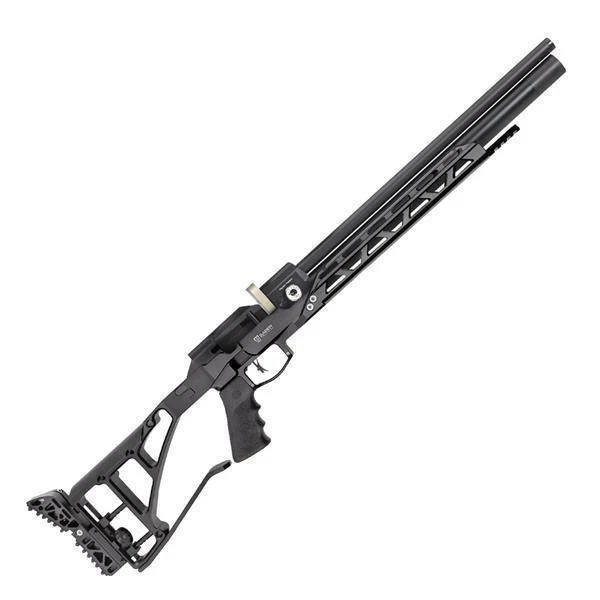
FX Dreamline ST Elite FAC – Modular PCP Air Rifle with Smooth Twist X Technology
The FX Dreamline ST Elite FAC is positioned within the Dreamline platform as a highly configurable pre-charged pneumatic air rifle designed around precision engineering, modular construction, regulated air delivery, and FX’s Smooth Twist X barrel technology. Rather than being built around one fixed configuration, the Dreamline system has been developed so that multiple elements can be adapted to different shooting disciplines and preferences.
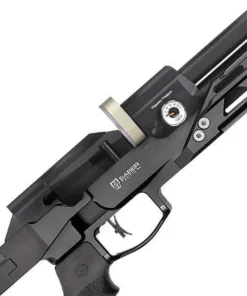
At the centre of the platform is the FX Smooth Twist X (STX) barrel system, while regulated pneumatic operation, adjustable performance controls, a side-lever cocking system, removable rotary magazine, and interchangeable components contribute to the rifle’s versatility.
For shooters researching a premium FAC-rated PCP platform, the Dreamline architecture provides an important technical advantage: the rifle has been designed as a modular system rather than as a single-purpose airgun. FX states that Dreamline configurations can be transformed between different formats through compatible components, allowing the core platform to be adapted as requirements evolve.
FX Dreamline ST Elite FAC Overview
Precision has been placed at the centre of the FX Dreamline ST Elite FAC concept. Instead of relying solely on raw pneumatic power, the platform combines regulated airflow, barrel technology, adjustable operating parameters, and a refined trigger mechanism.
Consequently, consistent pellet delivery can be supported across a regulated pressure range. In addition, several performance variables can be adjusted on the Dreamline platform, including regulator pressure, hammer tension, and valve flow. These features allow the system to be configured appropriately within the limits of the specific rifle, projectile, calibre, and applicable legislation.
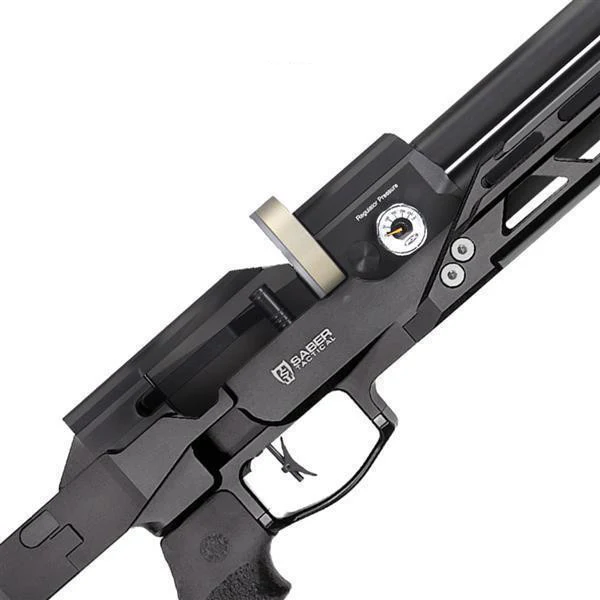
Furthermore, an AMP – Adjustable Match Precision – regulator is incorporated into the Dreamline design. The regulator has been engineered so that pressure can be externally adjusted, allowing regulated air delivery to be tailored without the same degree of disassembly associated with more conventional systems.
Smooth Twist X Barrel Technology
One of the defining elements of the FX Dreamline ST Elite FAC is the FX Smooth Twist X barrel platform.
The STX system has also been used within other FX platforms, including the Crown, Impact, and Wildcat. Instead of permanently limiting the rifle to one conventional barrel arrangement, an interchangeable liner concept has been incorporated.
As a result, compatible barrel liners can be selected for different bore specifications and projectile requirements. This modular approach can be particularly useful when a rifle is being configured around a specific calibre or ammunition type.
Accuracy, however, should never be viewed as the result of barrel design alone. Pellet quality, projectile weight, regulator consistency, barrel condition, environmental conditions, shooter technique, and correct setup can all influence practical grouping performance.
Adjustable Regulated PCP Performance
The regulated pneumatic system is another important part of the Dreamline architecture.
Compressed air is stored within the rifle’s air reservoir and is metered through the regulator before each shot. By controlling the pressure delivered to the firing system, variations between consecutive shots can be reduced when the rifle has been correctly maintained and configured.
FX lists a maximum fill pressure of 230 bar / approximately 3,300 psi for the Dreamline platform. Many standard Dreamline configurations use a 220 cc air cylinder, while other configurations have been produced with different reservoir capacities.
Because the rifle is offered in different configurations, actual shot count should not be represented as one universal figure. Calibre, projectile weight, power setting, regulator setting, reservoir capacity, ambient conditions, and other variables can all affect air consumption.
FAC Configuration
The designation FAC generally identifies a higher-power configuration in markets where airgun power is regulated through firearm-certificate or comparable licensing frameworks.
Therefore, the legal status of an FX Dreamline FAC rifle can vary significantly between jurisdictions.
Power levels should always be verified from the specific rifle specification and local distributor documentation rather than assumed from the model name alone. FX itself notes that output can be reduced according to regulations in different markets.
Available Dreamline Calibres
Depending on the applicable model and regional configuration, the Dreamline platform has historically been offered in:
- .177 / 4.5 mm
- .22 / 5.5 mm
- .25 / 6.35 mm
- .30 / 7.62 mm
Different calibres naturally produce different ballistic characteristics. Consequently, projectile selection, trajectory, retained energy, air consumption, and practical range should be evaluated according to the intended lawful shooting discipline rather than through calibre alone.
FX has also produced different barrel lengths within the Dreamline family, with published configurations including 500 mm and 600 mm barrels.
Smooth Side-Lever Cocking System
Operation has been made straightforward through a smooth side-lever cocking mechanism.
A removable high-capacity rotary magazine is indexed through this system. Therefore, repeated cycling can be performed without the shooter having to manipulate a conventional bolt mechanism.
Magazine capacity varies according to calibre and configuration, so the specification supplied with the individual rifle should always be checked.
FX Match-Grade Trigger
Trigger control is another important element in repeatable precision.
The Dreamline platform incorporates an FX match-grade adjustable trigger. FX documentation has listed the factory trigger setting at approximately 15 ounces for Dreamline models, although individual rifle setup should always be verified before use.
A predictable trigger release can support consistent shooting technique because unnecessary disturbance immediately before projectile release can be reduced.
Modular Dreamline Architecture
Perhaps the strongest engineering characteristic of the FX Dreamline ST Elite FAC is its modularity.
FX describes the Dreamline as its first fully modular airgun system. Different Dreamline arrangements have included conventional sporter, bullpup, tactical, and bottle-based configurations.
Therefore, compatible Dreamline components can allow the underlying platform to be adapted rather than requiring an entirely different operating system.
This modular philosophy also extends to the barrel system. Calibre changes and liner changes have been incorporated into the overall Dreamline concept, although compatible parts, correct installation procedures, and legal requirements must always be observed.
Key FX Dreamline ST Elite FAC Features
- FX Smooth Twist X barrel architecture
- Interchangeable barrel-liner concept
- Regulated pre-charged pneumatic operating system
- AMP externally adjustable regulator
- Adjustable hammer and valve-related performance parameters
- Smooth side-lever cocking mechanism
- Removable rotary magazine system
- Adjustable FX match-grade trigger
- Up to 230-bar published fill pressure on the Dreamline platform
- Multiple calibre configurations
- Modular Dreamline construction
- Compatible configuration options across the Dreamline family
- ½-inch UNF muzzle threading listed on standard Dreamline specifications
- Designed around controlled, repeatable pneumatic performance
Precision and Practical Design
A premium PCP rifle is most useful when its different systems operate as a coordinated package.
For that reason, the FX Dreamline ST Elite FAC is notable not simply because individual parts can be adjusted, but because barrel configuration, regulated pressure, airflow, projectile characteristics, and mechanical operation can be matched within the parameters of the platform.
Meanwhile, the modular construction provides flexibility for shooters whose requirements may change over time.
Ergonomics, optics setup, projectile selection, safe handling practices, and appropriate maintenance remain equally important. No adjustment should be made outside manufacturer guidance, and all FAC-related licensing and power restrictions should be confirmed before possession or use.
FX Dreamline ST Elite FAC Calibres, FAC Power, Recommended Scope and Accessories
The FX Dreamline ST Elite FAC has been built around the adaptable Dreamline platform, allowing different calibre and power configurations to be offered according to market regulations and the specific version of the rifle. FX currently lists the Dreamline platform in .177, .22, .25 and .30 calibre, with both Full Power and Sub-12 FPE configurations shown for applicable variants.
.177 Calibre – 4.5 mm
The .177 calibre FX Dreamline ST Elite FAC provides the smallest bore option within the Dreamline family. Because lighter projectiles are generally used, a relatively flat trajectory can be obtained within the appropriate operating envelope.
FX previously published a maximum specification of approximately 24 joules or 18 ft-lb for full-power .177 Dreamline configurations, with velocity figures reaching approximately 295 m/s or 940 ft/s depending on projectile and setup. These figures represent manufacturer-published maximum specifications rather than guaranteed performance from every individual rifle.
For shooters who prioritize precision-oriented recreational shooting and target work, .177 can provide an efficient and enjoyable Dreamline configuration.
.22 Calibre – 5.5 mm
Among the available options, .22 calibre offers an excellent balance between projectile weight, trajectory, air consumption and retained energy.
FX’s published Dreamline specifications have listed maximum .22 performance at approximately 41 joules or 30 ft-lb, with velocities up to approximately 280 m/s or 920 ft/s, depending on the projectile and rifle configuration.
Consequently, .22 is a versatile option for users who want more projectile mass than .177 while retaining manageable ammunition consumption and a practical ballistic profile.
.25 Calibre – 6.35 mm
Moving upward in calibre, the .25 FX Dreamline ST Elite FAC provides greater projectile mass and increased energy potential.
FX has previously specified maximum performance of approximately 60 joules or 45 ft-lb for full-power .25 Dreamline configurations, with velocities around 270 m/s or 890 ft/s under the manufacturer’s reference specification.
Because heavier pellets typically require greater quantities of compressed air, shot count may differ from lower-calibre configurations. Nevertheless, the Dreamline’s regulated PCP architecture helps provide controlled air delivery when correctly configured.
.30 Calibre – 7.62 mm
The .30 calibre Dreamline represents the largest calibre currently listed on FX’s Dreamline page.
A larger projectile can provide significantly different ballistic characteristics compared with .177, .22 or .25. However, power figures should always be checked against the exact rifle being supplied because configuration, barrel specification, projectile selection and regional restrictions can materially affect output.
For this reason, one universal muzzle-energy figure should not be assumed for every .30 Dreamline ST Elite FAC.
FAC Power and Adjustable Performance
The FAC designation is particularly important when selecting an FX Dreamline ST Elite.
In markets where air-rifle output is legally restricted, FAC commonly identifies versions that exceed lower unrestricted energy limits and therefore fall into a licensing or certificate-controlled category.
Actual legal requirements vary by country and sometimes by region. Therefore, local regulations should always be confirmed before ownership or use.
Furthermore, FX specifically states that published maximum-energy figures can be reduced according to regulations within different markets.
The Dreamline platform incorporates an AMP externally adjustable regulator together with an adjustable rear power system. FX’s Dreamline manual describes multiple power-adjuster positions and also specifies that the regulator should never be adjusted above the limits stated by the manufacturer.
Consequently, adjustments should always follow the FX manual and applicable legislation rather than being treated simply as a means of maximizing output.
Recommended Scope for the FX Dreamline ST Elite FAC
A quality optic complements the accuracy potential of the FX Dreamline ST Elite FAC.
For general recreational and precision shooting, a variable-power scope in approximately the 3-12×, 4-16× or 4-20× class provides a practical balance between field of view and target detail.
Shooters concentrating more heavily on precision target work may prefer greater magnification, such as 5-25× or 6-24×, provided the additional size and weight suit the rifle’s intended configuration.
Useful scope characteristics include:
- Clear multi-coated lenses
- Adjustable parallax or side focus
- Fine MIL or MOA reticle
- Reliable elevation and windage adjustment
- Repeatable turret tracking
- Suitable eye relief
- Lightweight construction where possible
- Appropriate mounting hardware for the rifle’s scope rail
FX lists an 11 mm dovetail scope mounting system on standard Dreamline specifications, so compatible mounts should be selected for the particular rifle configuration.
Rather than simply purchasing the highest-magnification optic available, a scope should be matched to the distances and type of shooting for which the rifle will actually be used.
Recommended Accessories
Several accessories can make ownership and routine operation of the FX Dreamline ST Elite FAC more convenient.
Quality pellets or compatible projectiles: Different barrels can show preferences for particular projectile weights and designs. Consistent ammunition is therefore important when evaluating accuracy.
Additional FX magazine: A spare compatible magazine can simplify range sessions and reduce interruptions.
PCP filling equipment: Because the Dreamline is a pre-charged pneumatic rifle, an appropriate high-pressure filling source is required. FX lists a maximum Dreamline fill pressure of 230 bar / approximately 3,300 psi for standard configurations.
Scope mounts: Correctly sized, high-quality mounts help keep the optic securely installed while maintaining consistent alignment.
Protective rifle case: A padded case protects the rifle and mounted optic during lawful storage or transport.
Cleaning and maintenance equipment: Suitable barrel-cleaning materials, approved lubricants and replacement seals can help support long-term maintenance when used according to manufacturer instructions.
Bipod or shooting support: For supported recreational or target shooting, a suitable bipod or rest can provide a more stable shooting position.
Chronograph: A chronograph can be useful for confirming velocity consistency and verifying that the rifle remains within the applicable legal power limit.
Overall, the FX Dreamline ST Elite FAC combines four major calibre choices with regulated PCP operation, adjustable performance characteristics and extensive modularity. Whether configured in .177, .22, .25 or .30, the best results are achieved when calibre, ammunition, optic and accessories are matched carefully to the intended lawful shooting application.
FX Dreamline ST Elite FAC: Engineering Summary
The FX Dreamline ST Elite FAC represents FX Airguns’ modular approach to regulated PCP engineering. Smooth Twist X barrel technology, an AMP regulator, adjustable operating parameters, a side-lever action, match-grade trigger, rotary magazine system, and multi-calibre architecture are combined within one adaptable platform.
Rather than concentrating on one isolated specification, the Dreamline has been engineered around flexibility. Different configurations can therefore be suited to different lawful sporting disciplines while the underlying operating concept is retained.
For anyone researching the technical differences between modern PCP platforms, the Dreamline remains notable for its combination of regulated air delivery, interchangeable STX barrel technology, modular architecture, adjustable controls, and FX precision engineering.
Actual specifications—including calibre, barrel length, reservoir capacity, power output, magazine capacity, dimensions, and legal classification—should always be confirmed against the exact rifle variant and the regulations that apply in the user’s jurisdiction.
Snowpeak Airguns, PCP Rifles, Air Pistols and Umarex Airguns
For shooters researching Snowpeak airguns, Snowpeak Sports, and the wider Snowpeaks product range, there are many PCP rifles, air pistols, and shooting accessories to consider. Popular searches include the Snowpeak AP900, Snowpeak AP900B PCP air rifle, Snowpeak MAX 1, Snowpeak MAX 1 price, Snowpeak PP750, PP750, Snow Peak PP750, and PP750 air pistol. Buyers also regularly compare models such as the Snowpeak P35, P35, P 35, PCP P 35, Snowpeak P35X, P35X, P35X PCP, and Snowpeak P35 vs P35X.
Other Snowpeak models attracting attention include the Snow Peak PP20, Snowpeak PP20, Snowpeak M25, M25 rifle, M-25, M25 weapon, Snowpeak M60, Snowpeak M60B, M 60B, rifle M60, rifle M50, and M50 rifle. Searches such as Snow Peak brand origin are also common among buyers who want to understand the manufacturer before choosing a rifle or pistol.
Snowpeak PCP Models and Related Airgun Searches
The PCP category covers everything from compact pistols to full-size hunting and target rifles. Searches frequently include PR900 Gen 3, CR650, SR 1000X, T Rex 6000, and pistolet PCP Arcea-Snowpeak Onix Sport. People comparing pneumatic platforms may also search what is a PCP airgun, air gun, air rifle, pellet pistol, air gun accessories, 9mm pellet, and pellet 9mm.
Some search phrases overlap with firearm terminology even when shoppers are researching airgun products. These include rifle M60, how much did the M60 weigh, rifle M50, M50 rifle, M25 weapon, and snowfall gun. Therefore, model specifications should always be checked carefully so that a historical firearm search is not confused with a modern sporting airgun product.
Umarex Airguns, Air Rifles, Pistols and PCP Platforms
Alongside Snowpeak products, Umarex USA, UmarexUSA, Umarex airguns, and Umarex air rifles are widely searched by recreational shooters, target shooters, and PCP enthusiasts. The Umarex range includes PCP rifles, CO₂-powered platforms, break-barrel pistols, BB guns, airsoft replicas, and large-caliber airgun systems.
Popular PCP searches include Umarex Notos, Umarex Notos Carbine, Umarex Gauntlet, Umarex Gauntlet 2, Umarex Gauntlet 30, Umarex Zelos, Umarex Origin, Umarex Komplete, and Umarex Komplete NCR .22. Hunters researching larger airgun platforms may also encounter the Umarex Hammer, Umarex Hammer .50 caliber, Umarex Hammer Carbine, Umarex Primal 20, and Umarex AirSaber.
Umarex Pistols, BB Guns and T4E Models
For handgun-style platforms, popular searches include Umarex BB gun, BBgun, BB gun pistol, metal BB gun, Umarex TR50, Umarex HDR 50, Umarex T4E, Umarex T4E Smith, Umarex Smith, and Umarex P2P DR50 how many joules.
Glock-style replicas remain another major category. Search terms include Glock BB gun, Glock 19 BB gun, Umarex Glock 19, Umarex Glock 19X, Umarex Glock 19 Gen3 .177 caliber BB gun air pistol, Umarex Glock 17, Umarex Glock 17 Gen 5, Umarex Glock, airsoft Glock, airsoft Glock 19, Glock 17 airsoft, and Glock airsoft gun.
Other replica and recreational searches include Umarex MP40, Umarex MP5, Umarex Legends, Umarex HK Heckler, Umarex shotgun, and airsoft pistol.Umarex DX17.
Break-Barrel and Sporting Umarex Airguns
Shooters looking for spring or gas-piston platforms frequently research the Umarex Trevox, loading Umarex Trevox break barrel .177, Umarex pistol break barrel, Umarex Fusion 2, Umarex Synergis Elite, and Amazon Umarex Browning 800 Express. These platforms provide alternatives for people who want an airgun without relying on a high-pressure PCP charging system.
Additional searches across the Umarex catalog include Umarex H, while broader terms such as air rifle, pellet pistol, air gun, and air gun accessories help buyers compare platforms, ammunition, optics, filling equipment, targets, cases, and other shooting equipment.
Whether the focus is a Snowpeak M60, Snowpeak M25, Snowpeak P35X, Snowpeak PP750, Snowpeak MAX 1, Umarex Notos, Umarex Gauntlet 2, Umarex Origin, or Umarex Hammer Carbine, buyers should compare caliber, operating system, power level, dimensions, intended use, and local regulations before selecting an airgun.
Frequently Asked Questions
What is the FX Dreamline ST Elite FAC?
The FX Dreamline ST Elite FAC is a pre-charged pneumatic air rifle built around the modular Dreamline platform. It combines regulated air delivery, FX Smooth Twist X barrel technology, an adjustable trigger system, side-lever operation, and configurable performance settings. The FAC designation generally refers to a higher-power version intended for markets where increased muzzle energy is subject to licensing or certificate requirements.
Because the Dreamline platform has been designed around modularity, several components and configurations can be adapted without changing the basic operating system of the rifle.
What does FAC mean on this rifle?
FAC commonly refers to a configuration that exceeds the lower power threshold permitted without additional licensing in certain jurisdictions.
The precise legal meaning varies between countries. In the United Kingdom, for example, air rifles producing more than the applicable legal limit generally require the appropriate firearm certificate. Other countries may use different thresholds or licensing systems.
For this reason, the exact energy output and legal classification of the individual rifle should always be checked before ownership, transport, modification, or use.
Which calibres are available?
Dreamline configurations have been produced in several common PCP calibres, including:
- .177 / 4.5 mm
- .22 / 5.5 mm
- .25 / 6.35 mm
- .30 / 7.62 mm
Availability can vary depending on market, production period, barrel configuration, and local regulations.
Each calibre provides different ballistic characteristics. Smaller calibres generally use lighter projectiles, while larger calibres usually provide greater projectile mass and energy potential.
Which calibre is best?
There is no single calibre that is best for every user.
The .177 version may be preferred where a flatter trajectory and lower projectile weight are important. The .22 calibre offers a balanced combination of trajectory, projectile mass, and air consumption. The .25 version moves toward heavier projectiles and increased energy, while .30 provides the largest projectile diameter among commonly listed Dreamline configurations.
Selection should therefore be based on lawful intended use, local regulations, ammunition availability, and the specific rifle configuration.
Is the rifle regulated?
Yes. The Dreamline system uses a regulated PCP operating system.
A regulator controls the pressure supplied from the main air reservoir to the firing system. This helps reduce pressure variation from shot to shot while the rifle remains within its regulated operating range.
Consistent air delivery can contribute to more predictable velocity and point of impact, although ammunition quality, barrel condition, environmental conditions, and shooter technique remain important.
What is the AMP regulator?
AMP stands for Adjustable Match Precision.
The regulator forms part of FX’s adjustable pneumatic system. It allows regulated pressure to be configured according to the rifle’s intended setup, although regulator adjustments should always follow manufacturer instructions.
Incorrect regulator adjustment can affect consistency and mechanical operation. Users should therefore avoid exceeding specified pressure limits or making unsupported modifications.
What pressure can the air cylinder be filled to?
Many Dreamline specifications list a maximum fill pressure of approximately 230 bar, or about 3,300 psi.
However, the exact maximum pressure should always be confirmed from the markings and documentation supplied with the individual rifle.
A PCP rifle should only be filled using compatible high-pressure equipment designed for compressed-air use.
How many shots can be fired from one fill?
There is no universal shot-count figure because air consumption depends on several variables.
These include calibre, regulator pressure, projectile weight, power configuration, reservoir capacity, temperature, and the way the rifle has been configured.
A lower-powered .177 setup may generally consume less air per shot than a higher-powered large-calibre configuration. Therefore, shot count should always be treated as configuration-specific rather than as a fixed specification.
What barrel system is used?
The rifle is based around FX Smooth Twist X technology.
This system uses interchangeable barrel-liner architecture rather than relying exclusively on one permanent barrel configuration.
The design allows compatible liners and barrel components to be matched to different calibre or projectile requirements. This modular concept is one of the distinguishing characteristics of modern FX rifles.
Can the barrel liner be changed?
Compatible Smooth Twist X barrel liners can be changed within the limits of the specific Dreamline setup.
However, correct compatibility is essential. The barrel, liner, probe, magazine, projectile diameter, and other related components must be appropriate for the intended configuration.
Any conversion should also remain compliant with local legislation.
Can the calibre be changed?
The modular platform was designed to support calibre changes using compatible FX components.
A calibre conversion typically involves more than simply changing ammunition. Correct barrel components, projectile probe, magazine, and associated parts may be required.
The manufacturer documentation should therefore be followed carefully when changing configuration.
Is the trigger adjustable?
Yes. The Dreamline platform uses an adjustable match-style trigger.
Trigger characteristics can significantly affect practical precision because a predictable release can reduce unnecessary movement immediately before a shot.
Any adjustment should remain within safe manufacturer specifications. An excessively light or incorrectly adjusted trigger can present a safety risk.
What type of action does it use?
The rifle uses a side-lever cocking action.
This design provides straightforward cycling while maintaining the shooter’s position behind the rifle. The side lever also operates the magazine indexing system when the rifle is being used in repeating configuration.
Smooth operation is one of the characteristics commonly associated with FX PCP platforms.
Does it use a magazine?
Yes. Compatible configurations use a removable rotary magazine.
Magazine capacity varies by calibre because larger projectiles require more space within the magazine body.
An additional compatible magazine can be useful for organized range sessions, although magazines should always be loaded and handled according to the manufacturer instructions.
Can it also be used as a single-shot rifle?
Single-shot functionality may be possible with compatible trays or accessories depending on the exact Dreamline configuration.
Some precision shooters prefer single loading because it allows each projectile to be handled individually.
Compatibility should be checked before purchasing a tray because not every accessory necessarily fits every configuration.
What scope should be fitted?
Scope selection depends heavily on intended shooting distance and discipline.
For general recreational shooting, magnification ranges around 3-12×, 4-16×, or similar can provide a useful balance between target visibility and field of view.
For precision-oriented shooting at greater distances, higher-magnification optics such as 5-25× or 6-24× may be preferred.
Important characteristics include clear glass, reliable adjustment, adjustable parallax, appropriate eye relief, and a reticle suitable for the user’s preferred aiming system.
Does it require special scope mounts?
The mount type must match the rail fitted to the particular rifle.
Dreamline versions have commonly been supplied with dovetail mounting arrangements, although specific configurations may differ.
Before purchasing rings or mounts, the rail width and optic tube diameter should both be confirmed.
Correct mounting helps maintain alignment and reduces the risk of movement during normal use.
What pellets work best?
There is no universal pellet that performs best in every barrel.
Individual barrels can show preferences for specific pellet diameters, weights, and designs.
For this reason, accuracy testing should normally be carried out using several reputable projectile types. Groups can then be compared under consistent conditions.
The most accurate pellet in one rifle may not necessarily produce identical results in another rifle of the same model.
Can slugs be used?
Compatibility with slug-style projectiles depends on barrel configuration, liner design, calibre, and the specifications recommended for that particular setup.
Not every projectile shape or weight will perform optimally through every barrel.
Users should confirm compatibility with the relevant FX barrel system before selecting ammunition outside standard pellet configurations.
How accurate is the rifle?
Mechanical accuracy depends on more than the model name alone.
The barrel system, regulator consistency, projectile quality, scope setup, environmental conditions, maintenance, and shooter technique all influence practical grouping performance.
The Dreamline platform has been designed as a precision-oriented PCP system, but no responsible accuracy claim should be expressed as one guaranteed group size for every rifle and every shooting condition.
Is it suitable for long-range target shooting?
The rifle can be configured for precision recreational and target shooting, although practical range depends on calibre, projectile, power level, atmospheric conditions, and shooter skill.
Higher magnification optics and carefully selected ammunition may assist with precision work.
However, safe backstops, lawful shooting locations, and awareness of projectile travel remain essential regardless of distance.
What accessories are recommended?
Common supporting accessories include a suitable scope, compatible mounts, additional magazines, a secure rifle case, approved cleaning equipment, and appropriate high-pressure filling equipment.
A chronograph can also be useful for checking velocity consistency and verifying that the rifle remains within the applicable legal energy limit.
For supported target shooting, a compatible bipod or stable shooting rest may also be useful.
Can a moderator be fitted?
Some Dreamline barrel configurations provide muzzle threading compatible with appropriate accessories.
Thread specification should be confirmed from the exact rifle because different models and production configurations can vary.
Any sound-moderating device must also comply with the laws that apply in the user’s country or region.
How should the rifle be maintained?
Routine maintenance should focus on keeping the rifle clean, dry, correctly lubricated where specified, and protected during storage.
Only lubricants recommended for high-pressure PCP systems should be used.
The barrel may require periodic cleaning when accuracy noticeably declines, although excessive cleaning can be unnecessary.
Seals, O-rings, fill components, and air-system components should be inspected according to the manufacturer maintenance schedule.
Does the rifle require CO2?
No. It operates using compressed air rather than disposable CO2 cartridges.
The reservoir is filled from a suitable high-pressure source such as an approved PCP hand pump, high-pressure compressor, or diving cylinder equipped with the correct filling hardware.
Only clean, dry compressed air suitable for PCP equipment should be used.
Is the rifle suitable for beginners?
A regulated PCP system can provide smooth operation, but an FAC-rated rifle should not be considered simply on the basis of ease of use.
Higher-power air rifles require responsible handling, understanding of local legislation, appropriate training, safe storage, and a suitable shooting environment.
New users should become familiar with PCP filling procedures and the manufacturer’s safety instructions before operation.
Does changing the power setting change accuracy?
It can.
Changing air pressure, hammer settings, valve behaviour, or projectile characteristics can alter velocity and therefore point of impact.
A setup that is mechanically possible is not automatically the most consistent setup.
After any permitted adjustment, performance should be evaluated carefully using consistent ammunition and appropriate measuring equipment.
Why is the Dreamline platform considered modular?
The platform was developed so that multiple configurations could share the same fundamental action.
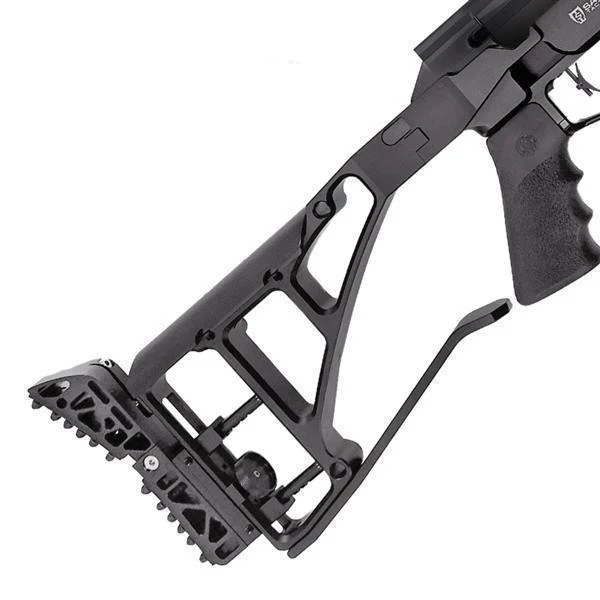
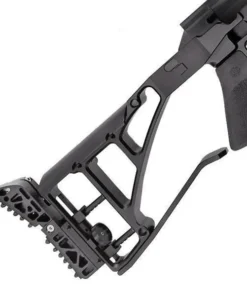
Depending on compatible components, the rifle can be adapted through different stocks, air reservoirs, barrel arrangements, calibres, and accessories.
This allows the core system to support different shooting preferences while retaining familiar controls and operating principles.
How should the rifle be stored?
It should be stored securely, unloaded, and in accordance with local firearms or airgun legislation.
The rifle should be kept away from unauthorized users and protected from excessive moisture.
A secure cabinet, locked storage arrangement, or other legally compliant solution may be required depending on jurisdiction.
A padded case can help protect the finish and optic during lawful transport, but transport requirements should always be checked separately from storage requirements.
What should be checked before buying a used example?
A used rifle should be inspected for air leaks, damaged seals, corrosion, barrel damage, inconsistent regulator behaviour, excessive modification, damaged magazines, and problems with the filling system.
The rifle’s serial information, calibre, configuration, and legal classification should also be verified.
Where possible, service history and proof of ownership should be reviewed.
A chronograph test can help determine whether performance is consistent and whether the rifle remains within the applicable legal power limit.
Can the rifle be customized?
Yes, within the limits of compatible parts, manufacturer guidance, and applicable legislation.
The Dreamline system was designed around configurability, so stocks, optics, barrel-related components, magazines, and other accessories may be changed depending on the exact model.
Customization should focus on fit, ergonomics, lawful performance, and reliable operation rather than modification for its own sake.
What makes this platform different from a basic PCP rifle?
The primary difference lies in its combination of modularity and adjustability.
Instead of being built around one fixed setup, the platform integrates regulated air delivery, interchangeable barrel technology, configurable performance controls, a match-style trigger, and multiple possible formats.
For users researching premium PCP engineering, those features make the platform technically more flexible than many conventional fixed-configuration air rifles.
Practical Use Scenarios
The FX Dreamline ST Elite FAC has been designed around flexibility, which means its practical value is best understood by looking at the different situations in which its regulated PCP system, modular construction, Smooth Twist X barrel platform, adjustable controls, and ergonomic layout can be useful. Rather than being limited to one shooting discipline, the rifle can be configured around different recreational and sporting requirements while remaining within the manufacturer’s specifications and the laws that apply in the user’s location.
Its greatest strength is not simply power. Instead, the platform combines consistency, adjustability, stability, repeatability, and configuration flexibility. Those characteristics become especially useful during target shooting, precision practice, extended range sessions, projectile testing, club shooting, equipment evaluation, and other lawful sporting applications.
Precision Target Shooting
One of the most natural environments for this rifle is a controlled target range.
A regulated PCP system can provide consistent air delivery from shot to shot, which helps reduce one important source of velocity variation. When the rifle is paired with suitable ammunition and a correctly mounted optic, this consistency can make it easier for a shooter to evaluate technique rather than constantly compensating for unpredictable mechanical performance.
During precision practice, the shooter may work on trigger control, breathing, follow-through, sight alignment, and stable body positioning. Because these skills rely heavily on repeatability, a predictable firing system becomes valuable.
The adjustable trigger can also support precision-oriented shooting. A consistent trigger release helps the shooter concentrate on maintaining the sight picture rather than overcoming an unpredictable or excessively heavy pull.
As a result, the rifle can be used for repeated group testing at appropriate distances where safe range infrastructure is available.
Benchrest and Supported Shooting
Supported shooting is another practical application.
When the rifle is placed on a stable shooting rest, bench bag, or compatible bipod, much of the movement created by the shooter’s body can be reduced. This makes it easier to evaluate the mechanical consistency of the rifle, optic, ammunition, and chosen configuration.
For example, a shooter testing several pellet weights may fire controlled groups under the same conditions. The results can then be compared to identify which projectile provides the most consistent grouping.
This type of testing can be particularly useful with a modular PCP platform because different ammunition types may behave differently depending on calibre, barrel configuration, velocity, and environmental conditions.
Instead of assuming that the heaviest, fastest, or most expensive projectile will perform best, systematic testing provides more meaningful information.
Pellet and Projectile Testing
The Smooth Twist X barrel platform makes projectile evaluation an important practical use scenario.
Different pellets can vary in weight, head diameter, shape, manufacturing consistency, and ballistic characteristics. Therefore, two projectiles of the same nominal calibre can produce noticeably different results from the same rifle.
A controlled testing session can be used to compare grouping consistency, point of impact, velocity spread, and overall handling characteristics.
For the most meaningful comparison, only one major variable should be changed at a time.
For instance, several pellets can be evaluated using the same rifle configuration, fill pressure, optic setup, shooting position, and target distance. This provides a more reliable indication of ammunition preference than changing multiple components simultaneously.
The resulting information can help the shooter select a projectile that works consistently with the individual barrel.
Recreational Range Shooting
Not every shooting session needs to focus on extremely small groups or technical testing.
The rifle can also be used for straightforward recreational range shooting where the emphasis is on controlled, enjoyable practice.
A side-lever action and removable magazine can make repeated shooting convenient during longer sessions. At the same time, the regulated air system helps provide consistent operation across a useful portion of the air reservoir’s pressure range.
This makes the platform suitable for shooters who want a premium PCP rifle that can be enjoyed without every session becoming an equipment experiment.
Targets can be arranged at permitted distances within an approved shooting area, allowing the user to practice positional shooting, supported shooting, and general marksmanship.
Regardless of the activity, an appropriate backstop and safe range design remain essential.
Shooting Club Use
The platform can also be well suited to shooting clubs where several types of precision practice are carried out.
Club environments often provide properly designated firing points, known distances, target systems, and clearly defined safety procedures. These conditions make it easier to evaluate a rifle consistently.
A shooter can use repeated club sessions to become familiar with the rifle’s trigger characteristics, magazine operation, air consumption, optic settings, and preferred ammunition.
Because the rifle is adjustable, it can also remain useful as the shooter’s preferences develop.
However, any configuration changes should be made carefully and within manufacturer limits. The goal should be predictable, lawful performance rather than constant adjustment.
Zeroing an Optic
A properly mounted scope is only useful when it has been correctly zeroed.
One practical scenario therefore involves establishing and confirming the relationship between the optic and the rifle’s point of impact.
Zeroing should be conducted in a controlled environment using a safe backstop and clearly marked target.
Once a reliable zero has been established, the shooter can record the chosen ammunition, environmental conditions, and optic settings. This creates a useful reference for future sessions.
Because changing pellets, barrel components, or major configuration settings can alter point of impact, zero should be verified whenever relevant equipment changes are made.
This is particularly important with a modular rifle because flexibility can introduce additional variables that must be managed systematically.
Chronograph Testing
A chronograph can provide useful information about the rifle’s consistency.
By measuring projectile velocity over a series of shots, the shooter can identify patterns that may indicate changes in regulator behaviour, ammunition consistency, reservoir pressure, or general setup.
Chronograph testing can also help confirm whether a rifle remains within applicable legal power limits.
This is particularly important with FAC-rated or adjustable PCP rifles because legal classification can depend on actual energy output.
Velocity figures should therefore be treated as measurable data rather than assumptions based on catalogue specifications.
For meaningful testing, the same projectile type and weight should be used throughout the shot string.
Evaluating Shot-to-Shot Consistency
Shot-to-shot consistency is one of the most useful characteristics to evaluate in any regulated PCP rifle.
A practical testing session may involve firing a controlled sequence while monitoring velocity and point of impact.
When the rifle remains within its optimal regulated pressure range, variation should generally remain more controlled than it would in an unregulated system.
This consistency can make it easier to separate shooter error from mechanical or ammunition-related variation.
If performance begins to change significantly during a session, the shooter can investigate factors such as fill pressure, ammunition, barrel condition, or maintenance requirements rather than immediately assuming that the optic has failed.
Calibre-Specific Practice
Different calibre configurations can support different styles of recreational shooting.
A .177 configuration may be used where lighter projectiles and comparatively flatter trajectories are preferred.
A .22 version can provide a versatile balance of projectile mass, air efficiency, and trajectory.
The .25 and .30 configurations use larger projectiles and can produce substantially different ballistic behaviour.
This gives the user an opportunity to understand how projectile mass and velocity affect trajectory and point of impact.
However, calibre changes should only be made using compatible components and according to manufacturer instructions.
Each configuration should also be treated as a new setup requiring proper verification before use.



Reviews
There are no reviews yet.