Frequently Asked Questions About the AirMaks Arms KRAiT-T Standard
What is the AirMaks Arms KRAiT-T Standard?
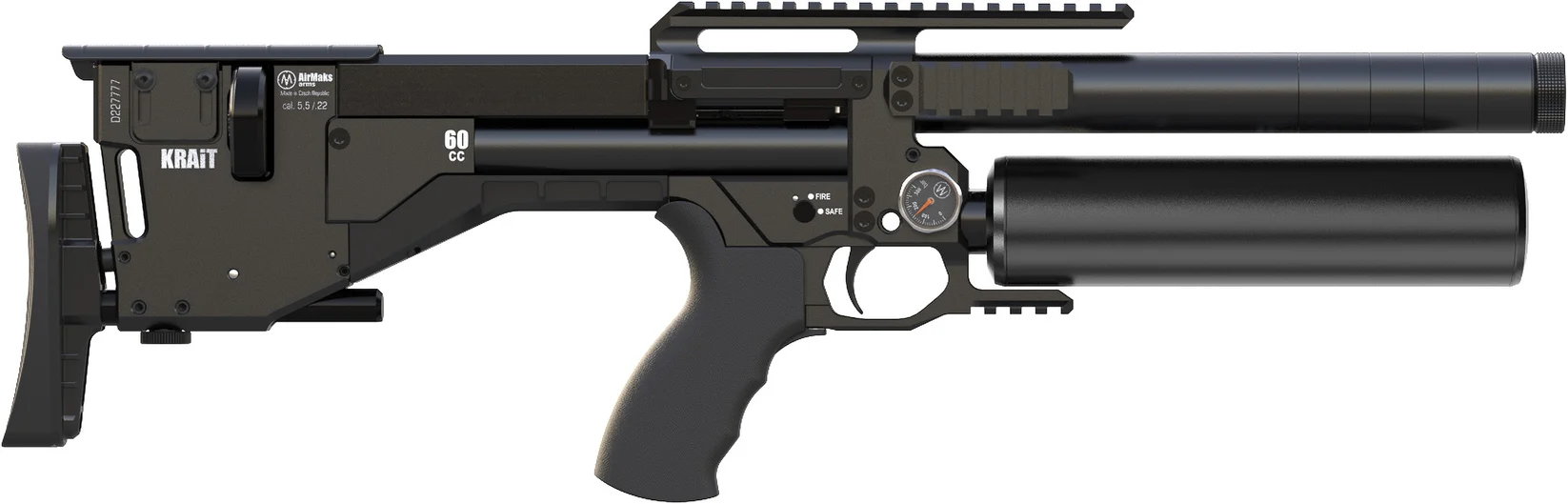
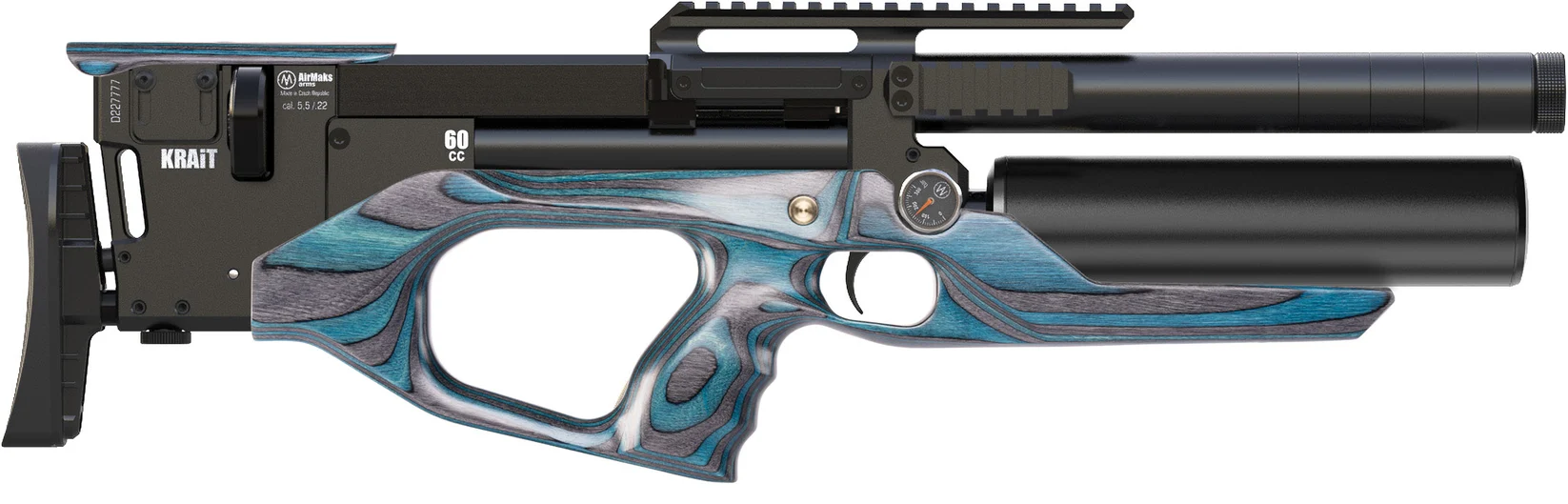
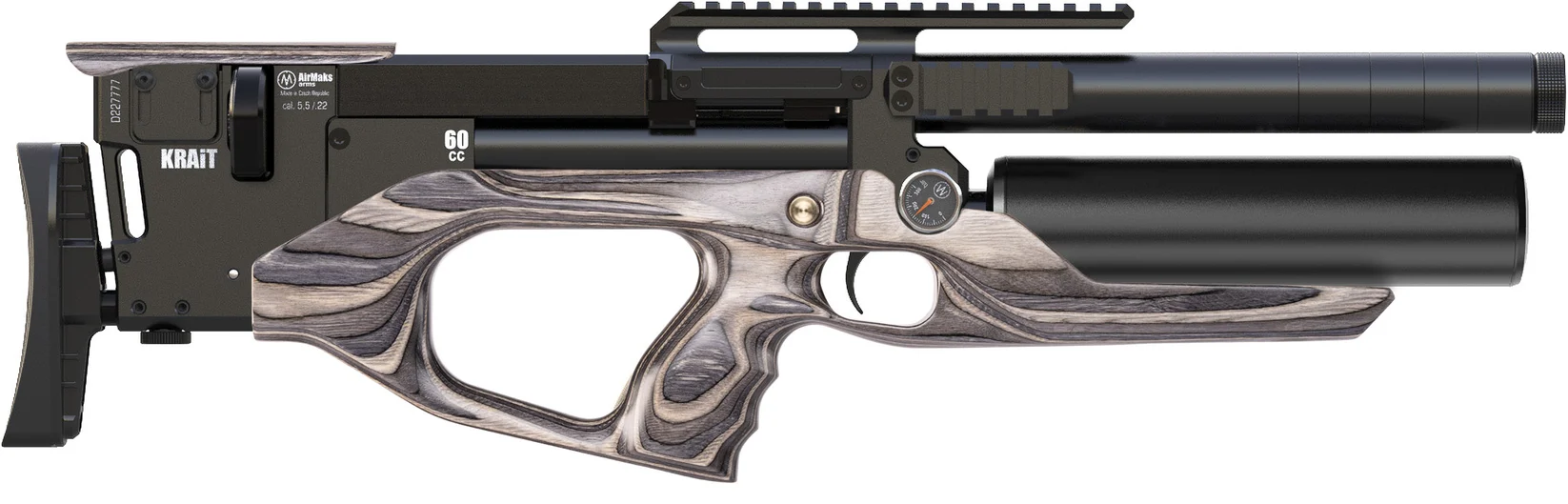
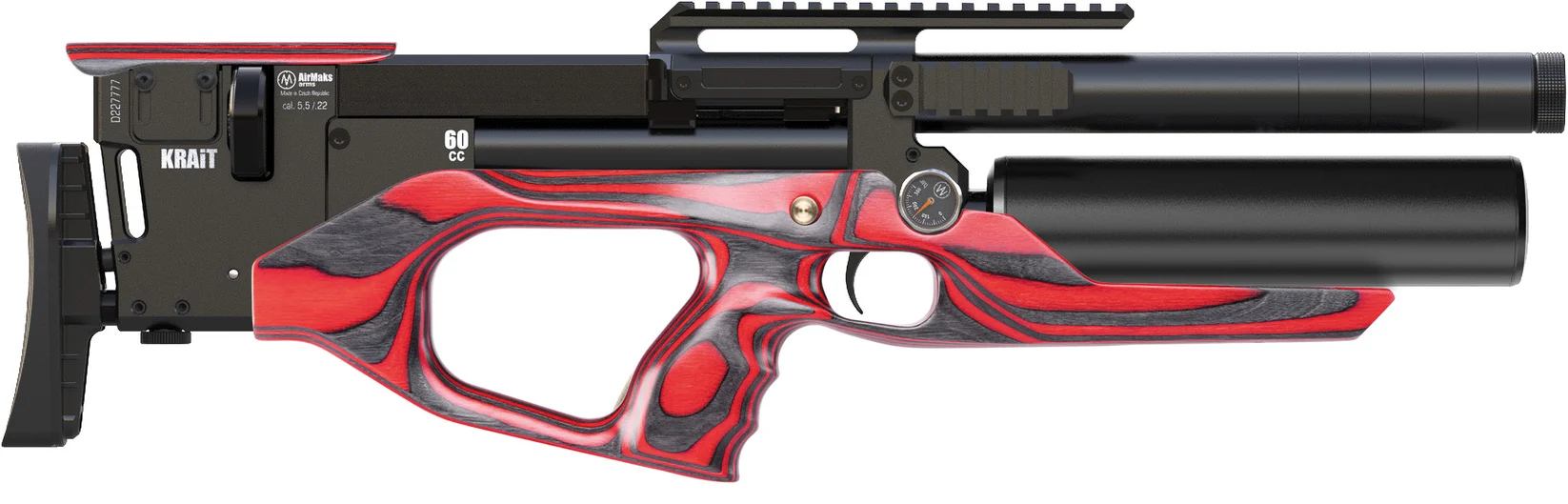
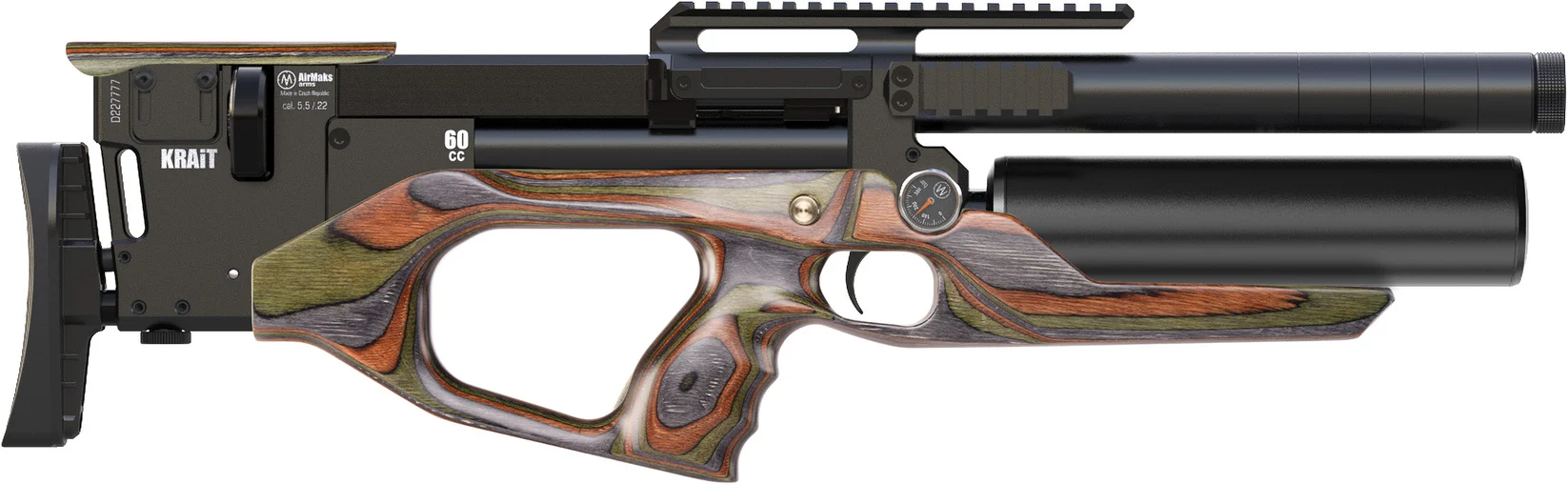
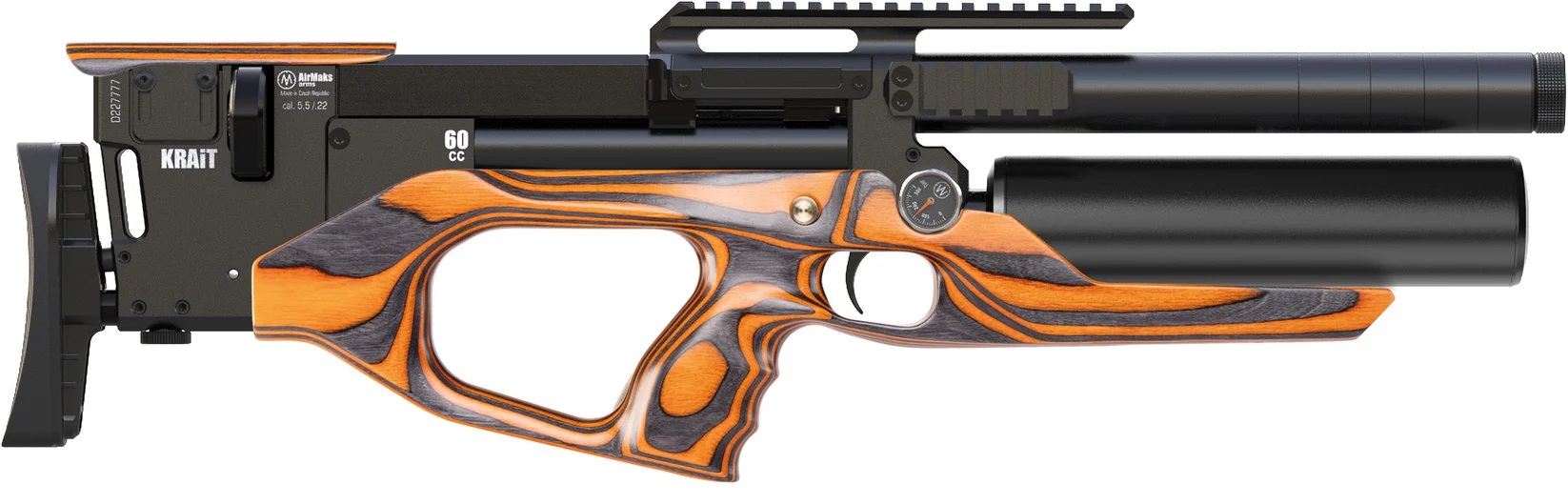
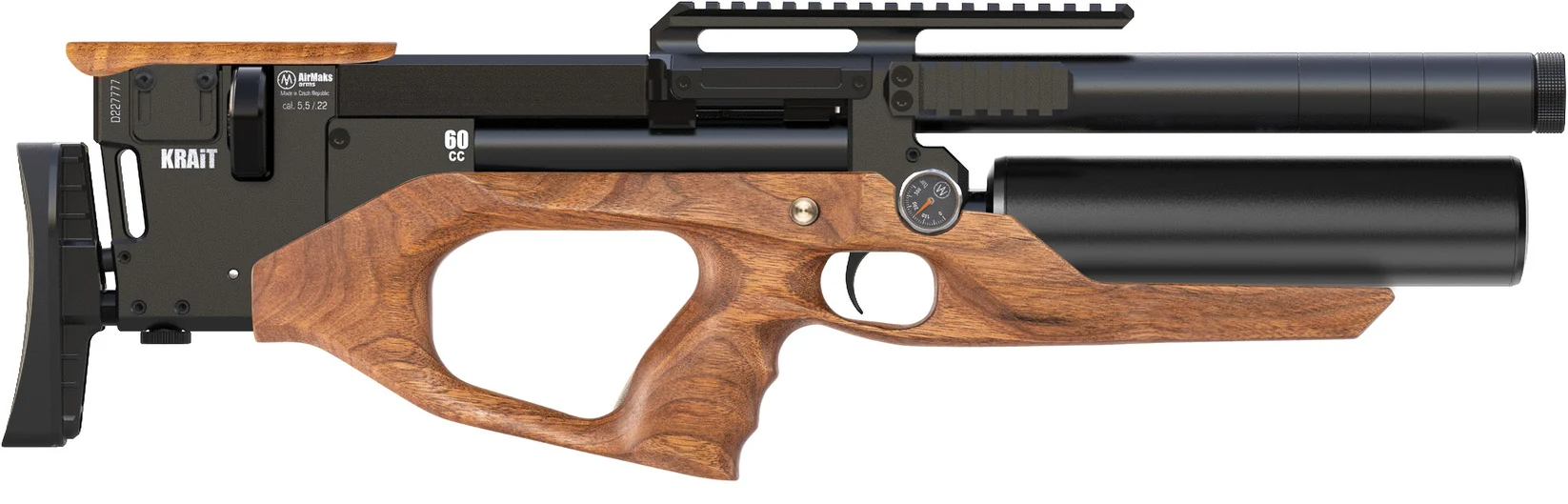
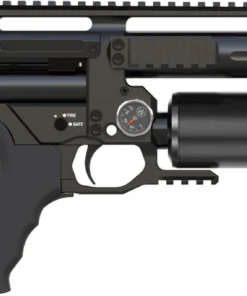
The AirMaks Arms KRAiT-T Standard is a compact pre-charged pneumatic air rifle from the KRAiT family. It uses a tube-style air reservoir rather than the larger bottle arrangement found on some other versions in the range. As a result, a relatively streamlined profile is provided while many of the adjustment and mounting features associated with the KRAiT platform are retained.
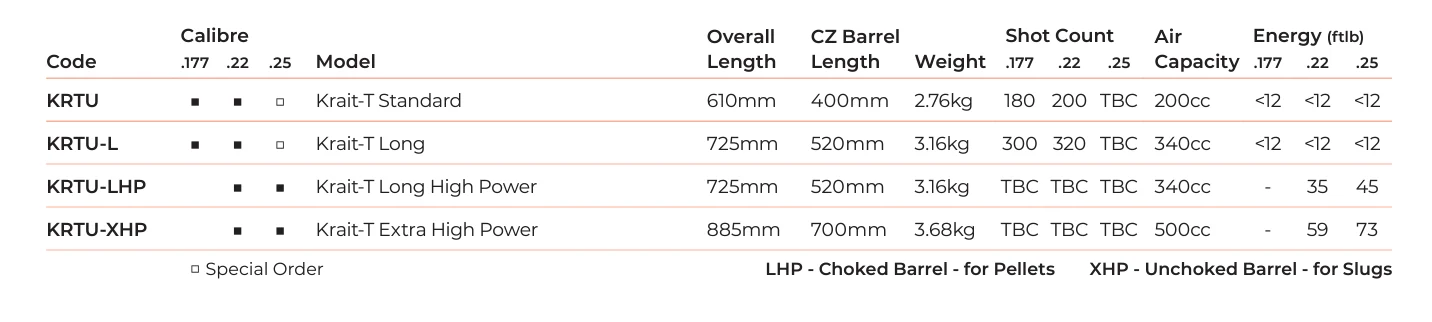
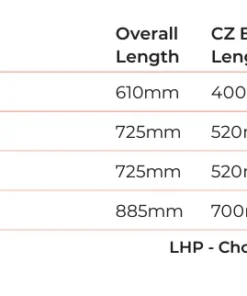
The Standard configuration is generally associated with a 400 mm barrel, regulated pneumatic operation, adjustable ergonomics and a modular accessory system. Exact specifications can vary according to calibre, market and production configuration, so manufacturer information should always be checked for the individual rifle.
Which calibres are available?
The KRAiT platform is offered in several common PCP calibres, including .177, .22 and .25.
The .177 version uses a smaller and typically lighter projectile. Meanwhile, .22 provides a middle-ground option that is widely used in sporting air rifles. The .25 configuration uses a larger and heavier projectile.
Each calibre produces different ballistic characteristics. Therefore, trajectory, projectile weight, retained energy and locally permitted power levels should all be considered when selecting a configuration.
How many shots does the magazine hold?
Magazine capacity depends on calibre.
Typical capacities on the KRAiT platform are approximately 18 rounds for .177, 16 rounds for .22 and 14 rounds for .25.
The difference occurs because larger projectiles require more physical space inside the rotary magazine. Consequently, magazine capacity is reduced as calibre increases.
Only the correct magazine for the selected calibre should be used.
Is the KRAiT-T Standard regulated?
Yes. A regulated pneumatic system is incorporated into the KRAiT platform.
In a regulated PCP rifle, air pressure is controlled before it reaches the firing valve. Consequently, more uniform pressure can be supplied through a useful portion of the reservoir’s fill range.
This type of system is intended to support repeatable operation. However, actual velocity consistency will still be influenced by pellet choice, regulator setting, environmental conditions and the condition of the rifle.
What type of air reservoir is fitted?
The Standard KRAiT-T configuration uses a tube-style compressed-air reservoir.
A capacity of approximately 200 cc is associated with the standard tube configuration. This layout differs from bottle-fed versions of the KRAiT family.
The tube reservoir contributes to the rifle’s narrower overall profile. Nevertheless, shot count will depend on calibre, operating pressure, projectile weight and the factory power configuration.
What is the maximum fill pressure?
A maximum filling pressure of up to approximately 300 bar is listed for several KRAiT configurations.
Only equipment specifically rated for the required pressure should be used during filling. Likewise, hoses, adapters, valves and compressors should be inspected regularly.
Overfilling should never be attempted. The manufacturer’s stated pressure limit for the exact rifle should always take precedence over generalized specifications.
Does the rifle have an adjustable regulator?
External regulator adjustment is incorporated into the broader KRAiT platform.
However, regulator adjustment affects the pneumatic operating system and should not be treated as a casual user setting. Incorrect adjustment can negatively affect consistency, efficiency or reliability.
Furthermore, changes can alter muzzle energy. For that reason, any adjustment should remain within manufacturer recommendations and the legal limits applicable in the user’s jurisdiction.
Can the power be adjusted?
Certain aspects of the KRAiT firing system are adjustable, including components associated with regulator pressure, valve behavior and hammer-spring tension.
These systems allow different authorized configurations to be established. However, increasing or modifying power can have legal consequences because air-rifle energy limits vary substantially between countries.
For this reason, power changes should be handled by qualified personnel and should remain within both manufacturer specifications and local law.
What does FAC mean with this rifle?
FAC commonly refers to a Firearm Certificate in the United Kingdom.
In the UK, some air rifles above the statutory non-FAC energy threshold are subject to firearm licensing requirements. Therefore, an FAC-version air rifle is not simply a different performance specification; it is also subject to a different legal classification.
Rules differ internationally, so FAC terminology should not automatically be applied outside the relevant jurisdiction.
Is the KRAiT-T Standard suitable for left-handed shooters?
The KRAiT platform incorporates a side-lever arrangement that can be configured for right- or left-side operation on supported versions.
This feature improves adaptability for different users. In addition, the compact bullpup-style configuration allows the operating controls to remain close to the shooting hand.
Before changing lever orientation, the manufacturer’s instructions should be followed to ensure correct reassembly and safe operation.
What type of trigger does it use?
An adjustable two-stage trigger is fitted to the KRAiT platform.
A two-stage design generally allows an initial controlled movement followed by a defined release point. Consequently, the trigger characteristics can be configured to suit the intended sporting application within the permitted adjustment range.
Trigger modifications beyond factory specifications should be avoided because improper adjustment can affect safety and reliability.
What optics can be mounted?
A Picatinny-compatible optics rail is incorporated into the rifle.
The platform is commonly specified with a 20 MOA inclined rail. Therefore, compatible scope rings and optical equipment can be mounted using standardized Picatinny hardware.
The appropriate optic depends on the intended shooting distance, magnification requirements and the user’s preferred sight picture.
Why is a 20 MOA rail used?
An inclined 20 MOA rail changes the relationship between the scope and the barrel axis.
In practical terms, additional elevation adjustment can be preserved within a compatible riflescope. This may be useful for certain longer-distance target applications.
However, the presence of a 20 MOA rail does not automatically mean that every optic is suitable. Ring height, scope adjustment range and cheekpiece alignment should still be considered.
Does it have accessory rails?
Yes. Additional Picatinny mounting points are incorporated into the KRAiT platform.
Compatible sporting accessories can therefore be mounted where appropriate. Depending on configuration and local regulations, these may include bipods, sling adapters, hand stops, rail covers or other non-prohibited equipment.
Accessory weight should also be considered because excessive equipment can alter balance and handling.
Is the cheekpiece adjustable?
An adjustable cheekpiece is provided on the platform.
This allows the shooter’s head position to be aligned more effectively with the optic. As scope height varies according to rings, tube diameter and objective size, cheekpiece adjustment can improve consistency of eye placement.
A repeatable head position can be particularly useful during target shooting because inconsistent alignment can affect sight picture and shooting comfort.
Is the butt-pad adjustable?
Yes. Adjustment is incorporated into the rear stock assembly.
Depending on configuration, both vertical positioning and length-related adjustments may be available. Therefore, the rifle can be adapted for different body proportions and shooting positions.
Correct stock adjustment should allow the rifle to be supported comfortably without forcing the shooter’s head or shoulder into an unnatural position.
What barrel length is used?
The Standard configuration is generally associated with a 400 mm barrel.
This barrel length helps maintain the relatively compact dimensions of the platform. At the same time, sufficient barrel length is provided for the regulated PCP system to operate within the intended factory specifications.
Different KRAiT variants can use different barrel lengths, so specifications from another version should not automatically be applied to the Standard model.
Does it use a choked barrel?
Standard KRAiT configurations are commonly listed with a precision barrel incorporating a choke.
A choke slightly alters the internal barrel diameter near the muzzle. In pellet-oriented airgun barrels, this feature is used to promote repeatable projectile engagement as the pellet exits.
Accuracy will nevertheless depend on pellet compatibility, barrel condition, shooting technique and the rifle’s individual setup.
Can different pellets be used?
Different pellet designs can be tested provided they are the correct calibre and are suitable for the rifle.
Pellet shape, diameter, manufacturing tolerance and weight can influence accuracy. Consequently, two pellets that appear similar may produce noticeably different groups.
Testing should be carried out safely at an appropriate range, and legal muzzle-energy limits should be considered whenever projectile weight is changed.
Can slugs be used?
Projectile suitability depends on the exact barrel and configuration.
Some airgun platforms and dedicated high-power versions are designed around slug use, while others are optimized primarily for conventional diabolo pellets.
For this reason, users should consult the manufacturer’s specifications for their exact rifle before using a projectile type that differs from the recommended ammunition.
Does it have a threaded muzzle?
A 1/2-inch UNF muzzle thread is associated with the KRAiT platform.
The standardized thread allows compatible muzzle equipment to be fitted where lawful.
Because silencers, moderators and similar devices may be regulated or prohibited in certain jurisdictions, legality should be confirmed before acquisition or installation.
How should the rifle be filled?
A compatible high-pressure PCP filling system should be used.
Depending on the user’s setup, filling may be performed with an approved compressor, high-pressure cylinder or suitable PCP hand pump. The correct fill adapter and pressure-rated hose must also be used.
The system should be kept clean because dirt entering the fill port can damage seals or internal pneumatic components.
How often should seals be inspected?
Seal condition should be monitored as part of routine maintenance.
If pressure is being lost unexpectedly, if filling becomes abnormal or if air leakage is heard, the rifle should be inspected.
Only compatible manufacturer-specified seals should be installed. Internal pressure components should be serviced by qualified personnel where required because stored compressed air presents significant mechanical risk.
How should the barrel be maintained?
Barrel maintenance should be carried out conservatively.
Air-rifle barrels generally do not require aggressive cleaning after every session. If cleaning becomes necessary, equipment suitable for airgun barrels should be used and the crown should be protected from damage.
Harsh abrasives and unsuitable metal cleaning tools should be avoided unless specifically recommended by the manufacturer.
Is the rifle suitable for target shooting?
The regulated pneumatic system, adjustable trigger, configurable stock components and optics rail make the platform relevant to several lawful sporting applications, including target shooting.
However, suitability depends on the specific discipline, permitted power level, calibre and range rules.
Local range requirements should always be followed.
How should the rifle be stored?
The rifle should be stored unloaded and secured against unauthorized access.
Storage requirements differ between jurisdictions. In some locations, a locking cabinet or other regulated storage arrangement may be required.
Pellets, magazines and filling equipment should also be stored appropriately. The manufacturer’s guidance regarding long-term reservoir pressure should be followed.
What should be checked before every shooting session?
The rifle should be visually inspected before use.
Reservoir pressure, magazine condition, optic mounting, barrel obstruction status and general mechanical condition should be checked. Any loose component should be corrected before firing.airrams
The correct calibre ammunition should also be confirmed, and the surrounding environment should be verified as suitable for lawful shooting.
Why can specifications differ between sellers?
Air rifles are often supplied in market-specific configurations.
Power restrictions, calibre availability, included accessories and legal classifications can vary between regions. Furthermore, manufacturers may update product specifications over time.
Therefore, the specification supplied for the exact rifle should always be treated as more authoritative than a generic online listing.
What is most important to confirm before choosing a configuration?
The exact calibre, permitted muzzle energy, reservoir specifications, included magazine, barrel configuration and local legal requirements should all be confirmed.akatran.uramax
Users should also consider the intended sporting activity and whether the stock and optic arrangement can be adjusted comfortably.
By verifying these details before use, the AirMaks Arms KRAiT-T Standard can be configured and maintained in accordance with both manufacturer guidance and applicable regulations.czech gun manufacturers
Practical Use Scenarios for the AirMaks Arms KRAiT-T Standard
The AirMaks Arms KRAiT-T Standard is designed around a compact, regulated PCP platform that can be adapted to several lawful sporting and recreational shooting environments. Its combination of a 400 mm barrel, tube-style air reservoir, adjustable stock components, modular mounting system and regulated pneumatic action allows it to be used in a variety of controlled settings.
Because airgun laws differ by country and region, every use scenario should remain within the legal power limits, licensing requirements, range rules and safety standards that apply locally.
Controlled Target Shooting at an Outdoor Range
One of the most natural environments for the AirMaks Arms KRAiT-T Standard is a controlled outdoor shooting range.
Its regulated pneumatic system is intended to provide repeatable air delivery throughout a useful portion of the fill cycle. Therefore, consistent shot behavior can be maintained more effectively than with many basic unregulated systems.
For target shooters, this consistency can be particularly useful when testing different approved pellets, comparing groups or refining optic settings.
The compact overall layout also makes the rifle easier to position on a bench without requiring excessive space. When a front rest or bipod is used where permitted, the rifle can be stabilized for repeatable group testing.
A suitable backstop should always be used, and every shot should be directed only toward designated range targets.
Benchrest Practice
Benchrest shooting provides another practical application.
When the rifle is supported correctly, variables caused by body movement can be reduced. Consequently, the shooter can concentrate more closely on trigger control, sight alignment and ammunition consistency.
The adjustable cheekpiece can be particularly useful in this setting because it allows the shooter’s eye to be positioned more consistently behind the optic.
Meanwhile, the adjustable rear stock assembly can help establish a comfortable shoulder position.
For best results, all adjustments should be made before a shooting string begins. Constantly changing the stock position during a session can make performance comparisons less meaningful.
Pellet Accuracy Testing
Different rifles can show clear preferences for different pellets, even when the pellets share the same nominal calibre.
Therefore, a practical use of the KRAiT-T Standard is structured ammunition testing at a safe range.
Several suitable pellet types can be tested under the same conditions. Group size, consistency and point of impact can then be compared.
It is important that the correct calibre is used and that projectile changes remain within the manufacturer’s recommendations.
Changing pellet weight can affect muzzle energy and trajectory. Consequently, legal energy limits should be considered whenever ammunition is changed.
Scope Zeroing and Optic Setup
The rifle’s upper Picatinny rail provides a practical platform for mounting a compatible riflescope.
Once the optic has been installed correctly, the rifle can be used for a controlled zeroing session.
The process should begin at a safe distance and should be carried out against a suitable backstop. Adjustments can then be made gradually until the point of impact corresponds with the intended point of aim.
Because the platform uses a 20 MOA rail on standard KRAiT configurations, optic selection should be considered carefully.
Some scopes provide a larger internal elevation range than others. Accordingly, the complete relationship between the scope, rings, rail inclination and intended shooting distance should be considered before a final setup is chosen.
Recreational Plinking in a Safe Environment
Where legally permitted, recreational plinking can provide a simple way to practice basic shooting skills.
However, casual shooting should still be treated with the same safety standards as formal target shooting.
Only appropriate targets should be used, and a reliable backstop must be positioned behind them.
Hard surfaces that may cause ricochets should be avoided.
The compact dimensions of the KRAiT-T Standard can make it relatively easy to handle during informal recreational sessions, while the magazine-fed action allows repeated shots to be taken without individually loading a pellet every time.
Nevertheless, the rifle should remain pointed in a safe direction whenever it is being handled.
Training New or Developing Shooters
Under appropriate supervision, the rifle can also be used as part of structured airgun training.
Adjustable ergonomic components can be helpful because different shooters may require different cheekpiece or butt-pad positions.
Before a new shooter uses the rifle, the controls should be explained clearly.
The location and operation of the safety mechanism, magazine, side lever, trigger and air pressure indicator should all be understood before live firing begins.
Beginners should also be taught that the mechanical safety is only a secondary safety device.
Safe muzzle direction, trigger discipline and target awareness remain essential at all times.
Practicing Trigger Control
Trigger control is one of the most important fundamentals in accurate shooting.
The two-stage trigger system on the KRAiT platform can be used during controlled practice sessions to develop consistent trigger technique.
The shooter should learn to apply pressure smoothly and avoid sudden movement at the point of release.
A stable supported position can make this easier because other movement is reduced.
Any trigger adjustment should remain within manufacturer specifications.
Over-adjustment should be avoided because unsafe or unreliable operation may result if the mechanism is set incorrectly.
Positional Shooting Practice
Not every shooting session needs to be conducted from a bench.
The rifle can also be used for controlled positional practice, including standing, kneeling or supported positions where allowed by range rules.
The relatively compact bullpup-style configuration can make the rifle easier to balance close to the body.
However, correct body position remains important.
The shooter should avoid unnecessary muscular tension and should use a stable stance that can be repeated from one shot to the next.
Any sling or support accessory should be attached securely and should not interfere with the trigger, safety or cocking mechanism.
Shooting From a Bipod
The accessory mounting system allows compatible support equipment to be used.
A bipod can be helpful for supported target shooting, especially when working from a bench or suitable ground position.
The bipod should be mounted according to the manufacturer’s instructions and checked for movement before firing.
Support pressure should remain consistent.
Changing how heavily the rifle is loaded into the bipod from one shot to the next can change the way the rifle settles during firing.
Therefore, repeatable positioning is preferable when evaluating accuracy.
Compact Range Setup
The tube-reservoir configuration contributes to the relatively narrow profile of the KRAiT-T Standard.
As a result, it can be practical for shooters who want a compact PCP setup without moving to one of the larger bottle-fed versions.
The rifle, magazines, fill equipment and basic accessories can be transported together in an appropriate padded case.
However, local transport laws should always be followed.
The rifle should normally be transported unloaded and secured in accordance with applicable regulations.
Indoor Range Use
Where an indoor range permits PCP air rifles, the KRAiT-T Standard can also be used in that environment.
Indoor shooting offers controlled lighting and reduced wind influence, which can make it useful for evaluating mechanical consistency or practicing fundamentals.
The rifle’s power level must fall within the limits accepted by the facility.
Some indoor ranges restrict calibre, muzzle energy or specific ammunition types.
For this reason, range policies should be checked before arrival.
Chronograph Testing by Qualified Users
A chronograph can be used in a controlled environment to verify the rifle’s performance.
Velocity data can help confirm consistency across a string of shots and can also be used to ensure that the rifle remains within applicable legal limits.
This is particularly important in jurisdictions where muzzle energy is regulated.
Testing should be performed with the actual pellet intended for use because different projectile weights can produce different energy values.
Power changes should not be made casually, and any adjustment that could alter legal classification should be handled responsibly and lawfully.
Checking Regulator Consistency
Because the platform uses a regulated pneumatic system, controlled range testing can be used to observe shot-to-shot behavior over part of the reservoir’s pressure range.
The purpose is not to chase maximum output, but rather to confirm that the rifle operates consistently within its approved configuration.
Large unexplained changes in velocity, unusual air consumption or audible leakage may indicate that service is required.
In that case, further use should be stopped until the system has been inspected.
Magazine Handling Practice
Magazine-fed PCP rifles require correct loading and handling.
A useful practical exercise is learning to load the magazine carefully, insert it correctly and operate the side lever smoothly without forcing the mechanism.
Pellets should be seated correctly in the magazine.
Damaged or distorted ammunition should not be used because it can affect feeding and accuracy.
If resistance is felt during cycling, excessive force should be avoided.
The rifle should instead be made safe and inspected.
Left-Handed Setup
The reversible side-lever arrangement can be useful for shooters who prefer the operating lever on the opposite side.
This makes the platform more adaptable than designs that permanently position the lever on only one side.
The configuration should be changed only according to manufacturer instructions.
Once repositioned, the action should be checked carefully before live use.
Adjusting the Rifle for Different Shooters
Another practical advantage of the KRAiT-T Standard is the ability to adapt the stock setup.
A taller shooter may require a different rear-stock position than a smaller shooter.
Similarly, optic height can influence cheekpiece adjustment.
When several people use the same rifle during a supervised range session, individual settings can be recorded and restored as required.
This can improve comfort and help each shooter maintain consistent head placement.
Using the Rifle for Skill Development
The rifle can be incorporated into structured practice designed to improve shooting fundamentals.
Instead of concentrating only on group size, shooters can practice individual skills such as breathing control, follow-through, consistent shoulder pressure and sight alignment.
Short, deliberate practice sessions are often more useful than simply firing large numbers of pellets.
Targets can also be designed to measure specific skills, provided they are used in a safe environment.
Pre-Session Equipment Inspection
Before any shooting session, a practical inspection should be carried out.
The reservoir pressure should be checked, and the rifle should be examined for obvious damage or air leakage.
Scope mounts should be secure.
The magazine should be clean and free from damage.
Accessory screws should also be inspected because vibration and repeated handling can sometimes allow mounting hardware to loosen.
The barrel should never be used if an obstruction is suspected.
Air Filling at the Range
The KRAiT-T Standard is a PCP rifle and therefore requires a suitable source of high-pressure air.
At a range, this may be supplied by an approved cylinder, PCP compressor or another pressure-rated filling system.
All connectors should be kept clean.
Before pressurization, the correct adapter should be confirmed.
The manufacturer’s maximum pressure must never be exceeded.
After filling, the system should be disconnected according to the instructions supplied with the filling equipment.
Long Practice Sessions
During longer range sessions, spare magazines and organized pellet storage can improve convenience.
However, the rifle’s condition should still be monitored throughout the session.
If performance changes suddenly, the cause should be investigated rather than continuing to fire.
Similarly, shooting should stop when reservoir pressure falls below the recommended operating range.
Consistent maintenance habits generally contribute to more predictable operation.
Equipment Familiarization Before Competition
For shooters who participate in lawful sporting competitions, practice sessions can be used to become familiar with the rifle’s controls before an event.
Magazine changes, stock positioning, optic settings and supported shooting positions can all be practiced in advance.
Range rules and competition regulations should be reviewed because permitted equipment can vary between disciplines.
A rifle that is correctly configured for one event may not necessarily meet the requirements of another.
Routine Ownership and Maintenance
Practical use also includes the periods between shooting sessions.
The rifle should be stored securely, unloaded and protected from unauthorized access.
Moisture should be removed from external metal surfaces after use.
The fill port should remain protected from dust and debris.
Magazines should be stored separately where appropriate, and optics should be protected from impact.
If the rifle is expected to remain unused for an extended period, the manufacturer’s recommendations for storage pressure should be followed.
Final Practical Considerations
The AirMaks Arms KRAiT-T Standard is best viewed as a configurable PCP platform for controlled sporting use rather than a one-purpose rifle.
Its compact dimensions can be useful on the range, while the regulated system supports consistent shooting conditions.
Adjustable stock components can improve fit, and the Picatinny interfaces allow compatible sporting accessories to be installed where lawful.
Its most practical uses include supervised training, target shooting, benchrest practice, pellet testing, optic setup, positional shooting and equipment familiarization.
Regardless of the scenario, responsible handling remains the most important requirement.
The correct calibre should always be used, local energy limits should be observed, compressed-air equipment should be handled carefully and every shot should be directed toward a safe target with an appropriate backstop.









Reviews
There are no reviews yet.