Sightmark Presidio SFP 3-18×50 LR2 Rifle Scope Precision Optics for Versatile Long-Range Performance
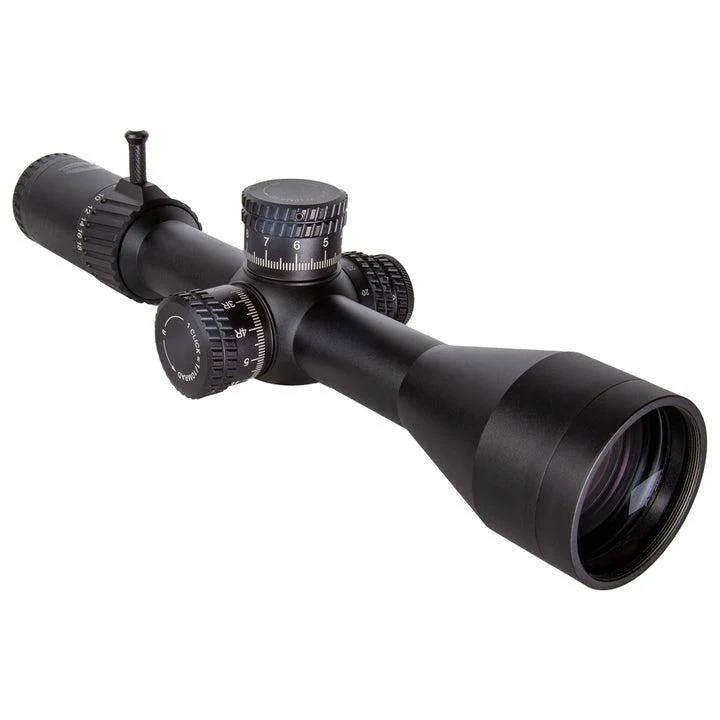
The Sightmark Presidio 3-18×50 LR2 Rifle Scope has been engineered for users who expect optical clarity, dependable adjustment, and versatile magnification from one carefully constructed optic. With its broad 3-18x magnification range, large 50 mm objective lens, illuminated LR2 reticle, and rugged 30 mm aluminum tube, dependable performance has been combined with a streamlined and highly functional design.
Whether detailed target observation, recreational range shooting, competition preparation, or field use is being considered, a flexible optical platform has been provided by the Presidio series. Furthermore, fully multi-coated lenses have been incorporated so that light transmission, contrast, and image quality can be maintained across changing conditions.
Rather than being limited to one narrow application, the scope has been designed around a useful 6:1 zoom ratio. Consequently, wider viewing can be achieved at 3x magnification, while significantly greater target detail can be obtained when magnification is increased toward 18x.
Sightmark Presidio 3-18×50 LR2 Optical Performance
Clear image reproduction is supported by the scope’s fully multi-coated optical system. Because multiple lens surfaces have been treated, glare and unwanted reflections are reduced while usable light transmission is improved. Therefore, a brighter and more defined sight picture can be maintained during many common lighting conditions.
At the front of the optic, a generous 50 mm objective lens has been fitted. As a result, ample light can be gathered while higher magnification levels are being used.
Additionally, the 3-18x power range provides considerable flexibility. At the lower end, a wider field of view can be maintained. Meanwhile, at increased magnification, finer details can be examined more easily.
A field of view of approximately 36.7 feet to 6.1 feet at 100 yards is provided across the magnification range. Moreover, approximately 3.8 inches of eye relief is specified, allowing a comfortable viewing position to be established when the optic has been mounted correctly.
LR2 Illuminated Reticle
An etched-glass LR2 reticle has been incorporated into the Sightmark Presidio 3-18×50. Because the reticle is physically etched into the glass, dependable visibility can still be provided without relying entirely on electronic illumination.
For situations in which additional contrast is preferred, red illumination has also been included. Multiple brightness settings are provided, allowing reticle intensity to be adapted according to surrounding light levels and target backgrounds.
Importantly, Sightmark identifies the LR2 version of the Presidio 3-18×50 as a first focal plane design. Accordingly, the apparent reticle size changes as magnification is adjusted, while MIL subtensions remain proportional throughout the magnification range.
Precision MIL Adjustments and Zero Stop
Fine adjustments are supported through 0.1 MIL-per-click windage and elevation controls. Consequently, measured corrections can be applied in small increments whenever an optic is being properly zeroed or adjusted for an appropriate sporting application.
A total windage adjustment range of approximately 26 MIL and elevation range of approximately 26 MIL are specified.
Equally important, a built-in zero-stop system has been incorporated. Once a preferred zero has been established, returning the elevation control to its reference position can therefore be made more straightforward.
Capped, tactile, low-profile turrets are also used. Clear adjustment clicks are provided, while exterior knurling has been added so that the controls can be manipulated more confidently.
Adjustable Parallax for Greater Viewing Control
Parallax adjustment has been provided from approximately 15 yards to infinity according to Sightmark’s current U.S. specification. Therefore, focus and apparent reticle movement can be better controlled across substantially different viewing distances.
A diopter adjustment range of approximately -2 to +2 has also been included. As a result, the reticle focus can be adapted more closely to the individual user’s eyesight.
Rugged 30 mm Aircraft-Grade Aluminum Construction
Durability has been treated as a fundamental part of the Presidio design. A single-piece 30 mm main tube has been manufactured from aircraft-grade aluminum, giving the optic a rigid structure without unnecessary complexity.
Furthermore, a hard-anodized matte-black finish has been applied. Surface protection is therefore increased while unwanted reflections from the exterior are minimized.
Internal protection has also been considered. The optic is nitrogen filled, while fog-resistant and shock-resistant construction has been incorporated for demanding outdoor environments.
Most importantly, an IP67 rating has been specified. Consequently, strong resistance against dust and water ingress is provided, making the scope better suited to changing weather and outdoor conditions.
Sightmark Presidio 3-18×50 LR2 Key Features
- 3-18x variable magnification for adaptable viewing at different distances
- 50 mm objective lens for effective light gathering
- 6:1 zoom ratio for versatile magnification control
- LR2 etched-glass reticle for detailed reference points
- First focal plane configuration on the official SM13141LR2 model
- Red illuminated reticle with multiple brightness settings
- Fully multi-coated optics for enhanced image transmission and contrast
- 0.1 MIL adjustment per click for precise windage and elevation adjustment
- 26 MIL windage adjustment range
- 26 MIL elevation adjustment range
- Built-in zero stop for convenient return to a reference zero
- Adjustable parallax from approximately 15 yards to infinity
- Capped, tactile low-profile turrets
- Single-piece 30 mm main tube
- Aircraft-grade aluminum construction
- Hard-anodized matte-black exterior finish
- Nitrogen-filled optical system
- Fog-resistant construction
- Shock-resistant construction
- IP67 waterproof and dust-resistant protection
- CR2032-powered illumination
- Approximately 13-inch overall length
- Approximately 30.8 oz weight
Designed Around Optical Versatility
Instead of forcing a user to choose between moderate magnification and substantial target detail, both capabilities have been incorporated into the Presidio’s 3-18x configuration.
At 3x, broader surroundings can be observed more comfortably. Conversely, when greater detail is required, magnification can progressively be increased toward 18x.
Transitioning between magnification settings is also made easier by the included throw lever. Consequently, adjustments can be performed without excessive manipulation of the magnification ring.
Because a 30 mm main tube has been used, the scope can also be paired with an extensive selection of compatible 30 mm mounting systems. Correct ring height, mounting specifications, and equipment compatibility should always be verified before installation.
Built for Range and Field Conditions
Weather can change rapidly during outdoor use. Therefore, protective features have been incorporated throughout the Presidio platform.
Dust resistance is supplied through the IP67-rated body, while water resistance helps protect the internal optical system. Likewise, nitrogen filling has been used to reduce internal fogging associated with temperature changes.
Meanwhile, the anodized aluminum body provides substantial structural protection. Instead of requiring delicate handling during ordinary transport and field use, the optic has been constructed as a durable precision instrument.
Refined Controls and Practical Accessories
Several useful accessories are supplied with the Presidio 3-18×50 LR2. A flip-up lens cap is included to help protect exposed glass surfaces when the optic is not being used. Additionally, a magnification throw lever is supplied for easier zoom adjustment.
A CR2032 battery is also included for the illuminated reticle system.
Because the reticle itself is etched, however, the primary aiming pattern remains visible even when illumination has been switched off or battery power is unavailable.
Moreover, the illuminated reticle can be especially useful whenever additional contrast against darker backgrounds is preferred.
Why Choose the Sightmark Presidio 3-18×50 LR2 Rifle Scope?
A strong balance of magnification range, optical clarity, adjustment capability, and environmental protection has been achieved with the Sightmark Presidio 3-18×50 LR2 Rifle Scope.
Rather than concentrating exclusively on magnification, Sightmark has combined fully multi-coated glass, a precision MIL-based adjustment system, an etched illuminated LR2 reticle, adjustable parallax, zero-stop functionality, and durable aluminum construction.
Furthermore, the 3-18x magnification range allows the optic to remain highly adaptable. Lower magnification can be selected whenever greater situational visibility is useful, while increased magnification can be applied when closer examination of distant targets is required.
For users seeking a feature-rich optic built around optical versatility and repeatable controls, the Sightmark Presidio 3-18×50 LR2 provides a capable and thoughtfully engineered solution. With its rugged IP67-rated housing, 30 mm tube, illuminated etched reticle, precise 0.1 MIL adjustment system, and broad 6:1 zoom ratio, reliable performance has been integrated into a single versatile optical platform.
Element Optics Scopes, Rangefinding Technology, Mounts, and Precision Optic Options
For shooters comparing modern precision optics, element theos has become an important search term, especially for people researching the theos scope and premium long-range configurations such as element theos 6-36, 36×56, and element theos 6 36×56. At the same time, more versatile configurations including element optics 2-10, element 2-10 scope, and element 2 10 scope appeal to users who prefer a wider balance between close-range visibility and higher magnification. Across the broader product family, element helix, element scopes, and related models give buyers several magnification, reticle, and mounting configurations to consider.
When researching an optics-focused scopes website, customers often compare element tactical products with equipment from another optic scope manufacturer. Product searches may also include element prism, titan scope, op element, and helix scope, particularly when comparing compact optics with traditional variable-power designs. Higher magnification options such as element optics 6-24×50 can suit users who prioritize a detailed sight picture and substantial adjustment range.
The premium range also includes the nexus scope, element nexus scopes, and broader nexus scopes category. Searches for nexus tactical equipment frequently lead buyers toward the nexus 4-25×50, while the element titan provides another recognizable alternative. Users comparing a 5-25 scope, 25/56, titan 5, or theos 2-10 generally look closely at optical clarity, turret construction, reticle layout, focal-plane configuration, adjustment tracking, and overall build quality. Consequently, search phrases such as element titan 5 25×56 ffp review and titan25 are commonly associated with buyers researching the Titan platform in greater detail.
Another frequently researched configuration is the element helix 6 24×50, particularly alongside the element nexus gen 2. Although these optics occupy different positions within a product range, potential buyers often compare their specifications before choosing an appropriate design. Reticle selection is equally important, which explains continued interest in rifle scope reticles, while electronic tools such as a ballistic rangefinder can complement a modern optic setup. Some search queries also contain unusual specification formats such as 12×4/2, so checking the manufacturer’s exact specifications remains important before interpreting any numerical value.
Versatile magnification searches commonly include 2-12 scope and 2×12 scope. Meanwhile, terms such as element vision, spectrum element, and even prismatic scale of the elements can appear alongside optics-related searches. A prismatic scope differs structurally from a conventional variable-power riflescope because it uses a prism-based optical system rather than the same internal lens arrangement typically associated with traditional scope designs. Searches for element 3.0 may likewise refer to product generations, technical updates, or model-specific terminology, depending on the context.
Technology-focused users may also investigate element rf and element range products. Within the variable-power category, element theos 2-10 and element theos 2 10 provide alternative search formats for the same general magnification class. Similarly, element 2-10, 10 optic, 2-10 optic, and 2-10x scope describe configurations shoppers may encounter while comparing compact and medium-range optics. Buyers interested in first-focal-plane systems may specifically search for a 2-12 scope ffp, while terms such as fffp 2 can appear as alternate or mistyped search variations.
The Helix family attracts additional attention through searches for helix hd 2 16×50 and hdlr, whereas Titan users frequently research element titan 3 18×50 and element titan 3-18×50. These mid-range magnification configurations can provide a useful compromise between field of view and target detail. The Theos family is also represented by theos 2-10×42 ffp, which combines a practical magnification range with first-focal-plane terminology commonly sought by experienced optics buyers.
Search specifications such as 10×40, .10×40, and 14×50 may describe magnification and objective-lens formats, although exact interpretation should always be checked against official product information. People asking what is a prismatic scope are generally trying to understand how prism optics differ from traditional scope architecture. As with the phrase prismatic scale of the elements, search-engine terminology can occasionally mix scientific and optical expressions, so context matters when evaluating results.
Another product-related term is element hyper 7, together with searches for hqp7-rf-2 specifications details. Users researching newer optical or rangefinding systems may encounter these model codes while comparing technical features, dimensions, mounting options, display systems, or rangefinding capability. The terms element ll and 3×18 can also appear in searches associated with optics or magnification specifications.
For users focused specifically on the 3-18 magnification class, search phrases include 3-18 scopes, 3-18, nightforce 3-18, best 3-18 scopes, and 3×18 scope. Even unusual formatting such as 3:18 may be entered when shoppers are trying to locate comparable models. Regardless of brand, important evaluation factors include image resolution, eye relief, turret repeatability, mechanical reliability, reticle visibility, and low-light performance.
Optical quality also involves controlling distortion and color fringing. Therefore, someone researching chromatic aberration scope performance may be evaluating how effectively a particular optic manages unwanted color separation around high-contrast objects. Better glass, coatings, internal design, and manufacturing tolerances can all influence perceived image quality.
Scope Mounts, Rings, Rangefinders, and Accessory Compatibility
A precision optic also depends on a reliable mounting system. Searches for element mount, dovetail scope mount, and dovetail rings usually reflect the need to match an optic to the appropriate rail or receiver interface. Correct ring diameter, mounting height, rail type, and clearance should always be verified against the optic and platform specifications before purchase.
Electronic rangefinding accessories have expanded the number of configurations available. A picatinny mounted rangefinder or picatinny range finder can be mounted on compatible rail systems, while a rifle rangefinder provides distance information separately or as part of an integrated setup. Search phrases such as weapon mounted range finder, laser range finder for rifle, and rifle range finder generally refer to compact ranging technology intended to provide distance measurements.
Integrated technology has also increased interest in scopes with rangefinders built in, a rangefinder scope for rifle, and a rangefinding rifle scope. These products can combine optical magnification with electronic distance measurement in a single system. Buyers may encounter abbreviations such as wmlrf, while searches for a weapon mounted ballistic calculator or arken wmlrf usually indicate interest in systems that combine ranging information with additional electronic calculations or data.
Mounting accessories deserve equal attention because stability and alignment influence the overall optic installation. A 34mm diving board mount can provide an accessory mounting surface above or around a compatible optic. Similarly, a 34mm scope mount with diving board combines the primary scope mounting structure with an additional accessory interface. The broader term diving board scope mount is frequently used when researching this style of configuration.
Smaller tube systems may use a 30mm diving board mount, while scope diving board searches often refer to elevated accessory rails designed to position compatible devices above an optic. Traditional mounting searches also include picatinny scope rings, 30mm scope mount picatinny, 30mm picatinny scope rings, and picatinny scope mounts. Matching the correct ring diameter and rail standard is essential because a 30mm tube, 34mm tube, dovetail rail, and Picatinny interface are not interchangeable without the appropriate hardware.
Protection is another important consideration once an optic has been mounted. tenebraex scope caps and tenebraex scope covers can help protect exposed lenses when compatible with the selected optic. A flexible allen neoprene scope cover provides another style of external protection for storage and transport. Users running dovetail systems may instead be comparing 30mm dovetail scope rings with other dovetail scope mounts.
Ultimately, choosing between Element Optics families requires more than comparing magnification numbers alone. Whether researching Theos, Helix, Titan, Nexus, Prism, RF technology, rangefinding equipment, or mounting accessories, buyers should evaluate optical clarity, reticle design, adjustment range, focal-plane configuration, tube diameter, rail compatibility, physical dimensions, protective accessories, and manufacturer specifications. Doing so makes it easier to identify an optic and mounting system that properly matches the intended application while avoiding compatibility problems caused by relying solely on product names or search terminology.
Frequently Asked Questions
What is the Sightmark Presidio 3-18×50 LR2 designed for?
The Sightmark Presidio 3-18×50 LR2 has been designed as a versatile optic for shooters who want a broad magnification range, precise adjustments, durable construction, and an illuminated reticle in one platform. Because magnification can be adjusted from 3x to 18x, the scope can accommodate a wide variety of distances and shooting environments.
At lower magnification, a wider viewing area can be maintained, which can be useful when targets are located at moderate distances or when broader visual awareness is preferred. Meanwhile, higher magnification allows finer target details to be observed more clearly.
Its combination of a 50 mm objective lens, adjustable parallax, MIL-based adjustments, and etched reticle makes it particularly suitable for range work, precision-oriented shooting, and other lawful sporting applications where consistent optical performance is valued.
Is the Presidio 3-18×50 LR2 a first focal plane or second focal plane scope?
The Presidio 3-18×50 LR2 LR2 configuration is designed with a first focal plane reticle. Therefore, the reticle appears to change in size as magnification is increased or decreased.
Because the reticle is positioned in the first focal plane, the relationship between the reticle subtensions and the viewed target remains proportional throughout the magnification range. This allows the MIL markings to remain consistent regardless of the selected power setting.
That feature can be especially useful for shooters who regularly change magnification while using the reticle for measured reference points.
What magnification range is provided?
A variable magnification range of 3x to 18x is provided. Consequently, the optic offers considerable flexibility without requiring separate scopes for different viewing distances.
At approximately 3x magnification, a larger section of the surrounding area can be observed. As magnification is increased, progressively greater visual detail can be obtained.
The 6:1 zoom ratio provides a practical balance between broader observation and more detailed target viewing, which is one of the main reasons the optic can be adapted to multiple shooting disciplines.
What is the advantage of the 50 mm objective lens?
The 50 mm objective lens allows a substantial amount of available light to enter the optical system. As a result, the sight picture can remain brighter and more usable when magnification is increased or when ambient lighting becomes less intense.
Additionally, the larger objective works together with the fully multi-coated lenses to enhance perceived clarity, contrast, and image quality.
A 50 mm objective does require suitable scope rings and appropriate mounting height, so compatibility between the scope, rings, mounting system, and firearm should always be verified before installation.
Are the lenses fully multi-coated?
Yes. Fully multi-coated optics are used throughout the optical system.
Multiple lens surfaces are treated to improve light transmission while helping reduce glare and unwanted reflections. Consequently, contrast can be improved and target details can be easier to distinguish under a variety of lighting conditions.
Optical coatings are particularly important on variable-power scopes because numerous internal lens surfaces are involved. By applying coatings throughout the system, overall image quality can be improved compared with untreated or minimally coated glass.
Does the scope have an illuminated reticle?
Yes. Red illumination is incorporated into the etched LR2 reticle.
Illumination can improve reticle visibility when the background makes the standard black reticle difficult to distinguish. Several brightness levels are available so the illumination can be adjusted according to surrounding conditions.
Because the reticle itself is etched into the glass, it does not depend completely on illumination. Therefore, the reticle can still be seen when the illumination has been switched off or when the battery is unavailable.
What battery does the illuminated reticle use?
A CR2032 battery is used to power the reticle illumination system.
CR2032 batteries are commonly available and are widely used in compact electronic optics and accessories. Keeping a spare battery in an appropriate storage location can be useful for users who regularly rely on illuminated reticle functionality.
Battery life can vary depending on the brightness setting, environmental conditions, and frequency of use.
What type of adjustment system is used?
Windage and elevation adjustments are provided in 0.1 MIL increments.
Each adjustment click therefore represents a small, measured change. This allows corrections to be made in a controlled and repeatable manner during proper zeroing or other appropriate scope adjustment procedures.
MIL-based controls are particularly convenient when they are paired with a MIL-based reticle because the same unit of measurement is being used across both systems.
Does the scope include a zero stop?
Yes. A zero-stop system has been incorporated into the elevation adjustment mechanism.
Once the optic has been properly zeroed and the zero-stop system has been configured according to the manufacturer’s instructions, the elevation turret can be returned more easily to the selected reference zero.
This feature can be convenient when temporary elevation adjustments have been made and a reliable return point is desired.
Does the Presidio 3-18×50 LR2 have adjustable parallax?
Yes. Adjustable parallax is included.
Parallax adjustment allows the user to refine focus and reduce apparent reticle movement in relation to the target at different distances. Because targets may be viewed across a broad range of distances with a 3-18x optic, adjustable parallax can become particularly useful at higher magnification levels.
The control should be adjusted according to the target distance, viewing conditions, and the individual user’s eye position.
What size main tube does the scope have?
A 30 mm main tube is used.
The 30 mm tube provides a rigid platform for the internal adjustment system while also allowing compatibility with a broad selection of commercially available 30 mm scope rings and mounts.
However, ring diameter alone does not determine compatibility. Correct ring height, mounting-base design, firearm configuration, and objective-lens clearance should also be checked before installation.
Is the scope waterproof?
The scope is constructed to an IP67 level of environmental protection.
This rating indicates strong resistance to dust intrusion and protection against temporary water immersion under defined conditions. As a result, the optic is better prepared for rain, moisture, dust, and changing outdoor environments than an unsealed optic would be.
Nevertheless, reasonable care should still be taken. The scope should be dried after exposure to moisture, and protective caps should be used whenever practical.
Is it fog resistant?
Yes. The internal optical system is nitrogen filled to help resist internal fogging.
Fogging can occur when rapid temperature changes cause moisture to condense inside inadequately sealed optics. By sealing and nitrogen filling the optical system, the likelihood of internal condensation is reduced.
External lens fogging can still occur under certain environmental conditions, so proper lens-care procedures may occasionally be required.
Is the scope shock resistant?
Shock-resistant construction has been incorporated into the design.
The one-piece aluminum tube and internal assembly have been developed to tolerate the type of vibration and impact associated with normal sporting use when the optic has been correctly mounted and maintained.
Proper mounting remains essential. Incorrect ring torque, damaged mounting components, or poorly fitted bases can negatively affect performance regardless of the durability of the optic itself.
What material is used for the scope body?
Aircraft-grade aluminum is used for the main housing.
Aluminum provides a useful combination of strength, rigidity, corrosion resistance, and manageable weight. In addition, a hard-anodized matte finish is applied to the exterior.
The matte surface helps reduce unwanted reflections while providing additional protection against ordinary wear and environmental exposure.
How heavy is the scope?
The optic weighs approximately 30.8 ounces.
Because a large 50 mm objective, 30 mm tube, illuminated reticle system, adjustable parallax, and robust turret assembly are included, the scope is designed around durability and feature content rather than ultra-light construction.
Buyers who are particularly sensitive to overall setup weight should consider the combined weight of the optic, rings, mounting rail, and firearm before making a final selection.
How long is the scope?
The overall length is approximately 13 inches.
This length allows the optic to provide its broad magnification range and substantial objective lens while remaining practical for many standard mounting configurations.
Available mounting space should still be checked carefully because ring placement, turret position, and eye relief requirements can affect installation.
How much eye relief is available?
Eye relief is approximately 3.8 inches.
Adequate eye relief can improve shooting comfort and help the user maintain a consistent viewing position. Correct scope positioning is especially important because improper mounting may make it difficult to achieve a full sight picture.
During installation, the scope should be positioned so a complete image can be obtained comfortably from the intended shooting position.
Is a throw lever included?
A magnification throw lever is supplied with the optic.
The lever allows the magnification ring to be adjusted with greater leverage and can make power changes quicker and easier.
This can be particularly convenient when switching between lower and higher magnification during a shooting session.
Are lens covers included?
Protective flip-up lens caps are supplied.
Lens covers help protect the front and rear glass surfaces from dust, fingerprints, light debris, and incidental contact during storage and transport.
Keeping optical surfaces clean can preserve image quality and reduce the possibility of scratching caused by dirt particles being rubbed across the glass.
How should the lenses be cleaned?
Loose dust should first be removed with a clean air blower or suitable lens brush. Afterward, a microfiber lens cloth and an optical cleaning solution intended for coated lenses can be used if necessary.
Paper towels, clothing fabric, abrasive cleaners, and aggressive household chemicals should be avoided because they may damage optical coatings.
Lens surfaces should also be cleaned gently rather than being scrubbed with excessive pressure.
Can the reticle still be used when the battery is dead?
Yes. Since the LR2 reticle is etched into the glass, the primary reticle remains visible without battery-powered illumination.
The battery is required only for the red illumination function. Therefore, the optic does not become unusable solely because the battery has been depleted.
This etched-reticle construction provides a useful level of reliability for users who prefer an optic that remains functional without electronic power.
Is the scope suitable for beginners?
The optic can be used by both developing and experienced shooters, although some features may require familiarization.
Variable magnification, adjustable parallax, MIL turrets, illumination controls, and a first focal plane reticle provide considerable capability. However, understanding how each control works will help the user obtain the best performance from the optic.
New users should become familiar with proper mounting, eye relief, focus adjustment, zeroing procedures, reticle interpretation, and manufacturer instructions before relying on advanced features.
Is it suitable for experienced shooters?
Yes. Experienced users may appreciate the combination of first focal plane reticle design, 0.1 MIL adjustments, adjustable parallax, zero stop, broad magnification range, and durable construction.
These features provide considerable control over the optical setup while keeping the system relatively straightforward.
The optic can therefore serve users who want a scope with more functionality than a basic fixed-power or entry-level variable optic.
Why is the 3-18x range considered versatile?
A 3-18x range covers a substantial span between low and high magnification.
Lower power can provide greater field of view and easier target acquisition, while higher power provides additional visual detail when needed.
Because the user can move between these magnification levels without changing optics, the scope can adapt more easily to changing distances and shooting conditions.
What makes this scope different from a basic hunting-style optic?
Several advanced features distinguish it from simpler variable-power scopes.
A first focal plane etched reticle, illuminated aiming references, adjustable parallax, MIL-based turrets, zero-stop functionality, 30 mm tube, fully multi-coated lenses, and IP67-rated protection have all been incorporated.
Consequently, the optic provides a wider range of adjustment and viewing capabilities than many basic scopes that are designed primarily around simple magnification and reticle functionality.
What should be checked before purchasing?
Compatibility should be evaluated before an order is placed.
The buyer should verify the required ring diameter, mounting-base type, ring height, objective clearance, available mounting space, desired eye relief, total setup weight, and intended lawful application.
Additionally, buyers should confirm that the first focal plane LR2 reticle and MIL-based adjustment system match their preferred style of use.
Why consider the Sightmark Presidio 3-18×50 LR2?
A strong combination of optical versatility, rugged construction, precise adjustment, and practical control has been integrated into the design.
Rather than focusing on magnification alone, the optic combines a 50 mm objective, fully multi-coated lenses, illuminated etched LR2 reticle, first focal plane configuration, adjustable parallax, zero stop, 0.1 MIL controls, and environmental protection.
For users seeking a capable variable-power scope with a broad range of features in one package, the Presidio 3-18×50 LR2 offers a balanced option that can support a variety of sporting and precision-oriented applications.
Practical Use Scenario
The Sightmark Presidio 3-18×50 LR2 is particularly useful in situations where one optic is expected to handle changing distances, lighting conditions, and shooting positions without requiring constant equipment changes. Its wide magnification range allows the user to adapt quickly, while the large objective lens and illuminated reticle support a clear sight picture in a variety of environments.
Imagine arriving at an outdoor range early in the morning when light levels are still relatively low. At the beginning of the session, the scope can be set near the lower end of its magnification range. This provides a wider field of view, making initial target acquisition easier and allowing the shooter to become comfortable with positioning, eye relief, and reticle alignment.
As the session progresses, magnification can gradually be increased. Instead of replacing optics or changing the setup, the same scope can be used to examine smaller details at greater distances. The magnification throw lever makes these adjustments more convenient, especially when quick changes are preferred between shooting strings.
Working Across Different Distances
At shorter or moderate distances, lower magnification can make the sight picture feel more natural and less restrictive. The user can maintain better visual awareness of the surrounding target area while still benefiting from the precision provided by the etched reticle.
When a more distant target is selected, magnification can be increased toward the middle or upper portion of the 3-18x range. Additional visual detail then becomes available, allowing target features to be identified more clearly.
At the same time, adjustable parallax can be refined according to the approximate target distance. This helps reduce apparent reticle movement and allows the image to appear sharper, particularly when higher magnification is being used.
Because the reticle is positioned in the first focal plane, its measurements remain proportional throughout the zoom range. Therefore, changing magnification does not require the user to rely on only one specific power setting for consistent reticle reference.
Adapting to Changing Light Conditions
Lighting can vary significantly during an outdoor session. A bright open range may produce strong contrast, while shaded areas, cloudy weather, or late-afternoon conditions may make the reticle more difficult to distinguish.
In brighter conditions, the etched reticle can be used without illumination. This keeps the sight picture simple while preserving clear reference markings.
If the background becomes darker or contrast is reduced, red reticle illumination can be activated. Brightness can then be adjusted until the reticle becomes easier to see without overpowering the target image.
The 50 mm objective lens also helps gather available light, while the fully multi-coated optical system supports image clarity and contrast. As a result, the optic remains practical as environmental conditions change throughout the day.
Making Controlled Adjustments
During a normal range session, windage and elevation may need to be adjusted after the initial zero has been confirmed. The 0.1 MIL adjustment system allows these changes to be made in precise increments.
Once the preferred zero has been established, the zero-stop feature can be configured. This provides a reliable reference point if temporary elevation adjustments are later made.
For example, after testing the optic at a longer distance, the elevation turret can be returned to its original zero position without unnecessary guesswork. This can simplify repeated range work and help maintain consistency across different sessions.
The capped turret design also provides protection against accidental movement during transport or handling.
Practical Field Handling
Beyond the range, the rugged construction becomes particularly valuable. The one-piece 30 mm aluminum tube provides a solid structure, while the hard-anodized finish helps protect the exterior from routine wear.
If the optic is exposed to dust, moisture, or sudden weather changes, the sealed IP67-rated construction provides additional environmental protection. Nitrogen filling also helps reduce the possibility of internal fogging when temperatures change.
Flip-up lens covers can remain closed while the optic is being transported and can be opened when the scope is ready for use. This helps protect the lenses from fingerprints, dust, and light debris.
A Versatile Setup for Different Users
The scope can also suit users with different experience levels. Someone relatively new to variable-power optics can begin with the basic controls, such as magnification, focus, illumination, and zeroing. More experienced users can take greater advantage of the MIL-based reticle, parallax adjustment, and zero-stop system.
Because several advanced features are integrated into one platform, the optic can continue to remain useful as the user’s familiarity and skill develop.
Rather than being limited to one narrow role, the Sightmark Presidio 3-18×50 LR2 can be adapted to changing distances, lighting conditions, and shooting environments. Its combination of flexible magnification, durable construction, precise controls, and clear optical performance makes it a practical choice for users who want one versatile scope capable of supporting a wide range of lawful sporting and precision applications.



Reviews
There are no reviews yet.