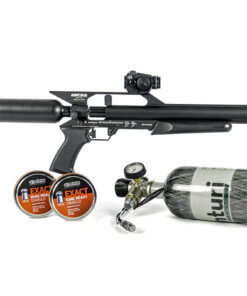
AirForce EscapeUL Spin-Loc: Ultralight PCP Precision Built for Packable Power
Field-ready performance is delivered by the AirForce EscapeUL Spin-Loc when compact carry and hunting-class energy are required. Lightweight construction is achieved without sacrificing Lothar Walther accuracy, and a 213cc Spin-Loc reservoir is employed so that refill effort stays modest. Consequently, backpackers, ranch hands, and survival-minded shooters are given a recoilless platform that can be shouldered all day. Moreover, adjustable power is provided so that backyard practice and ethical small-game work can be handled by the same rifle.
Ultralight Architecture and Spin-Loc Air System
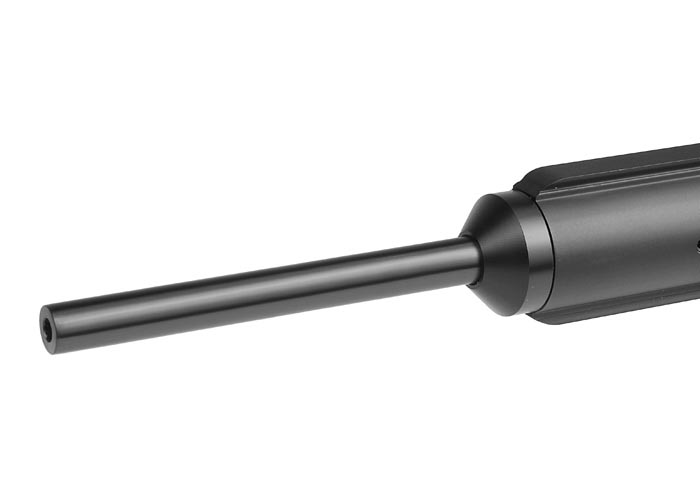
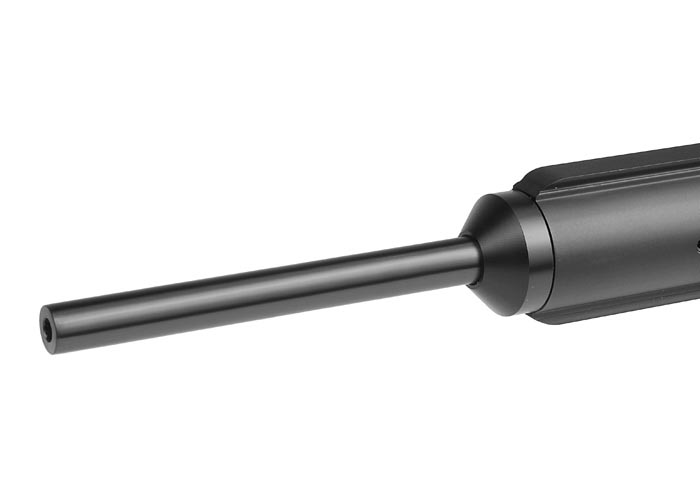
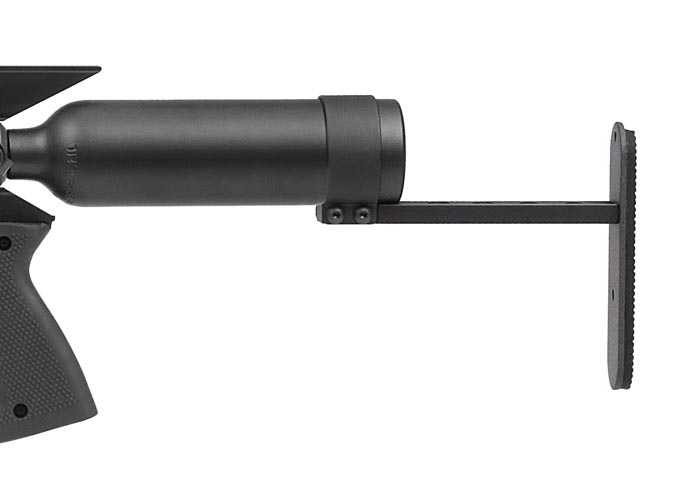
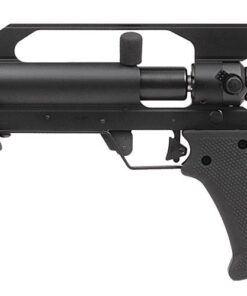
Weight is trimmed to approximately 4.25 pounds (unscoped) through a thinner 12 mm, 18-inch Lothar Walther barrel and a compact chassis. Therefore, packability is improved compared with full-length Escape models. In addition, overall length is user-adjustable from about 28.5 to 33 inches, and length of pull is varied from roughly 9.75 to 14.25 inches so that a comfortable fit can be obtained by shooters of different statures.
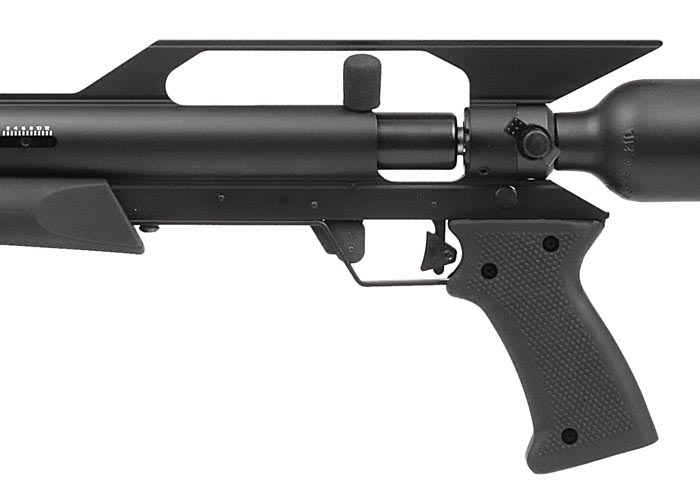
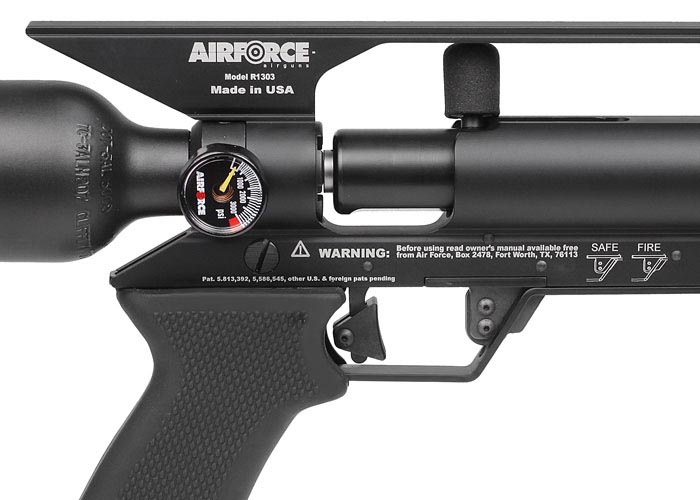
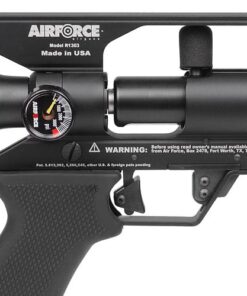
The Spin-Loc tank is secured at the rear of the frame with a threaded sleeve and wrench, and a pressure gauge plus refill nipple are integrated. As a result, remaining air is monitored at a glance and 3000 psi / 200 bar fills are completed with a hand pump, scuba adapter, or compressor. Furthermore, Ring-Loc valve compatibility is retained, so orifice kits can later be fitted when shot count or energy must be tuned. Meanwhile, a pressure-relief device is included for added safety during charging.
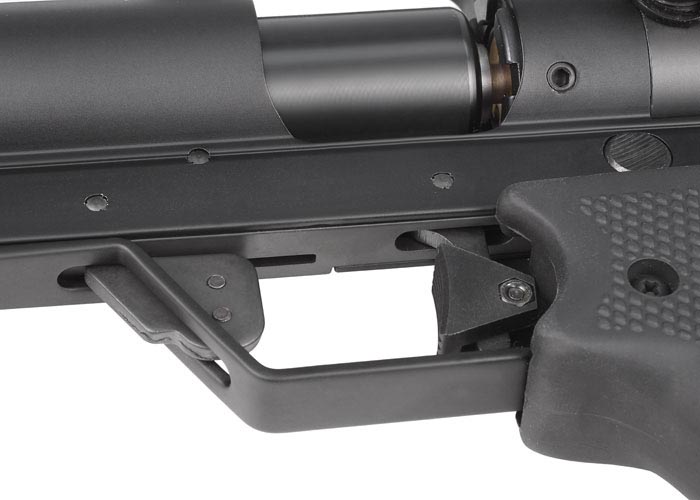
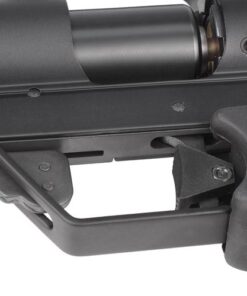
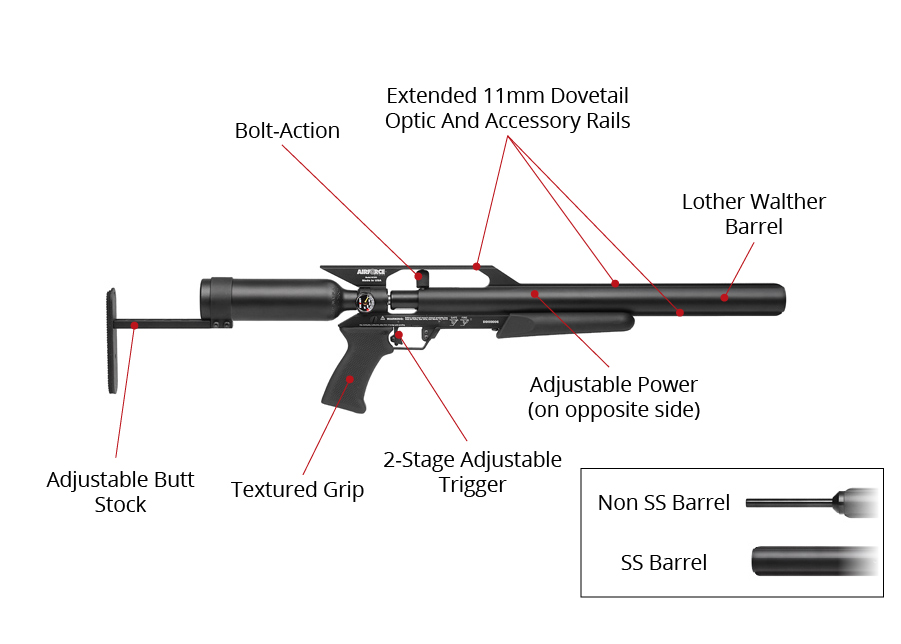
An automatic safety is engaged on cocking, and a two-stage trigger that is adjustable for position is fitted. Likewise, an extended 11 mm dovetail rail is provided so that optics can be mounted with proper eye relief. Recoil is essentially absent because a pre-charged pneumatic powerplant is used; thus follow-up shots stay on target more easily.
Power, Velocity, and Caliber Options
User-adjustable power is offered via a side wheel, and optional Ring-Loc orifices can be installed for larger changes. Consequently, velocities from roughly 800 to 1200 fps are produced depending on caliber, pellet weight, and setting. Energy approaching 90 foot-pounds is attainable in .25 with heavy projectiles at high settings, while .22 configurations remain highly effective for smaller game and longer shot strings. Notably, 5–15 shots per fill are typically obtained; higher power yields fewer, harder-hitting shots and lower settings stretch the 213cc reservoir.
Lead pellets are recommended by the manufacturer. Accuracy potential of about one inch at 50 yards is commonly reported when a quality optic is mounted and the rifle is properly sighted. Because the barrel is unshrouded, report is relatively loud; therefore hearing protection and awareness of local noise rules are advised.
Highlighted Product Features and Specifications
The following capabilities are built into every AirForce EscapeUL Spin-Loc:
- Action & feed: Single-shot bolt action is employed for simplicity and reliability in the field.
- Barrel: An 18-inch, 12 mm Lothar Walther rifled barrel (typical 1:17 twist) is installed for precision.
- Calibers: .22 and .25 configurations are offered so that pellet availability and energy needs can be matched.
- Air system: A 213cc Spin-Loc tank with gauge, refill nipple, and Ring-Loc compatibility is fitted; 3000 psi maximum fill is specified.
- Weight & length: Approximately 4.25 lb unscoped and 28.5–33 in overall length are achieved for packability.
- Trigger & safety: A two-stage, position-adjustable trigger and automatic-on-cocking safety are provided.
- Rail: An extended 11 mm dovetail is integrated for scopes or optional open sights.
- Power: User-adjustable output plus optional Ring-Loc kits allow velocity and energy to be tailored.
- Construction: Recoilless PCP operation, pressure-relief device, textured grip, and original black finish are included.
- Warranty & origin: A limited lifetime warranty is backed by Texas, USA manufacturing.
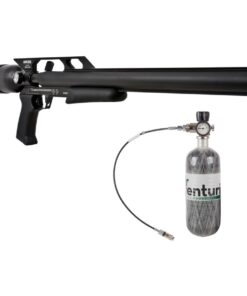
Additionally, shooting kits, extra Spin-Loc tanks, hand pumps, and matching optics can be added so that a complete field system is assembled.
Practical Field Uses
Survival and backpack hunting roles are served because the compact cylinder is easier to top off with a hand pump than large-volume bottles. Pest control around camps and ranches is likewise supported when moderate power settings and appropriate pellets are selected. Target and plinking sessions can be enjoyed after power is dialed down, and training value is retained because the same trigger and rail geometry are used at every setting.
Inclusive fit is supported by the sliding buttstock, so left- and right-handed shooters of varied builds can obtain a stable cheek weld. Responsible use is expected: local airgun laws, FAC or equivalent rules where they apply, and safe backstops must always be observed. Hearing and eye protection should be worn, and the muzzle must remain pointed in a safe direction.
Why the AirForce EscapeUL Spin-Loc Belongs in the Kit
Pack weight is minimized while hunting-class energy is preserved. Moreover, the Spin-Loc interface keeps refills and pressure checks straightforward. Furthermore, Lothar Walther barrel quality and an extended rail let optics be used to their potential. Consequently, a versatile, American-made PCP is placed in the hands of hunters, preppers, and precision shooters who refuse to carry extra ounces.
Ready-to-hunt configurations with scopes and rings can be selected, and companion tanks or pumps can be added at checkout. Ultimately, ethical harvests and confident practice are supported when the AirForce EscapeUL Spin-Loc is chosen and used within the law.
Explore the Hatsan Air Rifle Range: PCP, Spring-Piston, Bullpup, and Semi-Auto Airguns
For shooters comparing a hatsan air rifle, the Hatsan lineup covers everything from traditional spring-powered platforms to modern hatsan pcp designs, compact bullpups, semi-automatic systems, and specialized large-bore models. Whether someone is researching an entry-level air rifle, premium PCP equipment, target-oriented air rifles, or replacement components, the broader range of air rifle options associated with hatsanusa and hatsan usa provides many configurations to compare.
Hatsan Blitz and Semi-Automatic PCP Platforms
The hatsan blitz remains one of the most recognizable names among Hatsan PCP platforms. Searches for hatsan blitz full automatic, hatsan blitz bullpup, hatsan blitz 30 cal, and hatsan blitz .30 cal commonly come from enthusiasts comparing high-capacity PCP designs and different caliber configurations. Alternative searches such as hatsun blitz and hatzan blitz may also appear when shoppers are looking for the same product family.
The term blitz guns is sometimes used more broadly when discussing this platform, while phrases such as blitz 777 may appear in related product searches. Buyers comparing a 30 cal air rifle with smaller-caliber platforms should always review the model specifications, local regulations, intended sporting application, and compatible ammunition before choosing an air gun.
Another notable semi-auto platform is the hatsan sortie. The hatsan sortie tact semi-auto pcp configuration combines compact handling with PCP operation, while hatsan sortie tact searches are frequently associated with tactical-style variants. Owners may additionally look for hatsan sortie accessories when configuring optics, magazines, maintenance components, or other compatible equipment. Likewise, buyers searching for a semi auto pellet gun may compare the Sortie with the invader auto and other semi-automatic PCP designs.
Hatsan Bullpup and PCP Air Rifles
Hatsan produces several PCP configurations for shooters who prefer compact ergonomics without giving up barrel length. The hatsan bullboss is one example, while the bullmaster represents another recognizable bullpup-style platform. The hatsan hercules family is associated with higher-capacity PCP configurations, and the hatsan hercules bully provides a compact bullpup alternative within that broader design category.
The hatsan flash is another widely recognized PCP platform. Because hatsan flash configurations can vary, buyers should compare caliber, stock style, barrel arrangement, pressure system, and included equipment before purchase. The hatsan flashpup qe offers a bullpup-inspired format and is often considered by customers wanting a shorter overall rifle.
Other PCP-related searches include the hatsan invader, hatsan factor rc, and hatsan neutron star. Each platform serves a somewhat different purpose, which means specifications rather than appearance alone should determine which airguns are most appropriate for a particular type of sporting or recreational shooting.
Hatsan Jet 2 and Compact PCP Options
The hatsan jet 2 has attracted attention among customers looking for compact PCP versatility. Because the hatsan jet 2 may be configured differently depending on market and package, shoppers should verify the exact specifications supplied by the retailer. Searches for jet ii generally refer to the same Jet-series concept, while hatsan jet 2 accessories may include compatible magazines, optics solutions, carrying equipment, seals, and manufacturer-approved replacement components.
The hatsan velox is another compact platform that may appeal to customers researching modern PCP systems. However, compatible equipment should always be verified against the precise model designation rather than assuming accessories interchange across different Hatsan products.
Classic Hatsan Spring and Gas-Ram Air Rifles
Not every Hatsan buyer wants PCP equipment. Traditional spring-piston and gas-ram designs remain an important part of the catalog. The hatsan model 95 is among the best-known examples, while searches for hatsan mod 95 and simply mod 95 usually refer to the same established platform.
The hatsan 125 is another familiar full-size option. Meanwhile, the hatsan 135 is commonly researched by shooters interested in larger, more substantial break-barrel platforms. The hatsan 135 vortex air rifle incorporates Hatsan’s Vortex gas-piston concept, while the hatsan 135 carnivore is associated with larger-caliber configurations. Searches for a hatsan big bore carnivore rifle are similarly connected with users comparing large-bore air-powered platforms.
Additional traditional models include the hatsan mod 65, which appears in searches from buyers interested in full-size sporting configurations. The hatsan airtact air rifle, commonly shortened to hatsan airtact, represents another accessible platform. The hatsan zada also broadens the selection for customers comparing break-barrel designs.
Big-Bore Hatsan Models and Specialty Platforms
For customers researching large-bore PCP technology, the hatsan piledriver is one of Hatsan’s best-known specialized platforms. Large-bore air rifles occupy a different category from a conventional .177 caliber air pellet gun, so caliber, projectile compatibility, operating pressure, legal restrictions, and intended sporting use should all be carefully reviewed.
The hatsan harpoon is another specialized product name associated with Hatsan’s air-powered lineup. Because it functions differently from a conventional pellet rifle, buyers may encounter the phrase arrow launcher while researching this category.
These specialized products should not automatically be compared with a traditional pallet gun or standard pellet rifle because their operating systems, projectiles, dimensions, and intended uses can be substantially different.
Refurbished Hatsan Air Rifles and Replacement Parts
Budget-conscious customers sometimes search for hatsan refurbished equipment or refurbished air rifles. A refurbished product can offer good value when its condition, inspection history, seals, pressure system, warranty coverage, and included accessories are clearly disclosed.
Existing owners may instead require hatsan aftermarket parts. When replacing magazines, seals, fill probes, stocks, mounts, or other components, compatibility should always be matched to the precise rifle generation and caliber. Similar-looking parts should never automatically be assumed to fit every Hatsan platform.
Product names such as 1000x.25 may also appear when shoppers compare model or caliber-specific configurations, so confirming the manufacturer’s exact designation is particularly important.
Scopes, Pellets, and Air Rifle Accessories
Optics are another major consideration when configuring an air rifle. A basic 4×20 optic may be encountered in entry-level packages, and the term 4×20 is therefore frequently seen alongside airgun searches. However, optic selection should ultimately reflect the rifle’s mounting system, recoil characteristics, shooting distance, and intended use.
Pellet selection also matters. Products such as h&n field target trophy are widely recognized among airgun enthusiasts, while h&n field target trophy bleifrei refers to a lead-free option within that product family. Individual rifles may prefer different pellet weights and shapes, so consistency and accuracy should be evaluated with the manufacturer’s recommendations in mind.
The term crow magnum may also appear when users research heavier hunting-oriented pellet designs or related airgun ammunition. Ammunition compatibility must always be checked against the specific caliber and manufacturer’s specifications.
Choosing Between PCP, CO2, and Spring-Powered Airguns
A modern air pellet gun can use several different power systems. A PCP system stores compressed air inside a reservoir, while a spring-piston rifle relies on mechanical energy generated during cocking. A co2 pellet rifle, by contrast, uses carbon dioxide cartridges or a compatible CO2 supply.
Each system offers different advantages. PCP rifles may provide low recoil and repeatable operation, while spring-powered rifles avoid the need for external filling equipment. CO2 systems can offer convenient operation in compatible platforms, although performance may vary with temperature.
Customers researching the air rifle range should therefore consider much more than velocity figures. Ergonomics, caliber, overall length, weight, filling equipment, magazine design, maintenance requirements, noise level, available service support, and local regulations can all affect long-term ownership.
Hatsan Models for Different Airgun Preferences
With platforms such as the hatsan blitz, hatsan sortie, hatsan hercules, hatsan bullboss, hatsan flash, hatsan invader, hatsan piledriver, hatsan jet 2, hatsan velox, hatsan factor rc, hatsan airtact, and hatsan model 95, Hatsan covers a broad spectrum of airgun categories.
Some customers may prioritize a traditional sporting rifle, whereas others may prefer a compact PCP or bullpup. Shooters interested in sniper long style configurations may focus more strongly on stock ergonomics, optics mounting, stability, and longer-range target capability rather than simply choosing the most powerful model.
Meanwhile, terms such as econ ii may appear in accessory or product-related searches depending on the equipment being compared. Compatibility should always be established using the exact manufacturer and model specification.
Ultimately, selecting among hatsan air guns should begin with the intended application. A lightweight .177 caliber rifle may suit recreational target shooting, while a larger PCP platform can serve a very different sporting role. Models such as the hatsan blitz .30 cal, hatsan blitz 30 cal, or other 30 cal air rifle configurations should therefore be evaluated according to their specifications, local law, appropriate shooting environment, and intended lawful use.
From the compact jet ii and hatsan jet 2 to the established hatsan mod 95, powerful hatsan 135, specialized hatsan harpoon, and modern semi-auto PCP platforms, the Hatsan catalog gives airgun enthusiasts an extensive selection. Comparing specifications carefully helps buyers identify the right air rifle while ensuring that pellets, optics, filling equipment, magazines, and accessories remain correctly matched to the chosen platform.
Frequently Asked Questions
How is packable weight achieved without giving up hunting-class energy?
Unnecessary mass is removed through a thinner-profile 18-inch barrel and a compact chassis, so an unscoped weight of roughly 4.25 pounds is reached. Consequently, all-day carry is made practical for backpackers, ranch work, and survival kits. Meanwhile, hunting-class energy is still produced because a high-flow valve and user-adjustable power wheel are retained. Moreover, energy approaching the upper 70s to about 90 foot-pounds can be generated in .25 with heavy projectiles at high settings, while .22 remains highly useful for smaller game. Therefore, ounces are saved without turning the platform into a low-power plinker. In addition, recoilless PCP operation is employed, so follow-up shots stay steadier than on spring-piston designs of similar size.
How is the onboard air supply filled, monitored, and swapped?
A 213cc reservoir with an integrated gauge and refill nipple is fitted at the rear of the frame. Subsequently, remaining pressure is read at a glance before a session is started. Furthermore, a 3000 psi / 200 bar maximum fill is specified, and only dry compressed air or dry nitrogen is to be used. As a result, a dedicated hand pump, scuba adapter, or compressor can be connected to the nipple for top-offs. Additionally, the tank is locked in place with a threaded Spin-style sleeve and wrench, so a spare cylinder can later be exchanged in the field after the rifle is confirmed unloaded. Likewise, a pressure-relief device is included so that over-pressure events are mitigated during charging. Ultimately, the small volume is chosen so that pump strokes stay reasonable compared with large-capacity bottles.
How many shots are typically obtained from one fill?
Shot count is governed by caliber, pellet weight, fill pressure, and the power-wheel setting. Consequently, a practical range of about 5 to 15 usable shots is commonly reported. Moreover, maximum-power hunting strings are shorter, while reduced settings stretch the reservoir for practice. Therefore, a hunting outing that relies on a few well-aimed shots is well served, whereas high-volume plinking will require a spare tank or a mid-session top-off. In addition, velocity drops as pressure falls because an unregulated valve is used; hence the first shots are the most energetic. Nevertheless, consistent groups can still be printed when a known fill window is respected and the same pellet is kept.
Which calibers are offered, and how should a caliber be chosen?
Both .22 and .25 chamberings are produced so that pellet availability and intended game can be matched. Specifically, .22 is often selected when flatter trajectories and easier-to-find ammunition are preferred. Conversely, .25 is favored when heavier projectiles and higher on-target energy are wanted for larger pests or small game. Furthermore, manufacturer guidance emphasizes lead pellets rather than exotic alloys. Additionally, twist rate is typically 1:17, which supports common hunting and target slugs in these bore sizes. Inclusive choice is supported because either caliber can be sighted with the same extended rail and adjustable stock. Ultimately, local laws, intended range, and pellet supply should be reviewed before a chambering is finalized.
Is power fixed, or can output be tailored in the field?
User-adjustable power is provided by a side-mounted wheel for fine changes. Moreover, optional valve-orifice kits can be installed when larger shifts in shot count or energy are required. Consequently, backyard practice, pest control, and full-power hunting can be handled by the same airgun after a few turns of the wheel. Therefore, a single platform is kept versatile instead of requiring multiple rifles. In addition, infinite intermediate settings exist between the lowest and highest marks, so a preferred velocity can be documented with a chronograph and repeated. Likewise, responsible use is encouraged: power should be matched to the target and the backstop, and legal limits in the shooter’s jurisdiction must be observed.
How loud is the report, and is a shroud fitted?
No integral baffles or sound-moderating shroud are fitted on this ultralight configuration. As a result, the report is comparatively loud for a PCP. Therefore, hearing protection is strongly advised, and neighbors or hunting companions should be considered before high-power strings are fired. Meanwhile, a quieter sibling with a shorter baffled barrel exists in the same family if discretion is the priority. Nevertheless, the open 18-inch tube is chosen here so that weight is minimized and velocity is preserved. Additionally, outdoor ranges and rural properties remain the most appropriate venues. Inclusive safety practice is expected from every shooter regardless of experience level.
What barrel quality and accuracy potential can be expected?
A Lothar Walther rifled barrel of 18 inches and approximately 12 mm diameter is installed. Consequently, match-grade potential is built in when quality pellets and a stable rest are used. Moreover, groups of about one inch at 50 yards are frequently cited once an optic is properly mounted and the rifle is sighted. Furthermore, ammunition sensitivity is real: different head sizes and weights will print differently, so a brief pellet test is recommended. In addition, the thinner contour saves weight compared with the 24-inch sibling, with a modest velocity trade-off that is accepted for packability. Therefore, precision is still available for ethical hunting distances when the shooter does their part.
How are the trigger and safety arranged?
A two-stage trigger that is adjustable for position is fitted, and a pull of roughly three pounds is typical. Subsequently, a clean break can be obtained after the first stage is taken up. Moreover, an automatic safety is engaged whenever the action is cocked, so a positive “safe” condition is created before a pellet is loaded. Therefore, handling discipline is supported by the mechanism itself. Additionally, dry-fire is generally considered acceptable on this design, which aids trigger practice. Inclusive use is helped because trigger-reach and stock length can both be tailored. Nonetheless, the muzzle must always be kept pointed in a safe direction, and the chamber must be verified empty before any tank work.
How are optics mounted, and are iron sights included from the factory?
An extended 11 mm dovetail rail is integrated so that proper eye relief can be obtained with a wide range of scopes. Consequently, compact hunting optics or higher-magnification target glass can be fitted with matching rings. Open sights are not installed at the factory; however, optional iron sights can be added if a backup aiming method is desired. Furthermore, the long rail helps taller or shorter-necked shooters find a comfortable head position. In addition, a quality mount should be tightened to spec so that zero is retained after carry and filling. Therefore, the platform is optics-ready out of the box for anyone who prefers a magnified sight picture.
How is fit customized for different body sizes and shooting sides?
Overall length is user-adjustable from approximately 28.5 to 33 inches, and length of pull can be set from about 9.75 to 14.25 inches. As a result, a stable cheek weld can be obtained by a wide range of statures. Moreover, a textured grip is provided for control in wet or gloved conditions. The layout is generally friendly to both left- and right-handed use because the charging handle and power wheel remain accessible, though bolt throw direction should be confirmed by the individual shooter. Inclusive language and design matter here: comfort should be dialed in before a hunt so that fatigue does not degrade shot placement. Additionally, a sling or pack attachment can be added so that the light rifle stays hands-free on long walks.
What field roles are best served by this configuration?
Backcountry hunting, camp and ranch pest control, and survival kits are the primary missions for which the compact cylinder and low weight were chosen. Consequently, a hand pump can restore pressure without a heavy compressor being packed. Furthermore, a few well-placed shots at ethical distances are more important than high magazine capacity, which matches the single-shot action. Target practice and training are also supported after power is reduced. Meanwhile, urban or densely populated settings may be less suitable because of report and local ordinances. Therefore, the intended use should be matched to land access, legal caliber/energy rules, and the shooter’s skill. Responsible ownership includes knowing what may be taken and what backstop is required.
What maintenance and storage practices are recommended?
The bore should be kept reasonably clean with felt pellets or a proper rod when accuracy drops, and only manufacturer-approved lubricants should be used on seals. Moreover, the reservoir must not be stored empty for long periods; a modest residual pressure is often preferred to keep seals seated. Furthermore, the rifle must be unloaded and the tank depressurized or removed according to the manual before travel or service. In addition, the Spin-style sleeve threads should be kept clean so that future tank changes remain smooth. Consequently, a brief inspection of the gauge, refill nipple cap, and safety function is wise before each outing. A limited lifetime warranty is offered by the Texas maker when the product is used as directed, so registration and original documentation should be retained.
Is an external air source included, and which filling gear works best?
An external air source is required and is not supplied with the rifle. Therefore, a compatible hand pump, scuba filling adapter, or electric compressor must be obtained separately. Moreover, the small 213cc volume is specifically chosen so that a quality hand pump remains practical for most adults. Additionally, spare tanks can be pre-filled at home and carried as ready reserves. Inclusive planning matters: shooters who cannot comfortably operate a pump may prefer a compressor or a buddy system for fills. Safety notes apply equally: only equipment rated for 3000 psi should be connected, and the dust cap on the nipple should be replaced after every fill.
How should legal and safety rules be treated before purchase or use?
Airgun regulations vary widely by country, state, and municipality, including energy limits, age rules, transport requirements, and hunting seasons. Consequently, local statutes must be verified by the buyer before an order is placed and before any field use. Furthermore, FAC or equivalent documentation may be required in some jurisdictions even for PCP rifles. Eye and hearing protection should be worn, a safe backstop must be confirmed, and bystanders must be kept clear. Inclusive responsibility applies to every owner: skill, land permission, and ethical shot selection matter as much as hardware. Therefore, this platform should be treated with the same care given to any hunting tool.
What accessories most often complete a ready-to-hunt setup?
A durable 11 mm ring set, a hunting-appropriate scope, a hand pump or spare tank, a sling, and a compact case are the most common additions. Moreover, a chronograph helps a preferred power setting be documented. In addition, quality lead pellets in a few weights should be tested so that the most accurate load is identified. Optional open sights, orifice kits, and extra reservoirs can be added later as needs evolve. Conversion-focused advice is simple: a complete, sighted-in kit is more useful on day one than a bare action that still needs glass and air. Ultimately, the lightweight chassis rewards thoughtful accessories that do not erase the weight savings that were designed in.
Practical Use Scenarios in the Field
Everyday missions are where compact PCP design is proven. Consequently, pack weight, pump-friendly air volume, and adjustable output are put to work together. Moreover, inclusive fit is supported by a sliding stock so that shooters of different statures can obtain a stable cheek weld. Therefore, the following scenarios are written so that realistic expectations, ethical limits, and conversion-ready preparation can be understood before a kit is assembled.
Dawn Patrol for Small Game on Foot
A predawn walk is started with the rifle slung and a modest optic already zeroed. Subsequently, overall mass of roughly 4.25 pounds unscoped is barely noticed after the first mile. In addition, length can be collapsed toward the shorter end of the 28.5–33 inch range so that brush and truck-cab doors are cleared more easily. Meanwhile, a textured grip is relied upon when dew is present.
A .22 or .25 lead pellet is selected according to game size and local rules. Furthermore, the power wheel is set to a documented hunting mark that was confirmed with a chronograph at home. As a result, the first shots from a 3000 psi fill carry the most energy, which matches a hunt that depends on a few well-aimed opportunities rather than a long string. Consequently, 5–15 usable shots are treated as a planning number, not a promise of endless fire.
When a rabbit or similar-sized animal presents a clear, ethical angle, the two-stage trigger is taken up and the automatic safety is disengaged only after the muzzle is confirmed safe. Moreover, recoilless operation helps the sight picture stay still. Therefore, a clean behind-the-shoulder or head shot can be delivered inside typical airgun hunting distances when the shooter has practiced. Inclusive fieldcraft applies equally: land permission, season dates, and a verified backstop are required before the first pellet is chambered.
After the shot, the single-shot bolt is worked, the chamber is checked, and the animal is approached only when movement has stopped. Additionally, a spare pre-filled cylinder can be carried if a longer day is expected. Ultimately, success is measured by ethical recovery, not by how much air remains in the 213cc reservoir.
Ranch and Camp Pest Control Without a Heavy Kit
Perimeter work around barns, feeders, and camp kitchens is handled when moderate power is chosen. Consequently, the report stays significant because no shroud is fitted, so hearing protection is worn and neighbors are considered. Nevertheless, a lower wheel setting stretches the fill and reduces over-penetration risk on close pests.
A rest against a fence post or pack is used whenever possible. Moreover, the extended 11 mm rail keeps a compact scope in a natural head position. In addition, iron sights can be added later if a backup aiming method is wanted, though none are installed from the factory. Therefore, quick target acquisition is still available once zero is confirmed at the distances that actually occur around buildings.
Pigeons, rats, and similar pests are engaged only where legal and only with a safe backstop. Furthermore, lead pellets recommended by the maker are kept in a small tin so that head-size consistency is maintained. Likewise, the automatic safety is allowed to reset on every cocking stroke so that movement between stations stays disciplined. Inclusive teamwork is useful: one person can watch the backstop while another takes the shot.

 Click here for California’s Proposition 65 warning.

Reviews
There are no reviews yet.